
DESCRIBING PHOTOS WORK IN PAIRS 1 TRY TO

DESCRIBING PHOTOS
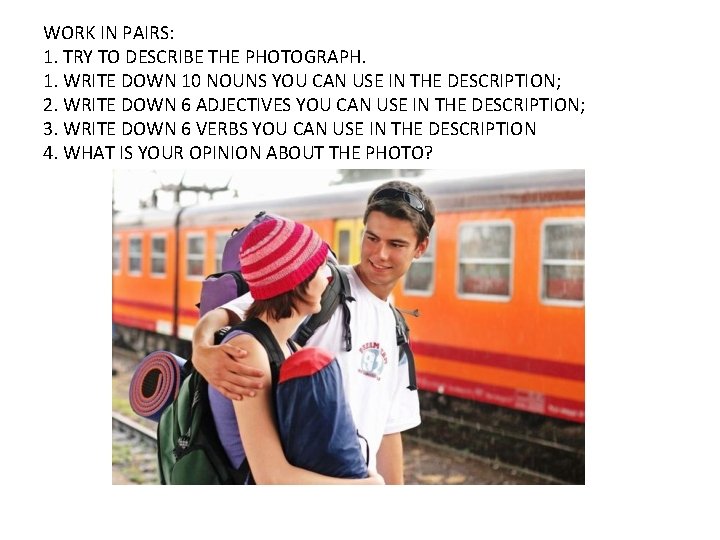
WORK IN PAIRS: 1. TRY TO DESCRIBE THE PHOTOGRAPH. 1. WRITE DOWN 10 NOUNS YOU CAN USE IN THE DESCRIPTION; 2. WRITE DOWN 6 ADJECTIVES YOU CAN USE IN THE DESCRIPTION; 3. WRITE DOWN 6 VERBS YOU CAN USE IN THE DESCRIPTION 4. WHAT IS YOUR OPINION ABOUT THE PHOTO?
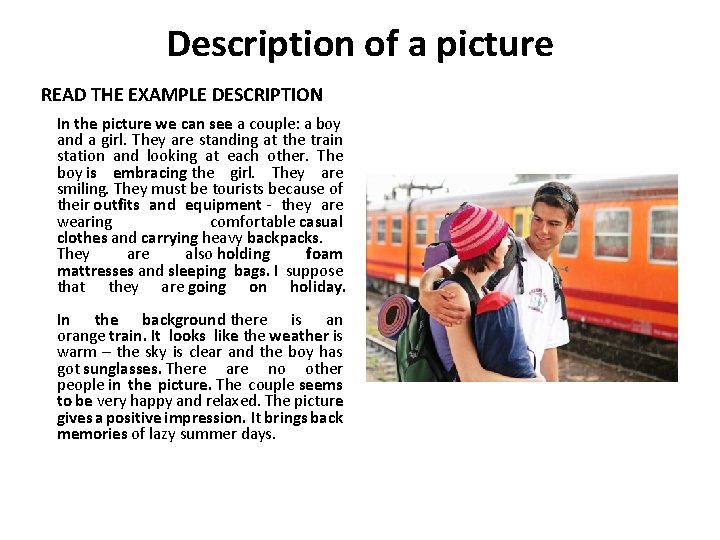
Description of a picture READ THE EXAMPLE DESCRIPTION In the picture we can see a couple: a boy and a girl. They are standing at the train station and looking at each other. The boy is embracing the girl. They are smiling. They must be tourists because of their outfits and equipment - they are wearing comfortable casual clothes and carrying heavy backpacks. They are also holding foam mattresses and sleeping bags. I suppose that they are going on holiday. In the background there is an orange train. It looks like the weather is warm – the sky is clear and the boy has got sunglasses. There are no other people in the picture. The couple seems to be very happy and relaxed. The picture gives a positive impression. It brings back memories of lazy summer days.
How to plan your description? 1. What is the main topic of the picture? 2. Where and when was the photo taken? 3. Describe the separate parts of the picture. 4. Describe the activities of the people in the picture. a) What are they doing at the moment? b) What have they been doing so far? c) What are they going to to in a moment. 5. Describe the details of the people’s appearance and their feelings. 6. Describe the scenery. 7. Think what happened before and what can happen after the scene? 8. Tell about your feelngs connected with the photo.
USEFUL PHRASES • In the picture there is/are – na obrazku znajduje się/znajdują się In this picture I can see – na obrazku widzę This picture shows – ten obrazek przedstawia The picture makes – zdjęcie sprawia, że The photo was taken in – zdjęcie zostało zrobione w • He/she is wearing… – on/ona nosi… They seem to be… – oni wydają się … He/she is happy/sad – on/ona jest wesoły/smutny Nothing else comes to my mind. – Nic więcej nie przychodzi mi do głowy. I think that is all. – Sądzę, że to wszystko. I think, I told everything about this picture. – Uważam, że powiedziałem wszystko o tym obrazku.
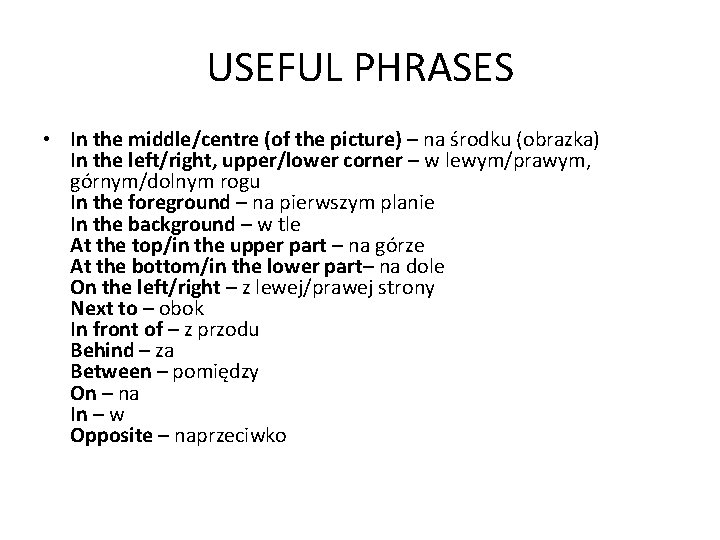
USEFUL PHRASES • In the middle/centre (of the picture) – na środku (obrazka) In the left/right, upper/lower corner – w lewym/prawym, górnym/dolnym rogu In the foreground – na pierwszym planie In the background – w tle At the top/in the upper part – na górze At the bottom/in the lower part– na dole On the left/right – z lewej/prawej strony Next to – obok In front of – z przodu Behind – za Between – pomiędzy On – na In – w Opposite – naprzeciwko
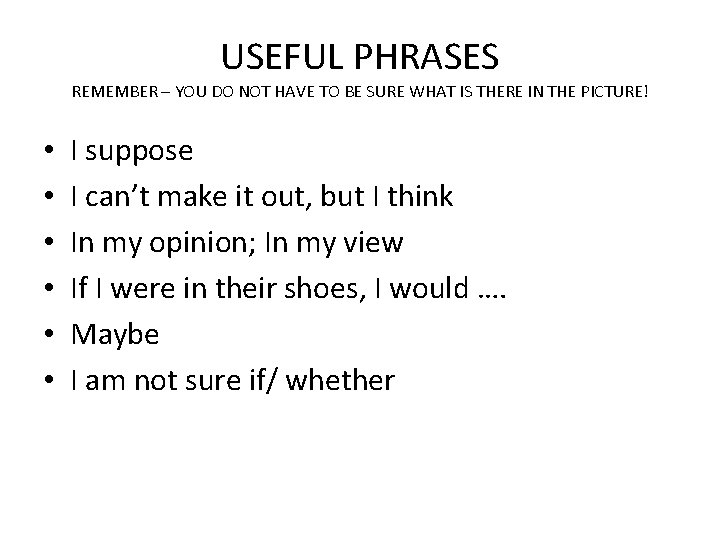
USEFUL PHRASES REMEMBER – YOU DO NOT HAVE TO BE SURE WHAT IS THERE IN THE PICTURE! • • • I suppose I can’t make it out, but I think In my opinion; In my view If I were in their shoes, I would …. Maybe I am not sure if/ whether
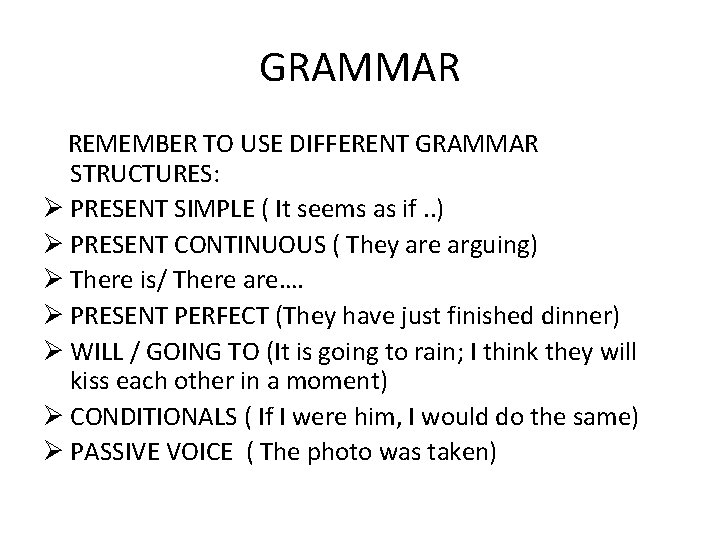
GRAMMAR REMEMBER TO USE DIFFERENT GRAMMAR STRUCTURES: Ø PRESENT SIMPLE ( It seems as if. . ) Ø PRESENT CONTINUOUS ( They are arguing) Ø There is/ There are…. Ø PRESENT PERFECT (They have just finished dinner) Ø WILL / GOING TO (It is going to rain; I think they will kiss each other in a moment) Ø CONDITIONALS ( If I were him, I would do the same) Ø PASSIVE VOICE ( The photo was taken)
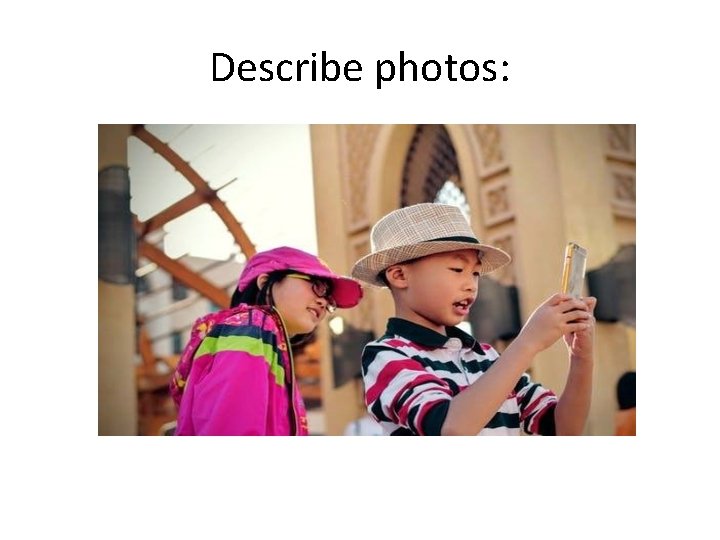
Describe photos:
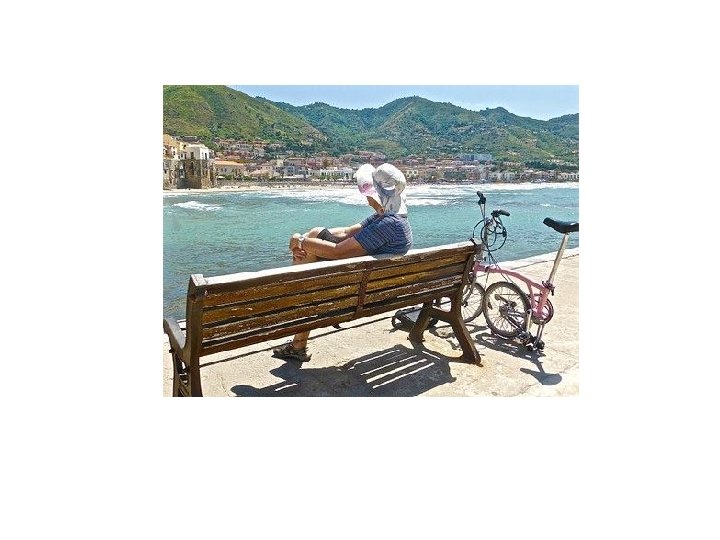

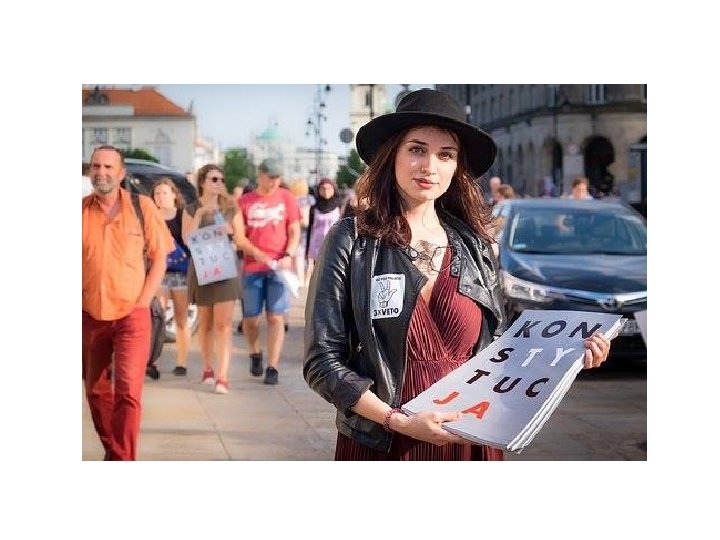

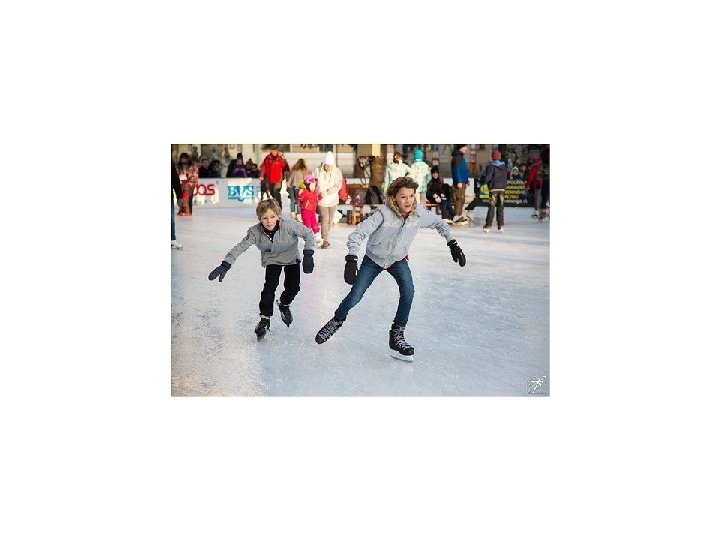




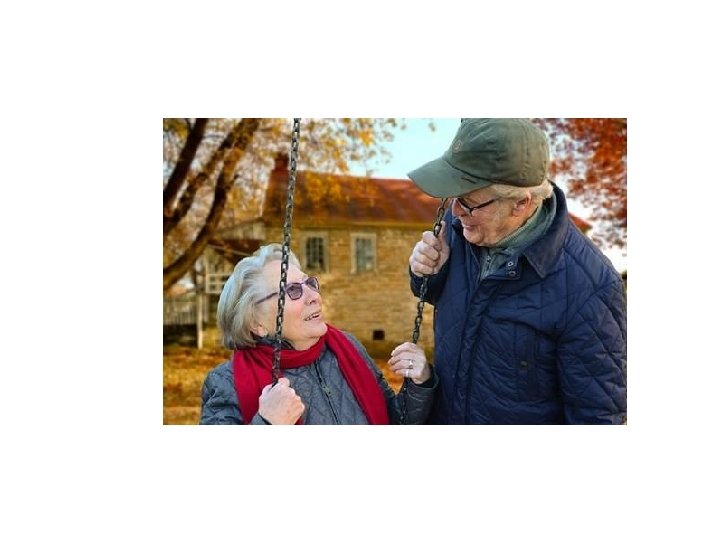


Thank you for your attention! Małgorzata Widera your English teacher

USEFUL LINKS / BIBLIOGRAPHY Ø https: //www. ingless. pl/artykul/opis-obrazkapo-angielsku/ Ø https: //eszkola. pl/jezyk-angielski/opis-obrazka -po-angielsku-5279. html Ø https: //quizlet. com/224795069/physicalappearance-flash-cards/ Ø https: //quizlet. com/71471665/zadanie-2 matura-ustna-opis-obrazka-flash-cards/
- Slides: 22