Rvaluation du seuil transfusionnel Philippe Van der Linden









- Slides: 43
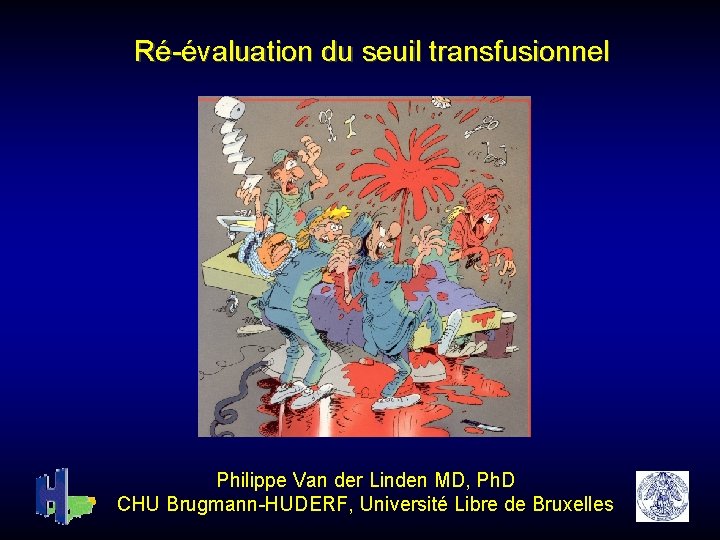
Ré-évaluation du seuil transfusionnel Philippe Van der Linden MD, Ph. D CHU Brugmann-HUDERF, Université Libre de Bruxelles
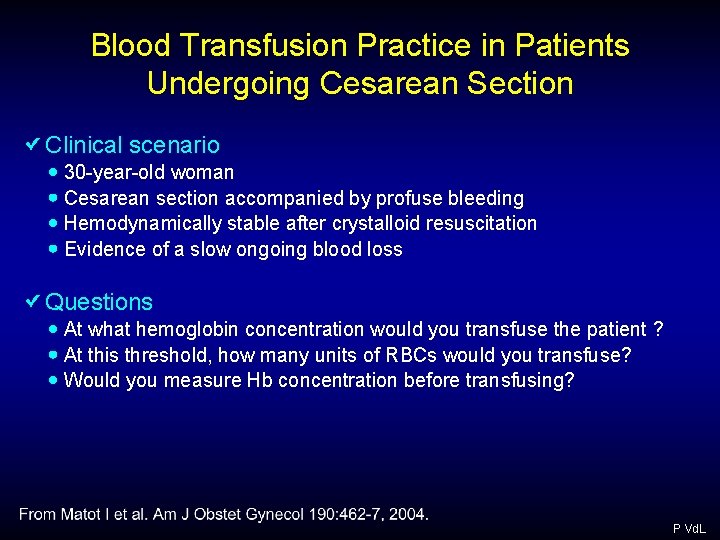
Blood Transfusion Practice in Patients Undergoing Cesarean Section Clinical scenario 30 -year-old woman Cesarean section accompanied by profuse bleeding Hemodynamically stable after crystalloid resuscitation Evidence of a slow ongoing blood loss Questions At what hemoglobin concentration would you transfuse the patient ? At this threshold, how many units of RBCs would you transfuse? Would you measure Hb concentration before transfusing? P Vd. L
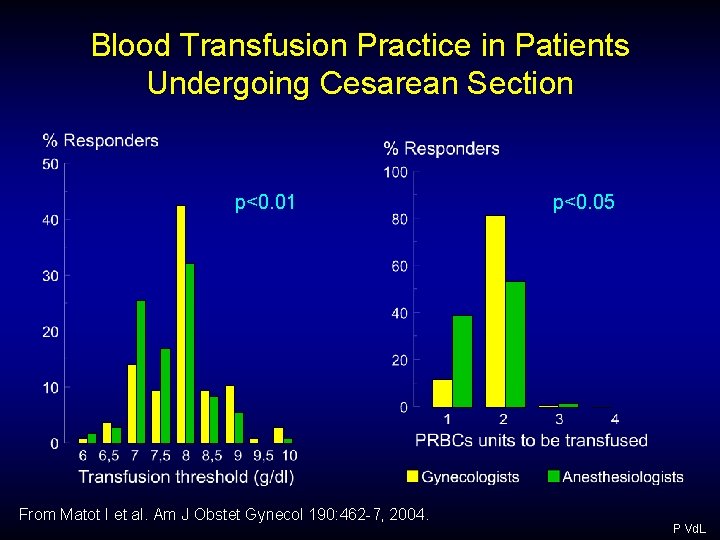
Blood Transfusion Practice in Patients Undergoing Cesarean Section p<0. 01 From Matot I et al. Am J Obstet Gynecol 190: 462 -7, 2004. p<0. 05 P Vd. L
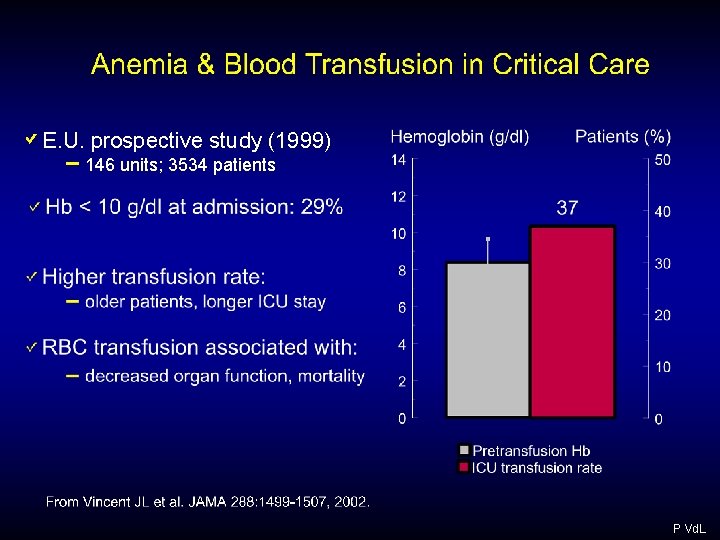
E. U. prospective study (1999) 146 units; 3534 patients P Vd. L
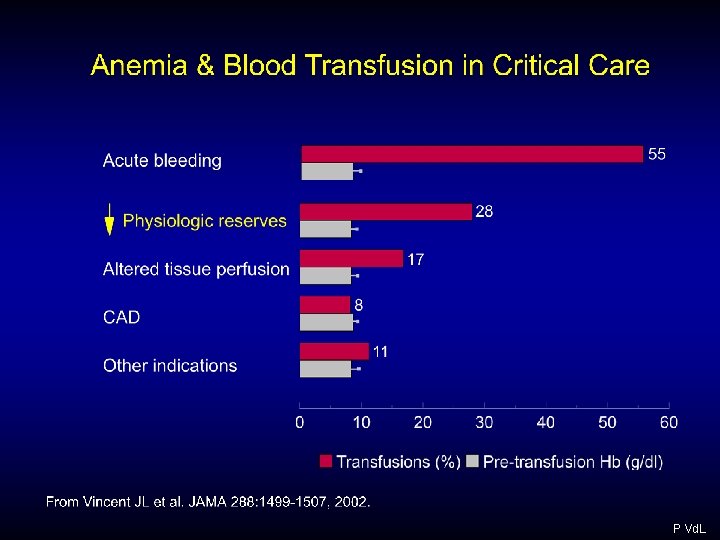
P Vd. L
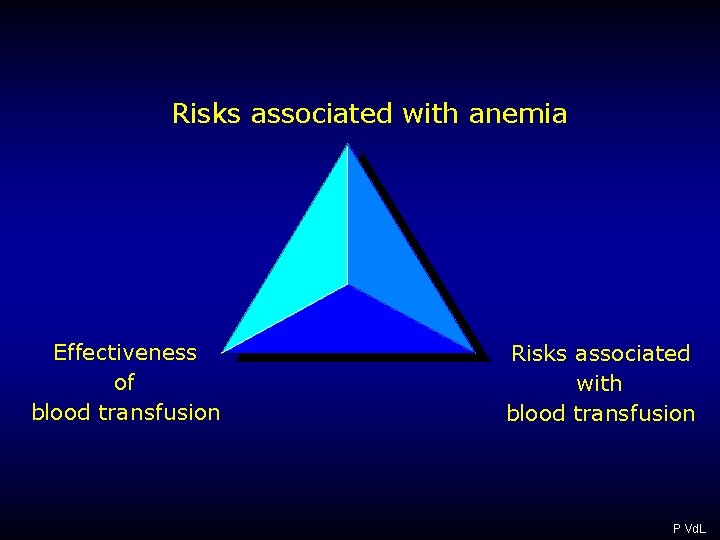
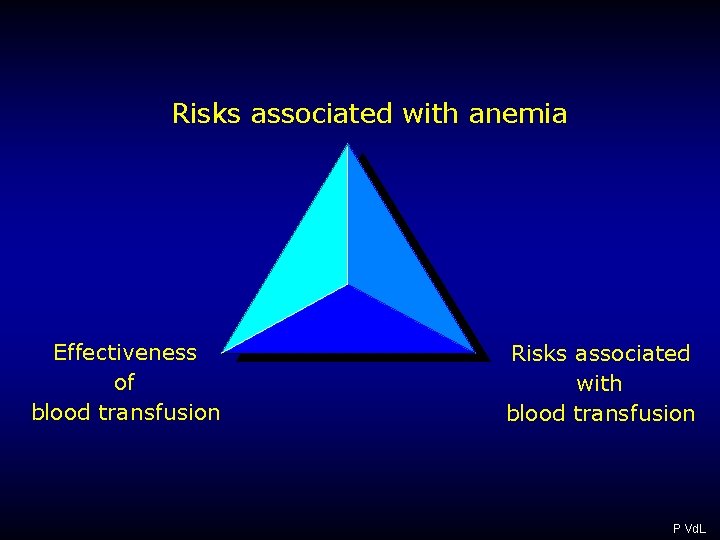
Risks associated with anemia Effectiveness of blood transfusion Risks associated with blood transfusion P Vd. L
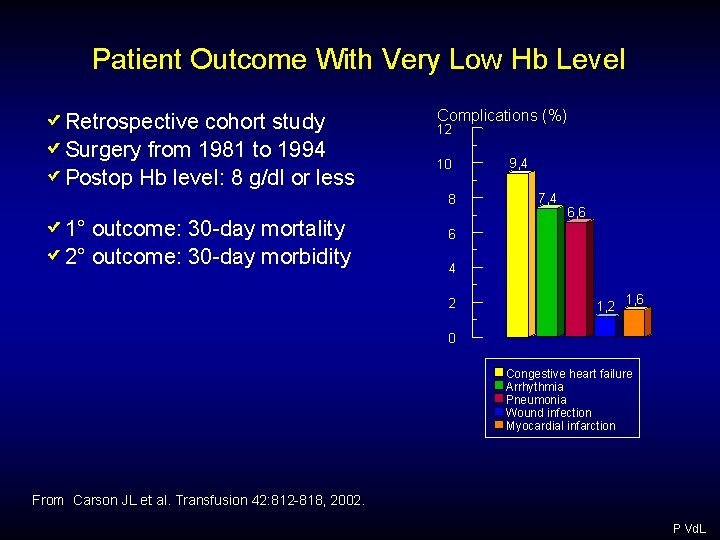
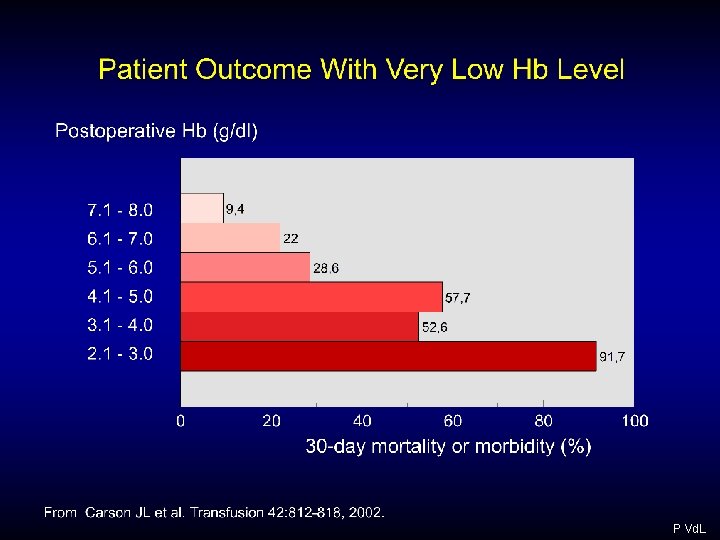
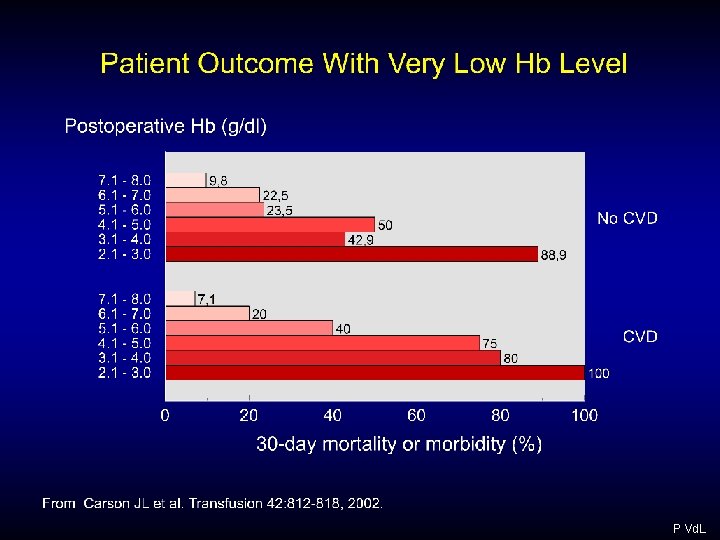
Patient Outcome With Very Low Hb Level Retrospective cohort study Surgery from 1981 to 1994 Postop Hb level: 8 g/dl or less Complications (%) 12 10 8 1° outcome: 30 -day mortality 2° outcome: 30 -day morbidity 9, 4 7, 4 6, 6 6 4 2 1, 6 0 Congestive heart failure Arrhythmia Pneumonia Wound infection Myocardial infarction From Carson JL et al. Transfusion 42: 812 -818, 2002. P Vd. L
P Vd. L
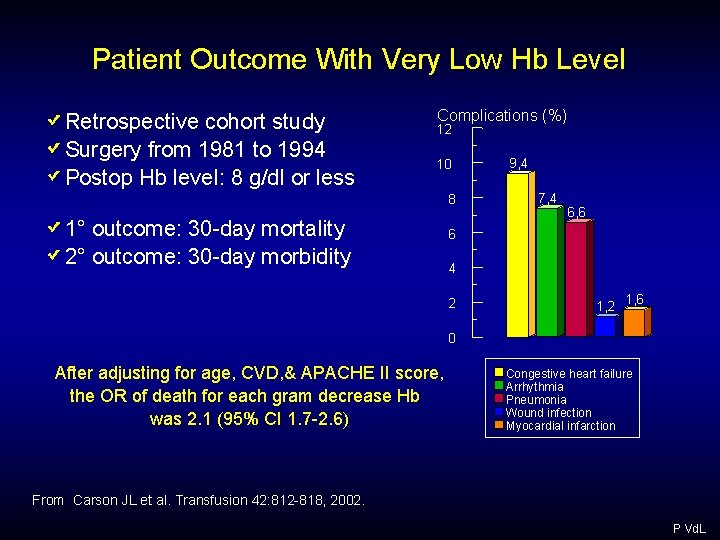
Patient Outcome With Very Low Hb Level Retrospective cohort study Surgery from 1981 to 1994 Postop Hb level: 8 g/dl or less Complications (%) 12 10 8 1° outcome: 30 -day mortality 2° outcome: 30 -day morbidity 9, 4 7, 4 6, 6 6 4 2 1, 6 0 After adjusting for age, CVD, & APACHE II score, the OR of death for each gram decrease Hb was 2. 1 (95% CI 1. 7 -2. 6) Congestive heart failure Arrhythmia Pneumonia Wound infection Myocardial infarction From Carson JL et al. Transfusion 42: 812 -818, 2002. P Vd. L
P Vd. L
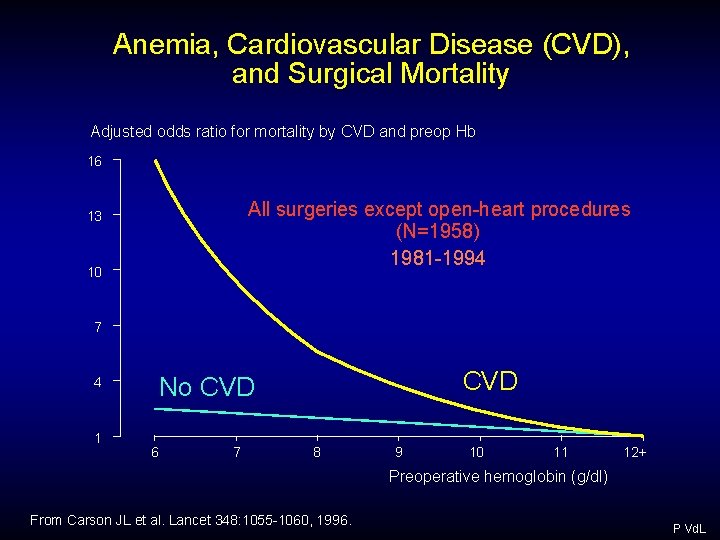
Anemia, Cardiovascular Disease (CVD), and Surgical Mortality Adjusted odds ratio for mortality by CVD and preop Hb 16 All surgeries except open-heart procedures (N=1958) 1981 -1994 13 10 7 1 CVD No CVD 4 6 7 8 9 10 11 12+ Preoperative hemoglobin (g/dl) From Carson JL et al. Lancet 348: 1055 -1060, 1996. P Vd. L
P Vd. L
P Vd. L
P Vd. L
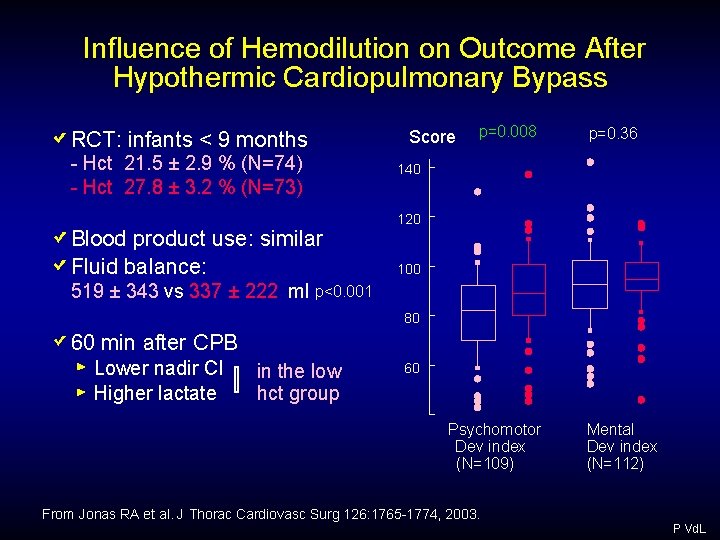
Influence of Hemodilution on Outcome After Hypothermic Cardiopulmonary Bypass RCT: infants < 9 months - Hct 21. 5 ± 2. 9 % (N=74) - Hct 27. 8 ± 3. 2 % (N=73) Blood product use: similar Fluid balance: Score p=0. 008 p=0. 36 140 120 100 519 ± 343 vs 337 ± 222 ml p<0. 001 80 60 min after CPB Lower nadir CI Higher lactate in the low hct group 60 Psychomotor Dev index (N=109) Mental Dev index (N=112) From Jonas RA et al. J Thorac Cardiovasc Surg 126: 1765 -1774, 2003. P Vd. L
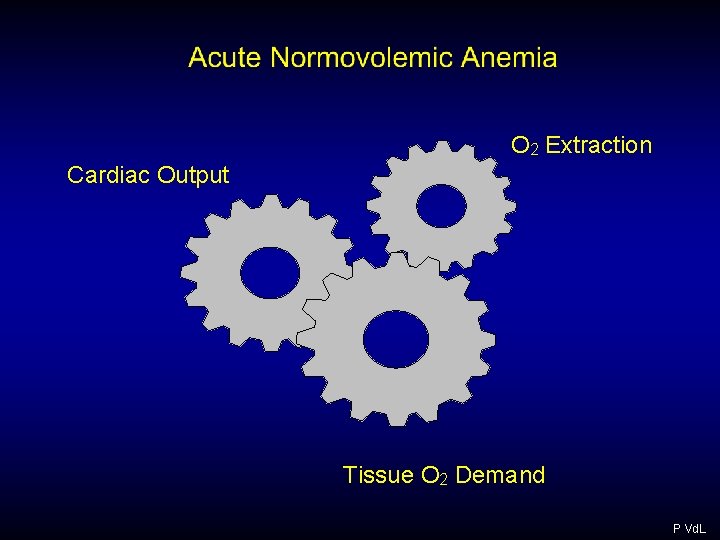
O 2 Extraction Cardiac Output Tissue O 2 Demand P Vd. L
P Vd. L
Risks associated with anemia Effectiveness of blood transfusion Risks associated with blood transfusion P Vd. L
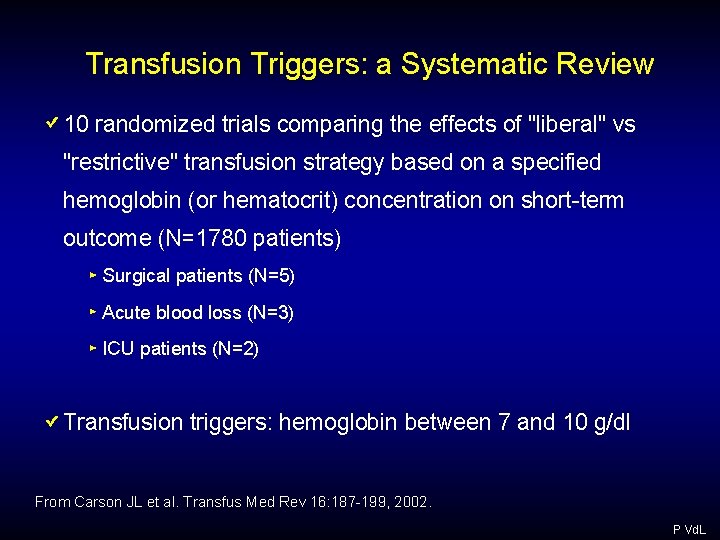
Transfusion Triggers: a Systematic Review 10 randomized trials comparing the effects of "liberal" vs "restrictive" transfusion strategy based on a specified hemoglobin (or hematocrit) concentration on short-term outcome (N=1780 patients) Surgical patients (N=5) Acute blood loss (N=3) ICU patients (N=2) Transfusion triggers: hemoglobin between 7 and 10 g/dl From Carson JL et al. Transfus Med Rev 16: 187 -199, 2002. P Vd. L
P Vd. L
P Vd. L
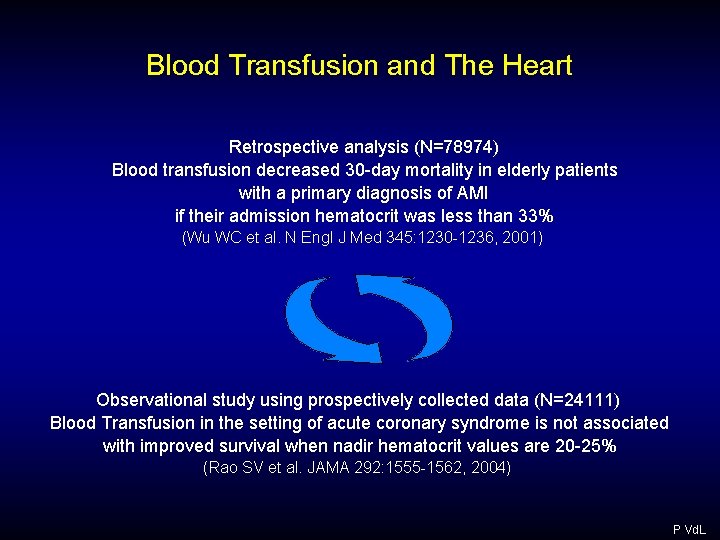
Blood Transfusion and The Heart Retrospective analysis (N=78974) Blood transfusion decreased 30 -day mortality in elderly patients with a primary diagnosis of AMI if their admission hematocrit was less than 33% (Wu WC et al. N Engl J Med 345: 1230 -1236, 2001) Observational study using prospectively collected data (N=24111) Blood Transfusion in the setting of acute coronary syndrome is not associated with improved survival when nadir hematocrit values are 20 -25% (Rao SV et al. JAMA 292: 1555 -1562, 2004) P Vd. L
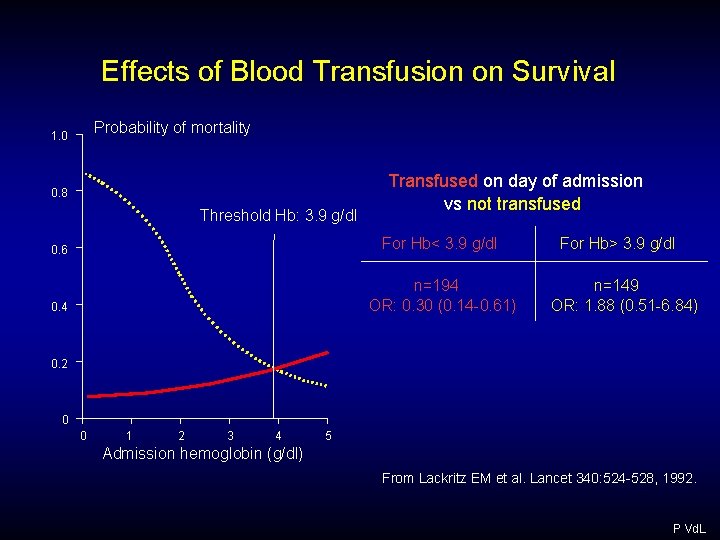
Effects of Blood Transfusion on Survival Probability of mortality 1. 0 0. 8 Threshold Hb: 3. 9 g/dl Transfused on day of admission vs not transfused 0. 6 For Hb< 3. 9 g/dl 0. 4 n=194 OR: 0. 30 (0. 14 -0. 61) For Hb> 3. 9 g/dl n=149 OR: 1. 88 (0. 51 -6. 84) 0. 2 0 0 1 2 3 4 5 Admission hemoglobin (g/dl) From Lackritz EM et al. Lancet 340: 524 -528, 1992. P Vd. L
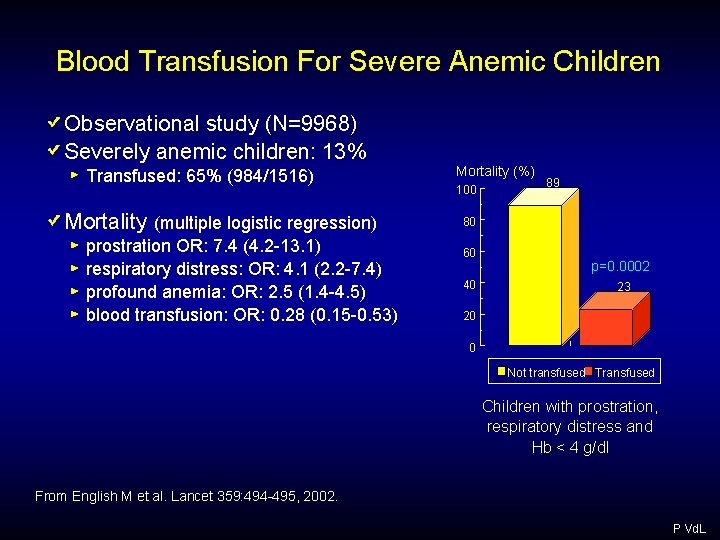
Blood Transfusion For Severe Anemic Children Observational study (N=9968) Severely anemic children: 13% Transfused: 65% (984/1516) Mortality (multiple logistic regression) prostration OR: 7. 4 (4. 2 -13. 1) respiratory distress: OR: 4. 1 (2. 2 -7. 4) profound anemia: OR: 2. 5 (1. 4 -4. 5) blood transfusion: OR: 0. 28 (0. 15 -0. 53) Mortality (%) 100 89 80 60 40 p=0. 0002 23 20 0 Not transfused Transfused Children with prostration, respiratory distress and Hb < 4 g/dl From English M et al. Lancet 359: 494 -495, 2002. P Vd. L
P Vd. L
P Vd. L
P Vd. L
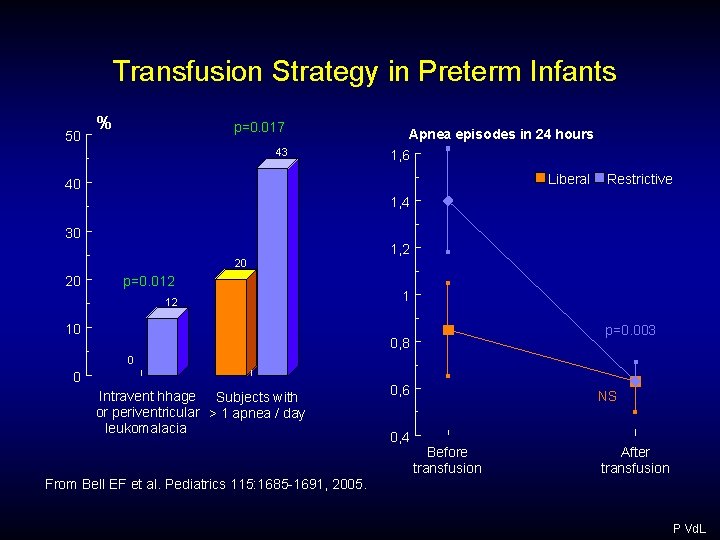
Transfusion Strategy in Preterm Infants 50 % p=0. 017 43 Apnea episodes in 24 hours 1, 6 Liberal 40 Restrictive 1, 4 30 20 20 p=0. 012 12 10 1, 2 1 p=0. 003 0, 8 0 0 Intravent hhage Subjects with or periventricular > 1 apnea / day leukomalacia 0, 6 NS 0, 4 Before transfusion After transfusion From Bell EF et al. Pediatrics 115: 1685 -1691, 2005. P Vd. L
P Vd. L
P Vd. L
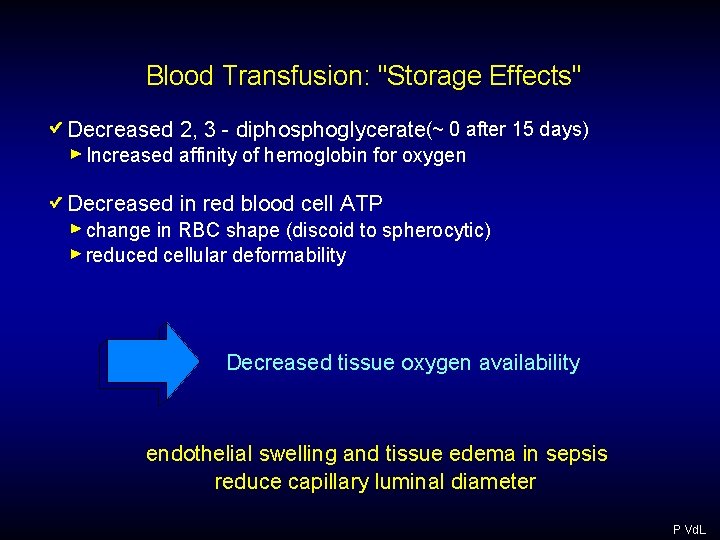
Blood Transfusion: "Storage Effects" Decreased 2, 3 - diphosphoglycerate(~ 0 after 15 days) Increased affinity of hemoglobin for oxygen Decreased in red blood cell ATP change in RBC shape (discoid to spherocytic) reduced cellular deformability Decreased tissue oxygen availability endothelial swelling and tissue edema in sepsis reduce capillary luminal diameter P Vd. L
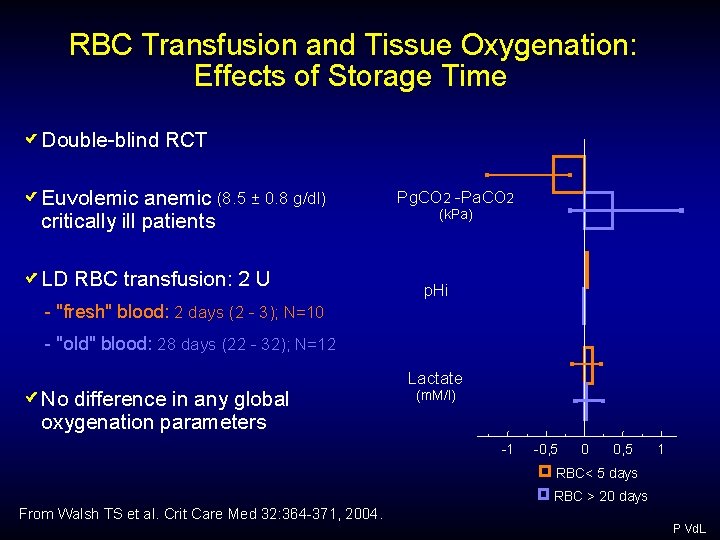
RBC Transfusion and Tissue Oxygenation: Effects of Storage Time Double-blind RCT Euvolemic anemic (8. 5 ± 0. 8 g/dl) critically ill patients LD RBC transfusion: 2 U Pg. CO 2 -Pa. CO 2 (k. Pa) p. Hi - "fresh" blood: 2 days (2 - 3); N=10 - "old" blood: 28 days (22 - 32); N=12 No difference in any global oxygenation parameters Lactate (m. M/l) -1 -0, 5 0 0, 5 1 RBC< 5 days RBC > 20 days From Walsh TS et al. Crit Care Med 32: 364 -371, 2004. P Vd. L
P Vd. L
P Vd. L
P Vd. L
P Vd. L
P Vd. L
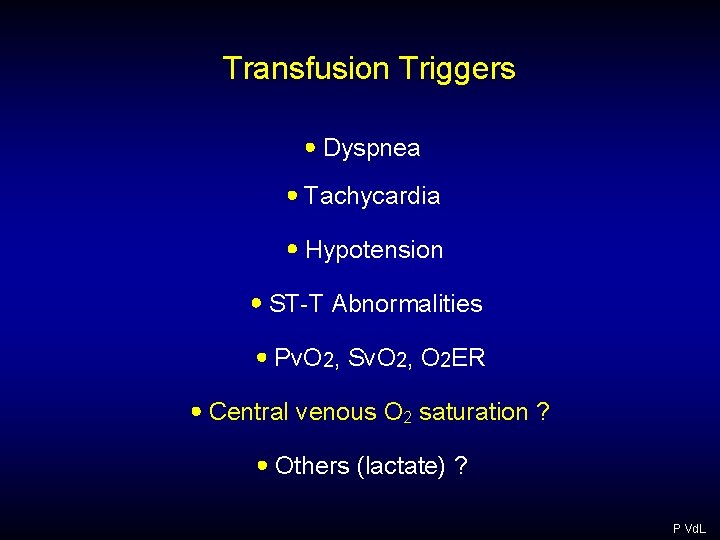
Transfusion Triggers Dyspnea Tachycardia Hypotension ST-T Abnormalities Pv. O 2, Sv. O 2, O 2 ER Central venous O 2 saturation ? Others (lactate) ? P Vd. L
P Vd. L
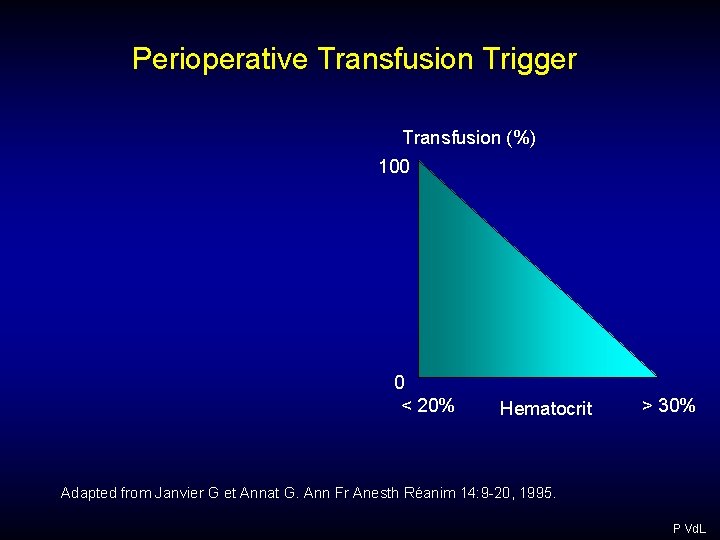
Perioperative Transfusion Trigger Transfusion (%) 100 0 < 20% Hematocrit > 30% Adapted from Janvier G et Annat G. Ann Fr Anesth Réanim 14: 9 -20, 1995. P Vd. L
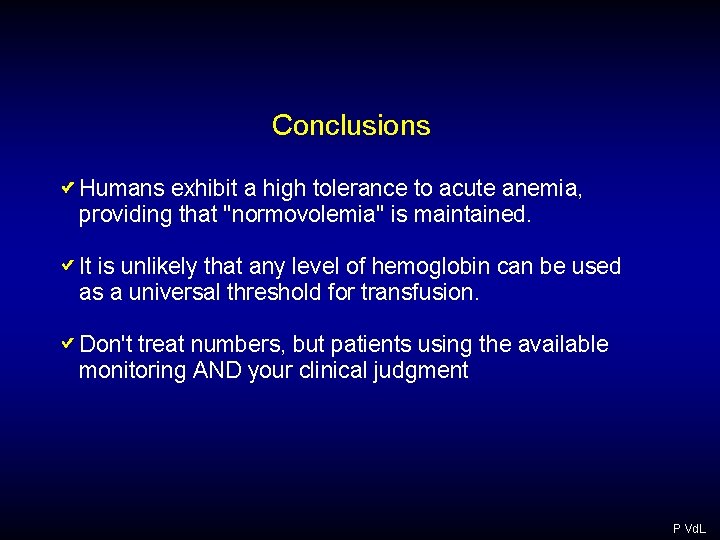
Conclusions Humans exhibit a high tolerance to acute anemia, providing that "normovolemia" is maintained. It is unlikely that any level of hemoglobin can be used as a universal threshold for transfusion. Don't treat numbers, but patients using the available monitoring AND your clinical judgment P Vd. L
P Vd. L