PSYCHOPATHOLOGY RESEARCH GROUP Research group level I Edith




- Slides: 70
PSYCHOPATHOLOGY RESEARCH GROUP Research group level I Edith Cowan University Dr Rodrigo Becerra
AIMS To research any aspects of psychopathology. To conduct applied research
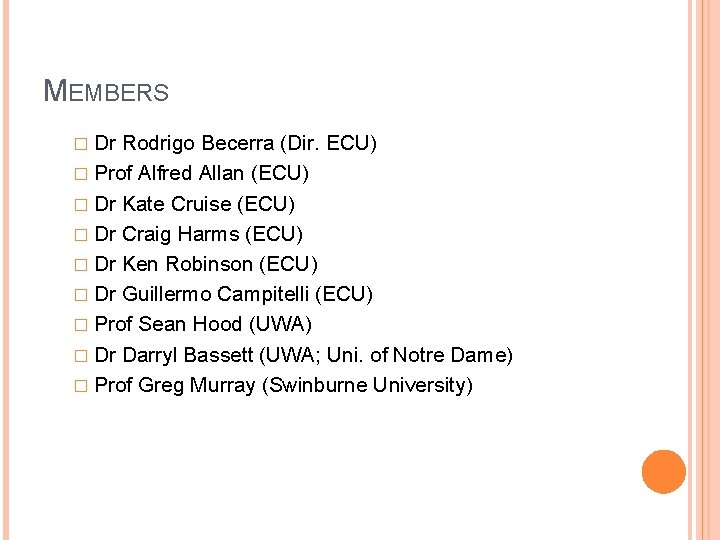
MEMBERS � Dr Rodrigo Becerra (Dir. ECU) � Prof Alfred Allan (ECU) � Dr Kate Cruise (ECU) � Dr Craig Harms (ECU) � Dr Ken Robinson (ECU) � Dr Guillermo Campitelli (ECU) � Prof Sean Hood (UWA) � Dr Darryl Bassett (UWA; Uni. of Notre Dame) � Prof Greg Murray (Swinburne University)
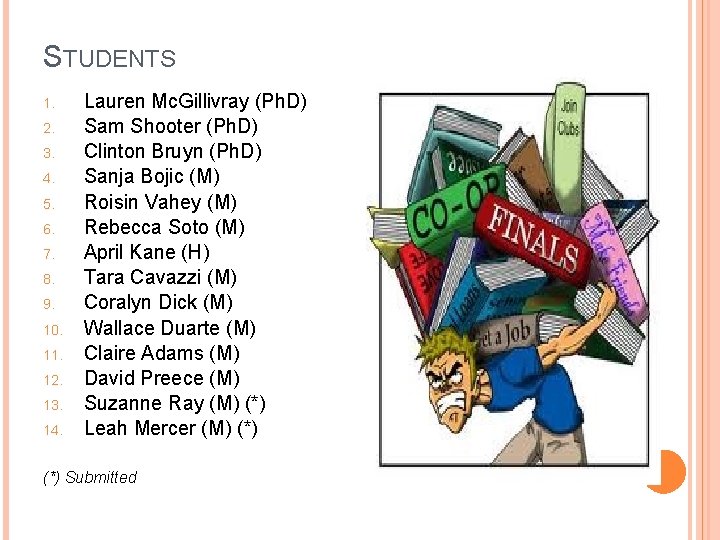
STUDENTS 1. 2. 3. 4. 5. 6. 7. 8. 9. 10. 11. 12. 13. 14. Lauren Mc. Gillivray (Ph. D) Sam Shooter (Ph. D) Clinton Bruyn (Ph. D) Sanja Bojic (M) Roisin Vahey (M) Rebecca Soto (M) April Kane (H) Tara Cavazzi (M) Coralyn Dick (M) Wallace Duarte (M) Claire Adams (M) David Preece (M) Suzanne Ray (M) (*) Leah Mercer (M) (*) Submitted
GENERAL THEMES Emotions and Psychopathology Cognition and Psychopathology Transdiagnostic issues in psychopathology Mindfulness and psychopathology Bipolar Disorders Cognitive and Affective To. M in psychopathology Psychophysiological markers of emotions in psychopathology Emotion regulation
Example of projects
SPECIFIC PROJECTS -1 Lauren Mc. Gillivray (Ph. D Candidate); Rodrigo Becerra; and Craig Harms Title: Alexithymia in a psychiatric population: stability and relationship with therapeutic outcome. Status: Analysing data
SPECIFIC PROJECTS -2 Clinton Bruyn (Ph. D Candidate); Rodrigo Becerra; Ken Robinson. Title: Psychophysiological measures (heart rate, respiratory sinus arrhythmia, GSR) in Bipolar Disorder. Status: Proposal
SPECIFIC PROJECTS -3 Sanja Bojic (Masters student), Rodrigo Becerra Title: A Critical Review of the Heart Rate and Heart Rate Variability in Bipolar Disorder. Status: Proposal
SPECIFIC PROJECTS -4 Becerra, R. , Cruise , K. , Harms, C. , Allan, A. , Bassett, D. , Hood, S. , & Murray, G. Title: Emotion Regulation in Bipolar Disorder and its transdiagnostic value when compared to anxiety and depression. Status: Paper about to be submitted.
SPECIFIC PROJECTS -5 Suzanne Ray (Masters Student), Rodrigo Becerra, and Craig Harms Title: Decision Making and Emotion Regulation in the Euthymic Phase of Bipolar Disorder. Status: Thesis submitted
SPECIFIC PROJECTS -6 Leah Mercer (Masters), Rodrigo Becerra Title: Does a Unique Emotional Processing Profile of Euthymic Bipolar Disorder Exist? A Critical Review. Status: Thesis submitted Paper accepted for publication. Journal of Affective Disorders.
SPECIFIC PROJECTS -7 Tara Cavazzi (Masters), Becerra, R. Title: A review of the Psychophysiological research of Emotion Dysregulation in Borderline Personality Disorder: Implications for Biosocial theory Status: To be submitted (soon? )
SPECIFIC PROJECTS -8 Becerra, R. , Cruise , K. , Harms, C. , Allan, A. , Hood, S. , & Murray, G. Title: Emotion Regulation and Residual depression, (not neuropsychological variables) predict psychosocial functioning in Bipolar Disorder. Status: Manuscript in preparation.
SPECIFIC PROJECTS -9 April Kane (Honours), Becerra, R. , and Campitelli, G. Title: Cognitive and Affective Correlates of Theory of Mind as Influenced by Task Modality Status: Analysing data
SPECIFIC PROJECTS -10 Claire Adams (Masters), Becerra, R. , and Campitelli, G. Title: Emotion dysregulation and its role in recovery in a psychiatric population Status: Proposal
SPECIFIC PROJECTS -11 Rebecca Soto (Masters), Becerra, R. & Harms C. Title: The impact of academic training on psychology students’ affective and cognitive empathy levels Status: Data Collection
SPECIFIC PROJECTS -12 Wallace Duarte (Masters), Becerra, R. Title: Executive functioning in Bipolar Disorder Status: Proposal
SPECIFIC PROJECTS -13 Coralyn Dick (Masters), Becerra. R. & Harms C. Title: Can Specific Attentional Skills be Modified with Mindfulness Training? Status: Data analysis
SPECIFIC PROJECTS -14 David Preece (Masters), Allan, A. , Campitelli, G. & Becerra. R. Title: Neuropsychological, psychological and emotional processing in a recurrent craniopharyngioma patient. A case study Status: Testing
Emotion Regulation in Bipolar Disorder and its Transdiagnostic value when compared to anxiety and depression. _________________ Becerra, R. , Cruise , K. , Harms, C. , Allan, A. , Bassett, D. , Hood, S. , & Murray, G.
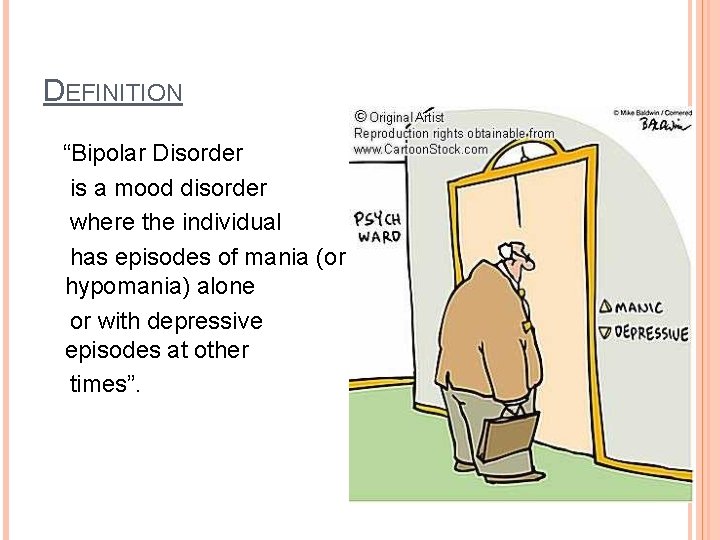
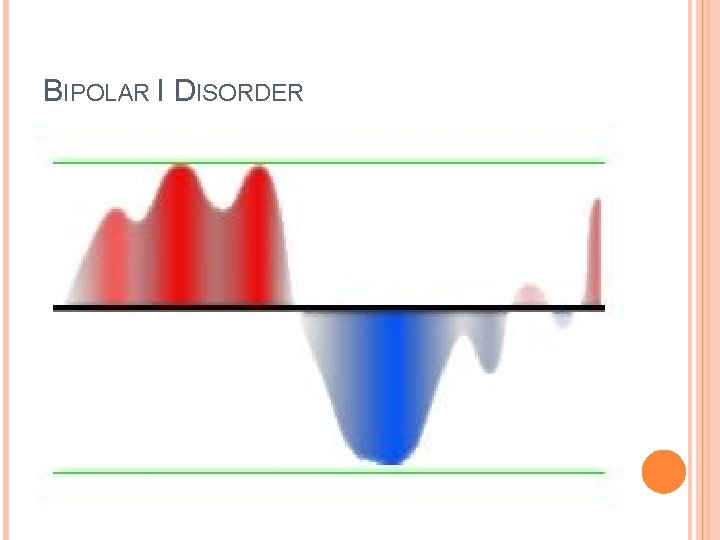
DEFINITION “Bipolar Disorder is a mood disorder where the individual has episodes of mania (or hypomania) alone or with depressive episodes at other times”.
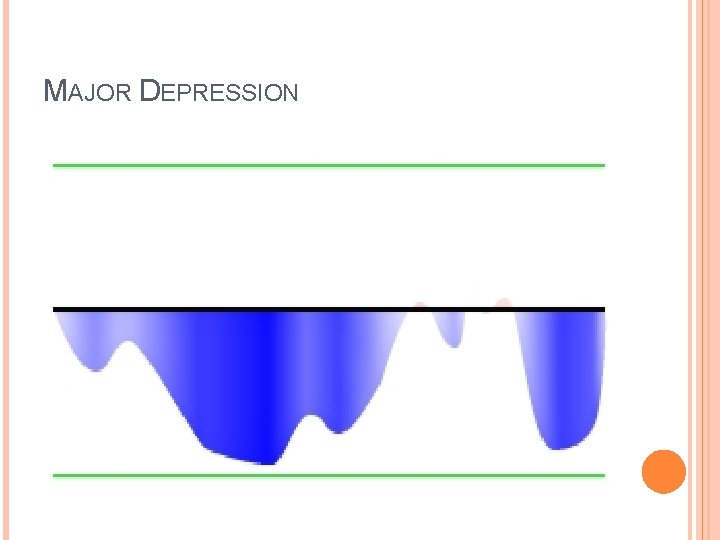
MAJOR DEPRESSION
BIPOLAR I DISORDER
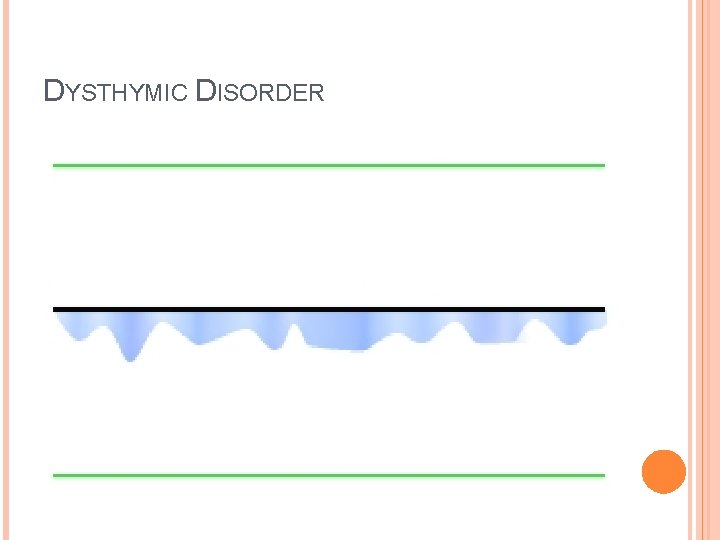
DYSTHYMIC DISORDER
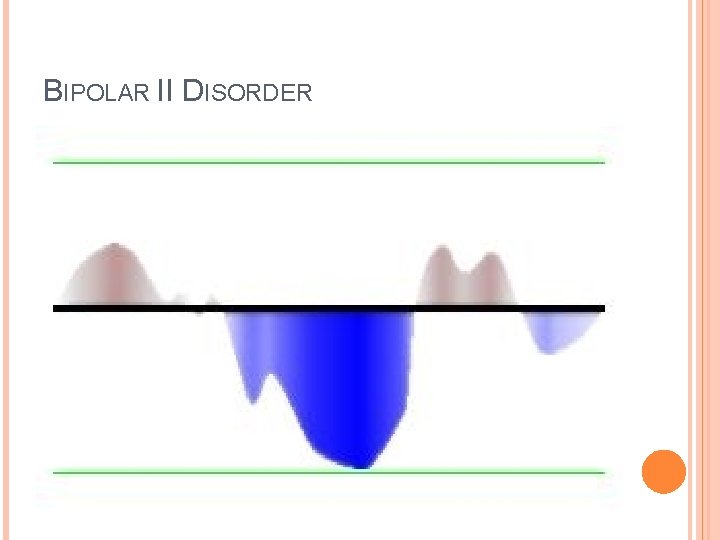
BIPOLAR II DISORDER
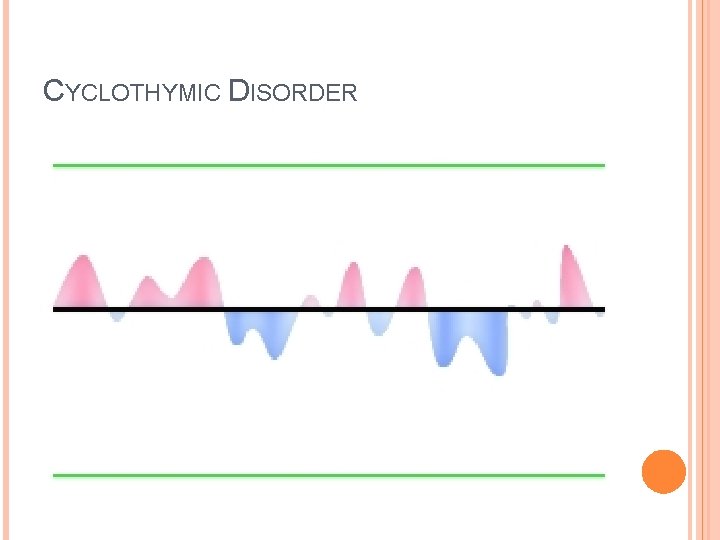
CYCLOTHYMIC DISORDER
In spite of significant advances in its treatment, the presence of mild and severe episodes is still a reality in BD. There are several recognized factors that trigger mood episodes including emotional experiences Surprisingly, there is sparse research on the emotional strategies that people with BD utilise to deal with psychosocial challenges.
The literature has focused On: 1. Cognitive strategies (e. g. , cognitive appraisal) 2. Emotional processing (e. g. , implicit responses, automaticity of responses, cognitive interference in emotional processing, etc. ).
We want to focus on a clinical approach. Emotional functioning in the context of adaptive abilities and the way emotions are regulated, or otherwise, in response to challenges in the BD’s environment. Therefore Emotion regulation (ER)
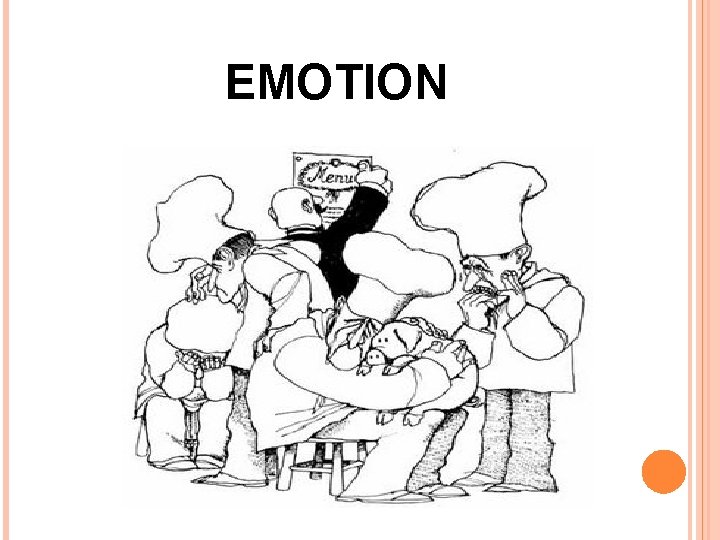
EMOTION
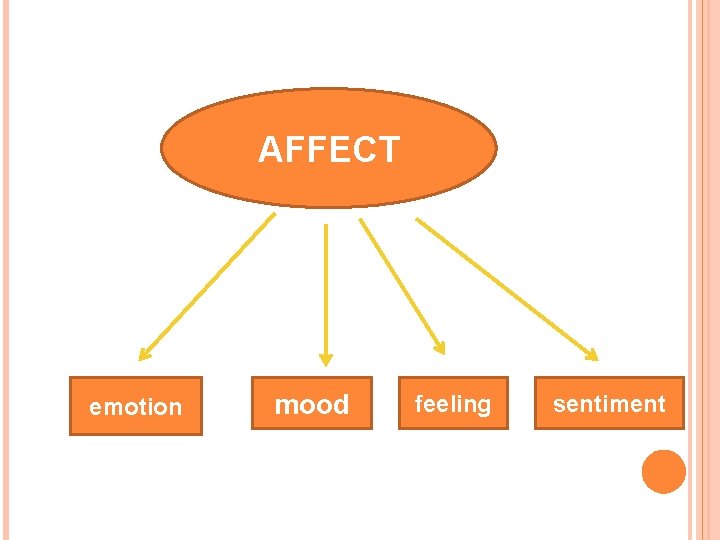
AFFECT emotion mood feeling sentiment
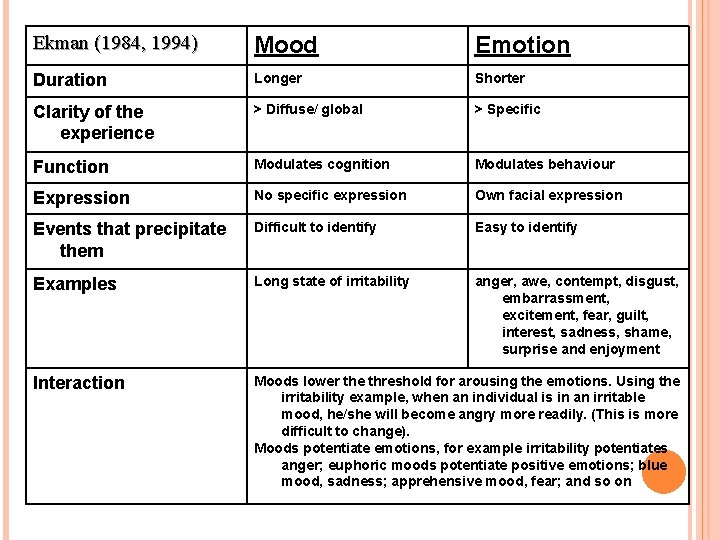
Ekman (1984, 1994) Mood Emotion Duration Longer Shorter Clarity of the experience > Diffuse/ global > Specific Function Modulates cognition Modulates behaviour Expression No specific expression Own facial expression Events that precipitate them Difficult to identify Easy to identify Examples Long state of irritability anger, awe, contempt, disgust, embarrassment, excitement, fear, guilt, interest, sadness, shame, surprise and enjoyment Interaction Moods lower the threshold for arousing the emotions. Using the irritability example, when an individual is in an irritable mood, he/she will become angry more readily. (This is more difficult to change). Moods potentiate emotions, for example irritability potentiates anger; euphoric moods potentiate positive emotions; blue mood, sadness; apprehensive mood, fear; and so on
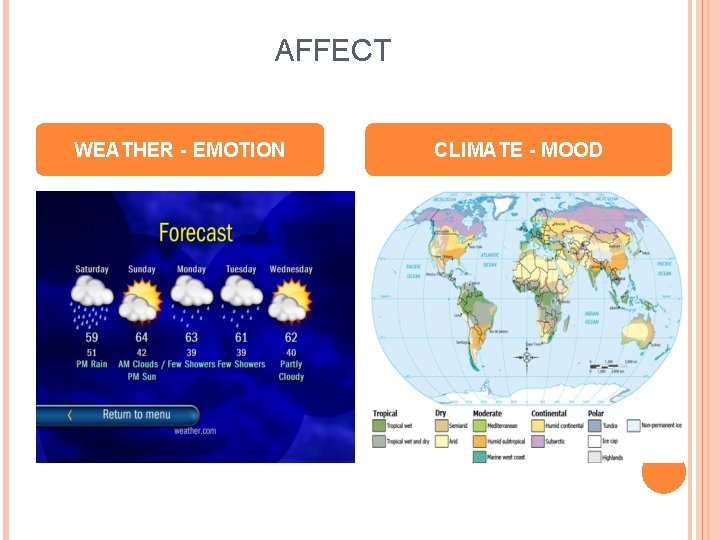
AFFECT WEATHER - EMOTION CLIMATE - MOOD
EMOTION REGULATION ER could be defined, at its most basic level as any attempt to influence the emotions which are experienced and they way in which they are expressed (Gross and Munoz, 1995).
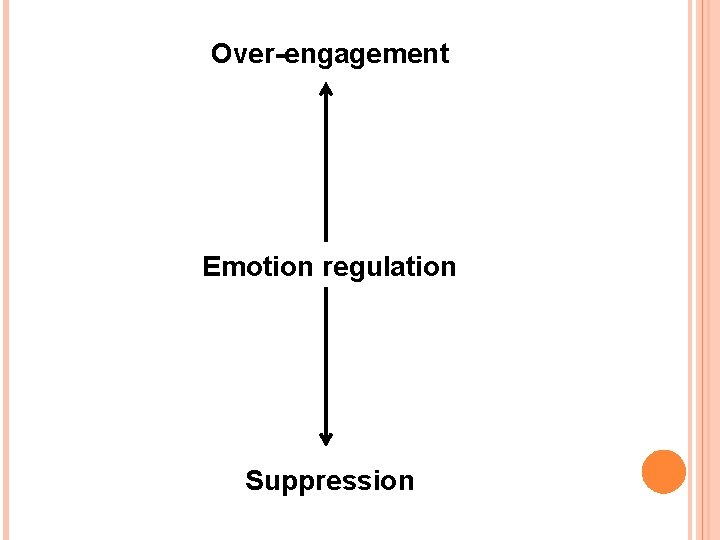
Over-engagement Emotion regulation Suppression
This approach lends itself to a more transdiagnostic conceptualisation of psychopathology. A transdiagnostic approach focuses on the commonalities observed in different psychological disorders instead of the differences. Lot of attention recently Nolen-Hoeksema & Edward, 2011; Watkins, Barlow, Allen, & Choate, 2004; Ehring & Watkins, 2008; Harvey, Watkins, Mansell, & Shafran, 2004; Kring & Sloan, 2010; Mansell, Harvey, Watkins, & Shafran, 2009.
These commonalities could be seen as 1. coincidental by-products of the disorders or 2. Bringing to the fore a causal relationship between putative transdiagnostic mechanisms and psychopathologies ER appears to be a good candidate for a transdiagnostic analysis of psychopathology as some sort of dysregulation of emotions features in all psychiatric diagnoses (see Rotenberg & Johnson, 2007, for a review).
AIM OF THE STUDY To create a profile of ER processes among Bipolar Disorder and compare it to Depression, Anxiety, and Healthy controls To identify potential transdiagnostic ER processes (i. e. , domains of emotion dysregulation common to all three psychiatric groups). In adhering to more traditional diagnostic taxonomies it would be expected that: � BD and Depression would share more commonalities � Anxiety Disorders (belonging to a diagnostic different category).
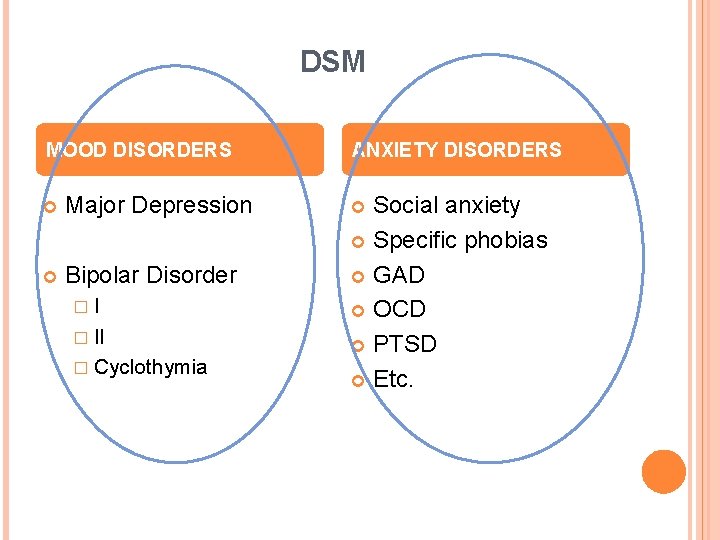
DSM MOOD DISORDERS Major Depression Bipolar Disorder �I � II � Cyclothymia ANXIETY DISORDERS Social anxiety Specific phobias GAD OCD PTSD Etc.
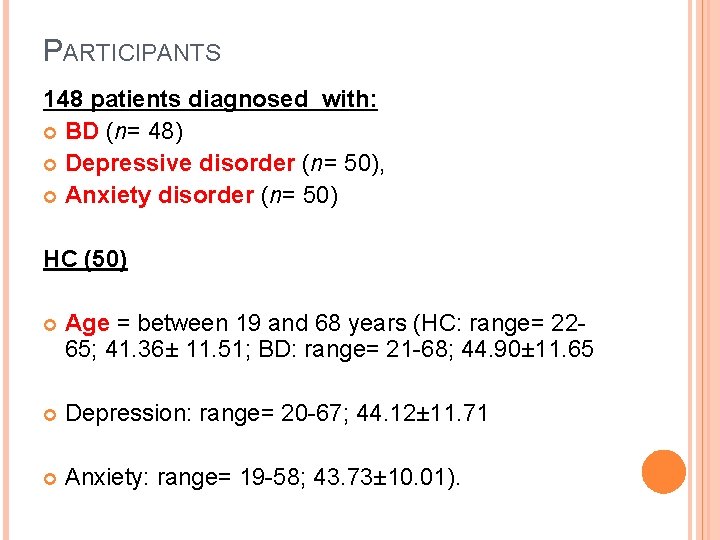
PARTICIPANTS 148 patients diagnosed with: BD (n= 48) Depressive disorder (n= 50), Anxiety disorder (n= 50) HC (50) Age = between 19 and 68 years (HC: range= 2265; 41. 36± 11. 51; BD: range= 21 -68; 44. 90± 11. 65 Depression: range= 20 -67; 44. 12± 11. 71 Anxiety: range= 19 -58; 43. 73± 10. 01).
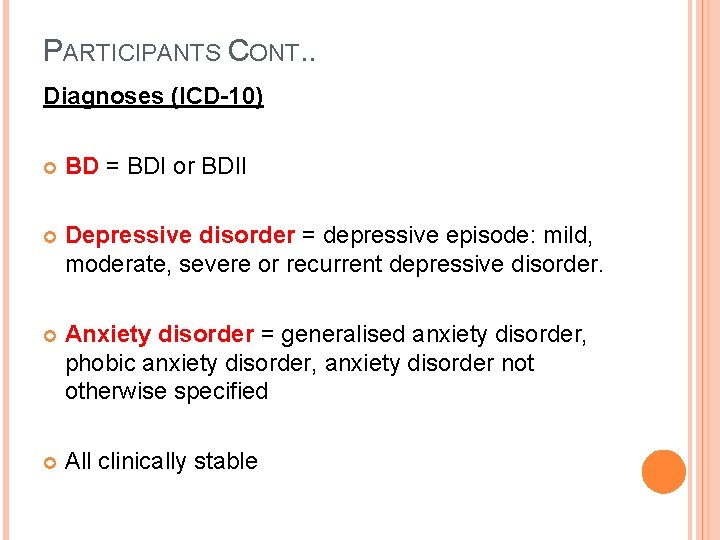
PARTICIPANTS CONT. . Diagnoses (ICD-10) BD = BDI or BDII Depressive disorder = depressive episode: mild, moderate, severe or recurrent depressive disorder. Anxiety disorder = generalised anxiety disorder, phobic anxiety disorder, anxiety disorder not otherwise specified All clinically stable
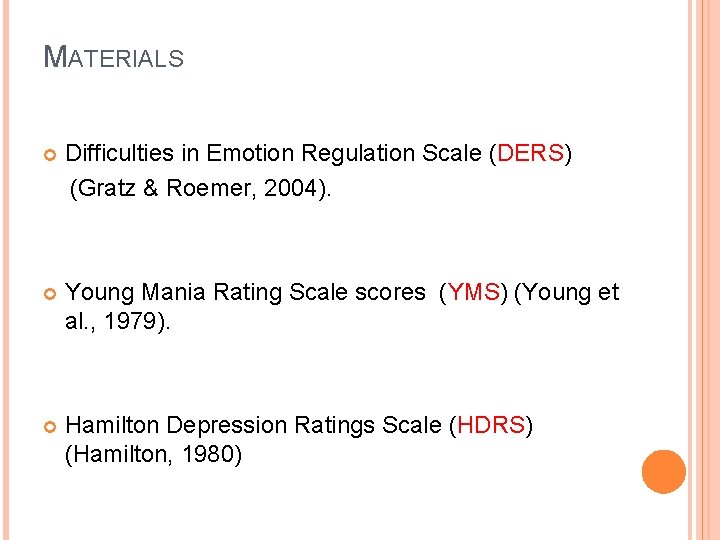
MATERIALS Difficulties in Emotion Regulation Scale (DERS) (Gratz & Roemer, 2004). Young Mania Rating Scale scores (YMS) (Young et al. , 1979). Hamilton Depression Ratings Scale (HDRS) (Hamilton, 1980)
DERS The DERS assesses both general deficits in ER and deficits in specific domains of ER. ER during times of distress; therefore many items begin with “When I am upset”. Dysregulation of emotion is assessed via six subscales Higher scored indicate emotional dysregulation.
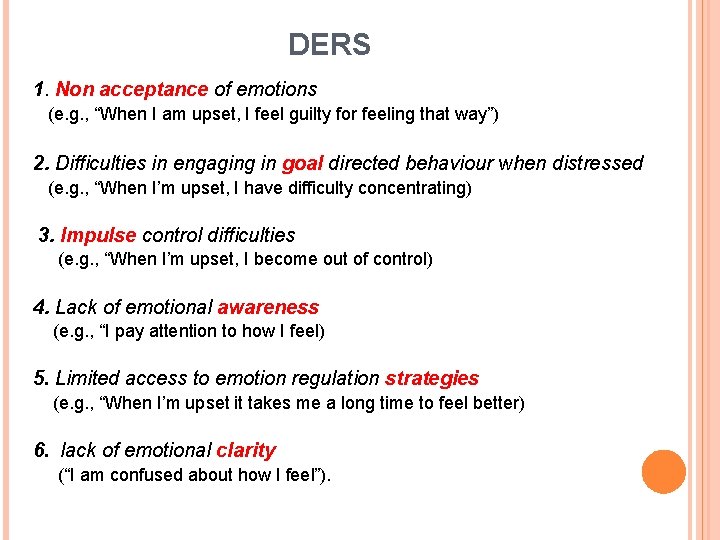
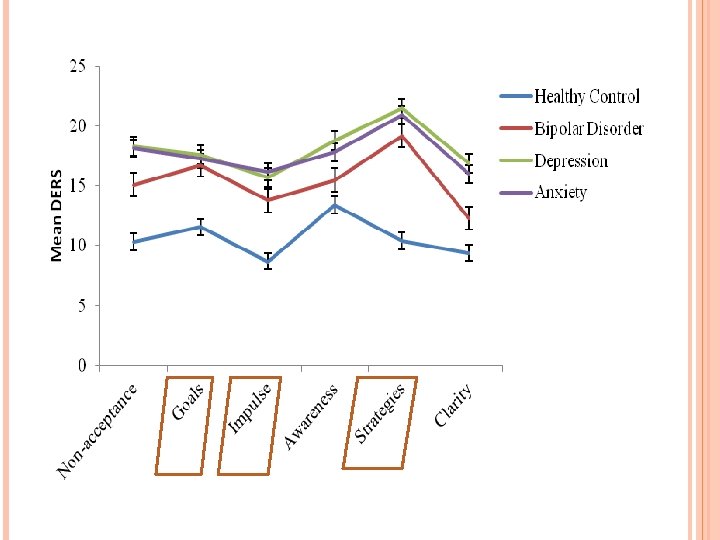
DERS 1. Non acceptance of emotions (e. g. , “When I am upset, I feel guilty for feeling that way”) 2. Difficulties in engaging in goal directed behaviour when distressed (e. g. , “When I’m upset, I have difficulty concentrating) 3. Impulse control difficulties (e. g. , “When I’m upset, I become out of control) 4. Lack of emotional awareness (e. g. , “I pay attention to how I feel) 5. Limited access to emotion regulation strategies (e. g. , “When I’m upset it takes me a long time to feel better) 6. lack of emotional clarity (“I am confused about how I feel”).
RESULTS
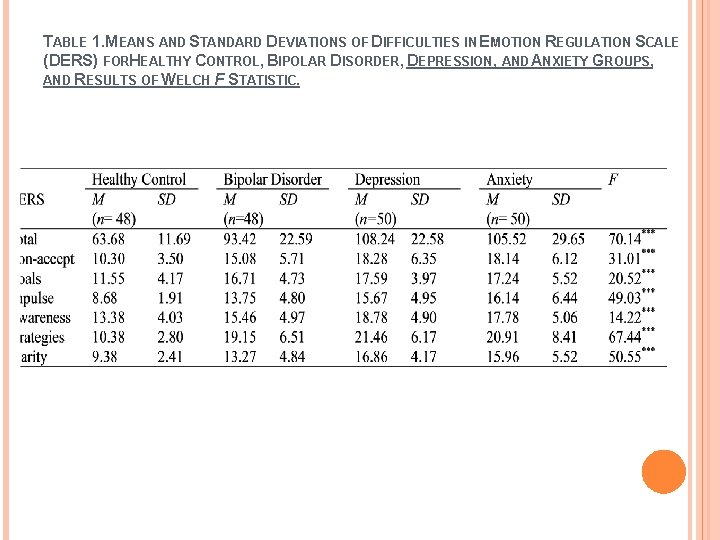
TABLE 1. MEANS AND STANDARD DEVIATIONS OF DIFFICULTIES IN EMOTION REGULATION SCALE (DERS) FORHEALTHY CONTROL, BIPOLAR DISORDER, DEPRESSION, AND ANXIETY GROUPS, AND RESULTS OF WELCH F STATISTIC.
DERS TOTAL SCORES
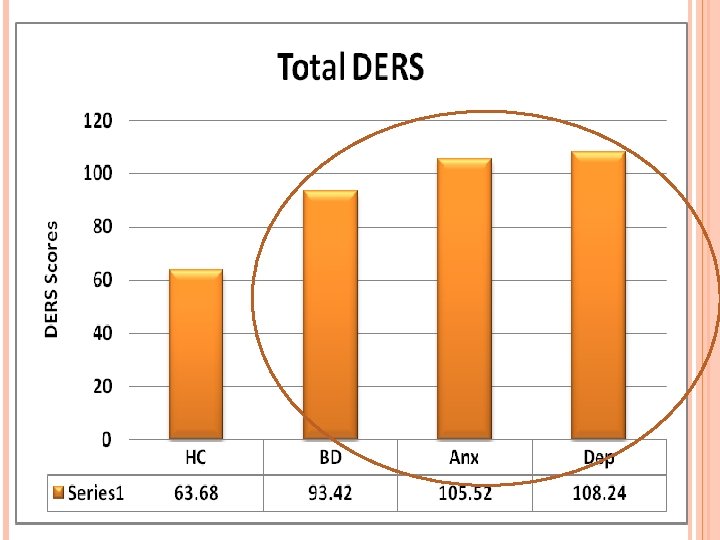
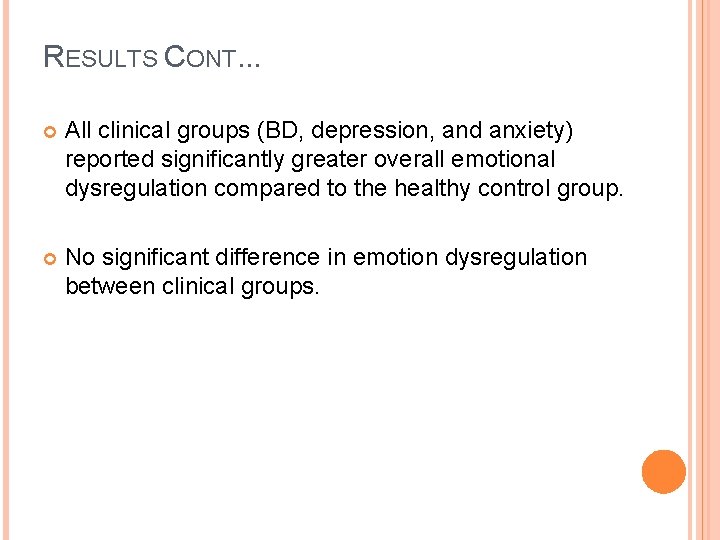
RESULTS CONT. . . All clinical groups (BD, depression, and anxiety) reported significantly greater overall emotional dysregulation compared to the healthy control group. No significant difference in emotion dysregulation between clinical groups.
DERS SUBSCALES
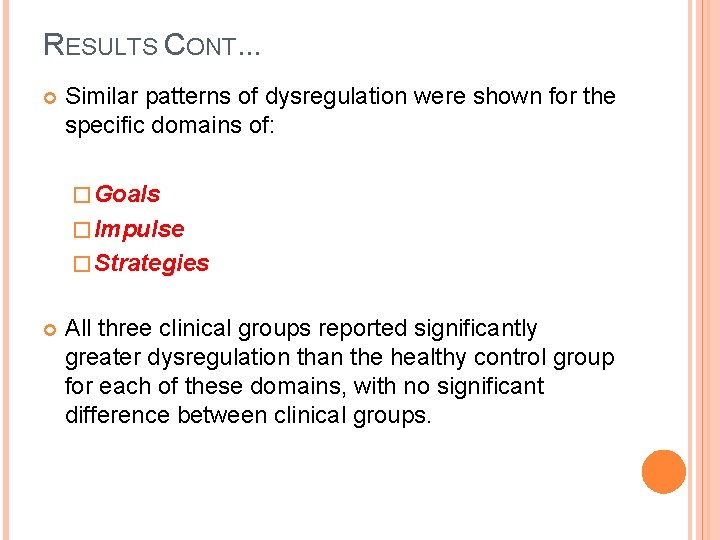
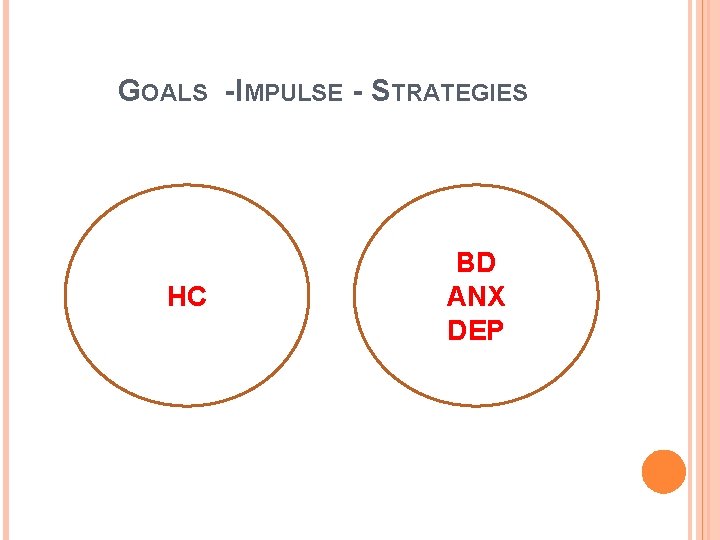
RESULTS CONT. . . Similar patterns of dysregulation were shown for the specific domains of: � Goals � Impulse � Strategies All three clinical groups reported significantly greater dysregulation than the healthy control group for each of these domains, with no significant difference between clinical groups.
GOALS - IMPULSE - STRATEGIES HC BD ANX DEP
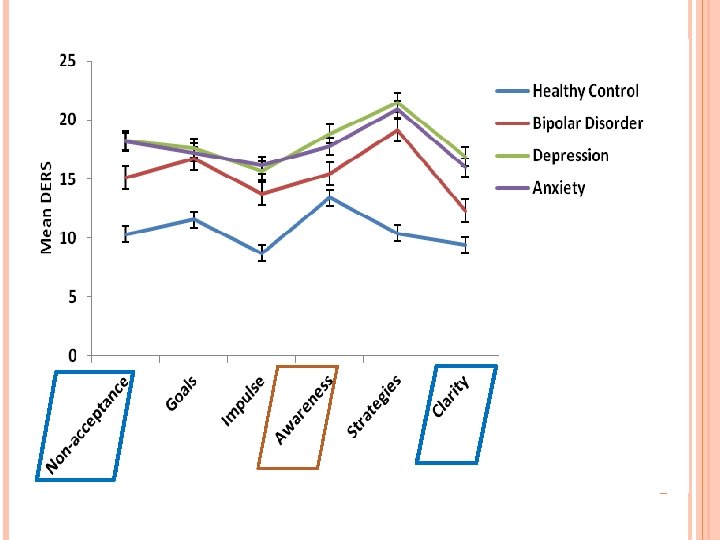
RESULTS CONT. . . The profile of emotion dyregulation for each clinical group differed with regards to the specific ER domains of: � Non acceptance � Awareness � Clarity
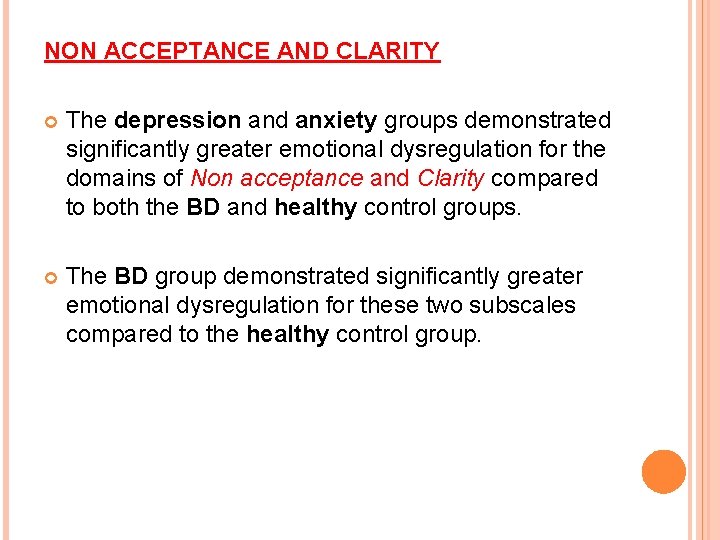
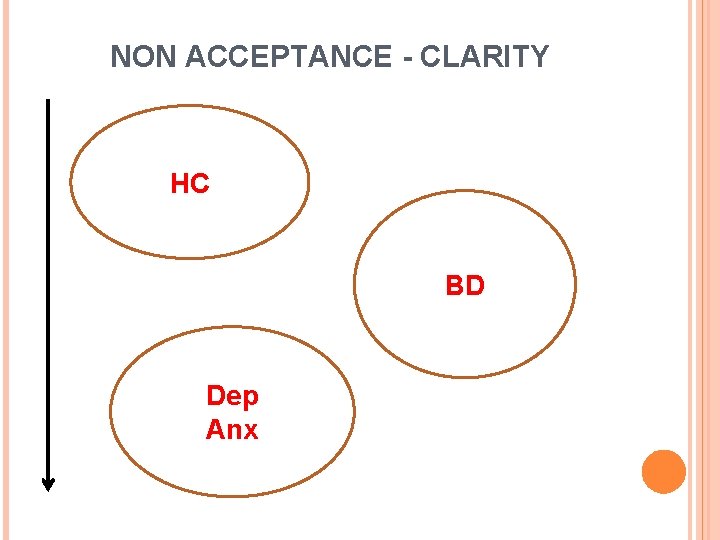
NON ACCEPTANCE AND CLARITY The depression and anxiety groups demonstrated significantly greater emotional dysregulation for the domains of Non acceptance and Clarity compared to both the BD and healthy control groups. The BD group demonstrated significantly greater emotional dysregulation for these two subscales compared to the healthy control group.
NON ACCEPTANCE - CLARITY HC BD Dep Anx
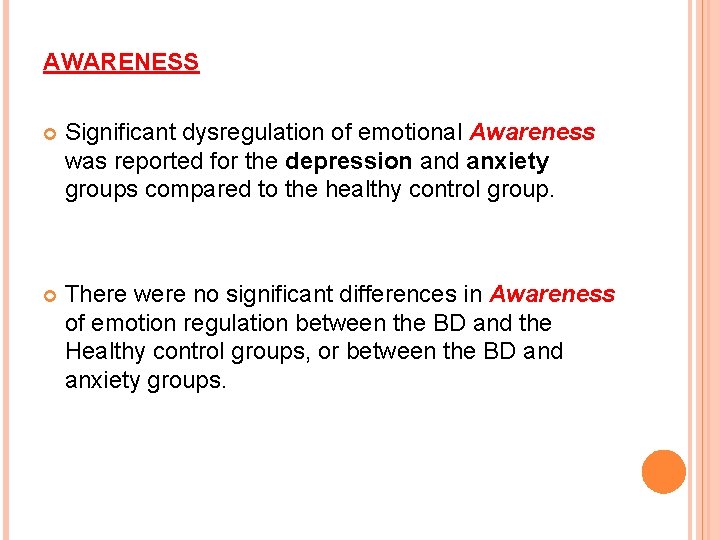
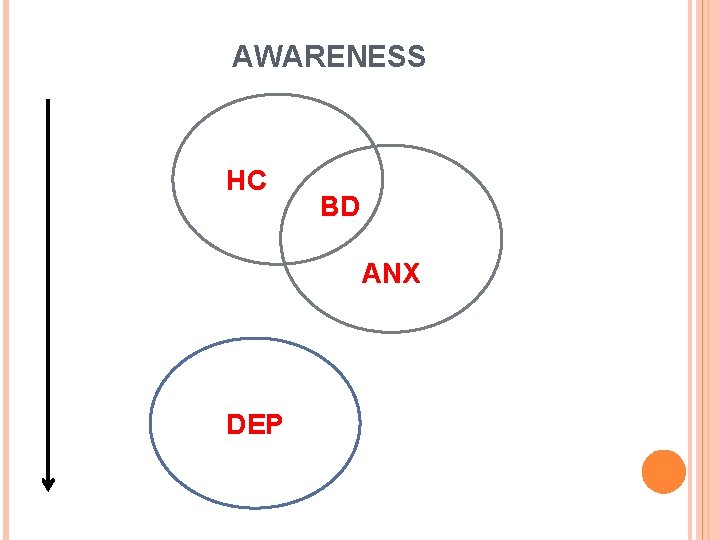
AWARENESS Significant dysregulation of emotional Awareness was reported for the depression and anxiety groups compared to the healthy control group. There were no significant differences in Awareness of emotion regulation between the BD and the Healthy control groups, or between the BD and anxiety groups.
AWARENESS HC BD ANX DEP
DISCUSSION
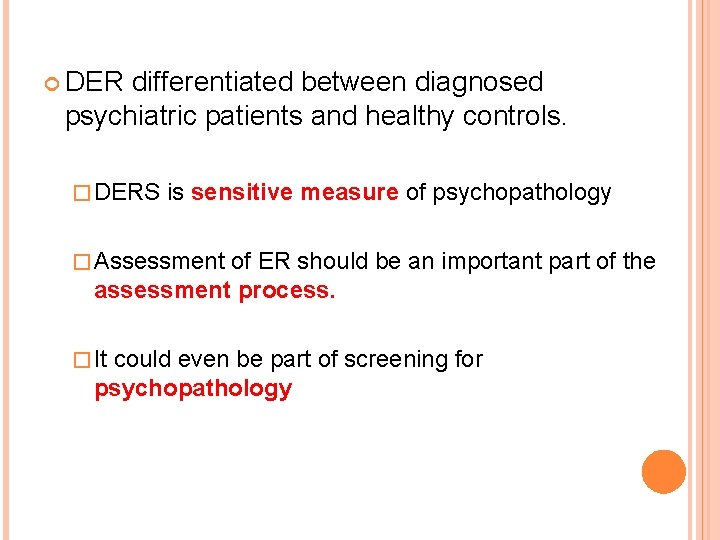
DER differentiated between diagnosed psychiatric patients and healthy controls. � DERS is sensitive measure of psychopathology � Assessment of ER should be an important part of the assessment process. � It could even be part of screening for psychopathology
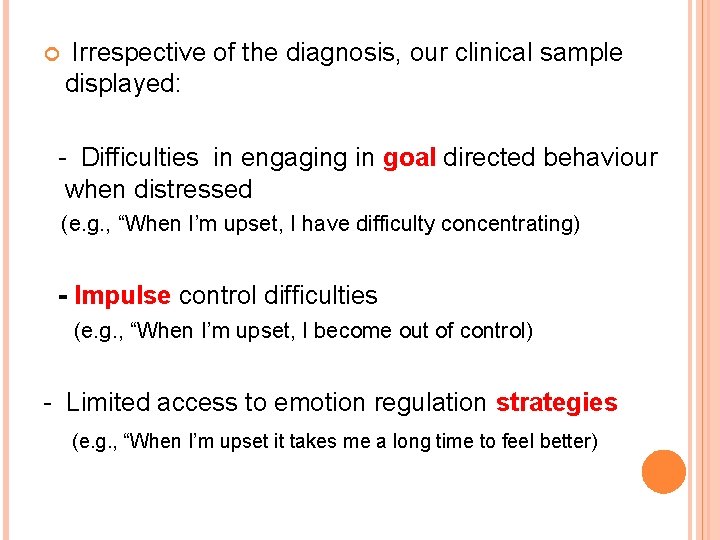
Irrespective of the diagnosis, our clinical sample displayed: - Difficulties in engaging in goal directed behaviour when distressed (e. g. , “When I’m upset, I have difficulty concentrating) - Impulse control difficulties (e. g. , “When I’m upset, I become out of control) - Limited access to emotion regulation strategies (e. g. , “When I’m upset it takes me a long time to feel better)
Medication for Bipolar is the treatment of choice. For many, medication is also the treatment of choice for Anx and Dep. When psychology becomes and adjunct treatment to medication, the approach seems to focus on the cognitive processes that subserve coping strategies. We believe that therapy should include ER strategies . We could perhaps run groups for multiple diagnoses and target ER, in particular (Goal, Impulsivity and strategies) Neuroanatomical substrates domain how useful
LIMITATIONS
LIMITATIONS Self report measures Future research could use multimodal assessment including: � Lab induced (e. g. , film clips) emotions � Assessment of psychophysiological responses and regulatory mechanisms. � So we assess both how people respond in addition to how they think respond to emotional stimuli � (Emotionally activated versus memory) Medication generalisation of findings However ecological validity
QUESTIONS?