The Diary of Anne Frank Francis Goodrich and











- Slides: 28
The Diary of Anne Frank Francis Goodrich and Albert Hackett (1954)
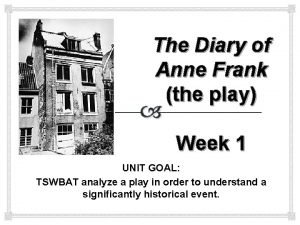
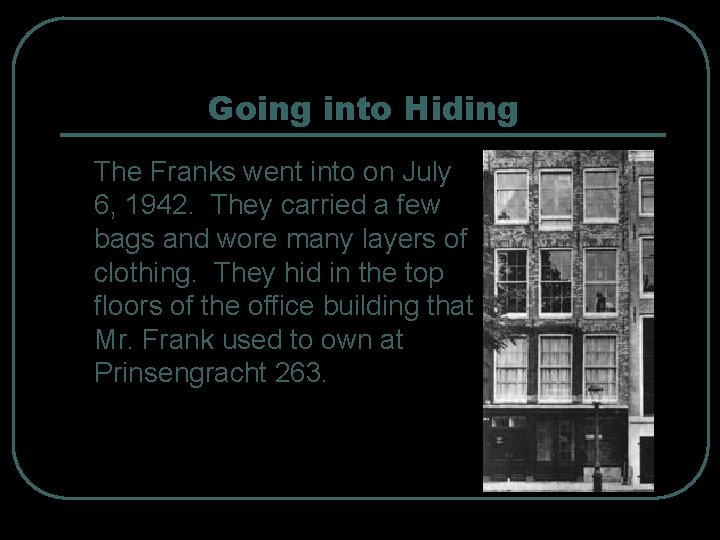
Going into Hiding The Franks went into on July 6, 1942. They carried a few bags and wore many layers of clothing. They hid in the top floors of the office building that Mr. Frank used to own at Prinsengracht 263.
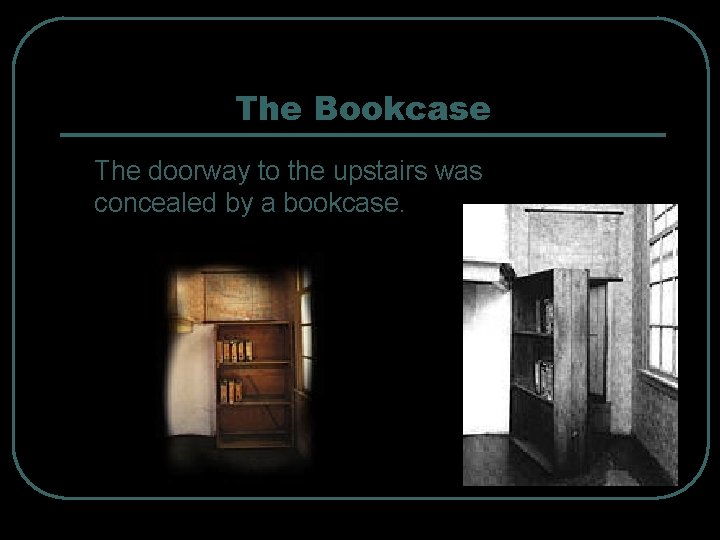
The Bookcase The doorway to the upstairs was concealed by a bookcase.
Inside View of the Annex
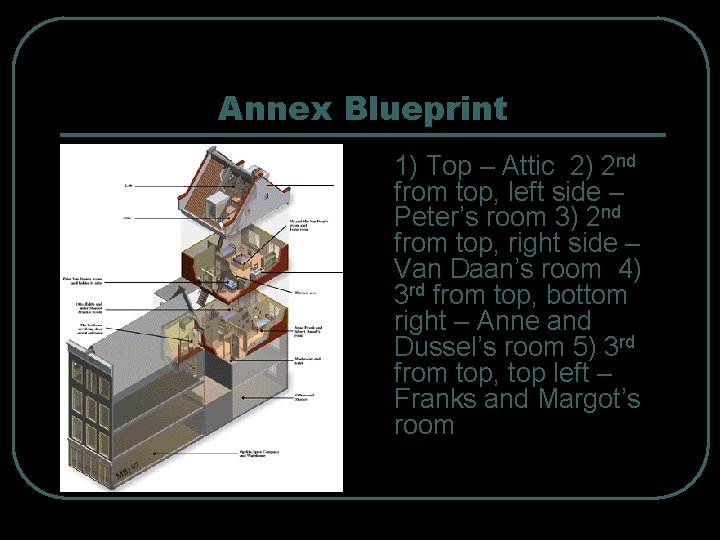
Annex Blueprint 1) Top – Attic 2) 2 nd from top, left side – Peter’s room 3) 2 nd from top, right side – Van Daan’s room 4) 3 rd from top, bottom right – Anne and Dussel’s room 5) 3 rd from top, top left – Franks and Margot’s room
Ration Books Before WWII started, Britain imported about 55 million tons of food a year from other countries. After was declared in September 1939, the British government had to cut down on the amount of food it brought in from abroad as German submarines started bombing British supply ships. There was a worry that this would lead to shortages of food supplies in the shops so the British government decided to introduce a system of rationing.
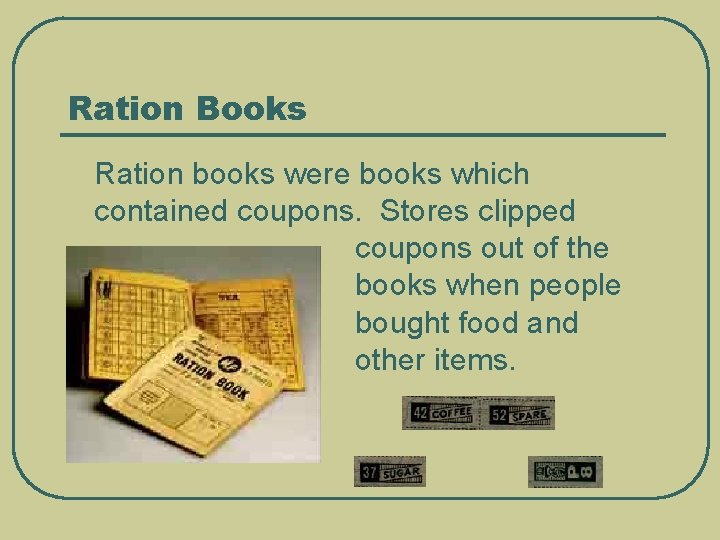
Ration Books Ration books were books which contained coupons. Stores clipped coupons out of the books when people bought food and other items.
Ration Books Rationing was introduced in January 1940 to make sure everyone got a fair share of food. Rationing of food lasted for 14 years and finally ended in July 1954.
Ration Books l Meat, jam, biscuits, fish, tea, breakfast cereals, cheese, eggs, tomatoes, peas, dried fruit, rice, and canned fruit were rationed. l Potatoes and fresh fruit were not rationed.
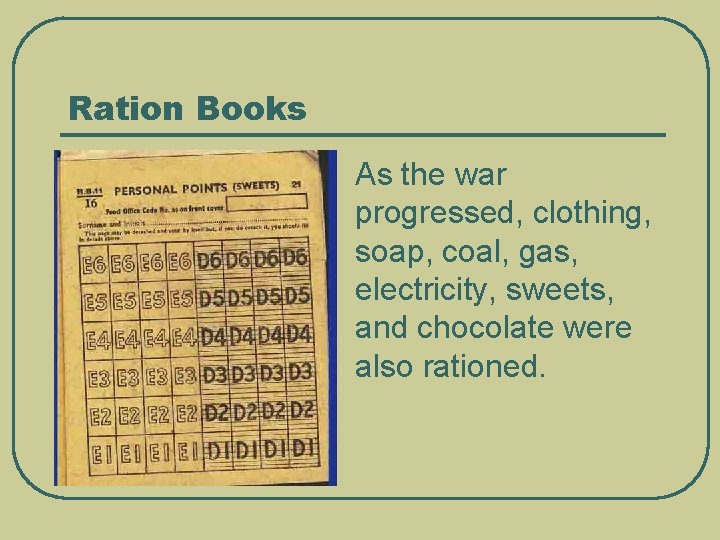
Ration Books As the war progressed, clothing, soap, coal, gas, electricity, sweets, and chocolate were also rationed.
Anne Frank
Margot Frank
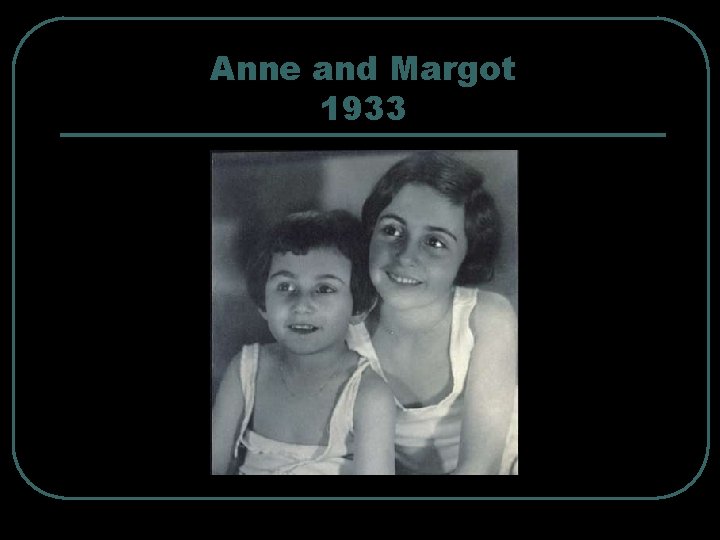
Anne and Margot 1933
Anne and Margot Day Before Going Into Hiding
Edith Frank - Hollander
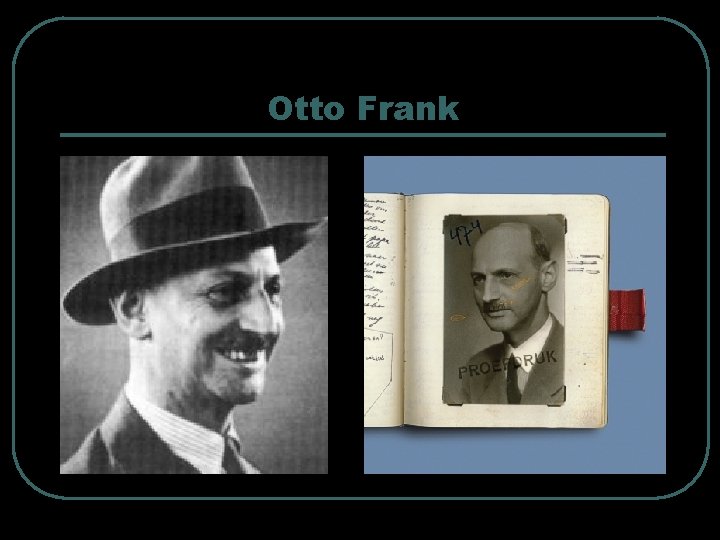
Otto Frank
The Frank Family
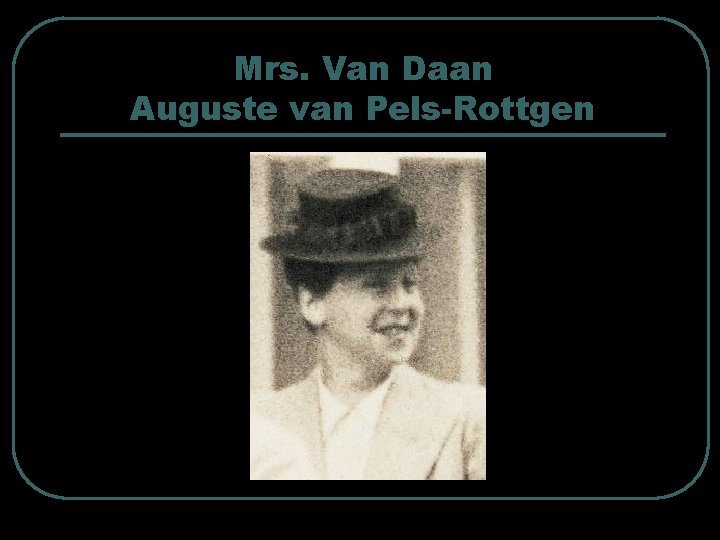
Mrs. Van Daan Auguste van Pels-Rottgen
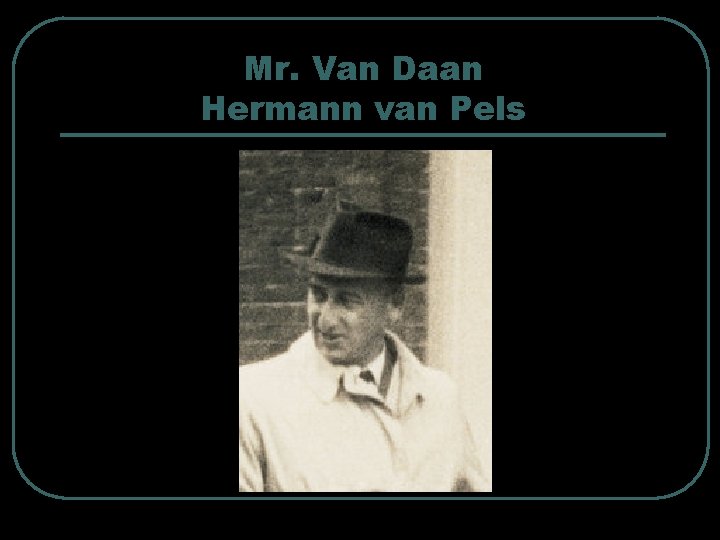
Mr. Van Daan Hermann van Pels
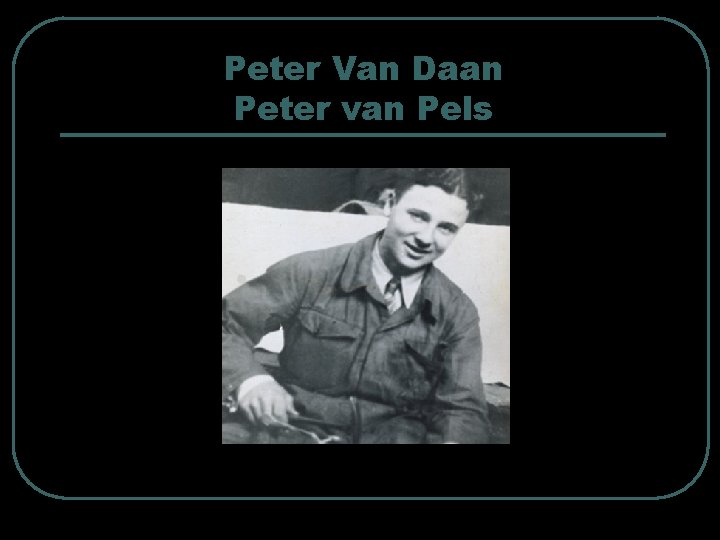
Peter Van Daan Peter van Pels
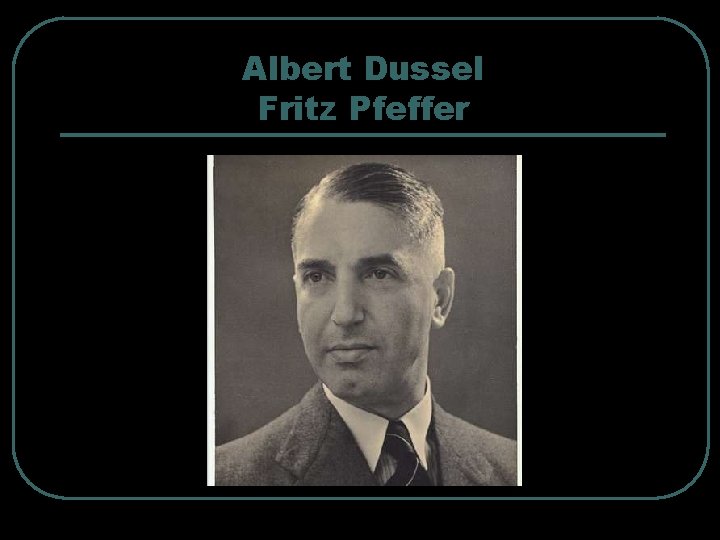
Albert Dussel Fritz Pfeffer
Jopie de Waal Jacqueline Sanders - van Maarsan
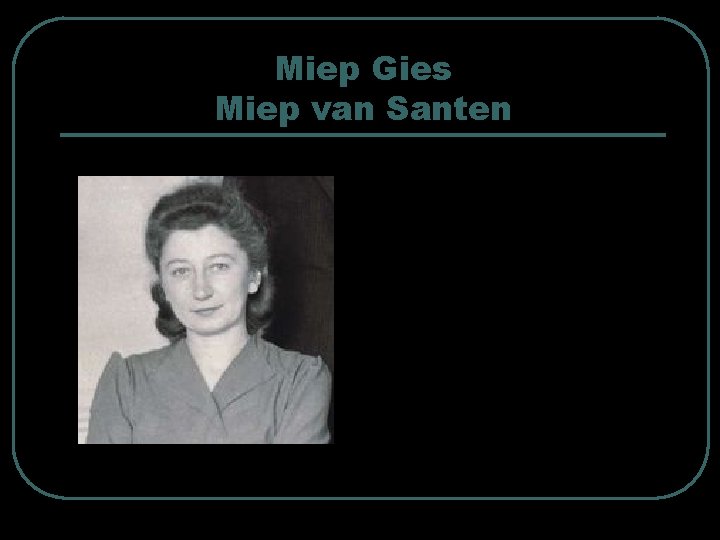
Miep Gies Miep van Santen
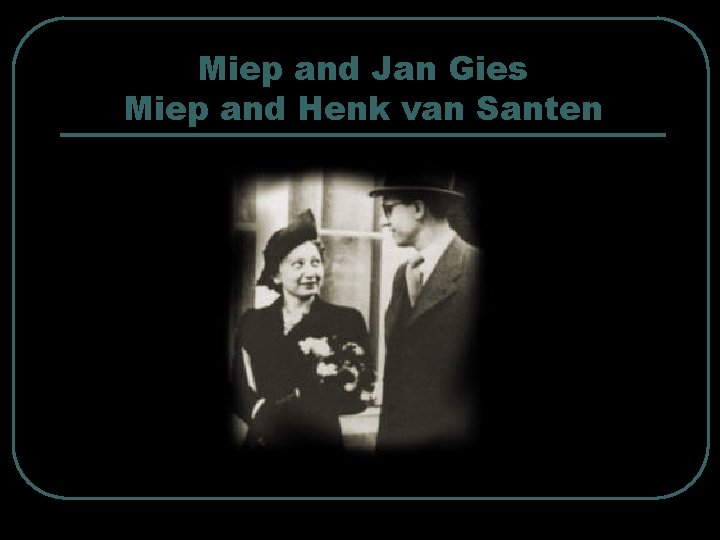
Miep and Jan Gies Miep and Henk van Santen
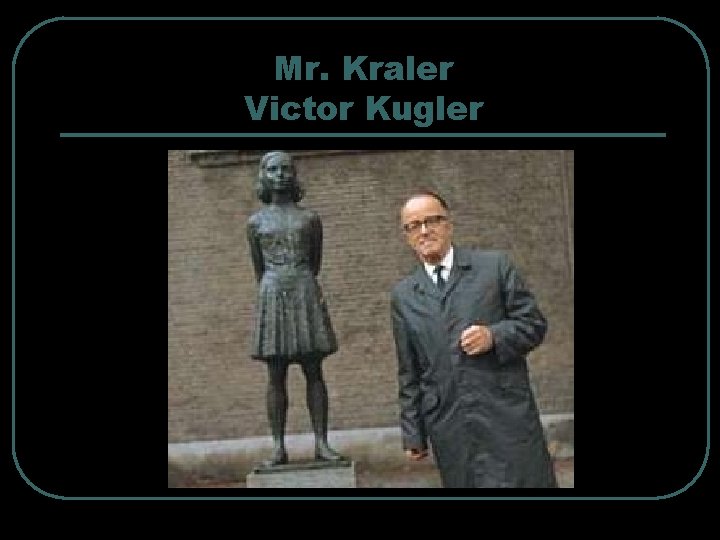
Mr. Kraler Victor Kugler
Westertoren Westerkerk Bell Tower
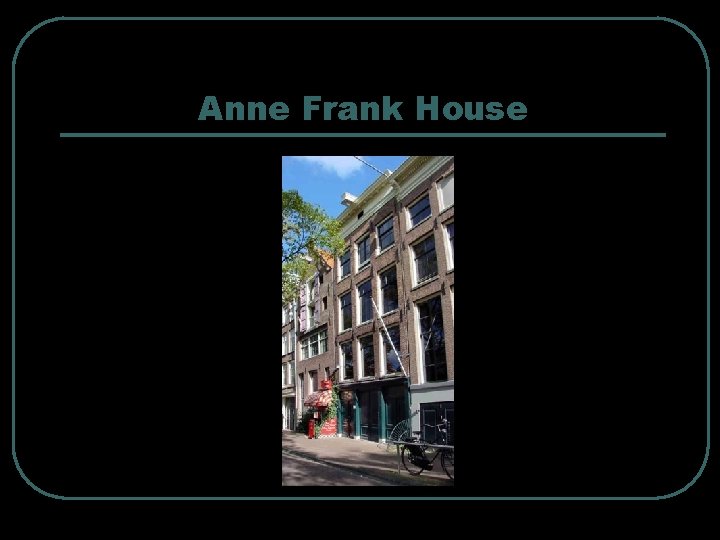
Anne Frank House
Mein Kampf l l l “My Struggle” Wrote while he was in prison His youth, early days in the Nazi Party, future plans for Germany, and ideas on politics and race.