
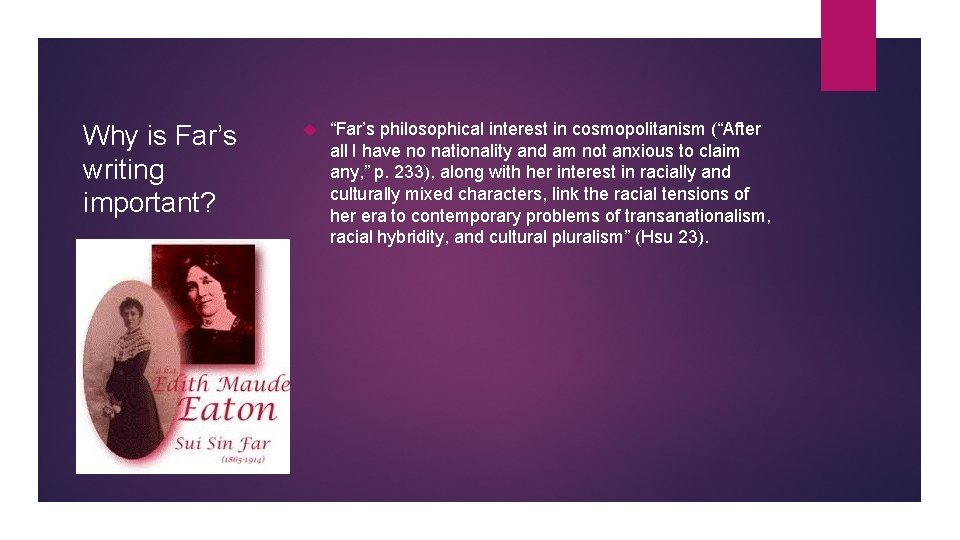
Sui Sin Far EDITH MAUDE EATON 1865 1914

- Slides: 10
Sui Sin Far EDITH MAUDE EATON (1865 -1914)
Who Was She? “Water Lily” Traveler “Eurasian” Mixed Parentage Impoverished Family
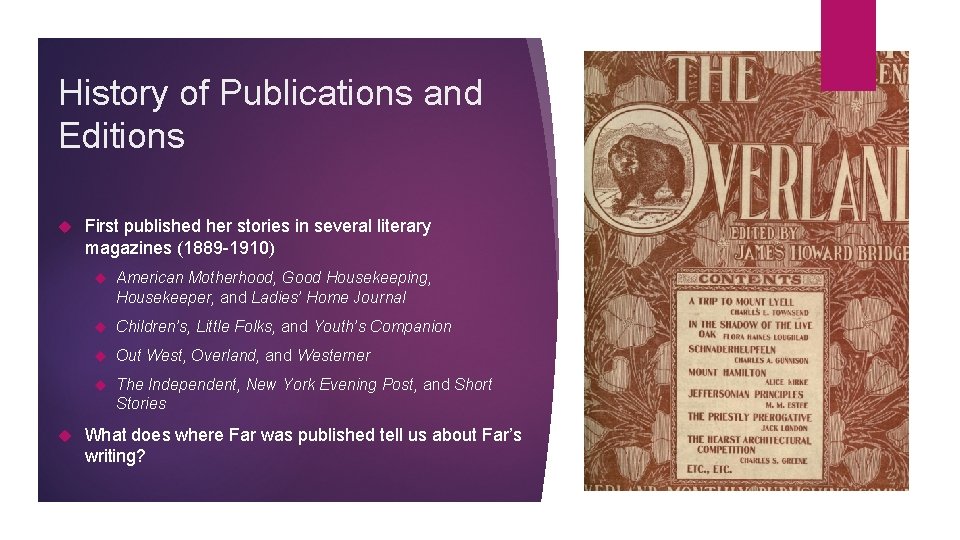
History of Publications and Editions First published her stories in several literary magazines (1889 -1910) American Motherhood, Good Housekeeping, Housekeeper, and Ladies’ Home Journal Children’s, Little Folks, and Youth’s Companion Out West, Overland, and Westerner The Independent, New York Evening Post, and Short Stories What does where Far was published tell us about Far’s writing?
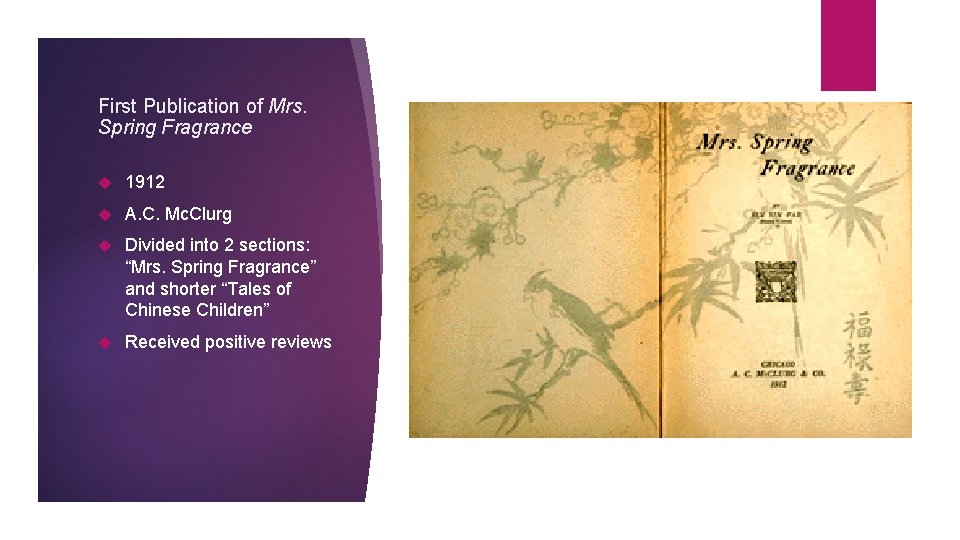
First Publication of Mrs. Spring Fragrance 1912 A. C. Mc. Clurg Divided into 2 sections: “Mrs. Spring Fragrance” and shorter “Tales of Chinese Children” Received positive reviews
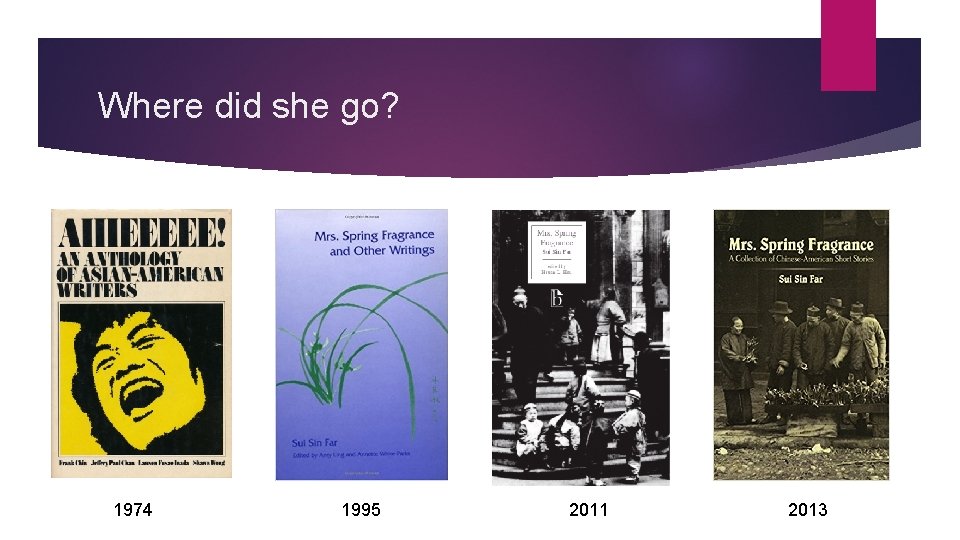
Where did she go? 1974 1995 2011 2013
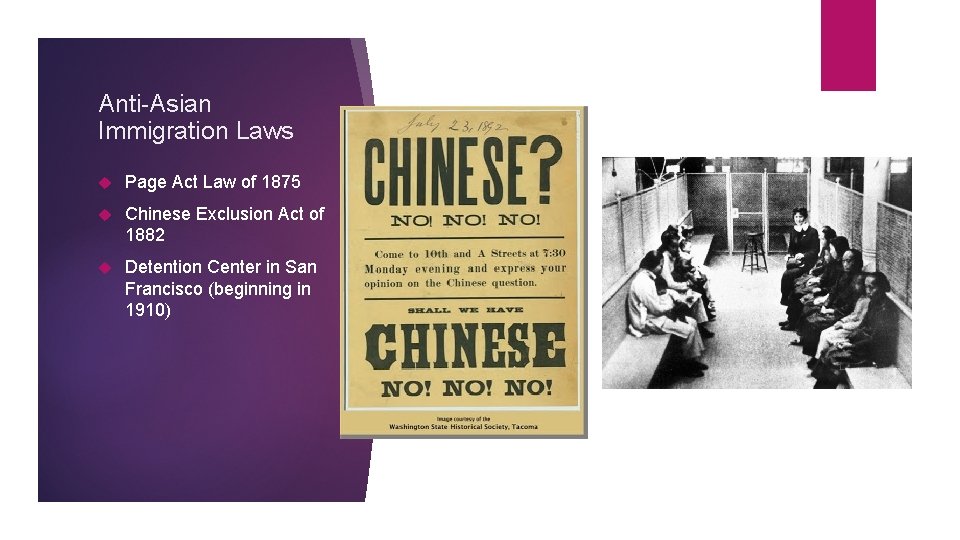
Anti-Asian Immigration Laws Page Act Law of 1875 Chinese Exclusion Act of 1882 Detention Center in San Francisco (beginning in 1910)
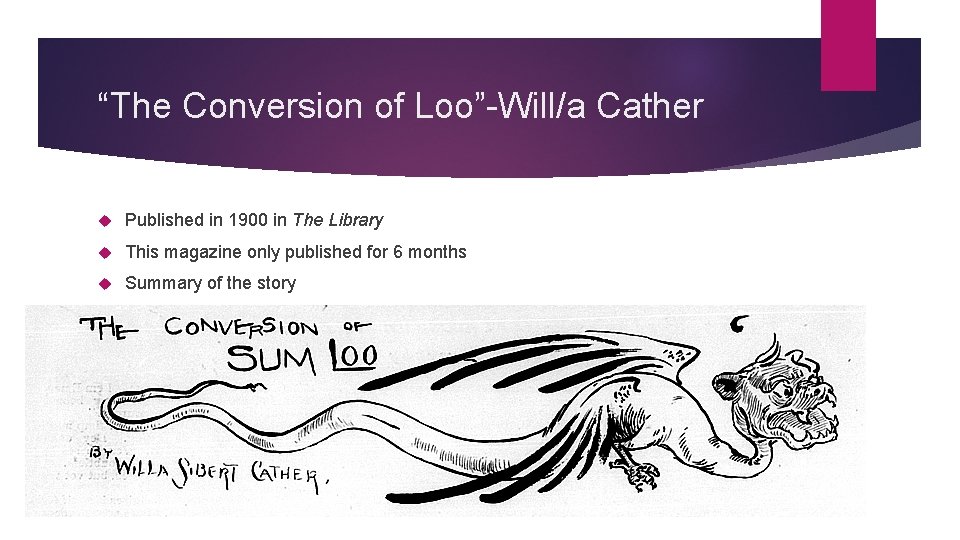
“The Conversion of Loo”-Will/a Cather Published in 1900 in The Library This magazine only published for 6 months Summary of the story
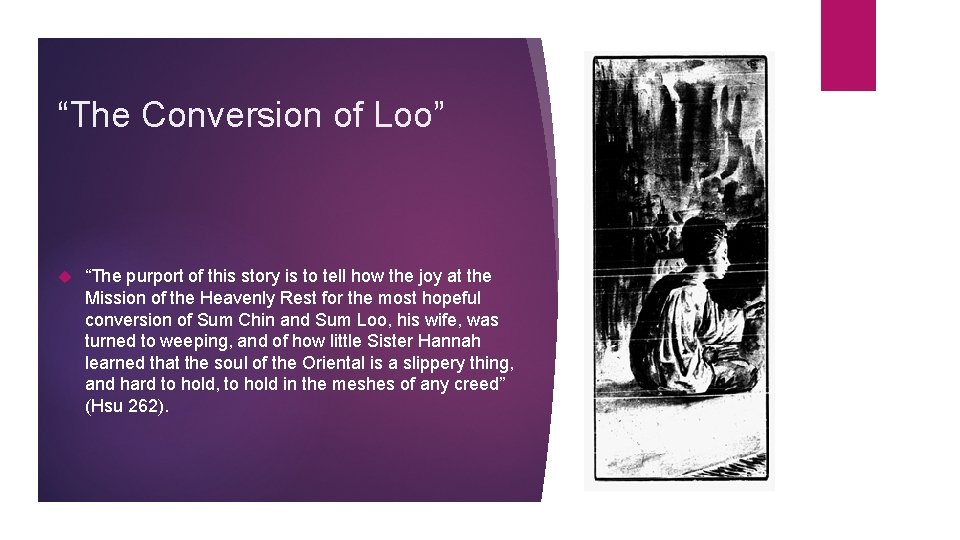
“The Conversion of Loo” “The purport of this story is to tell how the joy at the Mission of the Heavenly Rest for the most hopeful conversion of Sum Chin and Sum Loo, his wife, was turned to weeping, and of how little Sister Hannah learned that the soul of the Oriental is a slippery thing, and hard to hold, to hold in the meshes of any creed” (Hsu 262).
Is Cather’s representation of the Chinese couple and Christian intervention similar to/different from Far’s stories? “The Conversion of Loo” Sentimental theme of motherhood Questioning of social and religious tensions Common themes: Critique of Western culture Describes detrimental effects of missionaries on Chinatown communities
Why is Far’s writing important? “Far’s philosophical interest in cosmopolitanism (“After all I have no nationality and am not anxious to claim any, ” p. 233), along with her interest in racially and culturally mixed characters, link the racial tensions of her era to contemporary problems of transanationalism, racial hybridity, and cultural pluralism” (Hsu 23).