Project Management Professional Course Naill M Momani Ph

- Slides: 102
Project Management Professional Course Naill M. Momani, Ph. D. , P. E. Excellence in Business Continuity and Crises Management www. ebccm. org Amman-Jordan
COURSE LEARNING OBJECTIVES � Understand Project Management Overview and framework � Get familiarized with Project Management Institute standards (PMI) Discuss the general concepts and practices of project management using the PMBOK model Get familiarized with PMP Exam (content and format ) Assist to Pass the Project Management Professional (PMP®) certification examination � � �
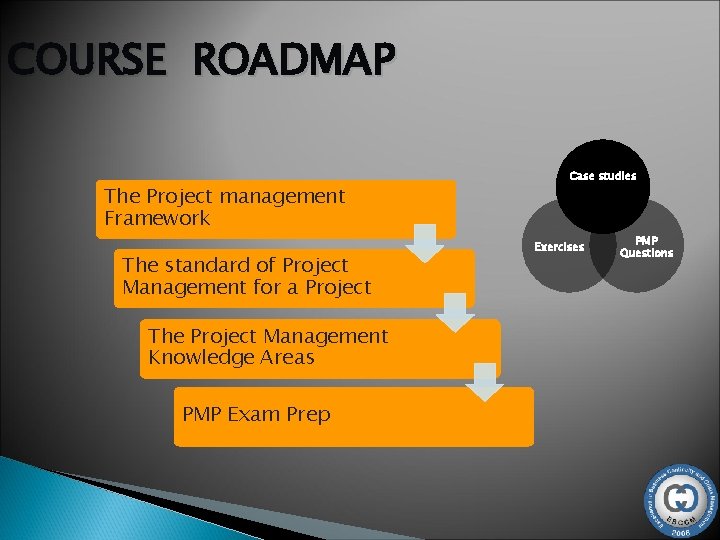
COURSE ROADMAP The Project management Framework The standard of Project Management for a Project The Project Management Knowledge Areas PMP Exam Prep Case studies Exercises PMP Questions
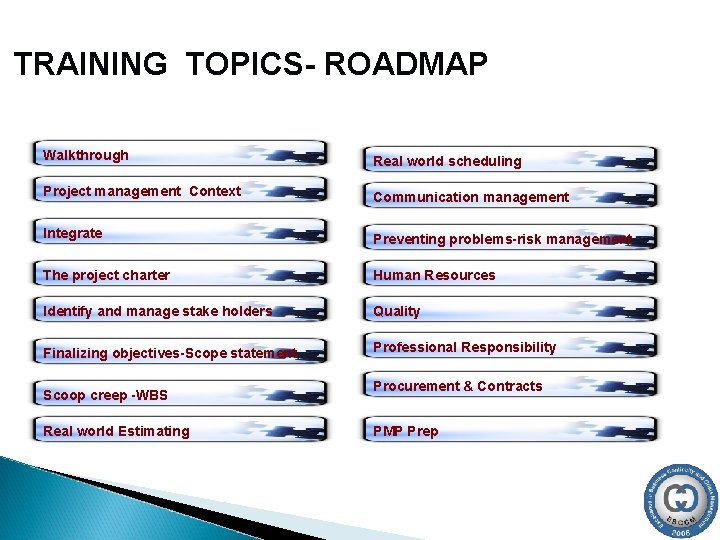
TRAINING TOPICS- ROADMAP Walkthrough Real world scheduling Project management Context Communication management Integrate Preventing problems-risk management The project charter Human Resources Identify and manage stake holders Quality Finalizing objectives-Scope statement Professional Responsibility Scoop creep -WBS Real world Estimating Procurement & Contracts PMP Prep
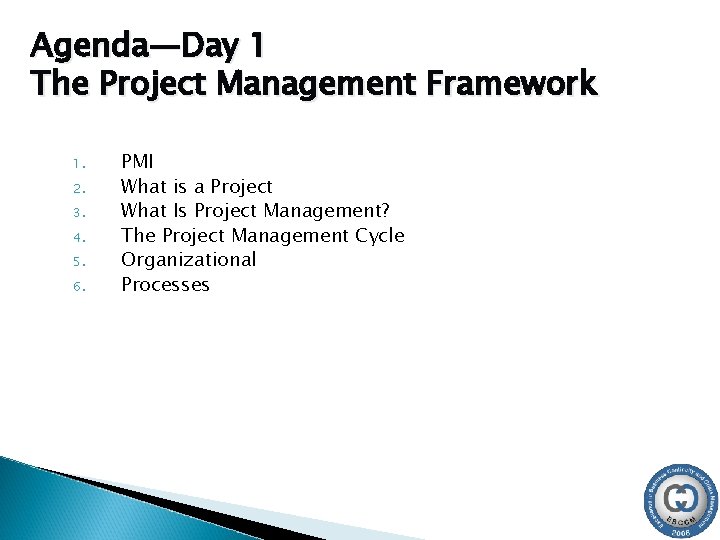
Agenda—Day 1 The Project Management Framework 1. 2. 3. 4. 5. 6. PMI What is a Project What Is Project Management? The Project Management Cycle Organizational Processes
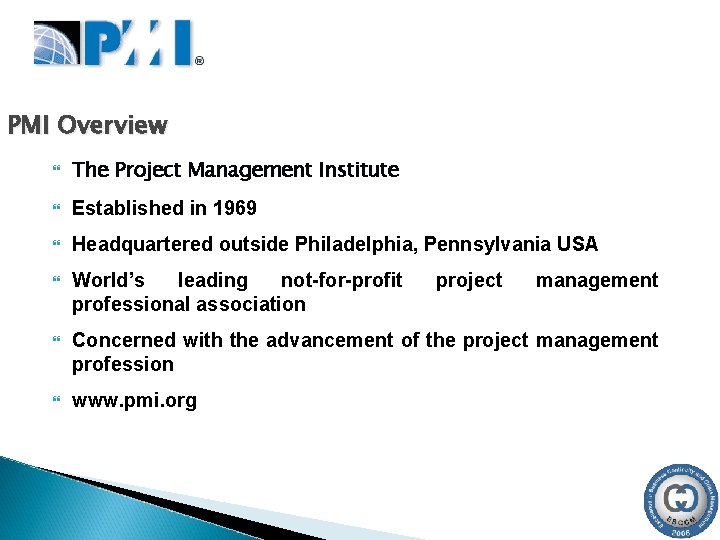
PMI Overview The Project Management Institute Established in 1969 Headquartered outside Philadelphia, Pennsylvania USA World’s leading not-for-profit professional association Concerned with the advancement of the project management profession www. pmi. org project management
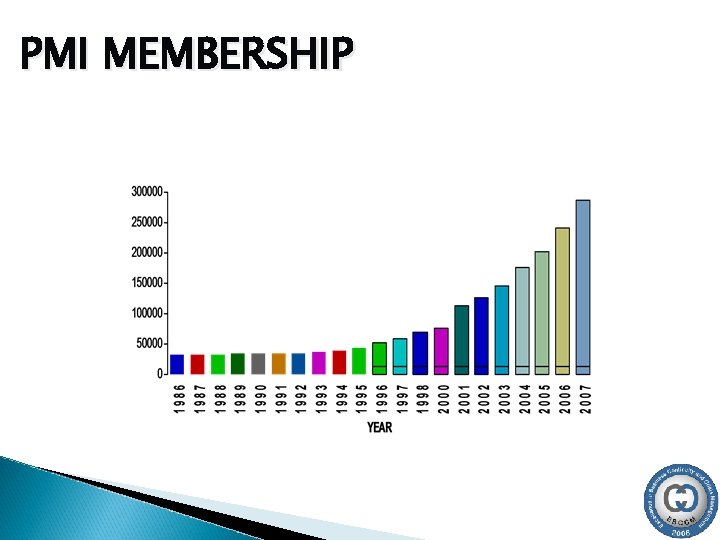
PMI MEMBERSHIP
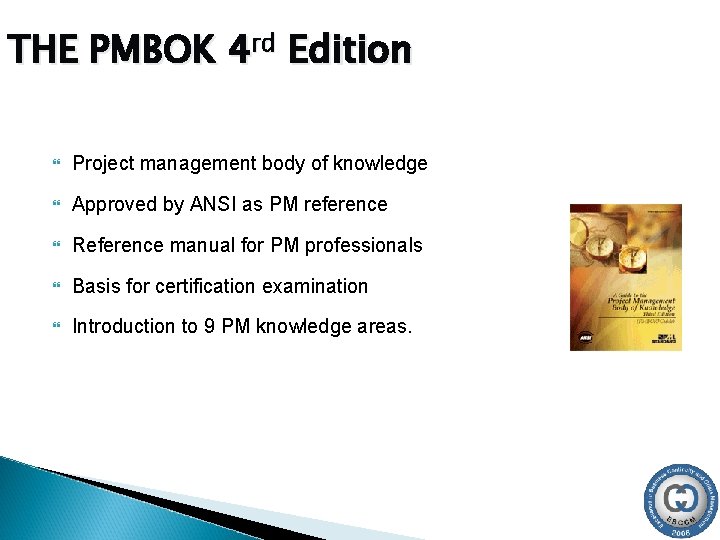
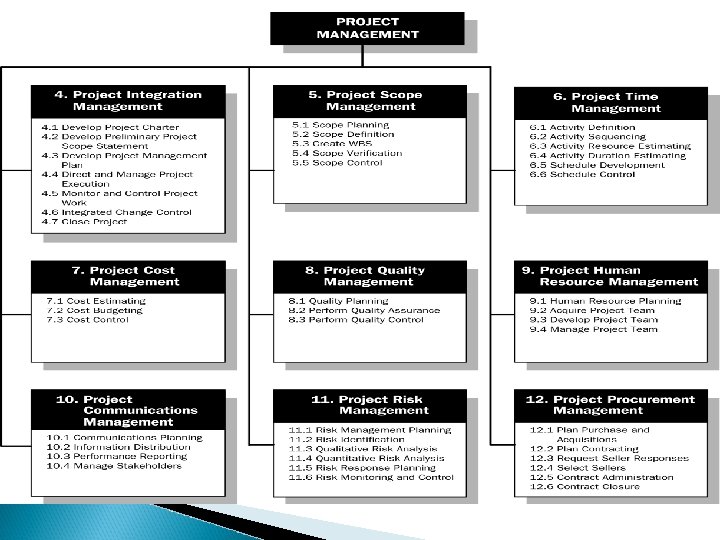
THE PMBOK 4 rd Edition Project management body of knowledge Approved by ANSI as PM reference Reference manual for PM professionals Basis for certification examination Introduction to 9 PM knowledge areas.
PROJECT MANAGEMENT DEFINITION What is a Project?
PROJECT A project is a temporary endeavor undertaken to create a unique product or service or result
WHAT IS A “PROJECT”? �A project is a temporary endeavor undertaken to create a unique product or service. � Examples: ◦ ◦ ◦ Developing a new product or service Effecting a change in staffing or style of an organization Designing a new transportation vehicle Constructing a building or facility Running a campaign for political office
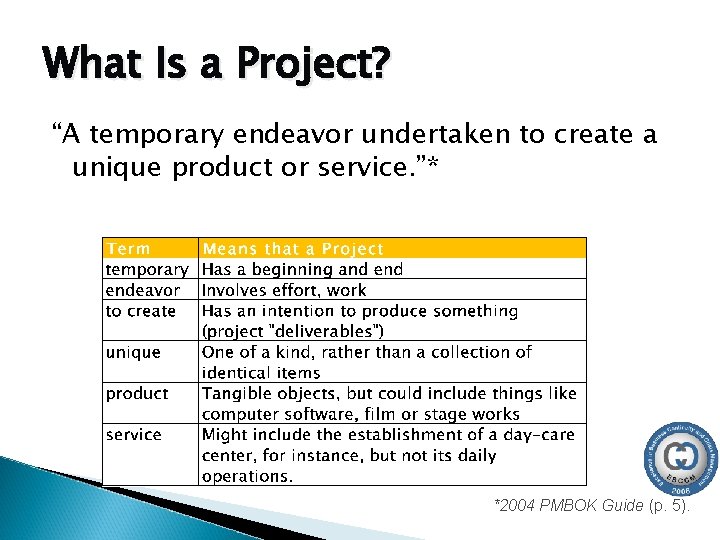
What Is a Project? “A temporary endeavor undertaken to create a unique product or service. ”* *2004 PMBOK Guide (p. 5).
Your Turn: What Is Project Management? � � � There are few, if any, definitive definitions. Project management knowledge is shared understanding of what it takes to deliver products and services effectively. Your definition should evolve and continuously improve with your knowledge and experience collaborating on projects.
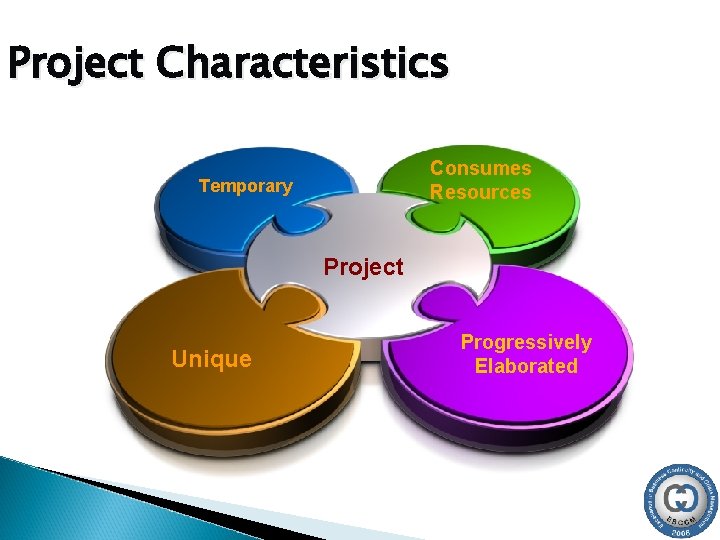
Project Characteristics Consumes Resources Temporary Project Unique Progressively Elaborated
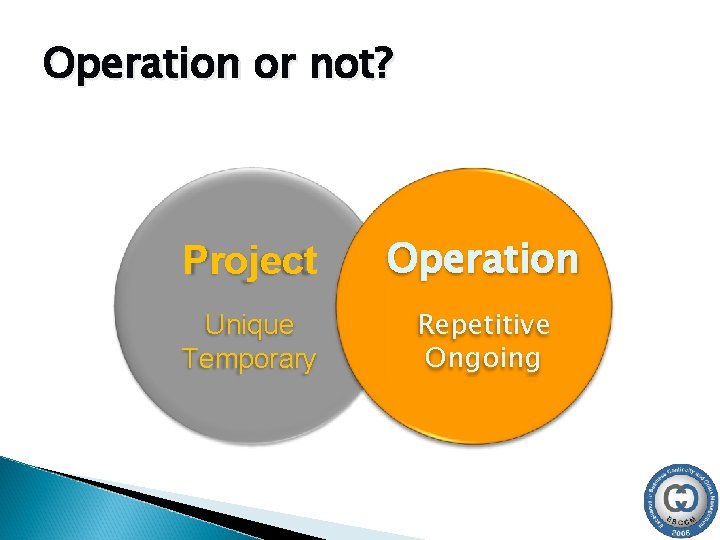
Operation or not? Project Operation Unique Temporary Repetitive Ongoing
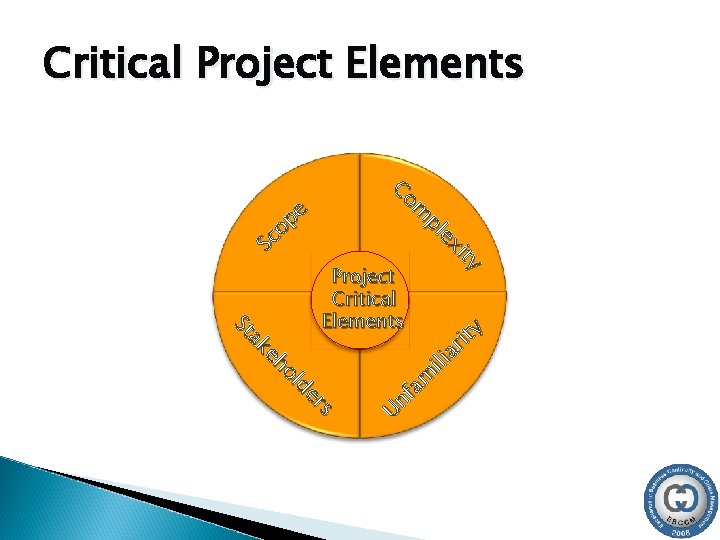
ity ex pl m Co Sc op e Critical Project Elements Un fa m ili ar ity rs de ol eh ak St Project Critical Elements
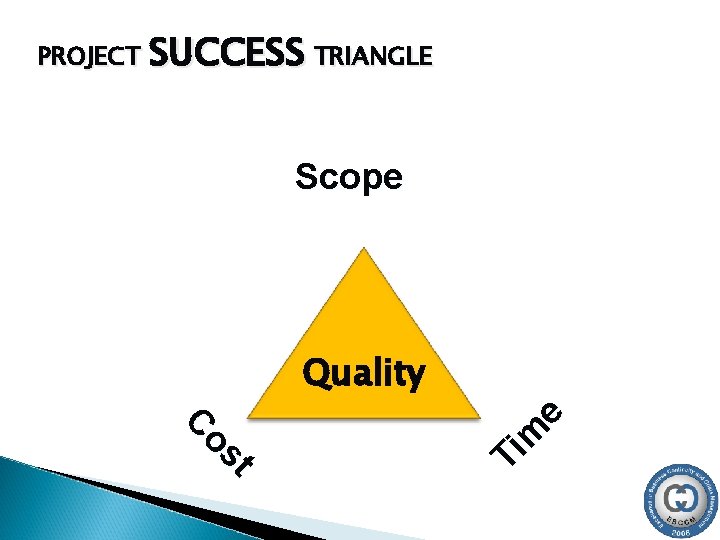
PROJECT SUCCESS TRIANGLE Scope Ti m t os C e Quality
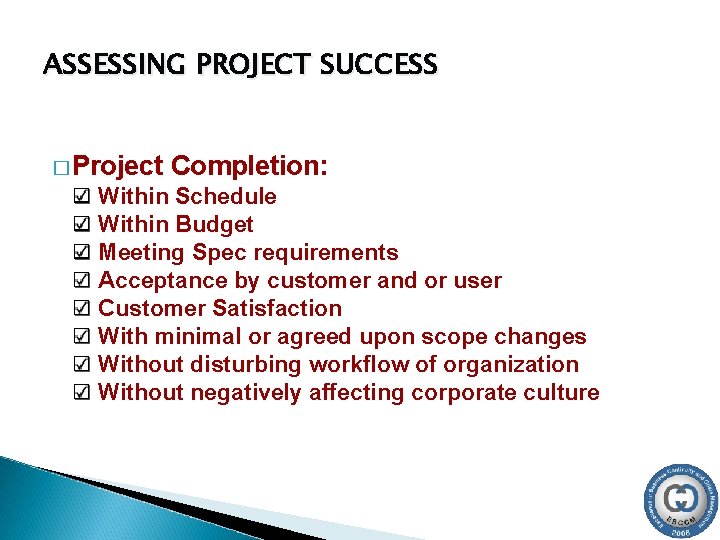
ASSESSING PROJECT SUCCESS � Project Completion: Within Schedule Within Budget Meeting Spec requirements Acceptance by customer and or user Customer Satisfaction With minimal or agreed upon scope changes Without disturbing workflow of organization Without negatively affecting corporate culture
Responsibility over Project � Project Manager has primary responsibility over successful project completion
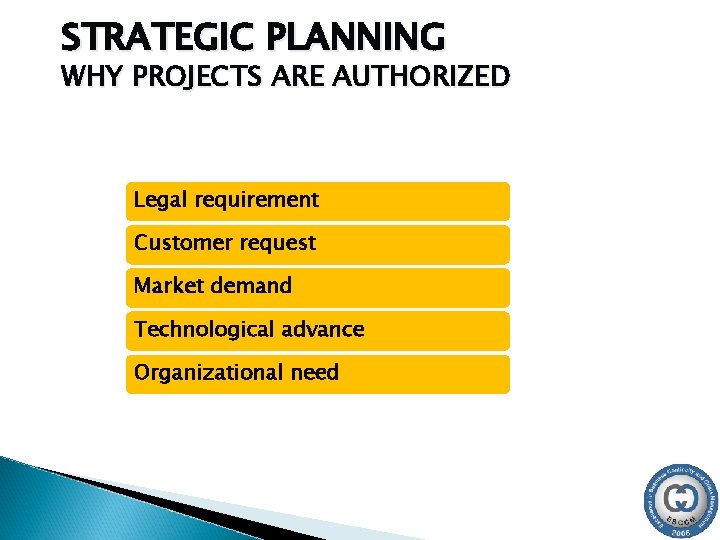
STRATEGIC PLANNING WHY PROJECTS ARE AUTHORIZED Legal requirement Customer request Market demand Technological advance Organizational need
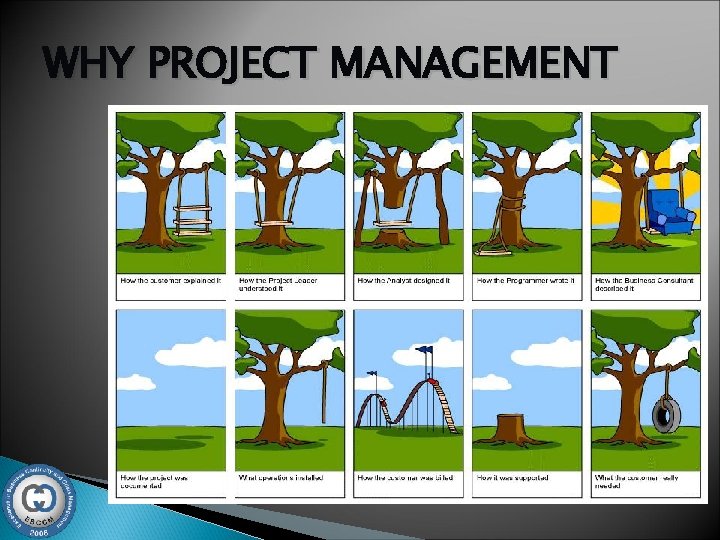
WHY PROJECT MANAGEMENT
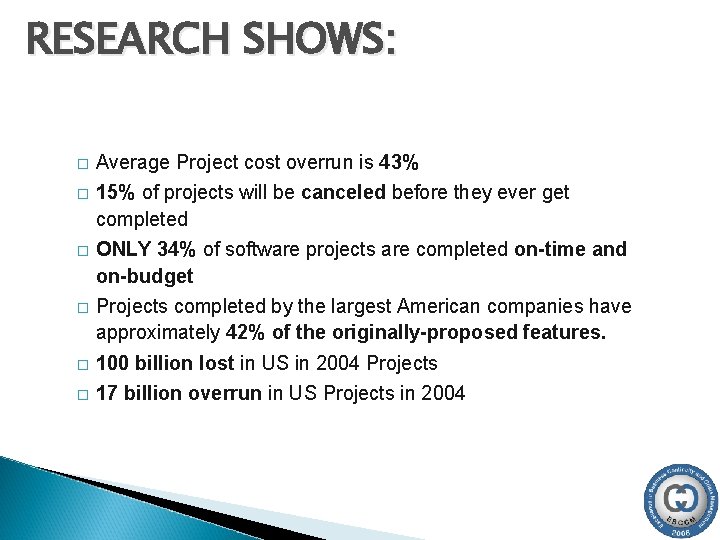
RESEARCH SHOWS: � Average Project cost overrun is 43% � 15% of projects will be canceled before they ever get completed � ONLY 34% of software projects are completed on-time and on-budget � Projects completed by the largest American companies have approximately 42% of the originally-proposed features. � 100 billion lost in US in 2004 Projects � 17 billion overrun in US Projects in 2004
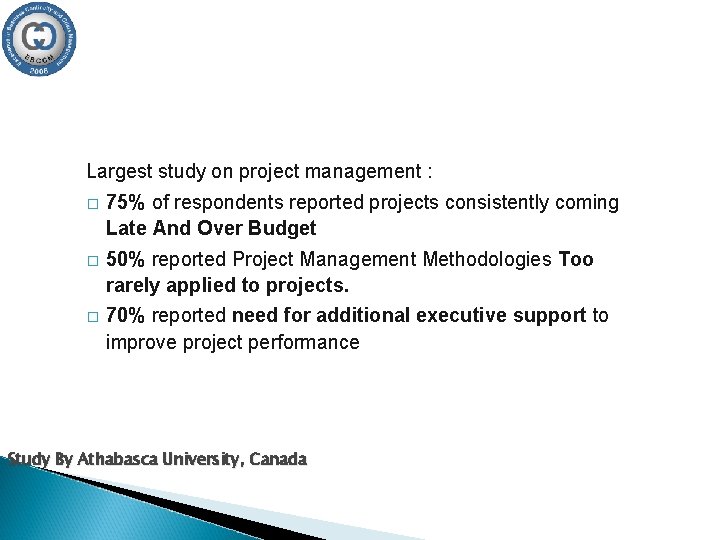
Largest study on project management : � 75% of respondents reported projects consistently coming Late And Over Budget � 50% reported Project Management Methodologies Too rarely applied to projects. � 70% reported need for additional executive support to improve project performance Study By Athabasca University, Canada
WHY DO PROJECTS FAIL ? ?
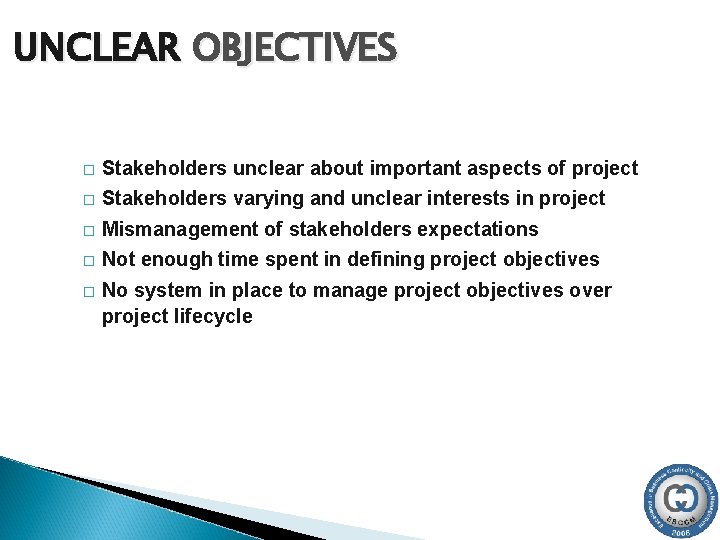
UNCLEAR OBJECTIVES � Stakeholders unclear about important aspects of project � Stakeholders varying and unclear interests in project � Mismanagement of stakeholders expectations � Not enough time spent in defining project objectives � No system in place to manage project objectives over project lifecycle
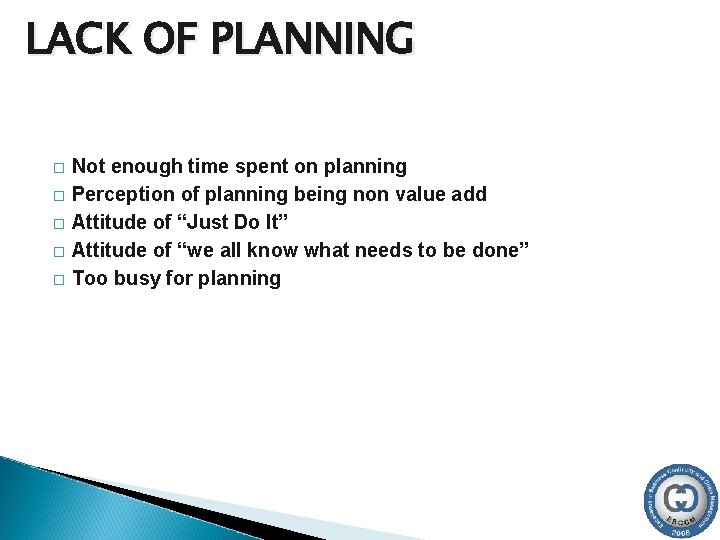
LACK OF PLANNING � � � Not enough time spent on planning Perception of planning being non value add Attitude of “Just Do It” Attitude of “we all know what needs to be done” Too busy for planning
UNREALISTIC TIME FRAME � � � Optimism by nature Lack of risk management Pressure of deadlines Lack of Product Development Process Lack of historical information
UNREALISTIC EXPECTATIONS � Unclear Product development process � Lack of communication � The “Kill the messenger” � External pressures � The “yes I can”
LACK OF RESOURCES � Competing for resources among projects � Lack of skilled resources � Budgetary constraints � Not taking learning curve into consideration � Lack of resource planning
WHAT IS PROJECT MANAGEMENT The application of knowledge, skills, tools, and techniques to project activities to meet project requirements
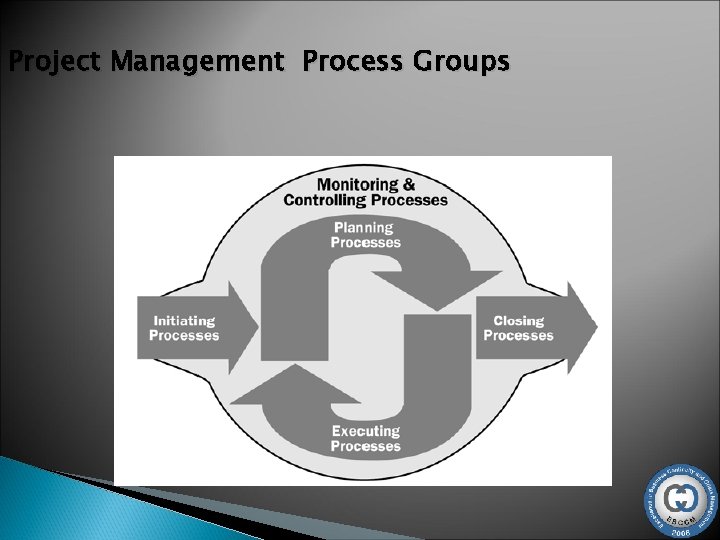
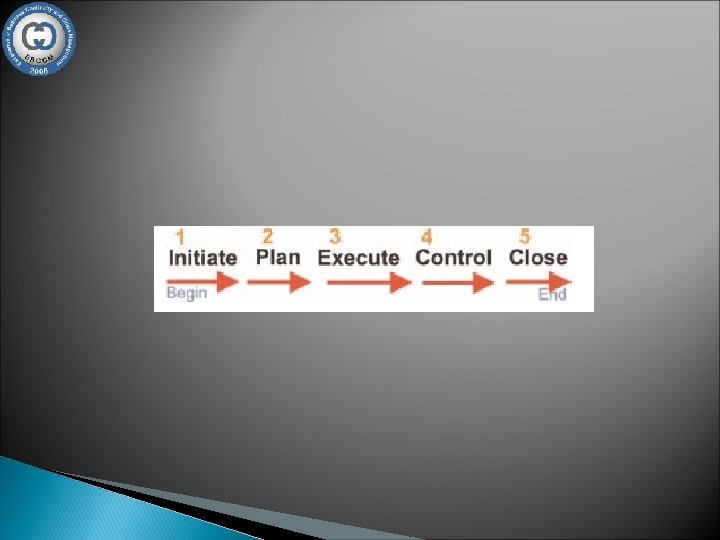
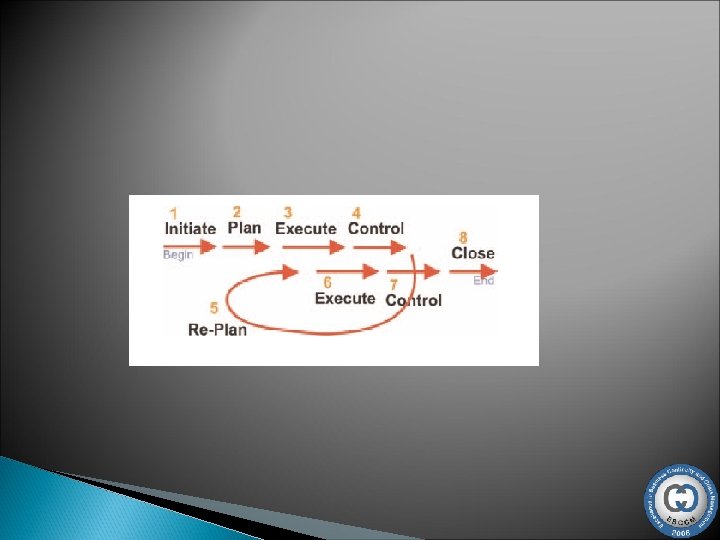
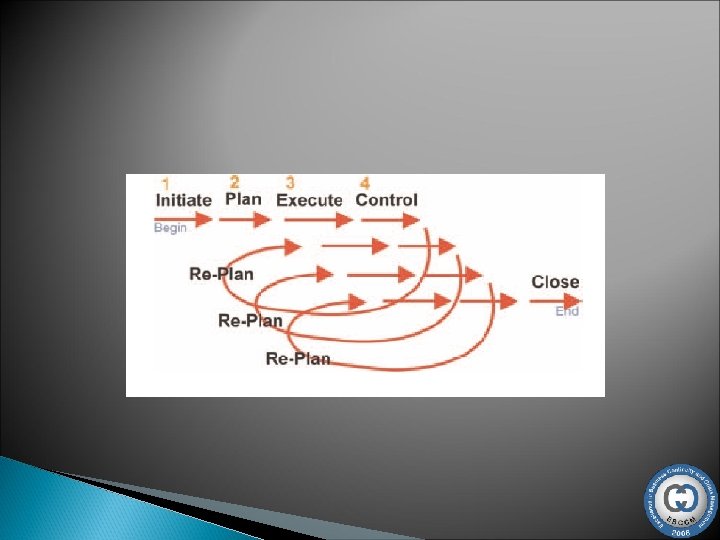
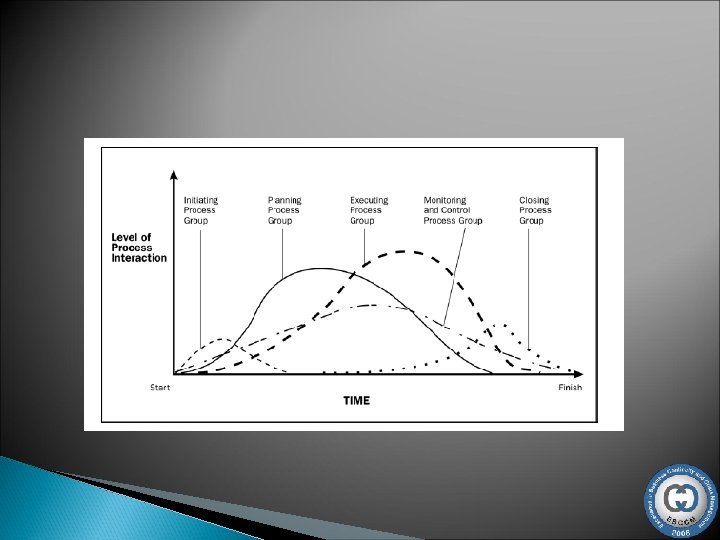
PROJECT MANAGEMENT PROCESSES Initiating: Authorizing the project Planning: Project objectives are determined, as well as how to reach these objectives within the given constraints. Executing: Actual implementation of the project as indicated in the projects plans, through utilizing available resources. Controlling: Project performance is monitored and measured to ensure the project plan is being implemented to design specifications and requirements. Closing: The project and its various phases are brought to a formal end.
WHAT IS PROJECT MANAGEMENT ◦ ◦ Identifying requirements Establishing clear and achievable objectives Balancing the competing demands Adapting specifications, plans, and approach to the different concerns and expectations of the various stakeholders
ITERATIVE PROCESSES � As the team knows more about the project, it can manage to a greater level of detail
Project Management Process Groups
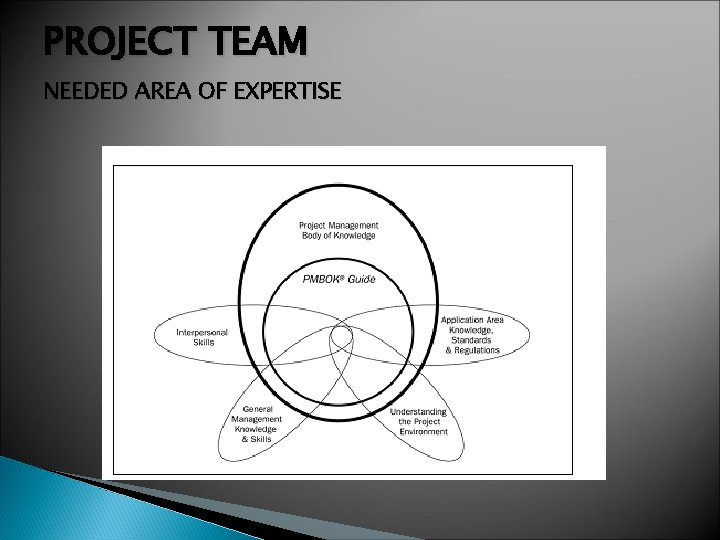
PROJECT TEAM NEEDED AREA OF EXPERTISE
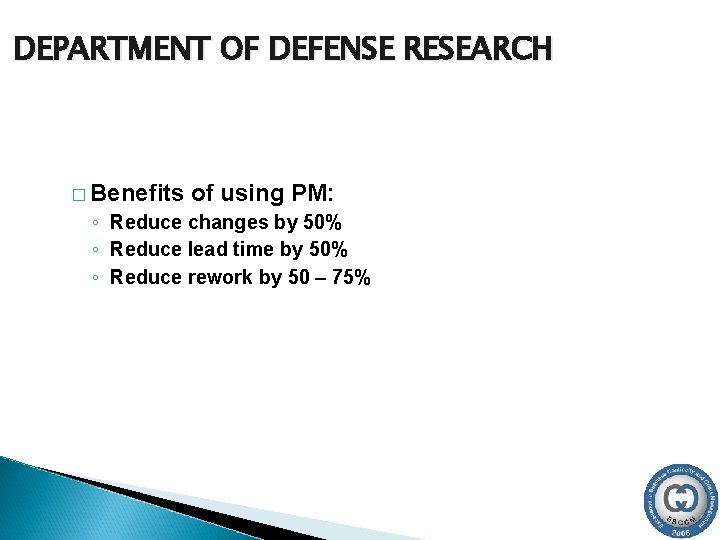
DEPARTMENT OF DEFENSE RESEARCH � Benefits of using PM: ◦ Reduce changes by 50% ◦ Reduce lead time by 50% ◦ Reduce rework by 50 – 75%
Project Management Context
Project Life-Cycle
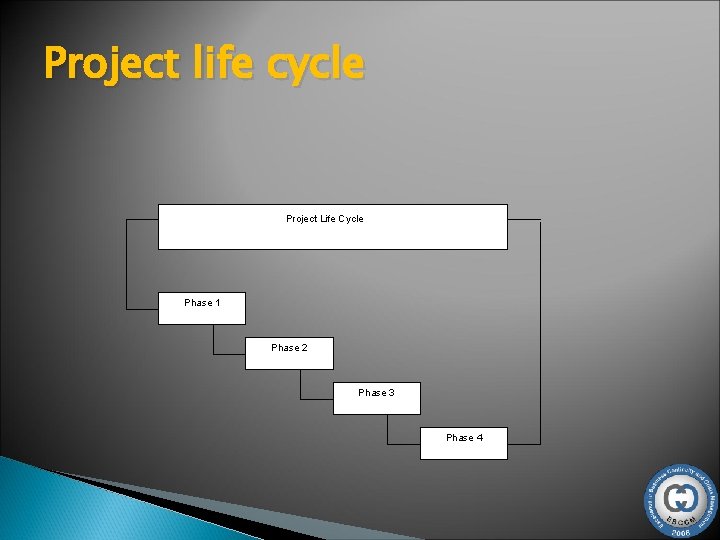
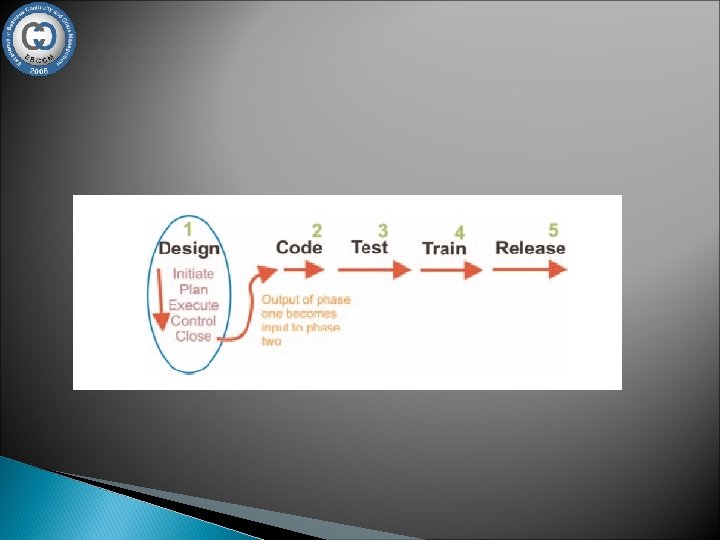
The Project Life cycle Projects are divided into phases to provide better management control with appropriate links to the ongoing operations of the performing organization. These phases together form what is called “project life cycle”
Project life cycle Project Life Cycle Phase 1 Phase 2 Phase 3 Phase 4
Project life cycle Typical sequence of phases
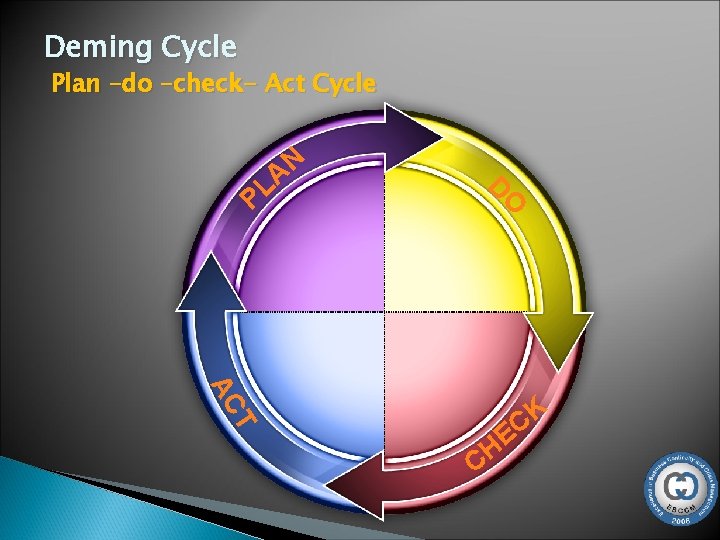
Deming Cycle Plan –do –check- Act Cycle N LA P D O T AC CH K C E
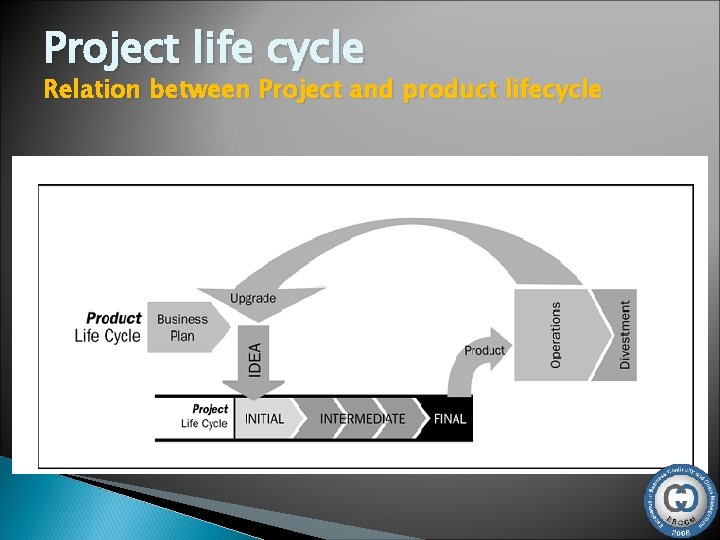
Project life cycle Relation between Project and product lifecycle
Project Life cycle helps to: � Define the beginning and end of a project � Define the work and the types of resources involved in each phase
Characteristics of project phases: � � � Each project phase has certain deliverable (s) Project phase is generally concluded with a review of the work accomplished and the deliverables to determine acceptance, or whether extra work is still required, or whether the phase should be considered closed. A phase can be closed without the decision to initiate any other phases.
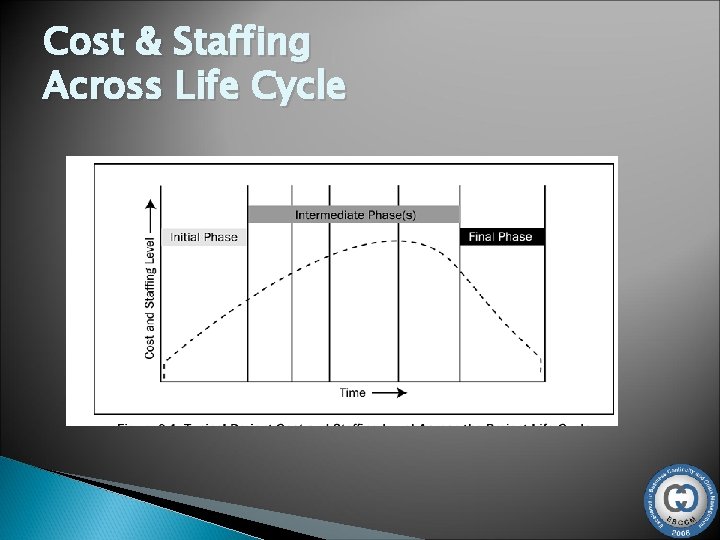
Cost & Staffing Across Life Cycle
Organization
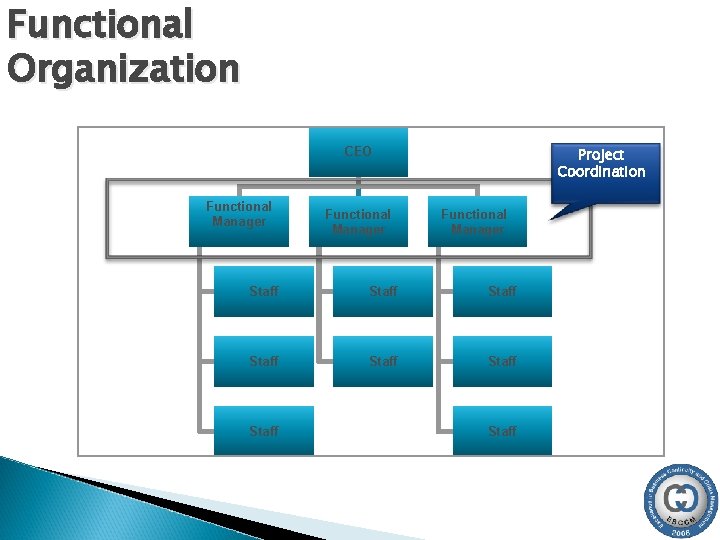
Functional Organization Project Coordination CEO Functional Manager Staff Staff
Advantages of functional organizations � � � Clear lines of authority Career development Comfortable and easier to grasp Technical expertise Flexible resource assignments
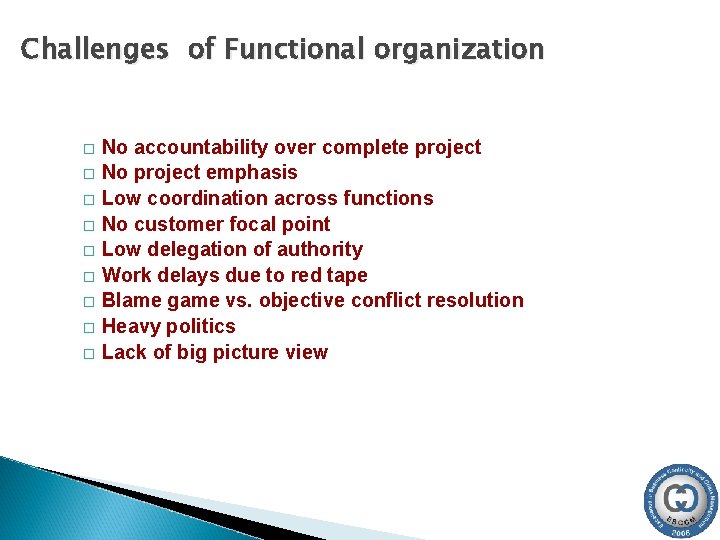
Challenges of Functional organization � � � � � No accountability over complete project No project emphasis Low coordination across functions No customer focal point Low delegation of authority Work delays due to red tape Blame game vs. objective conflict resolution Heavy politics Lack of big picture view
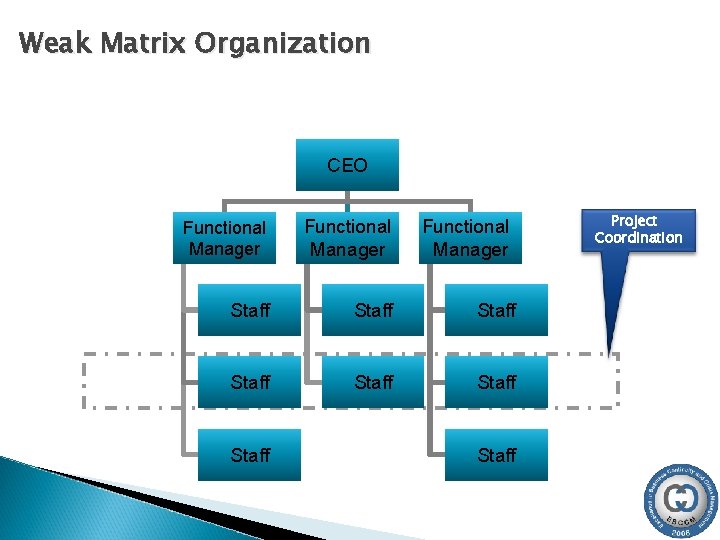
Weak Matrix Organization CEO Functional Manager Staff Staff Functional Manager Staff Project Coordination
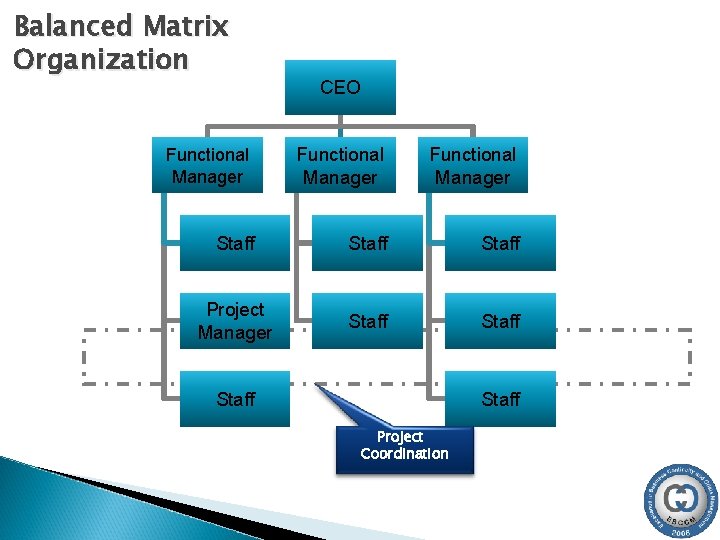
Balanced Matrix Organization CEO Functional Manager Staff Project Manager Staff Project Coordination
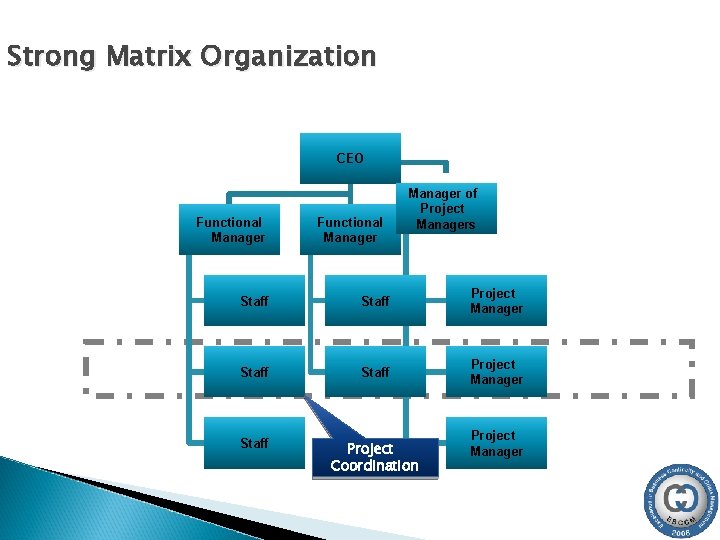
Strong Matrix Organization CEO Functional Manager of Project Managers Staff Project Manager Staff Project Coordination Project Manager
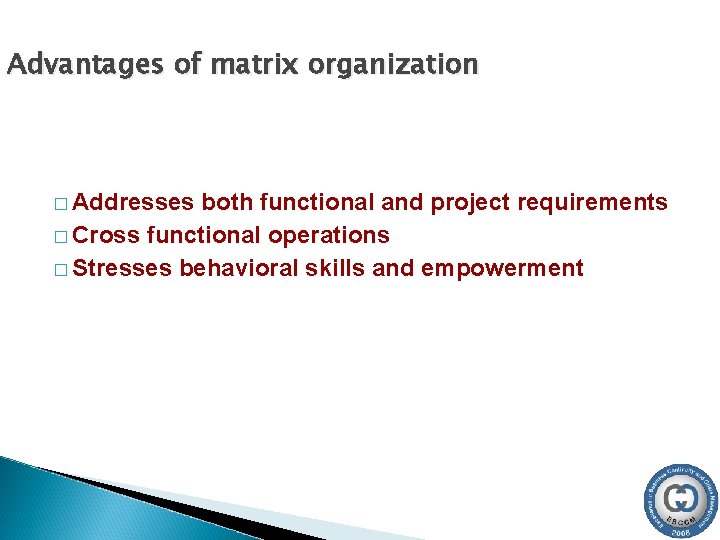
Advantages of matrix organization � Addresses both functional and project requirements � Cross functional operations � Stresses behavioral skills and empowerment
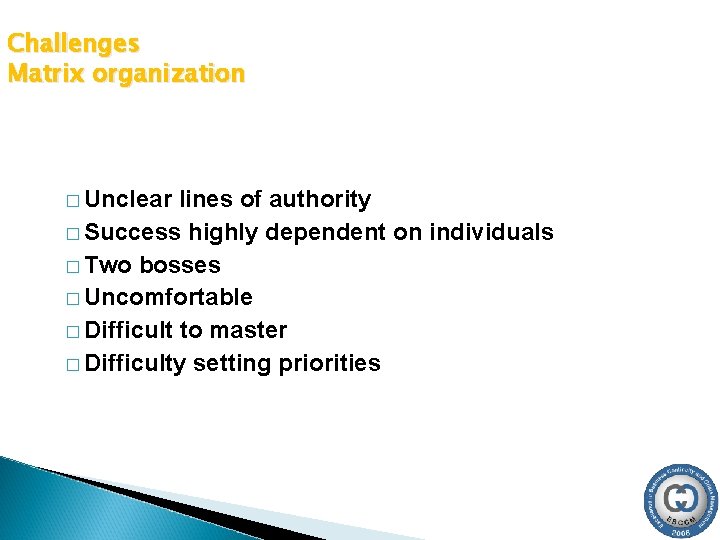
Challenges Matrix organization � Unclear lines of authority � Success highly dependent on individuals � Two bosses � Uncomfortable � Difficult to master � Difficulty setting priorities
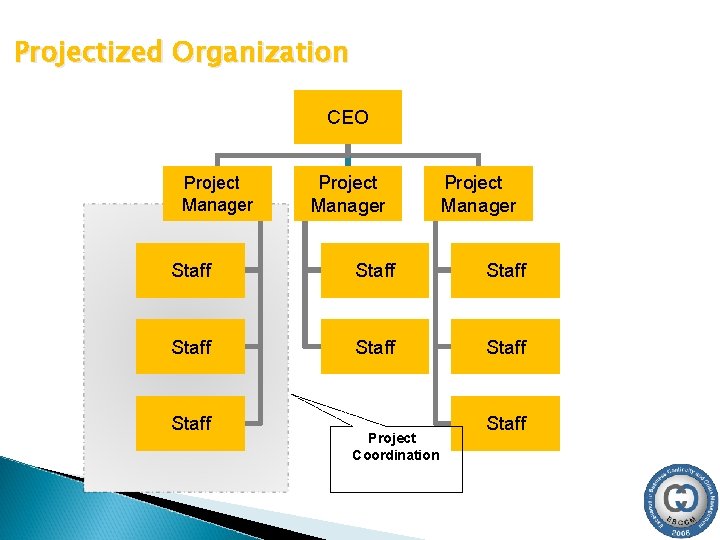
Projectized Organization CEO Project Manager Staff Staff Project Coordination Staff
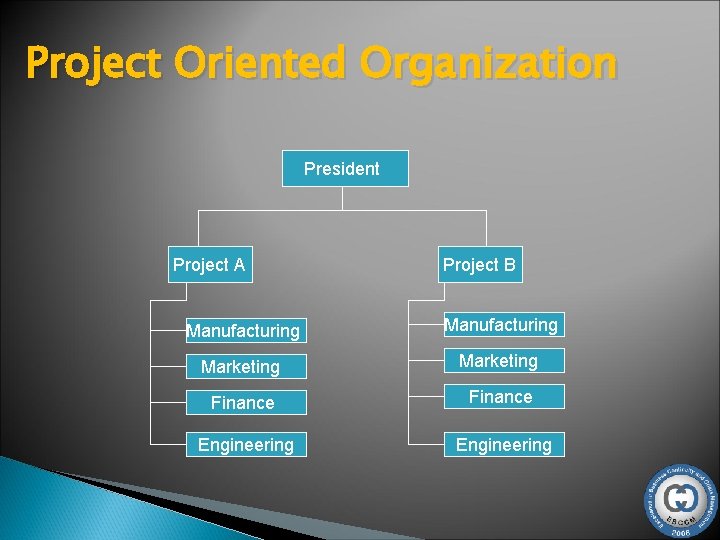
Project Oriented Organization President Project A Project B Manufacturing Marketing Finance Engineering
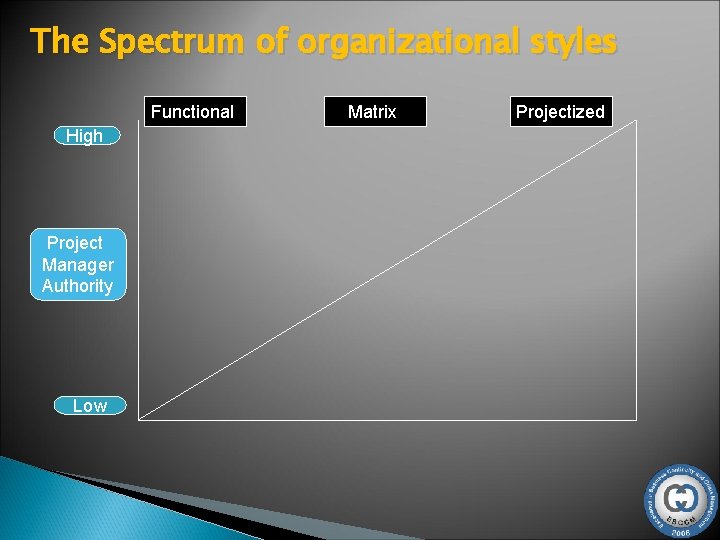
The Spectrum of organizational styles Functional High Project Manager Authority Low Matrix Projectized
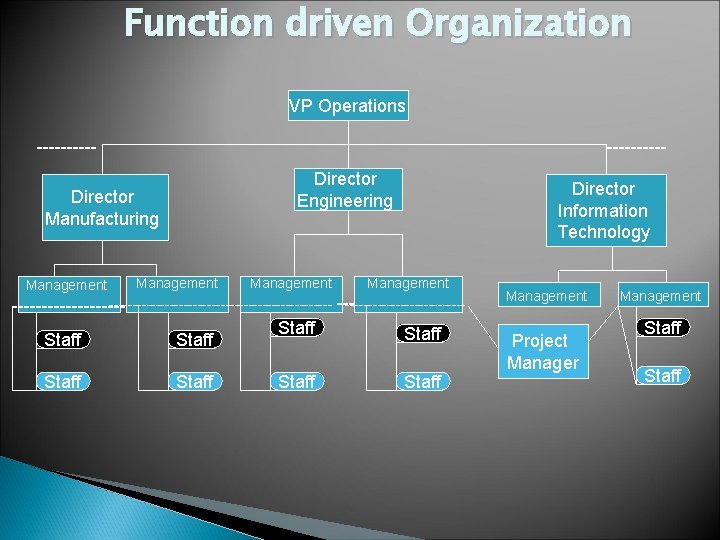
Function driven Organization VP Operations -----Director Engineering Director Manufacturing Director Information Technology Management -------------------------------------------------Management Staff Staff Management Project Manager Management Staff
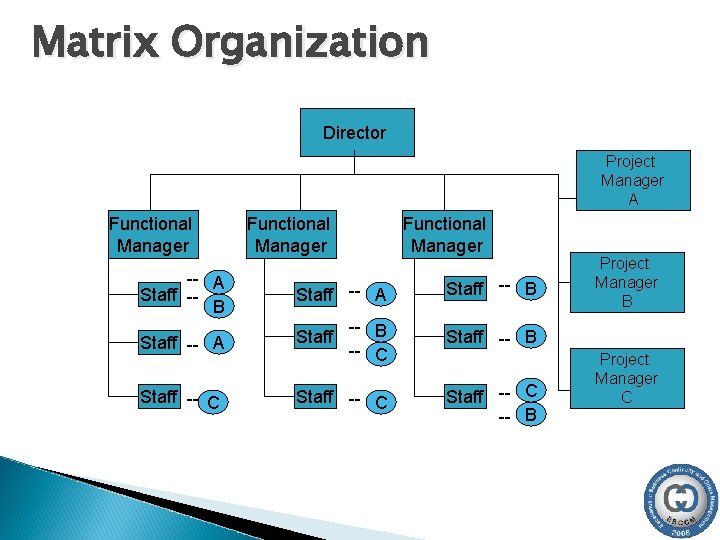
Matrix Organization Director Project Manager A Functional Manager -- A Staff -B Staff -- A Staff -- B -- C Staff -- B Staff -- C -- B Project Manager C
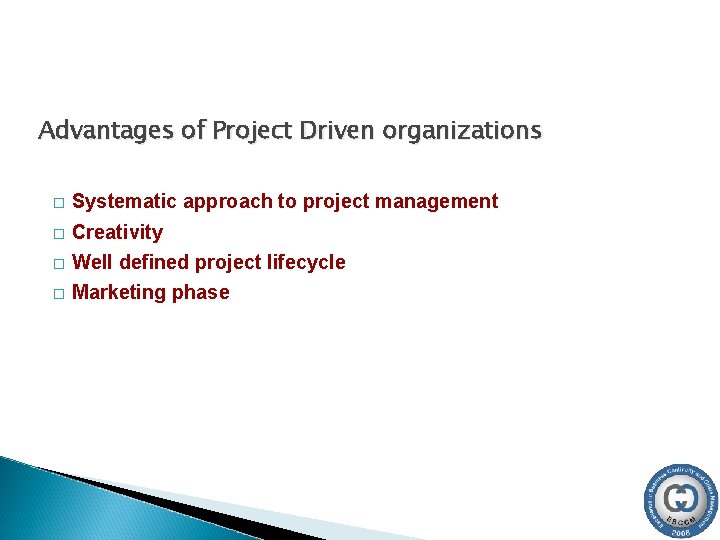
Advantages of Project Driven organizations � Systematic approach to project management � Creativity � Well defined project lifecycle � Marketing phase
Challenges of project driven organization � � � High risks in early project phases More difficult learning organization More difficult employee synergy
Project Management Skills Leading Communicating Negotiating Problem Solving Influencing the Organization
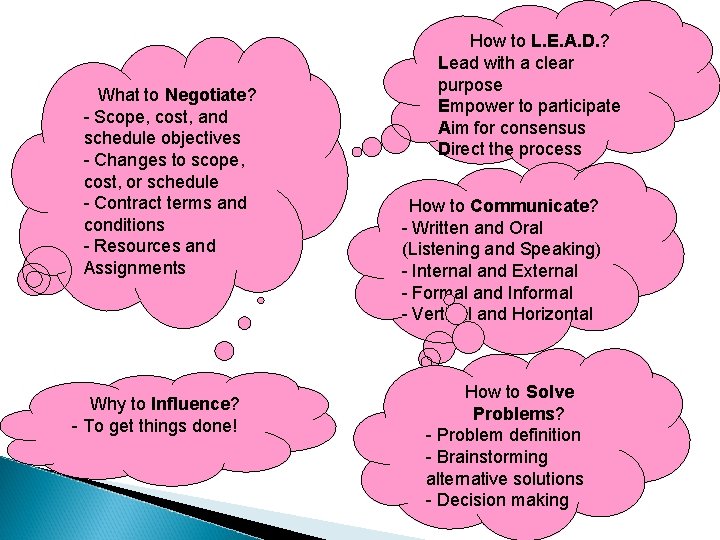
What to Negotiate? - Scope, cost, and schedule objectives - Changes to scope, cost, or schedule - Contract terms and conditions - Resources and Assignments Why to Influence? - To get things done! How to L. E. A. D. ? Lead with a clear purpose Empower to participate Aim for consensus Direct the process How to Communicate? - Written and Oral (Listening and Speaking) - Internal and External - Formal and Informal - Vertical and Horizontal How to Solve Problems? - Problem definition - Brainstorming alternative solutions - Decision making
Project Manager Skills Leadership Team building Conflict resolution Planning Organization Entrepreneurship Communication Negotiation Decision making. Project Management Competence Business Management Competence Understanding of Project Environment Understanding of Project Technology
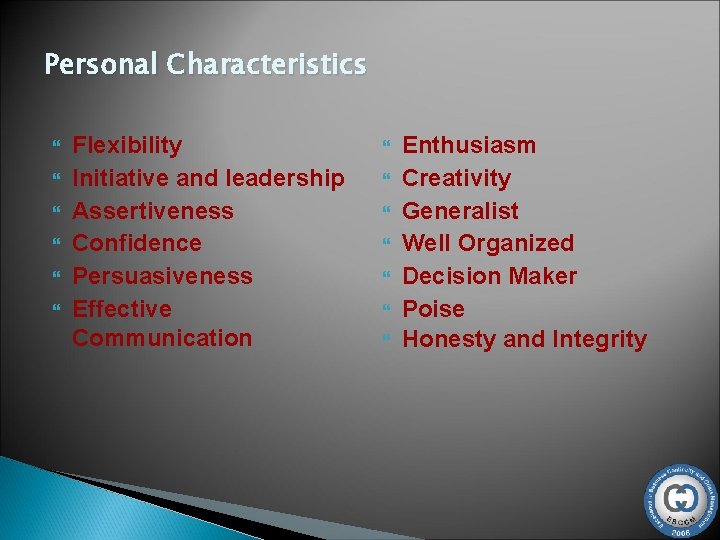
Personal Characteristics Flexibility Initiative and leadership Assertiveness Confidence Persuasiveness Effective Communication Enthusiasm Creativity Generalist Well Organized Decision Maker Poise Honesty and Integrity
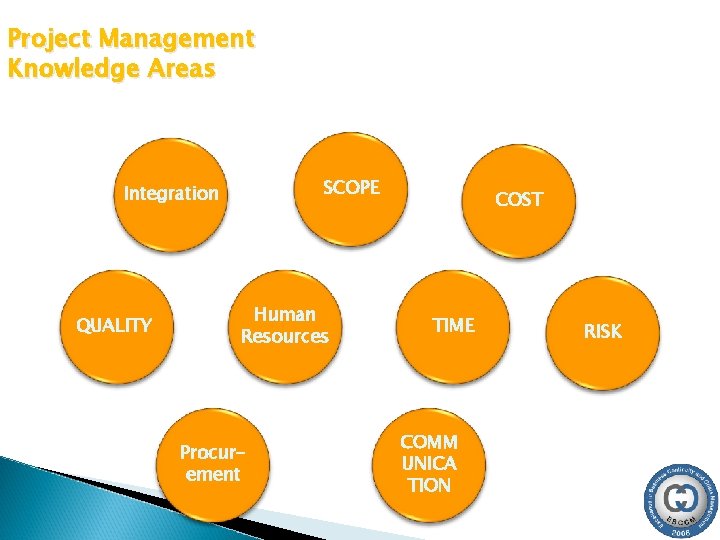
Project Management Knowledge Areas SCOPE Integration QUALITY Human Resources Procurement COST TIME COMM UNICA TION RISK
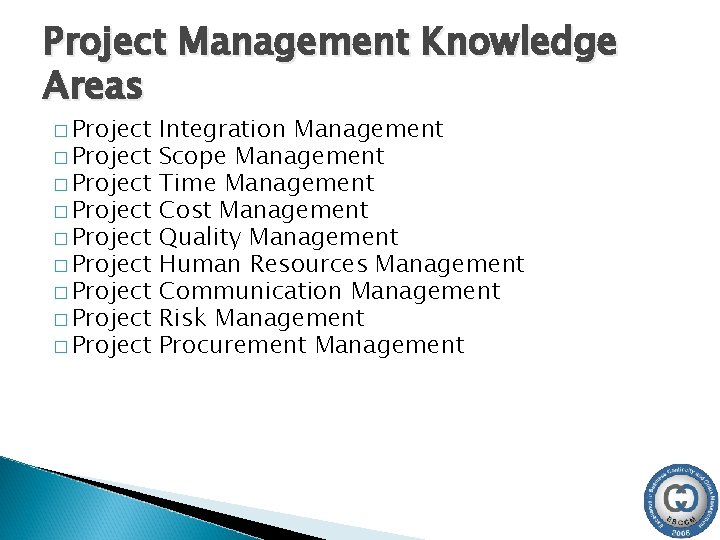
Project Management Knowledge Areas � Project � Project � Project Integration Management Scope Management Time Management Cost Management Quality Management Human Resources Management Communication Management Risk Management Procurement Management
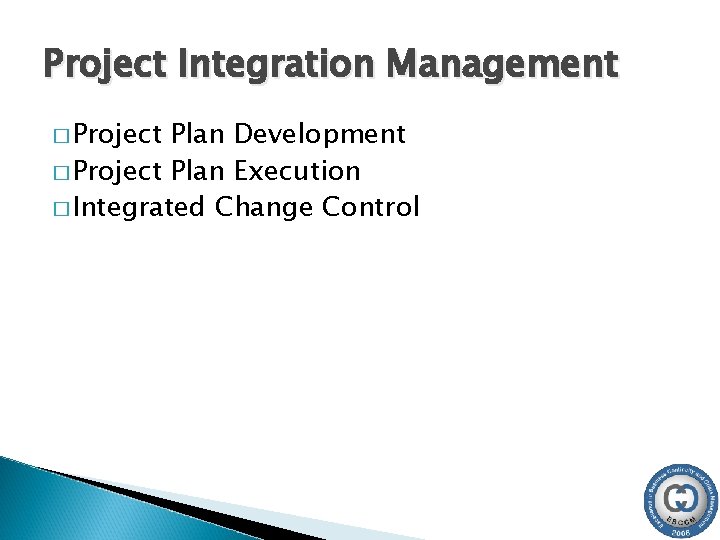
Project Integration Management � Project Plan Development � Project Plan Execution � Integrated Change Control
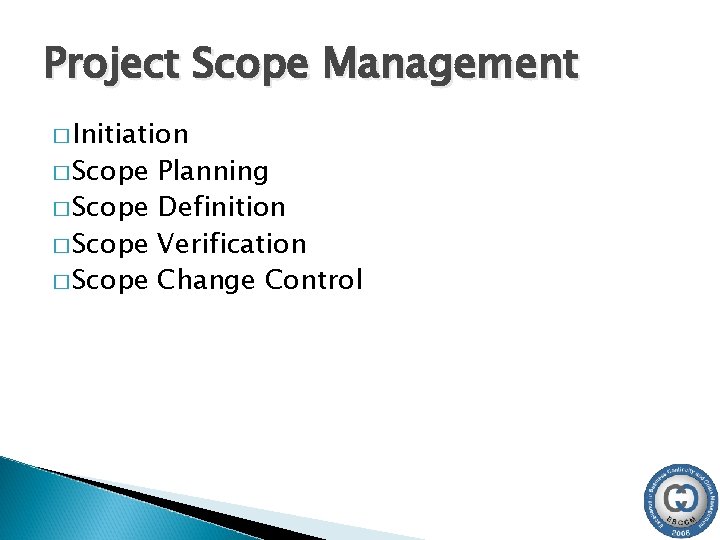
Project Scope Management � Initiation � Scope Planning � Scope Definition � Scope Verification � Scope Change Control
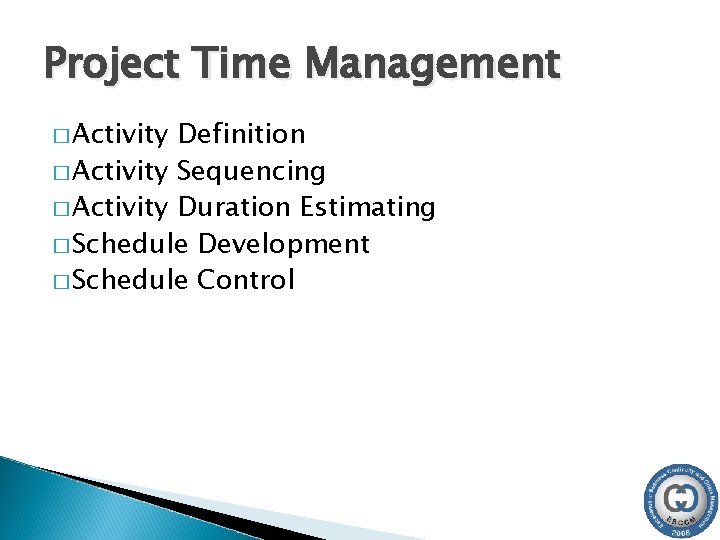
Project Time Management � Activity Definition � Activity Sequencing � Activity Duration Estimating � Schedule Development � Schedule Control
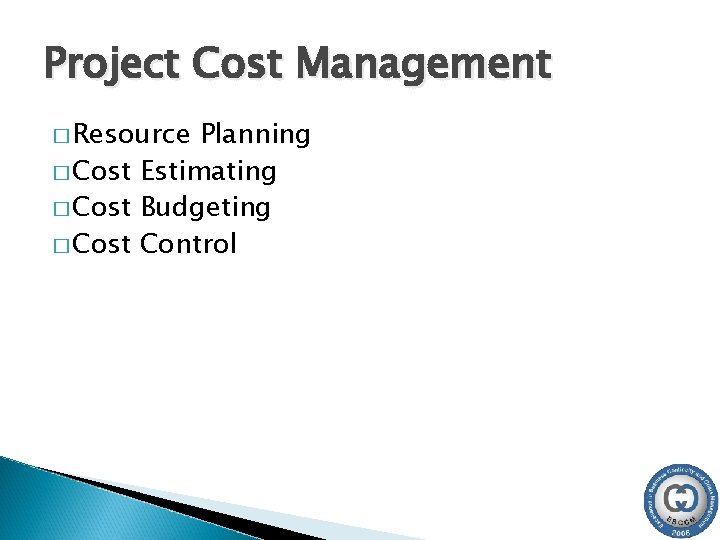
Project Cost Management � Resource Planning � Cost Estimating � Cost Budgeting � Cost Control
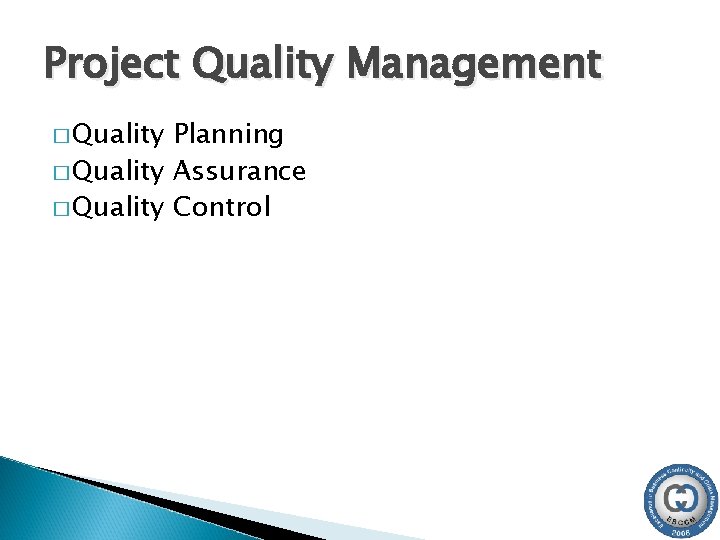
Project Quality Management � Quality Planning � Quality Assurance � Quality Control
Project Human Resources Management � Organizational Planning � Staff Acquisition � Team Development
Project Communication Management � Communication Planning � Information Distribution � Performance Reporting � Administrative Closure
Project Risk Management � Risk Management Planning � Risk Identification � Qualitative Risk Analysis � Quantitative Risks Analysis � Risk Response Planning � Risk Monitoring and Control
Project Procurement Management � Procurement Planning � Solicitation � Source Selection � Contract Administration � Contract Closeout
Project Management Main Deliverables � Project Charter � Project Plan � Risks and Issues Reports � Meeting Agendas � Minutes of Meetings � Status Reports � Closeout Report
Project Charter � The Project Charter formally describes and authorizes work to be performed on a project. � To view a sample template, please click
Project Plan �A formal, approved document used to guide both project execution and project control. � To view a sample template, please click
Risks and Issues Reports �A report designed to quantify the impact of uncertainties. � To view a sample template, please click.
Meeting Agendas � List of things to be done or discussed, at any project meeting. � To view a sample template, please click
Minutes of Meeting � Formal � To notes taken during a meeting. view a sample template, please click
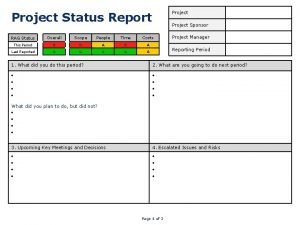
Status Reports � The comparison of actual progress against the plan to determine variance and corrective action. � To view a sample template, please click
Closeout Report � Documentation on a project. � To of the completion of all work view a sample template, please click.
Project Management software � Microsoft � Primavera � All Project Clear � Many others
“IT IS A SCIENCE AND AN ART ”
SUMMARY CHARACTERISTICS OF PROJECTS � � � Projects are complex: projects call on various planning and implementation skills, and involve various partners and players. Projects are collective: projects are the product of collective endeavour. They are run by teams, involve various partners and cater for the needs of others. Projects are unique: all projects stem from new ideas. They provide a specific response to a need (problem) in a specific context. They are innovative.
SUMMARY CHARACTERISTICS OF PROJECTS � Projects are an adventure: every project is different and ground-breaking; they always involve some uncertainty and risk. � Projects can be assessed: projects are planned and broken down into measurable aims which must be open to evaluation. � Projects are made up of stages: projects have distinct, identifiable stages
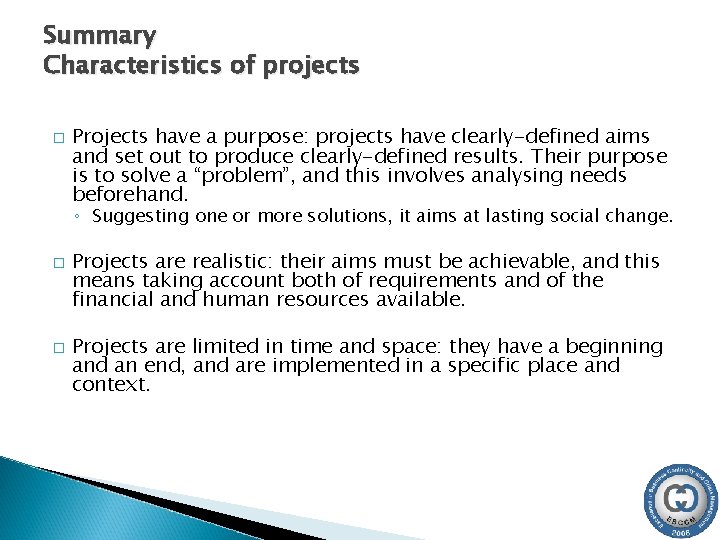
Summary Characteristics of projects � Projects have a purpose: projects have clearly-defined aims and set out to produce clearly-defined results. Their purpose is to solve a “problem”, and this involves analysing needs beforehand. ◦ Suggesting one or more solutions, it aims at lasting social change. � � Projects are realistic: their aims must be achievable, and this means taking account both of requirements and of the financial and human resources available. Projects are limited in time and space: they have a beginning and an end, and are implemented in a specific place and context.
Exercises
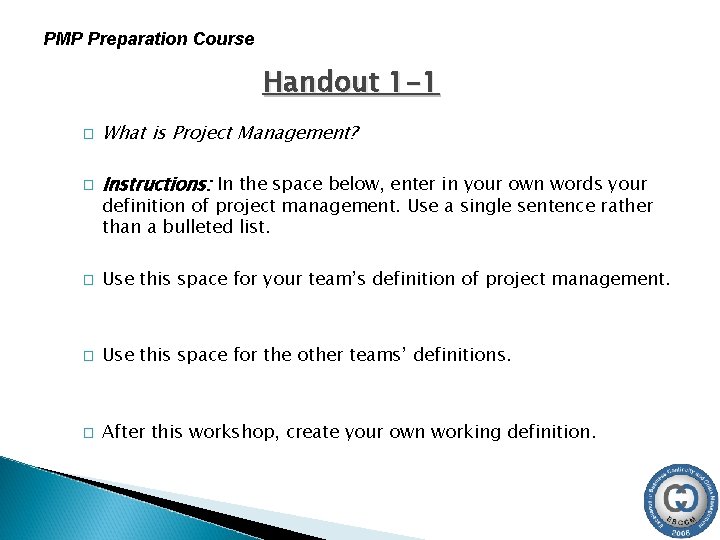
PMP Preparation Course Handout 1 -1 � What is Project Management? � Instructions: In the space below, enter in your own words your definition of project management. Use a single sentence rather than a bulleted list. � Use this space for your team’s definition of project management. � Use this space for the other teams’ definitions. � After this workshop, create your own working definition.
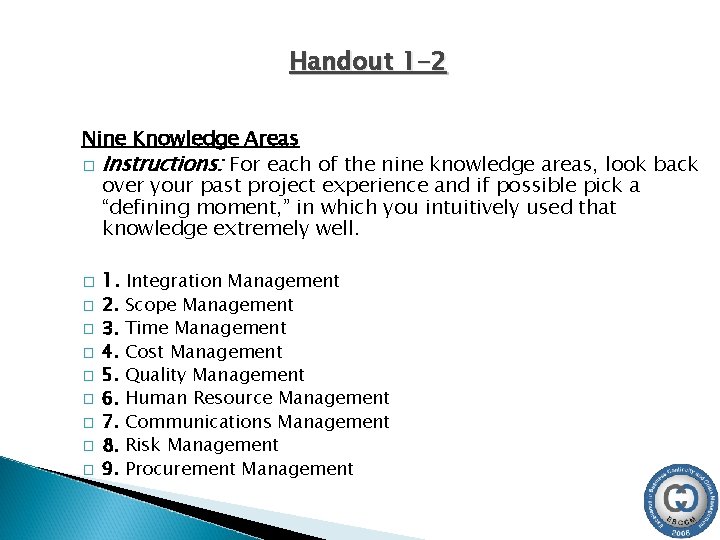
Handout 1 -2 Nine Knowledge Areas � Instructions: For each of the nine knowledge areas, look back over your past project experience and if possible pick a “defining moment, ” in which you intuitively used that knowledge extremely well. � � � � � 1. Integration Management 2. 3. 4. 5. 6. 7. 8. 9. Scope Management Time Management Cost Management Quality Management Human Resource Management Communications Management Risk Management Procurement Management
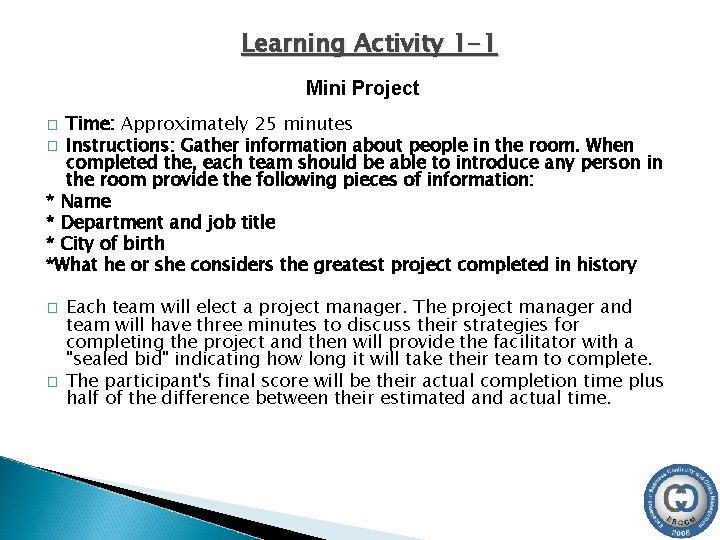
Learning Activity 1 -1 Mini Project Time: Approximately 25 minutes � Instructions: Gather information about people in the room. When completed the, each team should be able to introduce any person in the room provide the following pieces of information: * Name * Department and job title * City of birth *What he or she considers the greatest project completed in history � � � Each team will elect a project manager. The project manager and team will have three minutes to discuss their strategies for completing the project and then will provide the facilitator with a "sealed bid" indicating how long it will take their team to complete. The participant's final score will be their actual completion time plus half of the difference between their estimated and actual time.
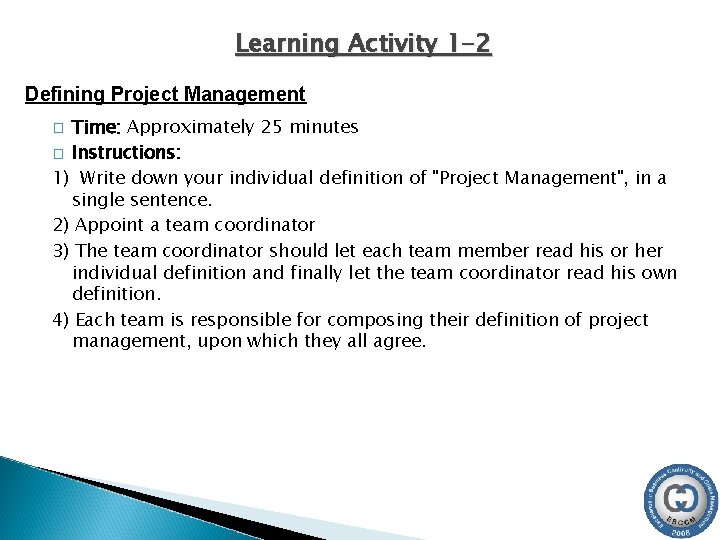
Learning Activity 1 -2 Defining Project Management Time: Approximately 25 minutes � Instructions: 1) Write down your individual definition of "Project Management", in a single sentence. 2) Appoint a team coordinator 3) The team coordinator should let each team member read his or her individual definition and finally let the team coordinator read his own definition. 4) Each team is responsible for composing their definition of project management, upon which they all agree. �
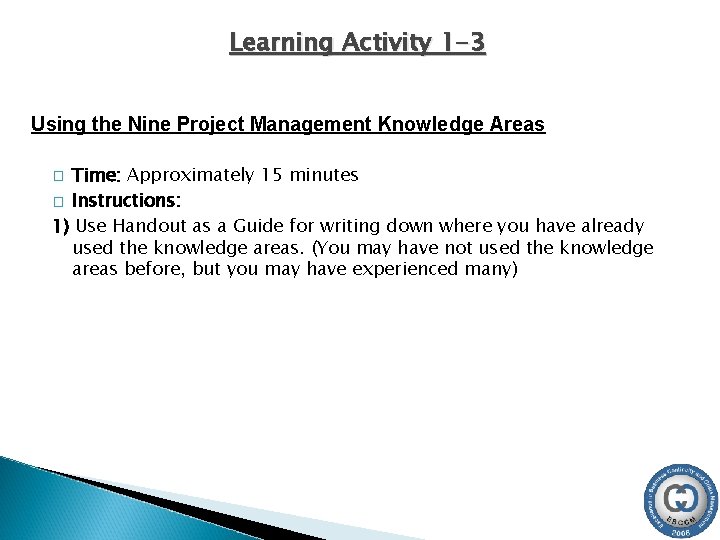
Learning Activity 1 -3 Using the Nine Project Management Knowledge Areas Time: Approximately 15 minutes � Instructions: 1) Use Handout as a Guide for writing down where you have already used the knowledge areas. (You may have not used the knowledge areas before, but you may have experienced many) �