
Certificate Course in Evidence Based Diabetes Management PRESENTATION
Certificate Course in Evidence Based Diabetes Management PRESENTATION AND INITIAL EVALUATION OF TYPE 2 DIABETES
Certificate Course in Evidence Based Diabetes Management Learning Objectives • To equip a physician to diagnose a case of diabetes • To learn about the classification of diabetes with particular reference to diabetes in youth • To help a physician decide on the initial evaluation of the patient with respect to metabolic control, presence of complications and other co-morbidities
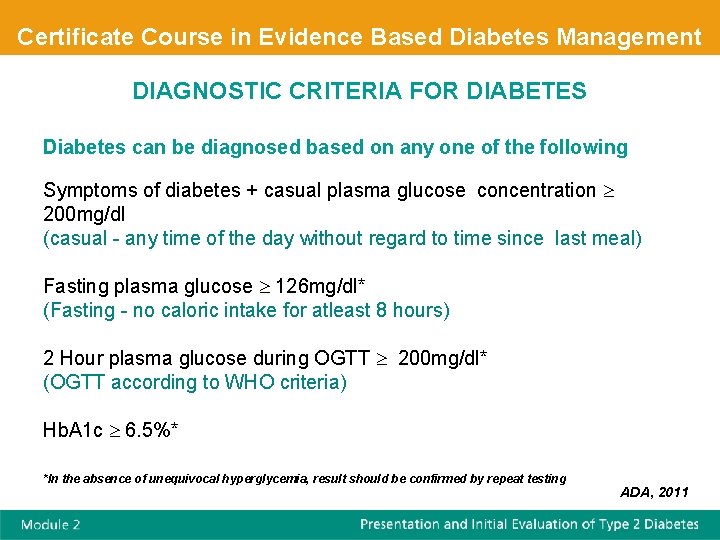
Certificate Course in Evidence Based Diabetes Management DIAGNOSTIC CRITERIA FOR DIABETES Diabetes can be diagnosed based on any one of the following Symptoms of diabetes + casual plasma glucose concentration 200 mg/dl (casual - any time of the day without regard to time since last meal) Fasting plasma glucose 126 mg/dl* (Fasting - no caloric intake for atleast 8 hours) 2 Hour plasma glucose during OGTT 200 mg/dl* (OGTT according to WHO criteria) Hb. A 1 c 6. 5%* *In the absence of unequivocal hyperglycemia, result should be confirmed by repeat testing ADA, 2011
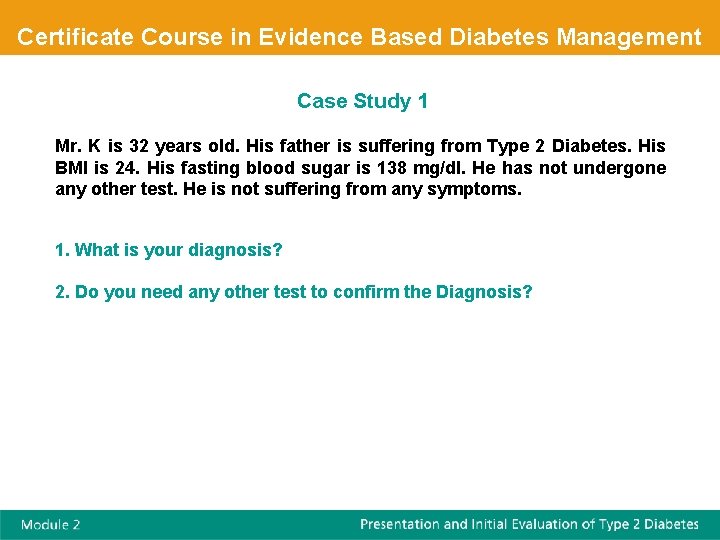
Certificate Course in Evidence Based Diabetes Management Case Study 1 Mr. K is 32 years old. His father is suffering from Type 2 Diabetes. His BMI is 24. His fasting blood sugar is 138 mg/dl. He has not undergone any other test. He is not suffering from any symptoms. 1. What is your diagnosis? 2. Do you need any other test to confirm the Diagnosis?
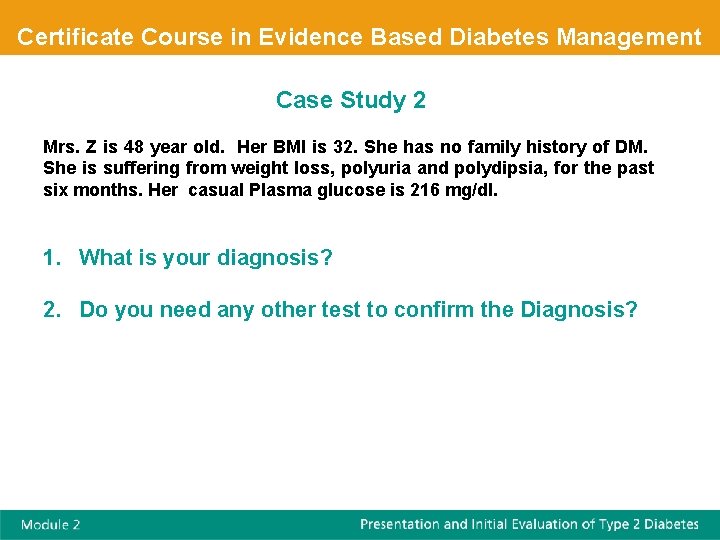
Certificate Course in Evidence Based Diabetes Management Case Study 2 Mrs. Z is 48 year old. Her BMI is 32. She has no family history of DM. She is suffering from weight loss, polyuria and polydipsia, for the past six months. Her casual Plasma glucose is 216 mg/dl. 1. What is your diagnosis? 2. Do you need any other test to confirm the Diagnosis?
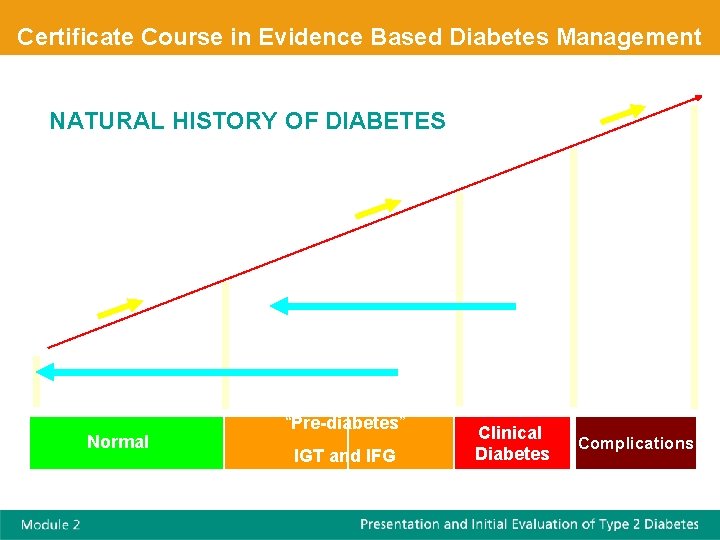
Certificate Course in Evidence Based Diabetes Management NATURAL HISTORY OF DIABETES Normal “Pre-diabetes” IGT and IFG Clinical Diabetes Complications
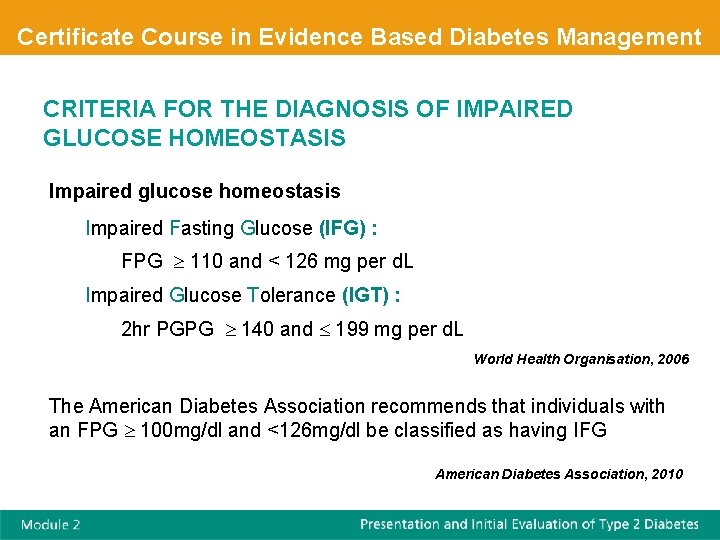
Certificate Course in Evidence Based Diabetes Management CRITERIA FOR THE DIAGNOSIS OF IMPAIRED GLUCOSE HOMEOSTASIS Impaired glucose homeostasis Impaired Fasting Glucose (IFG) : FPG 110 and < 126 mg per d. L Impaired Glucose Tolerance (IGT) : 2 hr PGPG 140 and 199 mg per d. L World Health Organisation, 2006 The American Diabetes Association recommends that individuals with an FPG 100 mg/dl and <126 mg/dl be classified as having IFG American Diabetes Association, 2010
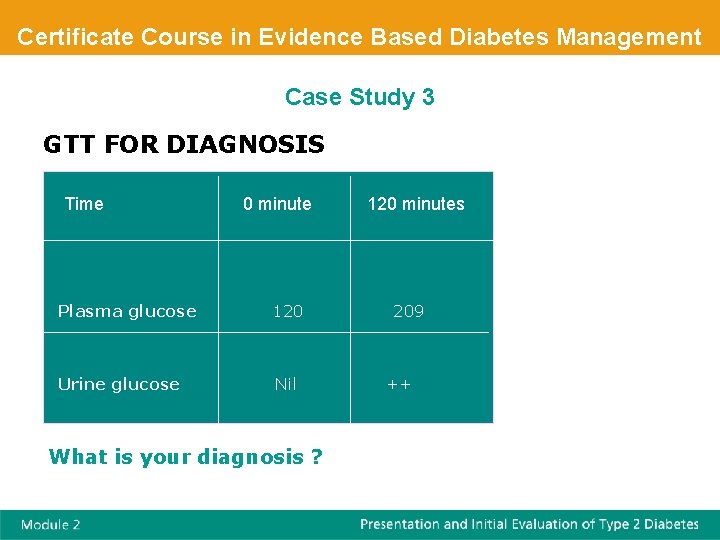
Certificate Course in Evidence Based Diabetes Management Case Study 3 GTT FOR DIAGNOSIS Time 0 minute Plasma glucose 120 Urine glucose Nil What is your diagnosis ? 120 minutes 209 ++
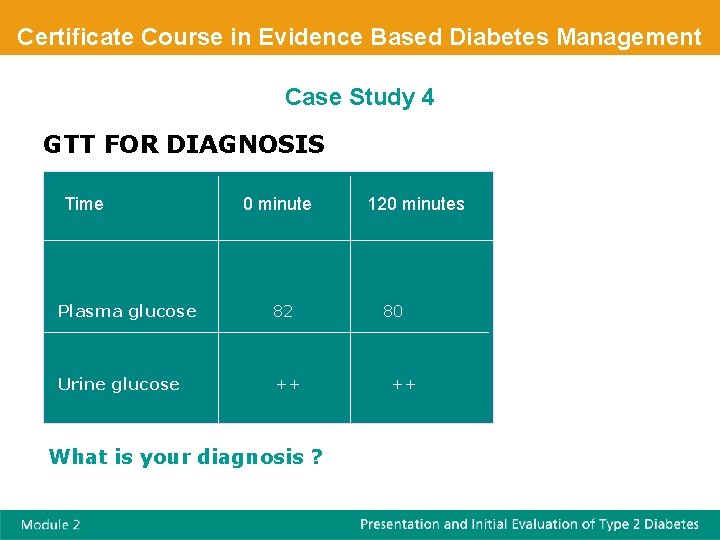
Certificate Course in Evidence Based Diabetes Management Case Study 4 GTT FOR DIAGNOSIS Time 0 minute Plasma glucose 82 Urine glucose ++ What is your diagnosis ? 120 minutes 80 ++
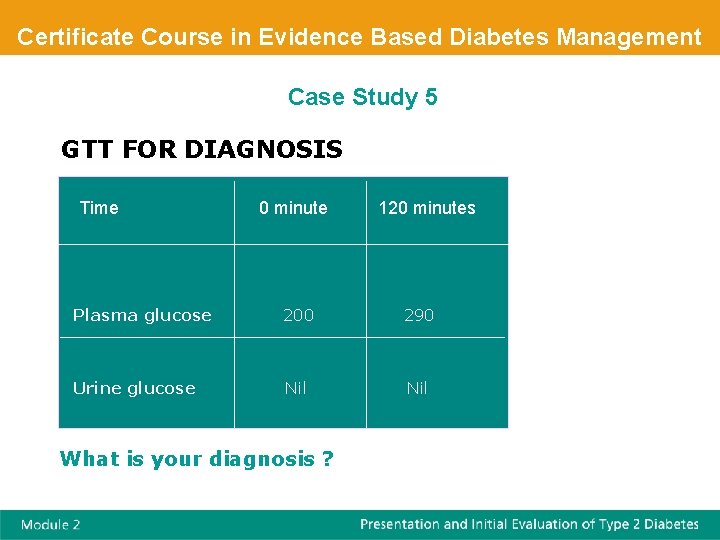
Certificate Course in Evidence Based Diabetes Management Case Study 5 GTT FOR DIAGNOSIS Time 0 minute 120 minutes Plasma glucose 200 290 Urine glucose Nil What is your diagnosis ?
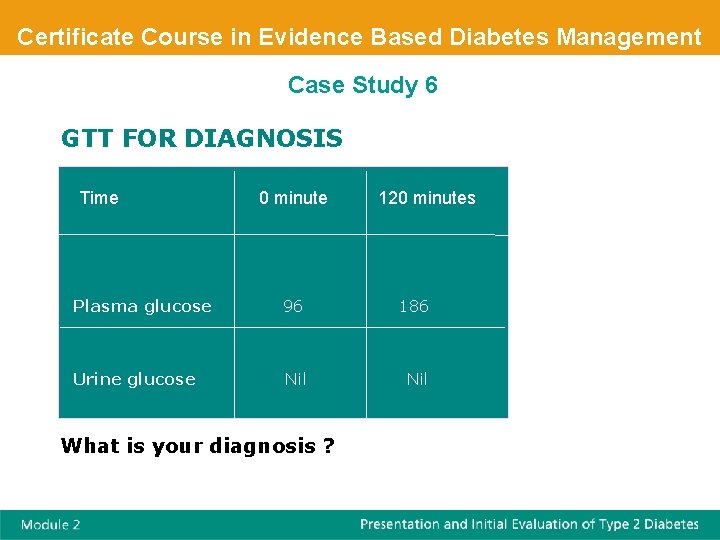
Certificate Course in Evidence Based Diabetes Management Case Study 6 GTT FOR DIAGNOSIS Time 0 minute 120 minutes Plasma glucose 96 186 Urine glucose Nil What is your diagnosis ?
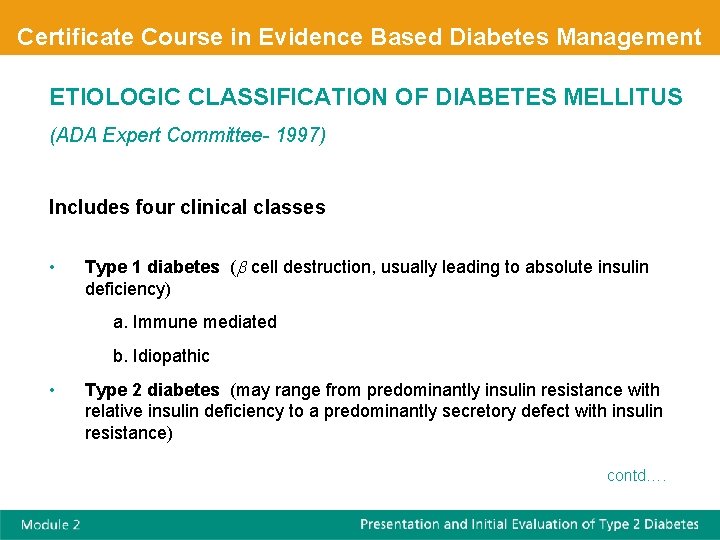
Certificate Course in Evidence Based Diabetes Management ETIOLOGIC CLASSIFICATION OF DIABETES MELLITUS (ADA Expert Committee- 1997) Includes four clinical classes • Type 1 diabetes ( cell destruction, usually leading to absolute insulin deficiency) a. Immune mediated b. Idiopathic • Type 2 diabetes (may range from predominantly insulin resistance with relative insulin deficiency to a predominantly secretory defect with insulin resistance) contd….
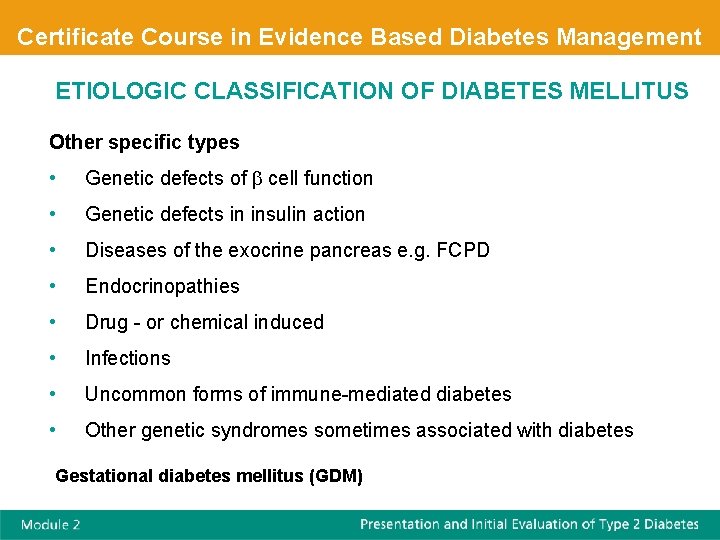
Certificate Course in Evidence Based Diabetes Management ETIOLOGIC CLASSIFICATION OF DIABETES MELLITUS Other specific types • Genetic defects of cell function • Genetic defects in insulin action • Diseases of the exocrine pancreas e. g. FCPD • Endocrinopathies • Drug - or chemical induced • Infections • Uncommon forms of immune-mediated diabetes • Other genetic syndromes sometimes associated with diabetes Gestational diabetes mellitus (GDM)
Certificate Course in Evidence Based Diabetes Management TYPE 1 DIABETES MELLITUS Absolute insulin deficiency due to destruction of pancreatic beta cells Insulin dependant form of Diabetes Epidemiology • < 5% of the total diabetic population • 0. 001% of the total population • Geographical variation is observed • Mostly juvenile, about 10% in elderly Symptoms • Abrupt onset of severe symptoms • May present in diabetic ketoacidosis
Certificate Course in Evidence Based Diabetes Management MATURITY ONSET DIABETES OF THE YOUNG (MODY) Monogenic form of diabetes associated with mutation in a single gene Diagnostic Criteria (Tattersall and Fajans) • Aged less than 25 years at onset • Autosomal dominant transmission of diabetes with three generations involved • Absence of ketosis at any time • Controllable without insulin at least in the early stages of the disease Clinical criteria are no longer acceptable and genetic analysis is needed to confirm the diagnosis
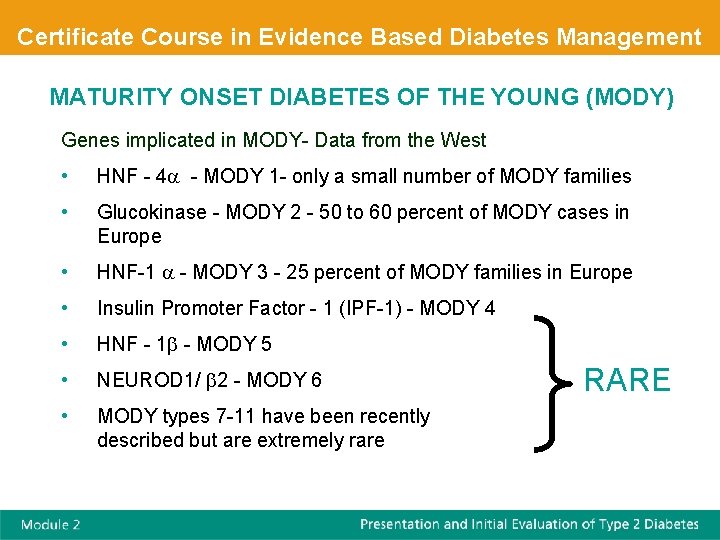
Certificate Course in Evidence Based Diabetes Management MATURITY ONSET DIABETES OF THE YOUNG (MODY) Genes implicated in MODY- Data from the West • HNF - 4 - MODY 1 - only a small number of MODY families • Glucokinase - MODY 2 - 50 to 60 percent of MODY cases in Europe • HNF-1 - MODY 3 - 25 percent of MODY families in Europe • Insulin Promoter Factor - 1 (IPF-1) - MODY 4 • HNF - 1 - MODY 5 • NEUROD 1/ 2 - MODY 6 • MODY types 7 -11 have been recently described but are extremely rare RARE
Certificate Course in Evidence Based Diabetes Management MATURITY ONSET DIABETES OF THE YOUNG (MODY) Clinical Features • Patients usually non-obese • Do not need insulin initially- later may become insulin-requiring (MODY 1, 3 and 5) • Isolated Mild fasting hyperglycemia- MODY 2 - no treatment required • Diabetes with renal cysts/ renal agenesis RCAD (renal cysts and diabetes syndrome)- MODY 5
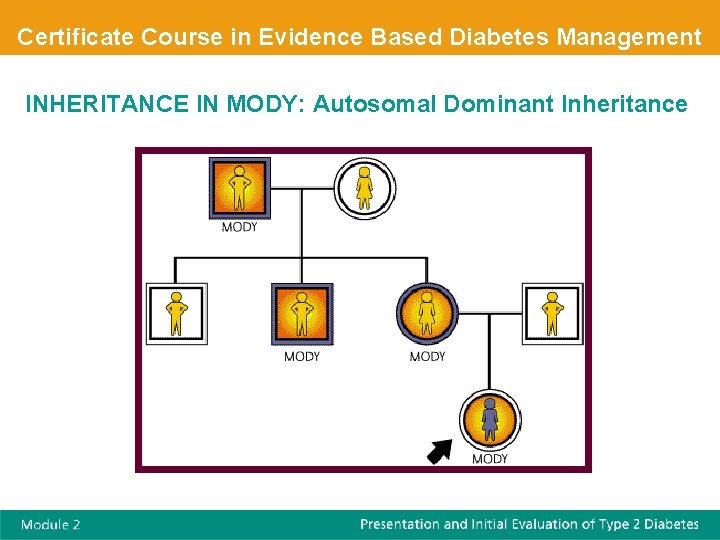
Certificate Course in Evidence Based Diabetes Management INHERITANCE IN MODY: Autosomal Dominant Inheritance
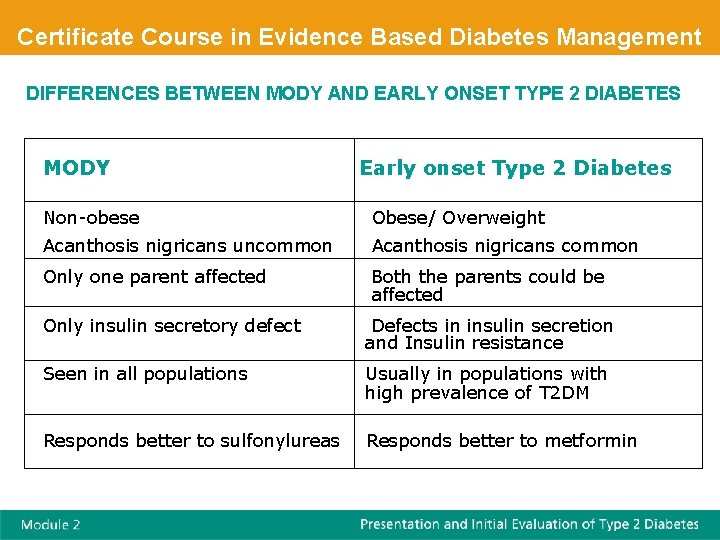
Certificate Course in Evidence Based Diabetes Management DIFFERENCES BETWEEN MODY AND EARLY ONSET TYPE 2 DIABETES MODY Early onset Type 2 Diabetes Non-obese Obese/ Overweight Acanthosis nigricans uncommon Acanthosis nigricans common Only one parent affected Both the parents could be affected Only insulin secretory defect Defects in insulin secretion and Insulin resistance Seen in all populations Usually in populations with high prevalence of T 2 DM Responds better to sulfonylureas Responds better to metformin
Certificate Course in Evidence Based Diabetes Management FIBROCALCULOUS PANCREATIC DIABETES • Patient should be from a tropical country • Diabetes should be present • Evidence of chronic pancreatitis should be present Abnormal pancreatic morphology on USG/CT scan Recurrent abdominal pain since childhood Steatorrhea Abnormal pancreatic function tests • Absence of other causes of chronic pancreatitis viz. alcoholism, hepatobiliary disease etc. From Mohan et al, 1985
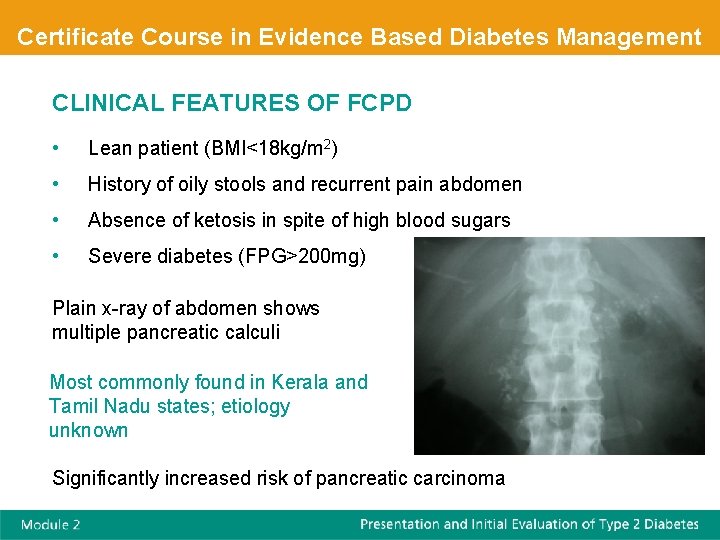
Certificate Course in Evidence Based Diabetes Management CLINICAL FEATURES OF FCPD • Lean patient (BMI<18 kg/m 2) • History of oily stools and recurrent pain abdomen • Absence of ketosis in spite of high blood sugars • Severe diabetes (FPG>200 mg) Plain x-ray of abdomen shows multiple pancreatic calculi Most commonly found in Kerala and Tamil Nadu states; etiology unknown Significantly increased risk of pancreatic carcinoma
Certificate Course in Evidence Based Diabetes Management LATENT AUTOIMMUNE DIABETES OF ADULTS (LADA)- TYPE 1 DIABETES WHICH PRESENTS LATE • GAD* autoantibody positive • Age at onset > 30 years • Lean patient • Insulin treatment required within one year of onset Many patients with “Type 2 diabetes” who are lean, have no family history of diabetes and who require insulin early in the course of the disease actually have LADA! * Glutamic acid decarboxylase
Certificate Course in Evidence Based Diabetes Management DIFFERENT TYPES DIABETES SEEN IN YOUTH • Type 2 DM (Early onset diabetes) • MODY • Type 1 DM • FCPD • Other forms of secondary diabetes (drug-induced or endocrinopathies)
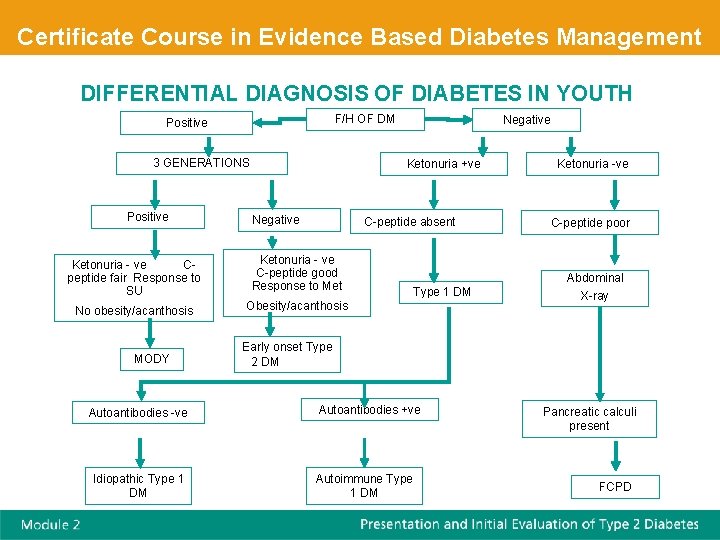
Certificate Course in Evidence Based Diabetes Management DIFFERENTIAL DIAGNOSIS OF DIABETES IN YOUTH F/H OF DM Positive 3 GENERATIONS Positive Ketonuria +ve Negative C-peptide absent Ketonuria - ve Cpeptide fair Response to SU Ketonuria - ve C-peptide good Response to Met No obesity/acanthosis Obesity/acanthosis MODY Autoantibodies -ve Idiopathic Type 1 DM Negative Type 1 DM Ketonuria -ve C-peptide poor Abdominal X-ray Early onset Type 2 DM Autoantibodies +ve Autoimmune Type 1 DM Pancreatic calculi present FCPD
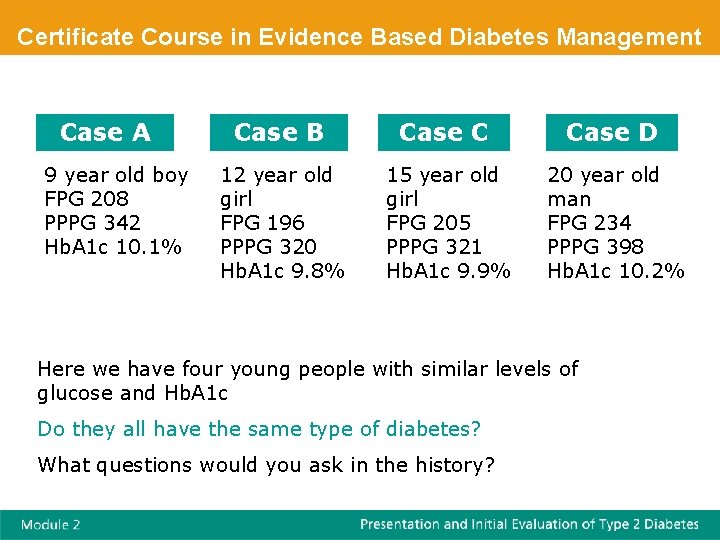
Certificate Course in Evidence Based Diabetes Management Case A 9 year old boy FPG 208 PPPG 342 Hb. A 1 c 10. 1% Case B Case C Case D 12 year old girl FPG 196 PPPG 320 Hb. A 1 c 9. 8% 15 year old girl FPG 205 PPPG 321 Hb. A 1 c 9. 9% 20 year old man FPG 234 PPPG 398 Hb. A 1 c 10. 2% Here we have four young people with similar levels of glucose and Hb. A 1 c Do they all have the same type of diabetes? What questions would you ask in the history?
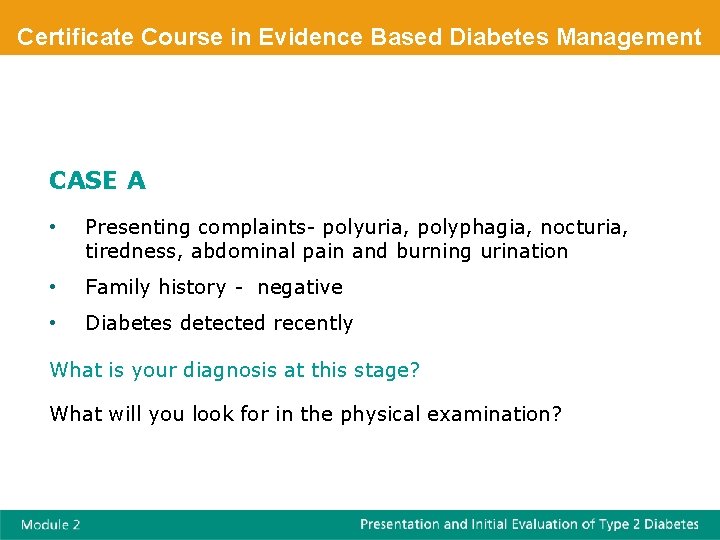
Certificate Course in Evidence Based Diabetes Management CASE A • Presenting complaints- polyuria, polyphagia, nocturia, tiredness, abdominal pain and burning urination • Family history - negative • Diabetes detected recently What is your diagnosis at this stage? What will you look for in the physical examination?
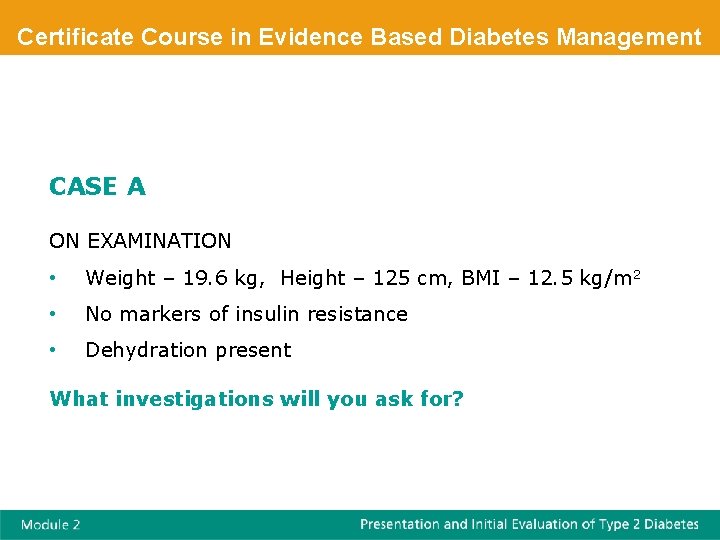
Certificate Course in Evidence Based Diabetes Management CASE A ON EXAMINATION • Weight – 19. 6 kg, Height – 125 cm, BMI – 12. 5 kg/m 2 • No markers of insulin resistance • Dehydration present What investigations will you ask for?
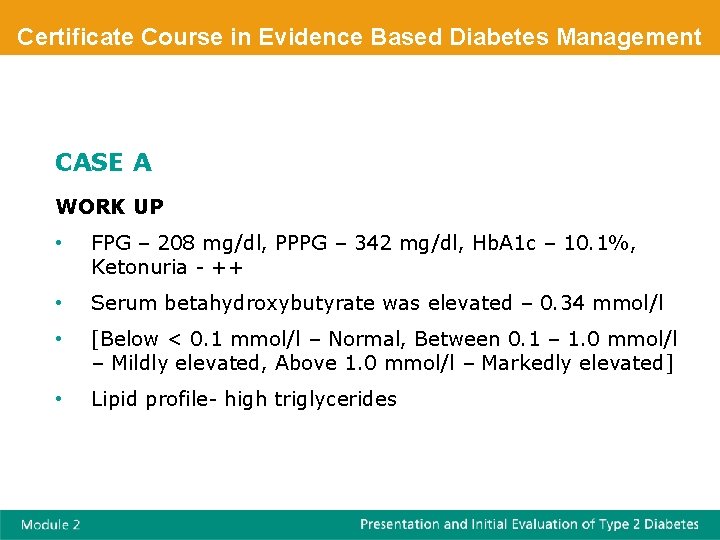
Certificate Course in Evidence Based Diabetes Management CASE A WORK UP • FPG – 208 mg/dl, PPPG – 342 mg/dl, Hb. A 1 c – 10. 1%, Ketonuria - ++ • Serum betahydroxybutyrate was elevated – 0. 34 mmol/l • [Below < 0. 1 mmol/l – Normal, Between 0. 1 – 1. 0 mmol/l – Mildly elevated, Above 1. 0 mmol/l – Markedly elevated] • Lipid profile- high triglycerides
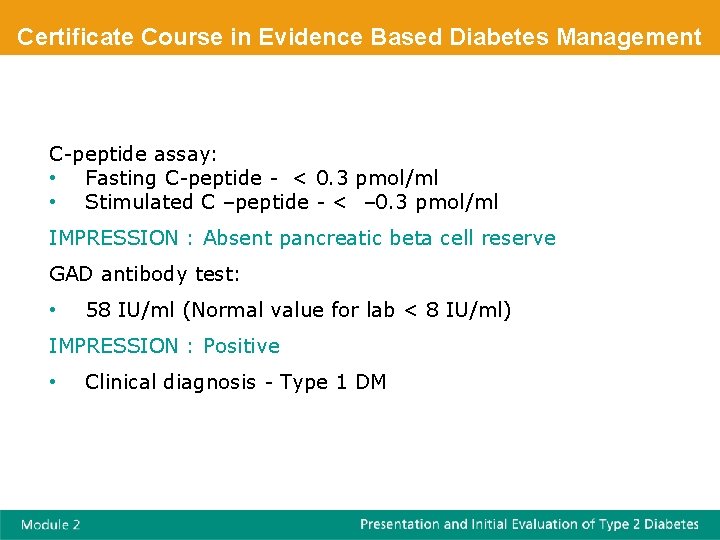
Certificate Course in Evidence Based Diabetes Management C-peptide assay: • Fasting C-peptide - < 0. 3 pmol/ml • Stimulated C –peptide - < – 0. 3 pmol/ml IMPRESSION : Absent pancreatic beta cell reserve GAD antibody test: • 58 IU/ml (Normal value for lab < 8 IU/ml) IMPRESSION : Positive • Clinical diagnosis - Type 1 DM
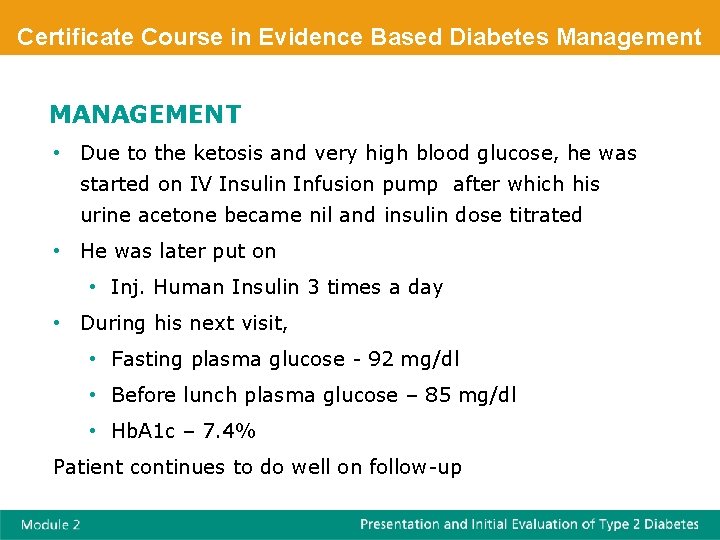
Certificate Course in Evidence Based Diabetes Management MANAGEMENT • Due to the ketosis and very high blood glucose, he was started on IV Insulin Infusion pump after which his urine acetone became nil and insulin dose titrated • He was later put on • Inj. Human Insulin 3 times a day • During his next visit, • Fasting plasma glucose - 92 mg/dl • Before lunch plasma glucose – 85 mg/dl • Hb. A 1 c – 7. 4% Patient continues to do well on follow-up
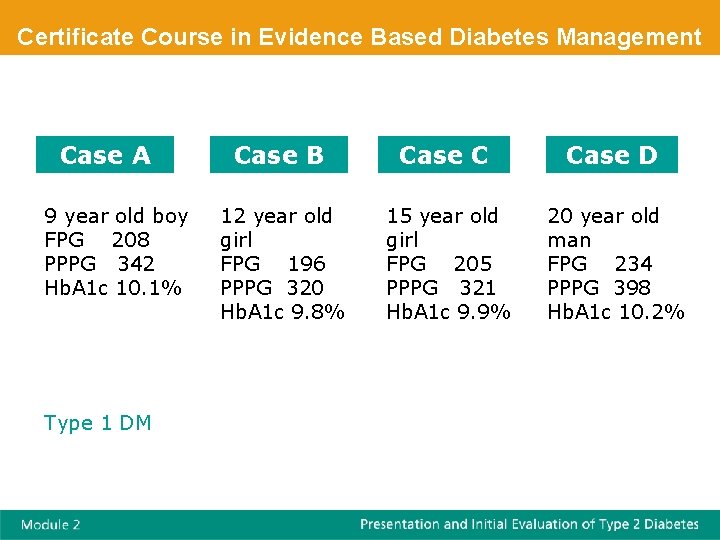
Certificate Course in Evidence Based Diabetes Management Case A 9 year old boy FPG 208 PPPG 342 Hb. A 1 c 10. 1% Type 1 DM Case B Case C Case D 12 year old girl FPG 196 PPPG 320 Hb. A 1 c 9. 8% 15 year old girl FPG 205 PPPG 321 Hb. A 1 c 9. 9% 20 year old man FPG 234 PPPG 398 Hb. A 1 c 10. 2%
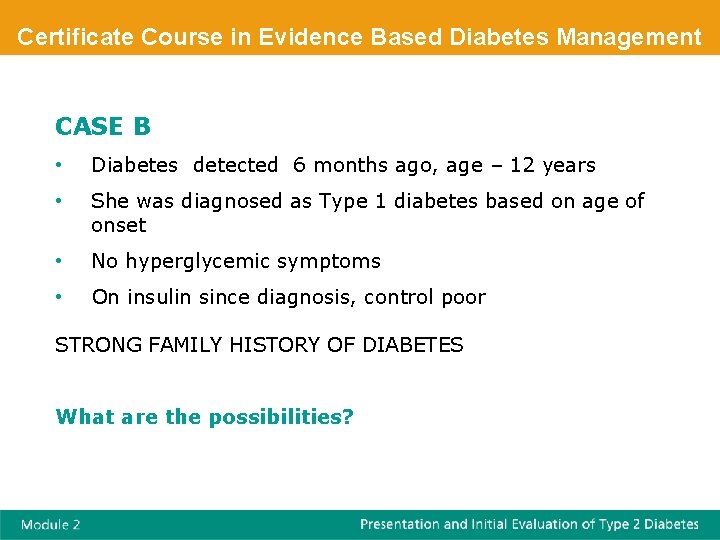
Certificate Course in Evidence Based Diabetes Management CASE B • Diabetes detected 6 months ago, age – 12 years • She was diagnosed as Type 1 diabetes based on age of onset • No hyperglycemic symptoms • On insulin since diagnosis, control poor STRONG FAMILY HISTORY OF DIABETES What are the possibilities?
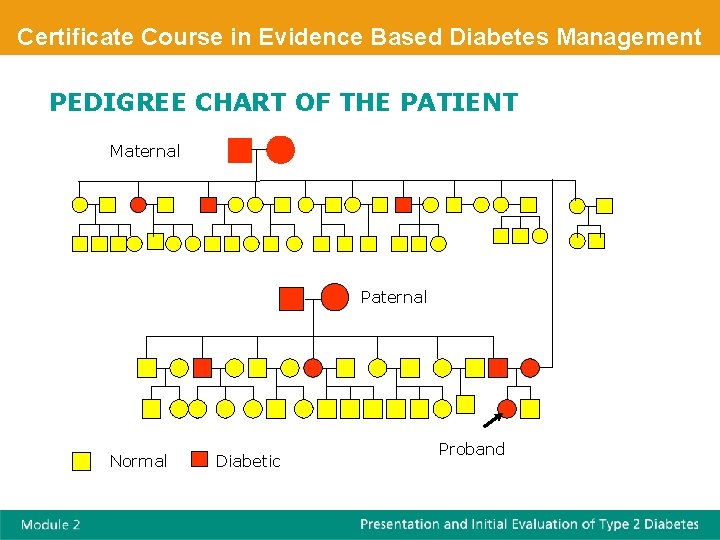
Certificate Course in Evidence Based Diabetes Management PEDIGREE CHART OF THE PATIENT Maternal Paternal Normal Diabetic Proband
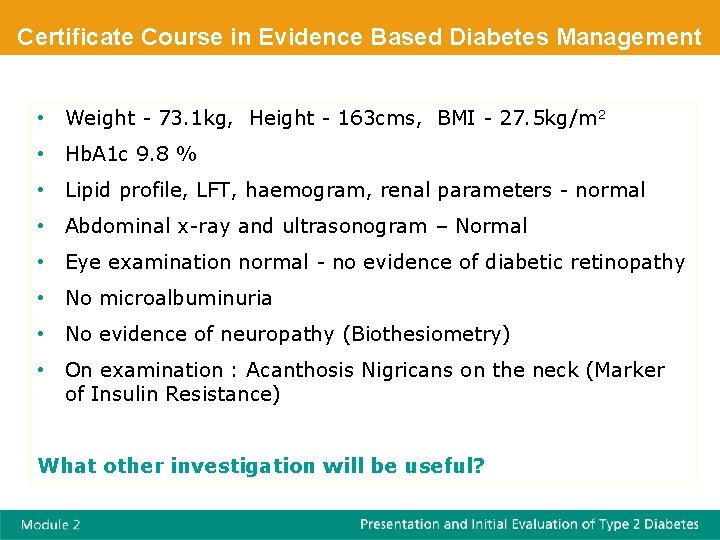
Certificate Course in Evidence Based Diabetes Management • Weight - 73. 1 kg, Height - 163 cms, BMI - 27. 5 kg/m 2 • Hb. A 1 c 9. 8 % • Lipid profile, LFT, haemogram, renal parameters - normal • Abdominal x-ray and ultrasonogram – Normal • Eye examination normal - no evidence of diabetic retinopathy • No microalbuminuria • No evidence of neuropathy (Biothesiometry) • On examination : Acanthosis Nigricans on the neck (Marker of Insulin Resistance) What other investigation will be useful?
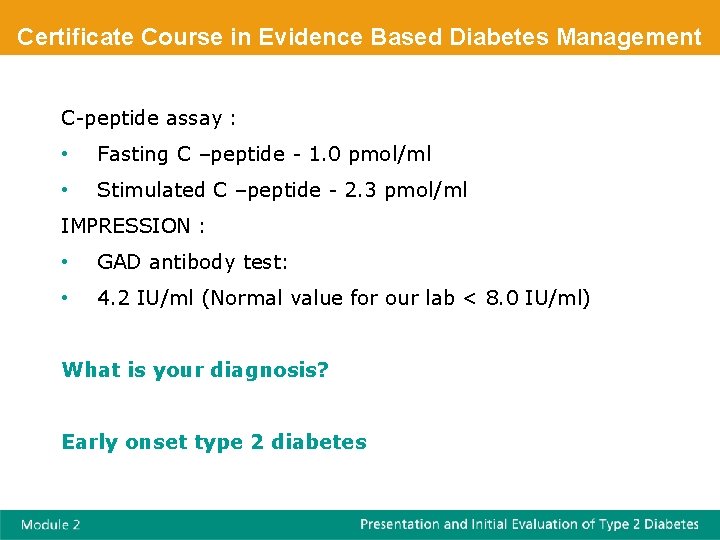
Certificate Course in Evidence Based Diabetes Management C-peptide assay : • Fasting C –peptide - 1. 0 pmol/ml • Stimulated C –peptide - 2. 3 pmol/ml IMPRESSION : • GAD antibody test: • 4. 2 IU/ml (Normal value for our lab < 8. 0 IU/ml) What is your diagnosis? Early onset type 2 diabetes
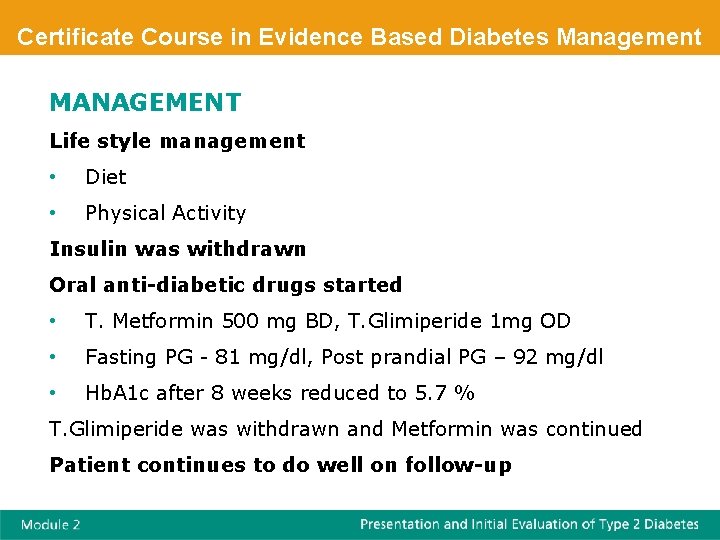
Certificate Course in Evidence Based Diabetes Management MANAGEMENT Life style management • Diet • Physical Activity Insulin was withdrawn Oral anti-diabetic drugs started • T. Metformin 500 mg BD, T. Glimiperide 1 mg OD • Fasting PG - 81 mg/dl, Post prandial PG – 92 mg/dl • Hb. A 1 c after 8 weeks reduced to 5. 7 % T. Glimiperide was withdrawn and Metformin was continued Patient continues to do well on follow-up
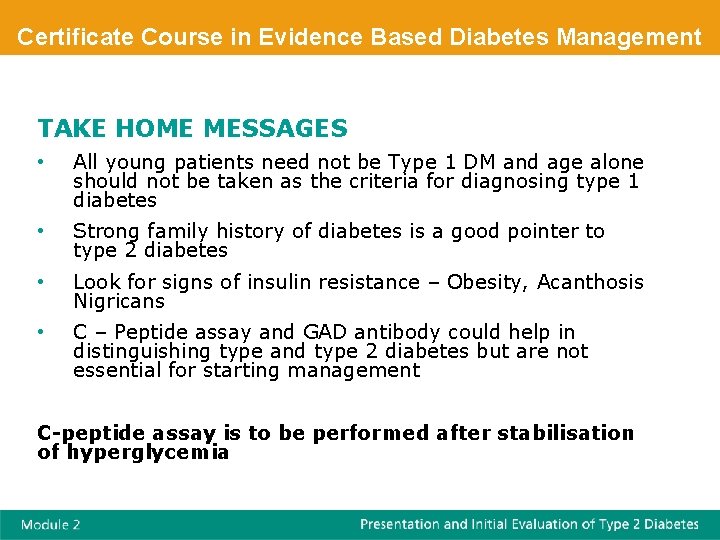
Certificate Course in Evidence Based Diabetes Management TAKE HOME MESSAGES • All young patients need not be Type 1 DM and age alone should not be taken as the criteria for diagnosing type 1 diabetes • Strong family history of diabetes is a good pointer to type 2 diabetes • Look for signs of insulin resistance – Obesity, Acanthosis Nigricans • C – Peptide assay and GAD antibody could help in distinguishing type and type 2 diabetes but are not essential for starting management C-peptide assay is to be performed after stabilisation of hyperglycemia
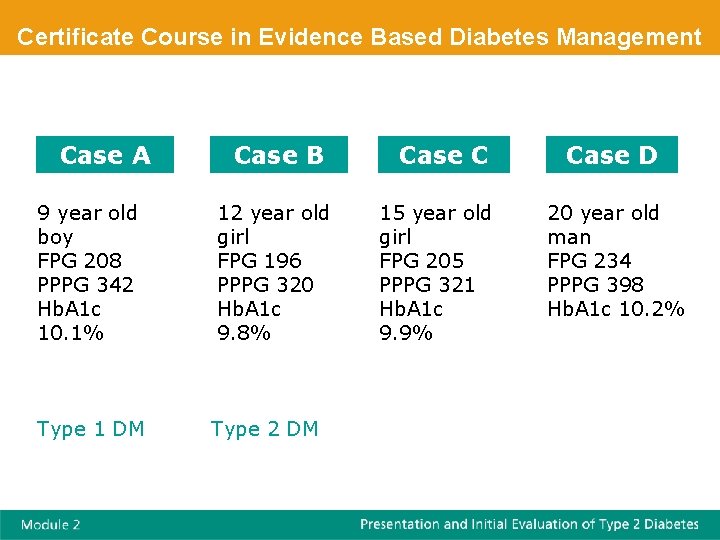
Certificate Course in Evidence Based Diabetes Management Case A Case B 9 year old boy FPG 208 PPPG 342 Hb. A 1 c 10. 1% 12 year old girl FPG 196 PPPG 320 Hb. A 1 c 9. 8% Type 1 DM Type 2 DM Case C 15 year old girl FPG 205 PPPG 321 Hb. A 1 c 9. 9% Case D 20 year old man FPG 234 PPPG 398 Hb. A 1 c 10. 2%
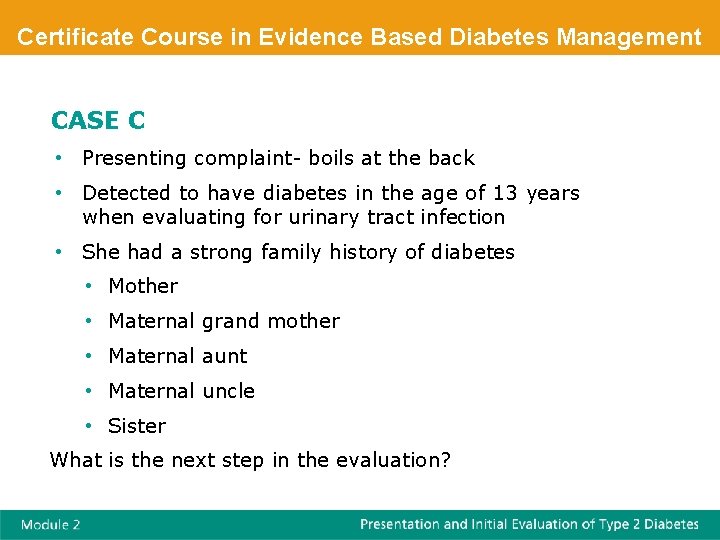
Certificate Course in Evidence Based Diabetes Management CASE C • Presenting complaint- boils at the back • Detected to have diabetes in the age of 13 years when evaluating for urinary tract infection • She had a strong family history of diabetes • Mother • Maternal grand mother • Maternal aunt • Maternal uncle • Sister What is the next step in the evaluation?
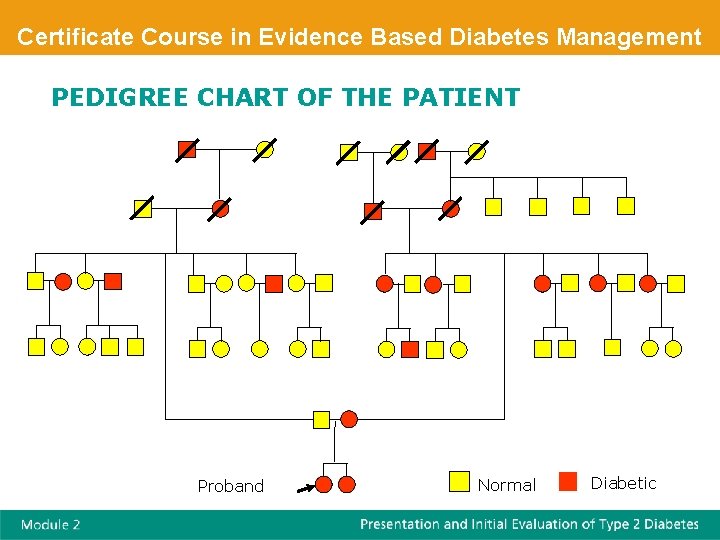
Certificate Course in Evidence Based Diabetes Management PEDIGREE CHART OF THE PATIENT Proband Normal Diabetic
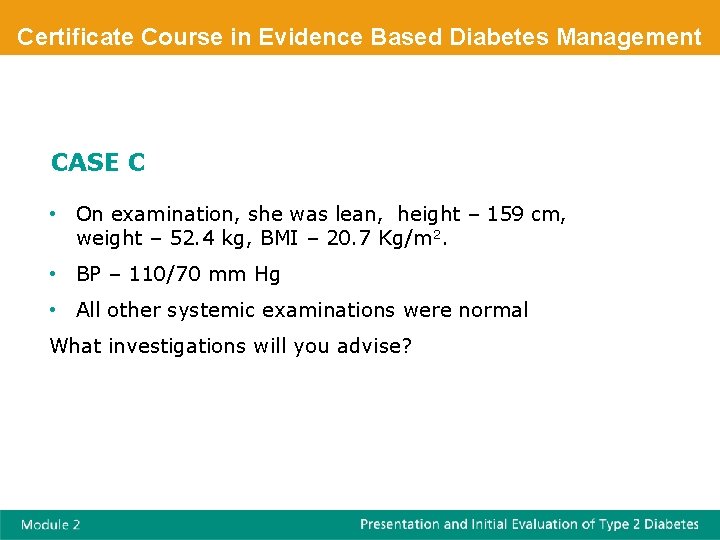
Certificate Course in Evidence Based Diabetes Management CASE C • On examination, she was lean, height – 159 cm, weight – 52. 4 kg, BMI – 20. 7 Kg/m 2. • BP – 110/70 mm Hg • All other systemic examinations were normal What investigations will you advise?
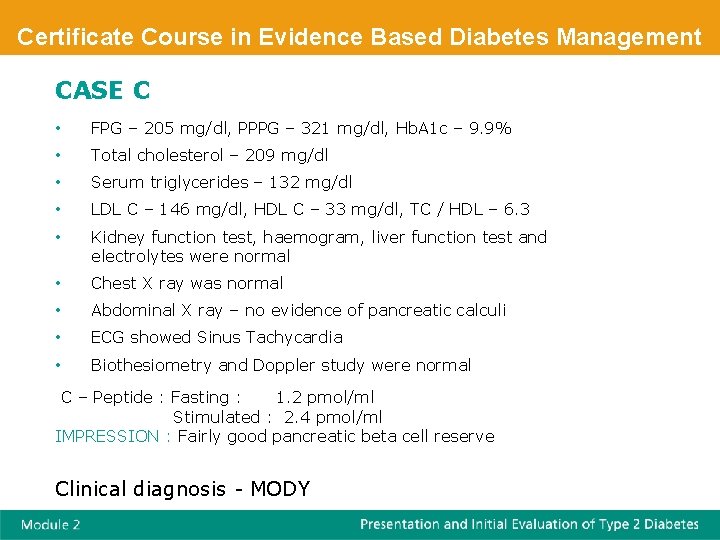
Certificate Course in Evidence Based Diabetes Management CASE C • FPG – 205 mg/dl, PPPG – 321 mg/dl, Hb. A 1 c – 9. 9% • Total cholesterol – 209 mg/dl • Serum triglycerides – 132 mg/dl • LDL C – 146 mg/dl, HDL C – 33 mg/dl, TC / HDL – 6. 3 • Kidney function test, haemogram, liver function test and electrolytes were normal • Chest X ray was normal • Abdominal X ray – no evidence of pancreatic calculi • ECG showed Sinus Tachycardia • Biothesiometry and Doppler study were normal C – Peptide : Fasting : 1. 2 pmol/ml Stimulated : 2. 4 pmol/ml IMPRESSION : Fairly good pancreatic beta cell reserve Clinical diagnosis - MODY
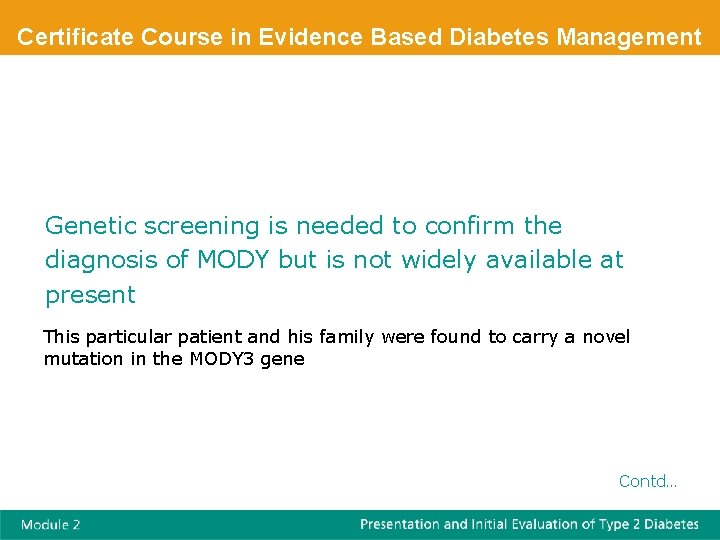
Certificate Course in Evidence Based Diabetes Management Genetic screening is needed to confirm the diagnosis of MODY but is not widely available at present This particular patient and his family were found to carry a novel mutation in the MODY 3 gene Contd…
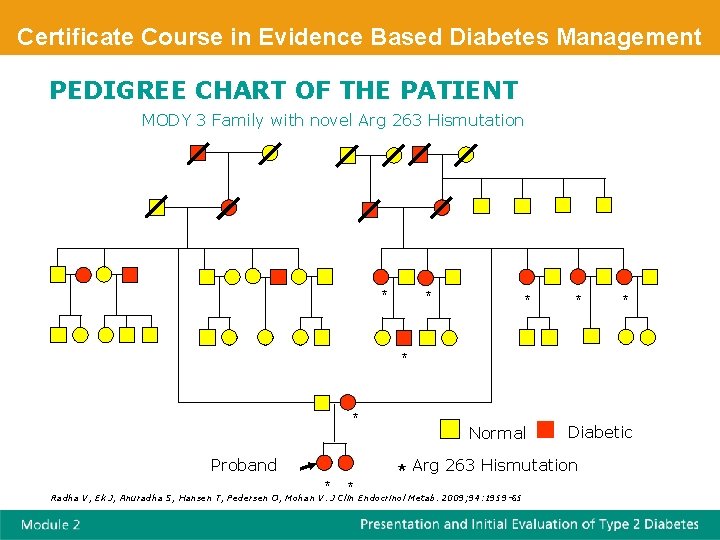
Certificate Course in Evidence Based Diabetes Management PEDIGREE CHART OF THE PATIENT MODY 3 Family with novel Arg 263 Hismutation * * * * Proband * * Normal Diabetic * Arg 263 Hismutation Radha V, Ek J, Anuradha S, Hansen T, Pedersen O, Mohan V. J Clin Endocrinol Metab. 2009; 94: 1959 -65
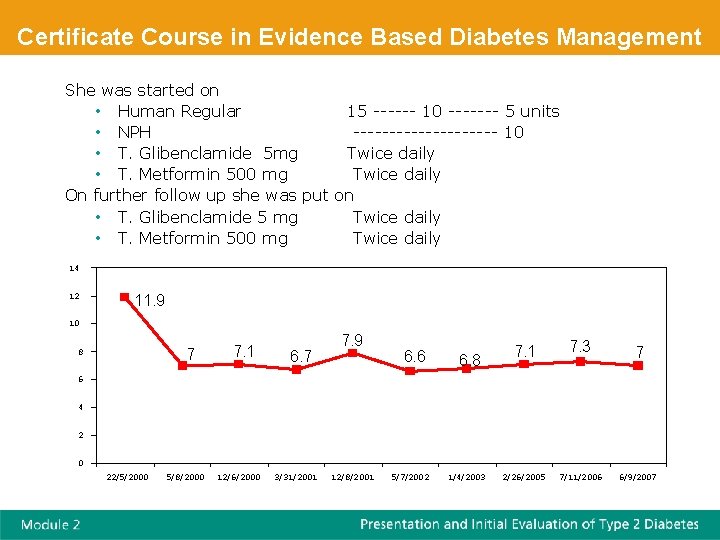
Certificate Course in Evidence Based Diabetes Management She was started on • Human Regular 15 ------ 10 ------- 5 units • NPH ---------- 10 • T. Glibenclamide 5 mg Twice daily • T. Metformin 500 mg Twice daily On further follow up she was put on • T. Glibenclamide 5 mg Twice daily • T. Metformin 500 mg Twice daily 14 12 11. 9 10 7 8 7. 1 6. 7 7. 9 6. 6 6. 8 7. 1 7. 3 7 6 4 2 0 22/5/2000 5/8/2000 12/6/2000 3/31/2001 12/8/2001 5/7/2002 1/4/2003 2/26/2005 7/11/2006 6/9/2007
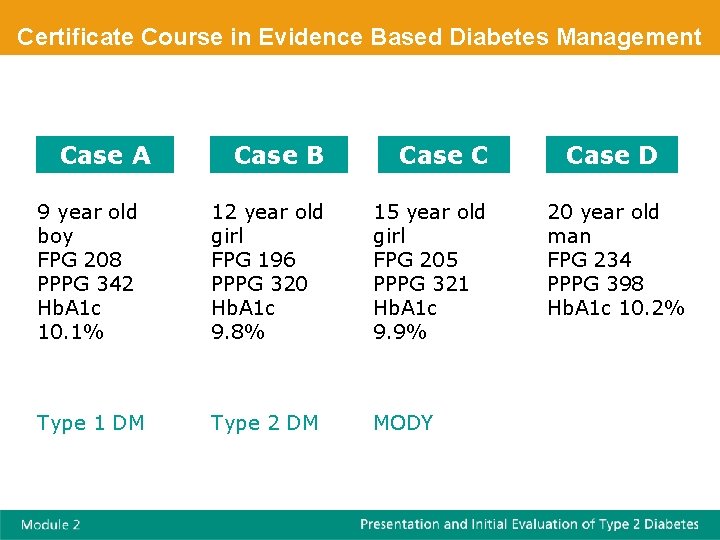
Certificate Course in Evidence Based Diabetes Management Case A Case B Case C 9 year old boy FPG 208 PPPG 342 Hb. A 1 c 10. 1% 12 year old girl FPG 196 PPPG 320 Hb. A 1 c 9. 8% 15 year old girl FPG 205 PPPG 321 Hb. A 1 c 9. 9% Type 1 DM Type 2 DM MODY Case D 20 year old man FPG 234 PPPG 398 Hb. A 1 c 10. 2%
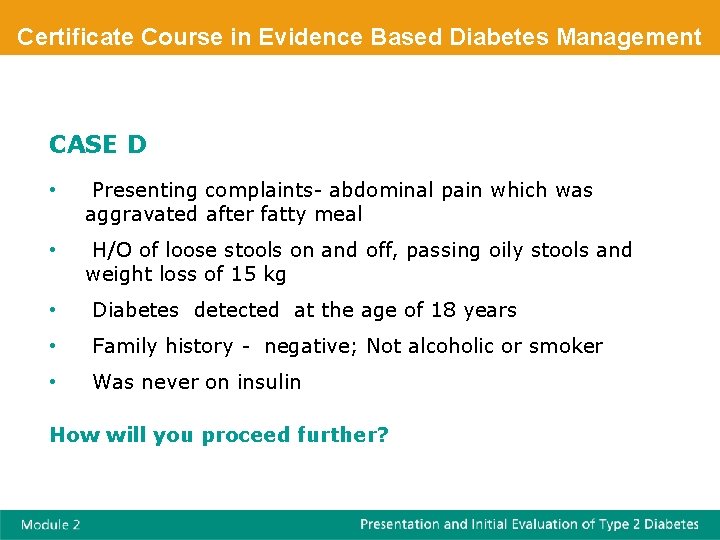
Certificate Course in Evidence Based Diabetes Management CASE D • Presenting complaints- abdominal pain which was aggravated after fatty meal • H/O of loose stools on and off, passing oily stools and weight loss of 15 kg • Diabetes detected at the age of 18 years • Family history - negative; Not alcoholic or smoker • Was never on insulin How will you proceed further?
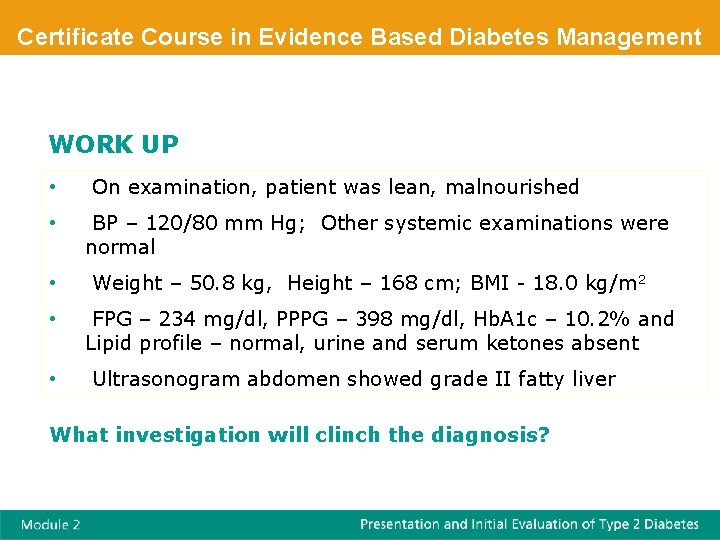
Certificate Course in Evidence Based Diabetes Management WORK UP • • • On examination, patient was lean, malnourished BP – 120/80 mm Hg; Other systemic examinations were normal Weight – 50. 8 kg, Height – 168 cm; BMI - 18. 0 kg/m 2 FPG – 234 mg/dl, PPPG – 398 mg/dl, Hb. A 1 c – 10. 2% and Lipid profile – normal, urine and serum ketones absent Ultrasonogram abdomen showed grade II fatty liver What investigation will clinch the diagnosis?
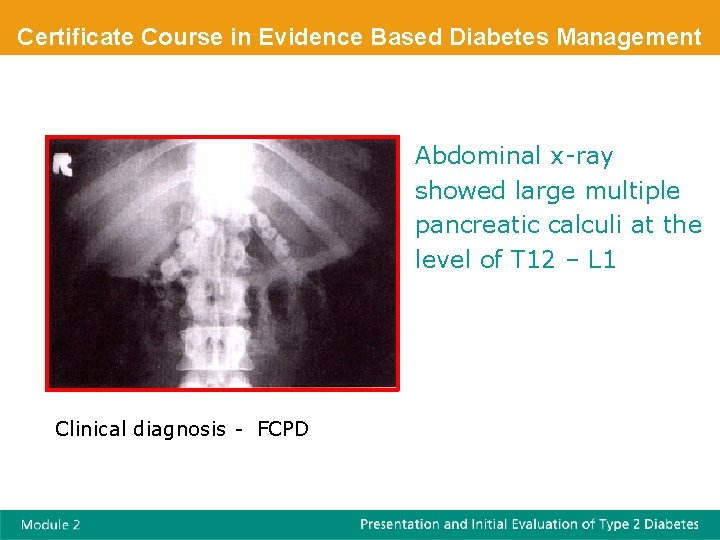
Certificate Course in Evidence Based Diabetes Management Abdominal x-ray showed large multiple pancreatic calculi at the level of T 12 – L 1 Clinical diagnosis - FCPD
Certificate Course in Evidence Based Diabetes Management MANAGEMENT • He was started on – Inj. Human Insulin 30/70 – T. Pancreoflat (P. Enzyme) • 36 -------18 2 --------2 He was put on 2000 calories diabetic diet • During his next visit, – Fasting plasma glucose - 95 mg/dl – Post prandial plasma glucose – 180 mg/dl – Hb. A 1 c – 7. 2% Patient continues to do well on follow-up
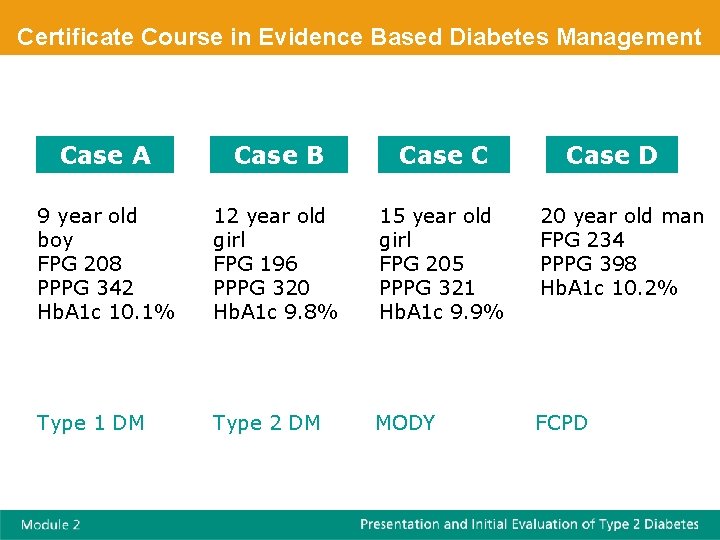
Certificate Course in Evidence Based Diabetes Management Case A Case B Case C Case D 9 year old boy FPG 208 PPPG 342 Hb. A 1 c 10. 1% 12 year old girl FPG 196 PPPG 320 Hb. A 1 c 9. 8% 15 year old girl FPG 205 PPPG 321 Hb. A 1 c 9. 9% 20 year old man FPG 234 PPPG 398 Hb. A 1 c 10. 2% Type 1 DM Type 2 DM MODY FCPD
Certificate Course in Evidence Based Diabetes Management INITIAL EVALUATION OF A DIABETES PATIENT
Certificate Course in Evidence Based Diabetes Management TYPE 2 DIABETES MELLITUS • Most common form of diabetes • Prevalence increasing rapidly, especially in developing countries • Occurs due to relative insulin deficiency in an individual with insulin resistance • Usually asymptomatic and detected during evaluation for unrelated indications • May present with hyperglycemic symptoms
Certificate Course in Evidence Based Diabetes Management HISTORY Ask for SYMPTOMS OF DIABETES • Frequent urination • Excessive thirst • Excessive hunger • Weight loss • Delayed healing of wounds • Tiredness • Itching especially in genital area • Tingling and numbness • Visual disturbances >60% of the patients do not have any symptoms
Certificate Course in Evidence Based Diabetes Management HISTORY MEDICAL HISTORY • Previous treatments and outcomes • Present treatment • Drug allergy/ intolerance • H/o hospitalisation • H/o hypoglycemia, DKA, HHS, acute coronary event, Cerebrovascular event
Certificate Course in Evidence Based Diabetes Management HISTORY Ask for SYMPTOMS SUGGESTIVE OF COMPLICATIONS • Facial puffiness/ pedal edema/ nocturia • Angina/ effort intolerance • Claudication • Sensory impairment/ pain/ gait disturbance in the dark • Sexual dysfunction
Certificate Course in Evidence Based Diabetes Management Case Study 7 Mr. J is 46 years old newly diagnosed Type 2 DM. This is his first visit to the hospital. His height is 168 cm, weight is 74 kg, and BMI is 26. 21. Blood pressure is 140/80 mm/hg in lying posture and 150/80 in standing posture. His thyroid exam and skin examination is normal. What other physical examination one should do for this patient?
Certificate Course in Evidence Based Diabetes Management PHYSICAL EXAMINATION • Height, weight, BMI, waist circumference, hip circumference, WH ratio • Blood pressure measurement, including postural variation if indicated • Thyroid examination • Skin examination for acanthosis nigricans, skin tags and insulin injection site inspection Contd…
Certificate Course in Evidence Based Diabetes Management PHYSICAL EXAMINATION Comprehensive foot examination • Inspection • Palpation of dorsalis pedis and posterior tibial pulses, ankle brachial index • Ankle and knee jerks • Proprioception, vibration and monofilament sensation Dilated retinal examination* Dental examination* *may be referred to appropriate specialist Adapted from American Diabetes Association, 2010
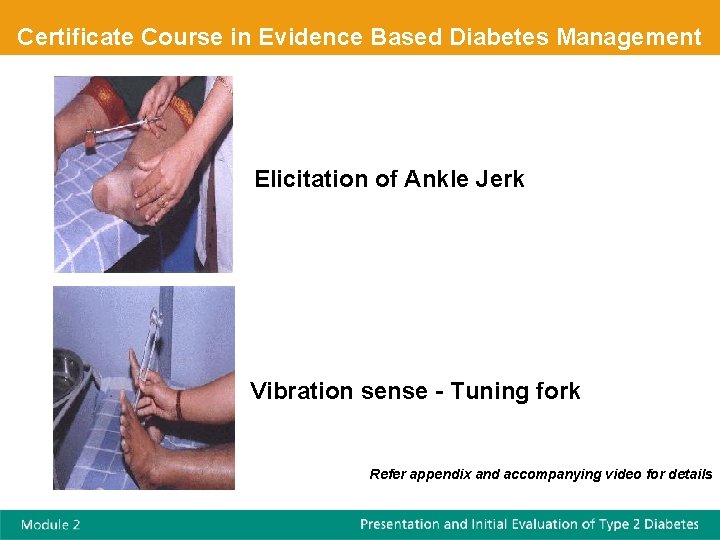
Certificate Course in Evidence Based Diabetes Management Elicitation of Ankle Jerk Vibration sense - Tuning fork Refer appendix and accompanying video for details
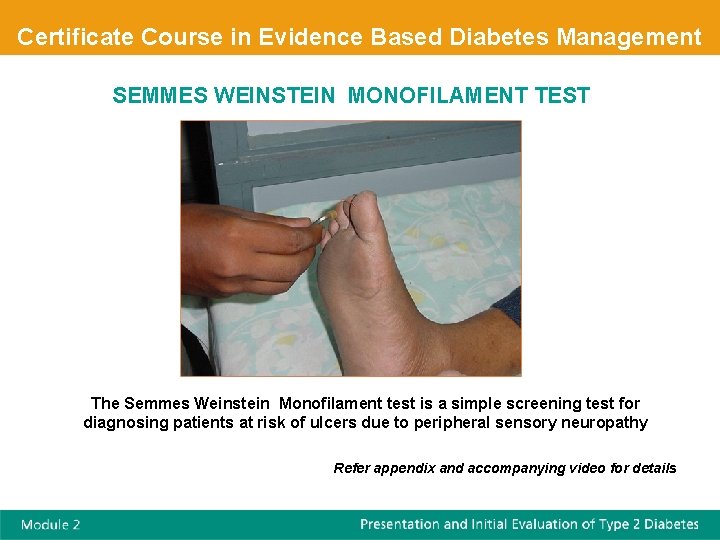
Certificate Course in Evidence Based Diabetes Management SEMMES WEINSTEIN MONOFILAMENT TEST The Semmes Weinstein Monofilament test is a simple screening test for diagnosing patients at risk of ulcers due to peripheral sensory neuropathy Refer appendix and accompanying video for details
Certificate Course in Evidence Based Diabetes Management LAB INVESTIGATIONS IN A PATIENT WITH NEWLY DIAGNOSED TYPE 2 DIABETES • Fasting and postprandial plasma glucose • Hb. A 1 c • Fasting lipid profile • Liver function tests • Urine complete exam, including assessment of microalbuminuria • Serum creatinine, and estimated GFR • TSH in case of dyslipidemia and in women >50 • ECG, X-Ray chest Adapted from American Diabetes Association, 2010
Certificate Course in Evidence Based Diabetes Management TESTS OF GLYCEMIC CONTROL • Plasma glucose • Whole blood glucose (glucose meters) • Glycated hemoglobin (Hb. A 1 c)
Certificate Course in Evidence Based Diabetes Management PLASMA GLUCOSE MEASUREMENT Methods A. Oxidation-reduction methods B. Enzymatic methods i. Glucose oxidase ii. Hexokinase Enzymatic methods are preferred nowadays
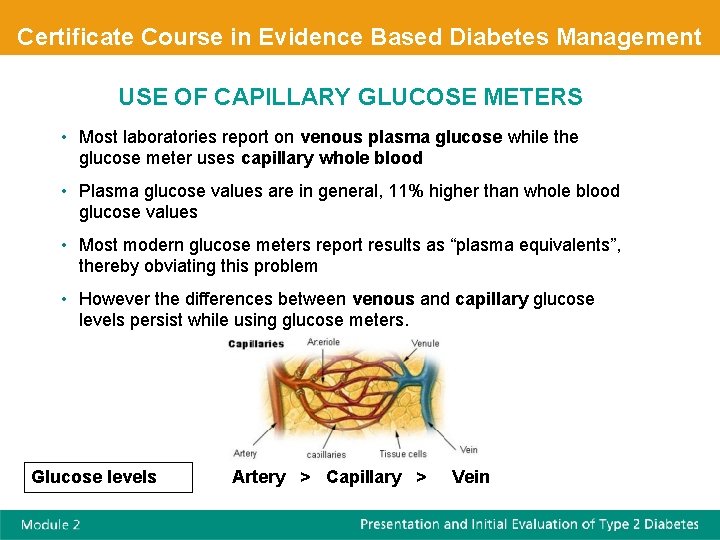
Certificate Course in Evidence Based Diabetes Management USE OF CAPILLARY GLUCOSE METERS • Most laboratories report on venous plasma glucose while the glucose meter uses capillary whole blood • Plasma glucose values are in general, 11% higher than whole blood glucose values • Most modern glucose meters report results as “plasma equivalents”, thereby obviating this problem • However the differences between venous and capillary glucose levels persist while using glucose meters. Glucose levels Artery > Capillary > Vein
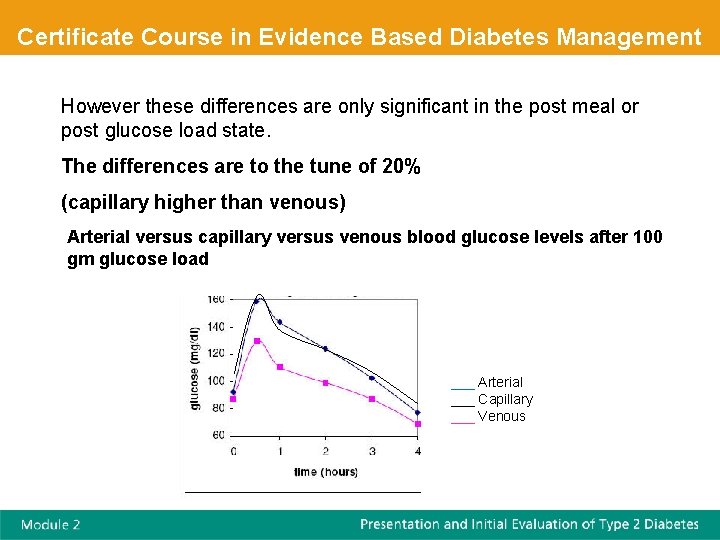
Certificate Course in Evidence Based Diabetes Management However these differences are only significant in the post meal or post glucose load state. The differences are to the tune of 20% (capillary higher than venous) Arterial versus capillary versus venous blood glucose levels after 100 gm glucose load ___ Arterial ___ Capillary ___ Venous
Certificate Course in Evidence Based Diabetes Management URINE GLUCOSE TESTING • Using Benedict’s test • Using dipsticks Advantages • Cheap • Convenient • Easily available Until the 1970 s, the only method available to check glycemic control
Certificate Course in Evidence Based Diabetes Management URINE GLUCOSE TESTING Disadvantages • Semiquantitative- does not differentiate between marginally and profoundly elevated blood sugar levels • Not real-time- only indicates the blood sugar levels since the time of last voiding • Does not differentiate between normo- and hypoglycemia • Not useful in pregnancy (lowered renal threshold) • False-positives in Benedict’s test Hence urine sugar testing is now used only when blood sugar estimation is not available
Certificate Course in Evidence Based Diabetes Management GLYCATED HEMOGLOBIN and Hb. A 1 c The term glycated hemoglobin (GHb) refers to a hemoglobin molecule that has been modified by nonenzymatic addition (“glycation”) of a glucose moiety. The term “Hb. A 1 c” specifically refers to a hemoglobin molecule that has been modified by the nonenzymatic addition (“glycation”) of a glucose moiety to the N terminal of its beta chain. However. “Hb. A 1 c” is the term used to report all GHb tests The Hb. A 1 c level reflects the glycemic control over the duration of the lifespan of the RBC (around 120 days)
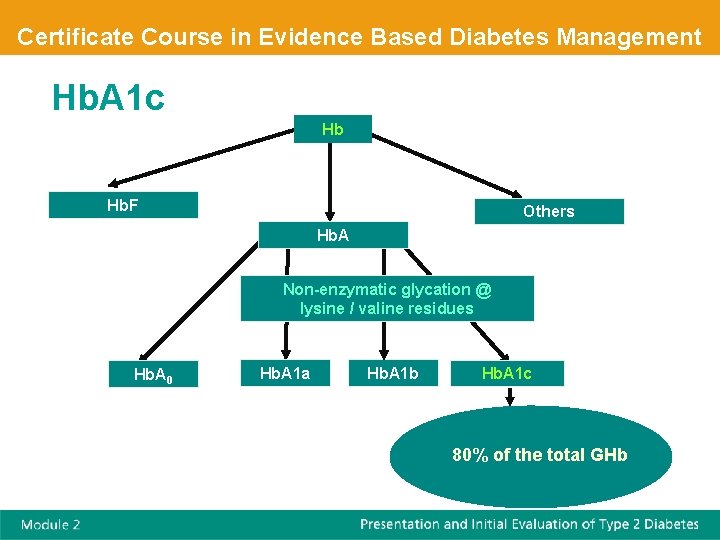
Certificate Course in Evidence Based Diabetes Management Hb. A 1 c Hb Hb. F Others Hb. A Non-enzymatic glycation @ lysine / valine residues Hb. A 0 Hb. A 1 a Hb. A 1 b Hb. A 1 c 80% of the total GHb
Certificate Course in Evidence Based Diabetes Management CLINICAL VALUE OF “A 1 C” • Hb. A 1 c is an index of long term Glucose Control, performed on venous blood • Test Results are not affected by - Time of the Day - Meal Intake - Exercise - Just Administered Diabetes Drugs - Emotional Stress - Patient Co-operation Hb. A 1 c is an index of glycemic control over the preceding 2 to 3 months. contd…
Certificate Course in Evidence Based Diabetes Management CLINICAL VALUE OF “A 1 C” • Helps in clarifying the discrepancies between SMBG and actual degree of overall blood glucose control • Helpful in differentiating stress induced transient Glucose intolerance from true diabetes E. g: Hospitalized Cardiac Patients • Useful in decision making e. g. choosing & upgrading therapy • Useful in obstetric practice, useful in predicting congenital anomalies in newly pregnant diabetic females • Recently suggested as a tool for diagnosis of diabetes as well
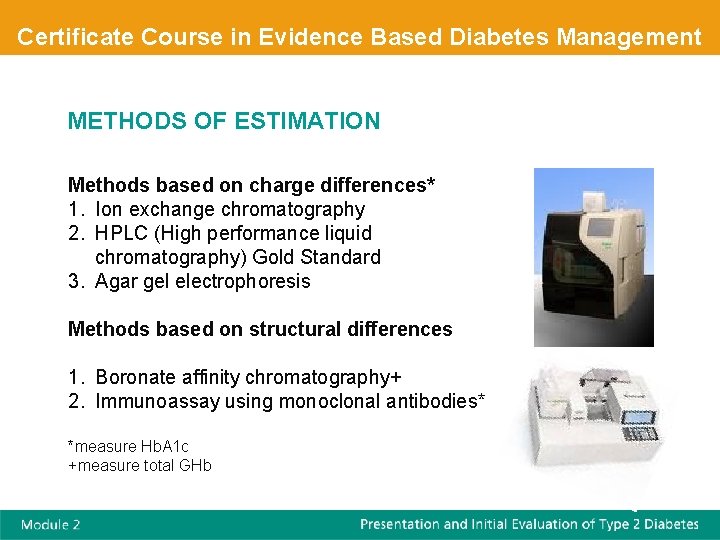
Certificate Course in Evidence Based Diabetes Management METHODS OF ESTIMATION Methods based on charge differences* 1. Ion exchange chromatography 2. HPLC (High performance liquid chromatography) Gold Standard 3. Agar gel electrophoresis Methods based on structural differences 1. Boronate affinity chromatography+ 2. Immunoassay using monoclonal antibodies* *measure Hb. A 1 c +measure total GHb
Certificate Course in Evidence Based Diabetes Management Falsely high Hb. A 1 c • Iron deficiency anemia • Hemoglobinopathies like sickle cell disease which alter RBC survival • Hypertriglyceridemia*, hyperbilirubinemia*, uremia*, alcoholism*, chronic ingestion of salicylates* *method- dependent Falsely low Hb. A 1 c • Hemolytic disorders • Acute blood loss • Recent blood transfusion (if donor nondiabetic) Sacks DB. Diabetes Care, 2011
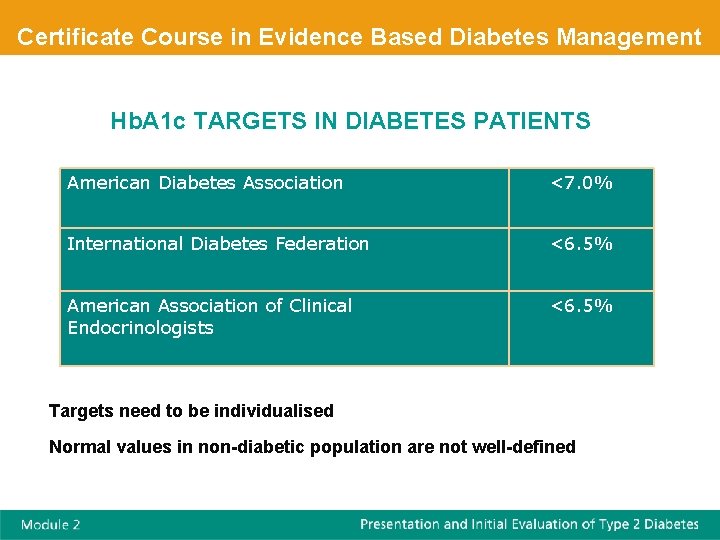
Certificate Course in Evidence Based Diabetes Management Hb. A 1 c TARGETS IN DIABETES PATIENTS American Diabetes Association <7. 0% International Diabetes Federation <6. 5% American Association of Clinical Endocrinologists <6. 5% Targets need to be individualised Normal values in non-diabetic population are not well-defined
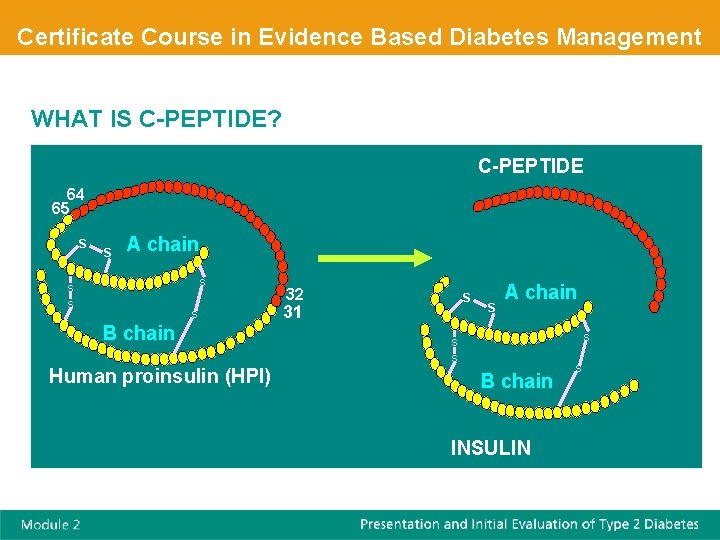
Certificate Course in Evidence Based Diabetes Management WHAT IS C-PEPTIDE? • C-Peptide is a polypeptide consisting of 31 Amino acids (Mol wt 3020 Daltons) • So called because it connects the A and B chain of insulin in the proinsulin molecule • It is a by-product of insulin biosynthesis • For every molecule of insulin secreted into the in the blood, there is one molecule of C-Peptide – “equimolar secretion”
Certificate Course in Evidence Based Diabetes Management WHAT IS C-PEPTIDE? C-PEPTIDE 64 65 S S A chain S S B chain 32 S 31 S A chain S S S Human proinsulin (HPI) B chain INSULIN S
Certificate Course in Evidence Based Diabetes Management INTERPRETATION OF THE RESULTS Normal values vary from lab to lab • Greater than normal values Pre-diabetic stage [IGT] Insulinoma • Lower than normal values: Insulin requiring Type 2 diabetes FCPD MODY • Very low levels: Type 1 diabetes Complete surgical removal of pancreas (Pancreatectomy)
Certificate Course in Evidence Based Diabetes Management SIGNIFICANCE OF MEASURING C-PEPTIDE • In the differential diagnosis between type 1 and type 2 diabetes • To differentiate Type 2 diabetes and LADA • Help to decide therapy [eg. Sulphonylurea failure]
Certificate Course in Evidence Based Diabetes Management INVESTIGATIONS FOR DIABETES COMPLICATIONS
Certificate Course in Evidence Based Diabetes Management DETECTION OF DIABETIC KIDNEY DISEASE MICROALBUMINURIA ESTIMATION Microalbuminuria is the earliest detectable stage of diabetic kidney disease It is also a marker of generalised endothelial dysfunction and a predictor of cardiovascular disease The term microalbuminuria refers to a level of urinary albumin excretion that is higher than normal but below the threshold of detection of conventional methods Kidney disease is reversible if treated at the stage of microalbuminuria
Certificate Course in Evidence Based Diabetes Management DETECTION OF DIABETIC KIDNEY DISEASE MICROALBUMINURIA ESTIMATION Test for presence of microalbuminuria annually in • All Type 2 diabetics starting at diagnosis • Type 1 diabetic with DM more than 5 years Methods • Measurement of the albumin to creatinine ratio in a random spot collection • 24 h collection with creatinine, allowing the simultaneous measurement of creatinine • Timed collection • Urine ‘dipsticks’ for microalbuminuria are semi quantitative
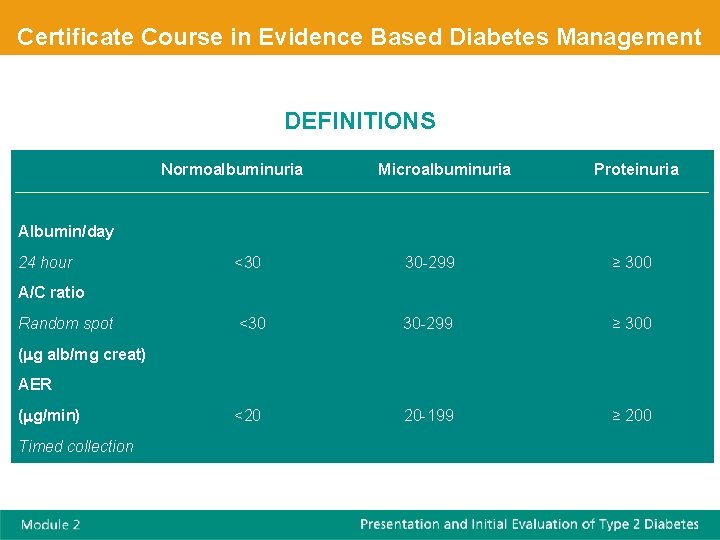
Certificate Course in Evidence Based Diabetes Management DEFINITIONS Normoalbuminuria Microalbuminuria Proteinuria Albumin/day 24 hour <30 30 -299 ≥ 300 <20 20 -199 ≥ 200 A/C ratio Random spot ( g alb/mg creat) AER ( g/min) Timed collection
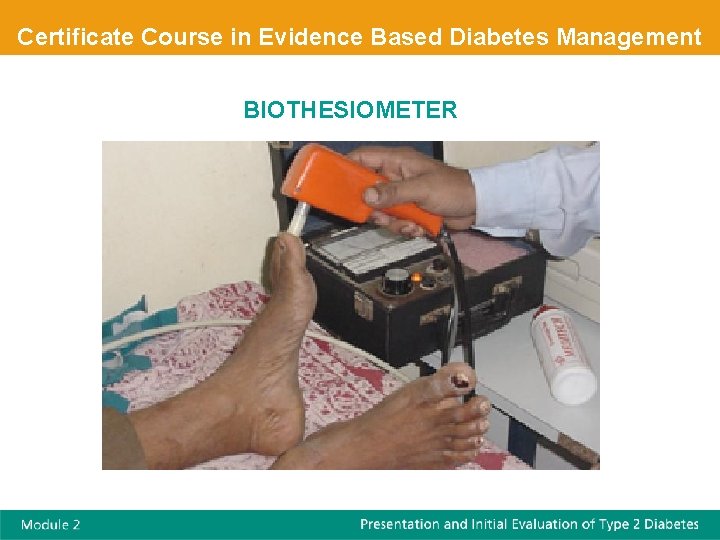
Certificate Course in Evidence Based Diabetes Management BIOTHESIOMETER
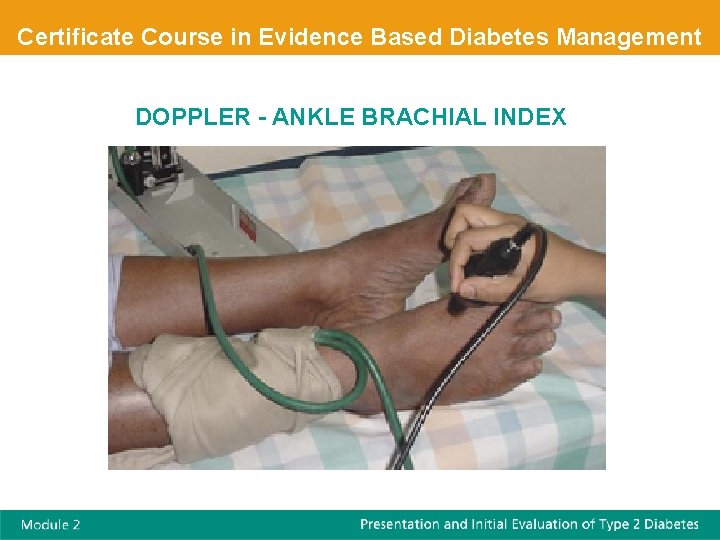
Certificate Course in Evidence Based Diabetes Management DOPPLER - ANKLE BRACHIAL INDEX
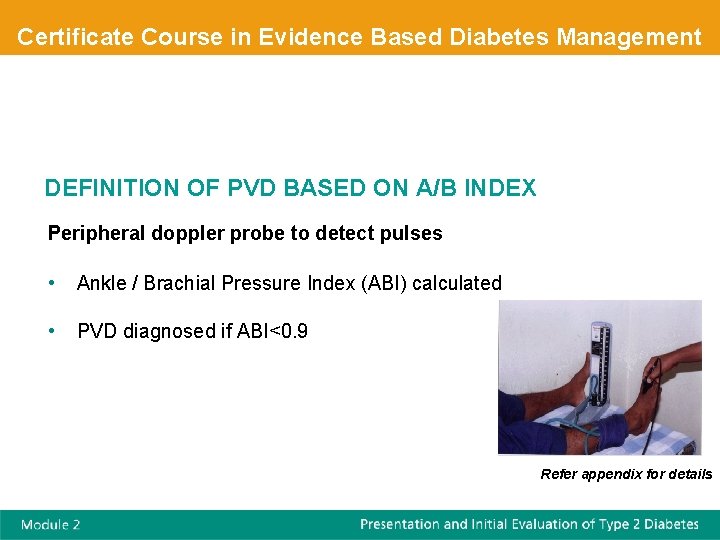
Certificate Course in Evidence Based Diabetes Management DEFINITION OF PVD BASED ON A/B INDEX Peripheral doppler probe to detect pulses • Ankle / Brachial Pressure Index (ABI) calculated • PVD diagnosed if ABI<0. 9 Refer appendix for details
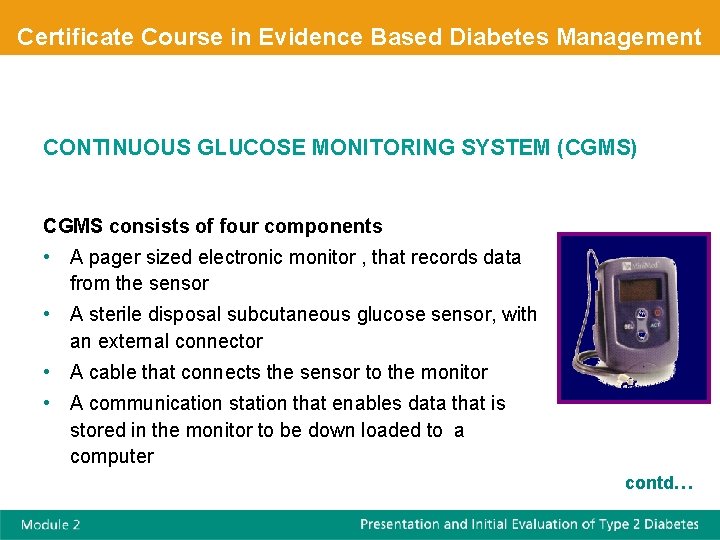
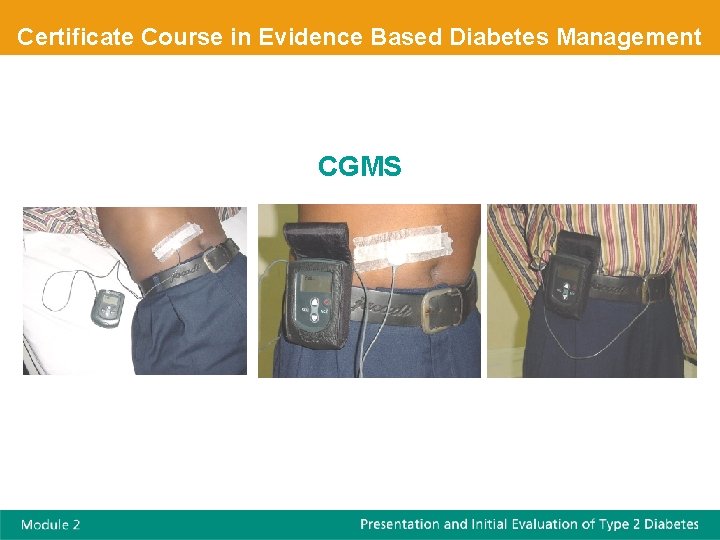
Certificate Course in Evidence Based Diabetes Management CONTINUOUS GLUCOSE MONITORING SYSTEM (CGMS) CGMS consists of four components • A pager sized electronic monitor , that records data from the sensor • A sterile disposal subcutaneous glucose sensor, with an external connector • A cable that connects the sensor to the monitor • A communication station that enables data that is stored in the monitor to be down loaded to a computer contd…
Certificate Course in Evidence Based Diabetes Management CONTINUOUS GLUCOSE MONITORING SYSTEM (CGMS) CGMS • • Senses blood sugar every 10 seconds Average of every 5 minutes is recorded Total of 288 readings per day displayed as a graph Works up to 5 -7 days.
Certificate Course in Evidence Based Diabetes Management CGMS
Certificate Course in Evidence Based Diabetes Management Case Study 8 Mrs. M a known T 2 DM for the past 6 months is on Oral Hypoglycemic Agents. She has come for the 6 th month Checkup. What are laboratory investigations you will do for her?
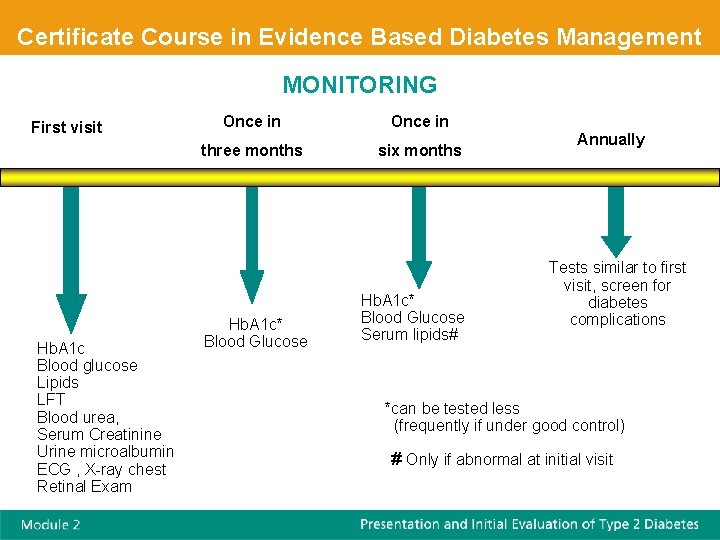
Certificate Course in Evidence Based Diabetes Management MONITORING First visit Hb. A 1 c Blood glucose Lipids LFT Blood urea, Serum Creatinine Urine microalbumin ECG , X-ray chest Retinal Exam Once in three months six months Hb. A 1 c* Blood Glucose Serum lipids# Annually Tests similar to first visit, screen for diabetes complications *can be tested less (frequently if under good control) # Only if abnormal at initial visit
Certificate Course in Evidence Based Diabetes Management PRIMER TO MODULE 3
Certificate Course in Evidence Based Diabetes Management Which is the best diet for a diabetes patient A low carbohydrate diet A high fibre diet A high carbohydrate high fibre diet
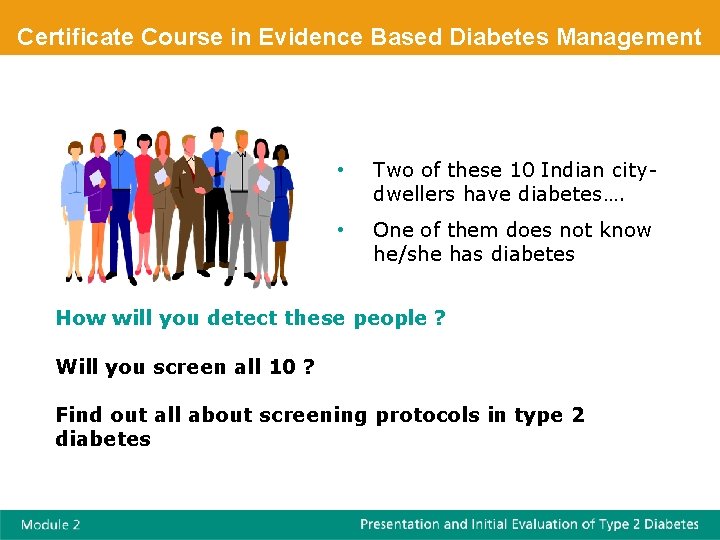
Certificate Course in Evidence Based Diabetes Management • Two of these 10 Indian citydwellers have diabetes…. • One of them does not know he/she has diabetes How will you detect these people ? Will you screen all 10 ? Find out all about screening protocols in type 2 diabetes
Certificate Course in Evidence Based Diabetes Management Learn the answers to these questions And much more. . . In Module 3
- Slides: 95