PNEUMOTRIESTE 2016 LA VENTILAZIONE DEL PAZIENTE TRACHEOSTOMIZZATO Andrea


- Slides: 54
PNEUMOTRIESTE 2016 LA VENTILAZIONE DEL PAZIENTE TRACHEOSTOMIZZATO Andrea Vianello U. O. Fisiopatologia Respiratoria Ospedale – Università di Padova
TRACHEOSTOMY IN ALS Course of ALS patient to trach Technical aspect Survival and Qo. L after trach
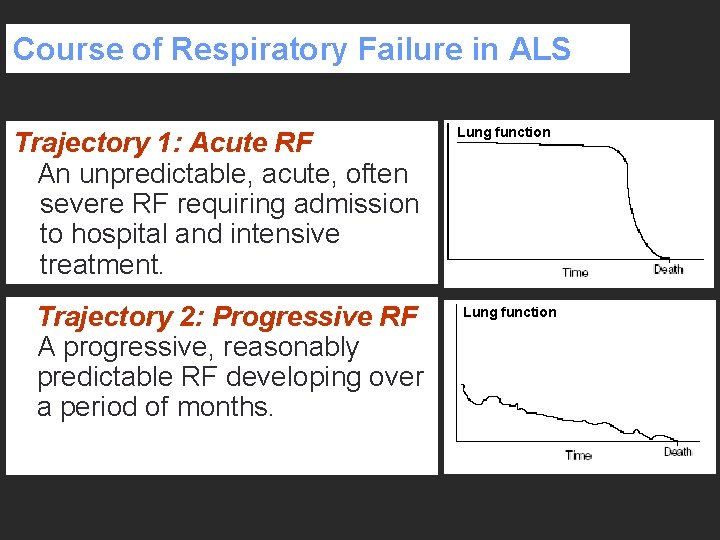
Course of Respiratory Failure in ALS Trajectory 1: Acute RF An unpredictable, acute, often severe RF requiring admission to hospital and intensive treatment. Trajectory 2: Progressive RF A progressive, reasonably predictable RF developing over a period of months. Lung function
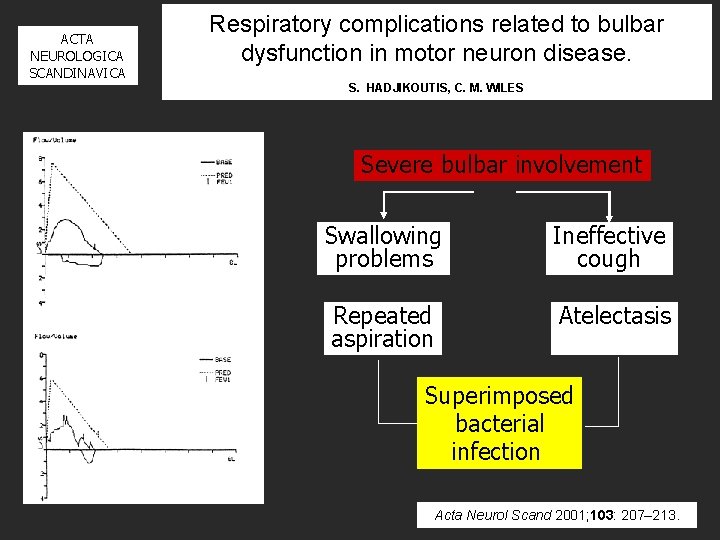
ACTA NEUROLOGICA SCANDINAVICA Respiratory complications related to bulbar dysfunction in motor neuron disease. S. HADJIKOUTIS, C. M. WILES Severe bulbar involvement Swallowing problems Ineffective cough Repeated aspiration Atelectasis Superimposed bacterial infection Acta Neurol Scand 2001; 103: 207– 213.
ARF in ALS patients in the Respiratory Intermediate care unit/ICU May have extreme ventilator dependency May have severe inability to cough May have severe risk of inhalation
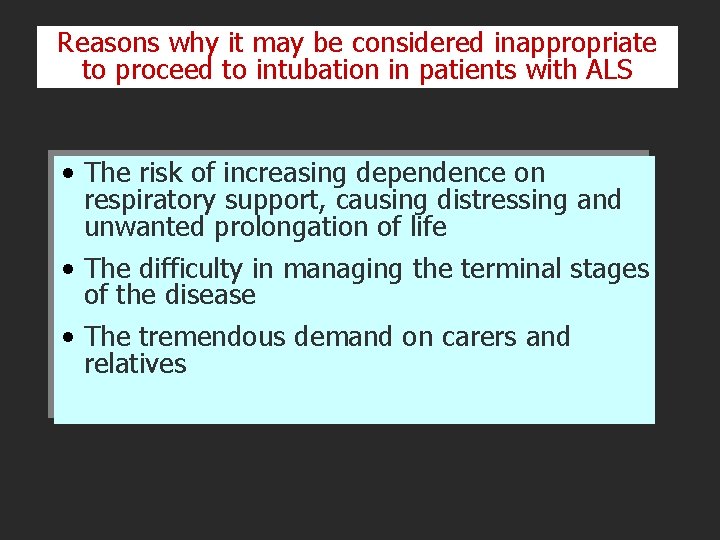
Reasons why it may be considered inappropriate to proceed to intubation in patients with ALS • The risk of increasing dependence on respiratory support, causing distressing and unwanted prolongation of life • The difficulty in managing the terminal stages of the disease • The tremendous demand on carers and relatives
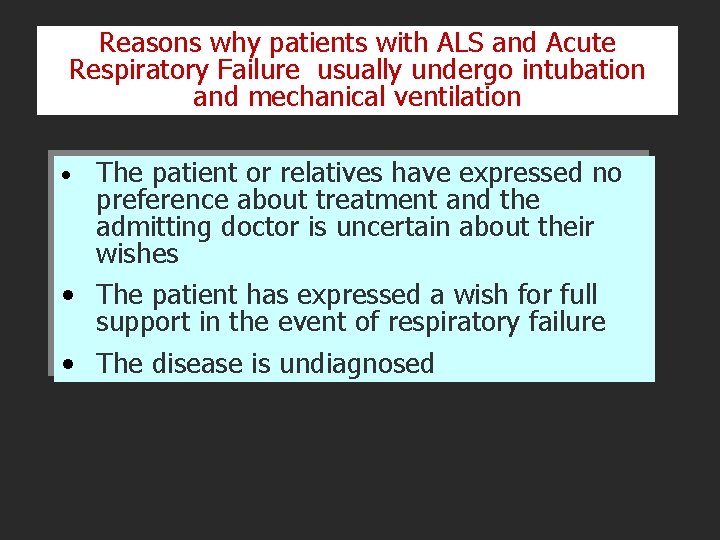
Reasons why patients with ALS and Acute Respiratory Failure usually undergo intubation and mechanical ventilation The patient or relatives have expressed no preference about treatment and the admitting doctor is uncertain about their wishes • The patient has expressed a wish for full support in the event of respiratory failure • The disease is undiagnosed •
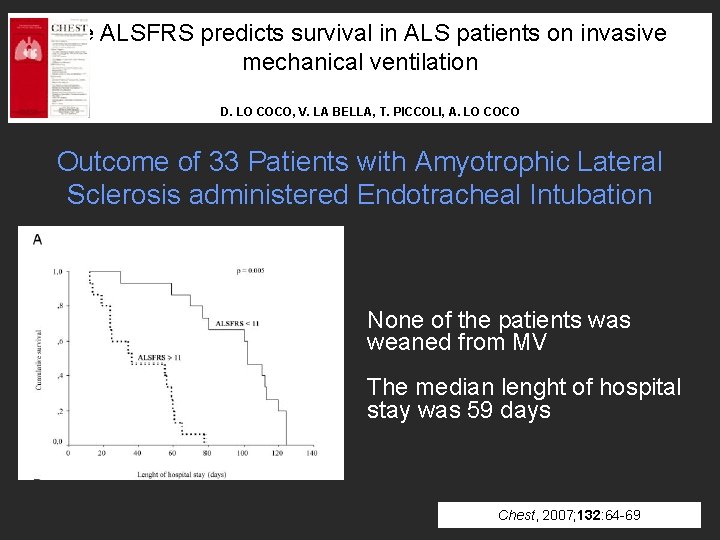
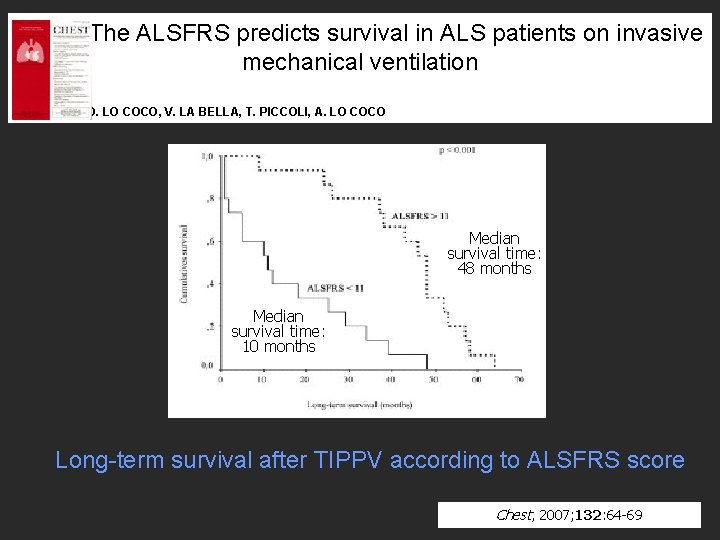
The ALSFRS predicts survival in ALS patients on invasive mechanical ventilation D. LO COCO, V. LA BELLA, T. PICCOLI, A. LO COCO Outcome of 33 Patients with Amyotrophic Lateral Sclerosis administered Endotracheal Intubation None of the patients was weaned from MV The median lenght of hospital stay was 59 days Chest, 2007; 132: 64 -69
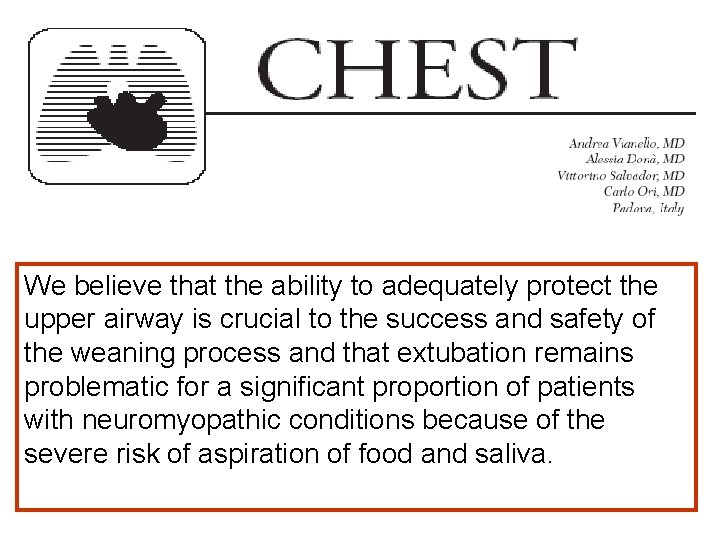
We believe that the ability to adequately protect the upper airway is crucial to the success and safety of the weaning process and that extubation remains problematic for a significant proportion of patients with neuromyopathic conditions because of the severe risk of aspiration of food and saliva.
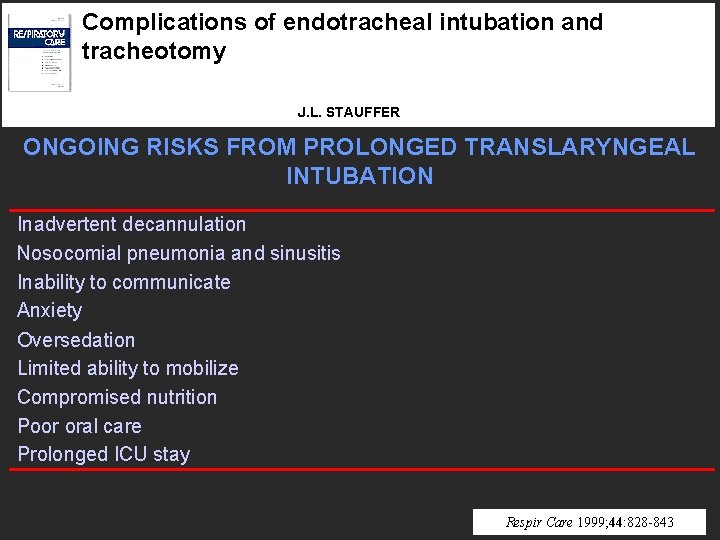
Complications of endotracheal intubation and tracheotomy J. L. STAUFFER ONGOING RISKS FROM PROLONGED TRANSLARYNGEAL INTUBATION Inadvertent decannulation Nosocomial pneumonia and sinusitis Inability to communicate Anxiety Oversedation Limited ability to mobilize Compromised nutrition Poor oral care Prolonged ICU stay Respir Care 1999; 44: 828 -843
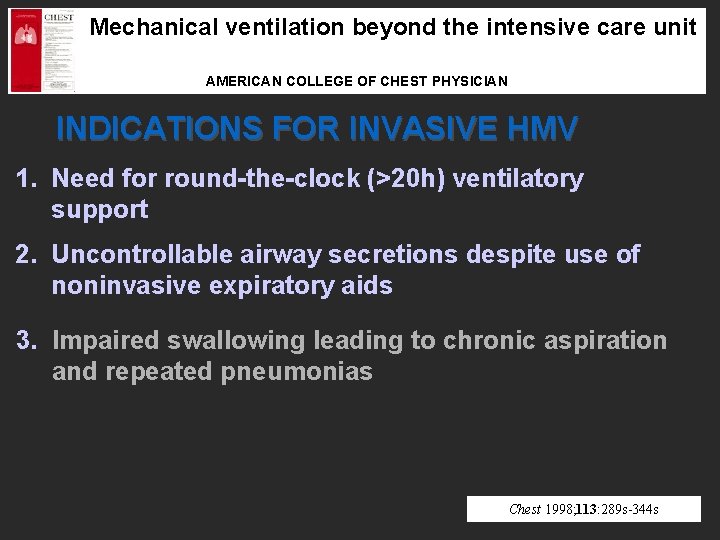
Mechanical ventilation beyond the intensive care unit AMERICAN COLLEGE OF CHEST PHYSICIAN INDICATIONS FOR INVASIVE HMV 1. Need for round-the-clock (>20 h) ventilatory support 2. Uncontrollable airway secretions despite use of noninvasive expiratory aids 3. Impaired swallowing leading to chronic aspiration and repeated pneumonias Chest 1998; 113: 289 s-344 s
TECHNICAL ASPECT TRACHEOSTOMY TECHNIQUE l MANAGEMENT OF TRACHEAL CANNULA l
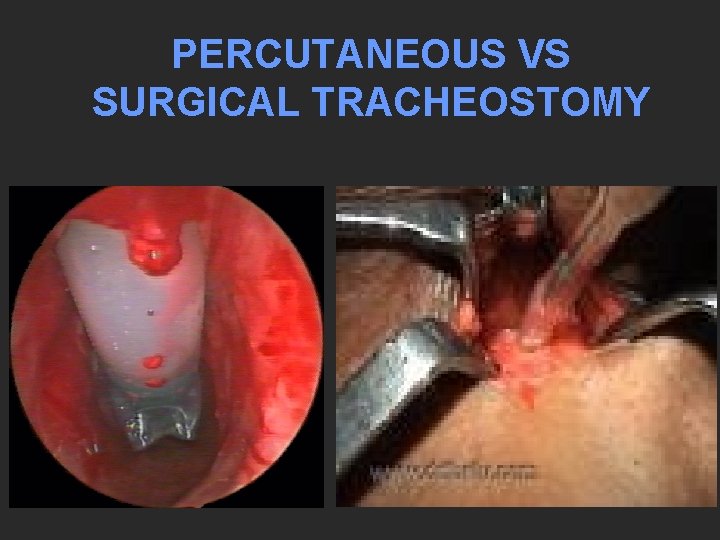
PERCUTANEOUS VS SURGICAL TRACHEOSTOMY
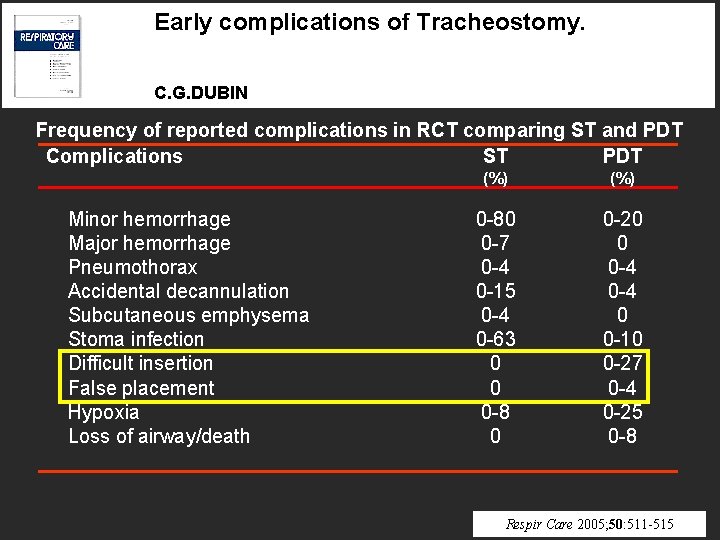
Early complications of Tracheostomy. C. G. DUBIN Frequency of reported complications in RCT comparing ST and PDT Complications ST PDT Minor hemorrhage Major hemorrhage Pneumothorax Accidental decannulation Subcutaneous emphysema Stoma infection Difficult insertion False placement Hypoxia Loss of airway/death (%) 0 -80 0 -7 0 -4 0 -15 0 -4 0 -63 0 0 0 -8 0 0 -20 0 0 -4 0 0 -10 0 -27 0 -4 0 -25 0 -8 Respir Care 2005; 50: 511 -515
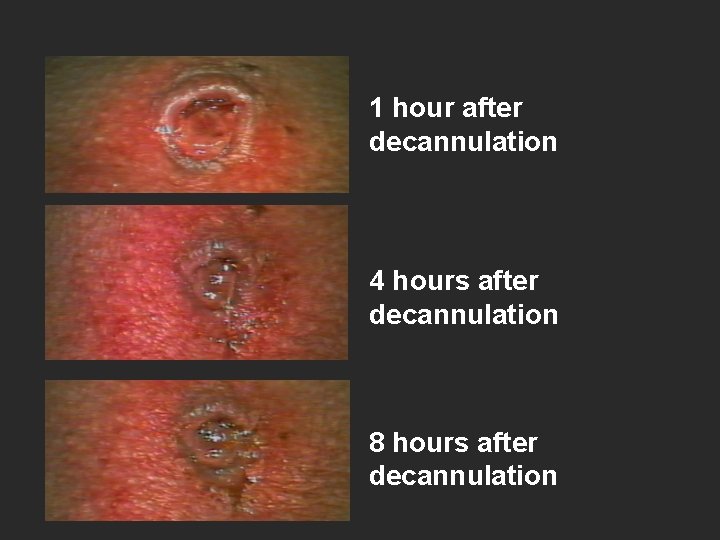
1 hour after decannulation 4 hours after decannulation 8 hours after decannulation
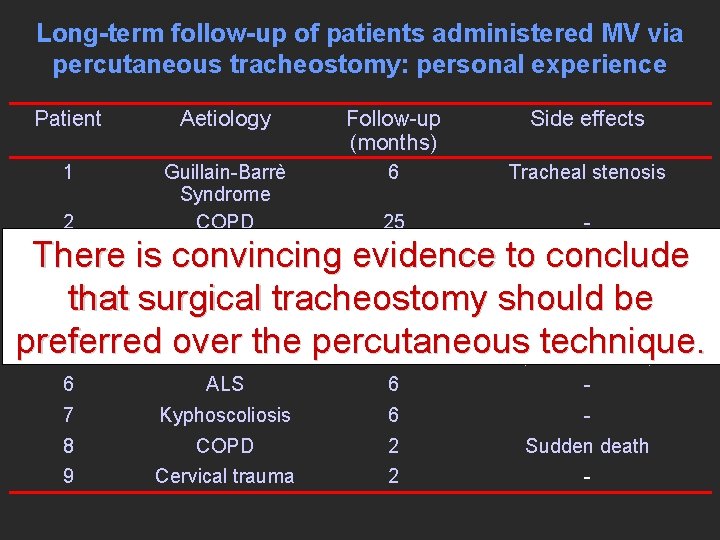
Long-term follow-up of patients administered MV via percutaneous tracheostomy: personal experience Patient Aetiology Follow-up (months) Side effects 1 Guillain-Barrè Syndrome COPD 6 Tracheal stenosis 25 - 2 3 DMD 10 There is convincing evidence to conclude 4 COPD 6 Accidental decannulation that surgical tracheostomy should be ( Surgical trach) 5 COPD + stroke 2 Accidental decannulation preferred over the percutaneous ( technique. Re-dilation) 6 ALS 6 - 7 Kyphoscoliosis 6 - 8 COPD 2 Sudden death 9 Cervical trauma 2 -
MANAGEMENT OF TRACHEAL CANNULA • CUFF MANAGEMENT • MALPOSITION • PHONATION
MANAGEMENT OF TRACHEAL CANNULA • CUFF MANAGEMENT • MALPOSITION • PHONATION
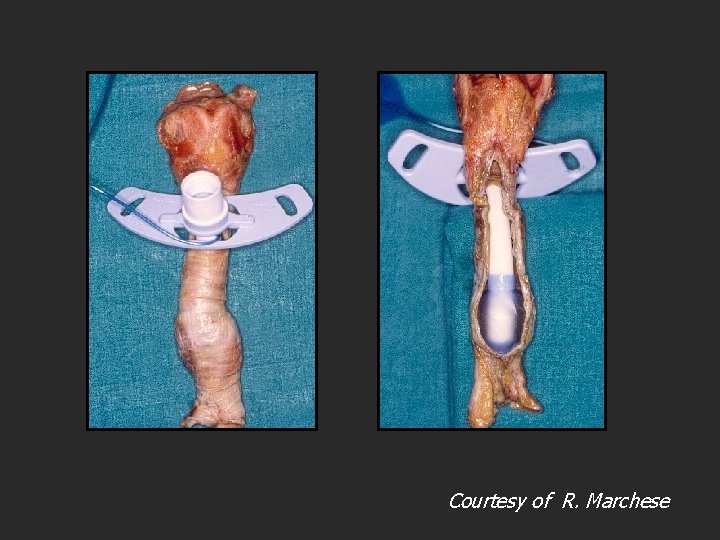
Courtesy of R. Marchese
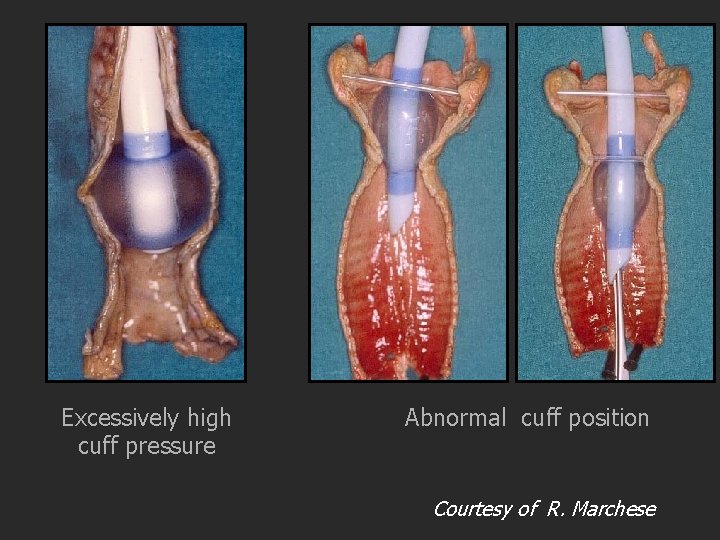
Excessively high cuff pressure Abnormal cuff position Courtesy of R. Marchese
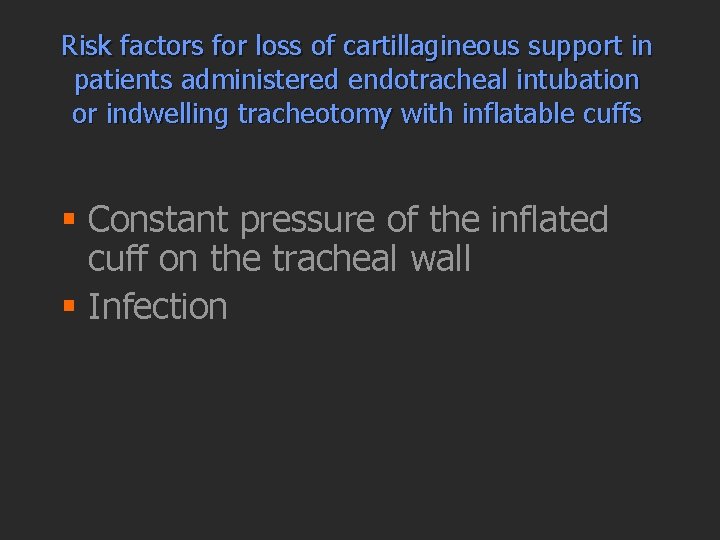
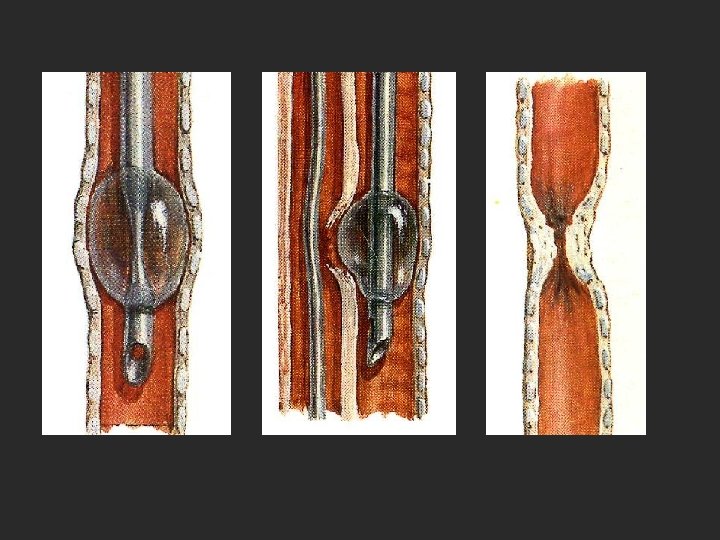
Risk factors for loss of cartillagineous support in patients administered endotracheal intubation or indwelling tracheotomy with inflatable cuffs § Constant pressure of the inflated cuff on the tracheal wall § Infection
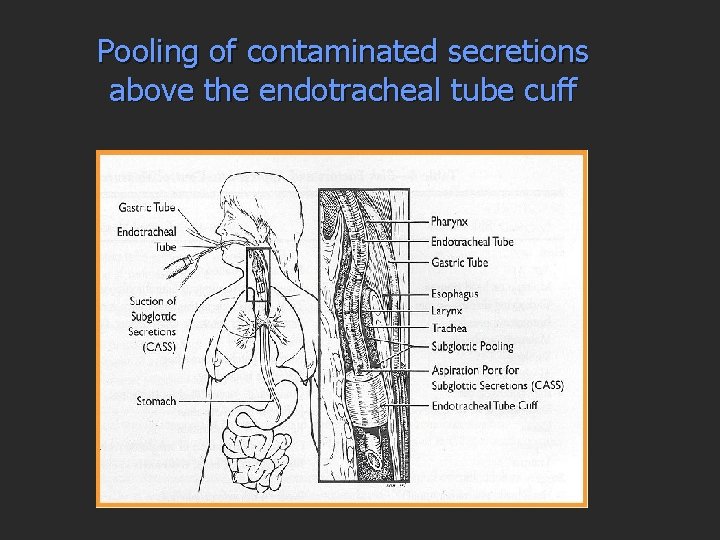
Pooling of contaminated secretions above the endotracheal tube cuff
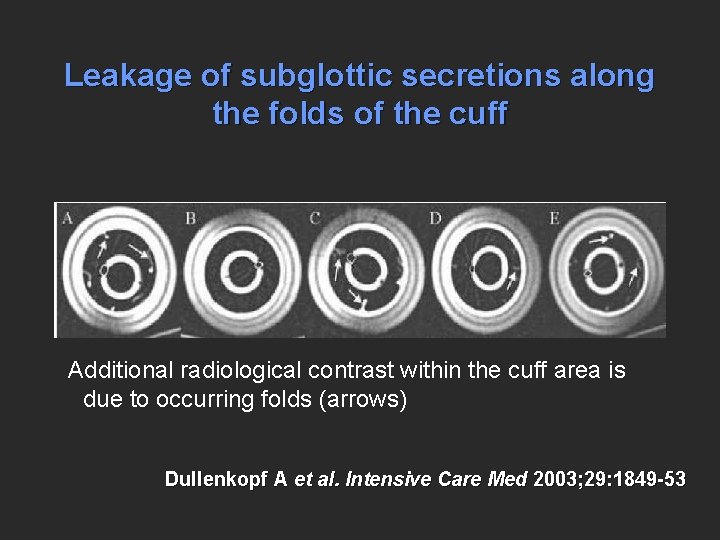
Leakage of subglottic secretions along the folds of the cuff Additional radiological contrast within the cuff area is due to occurring folds (arrows) Dullenkopf A et al. Intensive Care Med 2003; 29: 1849 -53
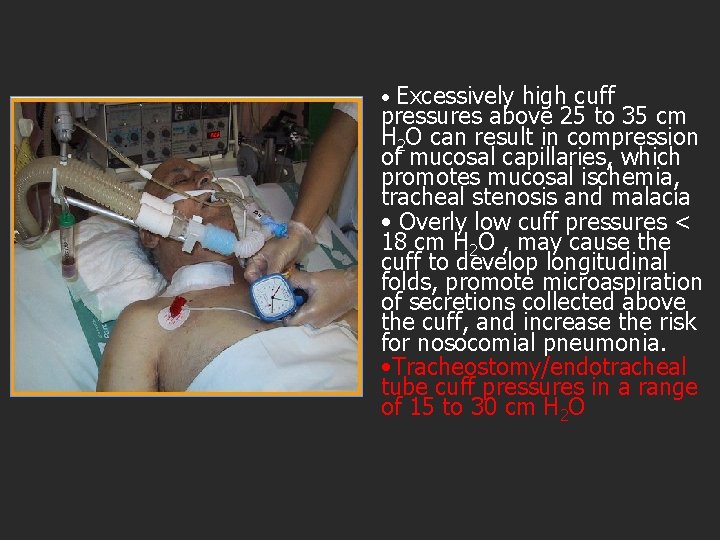
• Excessively high cuff pressures above 25 to 35 cm H 2 O can result in compression of mucosal capillaries, which promotes mucosal ischemia, tracheal stenosis and malacia • Overly low cuff pressures < 18 cm H 2 O , may cause the cuff to develop longitudinal folds, promote microaspiration of secretions collected above the cuff, and increase the risk for nosocomial pneumonia. • Tracheostomy/endotracheal tube cuff pressures in a range of 15 to 30 cm H 2 O
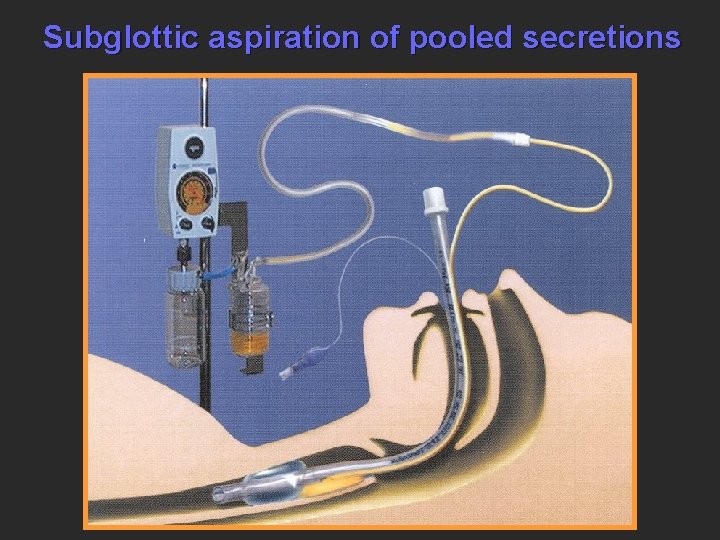
Subglottic aspiration of pooled secretions
MANAGEMENT OF TRACHEAL CANNULA • CUFF MANAGEMENT • MALPOSITION • PHONATION
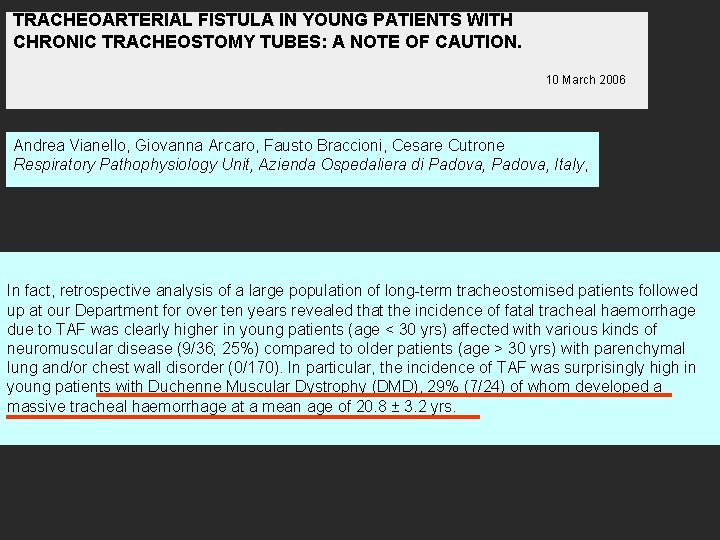
TRACHEOARTERIAL FISTULA IN YOUNG PATIENTS WITH CHRONIC TRACHEOSTOMY TUBES: A NOTE OF CAUTION. 10 March 2006 Andrea Vianello, Giovanna Arcaro, Fausto Braccioni, Cesare Cutrone Respiratory Pathophysiology Unit, Azienda Ospedaliera di Padova, Italy, In fact, retrospective analysis of a large population of long-term tracheostomised patients followed up at our Department for over ten years revealed that the incidence of fatal tracheal haemorrhage due to TAF was clearly higher in young patients (age < 30 yrs) affected with various kinds of neuromuscular disease (9/36; 25%) compared to older patients (age > 30 yrs) with parenchymal lung and/or chest wall disorder (0/170). In particular, the incidence of TAF was surprisingly high in young patients with Duchenne Muscular Dystrophy (DMD), 29% (7/24) of whom developed a massive tracheal haemorrhage at a mean age of 20. 8 ± 3. 2 yrs.
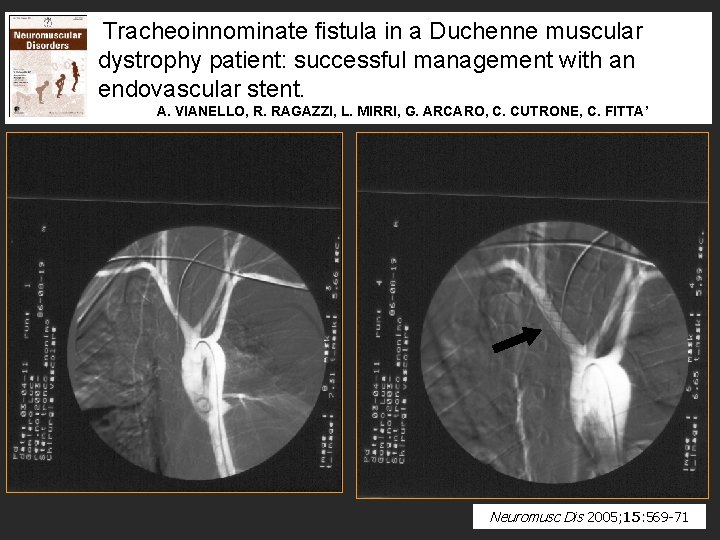
Tracheoinnominate fistula in a Duchenne muscular dystrophy patient: successful management with an endovascular stent. A. VIANELLO, R. RAGAZZI, L. MIRRI, G. ARCARO, C. CUTRONE, C. FITTA’ Neuromusc Dis 2005; 15: 569 -71
MANAGEMENT OF TRACHEAL CANNULA • CUFF MANAGEMENT • MALPOSITION • PHONATION
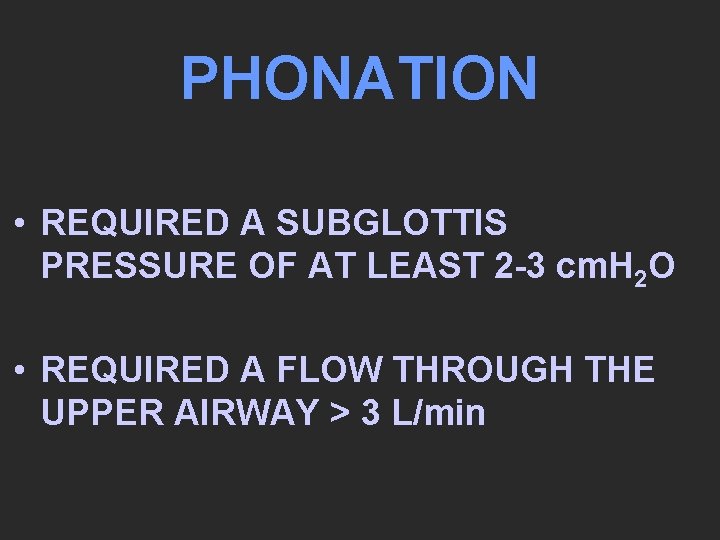
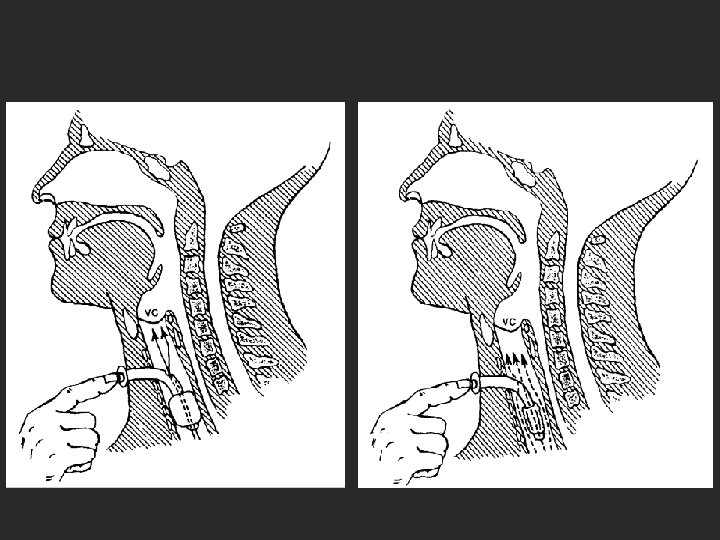
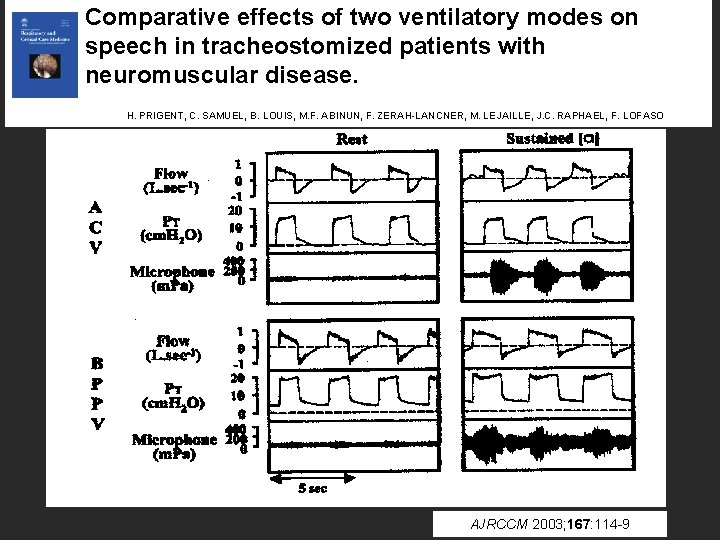
PHONATION • REQUIRED A SUBGLOTTIS PRESSURE OF AT LEAST 2 -3 cm. H 2 O • REQUIRED A FLOW THROUGH THE UPPER AIRWAY > 3 L/min
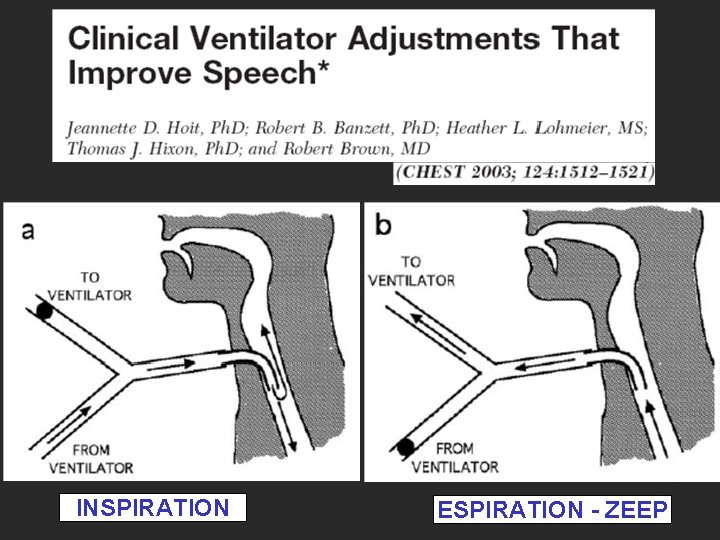
INSPIRATION ESPIRATION - ZEEP
Comparative effects of two ventilatory modes on speech in tracheostomized patients with neuromuscular disease. H. PRIGENT, C. SAMUEL, B. LOUIS, M. F. ABINUN, F. ZERAH-LANCNER, M. LEJAILLE, J. C. RAPHAEL, F. LOFASO AJRCCM 2003; 167: 114 -9
Comparative effects of two ventilatory modes on speech in tracheostomized patients with neuromuscular disease. H. PRIGENT, C. SAMUEL, B. LOUIS, M. F. ABINUN, F. ZERAH-LANCNER, M. LEJAILLE, J. C. RAPHAEL, F. LOFASO p=0. 002 AJRCCM 2003; 167: 114 -9
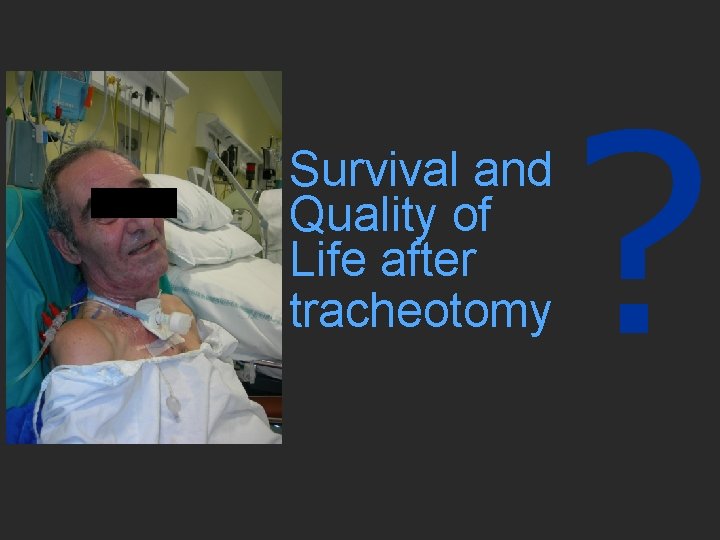
Survival and Quality of Life after tracheotomy ?
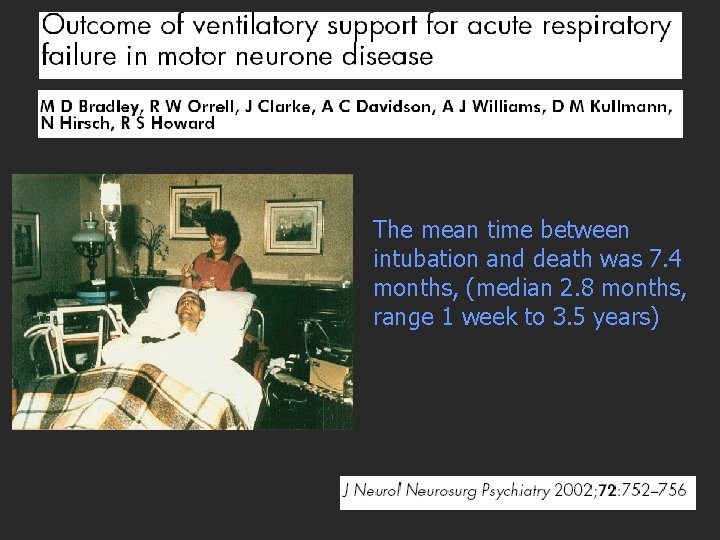
The mean time between intubation and death was 7. 4 months, (median 2. 8 months, range 1 week to 3. 5 years)
The ALSFRS predicts survival in ALS patients on invasive mechanical ventilation D. LO COCO, V. LA BELLA, T. PICCOLI, A. LO COCO Median survival time: 48 months Median survival time: 10 months Long-term survival after TIPPV according to ALSFRS score Chest, 2007; 132: 64 -69
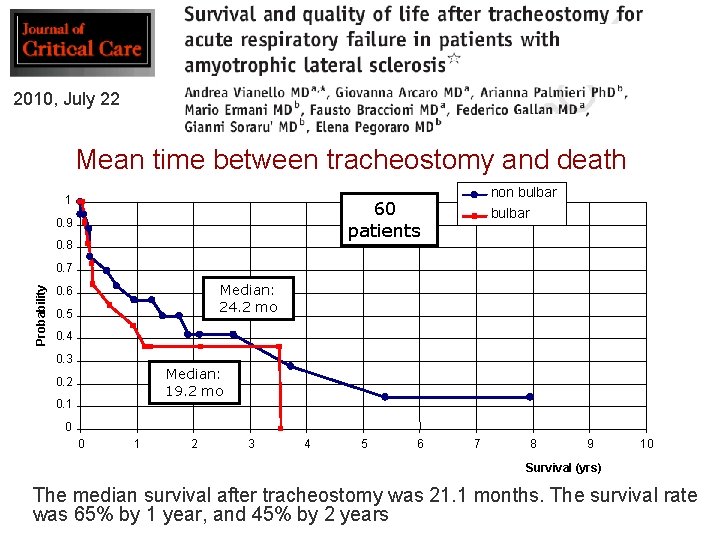
2010, July 22 Mean time between tracheostomy and death 1 non bulbar 60 patients 0. 9 0. 8 bulbar Probability 0. 7 Median: 24. 2 mo 0. 6 0. 5 0. 4 0. 3 Median: 19. 2 mo 0. 2 0. 1 0 0 1 2 3 4 5 6 7 8 9 10 Survival (yrs) The median survival after tracheostomy was 21. 1 months. The survival rate was 65% by 1 year, and 45% by 2 years
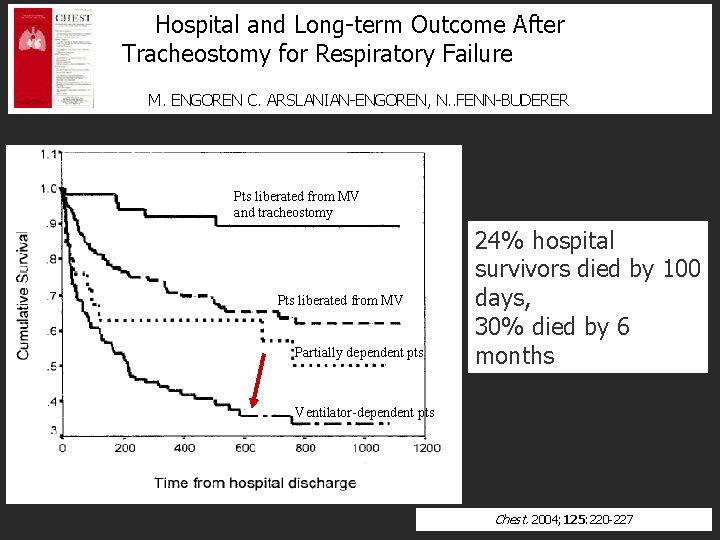
Hospital and Long-term Outcome After Tracheostomy for Respiratory Failure M. ENGOREN C. ARSLANIAN-ENGOREN, N. . FENN-BUDERER Pts liberated from MV and tracheostomy Pts liberated from MV Partially dependent pts 24% hospital survivors died by 100 days, 30% died by 6 months Ventilator-dependent pts Chest. 2004; 125: 220 -227
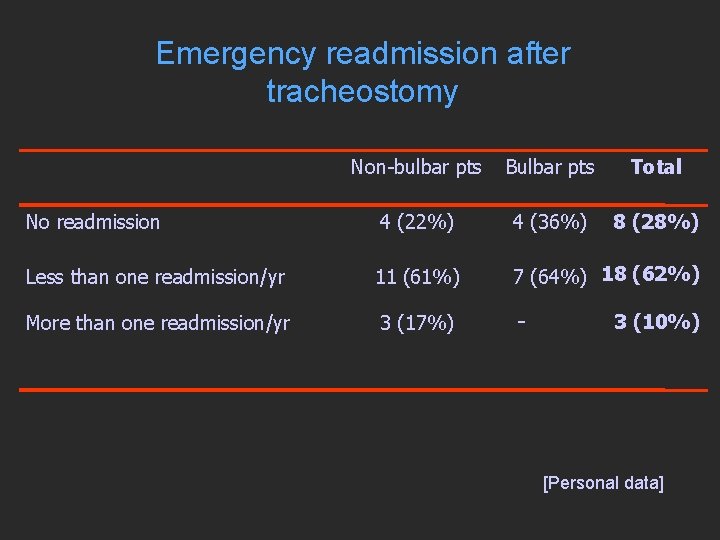
Emergency readmission after tracheostomy Non-bulbar pts Bulbar pts Total No readmission 4 (22%) 4 (36%) 8 (28%) Less than one readmission/yr 11 (61%) 7 (64%) 18 (62%) More than one readmission/yr 3 (17%) - 3 (10%) [Personal data]
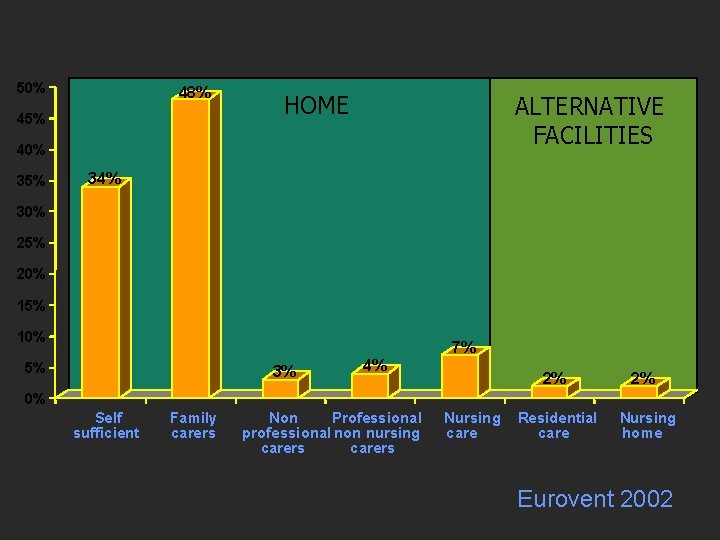
50% 48% 45% HOME ALTERNATIVE FACILITIES 40% 35% 34% 30% 25% 20% 15% 10% 7% 5% 3% 4% 2% 2% 0% Self sufficient Family carers Non Professional professional non nursing carers Nursing care Residential care Nursing home Eurovent 2002
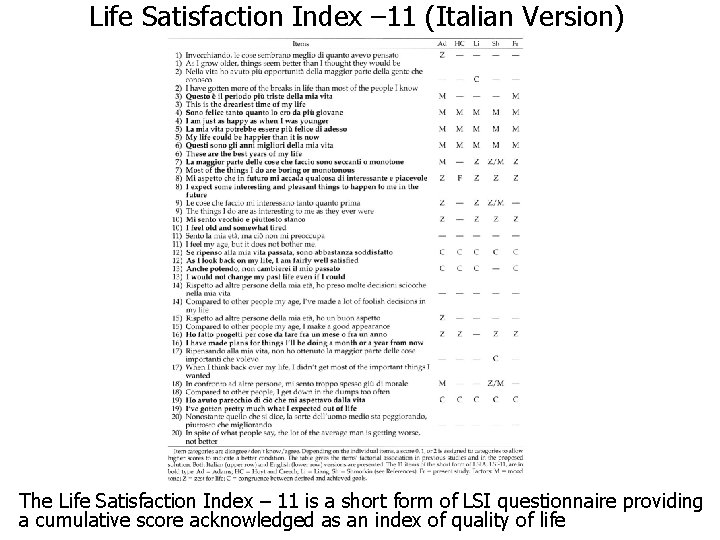
Life Satisfaction Index – 11 (Italian Version) The Life Satisfaction Index – 11 is a short form of LSI questionnaire providing a cumulative score acknowledged as an index of quality of life
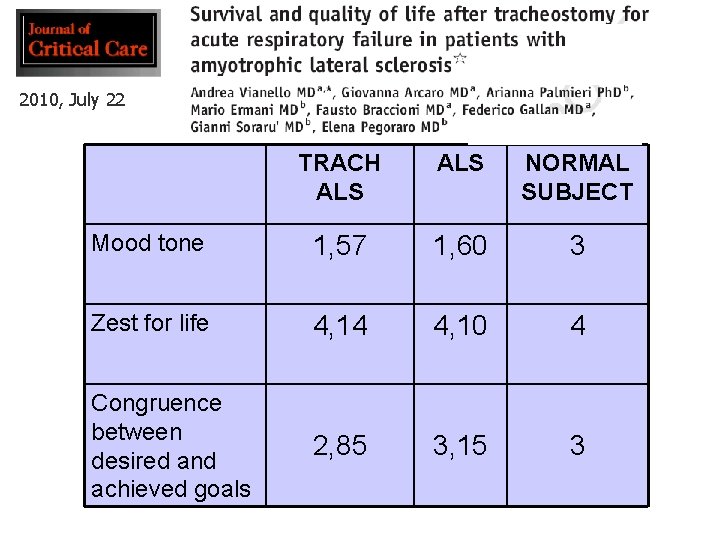
2010, July 22 TRACH ALS NORMAL SUBJECT Mood tone 1, 57 1, 60 3 Zest for life 4, 14 4, 10 4 Congruence between desired and achieved goals 2, 85 3, 15 3
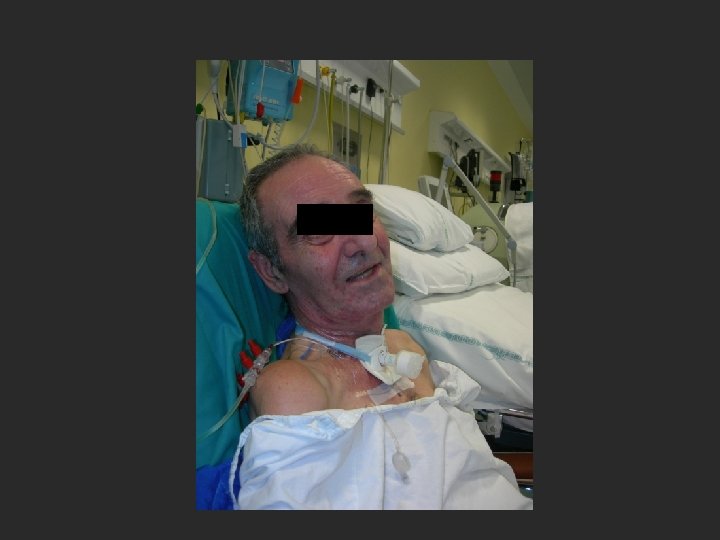
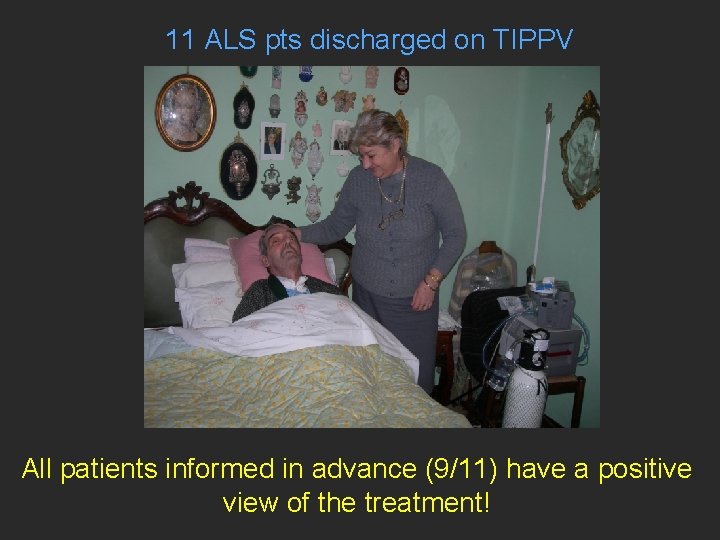
11 ALS pts discharged on TIPPV All patients informed in advance (9/11) have a positive view of the treatment!
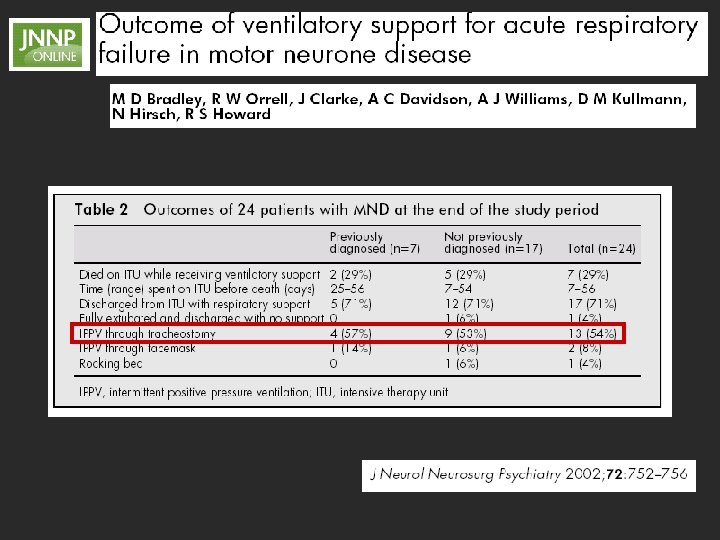
Conclusions When a patient with ALS is ventilated acutely, weaning from the ventilator is rarely achieved and tracheostomy often becomes mandatory; People with ALS can live for many years beyond ARF if ventilation via tracheostomy is used; Although many tracheostomised patients are happy with their choiche, further debate is required on the desiderability of long-term TIPPV for both the patient and the family.