PEDIATRIC VS ADULT ORGAN TRANSPLANT WALDO CONCEPCION MD















- Slides: 66
PEDIATRIC VS ADULT ORGAN TRANSPLANT WALDO CONCEPCION, MD FACS. Professor of Surgery Chief of Clinical Transplantation Stanford University KIEV SYMPOSIUM JULY 3 -4, 2017
PEDIATRIC LIVER TRANSPLANTATION 2
Overview § Background information § Common etiologies of pediatric liver disease § Listing process for liver transplant § OLT surgery § Post op complications
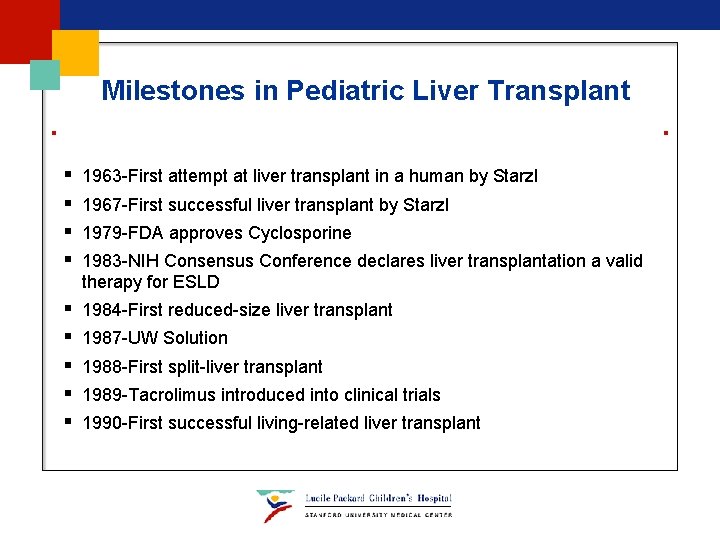
Milestones in Pediatric Liver Transplant § § 1963 -First attempt at liver transplant in a human by Starzl § § § 1984 -First reduced-size liver transplant 1967 -First successful liver transplant by Starzl 1979 -FDA approves Cyclosporine 1983 -NIH Consensus Conference declares liver transplantation a valid therapy for ESLD 1987 -UW Solution 1988 -First split-liver transplant 1989 -Tacrolimus introduced into clinical trials 1990 -First successful living-related liver transplant
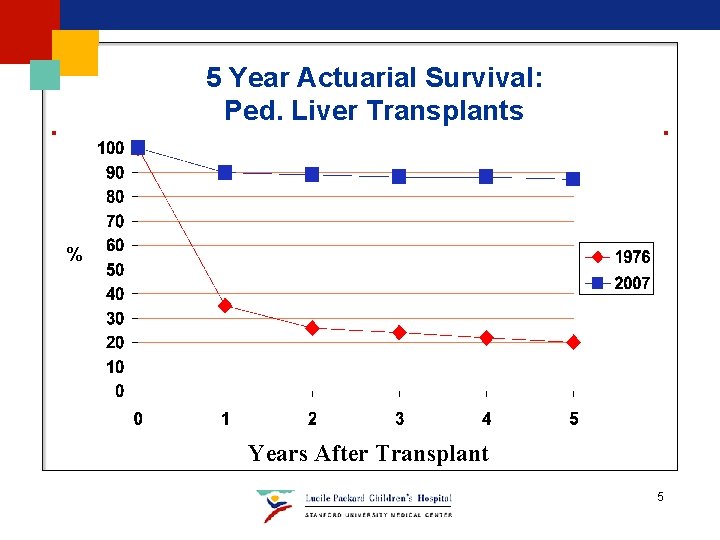
5 Year Actuarial Survival: Ped. Liver Transplants % % Years After Transplant 5
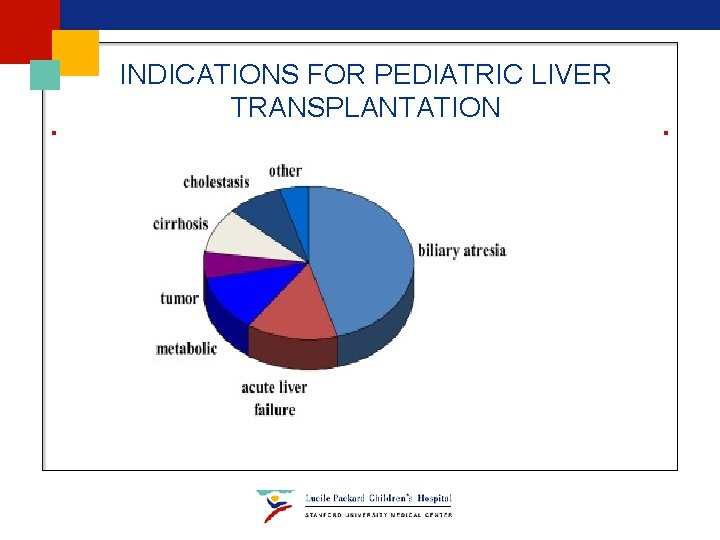
INDICATIONS FOR PEDIATRIC LIVER TRANSPLANTATION
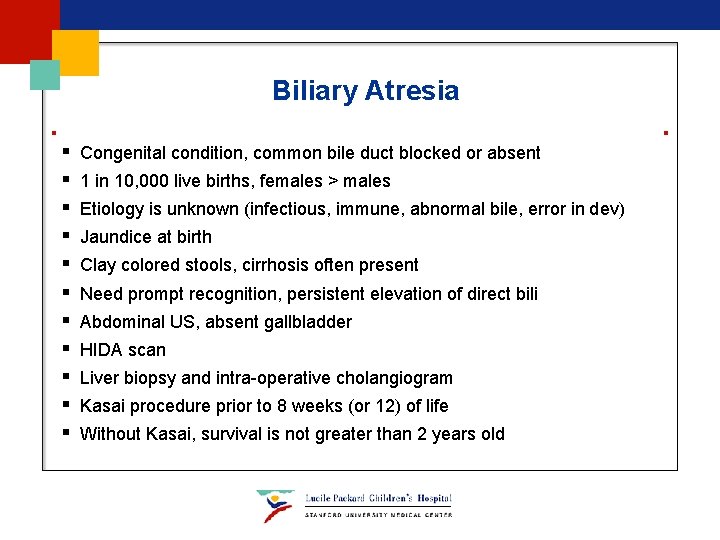
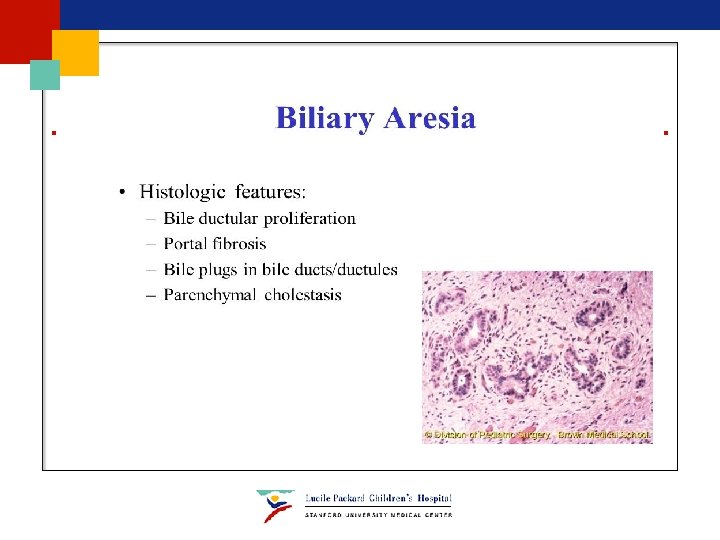
Biliary Atresia § § § Congenital condition, common bile duct blocked or absent 1 in 10, 000 live births, females > males Etiology is unknown (infectious, immune, abnormal bile, error in dev) Jaundice at birth Clay colored stools, cirrhosis often present Need prompt recognition, persistent elevation of direct bili Abdominal US, absent gallbladder HIDA scan Liver biopsy and intra-operative cholangiogram Kasai procedure prior to 8 weeks (or 12) of life Without Kasai, survival is not greater than 2 years old
9
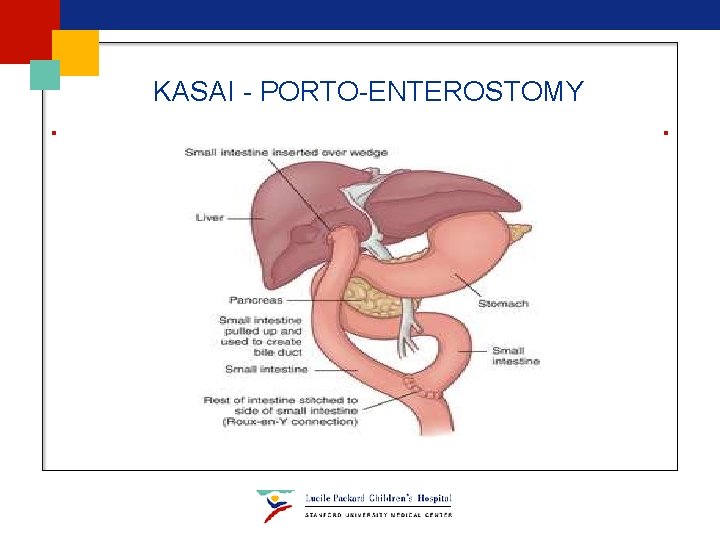
KASAI - PORTO-ENTEROSTOMY
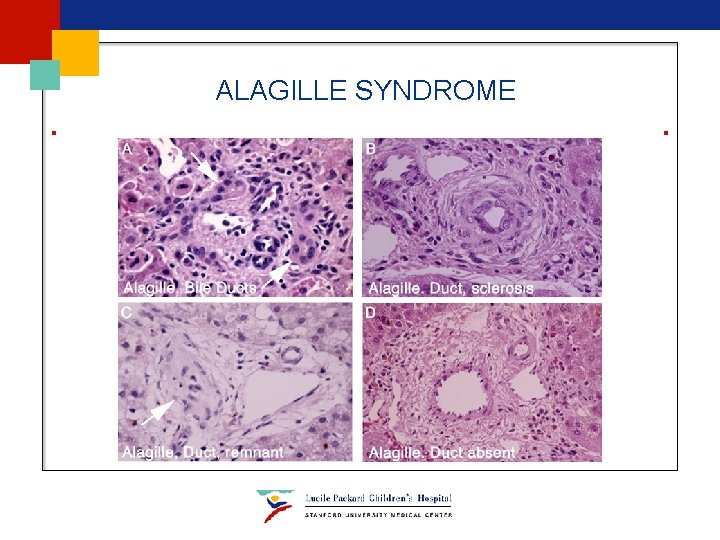
Alagille Syndrome • Autosomal dominant • Liver, cardiac, skeletal, eye, renal involvement with characteristic facies • Variable expression • JAG 1 mutation or NOTCH 2 • 1 in 100, 000 • Bile duct paucity, cholestatic liver disease, peripheral pulmonic stenosis, moya disease, renal • Poor growth, small stature • Increased bile acids-->pruritus, xanthomas • Fat soluble vitamin deficiencies • Skeletal abnormalities 11
Alagille Syndrome 12
ALAGILLE SYNDROME
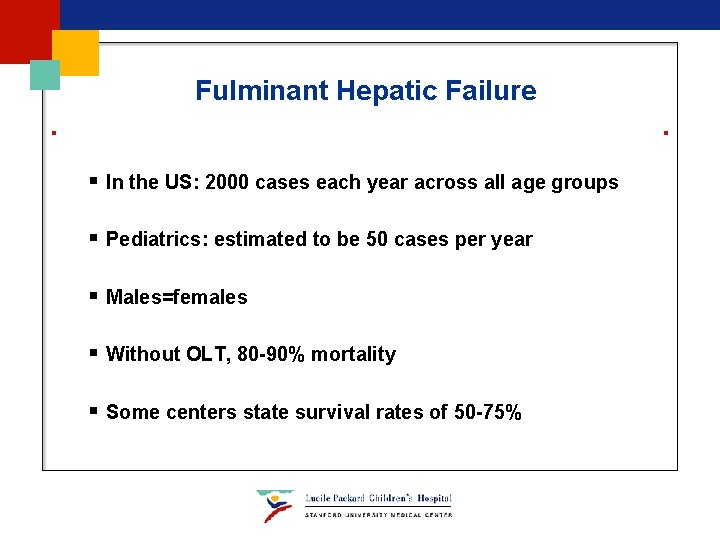
Fulminant Hepatic Failure § Hepatic necrosis with acute loss of hepatic function § Includes encephalopathy and coagulopathy § Occurs within 8 weeks of onset of liver disease § Absence of pre-existing liver disease
Fulminant Hepatic Failure § In the US: 2000 cases each year across all age groups § Pediatrics: estimated to be 50 cases per year § Males=females § Without OLT, 80 -90% mortality § Some centers state survival rates of 50 -75%
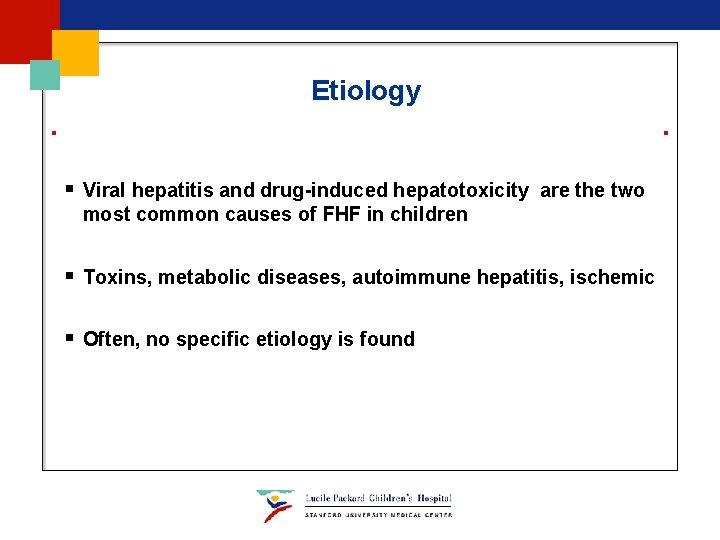
Etiology § Viral hepatitis and drug-induced hepatotoxicity are the two most common causes of FHF in children § Toxins, metabolic diseases, autoimmune hepatitis, ischemic § Often, no specific etiology is found
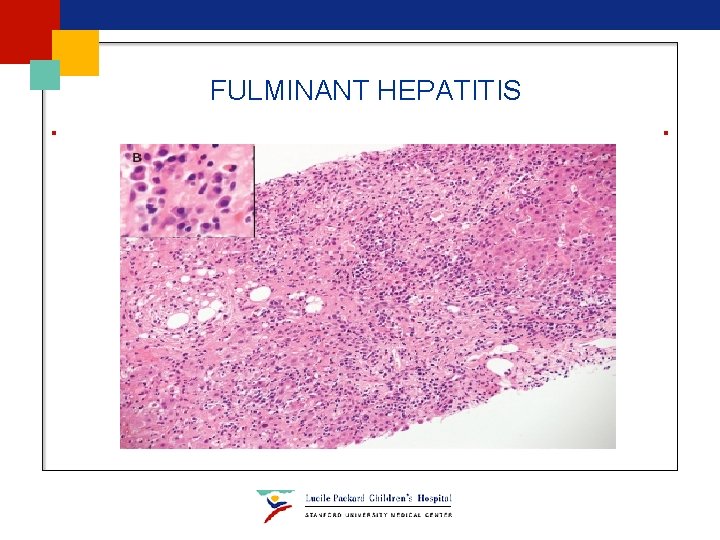
FULMINANT HEPATITIS
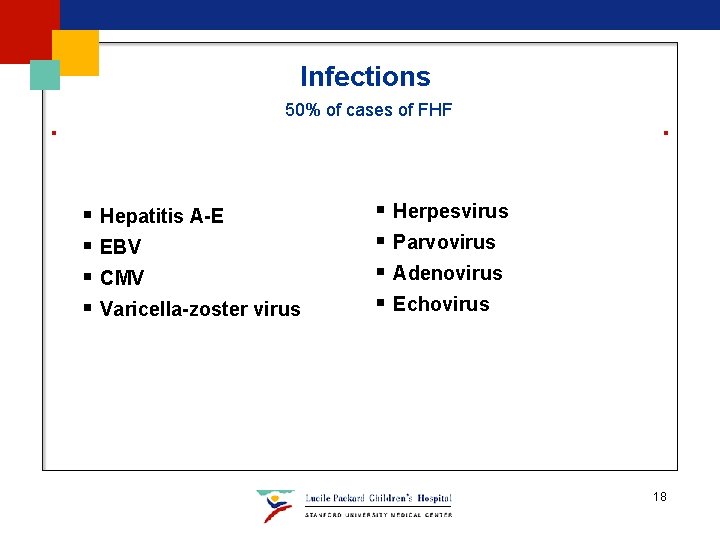
Infections 50% of cases of FHF § § Hepatitis A-E EBV CMV Varicella-zoster virus § § Herpesvirus Parvovirus Adenovirus Echovirus 18
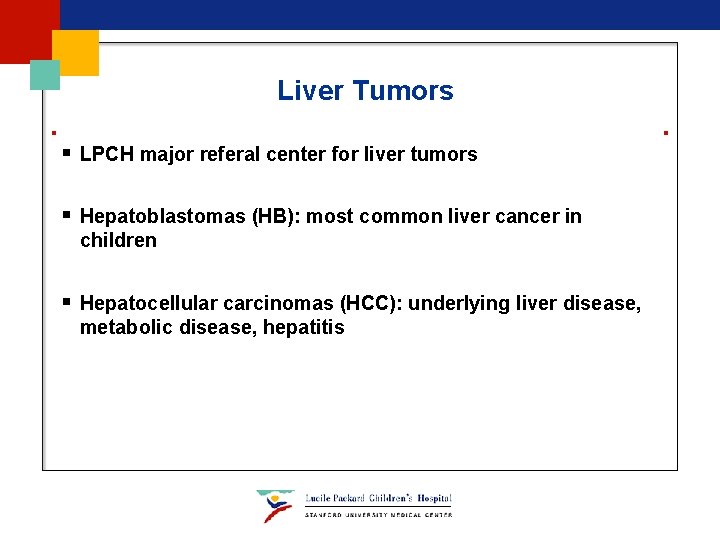
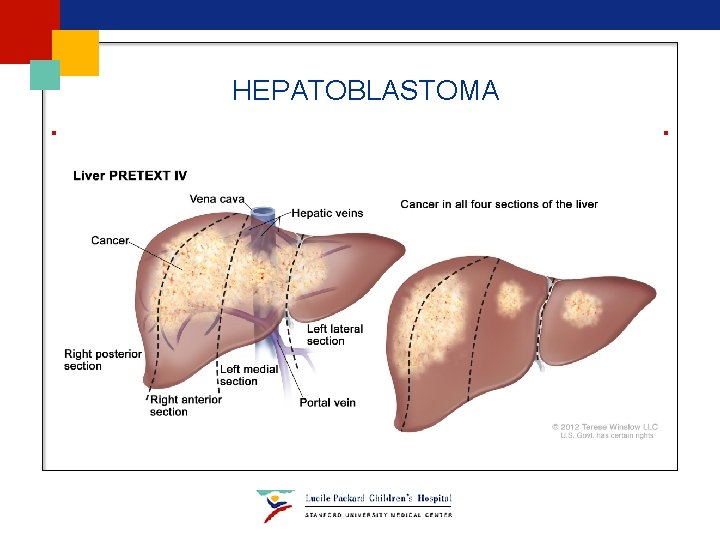
Liver Tumors § LPCH major referal center for liver tumors § Hepatoblastomas (HB): most common liver cancer in children § Hepatocellular carcinomas (HCC): underlying liver disease, metabolic disease, hepatitis
HEPATOBLASTOMA
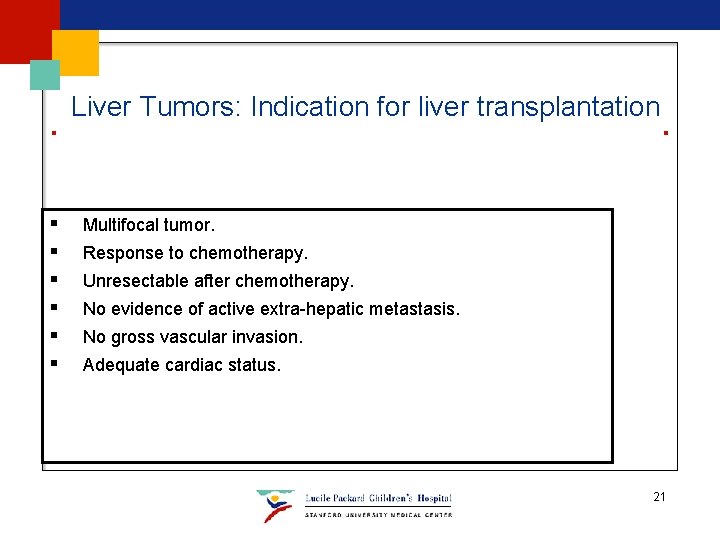
Liver Tumors: Indication for liver transplantation § § § Multifocal tumor. Response to chemotherapy. Unresectable after chemotherapy. No evidence of active extra-hepatic metastasis. No gross vascular invasion. Adequate cardiac status. 21
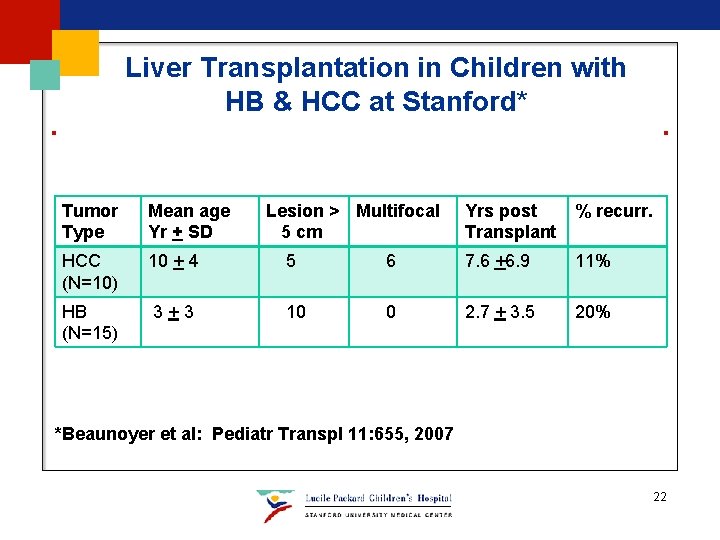
Liver Transplantation in Children with HB & HCC at Stanford* Tumor Type Mean age Yr + SD Lesion > Multifocal 5 cm HCC (N=10) 10 + 4 5 HB (N=15) 3+3 10 Yrs post Transplant % recurr. 6 7. 6 +6. 9 11% 0 2. 7 + 3. 5 20% *Beaunoyer et al: Pediatr Transpl 11: 655, 2007 22
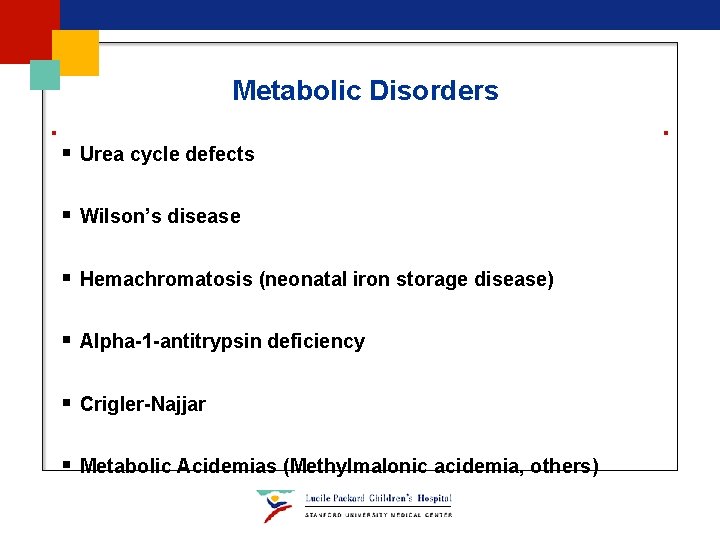
Metabolic Disorders § Urea cycle defects § Wilson’s disease § Hemachromatosis (neonatal iron storage disease) § Alpha-1 -antitrypsin deficiency § Crigler-Najjar § Metabolic Acidemias (Methylmalonic acidemia, others)
Urea Cycle
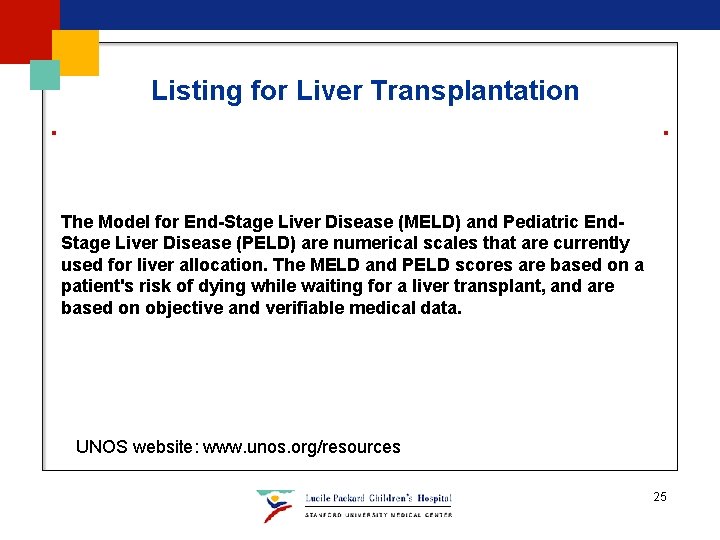
Listing for Liver Transplantation The Model for End-Stage Liver Disease (MELD) and Pediatric End. Stage Liver Disease (PELD) are numerical scales that are currently used for liver allocation. The MELD and PELD scores are based on a patient's risk of dying while waiting for a liver transplant, and are based on objective and verifiable medical data. UNOS website: www. unos. org/resources 25
Organ Distribution § February 2002 implementation of MELD/PELD § Objective data only § The Model for End-Stage Liver Disease (MELD) and Pediatric End. Stage Liver Disease (PELD) are numerical scales that are currently used for liver allocation. The MELD and PELD scores are based on a patient's risk of dying while waiting for a liver transplant, and are based on objective and verifiable data.
Listing for Liver Transplantation The MELD score calculation uses: * Serum Creatinine (mg/dl) * Bilirubin (mg/dl) * INR The PELD score calculation uses: * Albumin (g/dl) * Bilirubin (mg/dl) * INR * Growth failure (based on gender, height and weight) * Age at listing 27
Organ Distribution § PELD does not include symptoms of liver disease § GI bleeds § Ascites § In complete measure of need for liver transplant in children § Disadvantage for Adolescents
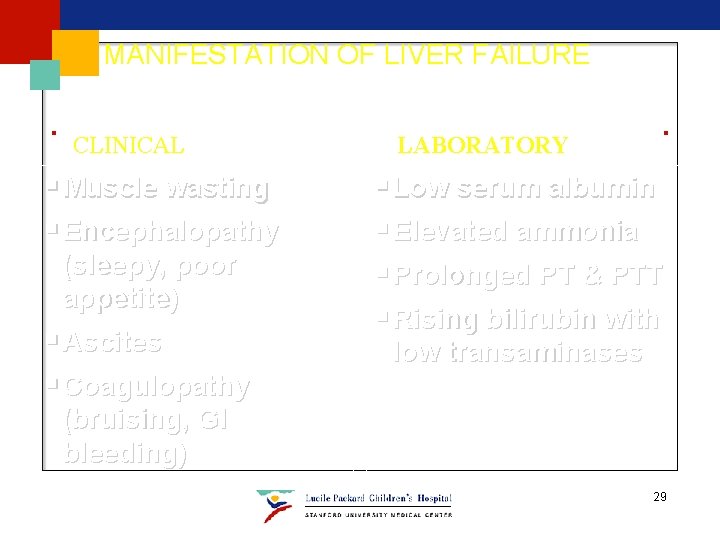
MANIFESTATION OF LIVER FAILURE CLINICAL § Muscle wasting § Encephalopathy (sleepy, poor appetite) § Ascites § Coagulopathy LABORATORY § Low serum albumin § Elevated ammonia § Prolonged PT & PTT § Rising bilirubin with low transaminases (bruising, GI bleeding) 29
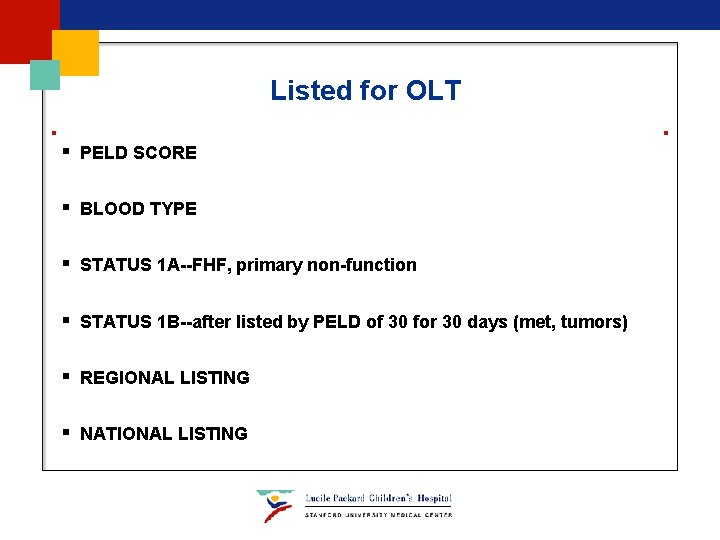
Listed for OLT § PELD SCORE § BLOOD TYPE § STATUS 1 A--FHF, primary non-function § STATUS 1 B--after listed by PELD of 30 for 30 days (met, tumors) § REGIONAL LISTING § NATIONAL LISTING
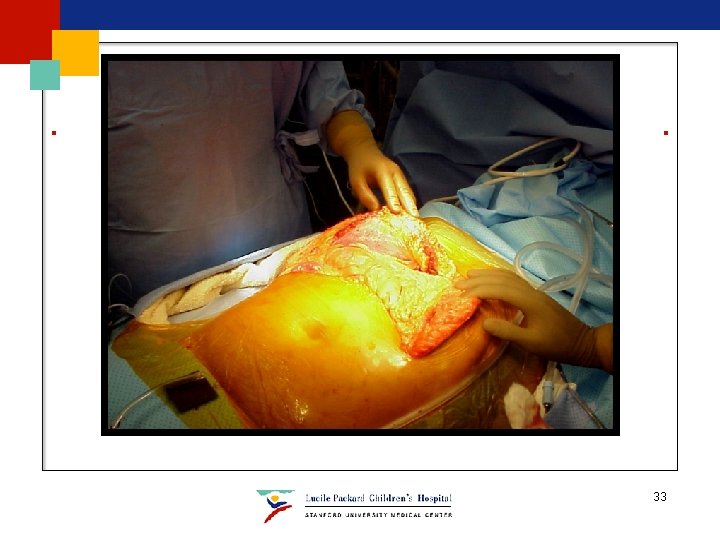
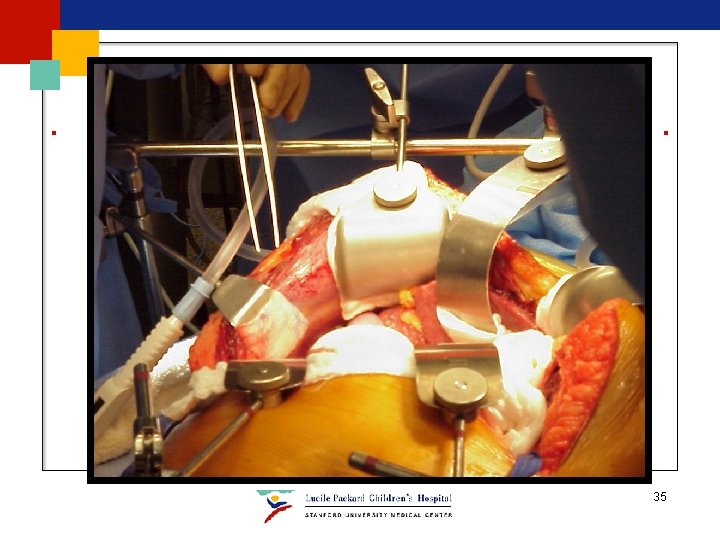
OLT Surgery 31
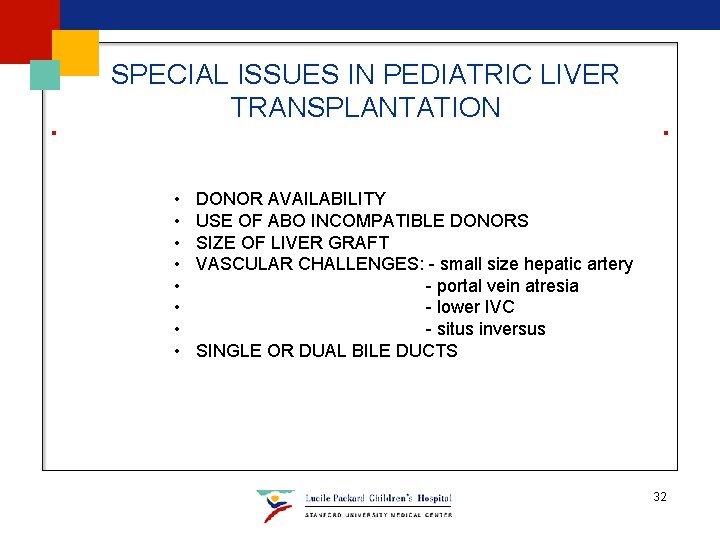
SPECIAL ISSUES IN PEDIATRIC LIVER TRANSPLANTATION • • DONOR AVAILABILITY USE OF ABO INCOMPATIBLE DONORS SIZE OF LIVER GRAFT VASCULAR CHALLENGES: - small size hepatic artery - portal vein atresia - lower IVC - situs inversus SINGLE OR DUAL BILE DUCTS 32
33
34
35
• CJ with Internal Stent 36
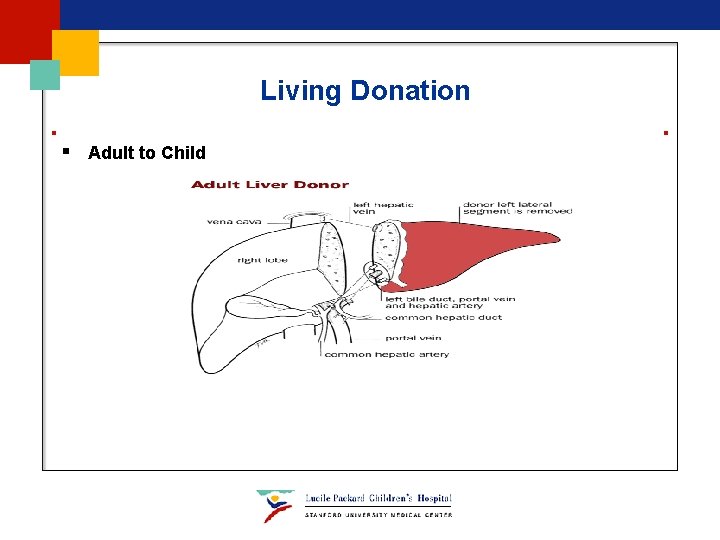
Living Donation § Adult to Child
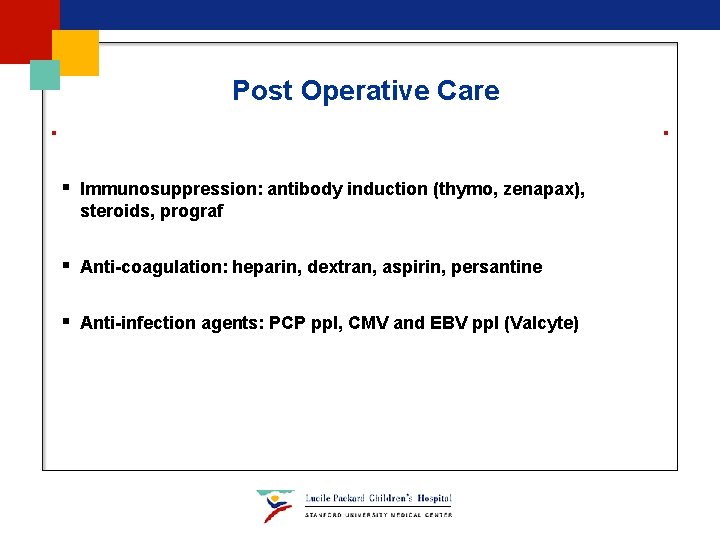
Post Operative Care § Immunosuppression: antibody induction (thymo, zenapax), steroids, prograf § Anti-coagulation: heparin, dextran, aspirin, persantine § Anti-infection agents: PCP ppl, CMV and EBV ppl (Valcyte)
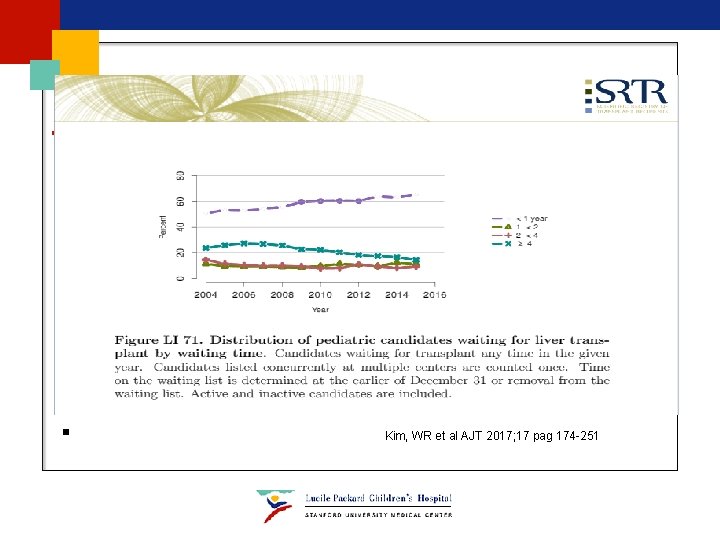
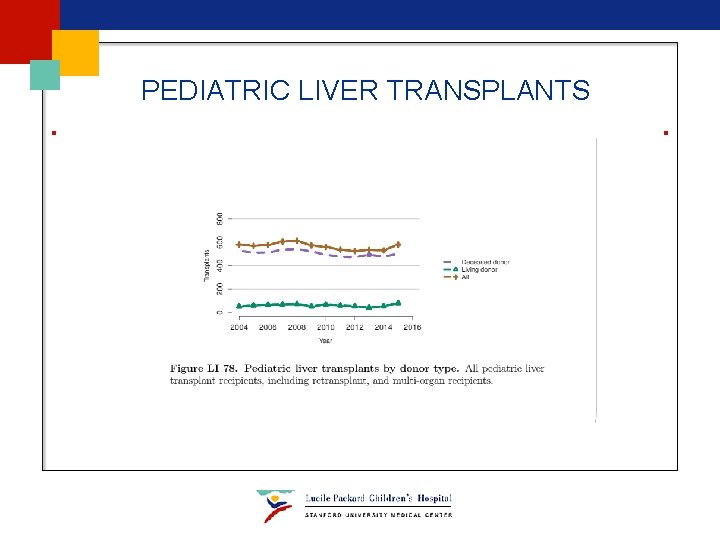
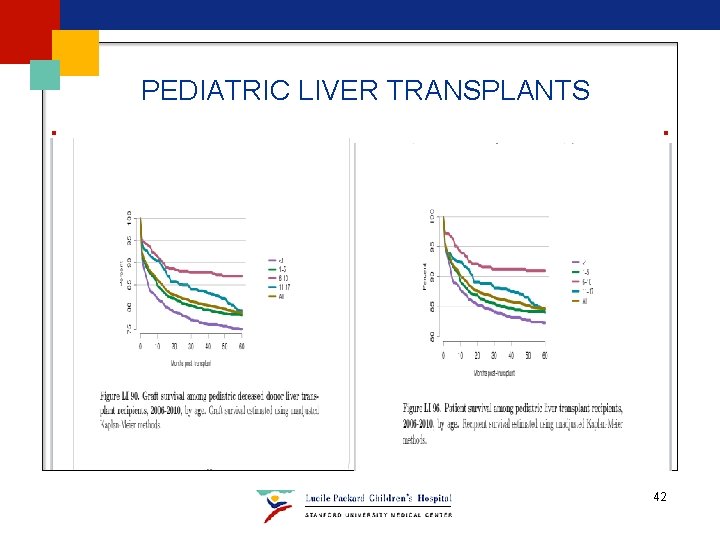
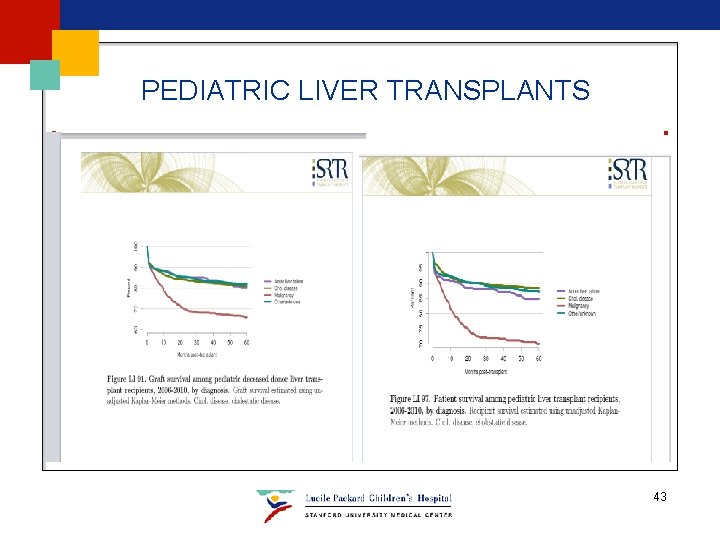
§ Kim, WR et al AJT 2017; 17 pag 174 -251
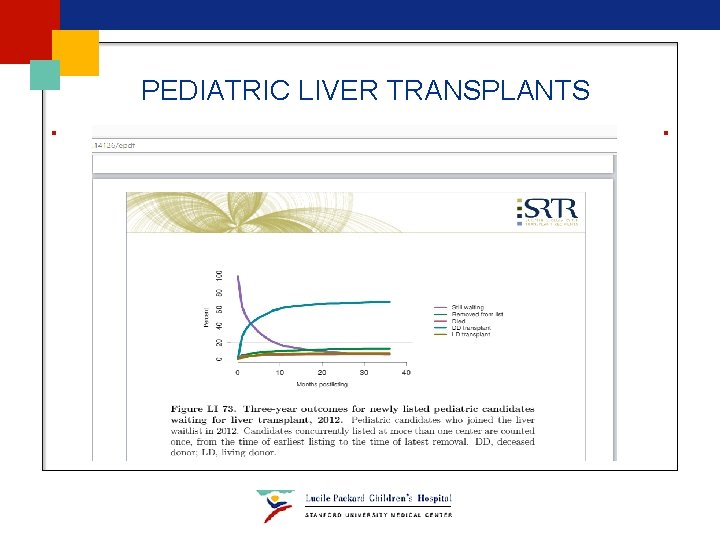
PEDIATRIC LIVER TRANSPLANTS
PEDIATRIC LIVER TRANSPLANTS
PEDIATRIC LIVER TRANSPLANTS 42
PEDIATRIC LIVER TRANSPLANTS 43
Surgical Complications after Pediatric Liver Transplantation § Portal vein thrombosis or stenosis § Hepatic vein-vena cava thrombosis or stenosis § Hepatic artery thrombosis § Biliary strictures § Cosmetic issues from scarring
ADULT LIVER TRANSPLANTATION 45
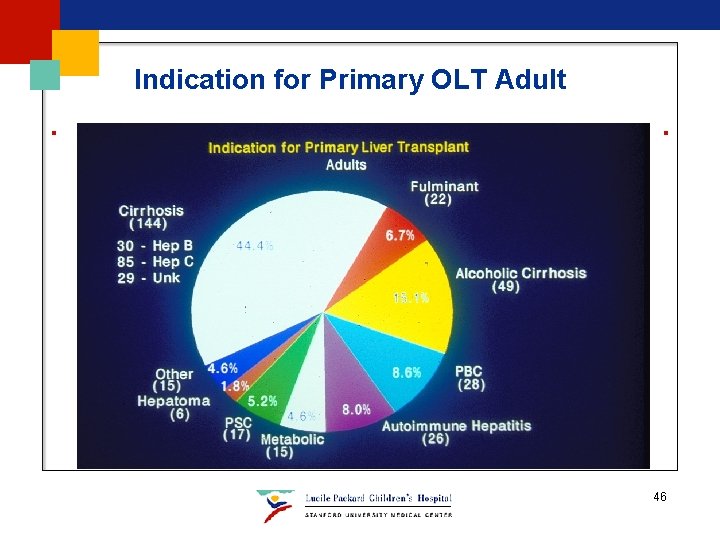
Indication for Primary OLT Adult 46
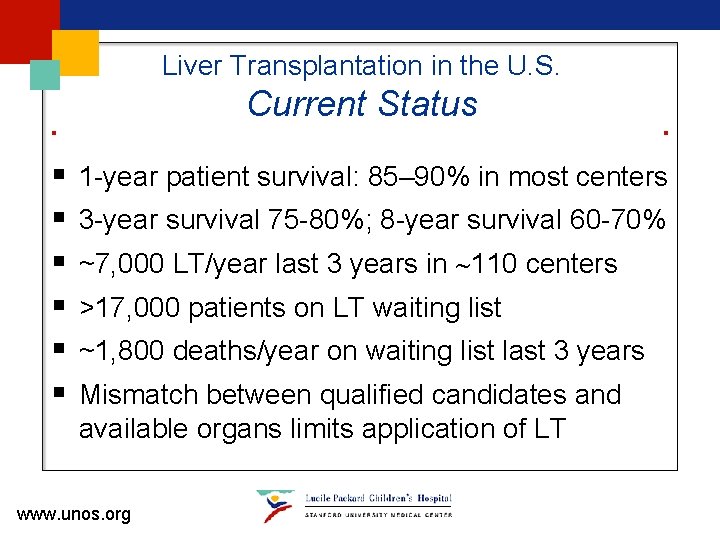
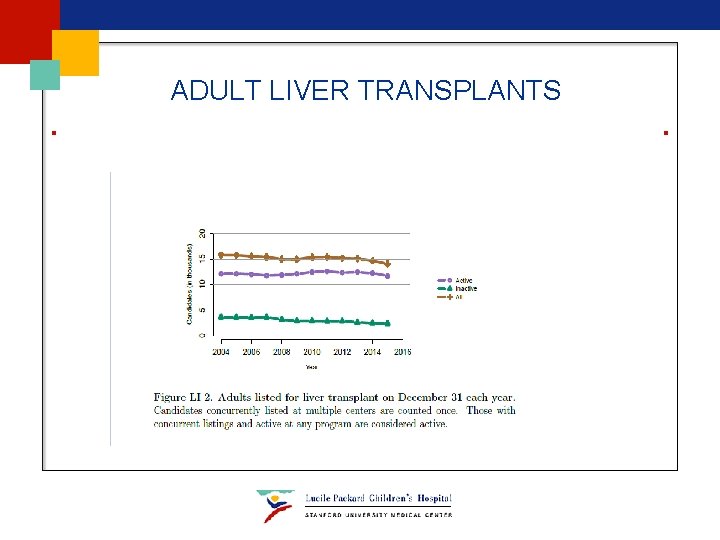
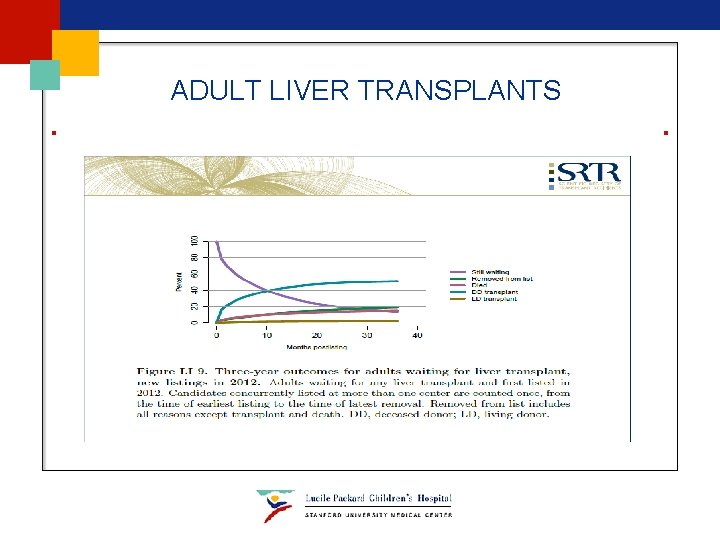
Liver Transplantation in the U. S. Current Status § § § 1 -year patient survival: 85– 90% in most centers 3 -year survival 75 -80%; 8 -year survival 60 -70% ~7, 000 LT/year last 3 years in 110 centers >17, 000 patients on LT waiting list ~1, 800 deaths/year on waiting list last 3 years Mismatch between qualified candidates and available organs limits application of LT www. unos. org
Patient Selection Criteria for LT § Accepted indications for LT − Advanced chronic liver disease − Acute liver failure − Unresectable hepatic malignancy − Inherited metabolic liver disease § § No alternative form of therapy No absolute contraindication to LT Willingness to comply with follow-up care Ability to provide for costs of LT.
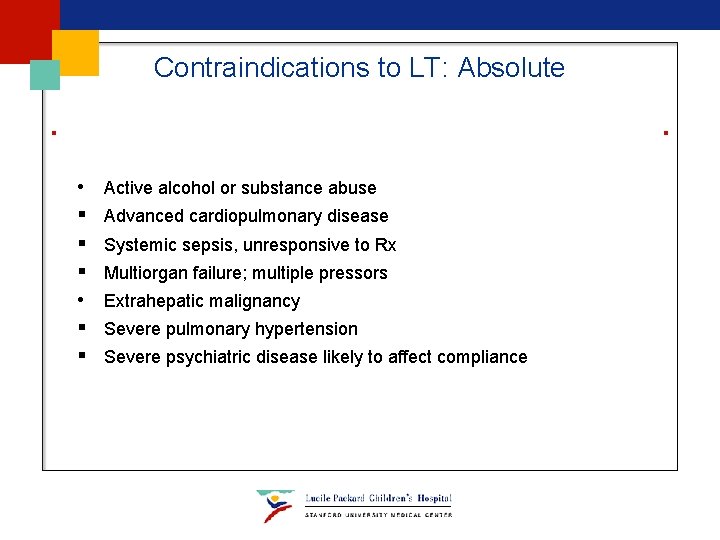
Contraindications to LT: Absolute • § § § • § § Active alcohol or substance abuse Advanced cardiopulmonary disease Systemic sepsis, unresponsive to Rx Multiorgan failure; multiple pressors Extrahepatic malignancy Severe pulmonary hypertension Severe psychiatric disease likely to affect compliance
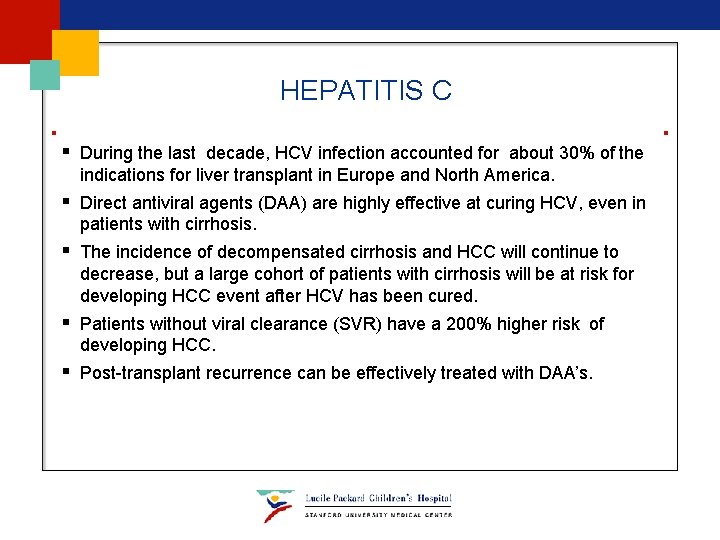
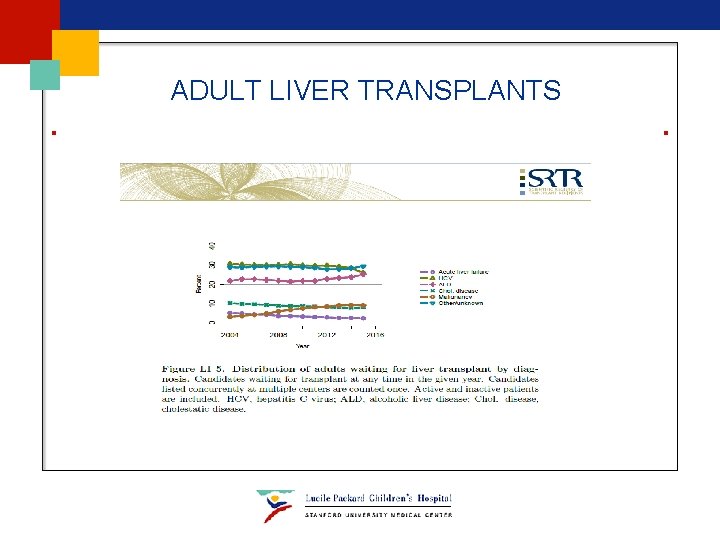
HEPATITIS C § During the last decade, HCV infection accounted for about 30% of the indications for liver transplant in Europe and North America. § Direct antiviral agents (DAA) are highly effective at curing HCV, even in patients with cirrhosis. § The incidence of decompensated cirrhosis and HCC will continue to decrease, but a large cohort of patients with cirrhosis will be at risk for developing HCC event after HCV has been cured. § Patients without viral clearance (SVR) have a 200% higher risk of developing HCC. § Post-transplant recurrence can be effectively treated with DAA’s.
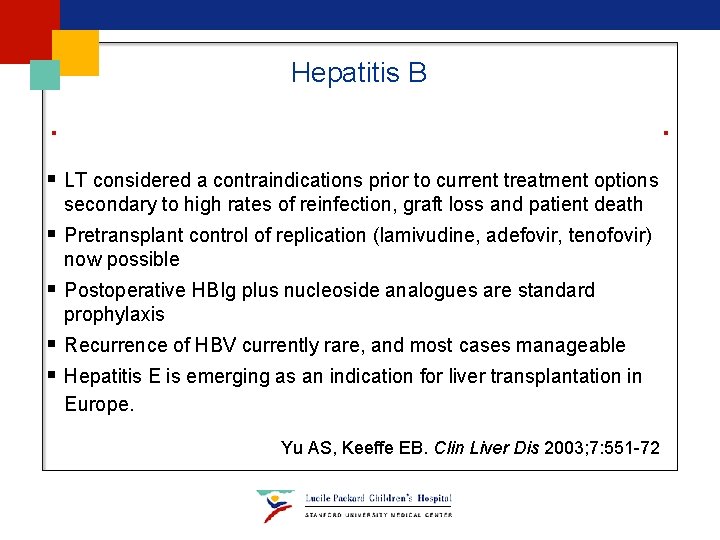
Hepatitis B § LT considered a contraindications prior to current treatment options secondary to high rates of reinfection, graft loss and patient death § Pretransplant control of replication (lamivudine, adefovir, tenofovir) now possible § Postoperative HBIg plus nucleoside analogues are standard prophylaxis § Recurrence of HBV currently rare, and most cases manageable § Hepatitis E is emerging as an indication for liver transplantation in Europe. Yu AS, Keeffe EB. Clin Liver Dis 2003; 7: 551 -72
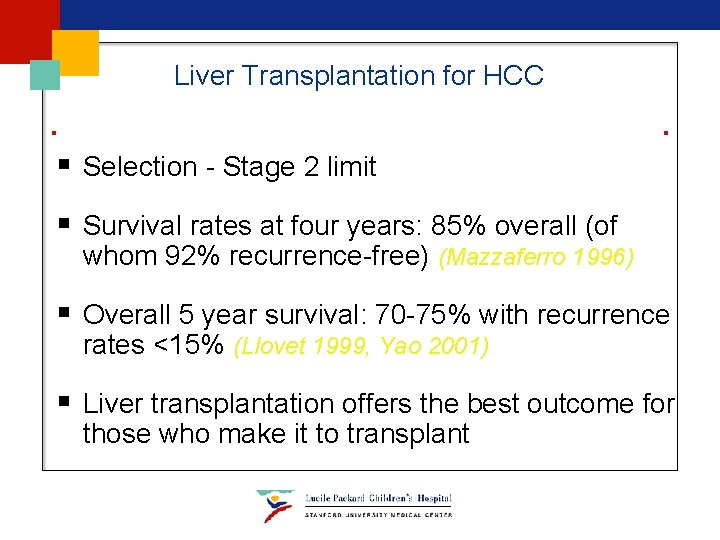
Liver Transplantation for HCC § Selection - Stage 2 limit § Survival rates at four years: 85% overall (of whom 92% recurrence-free) (Mazzaferro 1996) § Overall 5 year survival: 70 -75% with recurrence rates <15% (Llovet 1999, Yao 2001) § Liver transplantation offers the best outcome for those who make it to transplant
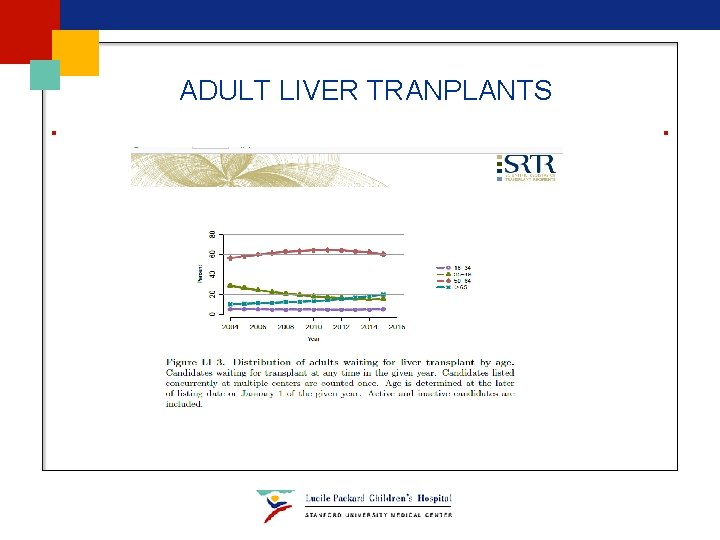
NON-ALCOHOLIC FATTY LIVER DISEASE § With the increasing prevalence of obesity, diabetes and metabolic syndrome, NAFLD may affect as many as 40% of the adult population of United States ( about 100 million). § Slowly progressive disease and a significant proportion of patients progress to decompensated cirrhosis and HCC
Recurrent Disease after Liver Transplantation 55
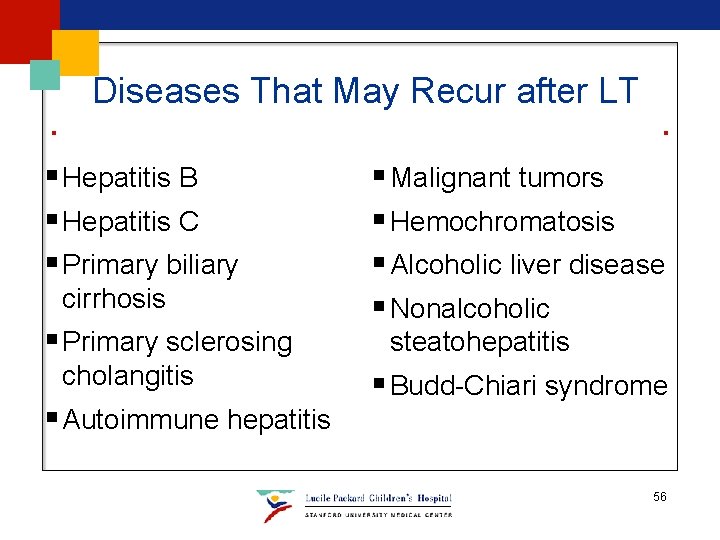
Diseases That May Recur after LT § Hepatitis B § Hepatitis C § Primary biliary cirrhosis § Primary sclerosing cholangitis § Autoimmune hepatitis § Malignant tumors § Hemochromatosis § Alcoholic liver disease § Nonalcoholic steatohepatitis § Budd-Chiari syndrome 56
Recurrence of Disease after LT § Some recurrent disease inconsequential, while other recurrence a cause of death or re-LT § Increasing problem as patients live longer after LT § Potential requirement for re-LT an added burden to already limited resources for LT § Results of re-LT inferior to initial LT (survival 62% vs. 87% at 1 year, and 54% vs. 77% at 3 year)1 1 UNOS Update: UNOS Scientific Registry. 1996; p. 11 -32.
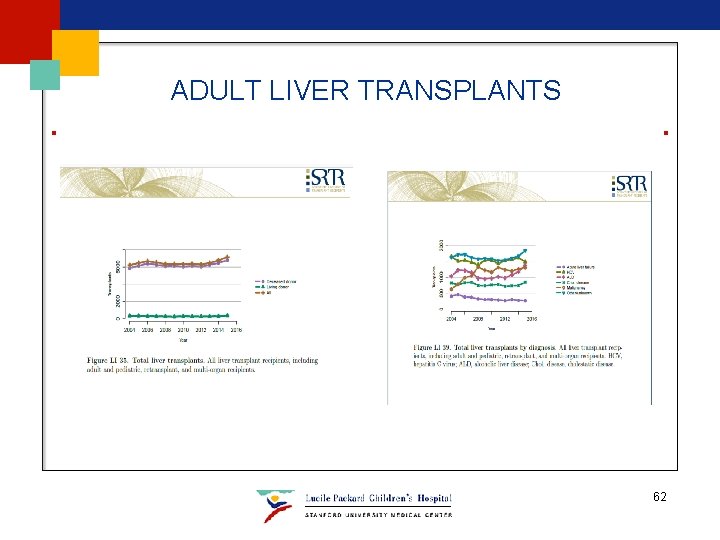
ADULT LIVER TRANSPLANTS
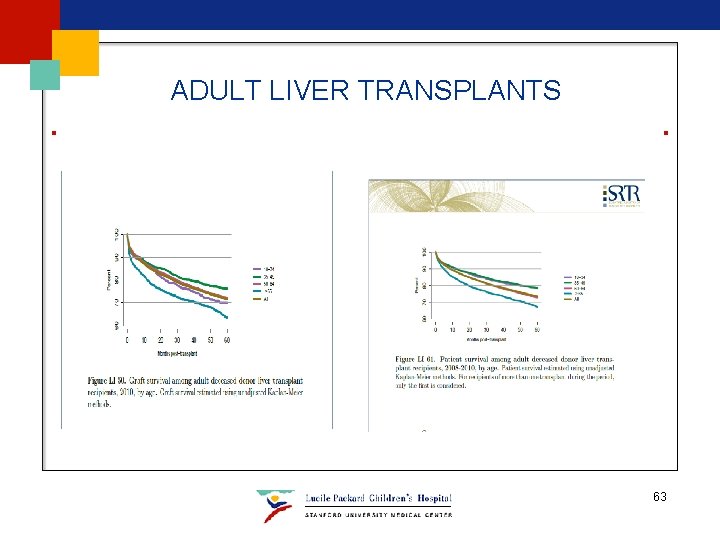
ADULT LIVER TRANPLANTS
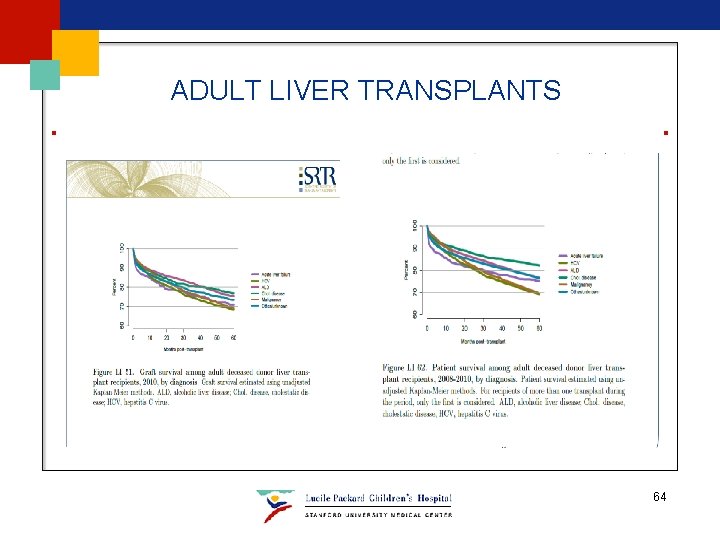
ADULT LIVER TRANSPLANTS
ADULT LIVER TRANSPLANTS
ADULT LIVER TRANSPLANTS 62
ADULT LIVER TRANSPLANTS 63
ADULT LIVER TRANSPLANTS 64
SUMMARY 65
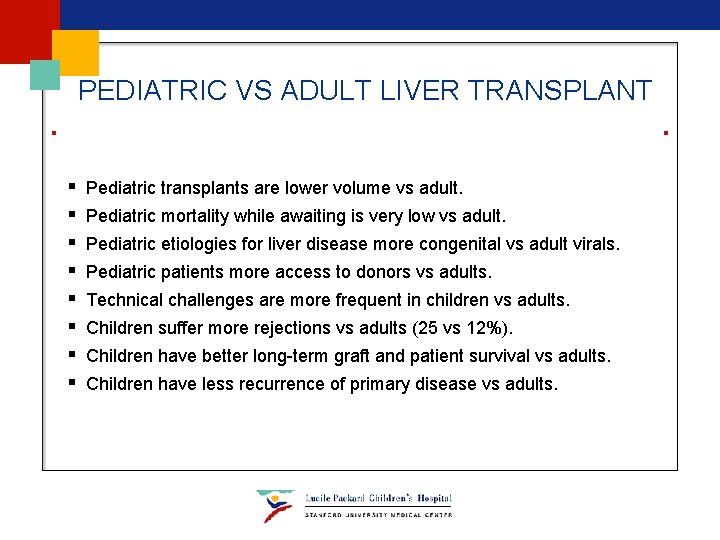
PEDIATRIC VS ADULT LIVER TRANSPLANT § § § § Pediatric transplants are lower volume vs adult. Pediatric mortality while awaiting is very low vs adult. Pediatric etiologies for liver disease more congenital vs adult virals. Pediatric patients more access to donors vs adults. Technical challenges are more frequent in children vs adults. Children suffer more rejections vs adults (25 vs 12%). Children have better long-term graft and patient survival vs adults. Children have less recurrence of primary disease vs adults.
THANK YOU! 67