PartonHadron Transition in Nuclear Physics Haiyan Gao 1
- Slides: 59
Parton-Hadron Transition in Nuclear Physics Haiyan Gao 1, 2 1. Duke University 2. Massachusetts Institute of Technology Nuclear Particle Physics Colloquium MIT March 10, 2003
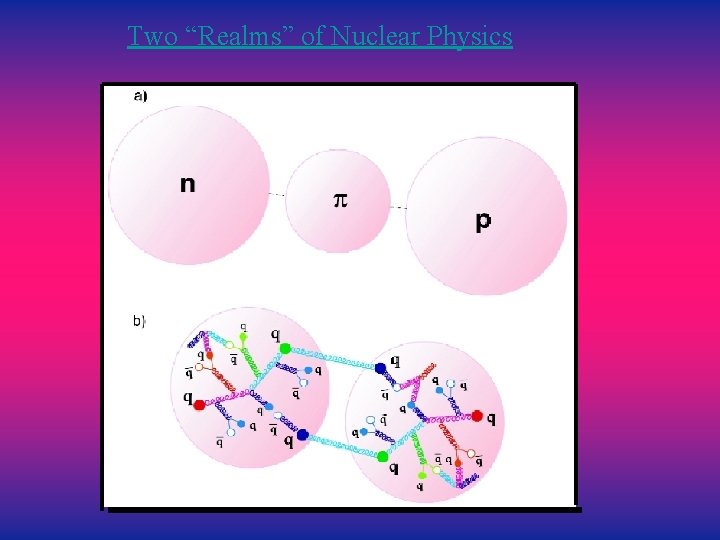
Two “Realms” of Nuclear Physics
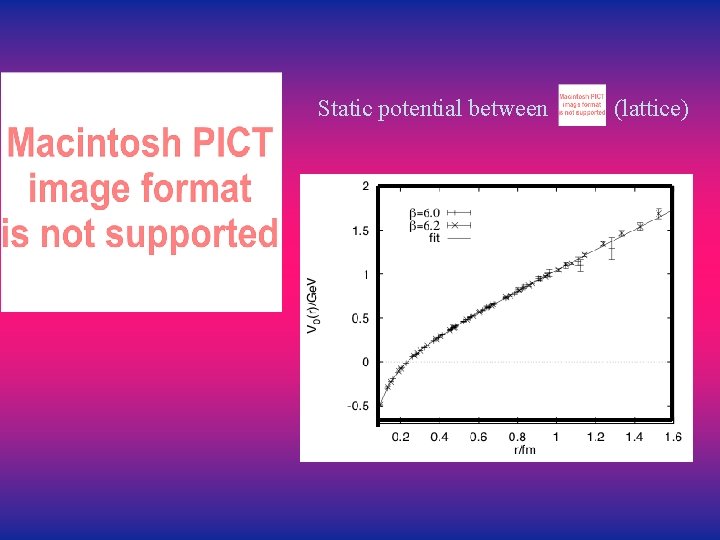
Static potential between (lattice)
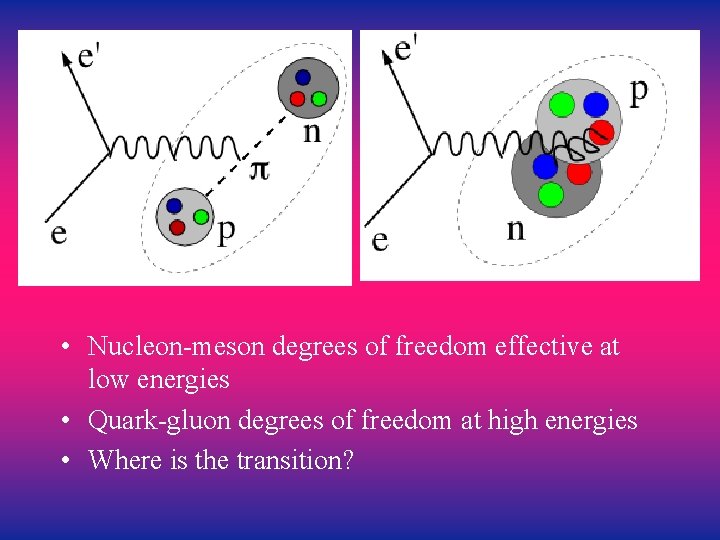
• Nucleon-meson degrees of freedom effective at low energies • Quark-gluon degrees of freedom at high energies • Where is the transition?
Parton-Hadron Transition in Nuclear Physics Simplest systems: pion, nucleon, deuteron – Form factors – Deuteron photodisintegration – Photopion production from nucleon Photopion production from nuclei
Signatures for the transition? • Constituent quark counting rule (Brodsky-Farrar) – Dimensional analysis – p. QCD analysis – Support by experiments • Hadron helicity conservation – Quark orbital angular momentum? • What else (nuclei as laboratories)? – Nuclear filtering – Color transparency – Others….
Constituent Quark Counting • Based on dimensional analysis, confirmed by short -distance p. QCD analysis – Power law predictions form factors: pion, nucleon, deuteron …… – Two-body exclusive process A+B -> C+D
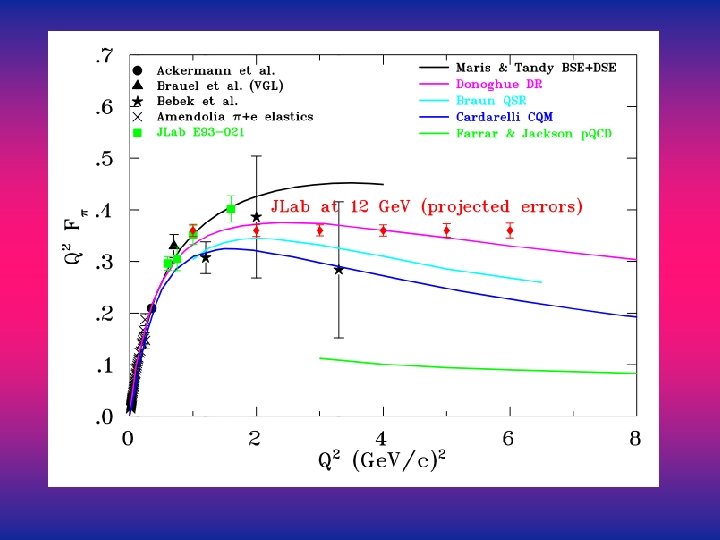
Charged Pion Elastic Form Factor • Simplest valence quark structure • p. QCD is expected to manifest at relatively low momentum transfer • Reputable p. QCD and non-p. QCD calculations exist • The asymptotic pion form factor
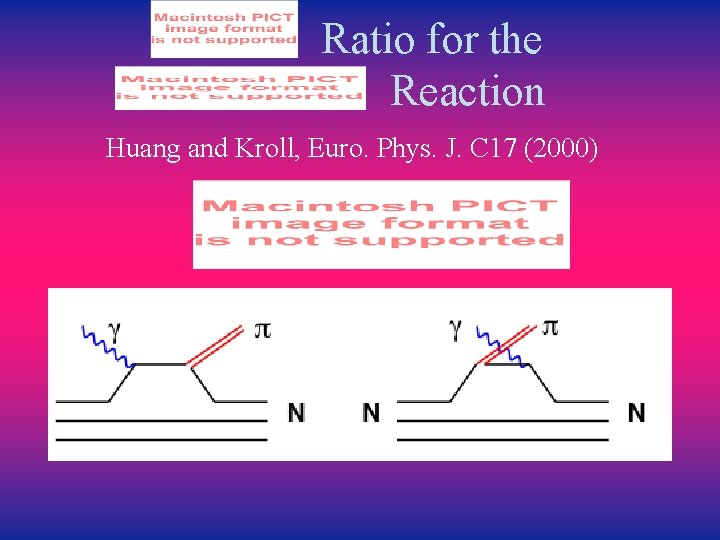
Ratio for the Reaction Huang and Kroll, Euro. Phys. J. C 17 (2000)
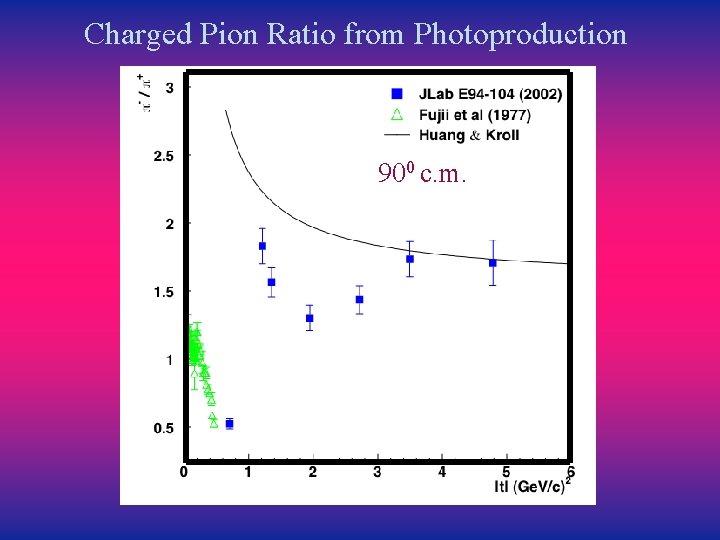
Charged Pion Ratio from Photoproduction 900 c. m.
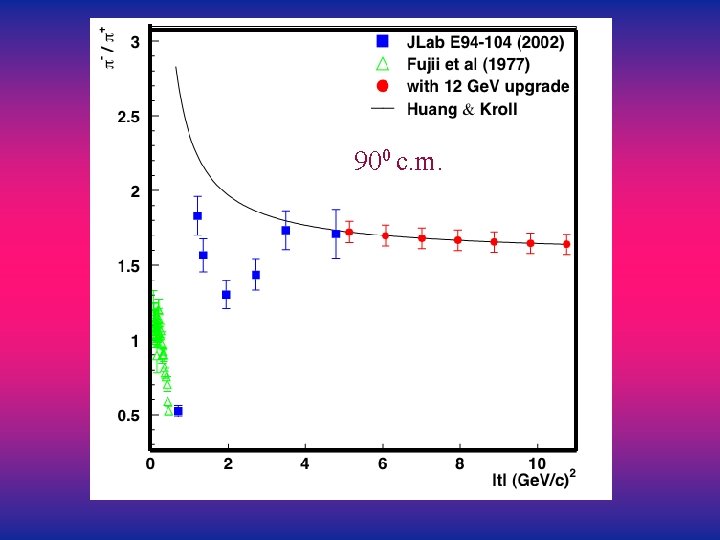
900 c. m.
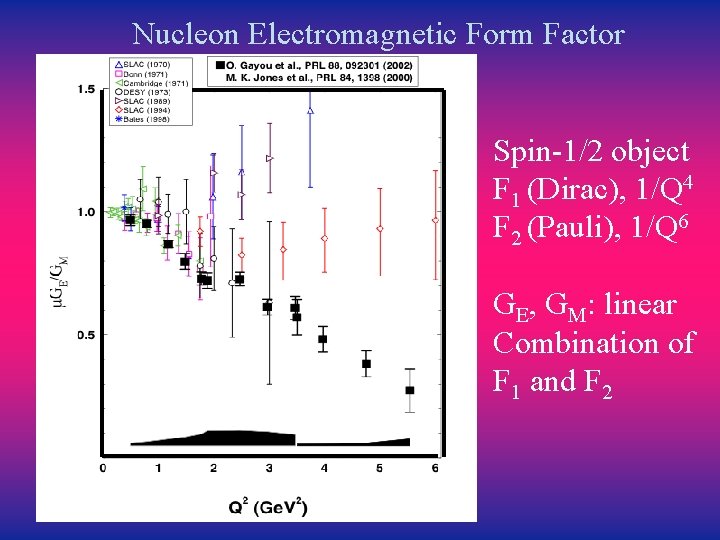
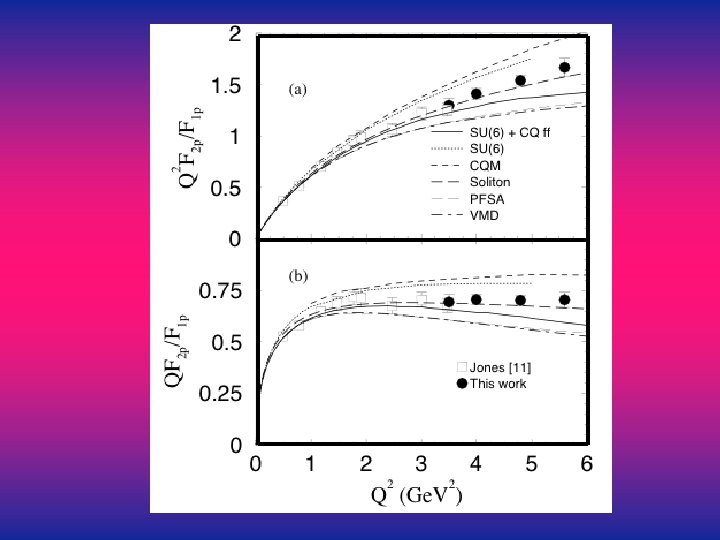
Nucleon Electromagnetic Form Factor Spin-1/2 object F 1 (Dirac), 1/Q 4 F 2 (Pauli), 1/Q 6 GE, GM: linear Combination of F 1 and F 2
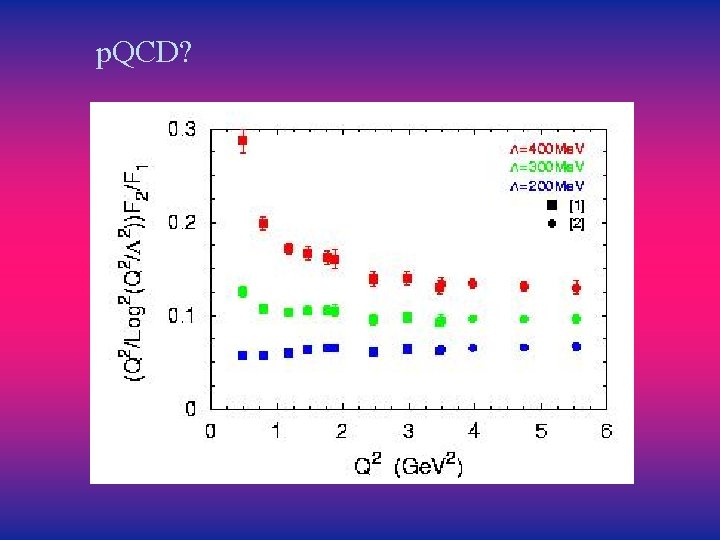
p. QCD Analysis Belitsky, Ji and Yuan carried out p. QCD analysis (hep-0212351):
p. QCD?
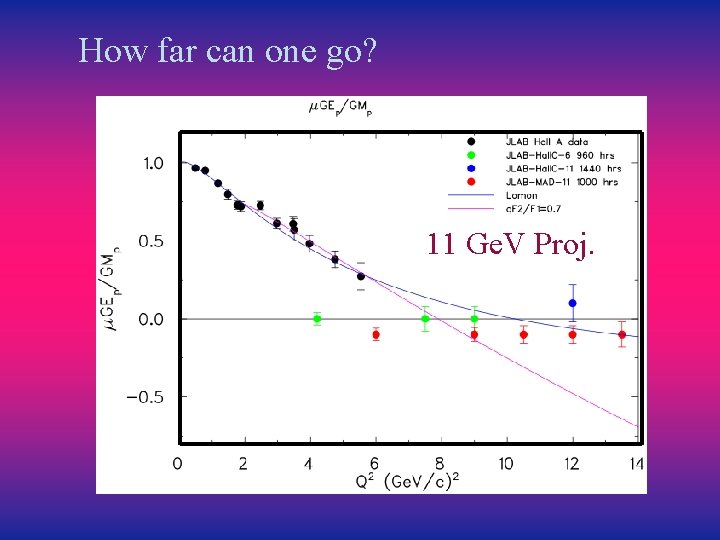
How far can one go? 11 Ge. V Proj.
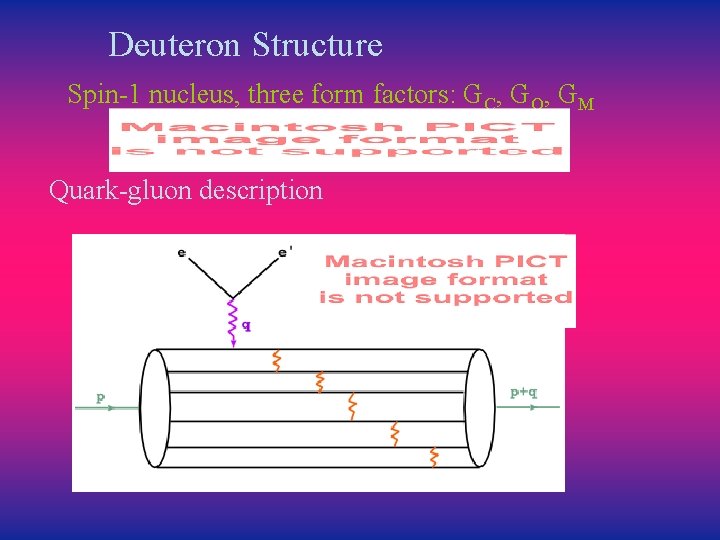
Deuteron Structure Spin-1 nucleus, three form factors: GC, GQ, GM Quark-gluon description
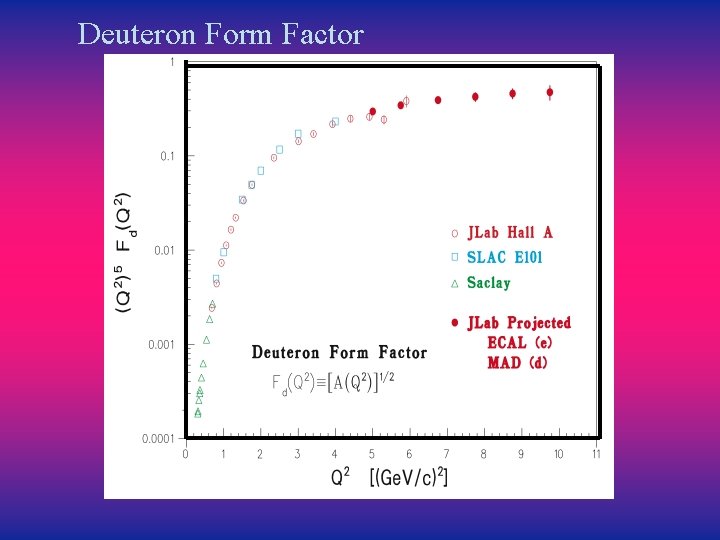
Deuteron Form Factor
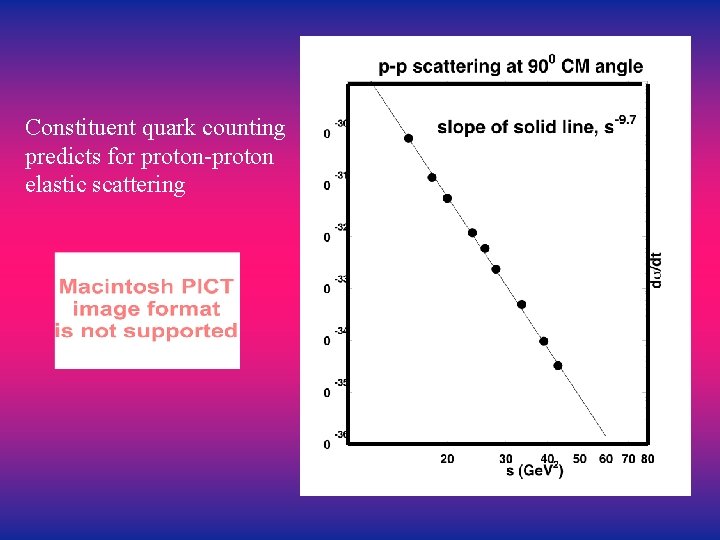
Constituent quark counting predicts for proton-proton elastic scattering
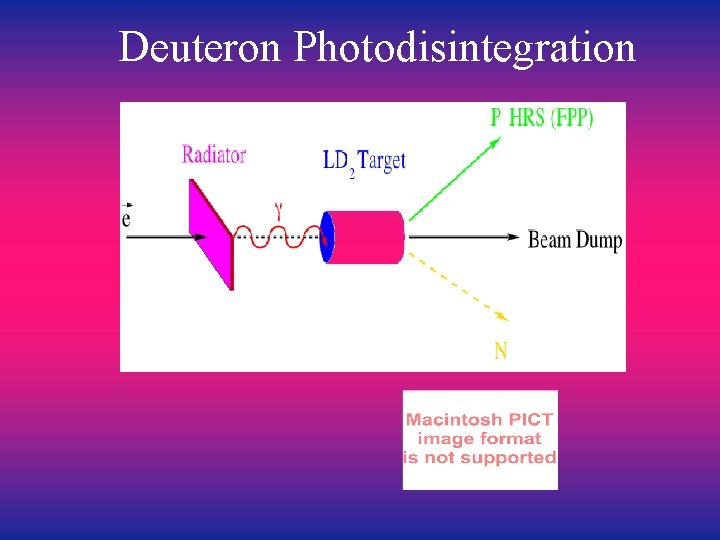
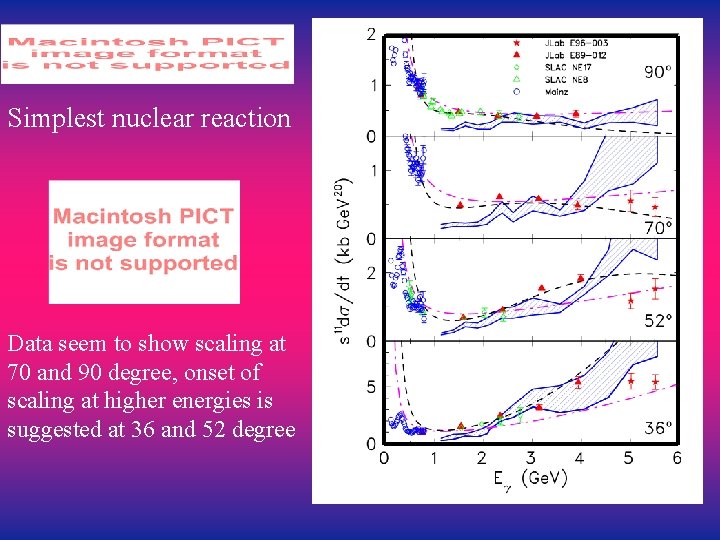
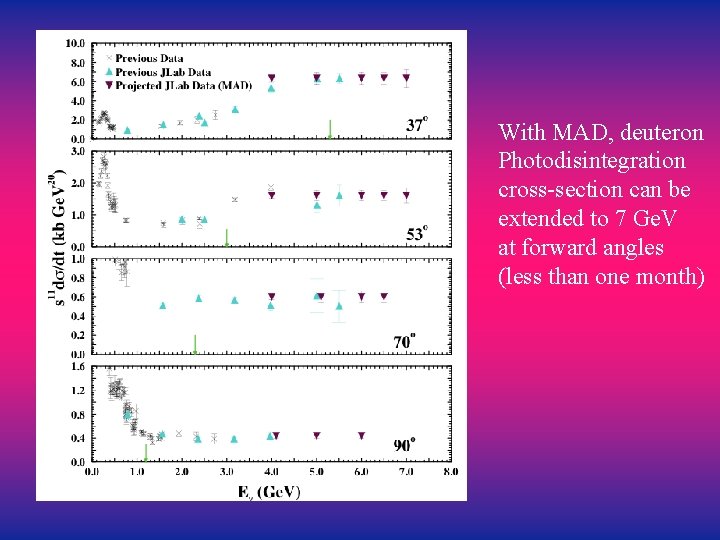
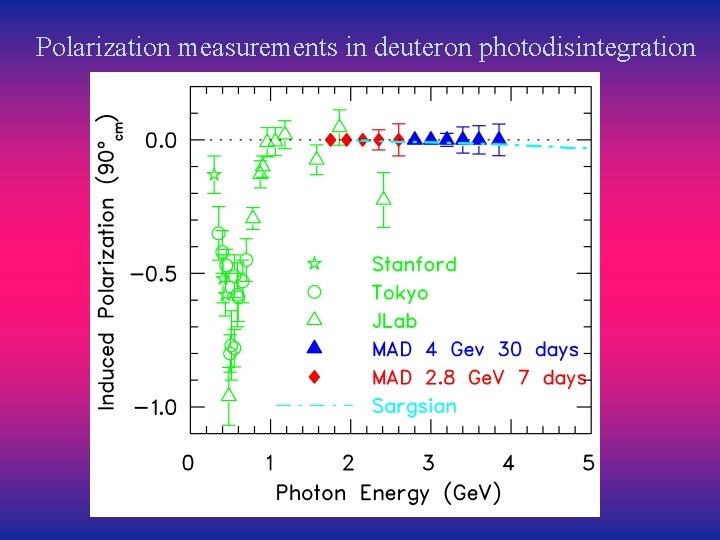
Deuteron Photodisintegration
Simplest nuclear reaction Data seem to show scaling at 70 and 90 degree, onset of scaling at higher energies is suggested at 36 and 52 degree
With MAD, deuteron Photodisintegration cross-section can be extended to 7 Ge. V at forward angles (less than one month)
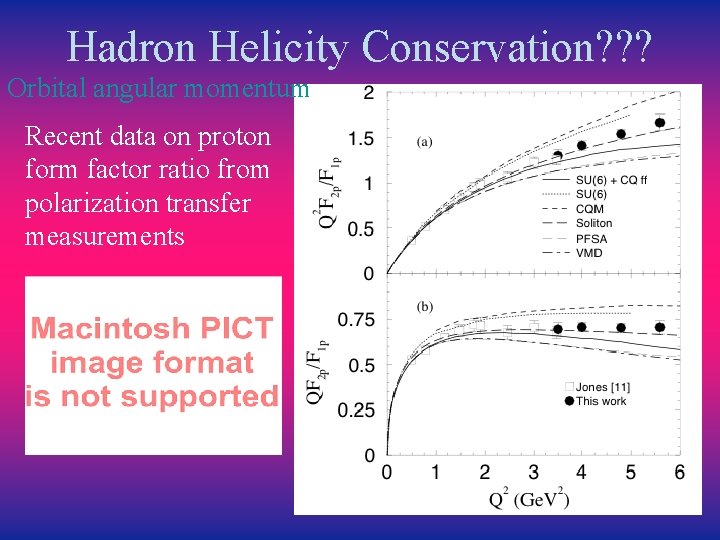
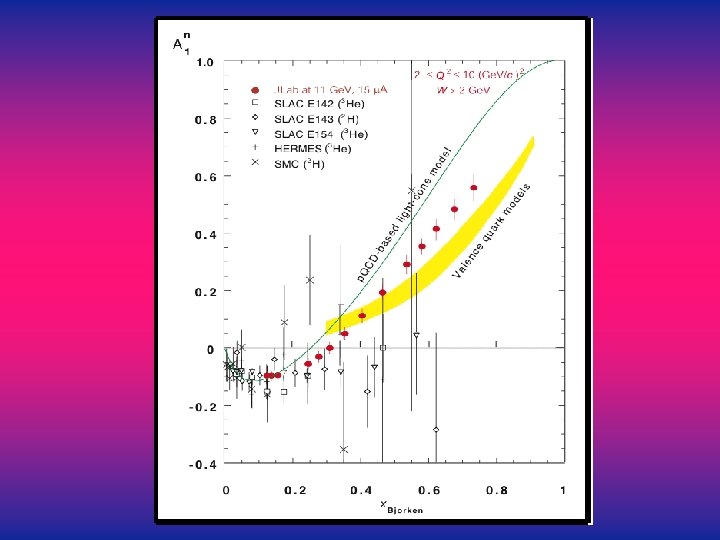
Hadron Helicity Conservation? ? ? Orbital angular momentum Recent data on proton form factor ratio from polarization transfer measurements
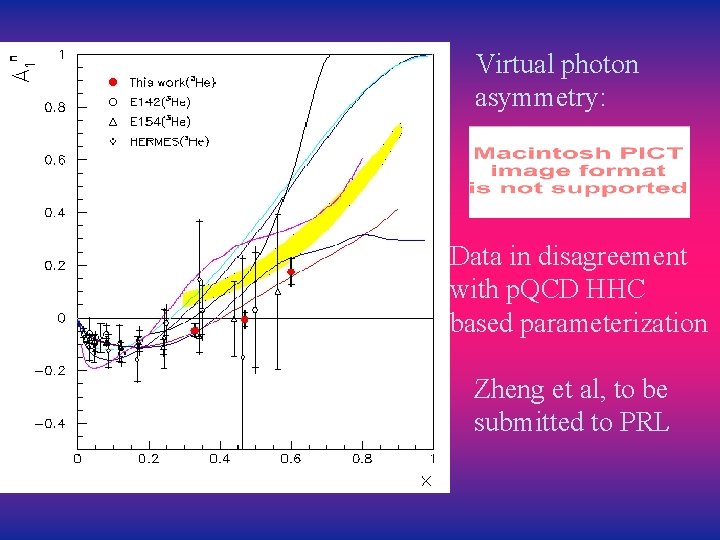
Virtual photon asymmetry: Data in disagreement with p. QCD HHC based parameterization Zheng et al, to be submitted to PRL
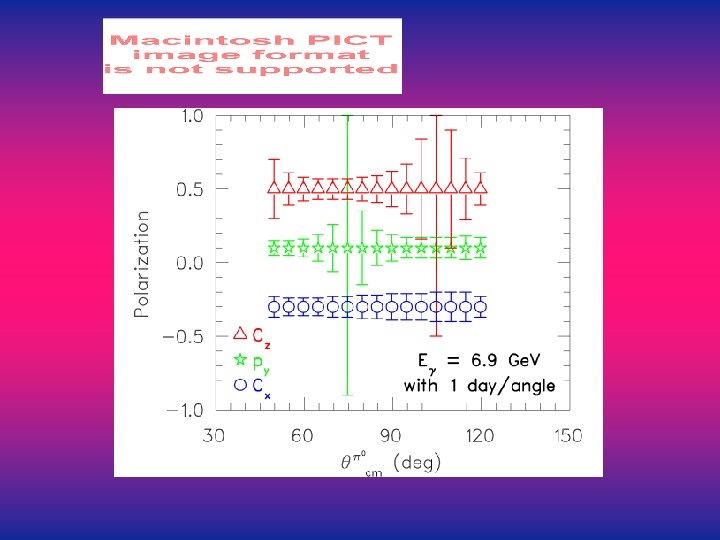
Polarization measurements in deuteron photodisintegration
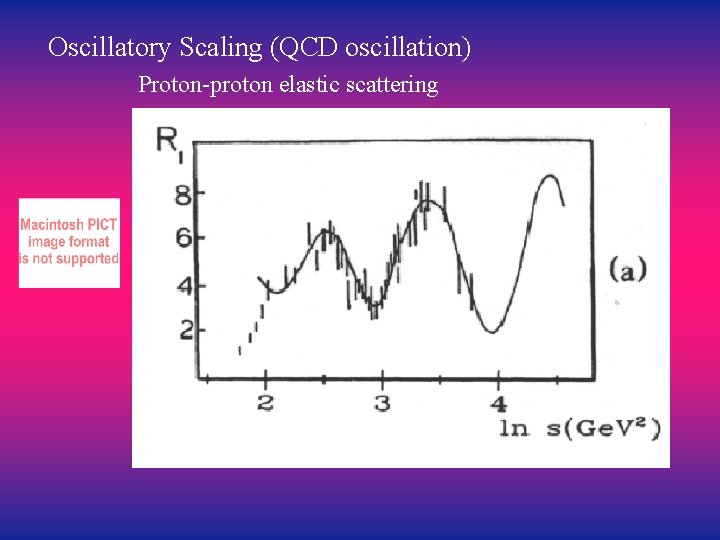
Oscillatory Scaling (QCD oscillation) Proton-proton elastic scattering
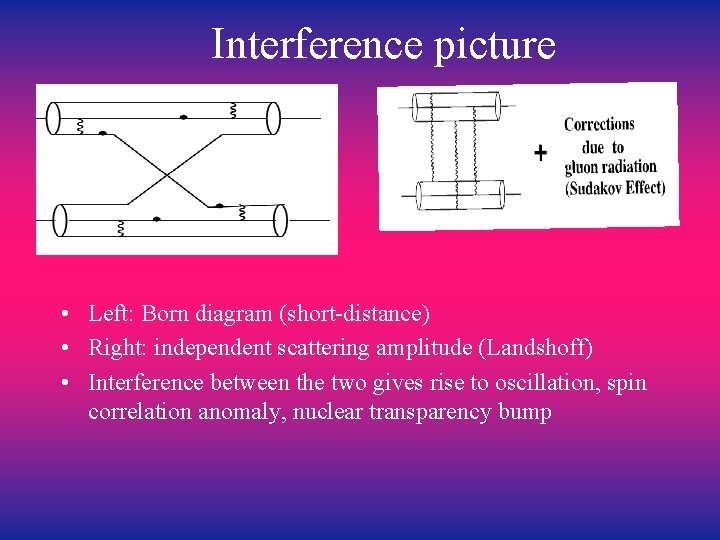
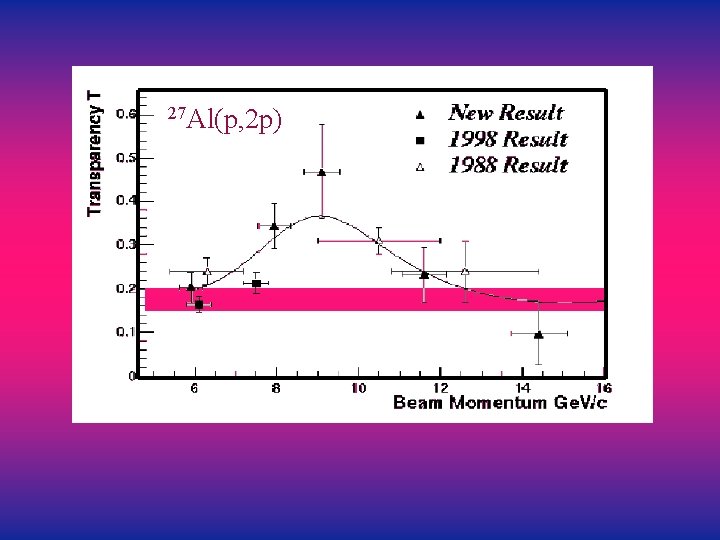
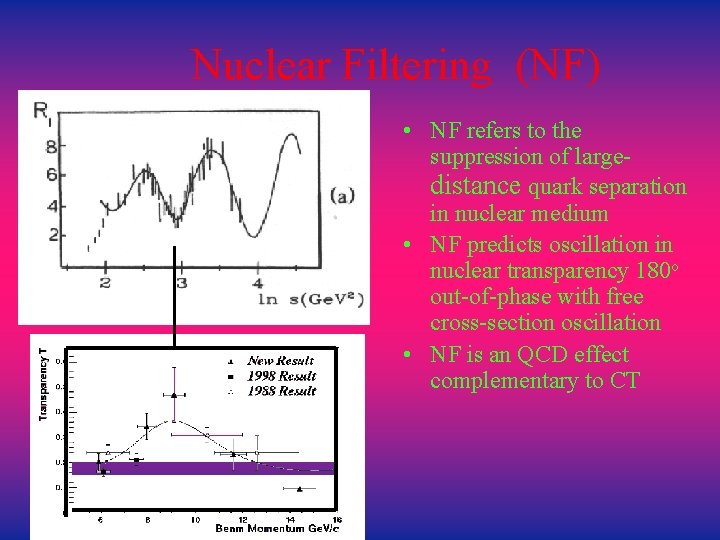
Interference picture • Left: Born diagram (short-distance) • Right: independent scattering amplitude (Landshoff) • Interference between the two gives rise to oscillation, spin correlation anomaly, nuclear transparency bump
27 Al(p, 2 p)
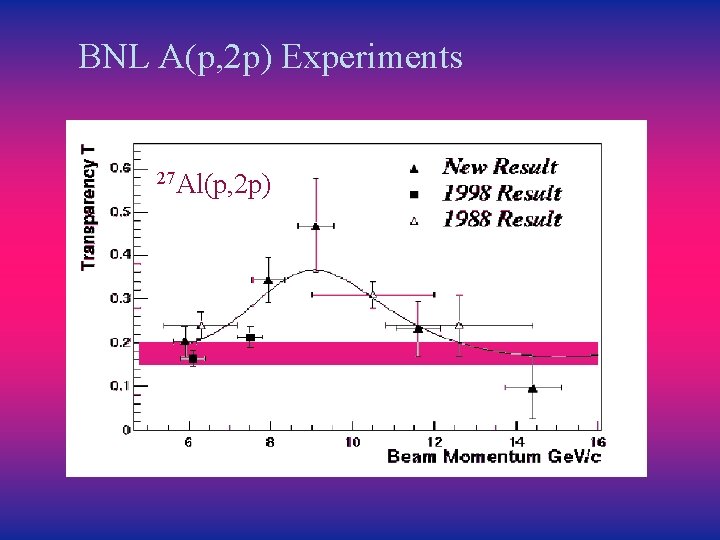
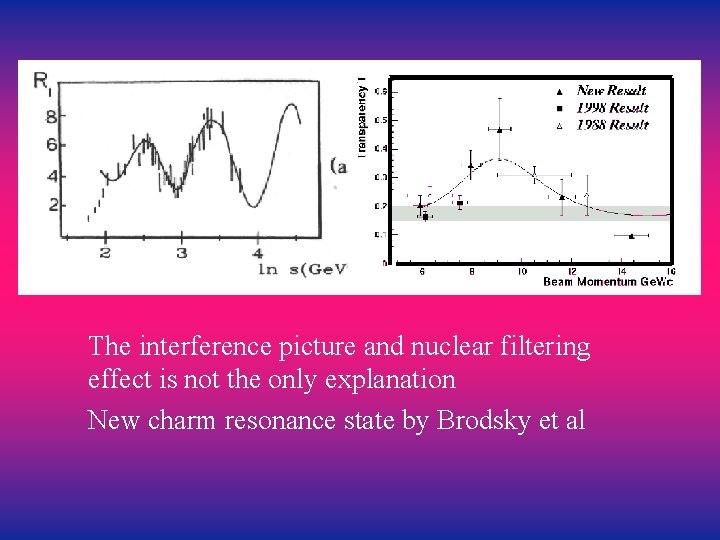
Origin of the oscillation? • Interference between short-distance and long-distance amplitudes • New resonance states associated with crossing a new quark flavor threshold • Intriguing momentum transfer dependence in nuclear transparency T from A(p, 2 p) suggests nuclear filtering effect? (suppression of long-distance amplitude in nuclear medium)
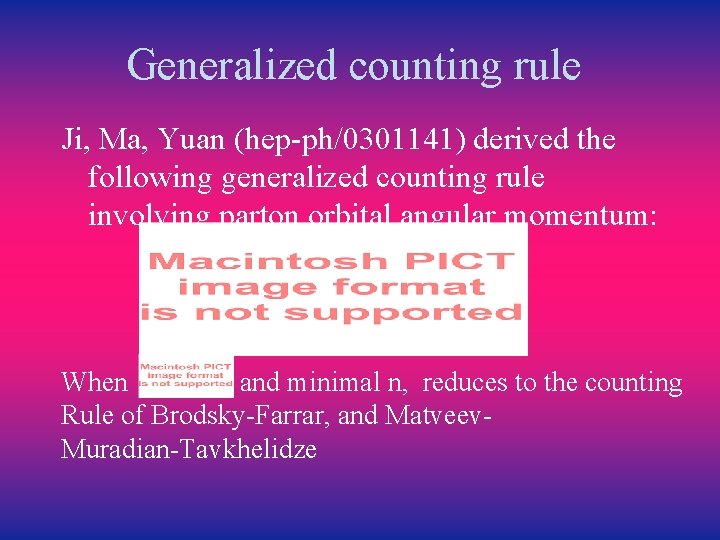
Generalized counting rule Ji, Ma, Yuan (hep-ph/0301141) derived the following generalized counting rule involving parton orbital angular momentum: When and minimal n, reduces to the counting Rule of Brodsky-Farrar, and Matveev. Muradian-Tavkhelidze
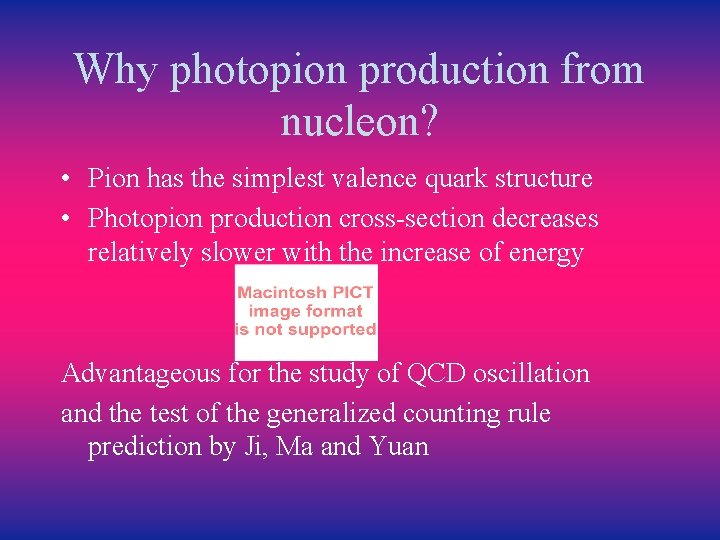
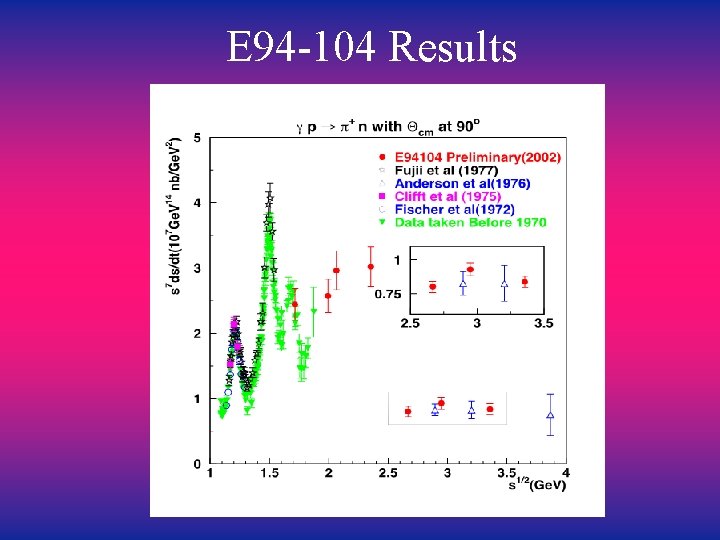
Why photopion production from nucleon? • Pion has the simplest valence quark structure • Photopion production cross-section decreases relatively slower with the increase of energy Advantageous for the study of QCD oscillation and the test of the generalized counting rule prediction by Ji, Ma and Yuan
Jlab Experiment E 94 -104 • Three unique measurements: – Coincidence measurement from deuterium target to investigate quark counting rule, from hydrogen – Singles ratio over a large t range to test various predictions – Coincidence measurement from 4 He to form nuclear transparency
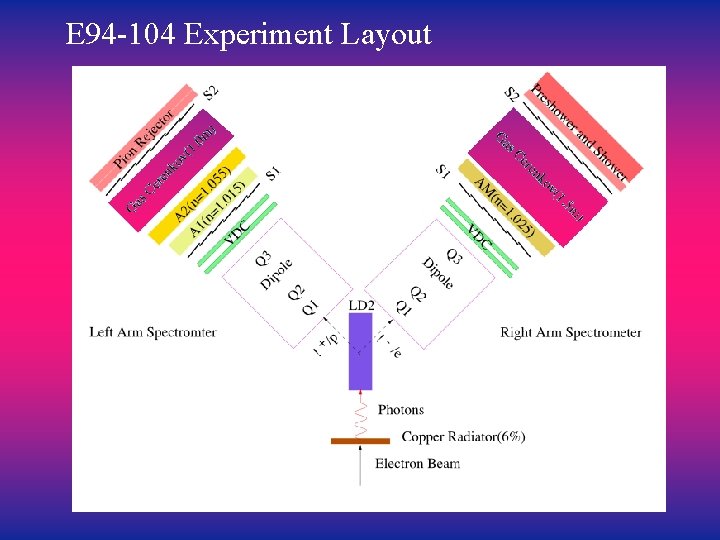
E 94 -104 Experiment Layout
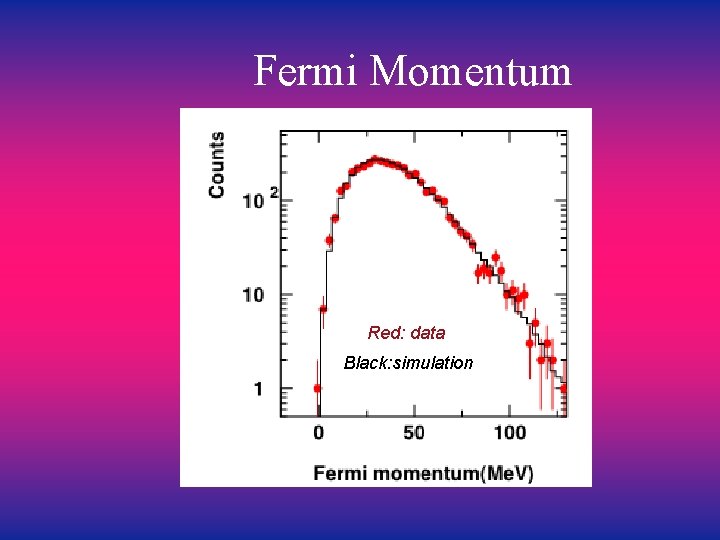
Fermi Momentum Red: data Black: simulation
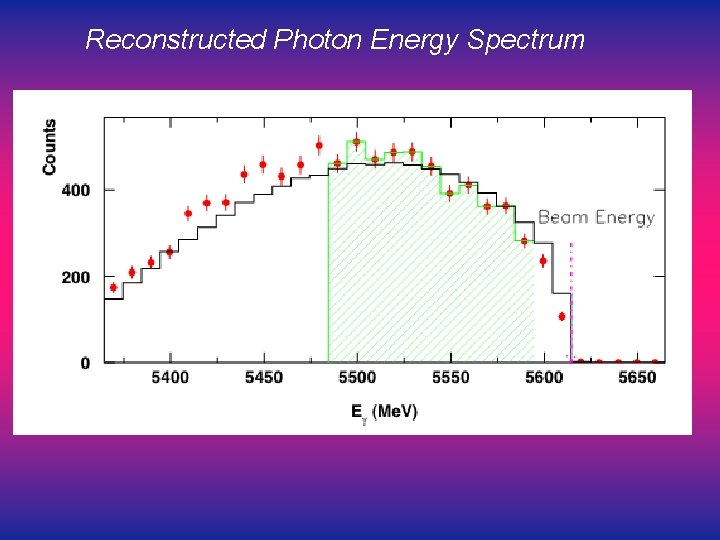
Reconstructed Photon Energy Spectrum
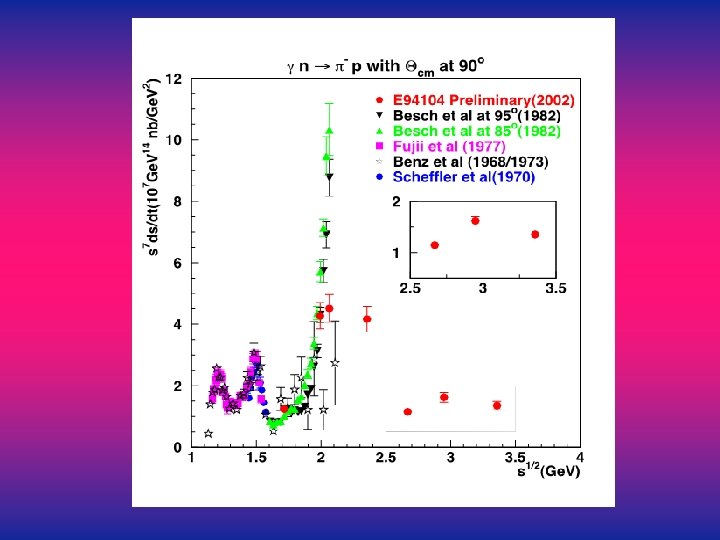
E 94 -104 Results
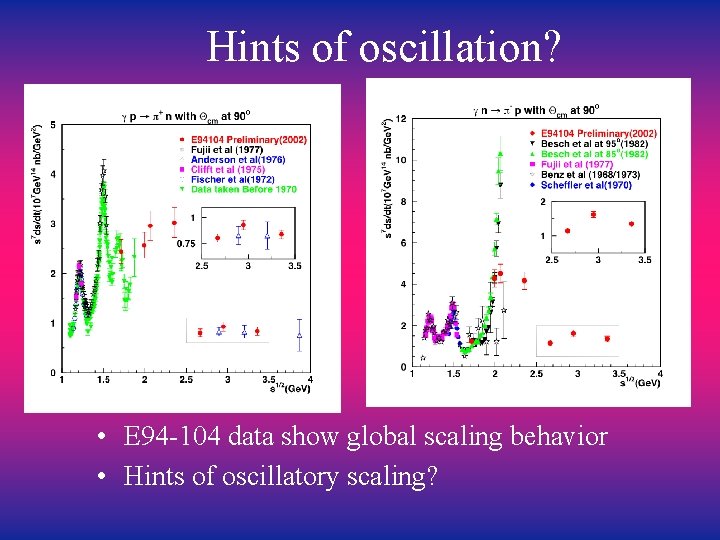
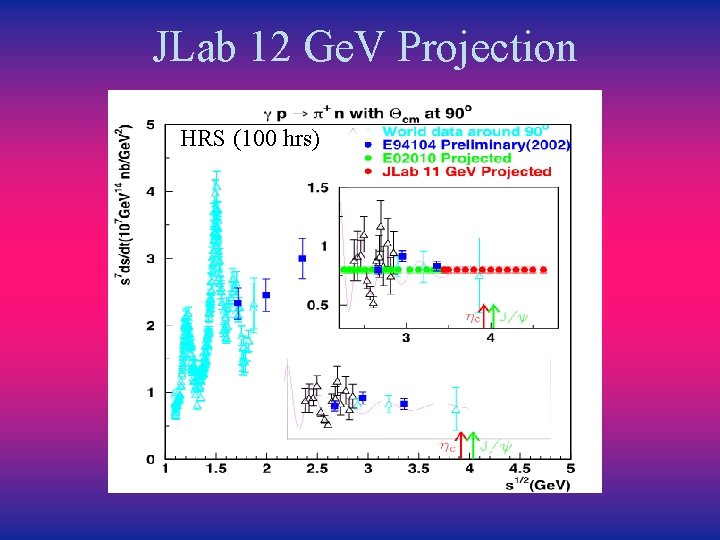
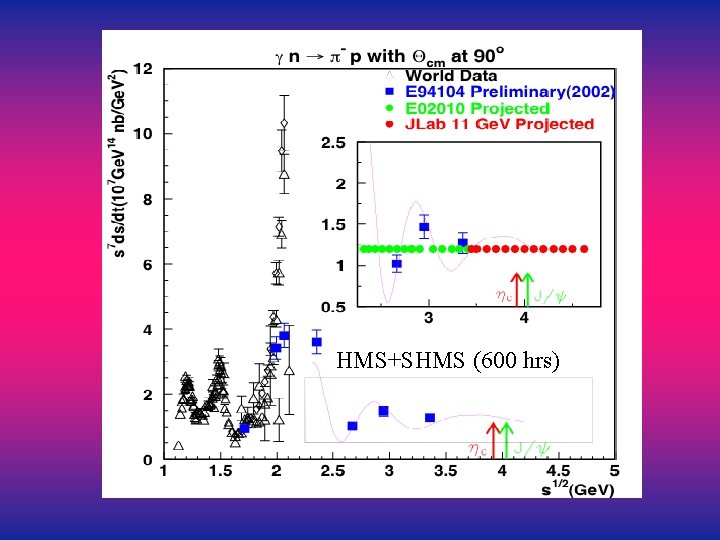
Hints of oscillation? • E 94 -104 data show global scaling behavior • Hints of oscillatory scaling?
JLab 12 Ge. V Projection HRS (100 hrs)
HMS+SHMS (600 hrs)
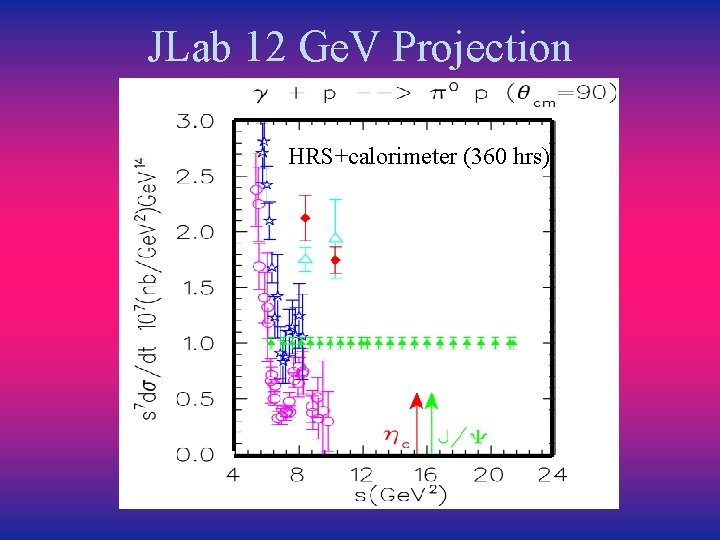
JLab 12 Ge. V Projection HRS+calorimeter (360 hrs)
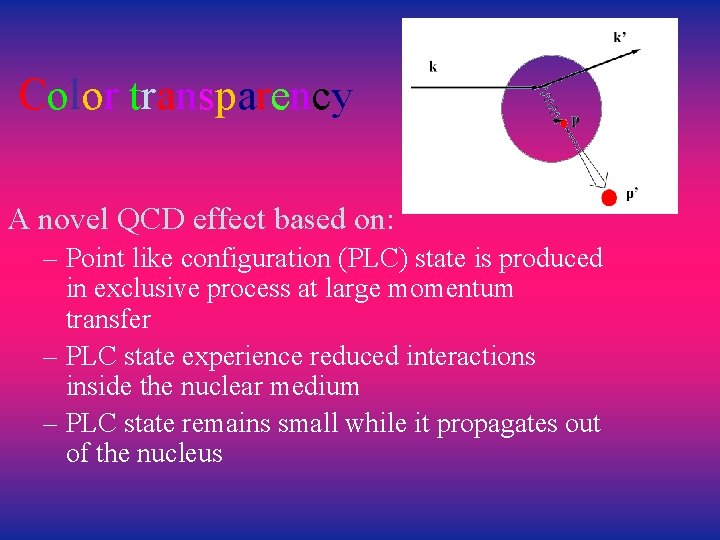
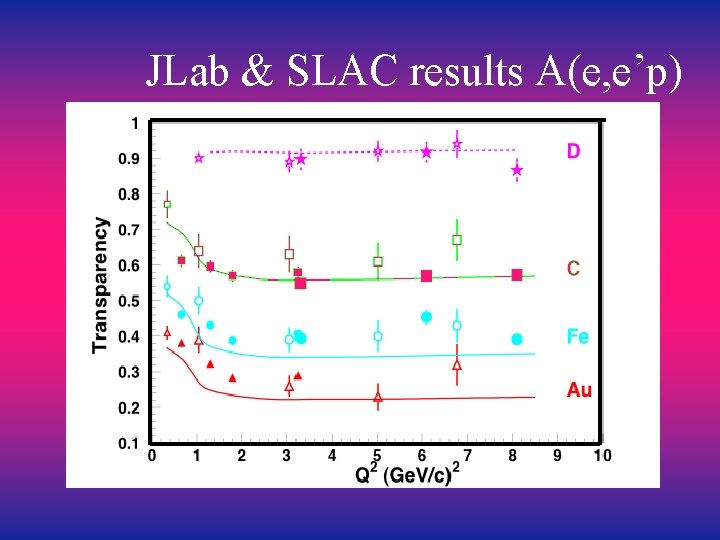
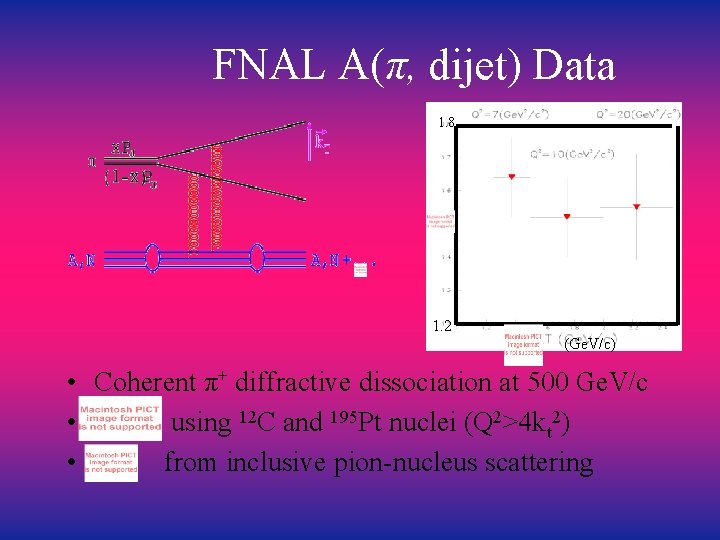
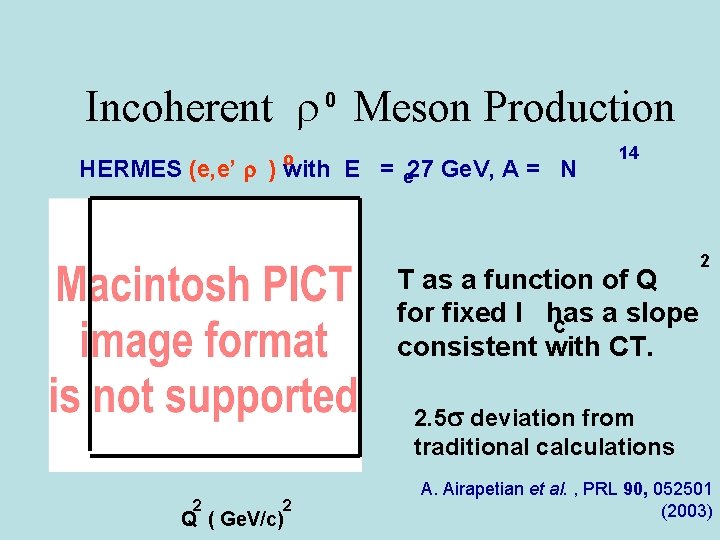
Color transparency A novel QCD effect based on: – Point like configuration (PLC) state is produced in exclusive process at large momentum transfer – PLC state experience reduced interactions inside the nuclear medium – PLC state remains small while it propagates out of the nucleus
BNL A(p, 2 p) Experiments 27 Al(p, 2 p)
JLab & SLAC results A(e, e’p)
FNAL A(π, dijet) Data 1. 8 1. 2 (Ge. V/c) • Coherent π+ diffractive dissociation at 500 Ge. V/c • using 12 C and 195 Pt nuclei (Q 2>4 kt 2) • from inclusive pion-nucleus scattering
Incoherent r Meson Production 0 o HERMES (e, e’ r ) with E = e 27 Ge. V, A = N 14 T as a function of Q for fixed l has a slope C consistent with CT. 2 2. 5 s deviation from traditional calculations 2 2 Q ( Ge. V/c) A. Airapetian et al. , PRL 90, 052501 (2003)
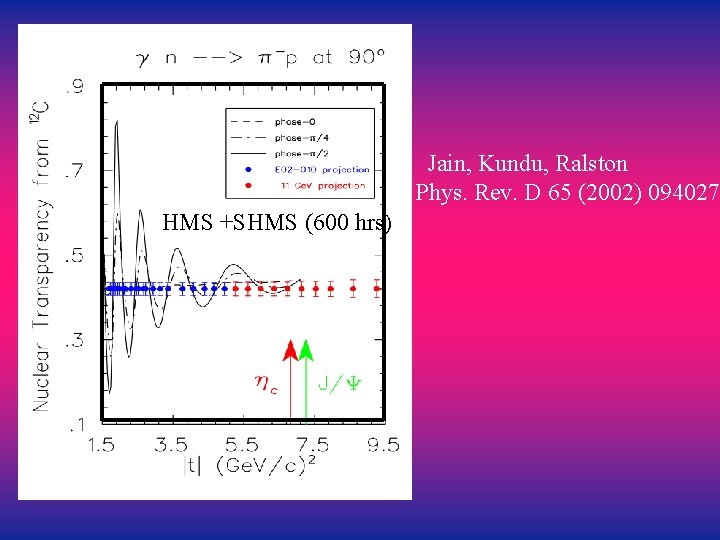
Nuclear Filtering (NF) • NF refers to the suppression of largedistance quark separation in nuclear medium • NF predicts oscillation in nuclear transparency 180 o out-of-phase with free cross-section oscillation • NF is an QCD effect complementary to CT
The interference picture and nuclear filtering effect is not the only explanation New charm resonance state by Brodsky et al
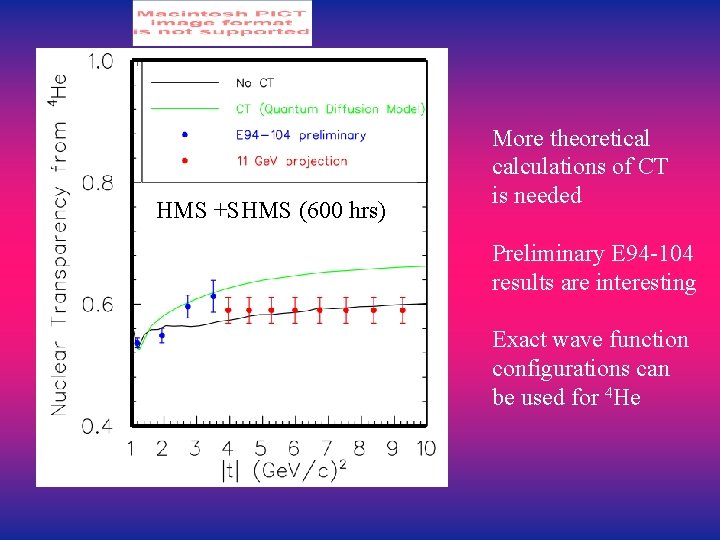
Photopion production from nuclear targets Transition in the nuclear medium – Color transparency effect • Pion simple valence quark structure, more likely for point-like configuration • Light nuclei more amenable to theoretical calculations – Nuclear filtering effect • Relatively large photopion production cross-section allows detailed study of the nuclear transparency
Nuclear Transparency from 4 He E 94 -104 T
Results 0 70 C. M. angle 0 90 C. M. angle
HMS +SHMS (600 hrs) More theoretical calculations of CT is needed Preliminary E 94 -104 results are interesting Exact wave function configurations can be used for 4 He
Jain, Kundu, Ralston Phys. Rev. D 65 (2002) 094027 HMS +SHMS (600 hrs)
Summary • Studies with the simplest nuclear systems are essential in understanding the transition region • 12 Ge. V upgrade would provide an outstanding opportunity for this study • The planned new detection systems are crucial for this study
Short-distance p. QCD is not the full picture! Quark orbital angular momentum! Important to look at the details of the scaling agreement!