Organic Chemistry Chapter 22 4 th Edition Paula
- Slides: 41
Organic Chemistry Chapter 22 4 th Edition Paula Yurkanis Bruice Carbohydrates Irene Lee Case Western Reserve University Cleveland, OH © 2004, Prentice Hall
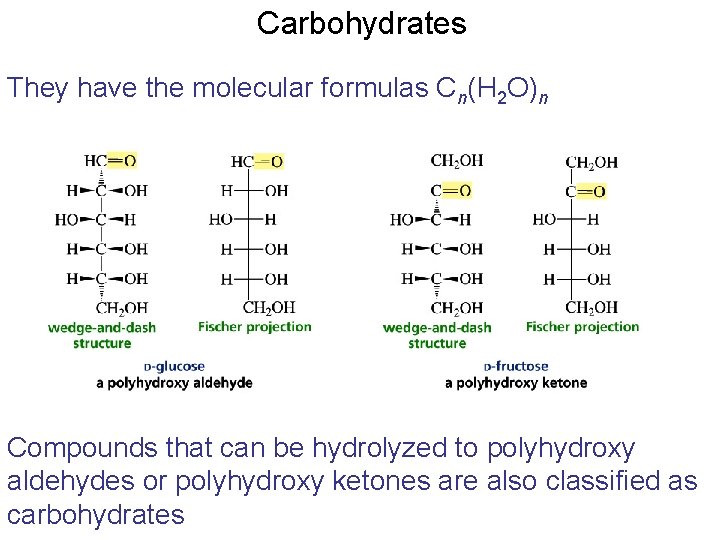
Carbohydrates They have the molecular formulas Cn(H 2 O)n Compounds that can be hydrolyzed to polyhydroxy aldehydes or polyhydroxy ketones are also classified as carbohydrates
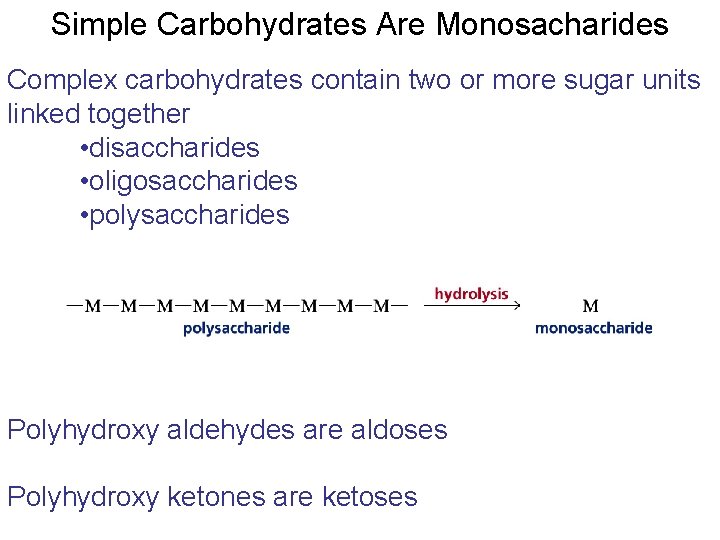
Simple Carbohydrates Are Monosacharides Complex carbohydrates contain two or more sugar units linked together • disaccharides • oligosaccharides • polysaccharides Polyhydroxy aldehydes are aldoses Polyhydroxy ketones are ketoses
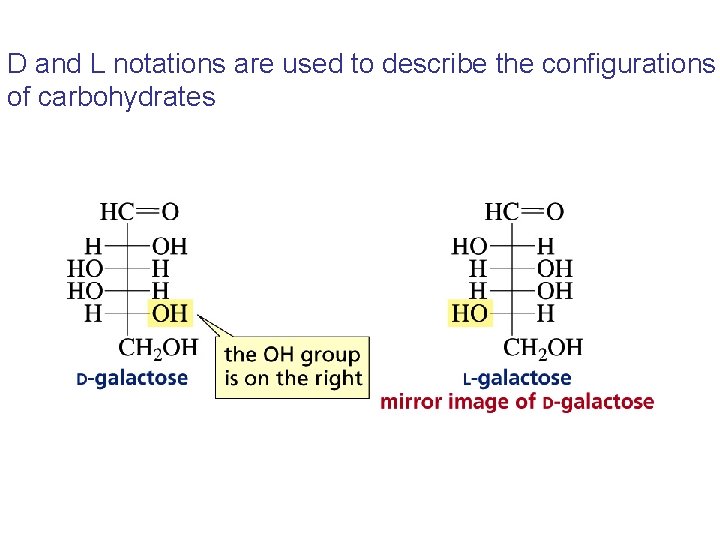
D and L notations are used to describe the configurations of carbohydrates
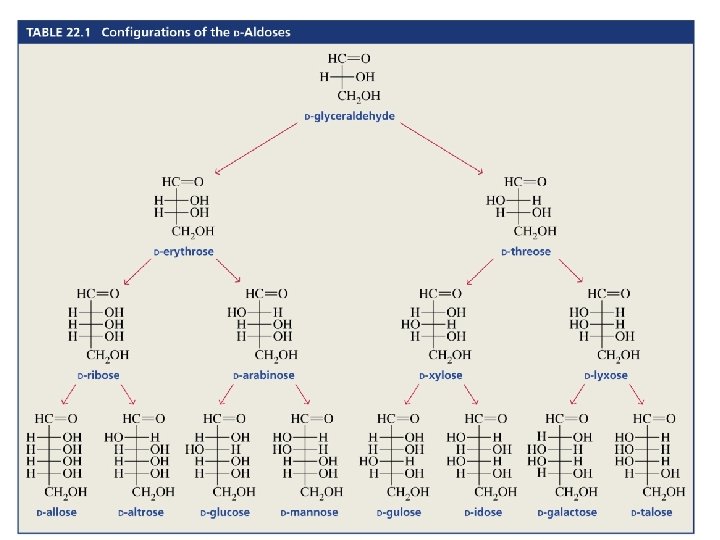
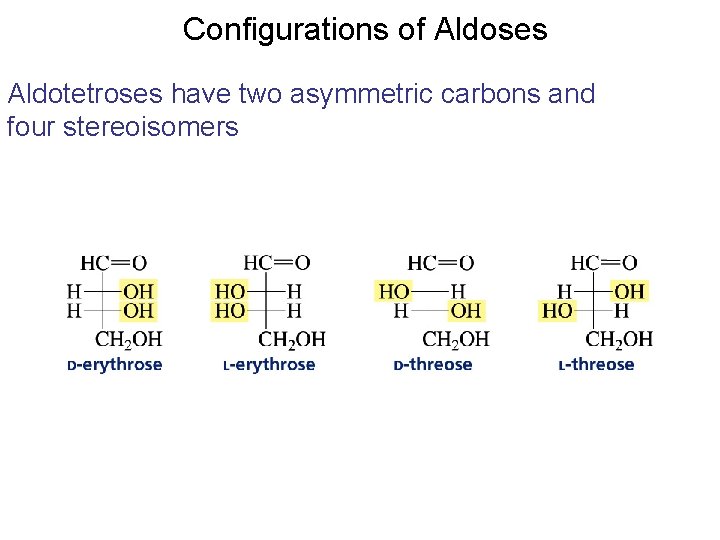
Configurations of Aldoses Aldotetroses have two asymmetric carbons and four stereoisomers
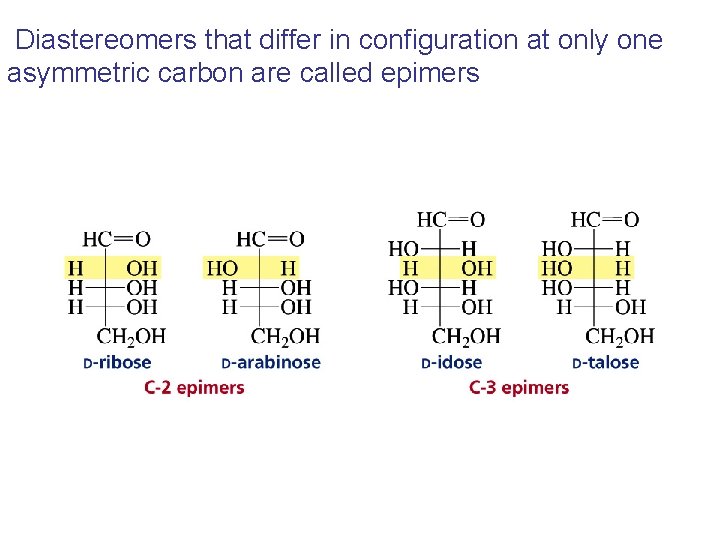
Diastereomers that differ in configuration at only one asymmetric carbon are called epimers
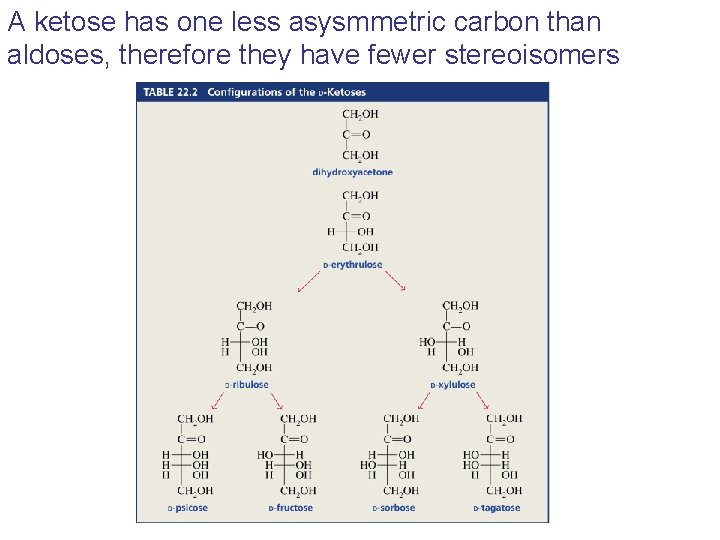
A ketose has one less asysmmetric carbon than aldoses, therefore they have fewer stereoisomers
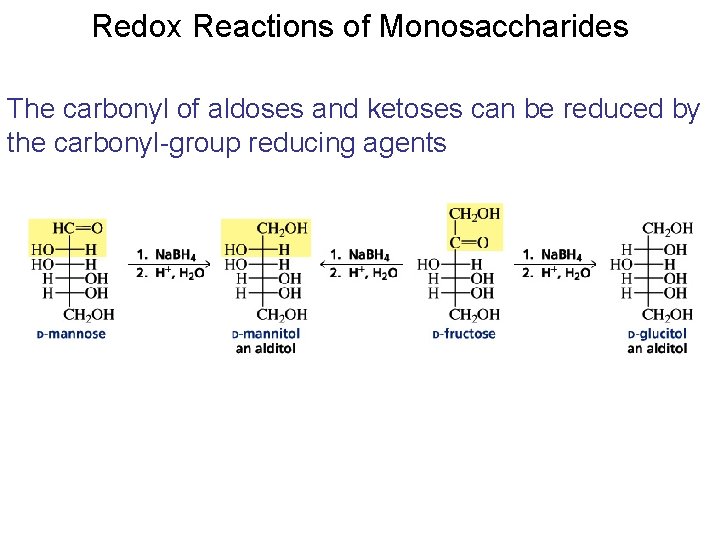
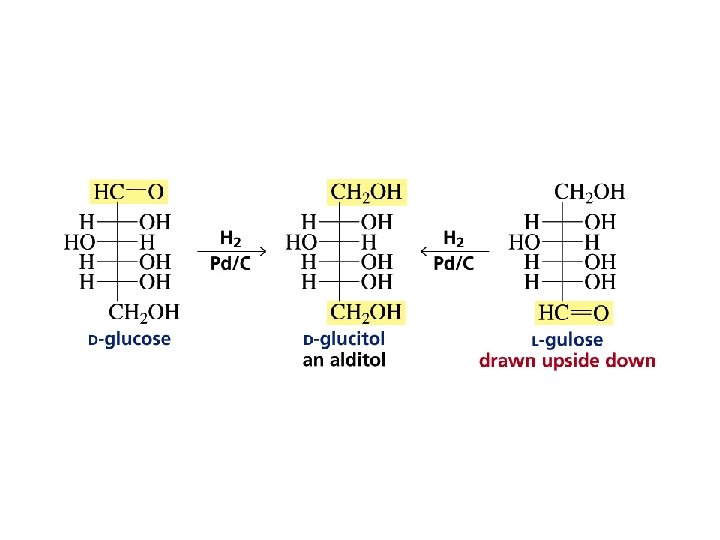
Redox Reactions of Monosaccharides The carbonyl of aldoses and ketoses can be reduced by the carbonyl-group reducing agents
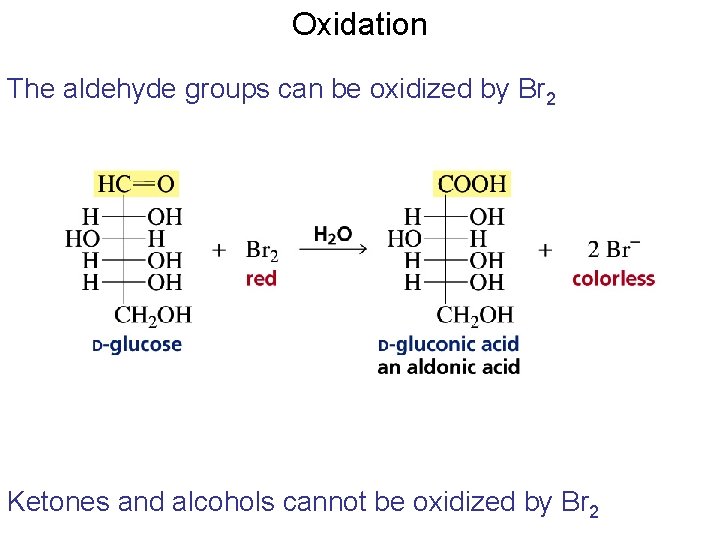
Oxidation The aldehyde groups can be oxidized by Br 2 Ketones and alcohols cannot be oxidized by Br 2
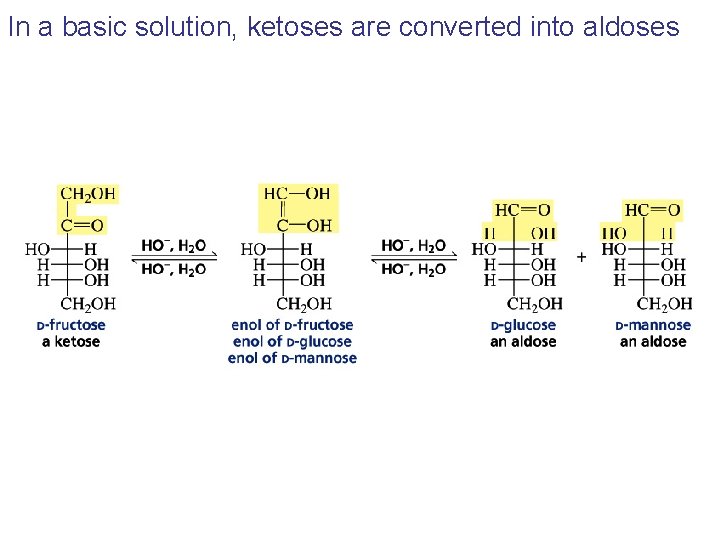
In a basic solution, ketoses are converted into aldoses
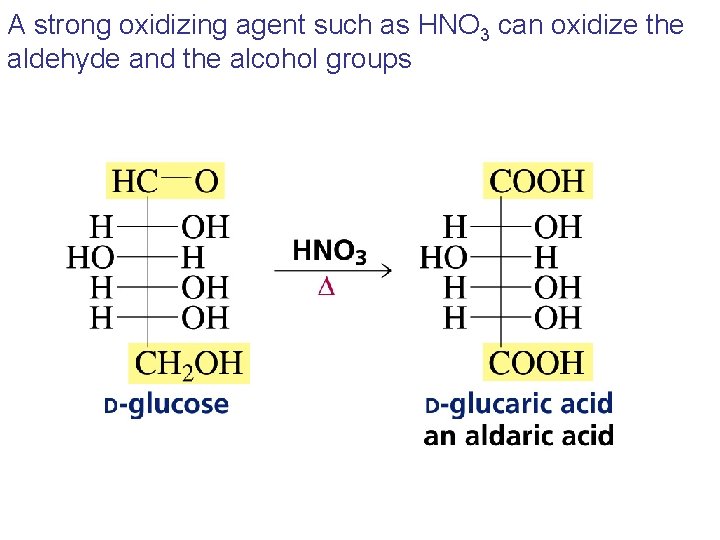
A strong oxidizing agent such as HNO 3 can oxidize the aldehyde and the alcohol groups
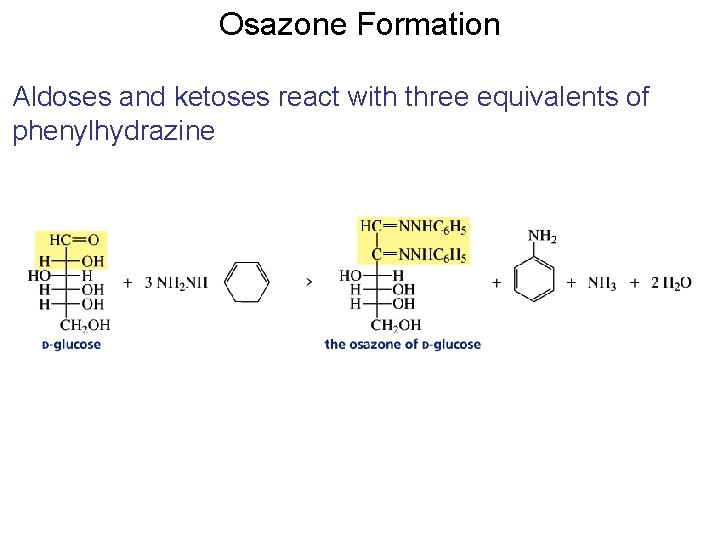
Osazone Formation Aldoses and ketoses react with three equivalents of phenylhydrazine
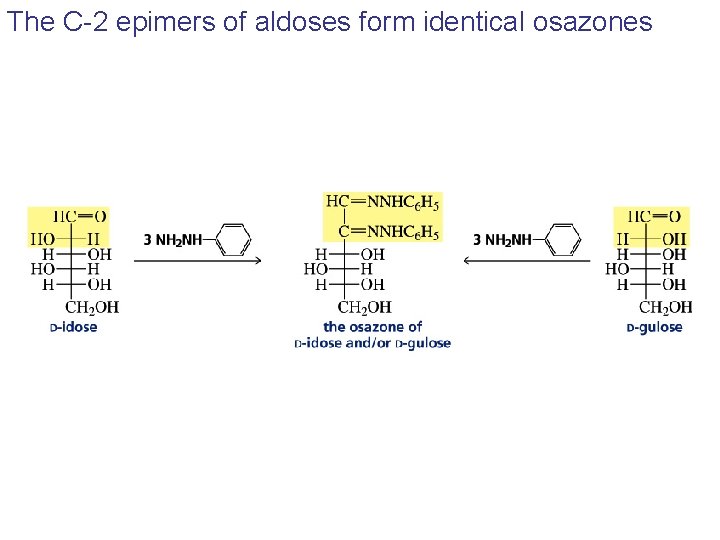
The C-2 epimers of aldoses form identical osazones
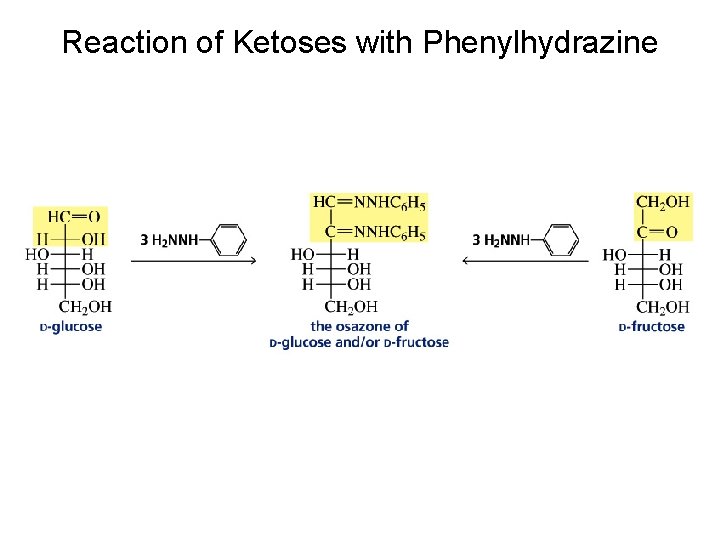
Reaction of Ketoses with Phenylhydrazine
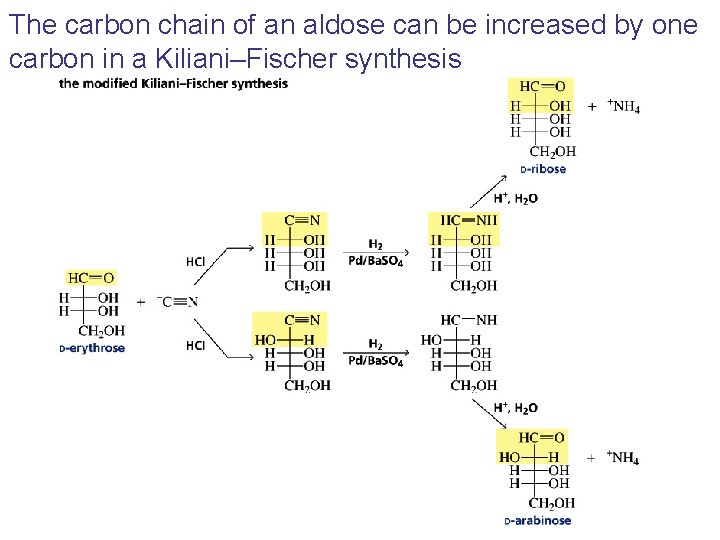
The carbon chain of an aldose can be increased by one carbon in a Kiliani–Fischer synthesis
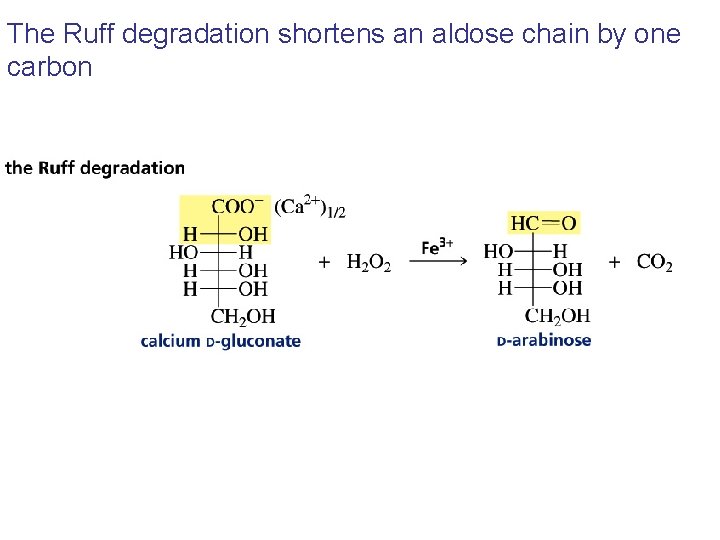
The Ruff degradation shortens an aldose chain by one carbon
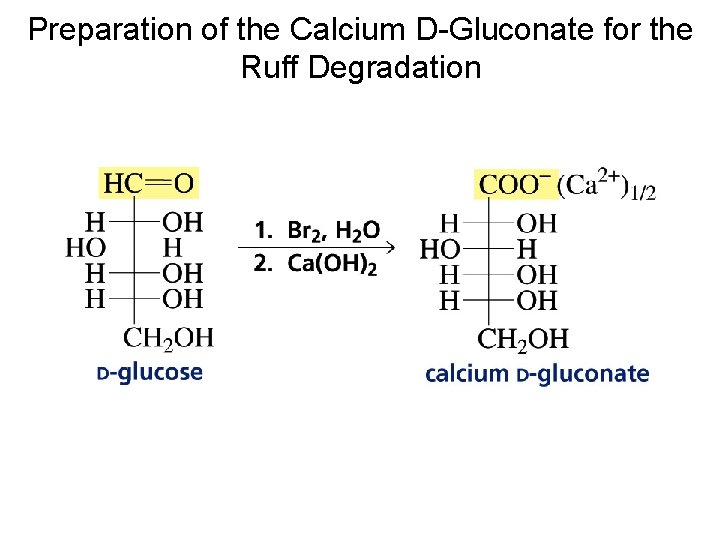
Preparation of the Calcium D-Gluconate for the Ruff Degradation
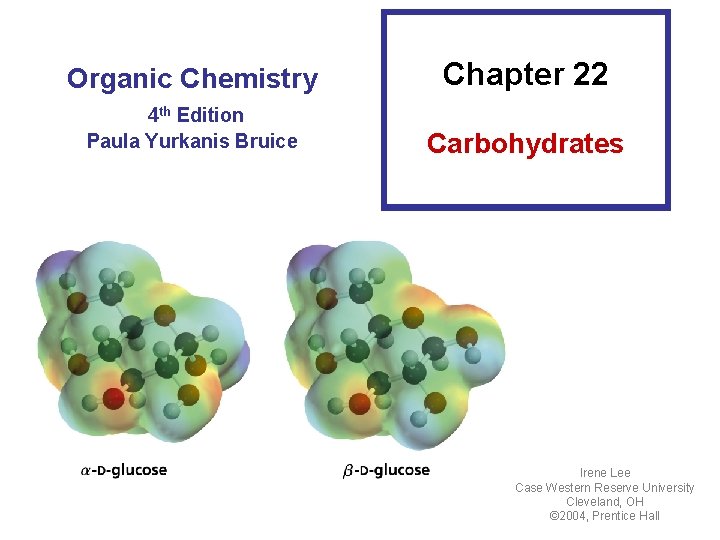
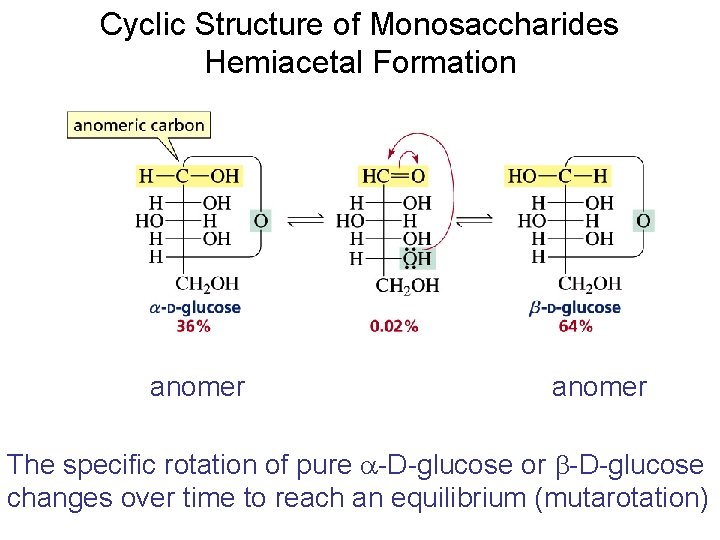
Cyclic Structure of Monosaccharides Hemiacetal Formation anomer The specific rotation of pure a-D-glucose or b-D-glucose changes over time to reach an equilibrium (mutarotation)
Note … • If an aldose can form a five- or six-membered ring, it will exist predominantly as a cyclic hemiacetal • Six-membered rings are called pyranoses • Five-membered rings are called furanoses • A sugar with an aldehyde, a ketone, a hemiacetal, or a hemiacetal group is a reducing sugar
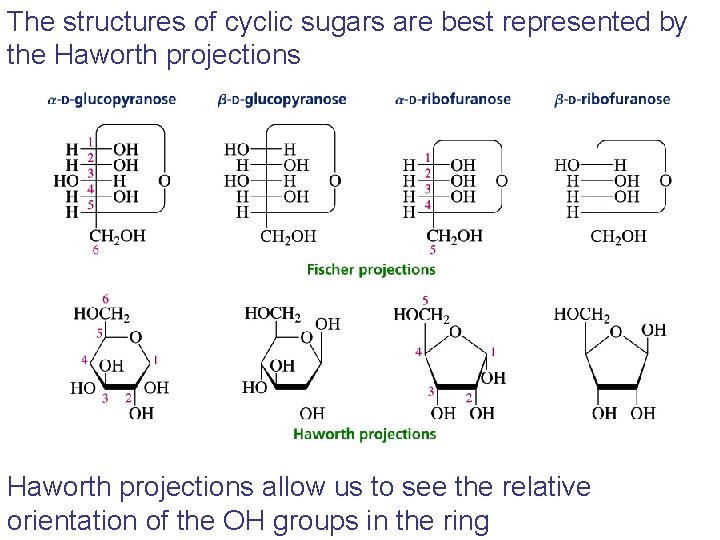
The structures of cyclic sugars are best represented by the Haworth projections allow us to see the relative orientation of the OH groups in the ring
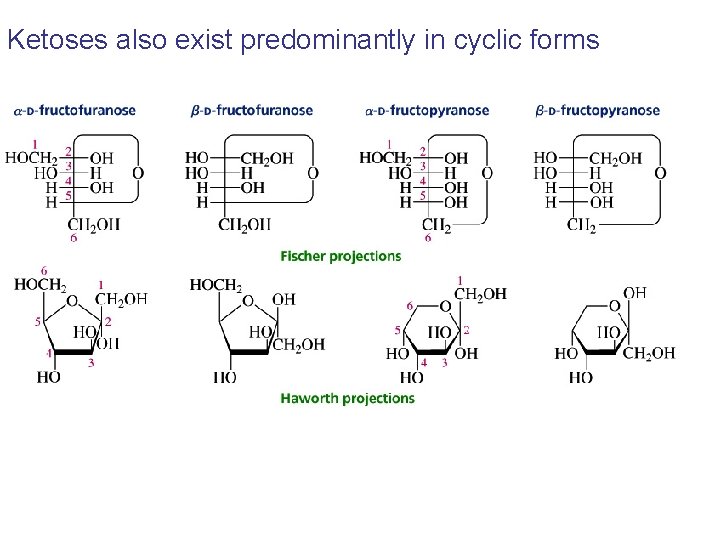
Ketoses also exist predominantly in cyclic forms
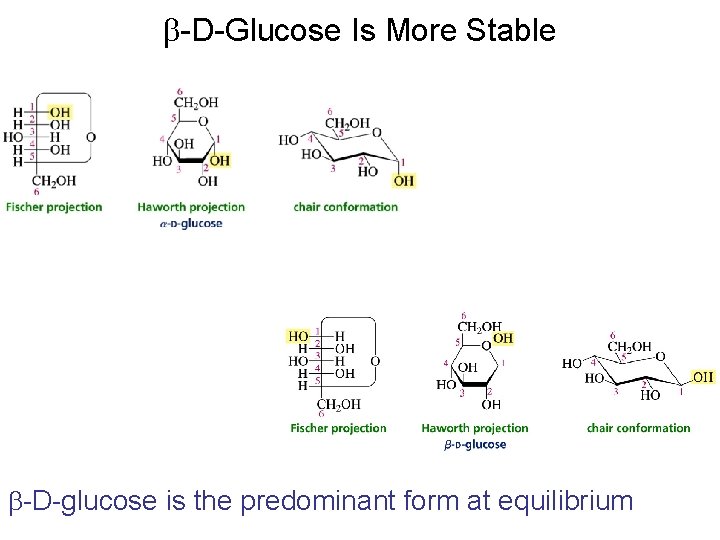
b-D-Glucose Is More Stable b-D-glucose is the predominant form at equilibrium
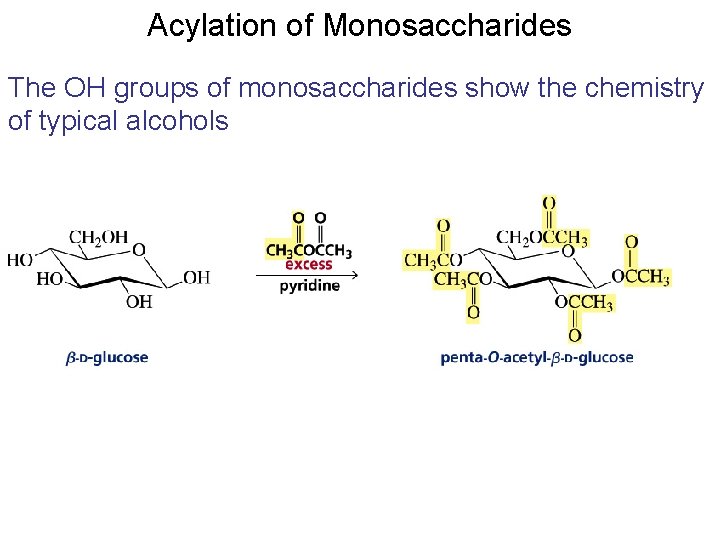
Acylation of Monosaccharides The OH groups of monosaccharides show the chemistry of typical alcohols
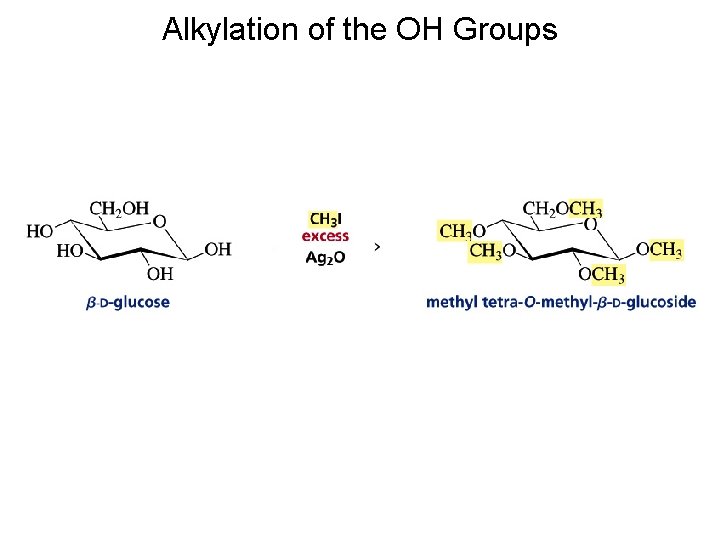
Alkylation of the OH Groups
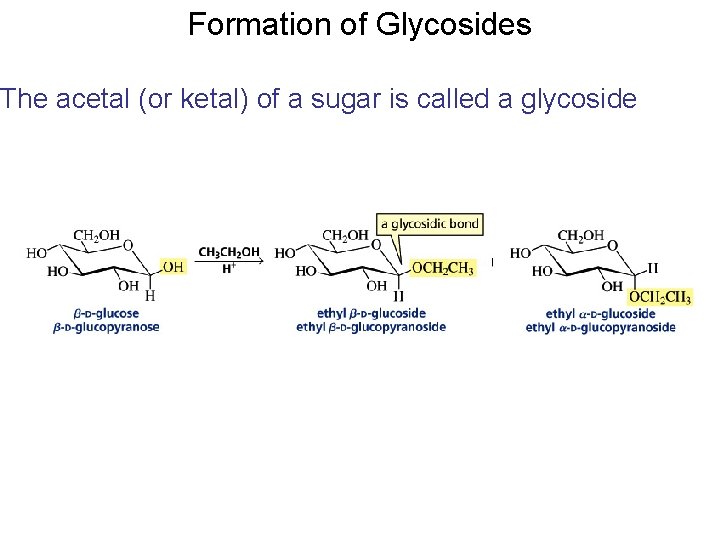
Formation of Glycosides The acetal (or ketal) of a sugar is called a glycoside
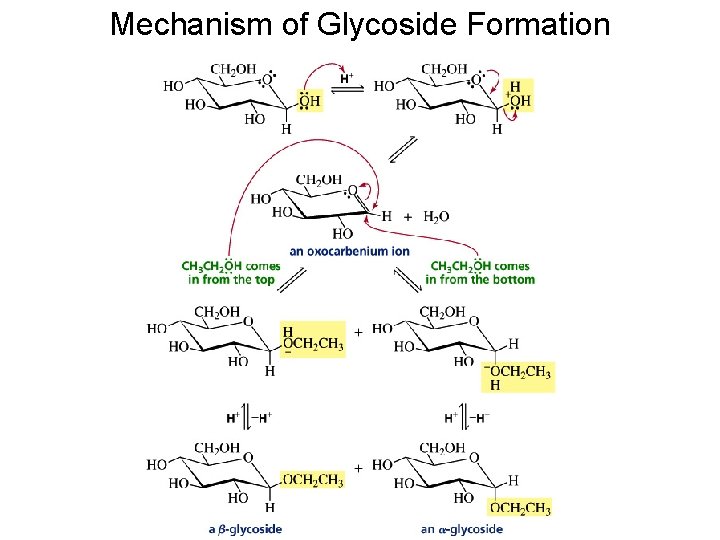
Mechanism of Glycoside Formation
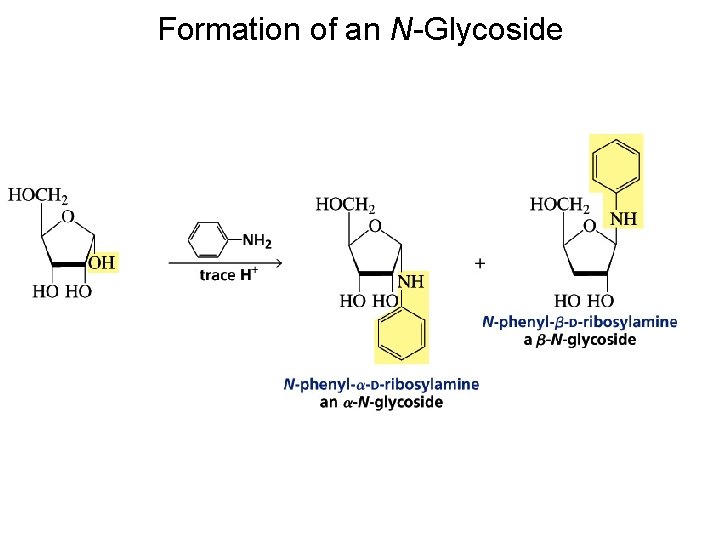
Formation of an N-Glycoside
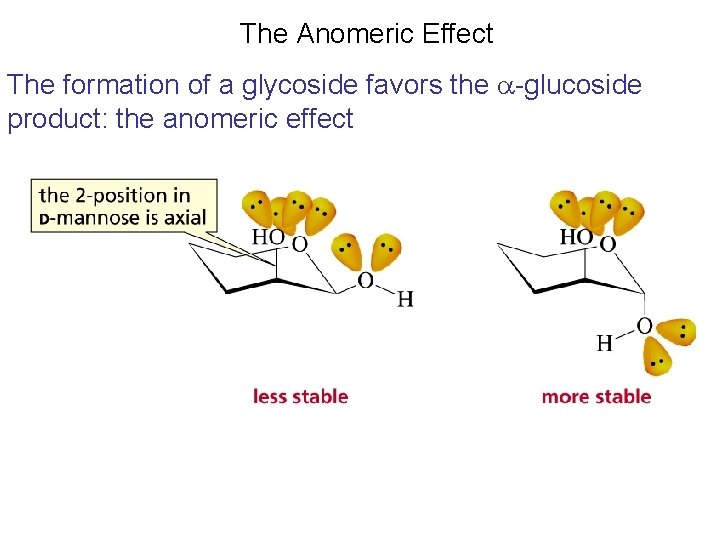
The Anomeric Effect The formation of a glycoside favors the a-glucoside product: the anomeric effect
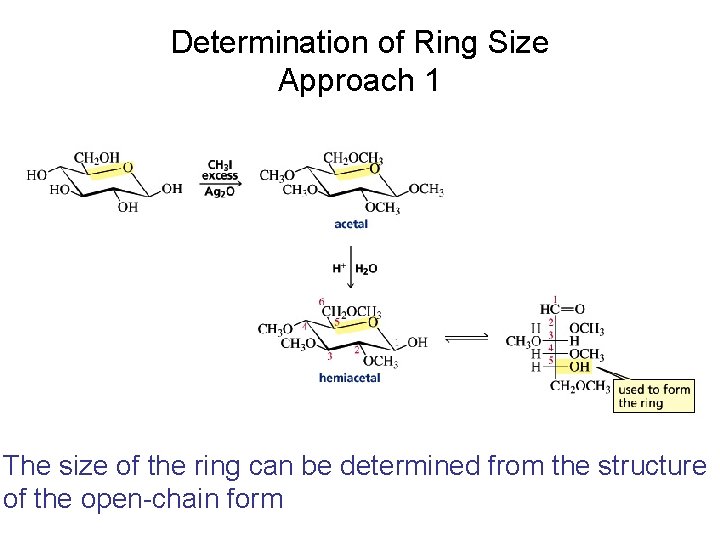
Determination of Ring Size Approach 1 The size of the ring can be determined from the structure of the open-chain form
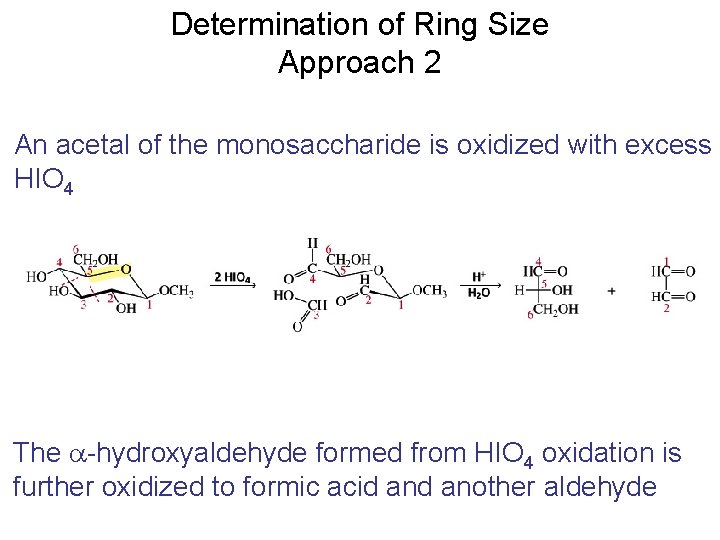
Determination of Ring Size Approach 2 An acetal of the monosaccharide is oxidized with excess HIO 4 The a-hydroxyaldehyde formed from HIO 4 oxidation is further oxidized to formic acid another aldehyde
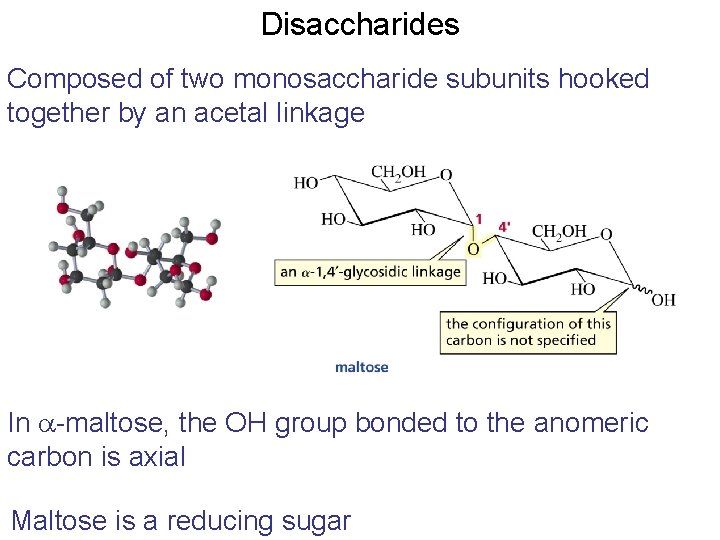
Disaccharides Composed of two monosaccharide subunits hooked together by an acetal linkage In a-maltose, the OH group bonded to the anomeric carbon is axial Maltose is a reducing sugar
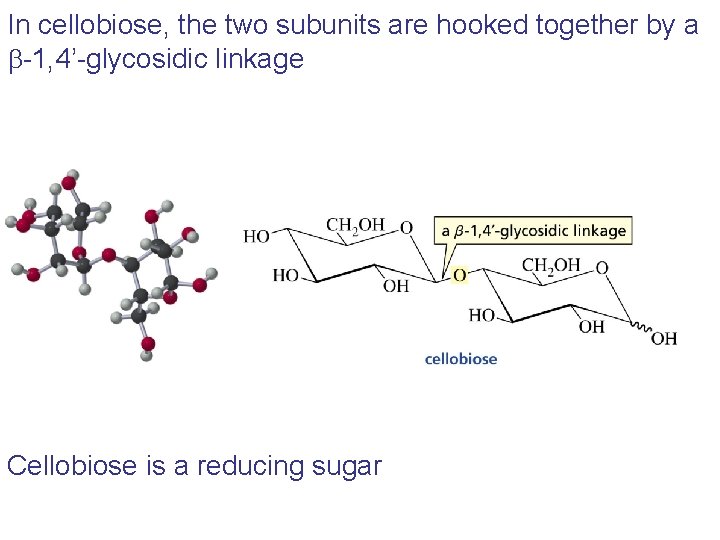
In cellobiose, the two subunits are hooked together by a b-1, 4’-glycosidic linkage Cellobiose is a reducing sugar
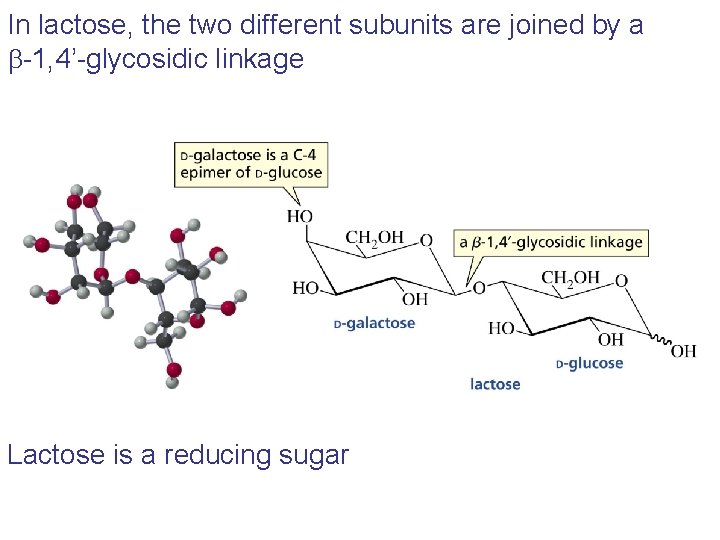
In lactose, the two different subunits are joined by a b-1, 4’-glycosidic linkage Lactose is a reducing sugar
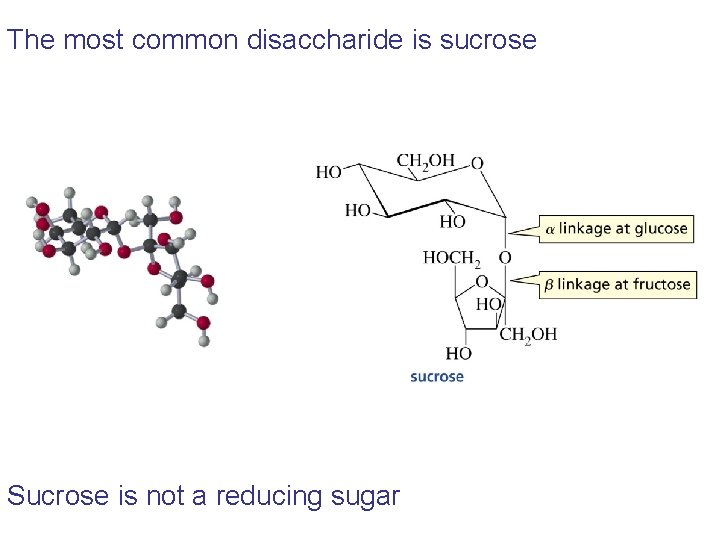
The most common disaccharide is sucrose Sucrose is not a reducing sugar
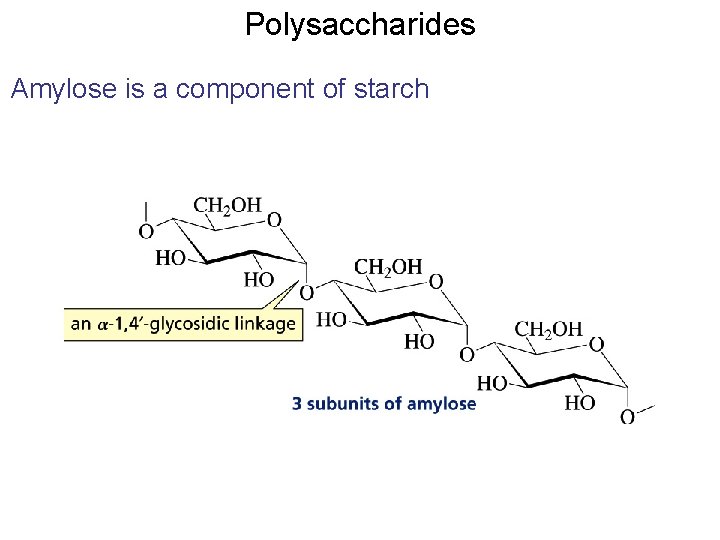
Polysaccharides Amylose is a component of starch
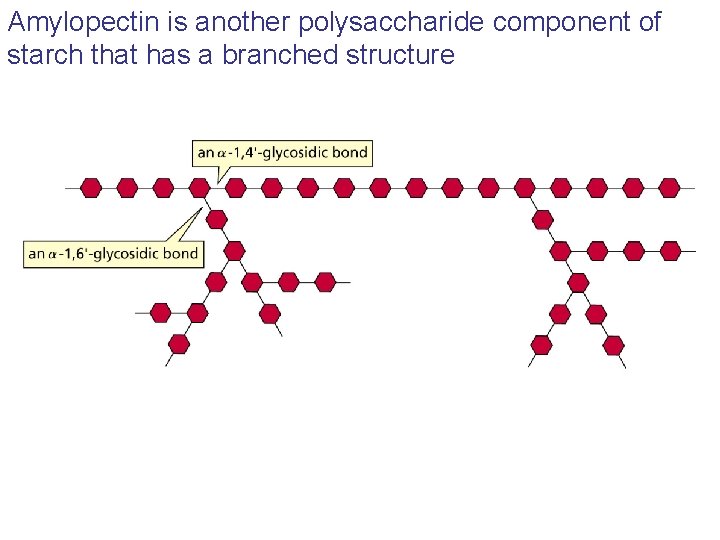
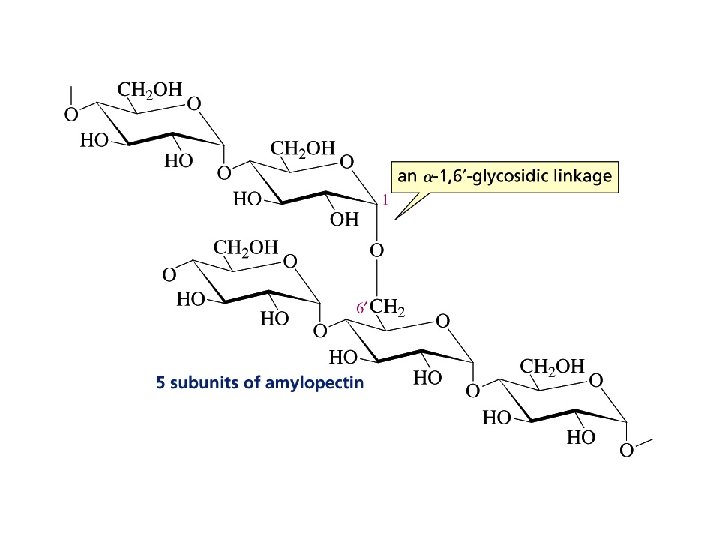
Amylopectin is another polysaccharide component of starch that has a branched structure
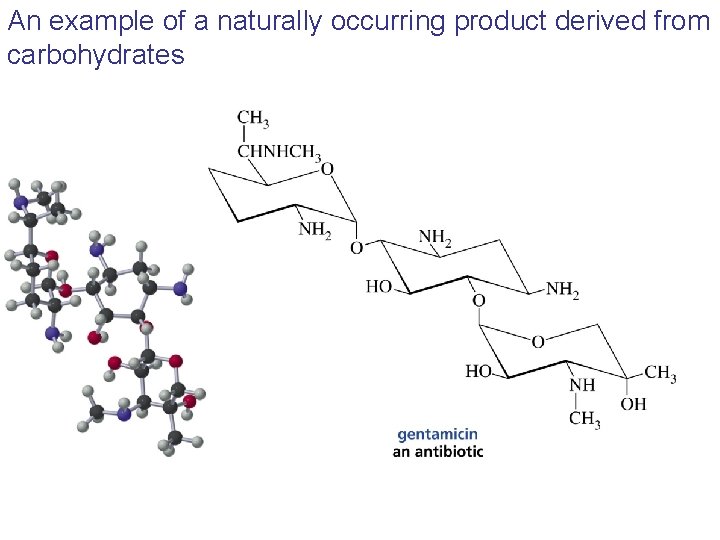
An example of a naturally occurring product derived from carbohydrates
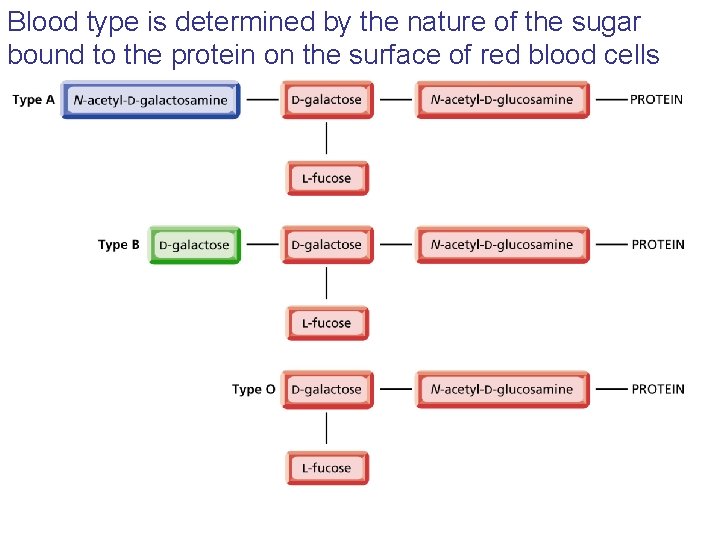
Blood type is determined by the nature of the sugar bound to the protein on the surface of red blood cells