n n CONTRAST THE FORMATION OF IONIC AND
- Slides: 24
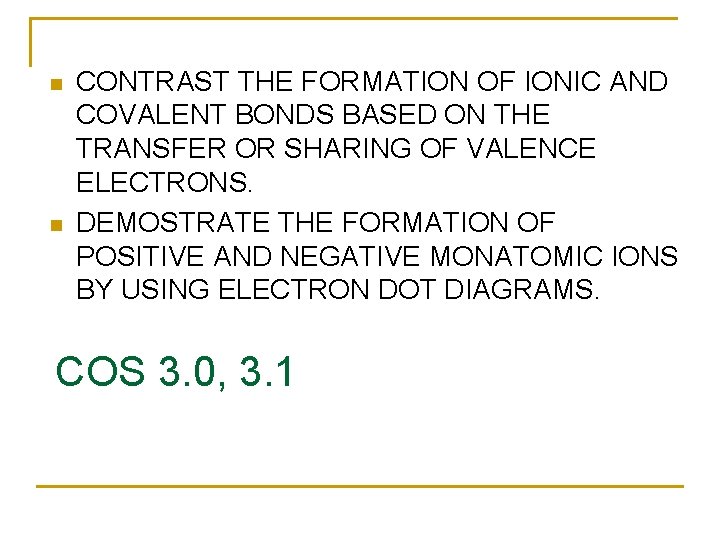
n n CONTRAST THE FORMATION OF IONIC AND COVALENT BONDS BASED ON THE TRANSFER OR SHARING OF VALENCE ELECTRONS. DEMOSTRATE THE FORMATION OF POSITIVE AND NEGATIVE MONATOMIC IONS BY USING ELECTRON DOT DIAGRAMS. COS 3. 0, 3. 1
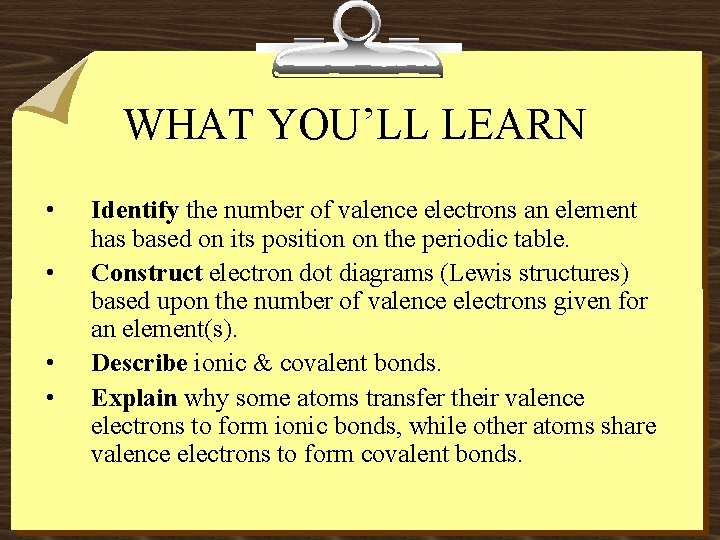
WHAT YOU’LL LEARN • • Identify the number of valence electrons an element has based on its position on the periodic table. Construct electron dot diagrams (Lewis structures) based upon the number of valence electrons given for an element(s). Describe ionic & covalent bonds. Explain why some atoms transfer their valence electrons to form ionic bonds, while other atoms share valence electrons to form covalent bonds.
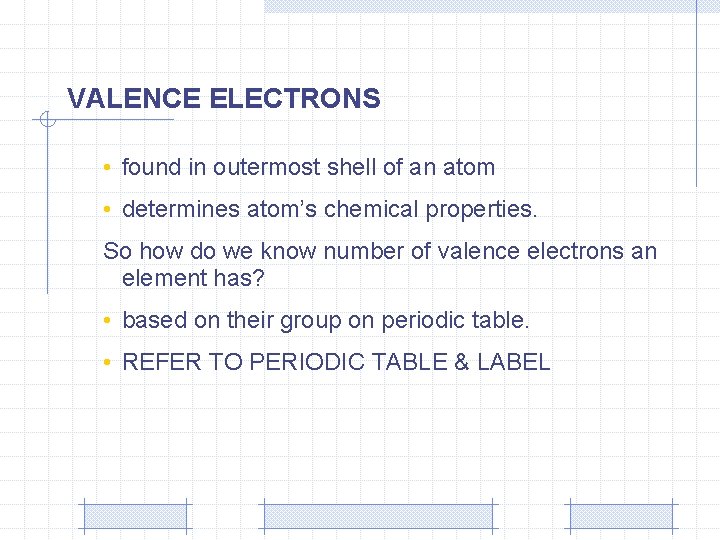
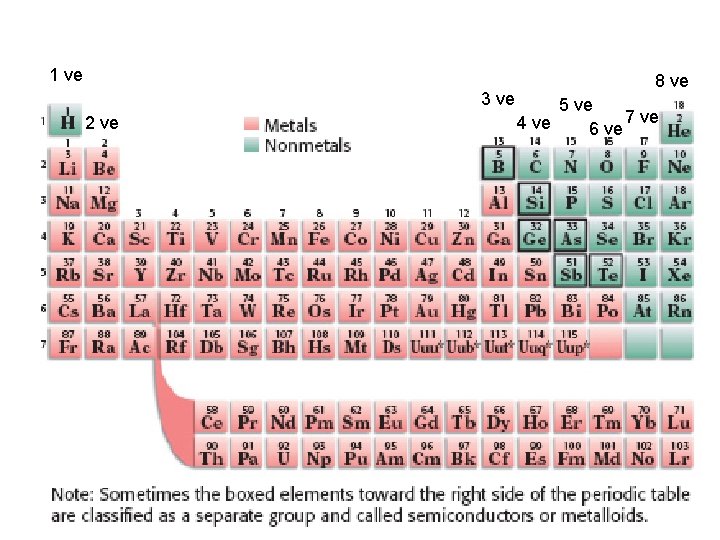
VALENCE ELECTRONS • found in outermost shell of an atom • determines atom’s chemical properties. So how do we know number of valence electrons an element has? • based on their group on periodic table. • REFER TO PERIODIC TABLE & LABEL
1 ve 3 ve 2 ve 8 ve 5 ve 7 ve 4 ve 6 ve
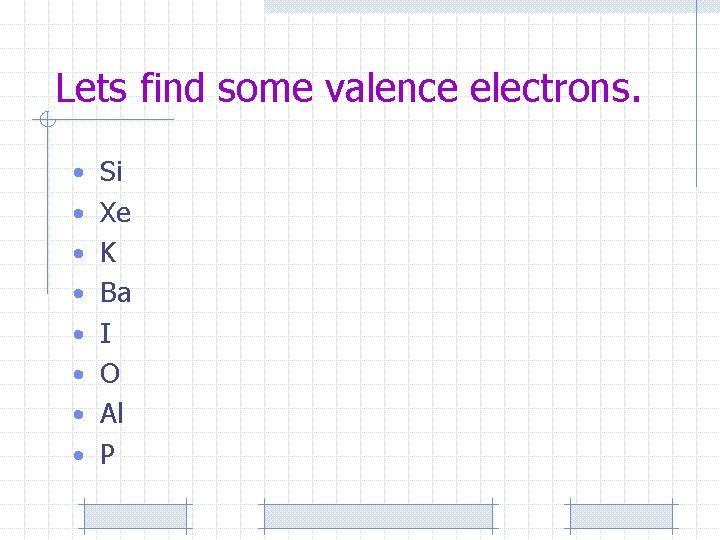
Lets find some valence electrons. • Si • Xe • K • Ba • I • O • Al • P
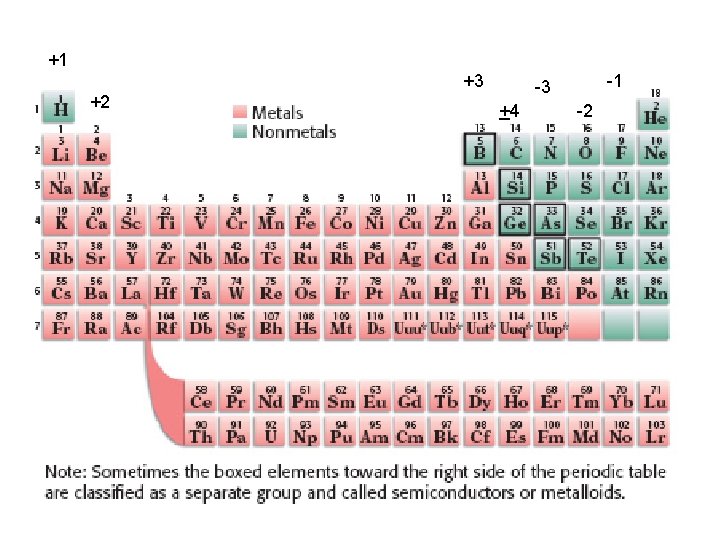
OXIDATION NUMBERS • AKA: charge • change in oxidation number represents number of electrons gained or lost in a chemical reaction. • REFER PERIODIC TABLE & LABEL
+1 +3 +2 -1 -3 +4 -2
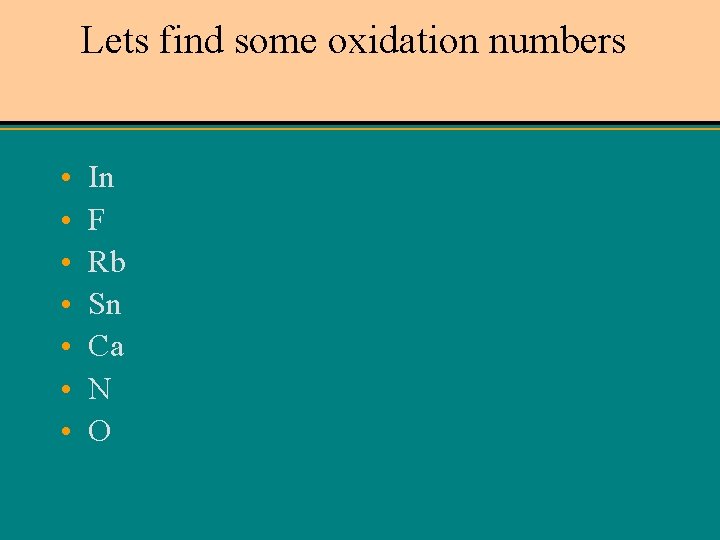
Lets find some oxidation numbers • • In F Rb Sn Ca N O
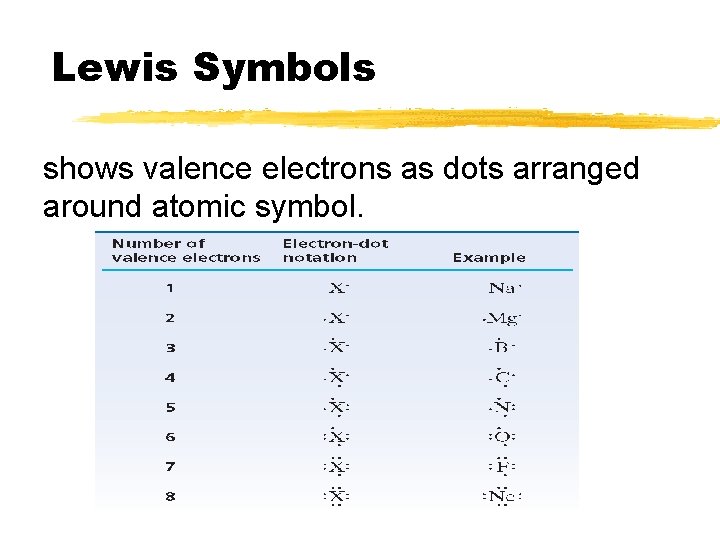
Lewis Structures • AKA: electron-dot structures or electron-dot diagrams. • Uses number of valence electrons. • indicated by dots placed element’s symbol. • diagram that shows bonding between atoms of a molecule. • Always place element with largest number of valence electrons first, next largest … • form ionic & covalent bonds
Lewis Symbols shows valence electrons as dots arranged around atomic symbol.
The Octet Rule Atoms tend to gain, lose, or share electrons until they have eight valence electrons.
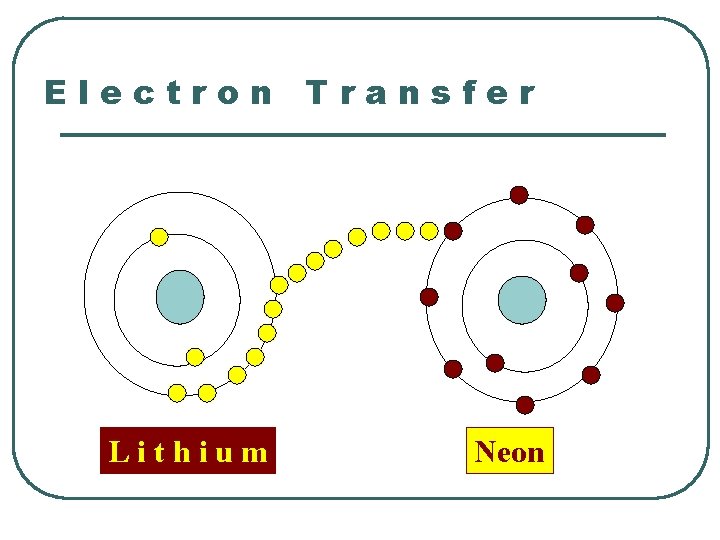
Ionic Bonds • TRANSFER (give away) of cation (positive ion) to an anion (negative ion). • Occurs between metal and a nonmetal • Have high melting points • Dissolved ionic compounds conduct electricity
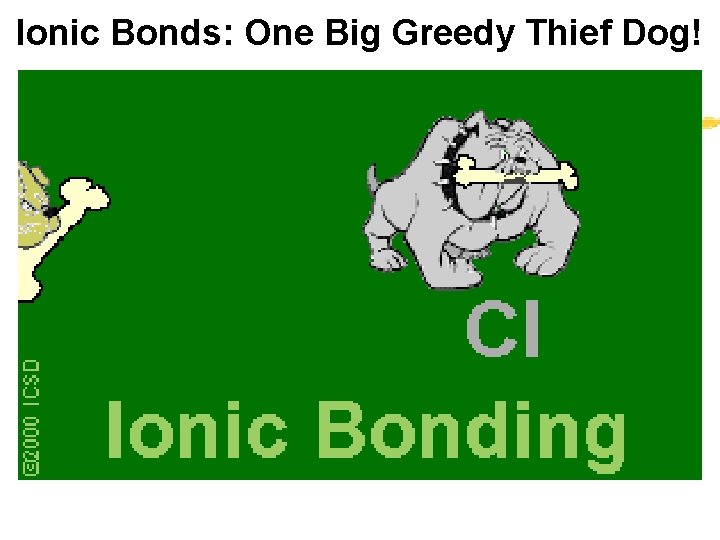
Ionic Bonds: One Big Greedy Thief Dog!
Electron Transfer Lithium Neon
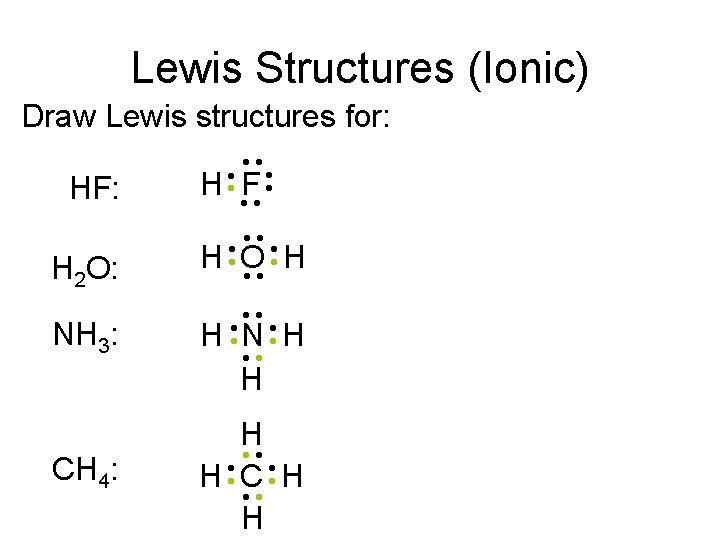
Lewis Structures (Ionic) Draw Lewis structures for: CH 4: ·· ·· H O H ·· ·· ·· H N H ·· H C H ·· NH 3: ·· ·· H 2 O: H ·F· ·· HF: ··
COVALENT BONDING SHARING of electrons between two bonding atoms n form between 2 nonmetals or a nonmetal and hydrogen n
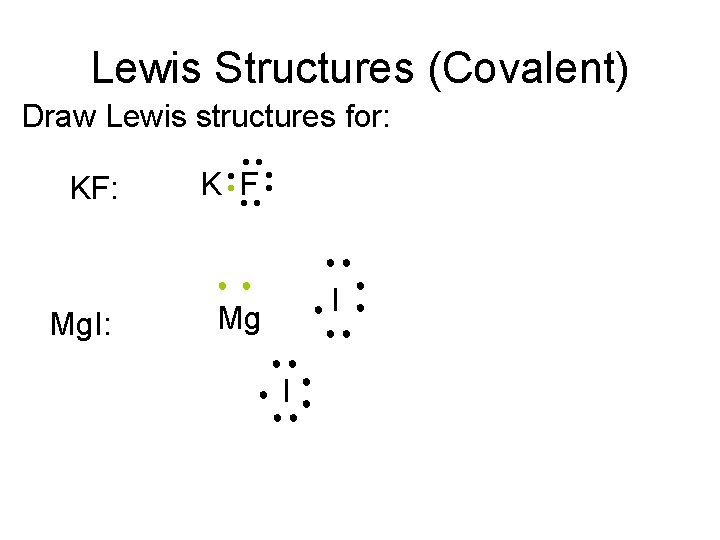
Lewis Structures (Covalent) Draw Lewis structures for: ·· K F ·· ·· KF: ·· ●● ● ● Mg. I: ● Mg ●● ●● ● I I ●● ● ●
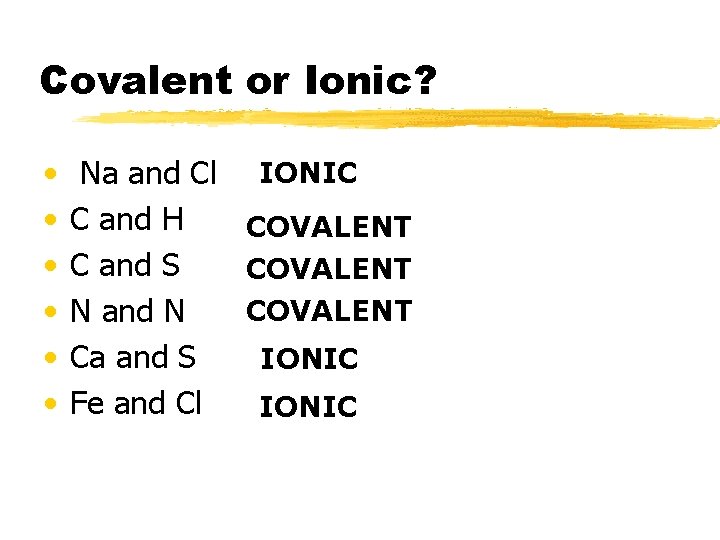
Covalent or Ionic? • • • Na and Cl IONIC C and H COVALENT C and S COVALENT N and N Ca and S IONIC Fe and Cl IONIC
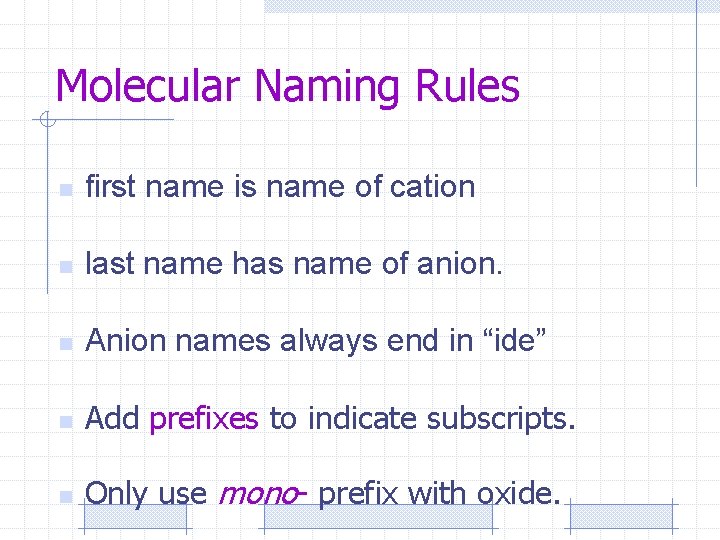
Molecular Naming Rules n first name is name of cation n last name has name of anion. n Anion names always end in “ide” n Add prefixes to indicate subscripts. n Only use mono- prefix with oxide.
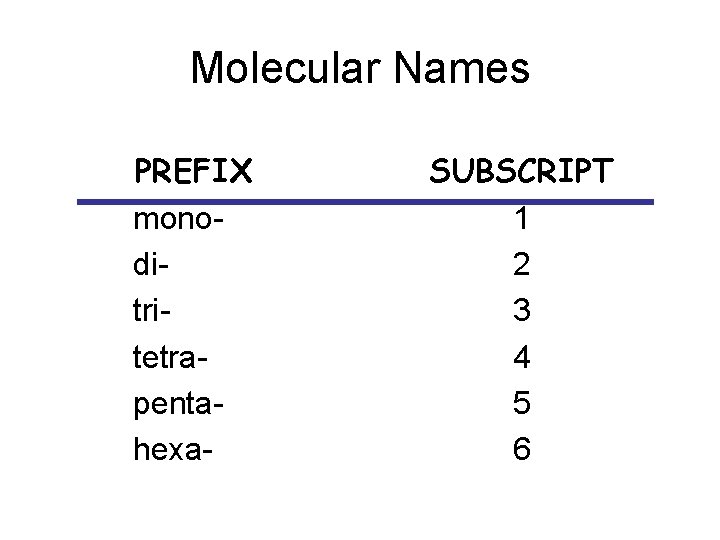
Molecular Names PREFIX monoditritetrapentahexa- SUBSCRIPT 1 2 3 4 5 6
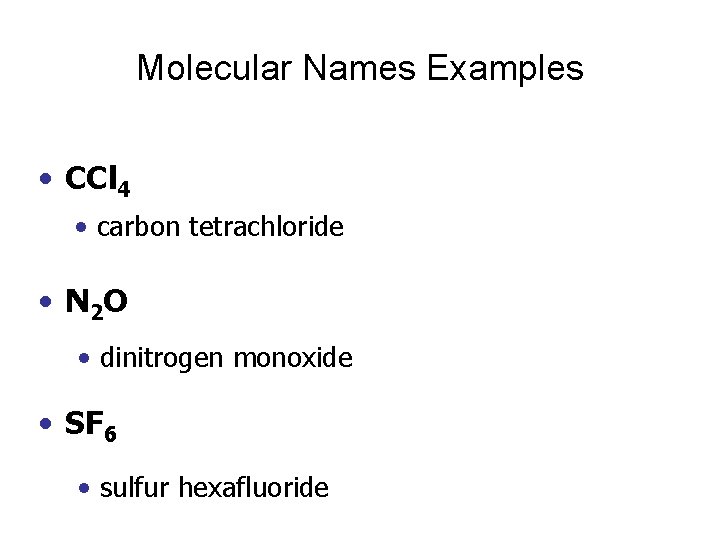
Molecular Names Examples • CCl 4 • carbon tetrachloride • N 2 O • dinitrogen monoxide • SF 6 • sulfur hexafluoride
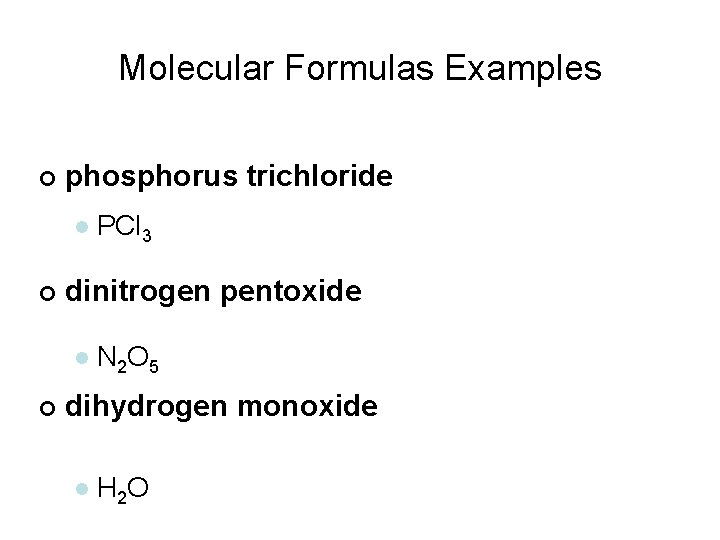
Molecular Formulas Examples ¢ phosphorus trichloride l ¢ dinitrogen pentoxide l ¢ PCl 3 N 2 O 5 dihydrogen monoxide l H 2 O