Menopause L Sekhavat Definition Climacteric The phase in


- Slides: 30
Menopause L. Sekhavat
Definition Climacteric The phase in the aging process of women marking the transition from the reproductive stage of life to the nonreproductive stage Menopause is defined by complete, or near complete, ovarian follicular depletion and absence of ovarian estrogen secretion.
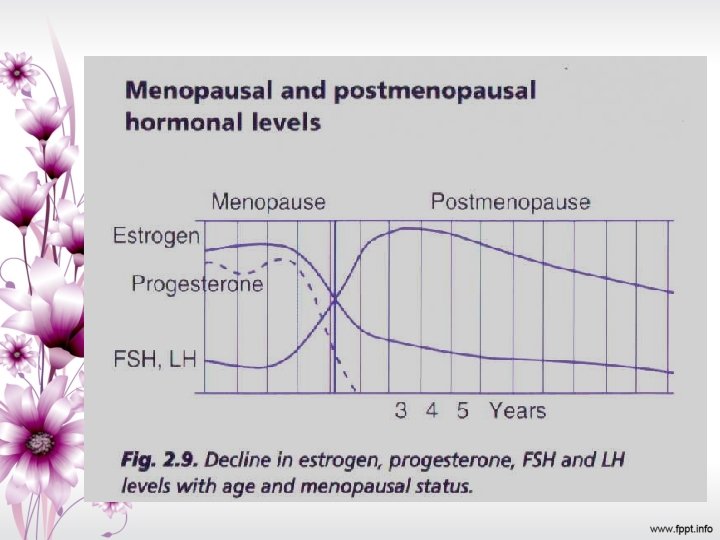
Menopause 12 months of amenorrhea after the final menstrual period. FSH and LH increases Women sex hormones decreased.
Age at menopause Although the average at menopause is approximately 51 years Late menopause: 5 percent of women, it occurs after age 55 years Early menopause: 5 percent of women, it occurs between ages 40 to 45 years
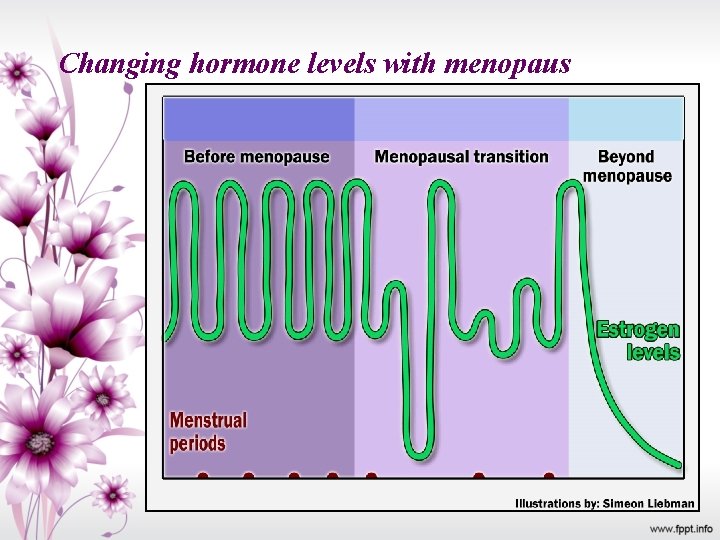
Changing hormone levels with menopaus
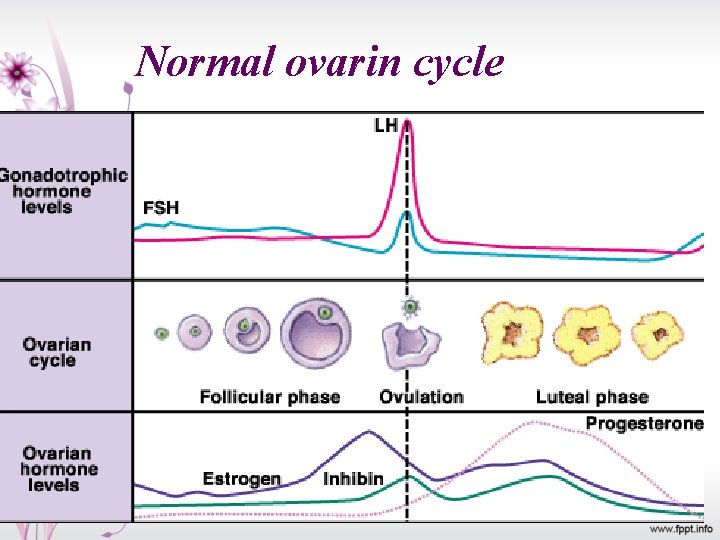
Normal ovarin cycle
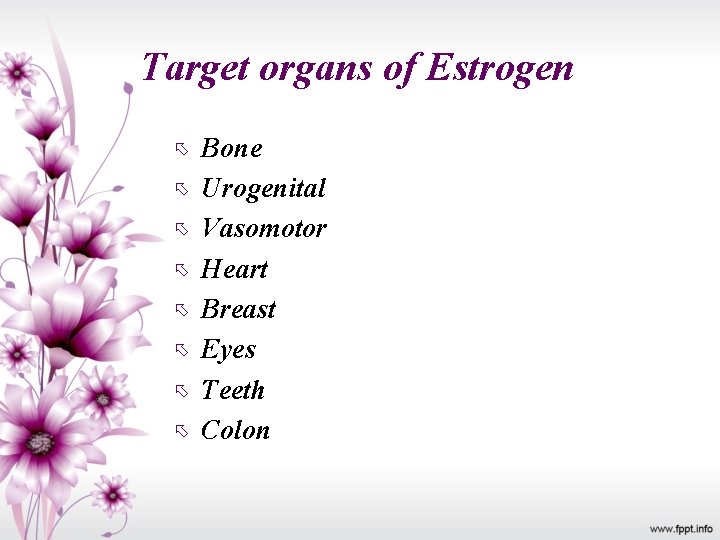
Target organs of Estrogen Bone Urogenital Vasomotor Heart Breast Eyes Teeth Colon
Universal signs of menopause Cessation of menses Vaginal dryness Skin changes Bon loss
Non-universal changes Consequences of Estrogen Loss Hot flashes Sleep disturbance Urogenital Atrophy Osteoporosis Skin Dryness Aging Cultural differences
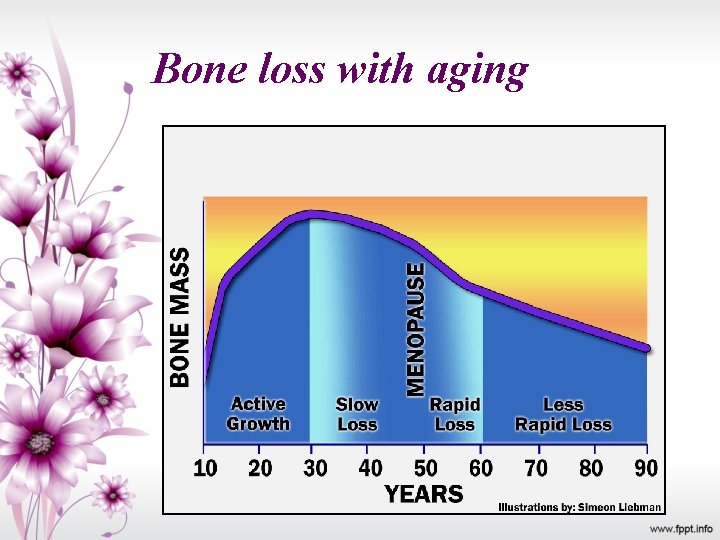
Bone loss with aging
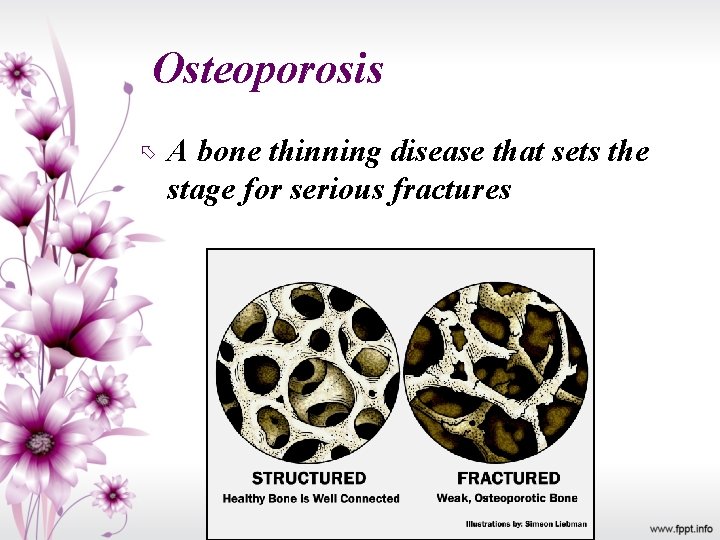
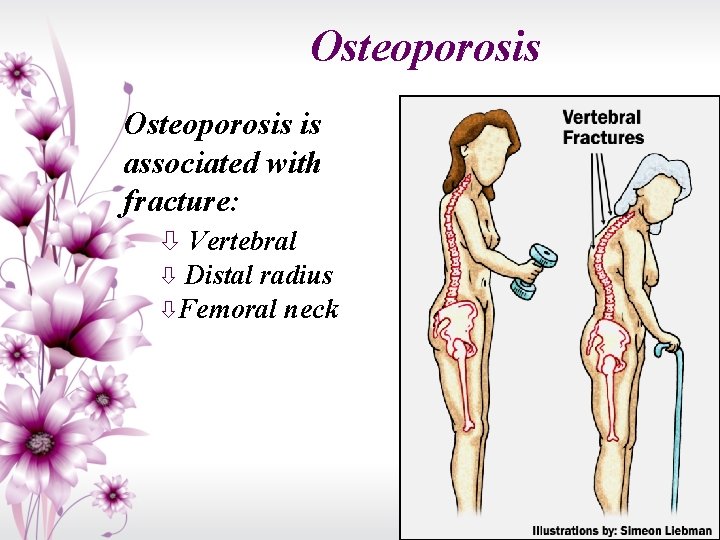
Osteoporosis A bone thinning disease that sets the stage for serious fractures
Osteoporosis is associated with fracture: Vertebral Distal radius Femoral neck
Prevention of osteoporosis Change lifestyle risk factors Exercise Adequate calcium / vitamin D intake Hormone Replacement Therapy Alendronate Raloxifene
Cardiovascular disease Rapid increase in mortality and morbidity from cardiovascular disease after menopause Coronary heart disease (CHD) MI Stroke Pulmonary Embolism
Prevention of cardiovascular disease Healthy life style Diet Avoid smoking Control of: Hypertension Diabetic Hyperlipidaemia H RT? HDL ↑, LDL ↓, Lipoprotein ↓ Insulin sensitivity ↑ Vascular dilatation
Hot flashes
Hot flashes typically begin as a sudden sensation of heat centered on the face and upper chest that rapidly becomes generalized Peripheral vasodilatation, profuse perspiration followed by chills Sudden onset, seconds to minutes (2 - 4 minutes)
Hot flashes Unknown etiology. Thermoregulatory dysfunction 75% of menopausal women complain of hot flashes 20% seek therapy. Self limited to 1 -5 years.
Avoid hot flash Alcohol Caffeine Spicy foods Hot foods and drinks Warm environment Stress Smoking
Tip for Patients Wear cotton Wear open neck shirts Keep ice water on hand Sleep with fewer blankets Take cool shower before bed Eat smaller, more frequent meals Limit caffeine and alcohol Stop smoking
Night Sweats Hot flashes can arouse from sleep and primary sleep disorders more common Irritability Anxiety Fatigue Forgetfulness Inability to concentrat
Therapies Estrogen is most effective If women has uterus give with progesterone Short term therapy Taper to end SSRIs are One of first choices if not taking HRT. Gabapentin is suggested for nocturnal hot flashes
Therapies cont… Progestins Clonidine (alpha adrenergic agonist) Phytoestrogens Herbal (Black Cohosh) Vitamins
Urogenital Atrophy Estrogen deficiency: p. H >4. 5 Leads to thinning of epithelium Vaginal atrophy: Lack of the normal rugae Pale Vaginal dryness Frequent UTI
Vaginal dryness Sexual dysfunction Dyspareunia Postcoital bleeding Itching Urethritis Urinary incontinence
Therapies Topical estrogen: Vaginal Cream Vaginal tablet Vaginal ring
Central Nervous System Psychological Anxiety Depression Cognition Memory
Skin Dryness Estrogen deficiency: Can lead to reduced collagen content of the skin and bones. Thinning of epidermis Atrophy of sebaceous glands Increased aging and wrinkling of the skin. Increased sensitivity to temperature, humidity, and trauma