
Menopause Dr Minal Kadam Jadhav DEFINATION MENOPASE Is







- Slides: 33
Menopause Dr Minal. Kadam. Jadhav
DEFINATION �MENOPASE : Is a point in time when permanent cessation of menstruation occurs following the loss of ovarian activity ( loss of menses for >12 months) Greek word: men –month & pausis- cessation �PERIMENOPAUSE: The years prior to menopause that encompass the change from normal ovulatory cycles to cessation of menses.
Defination �CLIMACTERIC : (Greek word for ladder) Indicates the period of time when women passes from the reproductive stage of life through the perimenopausal transition and the menopause to the post-menopausal years.
Women now live a third of their lives after menopause.
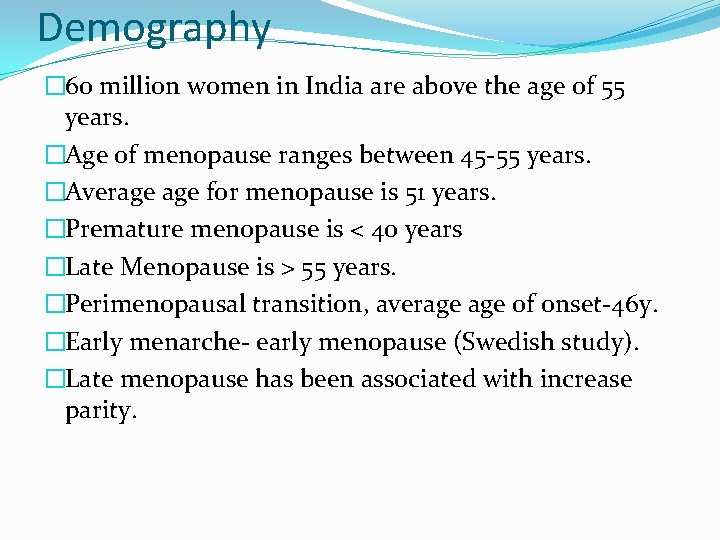
Demography � 60 million women in India are above the age of 55 years. �Age of menopause ranges between 45 -55 years. �Average for menopause is 51 years. �Premature menopause is < 40 years �Late Menopause is > 55 years. �Perimenopausal transition, average of onset-46 y. �Early menarche- early menopause (Swedish study). �Late menopause has been associated with increase parity.
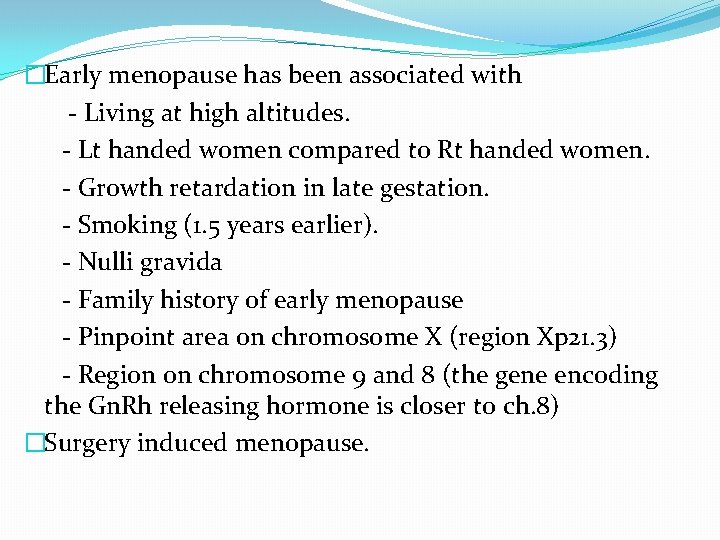
�Early menopause has been associated with - Living at high altitudes. - Lt handed women compared to Rt handed women. - Growth retardation in late gestation. - Smoking (1. 5 years earlier). - Nulli gravida - Family history of early menopause - Pinpoint area on chromosome X (region Xp 21. 3) - Region on chromosome 9 and 8 (the gene encoding the Gn. Rh releasing hormone is closer to ch. 8) �Surgery induced menopause.
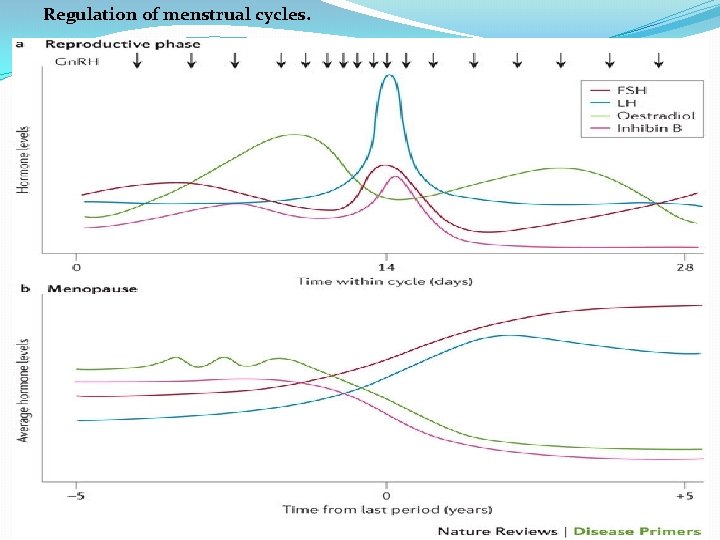
Regulation of menstrual cycles.
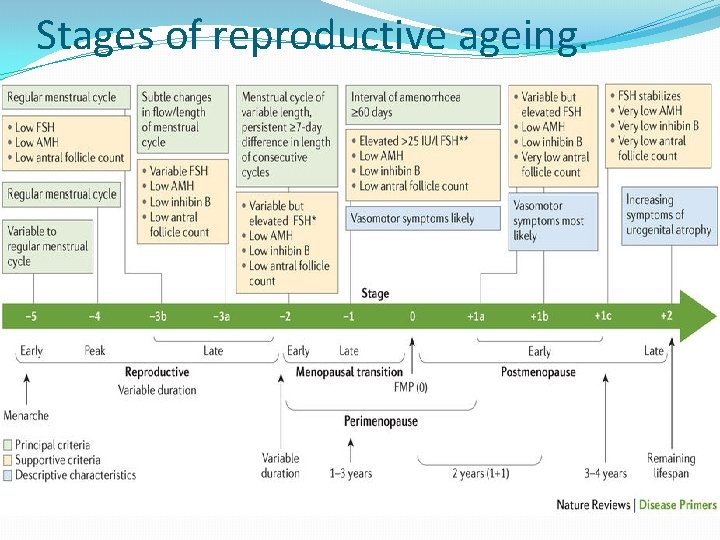
Stages of reproductive ageing.
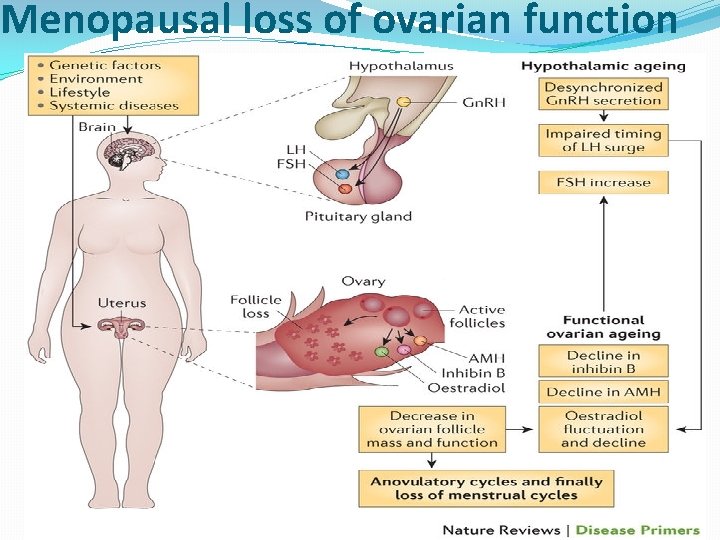
Menopausal loss of ovarian function
Symptoms �Vasomotor symptoms �Psychological Symptoms �Sexual dysfunction �Dementia and cognitive decline �Osteoporosis �Cardiovascular diseases �Urogenital atrophy
Vasomotor symptoms �Hot flash: - Characterized by sudden feeling of heat followed by profuse sweating. - More common during perimenopausal period (60%). - May last for 1 -10 minutes. - Prerequisite is low estrogen level - Coincides with Gn. RH pulse secretion with increase in serum LH level. - Altered levels of neurotransmitters (Nor epinephrine & Serotonin) �Night sweats. �Disturbed sleep.
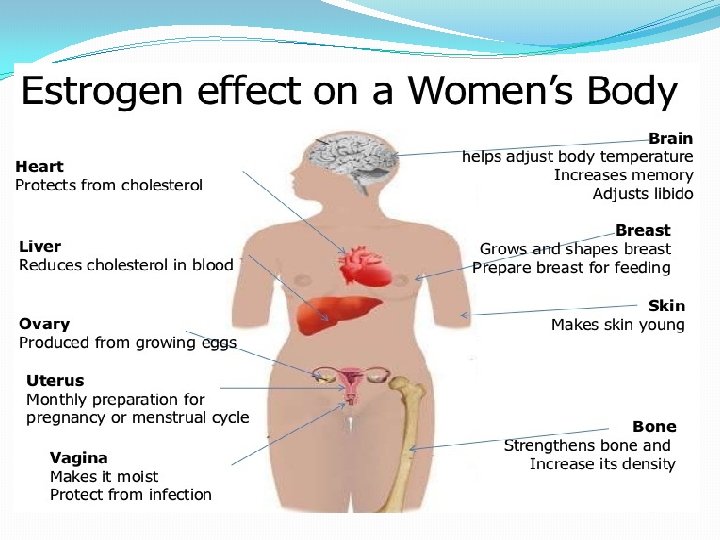
Psychological symptoms �Irritability �Anxiety �Headache �Insomnia �Mood swings �Poor memory �Depression - Estrogen increases the opioid activity in the brain and is known to be important for memory. - Estrogen improves cerebral perfusion and cognition.
Sexual dysfunction �Vaginal dryness
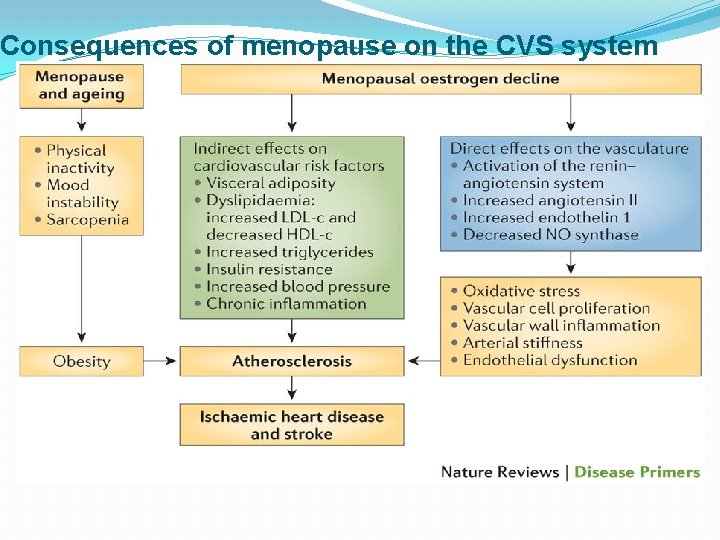
Consequences of menopause on the CVS system
Pathogenesis of osteoporosis
Urogenital symptoms �Genitourinary atrophy due to lack of estrogen leads to Ø Urethritis Ø Dysuria Ø Incontinence Ø Increase frequency Ø Recurrent UTI Ø Dry Vagina- prone for bleeding Ø Alkaline p. H- more susceptible to infection.
Diagnosis �Cessation of menses for consecutive 12 months. �Average 51 years. �FHS increases by 10 -20 fold. �LH increase by 3 fold. �Serum Estradiol <20 pg/ml.
Mx: Non hormonal treatment Ø Lifestyle modification Ø Nutritious Diet: More fruits and vegetables Ø Exercise: Yoga, Meditation, Taichi Ø Cessation of smoking and alcohol Ø Calcium and Vitamin D supplements. Calcium- 1. 5 -1 gm/day Vitamin D- 700 -800 IU/day Ø Bisphonates –prevents bone resorption, improves bone density. Ø Calcitonin- inhibits bone resorption.
Management Ø Selective estrogen receptor modulators (SERMs) § Raloxifene inhibits the estrogen receptors at the breast and endometrial tissue, makes it tissue specific in action. § Increases bone mineral density. § Reduces LDL increases HDL 2 levels § Reduces risk of Breast and Endometrial CA. § No effect on hot flashes and urogenital atrophy. § Increase risk of VTE.
Mx : Hot Flashes �Clonidine: œ 2 adrenergic agonist. �Paroxetine: Selective serotonin receptor reuptake inhibitor. �Gabapentine: Analog of Gamma-aminobutyric acid. �Phytoestrogens: Isoflavones. �Soy Protein: acts as SERMs �Vitamin E.
Hormone replacement therapy �Indications: Relief of menopausal symptoms. Relief of Vasomotor symptoms Prevention of osteoporosis To maintain quality of life in menopausal years specially in § Premature ovarian failure § Gonadal dysgenesis § Surgical or radiation menopause. Ø Ø
HRT �Contraindications ØK/C/O or suspected breast CA. ØUndiagnosed Vaginal bleeding ØEstrogen dependent neoplasm (Endometrial CA) ØH/o VTE or active DVT ØActive liver disease ØGallbladder disease
HRT Types �Estrogen & Progesterone: Most common used. Best to use in women with intact uterus. �Estrogen only : Preferred in women who have undergone hysterectomy. conjugated estrogen- 0. 625 -1. 25 mg/day. micronized estradiol- 1 -2 mg/day �Progestin's only: Preferred in patients with h/o breast or endometrial cancer. Medroxyprogesterone – 2. 5 -5 mg/day micronized progesterone – 100 -300 mg/day Dydrogesterone – 5 -10 mg/day
HRT �Oral estrogen regime: Conjugated equine estrogen 0. 3 mg or 0. 625 mg/ day �Estrogen & cyclic progestin: Continuous estrogen for 25 days add progestin for last 12 -14 days. �Continuous estrogen and progestin therapy: chances of irregular bleeding and prevents endometrial hyperplasia. �Transdermal patches: this route avoids the “first pass hepatic metabolism”. �Sub dermal implants: 17ß estradiol implants 25 mg, 50 mg & 100 mg. Subcutaneously inserted. Duration 6 months. Preferred in post-hysterectomy patients.
HRT Ø Percutaneous estrogen gel: applied on to the skin. Delivers 1 mg estradiol daily, keeping blood estradiol levels 90 -120 pg/ml. Ø Transdermal patch: 3. 2 mg of ß-estradiol. Releases 50µg/day. To be applied below the waistline. Ø Vaginal cream: Conjugated equine estrogen vaginal cream 1. 25 mg/daily. Effective in atrophic vaginitis. Ø Progestins: MPA 2. 5 -5 mg/day. Ø Tibolone: 19 -nortestosterone derivative. Weak estrogeinc, progestogenic& androgenic action. § Increase libido. § Prevents osteoporosis. § Prevents atrophic vaginitis.
HRT ØTestosterone: Short term use is suggested. Preferred in hypoactive sexual desire disorder (HSDD). Improves mood, bone, muscle mass and Qo. L. ØParythyroid hormone (PTH): route – SC injection. Dose-20 µg/day. Prevents osteoporosis and fracture. ØLNG-IUS – Releases 10µg/day. Lower systemic side effects of progestin.
HRT: Duration �Hormone therapy should be used with lowest effective dose and for shorter period of time. �Counseling of the women should be done. �Annual or semiannual reviews should be done.
HRT: Risk Factors �Endometrial cancer �Breast cancer �VTE �Coronary heart disease: relative hazard �Lipid metabolism: Increases cholesterol in bile.
HRT : Monitoring �Blood pressure �Physical examination and pelvic examination. �Breast examination. �Cervical cytology �TVS – endometrial thickness (normal<5 mm) �Endometrial biopsy or hysteroscopy –if irregular bleeding. �Serum estradiol levels- 100 pg/ml during HRT �DEXA scan.
Questions? ?