MEMS and Caching for File Systems Andy Wang

- Slides: 46
MEMS and Caching for File Systems Andy Wang COP 5611 Advanced Operating Systems
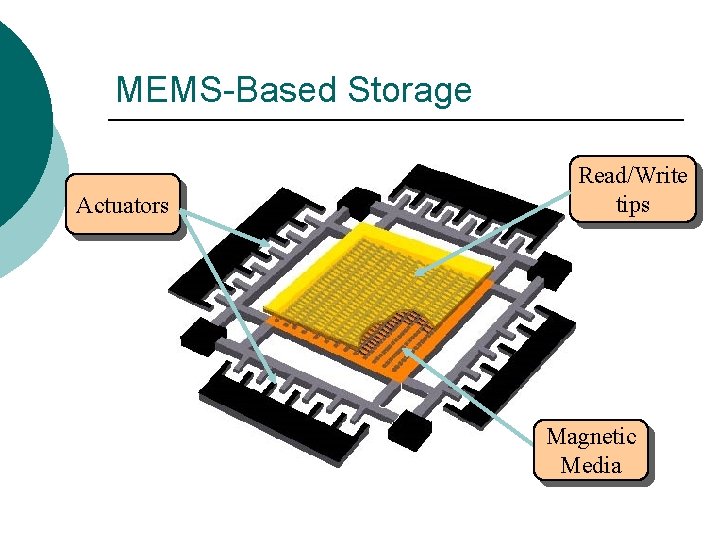
MEMS ¡ ¡ ¡ ¡ Micro. Electric. Mechnical. Systems 10 Gbytes of data in the size of a penny 100 MB – 1 GB/sec bandwidth Access times 10 x faster than today’s drives ~100 x less power than low-power HDs Integrate storage, RAM, and processing on the same die l The drive is the computer Cost less than $10 [CMU PDL Lab]
MEMS-Based Storage Actuators Read/Write tips Magnetic Media
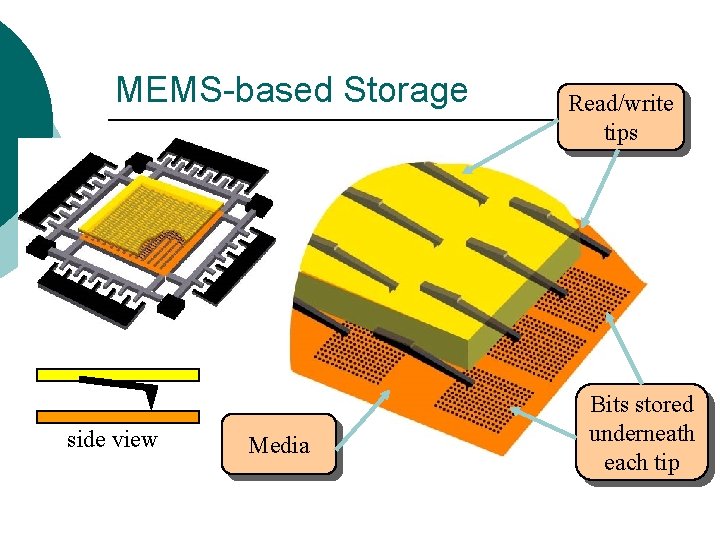
MEMS-based Storage side view Media Read/write tips Bits stored underneath each tip
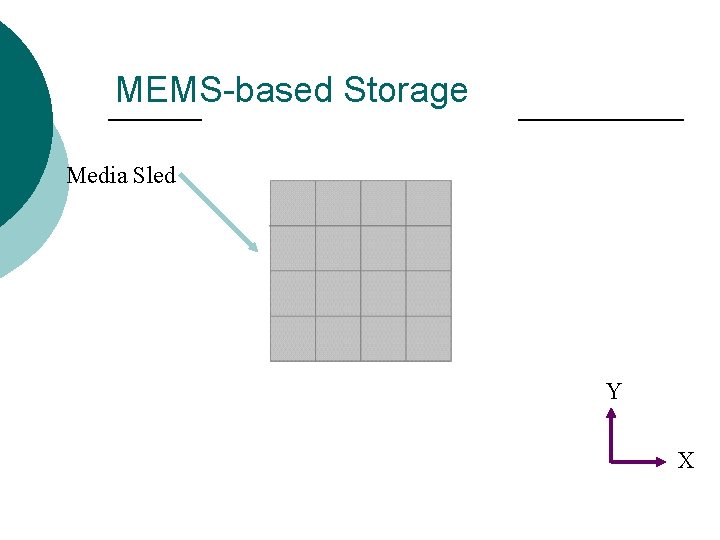
MEMS-based Storage Media Sled Y X
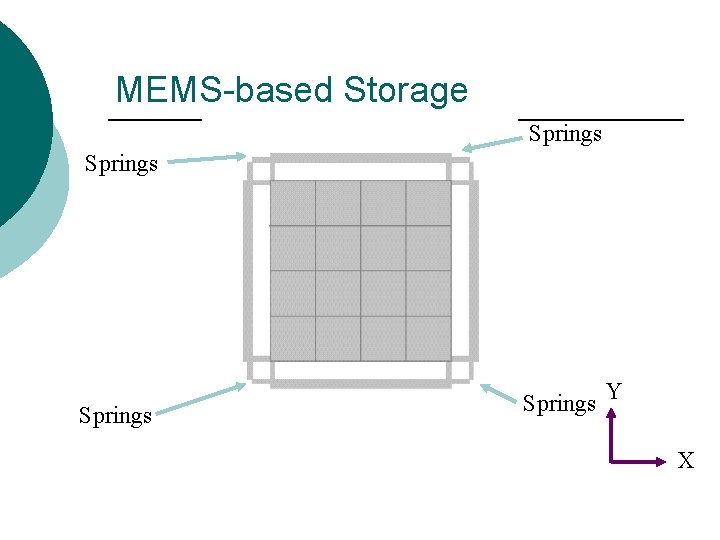
MEMS-based Storage Springs Y X
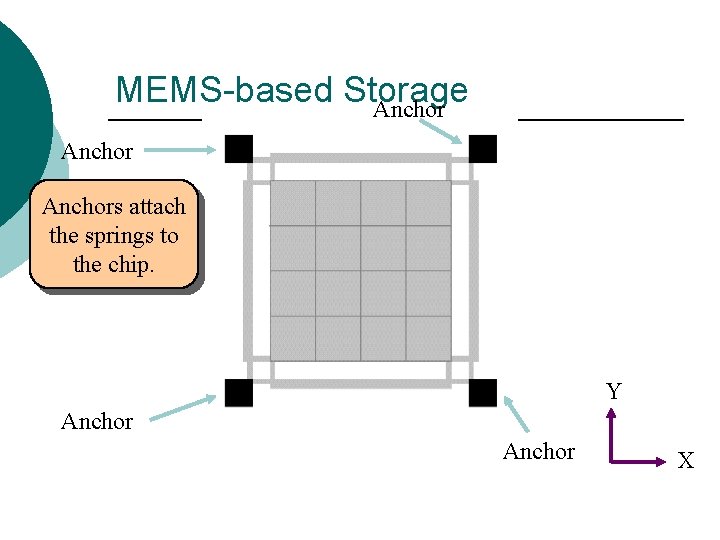
MEMS-based Storage Anchors attach the springs to the chip. Y Anchor X
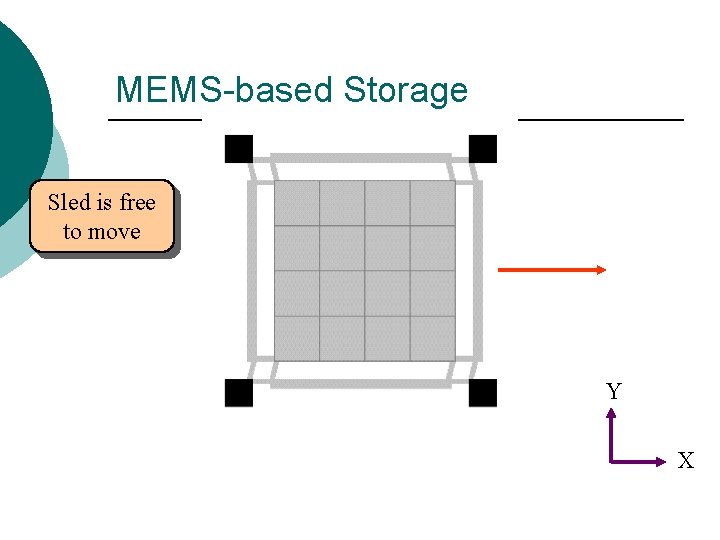
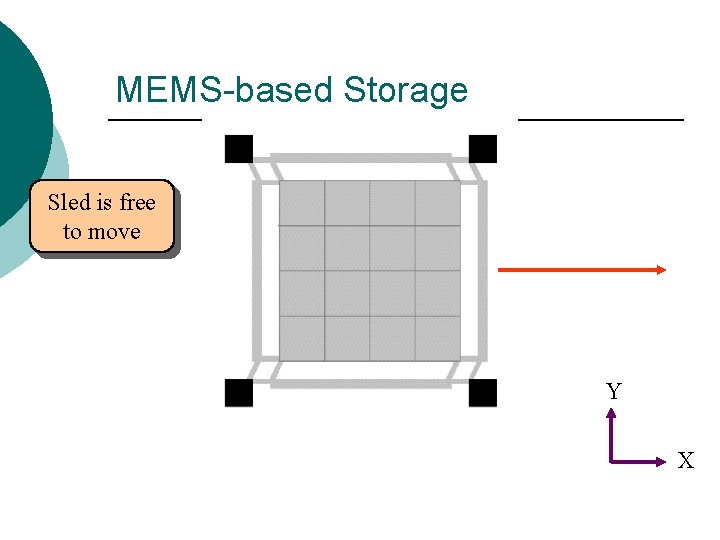
MEMS-based Storage Sled is free to move Y X
MEMS-based Storage Sled is free to move Y X
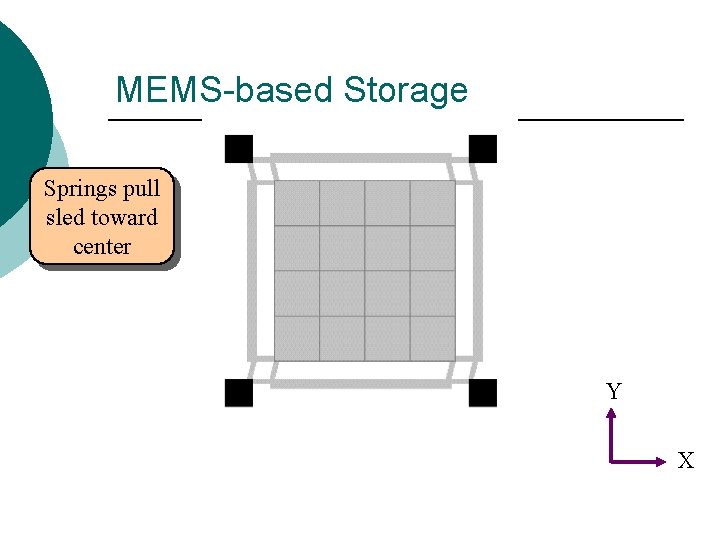
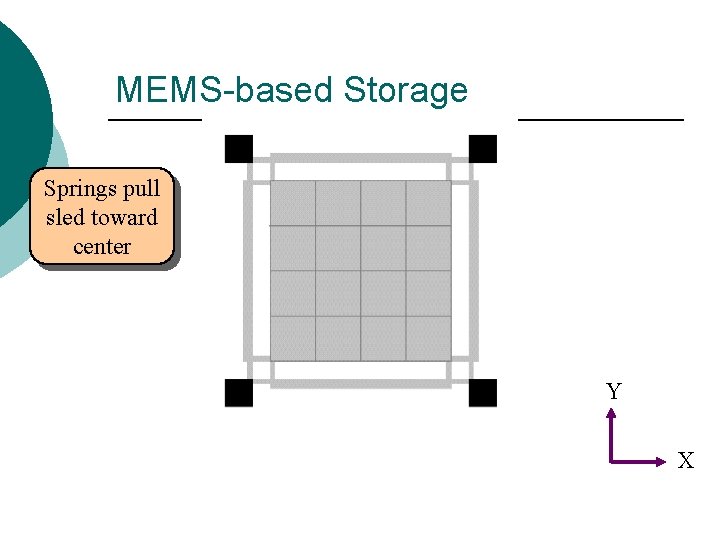
MEMS-based Storage Springs pull sled toward center Y X
MEMS-based Storage Springs pull sled toward center Y X
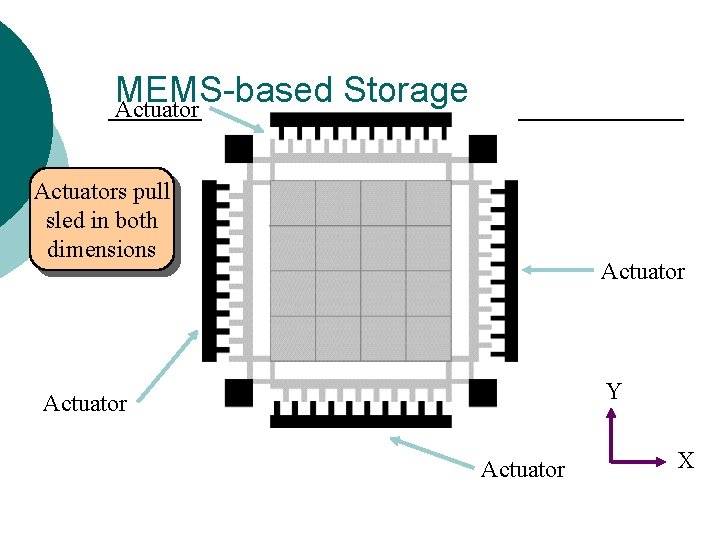
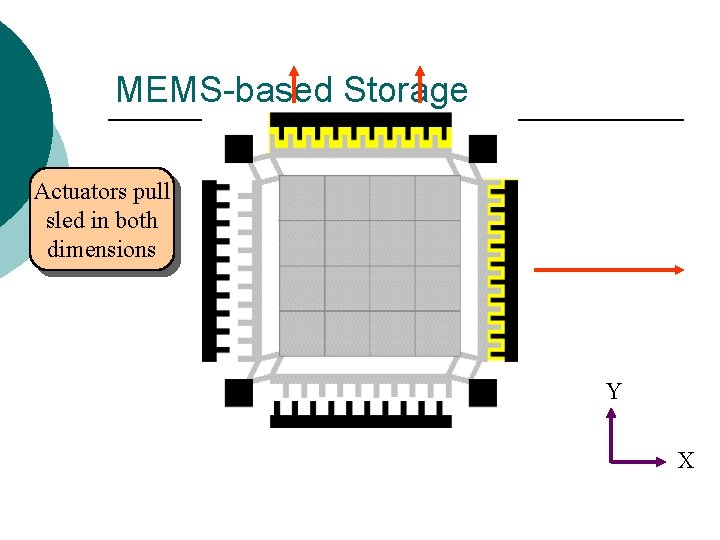
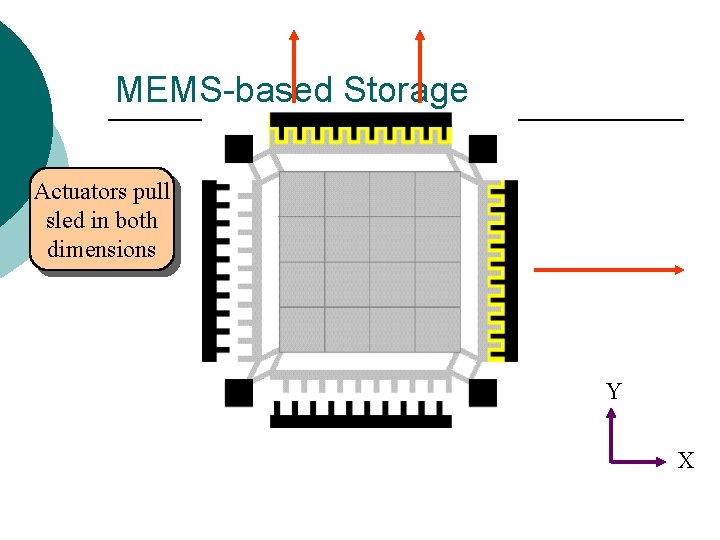
MEMS-based Storage Actuators pull sled in both dimensions Actuator Y Actuator X
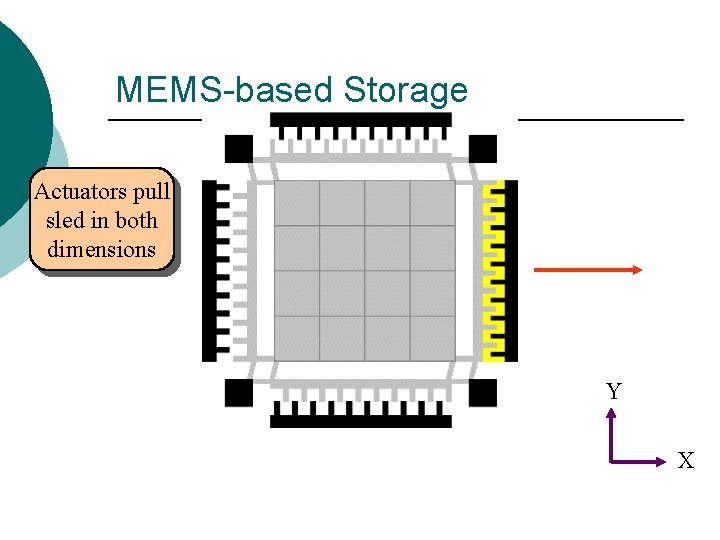
MEMS-based Storage Actuators pull sled in both dimensions Y X
MEMS-based Storage Actuators pull sled in both dimensions Y X
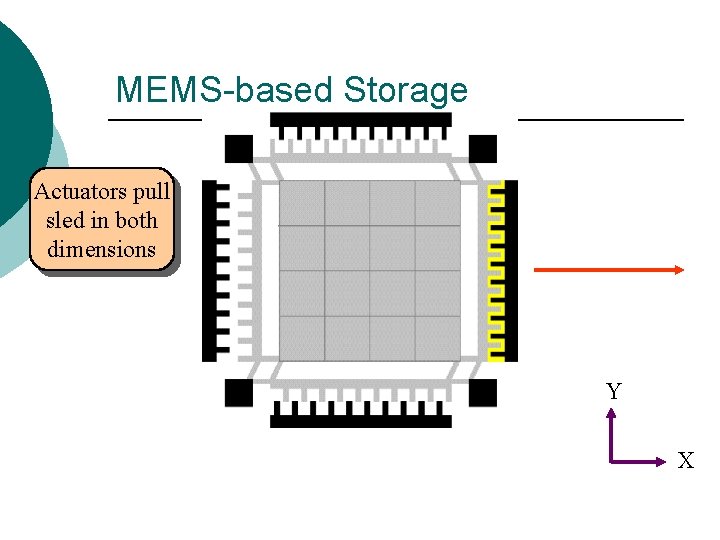
MEMS-based Storage Actuators pull sled in both dimensions Y X
MEMS-based Storage Actuators pull sled in both dimensions Y X
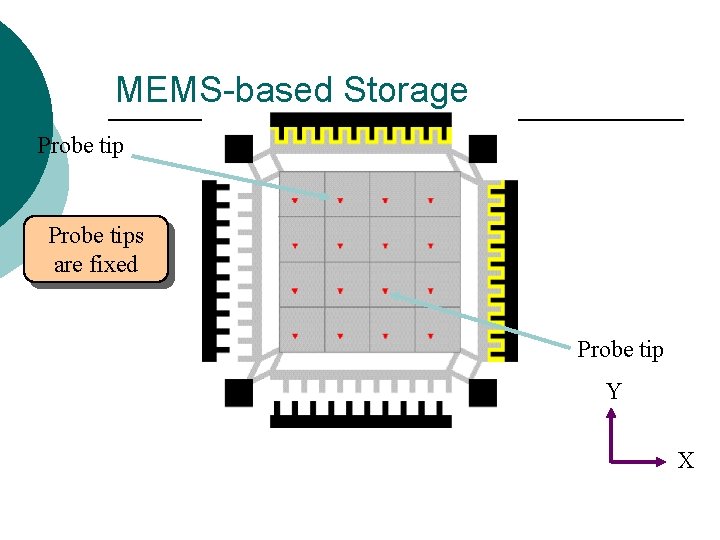
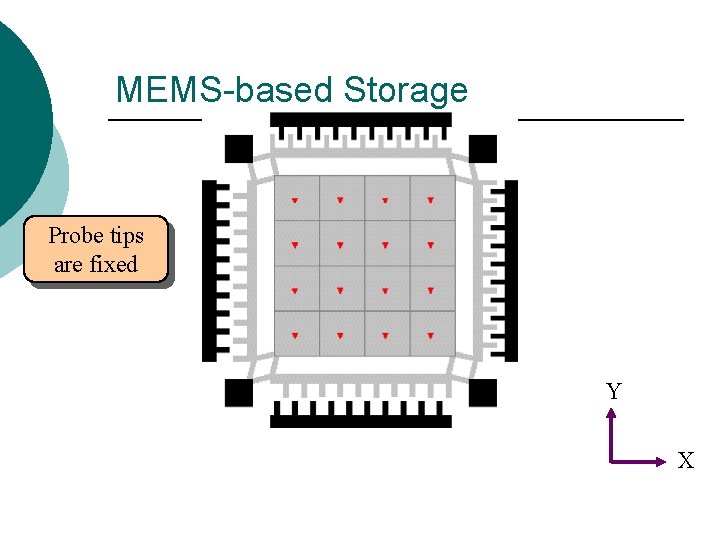
MEMS-based Storage Probe tips are fixed Probe tip Y X
MEMS-based Storage Probe tips are fixed Y X
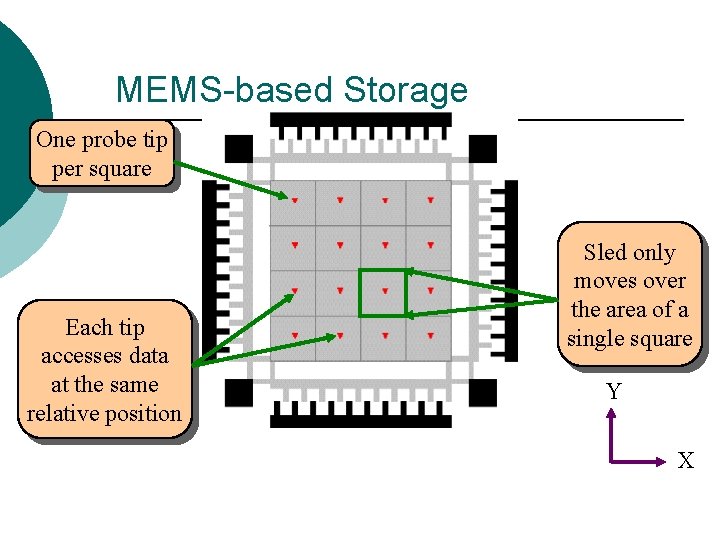
MEMS-based Storage One probe tip per square Each tip accesses data at the same relative position Sled only moves over the area of a single square Y X
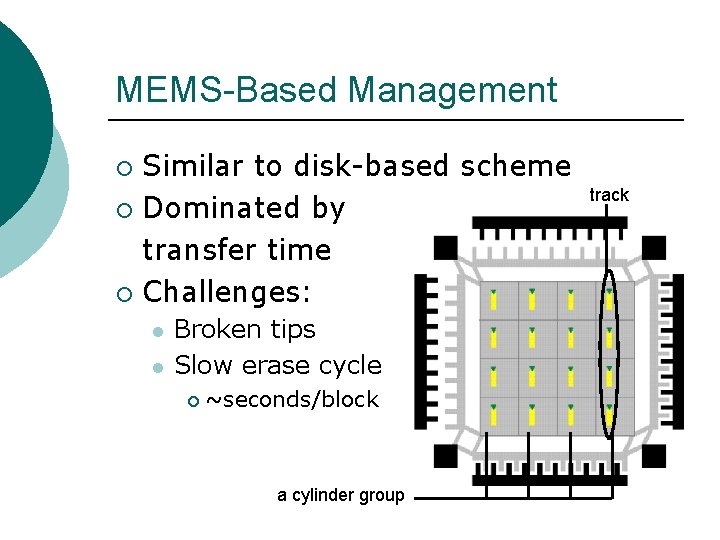
MEMS-Based Management Similar to disk-based scheme ¡ Dominated by transfer time ¡ Challenges: ¡ l l Broken tips Slow erase cycle ¡ ~seconds/block a cylinder group track
Caching for File Systems ¡ Conventional role of caching l l Performance improvement Assumptions: Locality ¡ Scarcity of RAM ¡ ¡ Shifting role of caching l l Shaping disk access patterns Assumptions: Locality ¡ Abundance of RAM ¡
Performance Improvement Essentially all file systems rely on caching to achieve acceptable performance ¡ Goal is to make FS run at the memory speeds ¡ l Even though most of the data is on disk
Issues in I/O Buffer Caching Cache size ¡ Cache replacement policy ¡ Cache write handling ¡ Cache-to-process data handling ¡
Cache size The bigger, the fewer the cache misses ¡ More data to keep in sync with disk ¡
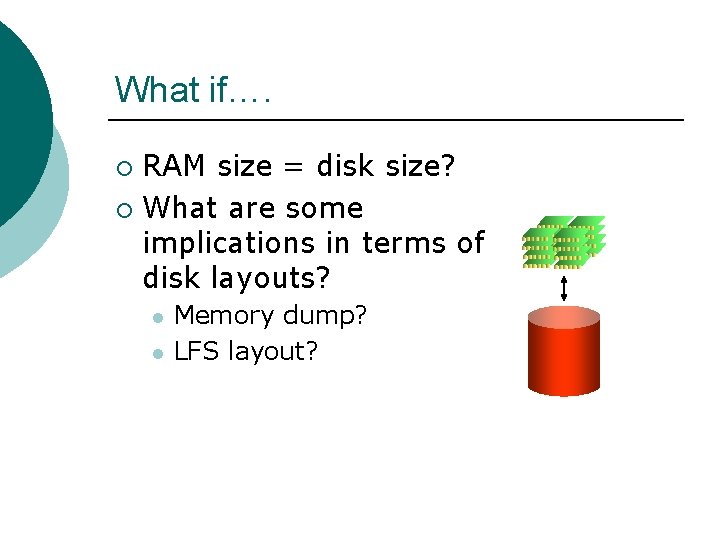
What if…. RAM size = disk size? ¡ What are some implications in terms of disk layouts? ¡ l l Memory dump? LFS layout?
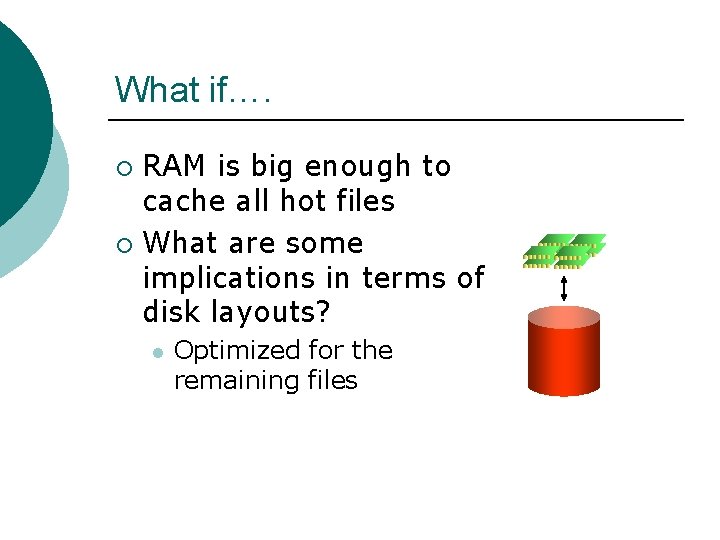
What if…. RAM is big enough to cache all hot files ¡ What are some implications in terms of disk layouts? ¡ l Optimized for the remaining files
Cache Replacement Policy ¡ LRU works fairly well l l ¡ Can use “stack of pointers” to keep track of LRU info cheaply Need to watch out for cache pollutions LFU doesn’t work well because a block may get lots of hits, then not be used l So, it takes a long time to get it out
What is the optimal policy? ¡ MIN: Replacing a page that will not be used for the longest time… Hmm…
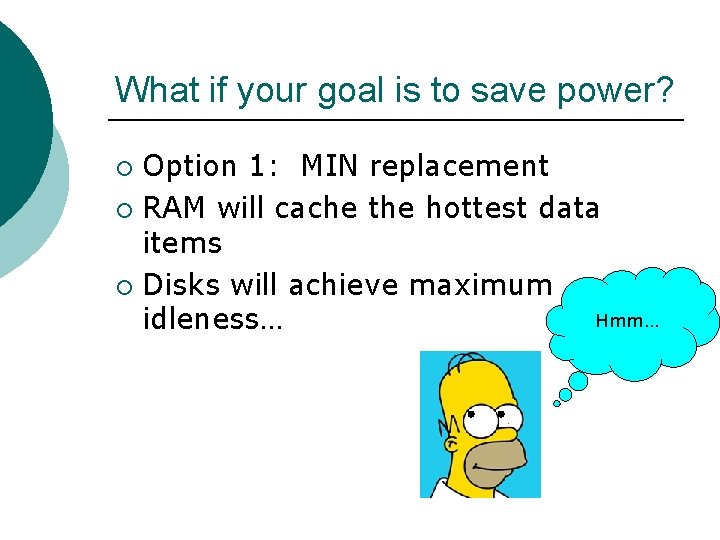
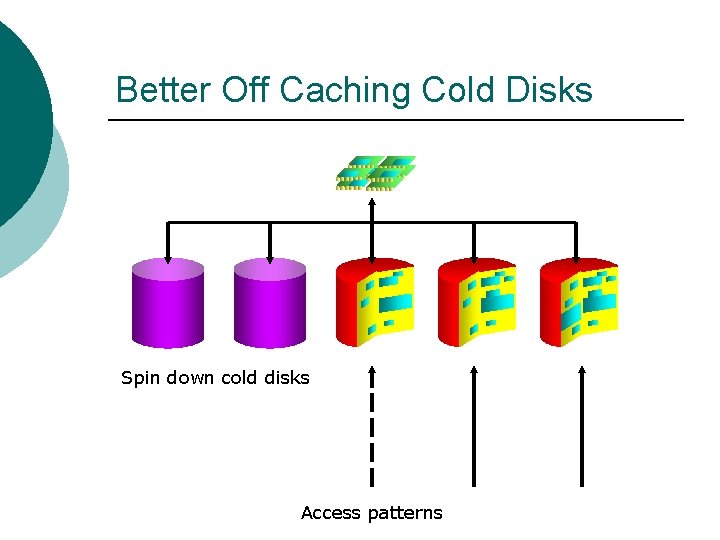
What if your goal is to save power? Option 1: MIN replacement ¡ RAM will cache the hottest data items ¡ Disks will achieve maximum Hmm… idleness… ¡
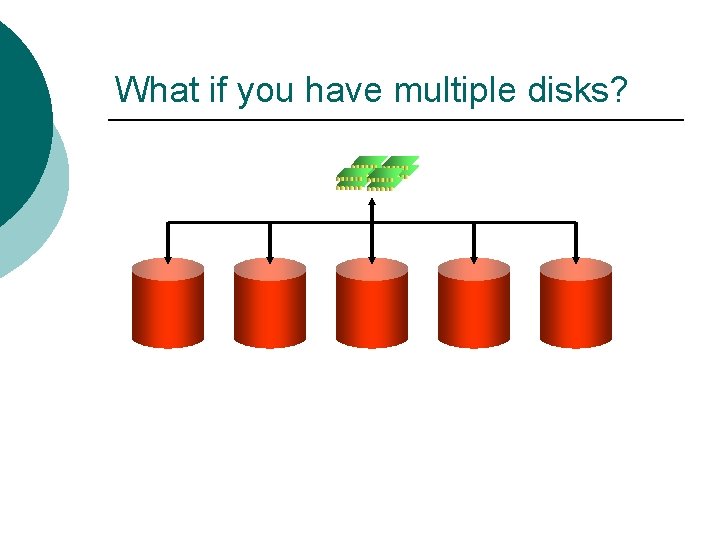
What if you have multiple disks?
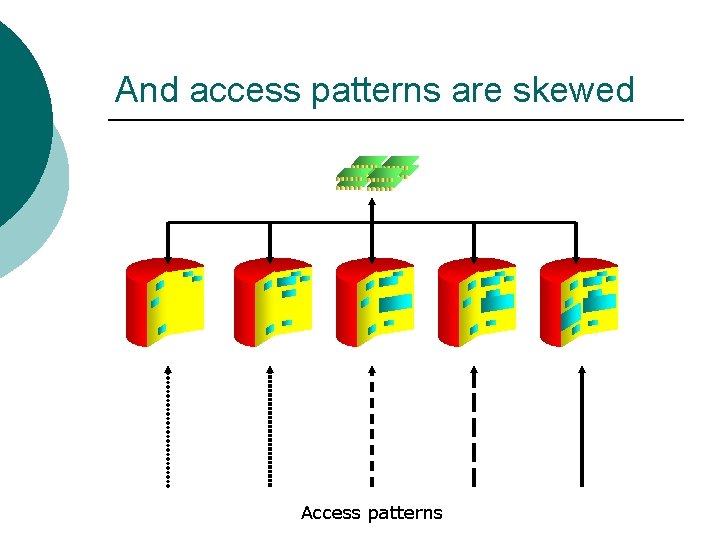
And access patterns are skewed Access patterns
Better Off Caching Cold Disks Spin down cold disks Access patterns
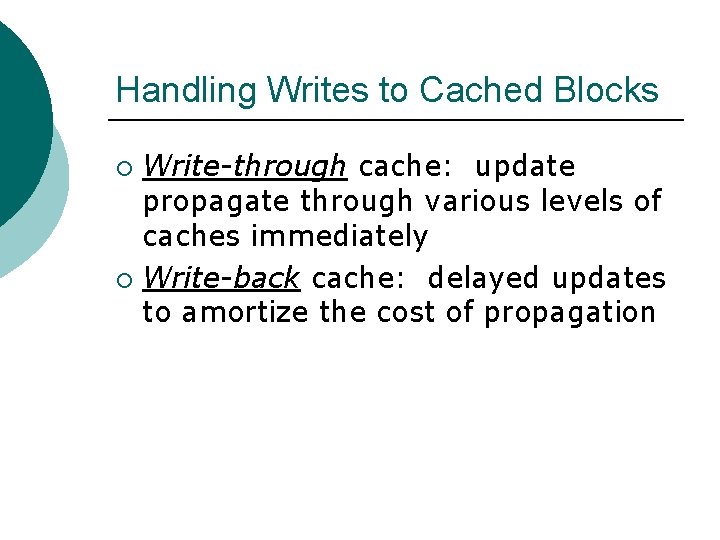
Handling Writes to Cached Blocks Write-through cache: update propagate through various levels of caches immediately ¡ Write-back cache: delayed updates to amortize the cost of propagation ¡
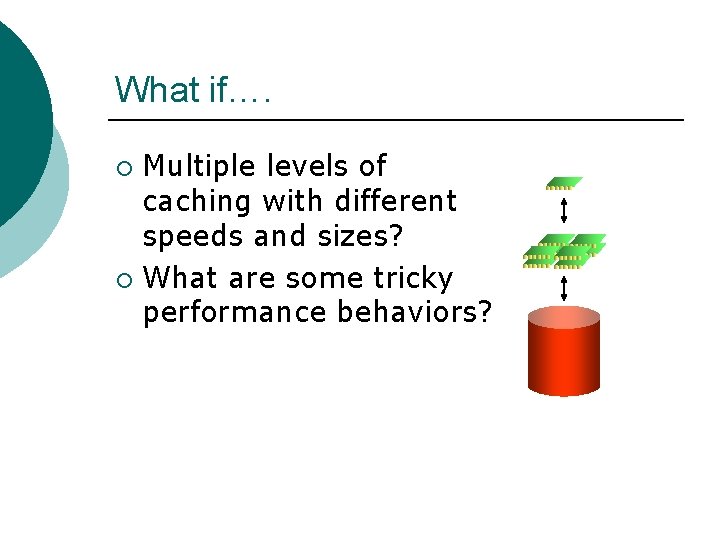
What if…. Multiple levels of caching with different speeds and sizes? ¡ What are some tricky performance behaviors? ¡
istory’s Mystery Puzzling Conquest Microbenchmark Numbers… Geoff Kuenning: “If Conquest is slower than ext 2 fs, I will toss you off of the balcony…”
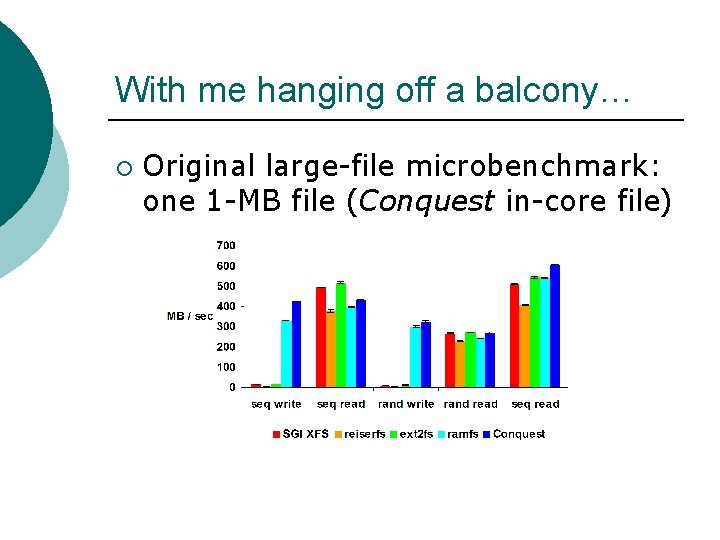
With me hanging off a balcony… ¡ Original large-file microbenchmark: one 1 -MB file (Conquest in-core file)
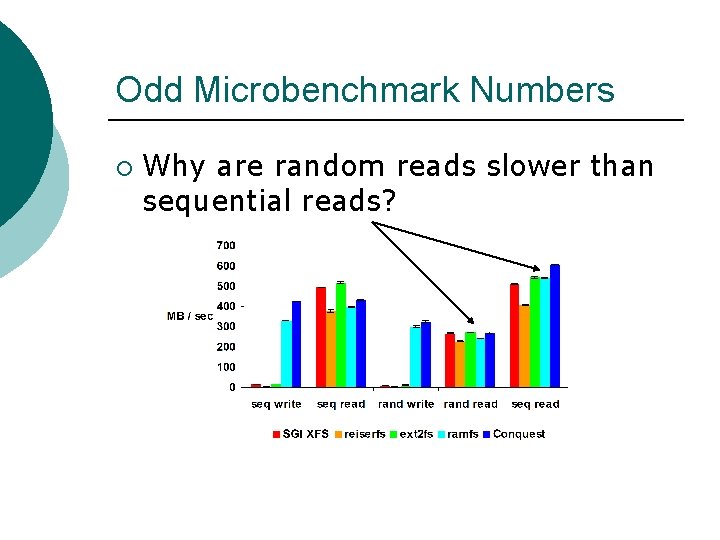
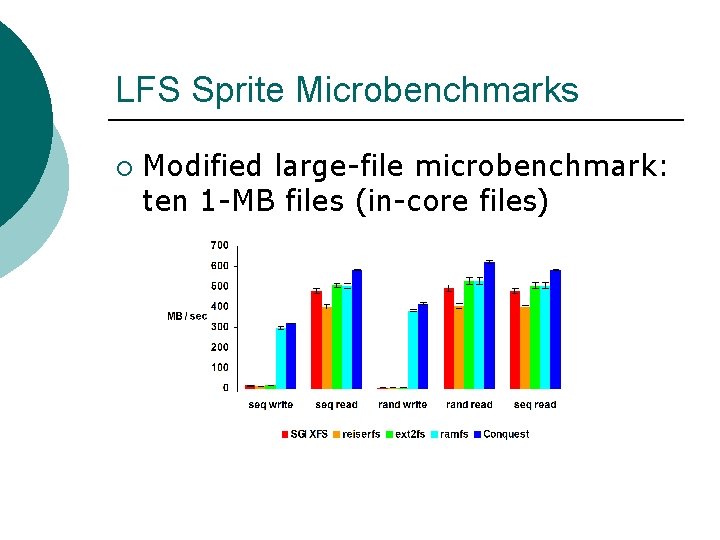
Odd Microbenchmark Numbers ¡ Why are random reads slower than sequential reads?
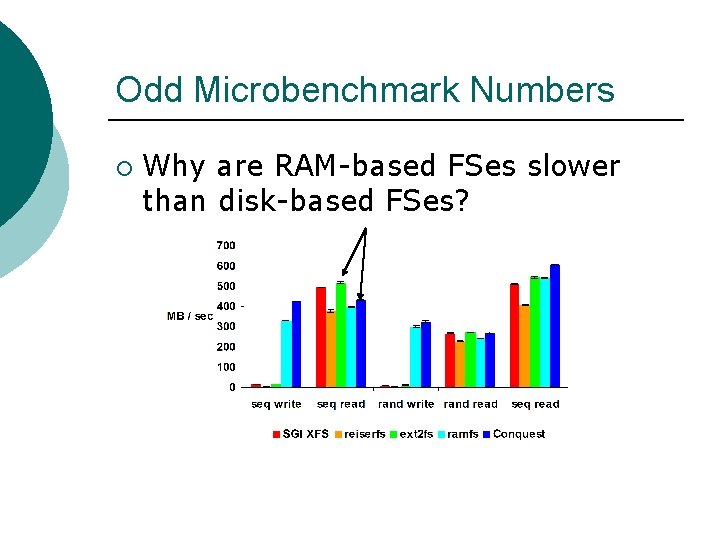
Odd Microbenchmark Numbers ¡ Why are RAM-based FSes slower than disk-based FSes?
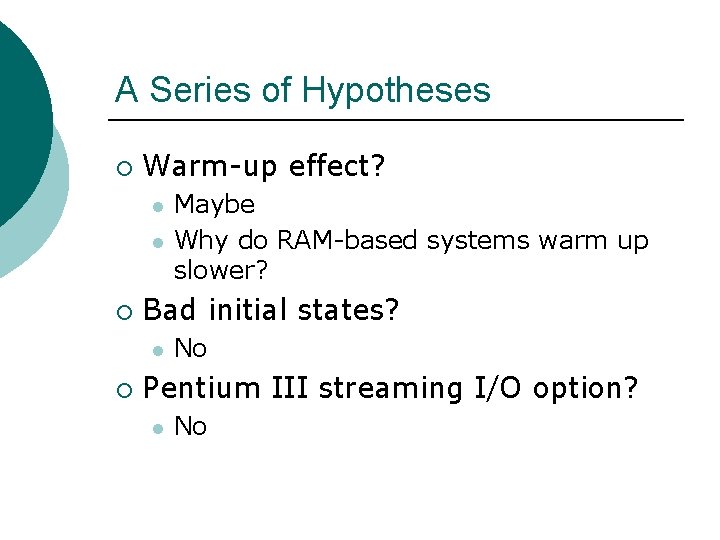
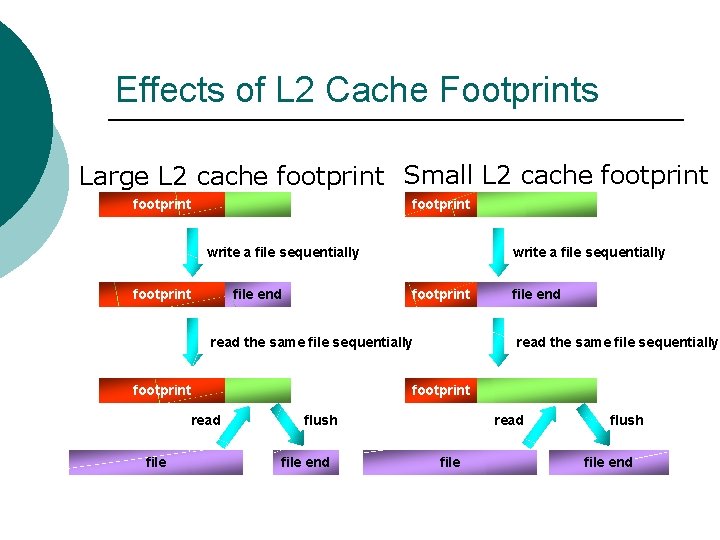
A Series of Hypotheses ¡ Warm-up effect? l l ¡ Bad initial states? l ¡ Maybe Why do RAM-based systems warm up slower? No Pentium III streaming I/O option? l No
Effects of L 2 Cache Footprints Large L 2 cache footprint Small L 2 cache footprint write a file sequentially footprint file end write a file sequentially footprint read the same file sequentially footprint read file end read the same file sequentially footprint flush file end read file flush file end
LFS Sprite Microbenchmarks ¡ Modified large-file microbenchmark: ten 1 -MB files (in-core files)
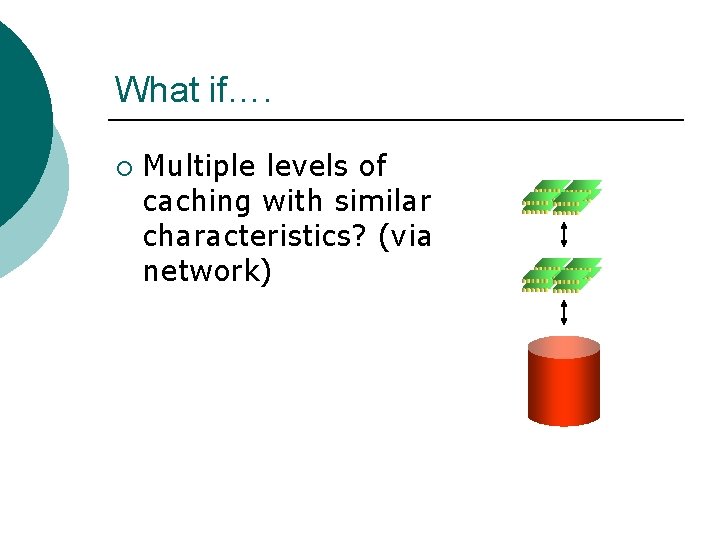
What if…. ¡ Multiple levels of caching with similar characteristics? (via network)
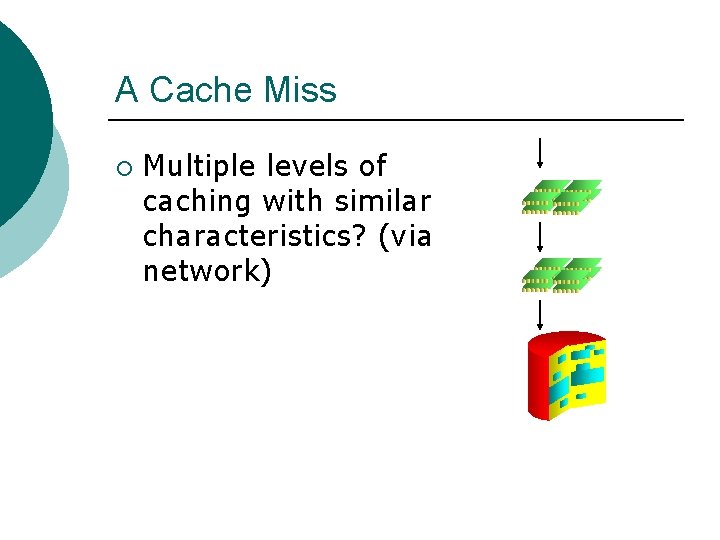
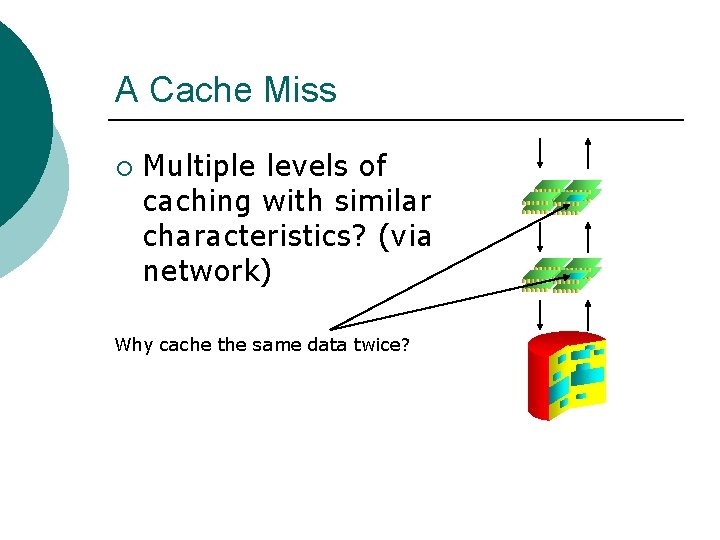
A Cache Miss ¡ Multiple levels of caching with similar characteristics? (via network)
A Cache Miss ¡ Multiple levels of caching with similar characteristics? (via network) Why cache the same data twice?
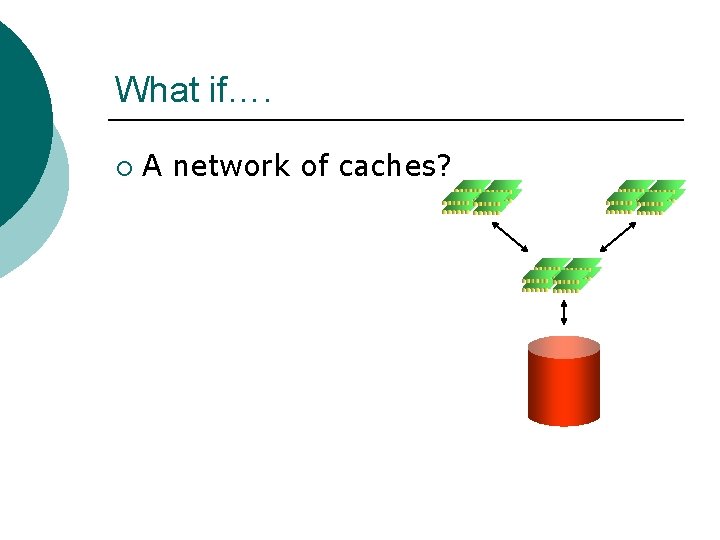
What if…. ¡ A network of caches?
Cache-to-Process Data Handling Data in buffer is destined for a user process (or came from one, on writes) ¡ But buffers are in system space ¡ How to get the data to the user space? ¡ l l l Copy it Virtual memory techniques Use DMA in the first place