Learning Targets Module 43 Stress and Illness 43


- Slides: 65
Learning Targets Module 43 Stress and Illness 43 -1 Discuss how our appraisal of an event affects our stress reaction, and describe three main types of stressors. 43 -2 Discuss how we respond adapt to stress. 43 -3 Discuss how stress makes us more vulnerable to disease. 43 -4 Explain why some of us are more prone than others to coronary heart disease. 43 -5 Discuss whether stress causes illness.
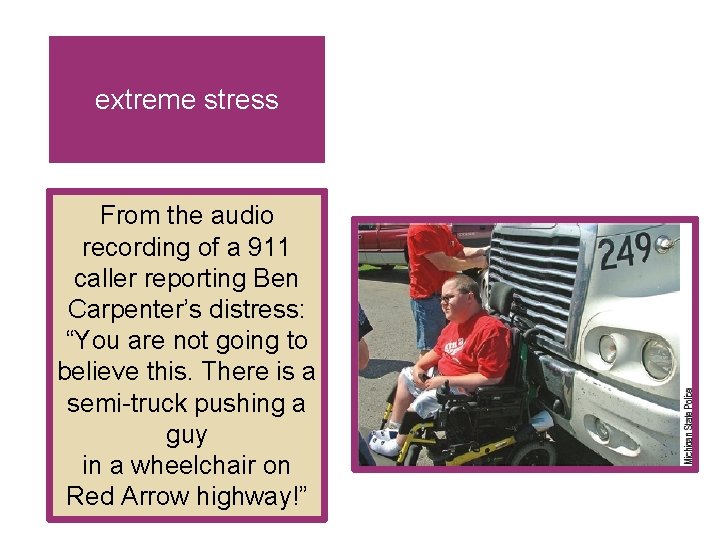
Consider this story… Imagine being 21 -year-old Ben Carpenter, who experienced the world’s wildest and fastest wheelchair ride. As he crossed a street, the light changed and a semi-truck started moving into the intersection. When they bumped, Ben’s wheelchair handles got stuck in the truck’s grille. The driver, who hadn’t seen Ben and couldn’t hear his cries for help, took off down the highway, pushing the wheelchair at 50 miles per hour until reaching his destination two miles away.
extreme stress From the audio recording of a 911 caller reporting Ben Carpenter’s distress: “You are not going to believe this. There is a semi-truck pushing a guy in a wheelchair on Red Arrow highway!”
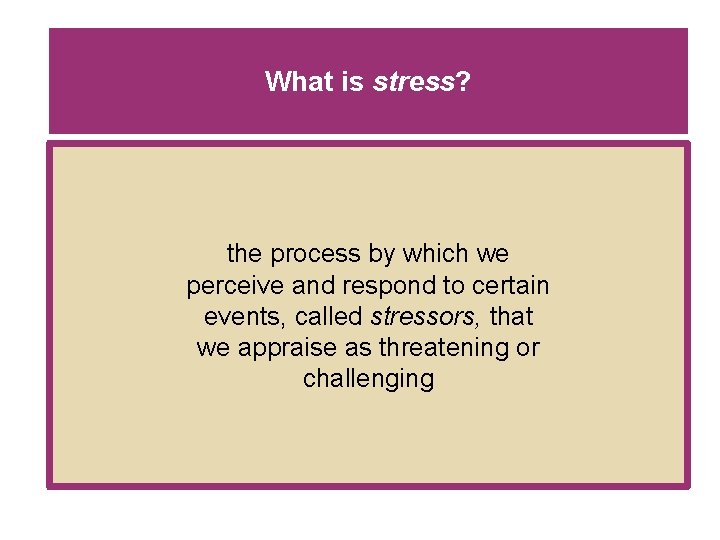
What is stress? the process by which we perceive and respond to certain events, called stressors, that we appraise as threatening or challenging
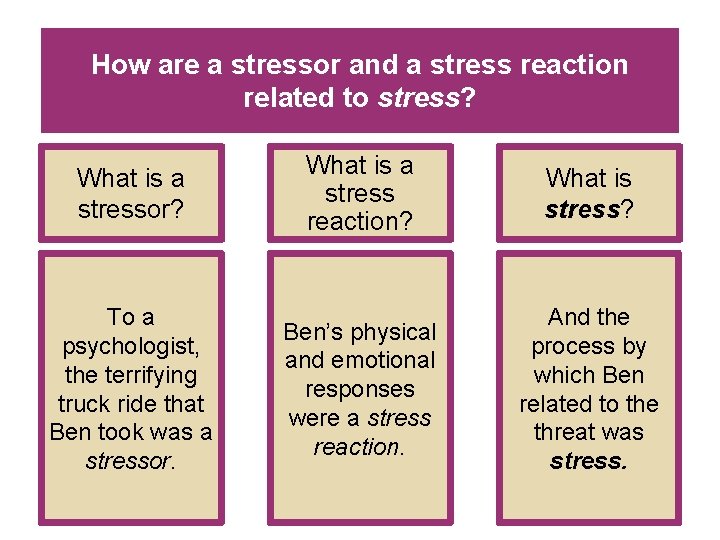
How are a stressor and a stress reaction related to stress? What is a stressor? What is a stress reaction? What is stress? To a psychologist, the terrifying truck ride that Ben took was a stressor. Ben’s physical and emotional responses were a stress reaction. And the process by which Ben related to the threat was stress.
Talk with a partner. How often do you experience stress in your daily life? What are your stressors? Do you feel differently about stressful situations that seem imposed on you (assignments, deadlines, tragic events) than about the stress you impose on yourself (adventures, challenges, happy changes)? Write down your thoughts about your stress and revisit them as we move through this Module.
How does appraisal of an event affect our stress reaction? According to psychologist Richard Lazarus, stress arises less from events themselves than from how we appraise (perceive or explain) them. For example, one person, alone in a house, ignores its creaking sounds and experiences no stress; someone else suspects an intruder and becomes alarmed. One person regards a new job as a welcome challenge; someone else appraises it as risking failure.
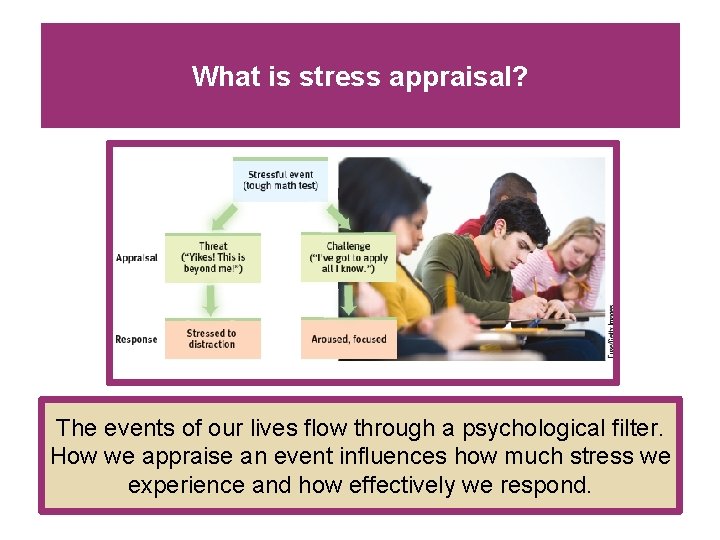
What is stress appraisal? The events of our lives flow through a psychological filter. How we appraise an event influences how much stress we experience and how effectively we respond.
How can short-lived or challenging stress have positive outcomes? A momentary stress can mobilize the immune system for fending off infections and healing wounds. (Segerstrom, 2007) Championship athletes, successful entertainers, motivated students, and great teachers and leaders all thrive and excel when aroused by a challenge. (Blascovich & Mendes, 2010; Wang et al. , 2015) Experiencing some stress early in life builds resilience. (Seery, 2011)
How can extreme or prolonged stress harm us? Stress can trigger risky decisions and unhealthy behaviors. (Cohen et al. , 2016; Starcke & Brand, 2016) Pregnant women with overactive stress systems tend to have shorter pregnancies, which pose health risks for their infants. (Guardino et al. , 2016) When facing stress, people may smoke or drink.
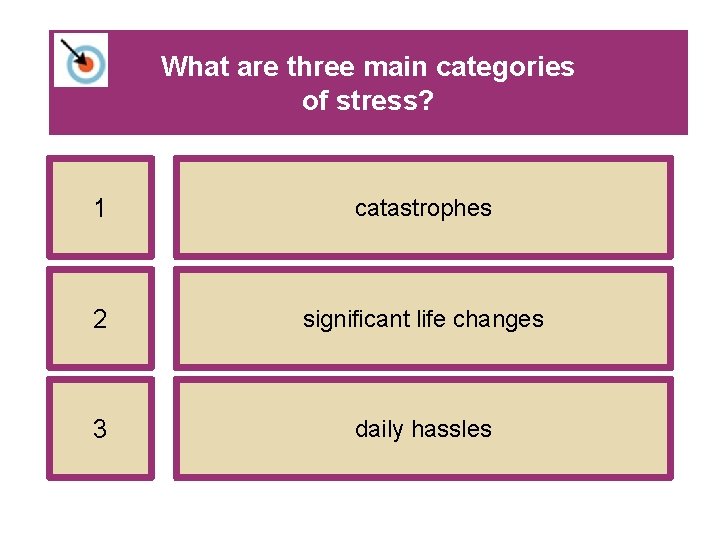
What are three main categories of stress? 1 catastrophes 2 significant life changes 3 daily hassles
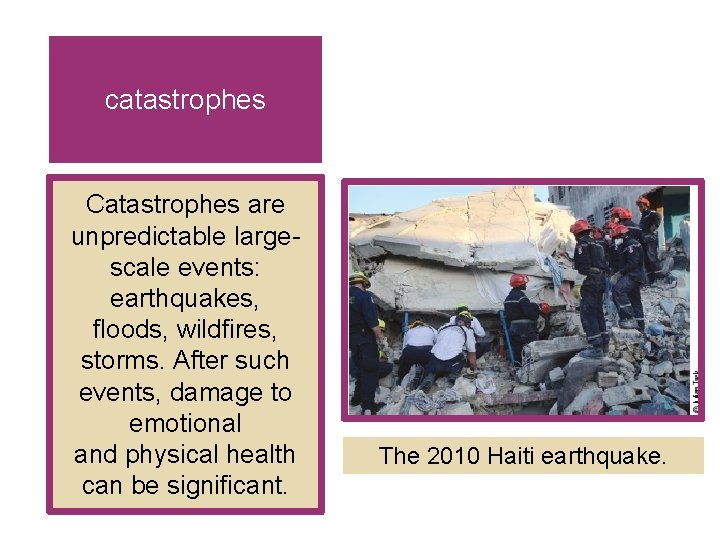
catastrophes Catastrophes are unpredictable largescale events: earthquakes, floods, wildfires, storms. After such events, damage to emotional and physical health can be significant. The 2010 Haiti earthquake.
How do catastrophes impact physical and emotional health? In the four months after Hurricane Katrina, New Orleans’ suicide rate reportedly tripled. (Saulny, 2006) And in surveys taken in the three weeks after the 9/11 terrorist attacks, 58 percent of Americans said they were experiencing greater-than-average arousal and anxiety. (Silver et al. , 2002) A similar uptick in health issues, from heart problems to suicides, immediately followed the 2011 terrorist attacks in Norway. (Strand et al. , 2016)
significant life changes Many significant life changes happen during young adulthood. Life transitions—having a loved one die, a friend move away, a favorite aunt and uncle getting a divorce—are often keenly felt. Even happy events, such as graduating from high school or leaving home for college, can be stressful life transitions.
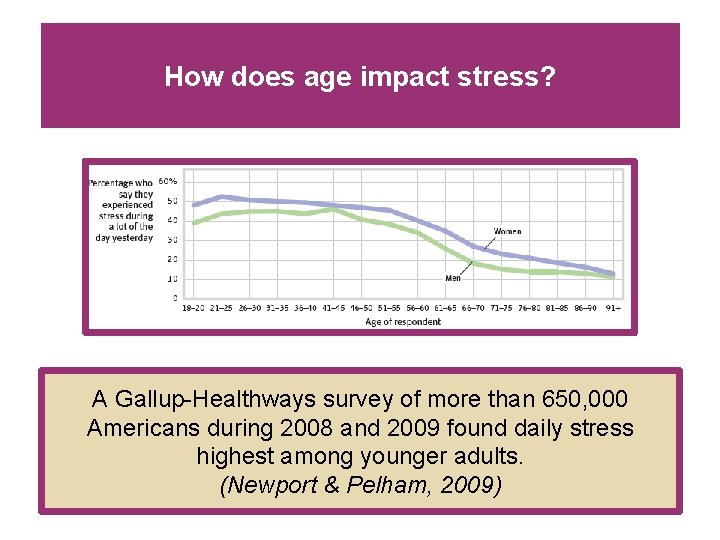
How does age impact stress? A Gallup-Healthways survey of more than 650, 000 Americans during 2008 and 2009 found daily stress highest among younger adults. (Newport & Pelham, 2009)
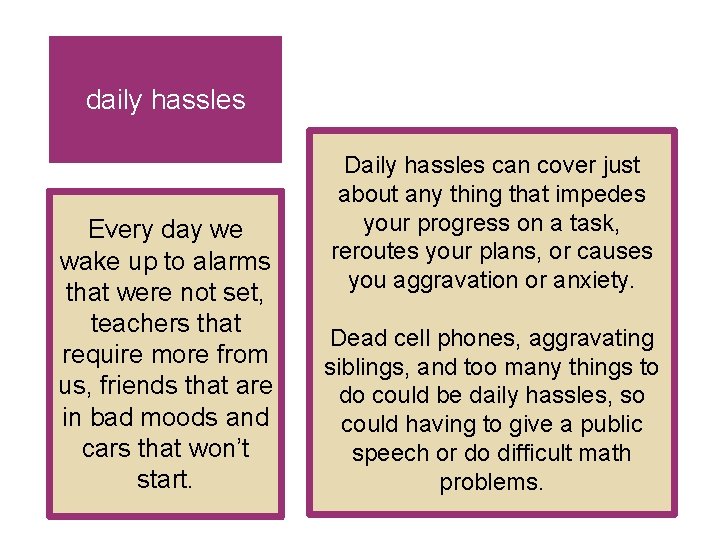
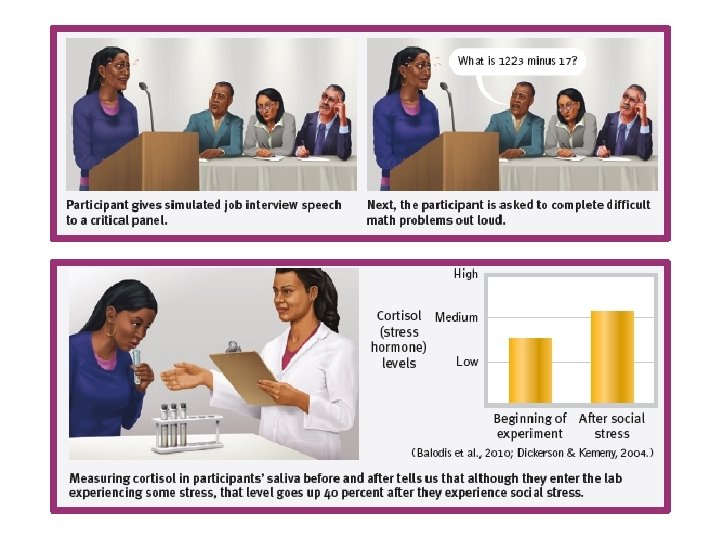
daily hassles Every day we wake up to alarms that were not set, teachers that require more from us, friends that are in bad moods and cars that won’t start. Daily hassles can cover just about any thing that impedes your progress on a task, reroutes your plans, or causes you aggravation or anxiety. Dead cell phones, aggravating siblings, and too many things to do could be daily hassles, so could having to give a public speech or do difficult math problems.
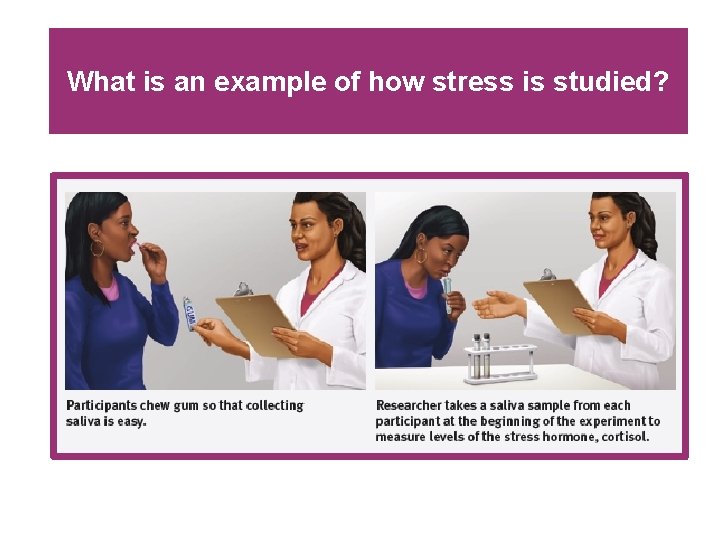
What is an example of how stress is studied?
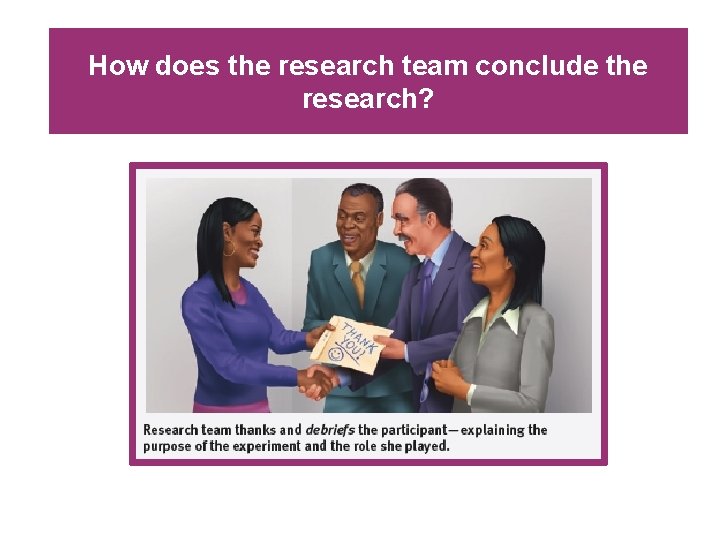
How does the research team conclude the research?
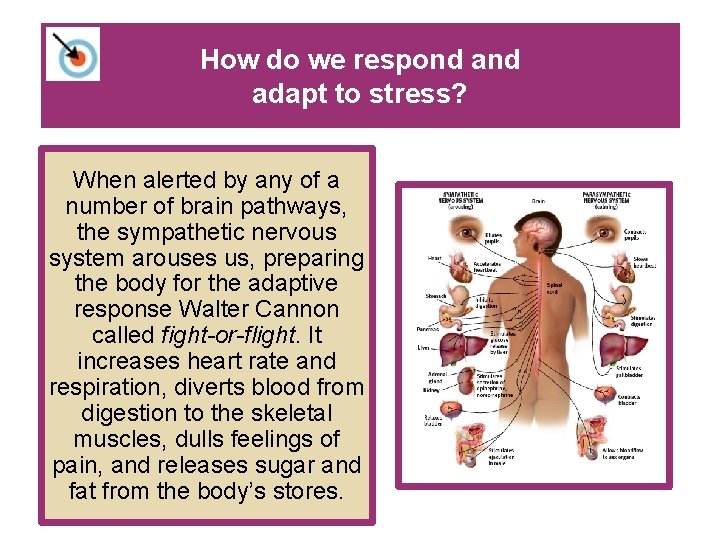
How do we respond adapt to stress? When alerted by any of a number of brain pathways, the sympathetic nervous system arouses us, preparing the body for the adaptive response Walter Cannon called fight-or-flight. It increases heart rate and respiration, diverts blood from digestion to the skeletal muscles, dulls feelings of pain, and releases sugar and fat from the body’s stores.
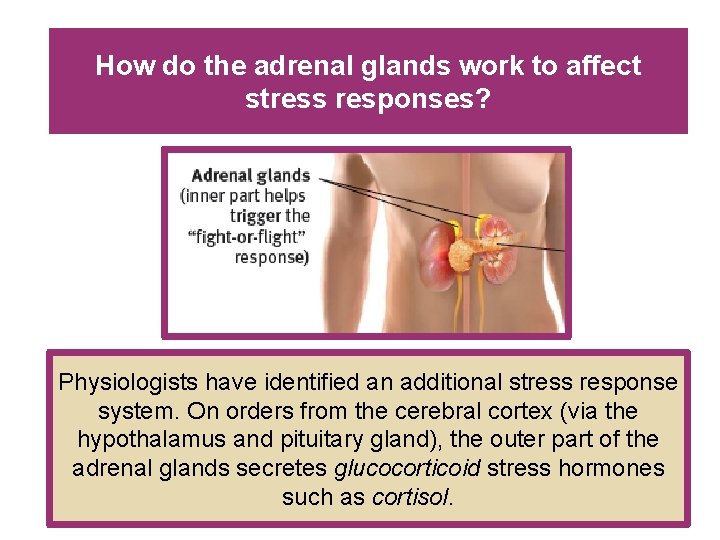
How do the adrenal glands work to affect stress responses? Physiologists have identified an additional stress response system. On orders from the cerebral cortex (via the hypothalamus and pituitary gland), the outer part of the adrenal glands secretes glucocorticoid stress hormones such as cortisol.
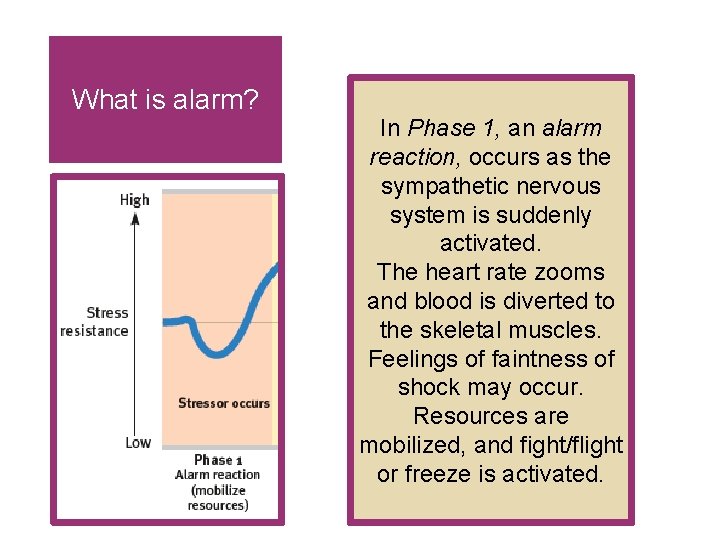
What is the general adaptation syndrome (GAS)? Canadian scientist Hans Selye’s 40 years of research on stress extended Cannon’s findings. His studies of animals’ reactions to various stressors, such as electric shock and surgery, helped make stress a major concept in both psychology and medicine. Selye proposed that the body’s adaptive response to stress is so general that, like a single burglar alarm, it sounds, no matter what intrudes. He named this response the general adaptation syndrome (GAS).
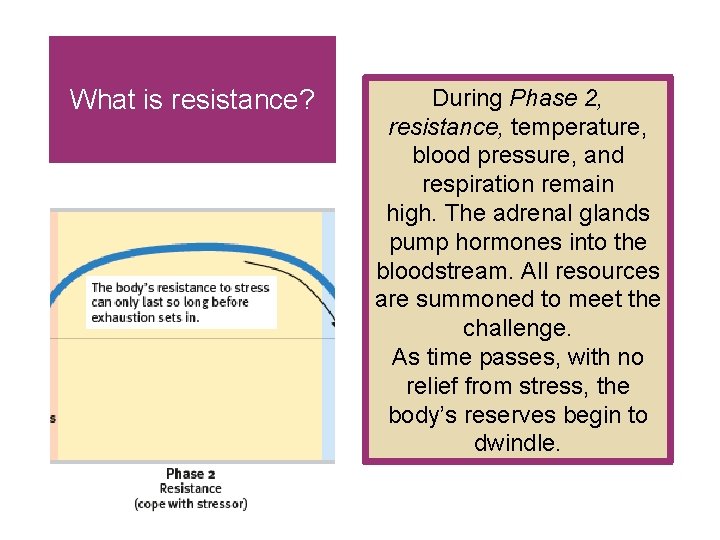
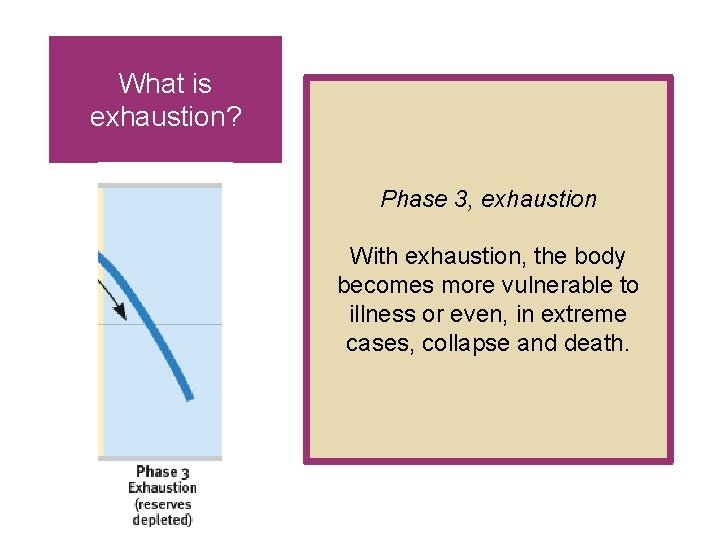
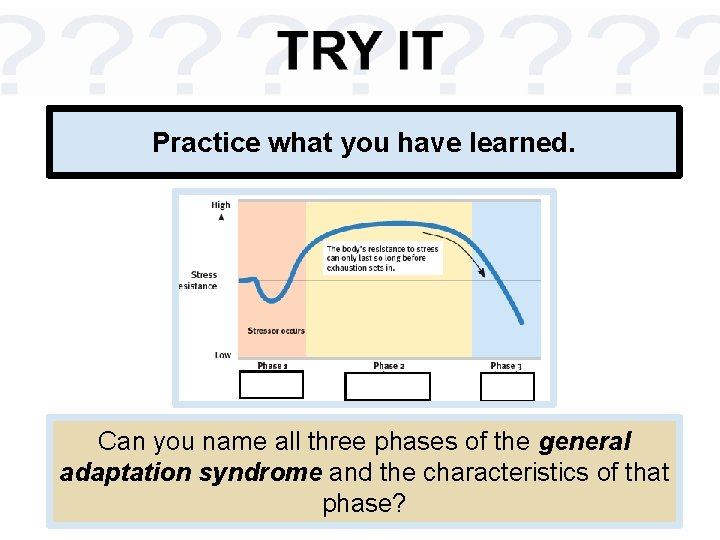
What are three stages of the general adaptation syndrome (GAS)? Hans Selye saw the general adaptation syndrome as a three-phase process of alarm, resistance and exhaustion.
What is alarm? In Phase 1, an alarm reaction, occurs as the sympathetic nervous system is suddenly activated. The heart rate zooms and blood is diverted to the skeletal muscles. Feelings of faintness of shock may occur. Resources are mobilized, and fight/flight or freeze is activated.
What is resistance? During Phase 2, resistance, temperature, blood pressure, and respiration remain high. The adrenal glands pump hormones into the bloodstream. All resources are summoned to meet the challenge. As time passes, with no relief from stress, the body’s reserves begin to dwindle.
What is exhaustion? Phase 3, exhaustion With exhaustion, the body becomes more vulnerable to illness or even, in extreme cases, collapse and death.
Practice what you have learned. Can you name all three phases of the general adaptation syndrome and the characteristics of that phase?
2. What Would You Answer? Emily’s family has been traumatized by a recent hurricane in Puerto Rico. According to Hans Selye’s general adaptation syndrome (GAS), which is the correct order of the phases the family may go through in dealing with their stress? A. B. C. D. E. resistance, alarm, exhaustion challenge, alarm, resistance, exhaustion, alarm appraisal, alarm, resistance
AP® Exam Tip Be able to differentiate Walter Cannon’s fight-or-flight theory and Hans Selye’s general adaptation syndrome. These have been on the AP® exam in the past.
What are other ways humans respond to stress? We respond to stress in other ways, too. One response is common after a loved one’s death: Withdraw. Pull back. Conserve energy. Faced with an extreme disaster, such as a ship sinking, some people become paralyzed by fear.
What is the tend-and-befriend response? Another, found often among women, is to give and receive support—what’s called the tend-and -befriend response. (Lim & De. Steno, 2016; Taylor, 2006; Taylor et al. , 2000) Facing stress, men more often than women tend to withdraw socially, turn to alcohol, or become emotionally insensitive. (Bodenmann et al. , 2015) Women more often respond to stress by nurturing and banding together.
What are health psychology and psychoneuroimmunology? health psychology psychoneuroimmunology a subfield of psychology that provides psychology’s contribution to behavioral medicine the study of how psychological, neural, and endocrine processes together affect the immune system and resulting health
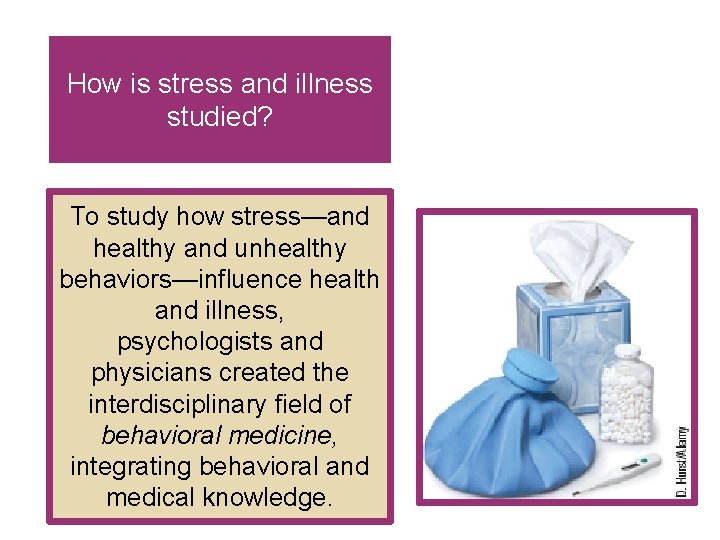
How is stress and illness studied? To study how stress—and healthy and unhealthy behaviors—influence health and illness, psychologists and physicians created the interdisciplinary field of behavioral medicine, integrating behavioral and medical knowledge.
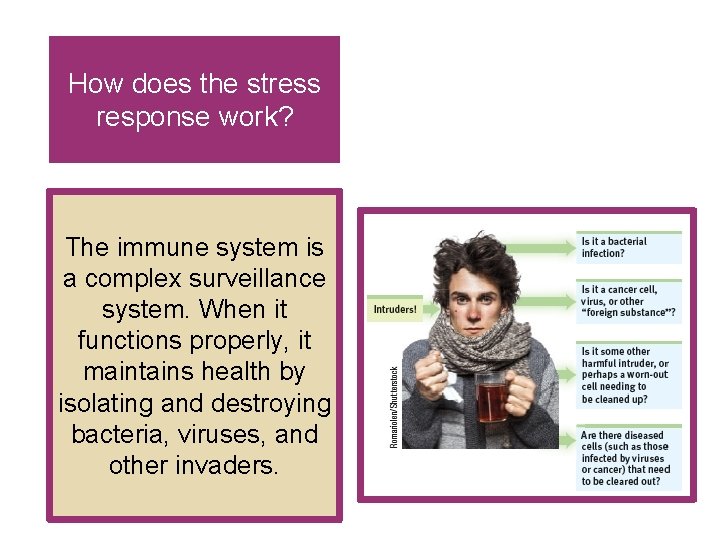
How does the stress response work? The immune system is a complex surveillance system. When it functions properly, it maintains health by isolating and destroying bacteria, viruses, and other invaders.
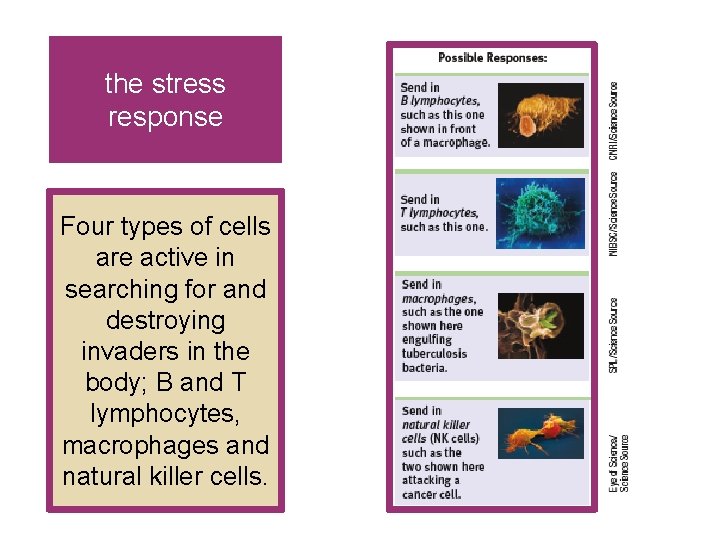
the stress response Four types of cells are active in searching for and destroying invaders in the body; B and T lymphocytes, macrophages and natural killer cells.
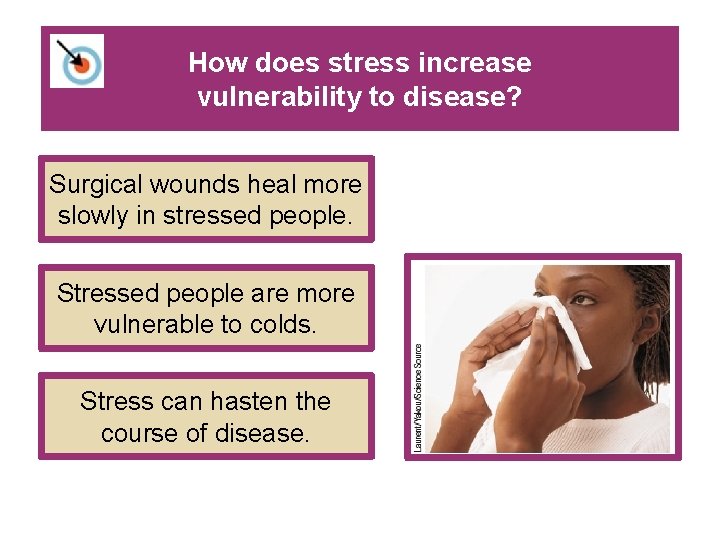
How does stress increase vulnerability to disease? Surgical wounds heal more slowly in stressed people. Stressed people are more vulnerable to colds. Stress can hasten the course of disease.
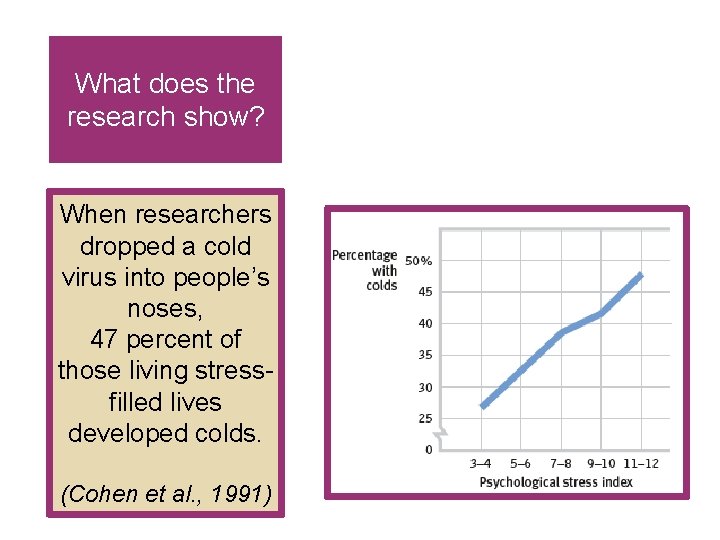
What does the research show? When researchers dropped a cold virus into people’s noses, 47 percent of those living stressfilled lives developed colds. (Cohen et al. , 1991)
How high is your stress? How have changes in stress levels—such as increased stress around finals week—affected your health, and the health of other students in your classes? Talk with your partner.
Let’s look at the research… In one experiment, dental students received punch wounds (precise small holes punched in the skin). Compared with wounds placed during summer vacation, those placed three days before a major exam healed 40 percent more slowly. (Kiecolt-Glaser et al. , 1998)
Does stress cause cancer? Stress does not create cancer cells. But in a healthy, functioning immune system, lymphocytes, macrophages, and NK cells search out and destroy cancer cells and cancer-damaged cells. If stress weakens the immune system, might this weaken a person’s ability to fight off cancer?
What does this research show? Experimenters implanted tumor cells in rodents or gave them carcinogens (cancer-producing substances). They then exposed some rodents to uncontrollable stress, such as inescapable shocks, which weakened their immune systems. Stressed rodents, compared with their unstressed counterparts, developed cancer more often, experienced tumor growth sooner, and grew larger tumors. (Sklar & Anisman, 1981)
Why are some of us more prone to coronary heart disease than others? About 610, 000 Americans die annually from heart disease. (CDC, 2016 a) High blood pressure and a family history of the disease increase the risk. So do smoking, obesity, an unhealthy diet, physical inactivity, and a high cholesterol level.
How does stress impact coronary heart disease? Stress and personality play a big role in heart disease. The more psychological trauma people experience, the more their bodies generate inflammation, which is associated with heart and other health problems, including depression. (Haapakoski et al. , 2015; O’Donovan et al. , 2012)
What studies have been conducted? In a classic study, Meyer Friedman, Ray Rosenman, and their colleagues tested the idea that stress increases vulnerability to heart disease by measuring the blood cholesterol level and clotting speed of 40 U. S. male tax accountants at different times of year. (Friedman & Ulmer, 1984)
What were the results? From January through March, the test results were completely normal. But as the accountants began scrambling to finish their clients’ tax returns before the April 15 filing deadline, their cholesterol and clotting measures rose to dangerous levels. In May and June, with the deadline past, the measures returned to normal. For these men, stress predicted heart attack risk.
What follow up research was conducted by Freidman and Rosenman? Friedman and Rosenman launched a longitudinal study of more than 3000 healthy men, aged 35 to 59. The researchers interviewed each man for 15 minutes, noting his work and eating habits, manner of talking, and other behavior patterns. After the interviews, the subjects were classified as having either Type A or Type B personalities.
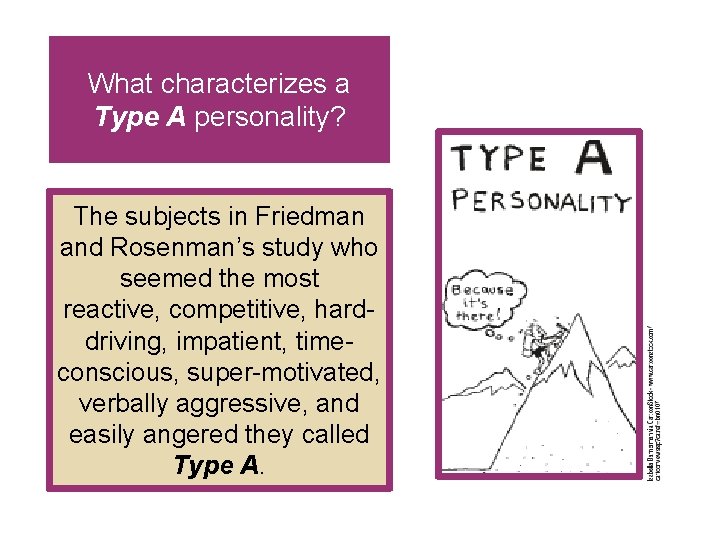
What characterizes a Type A personality? The subjects in Friedman and Rosenman’s study who seemed the most reactive, competitive, harddriving, impatient, timeconscious, super-motivated, verbally aggressive, and easily angered they called Type A.
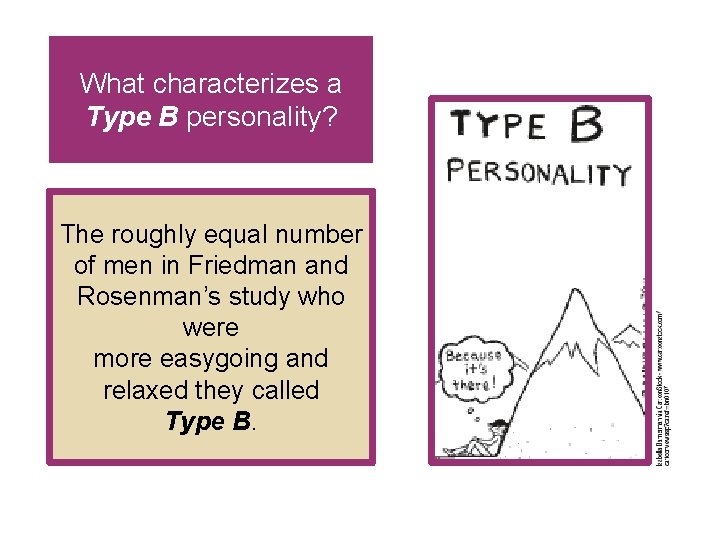
What characterizes a Type B personality? The roughly equal number of men in Friedman and Rosenman’s study who were more easygoing and relaxed they called Type B.
What were the findings of the longitudinal study? Nine years later, 257 men had suffered heart attacks, and 69 percent of them were Type A. Moreover, not one of the “pure” Type B’s—the most mellow and laid-back of their group—had suffered a heart attack.
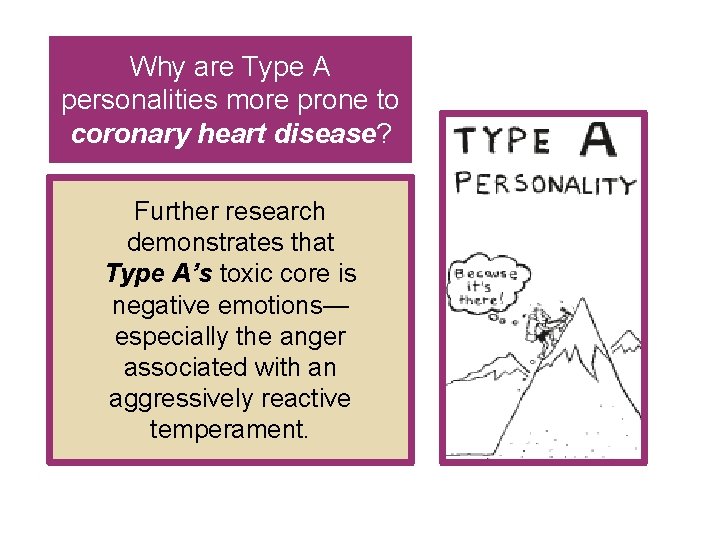
Why are Type A personalities more prone to coronary heart disease? Further research demonstrates that Type A’s toxic core is negative emotions— especially the anger associated with an aggressively reactive temperament.
What physiological changes occur when angry? When challenged, our active sympathetic nervous system redistributes blood flow to our muscles, pulling it away from our internal organs. The liver, which normally removes cholesterol and fat from the blood, can’t do its job. Thus, excess cholesterol and fat may continue to circulate in the blood and later get deposited around the heart. Hostility also correlates with other risk factors, such as smoking, drinking, and obesity. (Bunde & Suls, 2006)
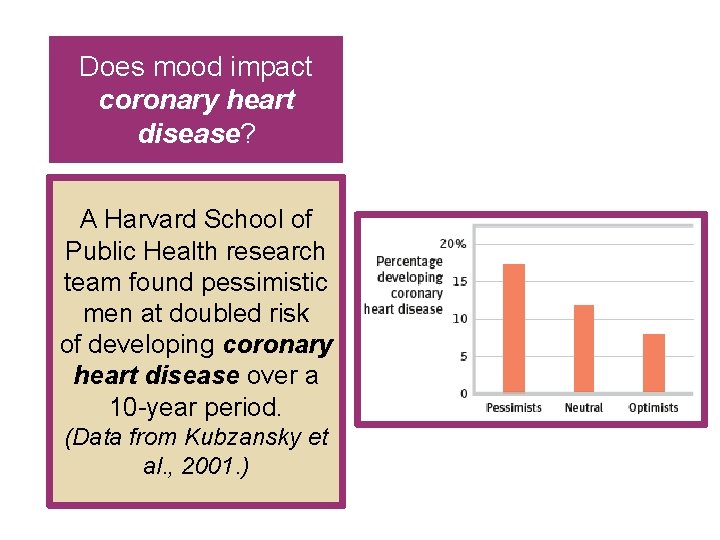
Does mood impact coronary heart disease? A Harvard School of Public Health research team found pessimistic men at doubled risk of developing coronary heart disease over a 10 -year period. (Data from Kubzansky et al. , 2001. )
What is catharsis? Given the connection between chronic hostility, as in the Type A personality, and heart disease, it’s clear we need strategies for anger management. In Western cultures, many believe we can achieve emotional release, or catharsis, through aggressive action or fantasy.
Does catharsis work to reduce anger? Catharsis usually fails to cleanse our rage. More often, expressing anger breeds more anger. For one thing, it may provoke further retaliation, causing a minor conflict to escalate into a major confrontation. For another, expressing anger can magnify anger.
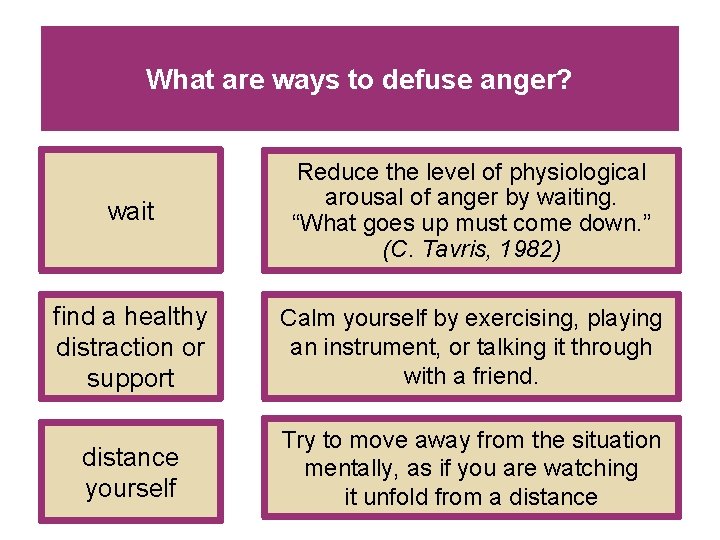
What are ways to defuse anger? wait Reduce the level of physiological arousal of anger by waiting. “What goes up must come down. ” (C. Tavris, 1982) find a healthy distraction or support Calm yourself by exercising, playing an instrument, or talking it through with a friend. distance yourself Try to move away from the situation mentally, as if you are watching it unfold from a distance
3. What Would You Answer? In order to reduce risk of heart disease, people should attempt to reduce their levels of A. B. C. D. E. optimism. apathy. pessimism. competitiveness. empathy.
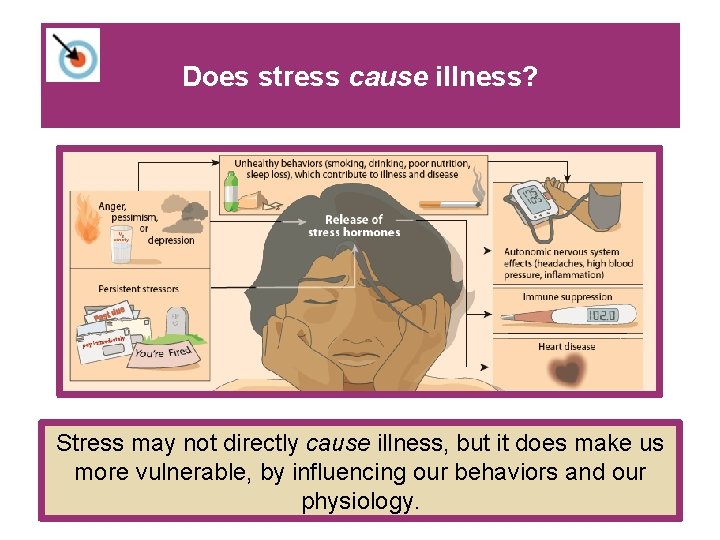
Does stress cause illness? Stress may not directly cause illness, but it does make us more vulnerable, by influencing our behaviors and our physiology.
Learning Target 43 -1 Review Discuss how our appraisal of an event affects our stress reaction, and describe three main types of stressors. § Stress is the process by which we appraise and respond to stressors—events that challenge or threaten us. If we appraise an event as challenging, we will be aroused and focused in preparation for success. If we appraise an event as a threat, we will experience a stress reaction, and our health may suffer. § The three main types of stressors are catastrophes, significant life changes, and daily hassles and social stress.
Learning Target 43 -2 Review Discuss how we respond adapt to stress. § Walter Cannon viewed the stress response as a “fight-or-flight” system. § Later researchers identified an additional stress response system in which the adrenal glands secrete glucocorticoid stress hormones, such as cortisol. § Hans Selye proposed a general three-phase (alarm -resistance- exhaustion) general adaptation syndrome.
Learning Target 43 -2 Review cont. Discuss how we respond adapt to stress. § Prolonged stress can damage neurons, hastening cell death. § Facing stress, women may have a tend-andbefriend response; men may withdraw socially, turn to alcohol, or become aggressive.
Learning Target 43 -3 Review Discuss how stress makes us more vulnerable to disease. § Psychoneuroimmunology is the study of how psychological, neural, and endocrine processes together affect the Immune system and resulting health. § Stress diverts energy from the immune system, inhibiting the activities of its B and T lymphocytes, macrophages, and NK cells. § Stress does not cause diseases such as cancer, but by altering our immune functioning it may make us more vulnerable to diseases and influence their progression.
Learning Target 43 -4 Review Explain why some of us are more prone than others to coronary heart disease. § Coronary heart disease, the United States’ number one cause of death, has been linked with the competitive, hard-driving, impatient, verbally aggressive, and (especially) anger-prone Type A personality. § Compared with relaxed, easygoing Type B personalities, who are less likely to experience heart disease, Type A people secrete more stress hormones.
Learning Target 43 -4 Review cont. Explain why some of us are more prone than others to coronary heart disease. § Catharsis doesn’t work to reduce the anger that can be so harmful to our health, but waiting, distracting, and distancing do. § Chronic stress also contributes to persistent inflammation, which is associated with heart and other health problems, including depression.
Learning Target 43 -5 Review Discuss whether stress causes illness. § Stress may not directly cause illness, but it does make us more vulnerable, by influencing our behaviors and our physiology.