Grain sizedependent viscosity convection Slava Solomatov Washington University





- Slides: 60
Grain size-dependent viscosity convection Slava Solomatov Washington University in St. Louis Acknowledgements: Rifa El-Khozondar Boulder CO, June 23
Outline • Mantle rheology • What controls the grain size? • How does grain size affect mantle convection?
Rheology
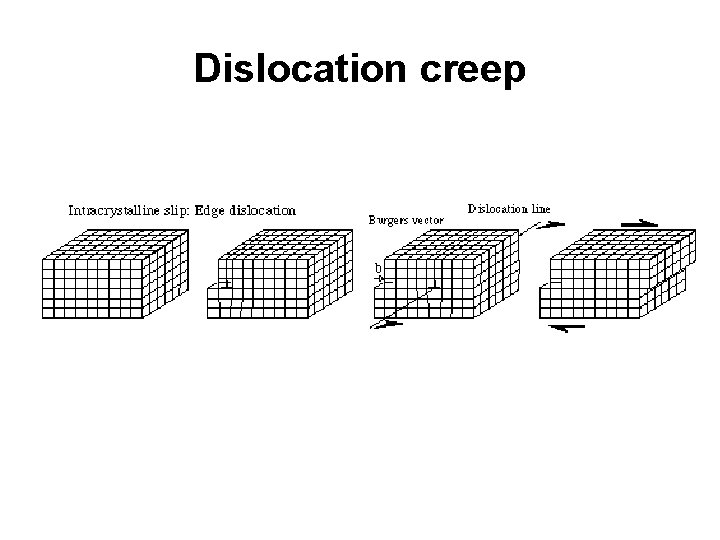
Dislocation creep
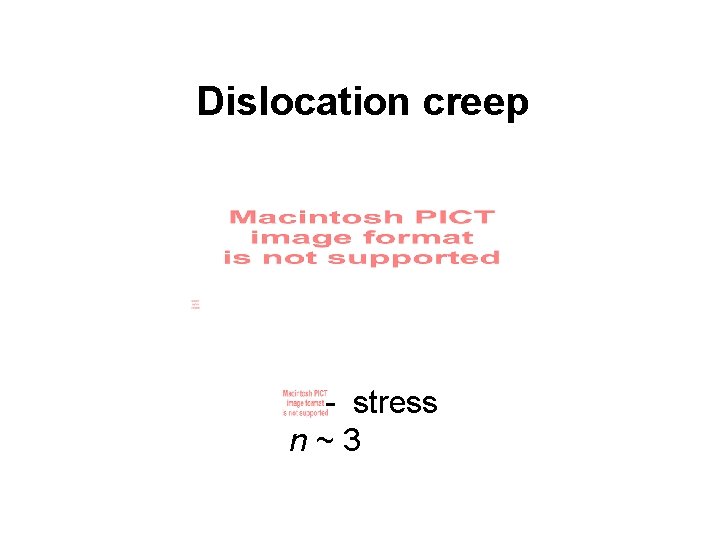
Dislocation creep - stress n~3
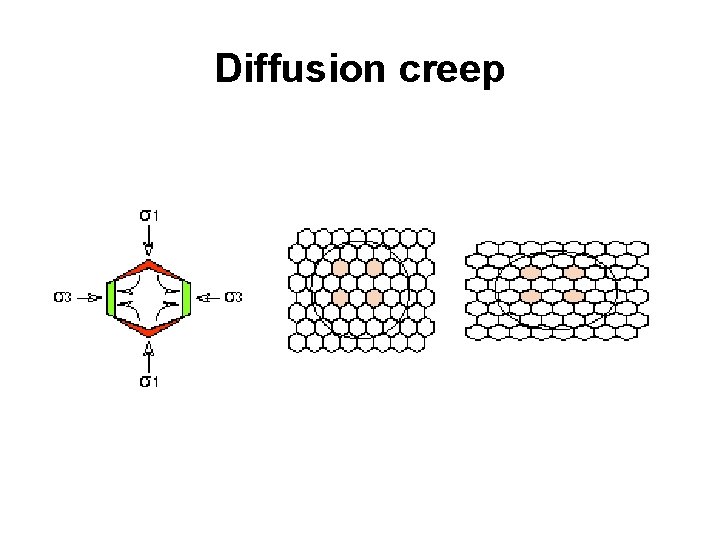
Diffusion creep
Diffusion creep
Diffusion creep m ~ 2 -3
Superplasticity
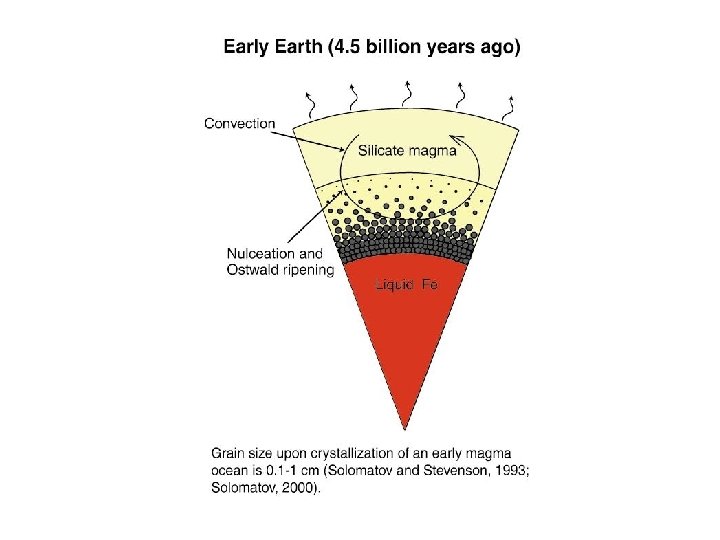
What controls the grain size?
Grain growth
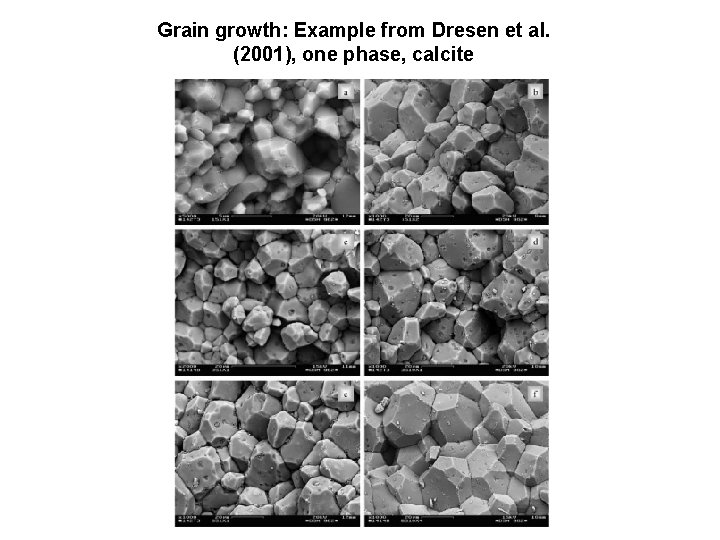
Grain growth: Example from Dresen et al. (2001), one phase, calcite
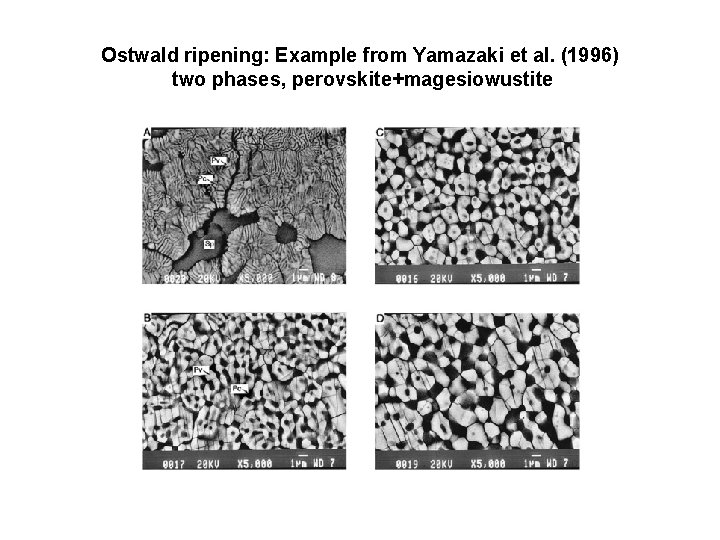
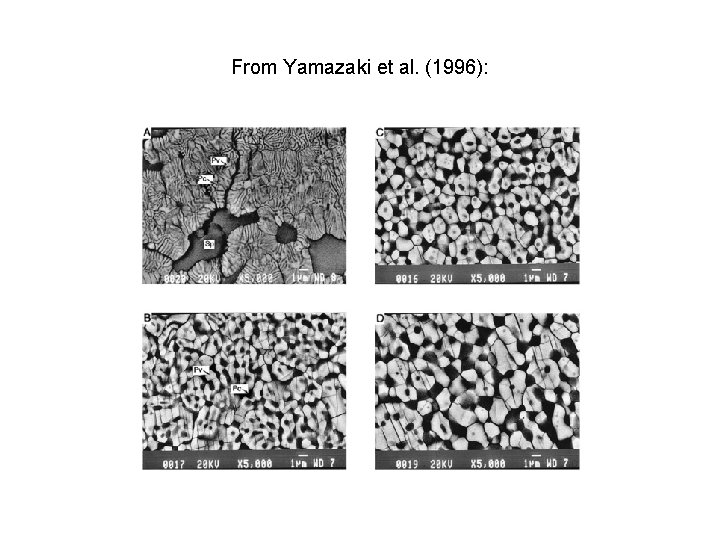
Ostwald ripening: Example from Yamazaki et al. (1996) two phases, perovskite+magesiowustite
Ostwald ripening in two-phase systems (from El-Khozondar’s thesis)
Ostwald ripening p ~ 3 -4
Phase transformations
Polymorphic phase transformations (410, 520, 2600)
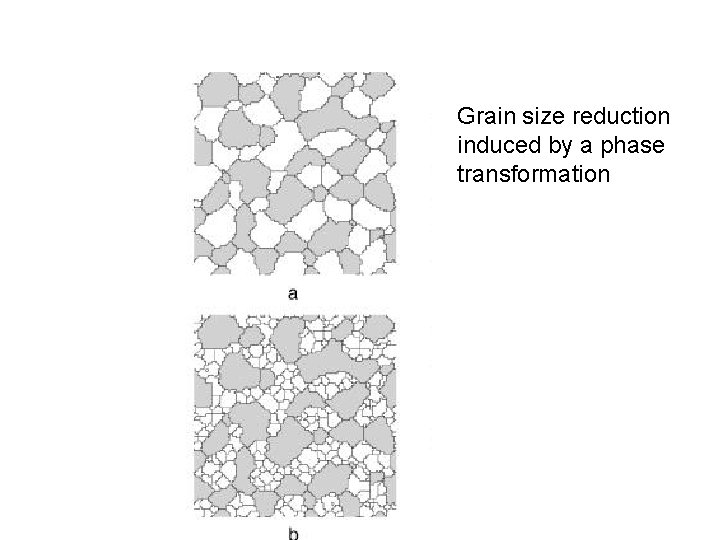
Grain size reduction induced by a phase transformation
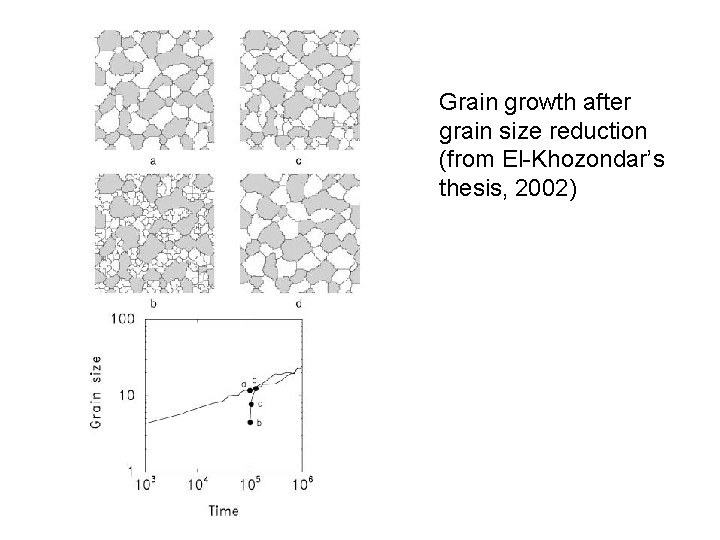
Grain growth after grain size reduction (from El-Khozondar’s thesis, 2002)
Eutectoid phase transformations (660)
From Yamazaki et al. (1996):
Why is n so high in Yamazaki’s experiments? (~11 rather than 3 or 4)
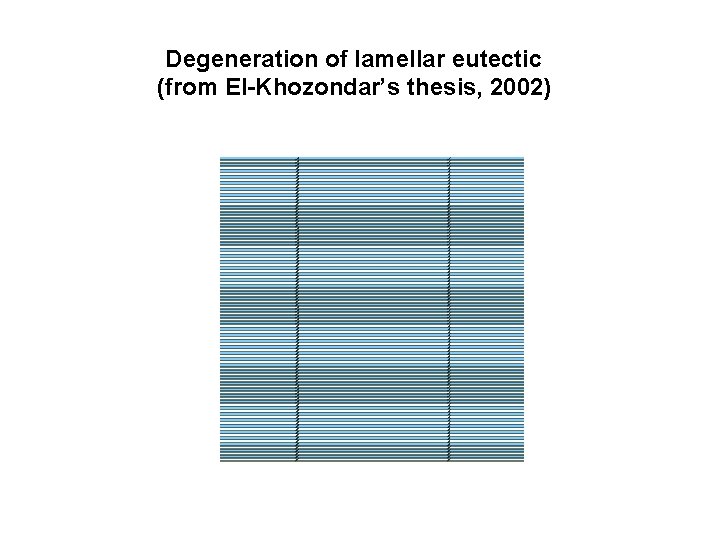
Degeneration of lamellar eutectic (from El-Khozondar’s thesis, 2002)
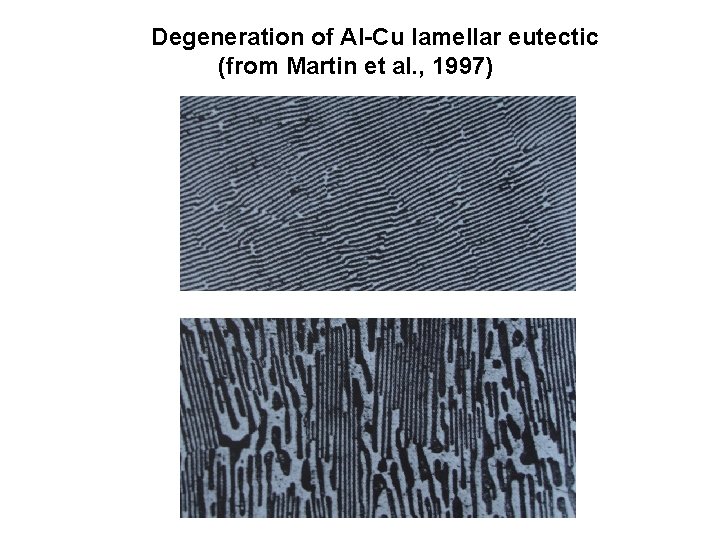
Degeneration of Al-Cu lamellar eutectic (from Martin et al. , 1997)
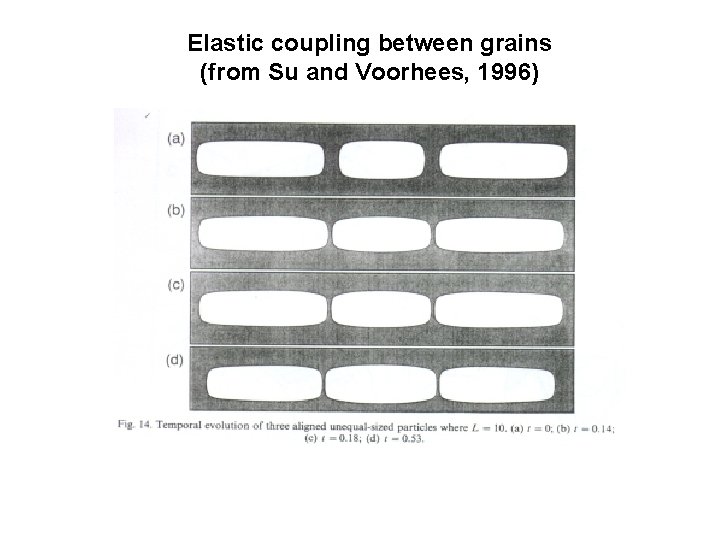
Elastic coupling between grains (from Su and Voorhees, 1996)
How does grain size affect mantle convection?
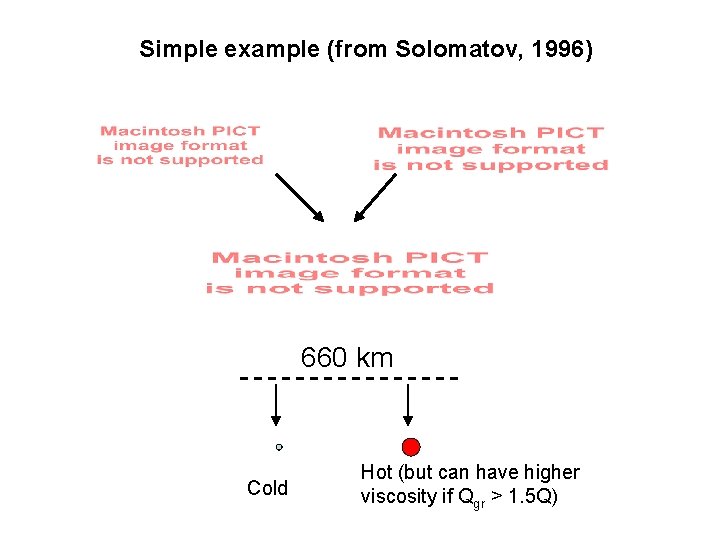
Simple example (from Solomatov, 1996) 660 km Cold Hot (but can have higher viscosity if Qgr > 1. 5 Q)
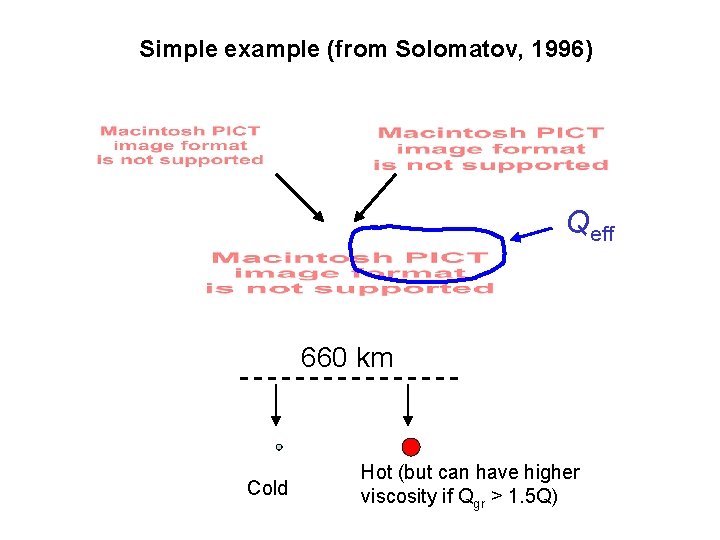
Simple example (from Solomatov, 1996) Qeff 660 km Cold Hot (but can have higher viscosity if Qgr > 1. 5 Q)
Implications for thermal evolution
Heat flux, m. W/m 2 Earth’s heat flux Time, b. y.
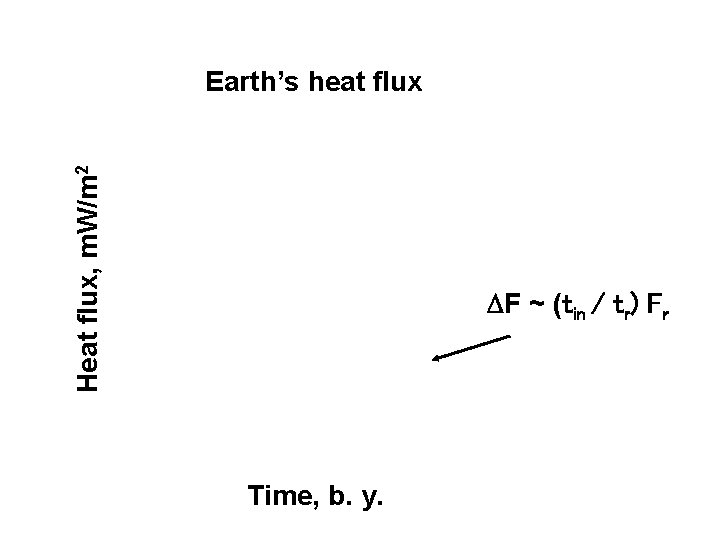
Heat flux, m. W/m 2 Earth’s heat flux DF ~ (tin / tr) Fr Time, b. y.
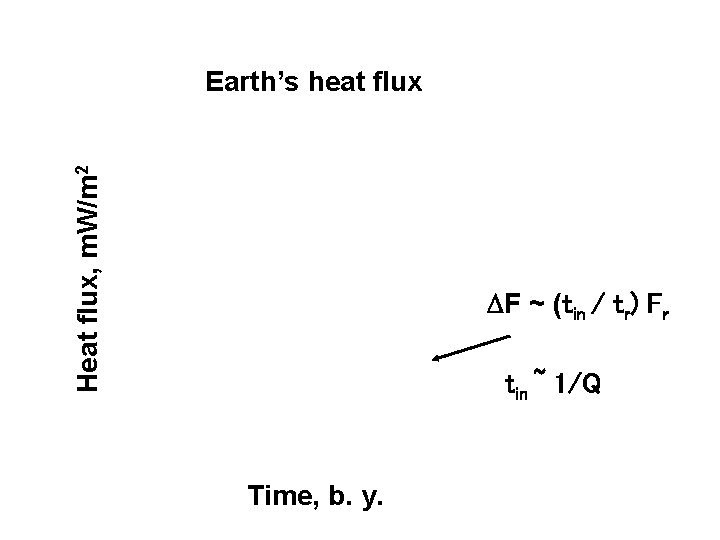
Heat flux, m. W/m 2 Earth’s heat flux DF ~ (tin / tr) Fr tin ~ 1/Q Time, b. y.
Possible explanations • Mantle has more U, Th and K than geochemistry suggests (by as much as 50%)
Possible explanations • Mantle has more U, Th and K than geochemistry suggests (by as much as 50%) • Viscous bending controls plate velocity (Christensen and others)
Possible explanations • Mantle has more U, Th and K than geochemistry suggests (by as much as 50%) • Viscous bending controls plate velocity (Christensen and others) • Decreasing convective layering (Peltier and others)
Possible explanations • Mantle has more U, Th and K than geochemistry suggests (by as much as 50%) • Viscous bending controls plate velocity (Christensen and others) • Decreasing convective layering (Peltier and others) • Larger heat flux from the core than we used to believe
The role of grain size dependent viscosity
Assumptions • Lower mantle is in the grain size sensitive creep regime (seismically isotropic = diffusion creep/superplasticity). • Slab buoyancy is mainly balanced by viscous resistance in the lower mantle (so that plate velocity is controlled by lower mantle viscosity).
Parameterized convection calculations from Solomatov (2001)
Observed
Implications for plumes
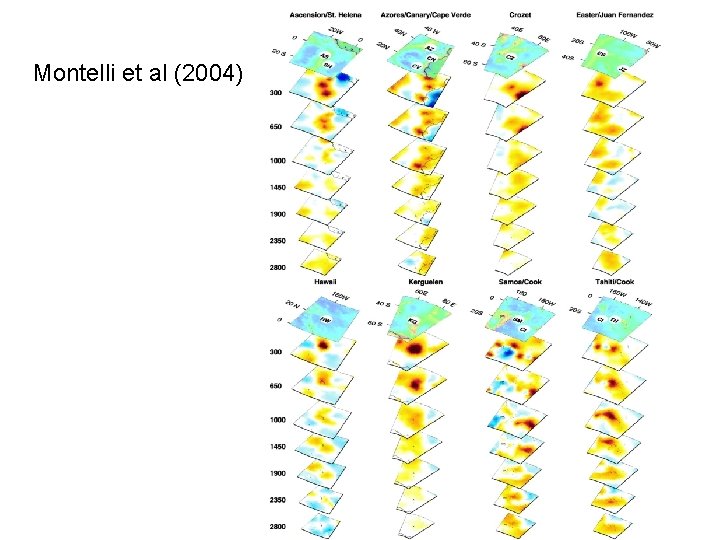
Montelli et al (2004)
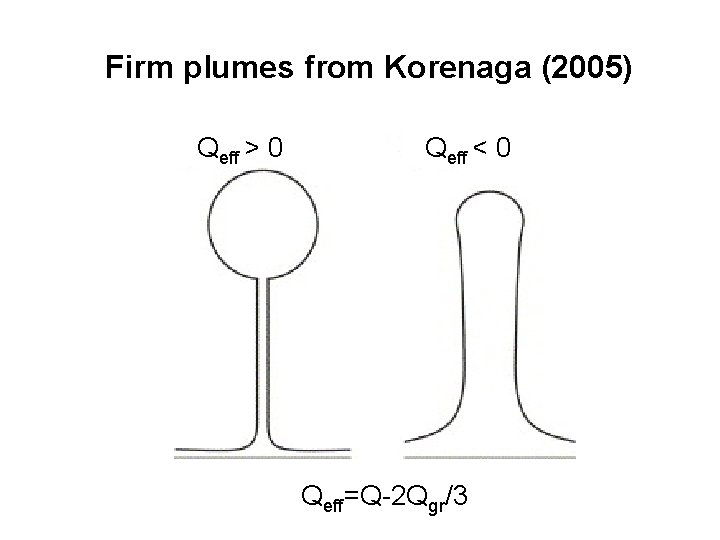
Firm plumes from Korenaga (2005) Qeff > 0 Qeff < 0 Qeff=Q-2 Qgr/3
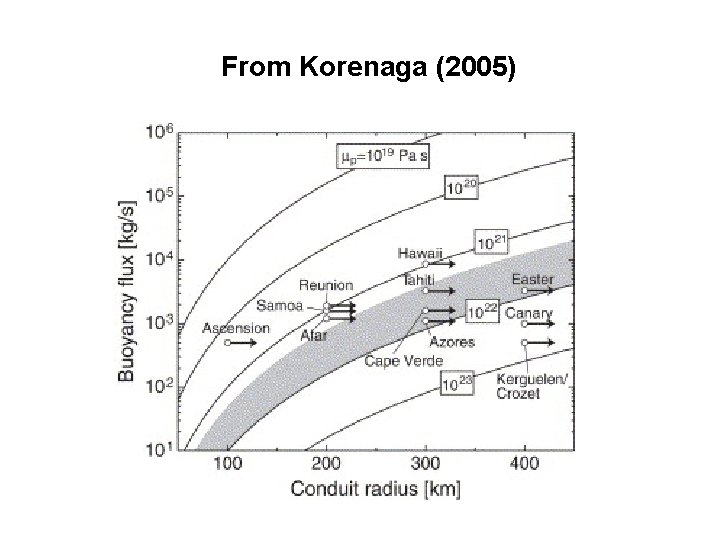
From Korenaga (2005)
Implications for sublithospheric small-scale instabilities
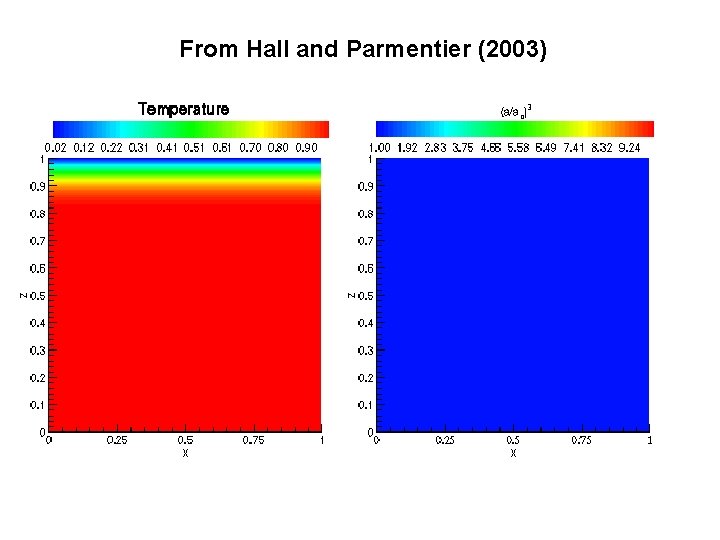
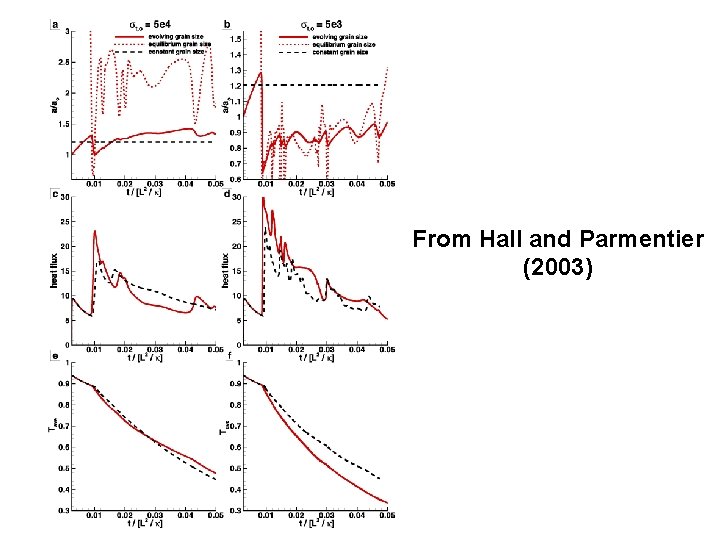
Hall and Parmentier (2003) included grain size evolution as well as grain size reduction in a numerical convection model.
From Hall and Parmentier (2003)
From Hall and Parmentier (2003)
Implications for chemical mixing
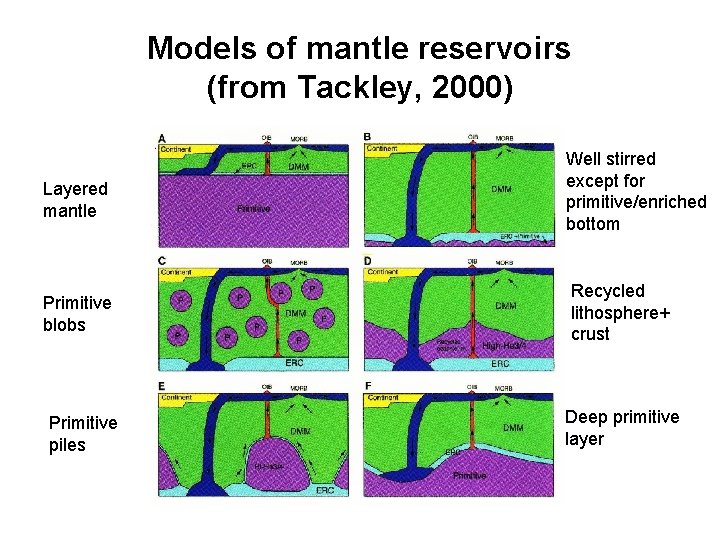
Models of mantle reservoirs (from Tackley, 2000) Layered mantle Well stirred except for primitive/enriched bottom Primitive blobs Recycled lithosphere+ crust Primitive piles Deep primitive layer
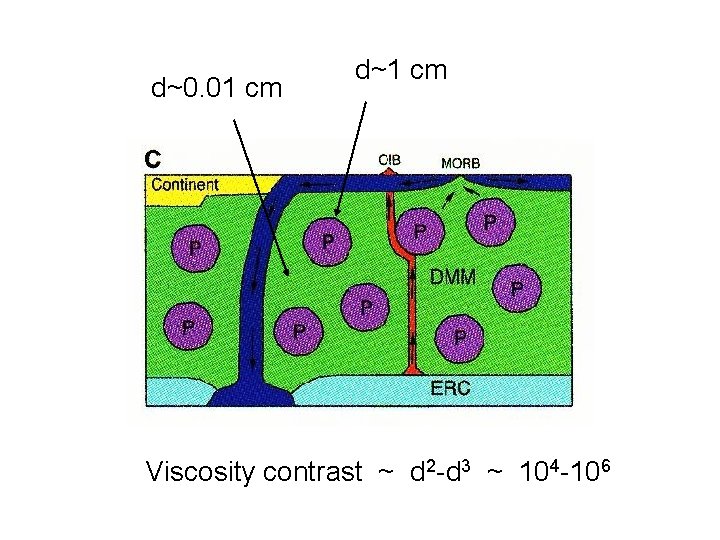
d~0. 01 cm d~1 cm Viscosity contrast ~ d 2 -d 3 ~ 104 -106
Initial grain size
Implications for other planets
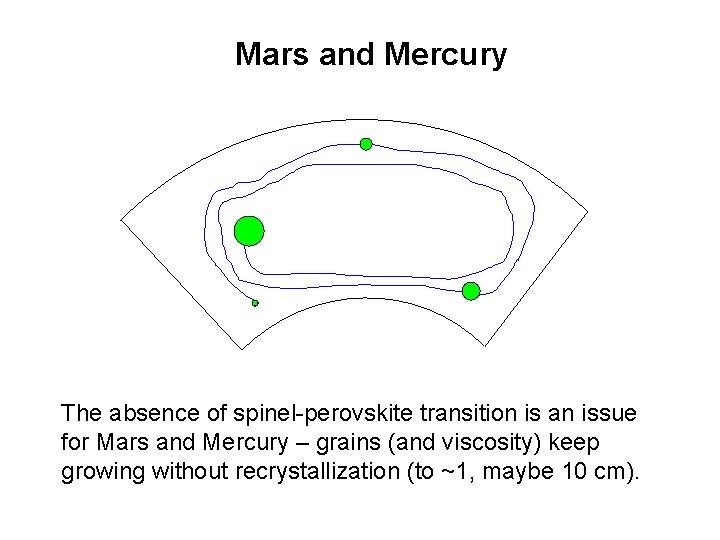
Mars and Mercury The absence of spinel-perovskite transition is an issue for Mars and Mercury – grains (and viscosity) keep growing without recrystallization (to ~1, maybe 10 cm).
Conclusion Grain size is important for mantle convection: • • Planetary evolution Plumes Sublithospheric small-scale instabilities Chemical mixing (well, it’s not the size that matters but how much it changes)
Future directions • Better constraints on grain size evolution. • Implementation in mantle convection models. • Addressing the problems of planetary evolution, plumes, chemical mixing, instabilities, etc. numerically.