
University of Washington EMBA Program Regional 20 Marketing
University of Washington EMBA Program Regional 20 Marketing Management “Segmenting Markets, Process and Assessment” Instructor: Elizabeth Stearns
Purpose of Forming Market Segments • To form the closest possible match between customers’ needs or wants and priorities, and the firm’s offer, such that customer satisfaction is maximized and competitive advantage is created. As a result, unit volume and/or price increases, and profits are enhanced
Market Segmentation • The process of grouping actual and potential customers in a market for the purpose of selecting targets for effort and designing marketing strategies and programs for them Market Segment • A group of actual or potential customers with similar characteristics, who seek similar sets of benefits and attach the same importance to their satisfaction
Segmentation • Dividing up the market into groups of consumers who share similar needs and who respond similarly to marketing mix variables – Account for customers’ diverse needs and differing behaviors in its strategy – Design the marketing mix to more closely match customer needs – Improve efficiency and effectiveness of resource allocation
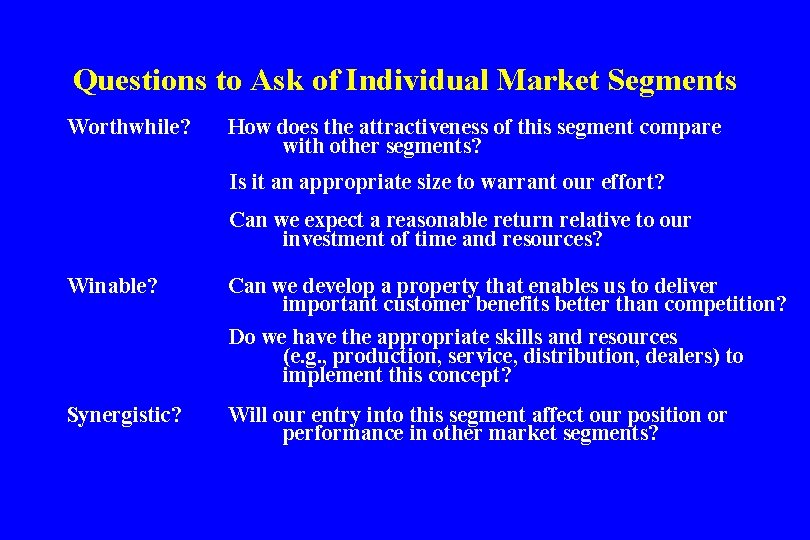
Questions to Ask of Individual Market Segments Worthwhile? How does the attractiveness of this segment compare with other segments? Is it an appropriate size to warrant our effort? Can we expect a reasonable return relative to our investment of time and resources? Winable? Can we develop a property that enables us to deliver important customer benefits better than competition? Do we have the appropriate skills and resources (e. g. , production, service, distribution, dealers) to implement this concept? Synergistic? Will our entry into this segment affect our position or performance in other market segments?
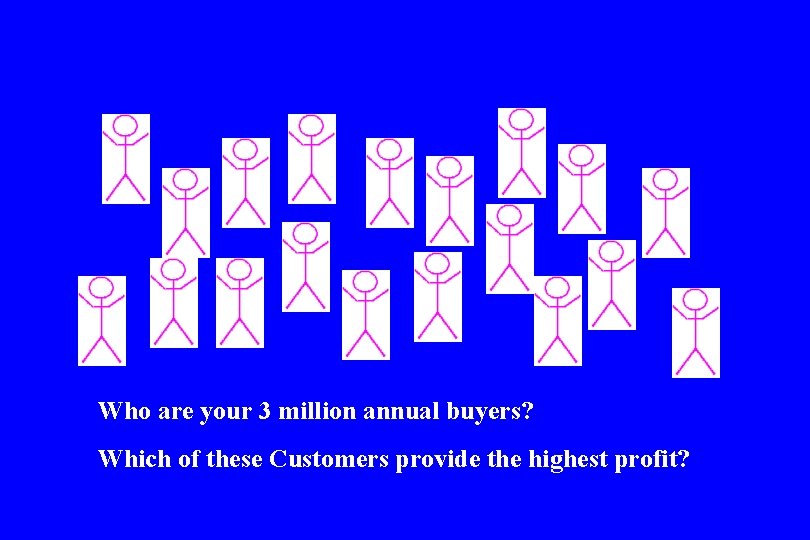
Who are your 3 million annual buyers? Which of these Customers provide the highest profit?
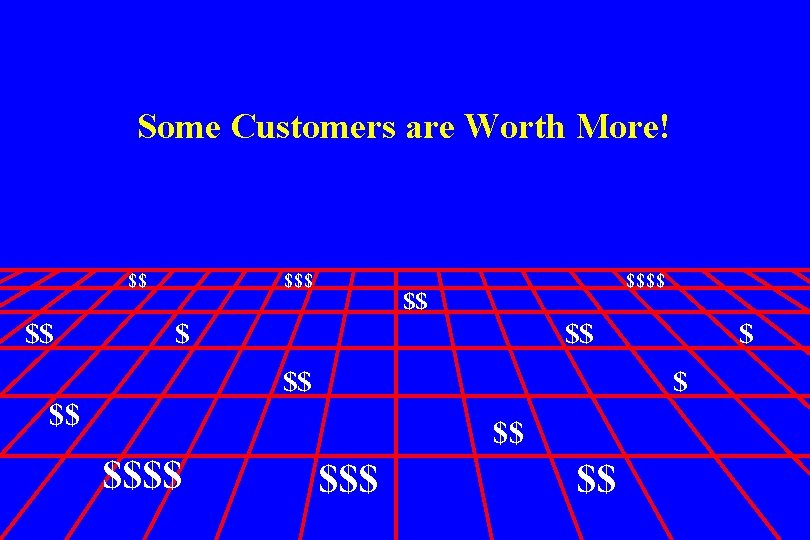
Some Customers are Worth More! $$ $$ $$$$ $$ $$$$ $ $$
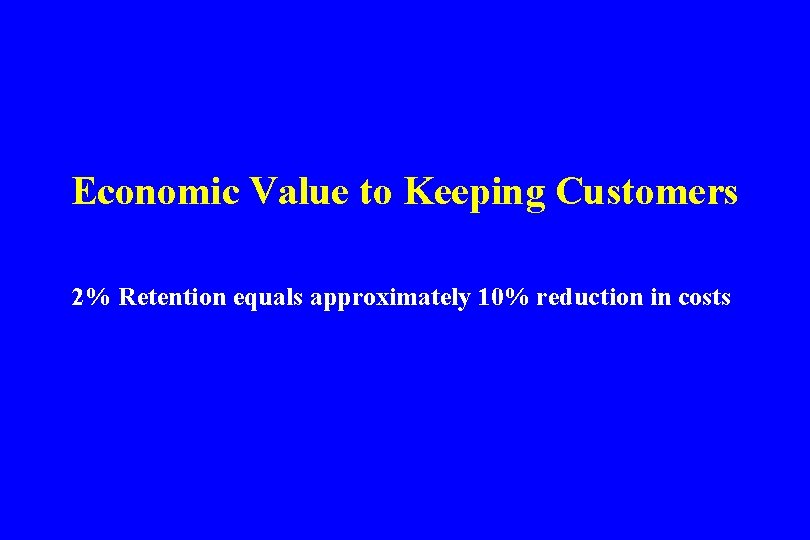
Economic Value to Keeping Customers 2% Retention equals approximately 10% reduction in costs
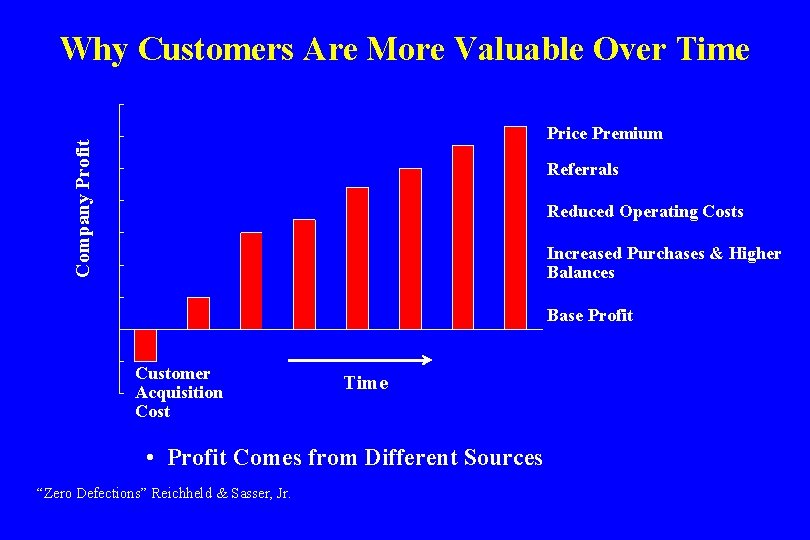
Why Customers Are More Valuable Over Time Company Profit Price Premium Referrals Reduced Operating Costs Increased Purchases & Higher Balances Base Profit Customer Acquisition Cost Time • Profit Comes from Different Sources “Zero Defections” Reichheld & Sasser, Jr.
Some Confusion on Who is Target and Who Has Responsibility for Targets’ Future Sales • Product/Brand • Distribution specific • Demo/Geo-demo specific • Other? Profit, Future Value/Lifetime Value
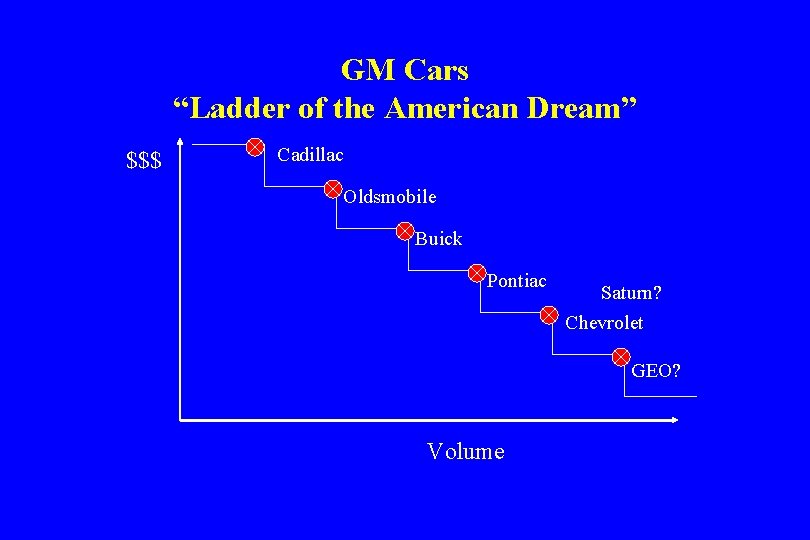
GM Cars “Ladder of the American Dream” $$$ Cadillac Oldsmobile Buick Pontiac Saturn? Chevrolet GEO? Volume
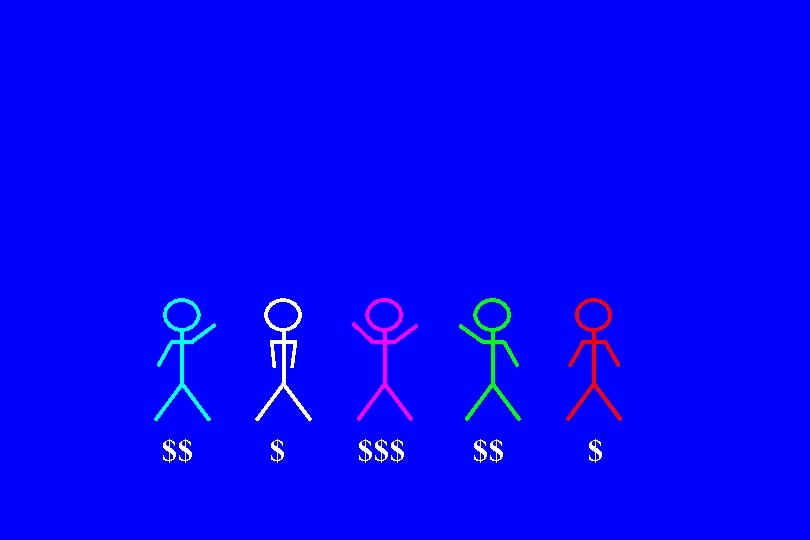
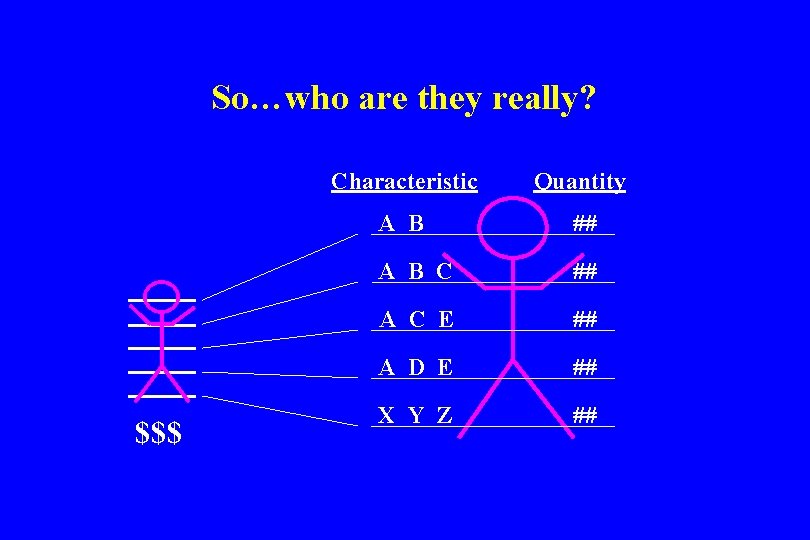
So…who are they really? $$$ Characteristic Quantity A B ## A B C ## A C E ## A D E ## X Y Z ##
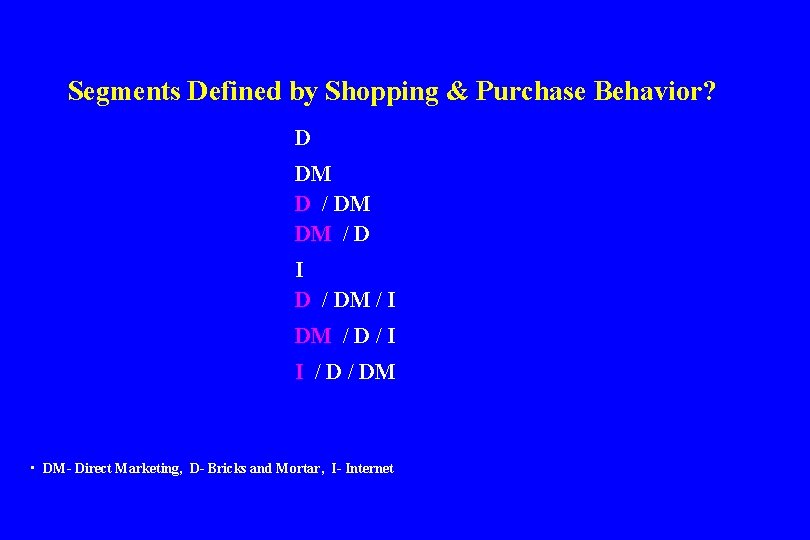
Segments Defined by Shopping & Purchase Behavior? D DM D / DM DM / D I D / DM / I DM / D / I I / DM • DM- Direct Marketing, D- Bricks and Mortar, I- Internet
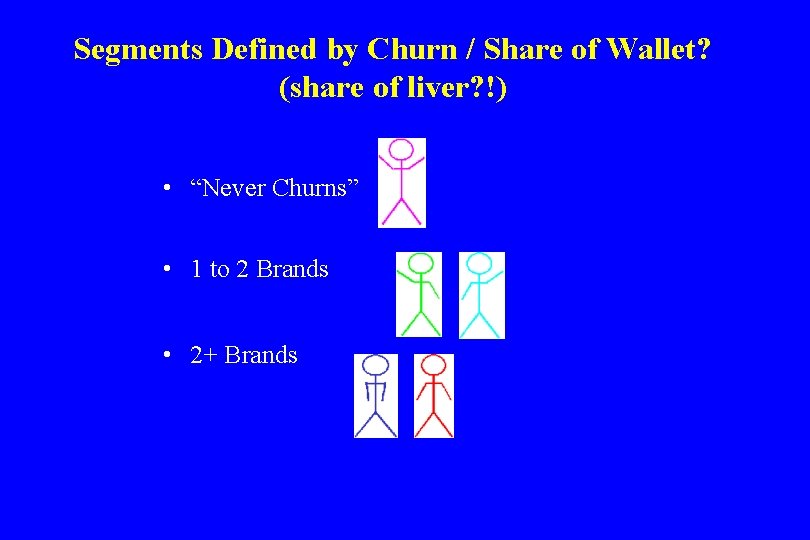
Segments Defined by Churn / Share of Wallet? (share of liver? !) • “Never Churns” • 1 to 2 Brands • 2+ Brands
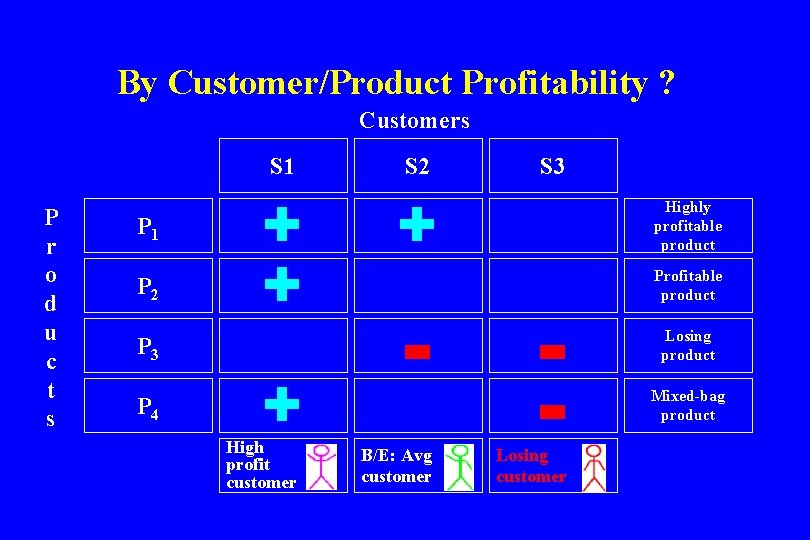
By Customer/Product Profitability ? Customers S 1 P r o d u c t s P 1 P 2 P 3 P 4 S 2 S 3 ++ ++ ++ High profit customer - B/E: Avg customer - Losing customer Highly profitable product Profitable product Losing product Mixed-bag product
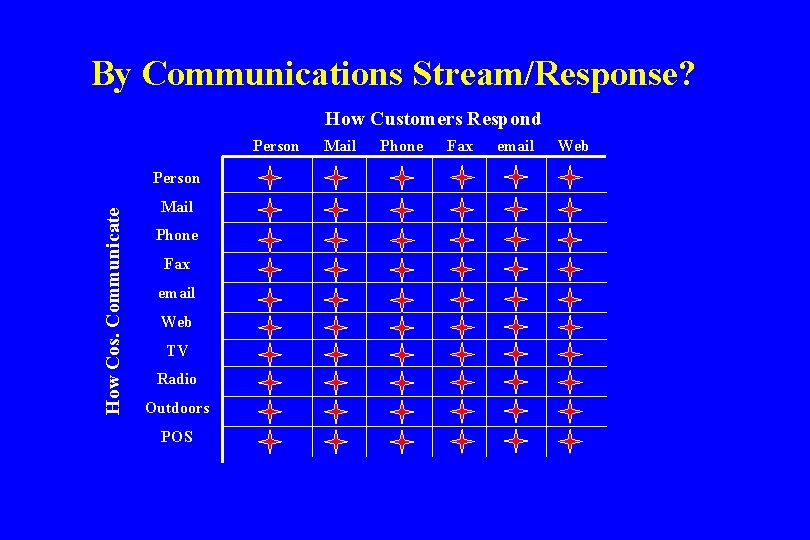
By Communications Stream/Response? How Customers Respond Person How Cos. Communicate Person Mail Phone Fax email Web TV Radio Outdoors POS Mail Phone Fax email Web
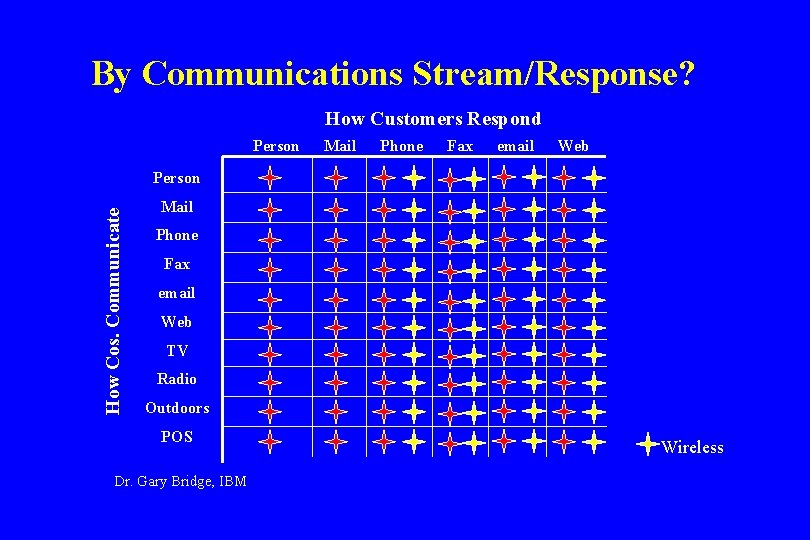
By Communications Stream/Response? How Customers Respond Person Mail Phone Fax email Web How Cos. Communicate Person Mail Phone Fax email Web TV Radio Outdoors POS Dr. Gary Bridge, IBM Wireless
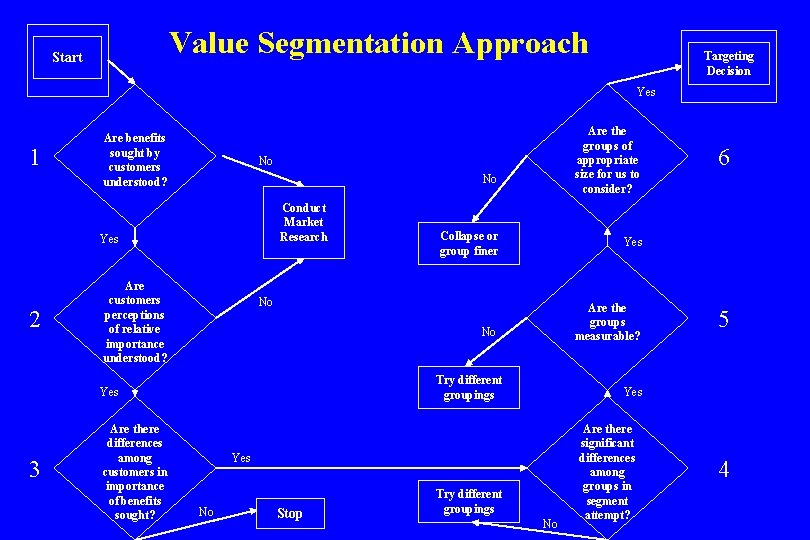
Value Segmentation Approach Start Targeting Decision Yes 1 Are benefits sought by customers understood? No No Conduct Market Research Yes 2 Are customers perceptions of relative importance understood? 3 Collapse or group finer Are the groups measurable? No Try different groupings Stop 5 Yes No 6 Yes No Yes Are there differences among customers in importance of benefits sought? Are the groups of appropriate size for us to consider? Try different groupings No Are there significant differences among groups in segment attempt? 4
Frank Horner

Thank You!
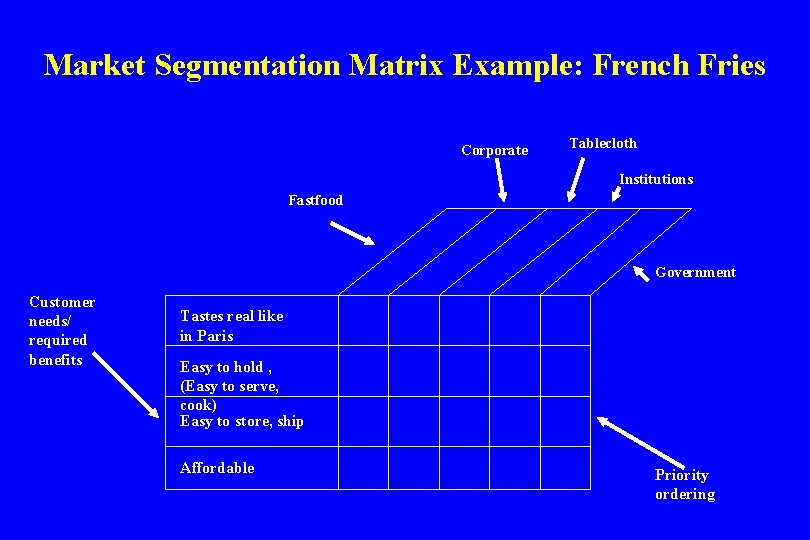
Market Segmentation Matrix Example: French Fries Corporate Tablecloth Institutions Fastfood Government Customer needs/ required benefits Tastes real like in Paris Easy to hold , (Easy to serve, cook) Easy to store, ship Affordable Priority ordering
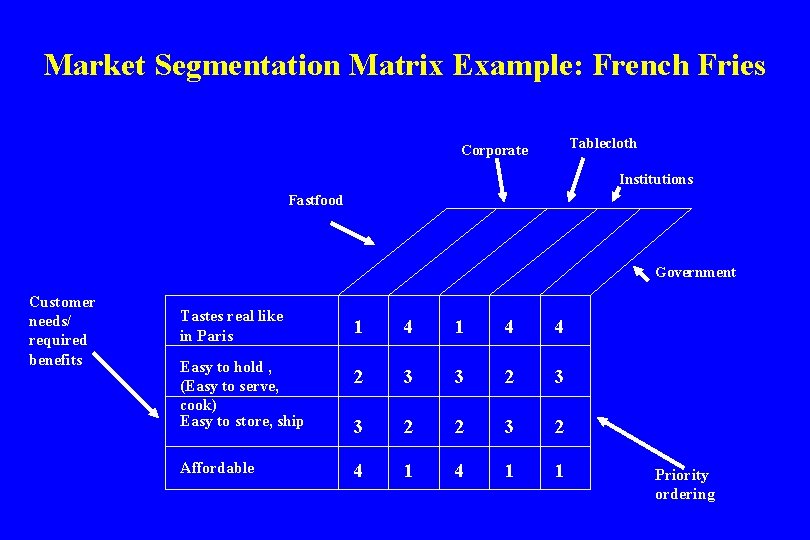
Market Segmentation Matrix Example: French Fries Tablecloth Corporate Institutions Fastfood Government Customer needs/ required benefits Tastes real like in Paris 1 4 4 Easy to hold , (Easy to serve, cook) Easy to store, ship 2 3 3 2 2 3 2 Affordable 4 1 1 Priority ordering
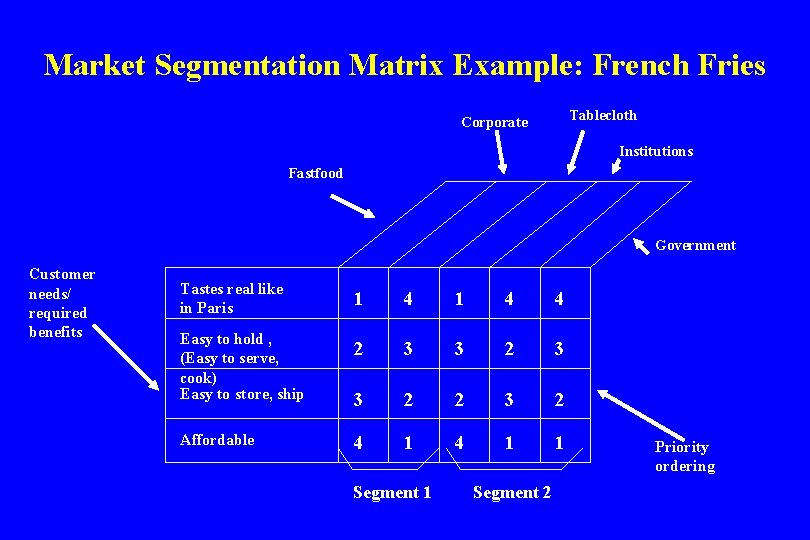
Market Segmentation Matrix Example: French Fries Tablecloth Corporate Institutions Fastfood Government Customer needs/ required benefits Tastes real like in Paris 1 4 4 Easy to hold , (Easy to serve, cook) Easy to store, ship 2 3 3 2 2 3 2 Affordable 4 1 1 Segment 2 Priority ordering
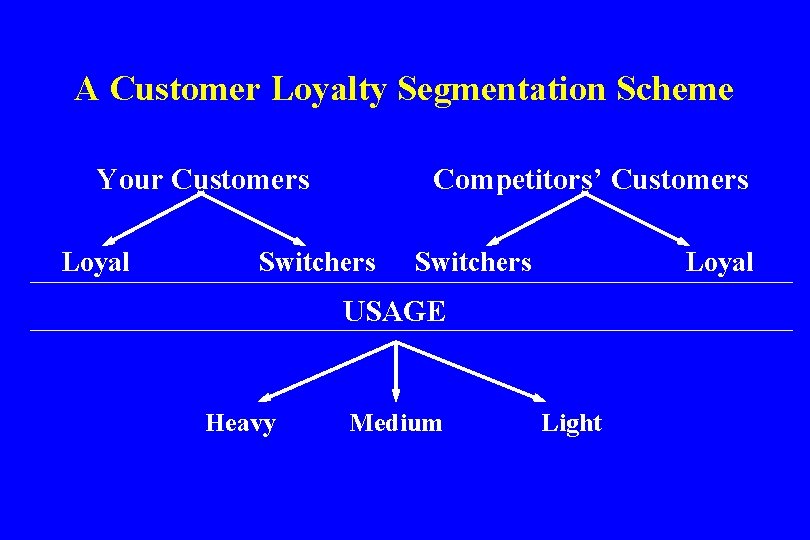
A Customer Loyalty Segmentation Scheme Your Customers Loyal Competitors’ Customers Switchers Loyal USAGE Heavy Medium Light
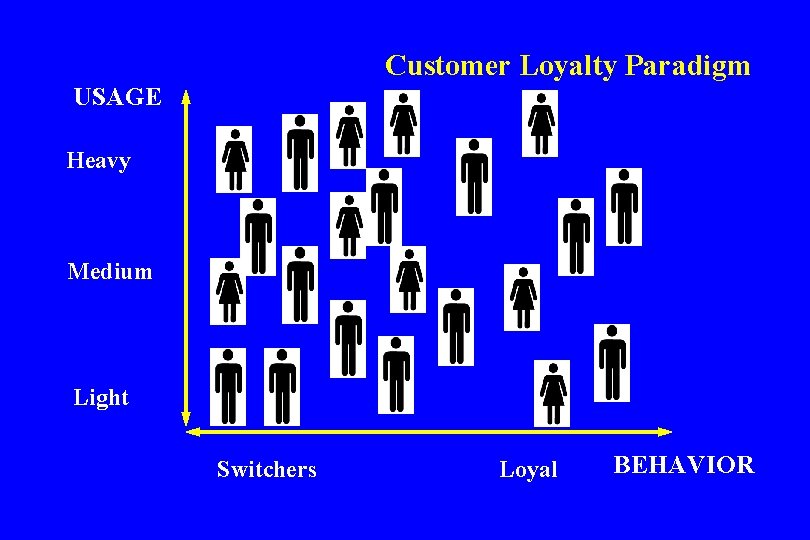
Customer Loyalty Paradigm USAGE Heavy Medium Light Switchers Loyal BEHAVIOR
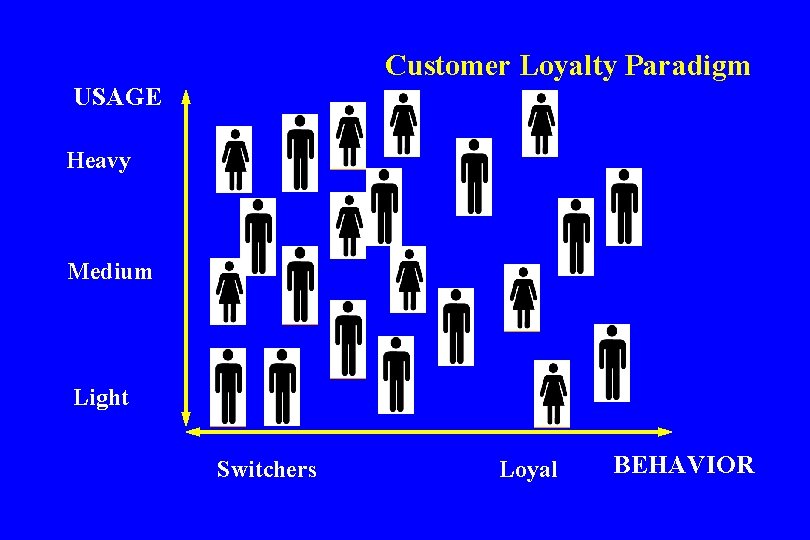
Customer Loyalty Paradigm USAGE Heavy Medium Light Switchers Loyal BEHAVIOR
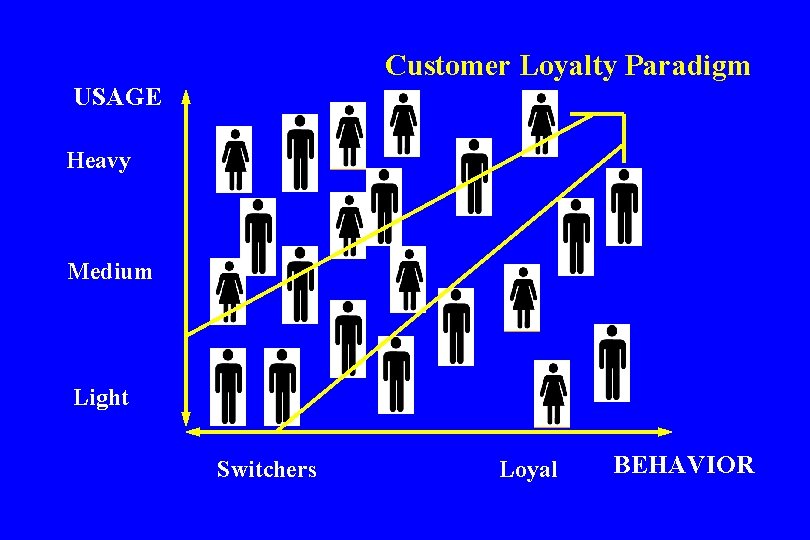
Customer Loyalty Paradigm USAGE Heavy Medium Light Switchers Loyal BEHAVIOR
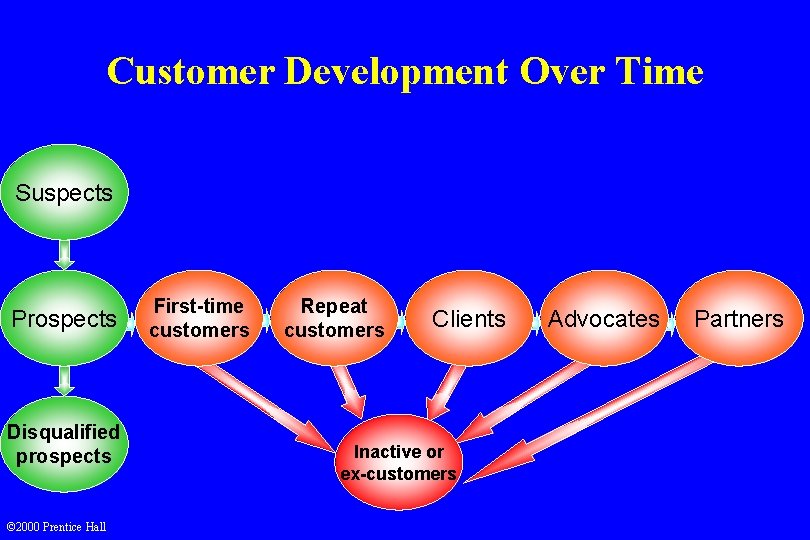
Customer Development Over Time Suspects Prospects Disqualified prospects © 2000 Prentice Hall First-time customers Repeat customers Clients Inactive or ex-customers Advocates Partners
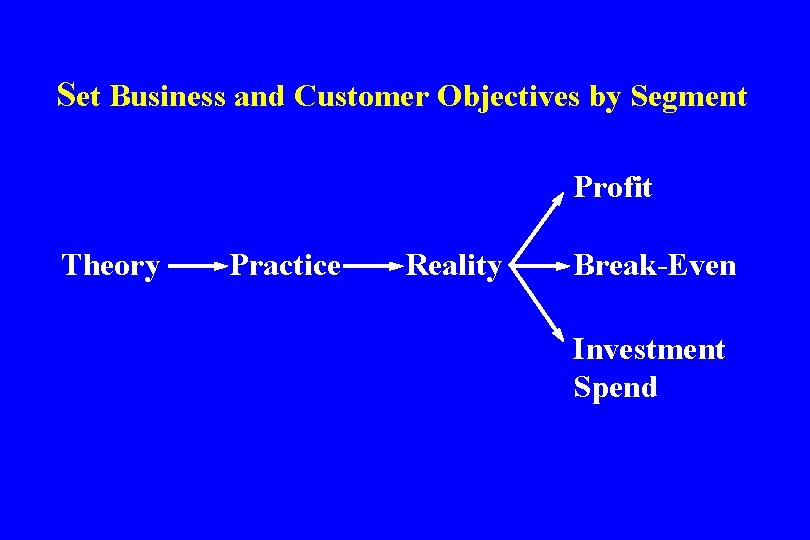
Set Business and Customer Objectives by Segment Profit Theory Practice Reality Break-Even Investment Spend
- Slides: 32