Gastrointestinal Cancer R Zenhusern Rectal Cancer Anatomic Location


- Slides: 47
Gastrointestinal Cancer R. Zenhäusern
Rectal Cancer
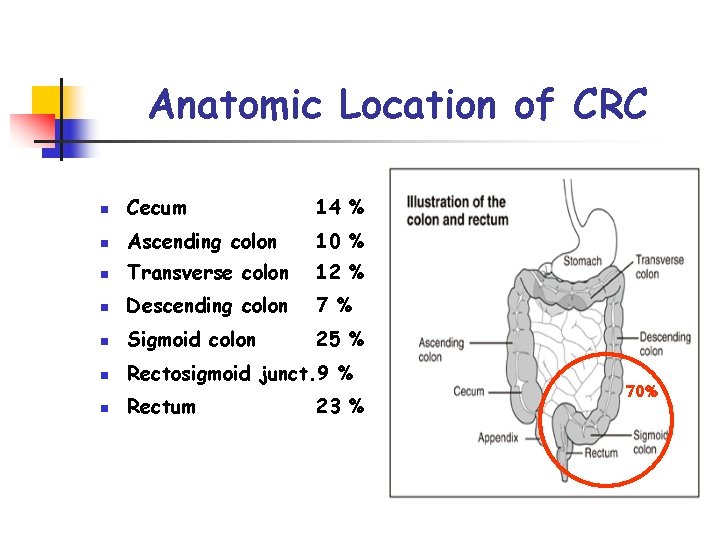
Anatomic Location of CRC n Cecum 14 % n Ascending colon 10 % n Transverse colon 12 % n Descending colon 7 % n Sigmoid colon 25 % n Rectosigmoid junct. 9 % n Rectum 23 % 70%
Epidemiology n Increasing Incidence of CRC n Incidence 30 -40 / 100000 / year n >70 y. of age 300 / 100000 / year n third most common malignant disease n second most common cause of cancer death
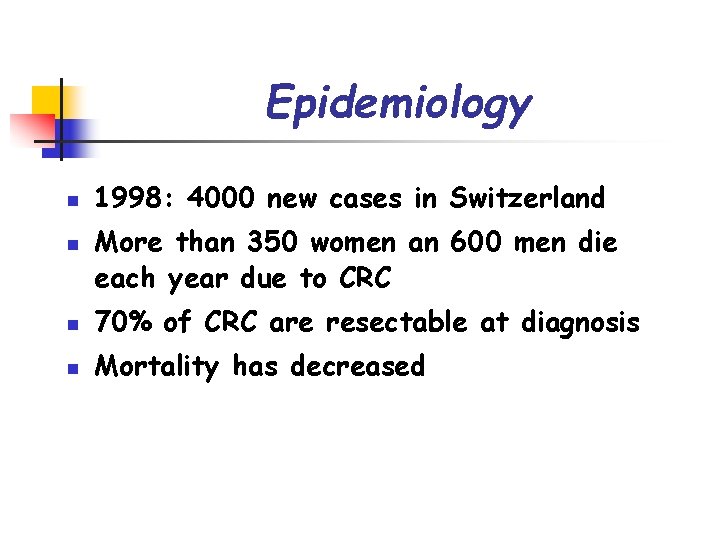
Epidemiology n n 1998: 4000 new cases in Switzerland More than 350 women an 600 men die each year due to CRC n 70% of CRC are resectable at diagnosis n Mortality has decreased
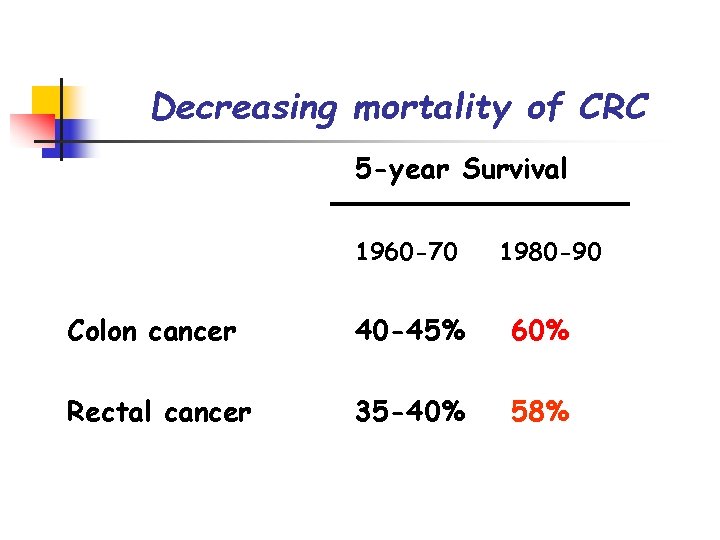
Decreasing mortality of CRC 5 -year Survival 1960 -70 1980 -90 Colon cancer 40 -45% 60% Rectal cancer 35 -40% 58%
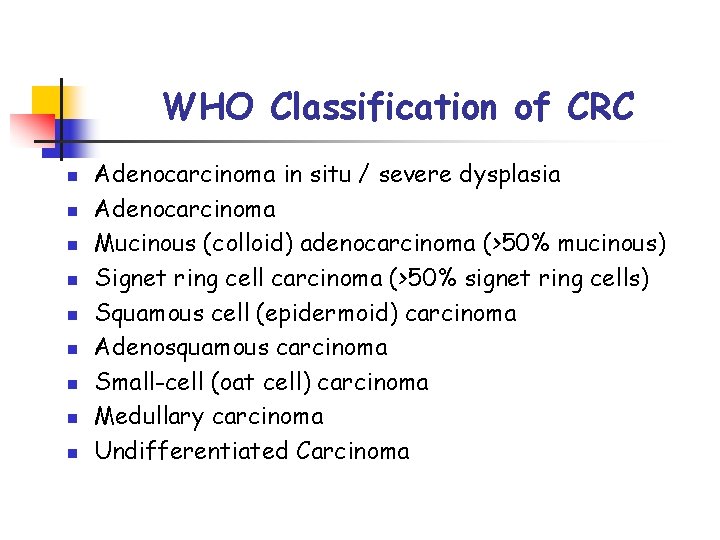
WHO Classification of CRC n n n n n Adenocarcinoma in situ / severe dysplasia Adenocarcinoma Mucinous (colloid) adenocarcinoma (>50% mucinous) Signet ring cell carcinoma (>50% signet ring cells) Squamous cell (epidermoid) carcinoma Adenosquamous carcinoma Small-cell (oat cell) carcinoma Medullary carcinoma Undifferentiated Carcinoma
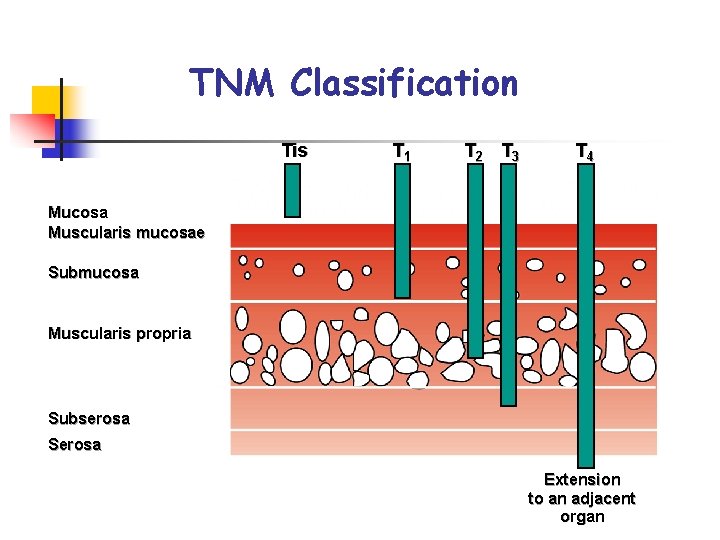
Clinical Staging of CRC TNM stage Primary tumor Lymph-node metastasis Astler-Coller Distant Dukes modified metastasis stage Dukes stage Stage 0 Tis N 0 M 0 A A Stage I T 1 N 0 M 0 A A 1 T 2 N 0 M 0 A B 1 Stage IIT 3 N 0 M 0 B B 2 T 4 N 0 M 0 B B 2 Stage III A any T N 1 M 0 C C 1/C 2 B any T N 2, N 3 M 0 C C 1/C 2 any T any N D D Stage IV M 1
TNM Classification Tis T 1 T 2 T 3 T 4 Mucosa Muscularis mucosae Submucosa Muscularis propria Subserosa Serosa Extension to an adjacent organ
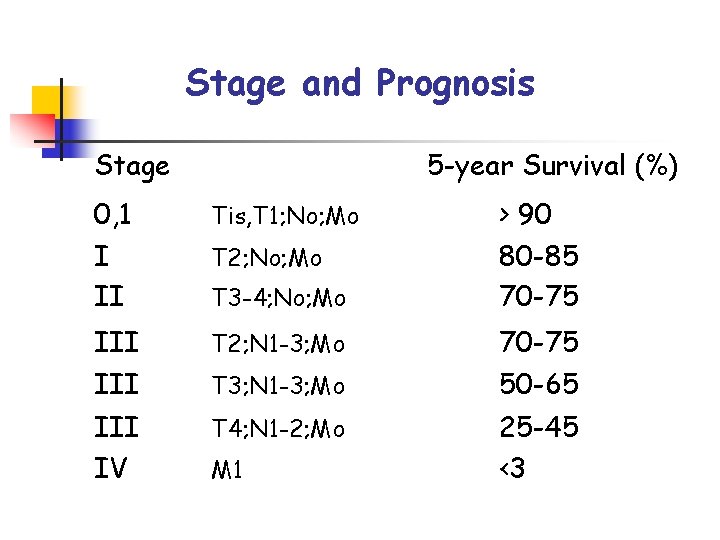
Stage and Prognosis Stage 5 -year Survival (%) 0, 1 Tis, T 1; No; Mo > 90 I II T 2; No; Mo 80 -85 70 -75 III T 2; N 1 -3; Mo III IV T 4; N 1 -2; Mo T 3 -4; No; Mo T 3; N 1 -3; Mo M 1 70 -75 50 -65 25 -45 <3
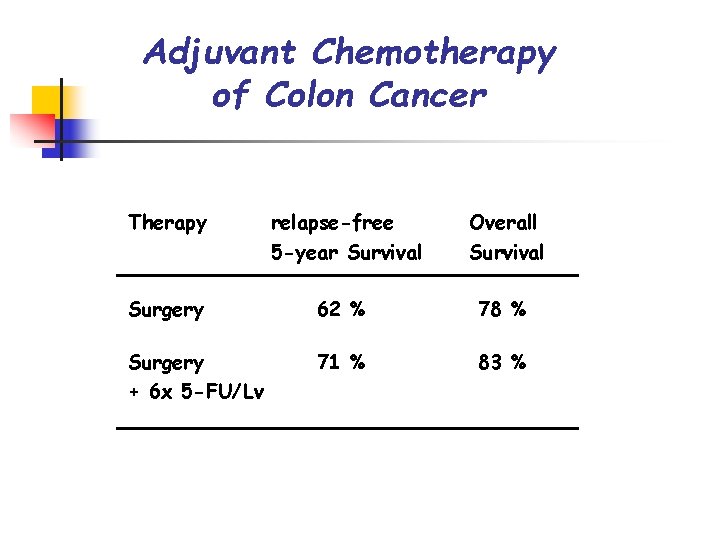
Adjuvant Chemotherapy of Colon Cancer Therapy relapse-free 5 -year Survival Overall Survival Surgery 62 % 78 % Surgery + 6 x 5 -FU/Lv 71 % 83 %
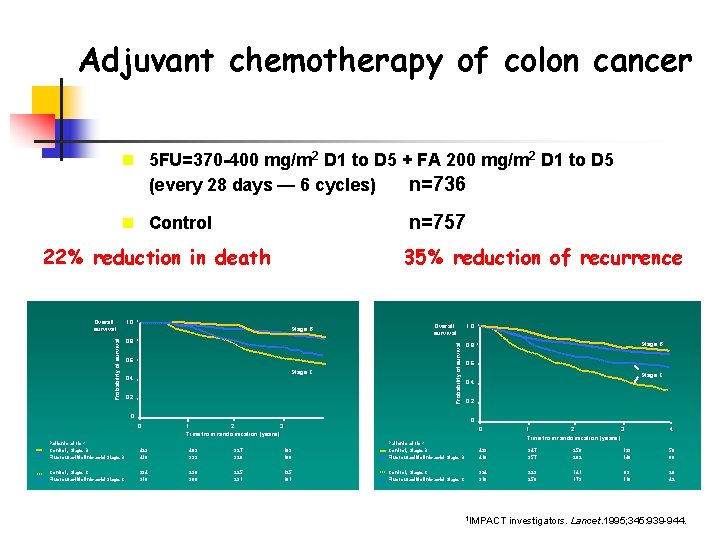
Adjuvant chemotherapy of colon cancer The IMPACT analysis for stages B and C disease 1 n 5 FU=370 -400 mg/m 2 D 1 to D 5 + FA 200 mg/m 2 D 1 to D 5 (every 28 days — 6 cycles) n=736 n=757 n Control Probability of survival Overall survival 35% reduction of recurrence 1. 0 Stage B 0. 8 0. 6 Stage C 0. 4 0. 2 Overall survival Probability of survival 22% reduction in death 0 0 1. 0 Stage B 0. 8 0. 6 Stage C 0. 4 0. 2 0 1 2 3 Time from randomization (years) 4 Patients at risk Control, Stage B Fluorouracil/folinic acid Stage B 423 418 403 399 327 328 189 188 Patients at risk Control, Stage B Fluorouracil/folinic acid Stage B 423 418 347 357 256 262 139 140 56 60 Control, Stage C Fluorouracil/folinic acid Stage C 334 318 298 300 225 231 125 161 Control, Stage C Fluorouracil/folinic acid Stage C 334 318 223 250 141 179 69 118 28 42 1 IMPACT investigators. Lancet. 1995; 345: 939 -944.
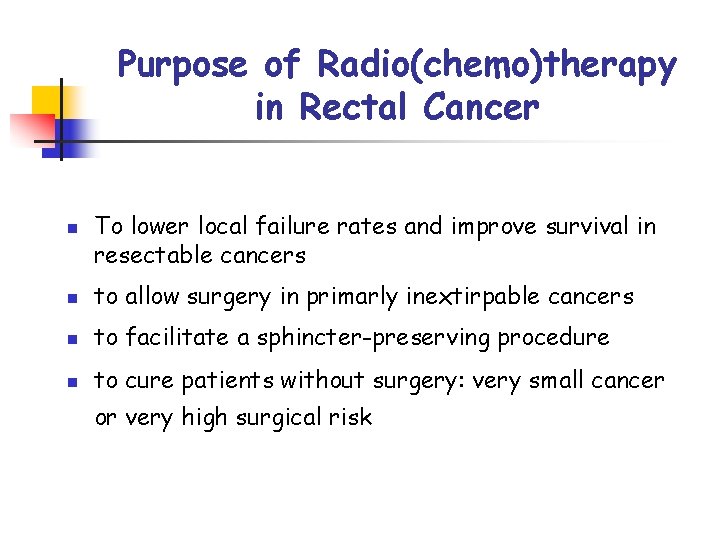
Purpose of Radio(chemo)therapy in Rectal Cancer n To lower local failure rates and improve survival in resectable cancers n to allow surgery in primarly inextirpable cancers n to facilitate a sphincter-preserving procedure n to cure patients without surgery: very small cancer or very high surgical risk
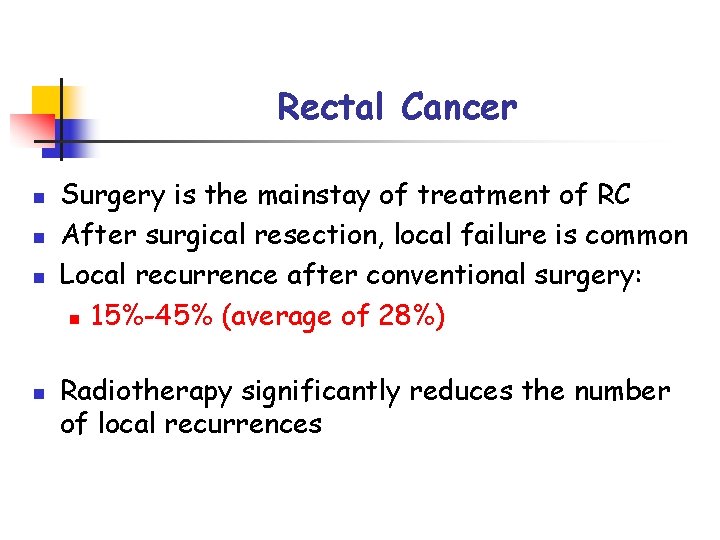
Rectal Cancer n n Surgery is the mainstay of treatment of RC After surgical resection, local failure is common Local recurrence after conventional surgery: n 15%-45% (average of 28%) Radiotherapy significantly reduces the number of local recurrences
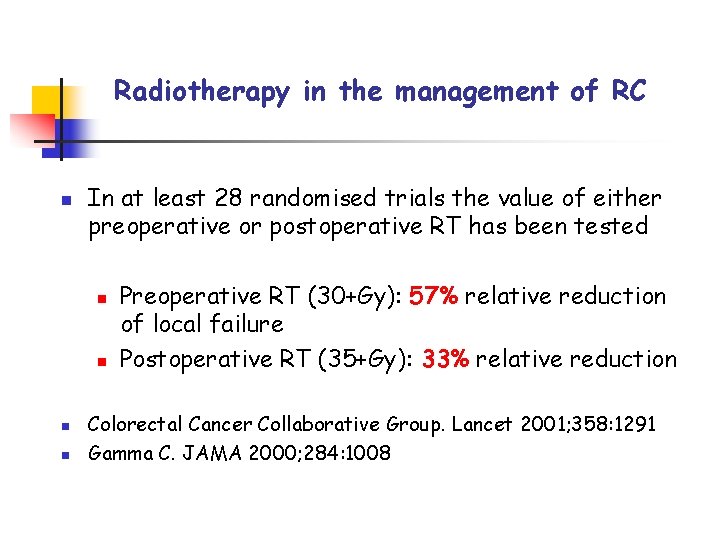
Radiotherapy in the management of RC n In at least 28 randomised trials the value of either preoperative or postoperative RT has been tested n n Preoperative RT (30+Gy): 57% relative reduction of local failure Postoperative RT (35+Gy): 33% relative reduction Colorectal Cancer Collaborative Group. Lancet 2001; 358: 1291 Gamma C. JAMA 2000; 284: 1008
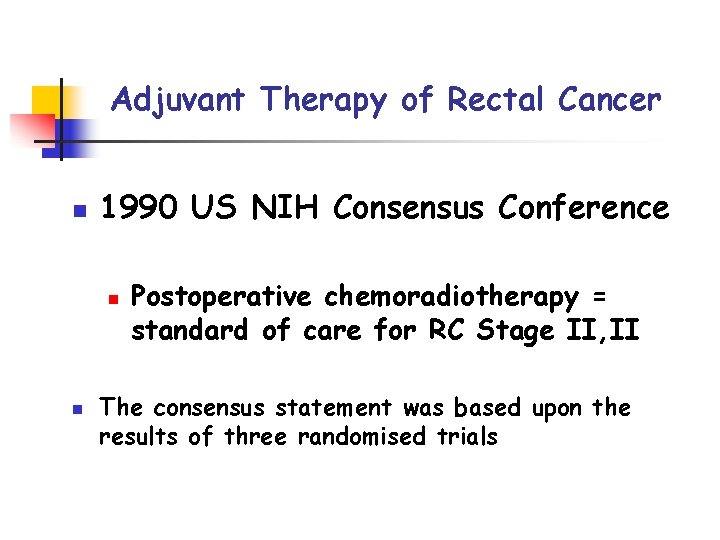
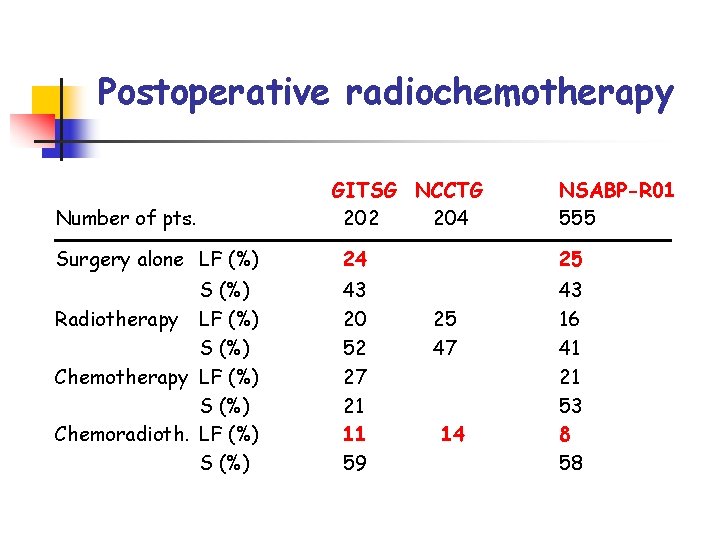
Adjuvant Therapy of Rectal Cancer n 1990 US NIH Consensus Conference n n Postoperative chemoradiotherapy = standard of care for RC Stage II, II The consensus statement was based upon the results of three randomised trials
Postoperative radiochemotherapy Number of pts. GITSG NCCTG 202 204 NSABP-R 01 555 Surgery alone LF (%) 24 25 S (%) Radiotherapy LF (%) S (%) Chemoradioth. LF (%) S (%) 43 20 52 27 21 11 59 43 16 41 21 53 8 58 25 47 14
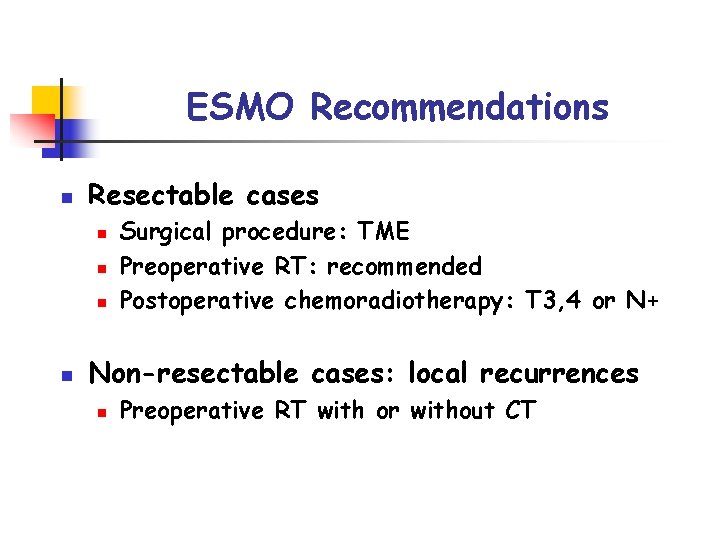
ESMO Recommendations n Resectable cases n n Surgical procedure: TME Preoperative RT: recommended Postoperative chemoradiotherapy: T 3, 4 or N+ Non-resectable cases: local recurrences n Preoperative RT with or without CT
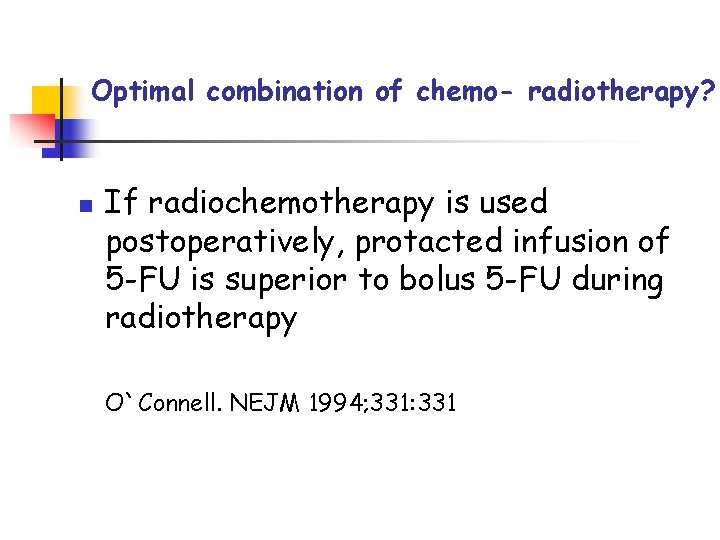
Optimal combination of chemo- radiotherapy? n If radiochemotherapy is used postoperatively, protacted infusion of 5 -FU is superior to bolus 5 -FU during radiotherapy O`Connell. NEJM 1994; 331: 331
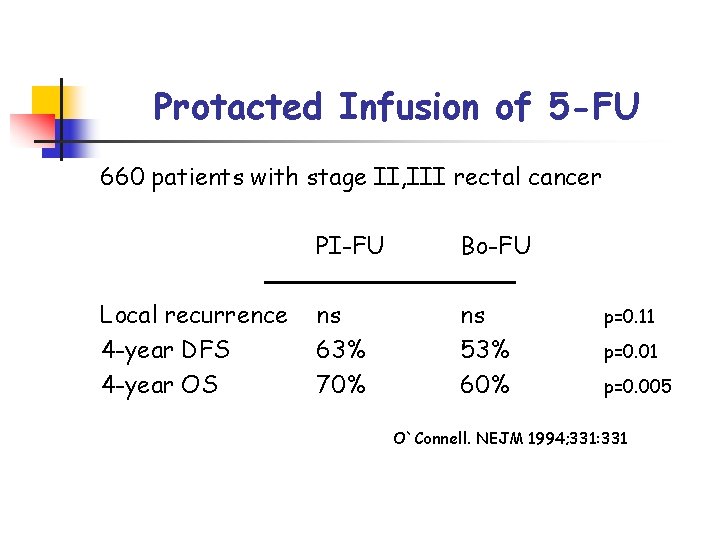
Protacted Infusion of 5 -FU 660 patients with stage II, III rectal cancer Local recurrence 4 -year DFS 4 -year OS PI-FU Bo-FU ns 63% 70% ns 53% 60% p=0. 11 p=0. 005 O`Connell. NEJM 1994; 331: 331
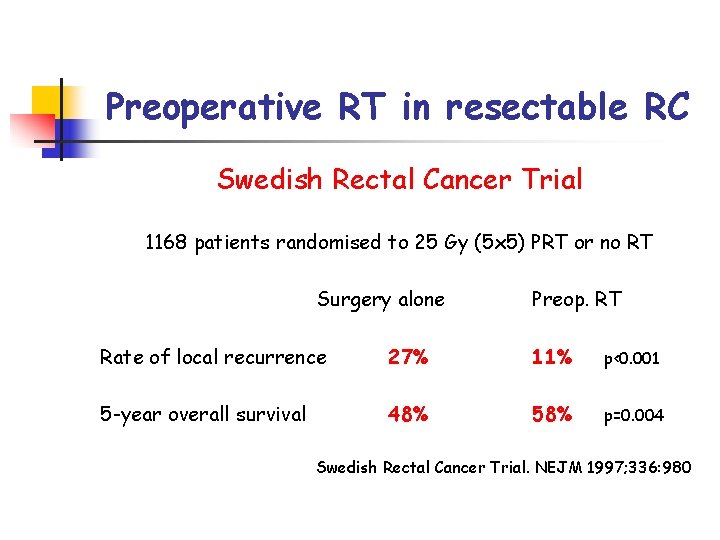
Preoperative RT in resectable RC Swedish Rectal Cancer Trial 1168 patients randomised to 25 Gy (5 x 5) PRT or no RT Surgery alone Preop. RT Rate of local recurrence 27% 11% p<0. 001 5 -year overall survival 48% 58% p=0. 004 Swedish Rectal Cancer Trial. NEJM 1997; 336: 980
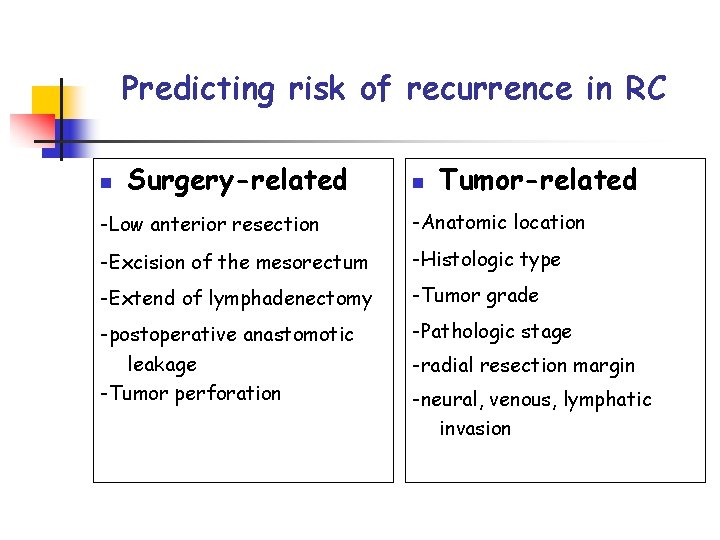
Predicting risk of recurrence in RC n Surgery-related n Tumor-related -Low anterior resection -Anatomic location -Excision of the mesorectum -Histologic type -Extend of lymphadenectomy -Tumor grade -postoperative anastomotic -Pathologic stage leakage -Tumor perforation -radial resection margin -neural, venous, lymphatic invasion
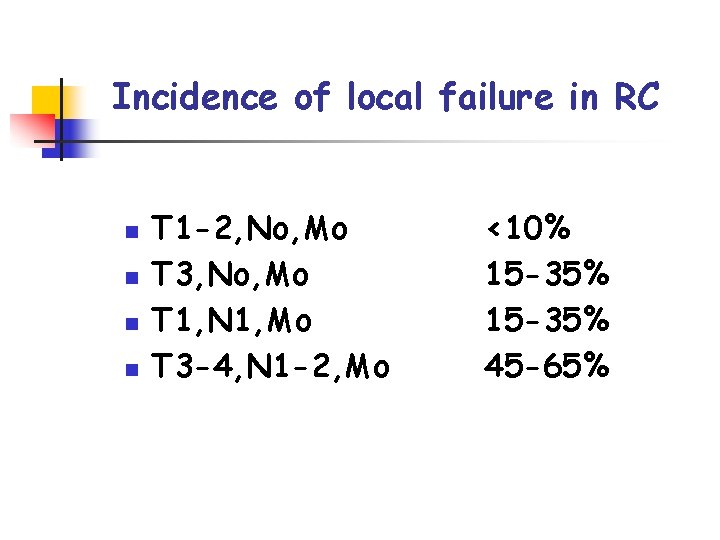
Incidence of local failure in RC n n T 1 -2, No, Mo T 3, No, Mo T 1, N 1, Mo T 3 -4, N 1 -2, Mo <10% 15 -35% 45 -65%
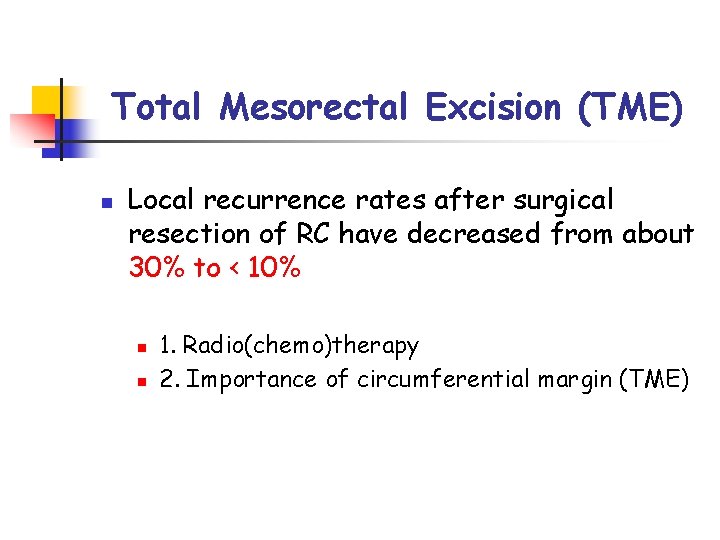
Total Mesorectal Excision (TME) n Local recurrence rates after surgical resection of RC have decreased from about 30% to < 10% n n 1. Radio(chemo)therapy 2. Importance of circumferential margin (TME)
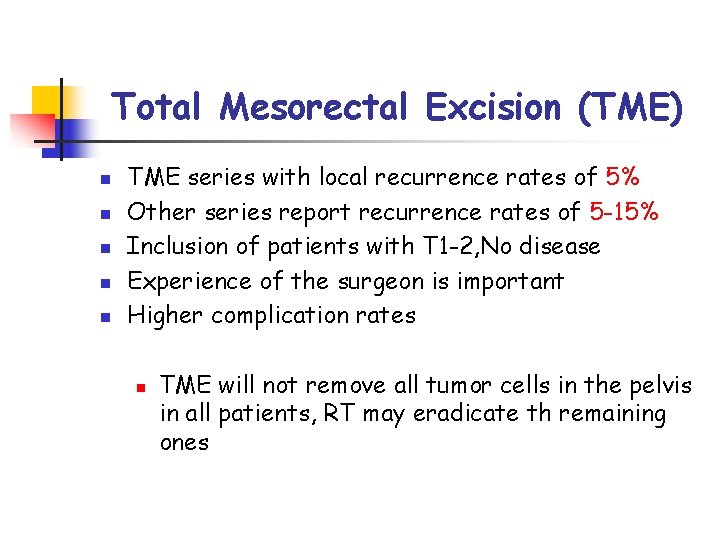
Total Mesorectal Excision (TME) n n n TME series with local recurrence rates of 5% Other series report recurrence rates of 5 -15% Inclusion of patients with T 1 -2, No disease Experience of the surgeon is important Higher complication rates n TME will not remove all tumor cells in the pelvis in all patients, RT may eradicate th remaining ones
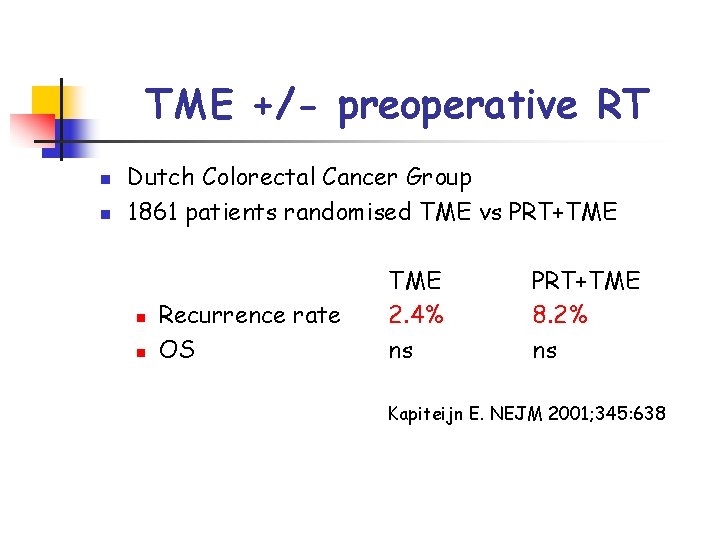
TME +/- preoperative RT n n Dutch Colorectal Cancer Group 1861 patients randomised TME vs PRT+TME n n Recurrence rate OS TME 2. 4% ns PRT+TME 8. 2% ns Kapiteijn E. NEJM 2001; 345: 638
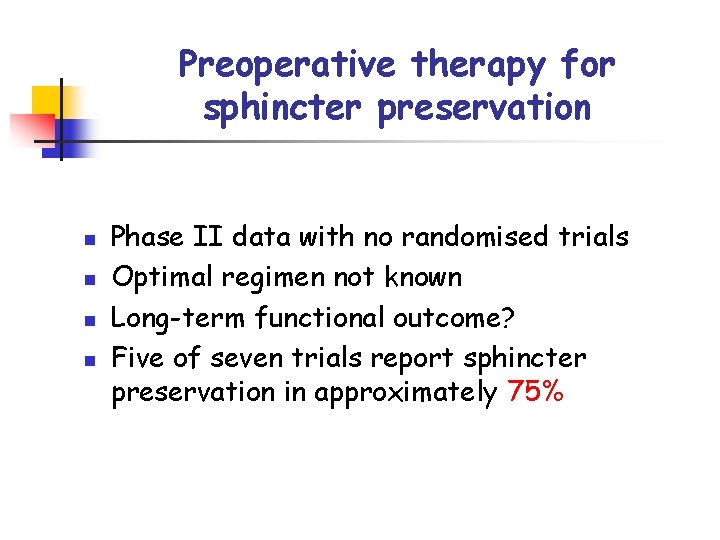
Preoperative therapy for sphincter preservation n n Phase II data with no randomised trials Optimal regimen not known Long-term functional outcome? Five of seven trials report sphincter preservation in approximately 75%
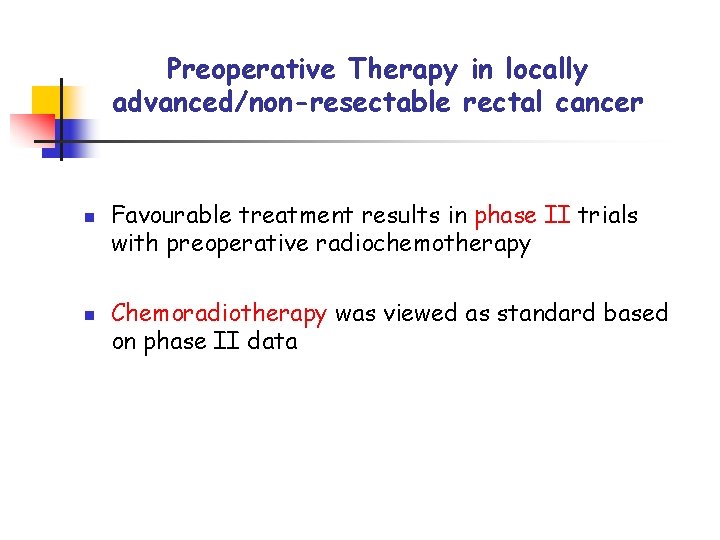
Preoperative Therapy in locally advanced/non-resectable rectal cancer n n Favourable treatment results in phase II trials with preoperative radiochemotherapy Chemoradiotherapy was viewed as standard based on phase II data
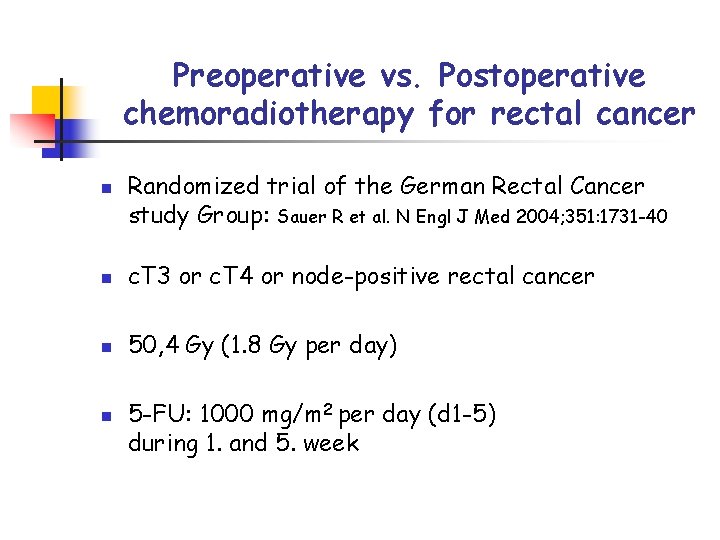
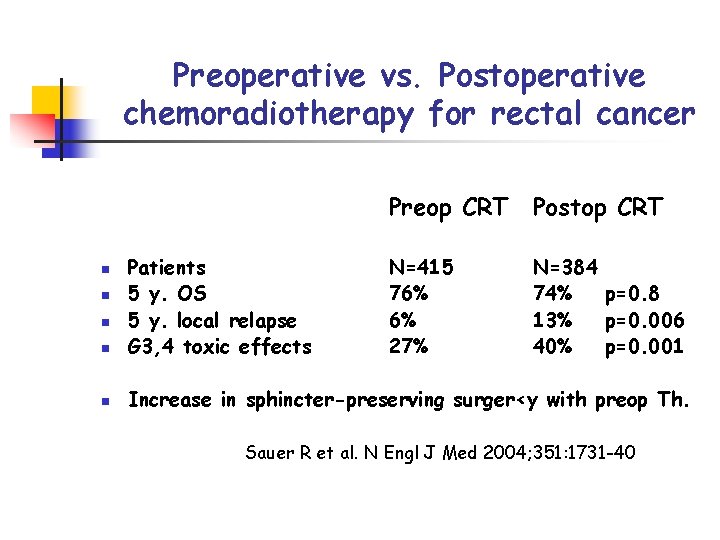
Preoperative vs. Postoperative chemoradiotherapy for rectal cancer n Randomized trial of the German Rectal Cancer study Group: Sauer R et al. N Engl J Med 2004; 351: 1731 -40 n c. T 3 or c. T 4 or node-positive rectal cancer n 50, 4 Gy (1. 8 Gy per day) n 5 -FU: 1000 mg/m 2 per day (d 1 -5) during 1. and 5. week
Preoperative vs. Postoperative chemoradiotherapy for rectal cancer Preop CRT Postop CRT n Patients 5 y. OS 5 y. local relapse G 3, 4 toxic effects n Increase in sphincter-preserving surger<y with preop Th. n n n N=415 76% 6% 27% N=384 74% p=0. 8 13% p=0. 006 40% p=0. 001 Sauer R et al. N Engl J Med 2004; 351: 1731 -40
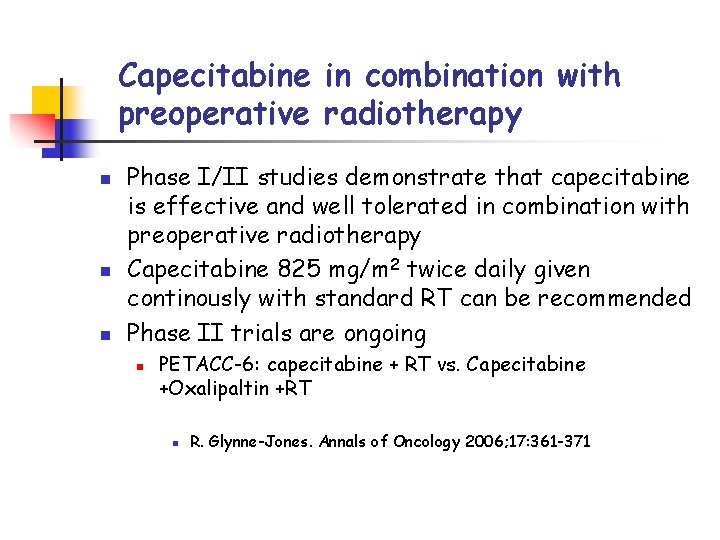
Capecitabine in combination with preoperative radiotherapy n n n Phase I/II studies demonstrate that capecitabine is effective and well tolerated in combination with preoperative radiotherapy Capecitabine 825 mg/m 2 twice daily given continously with standard RT can be recommended Phase II trials are ongoing n PETACC-6: capecitabine + RT vs. Capecitabine +Oxalipaltin +RT n R. Glynne-Jones. Annals of Oncology 2006; 17: 361 -371
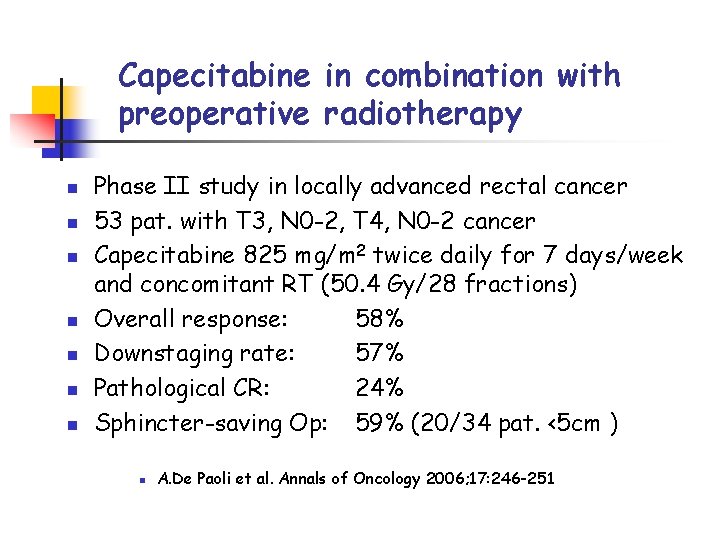
Capecitabine in combination with preoperative radiotherapy n n n n Phase II study in locally advanced rectal cancer 53 pat. with T 3, N 0 -2, T 4, N 0 -2 cancer Capecitabine 825 mg/m 2 twice daily for 7 days/week and concomitant RT (50. 4 Gy/28 fractions) Overall response: 58% Downstaging rate: 57% Pathological CR: 24% Sphincter-saving Op: 59% (20/34 pat. <5 cm ) n A. De Paoli et al. Annals of Oncology 2006; 17: 246 -251
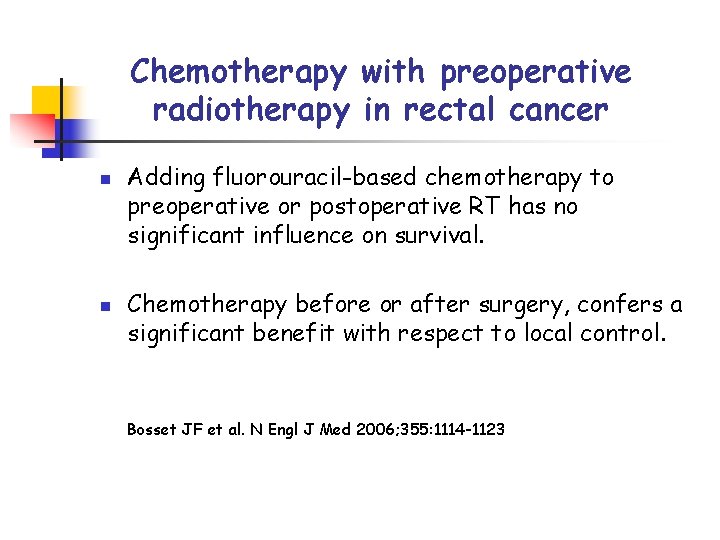
Chemotherapy with preoperative radiotherapy in rectal cancer n n Adding fluorouracil-based chemotherapy to preoperative or postoperative RT has no significant influence on survival. Chemotherapy before or after surgery, confers a significant benefit with respect to local control. Bosset JF et al. N Engl J Med 2006; 355: 1114 -1123
Esophageal Cancer
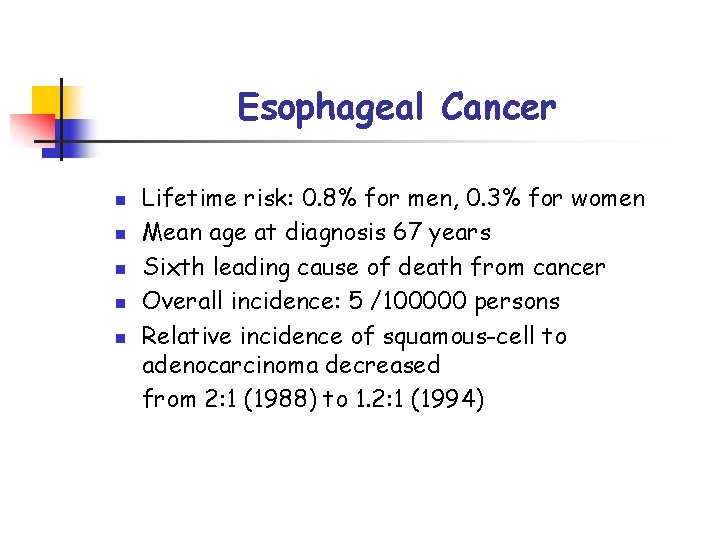
Esophageal Cancer n n n Lifetime risk: 0. 8% for men, 0. 3% for women Mean age at diagnosis 67 years Sixth leading cause of death from cancer Overall incidence: 5 /100000 persons Relative incidence of squamous-cell to adenocarcinoma decreased from 2: 1 (1988) to 1. 2: 1 (1994)
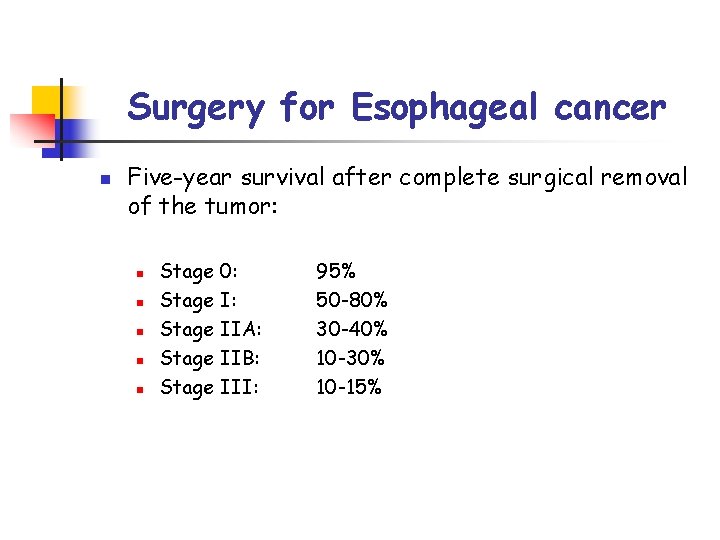
Surgery for Esophageal cancer n Five-year survival after complete surgical removal of the tumor: n n n Stage Stage 0: I: IIA: IIB: III: 95% 50 -80% 30 -40% 10 -30% 10 -15%
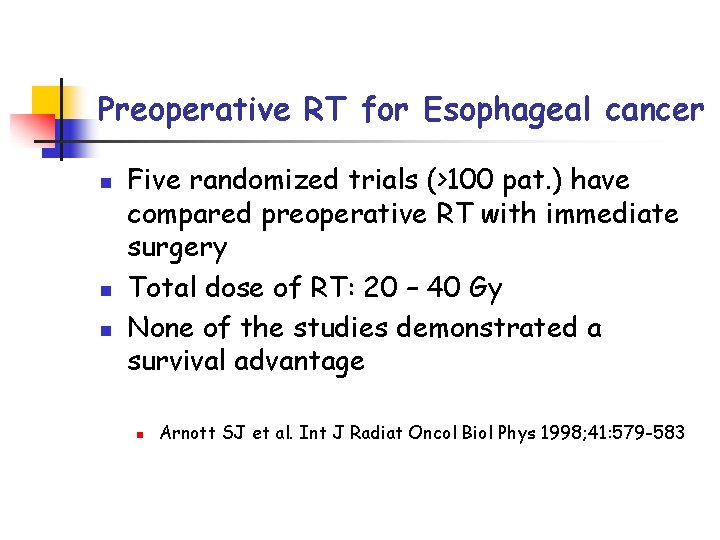
Preoperative RT for Esophageal cancer n n n Five randomized trials (>100 pat. ) have compared preoperative RT with immediate surgery Total dose of RT: 20 – 40 Gy None of the studies demonstrated a survival advantage n Arnott SJ et al. Int J Radiat Oncol Biol Phys 1998; 41: 579 -583
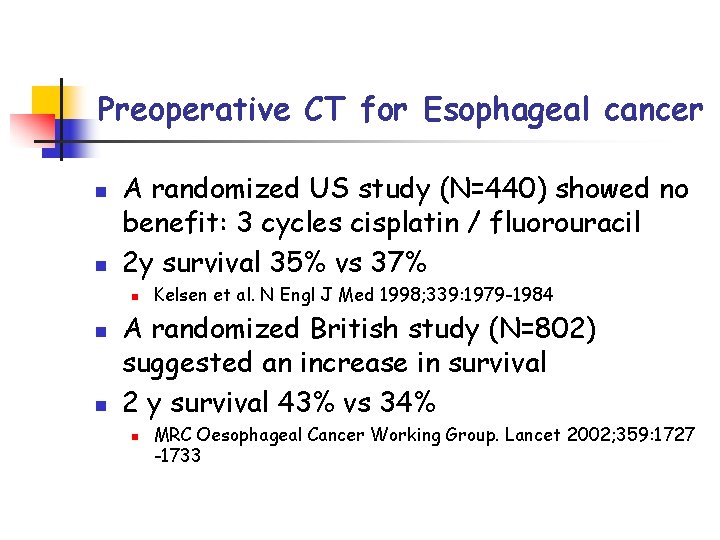
Preoperative CT for Esophageal cancer n n A randomized US study (N=440) showed no benefit: 3 cycles cisplatin / fluorouracil 2 y survival 35% vs 37% n n n Kelsen et al. N Engl J Med 1998; 339: 1979 -1984 A randomized British study (N=802) suggested an increase in survival 2 y survival 43% vs 34% n MRC Oesophageal Cancer Working Group. Lancet 2002; 359: 1727 -1733
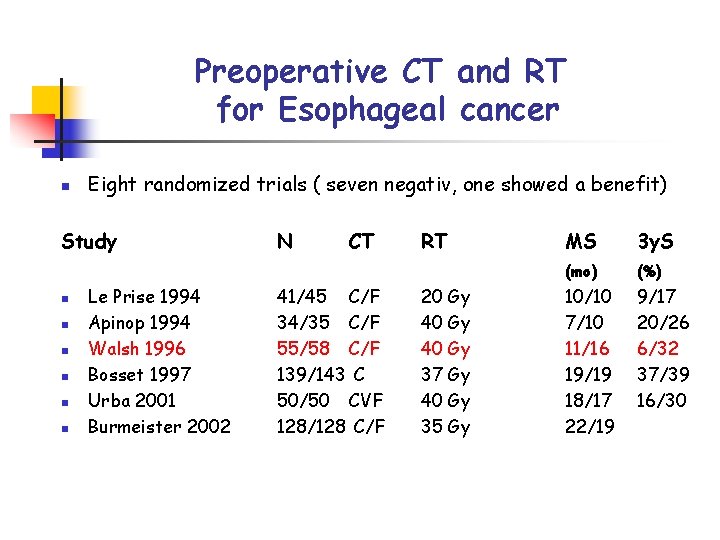
Preoperative CT and RT for Esophageal cancer n Eight randomized trials ( seven negativ, one showed a benefit) Study n n n Le Prise 1994 Apinop 1994 Walsh 1996 Bosset 1997 Urba 2001 Burmeister 2002 N CT 41/45 C/F 34/35 C/F 55/58 C/F 139/143 C 50/50 CVF 128/128 C/F RT 20 Gy 40 Gy 37 Gy 40 Gy 35 Gy MS 3 y. S (mo) (%) 10/10 7/10 11/16 19/19 18/17 22/19 9/17 20/26 6/32 37/39 16/30
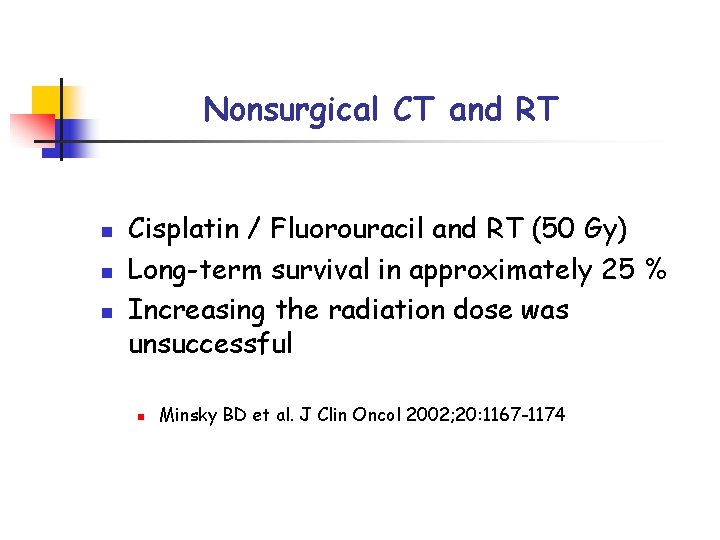
Nonsurgical CT and RT n n n Cisplatin / Fluorouracil and RT (50 Gy) Long-term survival in approximately 25 % Increasing the radiation dose was unsuccessful n Minsky BD et al. J Clin Oncol 2002; 20: 1167 -1174
Gastric Cancer
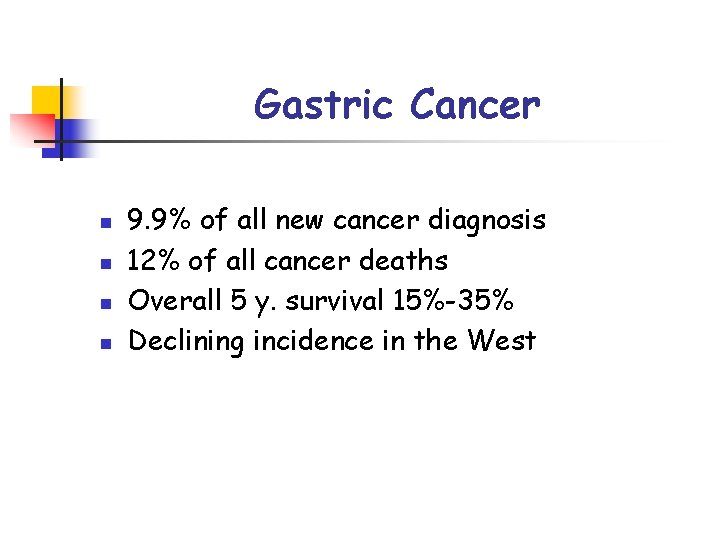
Gastric Cancer n n 9. 9% of all new cancer diagnosis 12% of all cancer deaths Overall 5 y. survival 15%-35% Declining incidence in the West
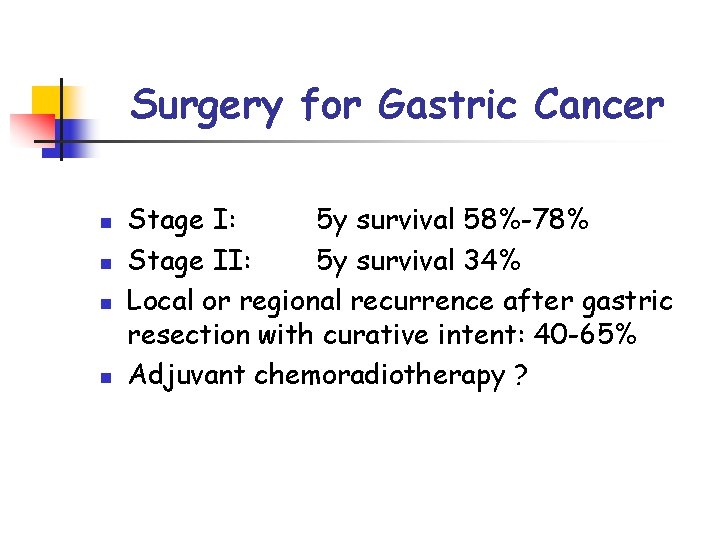
Surgery for Gastric Cancer n n Stage I: 5 y survival 58%-78% Stage II: 5 y survival 34% Local or regional recurrence after gastric resection with curative intent: 40 -65% Adjuvant chemoradiotherapy ?
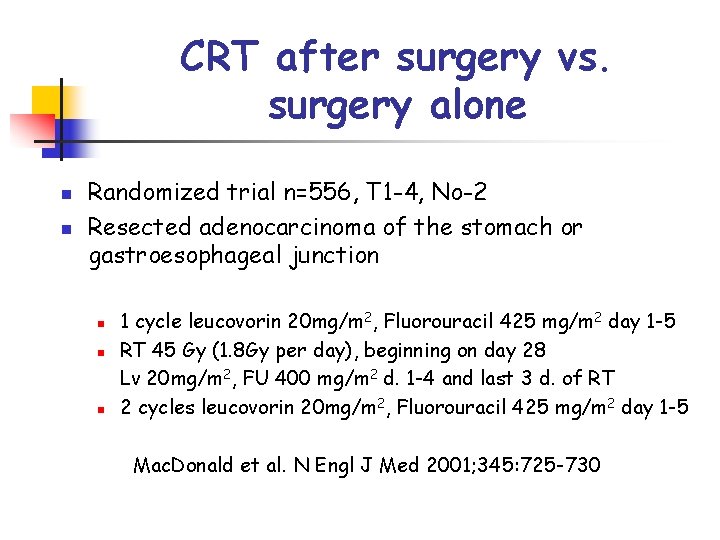
CRT after surgery vs. surgery alone n n Randomized trial n=556, T 1 -4, No-2 Resected adenocarcinoma of the stomach or gastroesophageal junction n 1 cycle leucovorin 20 mg/m 2, Fluorouracil 425 mg/m 2 day 1 -5 RT 45 Gy (1. 8 Gy per day), beginning on day 28 Lv 20 mg/m 2, FU 400 mg/m 2 d. 1 -4 and last 3 d. of RT 2 cycles leucovorin 20 mg/m 2, Fluorouracil 425 mg/m 2 day 1 -5 Mac. Donald et al. N Engl J Med 2001; 345: 725 -730
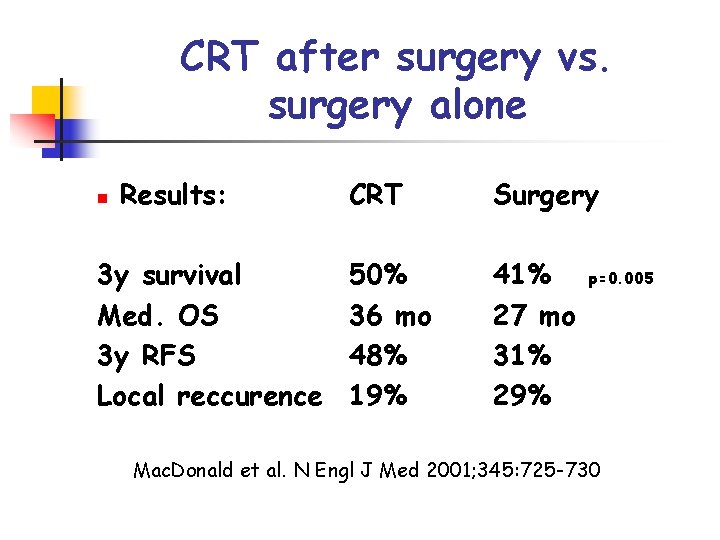
CRT after surgery vs. surgery alone n Results: 3 y survival Med. OS 3 y RFS Local reccurence CRT Surgery 50% 36 mo 48% 19% 41% 27 mo 31% 29% p=0. 005 Mac. Donald et al. N Engl J Med 2001; 345: 725 -730
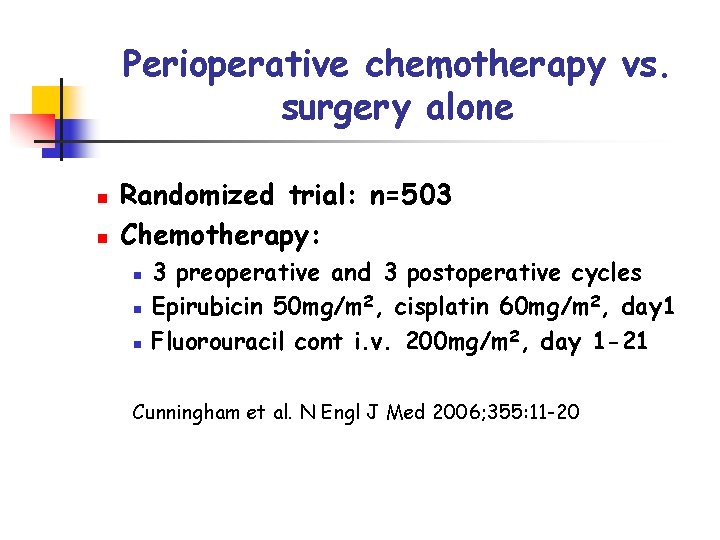
Perioperative chemotherapy vs. surgery alone n n Randomized trial: n=503 Chemotherapy: n n n 3 preoperative and 3 postoperative cycles Epirubicin 50 mg/m 2, cisplatin 60 mg/m 2, day 1 Fluorouracil cont i. v. 200 mg/m 2, day 1 -21 Cunningham et al. N Engl J Med 2006; 355: 11 -20
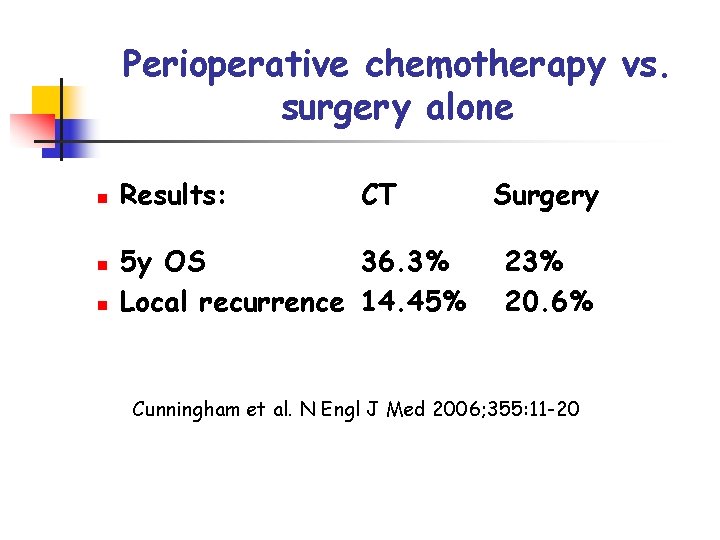
Perioperative chemotherapy vs. surgery alone n n n Results: CT 5 y OS 36. 3% Local recurrence 14. 45% Surgery 23% 20. 6% Cunningham et al. N Engl J Med 2006; 355: 11 -20