Gases and the Kinetic Molecular Theory Speeds of








- Slides: 26
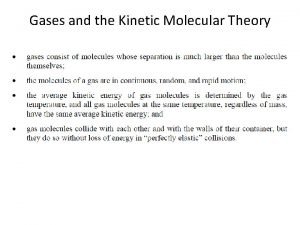
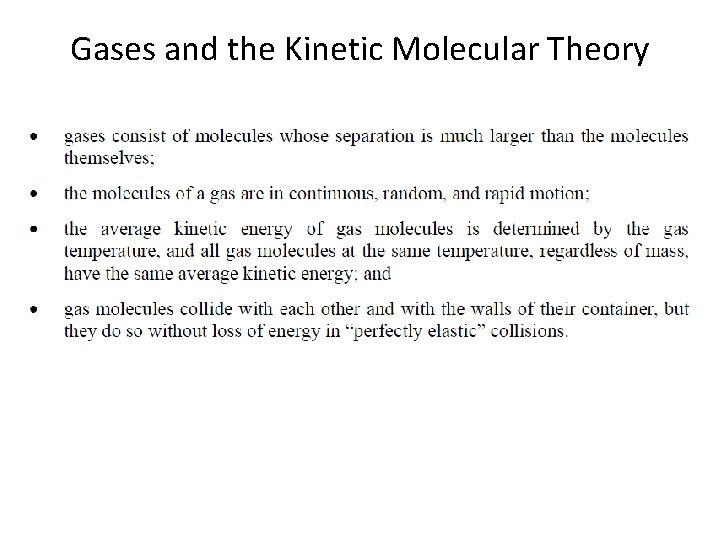
Gases and the Kinetic Molecular Theory
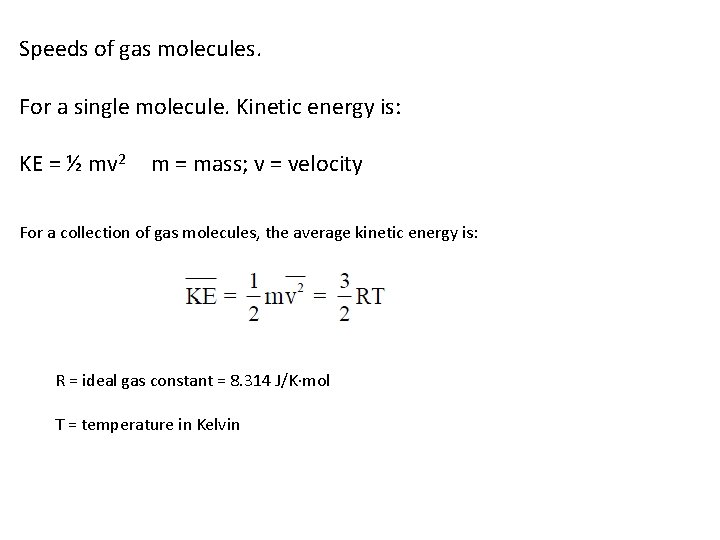
Speeds of gas molecules. For a single molecule. Kinetic energy is: KE = ½ mv 2 m = mass; v = velocity For a collection of gas molecules, the average kinetic energy is: R = ideal gas constant = 8. 314 J/K mol T = temperature in Kelvin
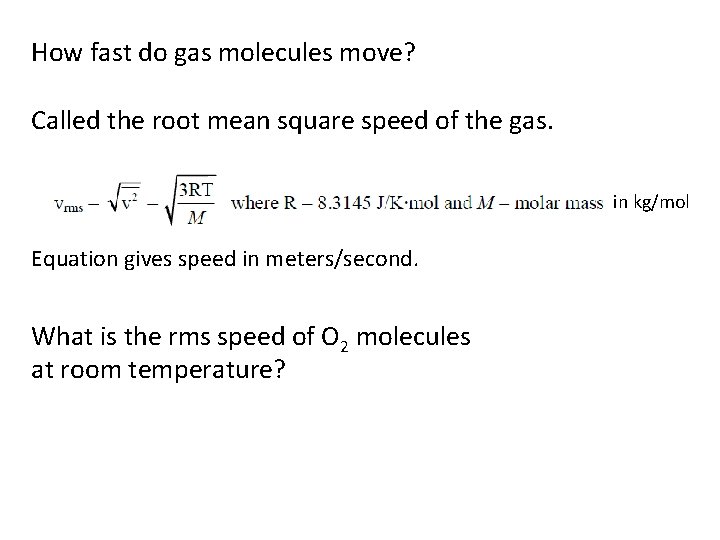
How fast do gas molecules move? Called the root mean square speed of the gas. in kg/mol Equation gives speed in meters/second. What is the rms speed of O 2 molecules at room temperature?
Boltzmann Distributions
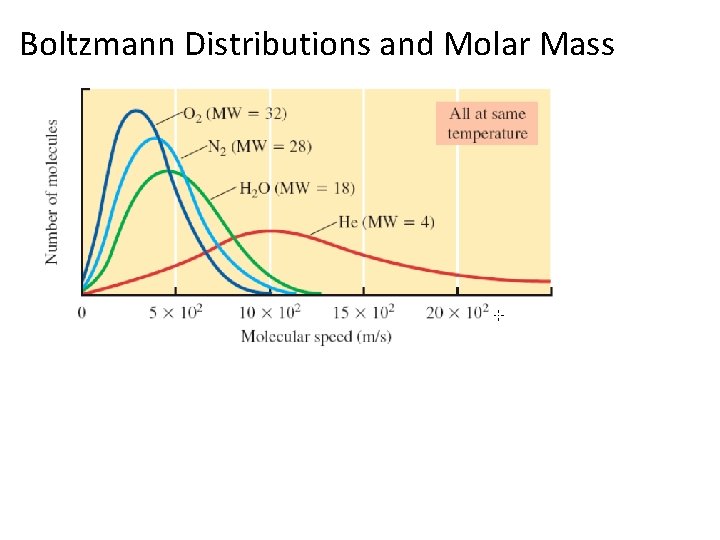
Boltzmann Distributions and Molar Mass
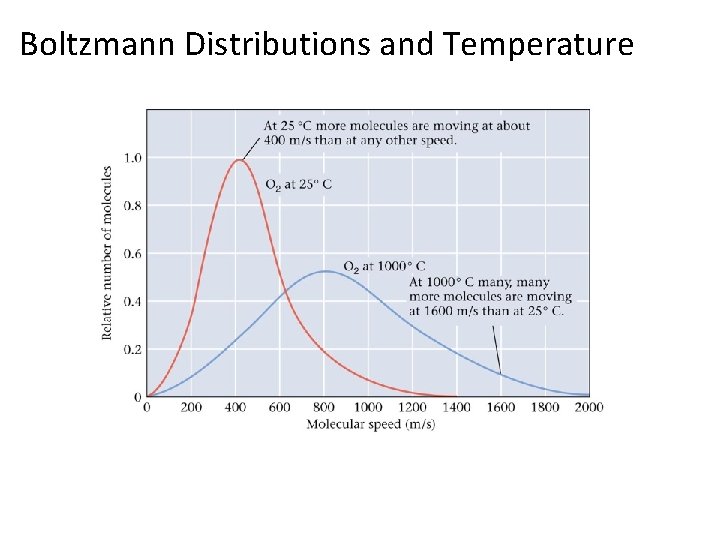
Boltzmann Distributions and Temperature
Gas Diffusion
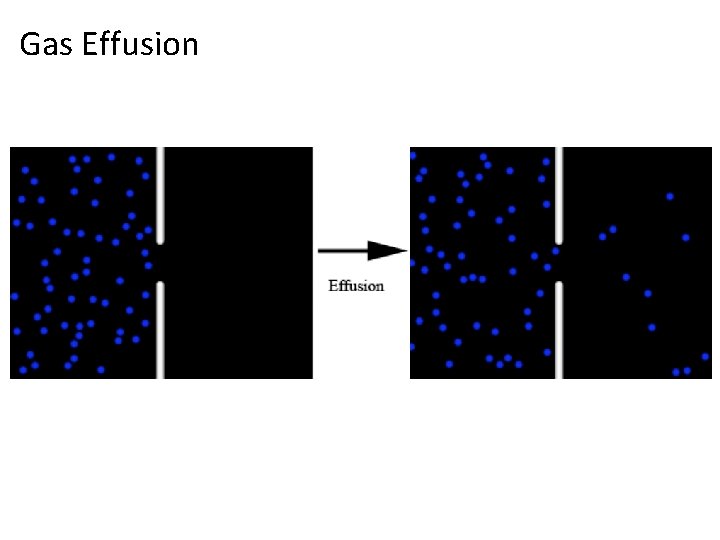
Gas Effusion
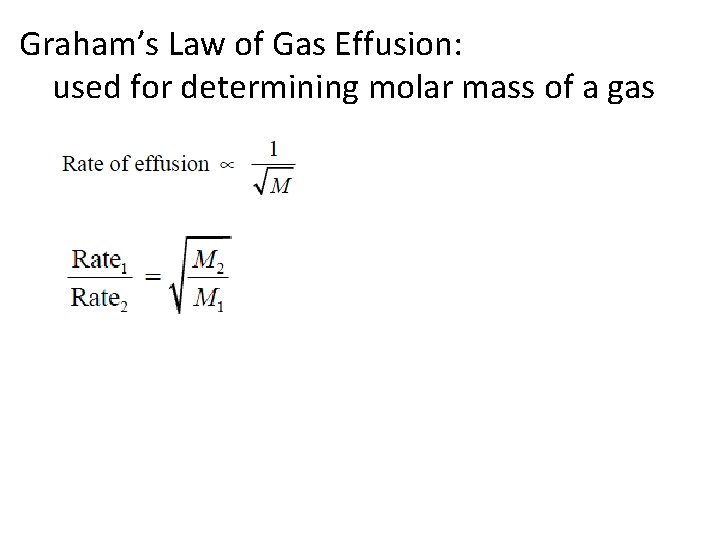
Graham’s Law of Gas Effusion: used for determining molar mass of a gas
Example: A sample of ethane, C 2 H 6, effuses through a small hole at a rate of 3. 6 x 10 -6 mol/hr. An unknown gas, under the same conditions, effuses at a rate of 1. 3 x 10 -6 mol/hr. Calculate the molar mass of the unknown gas.
Nuclear Fuel
Diffusion Method= 1. 007/cycle; How many cycle to get from 0. 7% to 4% 1. 2. 3. 4. 5. 10 20 50 100 800
Centrifuge Method= 1. 3/cycle; How many cycle to get from 0. 7% to 4% 1. 2. 3. 4. 10 20 50 100
Gas Laws: The Ideal Gas Law PV = n. RT P = pressure in atmospheres V = volume in liters N = moles of gas T = temperature in K R = gas constant = 0. 08257 L atm/K mol Two Uses: 1. You know three of the four variables and solve for the fourth. 2. You know the change in one variable and determine the change in another.
The Ideal Gas Law: 1 a: Determining one property, given the others A sample of N 2 gas has a volume of 250. m. L, a pressure of 720 mm Hg, and is at 25 o. C. What is the mass of the gas?
The Ideal Gas Law: 1 b: Determining one property, given the others A sample of 2. 60 g Ar gas has a pressure of 720 mm Hg, and is at 25 o. C. What is the volume of the gas?
The Ideal Gas Law: 1 c: Determining one property, given the others What is the density of O 2 gas at 20 o. C, in grams per liter?
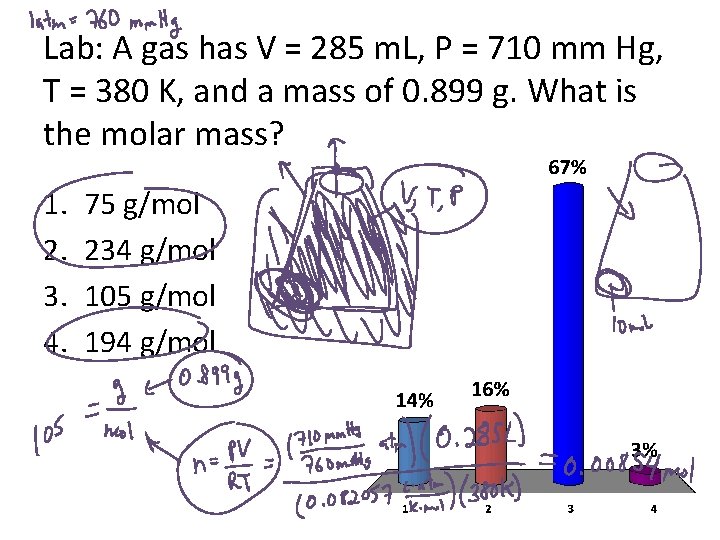
Lab: A gas has V = 285 m. L, P = 710 mm Hg, T = 380 K, and a mass of 0. 899 g. What is the molar mass? 1. 2. 3. 4. 75 g/mol 234 g/mol 105 g/mol 194 g/mol
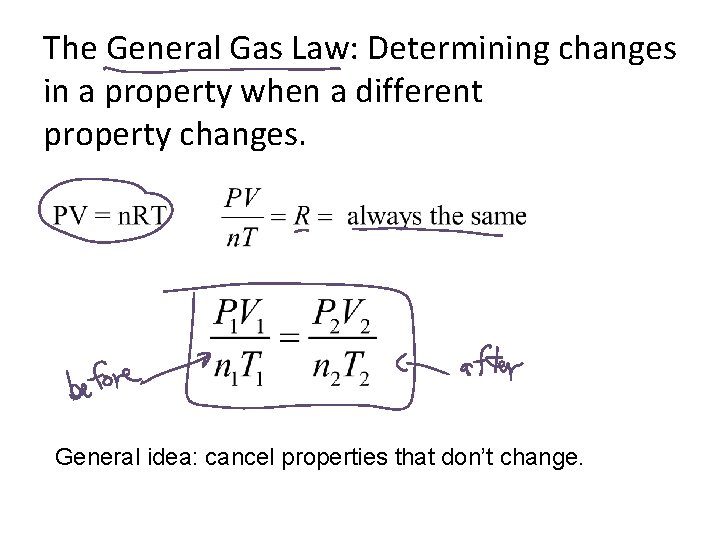
The General Gas Law: Determining changes in a property when a different property changes. General idea: cancel properties that don’t change.
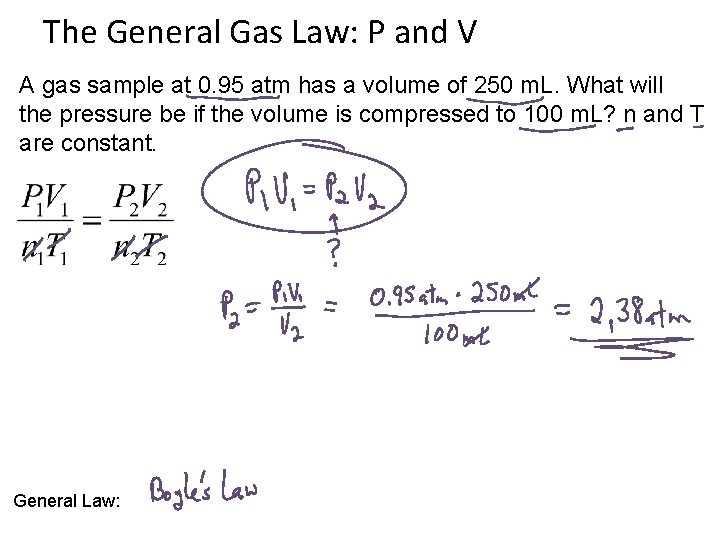
The General Gas Law: P and V A gas sample at 0. 95 atm has a volume of 250 m. L. What will the pressure be if the volume is compressed to 100 m. L? n and T are constant. General Law:
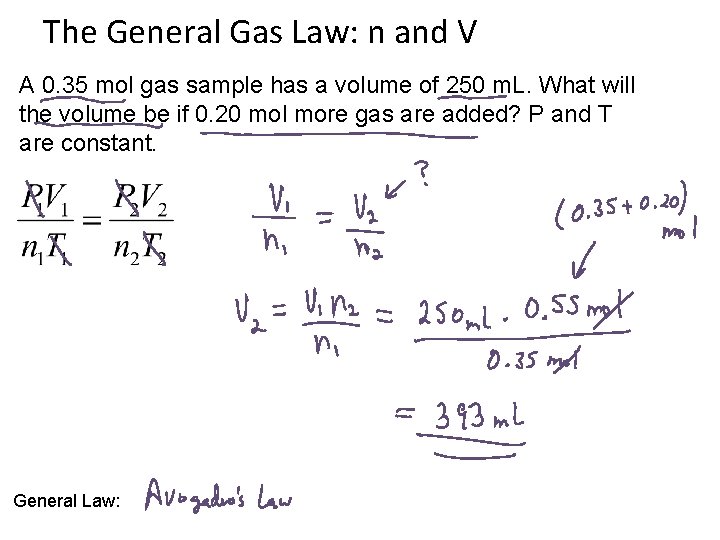
The General Gas Law: n and V A 0. 35 mol gas sample has a volume of 250 m. L. What will the volume be if 0. 20 mol more gas are added? P and T are constant. General Law:
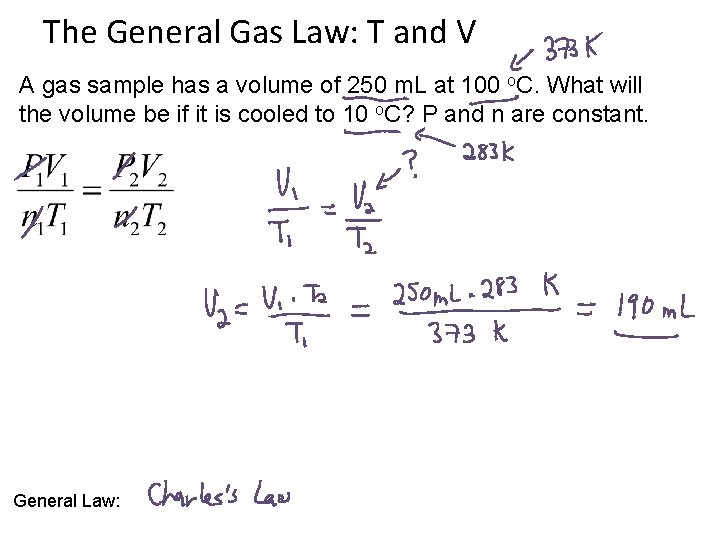
The General Gas Law: T and V A gas sample has a volume of 250 m. L at 100 o. C. What will the volume be if it is cooled to 10 o. C? P and n are constant. General Law:
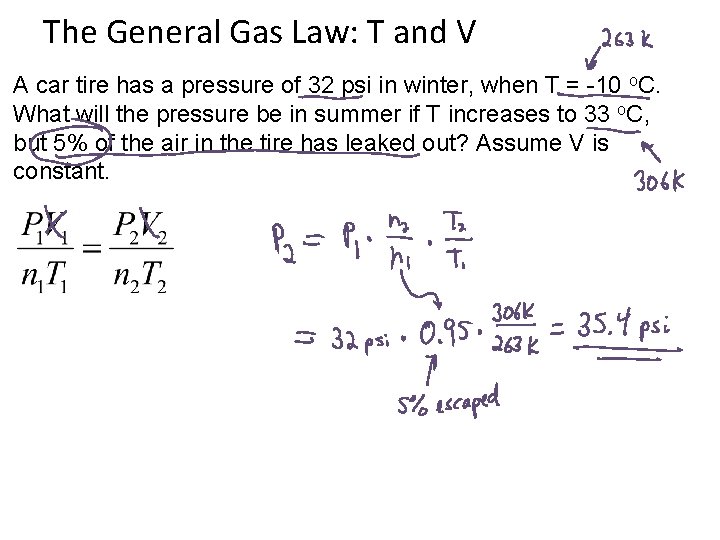
The General Gas Law: T and V A car tire has a pressure of 32 psi in winter, when T = -10 o. C. What will the pressure be in summer if T increases to 33 o. C, but 5% of the air in the tire has leaked out? Assume V is constant.
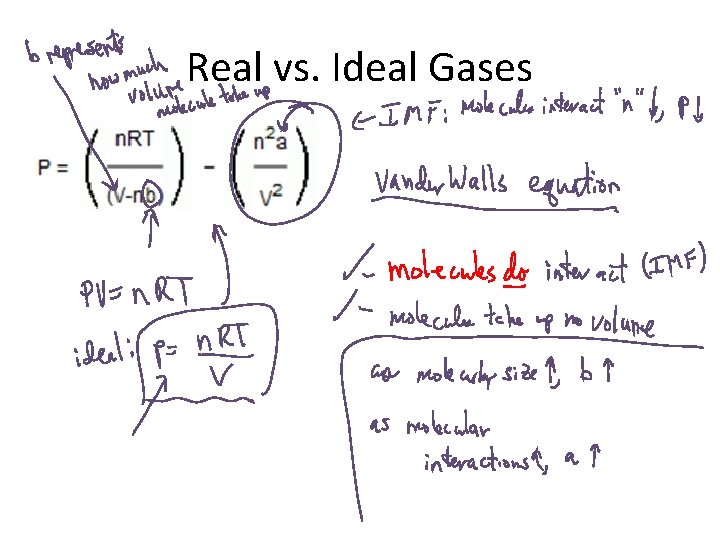
Real vs. Ideal Gases
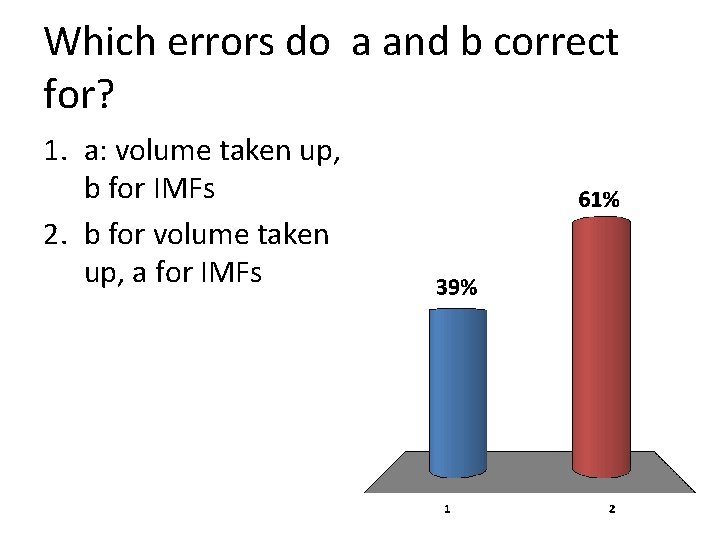
Which errors do a and b correct for? 1. a: volume taken up, b for IMFs 2. b for volume taken up, a for IMFs