
Chapter 11 Theories of Covalent Bonding 11 1
Chapter 11 Theories of Covalent Bonding 11 -1
Theories of Covalent Bonding 11. 1 Valence bond (VB) theory and orbital hybridization 11. 2 The mode of orbital overlap and types of covalent bonds 11. 3 Molecular orbital (MO) theory and electron delocalization 11 -2
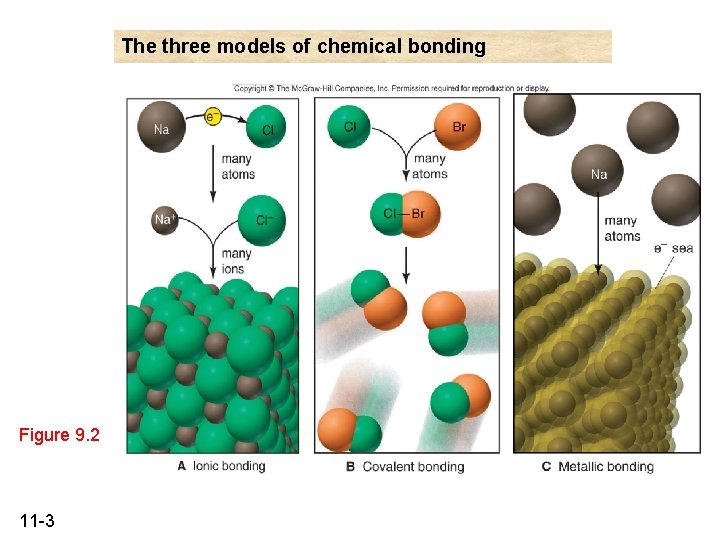
The three models of chemical bonding Figure 9. 2 11 -3
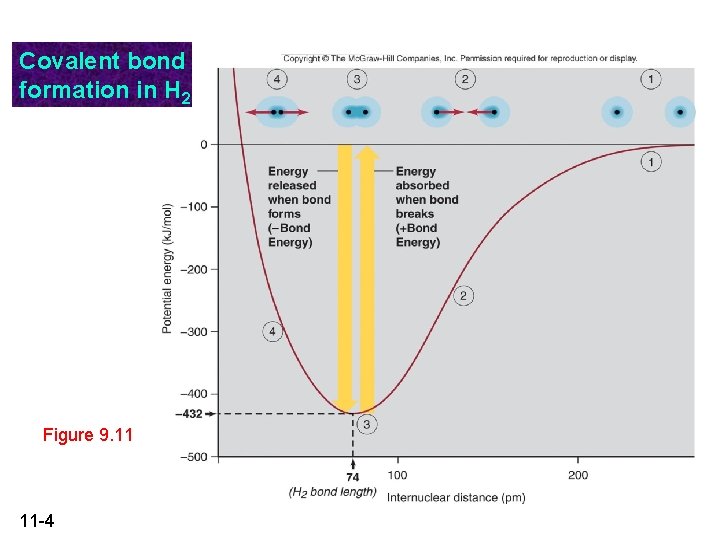
Covalent bond formation in H 2 Figure 9. 11 11 -4
Key Principles Structure dictates shape Shape dictates function shape = conformation Molecules can assume more than one shape (conformation) in solution! 11 -5
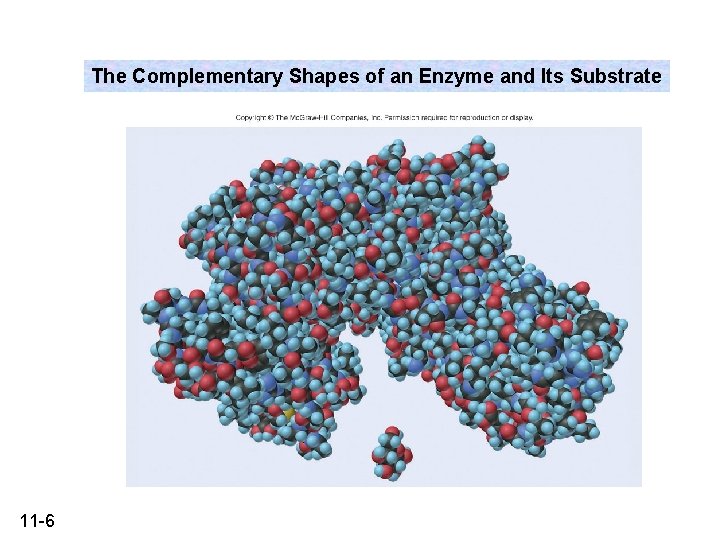
The Complementary Shapes of an Enzyme and Its Substrate 11 -6
Valence-shell Electron-Pair Repulsion (VSEPR) Theory A method to predict the shapes of molecules from their electronic structures (Lewis structures do not depict shape) Basic principle: each group of valence electrons around a central atom is located as far away as possible from the others in order to minimize repulsions Both bonding and non-bonding valence electrons around the central atom are considered. AXm. En symbolism: A = central atom, X = surrounding atoms, E = non-bonding electrons (usually a lone pair) 11 -7
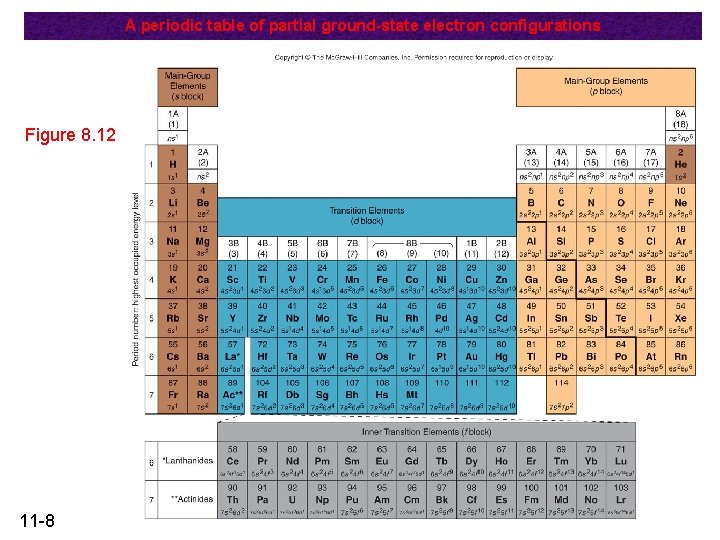
A periodic table of partial ground-state electron configurations Figure 8. 12 11 -8
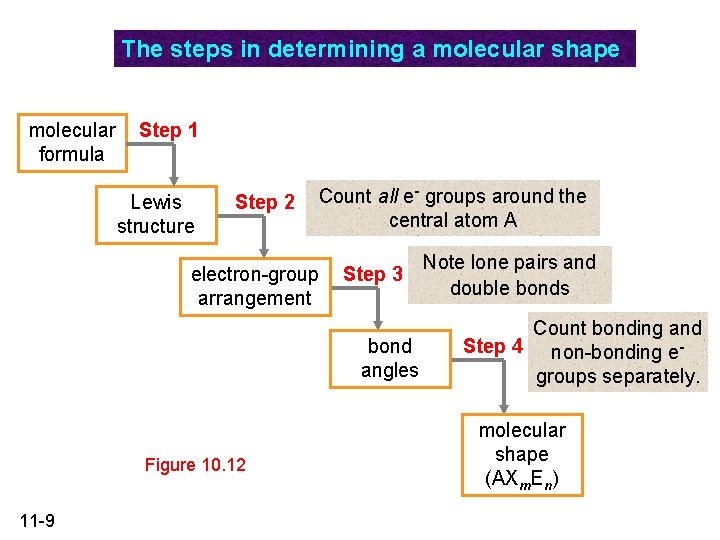
The steps in determining a molecular shape molecular formula Step 1 Lewis structure Step 2 Count all e- groups around the central atom A electron-group arrangement Step 3 bond angles Figure 10. 12 11 -9 Note lone pairs and double bonds Count bonding and Step 4 non-bonding egroups separately. molecular shape (AXm. En)
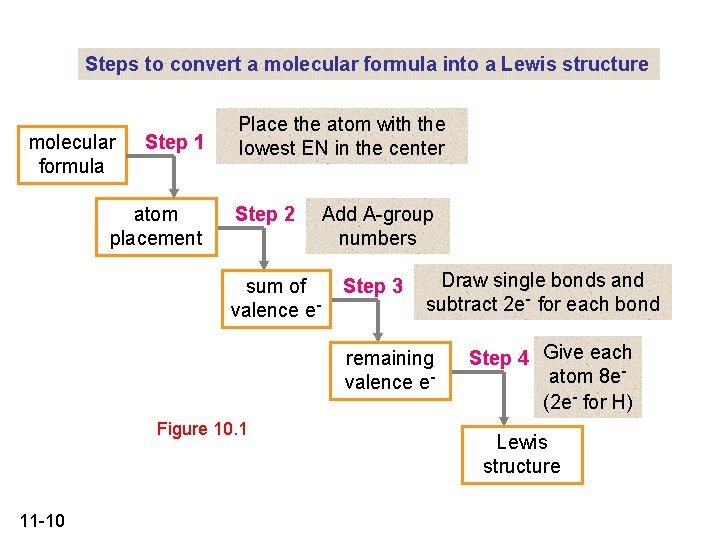
Steps to convert a molecular formula into a Lewis structure molecular formula Step 1 atom placement Place the atom with the lowest EN in the center Step 2 sum of valence e- Add A-group numbers Step 3 Draw single bonds and subtract 2 e- for each bond remaining valence e. Figure 10. 1 11 -10 Step 4 Give each atom 8 e(2 e- for H) Lewis structure
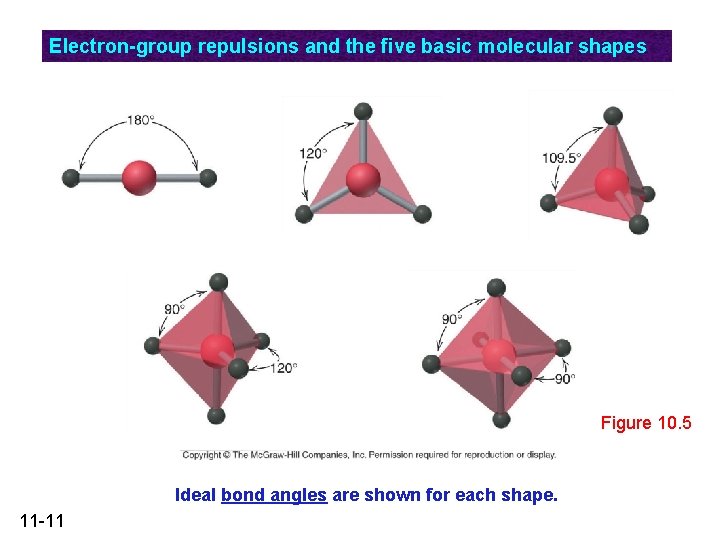
Electron-group repulsions and the five basic molecular shapes Figure 10. 5 Ideal bond angles are shown for each shape. 11 -11
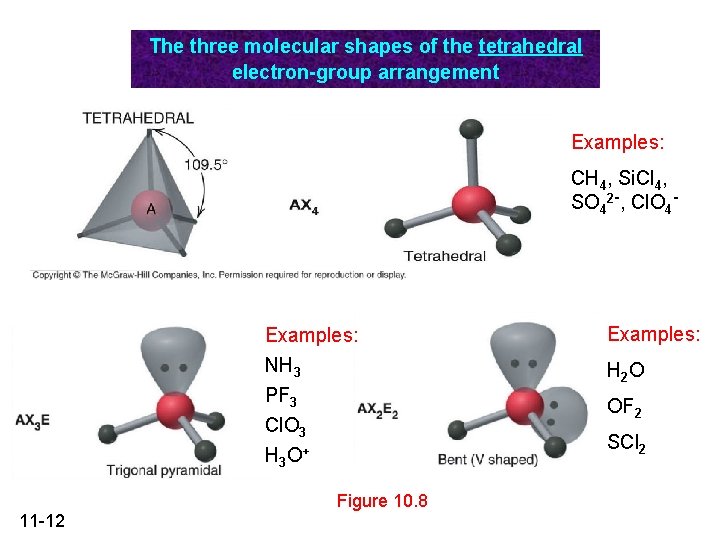
The three molecular shapes of the tetrahedral electron-group arrangement Examples: CH 4, Si. Cl 4, SO 42 -, Cl. O 4 - Examples: NH 3 PF 3 Cl. O 3 H 3 O + Figure 10. 8 11 -12 Examples: H 2 O OF 2 SCl 2
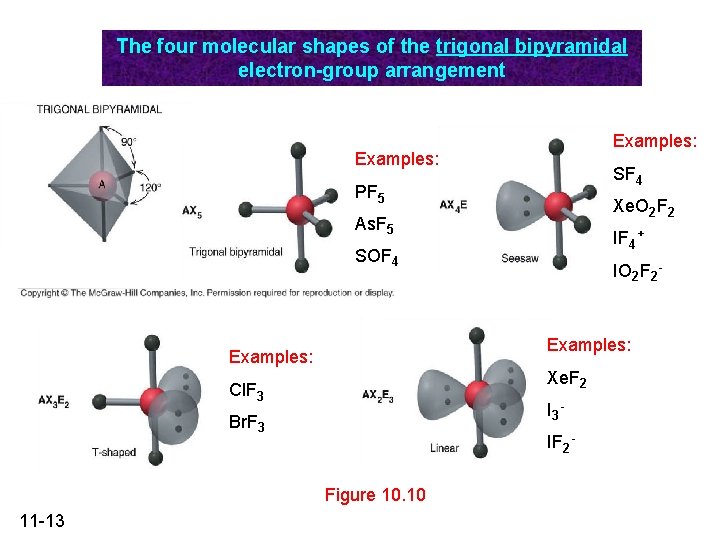
The four molecular shapes of the trigonal bipyramidal electron-group arrangement Examples: SF 4 PF 5 Xe. O 2 F 2 As. F 5 IF 4+ SOF 4 Examples: Xe. F 2 Cl. F 3 I 3 - Br. F 3 IF 2 Figure 10. 10 11 -13 IO 2 F 2 -
VSEPR (Valence Shell Electron Pair Repulsion. Theory) Accounts for molecular shapes by assuming that electron groups tend to minimize their repulsions Does not show shapes can be explained from the interactions of atomic orbitals 11 -14
The Central Themes of Valence Bond (VB) Theory Basic Principle A covalent bond forms when the orbitals of two atoms overlap and are occupied by a pair of electrons that have the highest probability of being located between the nuclei. Three Central Themes A set of overlapping orbitals has a maximum of two electrons that must have opposite spins. The greater the orbital overlap, the stronger (more stable) the bond. The valence atomic orbitals in a molecule are different from those in isolated atoms (hybridization). 11 -15
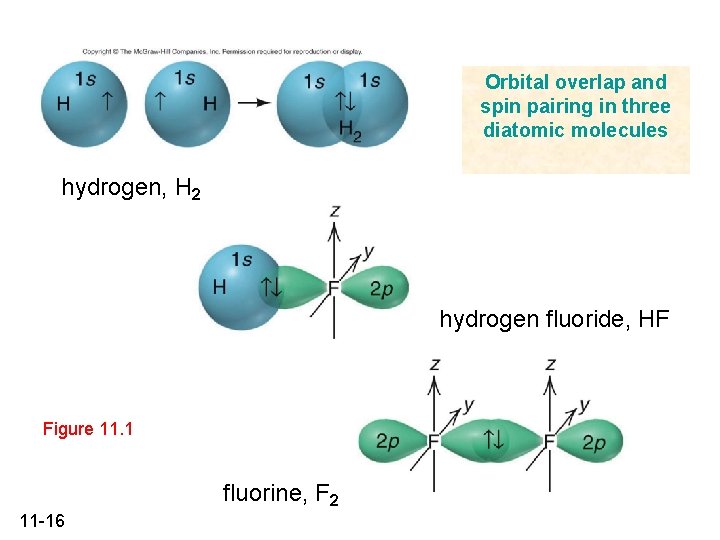
Orbital overlap and spin pairing in three diatomic molecules hydrogen, H 2 hydrogen fluoride, HF Figure 11. 1 fluorine, F 2 11 -16
Linus Pauling Proposed that valence atomic orbitals in the molecule are different from those in the isolated atoms Mixing of certain combinations of atomic orbitals generates new atomic orbitals Process of orbital mixing = hybridization; generates hybrid orbitals 11 -17
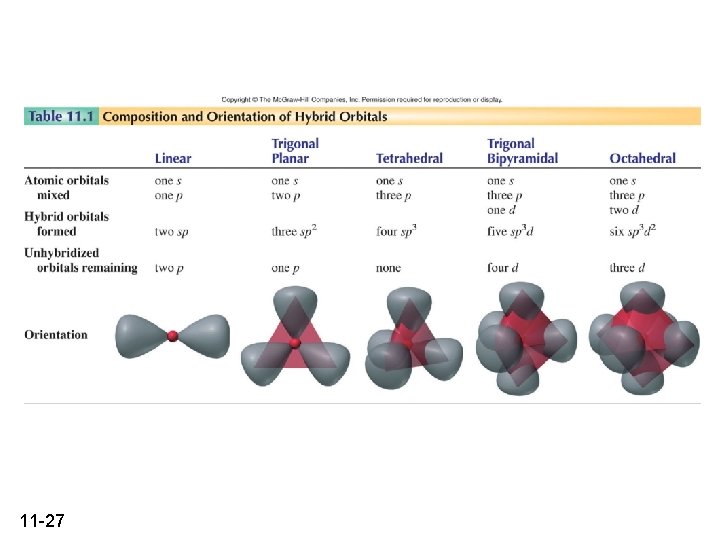
Hybrid Orbitals Key Points The number of hybrid orbitals obtained equals the number of atomic orbitals mixed. The type of hybrid orbitals obtained varies with the types of atomic orbitals mixed. Types of Hybrid Orbitals sp 11 -18 sp 2 sp 3 d 2
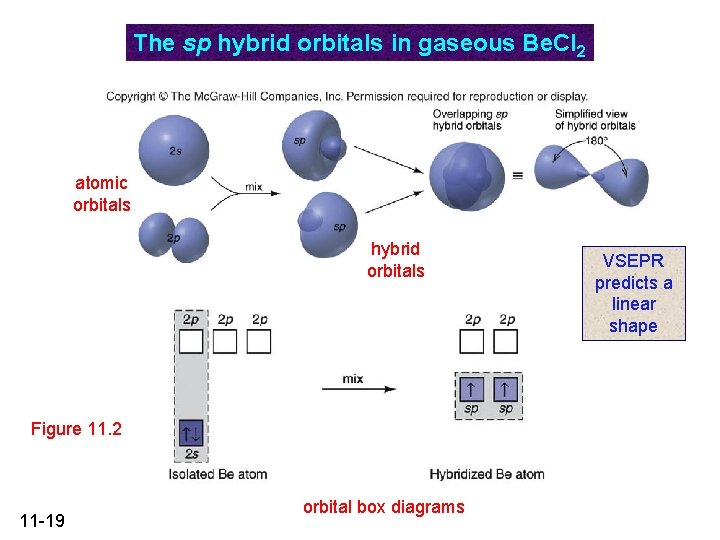
The sp hybrid orbitals in gaseous Be. Cl 2 atomic orbitals hybrid orbitals Figure 11. 2 11 -19 orbital box diagrams VSEPR predicts a linear shape
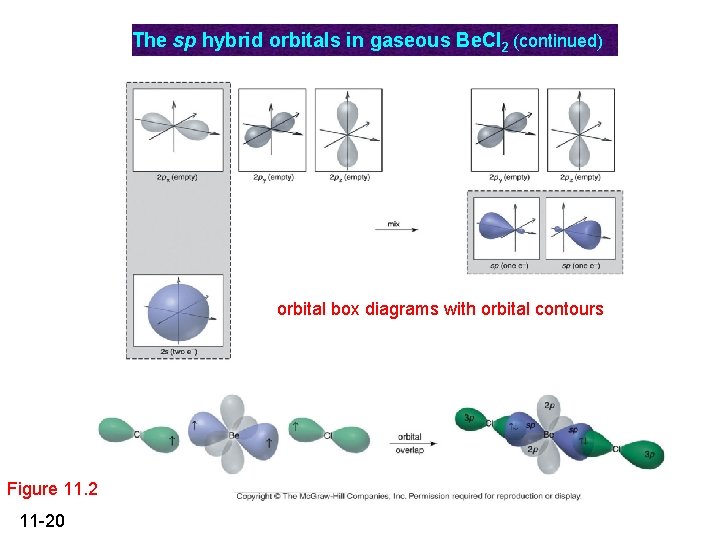
The sp hybrid orbitals in gaseous Be. Cl 2 (continued) orbital box diagrams with orbital contours Figure 11. 2 11 -20
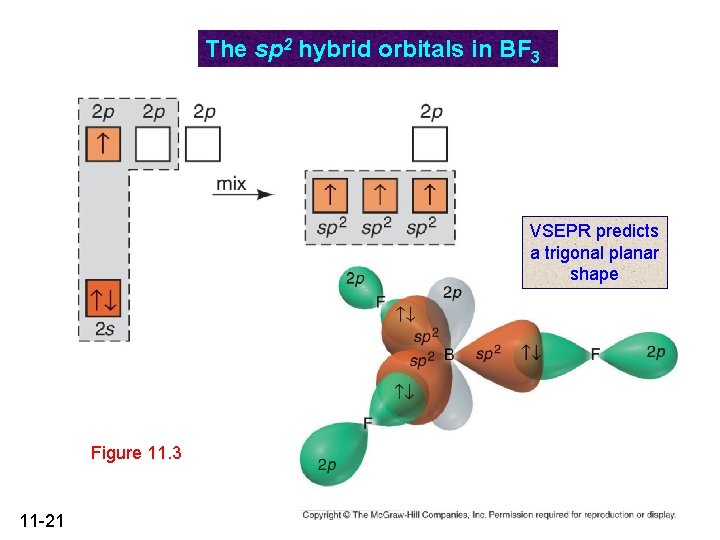
The sp 2 hybrid orbitals in BF 3 VSEPR predicts a trigonal planar shape Figure 11. 3 11 -21
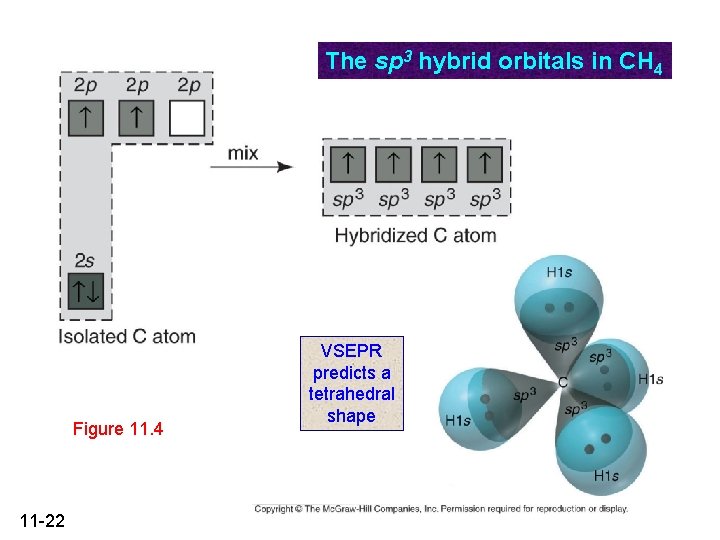
The sp 3 hybrid orbitals in CH 4 Figure 11. 4 11 -22 VSEPR predicts a tetrahedral shape
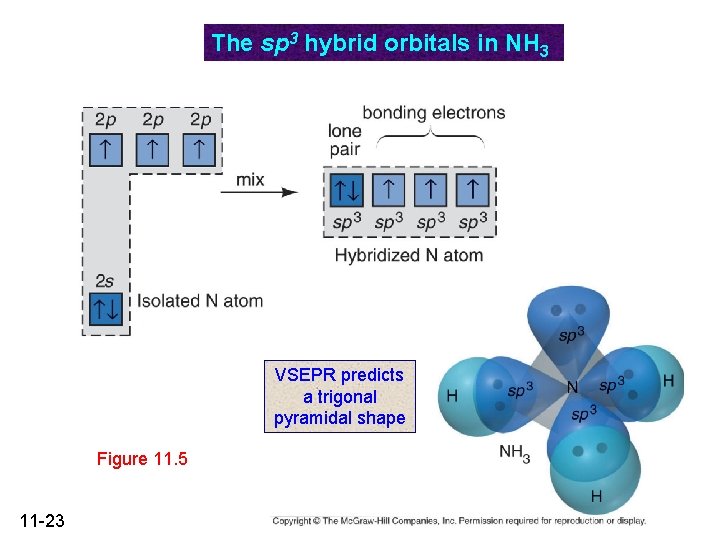
The sp 3 hybrid orbitals in NH 3 VSEPR predicts a trigonal pyramidal shape Figure 11. 5 11 -23
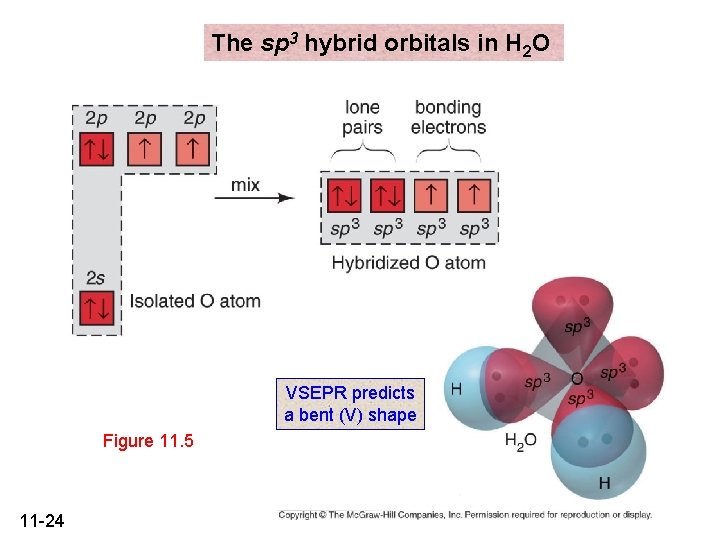
The sp 3 hybrid orbitals in H 2 O VSEPR predicts a bent (V) shape Figure 11. 5 11 -24
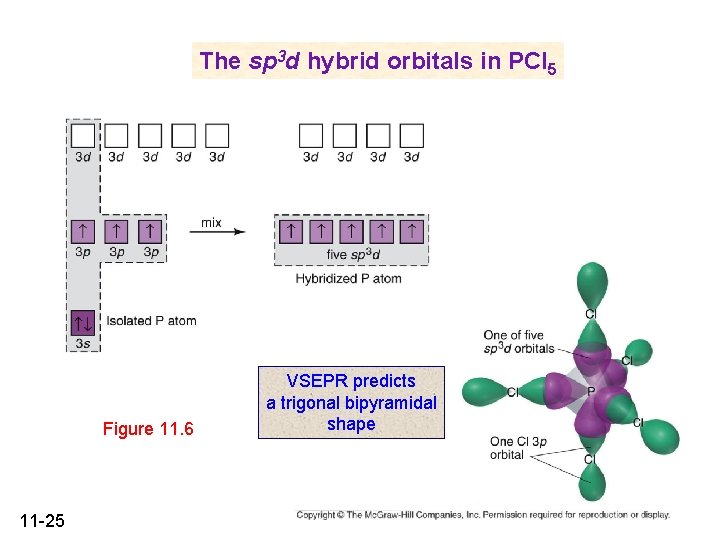
The sp 3 d hybrid orbitals in PCl 5 Figure 11. 6 11 -25 VSEPR predicts a trigonal bipyramidal shape
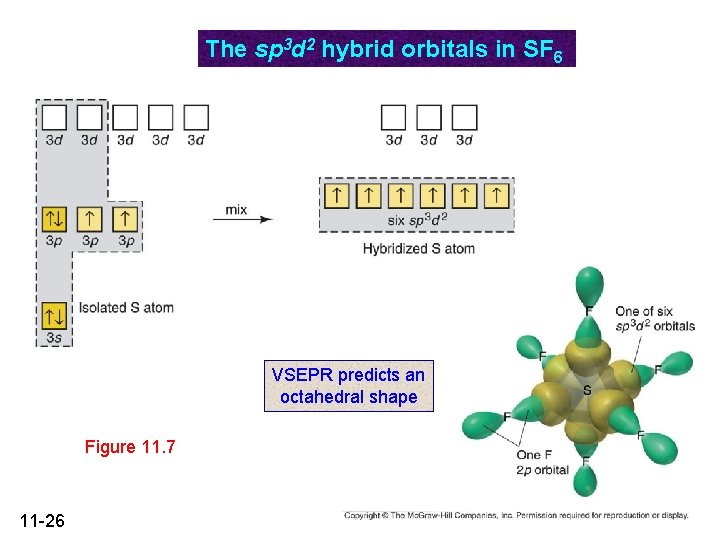
The sp 3 d 2 hybrid orbitals in SF 6 VSEPR predicts an octahedral shape Figure 11. 7 11 -26
11 -27
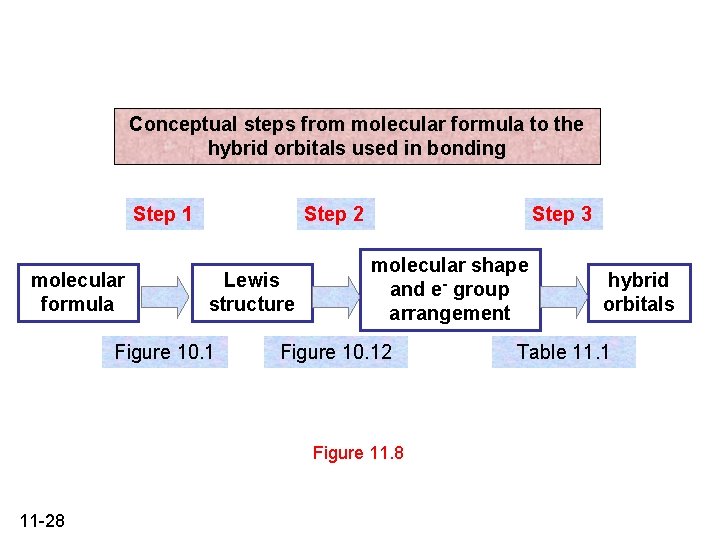
Conceptual steps from molecular formula to the hybrid orbitals used in bonding Step 1 molecular formula Step 2 Lewis structure Figure 10. 1 Step 3 molecular shape and e- group arrangement Figure 10. 12 Figure 11. 8 11 -28 hybrid orbitals Table 11. 1
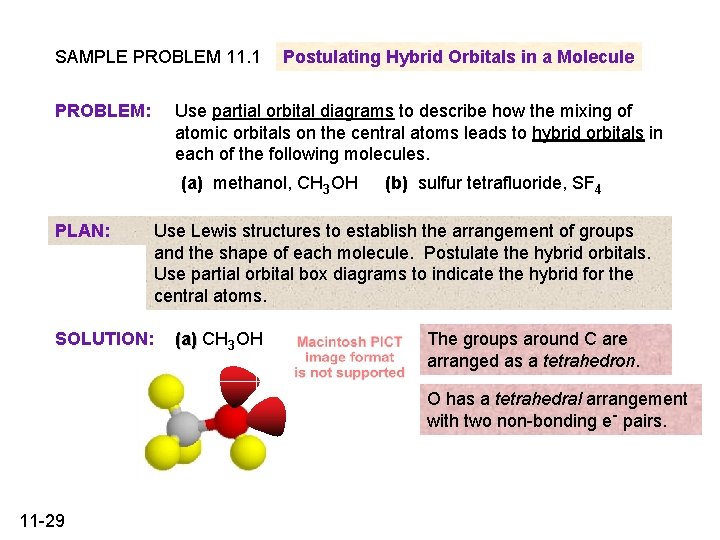
SAMPLE PROBLEM 11. 1 PROBLEM: Postulating Hybrid Orbitals in a Molecule Use partial orbital diagrams to describe how the mixing of atomic orbitals on the central atoms leads to hybrid orbitals in each of the following molecules. (a) methanol, CH 3 OH PLAN: (b) sulfur tetrafluoride, SF 4 Use Lewis structures to establish the arrangement of groups and the shape of each molecule. Postulate the hybrid orbitals. Use partial orbital box diagrams to indicate the hybrid for the central atoms. SOLUTION: (a) CH 3 OH The groups around C are arranged as a tetrahedron. O has a tetrahedral arrangement with two non-bonding e- pairs. 11 -29
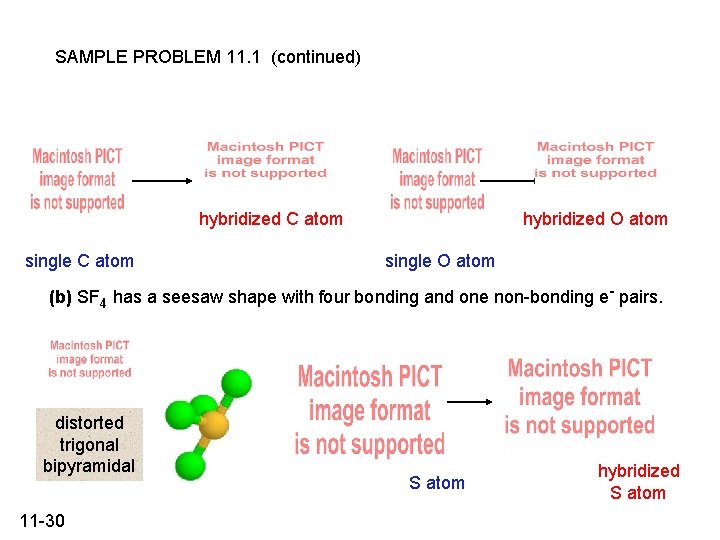
SAMPLE PROBLEM 11. 1 (continued) hybridized C atom single C atom hybridized O atom single O atom (b) SF 4 has a seesaw shape with four bonding and one non-bonding e- pairs. distorted trigonal bipyramidal 11 -30 S atom hybridized S atom
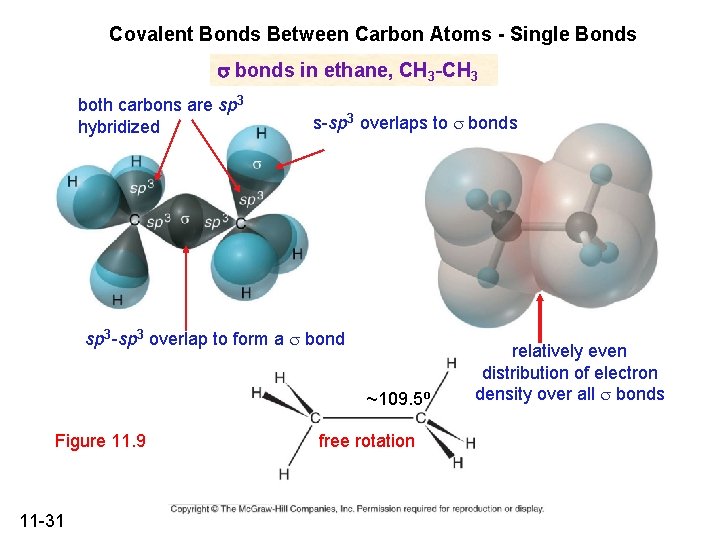
Covalent Bonds Between Carbon Atoms - Single Bonds bonds in ethane, CH 3 -CH 3 both carbons are sp 3 hybridized s-sp 3 overlaps to s bonds sp 3 -sp 3 overlap to form a s bond ~109. 5 o Figure 11. 9 11 -31 free rotation relatively even distribution of electron density over all s bonds
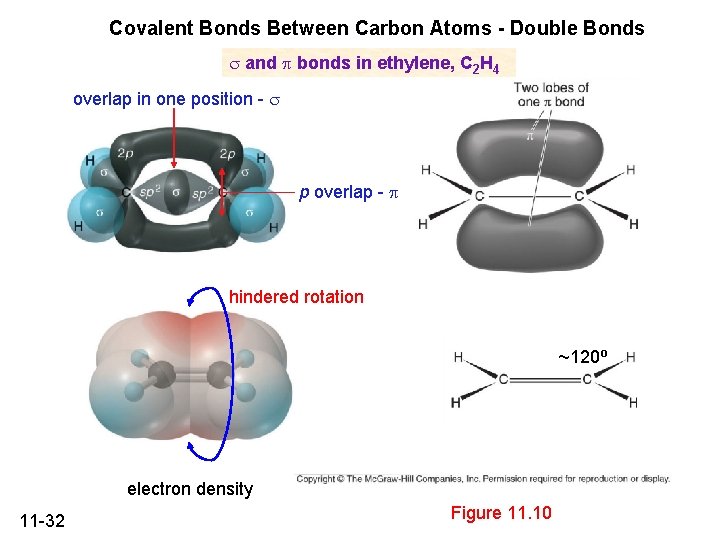
Covalent Bonds Between Carbon Atoms - Double Bonds s and bonds in ethylene, C 2 H 4 overlap in one position - s p overlap - hindered rotation ~120 o electron density 11 -32 Figure 11. 10
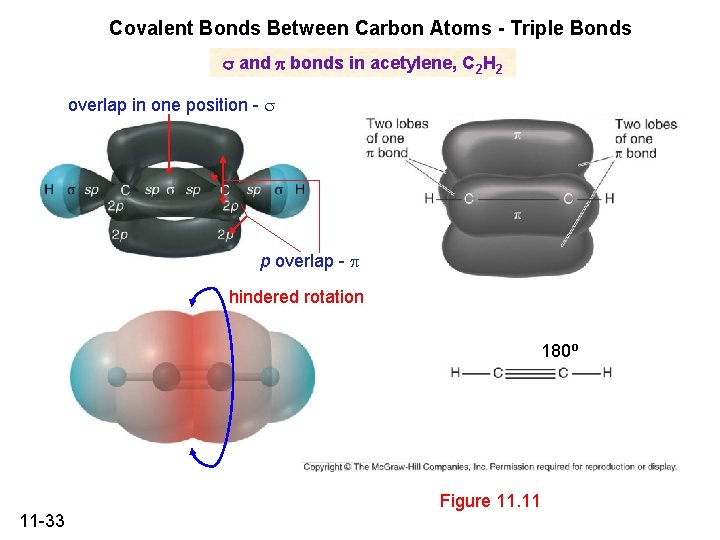
Covalent Bonds Between Carbon Atoms - Triple Bonds and bonds in acetylene, C 2 H 2 overlap in one position - s p overlap - hindered rotation 180 o Figure 11. 11 11 -33
Video: Hybridization 11 -34
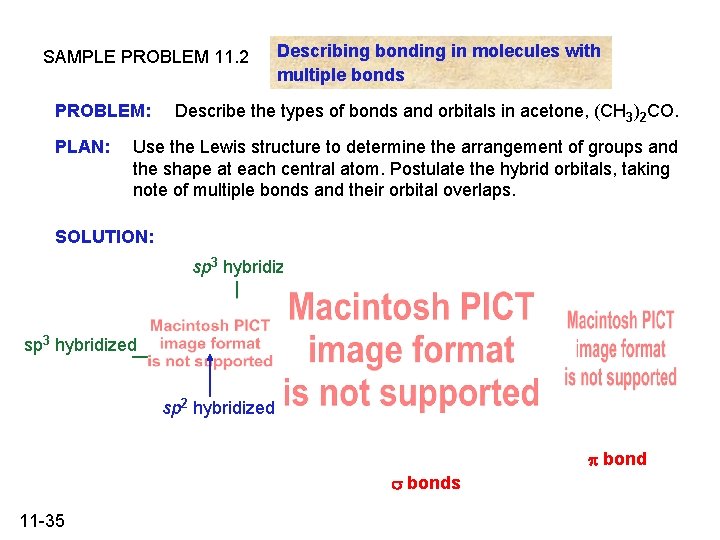
SAMPLE PROBLEM 11. 2 PROBLEM: PLAN: Describing bonding in molecules with multiple bonds Describe the types of bonds and orbitals in acetone, (CH 3)2 CO. Use the Lewis structure to determine the arrangement of groups and the shape at each central atom. Postulate the hybrid orbitals, taking note of multiple bonds and their orbital overlaps. SOLUTION: sp 3 hybridized sp 2 hybridized bonds 11 -35
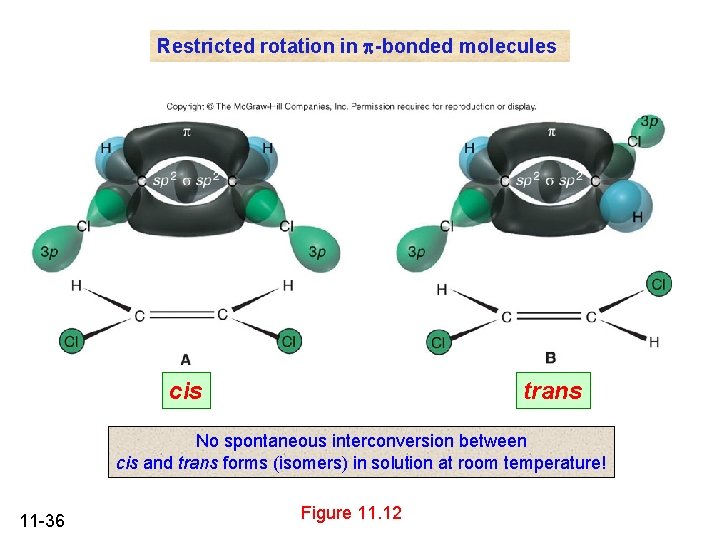
Restricted rotation in -bonded molecules cis trans No spontaneous interconversion between cis and trans forms (isomers) in solution at room temperature! 11 -36 Figure 11. 12
Limitations of VB Theory Inadequately explains magnetic/spectral properties Inadequately treats electron delocalization VB theory assumes a localized bonding model 11 -37
Molecular Orbital (MO) Theory A delocalized bonding model A quantum-mechanical treatment of molecules similar to that used for isolated atoms Invokes the concept of molecular orbitals (MOs) (extension of atomic orbitals) Exploits the wave-like properties of matter (electrons) 11 -38
Central themes of molecular orbital (MO) theory A molecule is viewed on a quantum mechanical level as a collection of nuclei surrounded by delocalized molecular orbitals. Atomic wave functions are summed to obtain molecular wave functions. If wave functions reinforce each other, a bonding MO is formed (region of high electron density exists between the nuclei). If wave functions cancel each other, an antibonding MO is formed (a node of zero electron density occurs between the nuclei). 11 -39
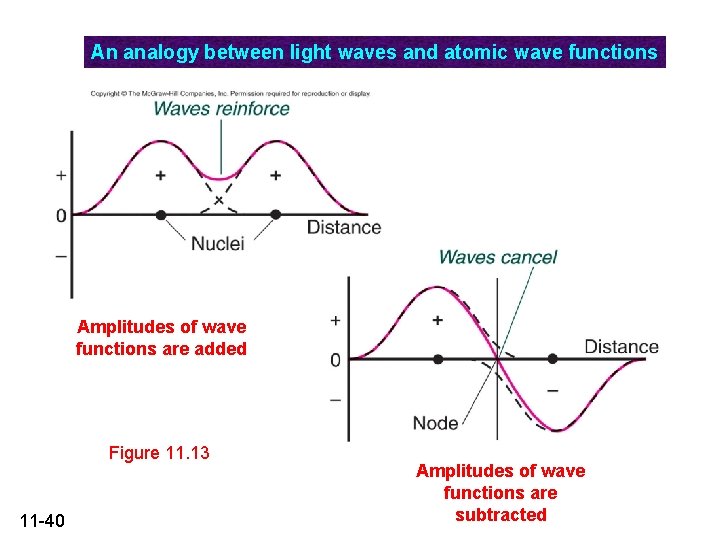
An analogy between light waves and atomic wave functions Amplitudes of wave functions are added Figure 11. 13 11 -40 Amplitudes of wave functions are subtracted
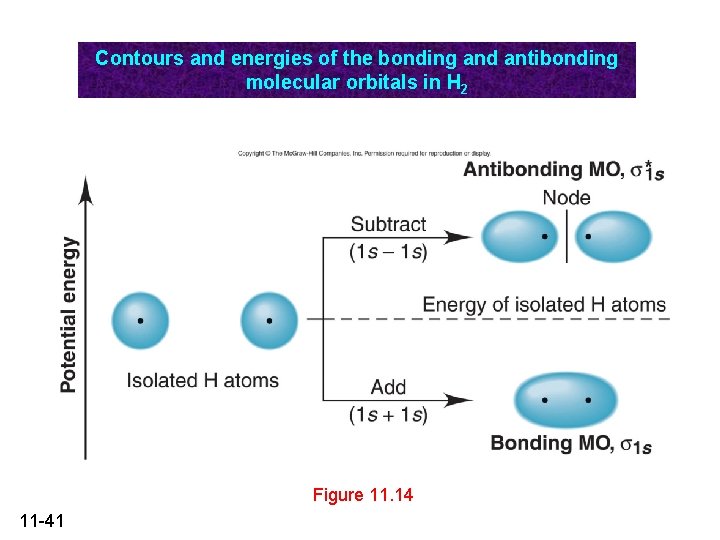
Contours and energies of the bonding and antibonding molecular orbitals in H 2 Figure 11. 14 11 -41
number of AOs combined = number of MOs produced Bonding MO: lower in energy than isolated atoms Antibonding MO: higher in energy than isolated atoms To form MOs, AOs must have similar energy and orientation Sigma (s) and pi ( ) bonds are denoted as before; a star (asterick) is used to denote antibonding MOs. 11 -42
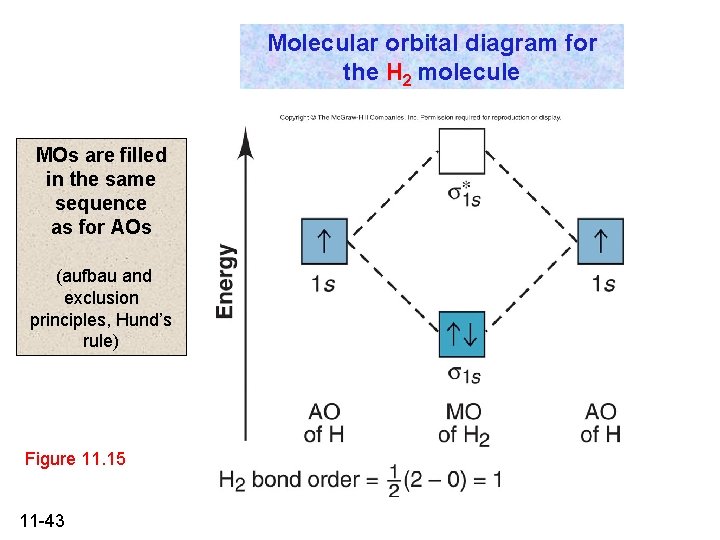
Molecular orbital diagram for the H 2 molecule MOs are filled in the same sequence as for AOs (aufbau and exclusion principles, Hund’s rule) Figure 11. 15 11 -43
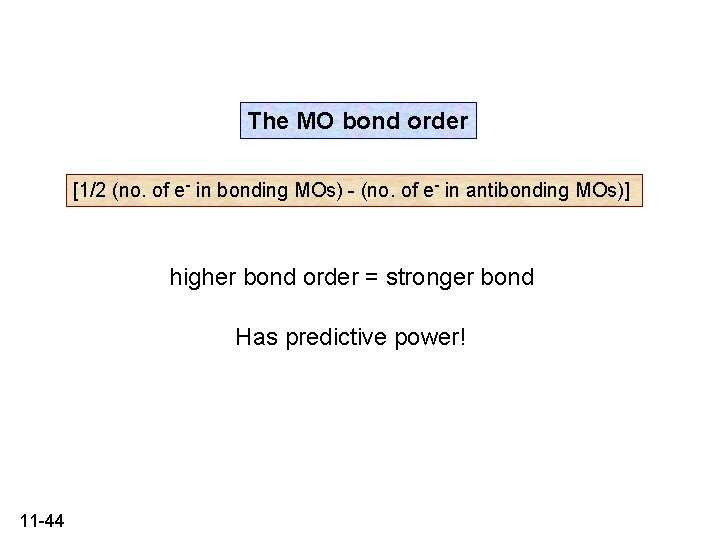
The MO bond order [1/2 (no. of e- in bonding MOs) - (no. of e- in antibonding MOs)] higher bond order = stronger bond Has predictive power! 11 -44
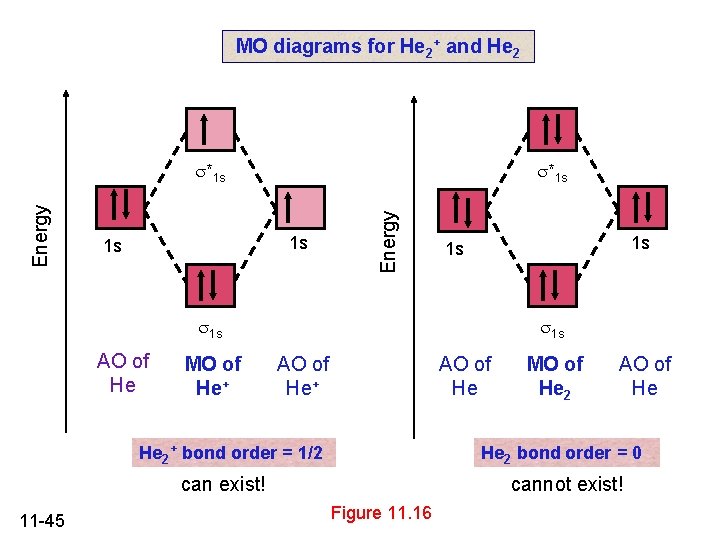
MO diagrams for He 2+ and He 2 s*1 s 1 s 1 s Energy s*1 s 1 s 1 s AO of He MO of He+ s 1 s AO of He+ AO of He He 2+ bond order = 1/2 AO of He He 2 bond order = 0 can exist! 11 -45 MO of He 2 cannot exist! Figure 11. 16
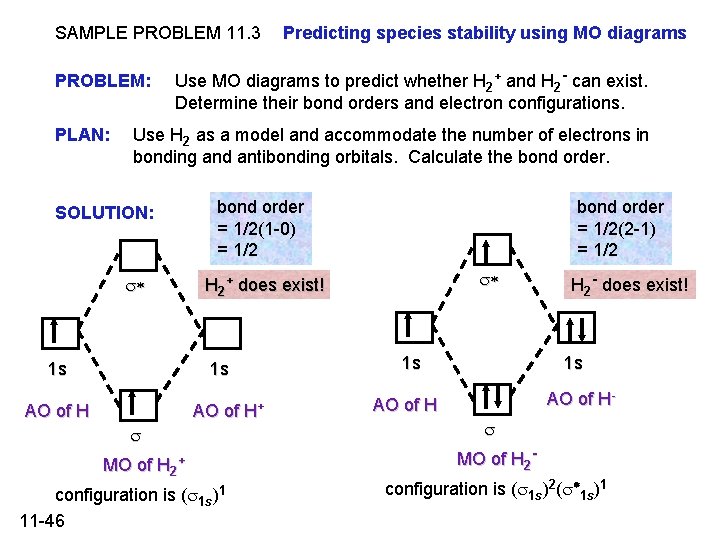
SAMPLE PROBLEM 11. 3 PROBLEM: PLAN: Predicting species stability using MO diagrams Use MO diagrams to predict whether H 2+ and H 2 - can exist. Determine their bond orders and electron configurations. Use H 2 as a model and accommodate the number of electrons in bonding and antibonding orbitals. Calculate the bond order. SOLUTION: s 1 s bond order = 1/2(1 -0) = 1/2 s H 2+ does exist! 1 s 1 s H+ AO of H bond order = 1/2(2 -1) = 1/2 AO of H s MO of H 2+ configuration is (s 1 s)1 11 -46 H 2 - does exist! 1 s AO of H- AO of H s MO of H 2 - configuration is (s 1 s)2(s 1 s)1
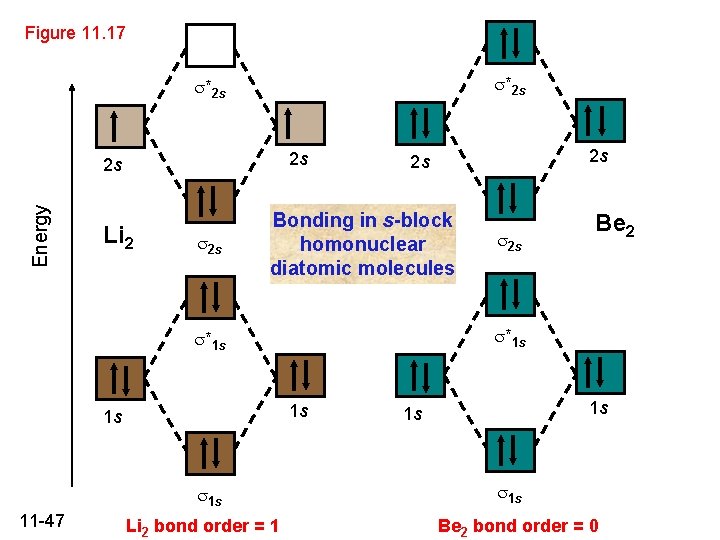
Figure 11. 17 s*2 s 2 s Energy 2 s Li 2 s 2 s Bonding in s-block homonuclear diatomic molecules 1 s 1 s Li 2 bond order = 1 s 2 s Be 2 s*1 s 11 -47 2 s 2 s 1 s 1 s Be 2 bond order = 0
Bonding and antibonding MOs for core electrons cancel = no net contribution to bonding Only MO diagrams showing MOs created by combining valence-electron AOs are important. 11 -48
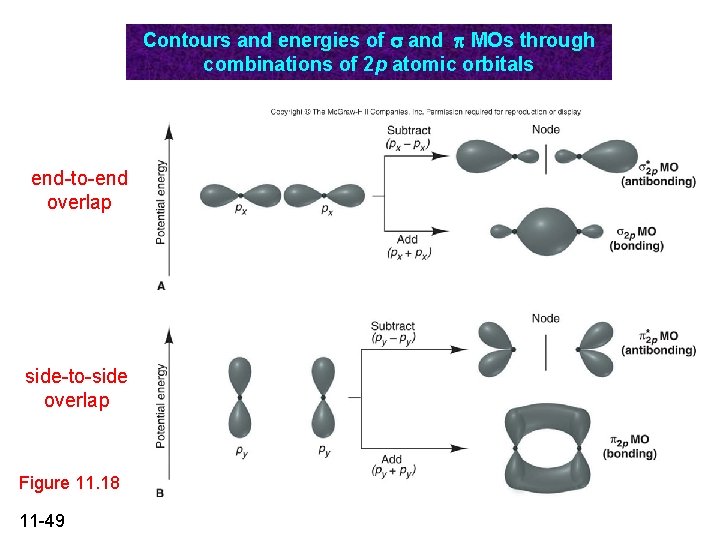
Contours and energies of and MOs through combinations of 2 p atomic orbitals end-to-end overlap side-to-side overlap Figure 11. 18 11 -49
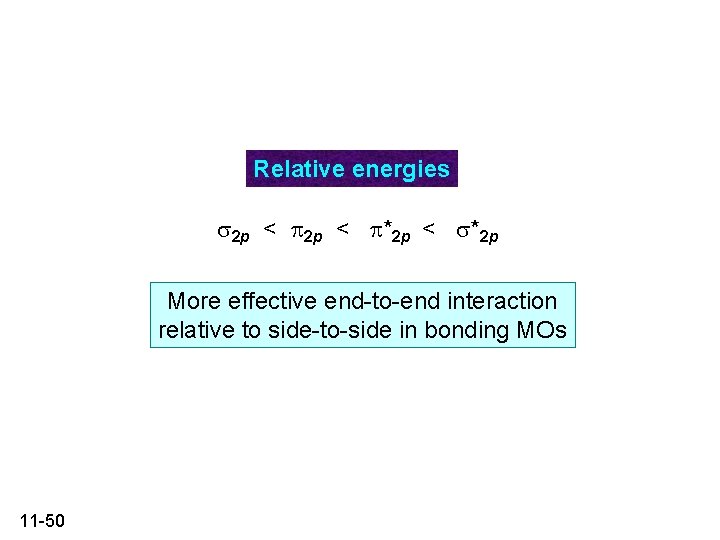
Relative energies s 2 p < *2 p < s*2 p More effective end-to-end interaction relative to side-to-side in bonding MOs 11 -50
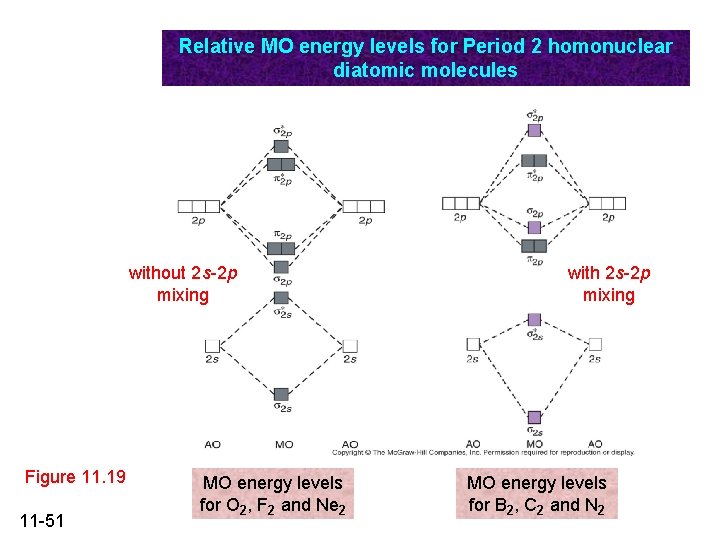
Relative MO energy levels for Period 2 homonuclear diatomic molecules without 2 s-2 p mixing Figure 11. 19 11 -51 MO energy levels for O 2, F 2 and Ne 2 with 2 s-2 p mixing MO energy levels for B 2, C 2 and N 2
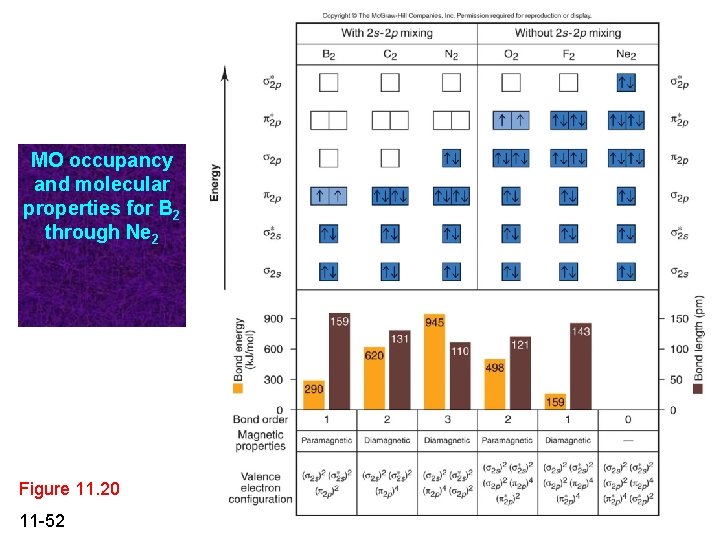
MO occupancy and molecular properties for B 2 through Ne 2 Figure 11. 20 11 -52
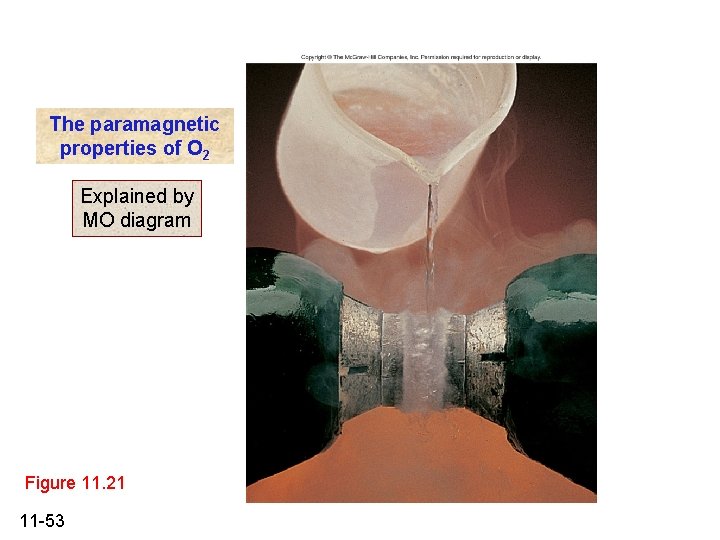
The paramagnetic properties of O 2 Explained by MO diagram Figure 11. 21 11 -53
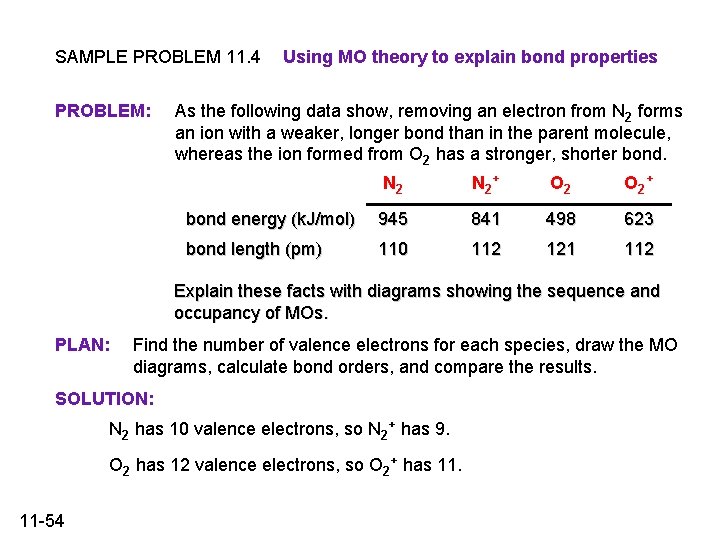
SAMPLE PROBLEM 11. 4 PROBLEM: Using MO theory to explain bond properties As the following data show, removing an electron from N 2 forms an ion with a weaker, longer bond than in the parent molecule, whereas the ion formed from O 2 has a stronger, shorter bond. N 2 + O 2 + bond energy (k. J/mol) 945 841 498 623 bond length (pm) 110 112 121 112 Explain these facts with diagrams showing the sequence and occupancy of MOs. PLAN: Find the number of valence electrons for each species, draw the MO diagrams, calculate bond orders, and compare the results. SOLUTION: N 2 has 10 valence electrons, so N 2+ has 9. O 2 has 12 valence electrons, so O 2+ has 11. 11 -54
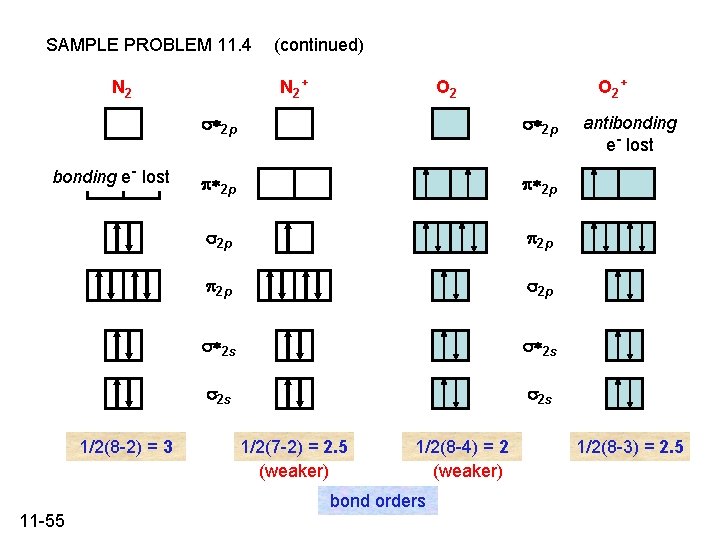
SAMPLE PROBLEM 11. 4 N 2 + N 2 bonding e- lost 1/2(8 -2) = 3 (continued) 2 p 2 p 2 s 2 s 1/2(7 -2) = 2. 5 (weaker) 1/2(8 -4) = 2 (weaker) bond orders 11 -55 O 2 + O 2 antibonding e- lost 1/2(8 -3) = 2. 5
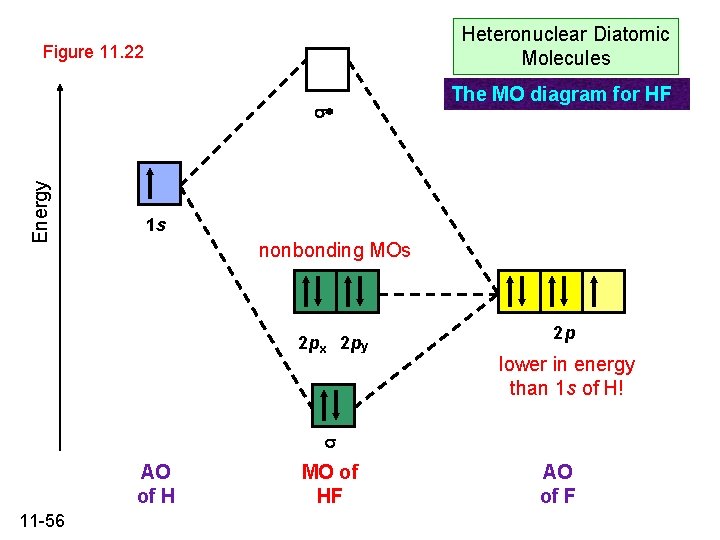
Heteronuclear Diatomic Molecules Figure 11. 22 Energy The MO diagram for HF 1 s nonbonding MOs 2 px 2 py 2 p lower in energy than 1 s of H! AO of H 11 -56 MO of HF AO of F
In polar covalent compounds, bonding MOs are closer in energy to the AOs of the more electronegative atom. 11 -57
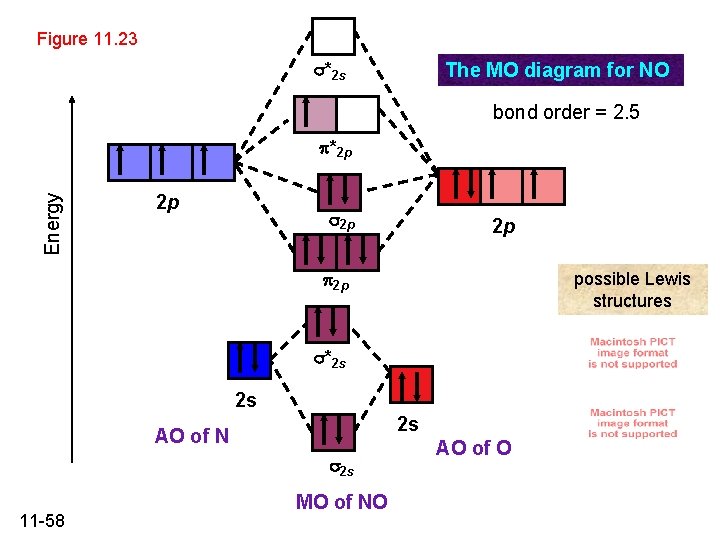
Figure 11. 23 *2 s The MO diagram for NO bond order = 2. 5 Energy *2 p 2 p 2 p possible Lewis structures *2 s 2 s 2 s AO of N 2 s 11 -58 MO of NO AO of O
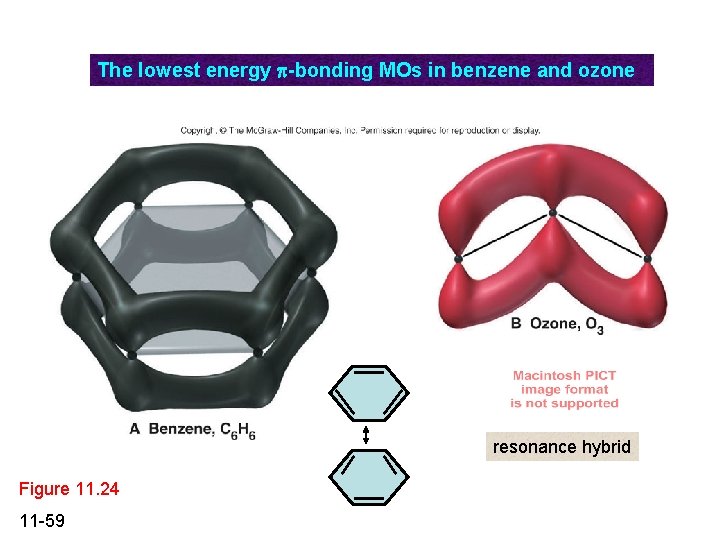
The lowest energy -bonding MOs in benzene and ozone resonance hybrid Figure 11. 24 11 -59
- Slides: 59