Force and the resulting motion Dynamics Unification Theory








- Slides: 94
Force and the resulting motion Dynamics
Unification Theory) Force (Modern)
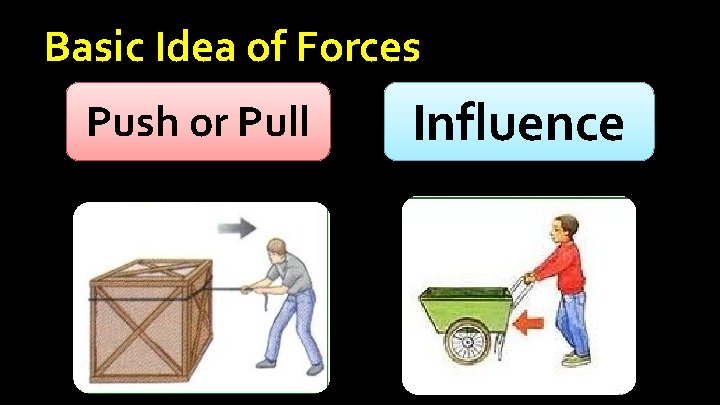
Basic Idea of Forces Push or Pull Influence
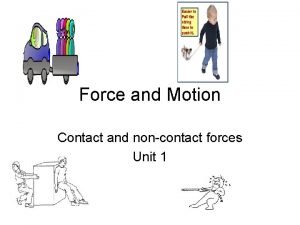
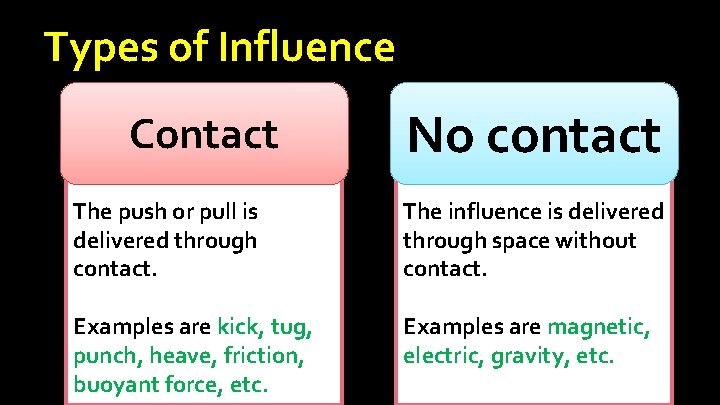
Types of Influence Contact No contact The push or pull is delivered through contact. The influence is delivered through space without contact. Examples are kick, tug, punch, heave, friction, buoyant force, etc. Examples are magnetic, electric, gravity, etc.
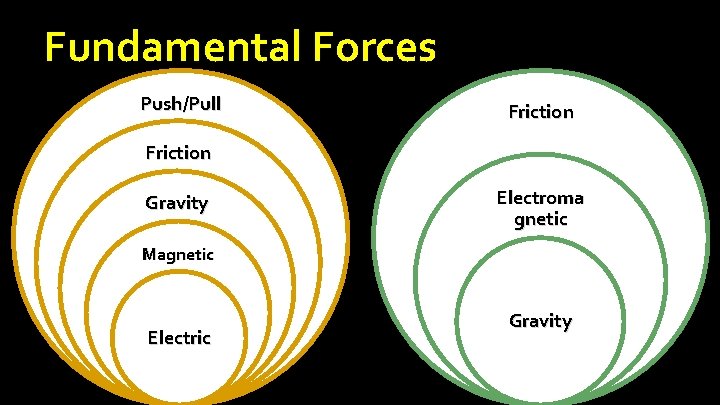
Fundamental Forces Push/Pull Friction Gravity Electroma gnetic Magnetic Electric Gravity
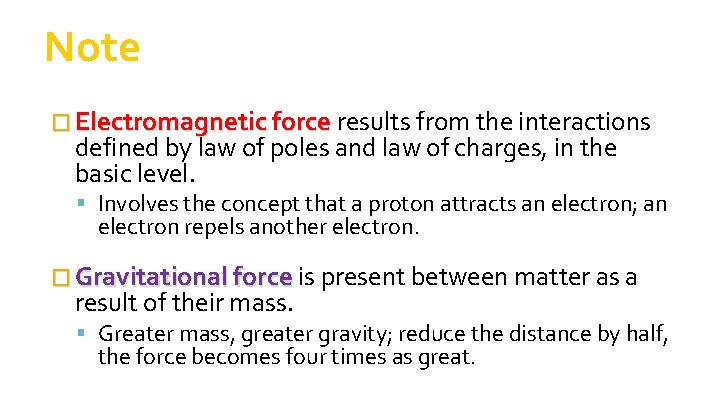
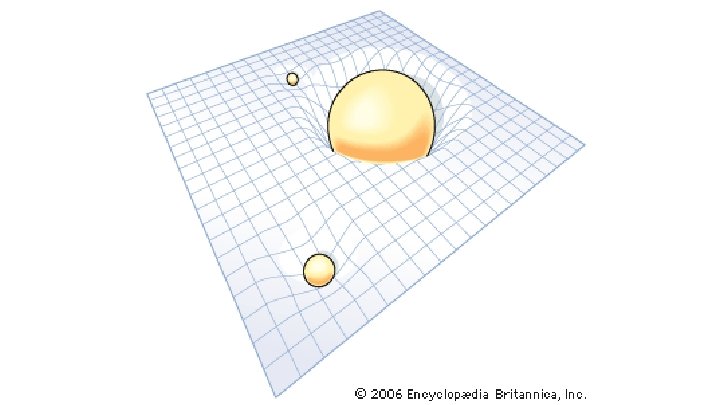
Note � Electromagnetic force results from the interactions Electromagnetic force defined by law of poles and law of charges, in the basic level. Involves the concept that a proton attracts an electron; an electron repels another electron. � Gravitational force is Gravitational force present between matter as a result of their mass. Greater mass, greater gravity; reduce the distance by half, the force becomes four times as great.
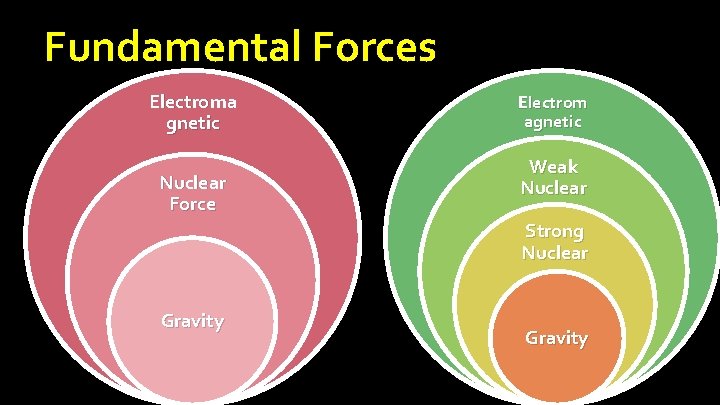
Fundamental Forces Electroma gnetic Nuclear Force Electrom agnetic Weak Nuclear Strong Nuclear Gravity
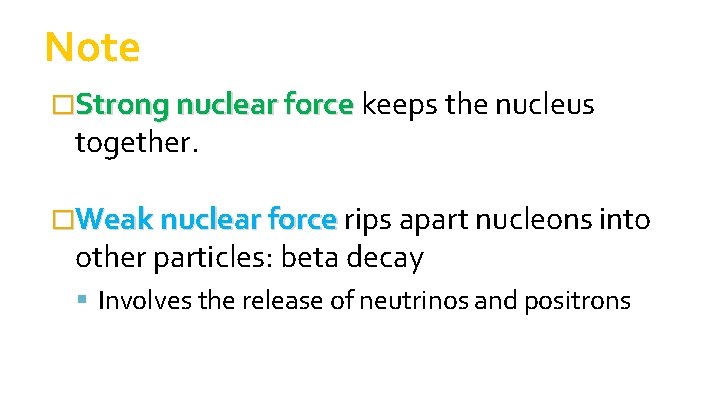
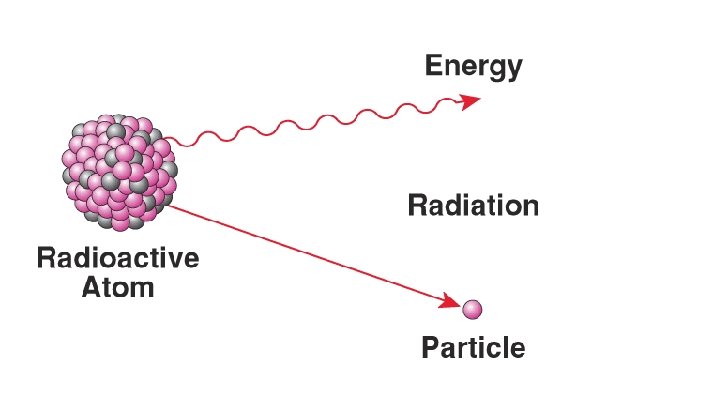
Note �Strong nuclear force keeps the nucleus Strong nuclear force together. �Weak nuclear force rips apart nucleons into other particles: beta decay Involves the release of neutrinos and positrons
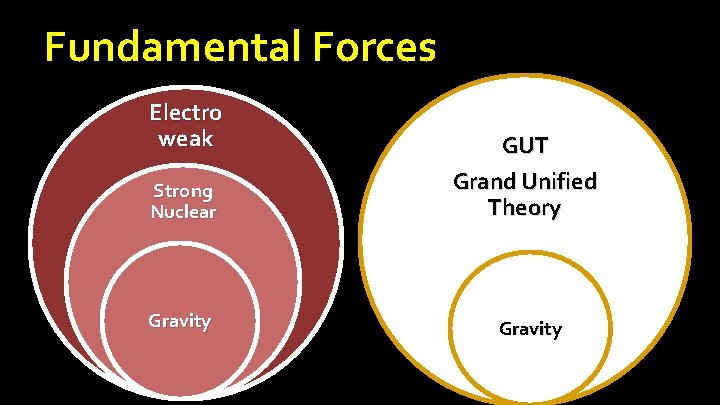
Fundamental Forces Electro weak Strong Nuclear GUT Grand Unified Theory Gravity
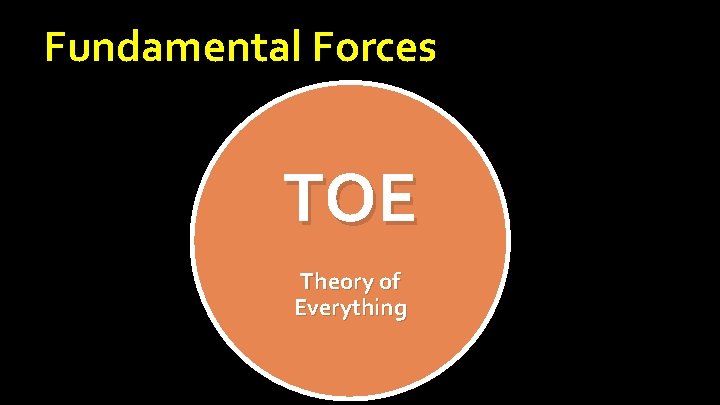
Fundamental Forces TOE Theory of Everything
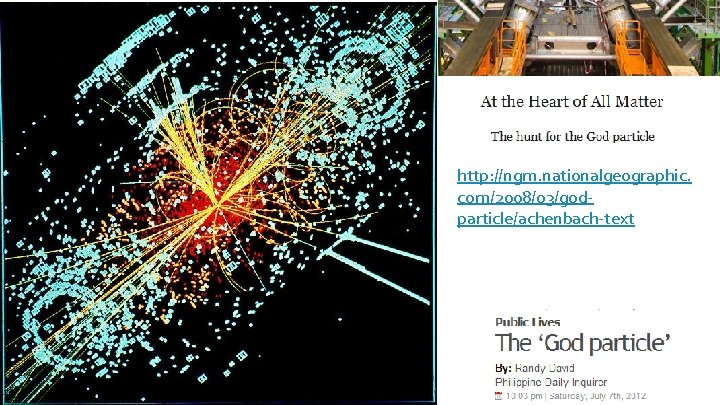
http: //ngm. nationalgeographic. com/2008/03/godparticle/achenbach-text
Newton’s Laws of Motion Force (Classical)
Aristotelian vs. Galilean Motion Philosophical approach but supported by observations Logical analysis of thought experiments
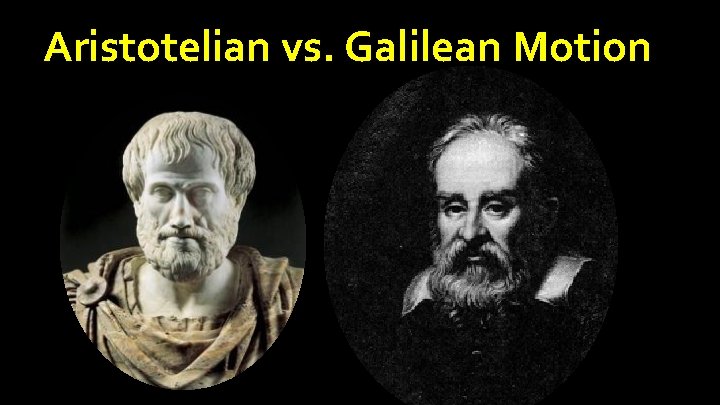
Aristotelian vs. Galilean Motion
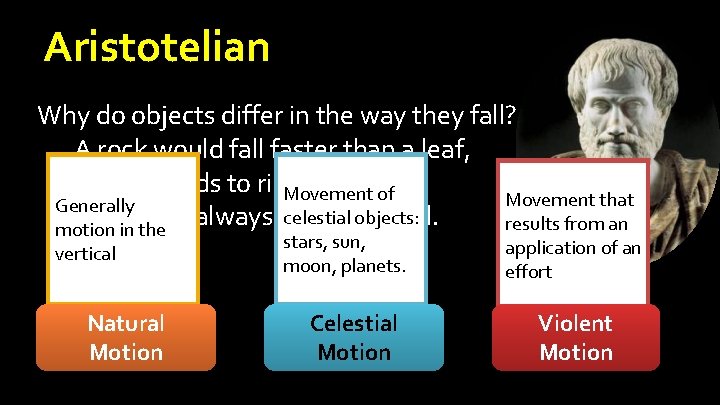
Aristotelian Why do objects differ in the way they fall? A rock would fall faster than a leaf, smoke tends to rise Movement of Movement that Generally celestialupward. objects: and flame always point results from an motion in the vertical Natural Motion stars, sun, moon, planets. Celestial Motion application of an effort Violent Motion
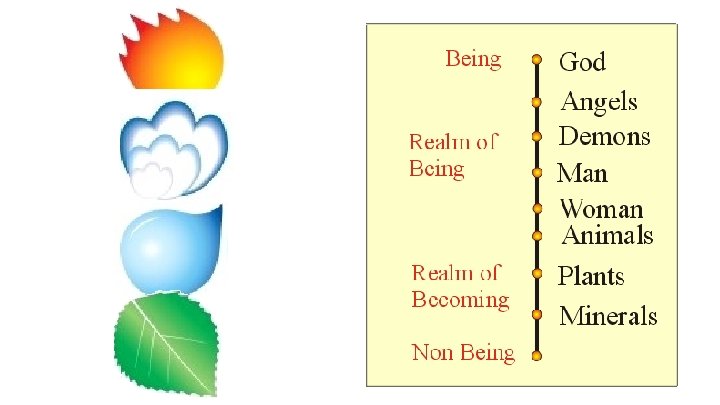
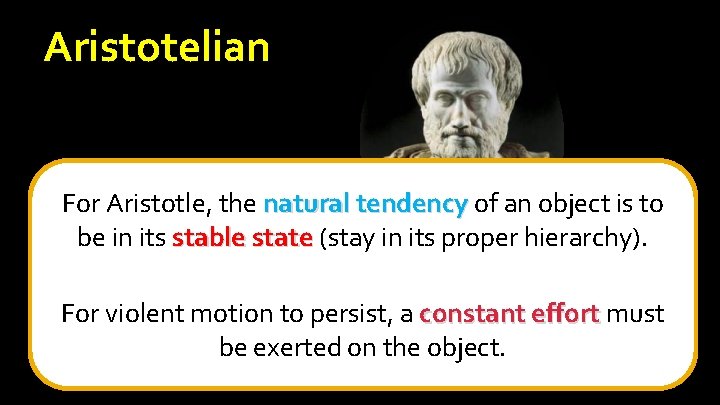
Aristotelian For Aristotle, the natural tendency of natural tendency an object is to be in its stable state (stay in its proper hierarchy). stable state For violent motion to persist, a constant effort must constant effort be exerted on the object.
Galilean Wait, there’s a lot of problems in the natural setting. I will proceed with reason and experiments in my mind.
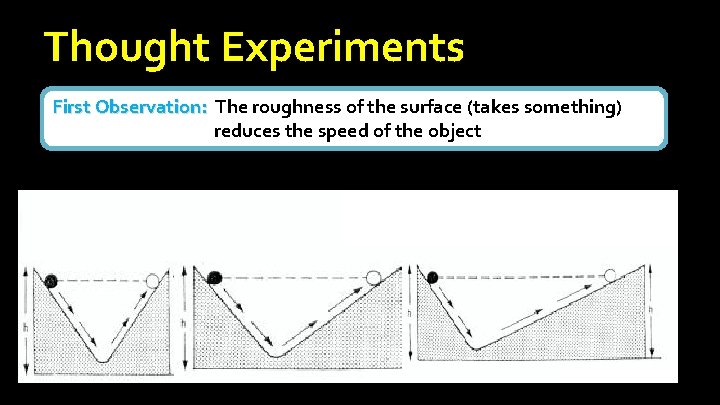
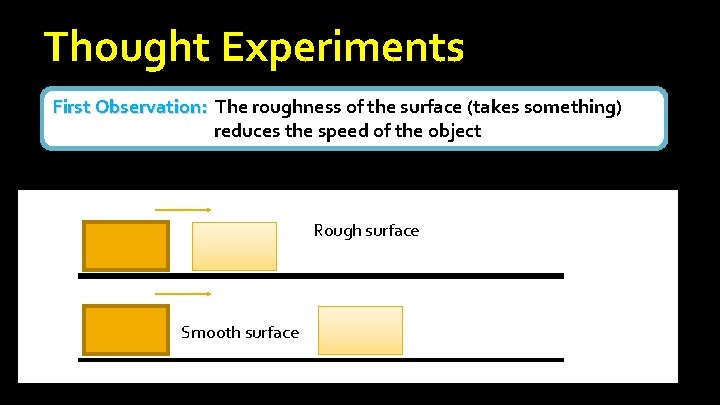
Thought Experiments First Observation: The roughness of the surface (takes something) First Observation: reduces the speed of the object
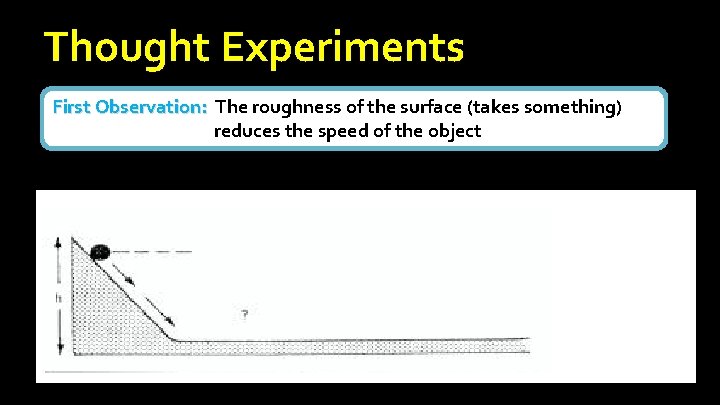
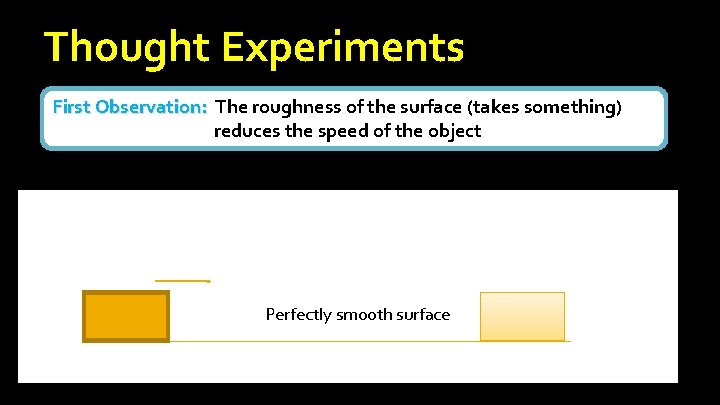
Thought Experiments First Observation: The roughness of the surface (takes something) First Observation: reduces the speed of the object
Thought Experiments First Observation: The roughness of the surface (takes something) First Observation: reduces the speed of the object Rough surface Smooth surface
Thought Experiments First Observation: The roughness of the surface (takes something) First Observation: reduces the speed of the object Perfectly smooth surface
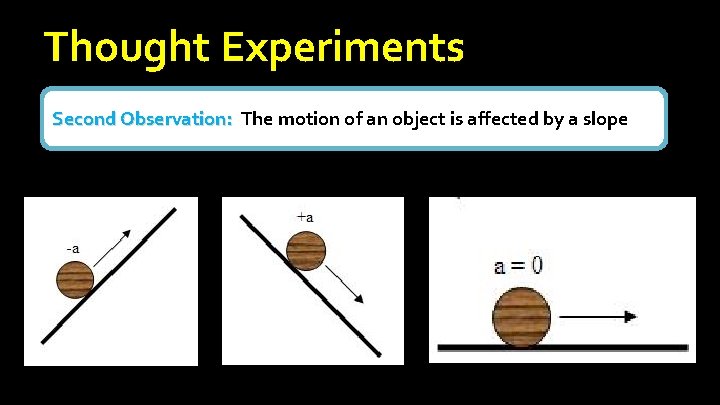
Thought Experiments Second Observation: The motion of an object is affected by a slope Second Observation:
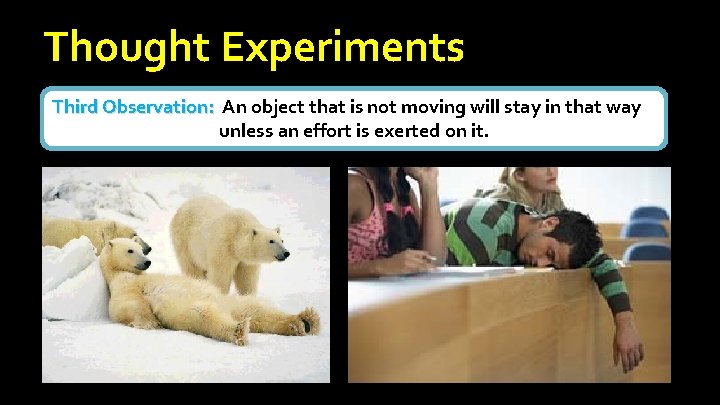
Thought Experiments Third Observation: An object that is not moving will stay in that way Third Observation: unless an effort is exerted on it.
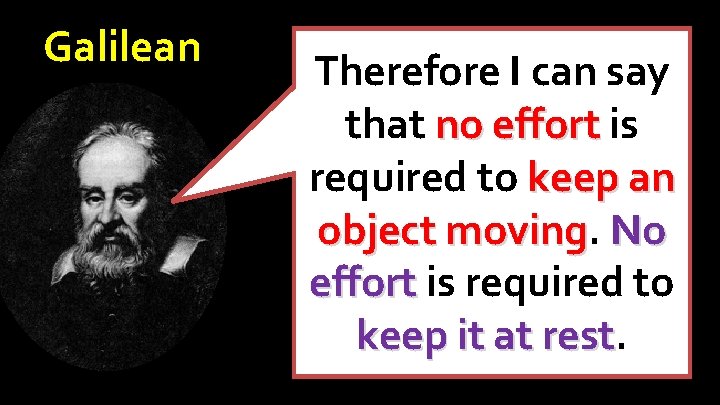
Galilean Therefore I can say that no effort is no effort required to keep an object moving No effort is required to effort keep it at rest
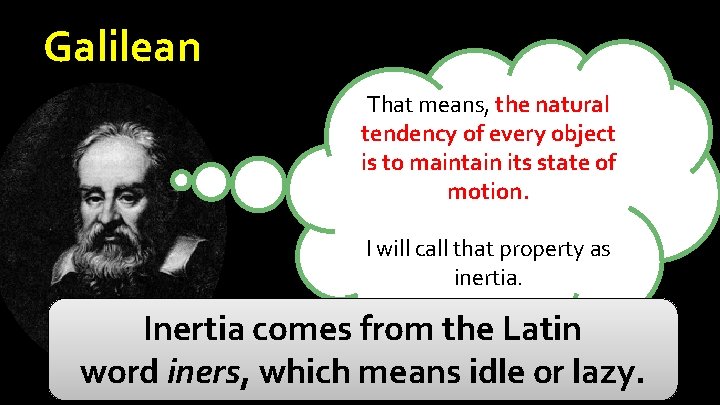
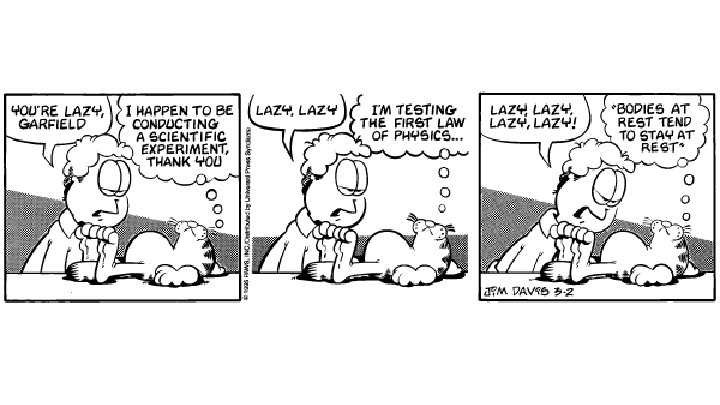
Galilean That means, the natural tendency of every object is to maintain its state of motion. I will call that property as inertia. Inertia comes from the Latin word iners, which means idle or lazy.
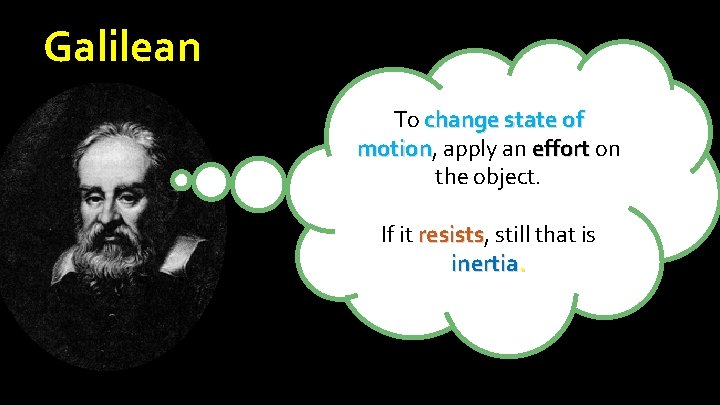
Galilean To change state of motion, motion apply an effort on the object. If it resists, resists still that is inertia.
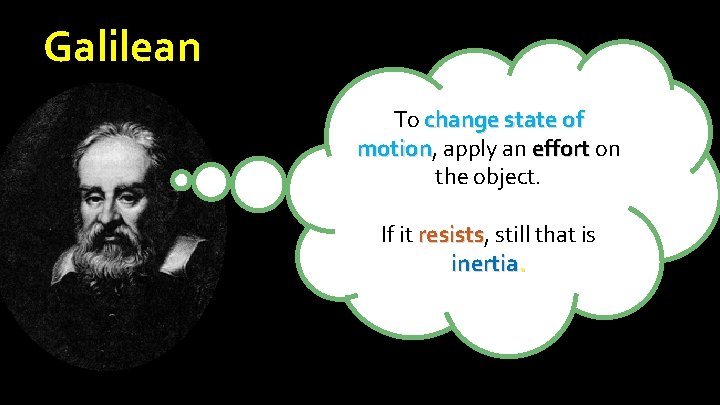
Galilean To change state of motion, motion apply an effort on the object. If it resists, resists still that is inertia.
I will make that into a law!! Law of Inertia
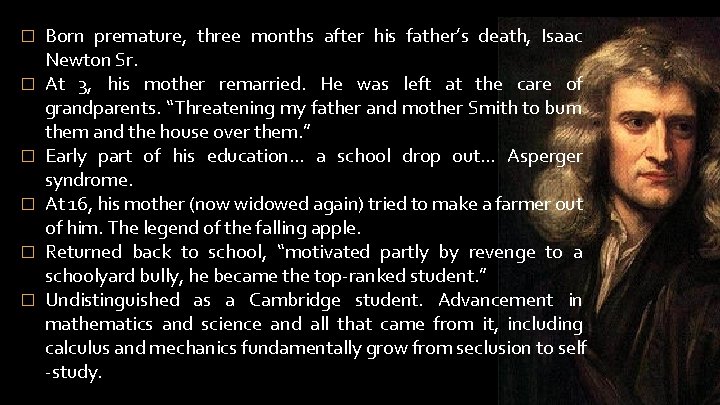
� � � Born premature, three months after his father’s death, Isaac Newton Sr. At 3, his mother remarried. He was left at the care of grandparents. “Threatening my father and mother Smith to burn them and the house over them. ” Early part of his education… a school drop out… Asperger syndrome. At 16, his mother (now widowed again) tried to make a farmer out of him. The legend of the falling apple. Returned back to school, “motivated partly by revenge to a schoolyard bully, he became the top-ranked student. ” Undistinguished as a Cambridge student. Advancement in mathematics and science and all that came from it, including calculus and mechanics fundamentally grow from seclusion to self -study.
Newton’s Three Laws of Motion Law of Inertia – Law of Inertia every object maintains its state of motion unless a net force acts on it. Law of Acceleration – the change in the state of motion of an object is directly proportional to the net force acting on it, but inversely proportional to its mass. Law of Interaction – Law of Interaction for every action, there is an equal but opposite reaction.
Law of inertia – every object tends to maintain its state of motion unless a net force acts on it. So an object maintains its motion if there is no net force or zero total force acting on the object.
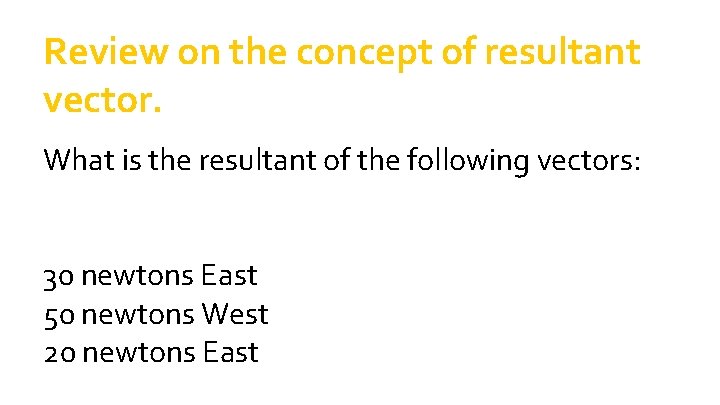
Review on the concept of resultant vector. What is the resultant of the following vectors: 30 newtons East 50 newtons West 20 newtons East
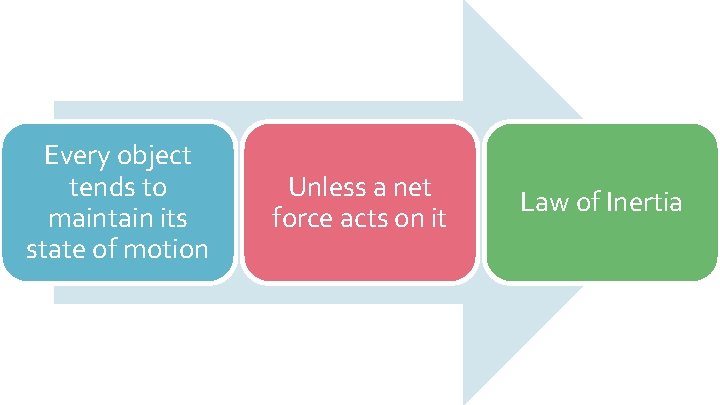
Every object tends to maintain its state of motion Unless a net force acts on it Law of Inertia
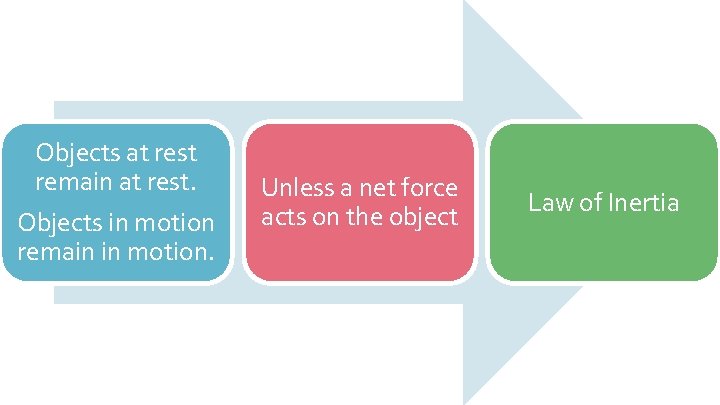
Objects at rest remain at rest. Objects in motion remain in motion. Unless a net force acts on the object Law of Inertia
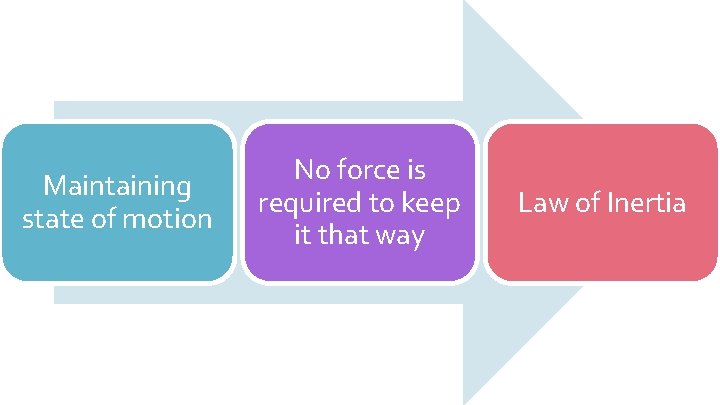
Maintaining state of motion No force is required to keep it that way Law of Inertia
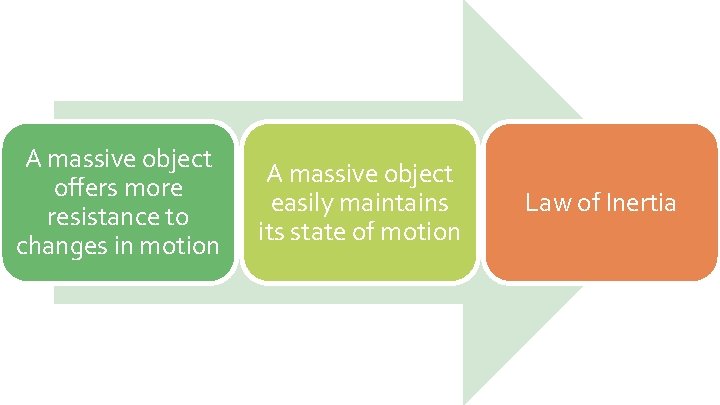
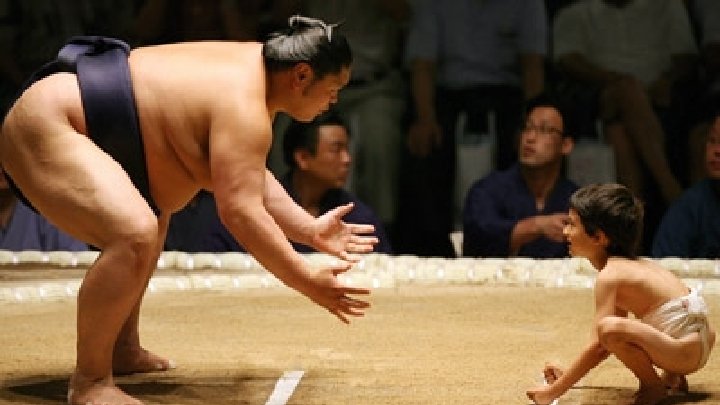
A massive object offers more resistance to changes in motion A massive object easily maintains its state of motion Law of Inertia
Changes in the state of motion �Change in the direction �Change in the speed �In short, changes in velocity are changes in the state of motion.
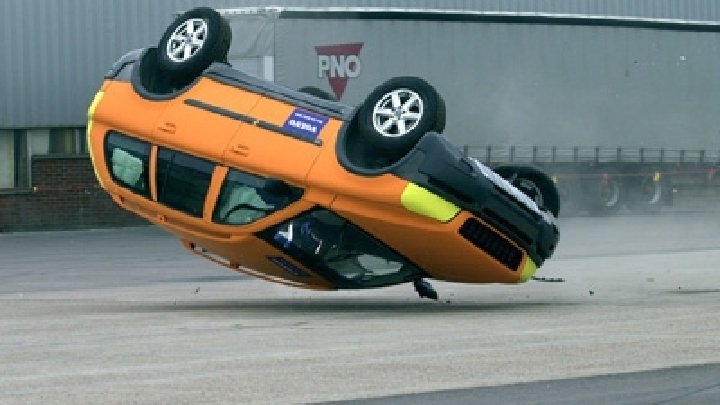
What happens when you try to change the state of motion of an object?
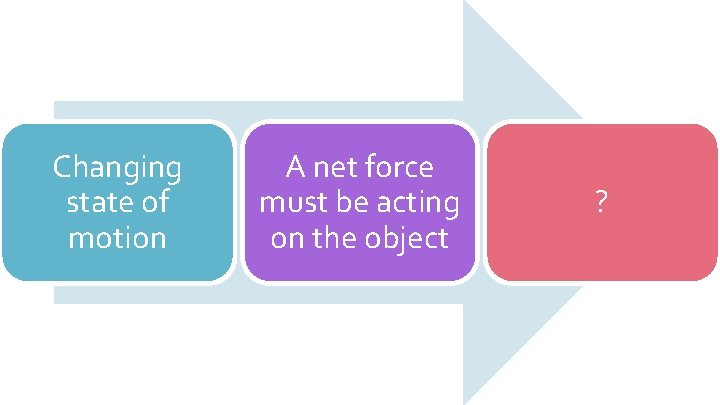
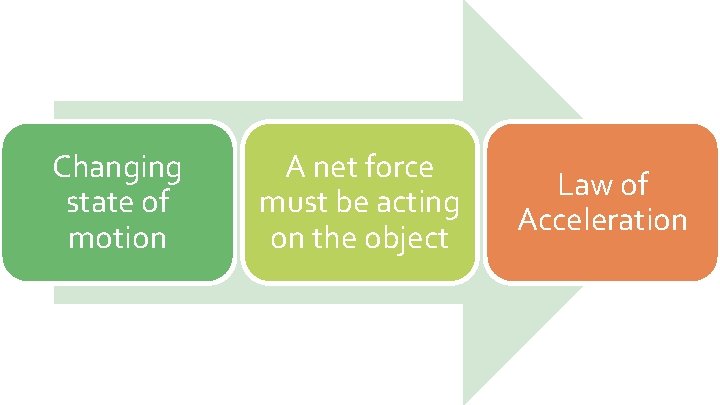
Changing state of motion A net force must be acting on the object ?
Summary �Inertia is the resistance of an object to changes in its state of motion. �Inertia is the property of matter to maintain its state of motion. �Without external forces, an object at rest will remain at rest. �Without external forces, a moved object will proceed in a straight line at constant velocity. �Inertia is measured by mass.
Changing state of motion A net force must be acting on the object Law of Acceleration
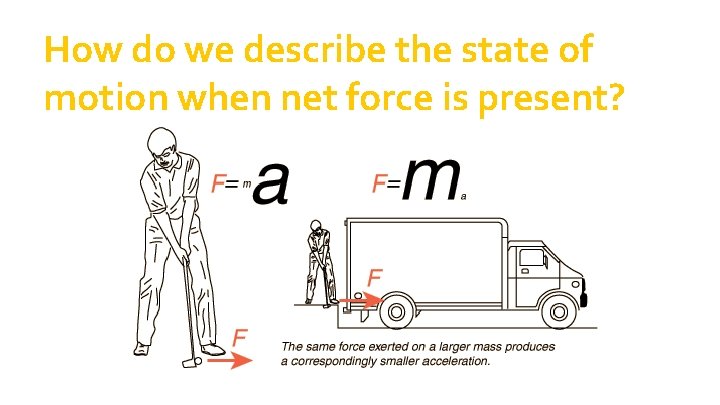
How do we describe the state of motion when net force is present?
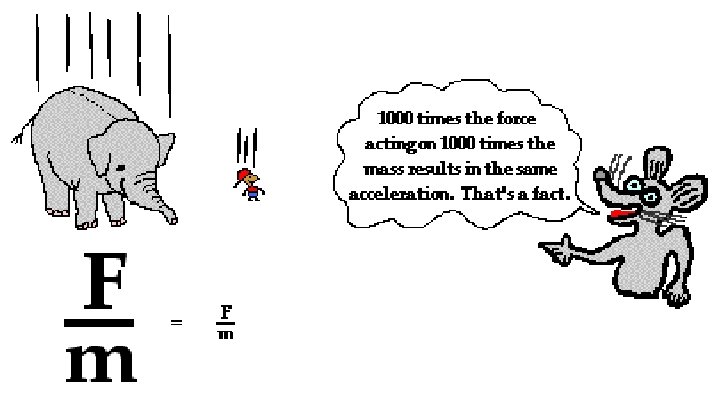
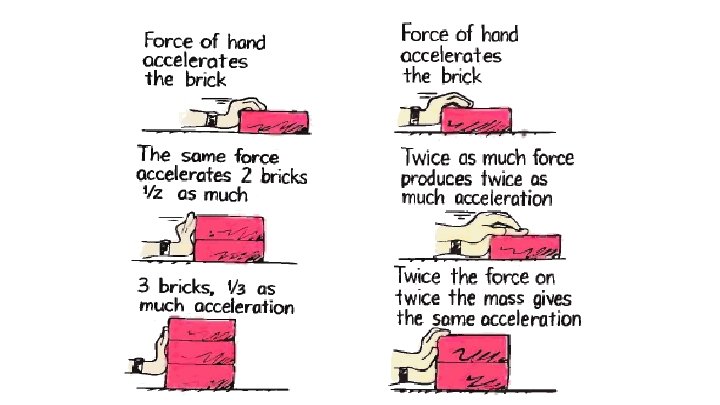
Law of acceleration Acceleration of an object is directly proportional to the net force applied on it but inversely proportional to its mass.
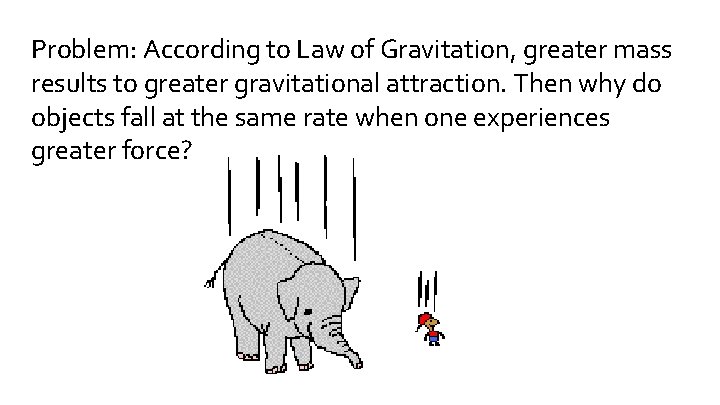
Problem: According to Law of Gravitation, greater mass results to greater gravitational attraction. Then why do objects fall at the same rate when one experiences greater force?
Basic computations of forces
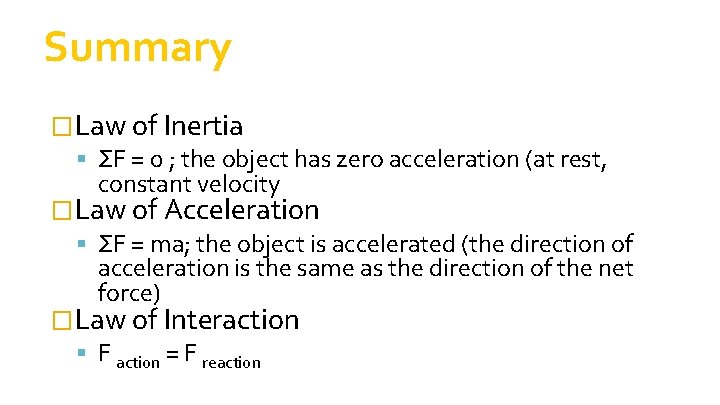
Summary �Law of Inertia ΣF = 0 ; the object has zero acceleration (at rest, constant velocity �Law of Acceleration ΣF = ma; the object is accelerated (the direction of acceleration is the same as the direction of the net force) �Law of Interaction F action = F reaction
Variations on the Application of Newton’s Laws �The simple force plus kinematics equation �The Atwood machine �The frictionless slope �Friction plus the three above
Example �A 1. 0 kg object is brought to Mercury where the acceleration due to gravity is 0. 38 times its value on Earth. What is the weight of the object on Earth? What is the mass of the object on Mercury? What is its weight on planet Mercury?
Example �A 10 kg object resting on a frictionless surface is subjected to two forces: F 1=30 N directed east and F 2=50 N directed west. Find its acceleration Find its displacement after 10 s starting from rest.
Example What is the acceleration of a 100 kg object when subjected to a 10 N of force? If it starts from rest, what is its speed after 5 seconds? Ignore friction.
Quiz If a force of 15. 0 N directed East acts on a stationary 5. 0 kg mass, what are its acceleration (include direction), displacement and velocity after 10. 0 seconds?
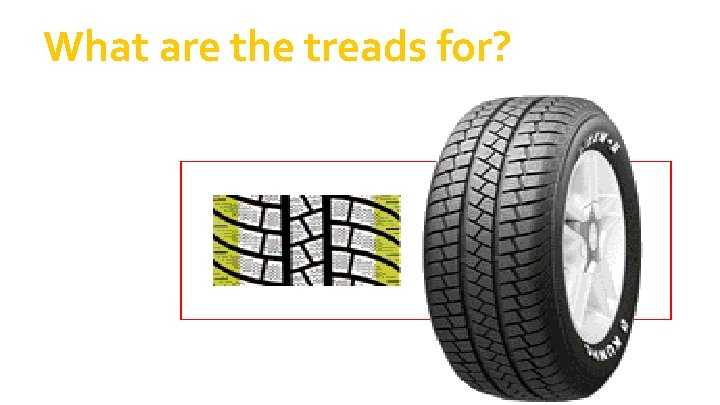
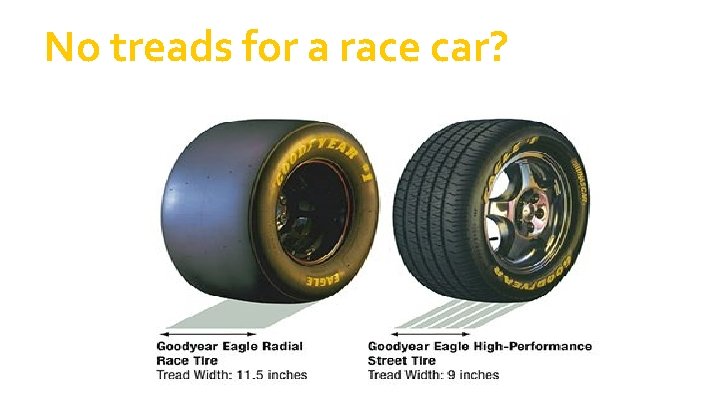
What are the treads for?
No treads for a race car?
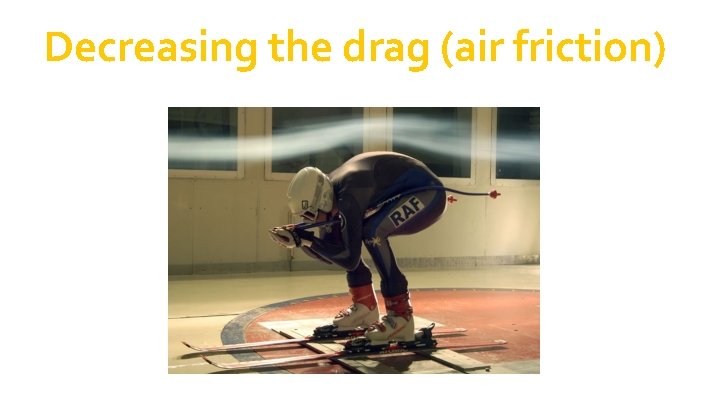
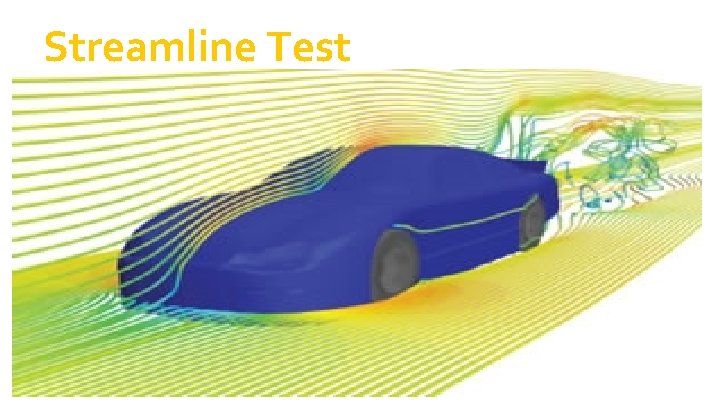
Air resistance is air friction �Dependent on the surface area that is perpendicular to the direction of motion �Affected by streamlines �Affected by the speed of the object
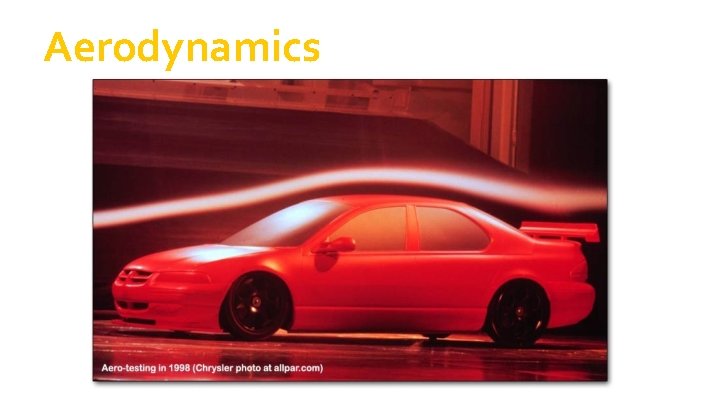
Aerodynamics
Streamlines
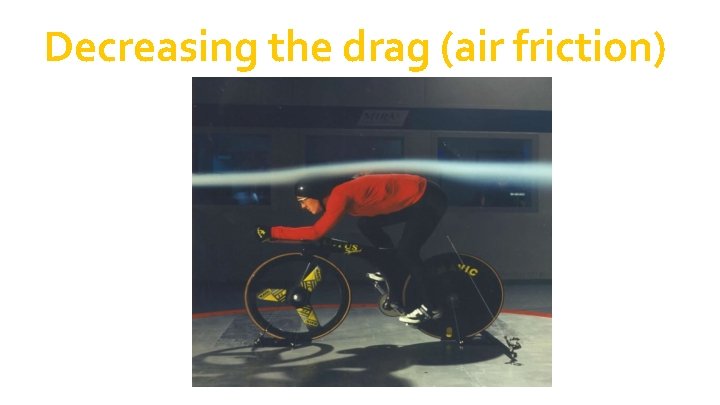
Decreasing the drag (air friction)
Decreasing the drag (air friction)
Streamline Test
Review �If forces are balanced, the net force is zero. �If the net force is zero, the object is either at rest or at constant velocity.
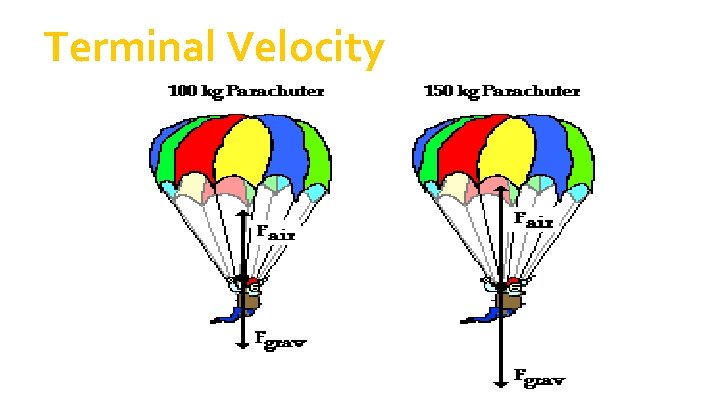
Terminal Velocity
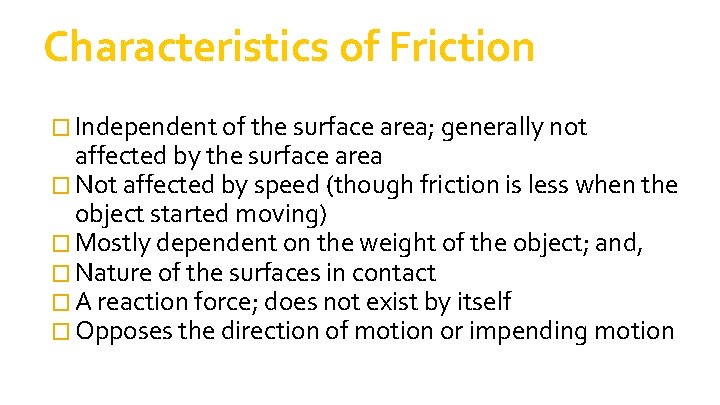
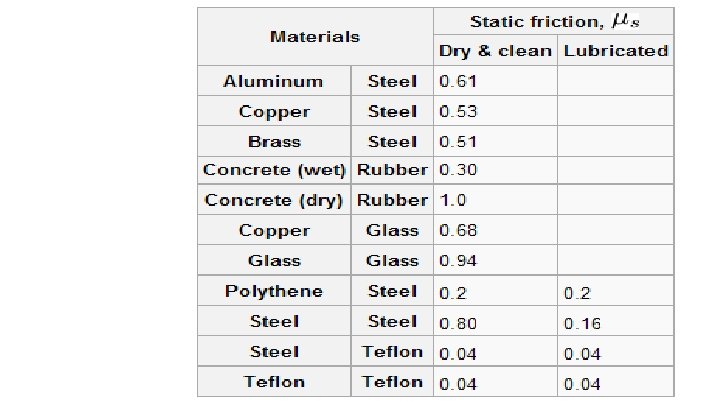
Characteristics of Friction � Independent of the surface area; generally not affected by the surface area � Not affected by speed (though friction is less when the object started moving) � Mostly dependent on the weight of the object; and, � Nature of the surfaces in contact � A reaction force; does not exist by itself � Opposes the direction of motion or impending motion
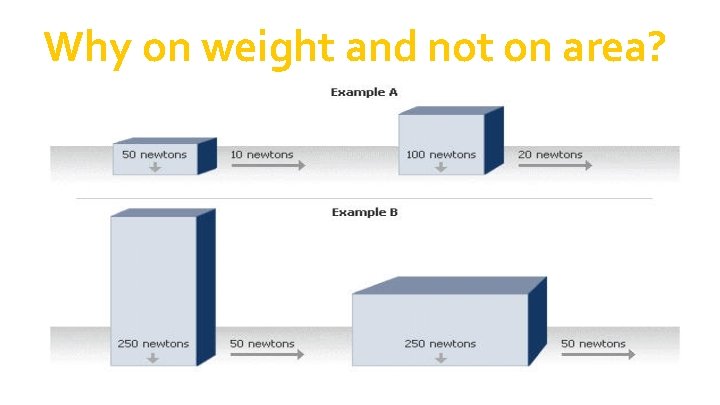
Why on weight and not on area?
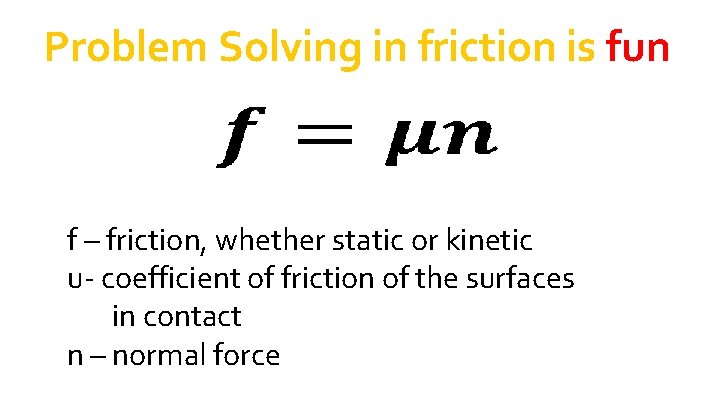
Problem Solving in friction is fun f – friction, whether static or kinetic u- coefficient of friction of the surfaces in contact n – normal force
Guidelines �If the object of analysis is not moving, the convention for positive and negative directions applies. �If the object of analysis is accelerated, the positive direction follows the direction of acceleration (second law).
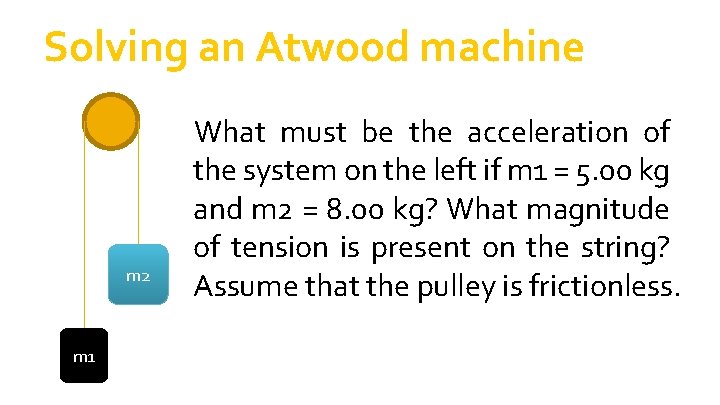
Solving an Atwood machine m 2 m 1 What must be the acceleration of the system on the left if m 1 = 5. 00 kg and m 2 = 8. 00 kg? What magnitude of tension is present on the string? Assume that the pulley is frictionless.
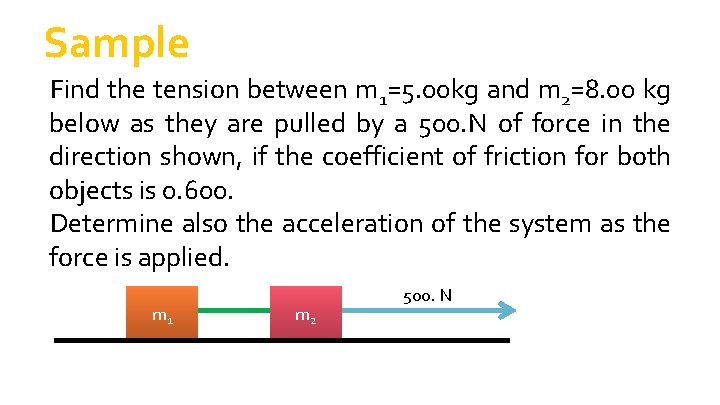
Sample Find the tension between m 1=5. 00 kg and m 2=8. 00 kg below as they are pulled by a 500. N of force in the direction shown, if the coefficient of friction for both objects is 0. 600. Determine also the acceleration of the system as the force is applied. m 1 m 2 500. N
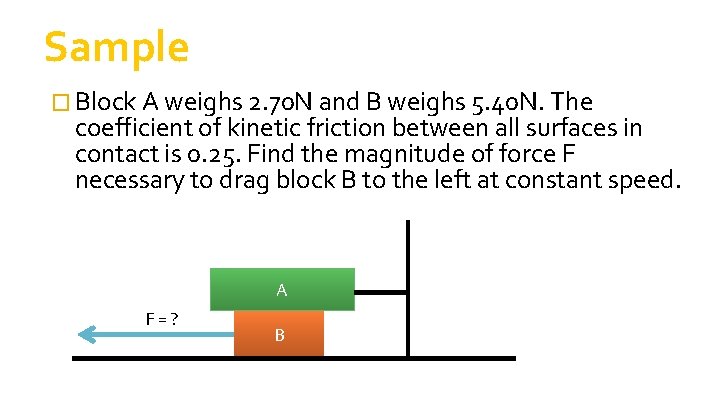
Sample � Block A weighs 2. 70 N and B weighs 5. 40 N. The coefficient of kinetic friction between all surfaces in contact is 0. 25. Find the magnitude of force F necessary to drag block B to the left at constant speed. A F=? B
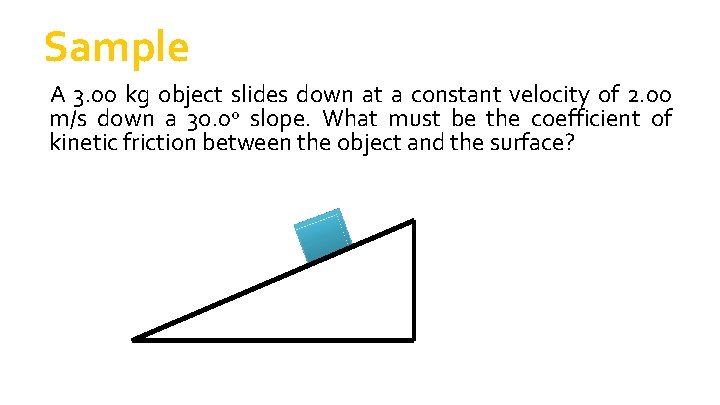
Sample A 3. 00 kg object slides down at a constant velocity of 2. 00 m/s down a 3 o. 0 o slope. What must be the coefficient of kinetic friction between the object and the surface?
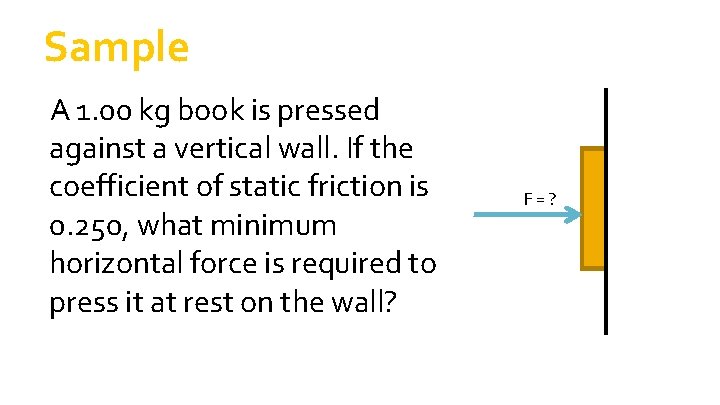
Sample A 1. 00 kg book is pressed against a vertical wall. If the coefficient of static friction is 0. 250, what minimum horizontal force is required to press it at rest on the wall? F=?
Exercises �Solve Problem #3 and #9 on pages 102 -103.
Seatwork (25 points) �#4 a and 4 b 15 minutes �#5 a �#5 b �#5 c 5 minutes
#4 A 2. 00 kg mass resting on a plane inclined at an angle of 40. 0 o with the horizontal is attached to a hanging mass by means of a frictionless pulley as shown. The hanging mass takes 1. 62 seconds to fall through a distance of 1. 52 meters starting from rest. What is the mass of the hanging mass if (a) the inclined surface is frictionless? (b) if coefficient of friction between the sliding mass and surface is 0. 2?
#5 �Two blocks A and B are connected by a rope and attached to the ceiling by another rope. The mass of block A is 6. 00 kg; the mass of block B is 4. 50 kg. Find the tensions in the rope when the elevator (a) is at rest, (b) accelerates upward at 2. 00 m/s 2, and (c) accelerates downward at 2. 00 m/s 2