ESE 680 003 Special topics in electrical and
- Slides: 36
ESE 680 -003 Special topics in electrical and systems engineering: Systems Biology Pappas Kumar Rubin Julius Halász Basics of molecular cell biology
Topics • • • Evolution and the origin of life Atoms and molecules Carbohydrates, proteins and lipids Parts and functions of the cell DNA and gene expression
Origin of life • Started on Earth 4. 5 billion years ago • Volcanism: H 2 O, CH 4, NH 3, H 2 S – Reducing atmosphere – Early ocean • Loss of hydrogen: N 2, CO 2, H 2 O – Energy (Sun, UV, electrical discharges) – Catalytic effect of solid state surfaces – Enrichment of organic molecules in the ocean
Origin of life • Prebiotic broth hypothesis – Macromolecules – Molecular aggregates – Simple compartmented pathways – Enzymes (low temperature reactions) – Directed synthesis and reproduction • First cells – end of abiotic evolution
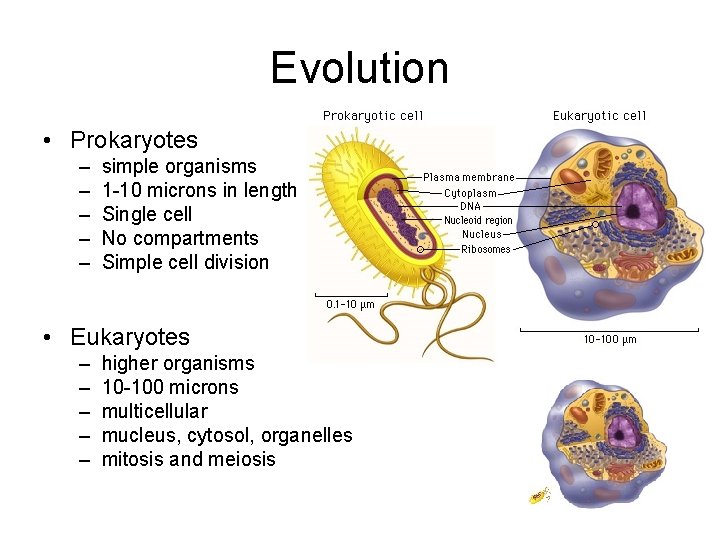
Evolution • Prokaryotes – – – simple organisms 1 -10 microns in length Single cell No compartments Simple cell division • Eukaryotes – – – higher organisms 10 -100 microns multicellular mucleus, cytosol, organelles mitosis and meiosis
Evolution • Prokaryotes have sexual reproduction – Genetic material comes from two non-symmetric sources (fertilized egg) • Parasites do not have their own metabolism – E. g. viruses – rely on other organisms • Aerobic vs. anaerobic • Multicellular organisms have differentiated cells – Same genotype, different phenotype
Topics • • • Evolution and the origin of life Atoms and molecules Carbohydrates, proteins and lipids Parts and functions of the cell DNA and gene expression
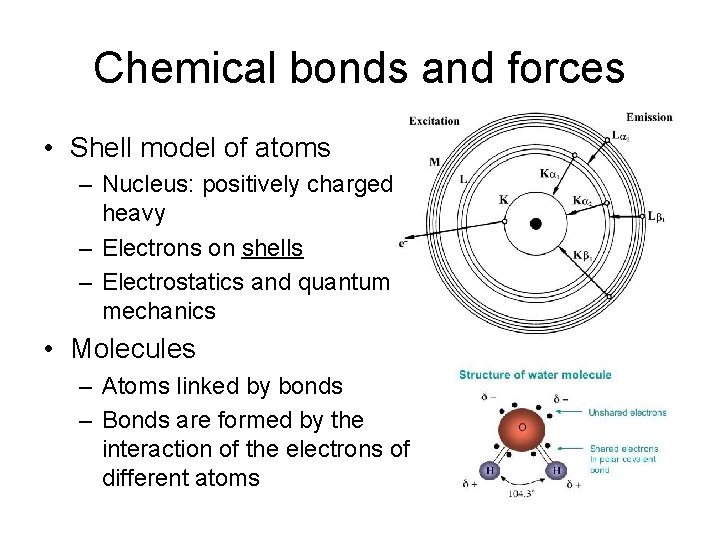
Chemical bonds and forces • Shell model of atoms – Nucleus: positively charged, heavy – Electrons on shells – Electrostatics and quantum mechanics • Molecules – Atoms linked by bonds – Bonds are formed by the interaction of the electrons of different atoms
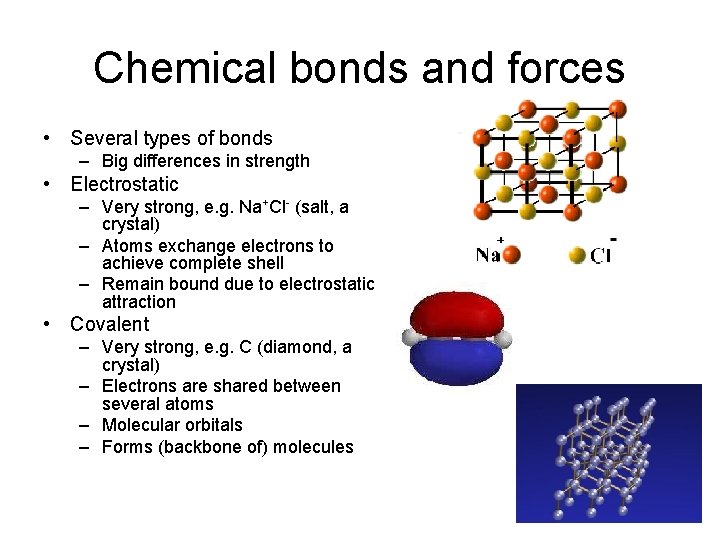
Chemical bonds and forces • Several types of bonds – Big differences in strength • Electrostatic – Very strong, e. g. Na+Cl- (salt, a crystal) – Atoms exchange electrons to achieve complete shell – Remain bound due to electrostatic attraction • Covalent – Very strong, e. g. C (diamond, a crystal) – Electrons are shared between several atoms – Molecular orbitals – Forms (backbone of) molecules
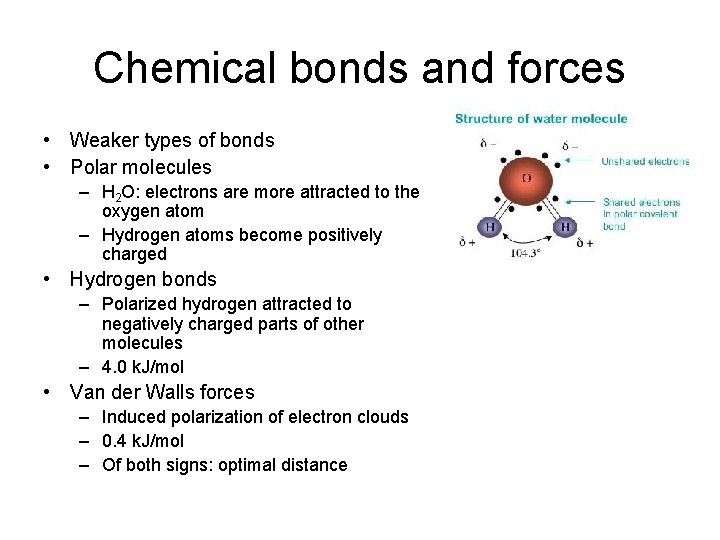
Chemical bonds and forces • Weaker types of bonds • Polar molecules – H 2 O: electrons are more attracted to the oxygen atom – Hydrogen atoms become positively charged • Hydrogen bonds – Polarized hydrogen attracted to negatively charged parts of other molecules – 4. 0 k. J/mol • Van der Walls forces – Induced polarization of electron clouds – 0. 4 k. J/mol – Of both signs: optimal distance
Topics • • • Evolution and the origin of life Atoms and molecules Carbohydrates, proteins and lipids Parts and functions of the cell DNA and gene expression
Organic molecules • Typically have a carbon chain • Certain groupings of atoms tend to be conserved within many different molecules – Functional groups – Stability due to special configuration, electron orbits – Some are polar • Classified by functional groups, structure
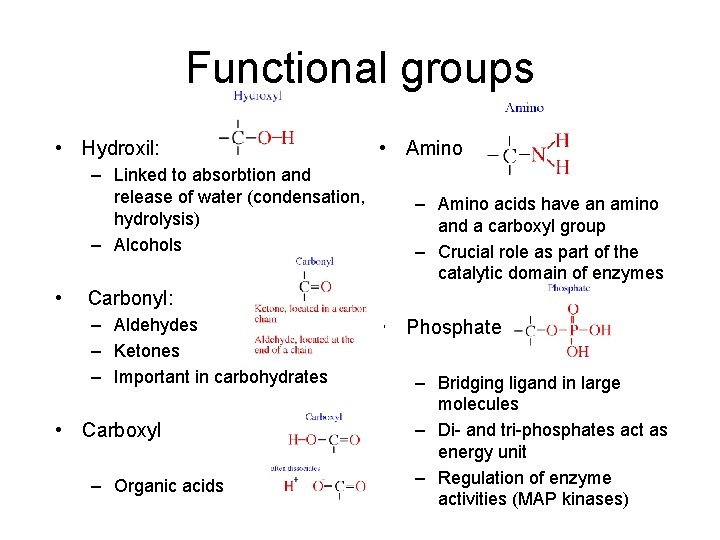
Functional groups • Hydroxil: – Linked to absorbtion and release of water (condensation, hydrolysis) – Alcohols • • Amino – Amino acids have an amino and a carboxyl group – Crucial role as part of the catalytic domain of enzymes Carbonyl: – Aldehydes – Ketones – Important in carbohydrates • Carboxyl – Organic acids • Phosphate – Bridging ligand in large molecules – Di- and tri-phosphates act as energy unit – Regulation of enzyme activities (MAP kinases)
Classes of molecules: Carbohydrates • • Energy storage General formula: Cn(H 2 O)n Monosaccharides: 3 -7 carbon atoms Polysaccharides
Classes of molecules: Lipids • Non-polar therefore hydrophobic (not soluble in water) • Tend to form nonpolar associations or membranes • Three types of lipids – Neutral lipids (storage fat) – Phospolipids (membranes) – Steroids (four condensed carbon rings, hormones)
Classes of molecules: Proteins • Roles: – Cytoskeletal framework – Catalytic enzymes for highly specific biochemical reactions -> control of metabolism • Polypeptide chain – 20 types of amino acids covalently linked • Primary structure given by the element on the chain • Secondary & tertiary structures – α-helix and β-strand – folding
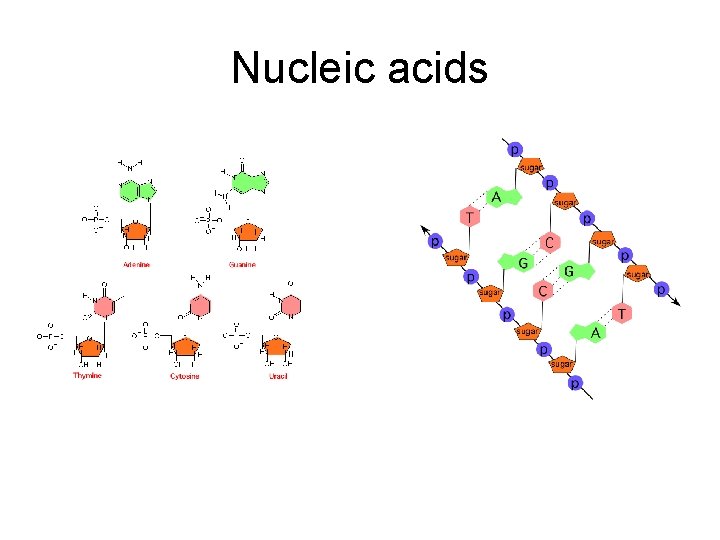
Classes of molecules: Nucleic acids • DNA, RNA • Polymers built up of covalently bound mononucleotides • Mononucleotides – Nitrogen-containing base – Pentose – One or more phosphate groups • Four (five) different bases: – Cytosine, Thymine, Adenine, Guanine, Uracyl
Classes of molecules: Nucleic acids • DNA: ATGC; RNA: AUGC • Phosphate groups link nucleotides together forming the backbone of one strand • DNA consists of two antiparallel strands, linked together by hydrogen bonds between pairs of complementary bases – A-T, G-C • RNA occurs as a single strand
Nucleic acids
Topics • • • Evolution and the origin of life Atoms and molecules Carbohydrates, proteins and lipids Parts and functions of the cell DNA and gene expression
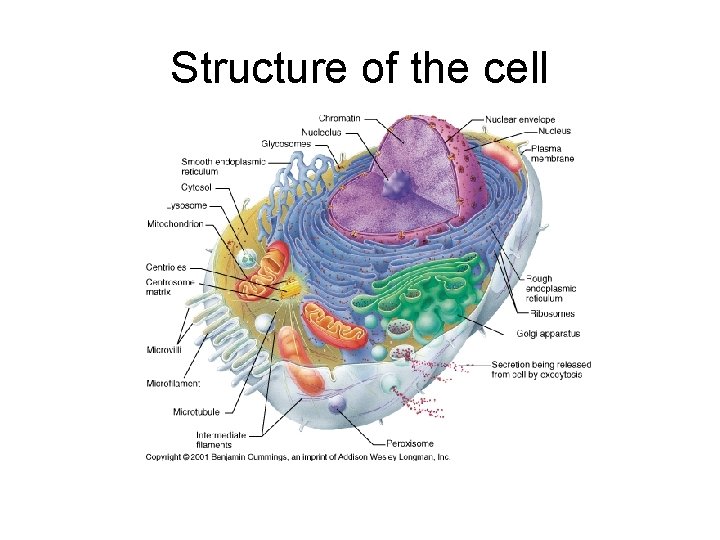
Structure of the cell
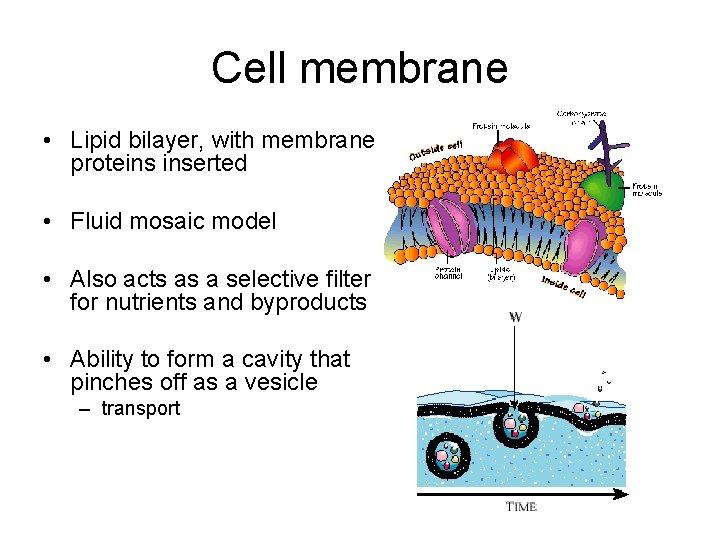
Cell membrane • Lipid bilayer, with membrane proteins inserted • Fluid mosaic model • Also acts as a selective filter for nutrients and byproducts • Ability to form a cavity that pinches off as a vesicle – transport
Nucleus • Prokaryotes store genetic information in a single, circular, double stranded DNA, and sometimes smaller plasmids • Eukaryotes have a nucleus which occupies about 10% of cell volume • Nuclear envelope, with regulated traffic between the nucleus and the cytosol • Genetic material forms the chromatin • Chromosomes consist of two identical chromatids – each is a double stranded DNA – wound around histones (protein complexes)
Cytosol • Fills the space between the organelles of the cytoplasm • About 50% of cell volume • Contains the cytoskeletal framework – Protein filaments – Responsible for coordination of cytoplasmatic movements – Three types: actin, microtubules, intermediate • Actin – cell shape, muscle contraction • Microtubules – rapid motions, e. g. flagella • Intermediate – fibrous proteins; mechanical resistance
Organelles • Mitochondria (“power plants”) – Only in eukaryotes – Size of a bacterium – Partially autonomous; have their own DNA – Produce the bulk of ATP in the cell • Endoplasmatic reticulum (ER) – Biosynthesis of membrane lipids • Golgi complex, lysosomes, peroxisomes, veiscles
Cell cycle • Interphase and M-phase • M-phase division itself – Nuclear division – Cytokinesis (division of cytoplasm) • Eukaryotic cells have two copies of each chromosome (diploid) – Mitosis – Meiosis
Topics • • • Evolution and the origin of life Atoms and molecules Carbohydrates, proteins and lipids Parts and functions of the cell DNA and gene expression
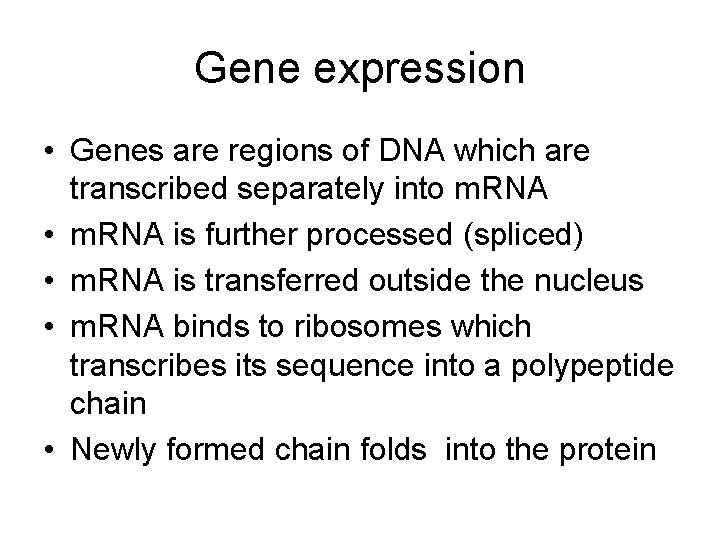
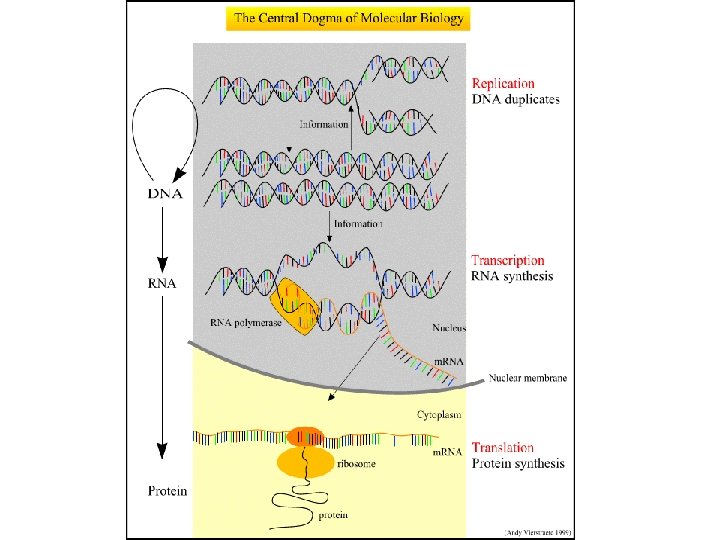
Gene expression • Genes are regions of DNA which are transcribed separately into m. RNA • m. RNA is further processed (spliced) • m. RNA is transferred outside the nucleus • m. RNA binds to ribosomes which transcribes its sequence into a polypeptide chain • Newly formed chain folds into the protein
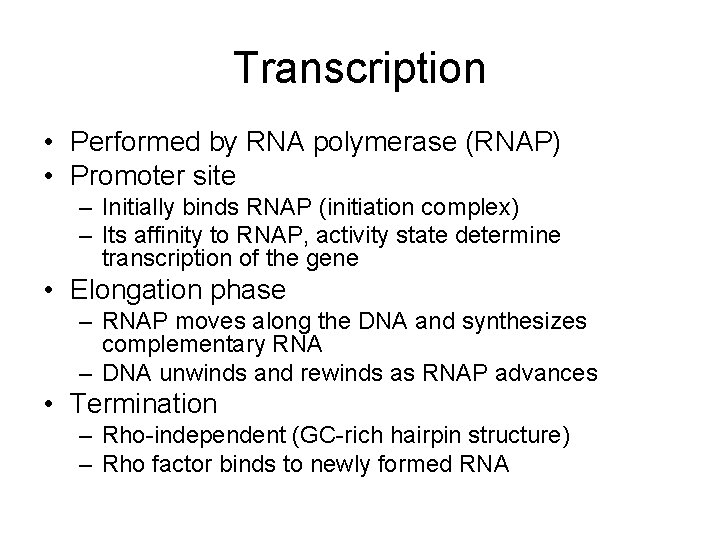
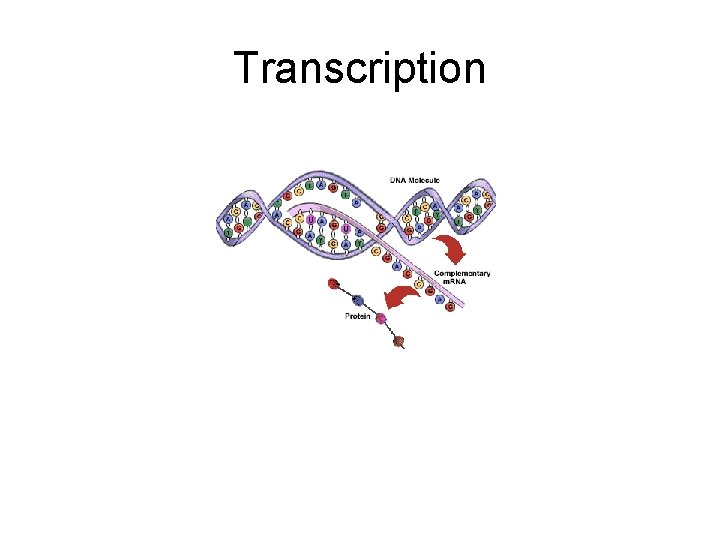
Transcription • Performed by RNA polymerase (RNAP) • Promoter site – Initially binds RNAP (initiation complex) – Its affinity to RNAP, activity state determine transcription of the gene • Elongation phase – RNAP moves along the DNA and synthesizes complementary RNA – DNA unwinds and rewinds as RNAP advances • Termination – Rho-independent (GC-rich hairpin structure) – Rho factor binds to newly formed RNA
Transcription
m. RNA processing • Prokaryotes • Introns (nontranslating regions) • Exons bound together after splicing out the introns • Transport of mature m. RNA into cytosol • Transport to specific locations
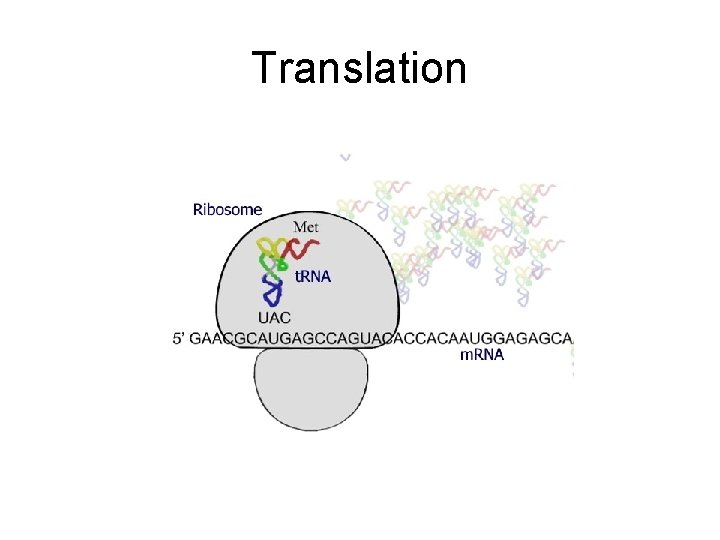
Translation • Coding m. RNA is processed by ribosomes • m. RNA is the “message”, serves as a blueprint • The final product is the protein that is synthesized using elementary amino-acids • t. RNA is used to bring in the matching (cognate) amino-acid to the translating ribosome
Translation
Regulation of gene expression • Multiple modalities • Transcriptional – Repression – Activation • Post-translational
Organizational issues • Schedule: MW 9: 30 – 11: 00 • Room: Towne 303 • Instructors: – – – George Pappas: pappasg@seas. upenn. edu (TBA) Vijay Kumar: kumar@me. upenn. edu Harvey Rubin: rubinh@mail. med. upenn. edu Agung Julius: agung@seas. upenn. edu (Tue 3 -4) Adam Halasz: halasz@grasp. upenn. edu (Mon 11 -12) • Website: www. seas. upenn. edu/~agung/ese 680. htm • Default mailing list for registered students