
Stochastic simulation algorithms ESE 680 Systems Biology Relevant
Stochastic simulation algorithms ESE 680: Systems Biology
Relevant talks/seminars this week! • Prof. Mustafa Khammash (UCSB) l “Noise in Gene Regulatory Networks: Biological Role and Mathematical Analysis ” l Friday 23 Mar, 12 -1 pm, Berger Auditorium • Dr. Daniel Gillespie (Dan Gillespie Consultant) l “Stochastic Chemical Kinetics” l Friday 23 Mar, 2 -3 pm, Berger Auditorium
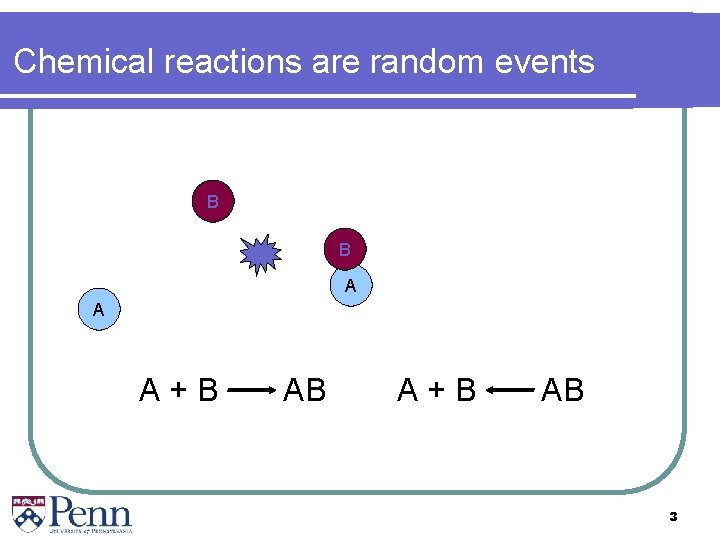
Chemical reactions are random events B B A A A+B AB 3
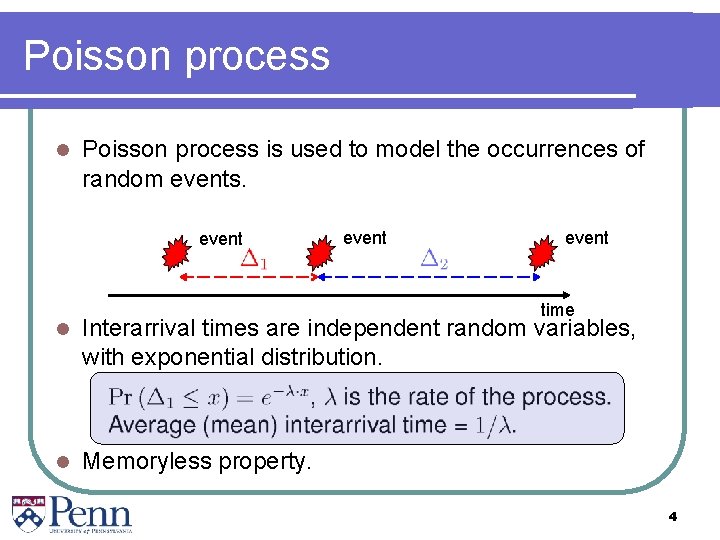
Poisson process l Poisson process is used to model the occurrences of random events. event time l Interarrival times are independent random variables, with exponential distribution. l Memoryless property. 4
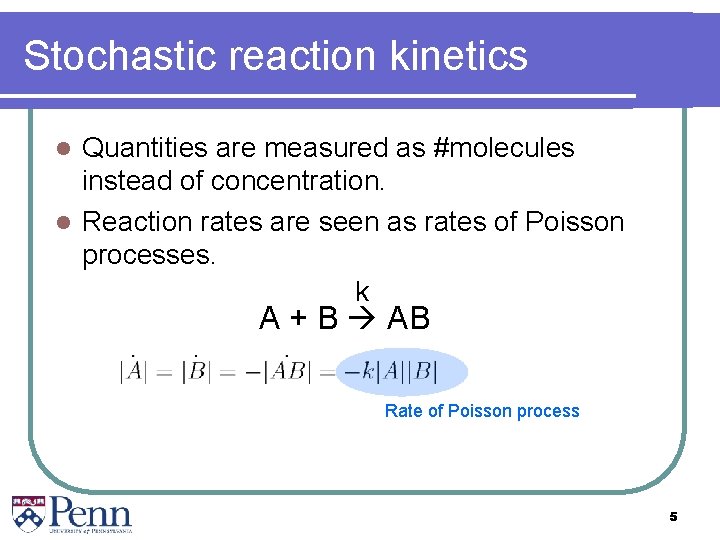
Stochastic reaction kinetics Quantities are measured as #molecules instead of concentration. l Reaction rates are seen as rates of Poisson processes. k l A + B AB Rate of Poisson process 5
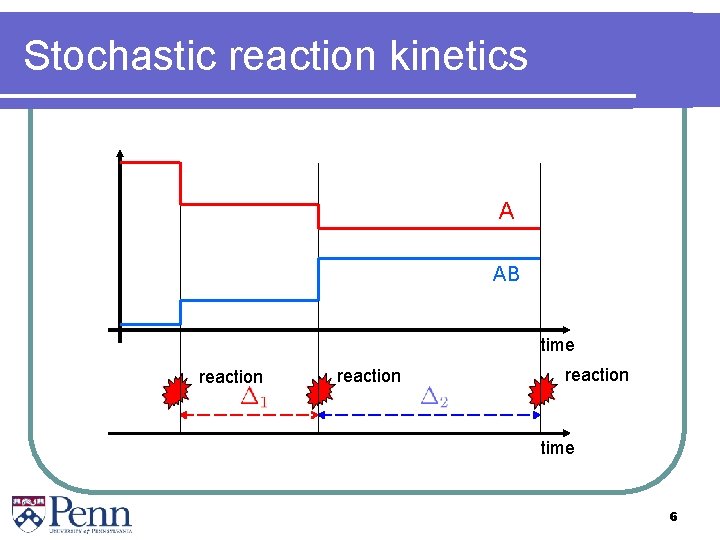
Stochastic reaction kinetics A AB time reaction time 6
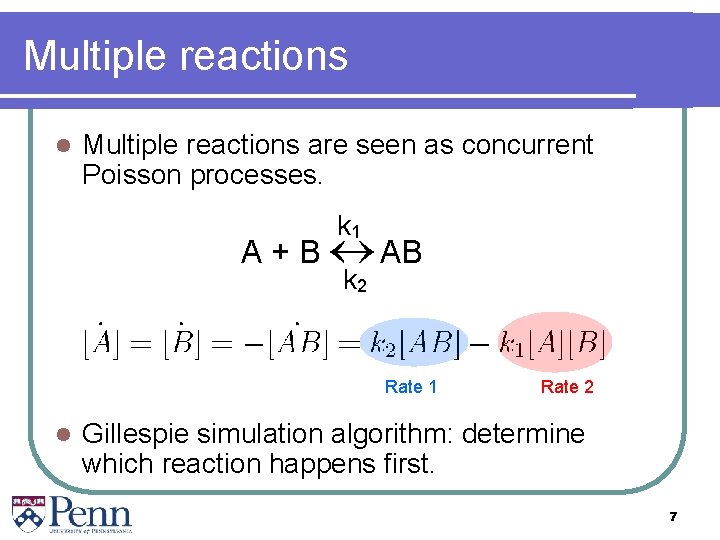
Multiple reactions l Multiple reactions are seen as concurrent Poisson processes. k 1 A + B AB k 2 Rate 1 l Rate 2 Gillespie simulation algorithm: determine which reaction happens first. 7
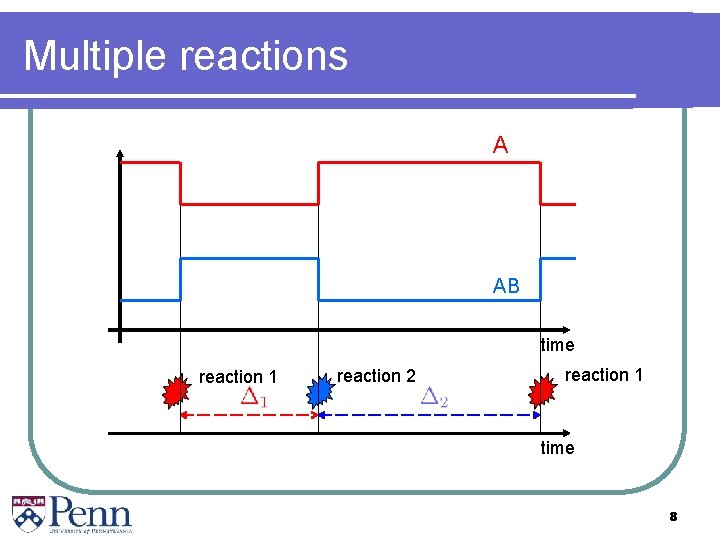
Multiple reactions A AB time reaction 1 reaction 2 reaction 1 time 8
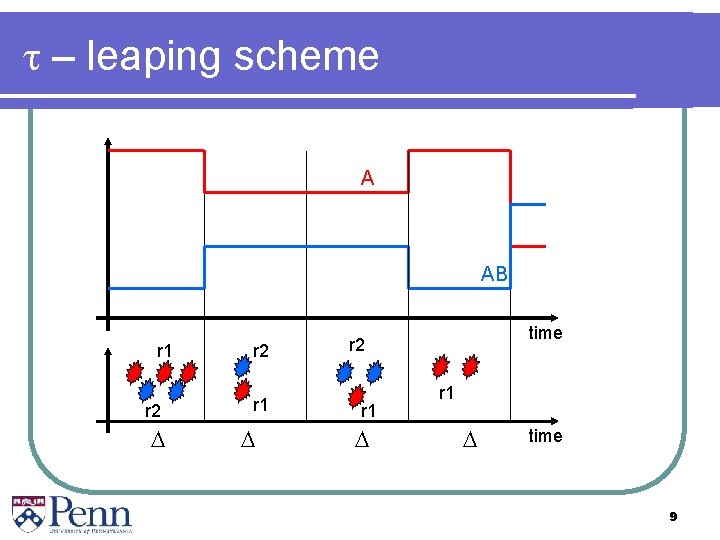
t – leaping scheme A AB r 1 r 2 D r 2 r 1 D time 9
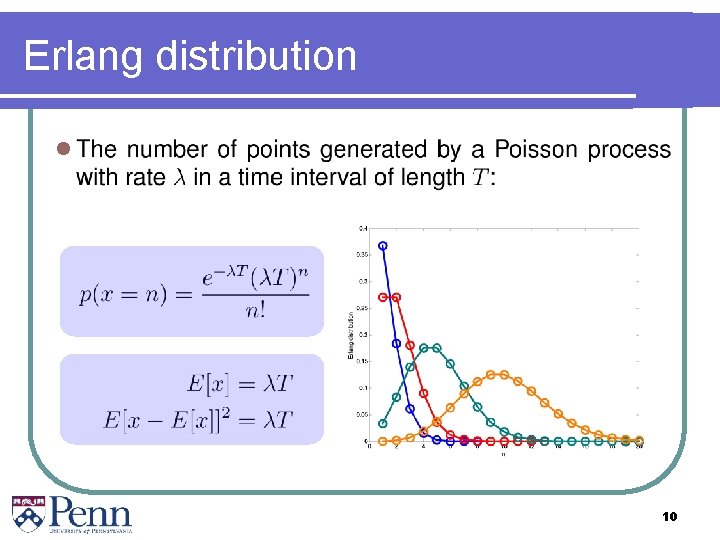
Erlang distribution l 10
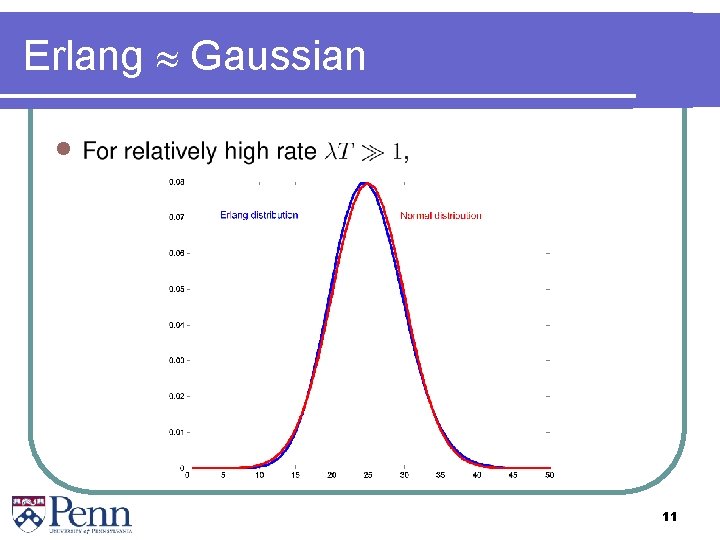
Erlang Gaussian l 11
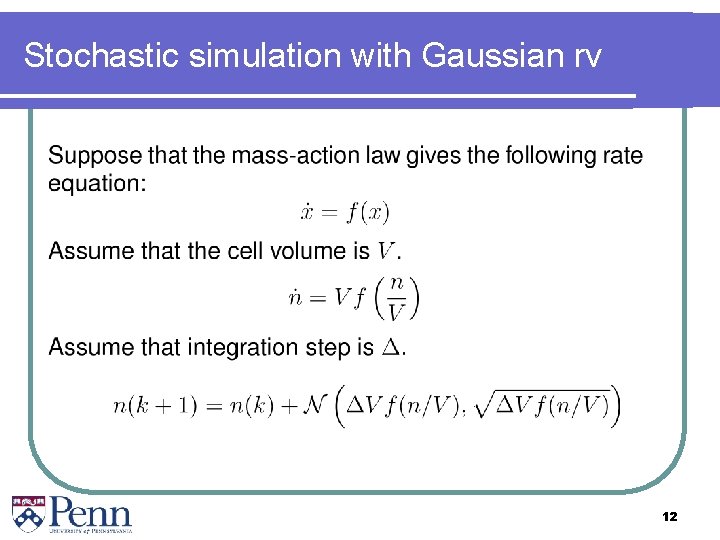
Stochastic simulation with Gaussian rv 12
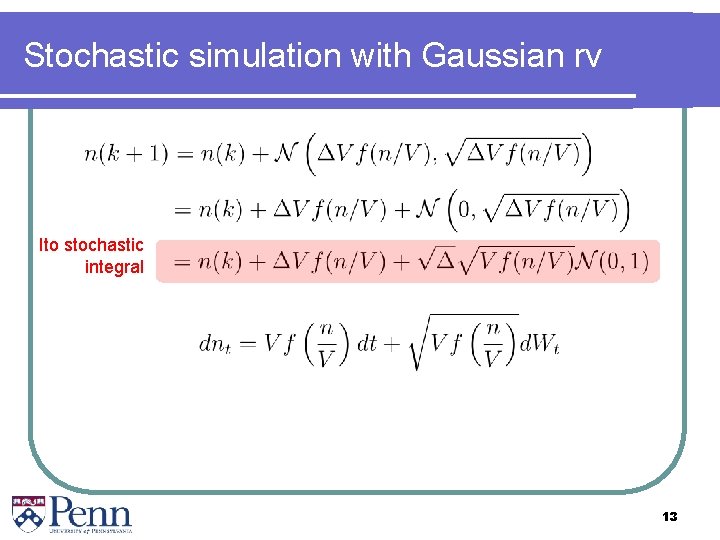
Stochastic simulation with Gaussian rv Ito stochastic integral 13
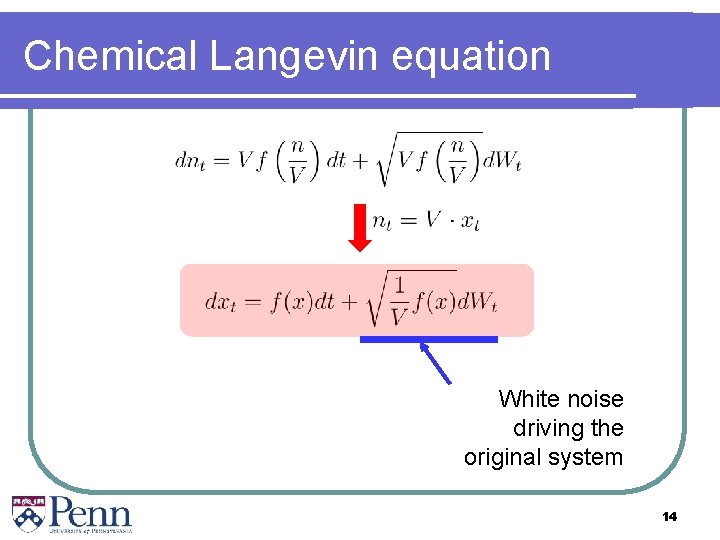
Chemical Langevin equation White noise driving the original system 14
Stochastic fluctuations triggered persistence in bacteria ESE 680: Systems Biology
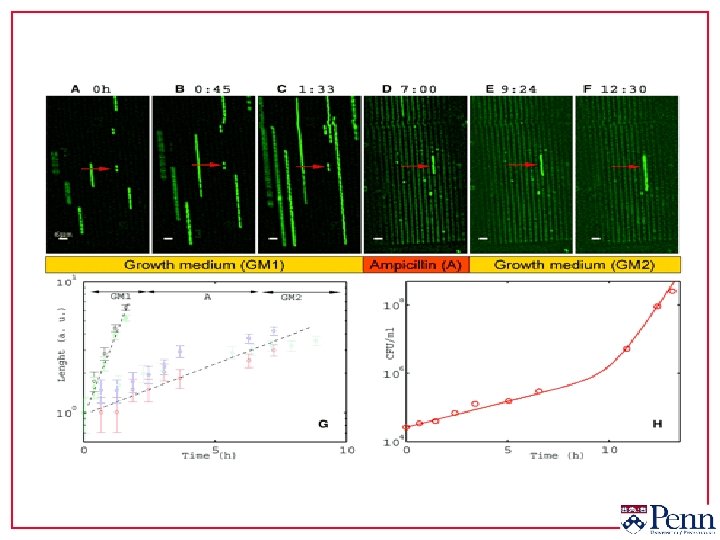
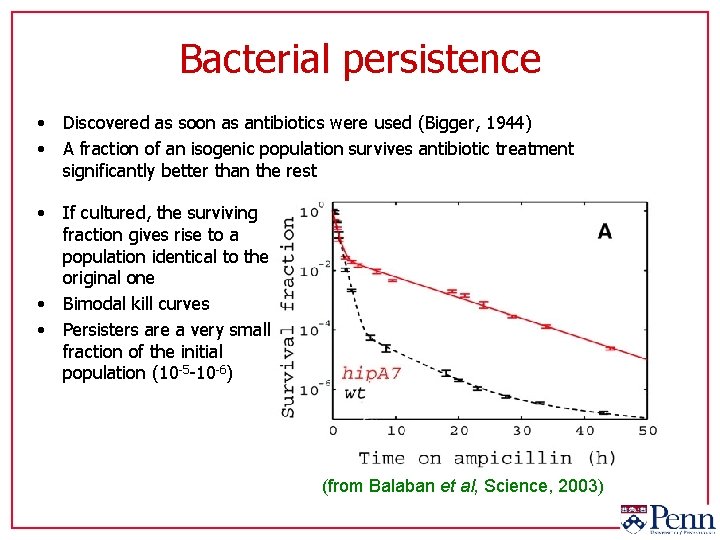
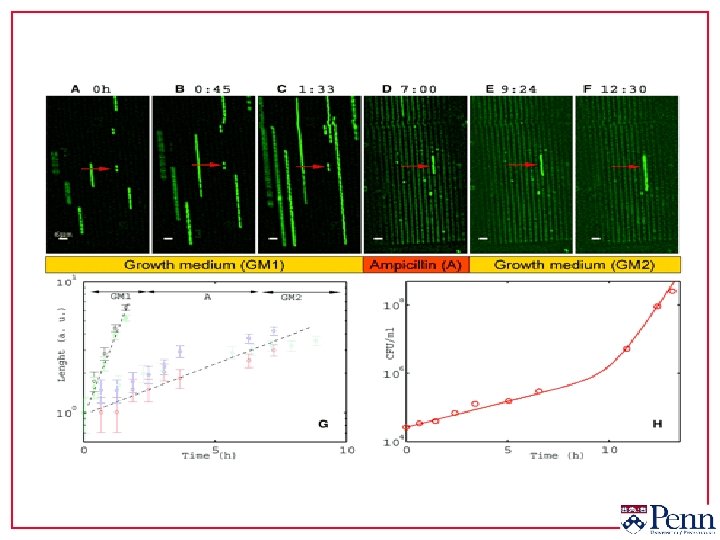
Bacterial persistence • Discovered as soon as antibiotics were used (Bigger, 1944) • A fraction of an isogenic population survives antibiotic treatment significantly better than the rest • If cultured, the surviving fraction gives rise to a population identical to the original one • Bimodal kill curves • Persisters are a very small fraction of the initial population (10 -5 -10 -6) (from Balaban et al, Science, 2003)
Persistence as an evolutionary advantage • • Persisters are an alternative phenotype Similar to dormancy or stasis Since they do not grow, they are less vulnerable Presence of multiple phenotypes has an evolutionary advantage in survival in varying environments • Transitions between phenotypes are of stochastic nature – l Random events, triggered by noise • What is the underlying molecular mechanism?
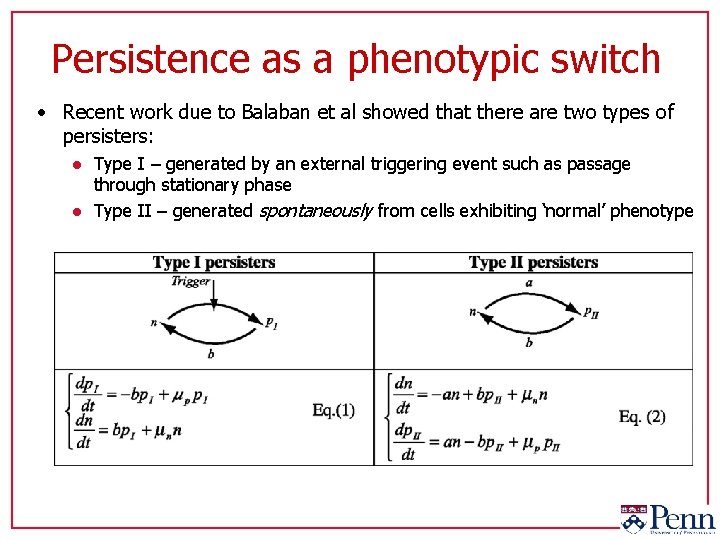
Persistence as a phenotypic switch • Recent work due to Balaban et al showed that there are two types of persisters: l l Type I – generated by an external triggering event such as passage through stationary phase Type II – generated spontaneously from cells exhibiting ‘normal’ phenotype
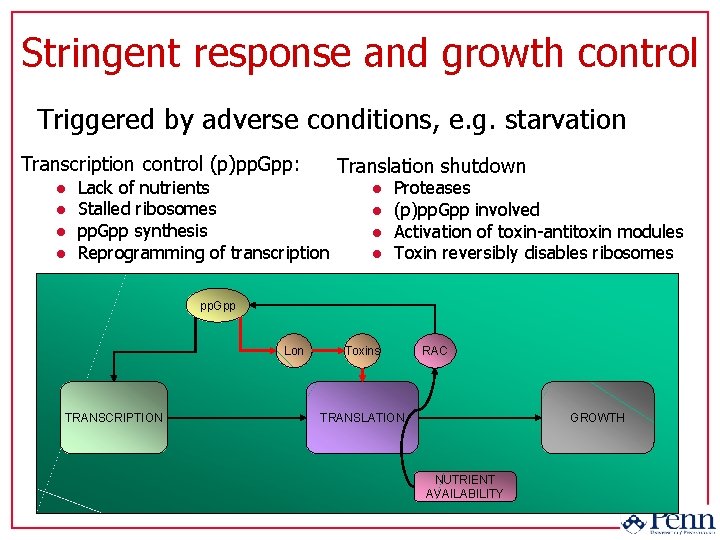
Stringent response and growth control Triggered by adverse conditions, e. g. starvation Transcription control (p)pp. Gpp: l l Lack of nutrients Stalled ribosomes pp. Gpp synthesis Reprogramming of transcription Translation shutdown l l Proteases (p)pp. Gpp involved Activation of toxin-antitoxin modules Toxin reversibly disables ribosomes pp. Gpp Lon TRANSCRIPTION Toxins RAC TRANSLATION GROWTH NUTRIENT AVAILABILITY
Tox Ant m. RNA Ribosom e Toxin Ribosom e Antitoxin tm. RNA Ribosom e
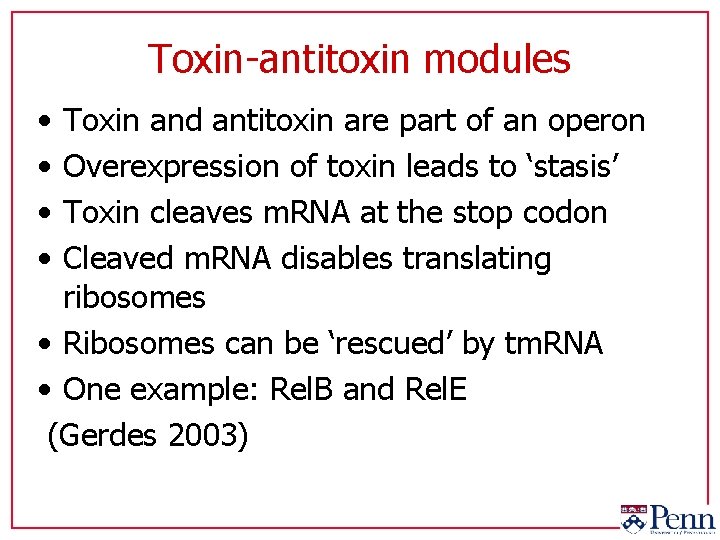
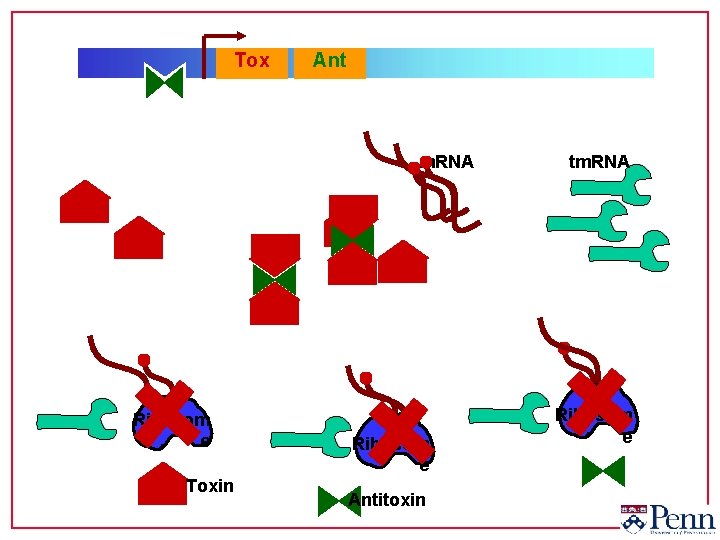
Toxin-antitoxin modules • • Toxin and antitoxin are part of an operon Overexpression of toxin leads to ‘stasis’ Toxin cleaves m. RNA at the stop codon Cleaved m. RNA disables translating ribosomes • Ribosomes can be ‘rescued’ by tm. RNA • One example: Rel. B and Rel. E (Gerdes 2003)
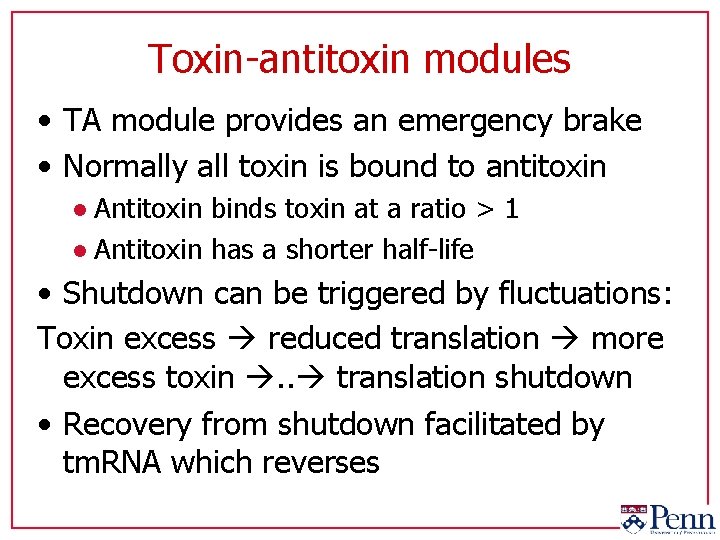
Toxin-antitoxin modules • TA module provides an emergency brake • Normally all toxin is bound to antitoxin l Antitoxin binds toxin at a ratio > 1 l Antitoxin has a shorter half-life • Shutdown can be triggered by fluctuations: Toxin excess reduced translation more excess toxin . . translation shutdown • Recovery from shutdown facilitated by tm. RNA which reverses
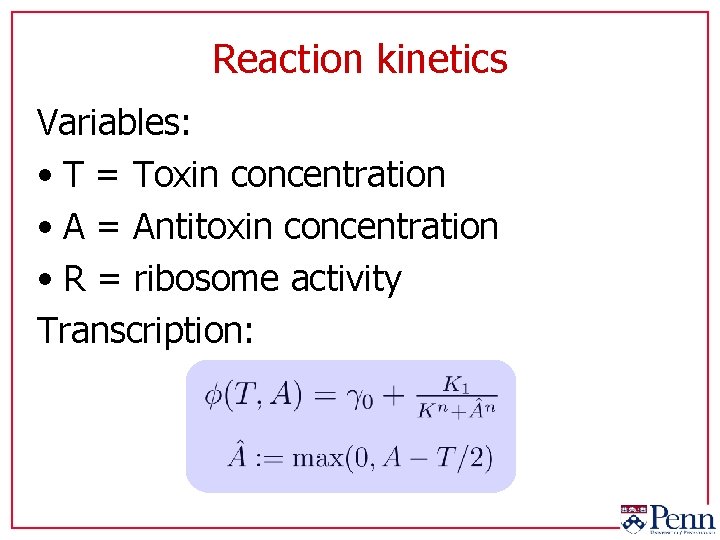
Reaction kinetics Variables: • T = Toxin concentration • A = Antitoxin concentration • R = ribosome activity Transcription:
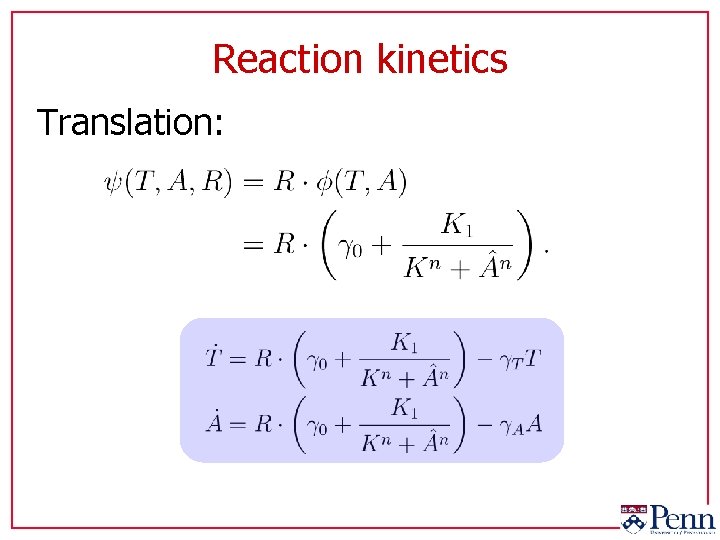
Reaction kinetics Translation:
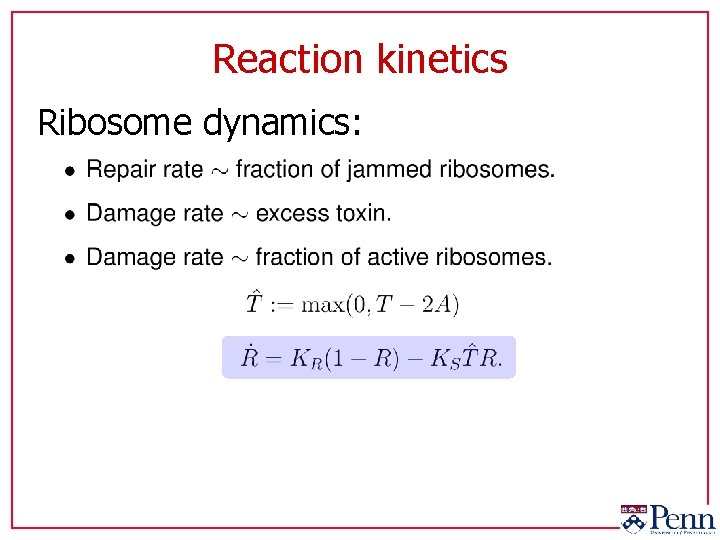
Reaction kinetics Ribosome dynamics:
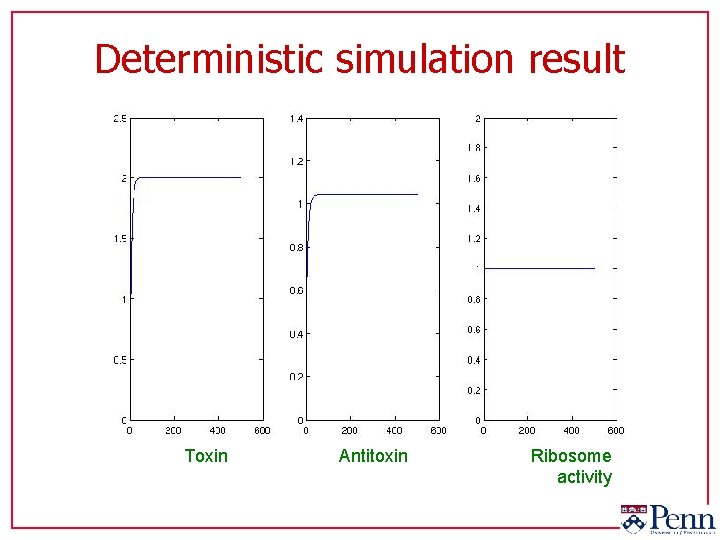
Deterministic simulation result Toxin Antitoxin Ribosome activity
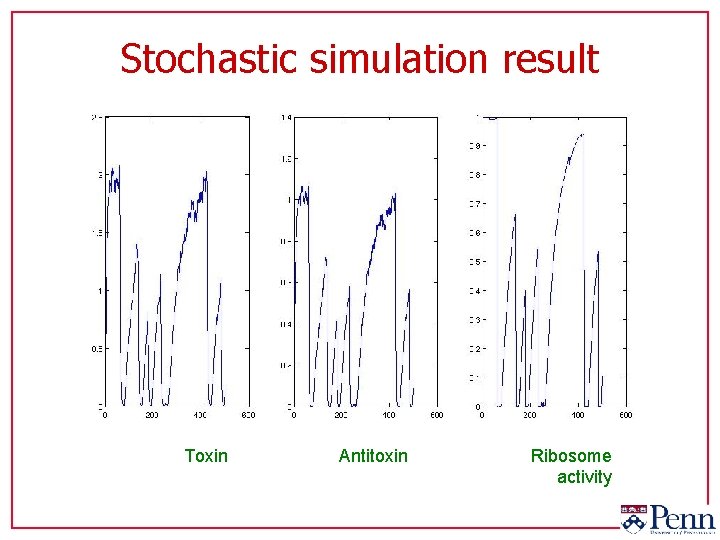
Stochastic simulation result Toxin Antitoxin Ribosome activity
- Slides: 29