Development Committee Mario H Cardiel MD MSc Rheumatologist



- Slides: 55
Development Committee Mario H. Cardiel, MD, MSc Rheumatologist Morelia, Mexico Andrei Danilov, MD, DSc Neurologist Moscow, Russia Smail Daoudi, MD Neurologist Tizi Ouzou, Algeria Jianhao Lin, MD Orthopedist Beijing, China Supranee Niruthisard, MD Anesthesiologist, Pain Specialist Bangkok, Thailand Germán Ochoa, MD Orthopedist, Spine Surgeon and Pain Specialist Bogotá, Colombia João Batista S. Garcia, MD, Ph. D Anesthesiologist Milton Raff, MD, BSc São Luis, Brazil Consultant Anesthetist Cape Town, South Africa Yuzhou Guan, MD Raymond L. Rosales, MD, Ph. D Neurologist Beijing, China Manila, Philippines Ammar Salti, MD Consultant Anesthetist Abu Dhabi, United Arab Emirates Jose Antonio San Juan, MD Orthopedic Surgeon Cebu City, Philippines Xinping Tian, MD Rheumatologist Beijing, China Işin Ünal-Çevik, MD, Ph. D Neurologist, Neuroscientist and Pain Specialist Ankara, Turkey This program was sponsored by Pfizer Inc.
Learning Objectives • After completing this module, participants will be able to: – Explain the pathophysiology of neuropathic pain – Discuss the prevalence of neuropathic pain – Apply a simple diagnostic technique for the diagnosis of neuropathic pain – Understand the impact of neuropathic pain and its comorbidities on patient functioning and quality of life – Select appropriate pharmacological and nonpharmacological strategies for the management of neuropathic pain – Know when to refer patients to specialists
Table of Contents • What is neuropathic pain? • How common is neuropathic pain? • How can neuropathic pain be differentiated from nociceptive pain? • What is the impact of neuropathic pain? • How should neuropathic pain be treated based on its pathophysiology?
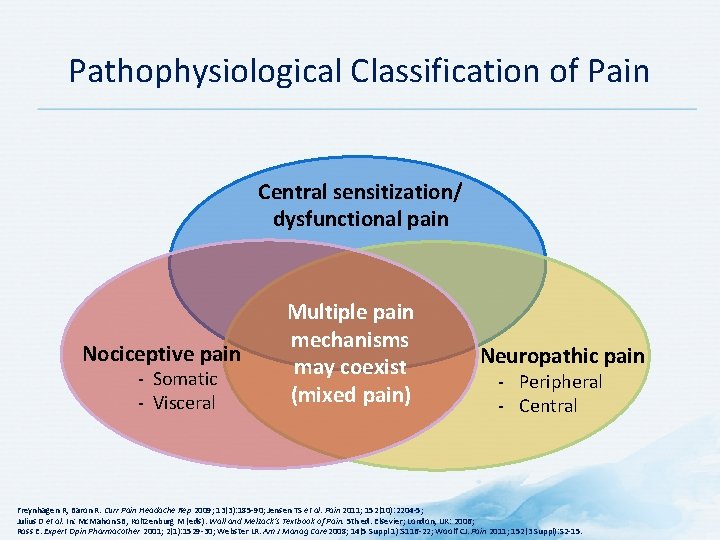
Pathophysiological Classification of Pain Central sensitization/ dysfunctional pain Nociceptive pain - Somatic - Visceral Multiple pain mechanisms may coexist (mixed pain) Neuropathic pain - Peripheral - Central Freynhagen R, Baron R. Curr Pain Headache Rep 2009; 13(3): 185 -90; Jensen TS et al. Pain 2011; 152(10): 2204 -5; Julius D et al. In: Mc. Mahon SB, Koltzenburg M (eds). Wall and Melzack’s Textbook of Pain. 5 th ed. Elsevier; London, UK: 2006; Ross E. Expert Opin Pharmacother 2001; 2(1): 1529 -30; Webster LR. Am J Manag Care 2008; 14(5 Suppl 1): S 116 -22; Woolf CJ. Pain 2011; 152(3 Suppl): S 2 -15.
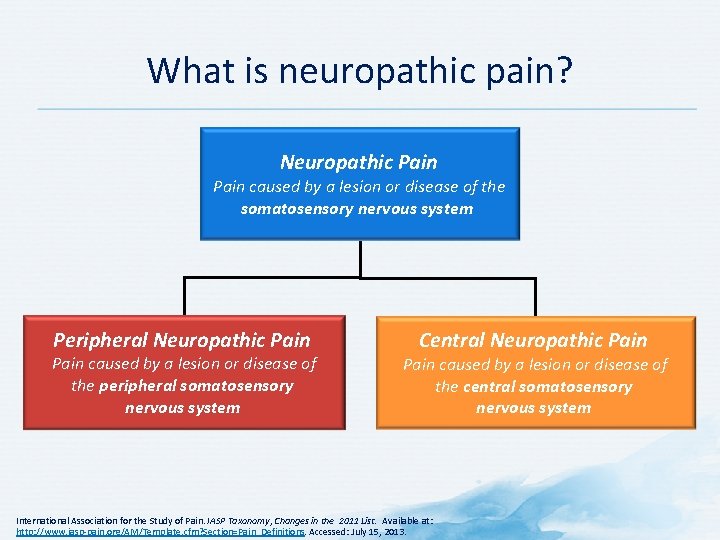
What is neuropathic pain? Neuropathic Pain caused by a lesion or disease of the somatosensory nervous system Peripheral Neuropathic Pain caused by a lesion or disease of the peripheral somatosensory nervous system Central Neuropathic Pain caused by a lesion or disease of the central somatosensory nervous system International Association for the Study of Pain. IASP Taxonomy, Changes in the 2011 List. Available at: http: //www. iasp-pain. org/AM/Template. cfm? Section=Pain_Definitions. Accessed: July 15, 2013.
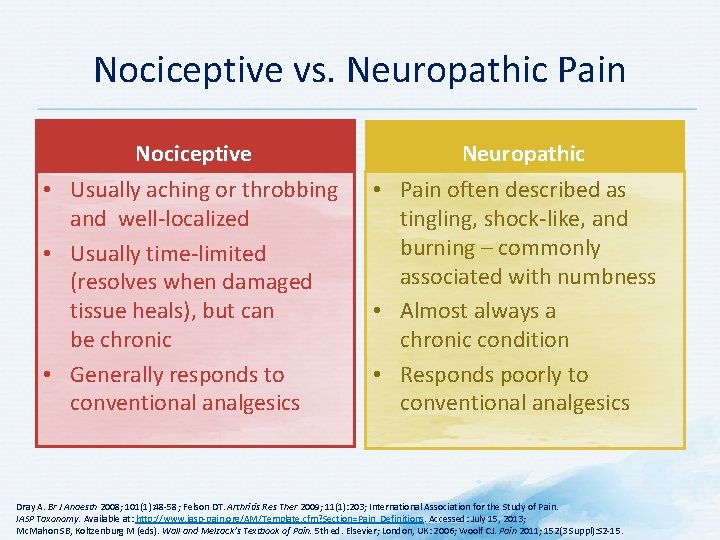
Nociceptive vs. Neuropathic Pain Nociceptive • Usually aching or throbbing and well-localized • Usually time-limited (resolves when damaged tissue heals), but can be chronic • Generally responds to conventional analgesics Neuropathic • Pain often described as tingling, shock-like, and burning – commonly associated with numbness • Almost always a chronic condition • Responds poorly to conventional analgesics Dray A. Br J Anaesth 2008; 101(1): 48 -58; Felson DT. Arthritis Res Ther 2009; 11(1): 203; International Association for the Study of Pain. IASP Taxonomy. Available at: http: //www. iasp-pain. org/AM/Template. cfm? Section=Pain_Definitions. Accessed: July 15, 2013; Mc. Mahon SB, Koltzenburg M (eds). Wall and Melzack’s Textbook of Pain. 5 th ed. Elsevier; London, UK: 2006; Woolf CJ. Pain 2011; 152(3 Suppl): S 2 -15.
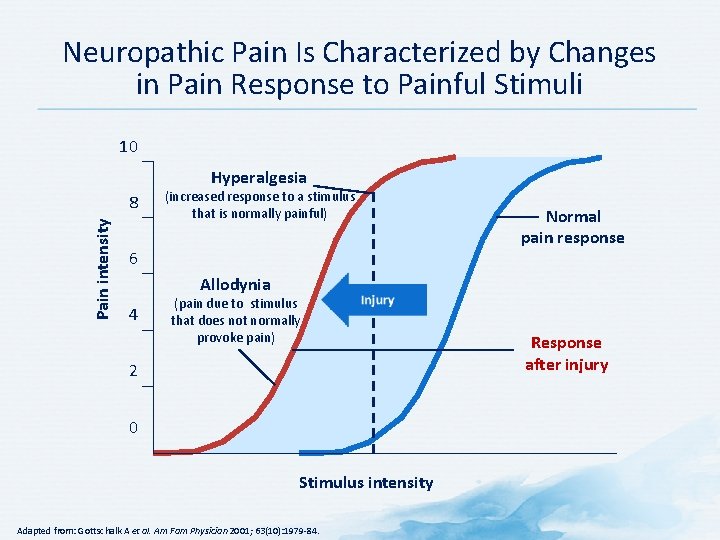
Neuropathic Pain Is Characterized by Changes in Pain Response to Painful Stimuli 10 Hyperalgesia Pain intensity 8 (increased response to a stimulus that is normally painful) 6 Normal pain response Allodynia 4 (pain due to stimulus that does not normally provoke pain) 2 0 Stimulus intensity Adapted from: Gottschalk A et al. Am Fam Physician 2001; 63(10): 1979 -84. Response after injury
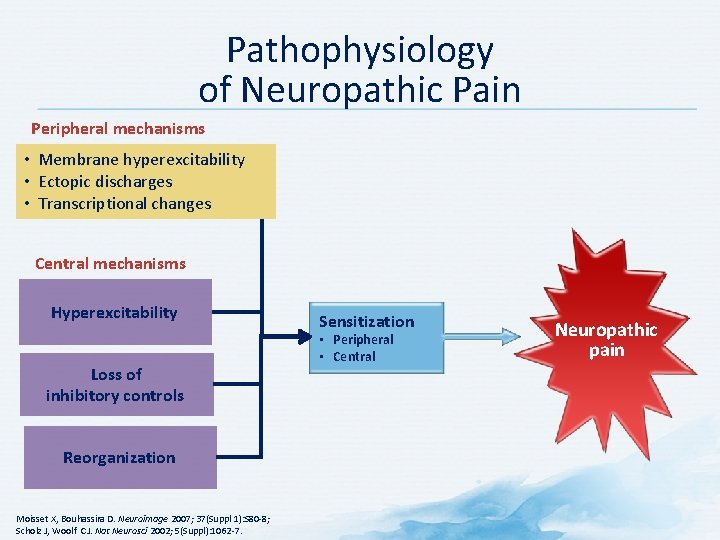
Pathophysiology of Neuropathic Pain Peripheral mechanisms • Membrane hyperexcitability • Ectopic discharges • Transcriptional changes Central mechanisms Hyperexcitability Loss of inhibitory controls Reorganization Moisset X, Bouhassira D. Neuroimage 2007; 37(Suppl 1): S 80 -8; Scholz J, Woolf CJ. Nat Neurosci 2002; 5(Suppl): 1062 -7. Sensitization • Peripheral • Central Neuropathic pain
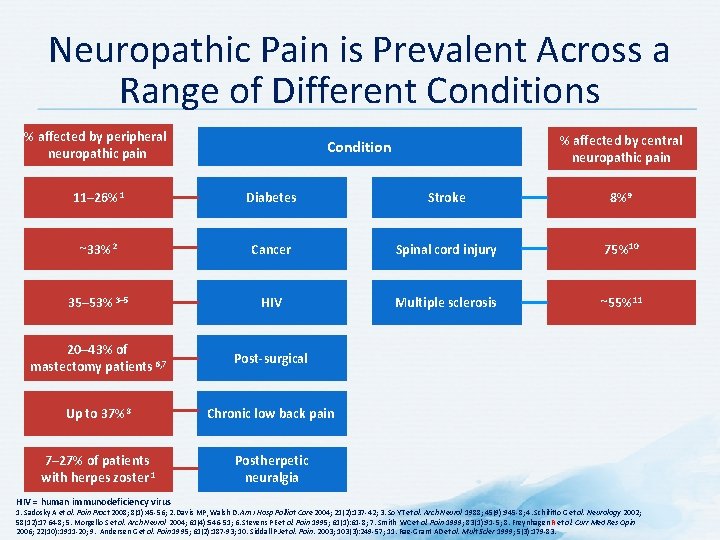
Neuropathic Pain is Prevalent Across a Range of Different Conditions % affected by peripheral neuropathic pain % affected by central neuropathic pain Condition 11– 26% 1 Diabetes Stroke 8%9 ~33% 2 Cancer Spinal cord injury 75% 10 35– 53% 3– 5 HIV Multiple sclerosis ~55% 11 20– 43% of mastectomy patients 6, 7 Post-surgical Up to 37% 8 Chronic low back pain 7– 27% of patients with herpes zoster 1 Postherpetic neuralgia HIV = human immunodeficiency virus 1. Sadosky A et al. Pain Pract 2008; 8(1): 45 -56; 2. Davis MP, Walsh D. Am J Hosp Palliat Care 2004; 21(2): 137 -42; 3. So YT et al. Arch Neurol 1988; 45(9): 945 -8; 4. Schifitto G et al. Neurology 2002; 58(12): 1764 -8; 5. Morgello S et al. Arch Neurol 2004; 61(4): 546 -51; 6. Stevens PE et al. Pain 1995; 61(1): 61 -8; 7. Smith WC et al. Pain 1999; 83(1): 91 -5; 8. Freynhagen R et al. Curr Med Res Opin 2006; 22(10): 1911 -20; 9. Andersen G et al. Pain 1995; 61(2): 187 -93; 10. Siddall PJ et al. Pain. 2003; 103(3): 249 -57; 11. Rae-Grant AD et al. Mult Scler 1999; 5(3): 179 -83.
Discussion Question WHAT PROPORTION OF YOUR PATIENTS SUFFER FROM NEUROPATHIC PAIN?
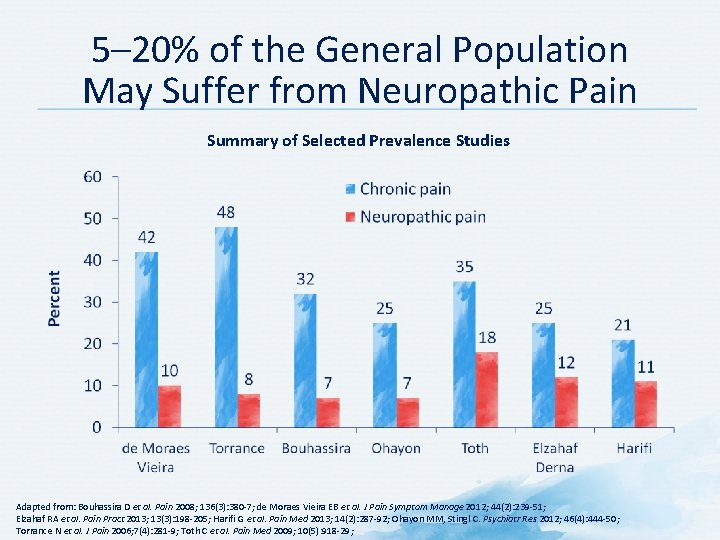
5– 20% of the General Population May Suffer from Neuropathic Pain Summary of Selected Prevalence Studies Adapted from: Bouhassira D et al. Pain 2008; 136(3): 380 -7; de Moraes Vieira EB et al. J Pain Symptom Manage 2012; 44(2): 239 -51; Elzahaf RA et al. Pain Pract 2013; 13(3): 198 -205; Harifi G et al. Pain Med 2013; 14(2): 287 -92; Ohayon MM, Stingl C. Psychiatr Res 2012; 46(4): 444 -50; Torrance N et al. J Pain 2006; 7(4): 281 -9; Toth C et al. Pain Med 2009; 10(5): 918 -29;
Discussion Question WHAT ARE SOME OF YOUR BIGGEST CHALLENGES IN DIAGNOSING PATIENTS WITH NEUROPATHIC PAIN? HOW DO YOU OVERCOME THESE CHALLENGES?
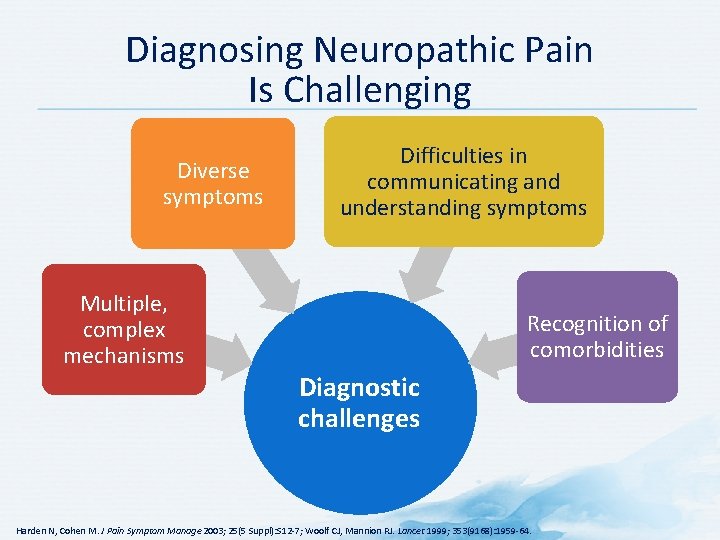
Diagnosing Neuropathic Pain Is Challenging Diverse symptoms Difficulties in communicating and understanding symptoms Multiple, complex mechanisms Recognition of comorbidities Diagnostic challenges Harden N, Cohen M. J Pain Symptom Manage 2003; 25(5 Suppl): S 12 -7; Woolf CJ, Mannion RJ. Lancet 1999; 353(9168): 1959 -64.
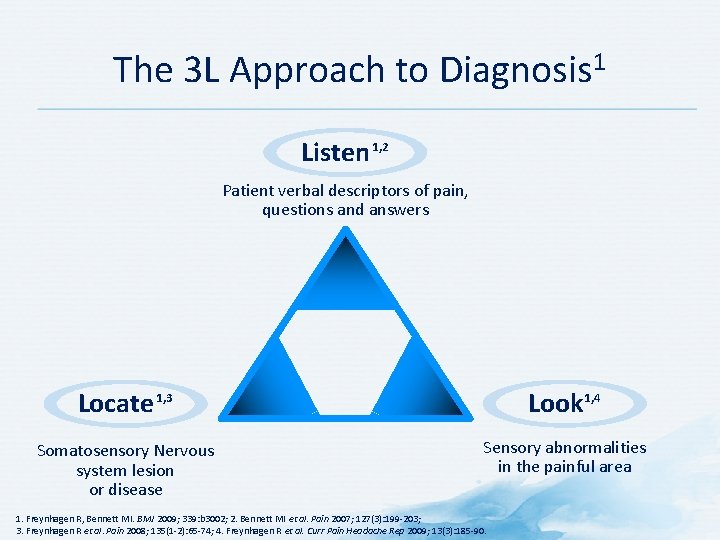
The 3 L Approach to Diagnosis 1 Listen 1, 2 Patient verbal descriptors of pain, questions and answers Locate 1, 3 Look 1, 4 Somatosensory Nervous system lesion or disease Sensory abnormalities in the painful area 1. Freynhagen R, Bennett MI. BMJ 2009; 339: b 3002; 2. Bennett MI et al. Pain 2007; 127(3): 199 -203; 3. Freynhagen R et al. Pain 2008; 135(1 -2): 65 -74; 4. Freynhagen R et al. Curr Pain Headache Rep 2009; 13(3): 185 -90.
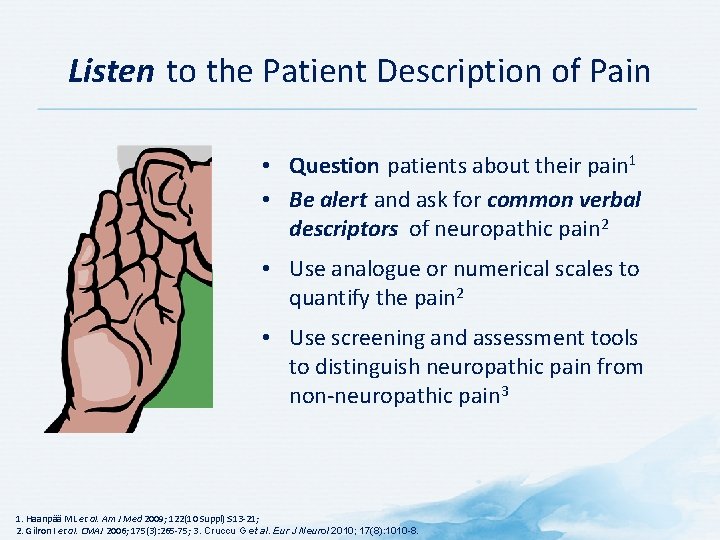
Listen to the Patient Description of Pain • Question patients about their pain 1 • Be alert and ask for common verbal descriptors of neuropathic pain 2 • Use analogue or numerical scales to quantify the pain 2 • Use screening and assessment tools to distinguish neuropathic pain from non-neuropathic pain 3 1. Haanpää ML et al. Am J Med 2009; 122(10 Suppl): S 13 -21; 2. Gilron I et al. CMAJ 2006; 175(3): 265 -75; 3. Cruccu G et al. Eur J Neurol 2010; 17(8): 1010 -8.
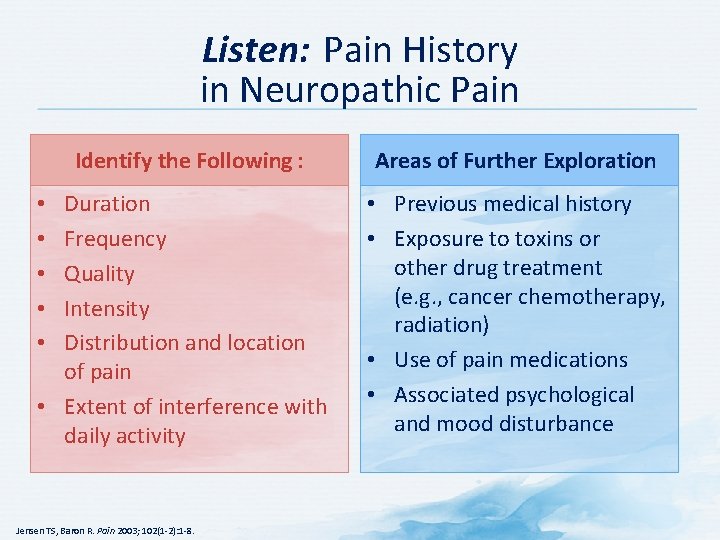
Listen: Pain History in Neuropathic Pain Identify the Following : Areas of Further Exploration Duration Frequency Quality Intensity Distribution and location of pain • Extent of interference with daily activity • Previous medical history • Exposure to toxins or other drug treatment (e. g. , cancer chemotherapy, radiation) • Use of pain medications • Associated psychological and mood disturbance • • • Jensen TS, Baron R. Pain 2003; 102(1 -2): 1 -8.
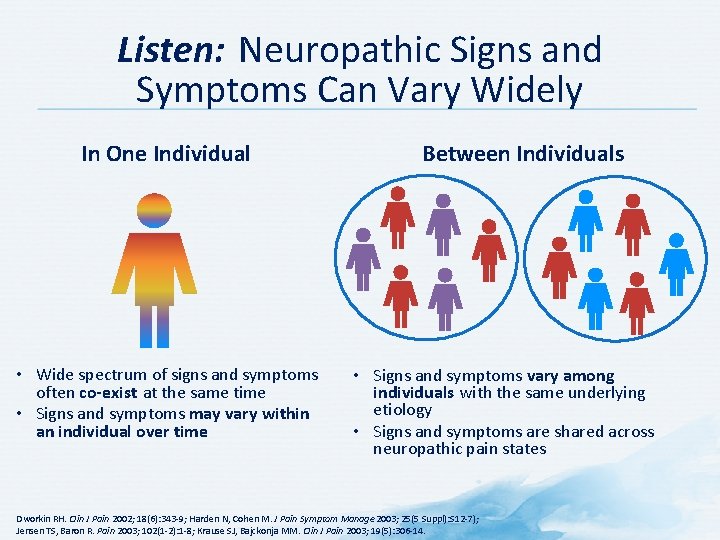
Listen: Neuropathic Signs and Symptoms Can Vary Widely In One Individual • Wide spectrum of signs and symptoms often co-exist at the same time • Signs and symptoms may vary within an individual over time Between Individuals • Signs and symptoms vary among individuals with the same underlying etiology • Signs and symptoms are shared across neuropathic pain states Dworkin RH. Clin J Pain 2002; 18(6): 343 -9; Harden N, Cohen M. J Pain Symptom Manage 2003; 25(5 Suppl): S 12 -7); Jensen TS, Baron R. Pain 2003; 102(1 -2): 1 -8; Krause SJ, Bajckonja MM. Clin J Pain 2003; 19(5): 306 -14.
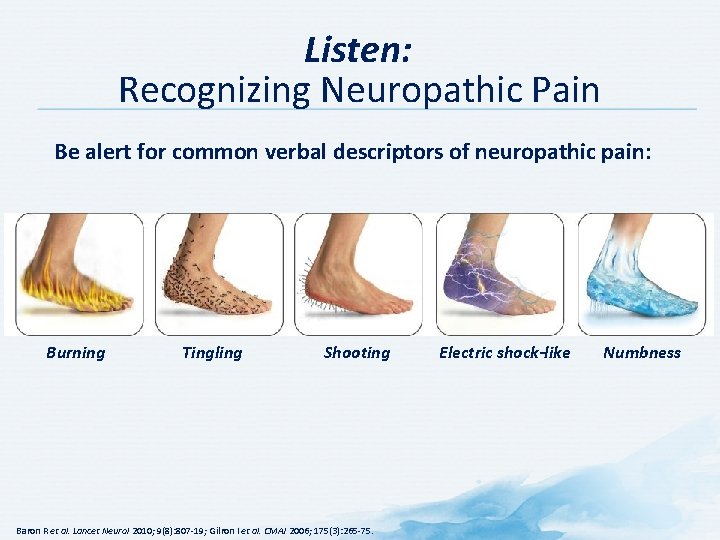
Listen: Recognizing Neuropathic Pain Be alert for common verbal descriptors of neuropathic pain: Burning Tingling Shooting Baron R et al. Lancet Neurol 2010; 9(8): 807 -19; Gilron I et al. CMAJ 2006; 175(3): 265 -75. Electric shock-like Numbness
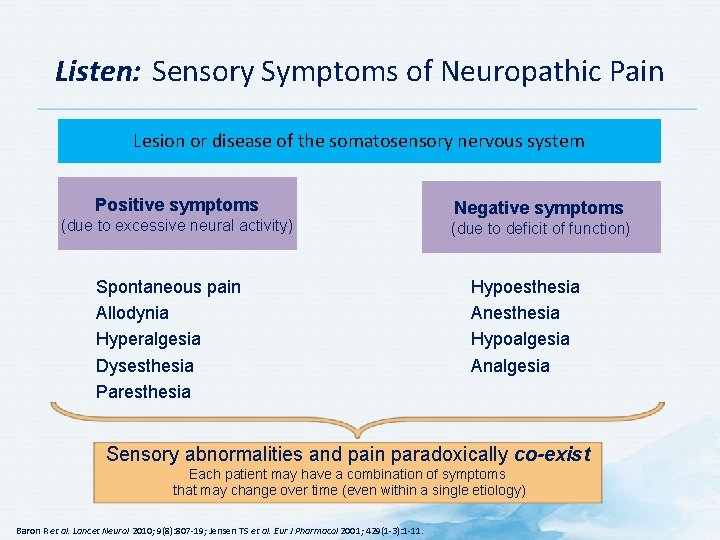
Listen: Sensory Symptoms of Neuropathic Pain Lesion or disease of the somatosensory nervous system Positive symptoms (due to excessive neural activity) Spontaneous pain Allodynia Hyperalgesia Dysesthesia Paresthesia Negative symptoms (due to deficit of function) Hypoesthesia Anesthesia Hypoalgesia Analgesia Sensory abnormalities and pain paradoxically co-exist Each patient may have a combination of symptoms that may change over time (even within a single etiology) Baron R et al. Lancet Neurol 2010; 9(8): 807 -19; Jensen TS et al. Eur J Pharmacol 2001; 429(1 -3): 1 -11.
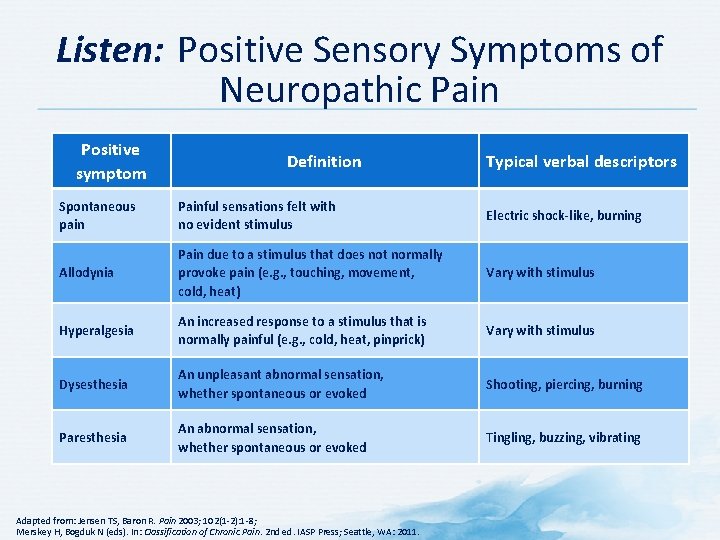
Listen: Positive Sensory Symptoms of Neuropathic Pain Positive symptom Definition Typical verbal descriptors Spontaneous pain Painful sensations felt with no evident stimulus Electric shock-like, burning Allodynia Pain due to a stimulus that does not normally provoke pain (e. g. , touching, movement, cold, heat) Vary with stimulus Hyperalgesia An increased response to a stimulus that is normally painful (e. g. , cold, heat, pinprick) Vary with stimulus Dysesthesia An unpleasant abnormal sensation, whether spontaneous or evoked Shooting, piercing, burning Paresthesia An abnormal sensation, whether spontaneous or evoked Tingling, buzzing, vibrating Adapted from: Jensen TS, Baron R. Pain 2003; 102(1 -2): 1 -8; Merskey H, Bogduk N (eds). In: Classification of Chronic Pain. 2 nd ed. IASP Press; Seattle, WA: 2011.
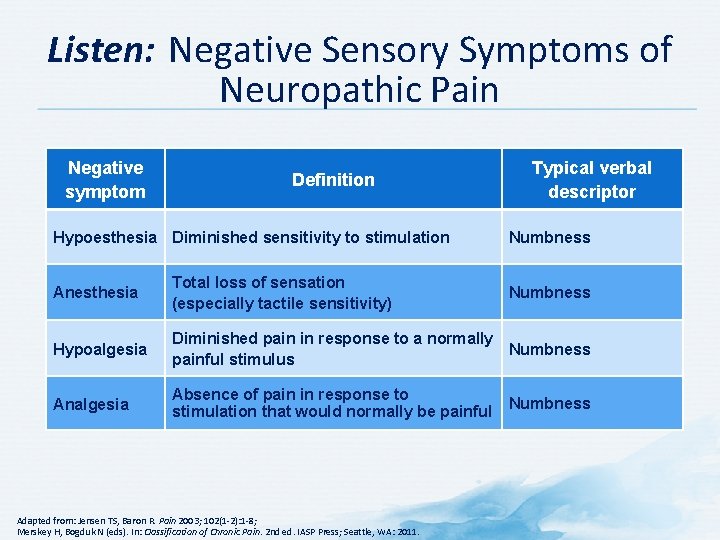
Listen: Negative Sensory Symptoms of Neuropathic Pain Negative symptom Definition Hypoesthesia Diminished sensitivity to stimulation Typical verbal descriptor Numbness Anesthesia Total loss of sensation (especially tactile sensitivity) Hypoalgesia Diminished pain in response to a normally Numbness painful stimulus Analgesia Absence of pain in response to stimulation that would normally be painful Adapted from: Jensen TS, Baron R. Pain 2003; 102(1 -2): 1 -8; Merskey H, Bogduk N (eds). In: Classification of Chronic Pain. 2 nd ed. IASP Press; Seattle, WA: 2011. Numbness
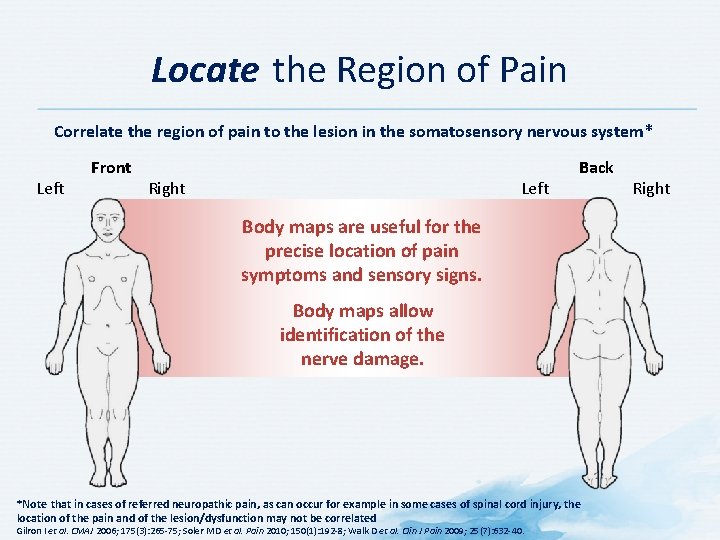
Locate the Region of Pain Correlate the region of pain to the lesion in the somatosensory nervous system* Left Front Right Left Back Body maps are useful for the precise location of pain symptoms and sensory signs. Body maps allow identification of the nerve damage. *Note that in cases of referred neuropathic pain, as can occur for example in some cases of spinal cord injury, the location of the pain and of the lesion/dysfunction may not be correlated Gilron I et al. CMAJ 2006; 175(3): 265 -75; Soler MD et al. Pain 2010; 150(1): 192 -8; Walk D et al. Clin J Pain 2009; 25(7): 632 -40. Right
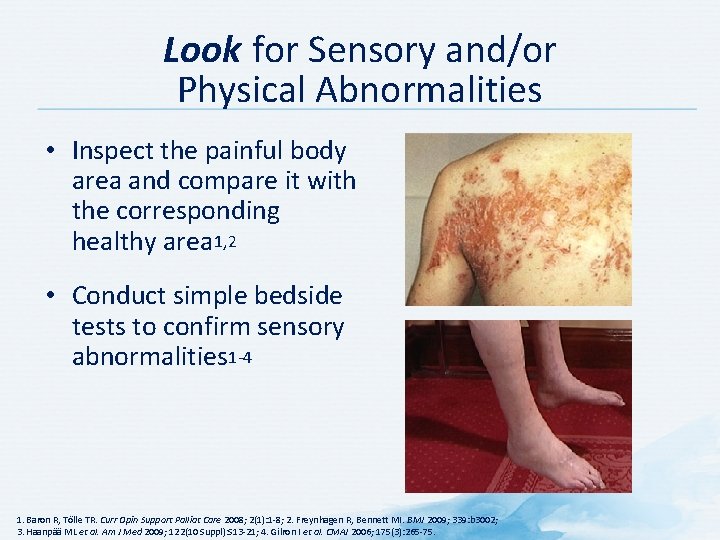
Look for Sensory and/or Physical Abnormalities • Inspect the painful body area and compare it with the corresponding healthy area 1, 2 • Conduct simple bedside tests to confirm sensory abnormalities 1 -4 1. Baron R, Tölle TR. Curr Opin Support Palliat Care 2008; 2(1): 1 -8; 2. Freynhagen R, Bennett MI. BMJ 2009; 339: b 3002; 3. Haanpää ML et al. Am J Med 2009; 122(10 Suppl): S 13 -21; 4. Gilron I et al. CMAJ 2006; 175(3): 265 -75.
Discussion Question WHAT BEDSIDE TESTS DO YOU TYPICALLY USE IN YOUR PRACTICE? WHY?
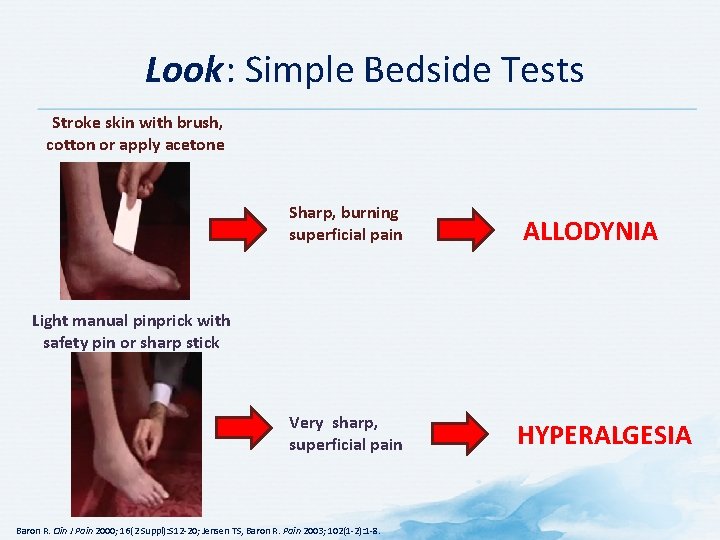
Look: Simple Bedside Tests Stroke skin with brush, cotton or apply acetone Sharp, burning superficial pain Very sharp, superficial pain ALLODYNIA Light manual pinprick with safety pin or sharp stick Baron R. Clin J Pain 2000; 16(2 Suppl): S 12 -20; Jensen TS, Baron R. Pain 2003; 102(1 -2): 1 -8. HYPERALGESIA
Discussion Question DO YOU USE A SCREENING TOOL FOR NEUROPATHIC PAIN IN YOUR PRACTICE? IF SO, WHICH TOOL AND WHY?
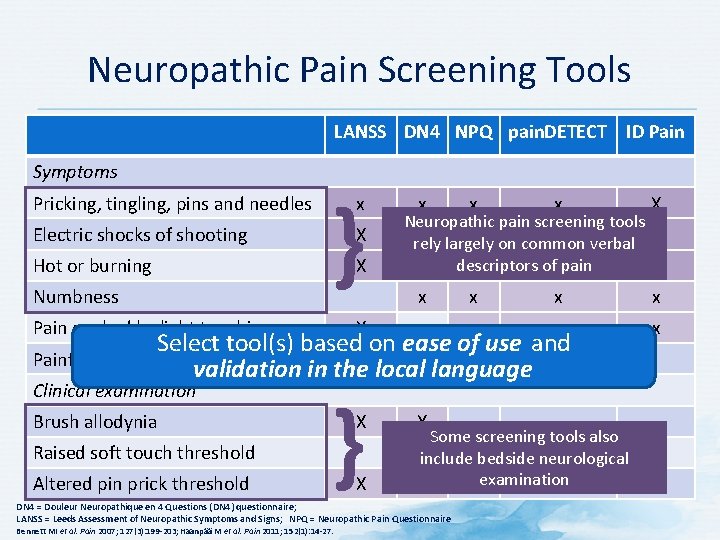
Neuropathic Pain Screening Tools LANSS DN 4 NPQ pain. DETECT ID Pain Symptoms Pricking, tingling, pins and needles Electric shocks of shooting Hot or burning Numbness } x X X Pain evoked by light touching x x x X x x x x Neuropathic pain screening tools x x rely largely on common verbal x descriptors of pain x x x X Select tool(s) based on ease of use and Painful cold or freezing pain X validation in the localx language Clinical examination Brush allodynia Raised soft touch threshold Altered pin prick threshold } X X X Some screening tools also Xinclude bedside neurological examination X DN 4 = Douleur Neuropathique en 4 Questions (DN 4) questionnaire; LANSS = Leeds Assessment of Neuropathic Symptoms and Signs; NPQ = Neuropathic Pain Questionnaire Bennett MI et al. Pain 2007; 127(3): 199 -203; Haanpää M et al. Pain 2011; 152(1): 14 -27.
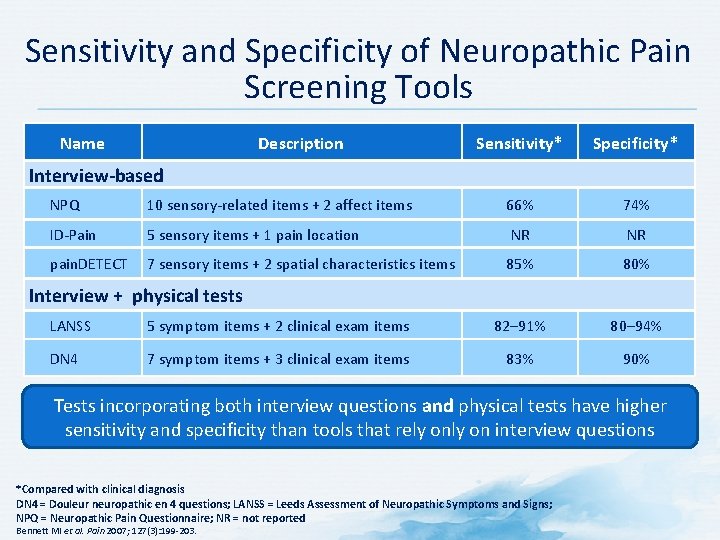
Sensitivity and Specificity of Neuropathic Pain Screening Tools Name Description Sensitivity* Specificity* Interview-based NPQ 10 sensory-related items + 2 affect items 66% 74% ID-Pain 5 sensory items + 1 pain location NR NR pain. DETECT 7 sensory items + 2 spatial characteristics items 85% 80% Interview + physical tests LANSS 5 symptom items + 2 clinical exam items 82– 91% 80– 94% DN 4 7 symptom items + 3 clinical exam items 83% 90% Tests incorporating both interview questions and physical tests have higher sensitivity and specificity than tools that rely on interview questions *Compared with clinical diagnosis DN 4 = Douleur neuropathic en 4 questions; LANSS = Leeds Assessment of Neuropathic Symptoms and Signs; NPQ = Neuropathic Pain Questionnaire; NR = not reported Bennett MI et al. Pain 2007; 127(3): 199 -203.
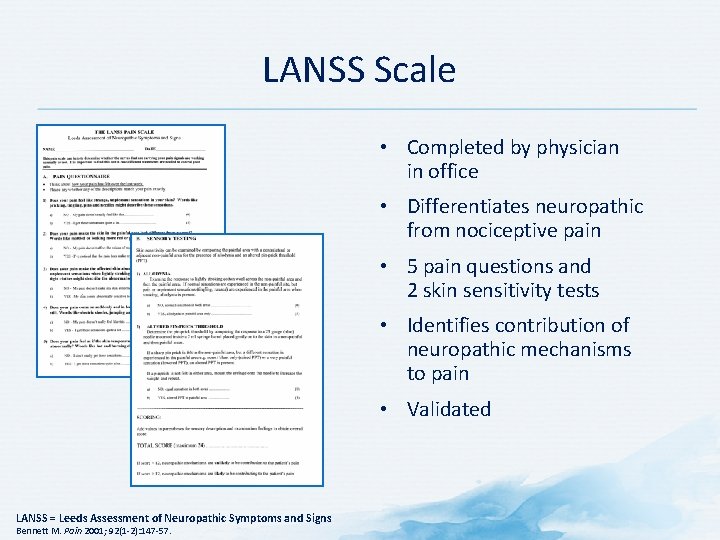
LANSS Scale • Completed by physician in office • Differentiates neuropathic from nociceptive pain • 5 pain questions and 2 skin sensitivity tests • Identifies contribution of neuropathic mechanisms to pain • Validated LANSS = Leeds Assessment of Neuropathic Symptoms and Signs Bennett M. Pain 2001; 92(1 -2): 147 -57.
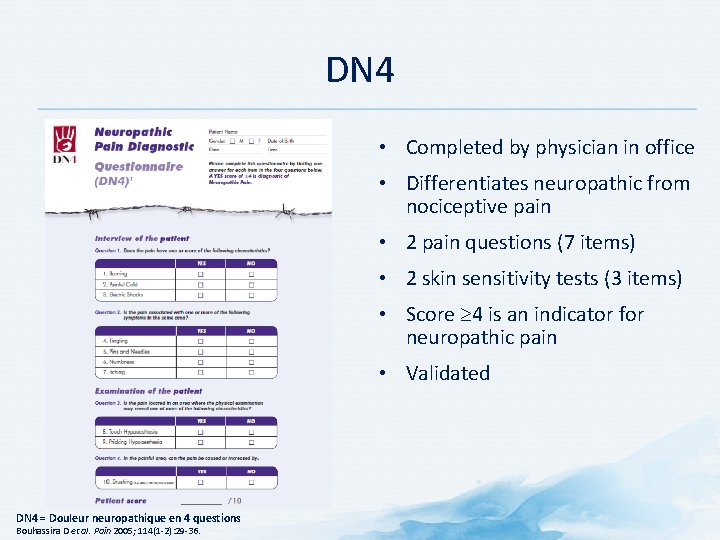
DN 4 • Completed by physician in office • Differentiates neuropathic from nociceptive pain • 2 pain questions (7 items) • 2 skin sensitivity tests (3 items) • Score 4 is an indicator for neuropathic pain • Validated DN 4 = Douleur neuropathique en 4 questions Bouhassira D et al. Pain 2005; 114(1 -2): 29 -36.
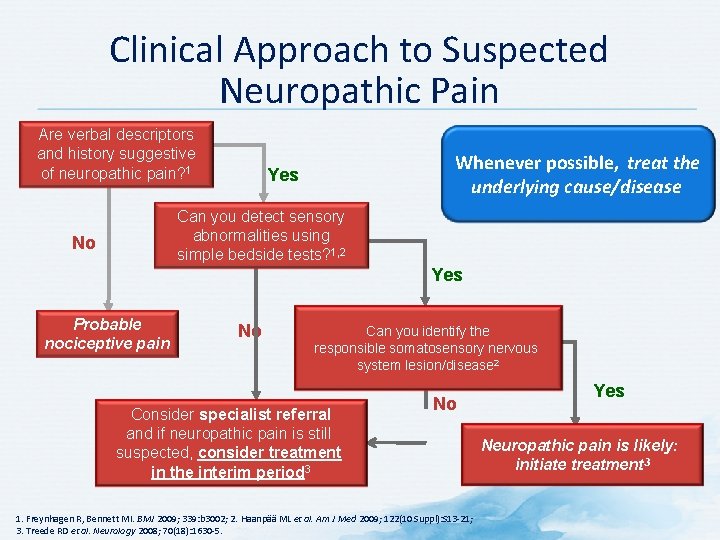
Clinical Approach to Suspected Neuropathic Pain Are verbal descriptors and history suggestive of neuropathic pain? 1 Whenever possible, treat the underlying cause/disease Yes Can you detect sensory abnormalities using simple bedside tests? 1, 2 No Yes Probable nociceptive pain No Can you identify the responsible somatosensory nervous system lesion/disease 2 Consider specialist referral and if neuropathic pain is still suspected, consider treatment in the interim period 3 No 1. Freynhagen R, Bennett MI. BMJ 2009; 339: b 3002; 2. Haanpää ML et al. Am J Med 2009; 122(10 Suppl): S 13 -21; 3. Treede RD et al. Neurology 2008; 70(18): 1630 -5. Yes Neuropathic pain is likely: initiate treatment 3
Discussion Question HOW HAS NEUROPATHIC PAIN AFFECTED SOME OF YOUR PATIENTS? 33
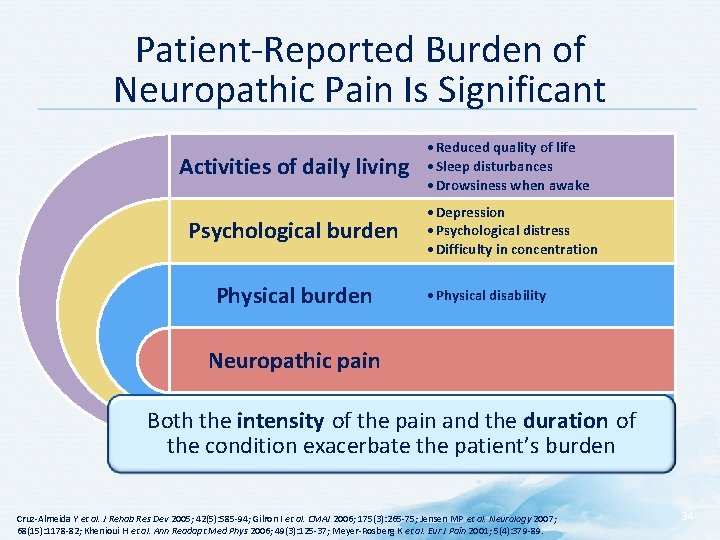
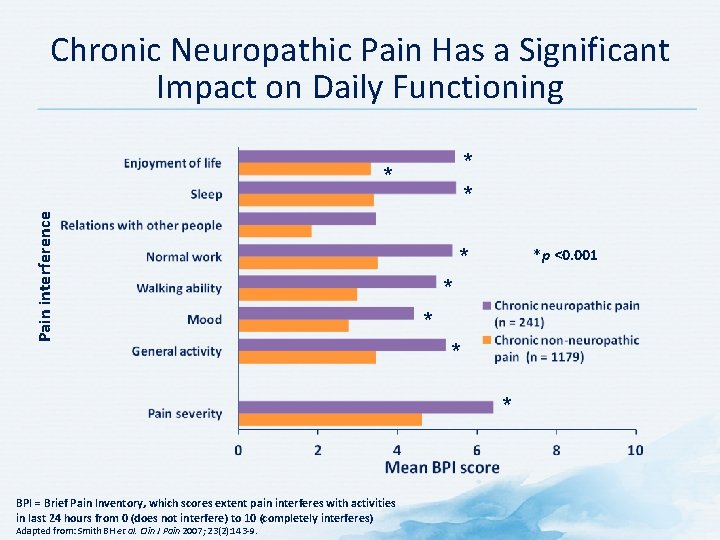
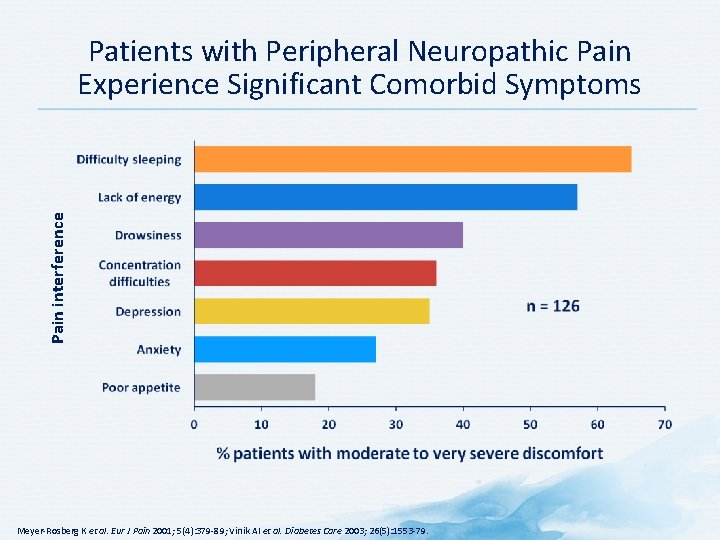
Patient-Reported Burden of Neuropathic Pain Is Significant Activities of daily living • Reduced quality of life • Sleep disturbances • Drowsiness when awake Psychological burden • Depression • Psychological distress • Difficulty in concentration Physical burden • Physical disability Neuropathic pain Both the intensity of the pain and the duration of the condition exacerbate the patient’s burden Cruz-Almeida Y et al. J Rehab Res Dev 2005; 42(5): 585 -94; Gilron I et al. CMAJ 2006; 175(3): 265 -75; Jensen MP et al. Neurology 2007; 68(15): 1178 -82; Khenioui H et al. Ann Readapt Med Phys 2006; 49(3): 125 -37; Meyer-Rosberg K et al. Eur J Pain 2001; 5(4): 379 -89. 34
Chronic Neuropathic Pain Has a Significant Impact on Daily Functioning * Pain interference * * *p <0. 001 * * * BPI = Brief Pain Inventory, which scores extent pain interferes with activities in last 24 hours from 0 (does not interfere) to 10 (completely interferes) Adapted from: Smith BH et al. Clin J Pain 2007; 23(2): 143 -9.
Pain interference Patients with Peripheral Neuropathic Pain Experience Significant Comorbid Symptoms Meyer-Rosberg K et al. Eur J Pain 2001; 5(4): 379 -89; Vinik AI et al. Diabetes Care 2003; 26(5): 1553 -79.
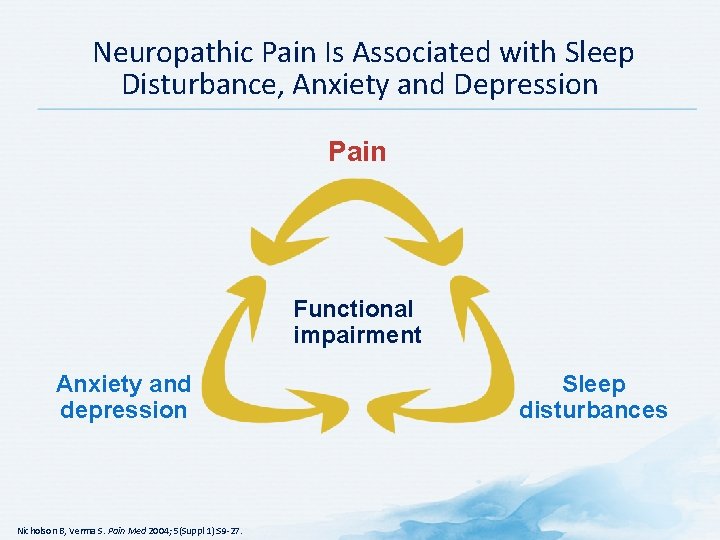
Neuropathic Pain Is Associated with Sleep Disturbance, Anxiety and Depression Pain Functional impairment Anxiety and depression Nicholson B, Verma S. Pain Med 2004; 5(Suppl 1): S 9 -27. Sleep disturbances
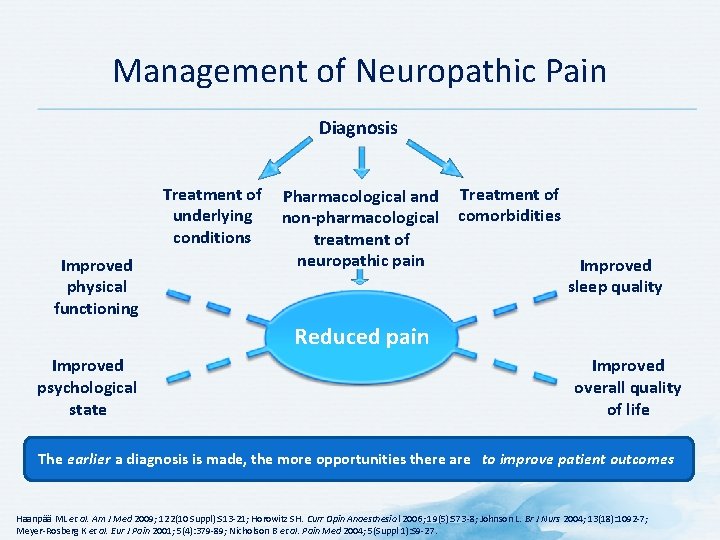
Management of Neuropathic Pain Diagnosis Treatment of underlying conditions Improved physical functioning Pharmacological and non-pharmacological treatment of neuropathic pain Treatment of comorbidities Improved sleep quality Reduced pain Improved psychological state Improved overall quality of life The earlier a diagnosis is made, the more opportunities there are to improve patient outcomes Haanpää ML et al. Am J Med 2009; 122(10 Suppl): S 13 -21; Horowitz SH. Curr Opin Anaesthesio l 2006; 19(5): 573 -8; Johnson L. Br J Nurs 2004; 13(18): 1092 -7; Meyer-Rosberg K et al. Eur J Pain 2001; 5(4): 379 -89; Nicholson B et al. Pain Med 2004; 5(Suppl 1): S 9 -27.
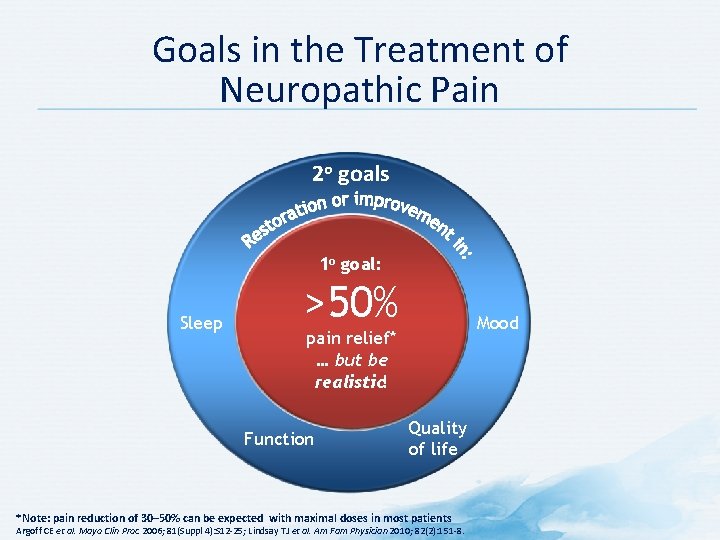
Goals in the Treatment of Neuropathic Pain 2 o goals 1 o goal: Sleep >50% Mood pain relief* … but be realistic! Function Quality of life *Note: pain reduction of 30– 50% can be expected with maximal doses in most patients Argoff CE et al. Mayo Clin Proc 2006; 81(Suppl 4): S 12 -25; Lindsay TJ et al. Am Fam Physician 2010; 82(2): 151 -8.
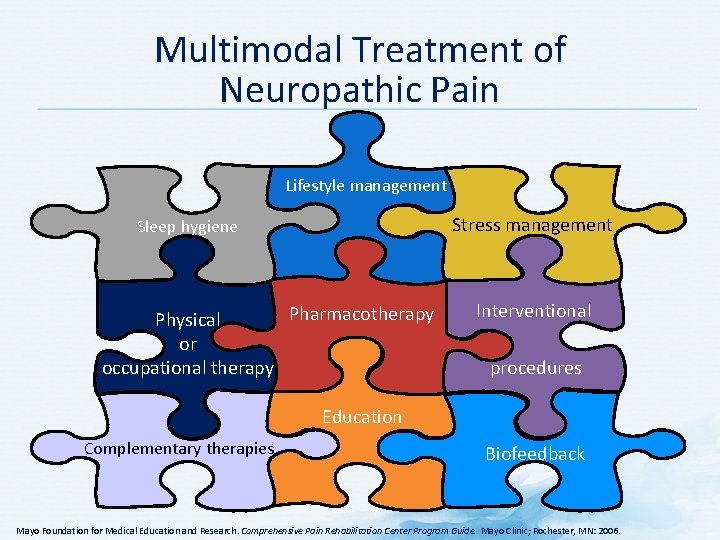
Multimodal Treatment of Neuropathic Pain Lifestyle management Stress management Sleep hygiene Pharmacotherapy Physical or occupational therapy Interventional procedures Education Complementary therapies Biofeedback Mayo Foundation for Medical Education and Research. Comprehensive Pain Rehabilitation Center Program Guide. Mayo Clinic; Rochester, MN: 2006.
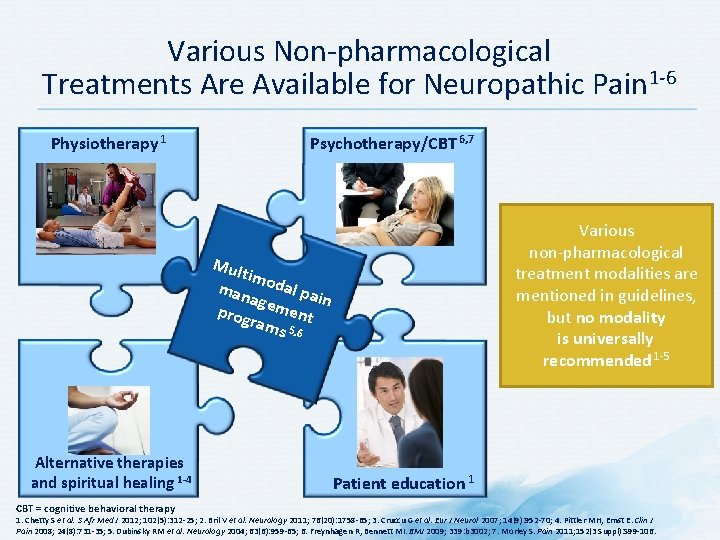
Various Non-pharmacological Treatments Are Available for Neuropathic Pain 1 -6 Physiotherapy 1 Psychotherapy/CBT 6, 7 Various non-pharmacological treatment modalities are mentioned in guidelines, but no modality is universally recommended 1 -5 Mul timo man dal pa in ag prog ement ram 5, s 6 Alternative therapies and spiritual healing 1 -4 CBT = cognitive behavioral therapy Patient education 1 1. Chetty S et al. S Afr Med J 2012; 102(5): 312 -25; 2. Bril V et al. Neurology 2011; 76(20): 1758 -65; 3. Cruccu G et al. Eur J Neurol 2007; 14(9): 952 -70; 4. Pittler MH, Ernst E. Clin J Pain 2008; 24(8): 731 -35; 5. Dubinsky RM et al. Neurology 2004; 63(6): 959 -65; 6. Freynhagen R, Bennett MI. BMJ 2009; 339: b 3002; 7. Morley S. Pain 2011; 152(3 Suppl): S 99 -106.
Discussion Question WHAT NON-PHARMACOLOGICAL APPROACHES TO NEUROPATHIC PAIN MANAGEMENT HAVE YOU FOUND HELPFUL FOR YOUR PATIENTS?
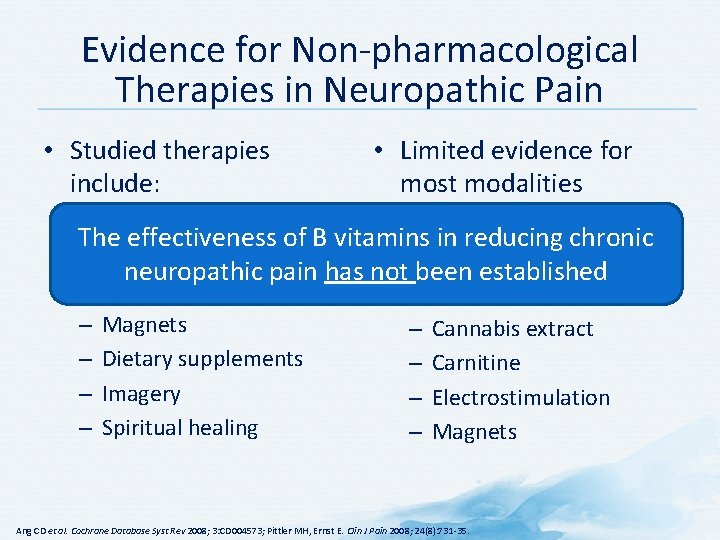
Evidence for Non-pharmacological Therapies in Neuropathic Pain • Studied therapies include: • Limited evidence for most modalities – Acupuncture • Evidence is encouraging The effectiveness of B vitamins in reducing chronic – Electrostimulation and warrants further neuropathic pain has not been established – Herbal medicine study for: – – Magnets Dietary supplements Imagery Spiritual healing – – Cannabis extract Carnitine Electrostimulation Magnets Ang CD et al. Cochrane Database Syst Rev 2008; 3: CD 004573; Pittler MH, Ernst E. Clin J Pain 2008; 24(8): 731 -35.
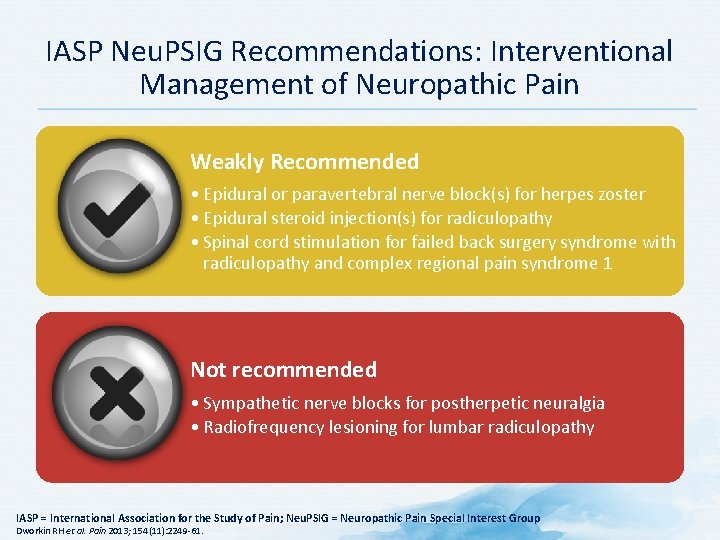
IASP Neu. PSIG Recommendations: Interventional Management of Neuropathic Pain Weakly Recommended • Epidural or paravertebral nerve block(s) for herpes zoster • Epidural steroid injection(s) for radiculopathy • Spinal cord stimulation for failed back surgery syndrome with radiculopathy and complex regional pain syndrome 1 Not recommended • Sympathetic nerve blocks for postherpetic neuralgia • Radiofrequency lesioning for lumbar radiculopathy IASP = International Association for the Study of Pain; Neu. PSIG = Neuropathic Pain Special Interest Group Dworkin RH et al. Pain 2013; 154(11): 2249 -61.
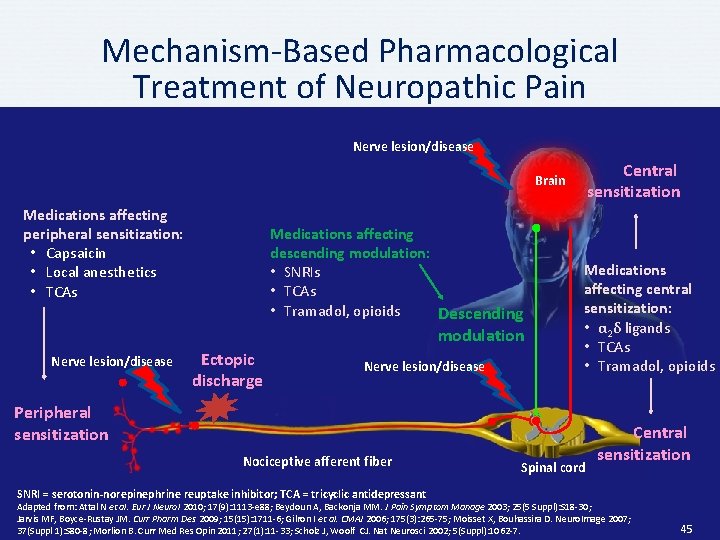
Mechanism-Based Pharmacological Treatment of Neuropathic Pain Nerve lesion/disease Central sensitization Brain Medications affecting peripheral sensitization: • Capsaicin • Local anesthetics • TCAs Medications affecting descending modulation: • SNRIs • TCAs • Tramadol, opioids Descending modulation Nerve lesion/disease Ectopic discharge Nerve lesion/disease Medications affecting central sensitization: • α 2δ ligands • TCAs • Tramadol, opioids Peripheral sensitization Nociceptive afferent fiber Spinal cord Central sensitization SNRI = serotonin-norepinephrine reuptake inhibitor; TCA = tricyclic antidepressant Adapted from: Attal N et al. Eur J Neurol 2010; 17(9): 1113 -e 88; Beydoun A, Backonja MM. J Pain Symptom Manage 2003; 25(5 Suppl): S 18 -30; Jarvis MF, Boyce-Rustay JM. Curr Pharm Des 2009; 15(15): 1711 -6; Gilron I et al. CMAJ 2006; 175(3): 265 -75; Moisset X, Bouhassira D. Neuro. Image 2007; 37(Suppl 1): S 80 -8; Morlion B. Curr Med Res Opin 2011; 27(1): 11 -33; Scholz J, Woolf CJ. Nat Neurosci 2002; 5(Suppl): 1062 -7. 45
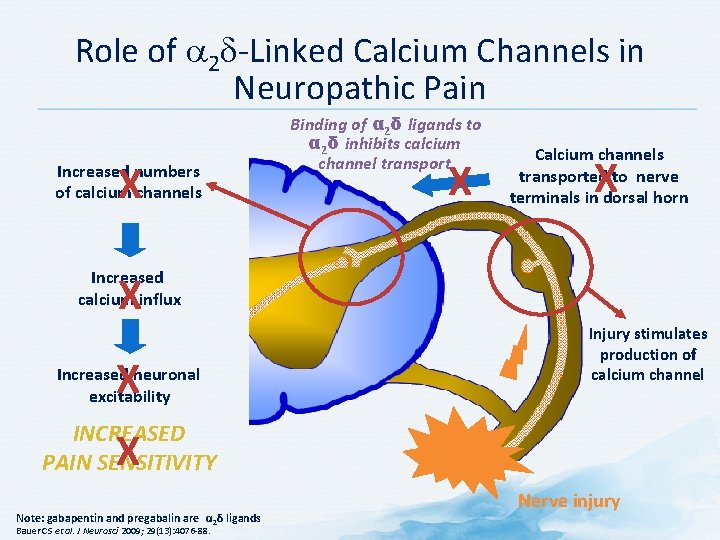
Role of a 2 d-Linked Calcium Channels in Neuropathic Pain X Increased numbers of calcium channels Binding of α 2δ ligands to α 2δ inhibits calcium channel transport X Calcium channels transported to nerve terminals in dorsal horn X Increased calcium influx X X Increased neuronal excitability Injury stimulates production of calcium channel INCREASED PAIN SENSITIVITY X Note: gabapentin and pregabalin are α 2δ ligands Bauer CS et al. J Neurosci 2009; 29(13): 4076 -88. Nerve injury
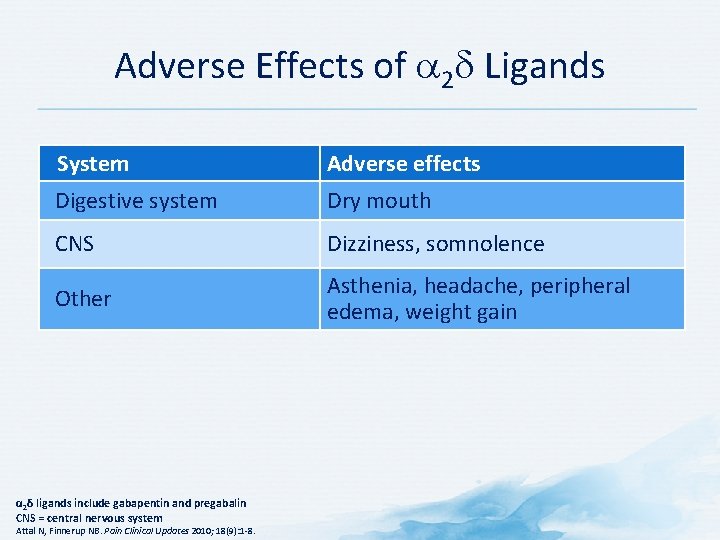
Adverse Effects of a 2 d Ligands System Adverse effects Digestive system Dry mouth CNS Dizziness, somnolence Other Asthenia, headache, peripheral edema, weight gain α 2δ ligands include gabapentin and pregabalin CNS = central nervous system Attal N, Finnerup NB. Pain Clinical Updates 2010; 18(9): 1 -8.
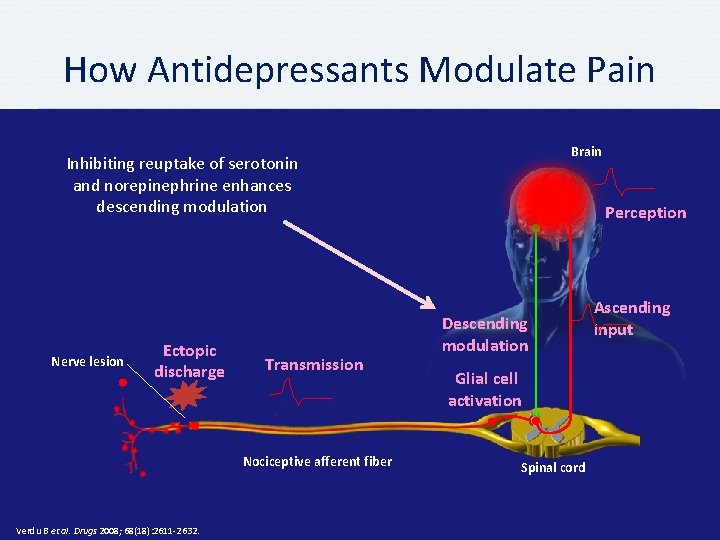
How Antidepressants Modulate Pain Brain Inhibiting reuptake of serotonin and norepinephrine enhances descending modulation Nerve lesion Ectopic discharge Transmission Nociceptive afferent fiber Verdu B et al. Drugs 2008; 68(18): 2611 -2632. Perception Descending modulation Glial cell activation Spinal cord Ascending input
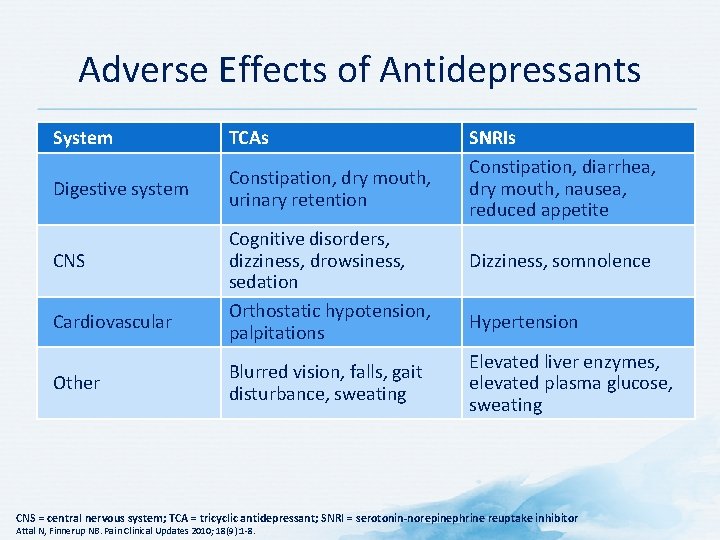
Adverse Effects of Antidepressants System TCAs Digestive system Constipation, dry mouth, urinary retention CNS Cardiovascular Other Cognitive disorders, dizziness, drowsiness, sedation Orthostatic hypotension, palpitations Blurred vision, falls, gait disturbance, sweating SNRIs Constipation, diarrhea, dry mouth, nausea, reduced appetite Dizziness, somnolence Hypertension Elevated liver enzymes, elevated plasma glucose, sweating CNS = central nervous system; TCA = tricyclic antidepressant; SNRI = serotonin-norepinephrine reuptake inhibitor Attal N, Finnerup NB. Pain Clinical Updates 2010; 18(9): 1 -8.
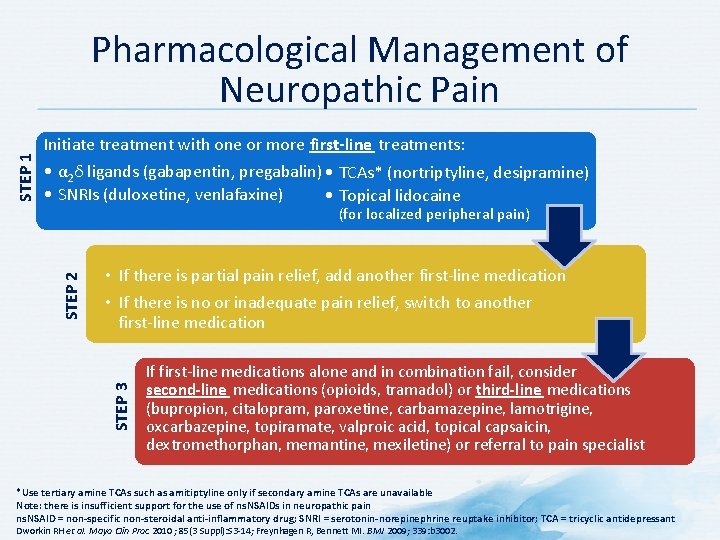
STEP 1 Pharmacological Management of Neuropathic Pain Initiate treatment with one or more first-line treatments: • α 2δ ligands (gabapentin, pregabalin) • TCAs* (nortriptyline, desipramine) • SNRIs (duloxetine, venlafaxine) • Topical lidocaine • If there is partial pain relief, add another first-line medication • If there is no or inadequate pain relief, switch to another first-line medication STEP 3 STEP 2 (for localized peripheral pain) If first-line medications alone and in combination fail, consider second-line medications (opioids, tramadol) or third-line medications (bupropion, citalopram, paroxetine, carbamazepine, lamotrigine, oxcarbazepine, topiramate, valproic acid, topical capsaicin, dextromethorphan, memantine, mexiletine) or referral to pain specialist *Use tertiary amine TCAs such as amitiptyline only if secondary amine TCAs are unavailable Note: there is insufficient support for the use of ns. NSAIDs in neuropathic pain ns. NSAID = non-specific non-steroidal anti-inflammatory drug; SNRI = serotonin-norepinephrine reuptake inhibitor; TCA = tricyclic antidepressant Dworkin RH et al. Mayo Clin Proc 2010 ; 85(3 Suppl): S 3 -14; Freynhagen R, Bennett MI. BMJ 2009; 339: b 3002.
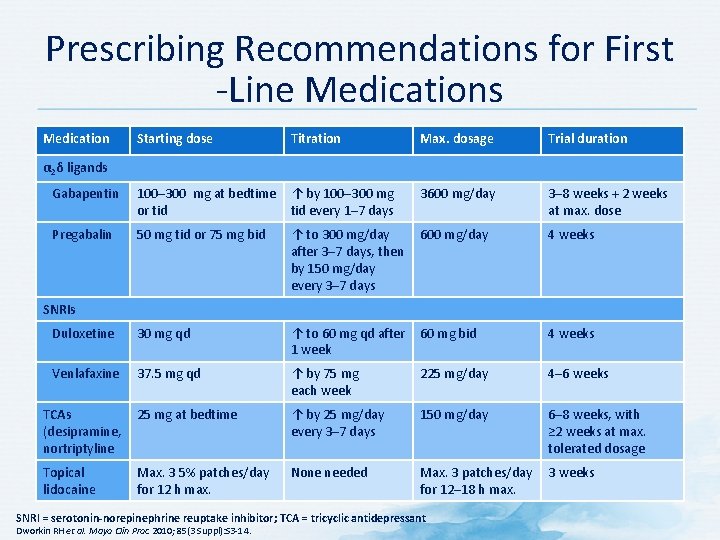
Prescribing Recommendations for First -Line Medications Medication Starting dose Titration Max. dosage Trial duration 3600 mg/day 3– 8 weeks + 2 weeks at max. dose α 2δ ligands Gabapentin 100– 300 mg at bedtime ↑ by 100– 300 mg or tid every 1– 7 days Pregabalin 50 mg tid or 75 mg bid ↑ to 300 mg/day 600 mg/day after 3– 7 days, then by 150 mg/day every 3– 7 days 4 weeks Duloxetine 30 mg qd ↑ to 60 mg qd after 60 mg bid 1 week 4 weeks Venlafaxine 37. 5 mg qd ↑ by 75 mg each week 225 mg/day 4– 6 weeks TCAs 25 mg at bedtime (desipramine, nortriptyline ↑ by 25 mg/day every 3– 7 days 150 mg/day 6– 8 weeks, with ≥ 2 weeks at max. tolerated dosage Topical lidocaine None needed Max. 3 patches/day 3 weeks for 12– 18 h max. SNRIs Max. 3 5% patches/day for 12 h max. SNRI = serotonin-norepinephrine reuptake inhibitor; TCA = tricyclic antidepressant Dworkin RH et al. Mayo Clin Proc 2010; 85(3 Suppl): S 3 -14.
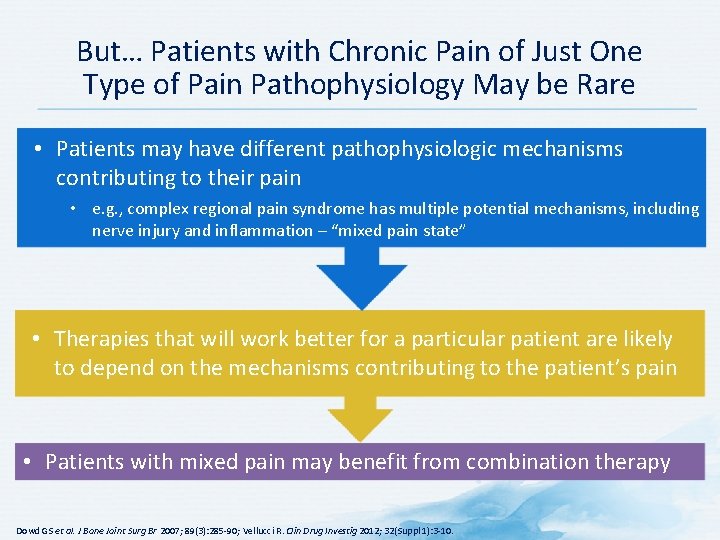
But… Patients with Chronic Pain of Just One Type of Pain Pathophysiology May be Rare • Patients may have different pathophysiologic mechanisms contributing to their pain • e. g. , complex regional pain syndrome has multiple potential mechanisms, including nerve injury and inflammation – “mixed pain state” • Therapies that will work better for a particular patient are likely to depend on the mechanisms contributing to the patient’s pain • Patients with mixed pain may benefit from combination therapy Dowd GS et al. J Bone Joint Surg Br 2007; 89(3): 285 -90; Vellucci R. Clin Drug Investig 2012; 32(Suppl 1): 3 -10.
Discussion Question WHAT TREATMENT APPROACH WOULD YOU TAKE WITH A PATIENT SUFFERING FROM MIXED PAIN DUE TO COMPLEX REGIONAL PAIN SYNDROME?
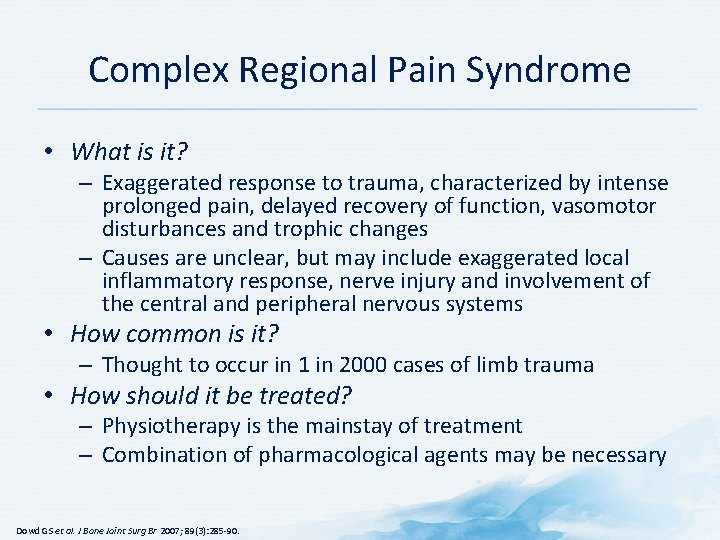
Complex Regional Pain Syndrome • What is it? – Exaggerated response to trauma, characterized by intense prolonged pain, delayed recovery of function, vasomotor disturbances and trophic changes – Causes are unclear, but may include exaggerated local inflammatory response, nerve injury and involvement of the central and peripheral nervous systems • How common is it? – Thought to occur in 1 in 2000 cases of limb trauma • How should it be treated? – Physiotherapy is the mainstay of treatment – Combination of pharmacological agents may be necessary Dowd GS et al. J Bone Joint Surg Br 2007; 89(3): 285 -90.
Key Messages • Neuropathic pain is pain caused by a lesion or disease of the somatosensory nervous system • Up to 10% of the population may suffer from neuropathic pain, which is associated with significant patient-reported burden • Neuropathic pain can be distinguished from nociceptive pain through common verbal descriptors and simple bedside tests – Several easy screening tests are also available • Non-pharmacological therapies, including patient education, are important components of neuropathic pain management • When it comes to pharmacotherapy, most treatment guidelines consider antidepressants and α 2δ ligands as first-line therapy for most types of neuropathic pain