
Conflict of Interest Disclosure Amanda F Khan MSc


- Slides: 18
Conflict of Interest Disclosure Amanda F. Khan, MSc. Medical Biophysics Has no real or apparent conflicts of interest to report.
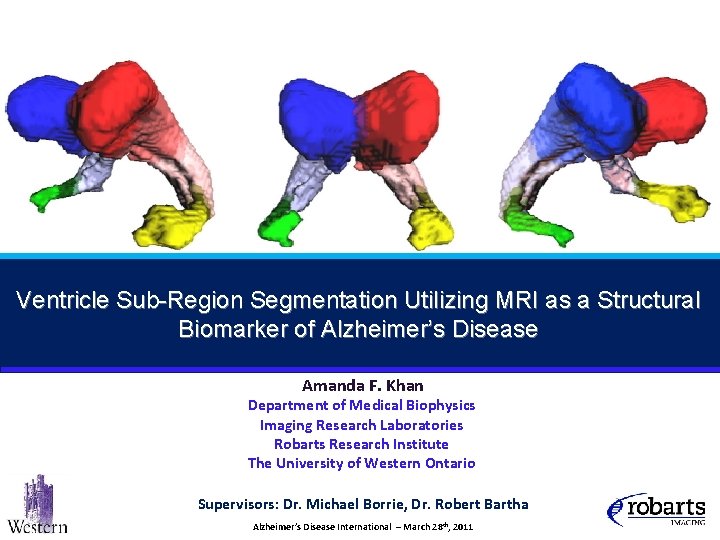
Ventricle Sub-Region Segmentation Utilizing MRI as a Structural Biomarker of Alzheimer’s Disease Amanda F. Khan Department of Medical Biophysics Imaging Research Laboratories Robarts Research Institute The University of Western Ontario Supervisors: Dr. Michael Borrie, Dr. Robert Bartha Alzheimer’s Disease International – March 28 th, 2011
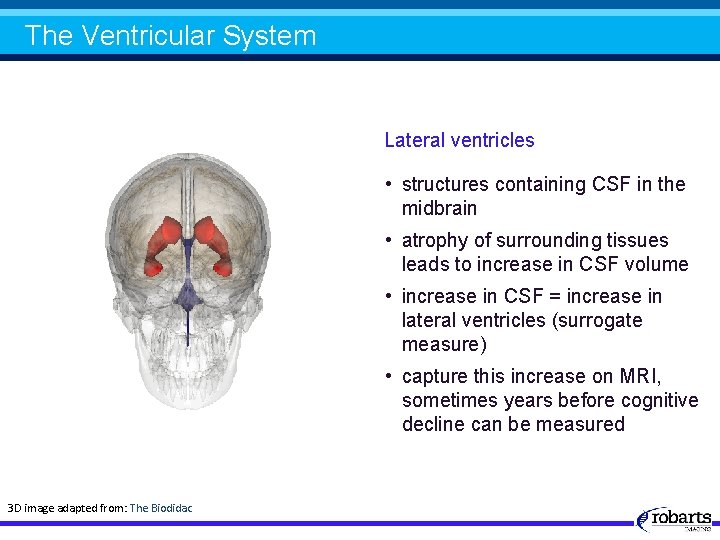
The Ventricular System Lateral ventricles • structures containing CSF in the midbrain • atrophy of surrounding tissues leads to increase in CSF volume • increase in CSF = increase in lateral ventricles (surrogate measure) • capture this increase on MRI, sometimes years before cognitive decline can be measured 3 D image adapted from: The Biodidac
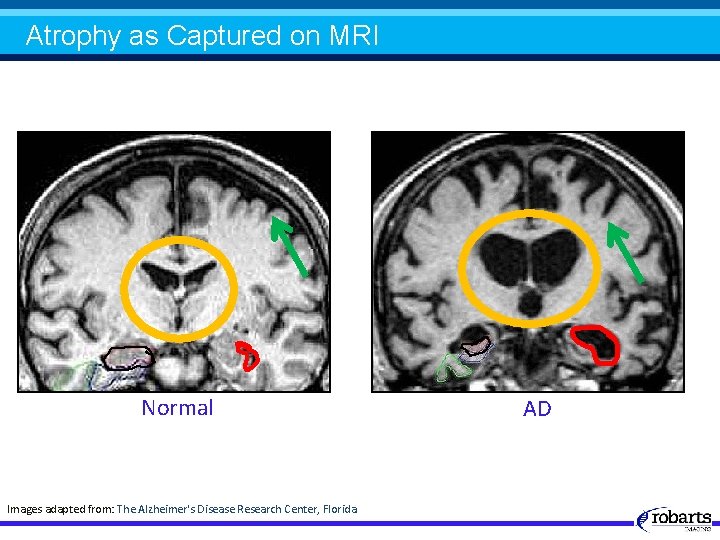
Atrophy as Captured on MRI Normal Images adapted from: The Alzheimer's Disease Research Center, Florida AD
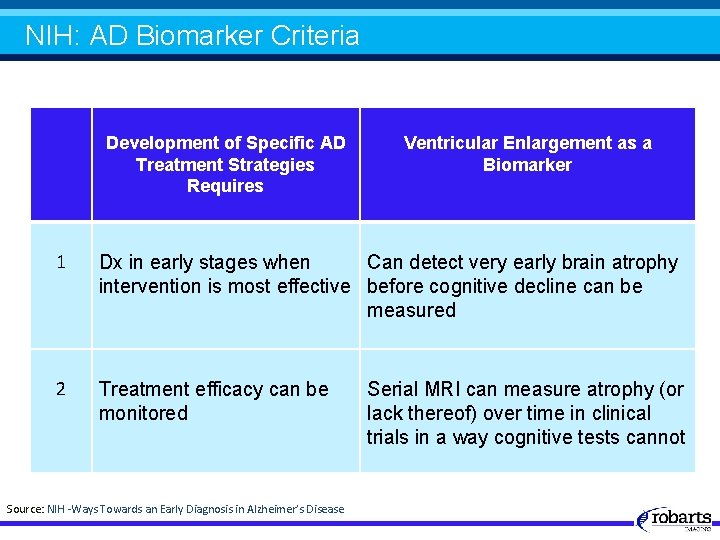
NIH: AD Biomarker Criteria Development of Specific AD Treatment Strategies Requires Ventricular Enlargement as a Biomarker 1 Dx in early stages when Can detect very early brain atrophy intervention is most effective before cognitive decline can be measured 2 Treatment efficacy can be monitored Source: NIH -Ways Towards an Early Diagnosis in Alzheimer’s Disease Serial MRI can measure atrophy (or lack thereof) over time in clinical trials in a way cognitive tests cannot
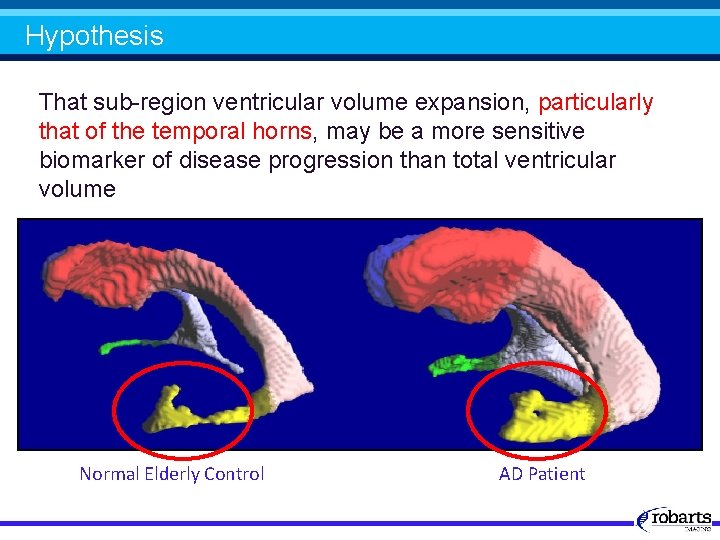
Hypothesis That sub-region ventricular volume expansion, particularly that of the temporal horns, may be a more sensitive biomarker of disease progression than total ventricular volume Normal Elderly Control AD Patient
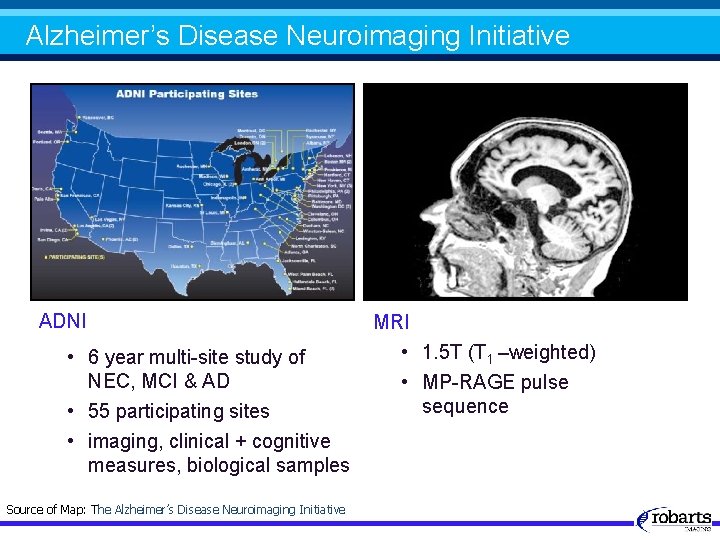
Alzheimer’s Disease Neuroimaging Initiative ADNI • 6 year multi-site study of NEC, MCI & AD • 55 participating sites • imaging, clinical + cognitive measures, biological samples Source of Map: The Alzheimer’s Disease Neuroimaging Initiative MRI • 1. 5 T (T 1 –weighted) • MP-RAGE pulse sequence
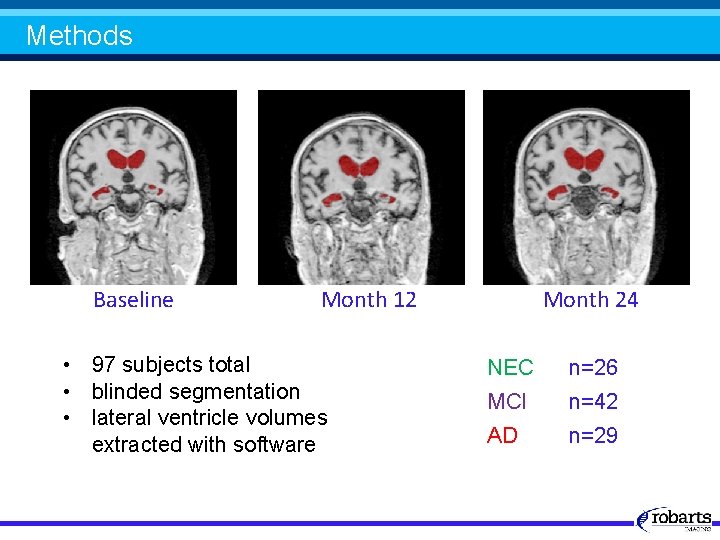
Methods Baseline Month 12 • 97 subjects total • blinded segmentation • lateral ventricle volumes extracted with software Month 24 NEC n=26 MCI n=42 AD n=29
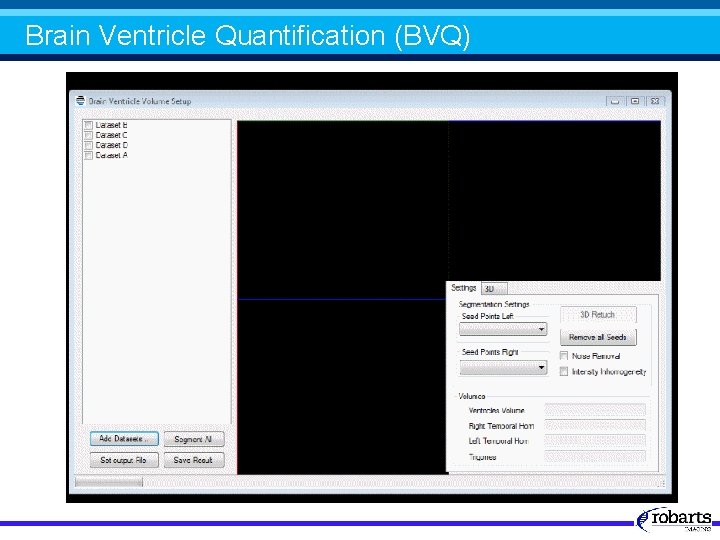
Brain Ventricle Quantification (BVQ)
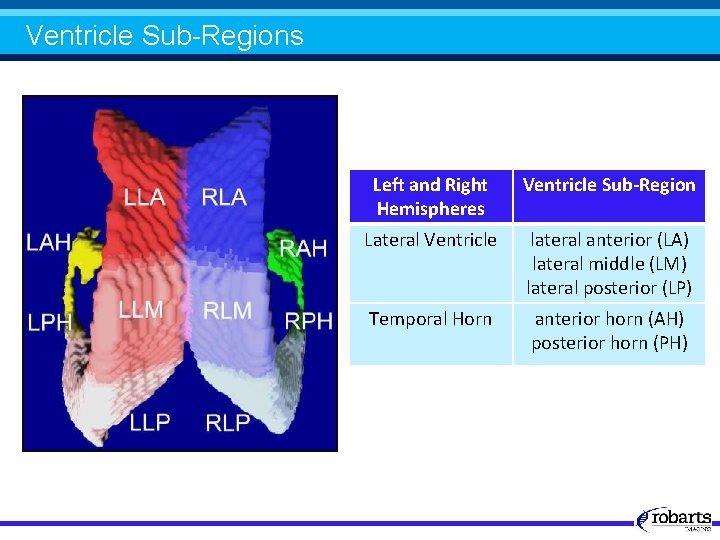
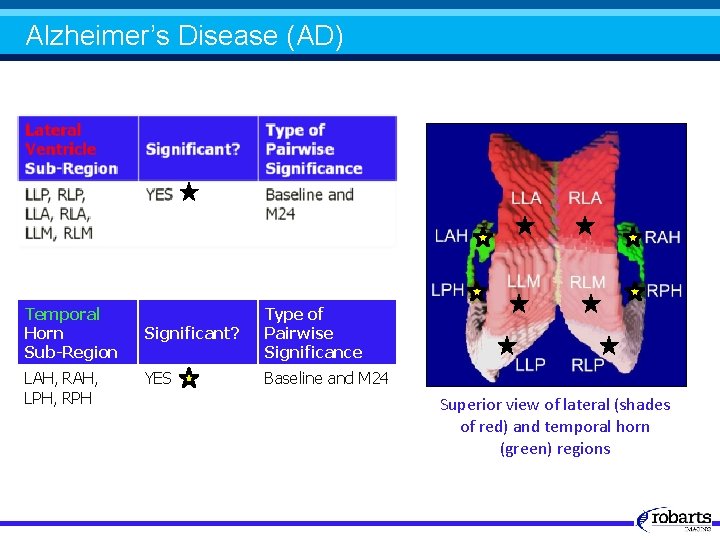
Ventricle Sub-Regions Left and Right Hemispheres Ventricle Sub-Region Lateral Ventricle lateral anterior (LA) lateral middle (LM) lateral posterior (LP) Temporal Horn anterior horn (AH) posterior horn (PH)
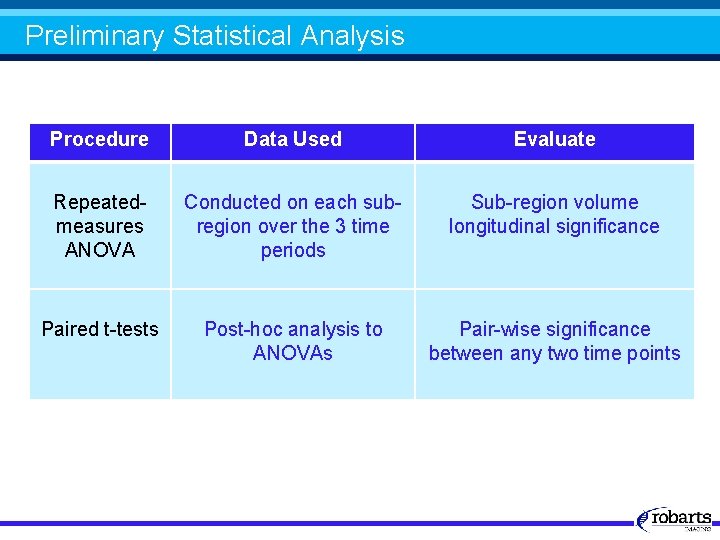
Preliminary Statistical Analysis Procedure Data Used Evaluate Repeatedmeasures ANOVA Conducted on each subregion over the 3 time periods Sub-region volume longitudinal significance Paired t-tests Post-hoc analysis to ANOVAs Pair-wise significance between any two time points
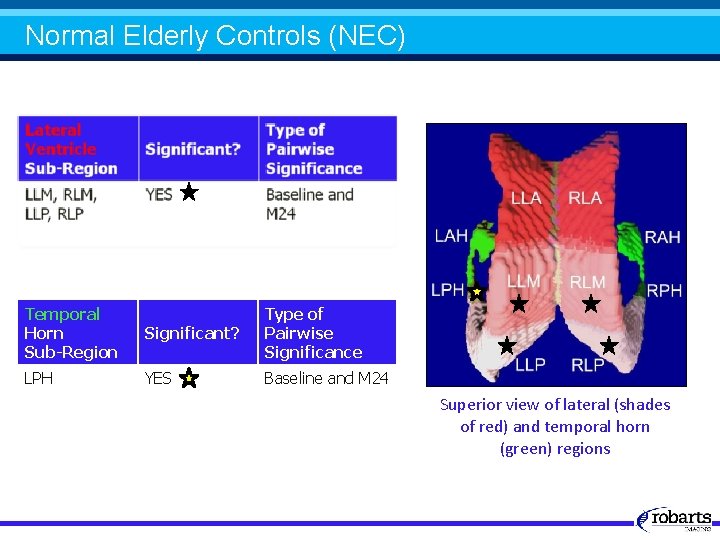
Normal Elderly Controls (NEC) Temporal Horn Sub-Region Significant? Type of Pairwise Significance LPH YES Baseline and M 24 Superior view of lateral (shades of red) and temporal horn (green) regions
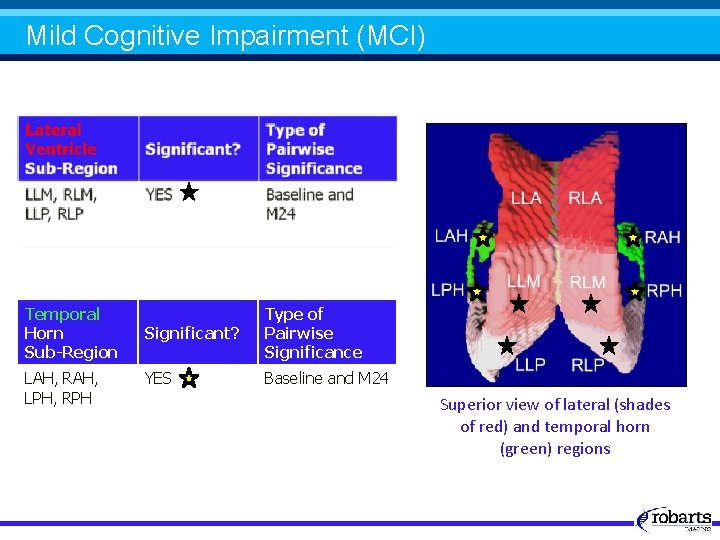
Mild Cognitive Impairment (MCI) Temporal Horn Sub-Region LAH, RAH, LPH, RPH Significant? Type of Pairwise Significance YES Baseline and M 24 Superior view of lateral (shades of red) and temporal horn (green) regions
Alzheimer’s Disease (AD) Temporal Horn Sub-Region LAH, RAH, LPH, RPH Significant? Type of Pairwise Significance YES Baseline and M 24 Superior view of lateral (shades of red) and temporal horn (green) regions
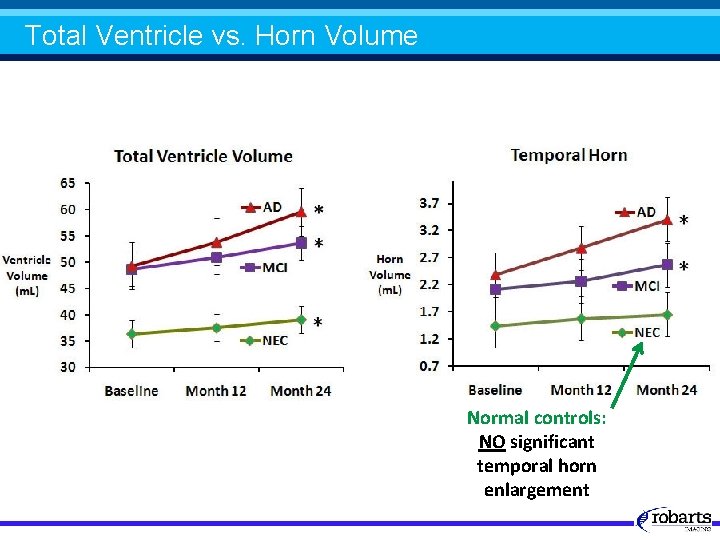
Total Ventricle vs. Horn Volume Normal controls: NO significant temporal horn enlargement
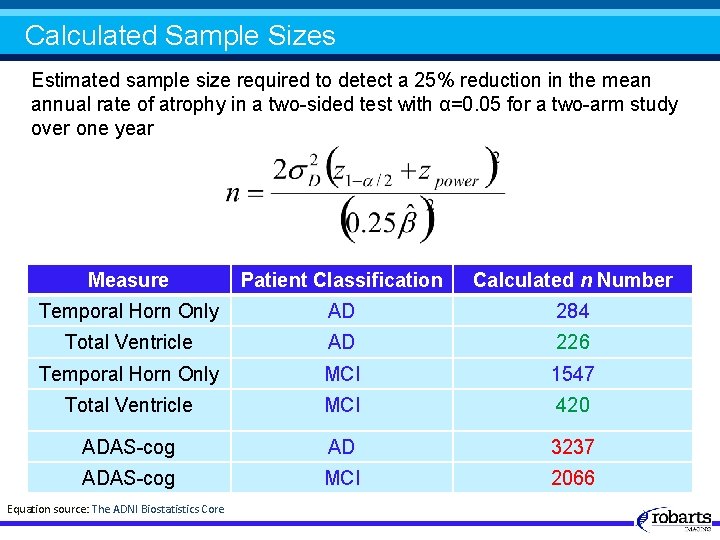
Calculated Sample Sizes Estimated sample size required to detect a 25% reduction in the mean annual rate of atrophy in a two-sided test with α=0. 05 for a two-arm study over one year Measure Patient Classification Calculated n Number Temporal Horn Only AD 284 Total Ventricle AD 226 Temporal Horn Only MCI 1547 Total Ventricle MCI 420 ADAS-cog AD 3237 ADAS-cog MCI 2066 Equation source: The ADNI Biostatistics Core
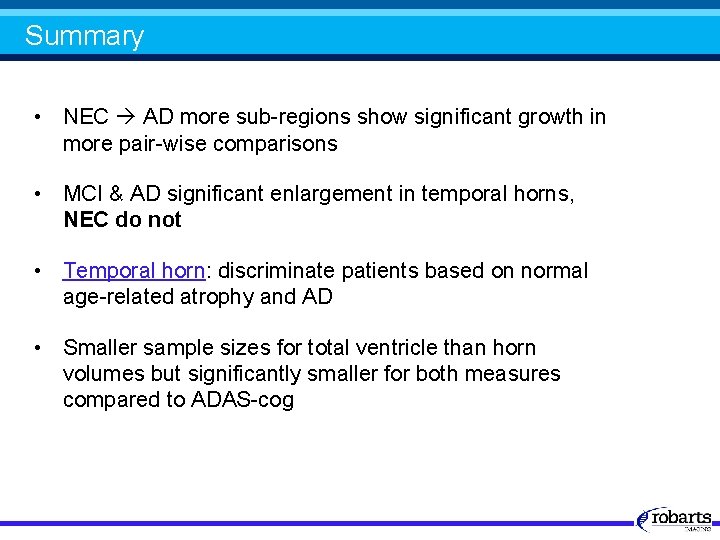
Summary • NEC AD more sub-regions show significant growth in more pair-wise comparisons • MCI & AD significant enlargement in temporal horns, NEC do not • Temporal horn: discriminate patients based on normal age-related atrophy and AD • Smaller sample sizes for total ventricle than horn volumes but significantly smaller for both measures compared to ADAS-cog
Acknowledgements Supervisors: Dr. Robert Bartha Dr. Michael Borrie Collaborators: Matthew Smith Yun-Hee Choi Support: Michael Marynowski Henry Betta Vaishali Karnik Sources of Funding and Collaboration: