Variety is the spice of life Marianna van
- Slides: 19
Variety is the spice of life Marianna van den Bergh AUT Centre for Refugee Education Secondary Section
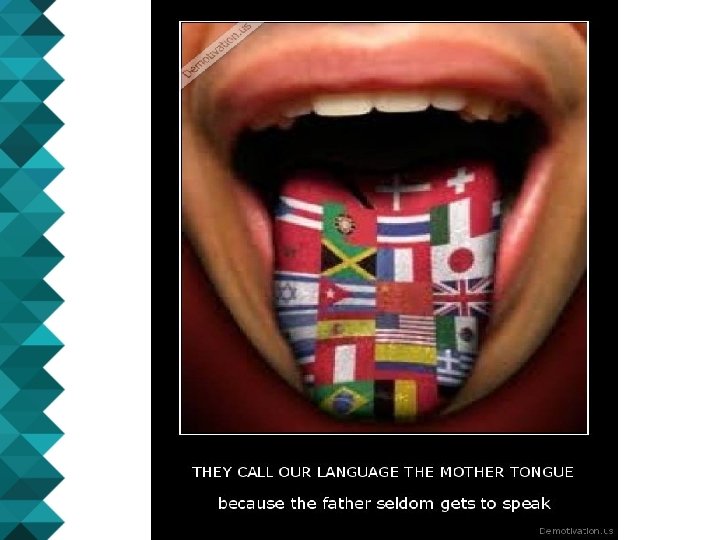
Multi • • language culture ethnicities religion age English language ability previous schooling personalities
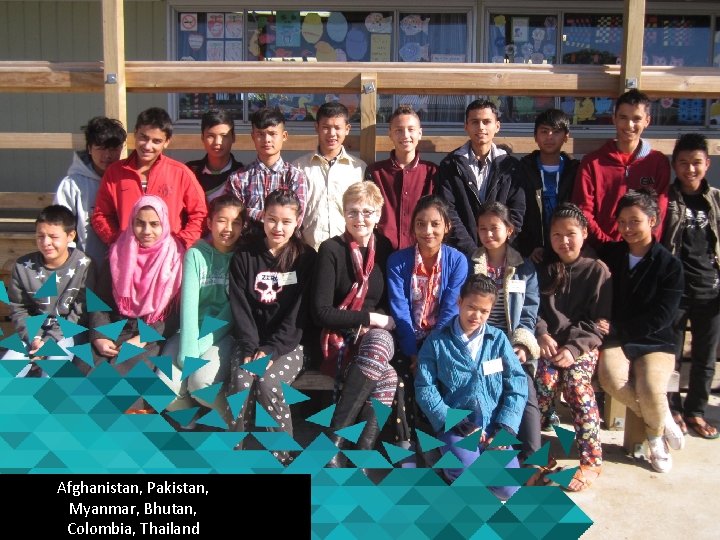
Afghanistan, Pakistan, Myanmar, Bhutan, Colombia, Thailand
Building blocks • • • stereotyping majority language group use of L 1 lack of schooling setting boundaries v behaviour v cultural practices
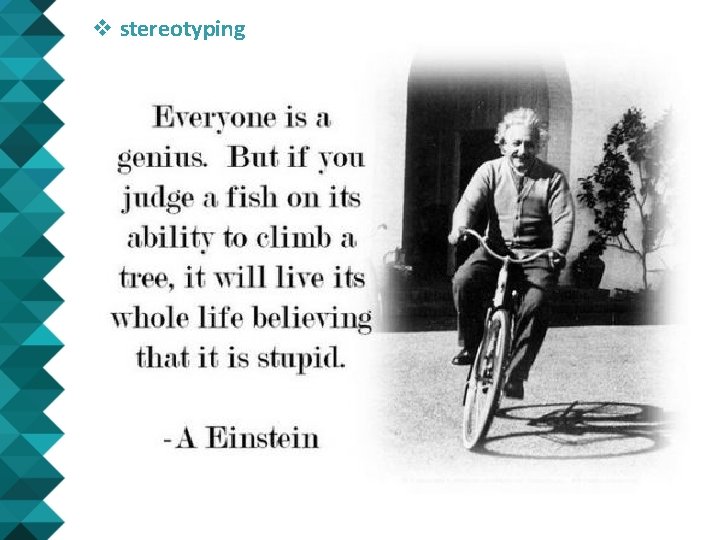
v stereotyping
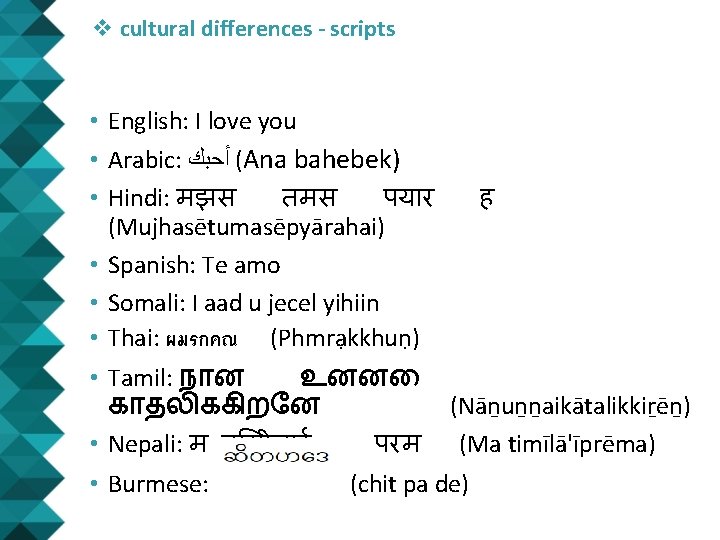
v cultural differences - scripts • English: I love you • Arabic: ﺃﺤﺒﻚ (Ana bahebek) • Hindi: मझस तमस पय र (Mujhasētumasēpyārahai) • Spanish: Te amo • Somali: I aad u jecel yihiin • Thai: ผมรกคณ (P hmrạkkhuṇ) ह • Tamil: ந ன உனன க தல கக ற ன (Nāṉuṉṉaikātalikkiṟēṉ) • Nepali: म त म ल ई परम (Ma timīlā'īprēma) • Burmese: (chit pa de)
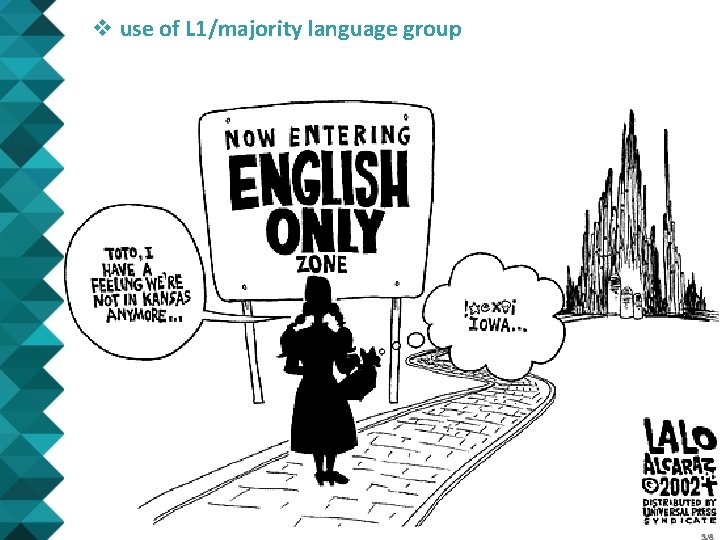
v use of L 1/majority language group
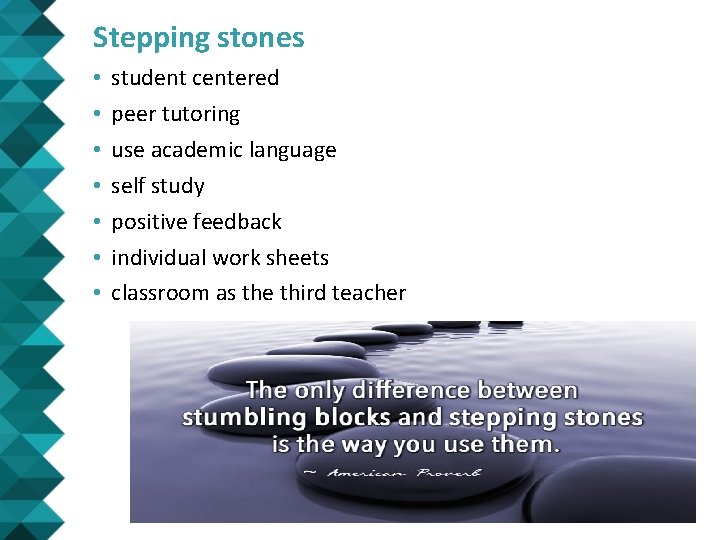
Stepping stones • • student centered peer tutoring use academic language self study positive feedback individual work sheets classroom as the third teacher
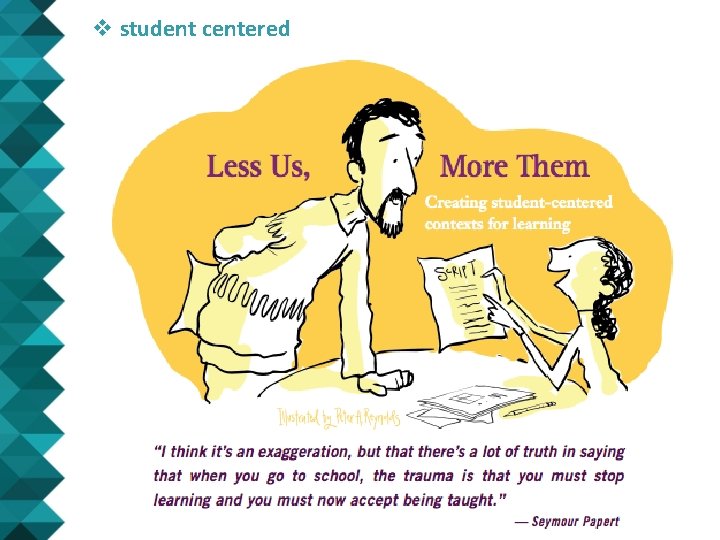
v student centered
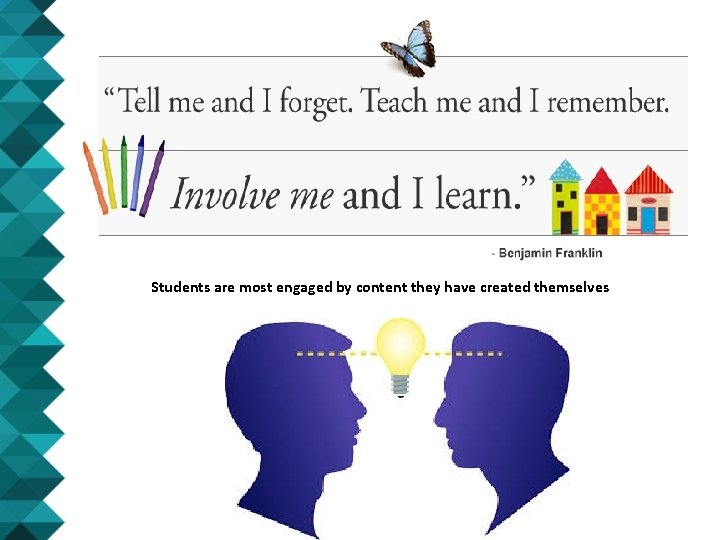
Students are most engaged by content they have created themselves
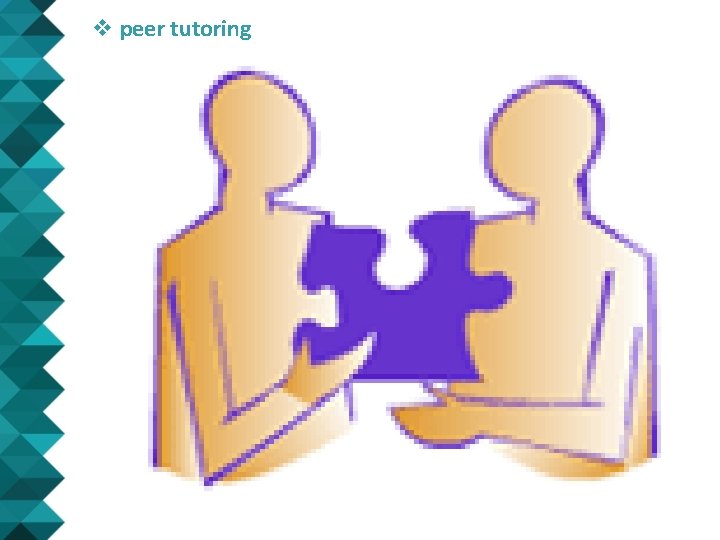
v peer tutoring
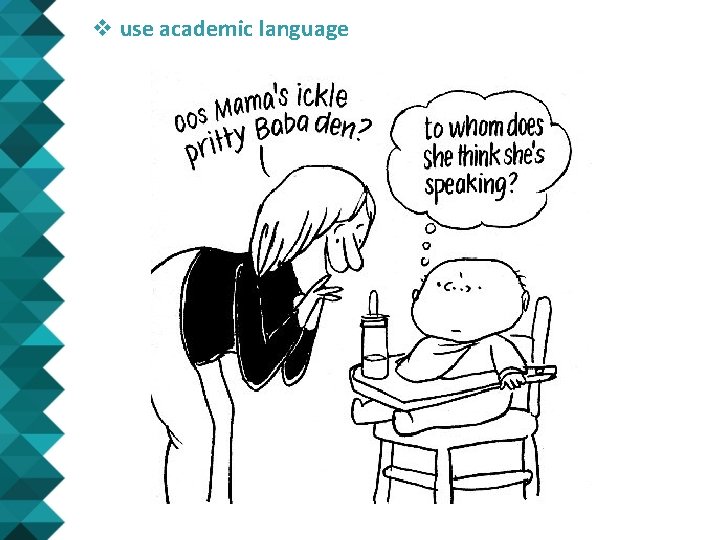
v use academic language
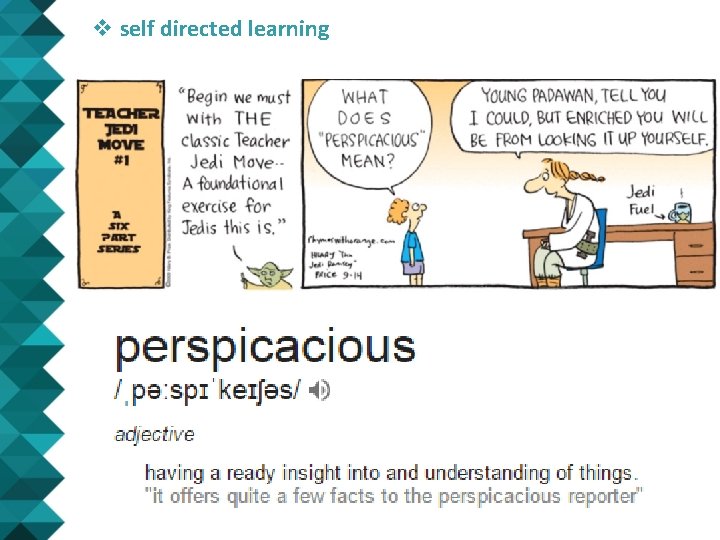
v self directed learning
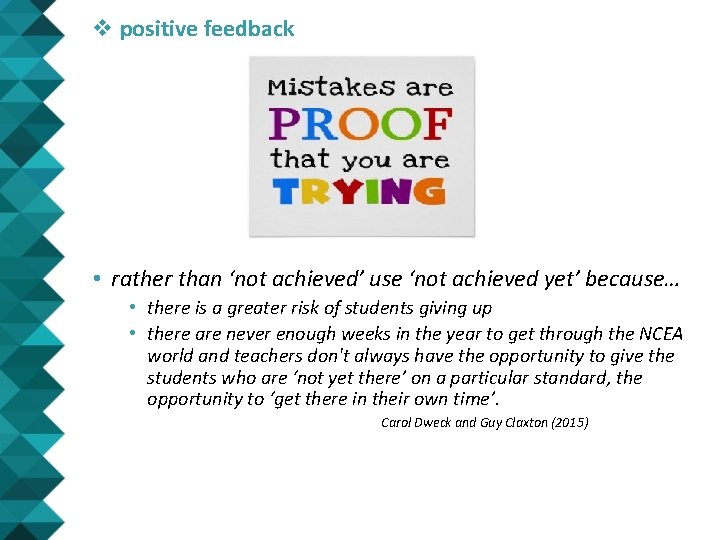
v positive feedback • rather than ‘not achieved’ use ‘not achieved yet’ because… • there is a greater risk of students giving up • there are never enough weeks in the year to get through the NCEA world and teachers don't always have the opportunity to give the students who are ‘not yet there’ on a particular standard, the opportunity to ‘get there in their own time’. Carol Dweck and Guy Claxton (2015)
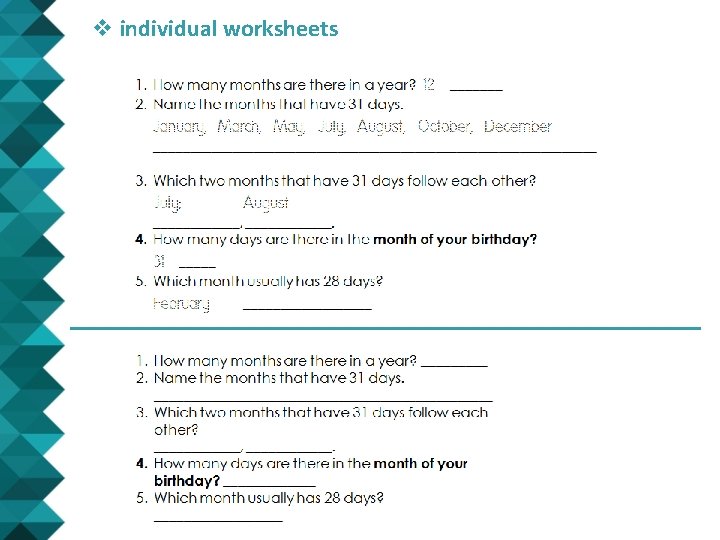
v individual worksheets
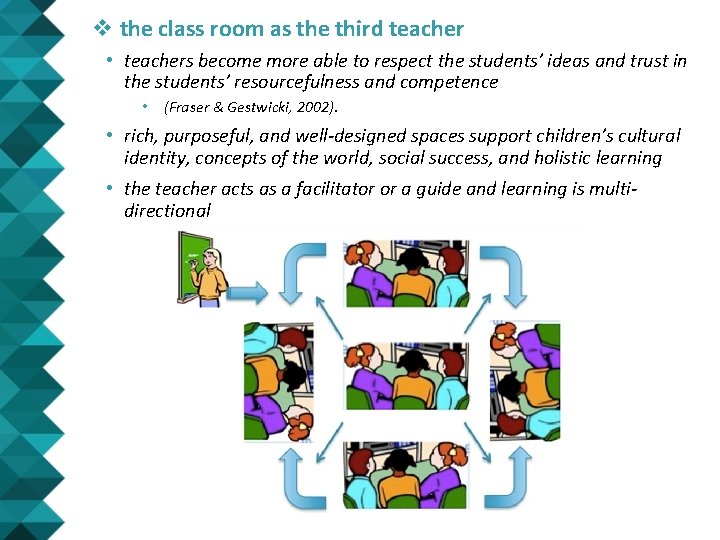
v the class room as the third teacher • teachers become more able to respect the students’ ideas and trust in the students’ resourcefulness and competence • (Fraser & Gestwicki, 2002). • rich, purposeful, and well-designed spaces support children’s cultural identity, concepts of the world, social success, and holistic learning • the teacher acts as a facilitator or a guide and learning is multidirectional
References • Brooks, F. B & Donato, R. (1994). Vygotskyan approaches to understanding foreign language discourse during communicative tasks. Hispania, 77, 262 -274 • Cook, V. J (1989). Reciprocal language teaching: another alternative. Modern English Teacher, 16, 3/4, 48 -53 • Fraser, S. , & Gestwicki, C. (2002). Authentic childhood: Exploring Reggio Emilia in the classroom. Cengage Learning. • Myszor, P. (2012). The learning powered school. Educational Psychology in Practice, 28(3), 332 -333. • Ur, P. (1996). A Course in Language Teaching. Cambridge: Cambridge University Press