Development Committee Mario H Cardiel MD MSc Rheumatologist


- Slides: 59
Development Committee Mario H. Cardiel, MD, MSc Rheumatologist Morelia, Mexico Andrei Danilov, MD, DSc Neurologist Moscow, Russia Smail Daoudi, MD Neurologist Tizi Ouzou, Algeria Jianhao Lin, MD Orthopedist Beijing, China Supranee Niruthisard, MD Anesthesiologist, Pain Specialist Bangkok, Thailand Germán Ochoa, MD Orthopedist, Spine Surgeon and Pain Specialist Bogotá, Colombia João Batista S. Garcia, MD, Ph. D Anesthesiologist Milton Raff, MD, BSc São Luis, Brazil Consultant Anesthetist Cape Town, South Africa Yuzhou Guan, MD Raymond L. Rosales, MD, Ph. D Neurologist Beijing, China Manila, Philippines Ammar Salti, MD Consultant Anesthetist Abu Dhabi, United Arab Emirates Jose Antonio San Juan, MD Orthopedic Surgeon Cebu City, Philippines Xinping Tian, MD Rheumatologist Beijing, China Işin Ünal-Çevik, MD, Ph. D Neurologist, Neuroscientist and Pain Specialist Ankara, Turkey This program was sponsored by Pfizer Inc.
Learning Objectives • After completing this module, participants will be able to: – Discuss the prevalence of acute pain – Understand the impact of acute pain on patient functioning and quality of life – Explain the pathophysiology of acute pain – Apply a simple diagnostic technique for the differential diagnosis of acute pain – Select appropriate pharmacological and non-pharmacological strategies for the management of acute pain
Table of Contents • What is acute pain? • How common is acute pain? • What is the impact of acute pain on patient functioning and quality of life? • How should acute pain be assessed in clinical practice? • How should acute pain be treated based on its pathophysiology?
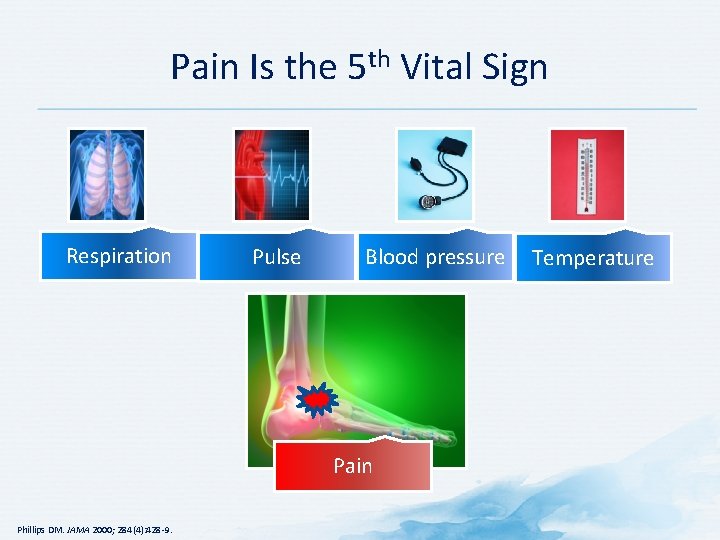
Pain Is the 5 th Vital Sign Respiration Pulse Blood pressure Pain Phillips DM. JAMA 2000; 284(4): 428 -9. Temperature
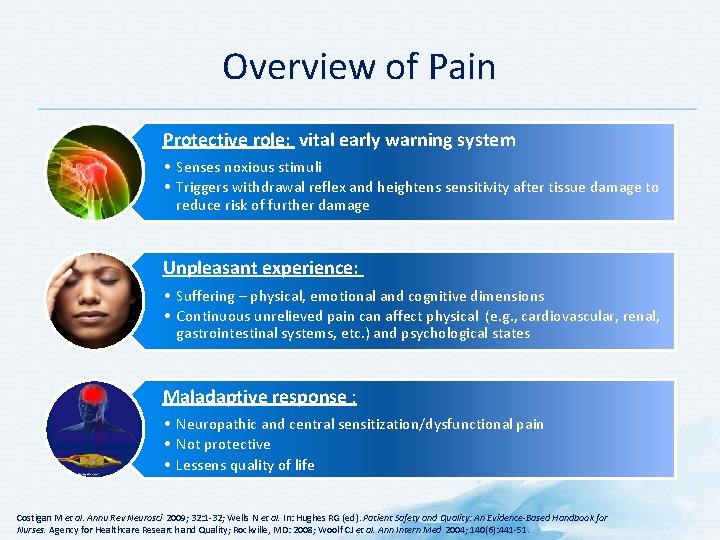
Overview of Pain Protective role: vital early warning system • Senses noxious stimuli • Triggers withdrawal reflex and heightens sensitivity after tissue damage to reduce risk of further damage Unpleasant experience: • Suffering – physical, emotional and cognitive dimensions • Continuous unrelieved pain can affect physical (e. g. , cardiovascular, renal, gastrointestinal systems, etc. ) and psychological states Maladaptive response : • Neuropathic and central sensitization/dysfunctional pain • Not protective • Lessens quality of life Costigan M et al. Annu Rev Neurosci 2009; 32: 1 -32; Wells N et al. In: Hughes RG (ed). Patient Safety and Quality: An Evidence-Based Handbook for Nurses. Agency for Healthcare Research and Quality; Rockville, MD: 2008; Woolf CJ et al. Ann Intern Med 2004; 140(6): 441 -51.
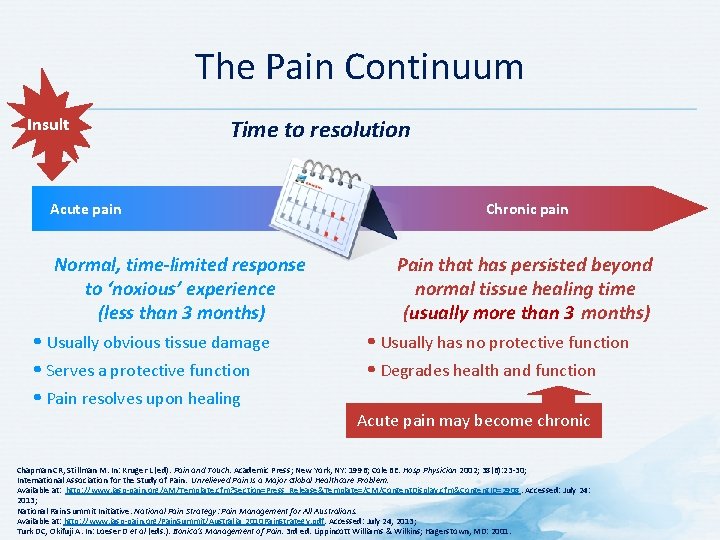
The Pain Continuum Insult Time to resolution Acute pain Normal, time-limited response to ‘noxious’ experience (less than 3 months) • Usually obvious tissue damage • Serves a protective function • Pain resolves upon healing Chronic pain Pain that has persisted beyond normal tissue healing time (usually more than 3 months) • Usually has no protective function • Degrades health and function Acute pain may become chronic Chapman CR, Stillman M. In: Kruger L (ed). Pain and Touch. Academic Press; New York, NY: 1996; Cole BE. Hosp Physician 2002; 38(6): 23 -30; International Association for the Study of Pain. Unrelieved Pain Is a Major Global Healthcare Problem. Available at: http: //www. iasp-pain. org/AM/Template. cfm? Section=Press_Release&Template=/CM/Content. Display. cfm&Content. ID=2908. Accessed: July 24: 2013; National Pain Summit Initiative. National Pain Strategy: Pain Management for All Australians. Available at: http: //www. iasp-pain. org/Pain. Summit/Australia_2010 Pain. Strategy. pdf. Accessed: July 24, 2013; Turk DC, Okifuji A. In: Loeser D et al (eds. ). Bonica’s Management of Pain. 3 rd ed. Lippincott Williams & Wilkins; Hagerstown, MD: 2001.
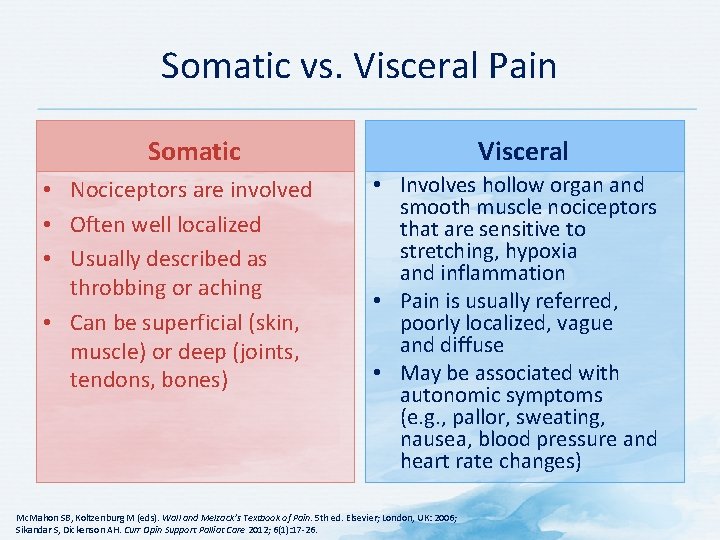
Somatic vs. Visceral Pain Somatic • Nociceptors are involved • Often well localized • Usually described as throbbing or aching • Can be superficial (skin, muscle) or deep (joints, tendons, bones) Visceral • Involves hollow organ and smooth muscle nociceptors that are sensitive to stretching, hypoxia and inflammation • Pain is usually referred, poorly localized, vague and diffuse • May be associated with autonomic symptoms (e. g. , pallor, sweating, nausea, blood pressure and heart rate changes) Mc. Mahon SB, Koltzenburg M (eds). Wall and Melzack’s Textbook of Pain. 5 th ed. Elsevier; London, UK: 2006; Sikandar S, Dickenson AH. Curr Opin Support Palliat Care 2012; 6(1): 17 -26.
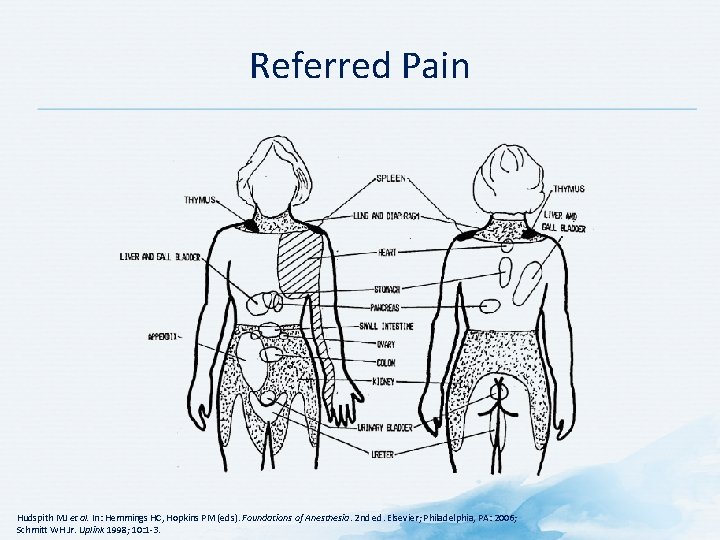
Referred Pain Hudspith MJ et al. In: Hemmings HC, Hopkins PM (eds). Foundations of Anesthesia. 2 nd ed. Elsevier; Philadelphia, PA: 2006; Schmitt WH Jr. Uplink 1998; 10: 1 -3.
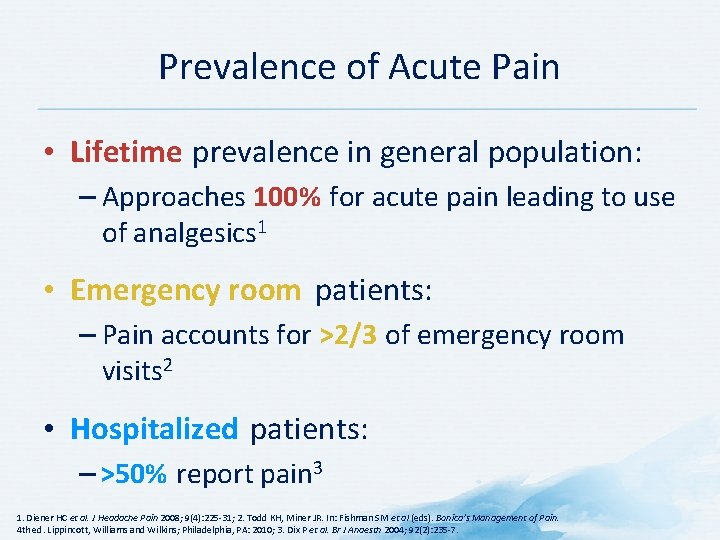
Prevalence of Acute Pain • Lifetime prevalence in general population: – Approaches 100% for acute pain leading to use of analgesics 1 • Emergency room patients: – Pain accounts for >2/3 of emergency room visits 2 • Hospitalized patients: – >50% report pain 3 1. Diener HC et al. J Headache Pain 2008; 9(4): 225 -31; 2. Todd KH, Miner JR. In: Fishman SM et al (eds). Bonica’s Management of Pain. 4 th ed. Lippincott, Williams and Wilkins; Philadelphia, PA: 2010; 3. Dix P et al. Br J Anaesth 2004; 92(2): 235 -7.
Discussion Question WHAT ARE THE MOST COMMON TYPES OF ACUTE PAIN YOU SEE IN YOUR PRACTICE?
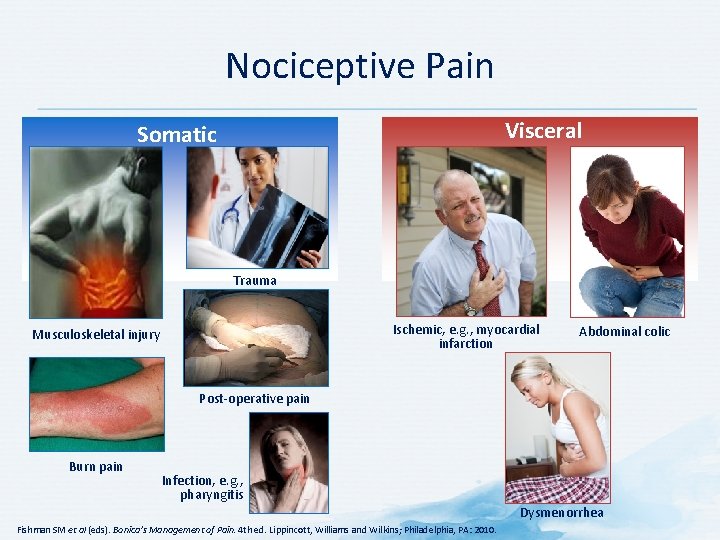
Nociceptive Pain Visceral Somatic Trauma Ischemic, e. g. , myocardial infarction Musculoskeletal injury Abdominal colic Post-operative pain Burn pain Infection, e. g. , pharyngitis Dysmenorrhea Fishman SM et al (eds). Bonica’s Management of Pain. 4 th ed. Lippincott, Williams and Wilkins; Philadelphia, PA: 2010.
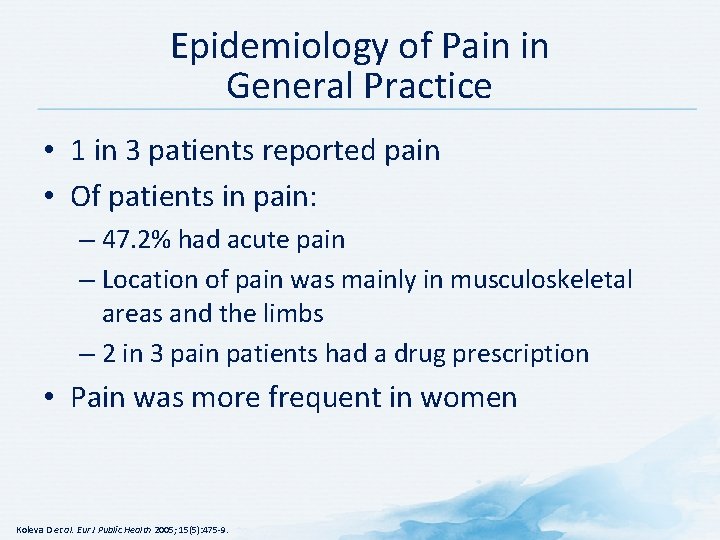
Epidemiology of Pain in General Practice • 1 in 3 patients reported pain • Of patients in pain: – 47. 2% had acute pain – Location of pain was mainly in musculoskeletal areas and the limbs – 2 in 3 pain patients had a drug prescription • Pain was more frequent in women Koleva D et al. Eur J Public Health 2005; 15(5): 475 -9.
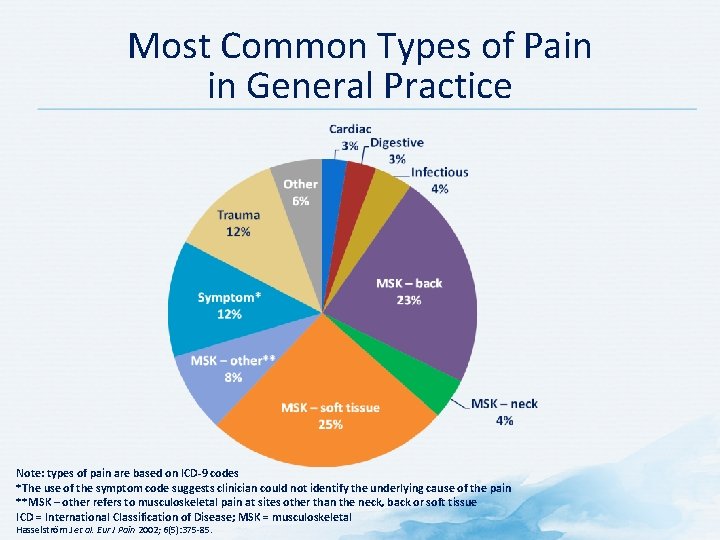
Most Common Types of Pain in General Practice Note: types of pain are based on ICD-9 codes *The use of the symptom code suggests clinician could not identify the underlying cause of the pain **MSK – other refers to musculoskeletal pain at sites other than the neck, back or soft tissue ICD = International Classification of Disease; MSK = musculoskeletal Hasselström J et al. Eur J Pain 2002; 6(5): 375 -85.
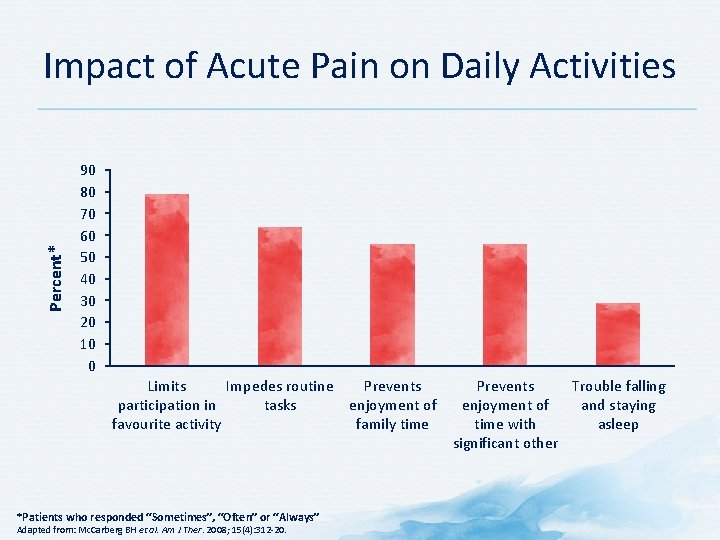
Percent* Impact of Acute Pain on Daily Activities 90 80 70 60 50 40 30 20 10 0 Limits Impedes routine Prevents participation in tasks enjoyment of favourite activity family time *Patients who responded “Sometimes”, “Often” or “Always” Adapted from: Mc. Carberg BH et al. Am J Ther. 2008; 15(4): 312 -20. Prevents Trouble falling enjoyment of and staying time with asleep significant other
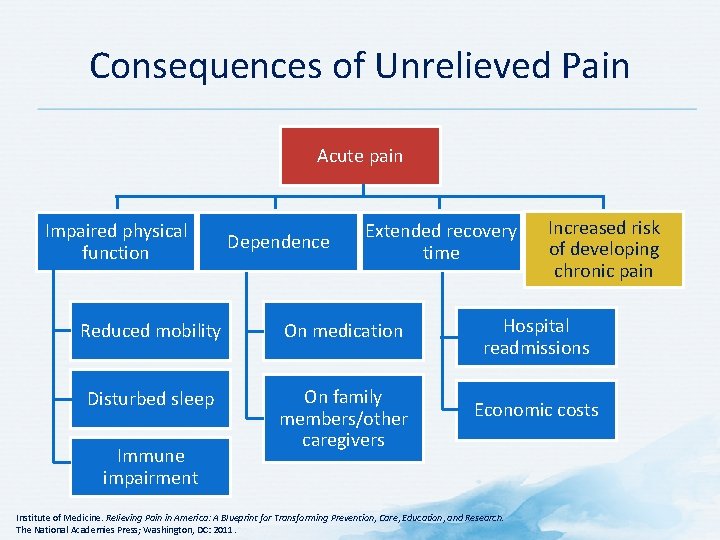
Consequences of Unrelieved Pain Acute pain Impaired physical function Dependence Extended recovery time Increased risk of developing chronic pain Reduced mobility On medication Hospital readmissions Disturbed sleep On family members/other caregivers Economic costs Immune impairment Institute of Medicine. Relieving Pain in America: A Blueprint for Transforming Prevention, Care, Education, and Research. The National Academies Press; Washington, DC: 2011.
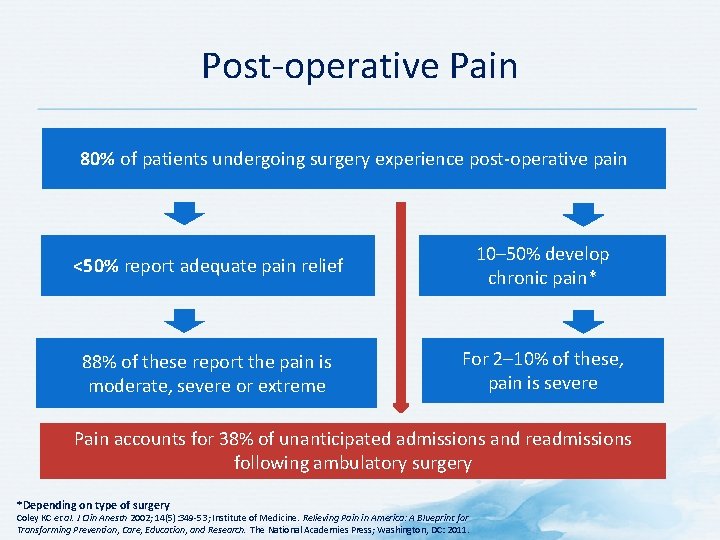
Post-operative Pain 80% of patients undergoing surgery experience post-operative pain <50% report adequate pain relief 10– 50% develop chronic pain* 88% of these report the pain is moderate, severe or extreme For 2– 10% of these, pain is severe Pain accounts for 38% of unanticipated admissions and readmissions following ambulatory surgery *Depending on type of surgery Coley KC et al. J Clin Anesth 2002; 14(5): 349 -53; Institute of Medicine. Relieving Pain in America: A Blueprint for Transforming Prevention, Care, Education, and Research. The National Academies Press; Washington, DC: 2011.
Importance of Pain Assessment Pain is a significant predictor of morbidity and mortality. • Screen for red flags requiring immediate investigation and/or referral • Identify underlying cause – Pain is better managed if the underlying causes are determined and addressed • Recognize type of pain to help guide selection of appropriate therapies for treatment of pain • Determine baseline pain intensity to future enable assessment of efficacy of treatment Forde G, Stanos S. J Fam Pract 2007; 56(8 Suppl Hot Topics): S 21 -30; Sokka T, Pincus T. Poster presentation at ACR 2005.
Discussion Question HOW DO YOU ASSESS ACUTE PAIN IN YOUR PRACTICE?
Assessment of Acute Pain • Site of pain • Circumstances associated with pain onset • Character of pain • Intensity of pain • Associated symptoms (e. g. , nausea) • Comorbidities • Treatment – Current and previous medications, including dose, frequency of use, efficacy and side effects • Relevant medical history – Prior or coexisting pain conditions and treatment outcomes – Prior or coexisting medical conditions • Factors influencing symptomatic treatment Australian and New Zealand College of Anaesthetists and Faculty of Pain Medicine. Acute Pain Management: Scientific Evidence. 3 rd ed. ANZCA & FPM; Melbourne, VIC: 2010.
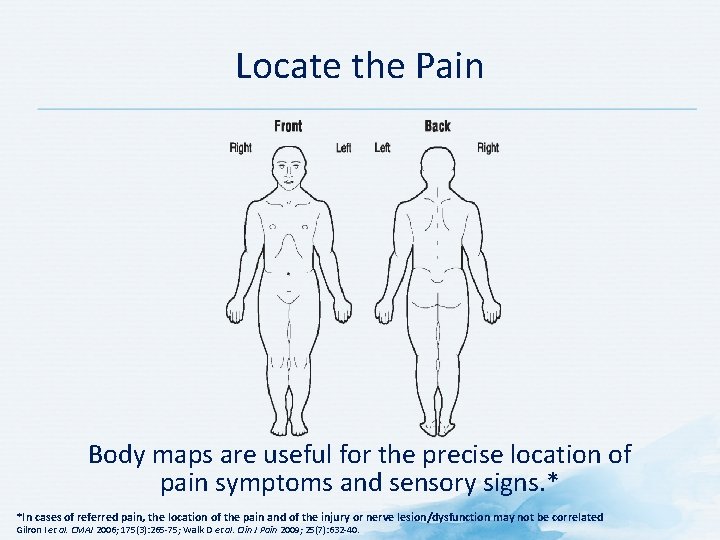
Locate the Pain Body maps are useful for the precise location of pain symptoms and sensory signs. * *In cases of referred pain, the location of the pain and of the injury or nerve lesion/dysfunction may not be correlated Gilron I et al. CMAJ 2006; 175(3): 265 -75; Walk D et al. Clin J Pain 2009; 25(7): 632 -40.
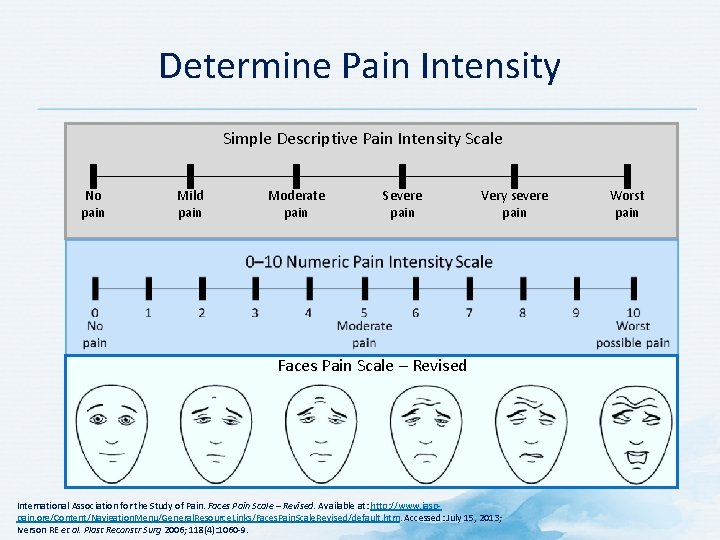
Determine Pain Intensity Simple Descriptive Pain Intensity Scale No pain Mild pain Moderate pain Severe pain Very severe pain Faces Pain Scale – Revised International Association for the Study of Pain. Faces Pain Scale – Revised. Available at: http: //www. iasppain. org/Content/Navigation. Menu/General. Resource. Links/Faces. Pain. Scale. Revised/default. htm. Accessed: July 15, 2013; Iverson RE et al. Plast Reconstr Surg 2006; 118(4): 1060 -9. Worst pain
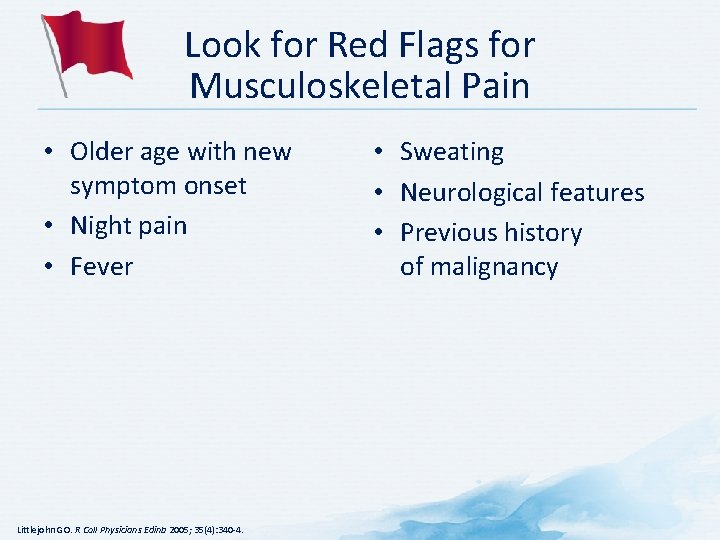
Look for Red Flags for Musculoskeletal Pain • Older age with new symptom onset • Night pain • Fever Littlejohn GO. R Coll Physicians Edinb 2005; 35(4): 340 -4. • Sweating • Neurological features • Previous history of malignancy
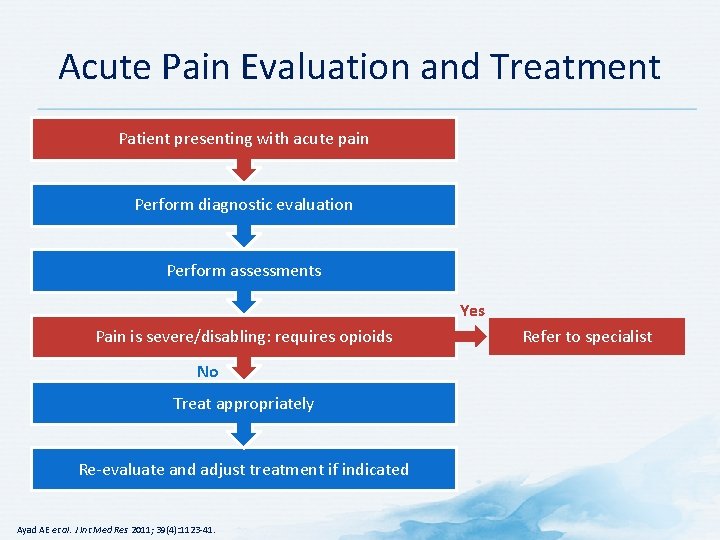
Acute Pain Evaluation and Treatment Patient presenting with acute pain Perform diagnostic evaluation Perform assessments Yes Pain is severe/disabling: requires opioids No Treat appropriately Re-evaluate and adjust treatment if indicated Ayad AE et al. J Int Med Res 2011; 39(4): 1123 -41. Refer to specialist
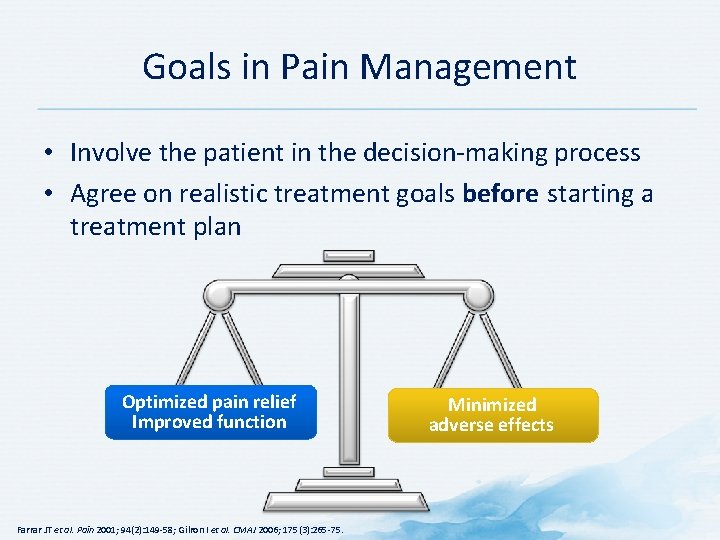
Goals in Pain Management • Involve the patient in the decision-making process • Agree on realistic treatment goals before starting a treatment plan Optimized pain relief Improved function Farrar JT et al. Pain 2001; 94(2): 149 -58; Gilron I et al. CMAJ 2006; 175(3): 265 -75. Minimized adverse effects
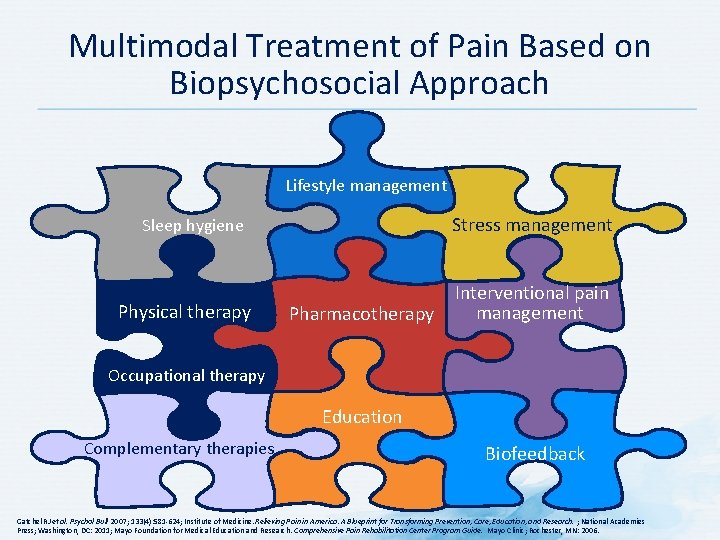
Multimodal Treatment of Pain Based on Biopsychosocial Approach Lifestyle management Stress management Sleep hygiene Physical therapy Pharmacotherapy Interventional pain management Occupational therapy Education Complementary therapies Biofeedback Gatchel RJ et al. Psychol Bull 2007; 133(4): 581 -624; Institute of Medicine. Relieving Pain in America: A Blueprint for Transforming Prevention, Care, Education, and Research. ; National Academies Press; Washington, DC: 2011; Mayo Foundation for Medical Education and Research. Comprehensive Pain Rehabilitation Center Program Guide. Mayo Clinic; Rochester, MN: 2006.
Discussion Question WHAT NON-PHARMACOLOGICAL APPROACHES TO MANAGING ACUTE PAIN DO YOU INCORPORATE INTO YOUR PRACTICE? ARE THERE NONPHARMACOLOGICAL MODALITIES YOUR PATIENTS REGULARLY ASK ABOUT?
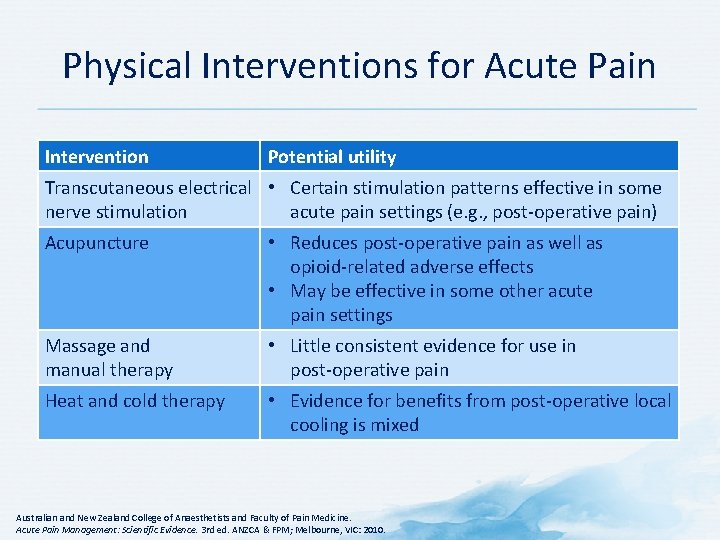
Physical Interventions for Acute Pain Intervention Potential utility Transcutaneous electrical • Certain stimulation patterns effective in some nerve stimulation acute pain settings (e. g. , post-operative pain) Acupuncture • Reduces post-operative pain as well as opioid-related adverse effects • May be effective in some other acute pain settings Massage and manual therapy • Little consistent evidence for use in post-operative pain Heat and cold therapy • Evidence for benefits from post-operative local cooling is mixed Australian and New Zealand College of Anaesthetists and Faculty of Pain Medicine. Acute Pain Management: Scientific Evidence. 3 rd ed. ANZCA & FPM; Melbourne, VIC: 2010.
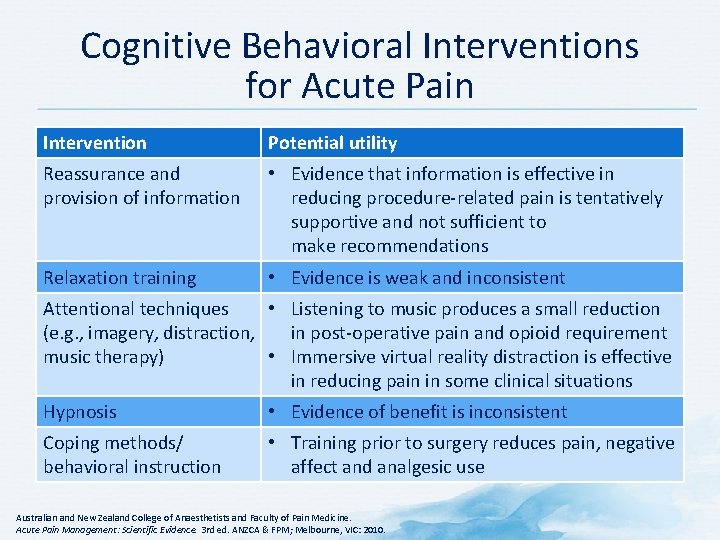
Cognitive Behavioral Interventions for Acute Pain Intervention Potential utility Reassurance and provision of information • Evidence that information is effective in reducing procedure-related pain is tentatively supportive and not sufficient to make recommendations Relaxation training • Evidence is weak and inconsistent Attentional techniques • Listening to music produces a small reduction (e. g. , imagery, distraction, in post-operative pain and opioid requirement music therapy) • Immersive virtual reality distraction is effective in reducing pain in some clinical situations Hypnosis • Evidence of benefit is inconsistent Coping methods/ behavioral instruction • Training prior to surgery reduces pain, negative affect and analgesic use Australian and New Zealand College of Anaesthetists and Faculty of Pain Medicine. Acute Pain Management: Scientific Evidence. 3 rd ed. ANZCA & FPM; Melbourne, VIC: 2010.
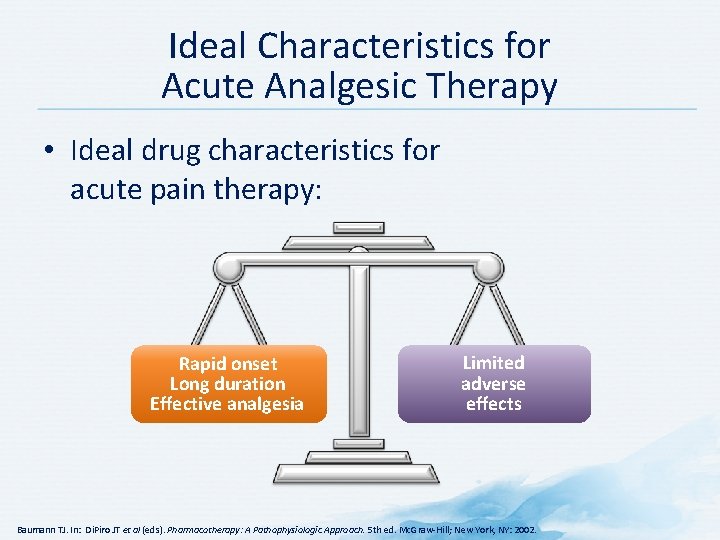
Ideal Characteristics for Acute Analgesic Therapy • Ideal drug characteristics for acute pain therapy: Rapid onset Long duration Effective analgesia Limited adverse effects Baumann TJ. In: Di. Piro JT et al (eds). Pharmacotherapy: A Pathophysiologic Approach. 5 th ed. Mc. Graw-Hill; New York, NY: 2002.
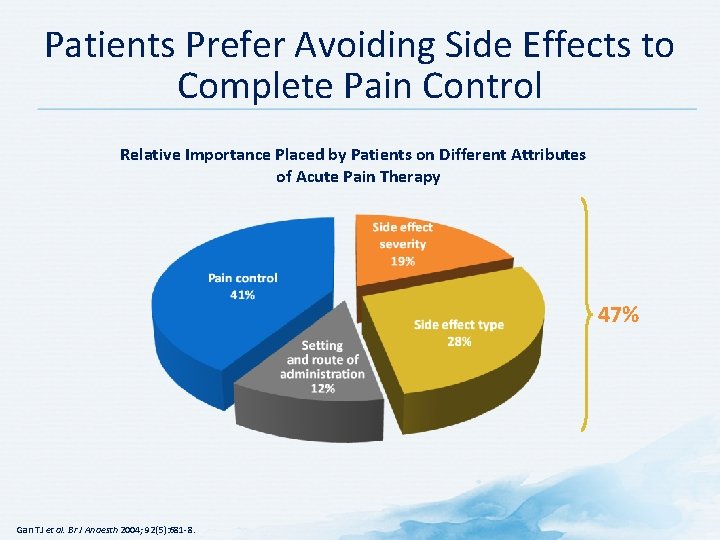
Patients Prefer Avoiding Side Effects to Complete Pain Control Relative Importance Placed by Patients on Different Attributes of Acute Pain Therapy 47% Gan TJ et al. Br J Anaesth 2004; 92(5): 681 -8.
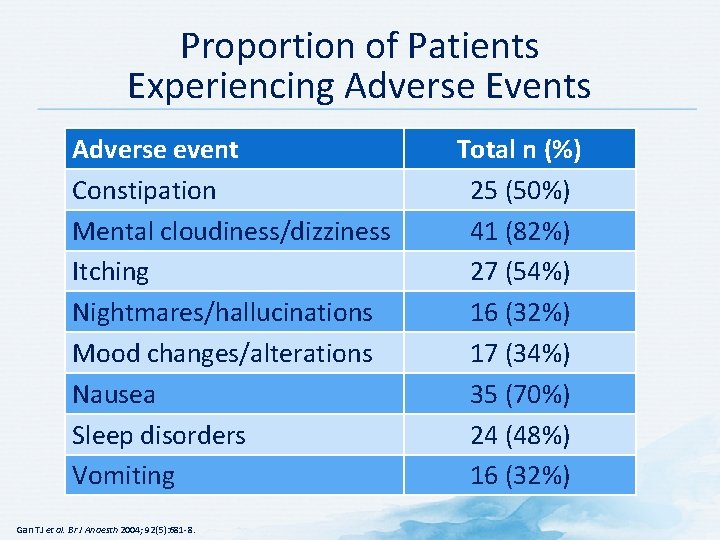
Proportion of Patients Experiencing Adverse Events Adverse event Constipation Mental cloudiness/dizziness Itching Nightmares/hallucinations Mood changes/alterations Nausea Sleep disorders Vomiting Gan TJ et al. Br J Anaesth 2004; 92(5): 681 -8. Total n (%) 25 (50%) 41 (82%) 27 (54%) 16 (32%) 17 (34%) 35 (70%) 24 (48%) 16 (32%)
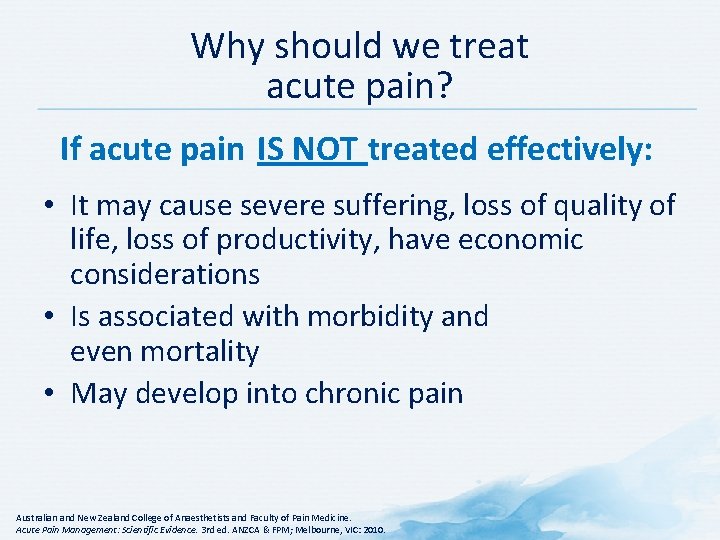
Why should we treat acute pain? If acute pain IS NOT treated effectively: • It may cause severe suffering, loss of quality of life, loss of productivity, have economic considerations • Is associated with morbidity and even mortality • May develop into chronic pain Australian and New Zealand College of Anaesthetists and Faculty of Pain Medicine. Acute Pain Management: Scientific Evidence. 3 rd ed. ANZCA & FPM; Melbourne, VIC: 2010.
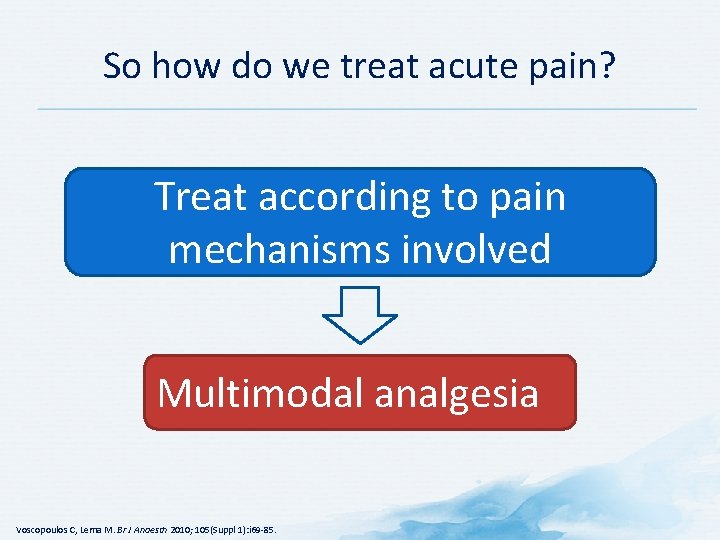
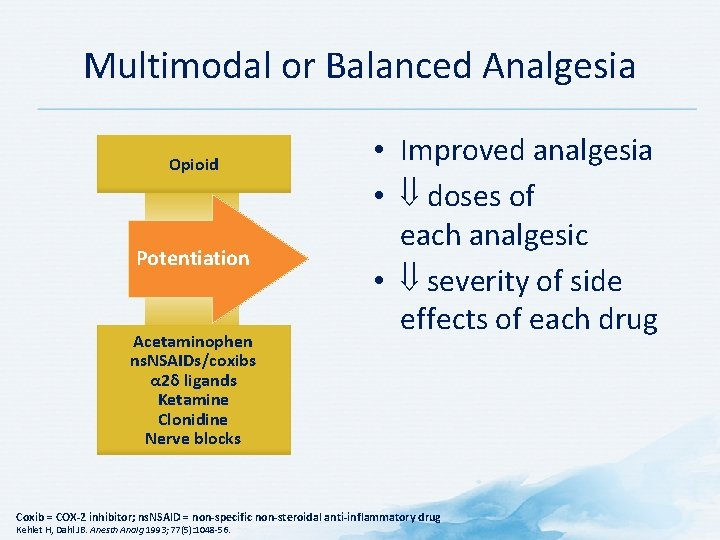
So how do we treat acute pain? Treat according to pain mechanisms involved Multimodal analgesia Voscopoulos C, Lema M. Br J Anaesth 2010; 105(Suppl 1): i 69 -85.
Multimodal or Balanced Analgesia Opioid Potentiation Acetaminophen ns. NSAIDs/coxibs α 2δ ligands Ketamine Clonidine Nerve blocks • Improved analgesia • doses of each analgesic • severity of side effects of each drug Coxib = COX-2 inhibitor; ns. NSAID = non-specific non-steroidal anti-inflammatory drug Kehlet H, Dahl JB. Anesth Analg 1993; 77(5): 1048 -56.
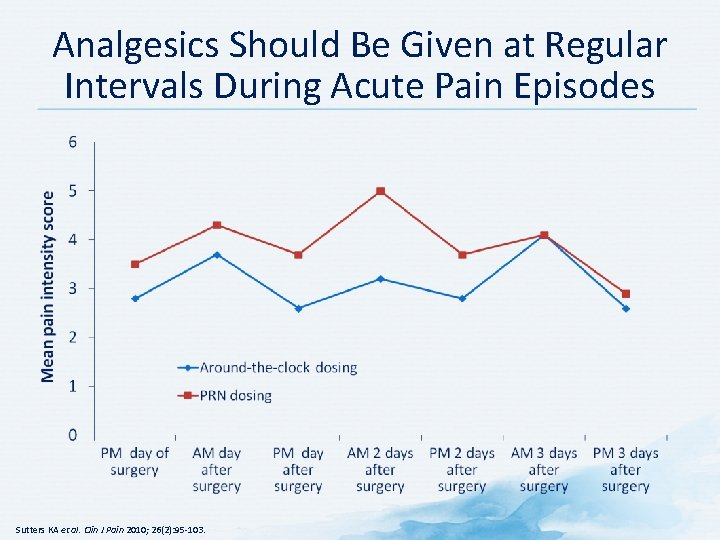
Analgesics Should Be Given at Regular Intervals During Acute Pain Episodes Sutters KA et al. Clin J Pain 2010; 26(2): 95 -103.
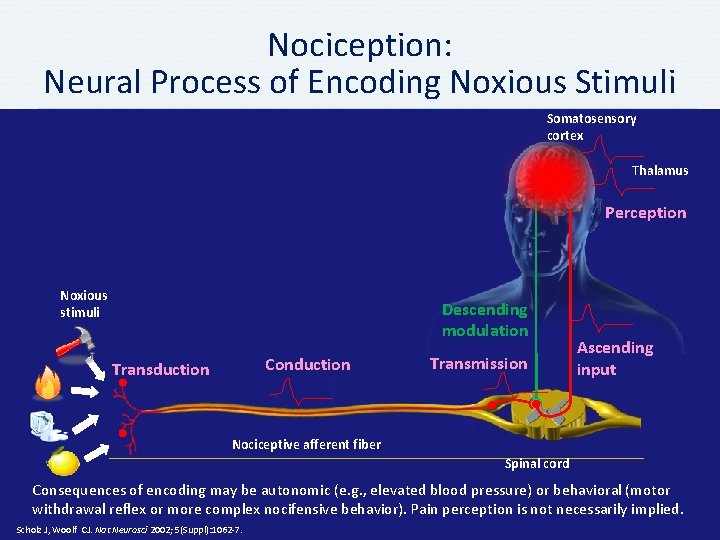
Nociception: Neural Process of Encoding Noxious Stimuli Somatosensory cortex Thalamus Perception Noxious stimuli Descending modulation Conduction Transmission Ascending input Nociceptive afferent fiber Spinal cord Consequences of encoding may be autonomic (e. g. , elevated blood pressure) or behavioral (motor withdrawal reflex or more complex nocifensive behavior). Pain perception is not necessarily implied. Scholz J, Woolf CJ. Nat Neurosci 2002; 5(Suppl): 1062 -7.
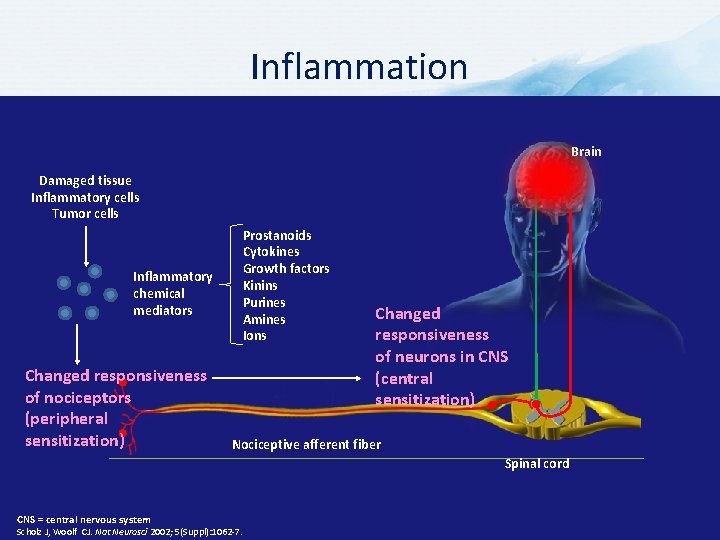
Inflammation Brain Damaged tissue Inflammatory cells Tumor cells Inflammatory chemical mediators Changed responsiveness of nociceptors (peripheral sensitization) Prostanoids Cytokines Growth factors Kinins Purines Amines Ions Changed responsiveness of neurons in CNS (central sensitization) Nociceptive afferent fiber Spinal cord CNS = central nervous system Scholz J, Woolf CJ. Nat Neurosci 2002; 5(Suppl): 1062 -7.
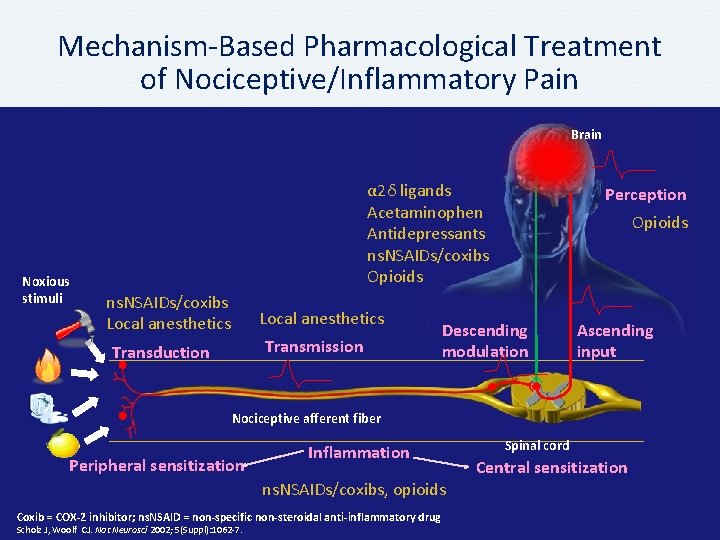
Mechanism-Based Pharmacological Treatment of Nociceptive/Inflammatory Pain Brain Noxious stimuli α 2δ ligands Acetaminophen Antidepressants ns. NSAIDs/coxibs Opioids ns. NSAIDs/coxibs Local anesthetics Transmission Transduction Perception Opioids Descending modulation Ascending input Nociceptive afferent fiber Peripheral sensitization Inflammation ns. NSAIDs/coxibs, opioids Coxib = COX-2 inhibitor; ns. NSAID = non-specific non-steroidal anti-inflammatory drug Scholz J, Woolf CJ. Nat Neurosci 2002; 5(Suppl): 1062 -7. Spinal cord Central sensitization
Discussion Question HOW DO THESE MEDICATIONS WORK TO REDUCE ACUTE PAIN?
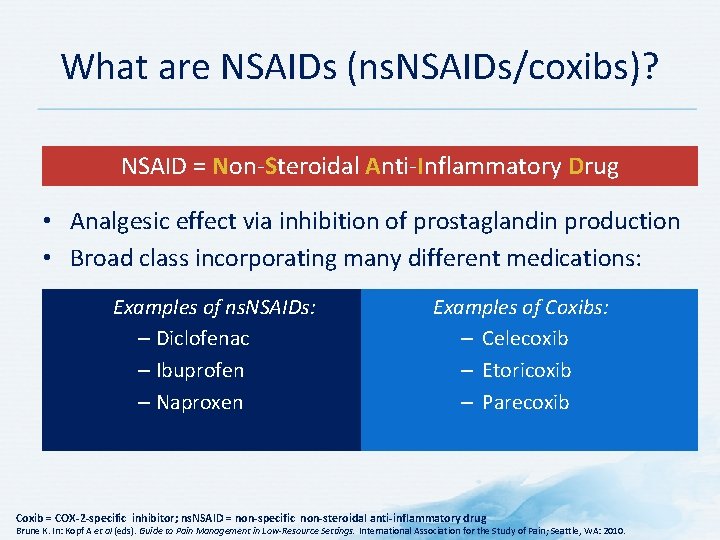
What are NSAIDs (ns. NSAIDs/coxibs)? NSAID = Non-Steroidal Anti-Inflammatory Drug • Analgesic effect via inhibition of prostaglandin production • Broad class incorporating many different medications: Examples of ns. NSAIDs: – Diclofenac – Ibuprofen – Naproxen Examples of Coxibs: – Celecoxib – Etoricoxib – Parecoxib Coxib = COX-2 -specific inhibitor; ns. NSAID = non-specific non-steroidal anti-inflammatory drug Brune K. In: Kopf A et al (eds). Guide to Pain Management in Low-Resource Settings. International Association for the Study of Pain; Seattle, WA: 2010.
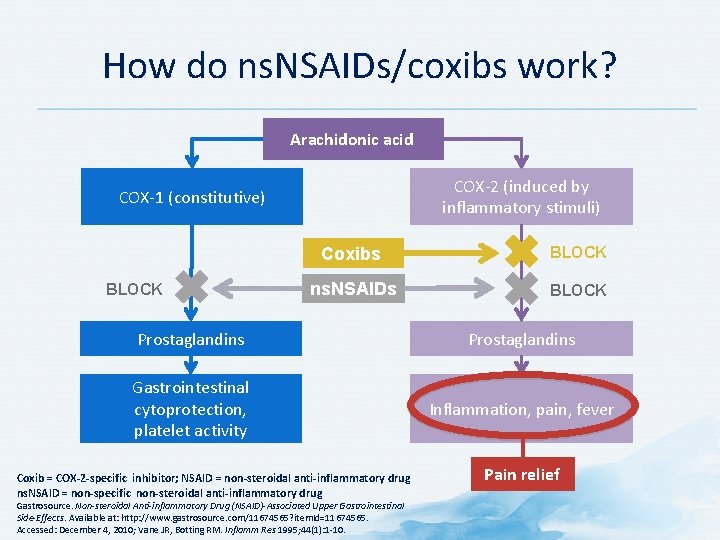
How do ns. NSAIDs/coxibs work? Arachidonic acid COX-2 (induced by inflammatory stimuli) COX-1 (constitutive) BLOCK Coxibs BLOCK ns. NSAIDs BLOCK Prostaglandins Gastrointestinal cytoprotection, platelet activity Inflammation, pain, fever Coxib = COX-2 -specific inhibitor; NSAID = non-steroidal anti-inflammatory drug ns. NSAID = non-specific non-steroidal anti-inflammatory drug Gastrosource. Non-steroidal Anti-inflammatory Drug (NSAID)-Associated Upper Gastrointestinal Side-Effects. Available at: http: //www. gastrosource. com/11674565? item. Id=11674565. Accessed: December 4, 2010; Vane JR, Botting RM. Inflamm Res 1995; 44(1): 1 -10. Pain relief
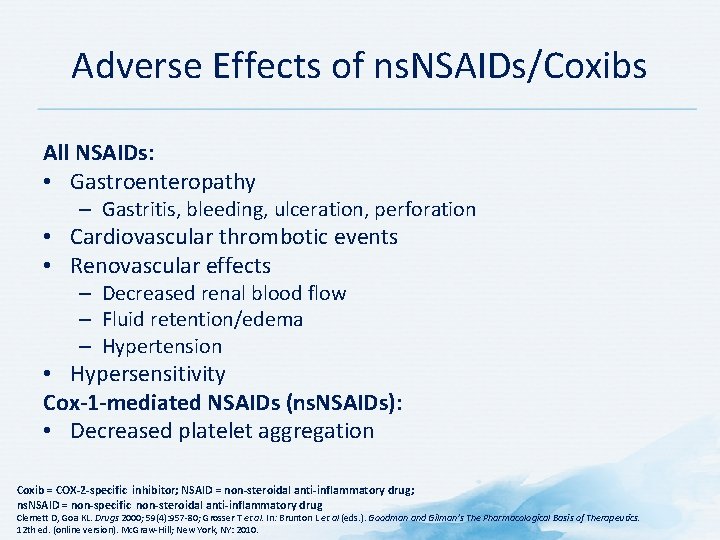
Adverse Effects of ns. NSAIDs/Coxibs All NSAIDs: • Gastroenteropathy – Gastritis, bleeding, ulceration, perforation • Cardiovascular thrombotic events • Renovascular effects – Decreased renal blood flow – Fluid retention/edema – Hypertension • Hypersensitivity Cox-1 -mediated NSAIDs (ns. NSAIDs): • Decreased platelet aggregation Coxib = COX-2 -specific inhibitor; NSAID = non-steroidal anti-inflammatory drug; ns. NSAID = non-specific non-steroidal anti-inflammatory drug Clemett D, Goa KL. Drugs 2000; 59(4): 957 -80; Grosser T et al. In: Brunton L et al (eds. ). Goodman and Gilman’s The Pharmacological Basis of Therapeutics. 12 th ed. (online version). Mc. Graw-Hill; New York, NY: 2010.
Discussion Question HOW DO YOU EVALUATE GASTROINTESTINAL RISK IN PATIENTS YOU ARE CONSIDERING PRESCRIBING A NSNSAID OR A COXIB?
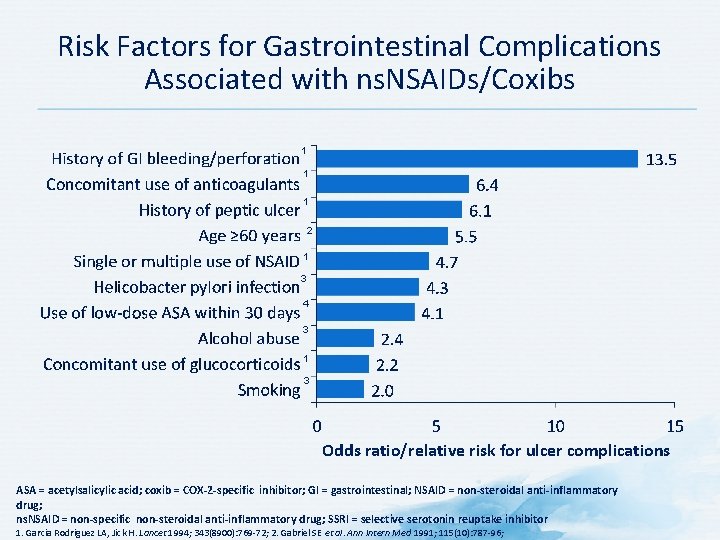
Risk Factors for Gastrointestinal Complications Associated with ns. NSAIDs/Coxibs 1 1 1 2 1 3 4 3 1 3 Odds ratio/relative risk for ulcer complications ASA = acetylsalicylic acid; coxib = COX-2 -specific inhibitor; GI = gastrointestinal; NSAID = non-steroidal anti-inflammatory drug; ns. NSAID = non-specific non-steroidal anti-inflammatory drug; SSRI = selective serotonin reuptake inhibitor 1. Garcia Rodriguez LA, Jick H. Lancet 1994; 343(8900): 769 -72; 2. Gabriel SE et al. Ann Intern Med 1991; 115(10): 787 -96;
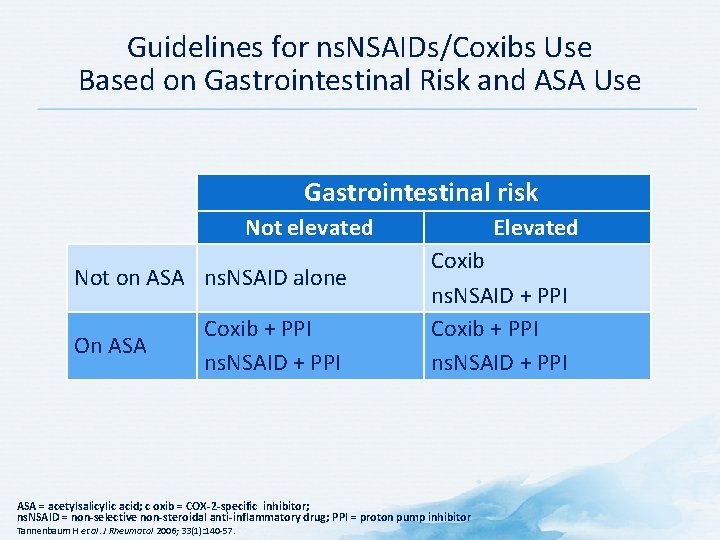
Guidelines for ns. NSAIDs/Coxibs Use Based on Gastrointestinal Risk and ASA Use Gastrointestinal risk Not elevated Not on ASA ns. NSAID alone On ASA Coxib + PPI ns. NSAID + PPI Elevated Coxib ns. NSAID + PPI Coxib + PPI ns. NSAID + PPI ASA = acetylsalicylic acid; c oxib = COX-2 -specific inhibitor; ns. NSAID = non-selective non-steroidal anti-inflammatory drug; PPI = proton pump inhibitor Tannenbaum H et al. J Rheumatol 2006; 33(1): 140 -57.
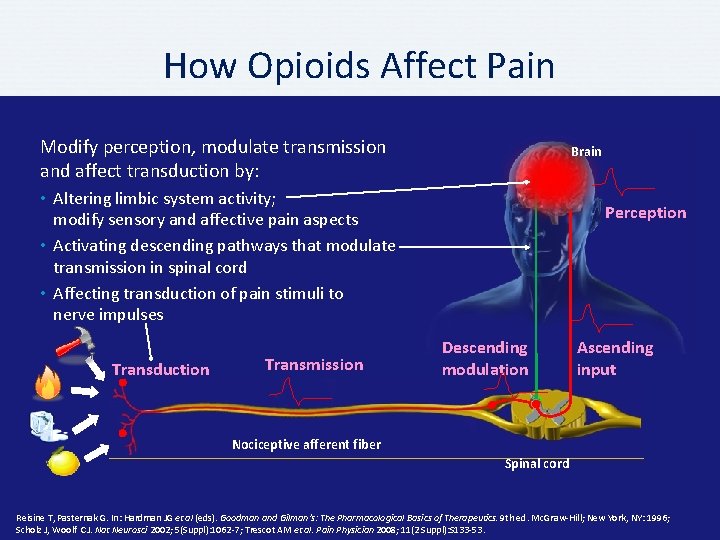
How Opioids Affect Pain Modify perception, modulate transmission and affect transduction by: Brain • Altering limbic system activity; modify sensory and affective pain aspects • Activating descending pathways that modulate transmission in spinal cord • Affecting transduction of pain stimuli to nerve impulses Transduction Transmission Perception Descending modulation Ascending input Nociceptive afferent fiber Spinal cord Reisine T, Pasternak G. In: Hardman JG et al (eds). Goodman and Gilman’s: The Pharmacological Basics of Therapeutics. 9 th ed. Mc. Graw-Hill; New York, NY: 1996; Scholz J, Woolf CJ. Nat Neurosci 2002; 5(Suppl): 1062 -7; Trescot AM et al. Pain Physician 2008; 11(2 Suppl): S 133 -53.
Discussion Question WHAT POTENTIAL SIDE EFFECTS DO YOU DISCUSS WITH PATIENTS FOR WHOM YOU ARE CONSIDERING PRESCRIBING AN OPIOID?
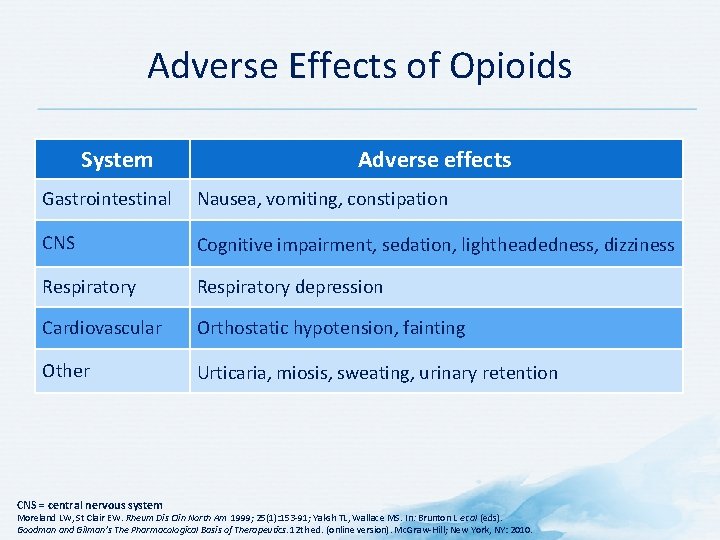
Adverse Effects of Opioids System Adverse effects Gastrointestinal Nausea, vomiting, constipation CNS Cognitive impairment, sedation, lightheadedness, dizziness Respiratory depression Cardiovascular Orthostatic hypotension, fainting Other Urticaria, miosis, sweating, urinary retention CNS = central nervous system Moreland LW, St Clair EW. Rheum Dis Clin North Am 1999; 25(1): 153 -91; Yaksh TL, Wallace MS. In: Brunton L et al (eds). Goodman and Gilman’s The Pharmacological Basis of Therapeutics. 12 th ed. (online version). Mc. Graw-Hill; New York, NY: 2010.
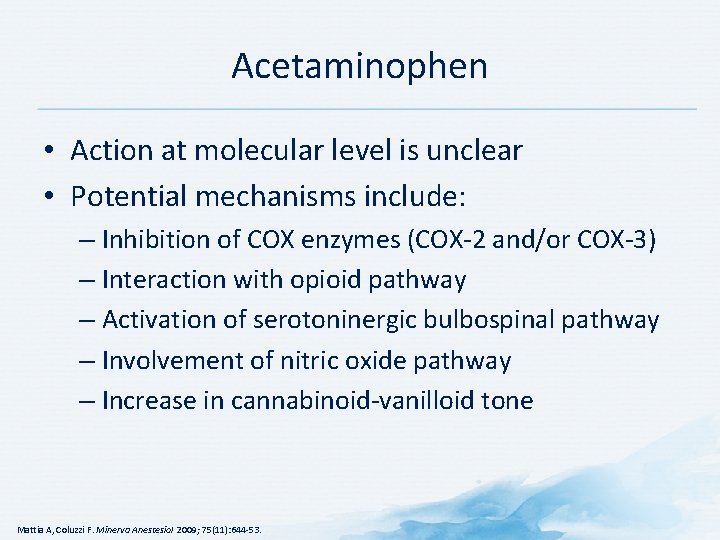
Acetaminophen • Action at molecular level is unclear • Potential mechanisms include: – Inhibition of COX enzymes (COX-2 and/or COX-3) – Interaction with opioid pathway – Activation of serotoninergic bulbospinal pathway – Involvement of nitric oxide pathway – Increase in cannabinoid-vanilloid tone Mattia A, Coluzzi F. Minerva Anestesiol 2009; 75(11): 644 -53.
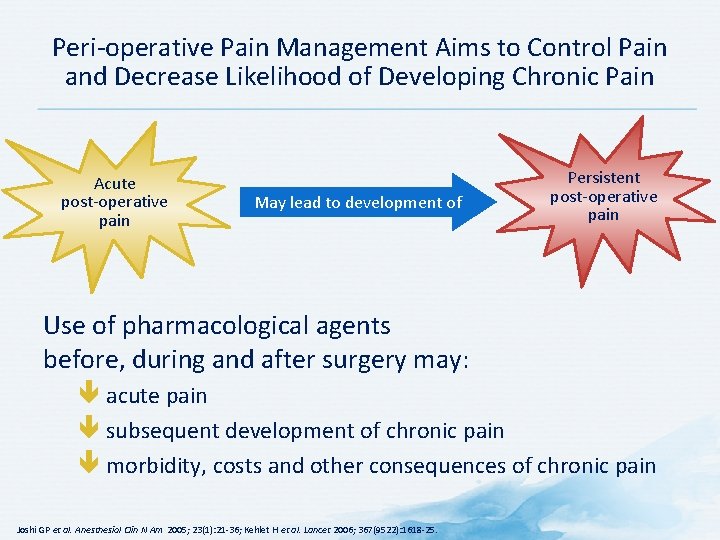
Peri-operative Pain Management Aims to Control Pain and Decrease Likelihood of Developing Chronic Pain Acute post-operative pain May lead to development of Persistent post-operative pain Use of pharmacological agents before, during and after surgery may: acute pain subsequent development of chronic pain morbidity, costs and other consequences of chronic pain Joshi GP et al. Anesthesiol Clin N Am 2005; 23(1): 21 -36; Kehlet H et al. Lancet 2006; 367(9522): 1618 -25.
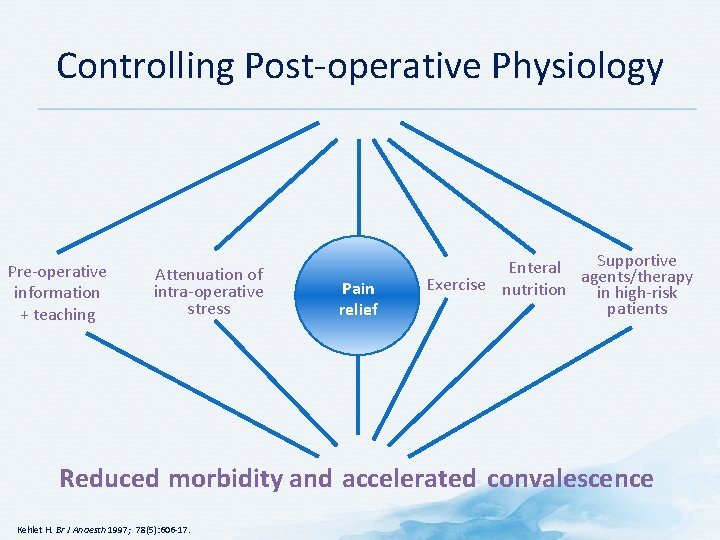
Controlling Post-operative Physiology Pre-operative information + teaching Attenuation of intra-operative stress Pain relief Supportive Enteral agents/therapy Exercise nutrition in high-risk patients Reduced morbidity and accelerated convalescence Kehlet H. Br J Anaesth 1997; 78(5): 606 -17.
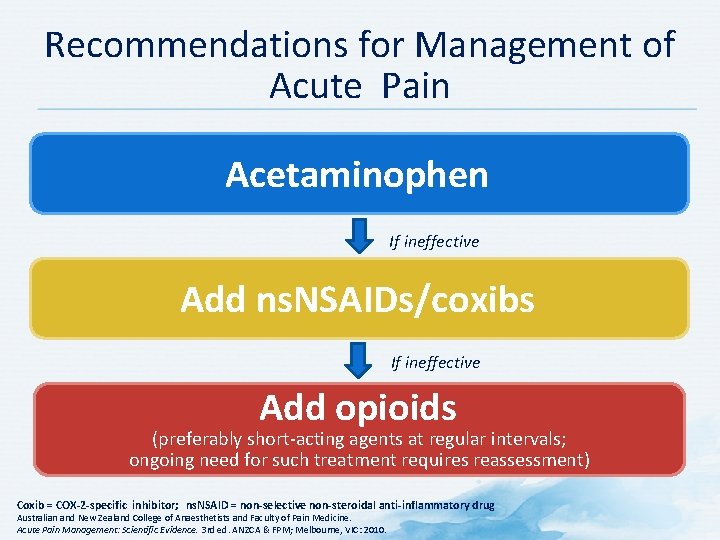
Recommendations for Management of Acute Pain Acetaminophen If ineffective Add ns. NSAIDs/coxibs If ineffective Add opioids (preferably short-acting agents at regular intervals; ongoing need for such treatment requires reassessment) Coxib = COX-2 -specific inhibitor; ns. NSAID = non-selective non-steroidal anti-inflammatory drug Australian and New Zealand College of Anaesthetists and Faculty of Pain Medicine. Acute Pain Management: Scientific Evidence. 3 rd ed. ANZCA & FPM; Melbourne, VIC: 2010.
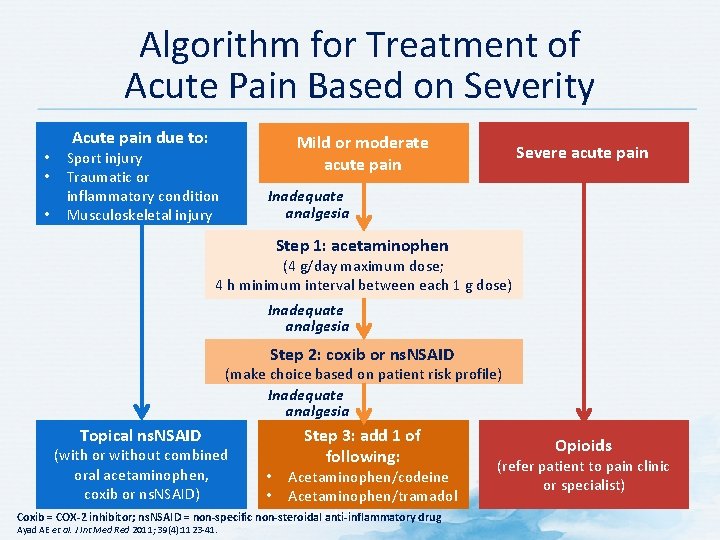
Algorithm for Treatment of Acute Pain Based on Severity • • • Acute pain due to: Mild or moderate acute pain Sport injury Traumatic or inflammatory condition Musculoskeletal injury Severe acute pain Inadequate analgesia Step 1: acetaminophen (4 g/day maximum dose; 4 h minimum interval between each 1 g dose) Inadequate analgesia Step 2: coxib or ns. NSAID (make choice based on patient risk profile) Inadequate analgesia Topical ns. NSAID (with or without combined oral acetaminophen, coxib or ns. NSAID) Step 3: add 1 of following: • Acetaminophen/codeine • Acetaminophen/tramadol • Tramadol Coxib = COX-2 inhibitor; ns. NSAID = non-specific non-steroidal anti-inflammatory drug Ayad AE et al. J Int Med Red 2011; 39(4): 1123 -41. Opioids (refer patient to pain clinic or specialist)
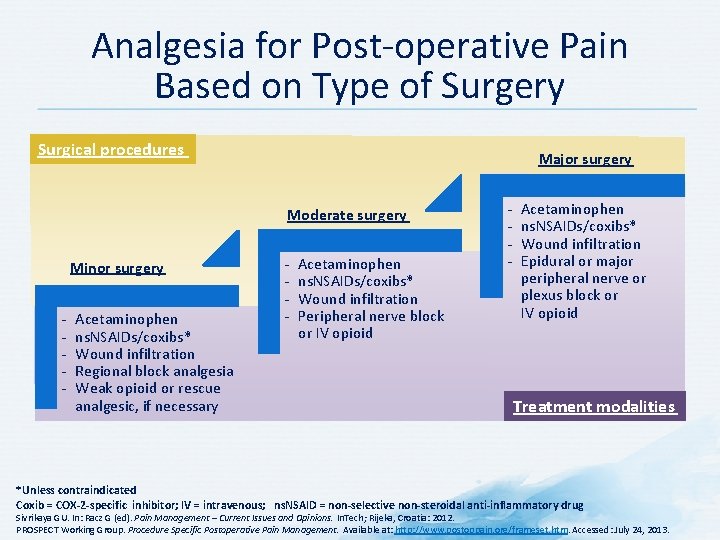
Analgesia for Post-operative Pain Based on Type of Surgery Surgical procedures Major surgery Moderate surgery Minor surgery - - - Acetaminophen ns. NSAIDs/coxibs* Wound infiltration Regional block analgesia Weak opioid or rescue analgesic, if necessary - - Acetaminophen ns. NSAIDs/coxibs* Wound infiltration Peripheral nerve block or IV opioid - - Acetaminophen ns. NSAIDs/coxibs* Wound infiltration Epidural or major peripheral nerve or plexus block or IV opioid Treatment modalities *Unless contraindicated Coxib = COX-2 -specific inhibitor; IV = intravenous; ns. NSAID = non-selective non-steroidal anti-inflammatory drug Sivrikaya GU. In: Racz G (ed). Pain Management – Current Issues and Opinions. In. Tech; Rijeka, Croatia: 2012. PROSPECT Working Group. Procedure Specific Postoperative Pain Management. Available at: http: //www. postoppain. org/frameset. htm. Accessed: July 24, 2013.
Discussion Question IN YOUR PRACTICE, DO YOU REGULARLY ASSESS RISK FOR DEVELOPING CHRONIC PAIN? IF SO, HOW?
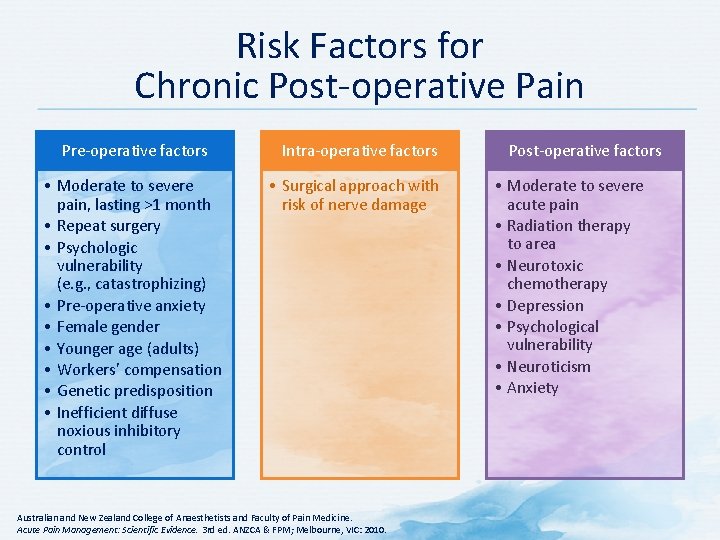
Risk Factors for Chronic Post-operative Pain Pre-operative factors Intra-operative factors • Moderate to severe pain, lasting >1 month • Repeat surgery • Psychologic vulnerability (e. g. , catastrophizing) • Pre-operative anxiety • Female gender • Younger age (adults) • Workers’ compensation • Genetic predisposition • Inefficient diffuse noxious inhibitory control • Surgical approach with risk of nerve damage Australian and New Zealand College of Anaesthetists and Faculty of Pain Medicine. Acute Pain Management: Scientific Evidence. 3 rd ed. ANZCA & FPM; Melbourne, VIC: 2010. Post-operative factors • Moderate to severe acute pain • Radiation therapy to area • Neurotoxic chemotherapy • Depression • Psychological vulnerability • Neuroticism • Anxiety
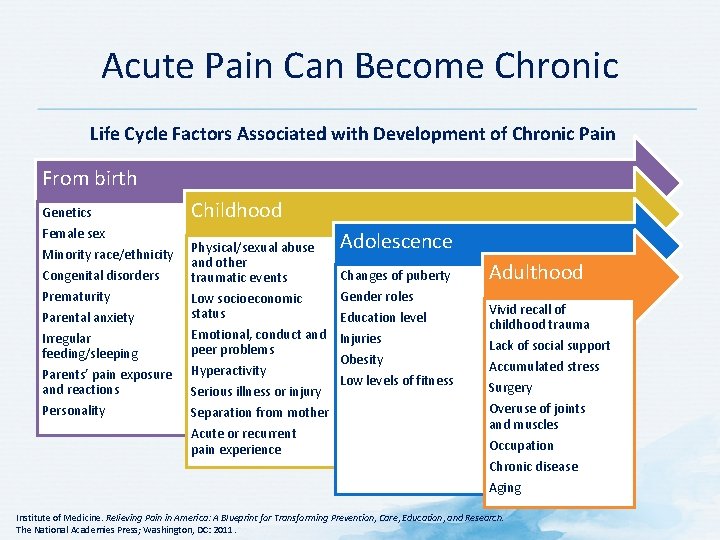
Acute Pain Can Become Chronic Life Cycle Factors Associated with Development of Chronic Pain From birth Genetics Female sex Minority race/ethnicity Congenital disorders Prematurity Parental anxiety Irregular feeding/sleeping Parents’ pain exposure and reactions Personality Childhood Physical/sexual abuse and other traumatic events Adolescence Changes of puberty Gender roles Low socioeconomic status Education level Emotional, conduct and Injuries peer problems Obesity Hyperactivity Low levels of fitness Serious illness or injury Separation from mother Acute or recurrent pain experience Adulthood Vivid recall of childhood trauma Lack of social support Accumulated stress Surgery Overuse of joints and muscles Occupation Chronic disease Aging Institute of Medicine. Relieving Pain in America: A Blueprint for Transforming Prevention, Care, Education, and Research. The National Academies Press; Washington, DC: 2011.
Key Messages • Acute pain is extremely common, with musculoskeletal pain being the most common presentation in primary care • Clinicians should maintain high degree of awareness for “red flags” indicating potential serious disorders and should, when possible, treat the underlying cause of pain • In acute pain, normal nociception is modified by inflammation – Acetaminophen, ns. NSAIDs/coxibs and opioids target common mechanisms of acute pain – Pain severity and individual patient risk profile should be considered when selecting pain management therapies • Timely and appropriate treatment may help prevent acute pain from becoming chronic pain Coxib = COX-2 -specific inhibitor; ns. NSAID = non-selective non-steroidal anti-inflammatory drug;