Corrosive Poisoning Rady Hamed Prof of Vet Toxicology

- Slides: 77
Corrosive Poisoning Rady Hamed Prof of Vet. Toxicology Cairo University
Corrosive Poisoning • Corrosives are substances that cause destruction of living tissue by chemical action. • Corrosive poisoning can be due to mineral acids. • Organic acids, alkalies, oxidizing agents, denaturants, hydrocarbons, protoplasmic poisons or fixers. • The most common corrosive poisoning is due to acids and alkalies.
Corrosive Poisoning • Acids produce Coagulative necrosis of stomach with Escher formation which limits further penetration, while alkalies cause liquefactive necrosis of esophagus with saponification and continued penetration into underlying tissues causing extensive damage.
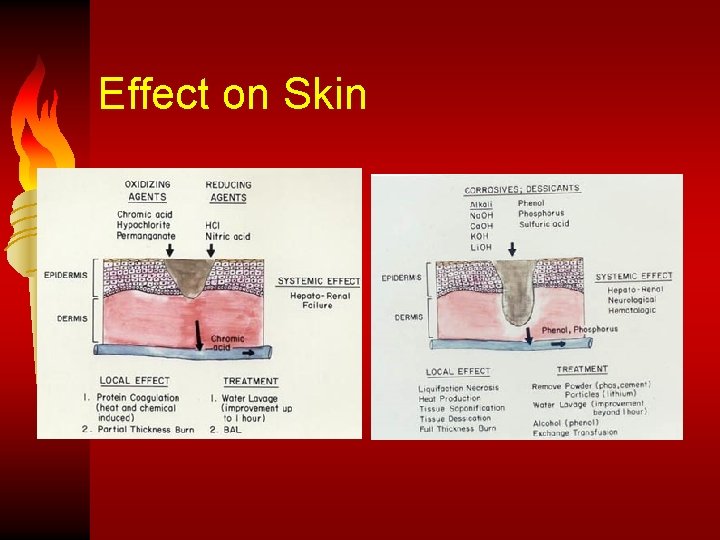
Effect on Skin
Acids • Commonly Encountered Poisoning • Hydrochloric acid, sulfuric acid, nitric acid, acetic acid, phosphoric acid, oxalic acid, chronic acid, formic acid, hydrofluoric acid, sodium bisulfate, boric acid.
Alkalies • Commonly Encountered Poisoning • Sodium hydroxide, potassium hydroxide, ammonia, potassium carbonate, sodiumcarbonate, calcium hydroxide.
Common Products Containing Corrosives • Acids: Metal cleaners, toilet and drain cleaners, batteries, antirust compounds. • Alkalies: Detergents and washing powders, soaps and shampoos, lye, paint, removers, jewellery cleaners, hair products, bleaches, disk batteries (potassium hydroxide or sodium hydroxide). • Other Corrosive Products: Potassium permanganate, iodine, formaldehyde, hydrogen paroxide, quaternary ammonium hydrogen compounds (disinfectants, • bactericides, decdorants), phenyl (phenol, carbolic acid).
Presenting Clinical Features Acids
Ingestion • Severe burning pain in mouth, throat abdomen, dysphagia, gastritis, vomiting, diarrhea (bloody, mucoid) • Hypotension with cold clammy skin and rapid pulse • Metabolic acidosis, haemolysis, massive fluid and electrolyte shifts (hyperkalemia, hyperphosphatemia, hypocalcemia, hyperchloremia).
Inhalation • Onset of respiratory symptoms may be delayed up to several hours. • Cough, dyspnea, pleuritic chest pain, pulmonary edema, moist rates, frothy sputum, hemoptysis, bronchospasm, hypoxemia.
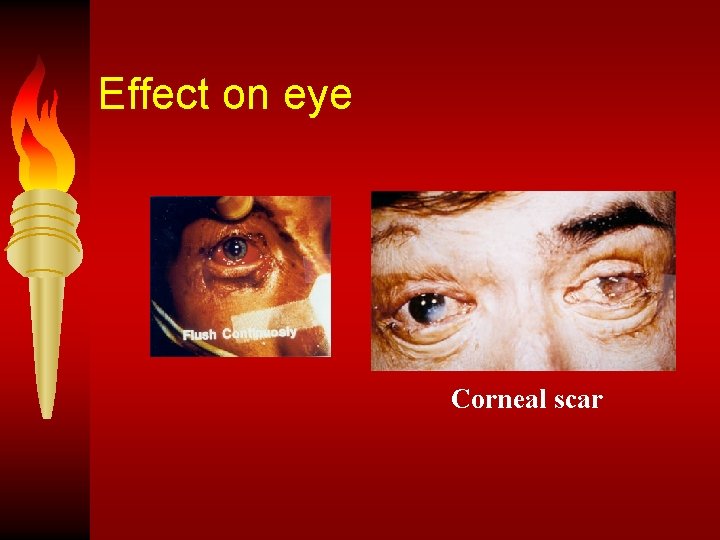
in eyes • Pain in eyes, swelling and lacrimation. • Irritation, lacrimation, chemosis, photophobia, cornel erosion and perforation, necrosis of conjunctiva and cornea.
Effect on eye Corneal scar
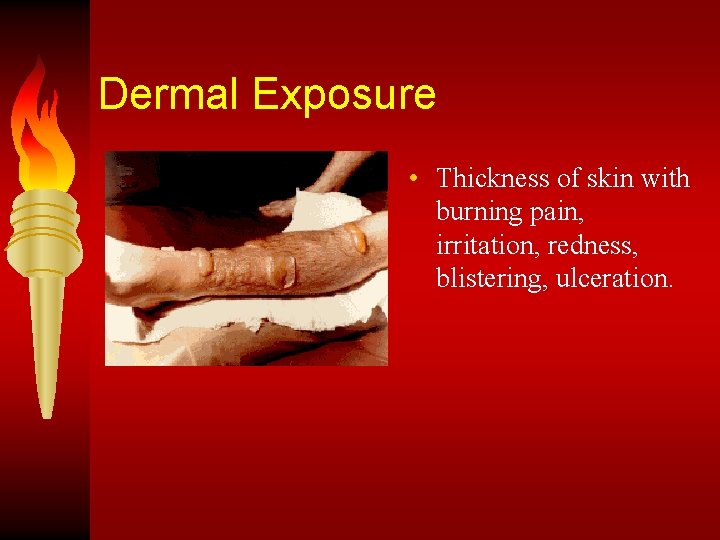
Dermal Exposure • Thickness of skin with burning pain, irritation, redness, blistering, ulceration.
Presenting Clinical Features Alkalies
Ingestion • Burns in lips, tongue, oral mucosa, upper airway, esophagus, drooling, stridor, vomiting, gastrointestinal bleeding.
Inhalation • Upper airway edema, dyspnea, wheezing, pulmonary edema, pneumonitis, stridor, respiratory failure.
Eye Exposure • Conjunctival irritation, chemosis, limbal ischemia, perforation (severe cases) distortion of cellular membranes, loss of corneal, conjunctival and lens epithelium and lose of endothelium of the cornea and blood vessels.
Dermal Exposure • Pain, redness, irritation, full thickness burns. • Characteristic features of boric acid poisoning are severe erythematous rash, blistering and desquamation of skin and CS depression.
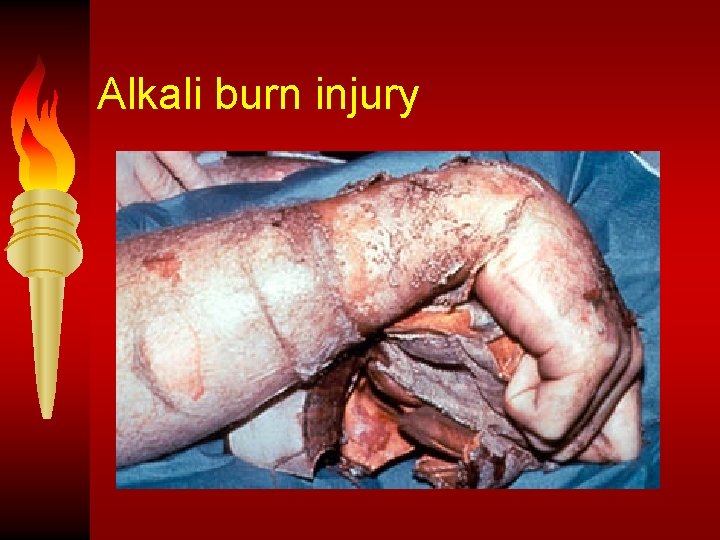
Alkali burn injury
Treatment
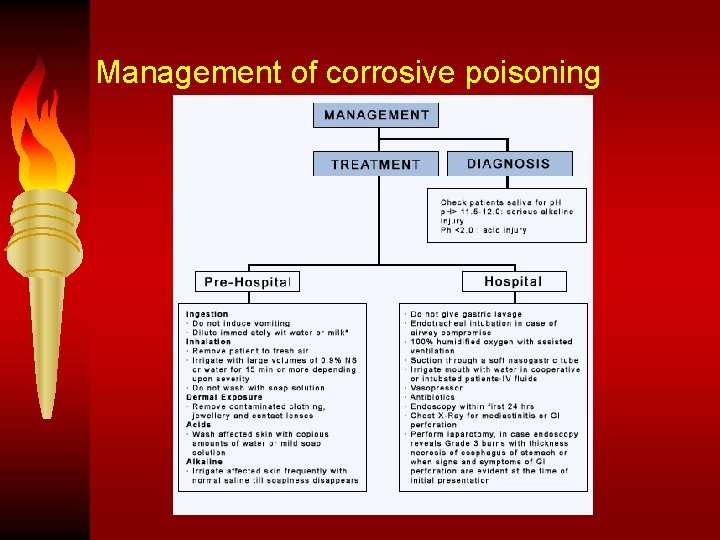
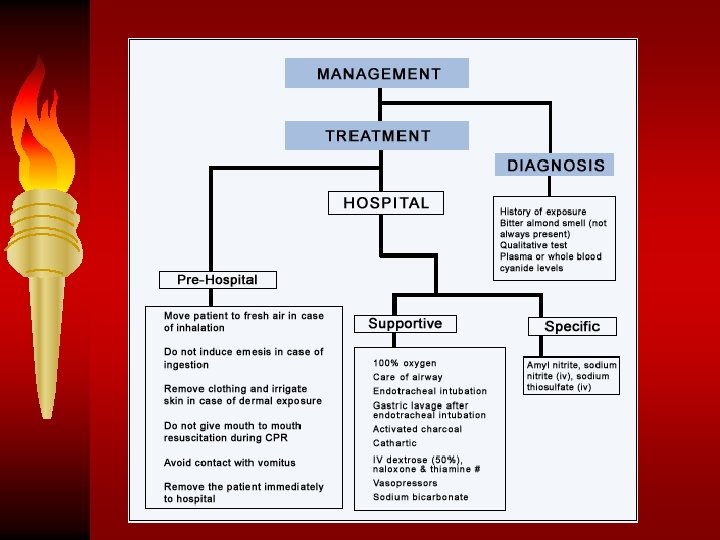
Management of corrosive poisoning
Treatment • For acid burns wash immediately with water for at least 15 min. while for alkali exposure wash for 6 -8 hrs. • In case of HF poisoning monitor ECG, serum Ca++ and K+. If there is evidence of hypocalcemia or severe hyperkalemia give calcium gluconate (10%) 2 -4 ml/kg, IV. • For topical exposure apply gel containing calcium gluconate (2. 5 g/100 ml Lubricant).
Treatment • Do not give excessive amount of milk or water as it provokes vomiting • Do not give carbonate beverages or bicarbonate for neutralization. Early gastric lavage and emesis can be given in phenyl (dilute carbolic acid) poisoning. • For skin exposure to phenol wipe off skin, wash with polyethylene glycol or soap and water.
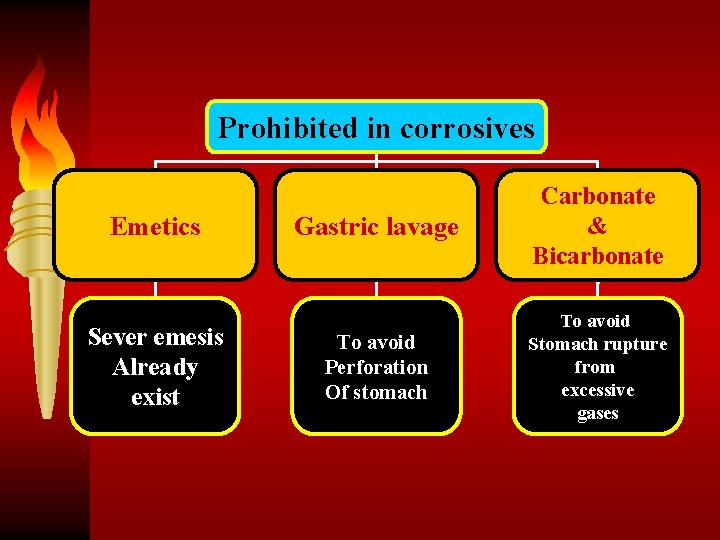
Prohibited in corrosives Emetics Sever emesis Already exist Gastric lavage Carbonate & Bicarbonate To avoid Perforation Of stomach To avoid Stomach rupture from excessive gases
Cyanide Poisoning
Cyanide Poisoning • Cyanide is a very rapidly acting toxin, used by communes for suicide. • In plants, it is combined with sugar as a cyanogenic glycoside and is localized in vacuoles in leaves and seeds. • Enzymes to separate CN from the sugar are in the cytosol. • They get together if plant is damaged by wilting or crushing or chewing.
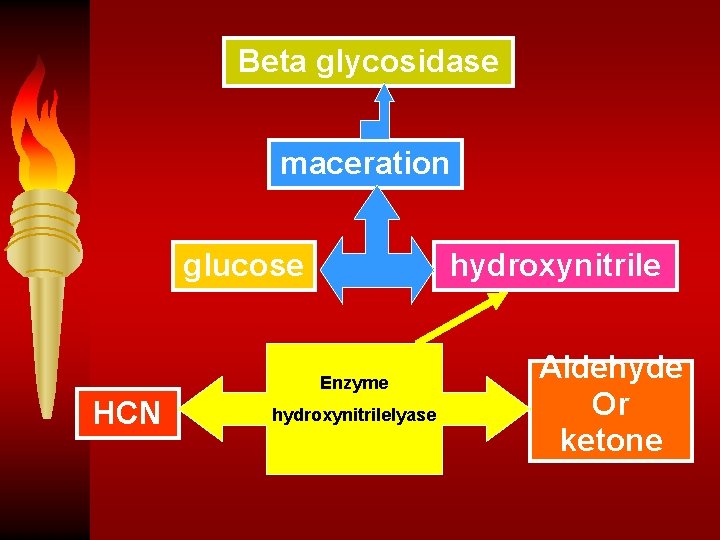
Cyanide Poisoning • There a variety of (more than 20) CN glycosides including amygdalin and prunasin. • Beta glycosidase + maceration produces glucose plus hydroxynitrile, then a second enzyme hydroxynitrile lyase releases HCN and an aldehyde or ketone. • Benzaldehyde has the odor of bitter almond. • Find this odor on necropsy of cattle that eat cherry leaves.
Beta glycosidase maceration glucose hydroxynitrile Enzyme HCN hydroxynitrilelyase Aldehyde Or ketone
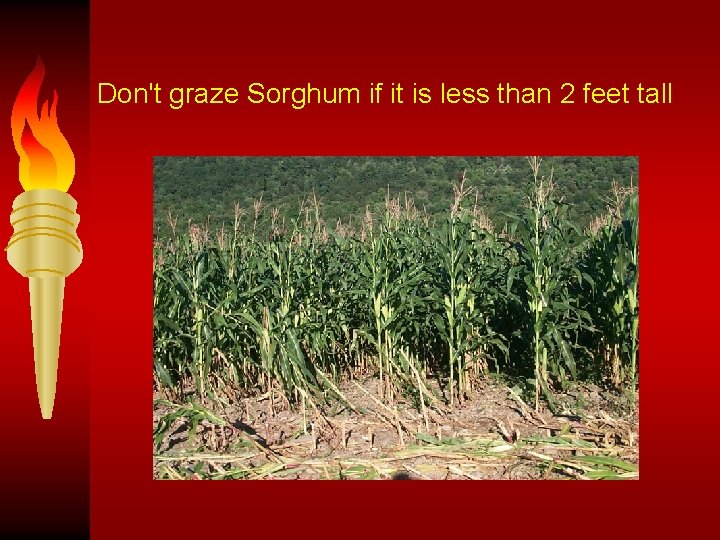
Don't graze Sorghum if it is less than 2 feet tall
Cyanide Poisoning • Ruminants are more susceptible, as microorganisms in rumen help to release free CN. • Acid stomach inactivates enzymes • Other sources of cyanide: • electroplating, cleaning metals • soil sterilant • rodenticide
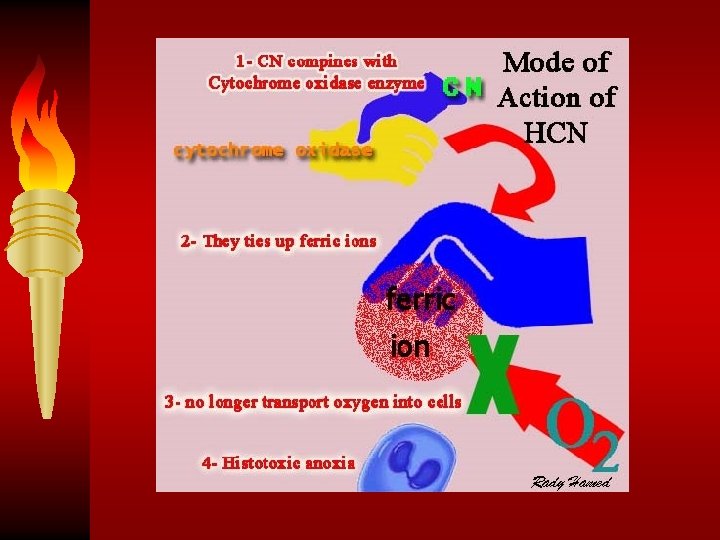
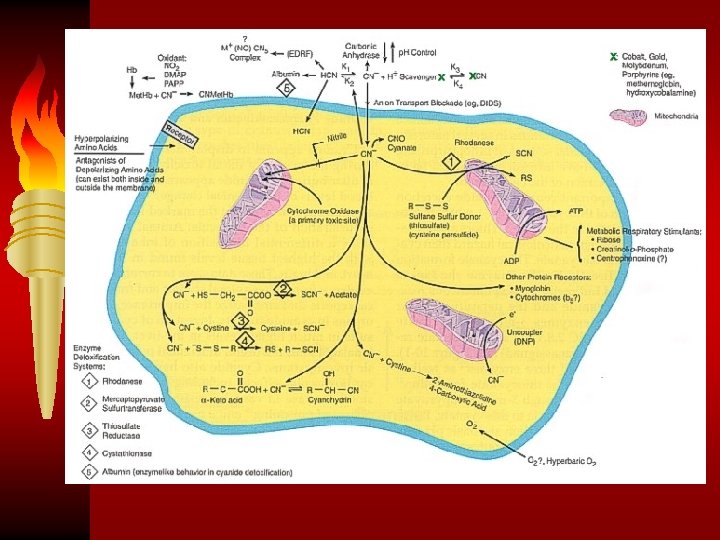
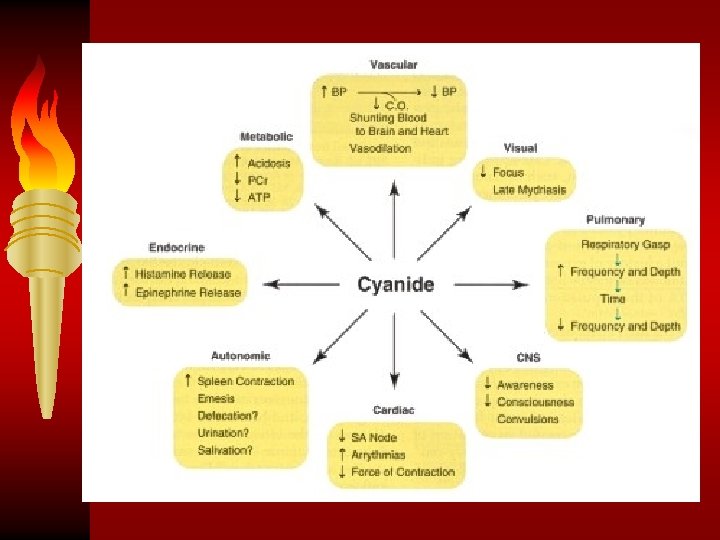
Toxic action • Normally CN is detoxified with endogenous thiosulfate. • Rhodanese catalyzes the reaction. • Thiocyanate forms and is rapidly excreted in the urine. • CN combines with the cytochrome oxidase system, ties up ferric ions so can no longer transport oxygen into cells. • Histotoxic anoxia, though blood has lots of oxygen and is bright red.
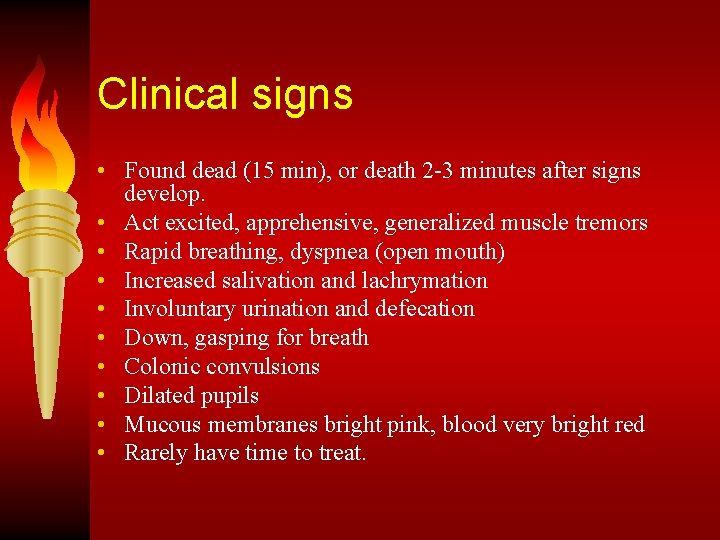
Clinical signs • Found dead (15 min), or death 2 -3 minutes after signs develop. • Act excited, apprehensive, generalized muscle tremors • Rapid breathing, dyspnea (open mouth) • Increased salivation and lachrymation • Involuntary urination and defecation • Down, gasping for breath • Colonic convulsions • Dilated pupils • Mucous membranes bright pink, blood very bright red • Rarely have time to treat.
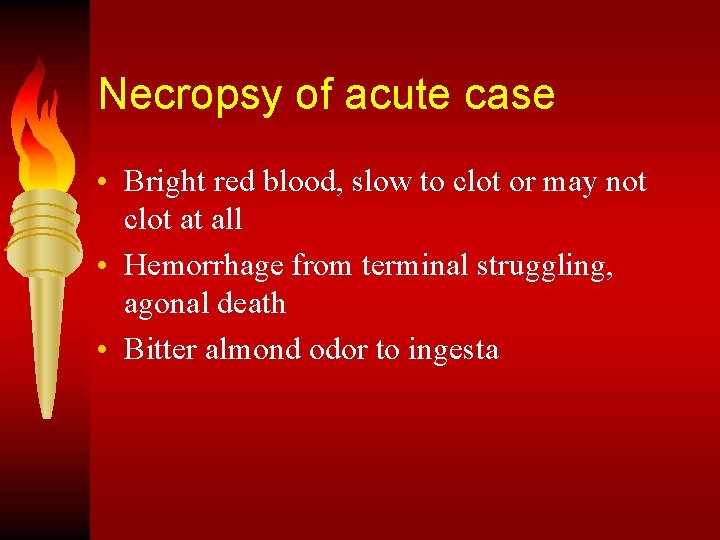
Necropsy of acute case • Bright red blood, slow to clot or may not clot at all • Hemorrhage from terminal struggling, agonal death • Bitter almond odor to ingesta
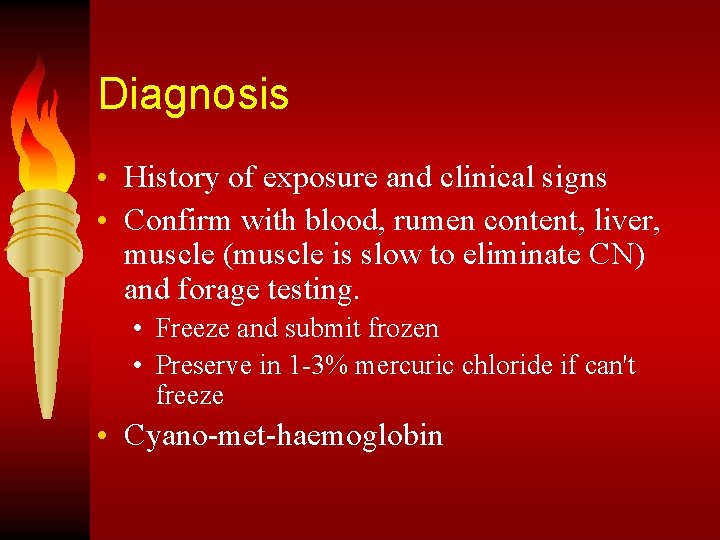
Diagnosis • History of exposure and clinical signs • Confirm with blood, rumen content, liver, muscle (muscle is slow to eliminate CN) and forage testing. • Freeze and submit frozen • Preserve in 1 -3% mercuric chloride if can't freeze • Cyano-met-haemoglobin
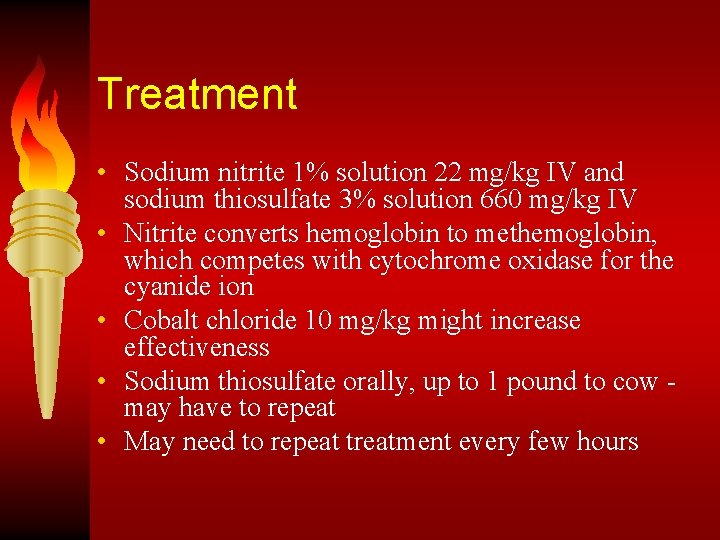
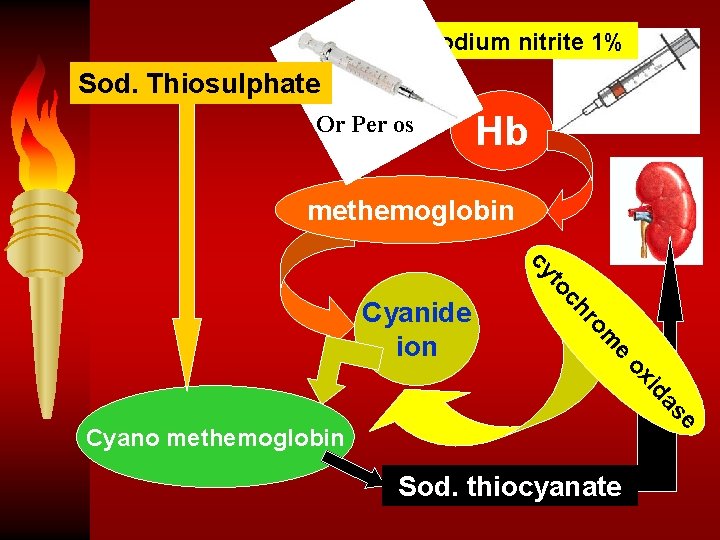
Treatment • Sodium nitrite 1% solution 22 mg/kg IV and sodium thiosulfate 3% solution 660 mg/kg IV • Nitrite converts hemoglobin to methemoglobin, which competes with cytochrome oxidase for the cyanide ion • Cobalt chloride 10 mg/kg might increase effectiveness • Sodium thiosulfate orally, up to 1 pound to cow may have to repeat • May need to repeat treatment every few hours
Treatment • Antidotal treatment • Oxygen It is difficult to understand how oxygen has a favorable effect in cyanide poisoning, because inhibition of cytochrome oxidase is non-competitive. • Oxygen has always been regarded as an important firstaid measure in cyanide poisoning, and there is now experimental evidence that oxygen has specific antidotal activity. • Oxygen accelerates the reactivation of cytochrome oxidase and protects against cytochrome oxidase inhibition by cyanide
Treatment • Sodium thiosulfate The major route of cyanide detoxification in the body is conversion to thiocyanate by rhodanese, although other sulfurtransferases, such as betamercaptopyruvate sulfurtransferase, may also be involved. • While sodium thiosulfate may be sufficient alone in mild to moderately severe cases, it should be administered with other antidotes in cases of severe poisoning.
Sodium nitrite 1% Sod. Thiosulphate Or Per os Hb methemoglobin ch to cy e m ro Cyanide ion e as id ox Cyano methemoglobin Sod. thiocyanate
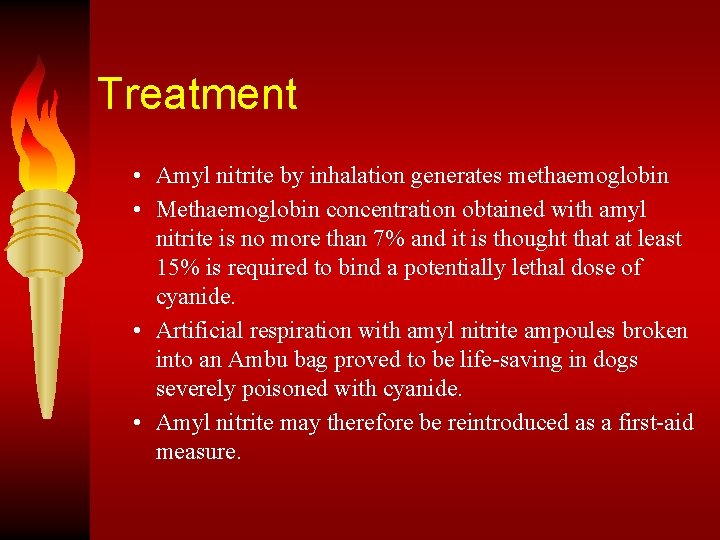
Treatment • Amyl nitrite by inhalation generates methaemoglobin • Methaemoglobin concentration obtained with amyl nitrite is no more than 7% and it is thought that at least 15% is required to bind a potentially lethal dose of cyanide. • Artificial respiration with amyl nitrite ampoules broken into an Ambu bag proved to be life-saving in dogs severely poisoned with cyanide. • Amyl nitrite may therefore be reintroduced as a first-aid measure.
Treatment • Dimethylaminophenol (4 -DMAP) 4 -DMAP generates a methaemoglobin concentration of 30 -50% within a few minutes
Treatment • Hydroxocobalamin (vitamin Bl 2 a) binds cyanide strongly to form cyanocobalamin (vitamin B 12) and, compared to nitrite and 4 DMAP therapy, it has the great advantage of not interfering with tissue oxygenation. • Dicobalt edetate effective in the treatment of cyanide poisoning in man,
PHENOL TOXICITY
Phenol poisoning (Carbolic acid) • Rapid absorption and severe systemic toxicity can occur after any route of exposure including skin. • Death and severe toxicity are usually due to effects on the CNS, heart, blood vessels, lung, and kidneys.
Phenol poisoning (Carbolic acid) • Toxicity in animals is similar to that of humans, although additional effects have been observed. • LD 50's in animals range from 250 -500 mg/kg, differing very little with route of exposure or species, except for the cat which is unusually susceptible with an oral lethal dose of 80 mg/kg. • Toxic effects include irritation and corrosivity of skin and eyes in rabbits, induction of skin tumors in mice, reproductive effects in rats, and mutagenicity with Salmonella, E coli and Drosophila. • Phenol is also highly toxic to aquatic life and frogs
Phenol poisoning (Carbolic acid) • METABOLISM • Phenol is metabolized and excreted principally by the kidneys as the sulfate or glucuronide, although some phenol may be excreted unchanged, especially at high doses. • Metabolites include hydroquinone, other quinones and catechols.
Symptoms • Burning pain in mouth and throat. • White necrotic lesions in mouth, esophagus and stomach • Abdominal pain, vomiting. . . and bloody diarrhea. • Pallor, sweating, weakness, headache, dizziness, tinnitus • Shock: Weak irregular pulse, hypotension, shallow respirations, cyanosis, pallor, and a profound fall in body temperature.
Symptoms • Possibly fleeting excitement and confusion, followed by unconsciousness. . . • Stentorous breathing, mucous rales, rhonchi, frothing at nose and mouth and other signs of pulmonary edema are sometimes seen. Characteristic odor of phenol on the breath. • Scanty, dark-colored. . . urine. . . moderately severe renal insufficiency may appear.
Symptoms • Methemoglobinemia, Heinz body hemolytic anemia and hyperbilirubinemia have been reported • Death from respiratory, circulatory or cardiac failure. • If spilled on skin, pain is followed promptly by numbness. The skin becomes blanched, and a dry opaque eschar forms over the burn. When the eschar sloughs off, a brown stain remains
post-mortem findings • Associated with ingestion of phenol or cresol are those that would be expected following exposure to any extremely irritant and corrosive poison. • Centribular necrosis and haemorrhage of the liver.
Oxalate Poisoning
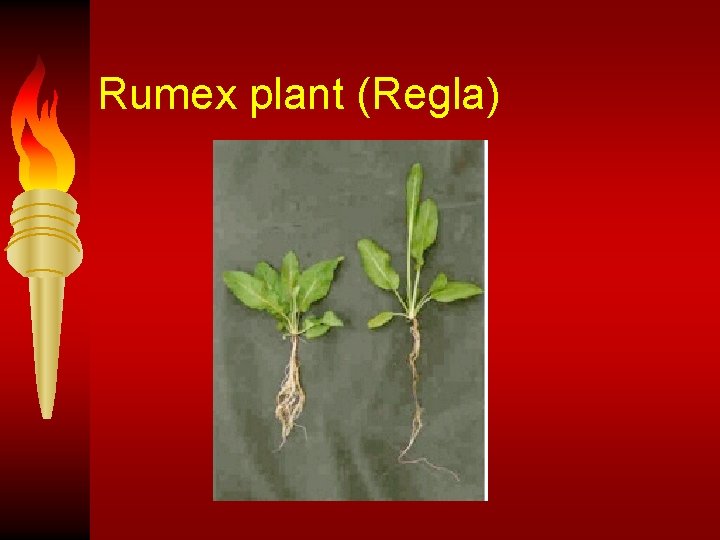
Oxalate Poisoning • High levels of the poison commonly known as oxalic acid cause oxalate poisoning. • Oxalic acid is found in low and high levels in certain fruits and vegetables that are common in some diets today. • Low levels of oxalic acid are found in tomatoes, grapes, and sweet potatoes. • High levels of the acid are found in spinach, sorrel, and Rumex sp.
Rumex plant (Regla)
Oxalate Poisoning • Oxalic acid is used commercially in textile finishing as a bleach or stain remover, metal cleaning agent, and tanning and finishing of leather. It has been used as an amendment to increase fertilizers and in artillery ammunition to suppress flashing
Action • The binding of the calcium with the oxalic acids also lowers the levels of available calcium in the body • The loss of calcium interferes with electrical activity of the heart, muscles, and nerves, which explains the symptoms discussed after exposure to the toxin. • The calcium depletion inhibits the action of the calcium pump that is involved in the action potential of the muscles.
Action • The target organs are the kidneys followed by the nervous system. • It affects the kidneys by binding to calcium ions forming calcium salts that are commonly known as kidney stones • If inhaled in large amounts it may lead to difficulty breathing and loss of consciousness. • Skin and eye contact may lead to corrosion of the skin and skin lesions manifested by dermal cracking and slow healing ulcers. • If entering the eye, needle like crystals can be found in the corneal stroma after two months of exposure
symptoms • • Gastrointestinal discomfort Cardiovascular collapse CNS depression Urine containing Ca. oxalate crystals, blood and albumin • Rarely death
PM findings • In fatal cases of ingestion of oxalate-containing plants, pathological findings are principally in the kidneys, digestive tract, and brain. • Renal lesions are commonly found in these deaths; they appear in the form of small multiple hemorrhages, congestion, cellular cloudy swelling, sclerosis and hyalin degeneration of the tubules, and lesions traceable to an interstitial tubular glomerulonephrosis.
PM findings • Cerebral edema is frequently found in the brain. Calcium oxalate crystals may be found in many vasa walls along with areas of focal necrosis and images of sterile meningitis with infiltrated neutrophils and mononuclear cells. • In animals that eat oxalate-containing plants, macroscopic pathology reveals edema and hemorrhaging in the rumen wall with hyperemia of mucoses an ascites. • Microscopic examination reveals calcium oxalate crystals in the rumen wall and in the renal tubules as well as microhemorrhaging in the medulla oblongat
Treatment • lime water or chalk or magnesium in water to precipitate the oxalate in the digestive tube in the form of an insoluble calcium salt. • stimulants such as black coffee or caffeine • add heat to the surface of the body. • Good diuresis is essential in this procedure so that kidney function will remain normal.
Nitrate/Nitrite Poisoning
Nitrate/nitrite poisoning • Nitrate toxicity constitutes a serious problem in ruminants, because of the propensity of many plants species to accumulate nitrate under certain conditions. • The rumen organisms rapidly reduces nitrate to nitrite, which may - under unusual circumstances build up to levels that are in excess of the body's capacity to convert the nitrite to ammonia.
Nitrate/nitrite poisoning • The blood levels of nitrite may become sufficiently high to change the haemoglobin in the blood to a form which is incapable of oxygen transport (meta-haemoglobin). • Tissues then starve of oxygen and signs of respiratory distress and sudden death can occur.
Nitrate/nitrite poisoning • Many plants are prone to accumulate nitrate, and rapid growth in highly nitrogenous soils is the key to increased toxicity risk. • Plants commonly associated with nitrate poisoning of cattle include: • Lolium spp • cereal grasses (oats, barley, maize, wheat) • sorghums (especially the hybrid varieties such as Jumbo -grass) • millet
Nitrate/nitrite poisoning • Rapidly growing plants, after a period of stunting, are most dangerous. In particular, short-rotation ryegrasses like Concord and Tama, green oats, and turnips are commonly associated with nitrate/nitrite poisoning episodes. • Nitrate concentrations are highest in young plants.
Symptoms • The speed of onset of clinical signs following ingestion of high levels of nitrate is dependent on the dose consumed - death can occur within one hour or up to a day following acute intoxication.
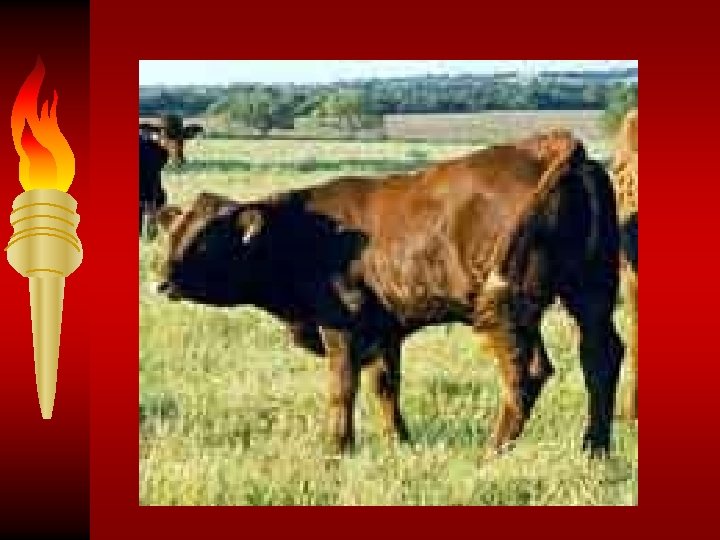
Symptoms • Besides sudden death without struggling, clinical signs in live animals include: • • • increased salivation abdominal pain diarrhoea constant dribbling of urine muscle tremor Weakness
Symptoms • incoordination or staggering gait • severe respiratory distress (often mouth breathing) • convulsions • muddy brown mucous membranes • brown discolouration of the blood.
PM findings • the outstanding finding - particularly in a fresh carcass is • the brown, chocolate-coloured blood, which clots poorly.
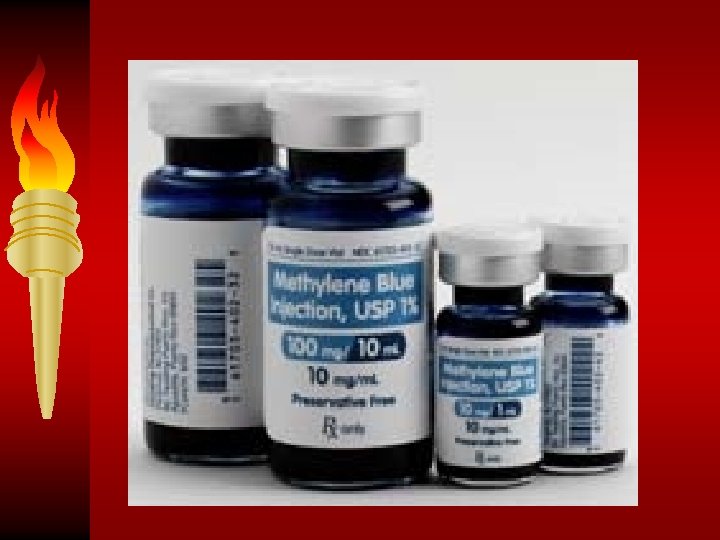
Treatment • The antidote for nitrite poisoning is methylene blue. It restores the iron in haemoglobin to its normal state, thus again allowing oxygenation of the blood, thereby reversing the tissue oxygen deficiency.