
more than a HANGOVER facts about alcohol poisoning
more than a HANGOVER facts about alcohol poisoning © PAD 2013
What is Poison? The definition of poison is “a substance that is capable of causing the illness or death of a living organism when introduced or absorbed” (www. oxforddictionaires. com) © PAD 2013
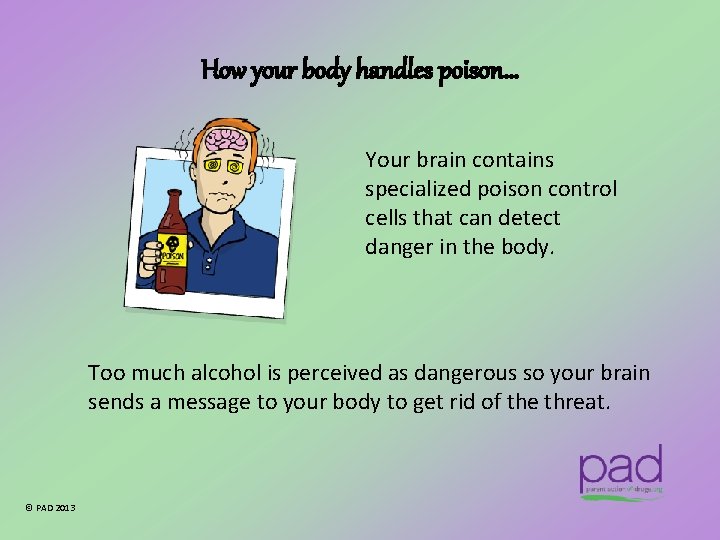
How your body handles poison… Your brain contains specialized poison control cells that can detect danger in the body. Too much alcohol is perceived as dangerous so your brain sends a message to your body to get rid of the threat. © PAD 2013
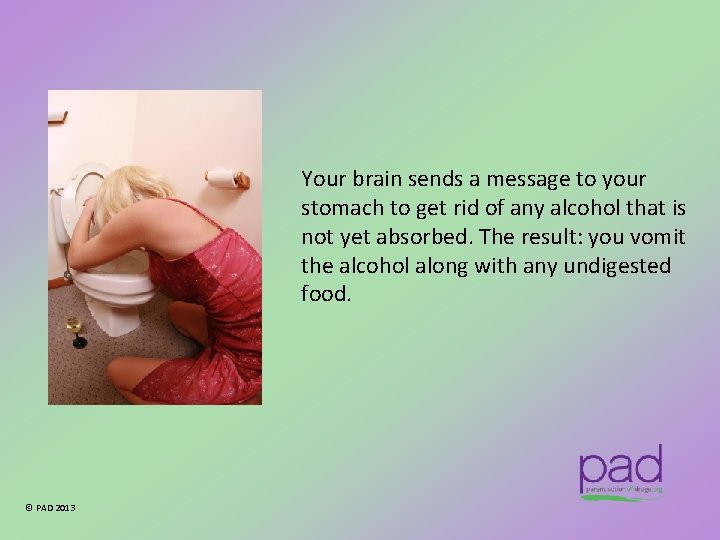
Your brain sends a message to your stomach to get rid of any alcohol that is not yet absorbed. The result: you vomit the alcohol along with any undigested food. © PAD 2013
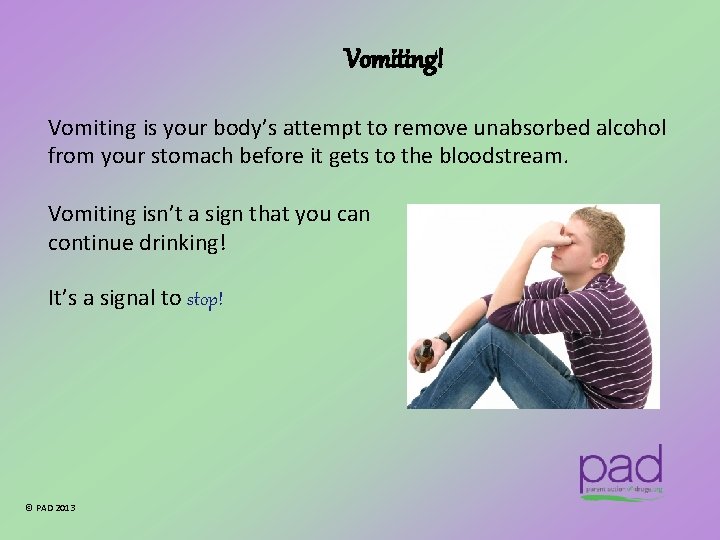
Vomiting! Vomiting is your body’s attempt to remove unabsorbed alcohol from your stomach before it gets to the bloodstream. Vomiting isn’t a sign that you can continue drinking! It’s a signal to stop! © PAD 2013
How fast you drink matters… Drinking quickly adds to the danger. It doesn’t allow your body time to get rid of the alcohol and the effects pile up. It may take anywhere from about 30 -90 minutes after you stop drinking, before you reach your highest level of intoxication. © PAD 2013
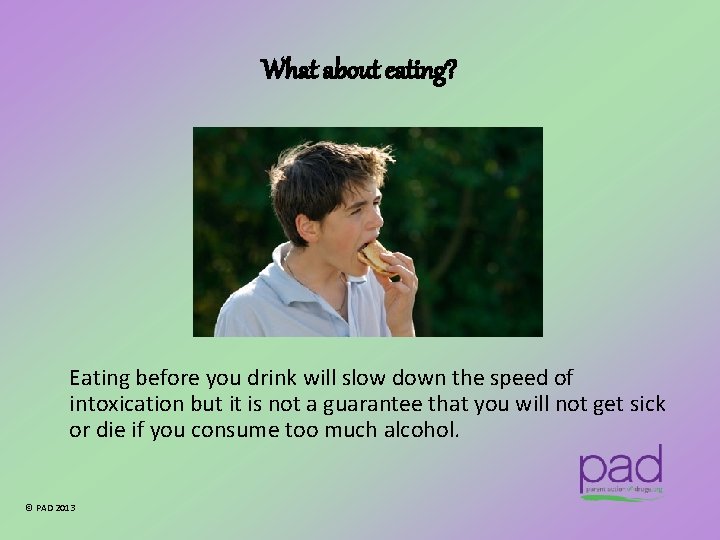
What about eating? Eating before you drink will slow down the speed of intoxication but it is not a guarantee that you will not get sick or die if you consume too much alcohol. © PAD 2013
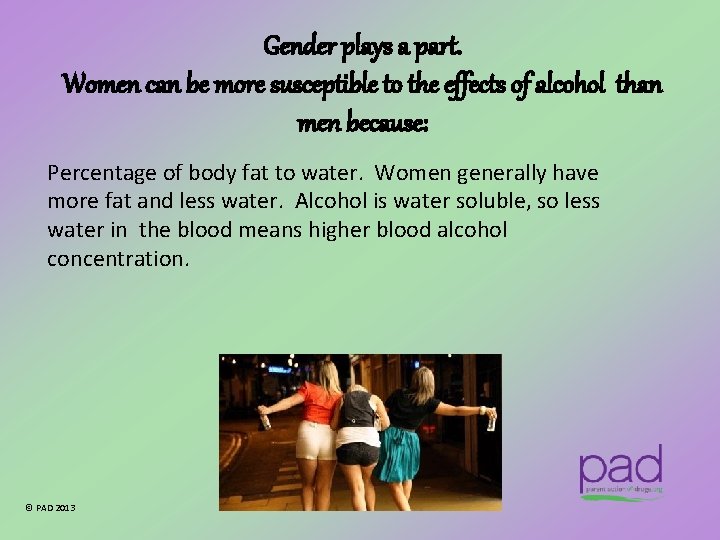
Gender plays a part. Women can be more susceptible to the effects of alcohol than men because: Percentage of body fat to water. Women generally have more fat and less water. Alcohol is water soluble, so less water in the blood means higher blood alcohol concentration. © PAD 2013
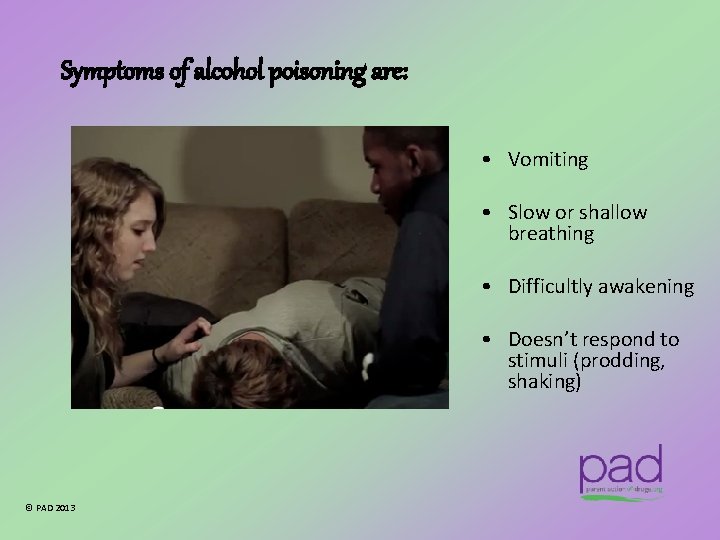
Symptoms of alcohol poisoning are: • Vomiting • Slow or shallow breathing • Difficultly awakening • Doesn’t respond to stimuli (prodding, shaking) © PAD 2013

How can drinking too much alcohol cause death? After drinking a lot of alcohol, some people vomit, some people fall into a very deep sleep – and some people do both. If you vomit after you “pass out” or lose consciousness or fall into a very deep sleep, you can choke on your vomit – and not wake. Since alcohol has depressed your body’s reflexes, you can’t clear your own airway and you can choke to death. © PAD 2013
What should you do if someone has alcohol poisoning? • Try to wake the person up by calling their name, shaking or pinching them. If they don’t respond, get help. • Check the person’s skin. If his or her skin is pale or bluish, or is cold or clammy, get help. • Check the person’s breathing. If it is irregular, or too slow or shallow (less than eight breaths per minute or more than 10 seconds between breaths), get help. • If you discover any of the above problems, stay with the person and call 911. It is important to contact emergency services quickly. If you aren’t sure what to do, it’s always better to be safe than sorry. Get help if you suspect an alcohol overdose, even if the person is underage. http: //heretohelp. bc. ca/factsheet/dealing-with-alcohol-or-other-drug-overdose-situations © PAD 2013
The Recovery Position If someone passes out from drinking too much, you can help by putting them in the recovery position. The most important thing is to keep the person’s airway open so fluids like vomit can drain from their mouth. 1. Raise the person’s closest arm above their head. Prepare the person to roll toward you. 2. Gently roll the person’s entire body toward you. Guard their head while you roll them. 3. Tilt the person’s head to keep their airway open. Tuck their nearest hand under their cheek to help keep their head tilted. 4. Do not leave the person alone. Stay with them until help arrives. http: //heretohelp. bc. ca/factsheet/dealing-with-alcohol-or-other-drug-overdose-situations © PAD 2013
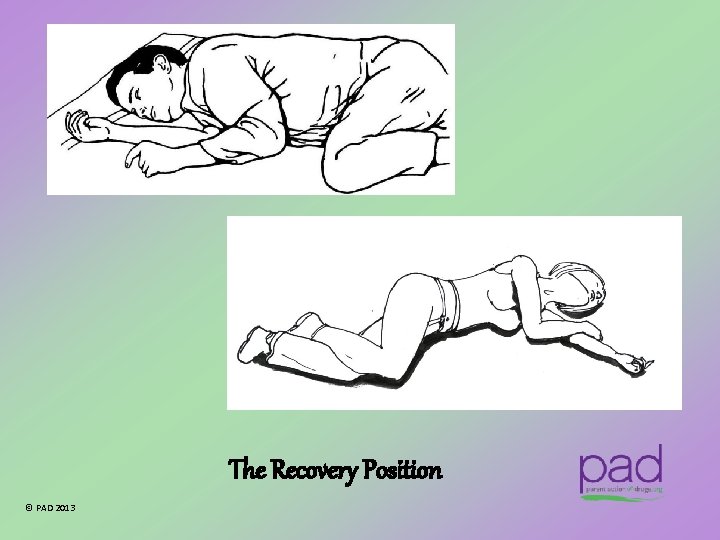
The Recovery Position © PAD 2013
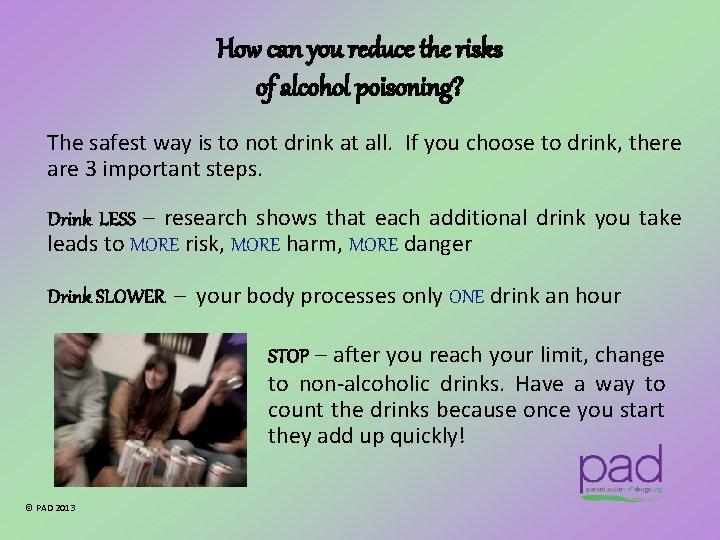
How can you reduce the risks of alcohol poisoning? The safest way is to not drink at all. If you choose to drink, there are 3 important steps. Drink LESS – research shows that each additional drink you take leads to MORE risk, MORE harm, MORE danger Drink SLOWER – your body processes only ONE drink an hour STOP – after you reach your limit, change to non-alcoholic drinks. Have a way to count the drinks because once you start they add up quickly! © PAD 2013
Tips for Staying Safe 1. Choose not to drink at all or under certain driving or taking medications) 2. Reduce your rate of consumption by keeping to one per hour 3. Alternate alcoholic drinks with water or pop 4. Eat food 5. Stop drinking alcohol after a certain number of drinks 6. Choose drinks with higher water/soda content (like mixed drinks, not shots) 7. Have a buddy with you & work out a designated safety system ahead of time 8. Determine who will be the designated sober partier, someone who can call for help if needed © PAD 2013 conditions (i. e. alcoholic drinks

© PAD 2013 www. parentactionondrugs. org
- Slides: 16