
Practical Clinical Toxicology Toxicity of adrenergic Blockers Lab
Practical Clinical Toxicology Toxicity of β–adrenergic Blockers Lab. 3 5 th Year 2019 -2020 University of Mustansiriyah/College of Pharmacy Department of Pharmacology & Toxicology Lecturer Rua Abbas Al-Hamdy
Introduction: § β-adrenergic blockers are widely used for treatment of many disease states, including hypertension, arrhythmia, angina, glaucoma & migraine prophylaxis. § They have significant pharmacologic & harmacokinetic differences (Table 1). § These differences influence their therapeutic applications, incidence of side effects, & type & severity of toxic reactions when taken in overdose.
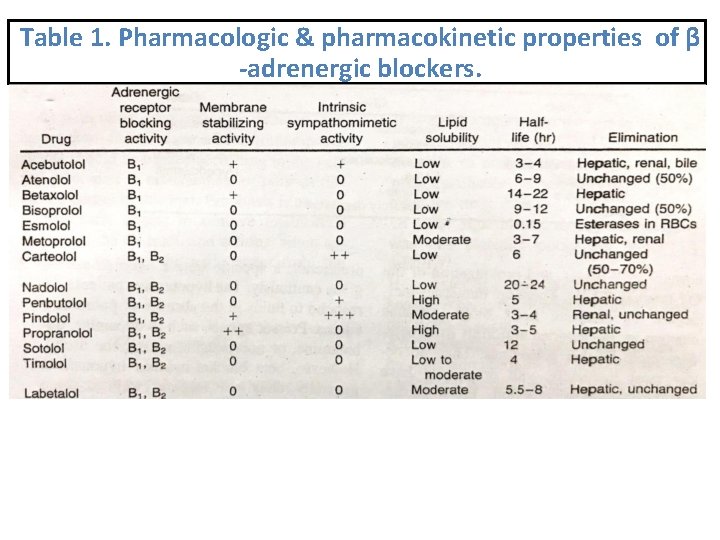
Table 1. Pharmacologic & pharmacokinetic properties of β -adrenergic blockers.
Toxicity of β-adrenergic blockers: § Most of the toxicity of β-adrenergic antagonists is because of their ability to competitively antagonize the action of catecholamines at cardiac β-adrenergic receptors. § A membrane depressant effect likely contributes to the cardiac depressant effects of propranolol. § Most poisonings involve propranolol. § High doses of β-adrenergic blockers with intrinsic sympathomimetic activity (ISA) (e. g. , acebutolol & pindolol) can cause tachycardia & hypertension.
§ The high lipid solubility of certain β–adrenergic blockers, especially propranolol accounts for the CNS effects. § In overdose, pharmacokinetic parameters may change drastically due to decreased cardiac output with subsequently reduced hepatic & renal blood flow. § Blood drug level determination alone is unreliable for assessing possible overdose because clinical symptoms might persist beyond the drug’s half life.
Characteristics of poisoning: § The most commonly reported signs & symptoms of βadrenergic blocker poisoning are listed in (Table 2). § Electrographic changes consist of first-degree AV block (prolonged PR interval), widening of the QRS complex, absence of P waves, & prolongation of the QT interval. § Sotalol & acebutolol prolong the QT interval. The prolonged QT interval by sotalol predisposes to torsades de pointes (Figure 1), & ventricular dysrhythmias may complicate therapeutic use of sotalol.
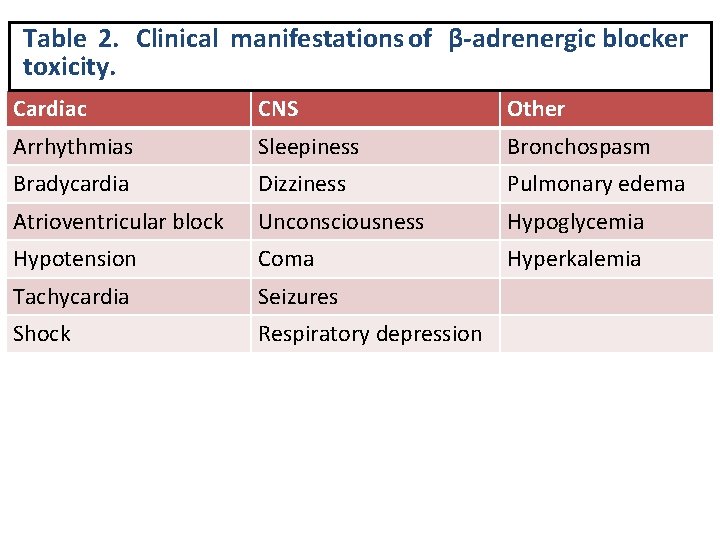
Table 2. Clinical manifestations of β-adrenergic blocker toxicity. Cardiac CNS Other Arrhythmias Sleepiness Bronchospasm Bradycardia Dizziness Pulmonary edema Atrioventricular block Unconsciousness Hypoglycemia Hypotension Coma Hyperkalemia Tachycardia Seizures Shock Respiratory depression
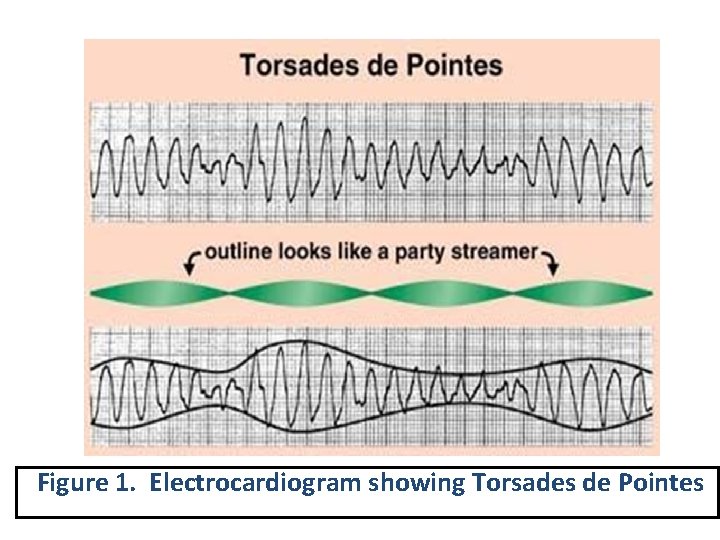
Figure 1. Electrocardiogram showing Torsades de Pointes
§ Cardiac changes do occur most frequently with drugs that have membrane-stabilizing action. § Propranolol possesses the most membrane stabilizing activity of this class, propranolol poisoning is characterized by coma, seizures hypotension, bradycardia impaired AV conduction, prolonged QRS interval.
Management of poisoning: § The airway ventilation should be maintained with endotracheal intubation (Figure 2) if necessary. It is reasonable to give atropine before intubation of patients with bradycardia § Orogastric lavage is recommended for patients with significant symptoms such as seizures, hypotension, or bradycardia if the drug is still expected to be in the stomach. Before performing orogastric lavage, it is reasonable to pretreat patients with standard doses of atropine.
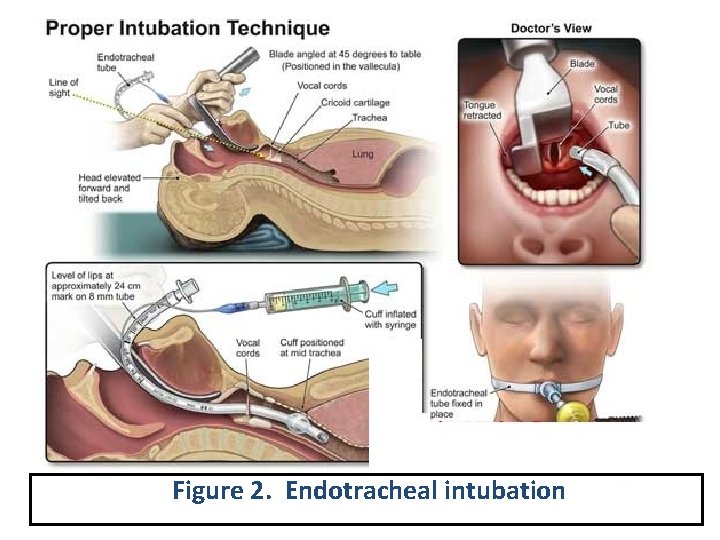
Figure 2. Endotracheal intubation
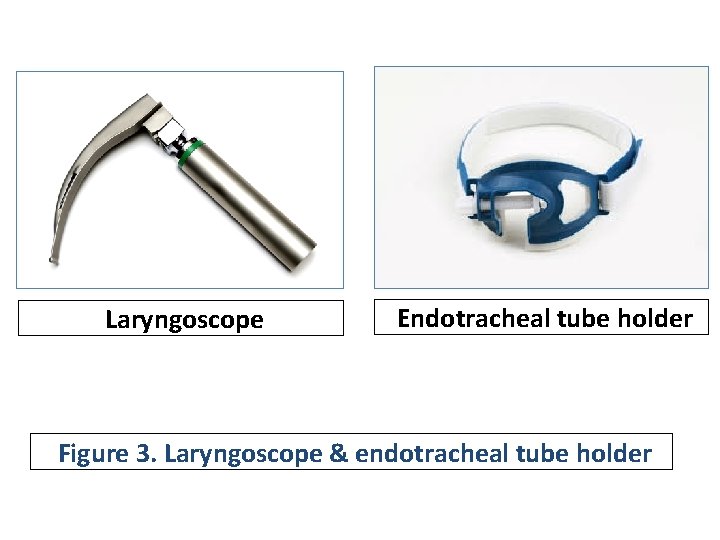
Laryngoscope Endotracheal tube holder Figure 3. Laryngoscope & endotracheal tube holder
§ Activated charcoal can be given repeatedly during the first 24 hours § Whole bowel irrigation with polyethylene glycol should be considered in patients who have ingested sustained release preparations § Other areas of general management include giving glucose for hypoglycemia, diazepam for convulsions, monitoring potassium levels. § In the treatment of bradycardia if the patient is compromised hemodynamically atropine may be given.
§ The hypotensive patient may respond to fluids in the absence of pulmonary edema. § Patients who fail to respond to atropine & fluids require management with the inotropes. § When time permits, it is preferable to introduce medications sequentially. It is recommended to give: 1. Glucagon, 2. followed by calcium, high dose insulin euglycemia therapy, a catecholamine (isoproterenol, epinephrine, & dobutamine), & if this fails, then give 3. phosphodiesterase inhibitors
§ Hemoperfusion hemodialysis may be considered in cases involving nadolol & atenolol.

- Slides: 16