Characterizing the spectrum of task f MRI connectivity





- Slides: 57
Characterizing the spectrum of task f. MRI connectivity approaches Patrick J. A. Pruitt, Ph. D Michigan Neuroimaging Initiative November 13, 2018
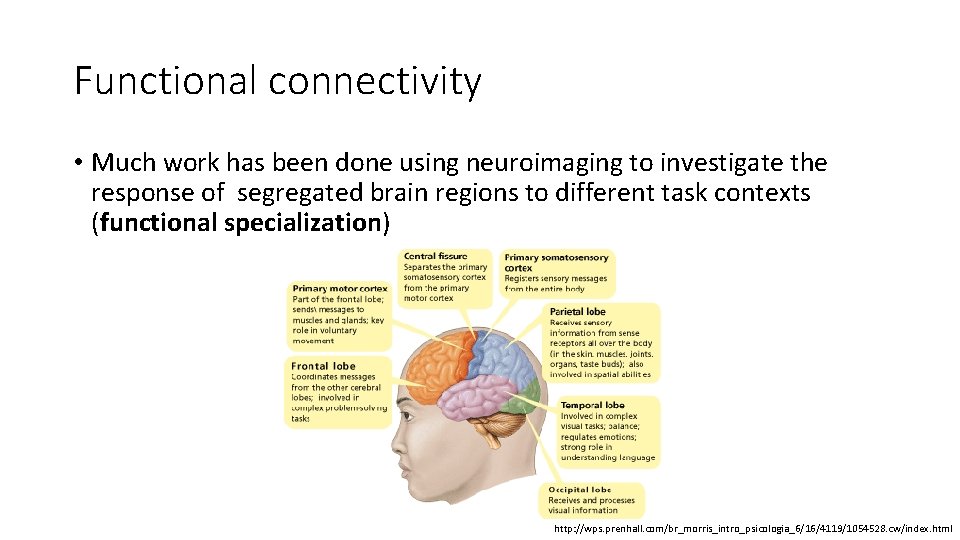
Functional connectivity • Much work has been done using neuroimaging to investigate the response of segregated brain regions to different task contexts (functional specialization) http: //wps. prenhall. com/br_morris_intro_psicologia_6/16/4119/1054528. cw/index. html
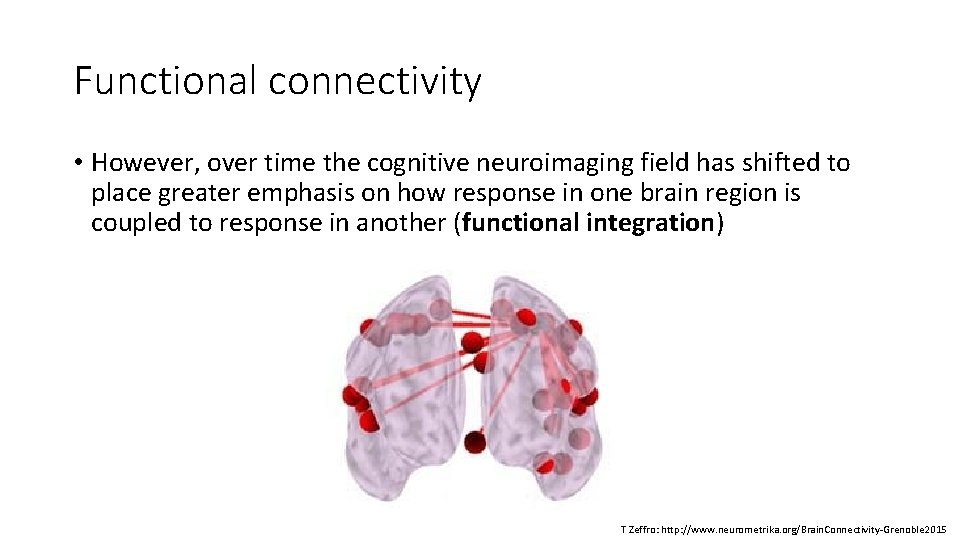
Functional connectivity • However, over time the cognitive neuroimaging field has shifted to place greater emphasis on how response in one brain region is coupled to response in another (functional integration) T Zeffro: http: //www. neurometrika. org/Brain. Connectivity-Grenoble 2015
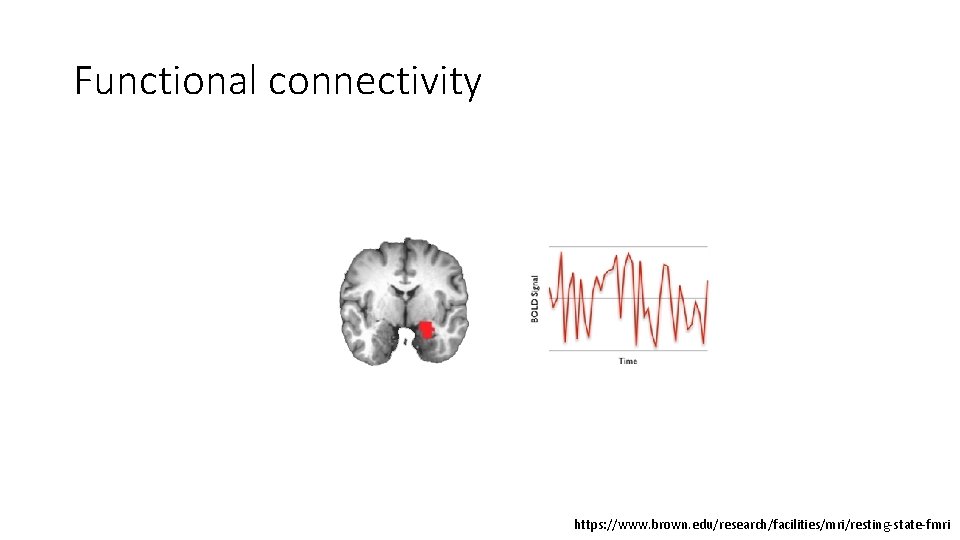
Functional connectivity https: //www. brown. edu/research/facilities/mri/resting-state-fmri
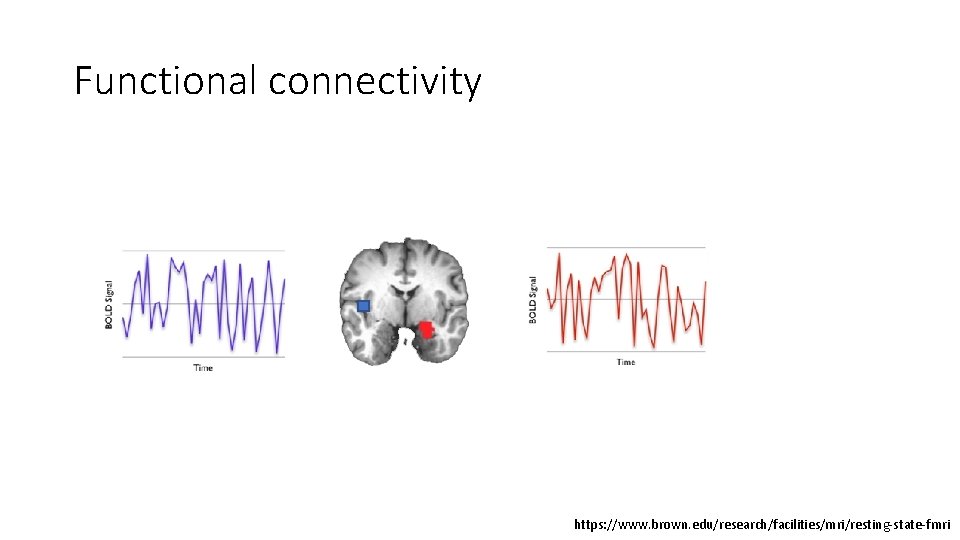
Functional connectivity https: //www. brown. edu/research/facilities/mri/resting-state-fmri
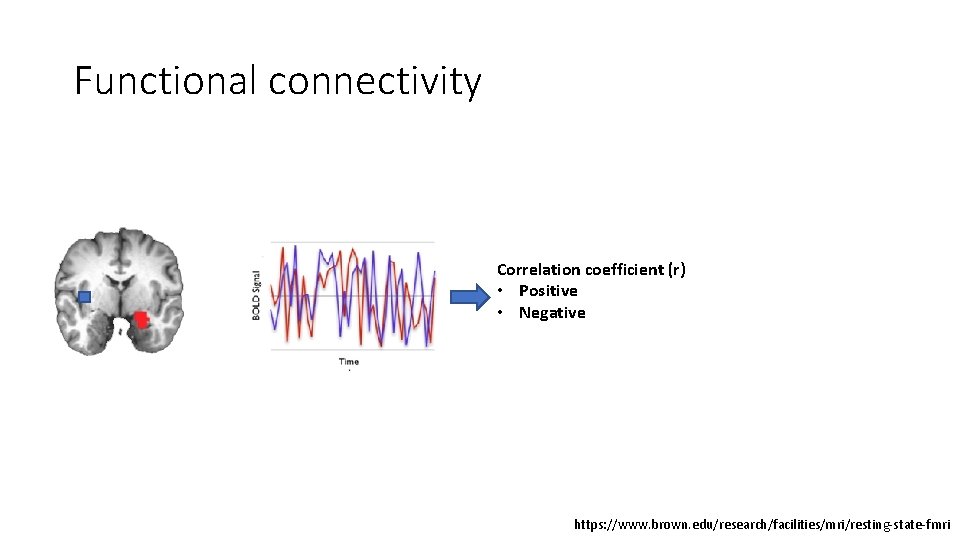
Functional connectivity Correlation coefficient (r) • Positive • Negative https: //www. brown. edu/research/facilities/mri/resting-state-fmri
Functional connectivity Correlation coefficient (r) • Positive • Negative Transform to Z-score https: //www. brown. edu/research/facilities/mri/resting-state-fmri
Functional connectivity Correlation coefficient (r) • Positive • Negative Transform to Z-score https: //www. brown. edu/research/facilities/mri/resting-state-fmri
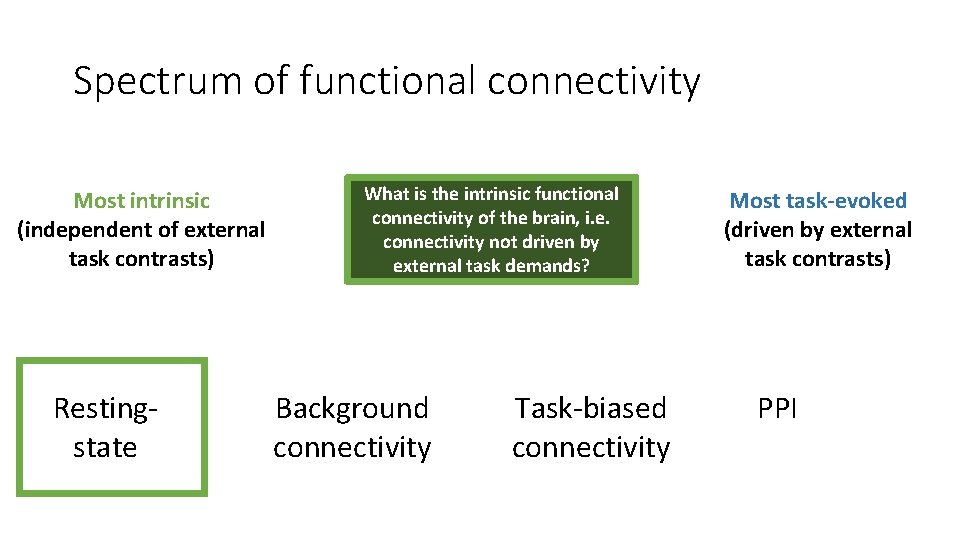
Resting-state functional connectivity • What is the intrinsic functional connectivity of the brain, i. e. connectivity not driven by external task demands? (Biswal et al, 1995) • Led to the discovery of intrinsic “resting-state networks”, which overlap with brain regions involved in sensory (e. g. motor network, visual network) and higher cognitive (e. g. frontoparietal network, salience network) function (Damoiseaux et al. , 2006)
Resting-state functional connectivity • Seed-based correlational analysis Regressor 1: Seed timeseries Identifies regions where timeseries correlate with the seed region
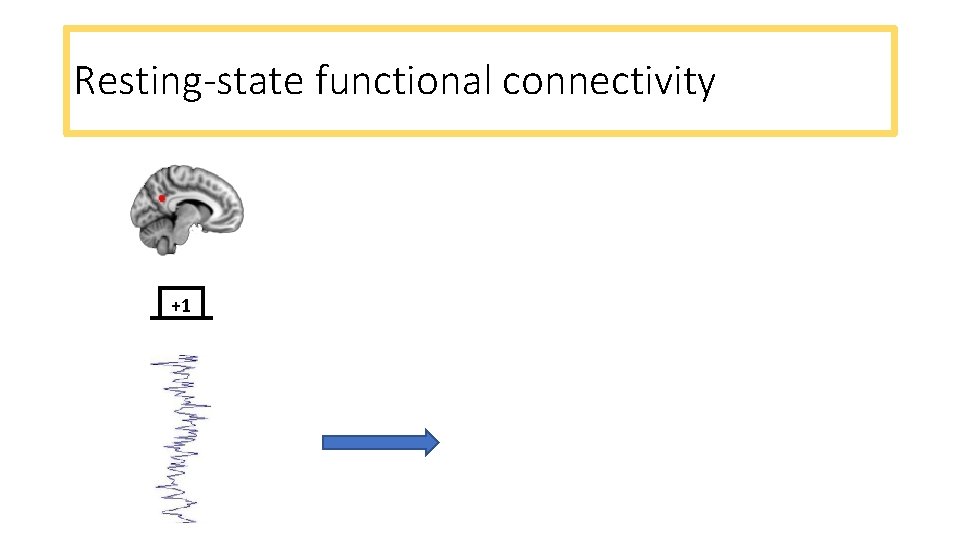
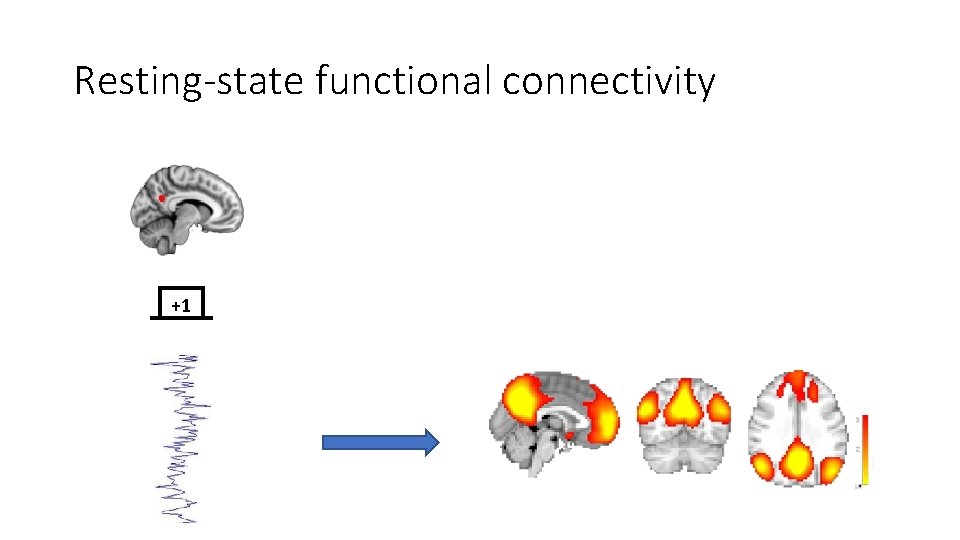
Resting-state functional connectivity • Seed-based correlational analysis +1 Identifies regions where timeseries positively correlate with the seed region
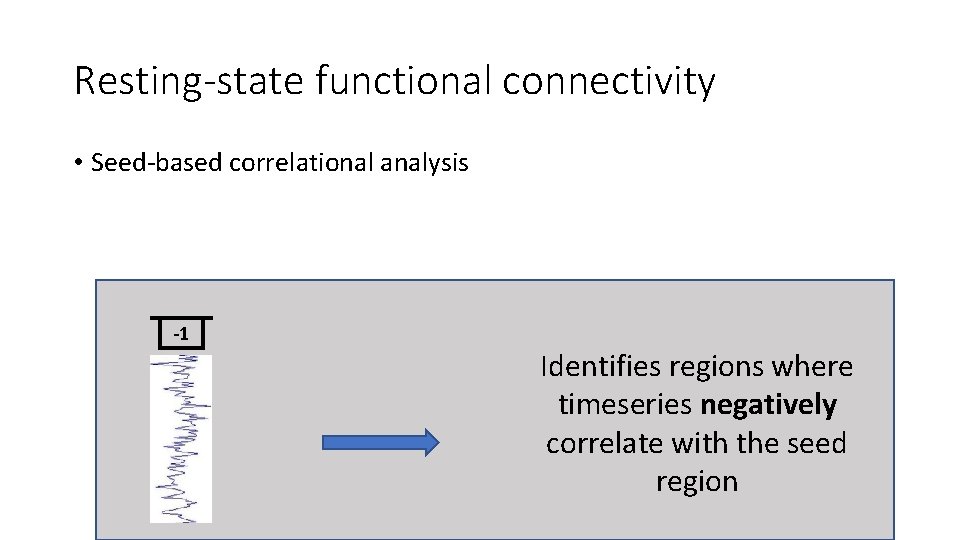
Resting-state functional connectivity • Seed-based correlational analysis -1 Identifies regions where timeseries negatively correlate with the seed region
Resting-state functional connectivity +1
Resting-state functional connectivity +1
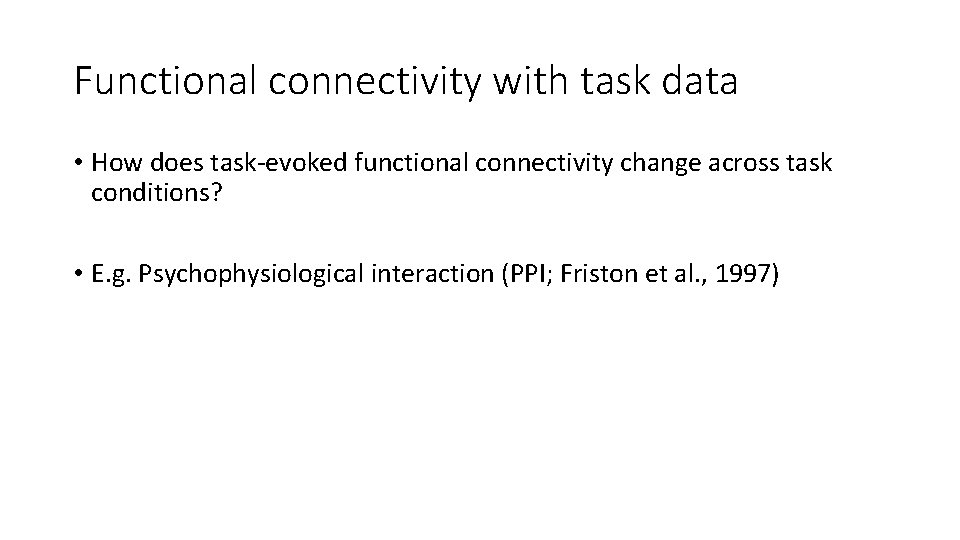
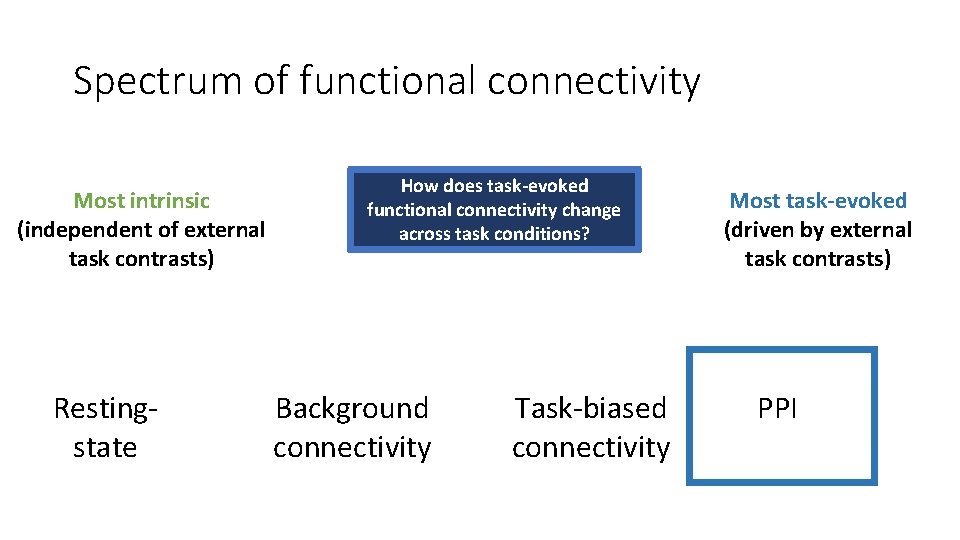
Functional connectivity with task data • How does task-evoked functional connectivity change across task conditions? • E. g. Psychophysiological interaction (PPI; Friston et al. , 1997)
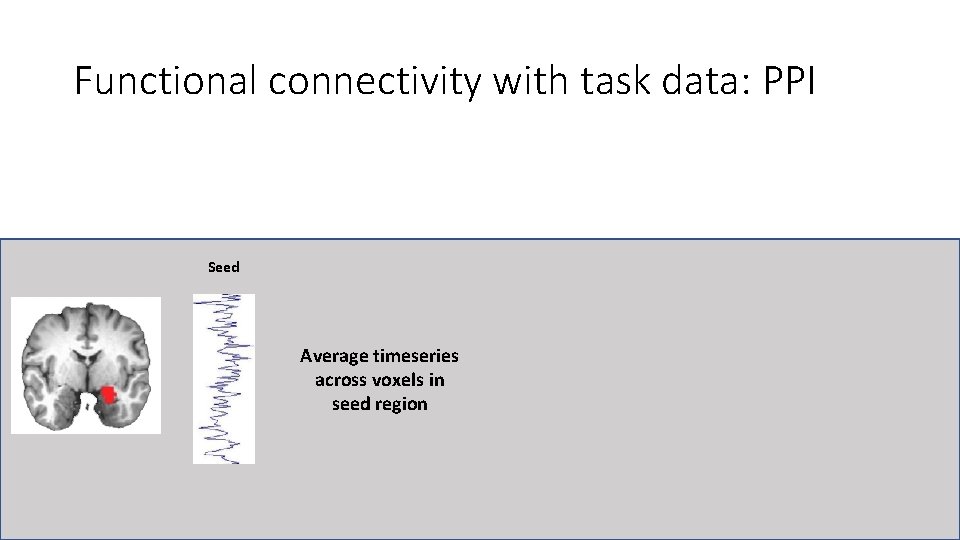
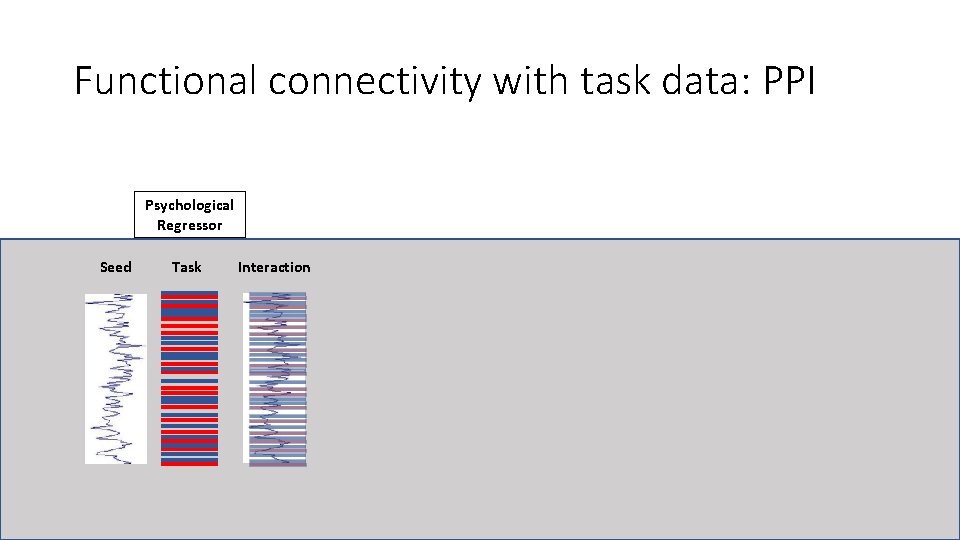
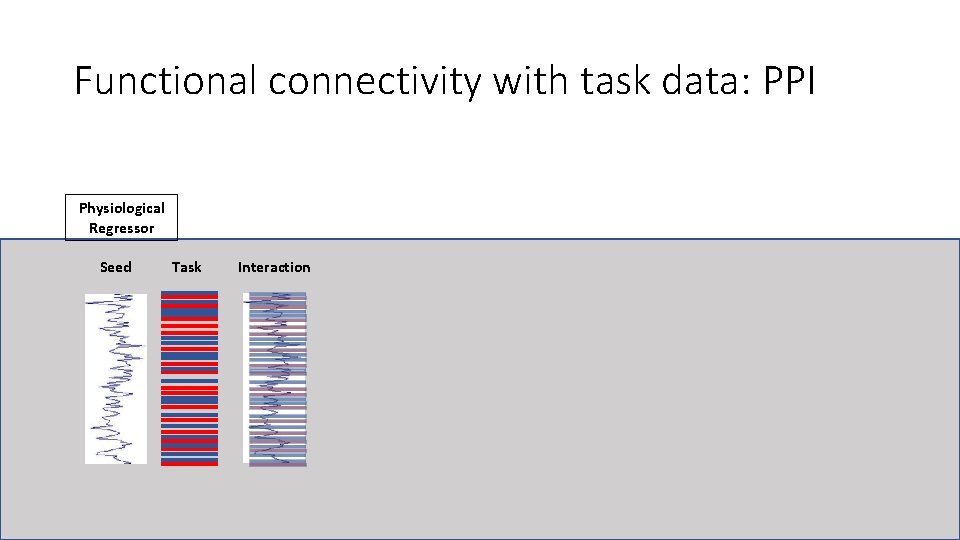
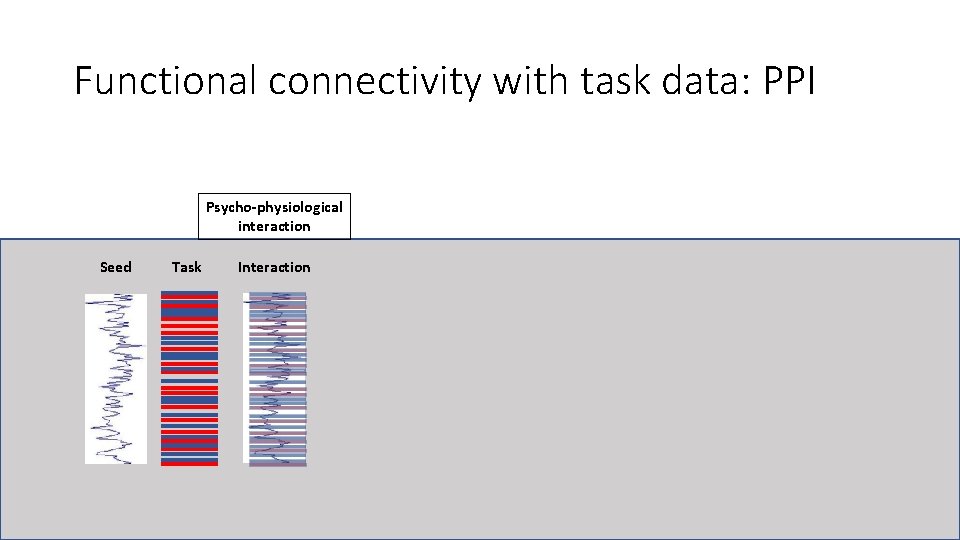
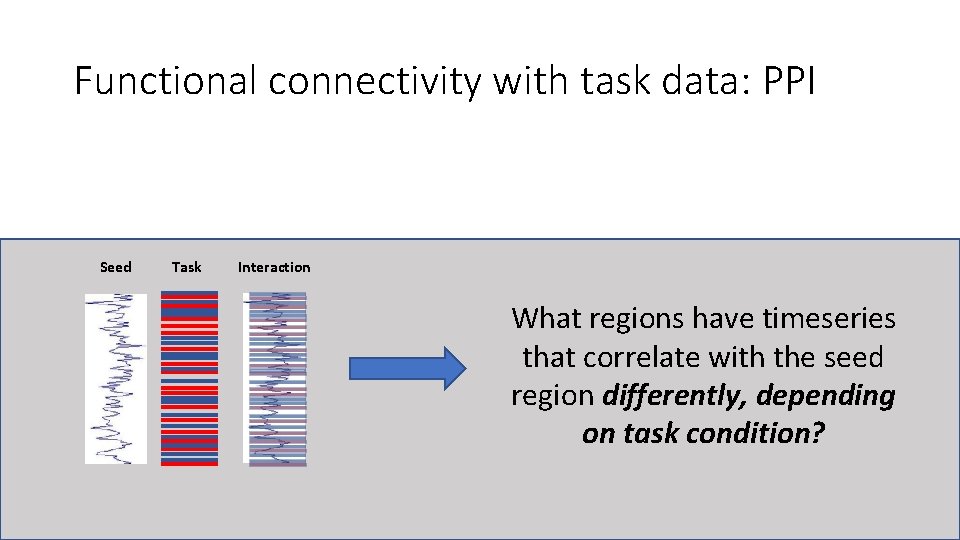
Functional connectivity with task data: PPI Seed Average timeseries across voxels in seed region
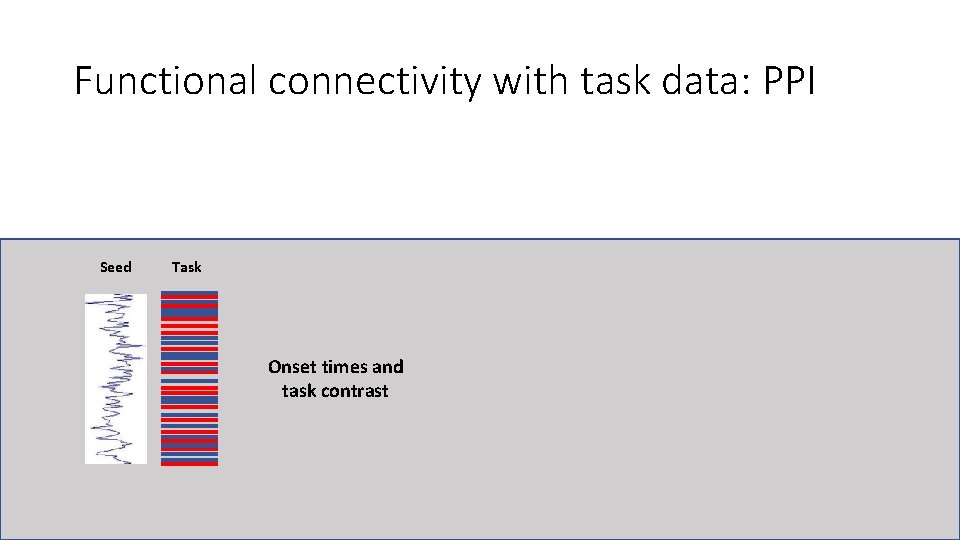
Functional connectivity with task data: PPI Seed Task Onset times and task contrast
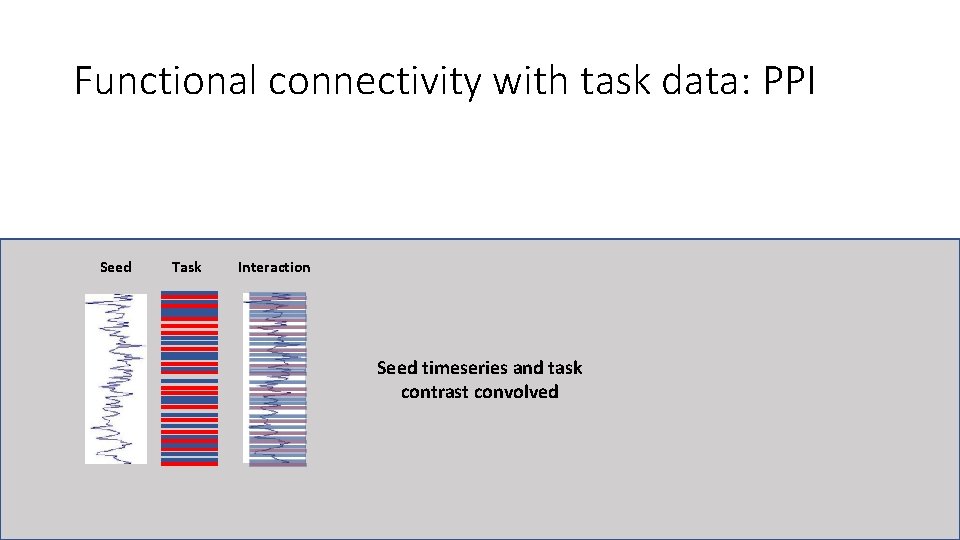
Functional connectivity with task data: PPI Seed Task Interaction Seed timeseries and task contrast convolved
Functional connectivity with task data: PPI Psychological Regressor Seed Task Interaction
Functional connectivity with task data: PPI Physiological Regressor Seed Task Interaction
Functional connectivity with task data: PPI Psycho-physiological interaction Seed Task Interaction
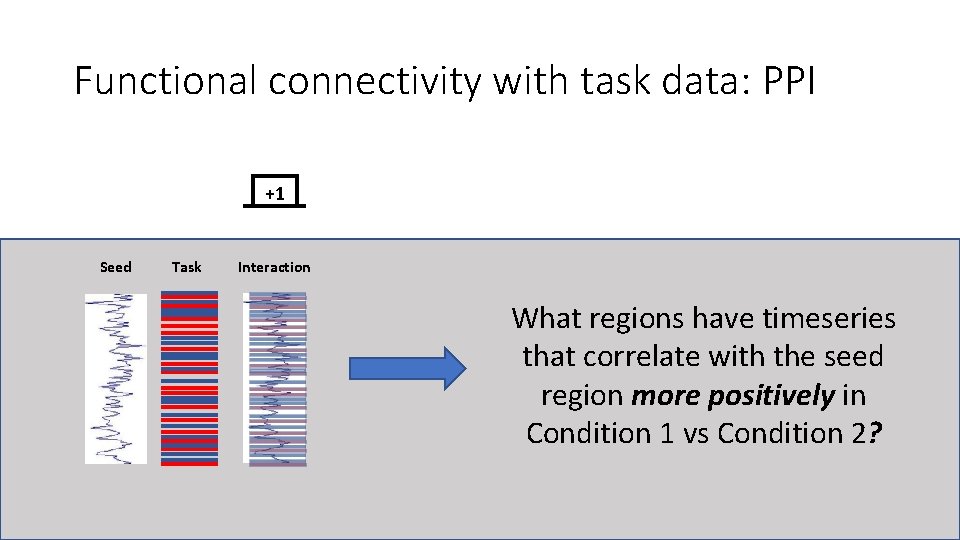
Functional connectivity with task data: PPI Seed Task Interaction What regions have timeseries that correlate with the seed region differently, depending on task condition?
Functional connectivity with task data: PPI +1 Seed Task Interaction What regions have timeseries that correlate with the seed region more positively in Condition 1 vs Condition 2?
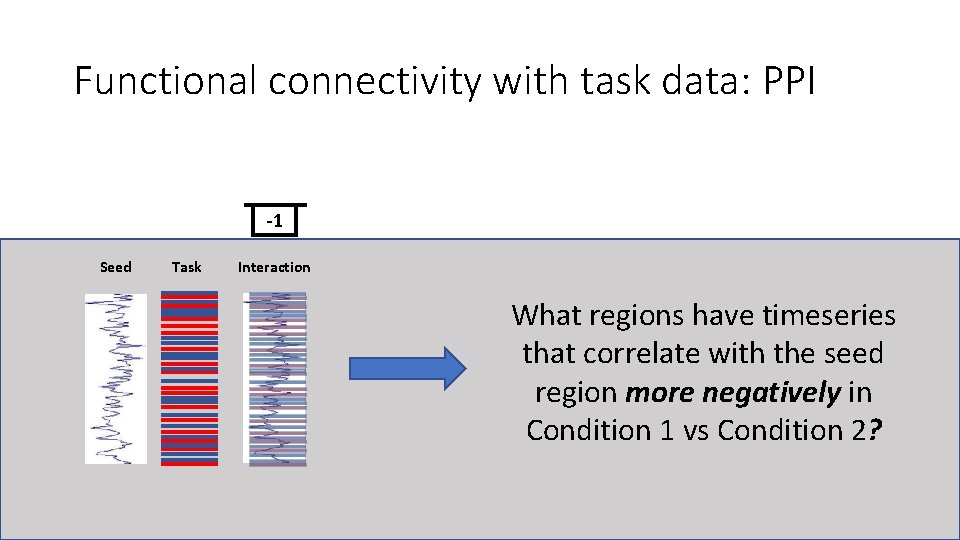
Functional connectivity with task data: PPI -1 Seed Task Interaction What regions have timeseries that correlate with the seed region more negatively in Condition 1 vs Condition 2?
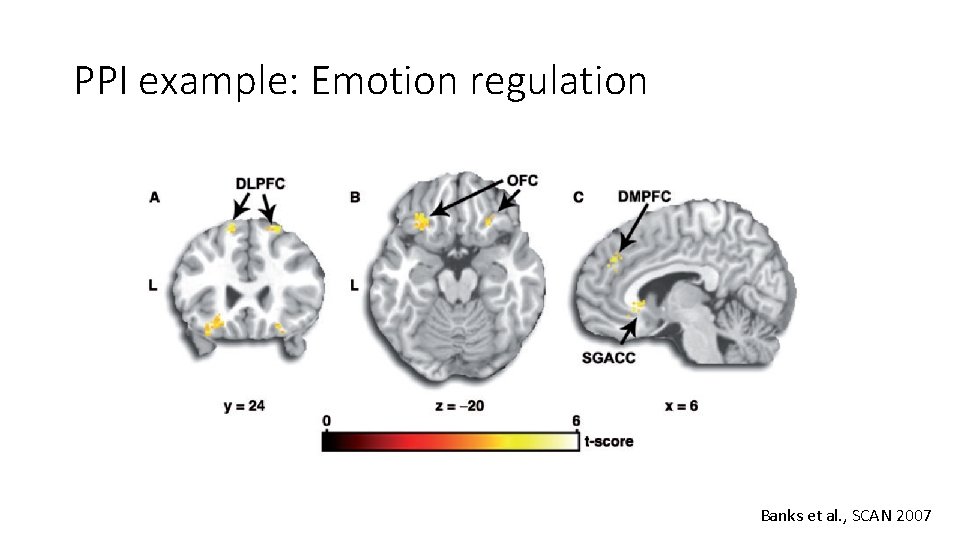
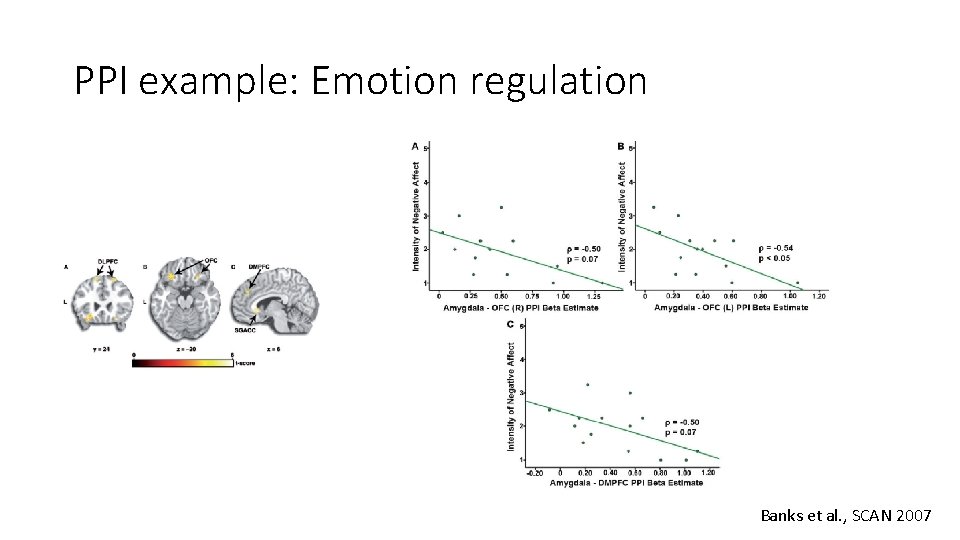
PPI example: Emotion regulation • Emotion regulation depends, in part, upon frontal cortical modulation of amygdalae • What does that connectivity look like? Banks et al. , SCAN 2007
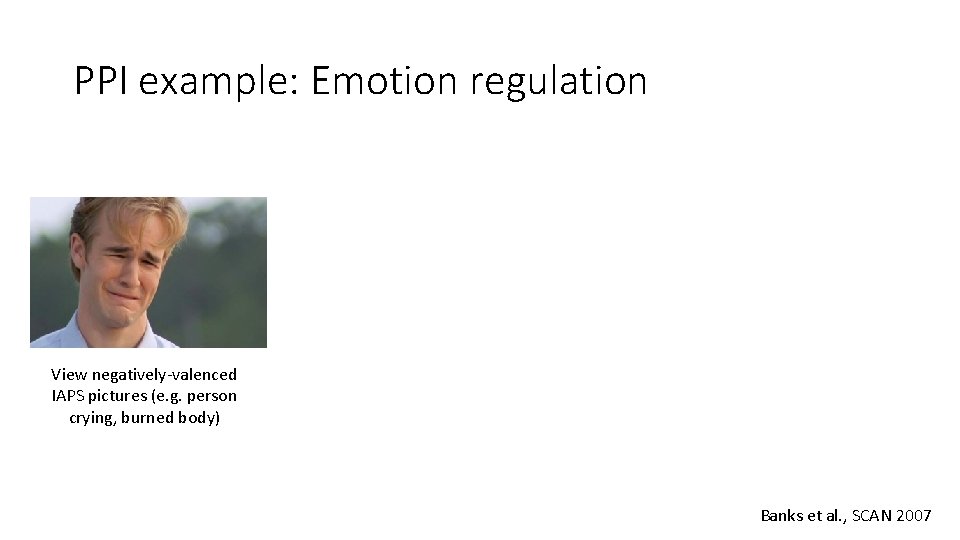
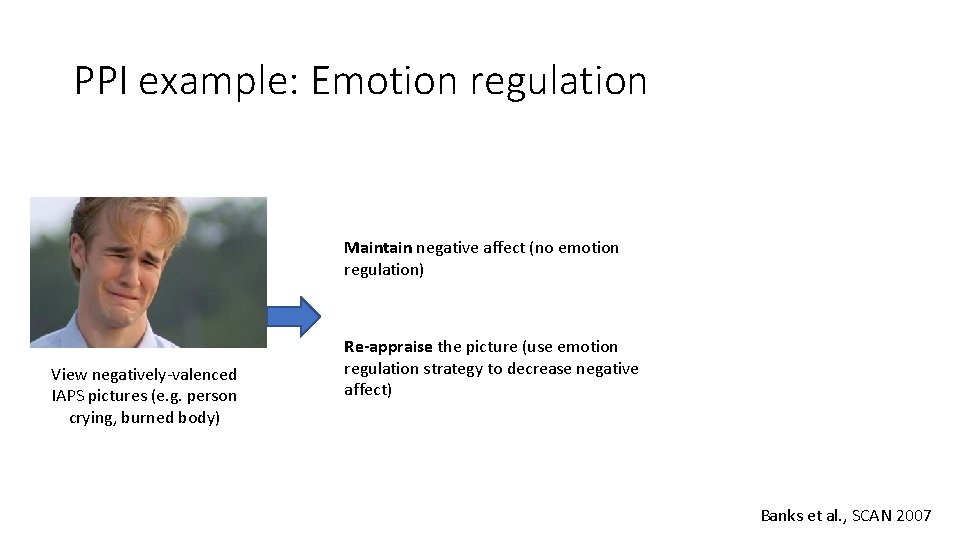
PPI example: Emotion regulation View negatively-valenced IAPS pictures (e. g. person crying, burned body) Banks et al. , SCAN 2007
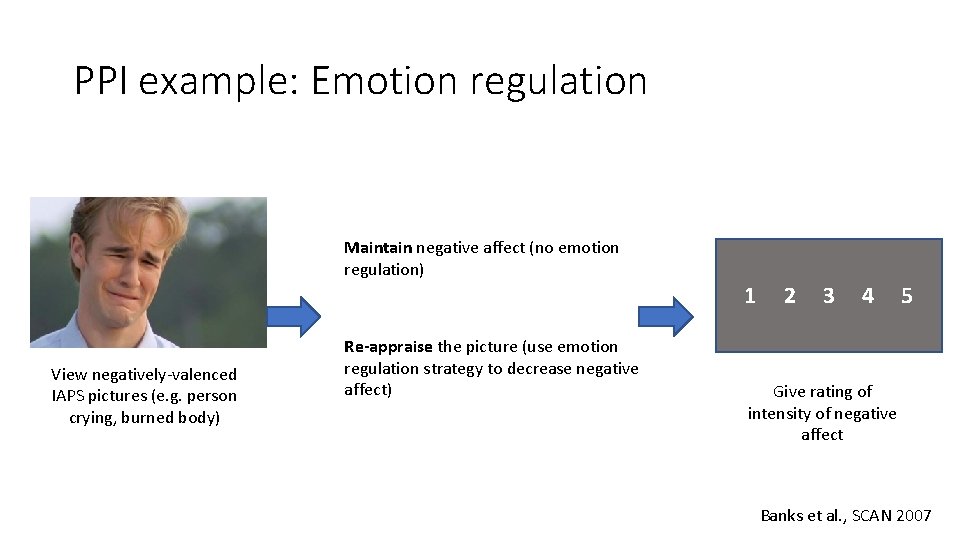
PPI example: Emotion regulation Maintain negative affect (no emotion regulation) View negatively-valenced IAPS pictures (e. g. person crying, burned body) Re-appraise the picture (use emotion regulation strategy to decrease negative affect) Banks et al. , SCAN 2007
PPI example: Emotion regulation Maintain negative affect (no emotion regulation) 1 View negatively-valenced IAPS pictures (e. g. person crying, burned body) Re-appraise the picture (use emotion regulation strategy to decrease negative affect) 2 3 4 5 Give rating of intensity of negative affect Banks et al. , SCAN 2007
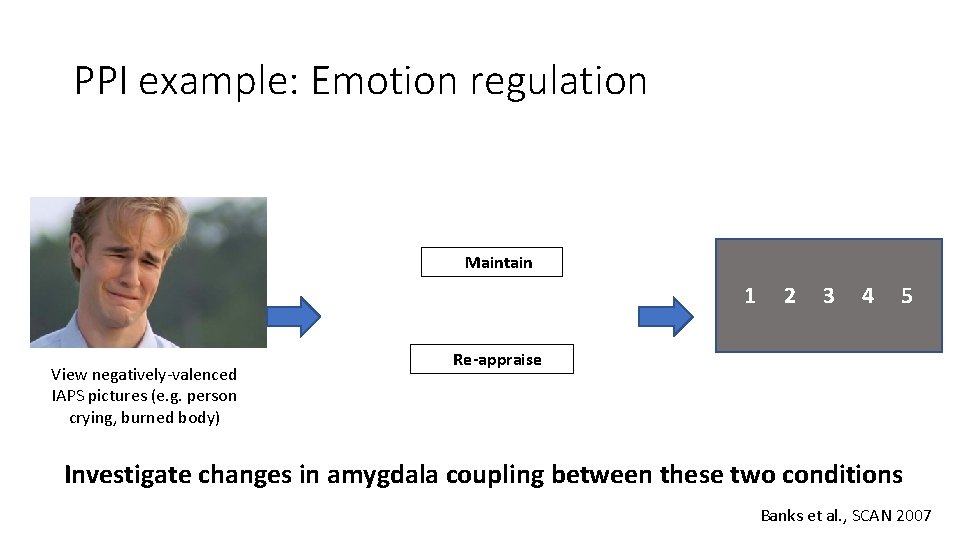
PPI example: Emotion regulation Maintain 1 View negatively-valenced IAPS pictures (e. g. person crying, burned body) 2 3 4 5 Re-appraise Investigate changes in amygdala coupling between these two conditions Banks et al. , SCAN 2007
PPI example: Emotion regulation Banks et al. , SCAN 2007
PPI example: Emotion regulation Banks et al. , SCAN 2007
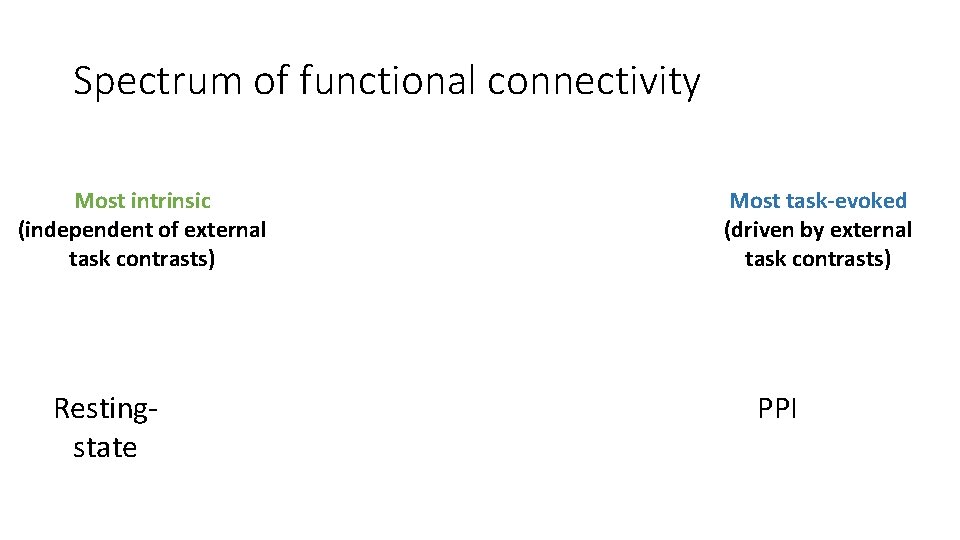
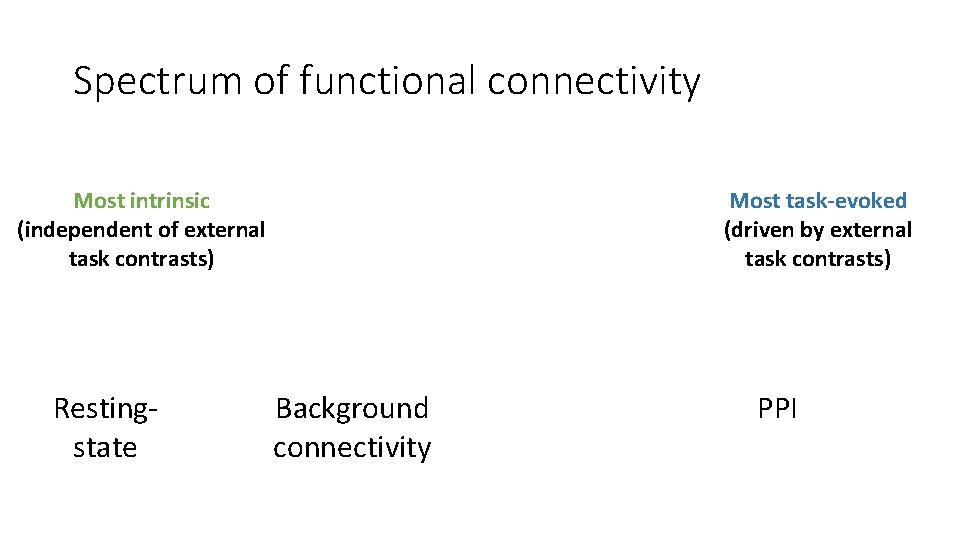
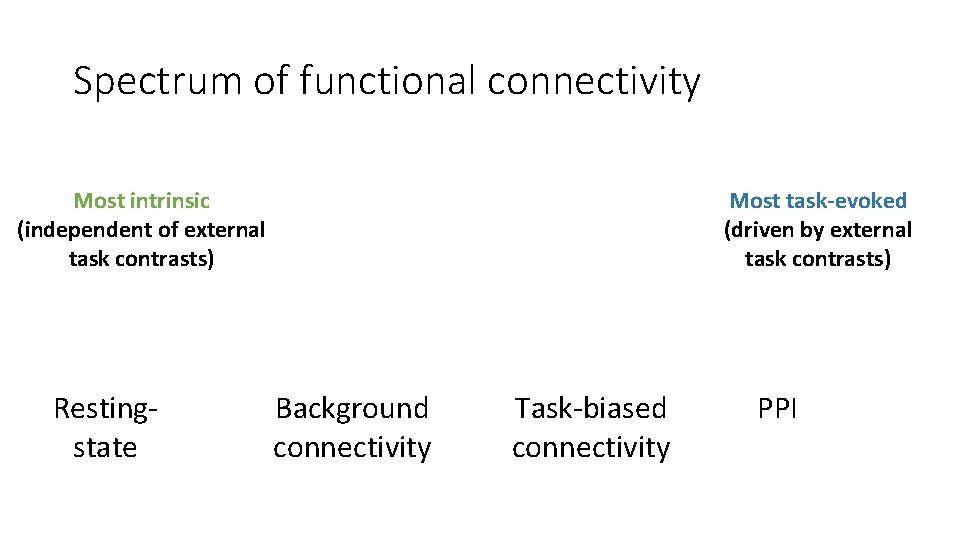
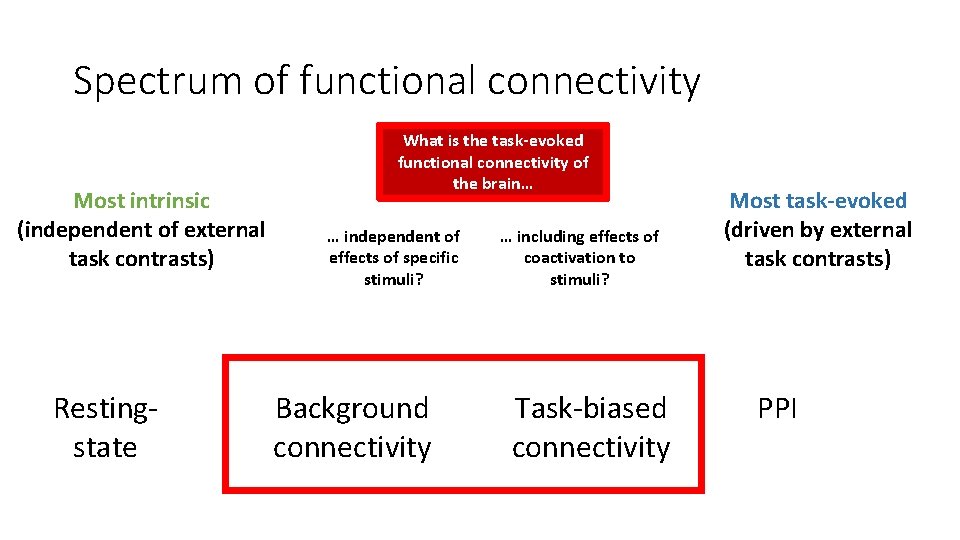
Spectrum of functional connectivity Most intrinsic (independent of external task contrasts) Restingstate Most task-evoked (driven by external task contrasts) PPI
Background connectivity • Using task-data to analyze functional connectivity independent of the effect of task stimuli (Fair et al, Neuroimage 2007) • Analyze as you would resting-state data, but include regressors for stimuli • Also referred to as “task-residual” or “task-context” connectivity
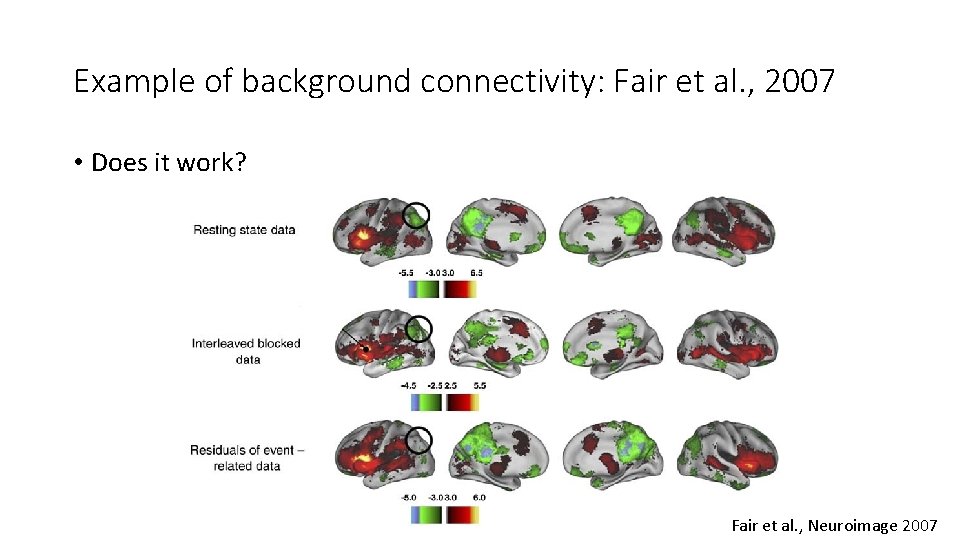
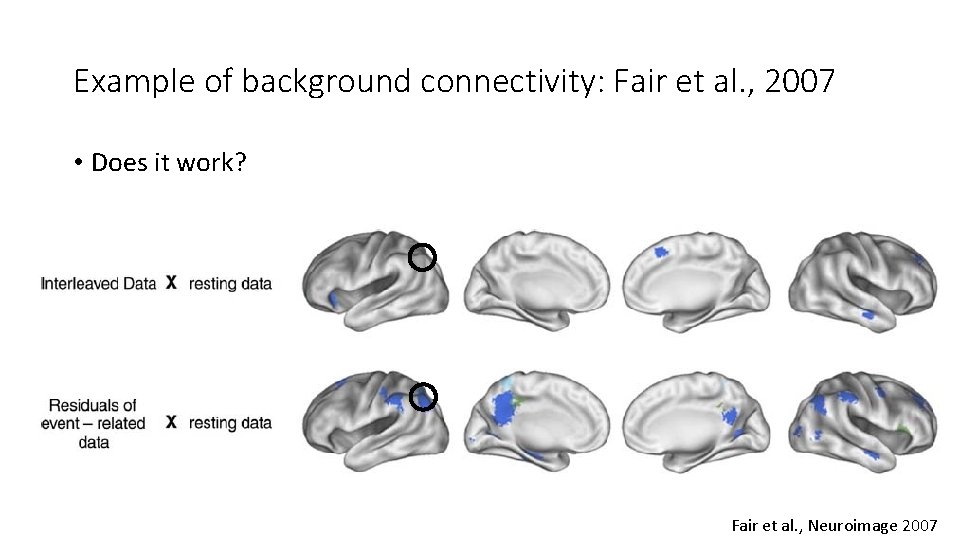
Example of background connectivity: Fair et al. , 2007 • Resting-state analyses are picking up steam; many researchers have already collected task data. • Can we use task data to get measures of resting-state functional connectivity?
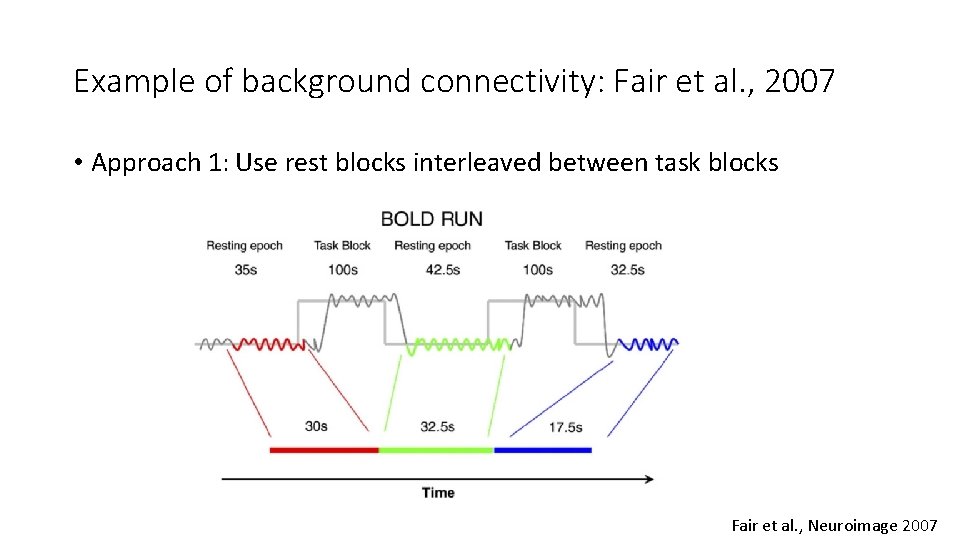
Example of background connectivity: Fair et al. , 2007 • Approach 1: Use rest blocks interleaved between task blocks Fair et al. , Neuroimage 2007
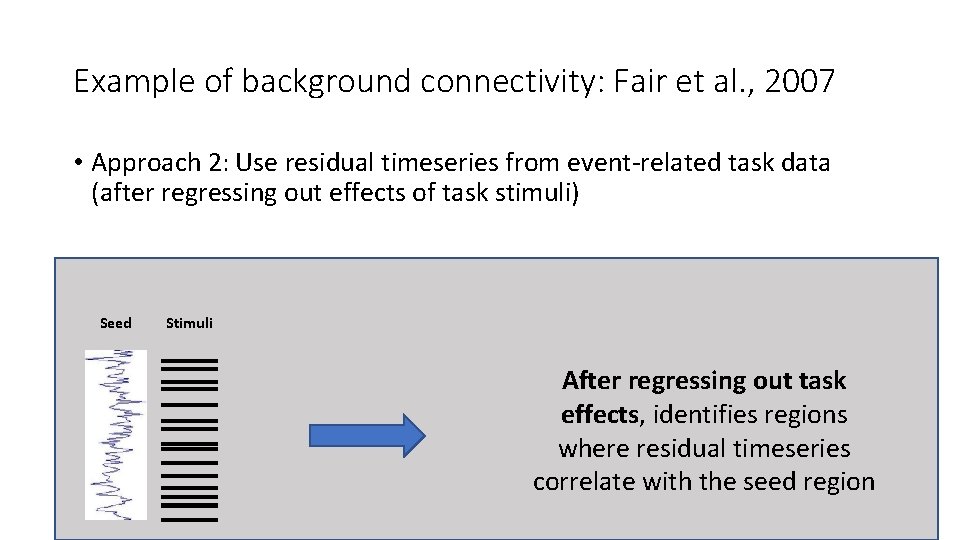
Example of background connectivity: Fair et al. , 2007 • Approach 2: Use residual timeseries from event-related task data (after regressing out effects of task stimuli) Seed Stimuli After regressing out task effects, identifies regions where residual timeseries correlate with the seed region
Example of background connectivity: Fair et al. , 2007 • Does it work? Fair et al. , Neuroimage 2007
Example of background connectivity: Fair et al. , 2007 • Does it work? Fair et al. , Neuroimage 2007
Spectrum of functional connectivity Most task-evoked (driven by external task contrasts) Most intrinsic (independent of external task contrasts) Restingstate Background connectivity PPI
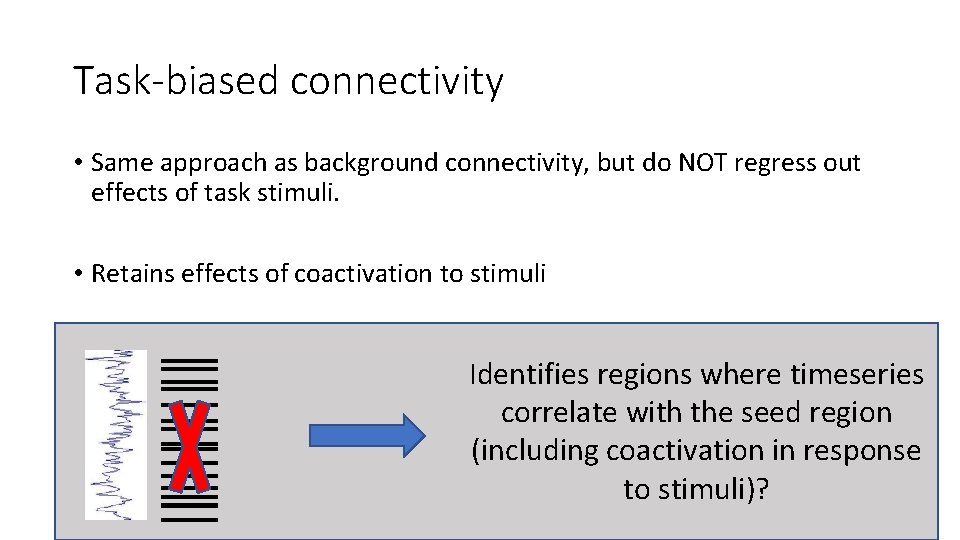
Task-biased connectivity • Same approach as background connectivity, but do NOT regress out effects of task stimuli. • Retains effects of coactivation to stimuli Identifies regions where timeseries correlate with the seed region (including coactivation in response to stimuli)?
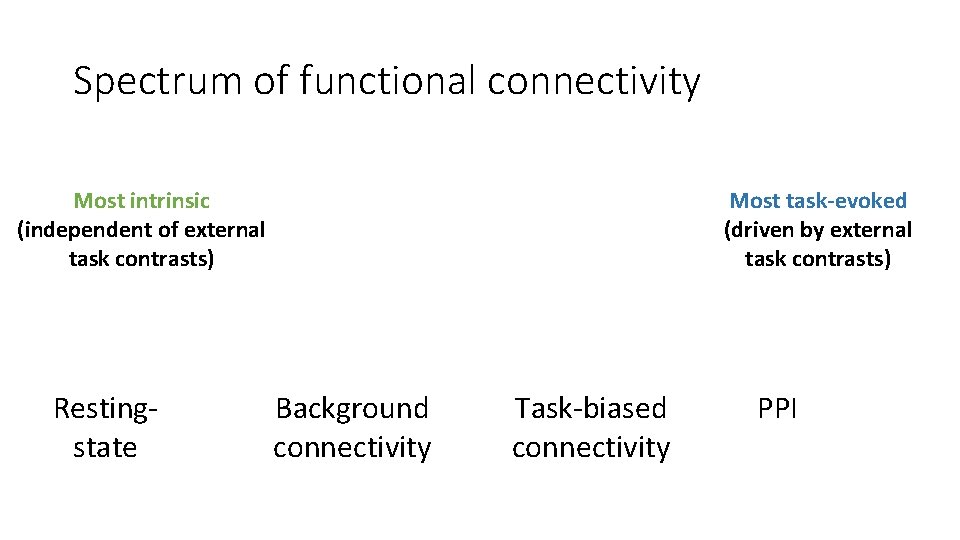
Spectrum of functional connectivity Most task-evoked (driven by external task contrasts) Most intrinsic (independent of external task contrasts) Restingstate Background connectivity Task-biased connectivity PPI
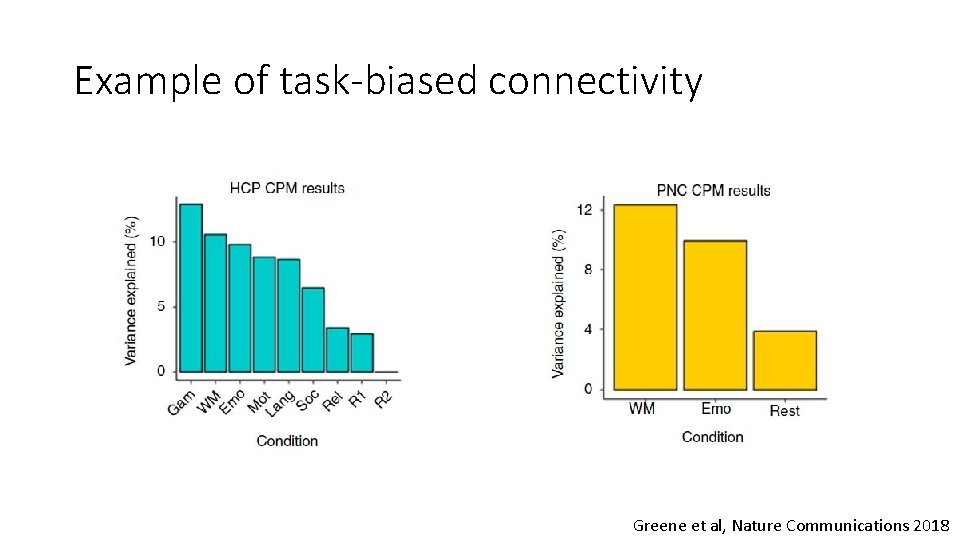
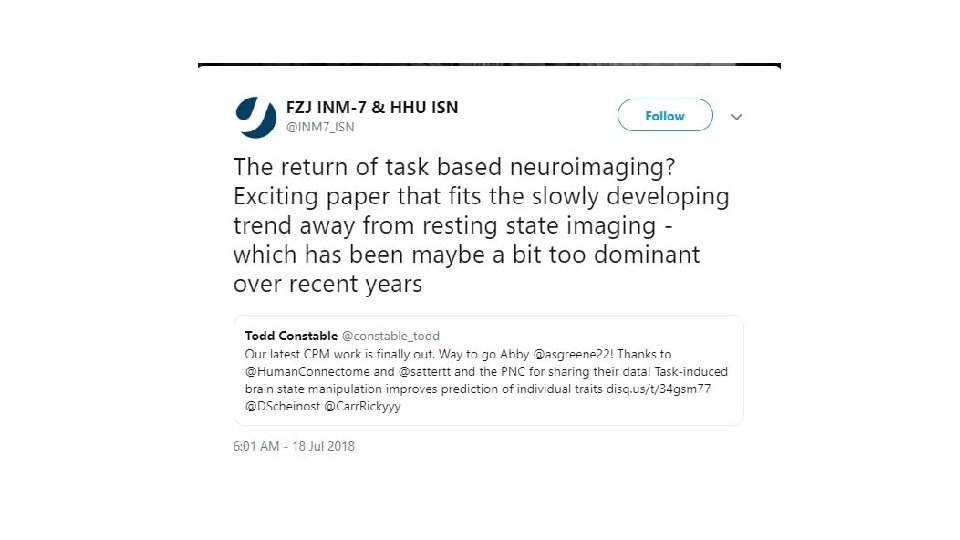
Example of task-biased connectivity: Predictive modeling • Task and rest data from Human Connectome Project (HCP) and Philadelphia Neurodevelopmental Cohort (PNC) • Decision-making, working memory, emotion, motor, language, social, relational reasoning, resting-state • Investigate connectivity for each task and rest run, without regard to task stimuli • How much individual variability in a trait (fluid intelligence) is explained by connectivity measures during different tasks/rest? • Connectome-based prediction models (CPM) Greene et al, Nature Communications 2018
Example of task-biased connectivity Greene et al, Nature Communications 2018
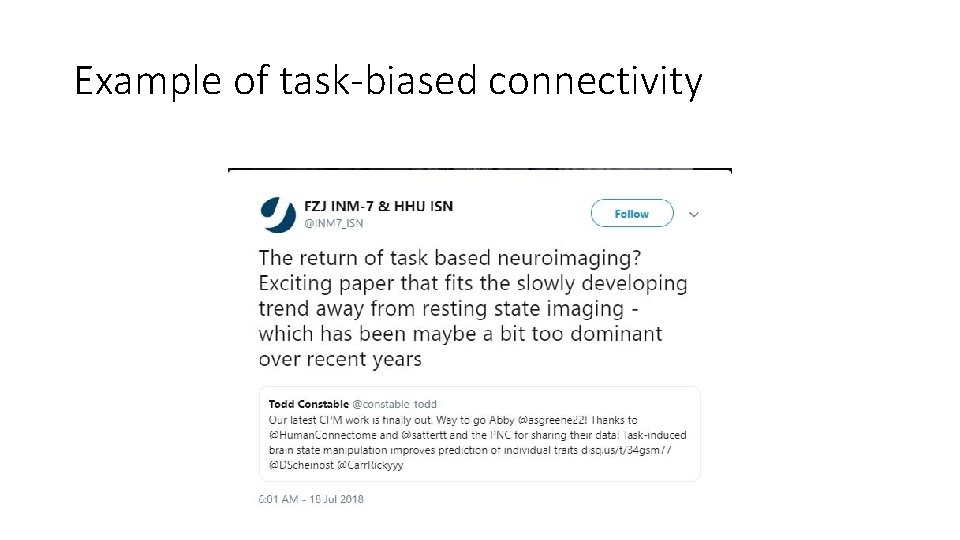
Example of task-biased connectivity
Example of task-biased connectivity • “These findings involved no correction for task-related activation (Fair et al, 2007), suggesting that such activations do not hinder—and perhaps even improve—prediction in the CPM framework. ” Greene et al, Nature Communications 2018
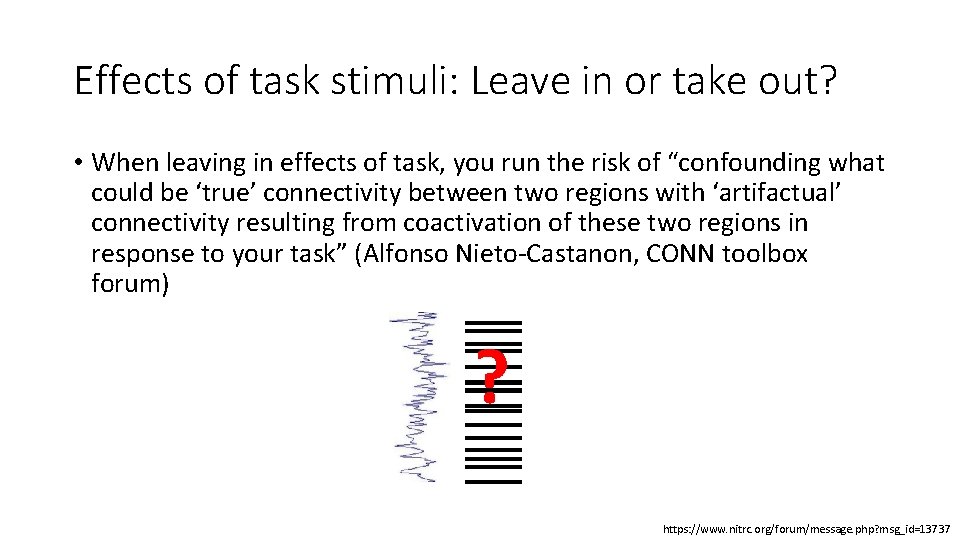
Effects of task stimuli: Leave in or take out? • When leaving in effects of task, you run the risk of “confounding what could be ‘true’ connectivity between two regions with ‘artifactual’ connectivity resulting from coactivation of these two regions in response to your task” (Alfonso Nieto-Castanon, CONN toolbox forum) ? https: //www. nitrc. org/forum/message. php? msg_id=13737
Effects of task stimuli: Leave in or take out? • Does including regressors for task effects effectively remove those effects from BOLD signal? ?
Spectrum of functional connectivity Most task-evoked (driven by external task contrasts) Most intrinsic (independent of external task contrasts) Restingstate Background connectivity Task-biased connectivity PPI
Spectrum of functional connectivity Most intrinsic (independent of external task contrasts) Restingstate What is the intrinsic functional connectivity of the brain, i. e. connectivity not driven by external task demands? Background connectivity Task-biased connectivity Most task-evoked (driven by external task contrasts) PPI
Spectrum of functional connectivity Most intrinsic (independent of external task contrasts) Restingstate How does task-evoked functional connectivity change across task conditions? Background connectivity Task-biased connectivity Most task-evoked (driven by external task contrasts) PPI
Spectrum of functional connectivity Most intrinsic (independent of external task contrasts) Restingstate What is the task-evoked functional connectivity of the brain… … independent of effects of specific stimuli? Background connectivity … including effects of coactivation to stimuli? Task-biased connectivity Most task-evoked (driven by external task contrasts) PPI
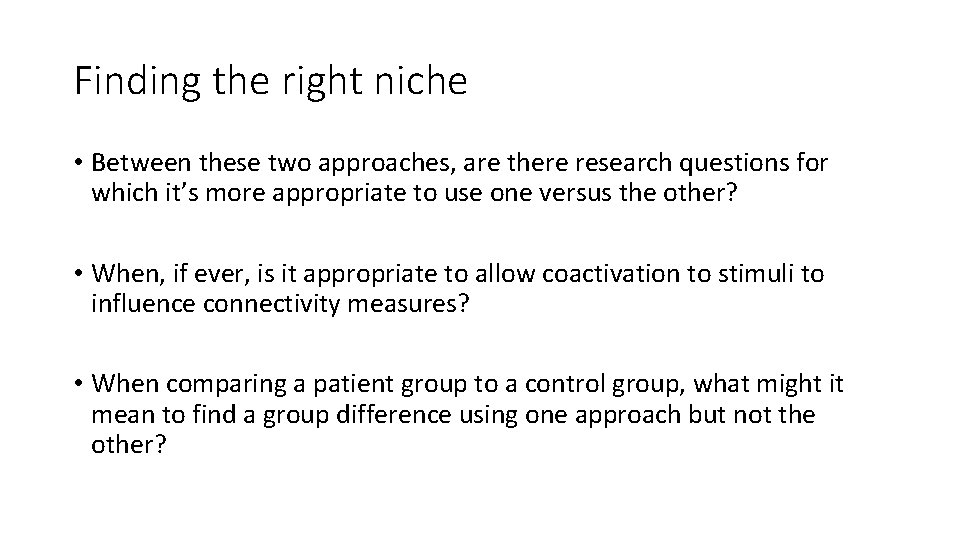
Finding the right niche • Between these two approaches, are there research questions for which it’s more appropriate to use one versus the other? • When, if ever, is it appropriate to allow coactivation to stimuli to influence connectivity measures? • When comparing a patient group to a control group, what might it mean to find a group difference using one approach but not the other?
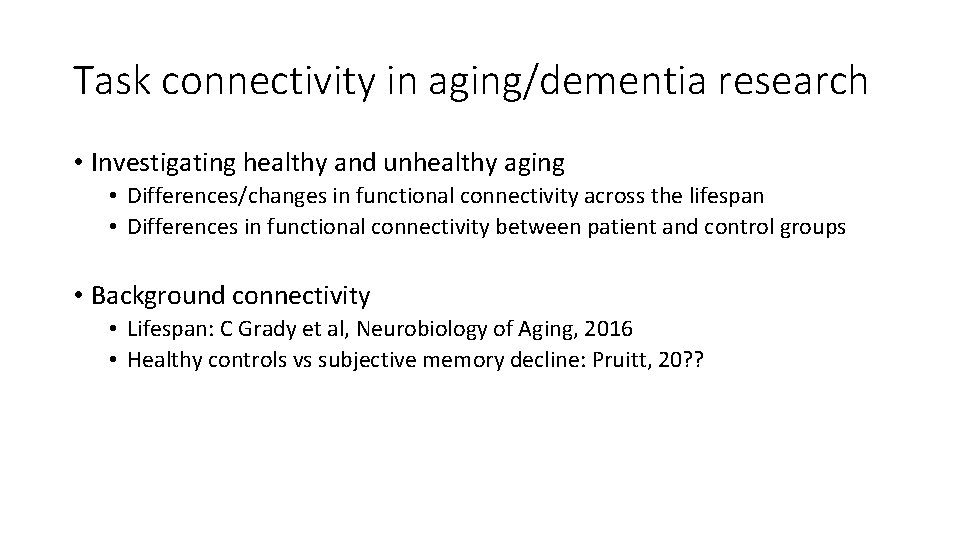
Task connectivity in aging/dementia research • Investigating healthy and unhealthy aging • Differences/changes in functional connectivity across the lifespan • Differences in functional connectivity between patient and control groups • Background connectivity • Lifespan: C Grady et al, Neurobiology of Aging, 2016 • Healthy controls vs subjective memory decline: Pruitt, 20? ?
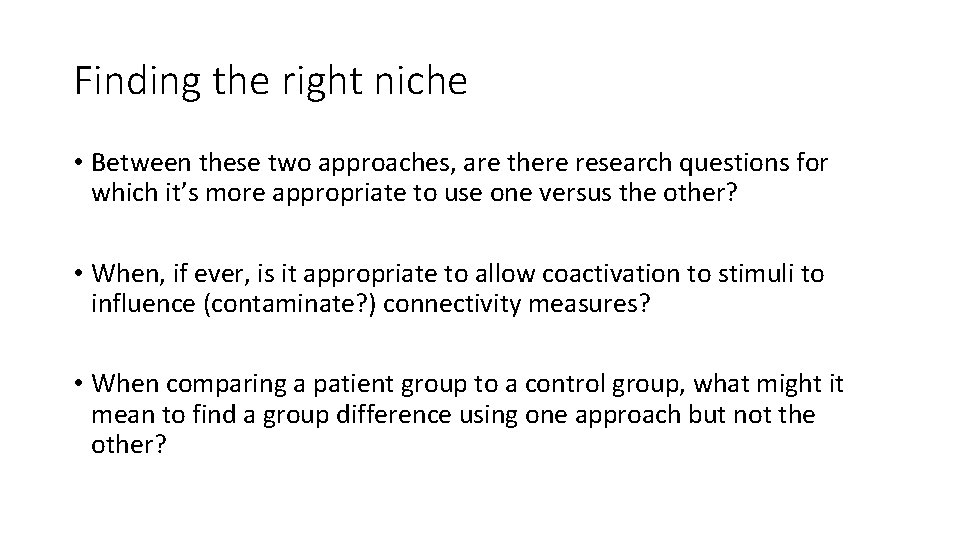
Finding the right niche • Between these two approaches, are there research questions for which it’s more appropriate to use one versus the other? • When, if ever, is it appropriate to allow coactivation to stimuli to influence (contaminate? ) connectivity measures? • When comparing a patient group to a control group, what might it mean to find a group difference using one approach but not the other?
PI: Jeske Damoiseaux, Ph. D Graduate Students: Ray Viviano Jessica Hayes Youjin Jung Research Assistant: Nicole Tracy Additional thanks to Dr. Noa Ofen’s Lab at Wayne State, especially Lingfei Tang