Chapter 19 The Diversity of Viruses Prokaryotes and

- Slides: 66
Chapter 19 • The Diversity of Viruses, Prokaryotes, and Protists Copyright © 2005 Pearson Prentice Hall, Inc.
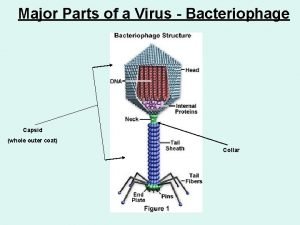
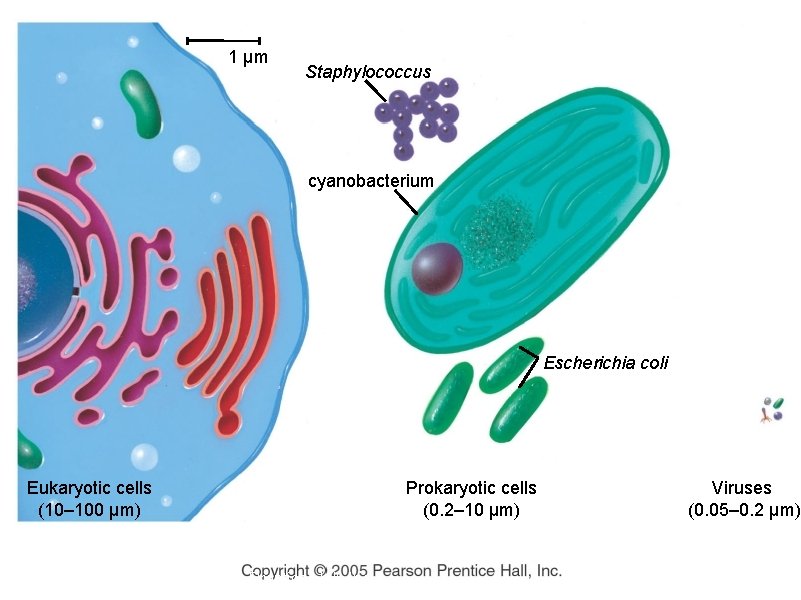
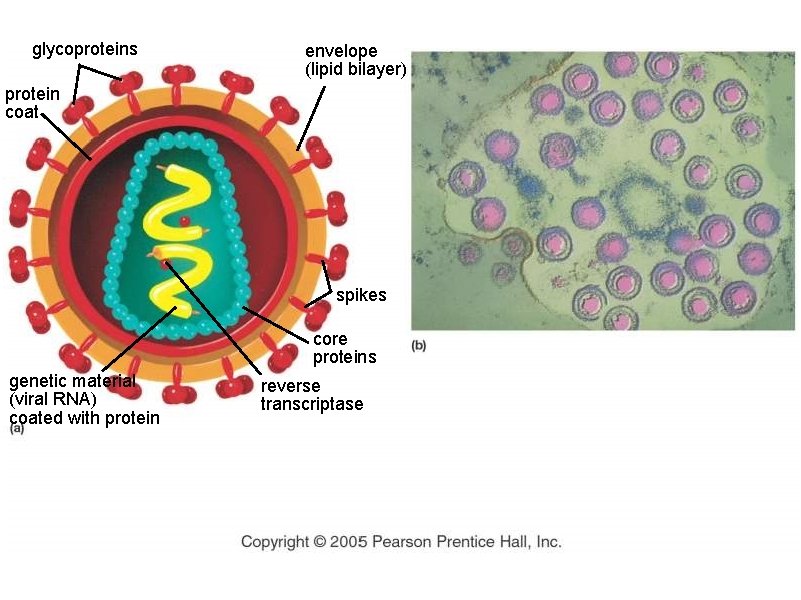
Viruses, Viroids, and Prions • A Virus Consists of a Molecule of DNA or RNA Surrounded by a Protein Coat – The sizes of microorganisms (F 19. 1 p. 360) – Viral structure and replication (F 19. 2 p. 361) Copyright © 2005 Pearson Prentice Hall, Inc.
1 µm Staphylococcus cyanobacterium Escherichia coli Eukaryotic cells (10– 100 µm) Copyright © 2005 Pearson Prentice Hall, Inc. Prokaryotic cells (0. 2– 10 µm) Viruses (0. 05– 0. 2 µm)
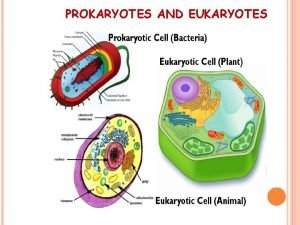
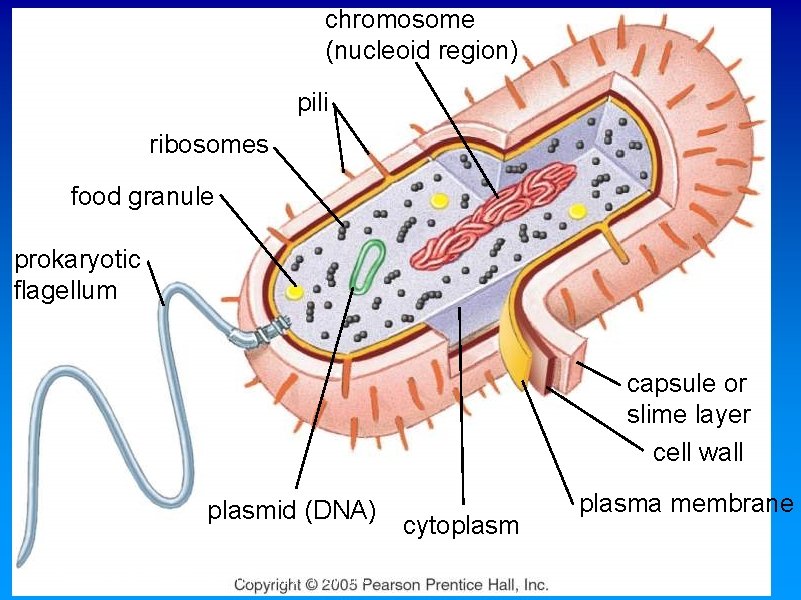
chromosome (nucleoid region) pili ribosomes food granule prokaryotic flagellum capsule or slime layer cell wall plasmid (DNA) Copyright © 2005 Pearson Prentice Hall, Inc. cytoplasma membrane
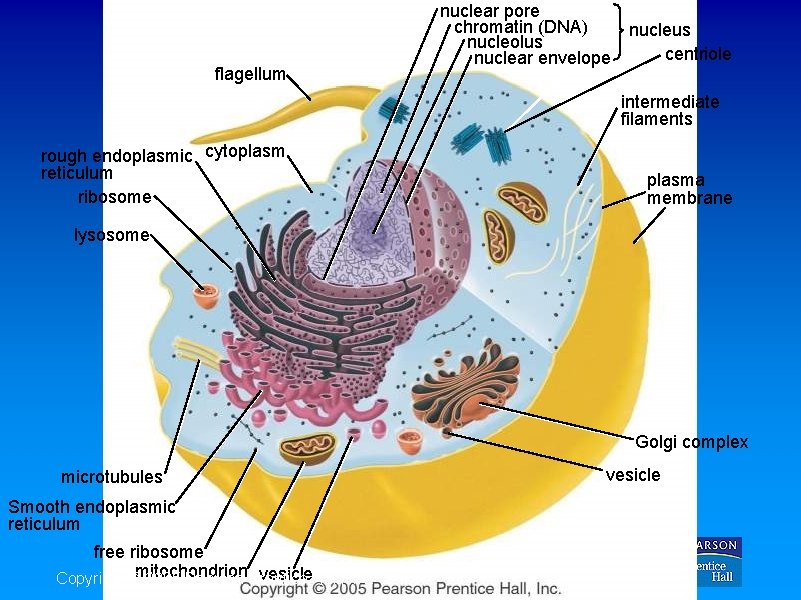
flagellum nuclear pore chromatin (DNA) nucleus nucleolus centriole nuclear envelope intermediate filaments rough endoplasmic cytoplasm reticulum ribosome plasma membrane lysosome Golgi complex microtubules Smooth endoplasmic reticulum free ribosome vesicle. Hall, Inc. Copyright ©mitochondrion 2005 Pearson Prentice vesicle
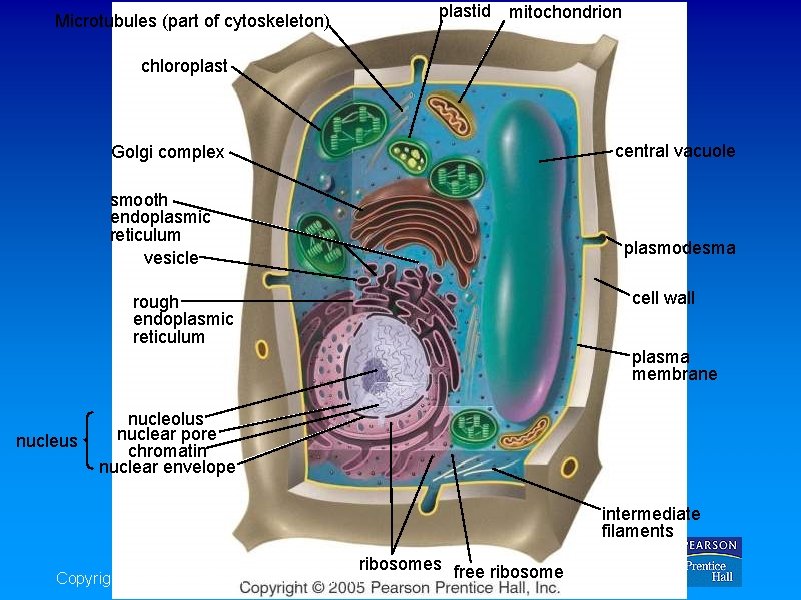
Microtubules (part of cytoskeleton) plastid mitochondrion chloroplast Golgi complex smooth endoplasmic reticulum vesicle rough endoplasmic reticulum nucleus central vacuole plasmodesma cell wall plasma membrane nucleolus nuclear pore chromatin nuclear envelope intermediate filaments ribosomes free ribosome Copyright © 2005 Pearson Prentice Hall, Inc.
glycoproteins envelope (lipid bilayer) protein coat spikes core proteins genetic material (viral RNA) coated with protein reverse transcriptase Copyright © 2005 Pearson Prentice Hall, Inc.
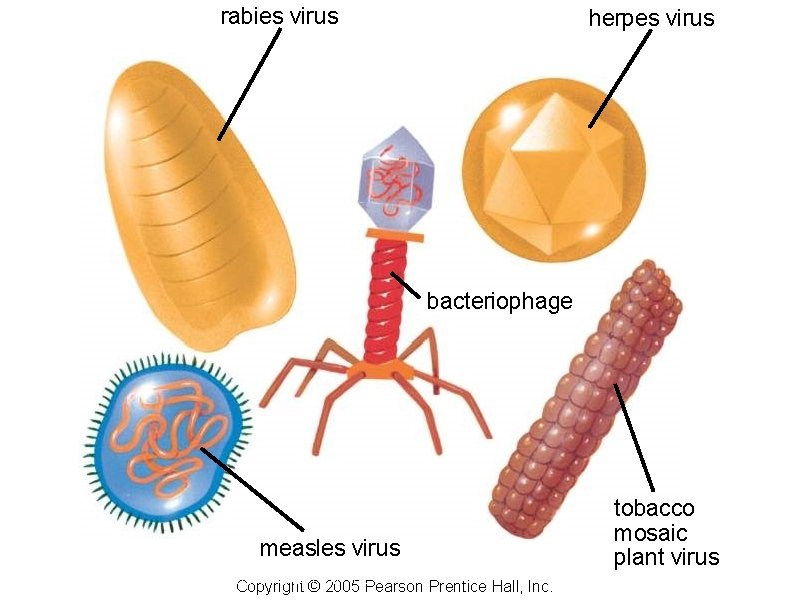
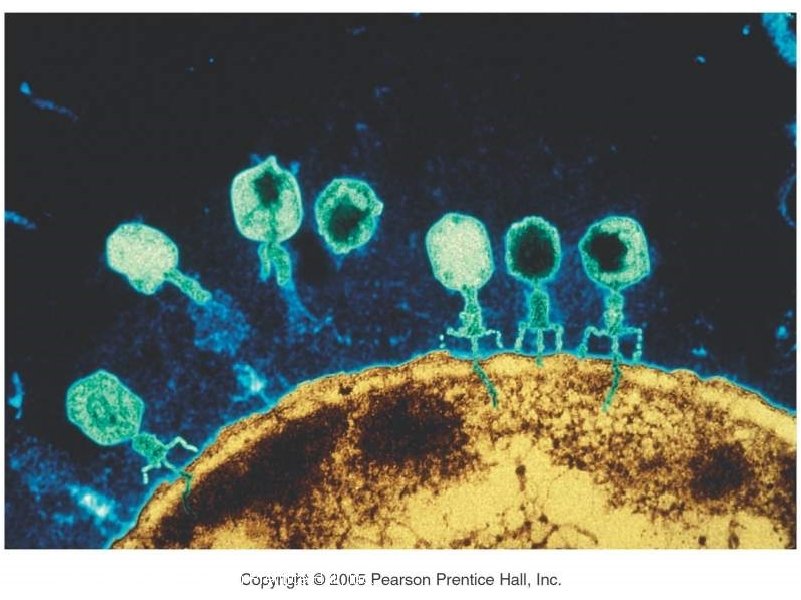
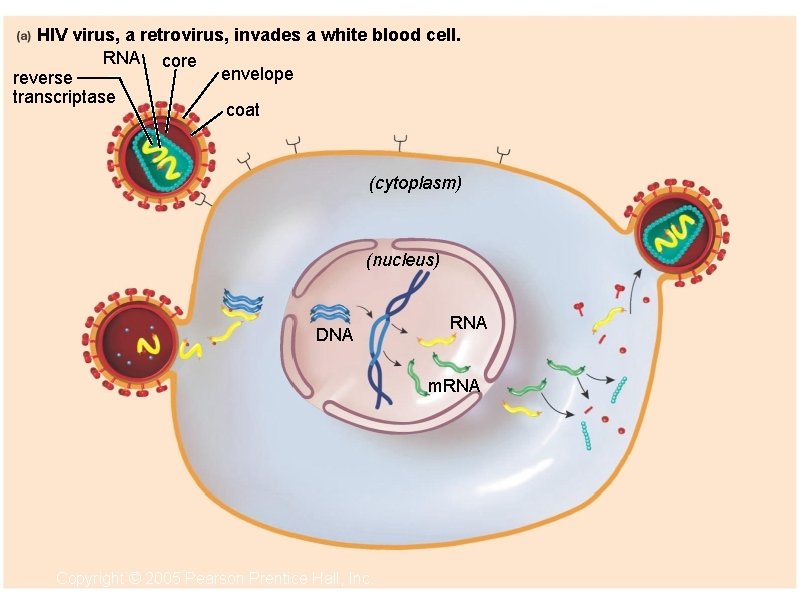
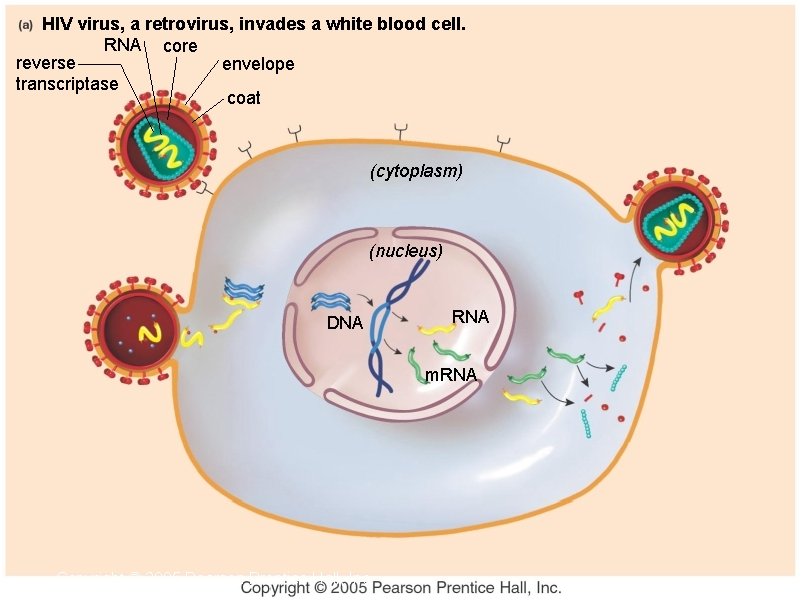
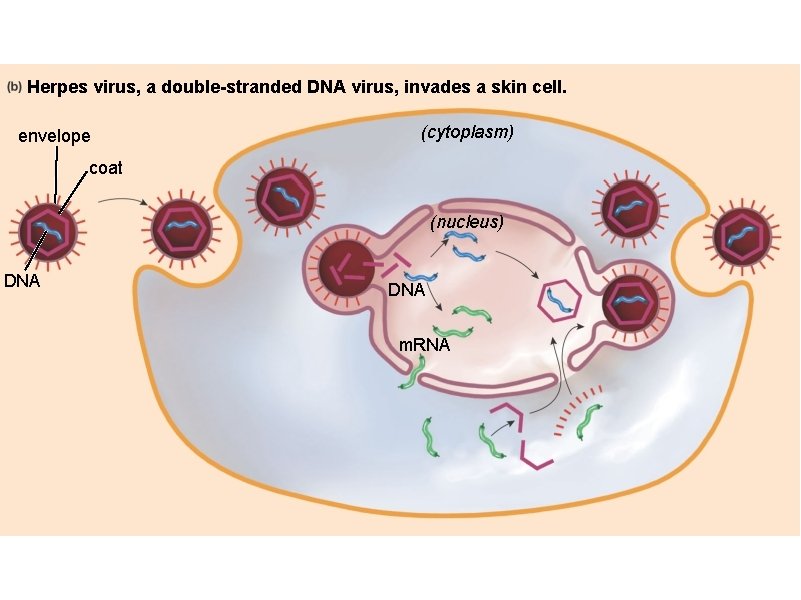
Viruses, Viroids, and Prions – Viruses Are Host-Specific • Viruses come in a variety of shapes • Some viruses infect bacteria • How viruses replicate Copyright © 2005 Pearson Prentice Hall, Inc. (F 19. 3 p. 361) (F 19. 4 p. 361) (FE 19. 1 p. 362)
rabies virus herpes virus bacteriophage measles virus Copyright © 2005 Pearson Prentice ©Hall, Inc. Copyright 2005 Pearson Prentice Hall, Inc. tobacco mosaic plant virus
Copyright © 2005 Pearson Prentice Hall, Inc.
HIV virus, a retrovirus, invades a white blood cell. RNA core envelope reverse transcriptase coat (cytoplasm) (nucleus) DNA RNA m. RNA Copyright © 2005 Pearson Prentice Hall, Inc.
HIV virus, a retrovirus, invades a white blood cell. RNA core reverse envelope transcriptase coat (cytoplasm) (nucleus) DNA RNA m. RNA Copyright © 2005 Pearson Prentice Hall, Inc.
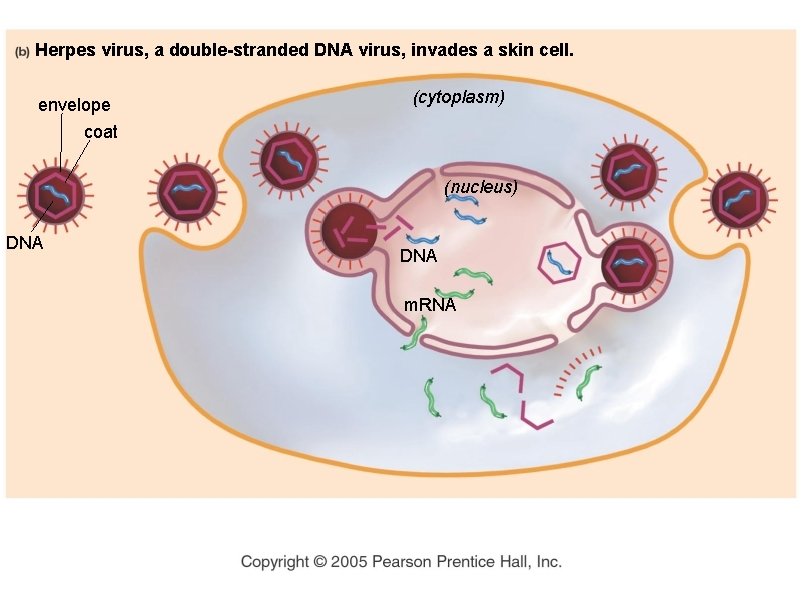
Herpes virus, a double-stranded DNA virus, invades a skin cell. envelope (cytoplasm) coat (nucleus) DNA m. RNA Copyright © 2005 Pearson Prentice Hall, Inc.
Herpes virus, a double-stranded DNA virus, invades a skin cell. envelope (cytoplasm) coat (nucleus) DNA m. RNA Copyright © 2005 Pearson Prentice Hall, Inc.
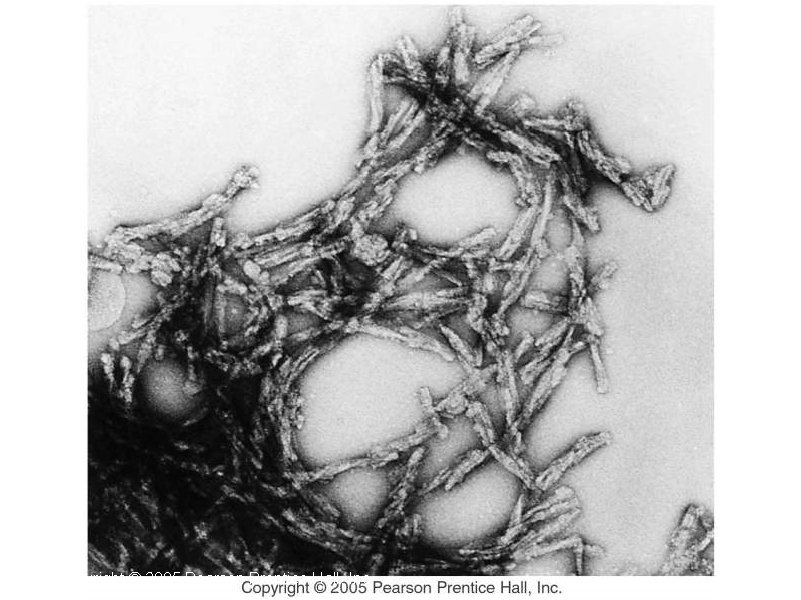
Viruses, Viroids, and Prions – Viral Infections Are Difficult to Treat • Some Infectious Agents Are Even Simpler Than Viruses – Prions: Puzzling proteins (F 19. 5 p. 364) • No One Is Certain How These Infectious Particles Originated Copyright © 2005 Pearson Prentice Hall, Inc.
Copyright © 2005 Pearson Prentice Hall, Inc.
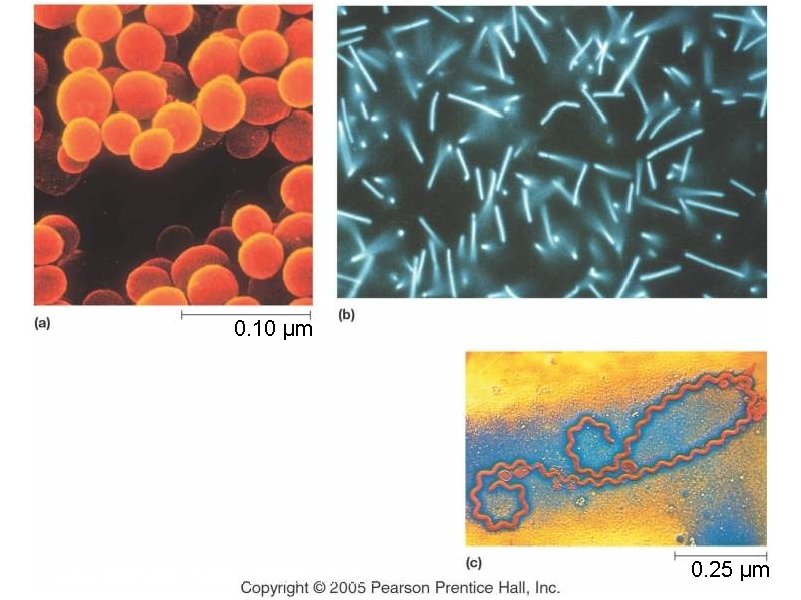
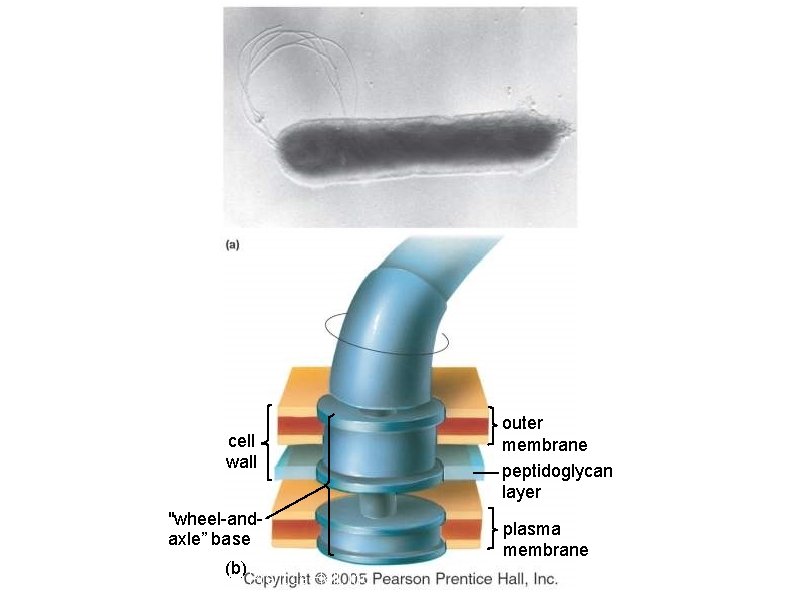
Organisms Of the Prokaryotic Domains—Bacteria and Archaea • Bacteria and Archaea Are Fundamentally Different – Classification of Prokaryotes Within Each Domain Is Difficult • Prokaryotes Differ in Shape and Structure – Three common prokaryote shapes – The prokaryote flagellum Copyright © 2005 Pearson Prentice Hall, Inc. (F 19. 6 p. 366) (F 19. 7 p. 367)
0. 10 µm Copyright © 2005 Pearson Prentice Hall, Inc. 0. 25 µm
cell wall "wheel-andaxle” base (b) Copyright © 2005 Pearson Prentice Hall, Inc. outer membrane peptidoglycan layer plasma membrane
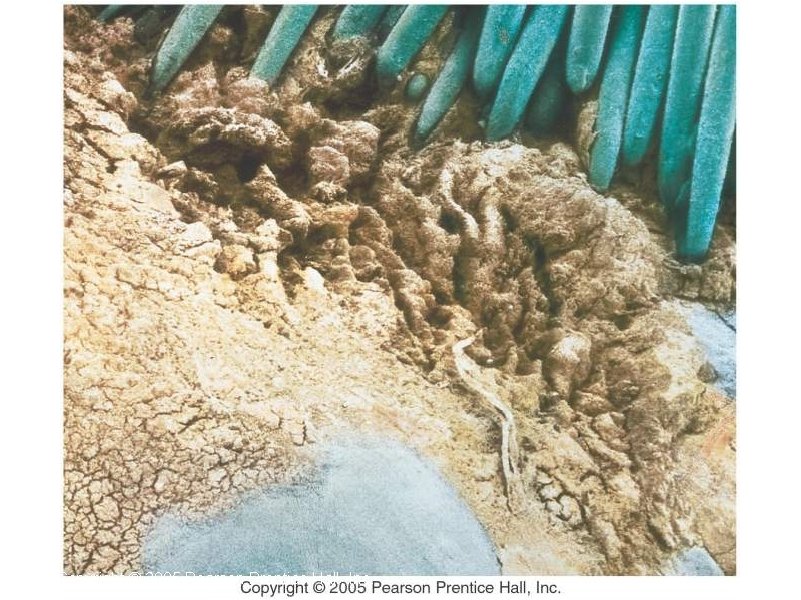
Organisms of the Prokaryotic Domains—Bacteria and Archaea – Many Bacteria Form Films on Surfaces • The cause of tooth decay Copyright © 2005 Pearson Prentice Hall, Inc. (F 19. 8 p. 367)
Copyright © 2005 Pearson Prentice Hall, Inc.
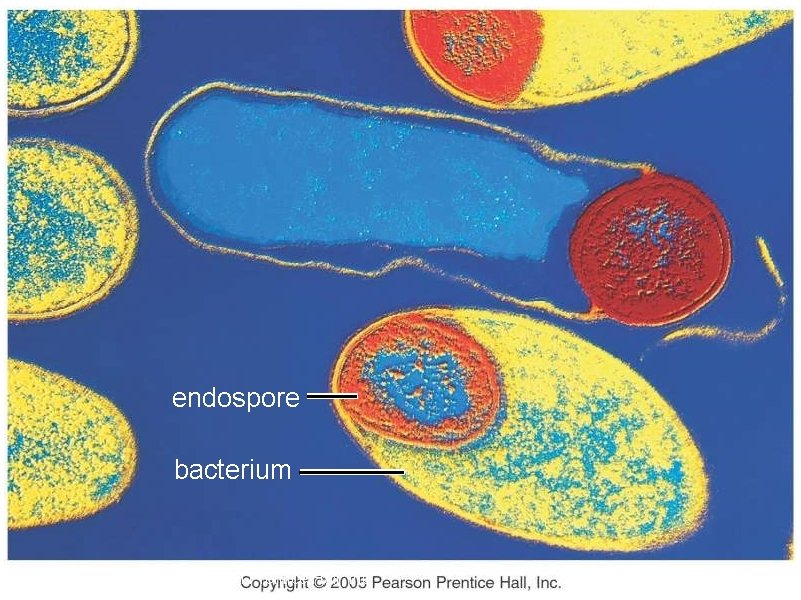
Organisms Of the Prokaryotic Domains—Bacteria and Archaea – Protective Endospores Allow Some Bacteria to Withstand Adverse Conditions • Spores protect some bacteria Copyright © 2005 Pearson Prentice Hall, Inc. (F 19. 9 p. 367)
endospore bacterium Copyright © 2005 Pearson Prentice Hall, Inc.
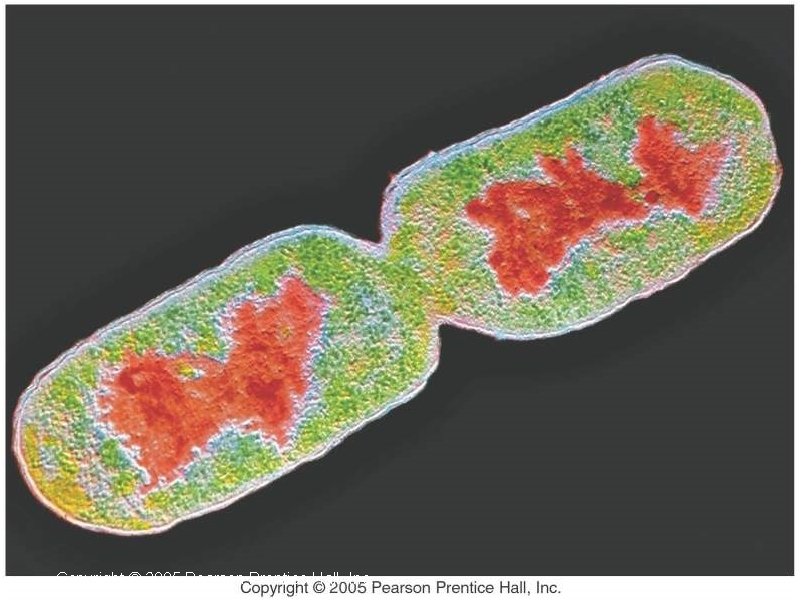
Organisms Of the Prokaryotic Domains—Bacteria and Archaea • Prokaryotes Reproduce by Binary Fission – Reproduction in prokaryotes Copyright © 2005 Pearson Prentice Hall, Inc. (F 19. 10 p. 368)
Copyright © 2005 Pearson Prentice Hall, Inc.
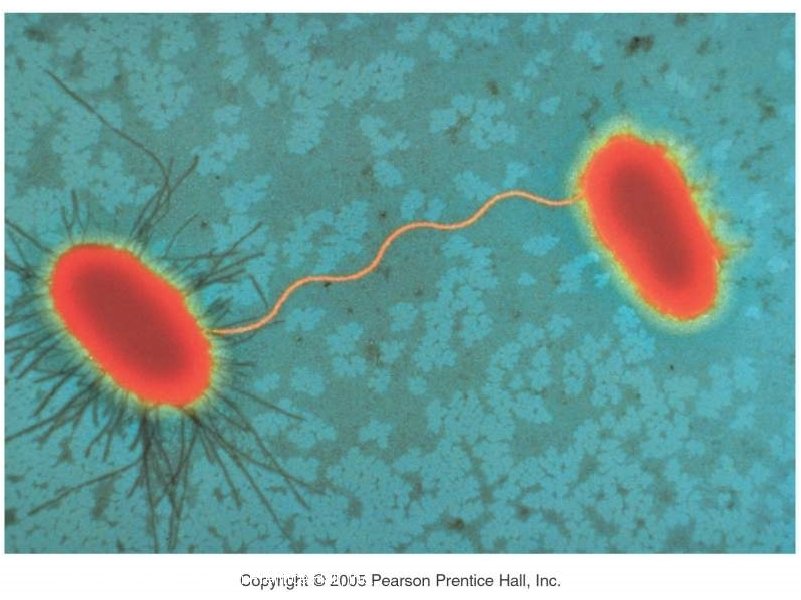
Organisms Of the Prokaryotic Domains—Bacteria and Archaea – Prokaryotes May Exchange Genetic Material Without Reproducing • Conjugation: Prokaryotic “mating” (F 19. 11 p. 368) Copyright © 2005 Pearson Prentice Hall, Inc.
Copyright © 2005 Pearson Prentice Hall, Inc.
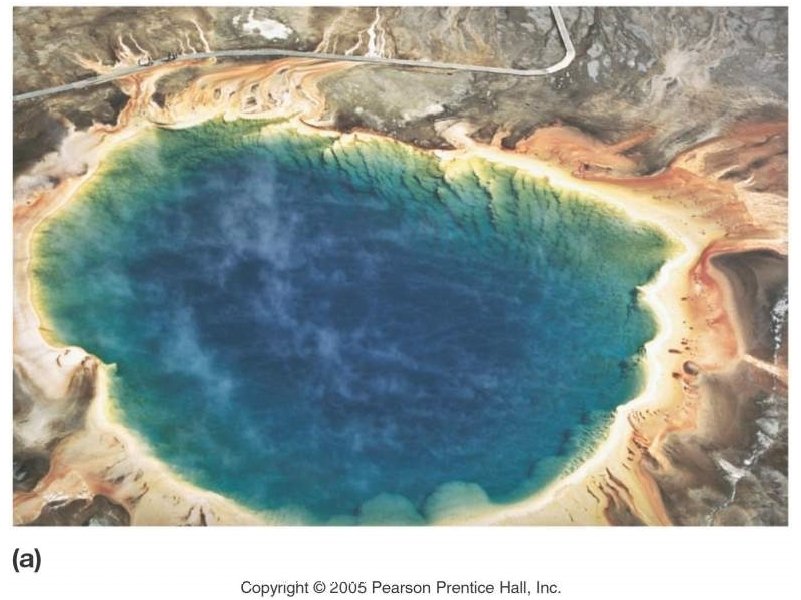
Organisms Of the Prokaryotic Domains—Bacteria and Archaea • Prokaryotes Are Specialized for Specific Habitats – Some prokaryotes thrive in extreme conditions (F 19. 12 p. 369) Copyright © 2005 Pearson Prentice Hall, Inc.
Copyright © 2005 Pearson Prentice Hall, Inc.
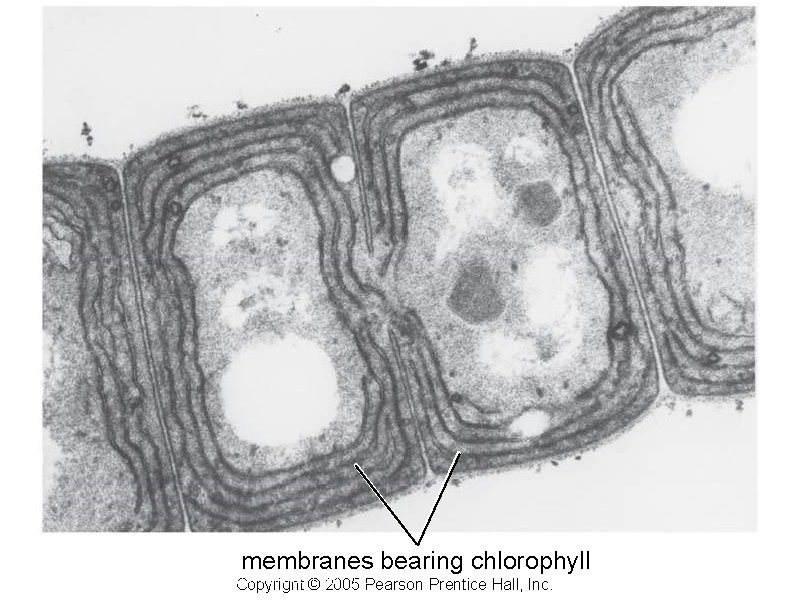
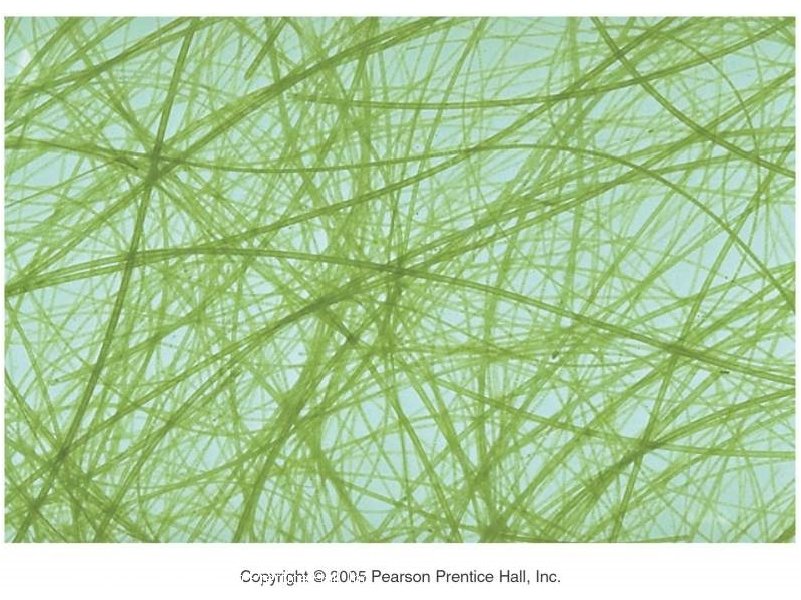
Organisms Of the Prokaryotic Domains—Bacteria and Archaea • Prokaryotes Exhibit Diverse Metabolisms – Cyanobacteria Copyright © 2005 Pearson Prentice Hall, Inc. (F 19. 13 p. 369)
membranes bearing chlorophyll Copyright © 2005 Pearson Prentice ©Hall, Inc. Copyright 2005 Pearson Prentice Hall, Inc.
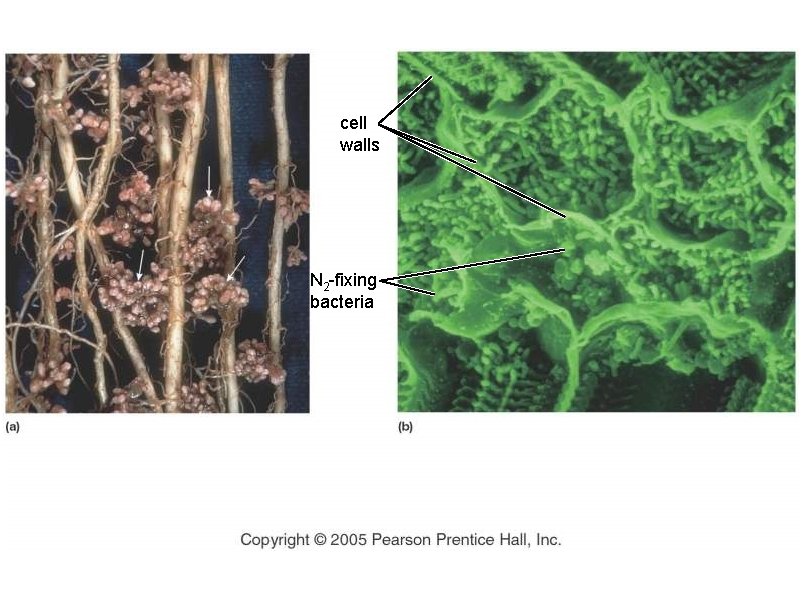
Organisms Of the Prokaryotic Domains—Bacteria and Archaea • Prokaryotes Perform Functions Important to Other Organisms – Prokaryotes Capture the Nitrogen Needed by Plants • Nitrogen-fixing bacteria in root nodules (F 19. 14 p. 370) Copyright © 2005 Pearson Prentice Hall, Inc.
cell walls N 2 -fixing bacteria Copyright © 2005 Pearson Prentice Hall, Inc.
Organisms Of the Prokaryotic Domains—Bacteria and Archaea – Prokaryotes Are Nature’s Recyclers • Some Bacteria Pose a Threat to Human Health – Some Anaerobic Bacteria Produce Dangerous Poisons – Humans Have Battled Bacterial Diseases Throughout History – Some Common Bacterial Species Can Be Harmful – Most Bacteria Are Harmless Copyright © 2005 Pearson Prentice Hall, Inc.
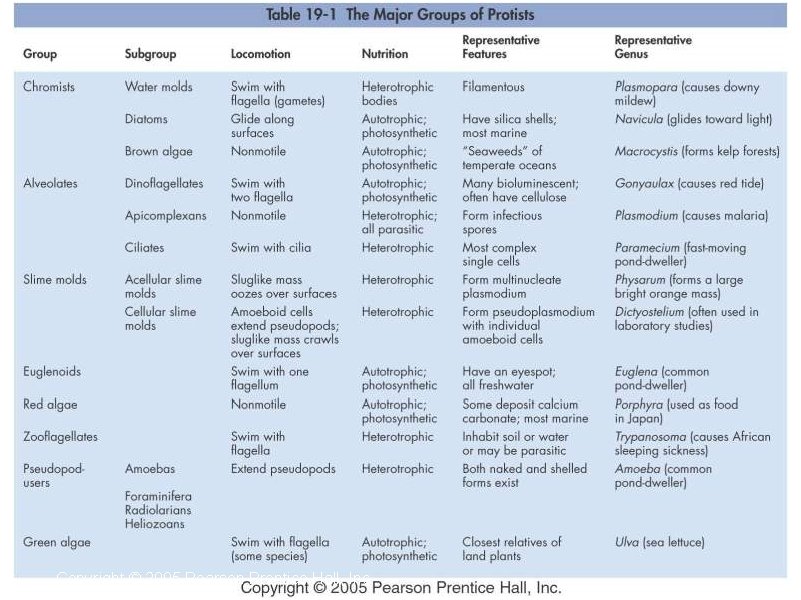
Protists? • The Major Groups of Protists (T 19. 1 p. 372) Copyright © 2005 Pearson Prentice Hall, Inc.
Copyright © 2005 Pearson Prentice Hall, Inc.
Protists • Most Protists Are Single-Celled – Protists Use Diverse Modes of Reproduction and Nutrition • Protistan reproduction and gene exchange (F 19. 15 p. 373) Copyright © 2005 Pearson Prentice Hall, Inc.
Copyright © 2005 Pearson Prentice Hall, Inc.
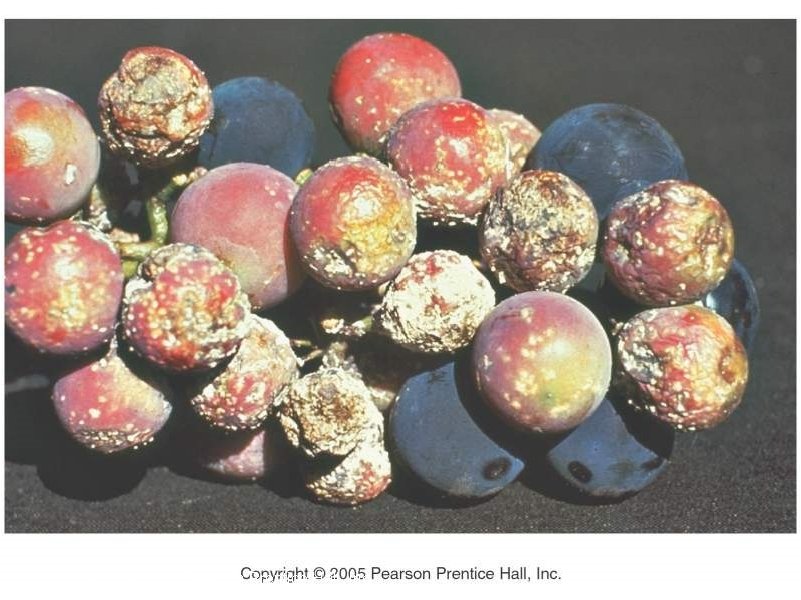
Protists – Protist Systematics Are in Transition • The Chromists Include Photosynthetic and Nonphotosynthetic Organisms – Water Molds Have Had Important Impacts on Humans • A parasitic water mold Copyright © 2005 Pearson Prentice Hall, Inc. (F 19. 16 p. 374)
Copyright © 2005 Pearson Prentice Hall, Inc.
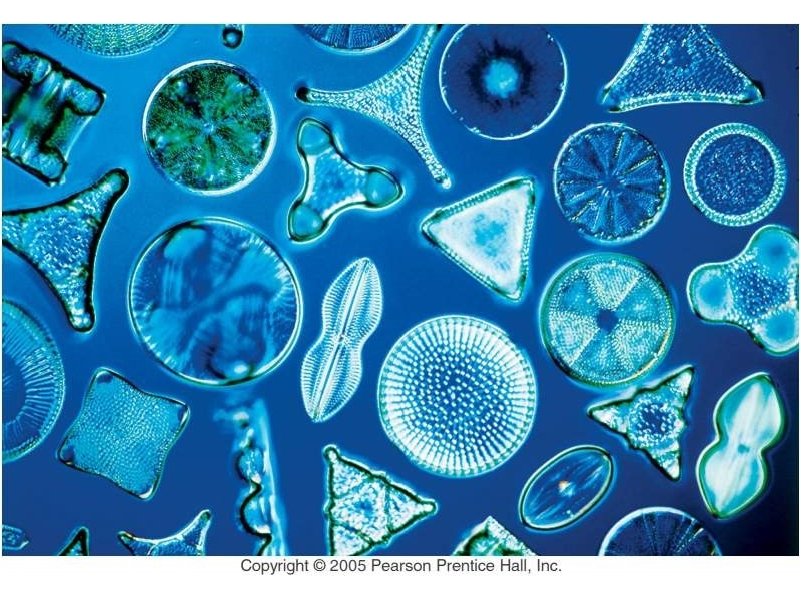
Protists? – Diatoms Encase Themselves Within Glassy Walls • Some representative diatoms Copyright © 2005 Pearson Prentice Hall, Inc. (F 19. 17 p. 374)
Copyright © 2005 Pearson Prentice Hall, Inc.
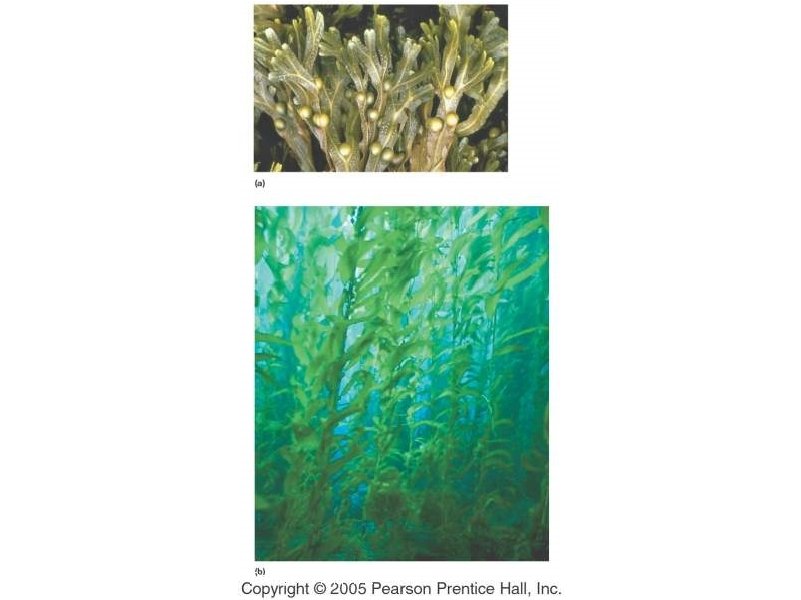
Protists – Brown Algae Dominate in Cool Coastal Waters • Brown algae, a multicellular protist (F 19. 18 p. 375) Copyright © 2005 Pearson Prentice Hall, Inc.
Copyright © 2005 Pearson Prentice Hall, Inc.
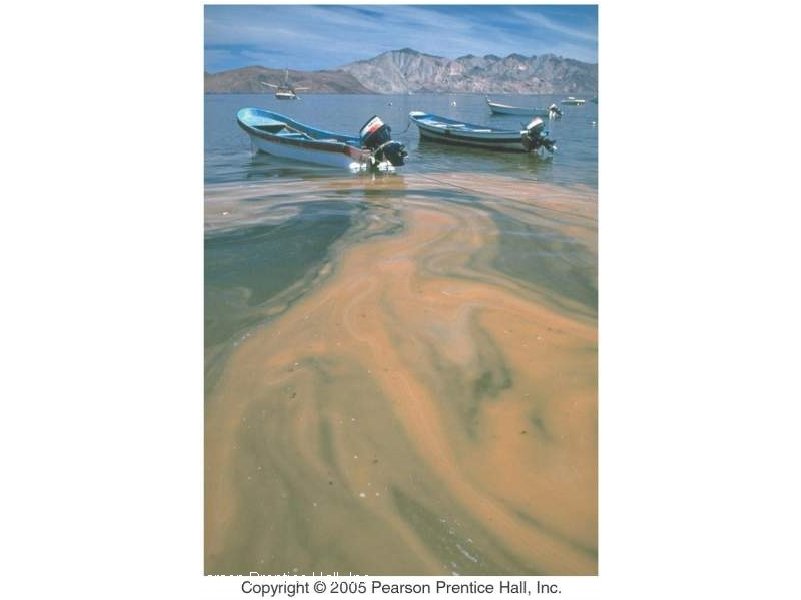
Protists • The Alveolates Include Parasites, Predators, and Phytoplankton – Dinoflagellates Swim by Means of Two Whiplike Flagella • Dinoflagellates • A red tide Copyright © 2005 Pearson Prentice Hall, Inc. (F 19. 19 p. 375) (F 19. 20 p. 376)
Copyright © 2005 Pearson Prentice Hall, Inc.
Copyright © 2005 Pearson Prentice Hall, Inc.
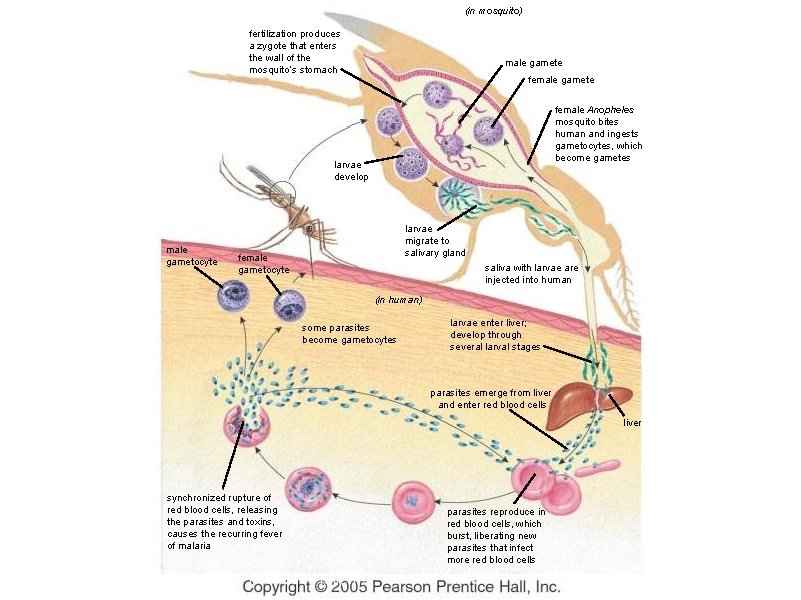
Protists – Apicomplexans Are Parasitic and Have No Means of Locomotion • The life cycle of the malaria parasite (F 19. 21 p. 377) Copyright © 2005 Pearson Prentice Hall, Inc.
(in mosquito) fertilization produces a zygote that enters the wall of the mosquito’s stomach male gamete female Anopheles mosquito bites human and ingests gametocytes, which become gametes larvae develop male gametocyte larvae migrate to salivary gland female gametocyte saliva with larvae are injected into human (in human) some parasites become gametocytes larvae enter liver; develop through several larval stages parasites emerge from liver and enter red blood cells liver synchronized rupture of red blood cells, releasing the parasites and toxins, causes the recurring fever of malaria Copyright © 2005 Pearson Prentice Hall, Inc. parasites reproduce in red blood cells, which burst, liberating new parasites that infect more red blood cells
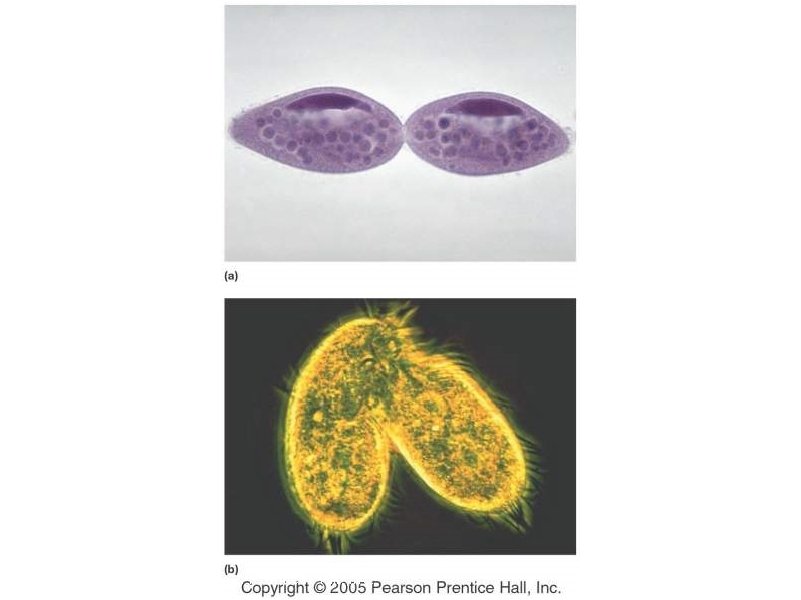
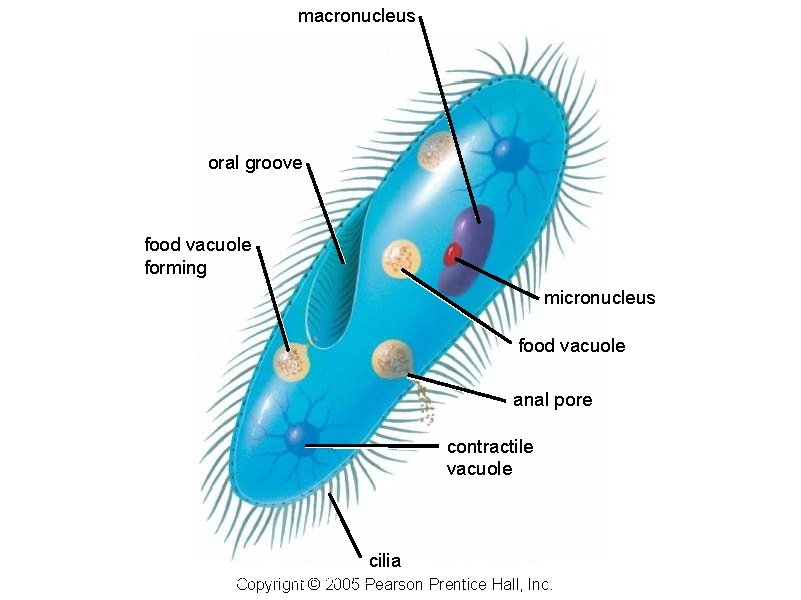
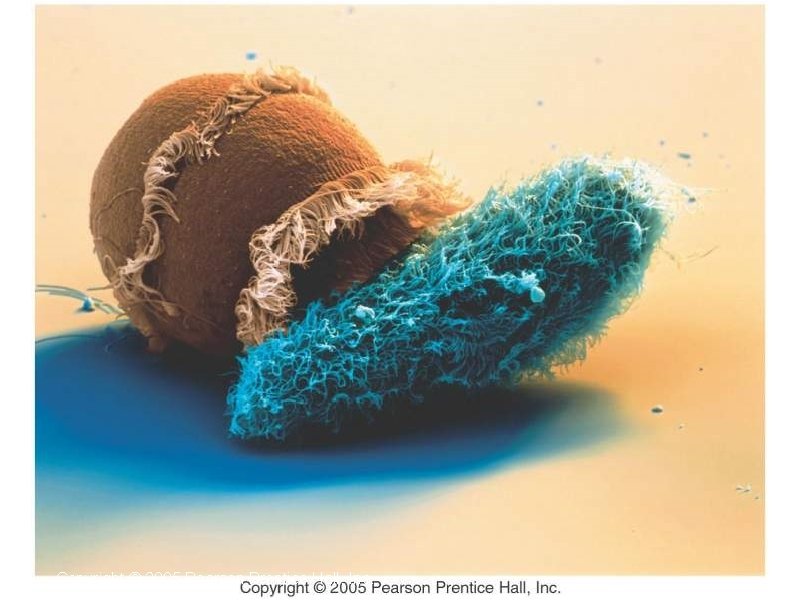
What Are Protists – Ciliates Are the Most Complex of the Alveolates • The complexity of ciliates • A microscopic predator Copyright © 2005 Pearson Prentice Hall, Inc. (F 19. 22 p. 377) (F 19. 23 p. 378)
macronucleus oral groove food vacuole forming micronucleus food vacuole anal pore contractile vacuole cilia Copyright © 2005 Pearson Prentice ©Hall, Inc. Copyright 2005 Pearson Prentice Hall, Inc.
Copyright © 2005 Pearson Prentice Hall, Inc.
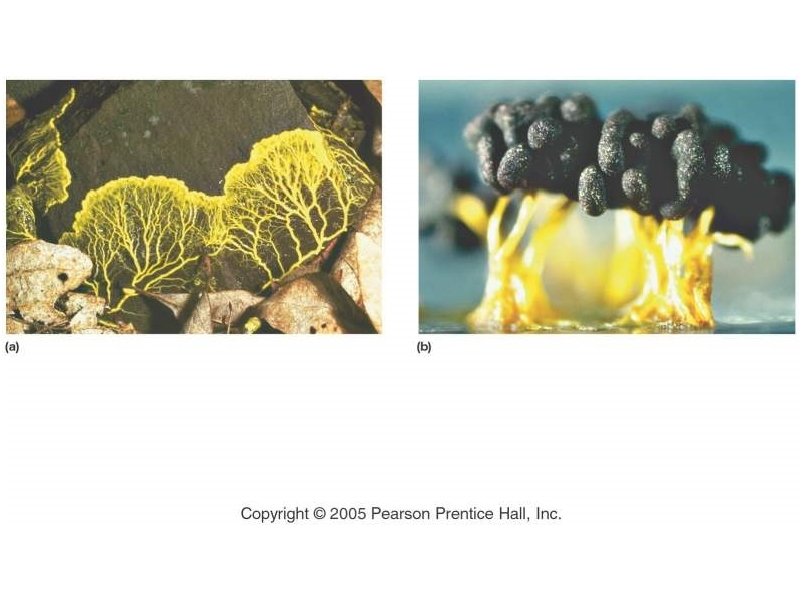
Protists • Slime Molds Are Decomposers That Inhabit the Forest Floor – Acellular Slime Molds Form a Multinucleate Mass of Cytoplasm Called a Plasmodium • The acellular slime mold Physarum Copyright © 2005 Pearson Prentice Hall, Inc. (F 19. 24 p. 378)
Copyright © 2005 Pearson Prentice Hall, Inc.
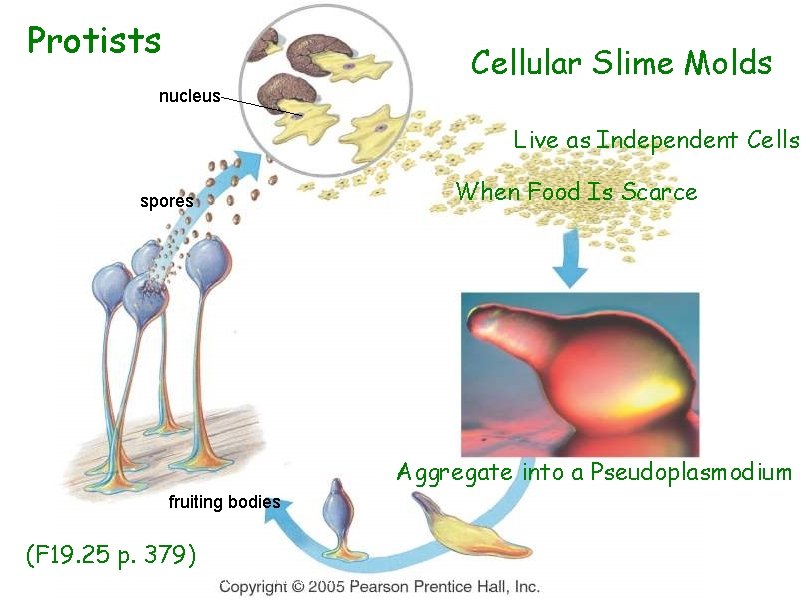
Protists Cellular Slime Molds nucleus Live as Independent Cells spores When Food Is Scarce Aggregate into a Pseudoplasmodium fruiting bodies (F 19. 25 p. 379) Copyright © 2005 Pearson Prentice Hall, Inc.
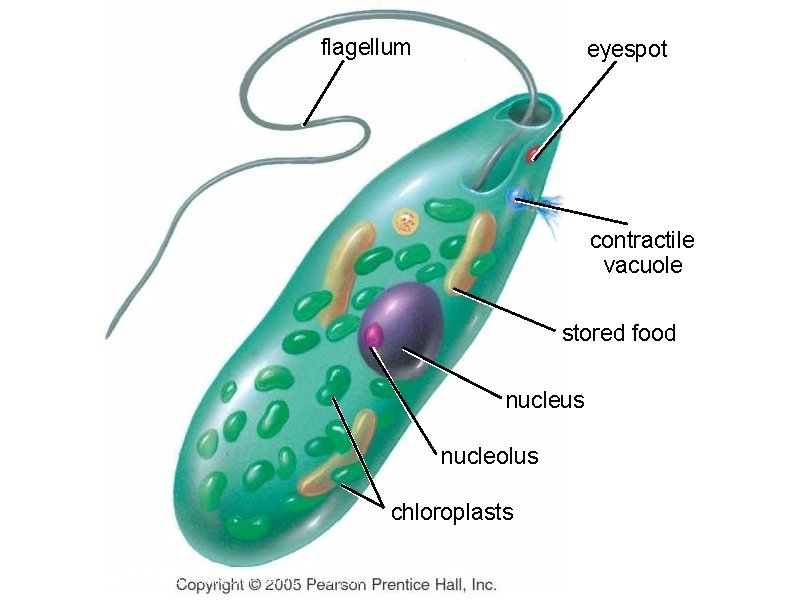
Protists • Euglenoids Lack a Rigid Covering and Swim by Means of Flagella – Euglena, a representative euglenoid (F 19. 26 p. 379) Copyright © 2005 Pearson Prentice Hall, Inc.
flagellum eyespot contractile vacuole stored food nucleus nucleolus chloroplasts Copyright © 2005 Pearson Prentice Hall, Inc.
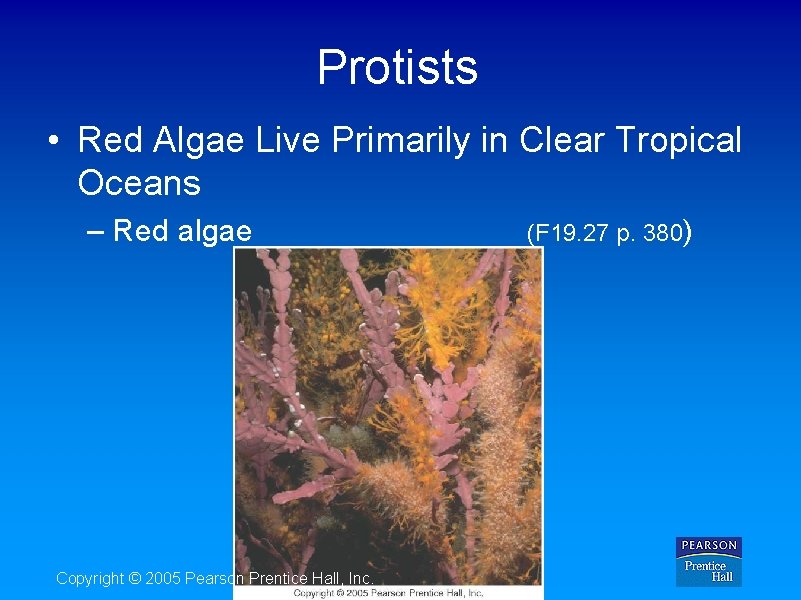
Protists • Red Algae Live Primarily in Clear Tropical Oceans – Red algae Copyright © 2005 Pearson Prentice Hall, Inc. (F 19. 27 p. 380)
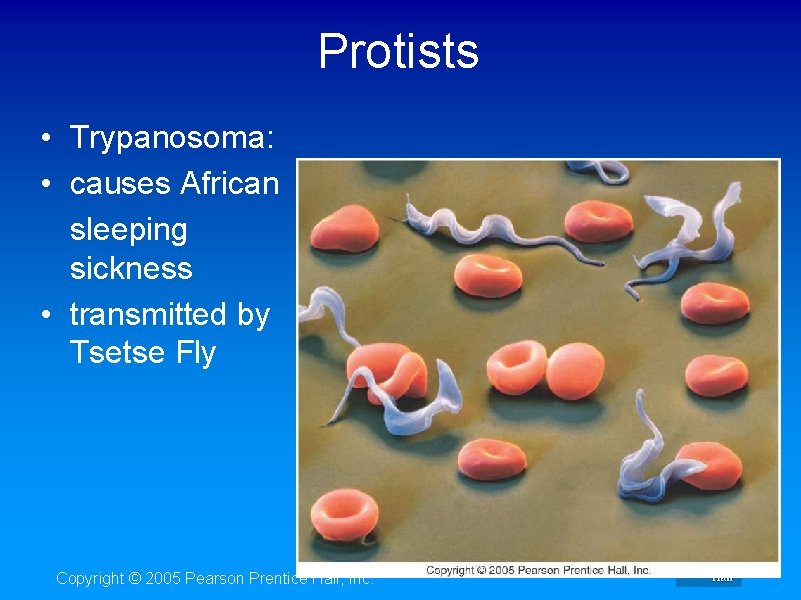
Protists • Trypanosoma: • causes African sleeping sickness • transmitted by Tsetse Fly Copyright © 2005 Pearson Prentice Hall, Inc.
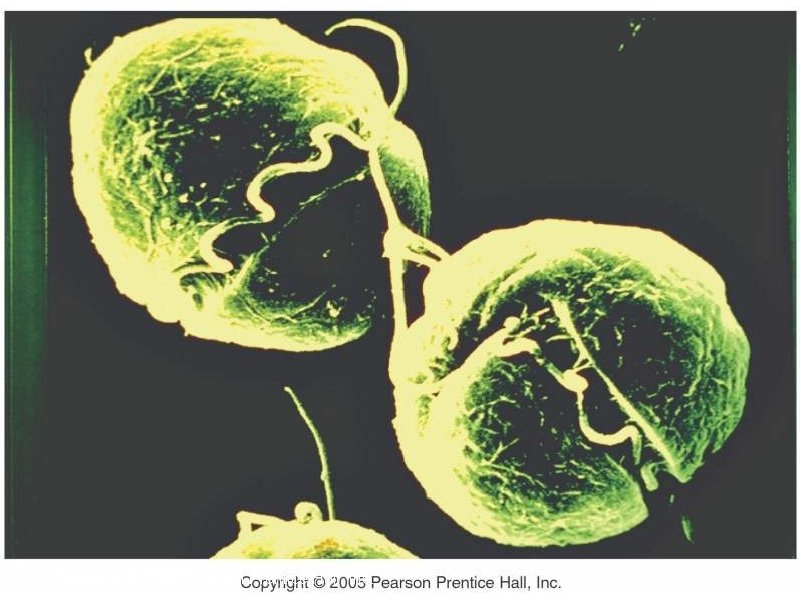
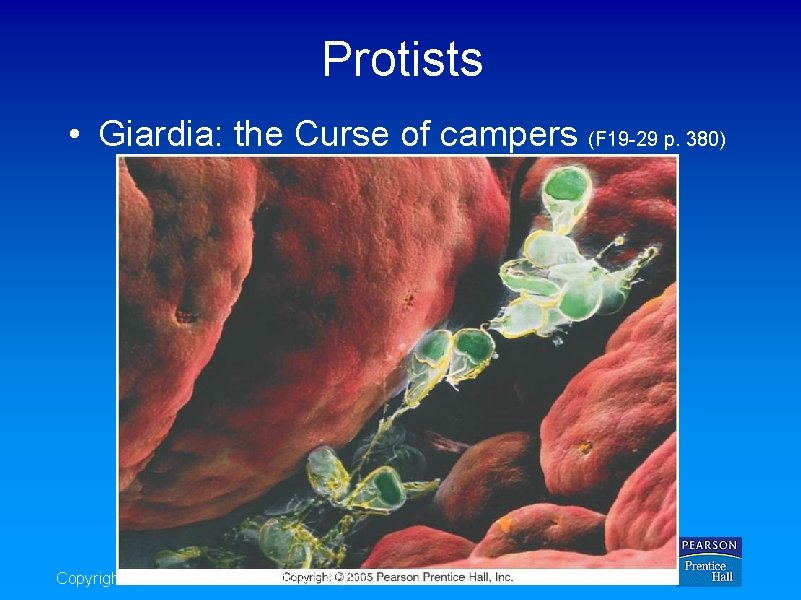
Protists • Giardia: the Curse of campers (F 19 -29 p. 380) Copyright © 2005 Pearson Prentice Hall, Inc.
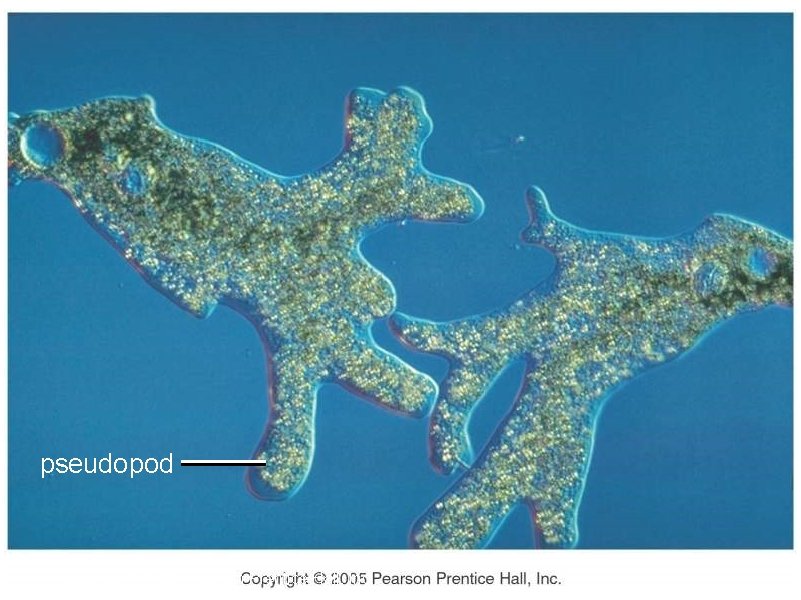
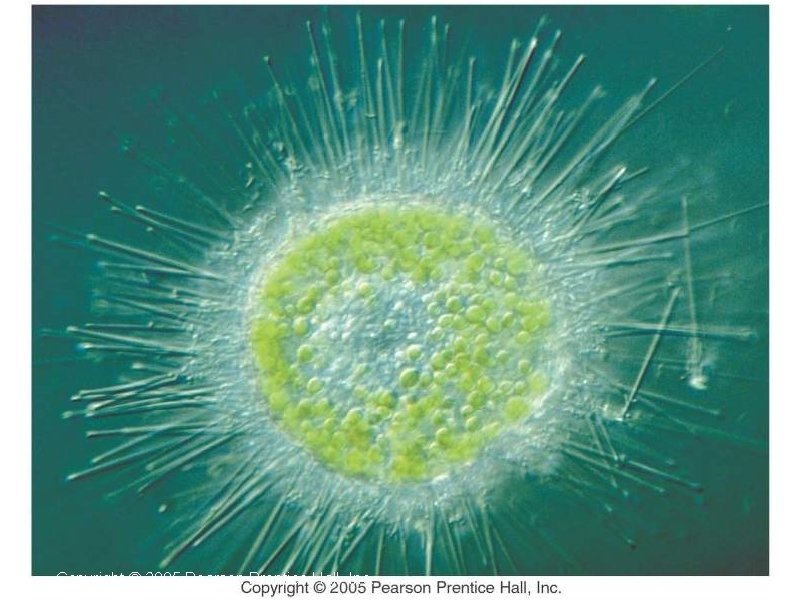
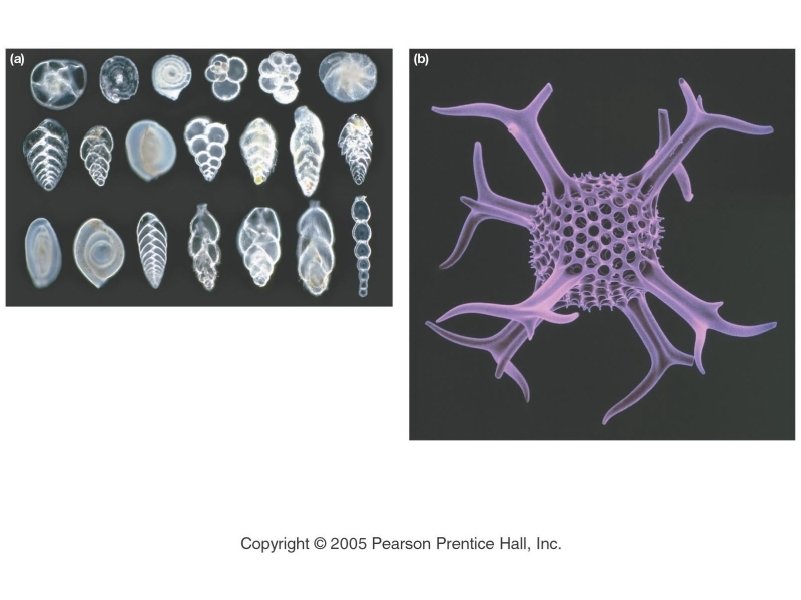
Protists? • Various Protists Move by Means of Pseudopods – The amoeba (F 19. 30 p. 381) – Heliozoans (F 19. 31 p. 381) – Foraminiferans and radiolarians (F 19. 32 p. 381) Copyright © 2005 Pearson Prentice Hall, Inc.
pseudopod Copyright © 2005 Pearson Prentice Hall, Inc.
Copyright © 2005 Pearson Prentice Hall, Inc.
Copyright © 2005 Pearson Prentice Hall, Inc.
Protists? • Green Algae Live Mostly in Ponds and Lakes – A form of green algae Copyright © 2005 Pearson Prentice Hall, Inc. (F 19. 33 p. 382)
Copyright © 2005 Pearson Prentice Hall, Inc.