Chapter 16 Completed genomes viruses Jonathan Pevsner Ph
- Slides: 75
Chapter 16: Completed genomes: viruses Jonathan Pevsner, Ph. D. pevsner@kennedykrieger. org Bioinformatics and Functional Genomics (Wiley-Liss, 3 rd edition, 2015) You may use this Power. Point for teaching
Learning objectives After studying this chapter you should be able to: • define viruses; • explain the basis of the classification of viruses; • describe the genomes of Hi. V, influenza, measles, Ebola, and herpesviruses; • describe bioinformatics approaches to determining the function of viral genes and proteins; • describe key bioinformatics resources for studying viruses; and • compare and contrast DNA and RNA viruses.
Outline Introduction Classification of viruses Bioinformatics approaches to virology Human immunodeficiency virus (HIV) Influenza virus Measles virus Ebola virus Herpesvirus: from phylogeny to gene expression Giant viruses Perspectives
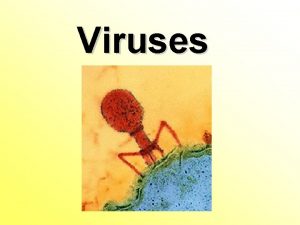
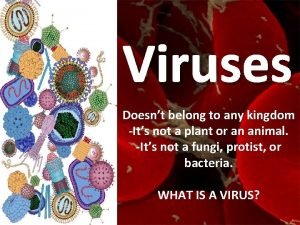
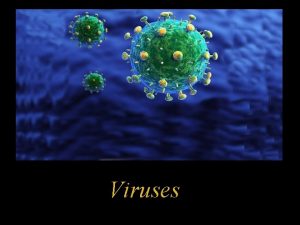
Introduction to viruses Viruses are small, infectious, obligate intracellular parasites. They depend on host cells to replicate. Because they lack the resources for independent existence, they exist on the borderline of the definition of life. The virion (virus particle) consists of a nucleic acid genome surrounded by coat proteins (capsid) that may be enveloped in a host-derived lipid bilayer. Viral genomes consist of either RNA or DNA. They may be single-, double, or partially double stranded. The genomes may be circular, linear, or segmented.
Outline Introduction Classification of viruses Bioinformatics approaches to virology Human immunodeficiency virus (HIV) Influenza virus Measles virus Ebola virus Herpesvirus: from phylogeny to gene expression Giant viruses Perspectives
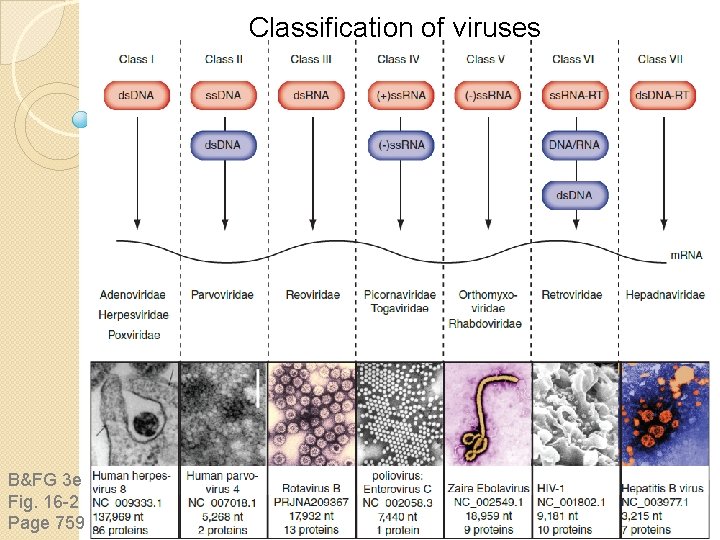
Introduction to viruses Viruses have been classified by several criteria: -- based on morphology (e. g. by electron microscopy) -- by type of nucleic acid in the genome -- by size (rubella is about 2 kb; HIV-1 about 9 kb; poxviruses are several hundred kb). Mimivirus (for Mimicking microbe) has a double-stranded circular genome of 1. 2 megabases (Mb). -- based on human disease
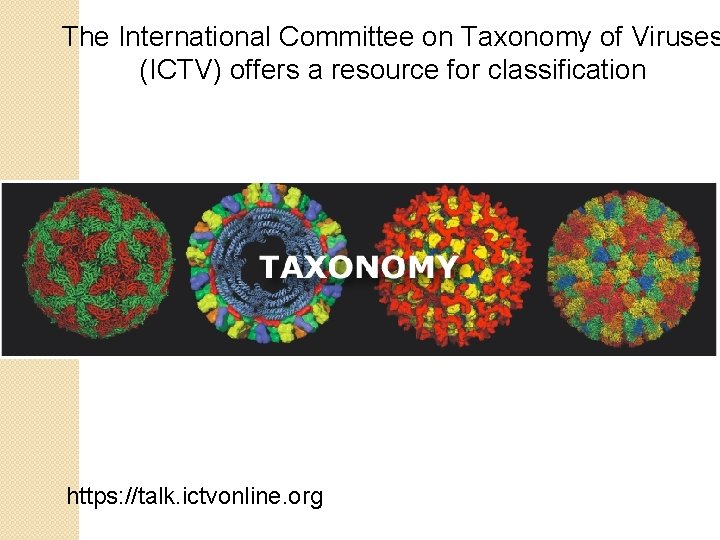
The International Committee on Taxonomy of Viruses (ICTV) offers a resource for classification https: //talk. ictvonline. org
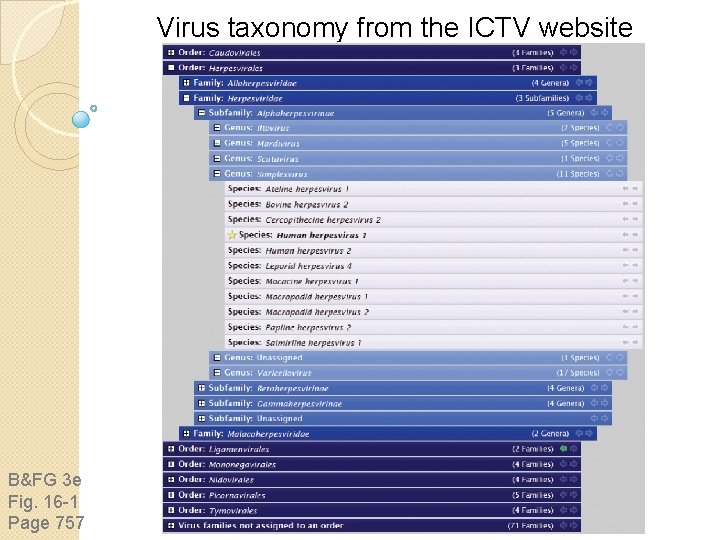
Virus taxonomy from the ICTV website B&FG 3 e Fig. 16 -1 Page 757 Year
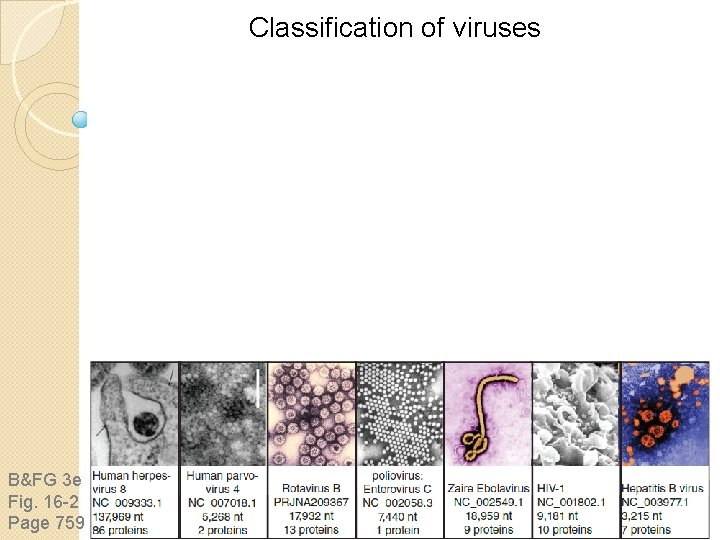
Classification of viruses B&FG 3 e Fig. 16 -2 Page 759
Classification of viruses B&FG 3 e Fig. 16 -2 Page 759
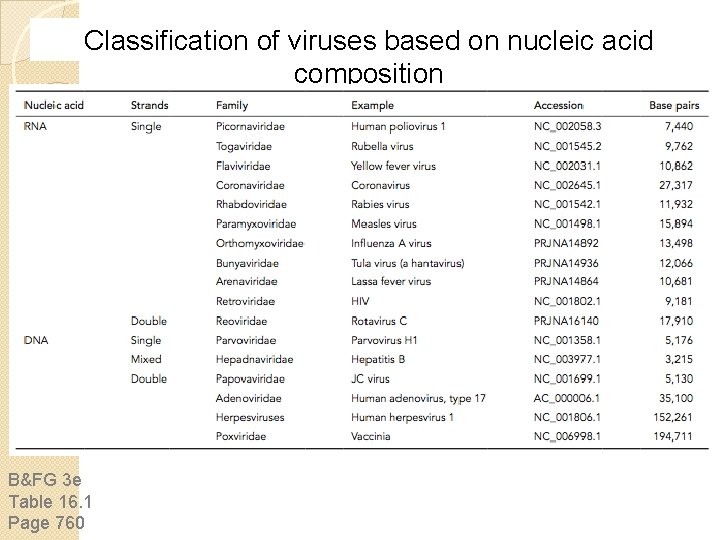
Classification of viruses based on nucleic acid composition B&FG 3 e Table 16. 1 Page 760
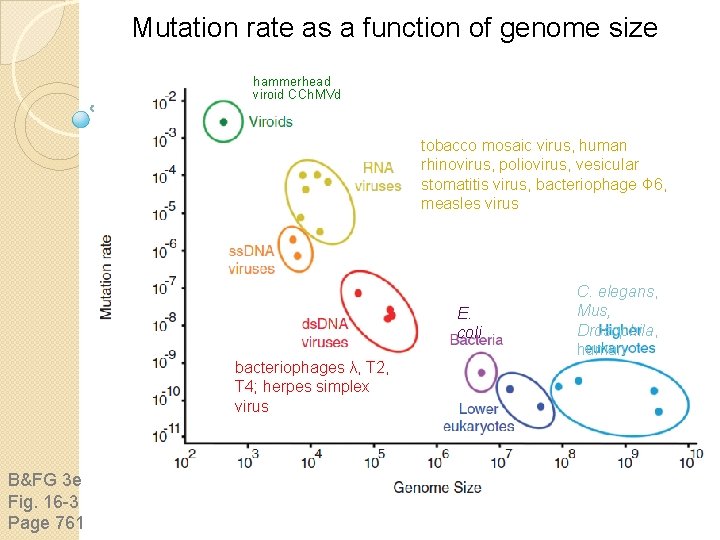
Mutation rate as a function of genome size hammerhead viroid CCh. MVd tobacco mosaic virus, human rhinovirus, poliovirus, vesicular stomatitis virus, bacteriophage Φ 6, measles virus E. coli bacteriophages λ, T 2, T 4; herpes simplex virus B&FG 3 e Fig. 16 -3 Page 761 C. elegans, Mus, Drosophila, human
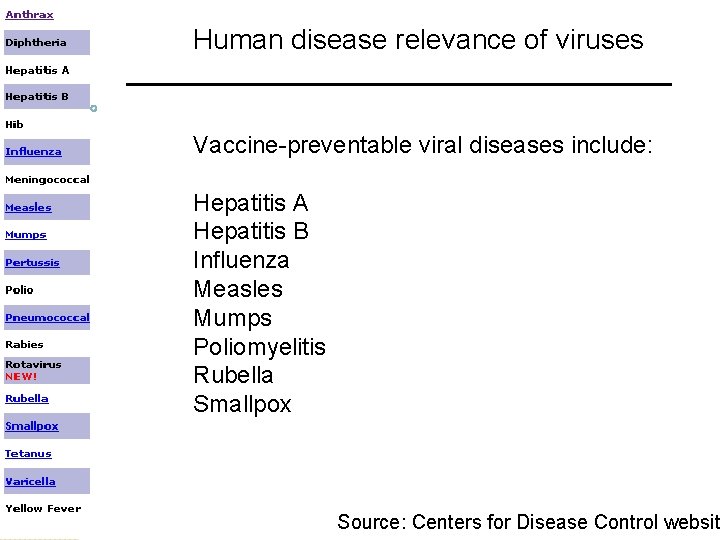
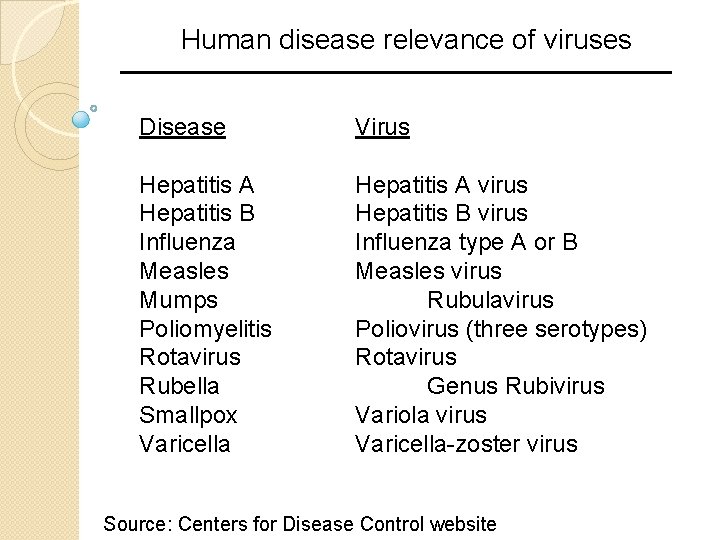
Human disease relevance of viruses Vaccine-preventable viral diseases include: Hepatitis A Hepatitis B Influenza Measles Mumps Poliomyelitis Rubella Smallpox Source: Centers for Disease Control websit
Human disease relevance of viruses Disease Virus Hepatitis A Hepatitis B Influenza Measles Mumps Poliomyelitis Rotavirus Rubella Smallpox Varicella Hepatitis A virus Hepatitis B virus Influenza type A or B Measles virus Rubulavirus Poliovirus (three serotypes) Rotavirus Genus Rubivirus Variola virus Varicella-zoster virus Source: Centers for Disease Control website
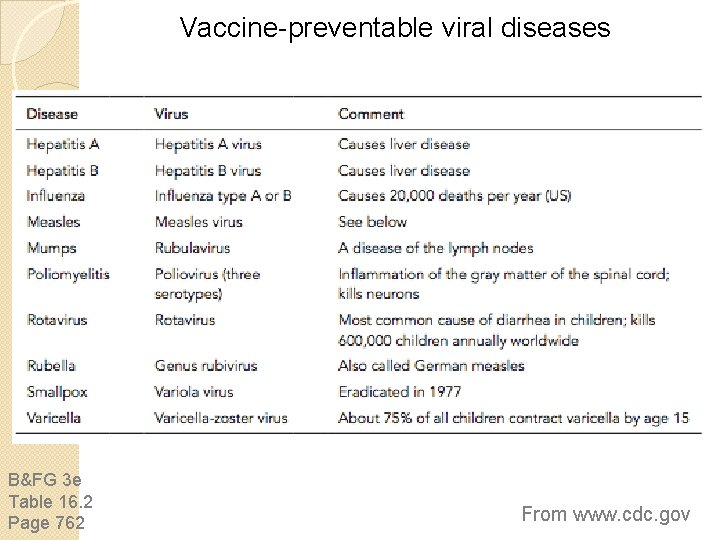
Vaccine-preventable viral diseases B&FG 3 e Table 16. 2 Page 762 From www. cdc. gov
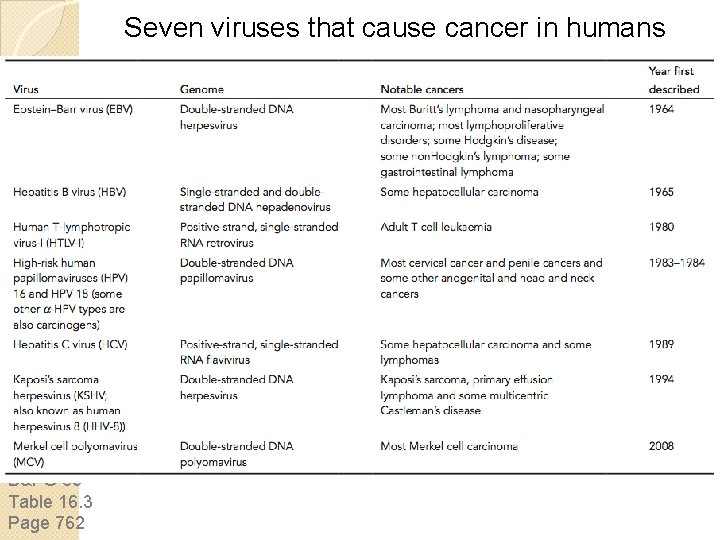
Seven viruses that cause cancer in humans B&FG 3 e Table 16. 3 Page 762
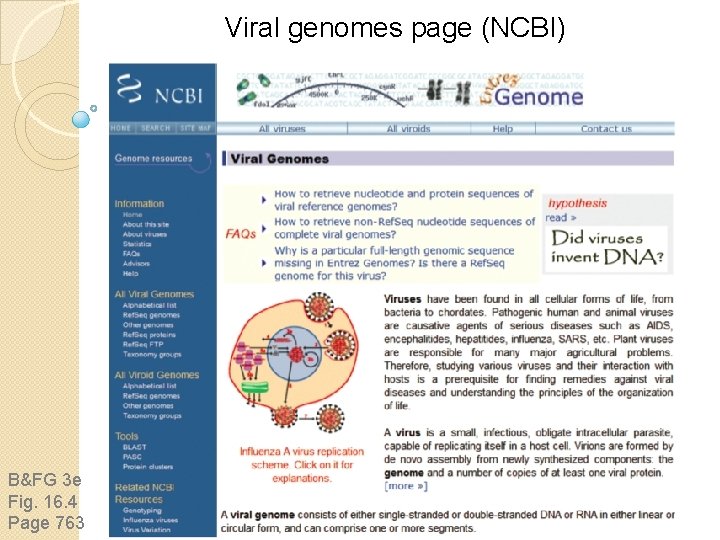
Viral genomes page (NCBI) B&FG 3 e Fig. 16. 4 Page 763
Viral metagenomics refers to the sampling of representative viral genomes from the environment. A typical viral genome is ~50 kilobases (in comparison, a typical microbial genome is ~2. 5 megabases). A sample is collected (e. g. seawater, fecal material, or soil). Cellular material is excluded. Viral DNA is extracted, cloned, and sequenced. B&FG 3 e Page 764
Henle-Koch postulates: criteria needed to establish a causal relationship between a microbe and a disease [1] The parasite occurs in every case of the disease in question and under circumstances which can account for the pathological changes and clinical course of the disease. [2] It occurs in no other disease as a fortuitous and nonpathogenic parasite. [3] After being fully isolated from the body and repeatedly grown in pure culture, it can induce the disease anew. B&FG 3 e Page 765 These postulates (especially [3]) are very hard to prove with viruses. Huebner suggested alternate
Huebner’s postulates: criteria needed to establish a causal relationship between a virus and a disease [1] The virus must be a “real” entity established by B&FG 3 e Page 765 passage in culture. [2] The virus must originate from human specimens. [3] Active infection should produce an antibody response. [4] A new virus should be fully characterized and compared with other agents. [5] The virus must be constantly associated with a specific illness. [6] Human volunteers inoculated with the newly recognized agent in double‐blindstudies should reproduce the clinical syndrome. [7] Epidemiological studies should identify patterns of infection and disease. [8] A specific vaccine should prevent the disease,
Outline Introduction Classification of viruses Bioinformatics approaches to virology Human immunodeficiency virus (HIV) Influenza virus Measles virus Ebola virus Herpesvirus: from phylogeny to gene expression Giant viruses Perspectives
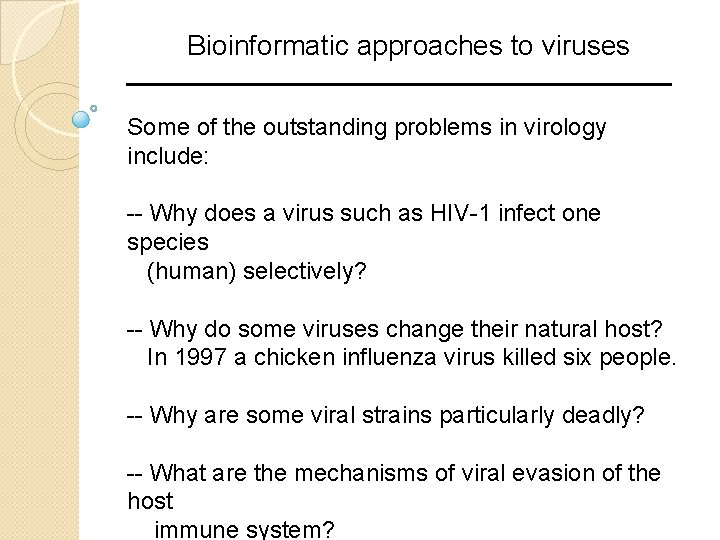
Bioinformatic approaches to viruses Some of the outstanding problems in virology include: -- Why does a virus such as HIV-1 infect one species (human) selectively? -- Why do some viruses change their natural host? In 1997 a chicken influenza virus killed six people. -- Why are some viral strains particularly deadly? -- What are the mechanisms of viral evasion of the host immune system?
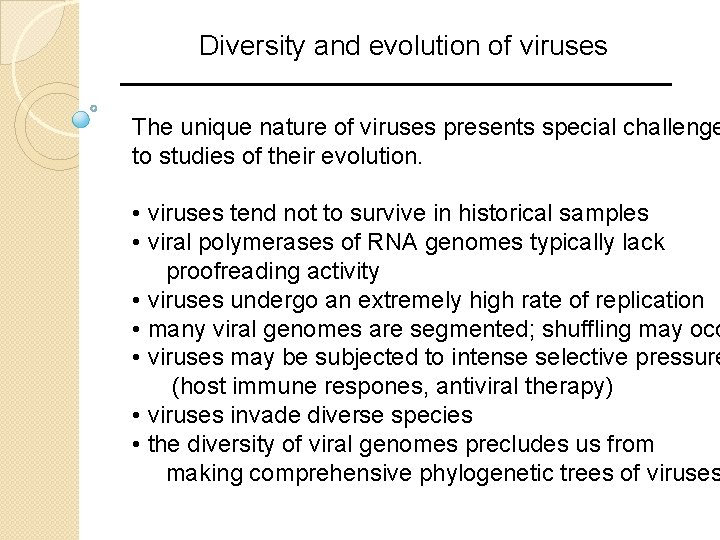
Diversity and evolution of viruses The unique nature of viruses presents special challenge to studies of their evolution. • viruses tend not to survive in historical samples • viral polymerases of RNA genomes typically lack proofreading activity • viruses undergo an extremely high rate of replication • many viral genomes are segmented; shuffling may occ • viruses may be subjected to intense selective pressure (host immune respones, antiviral therapy) • viruses invade diverse species • the diversity of viral genomes precludes us from making comprehensive phylogenetic trees of viruses
Outline Introduction Classification of viruses Bioinformatics approaches to virology Human immunodeficiency virus (HIV) Influenza virus Measles virus Ebola virus Herpesvirus: from phylogeny to gene expression Giant viruses Perspectives
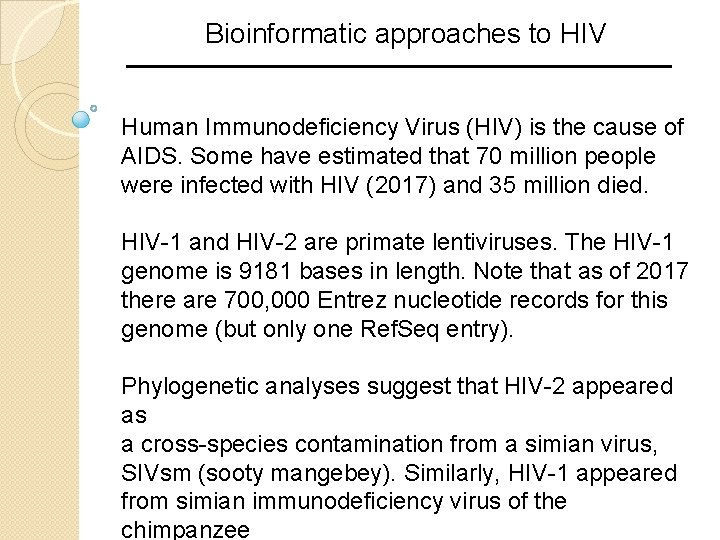
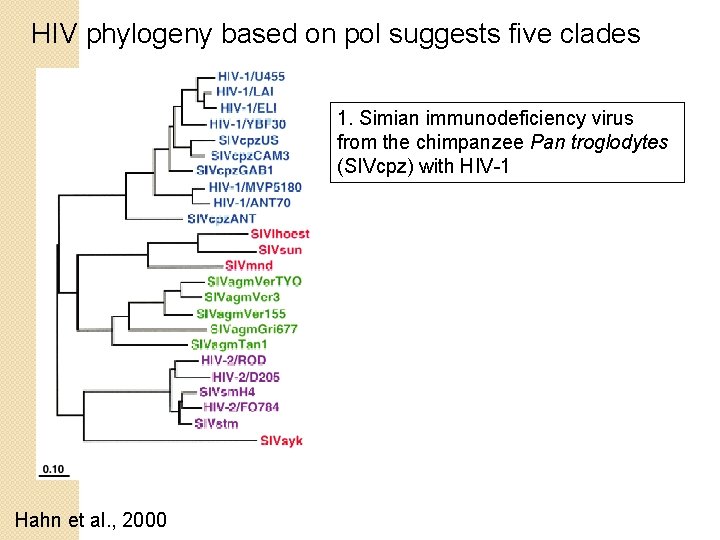
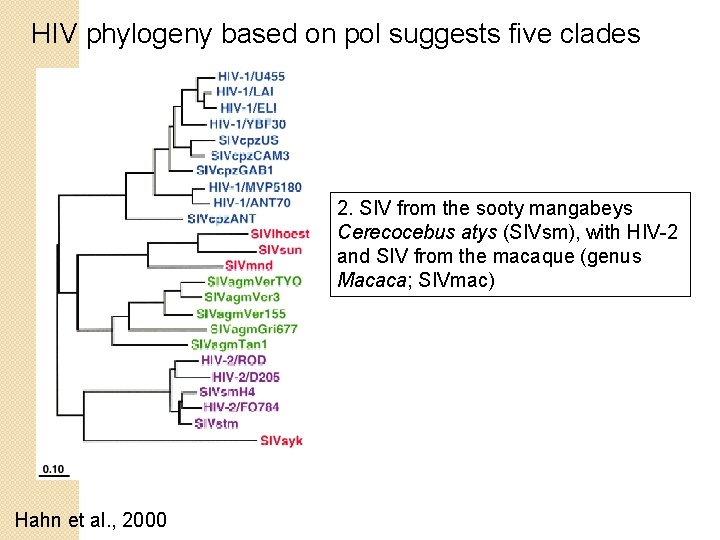
Bioinformatic approaches to HIV Human Immunodeficiency Virus (HIV) is the cause of AIDS. Some have estimated that 70 million people were infected with HIV (2017) and 35 million died. HIV-1 and HIV-2 are primate lentiviruses. The HIV-1 genome is 9181 bases in length. Note that as of 2017 there are 700, 000 Entrez nucleotide records for this genome (but only one Ref. Seq entry). Phylogenetic analyses suggest that HIV-2 appeared as a cross-species contamination from a simian virus, SIVsm (sooty mangebey). Similarly, HIV-1 appeared from simian immunodeficiency virus of the chimpanzee
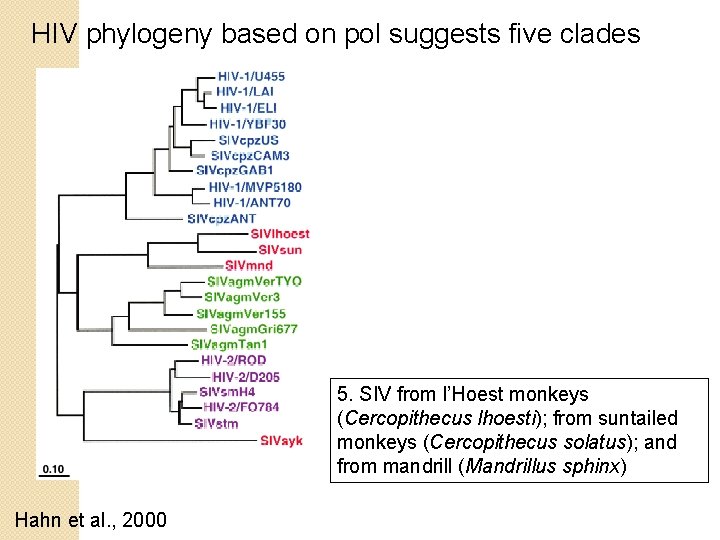
HIV phylogeny based on pol suggests five clades 1. Simian immunodeficiency virus from the chimpanzee Pan troglodytes (SIVcpz) with HIV-1 Hahn et al. , 2000
HIV phylogeny based on pol suggests five clades 2. SIV from the sooty mangabeys Cerecocebus atys (SIVsm), with HIV-2 and SIV from the macaque (genus Macaca; SIVmac) Hahn et al. , 2000
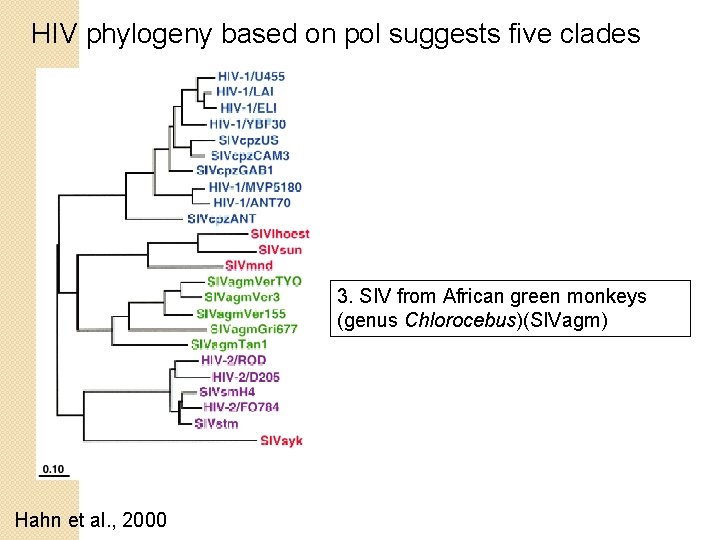
HIV phylogeny based on pol suggests five clades 3. SIV from African green monkeys (genus Chlorocebus)(SIVagm) Hahn et al. , 2000
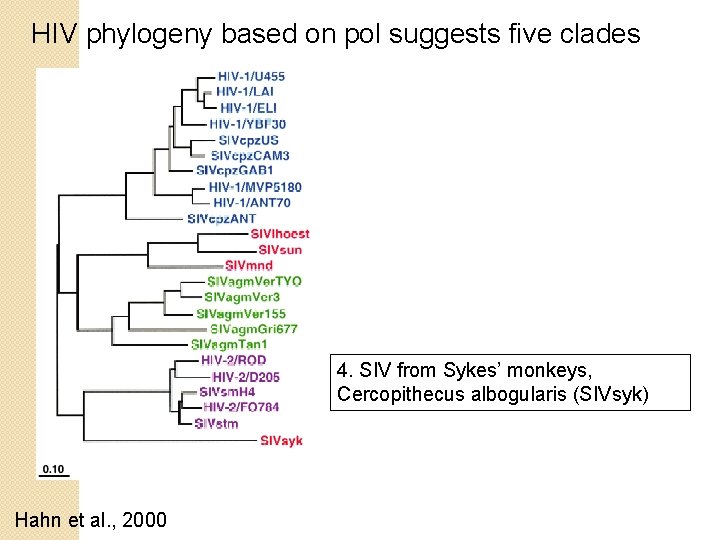
HIV phylogeny based on pol suggests five clades 4. SIV from Sykes’ monkeys, Cercopithecus albogularis (SIVsyk) Hahn et al. , 2000
HIV phylogeny based on pol suggests five clades 5. SIV from l’Hoest monkeys (Cercopithecus lhoesti); from suntailed monkeys (Cercopithecus solatus); and from mandrill (Mandrillus sphinx) Hahn et al. , 2000
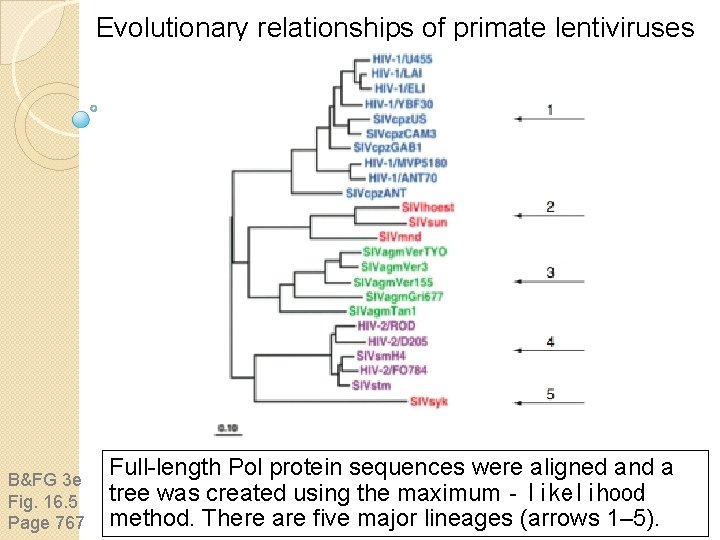
Evolutionary relationships of primate lentiviruses B&FG 3 e Fig. 16. 5 Page 767 Full-length Pol protein sequences were aligned and a tree was created using the maximum‐likelihood method. There are five major lineages (arrows 1– 5).
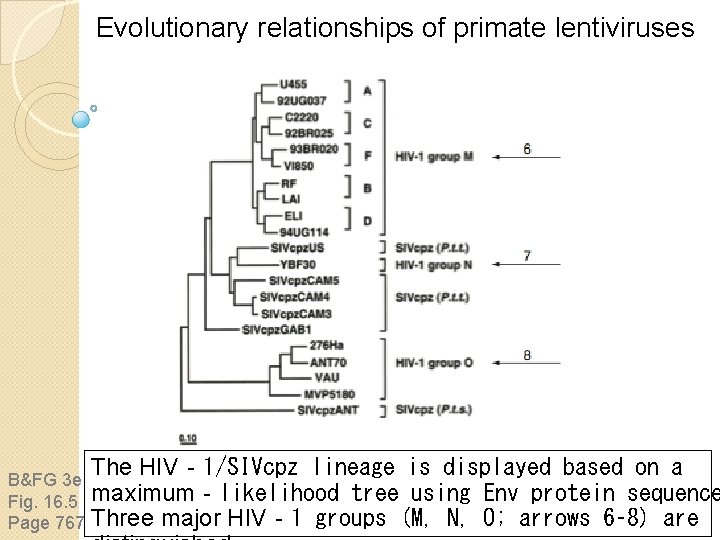
Evolutionary relationships of primate lentiviruses B&FG 3 e Fig. 16. 5 Page 767 The HIV‐ 1/SIVcpz lineage is displayed based on a maximum‐likelihood tree using Env protein sequence Three major HIV‐ 1 groups (M, N, O; arrows 6– 8) are
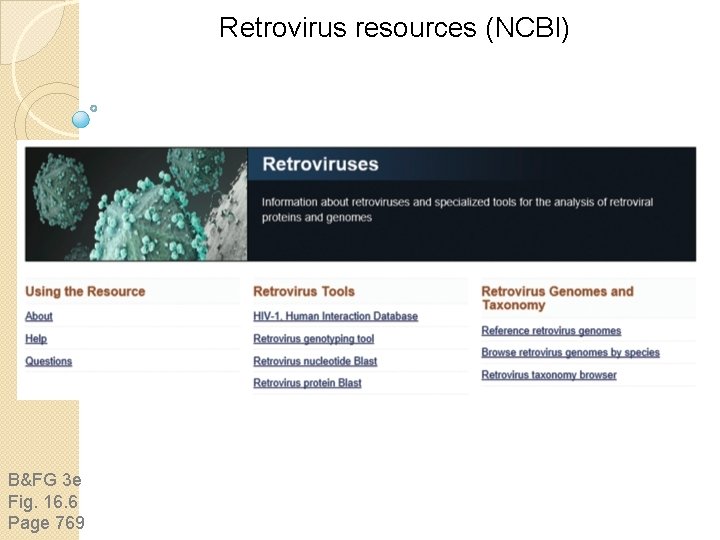
Bioinformatic approaches to HIV: NCBI offers a retrovirus resource with reference genomes and protein sets, and several tools (alignment, genotyping).
Retrovirus resources (NCBI) B&FG 3 e Fig. 16. 6 Page 769
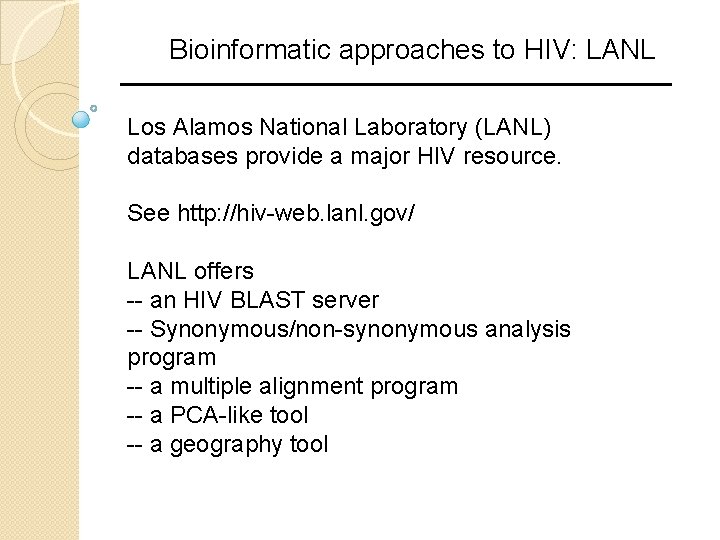
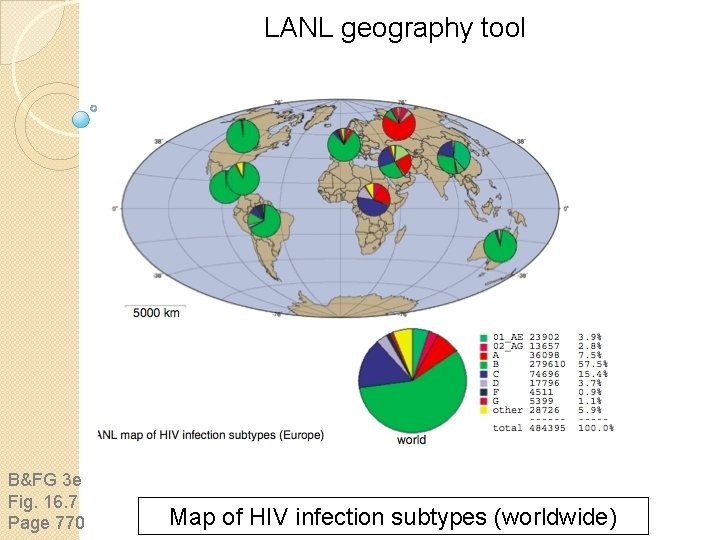
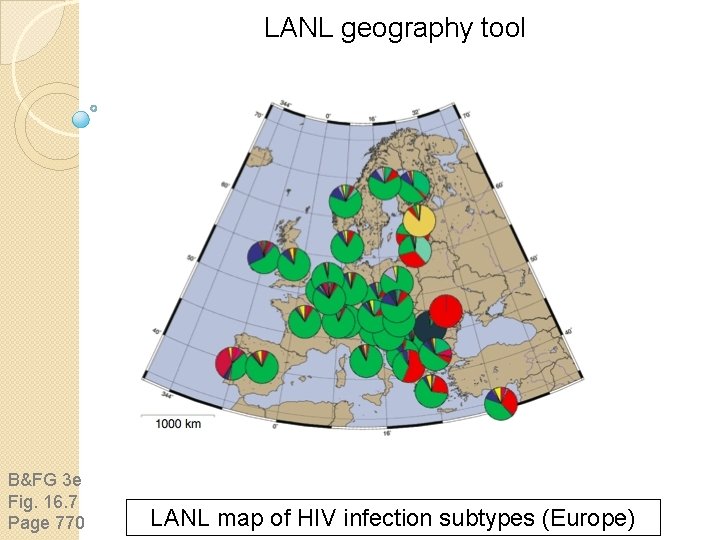
Bioinformatic approaches to HIV: LANL Los Alamos National Laboratory (LANL) databases provide a major HIV resource. See http: //hiv-web. lanl. gov/ LANL offers -- an HIV BLAST server -- Synonymous/non-synonymous analysis program -- a multiple alignment program -- a PCA-like tool -- a geography tool
LANL geography tool B&FG 3 e Fig. 16. 7 Page 770 Map of HIV infection subtypes (worldwide)
LANL geography tool B&FG 3 e Fig. 16. 7 Page 770 LANL map of HIV infection subtypes (Europe)
Outline Introduction Classification of viruses Bioinformatics approaches to virology Human immunodeficiency virus (HIV) Influenza virus Measles virus Ebola virus Herpesvirus: from phylogeny to gene expression Giant viruses Perspectives
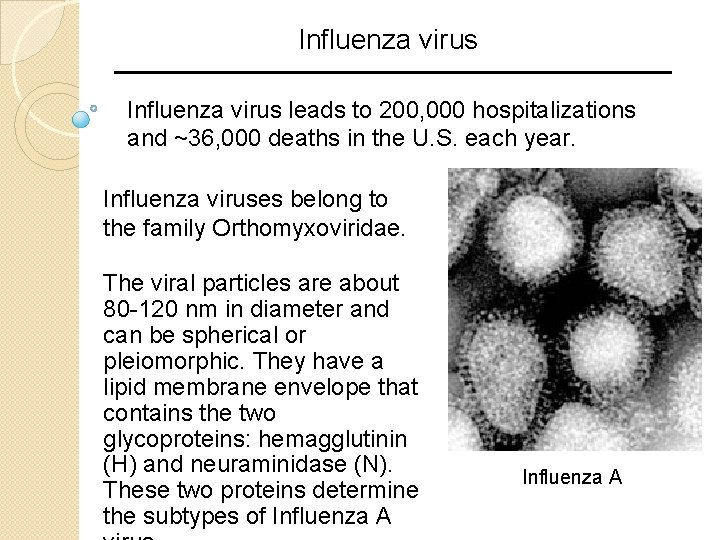
Influenza virus leads to 200, 000 hospitalizations and ~36, 000 deaths in the U. S. each year. Influenza viruses belong to the family Orthomyxoviridae. The viral particles are about 80 -120 nm in diameter and can be spherical or pleiomorphic. They have a lipid membrane envelope that contains the two glycoproteins: hemagglutinin (H) and neuraminidase (N). These two proteins determine the subtypes of Influenza A
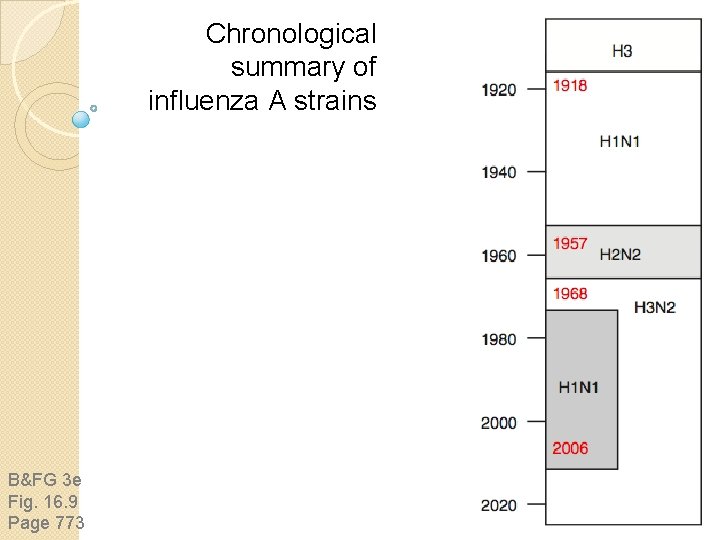
Influenza virus Since 1976, the H 5 N 1 avian influenza virus has infected at least 232 people (mostly in Asia), of whom 134 have died. A major concern is that a human influenza virus and the H 5 N 1 avian influenza strain were to combine, a new lethal virus could emerge causing a human pandemic. In a pandemic, 20% to 40% of the population is infected per year. ►The 1918 Spanish influenza virus killed tens of millions of people (H 1 N 1 subtype). ► 1957 (H 2 N 2) ► 1968 (H 3 N 2) ► Asia 2003 -2005 (H 5 N 1)
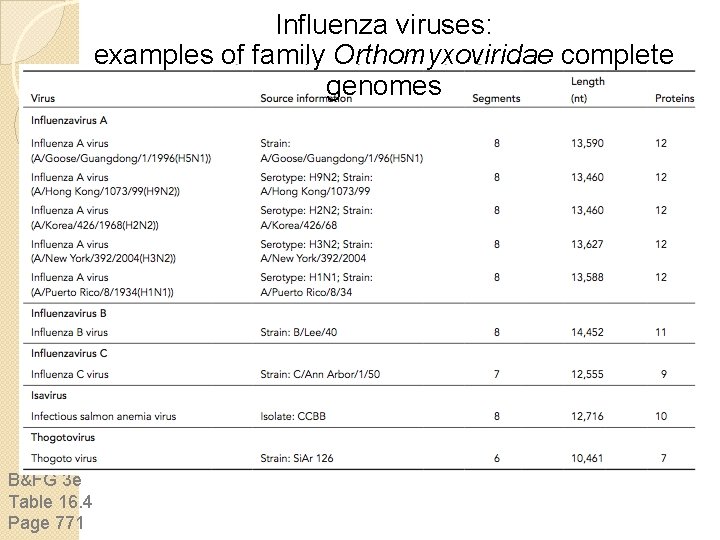
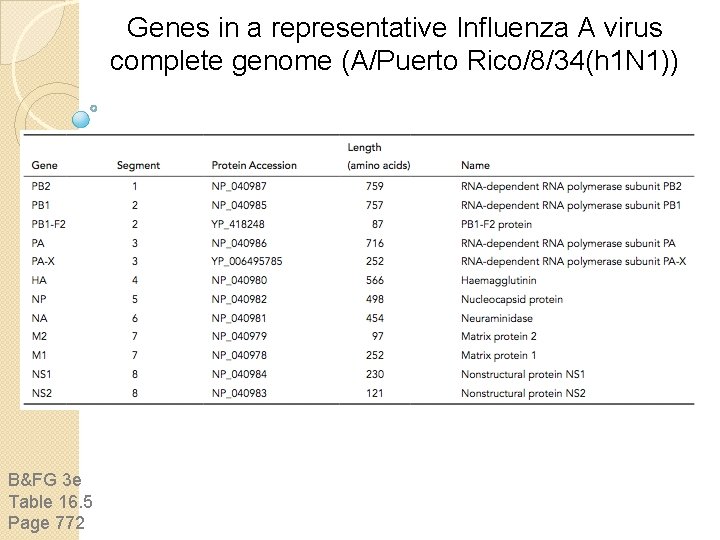
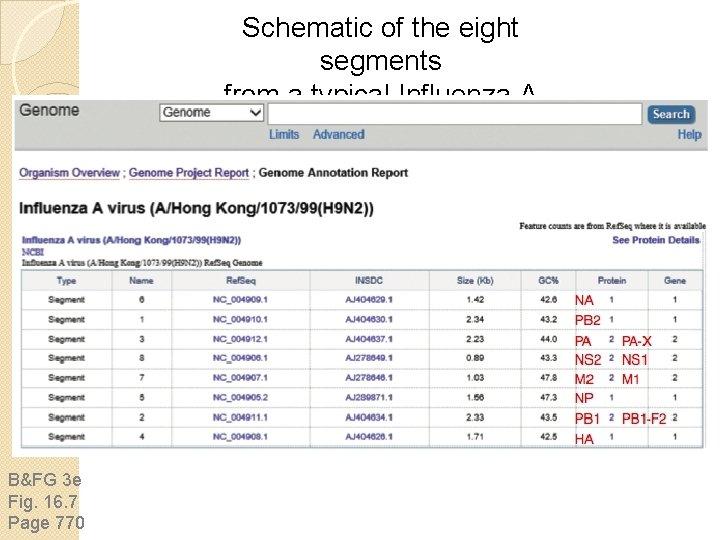
Influenza virus There are three types: A, B, C ► A and B cause flu epidemics ► Influenza A: 20 subtypes; occurs in humans, other animals. For example, in birds there are nine subtypes based on the type of neuraminidase expressed (group 1: N 1, N 4, N 5, N 8; group 2: N 2, N 3, N 6, N 7, N 9). The structure of H 5 N 1 avian influenza neuraminidase has been reported (Russell RJ et al. , Nature 443: 45, 2006). ► Influenza A genome consists of eight, single negative-strand RNAs (from 890 to 2340 nucleotides). Each RNA segment encodes one to two proteins.
Influenza viruses: examples of family Orthomyxoviridae complete genomes B&FG 3 e Table 16. 4 Page 771
Genes in a representative Influenza A virus complete genome (A/Puerto Rico/8/34(h 1 N 1)) B&FG 3 e Table 16. 5 Page 772
Schematic of the eight segments from a typical Influenza A virus B&FG 3 e Fig. 16. 7 Page 770
Chronological summary of influenza A strains B&FG 3 e Fig. 16. 9 Page 773
Outline Introduction Classification of viruses Bioinformatics approaches to virology Human immunodeficiency virus (HIV) Influenza virus Measles virus Ebola virus Herpesvirus: from phylogeny to gene expression Giant viruses Perspectives
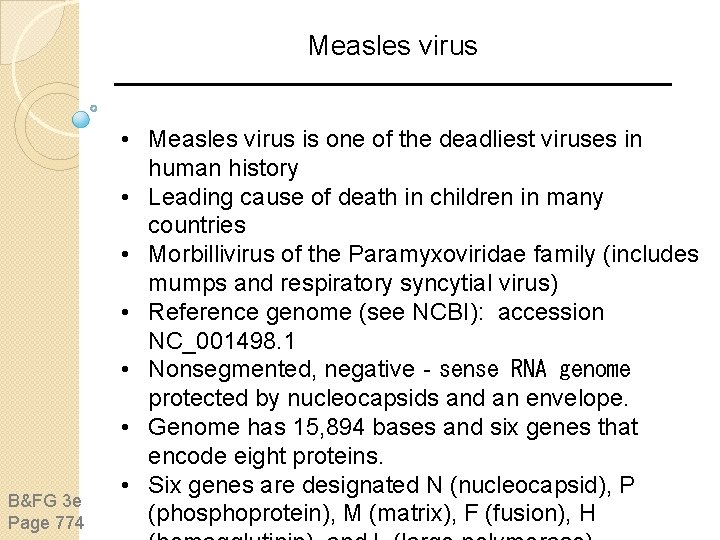
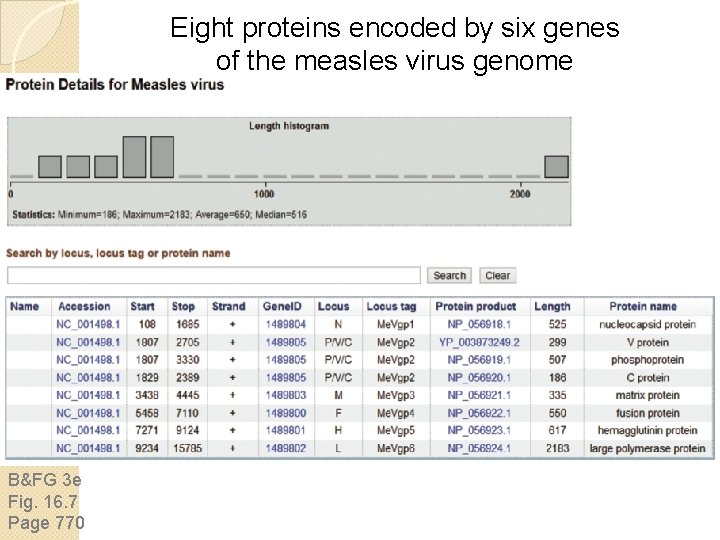
Measles virus B&FG 3 e Page 774 • Measles virus is one of the deadliest viruses in human history • Leading cause of death in children in many countries • Morbillivirus of the Paramyxoviridae family (includes mumps and respiratory syncytial virus) • Reference genome (see NCBI): accession NC_001498. 1 • Nonsegmented, negative‐sense RNA genome protected by nucleocapsids and an envelope. • Genome has 15, 894 bases and six genes that encode eight proteins. • Six genes are designated N (nucleocapsid), P (phosphoprotein), M (matrix), F (fusion), H
Eight proteins encoded by six genes of the measles virus genome B&FG 3 e Fig. 16. 7 Page 770
Outline Introduction Classification of viruses Bioinformatics approaches to virology Human immunodeficiency virus (HIV) Influenza virus Measles virus Ebola virus Herpesvirus: from phylogeny to gene expression Giant viruses Perspectives
Ebola virus B&FG 3 e Page 775 • Ebola is a filovirus that is transmitted between people by contact with body fluids. • First reported outbreak occurred in 1976. • Largest outbreak began in 2014, centered initially in West Africa. • The virus causes hemorragic fever that is often fatal. • Ebola virus is an enveloped, single‐stranded RNA negative‐strand virus of the family Filoviridae. • The Zaire Ebola virus reference genome is 18, 959 bases in length (accession NC_002549. 1), with seven genes encoding nine proteins. • Bioinformatics resource include a UCSC Ebola virus browser.
Outline Introduction Classification of viruses Bioinformatics approaches to virology Human immunodeficiency virus (HIV) Influenza virus Measles virus Ebola virus Herpesvirus: from phylogeny to gene expression Giant viruses Perspectives
Herpesviruses are double-stranded DNA viruses that include herpes simplex, cytomegalovirus, and Epstein-Barr. The genomic DNA is packed inside an icosahedral capsid; with a lipid bilayer the diameter is ~200 nanometers.
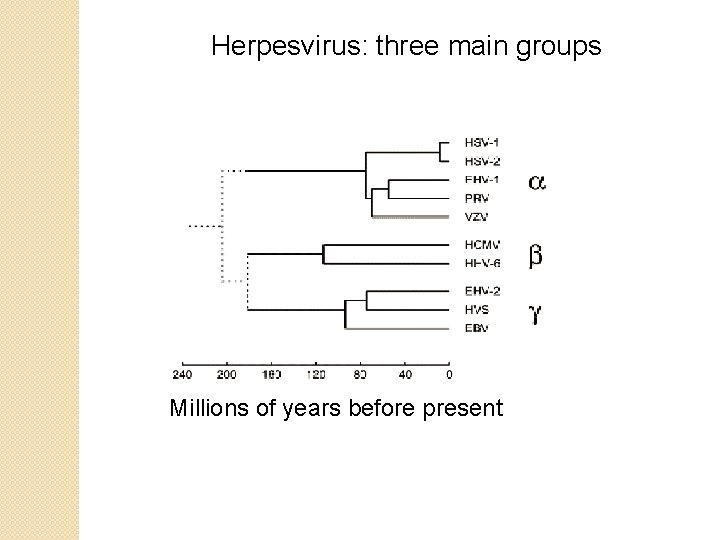
Herpesvirus Phylogenetic analysis suggests three major groups that originated about 180 -220 MYA. Mammalian herpesviruses are in all three subfamilies. Avian and reptilian herpesviruses are all in the Alphaherpesvirinae.
Herpesvirus: three main groups Millions of years before present
Herpesvirus taxonomy Mc. Geoch et al. (Virus Res. 117: 90 -104, 2006) describe a new herpesvirus taxonomy. Family Herpesviridae Subfamilies Alpha-, Beta-, Gammaherpesvirinae New family Alloherpesviridae (piscine, amphibian herpesviruses)
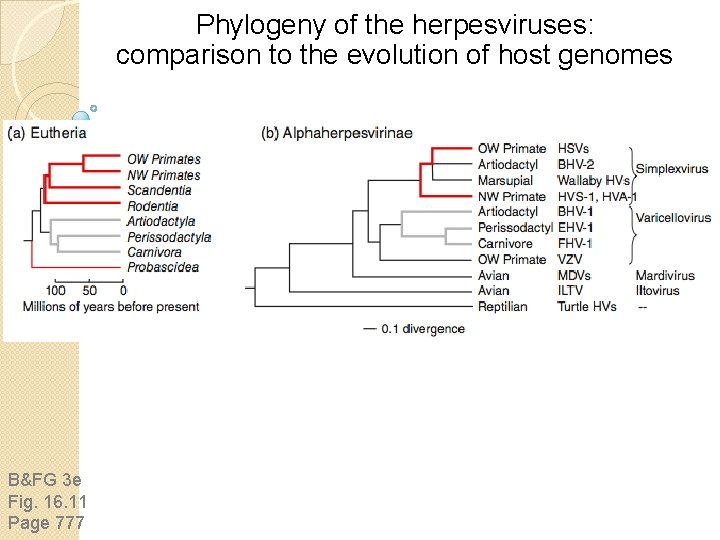
Phylogeny of the herpesviruses: comparison to the evolution of host genomes B&FG 3 e Fig. 16. 11 Page 777
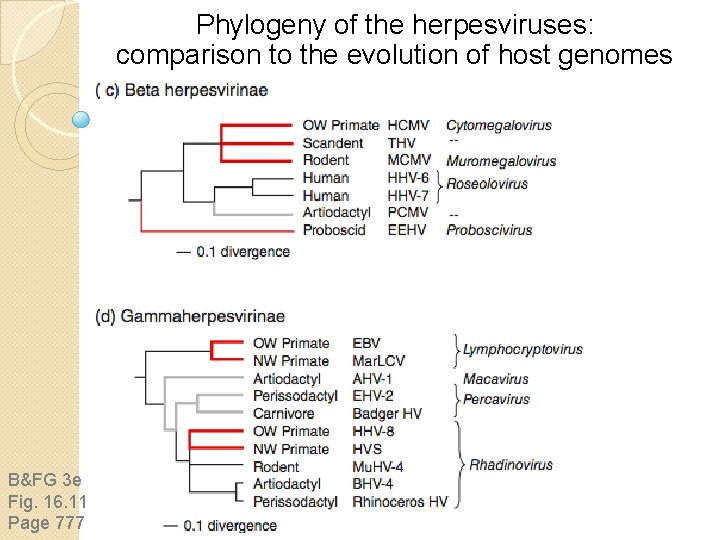
Phylogeny of the herpesviruses: comparison to the evolution of host genomes B&FG 3 e Fig. 16. 11 Page 777
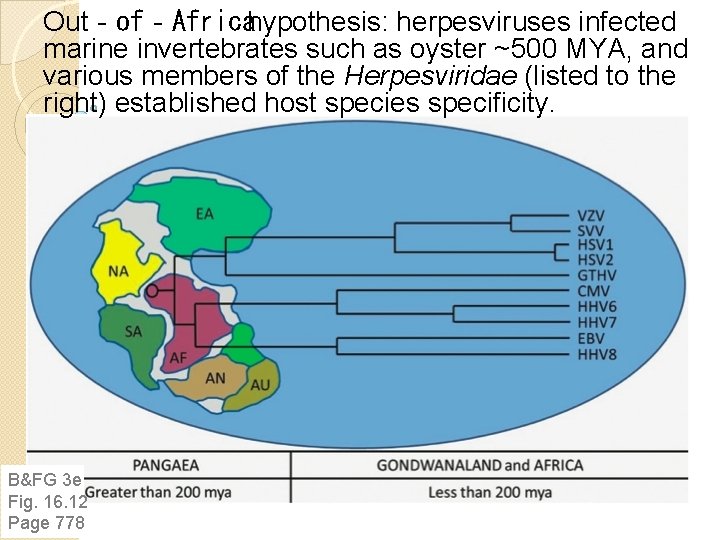
Out‐of‐Africahypothesis: herpesviruses infected marine invertebrates such as oyster ~500 MYA, and various members of the Herpesviridae (listed to the right) established host species specificity. B&FG 3 e Fig. 16. 12 Page 778
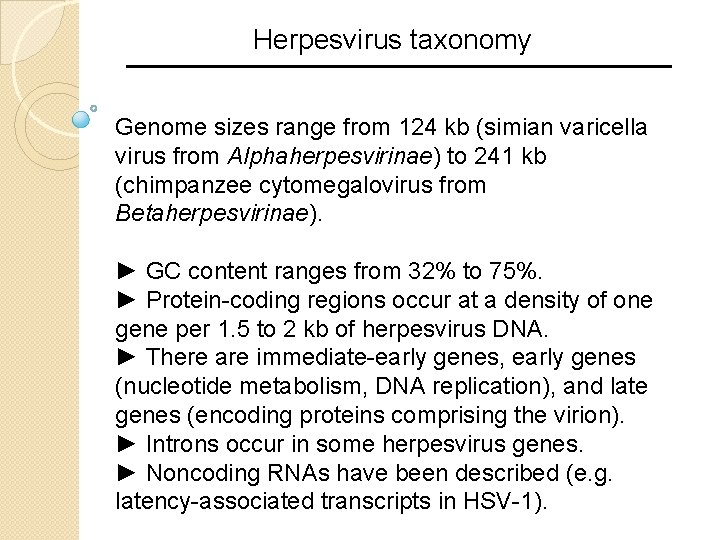
Herpesvirus taxonomy Genome sizes range from 124 kb (simian varicella virus from Alphaherpesvirinae) to 241 kb (chimpanzee cytomegalovirus from Betaherpesvirinae). ► GC content ranges from 32% to 75%. ► Protein-coding regions occur at a density of one gene per 1. 5 to 2 kb of herpesvirus DNA. ► There are immediate-early genes, early genes (nucleotide metabolism, DNA replication), and late genes (encoding proteins comprising the virion). ► Introns occur in some herpesvirus genes. ► Noncoding RNAs have been described (e. g. latency-associated transcripts in HSV-1).
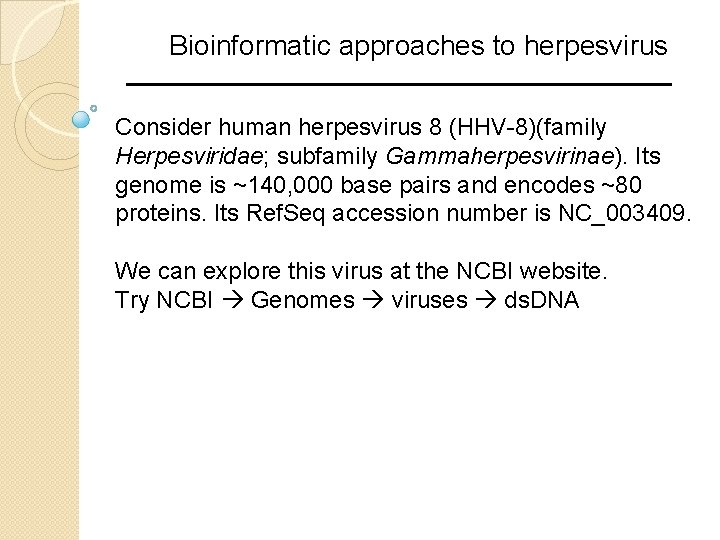
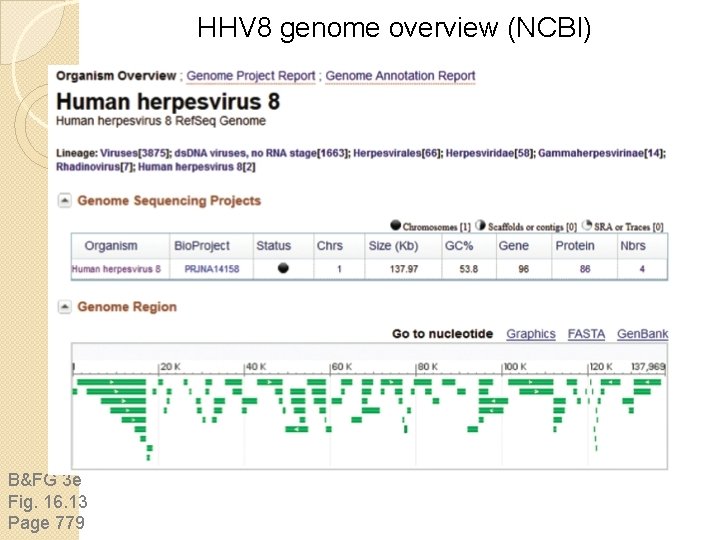
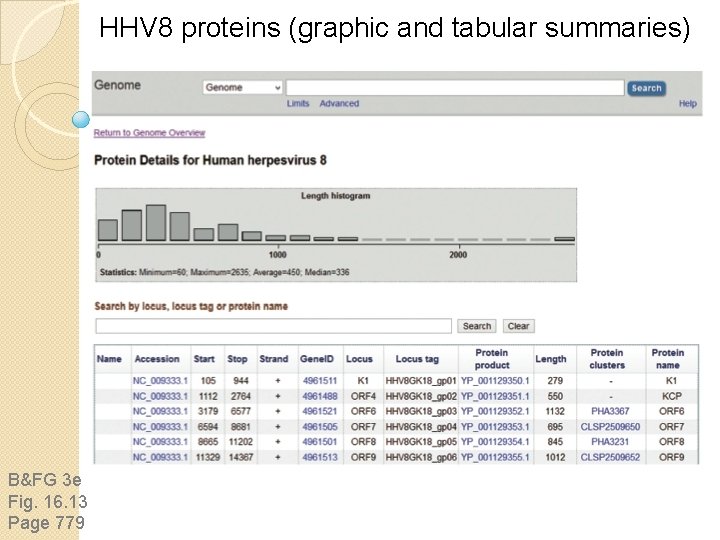
Bioinformatic approaches to herpesvirus Consider human herpesvirus 8 (HHV-8)(family Herpesviridae; subfamily Gammaherpesvirinae). Its genome is ~140, 000 base pairs and encodes ~80 proteins. Its Ref. Seq accession number is NC_003409. We can explore this virus at the NCBI website. Try NCBI Genomes viruses ds. DNA
HHV 8 genome overview (NCBI) B&FG 3 e Fig. 16. 13 Page 779
HHV 8 proteins (graphic and tabular summaries) B&FG 3 e Fig. 16. 13 Page 779
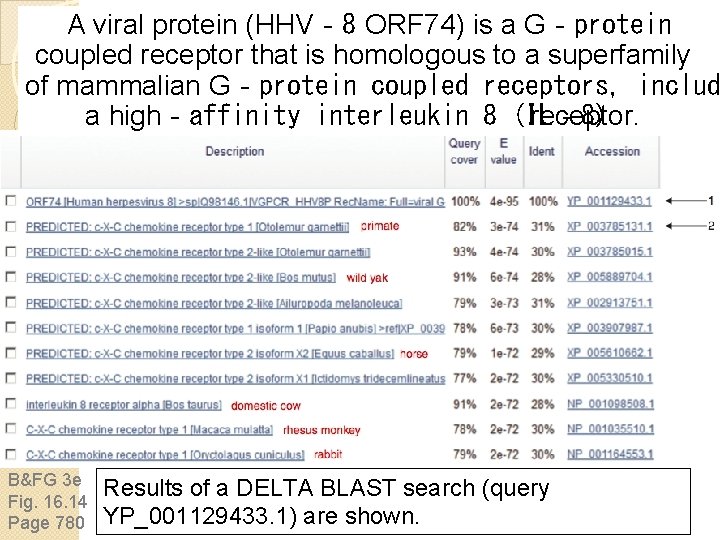
Viruses can acquire host genes HHV-8 proteins include structural and metabolic proteins. There also viral homologs of human host proteins such as the apoptosis inhibitor Bcl 2, an interleukin receptor, and a neural cell adhesion-related adhesin. Mechanisms by which viruses may acquire host proteins include recombination, transposition, splicing. A DELTA BLAST search using HHV-8 interleukin IL-8 receptor as a query reveals several other viral IL-8 receptor molecules.
A viral protein (HHV‐ 8 ORF 74) is a G‐protein coupled receptor that is homologous to a superfamily of mammalian G‐protein coupled receptors, includ a high‐affinity interleukin 8 (IL‐ 8) receptor. B&FG 3 e Fig. 16. 14 Page 780 Results of a DELTA BLAST search (query YP_001129433. 1) are shown.
Bioinformatic approaches to herpesvirus Functional genomics approaches have been applied to human herpesvirus 8 (HHV-8). For example, changes in viral gene expression have been measured at different stages of infection. Conversely, gene expression changes have been measured in human cells following viral infection.
Outline Introduction Classification of viruses Bioinformatics approaches to virology Human immunodeficiency virus (HIV) Influenza virus Measles virus Ebola virus Herpesvirus: from phylogeny to gene expression Giant viruses Perspectives
Mimivirus: mimicking microbe Mimivirus is a member of the Mimiviridae family of nucleocytoplasmic large DNA viruses (NCLDVs). It was isolated from amoebae growing in England. The mature particle has a diameter of ~400 nanometers, comparable to a small bacterium (e. g. a mycoplasma). Thus, mimivirus is by far the largest virus identified to date.
Mimivirus: mimicking microbe The mimivirus genome is 1. 2 Mb (1, 181, 404 base pairs). It is a double-stranded DNA virus. ► Two inverted repeats of 900 base pairs at the ends (thus it may circularize) ► 72% AT content (~28% GC content) ► 1262 putative open-reading frames (ORFs) of length >100 amino acids. 911 of these are predicted to be protein-coding genes ► Unique features include genes predicted to encode proteins that function in protein translation. The inability to perform protein synthesis has been considered a prime feature of viruses, in contrast to most life forms.
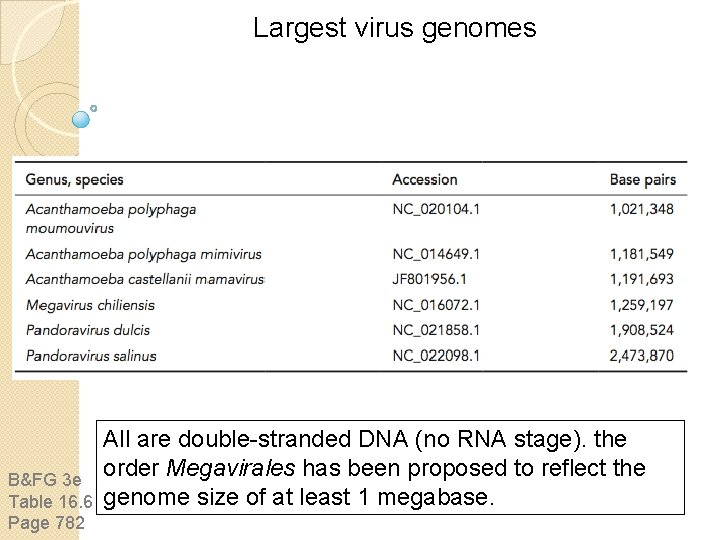
Largest virus genomes B&FG 3 e Table 16. 6 Page 782 All are double-stranded DNA (no RNA stage). the order Megavirales has been proposed to reflect the genome size of at least 1 megabase.
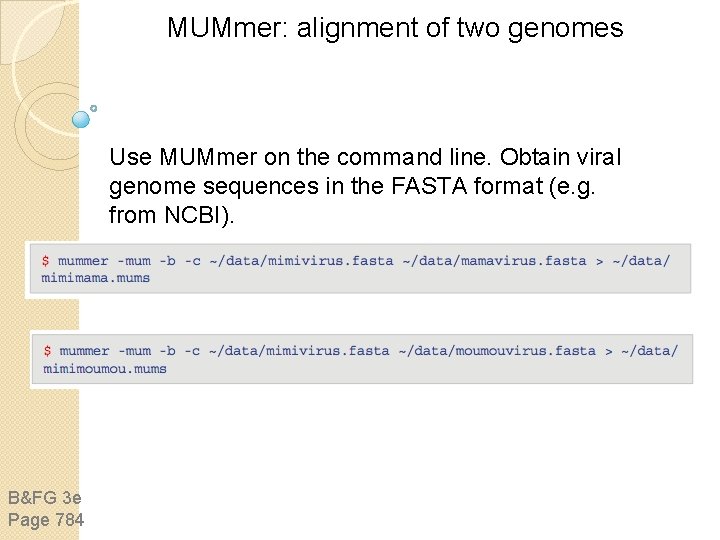
MUMmer: alignment of two genomes Use MUMmer on the command line. Obtain viral genome sequences in the FASTA format (e. g. from NCBI). B&FG 3 e Page 784
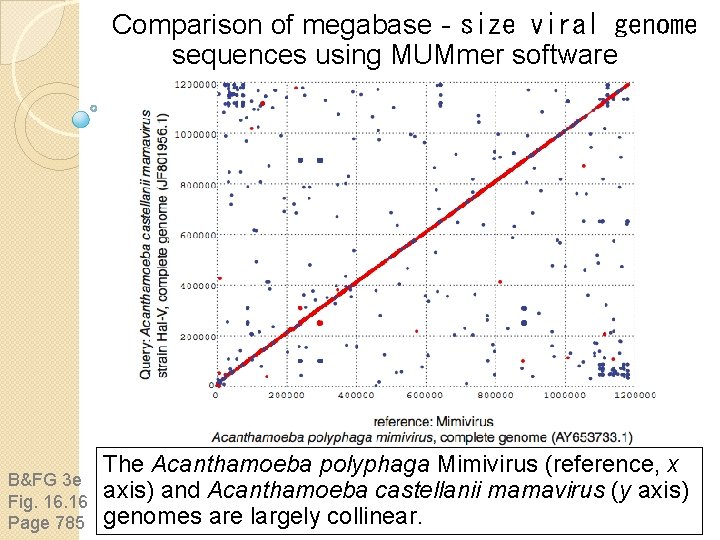
Comparison of megabase‐size viral genome sequences using MUMmer software B&FG 3 e Fig. 16 Page 785 The Acanthamoeba polyphaga Mimivirus (reference, x axis) and Acanthamoeba castellanii mamavirus (y axis) genomes are largely collinear.
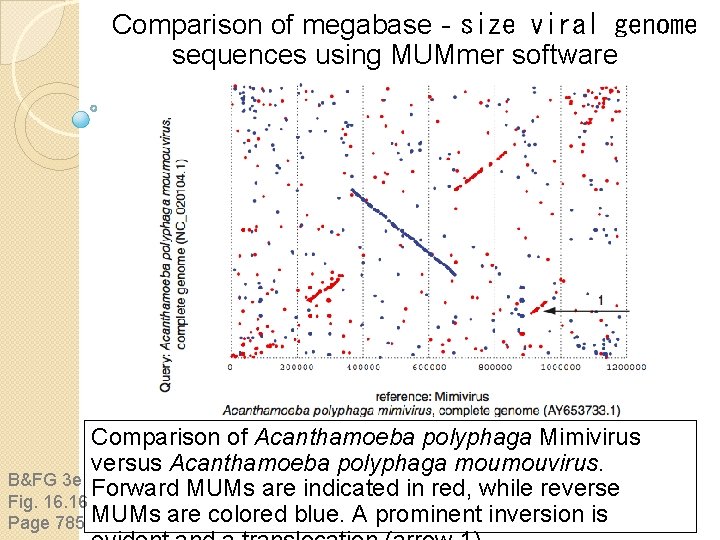
Comparison of megabase‐size viral genome sequences using MUMmer software Comparison of Acanthamoeba polyphaga Mimivirus versus Acanthamoeba polyphaga moumouvirus. B&FG 3 e Forward MUMs are indicated in red, while reverse Fig. 16 Page 785 MUMs are colored blue. A prominent inversion is
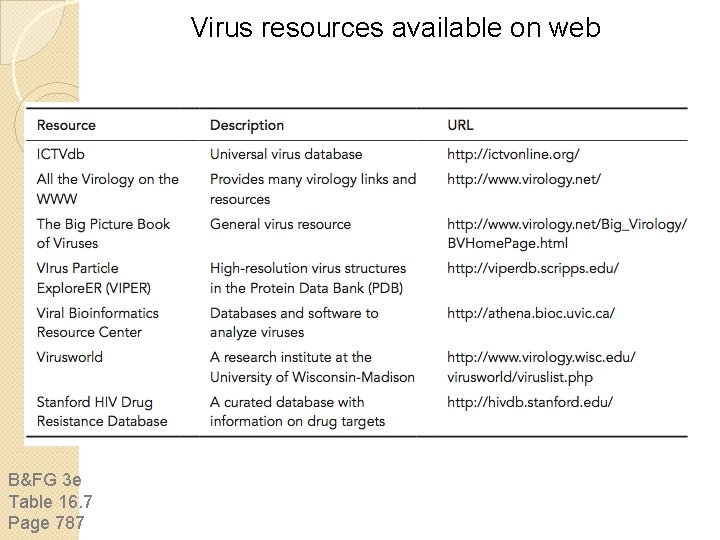
Virus resources available on web B&FG 3 e Table 16. 7 Page 787
Outline Introduction Classification of viruses Bioinformatics approaches to virology Human immunodeficiency virus (HIV) Influenza virus Measles virus Ebola virus Herpesvirus: from phylogeny to gene expression Giant viruses Perspectives
Perspectives There are relatively few species of viruses because of their specialized requirements for replication in host cells. Thousands of viral genomes have been sequenced, and metagenomics projects are helping to define the diversity of viral genomes. It remains a challenge to use bioinformatics knowledge to successfully create vaccines. Many viruses (such as measles) remain deadly to humans, and some such as influenza pose potentially catastrophic threats. B&FG 3 e Page 785