
Public Health Incident Leadership MODULE 5 MANAGING THE
Public Health Incident Leadership MODULE 5: MANAGING THE TEAM August 2015
Objectives �Describe the difference between management objectives and incident objectives �Describe how to link objectives with response activities �Describe the process of leading the Incident Management Team through the Planning P �Identify the forms necessary to complete the Planning P
Management Tool 1 OBJECTIVES
What is an Objective? �Merriam-Webster defines an objective as “the aim, target, or purpose”. �Objectives describe what you want to accomplish. �Objectives establish the direction of the incident management effort.
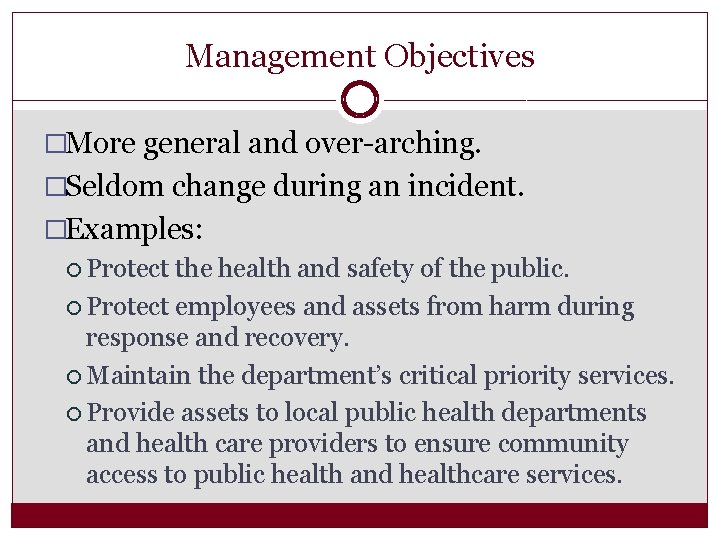
Management Objectives �More general and over-arching. �Seldom change during an incident. �Examples: Protect the health and safety of the public. Protect employees and assets from harm during response and recovery. Maintain the department’s critical priority services. Provide assets to local public health departments and health care providers to ensure community access to public health and healthcare services.
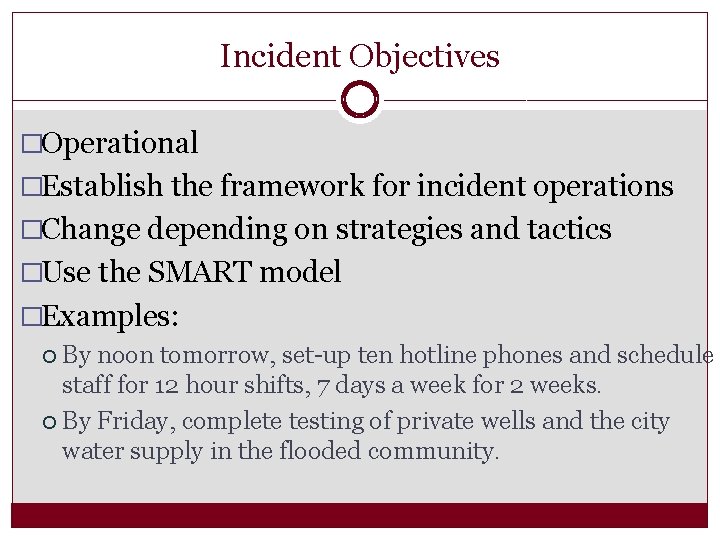
Incident Objectives �Operational �Establish the framework for incident operations �Change depending on strategies and tactics �Use the SMART model �Examples: By noon tomorrow, set-up ten hotline phones and schedule staff for 12 hour shifts, 7 days a week for 2 weeks. By Friday, complete testing of private wells and the city water supply in the flooded community.

SMART Objectives S • Specific M • Measurable A • Action-oriented R • Realistic T • Time sensitive
SMART or Not? �By 3: 00 p. m. today, the Public Information Officer will have communicated information to the public on the availability of safe drinking water in the affected area.
SMART or Not? �We will let people know whether or not they can drink the water.
SMART or Not? �Coordinate with faith-based community leaders to assess the availability of health information for their community with language barriers.
SMART or Not? �Environmental health staff will complete inspections within 3 days for Springfield’s 45 licensed restaurants and grocery delis to allow them to reopen after a 24 -hour power failure.
Objectives - Strategies - Tactics �Objectives establish the framework for incident operations. �Strategies and tactics translate objectives into the actions that get the work done.
Example: Pandemic Influenza �Objective: By Tuesday, Human Resources will implement the social distancing policy from the department’s All-Hazards Plan to ensure health of staff. �Strategy: Activate procedures for social distancing to maintain employee health. �Tactics: Cancel all meetings and non-essential travel. Implement work-from-home strategies.
Management Tool 2 PLANNING P
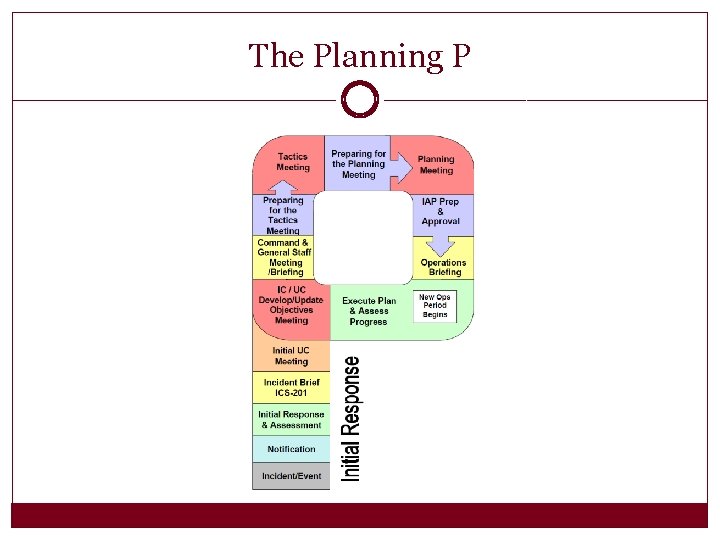
The Planning P
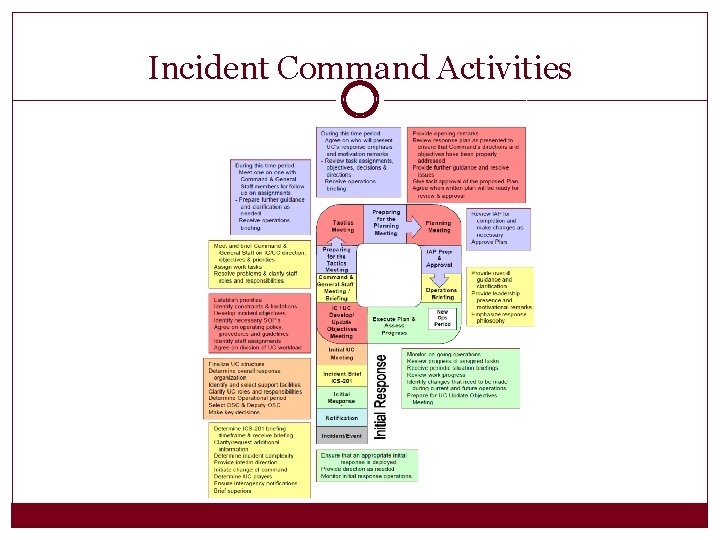
Incident Command Activities

Initial Response
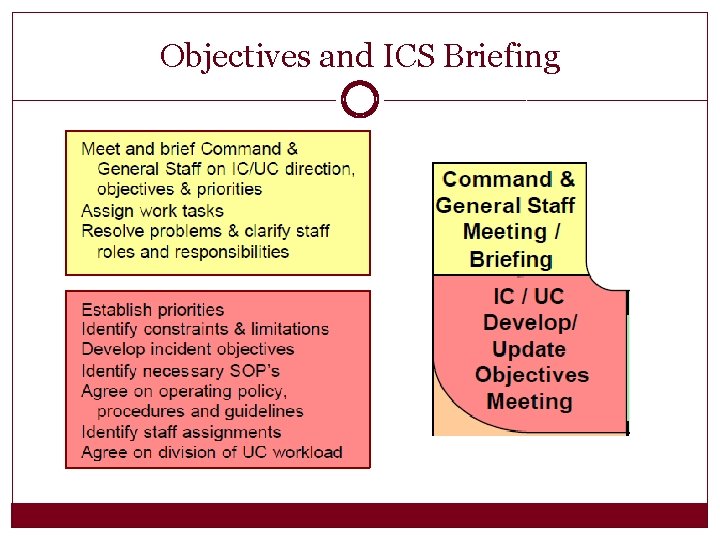
Objectives and ICS Briefing
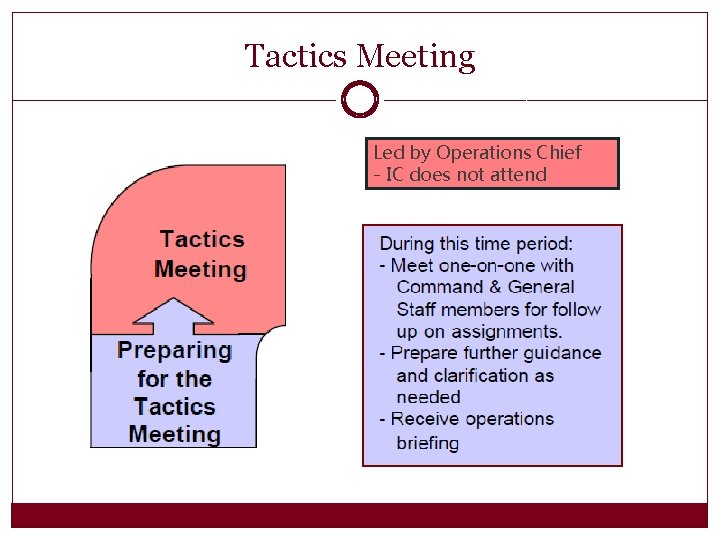
Tactics Meeting Led by Operations Chief - IC does not attend
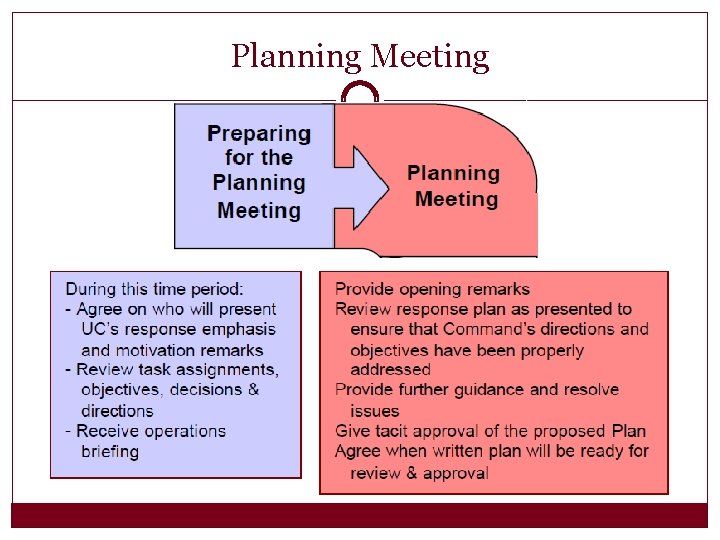
Planning Meeting

IAP and Operations
Management Tool 3 ICS FORMS
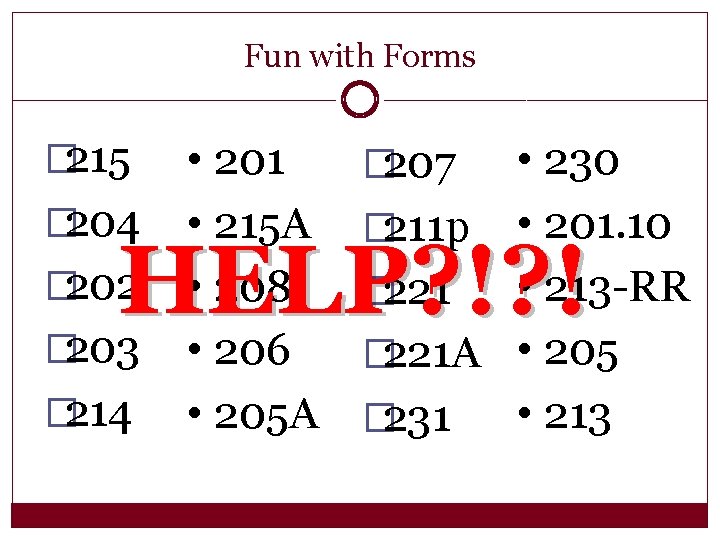
Fun with Forms � 215 � 204 • 201 • 215 A • 208 • 206 • 205 A • 230 � 211 p • 201. 10 • 213 -RR � 221 A • 205 • 213 � 231 � 207 HELP? !? ! 203 � 202 � � 214
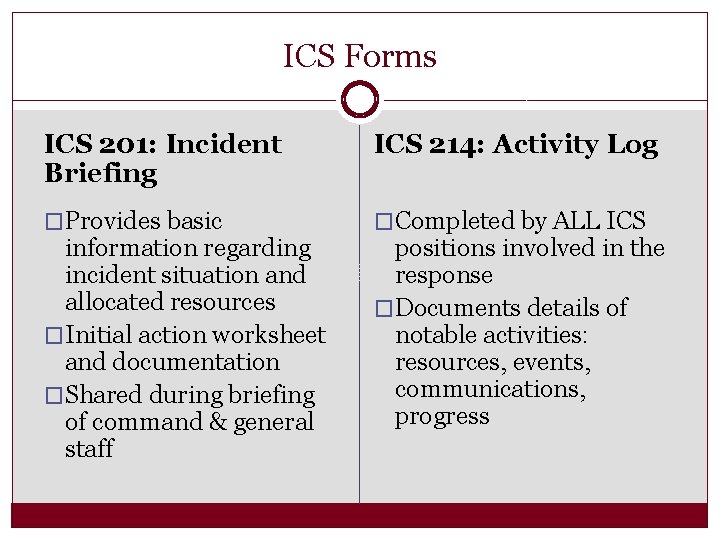
ICS Forms ICS 201: Incident Briefing ICS 214: Activity Log �Provides basic �Completed by ALL ICS information regarding incident situation and allocated resources �Initial action worksheet and documentation �Shared during briefing of command & general staff positions involved in the response �Documents details of notable activities: resources, events, communications, progress
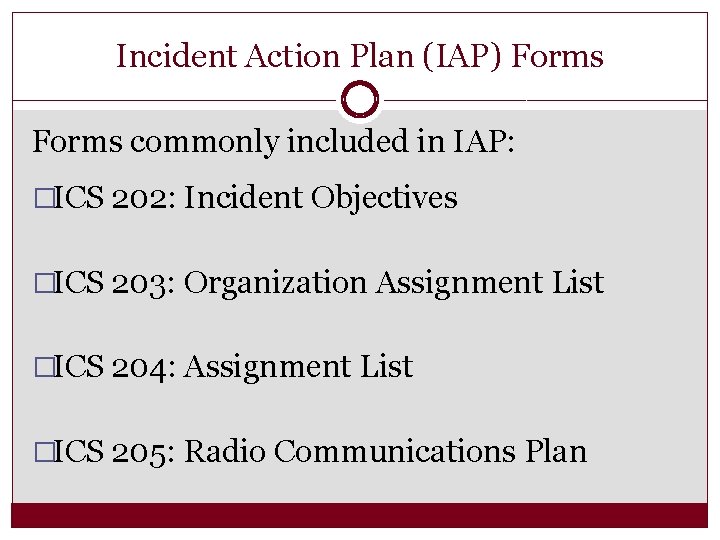
Incident Action Plan (IAP) Forms commonly included in IAP: �ICS 202: Incident Objectives �ICS 203: Organization Assignment List �ICS 204: Assignment List �ICS 205: Radio Communications Plan
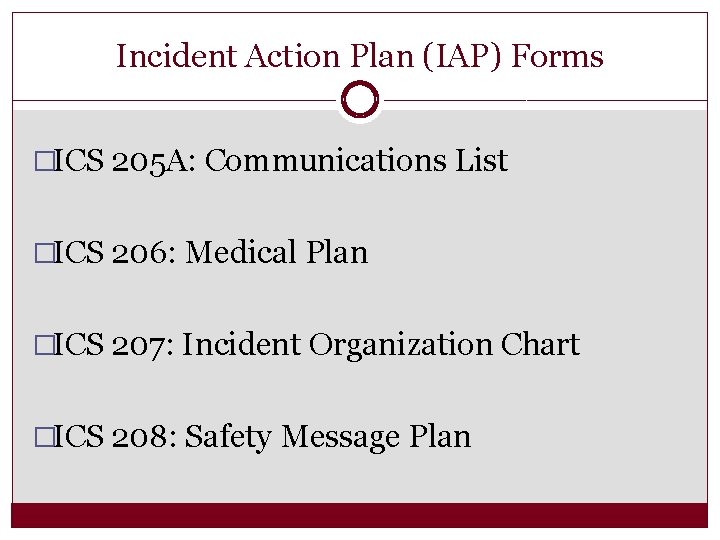
Incident Action Plan (IAP) Forms �ICS 205 A: Communications List �ICS 206: Medical Plan �ICS 207: Incident Organization Chart �ICS 208: Safety Message Plan
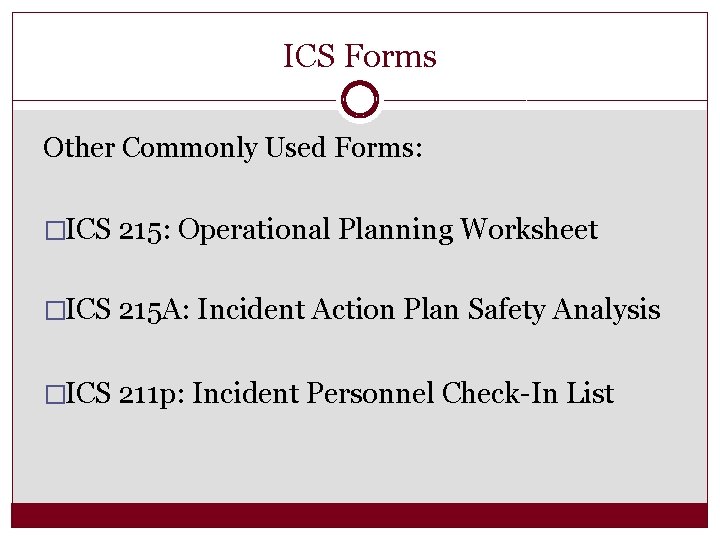
ICS Forms Other Commonly Used Forms: �ICS 215: Operational Planning Worksheet �ICS 215 A: Incident Action Plan Safety Analysis �ICS 211 p: Incident Personnel Check-In List
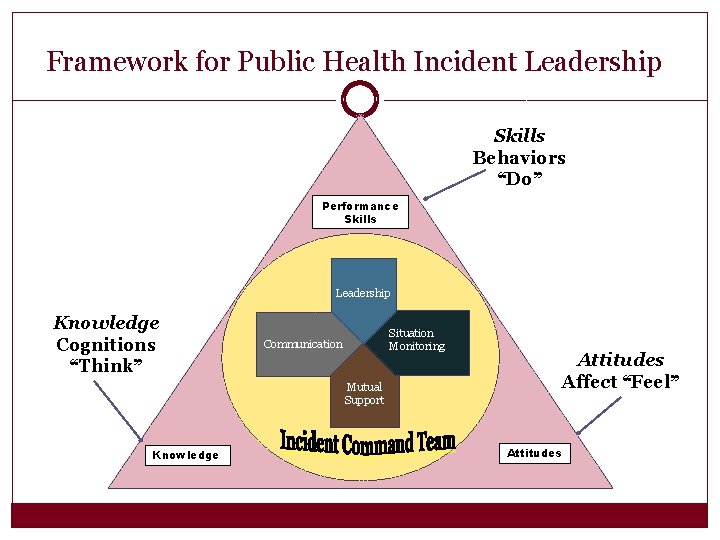
Framework for Public Health Incident Leadership Skills Behaviors “Do” Performance Skills Leadership Knowledge Cognitions “Think” Situation Monitoring Communication Attitudes Affect “Feel” Mutual Support Knowledge Attitudes
- Slides: 28