
B Troeva New Bulgarian University For completed actions
B. Troeva, New Bulgarian University
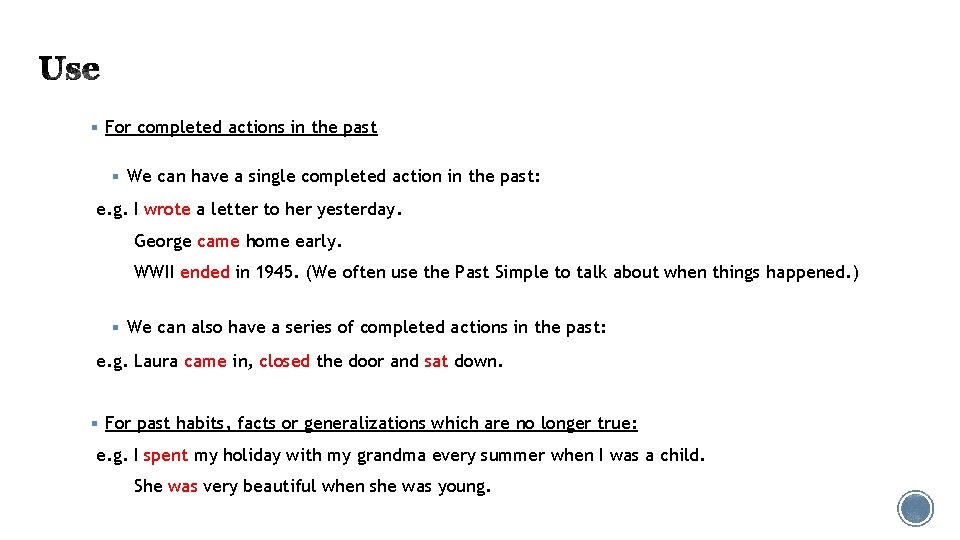
§ For completed actions in the past § We can have a single completed action in the past: e. g. I wrote a letter to her yesterday. George came home early. WWII ended in 1945. (We often use the Past Simple to talk about when things happened. ) § We can also have a series of completed actions in the past: e. g. Laura came in, closed the door and sat down. § For past habits, facts or generalizations which are no longer true: e. g. I spent my holiday with my grandma every summer when I was a child. She was very beautiful when she was young.
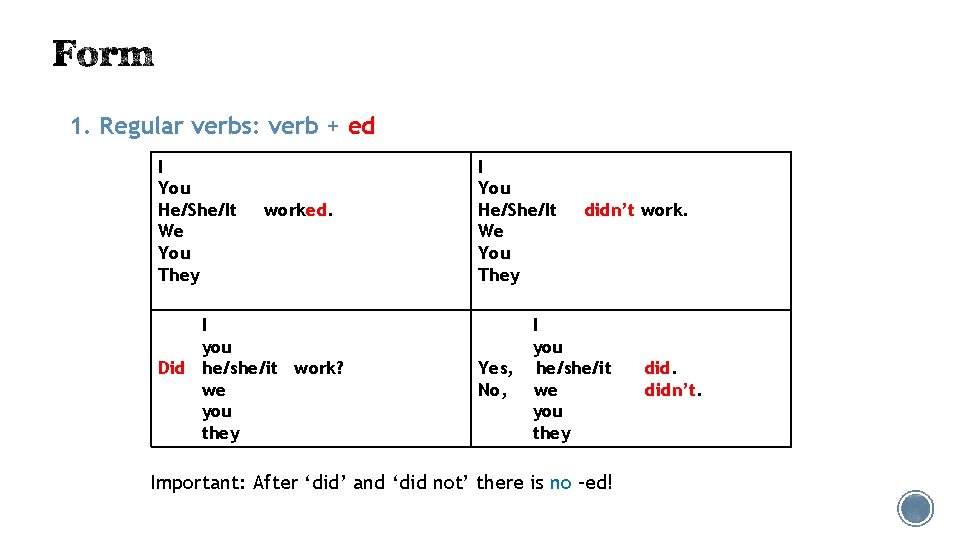
1. Regular verbs: verb + ed I You He/She/It We You They worked. I you Did he/she/it work? we you they I You He/She/It We You They Yes, No, didn’t work. I you he/she/it we you they Important: After ‘did’ and ‘did not’ there is no –ed! didn’t.
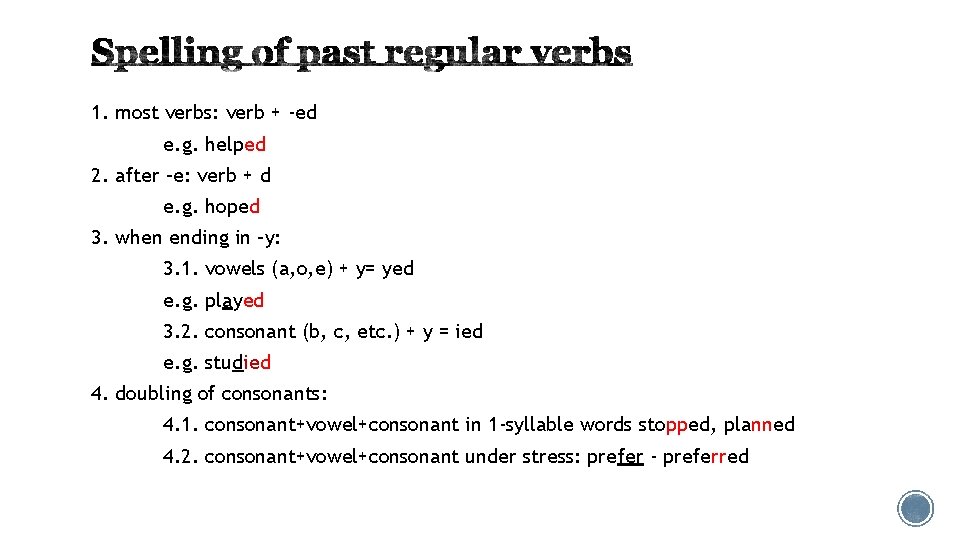
1. most verbs: verb + -ed e. g. helped 2. after –e: verb + d e. g. hoped 3. when ending in –y: 3. 1. vowels (a, o, e) + y= yed e. g. played 3. 2. consonant (b, c, etc. ) + y = ied e. g. studied 4. doubling of consonants: 4. 1. consonant+vowel+consonant in 1 -syllable words stopped, planned 4. 2. consonant+vowel+consonant under stress: prefer - preferred
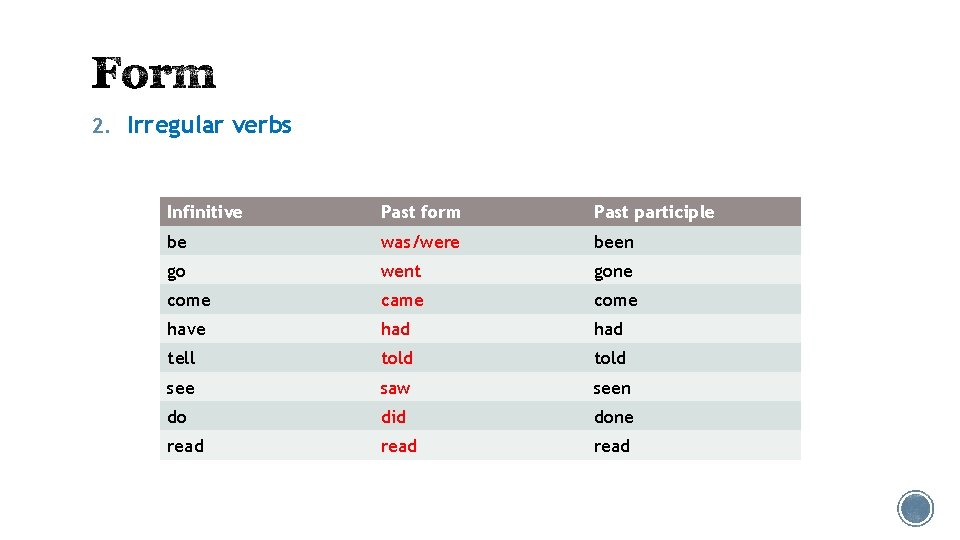
2. Irregular verbs Infinitive Past form Past participle be was/were been go went gone come came come have had tell told see saw seen do did done read
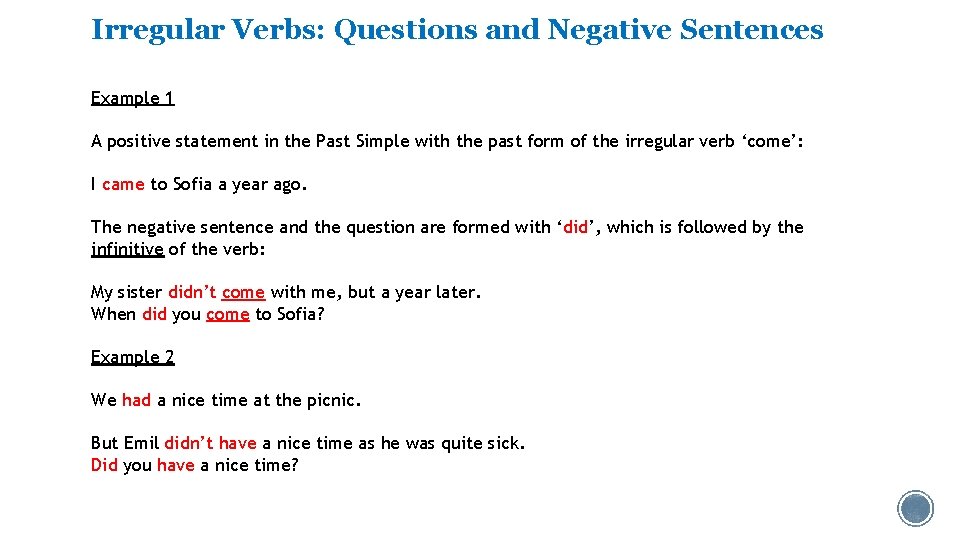
Irregular Verbs: Questions and Negative Sentences Example 1 A positive statement in the Past Simple with the past form of the irregular verb ‘come’: I came to Sofia a year ago. The negative sentence and the question are formed with ‘did’, which is followed by the infinitive of the verb: My sister didn’t come with me, but a year later. When did you come to Sofia? Example 2 We had a nice time at the picnic. But Emil didn’t have a nice time as he was quite sick. Did you have a nice time?
- Slides: 6