CH 339 K Physical Methods How to Purify


- Slides: 79
CH 339 K Physical Methods: How to Purify and Sequence a Weapons-Grade Protein
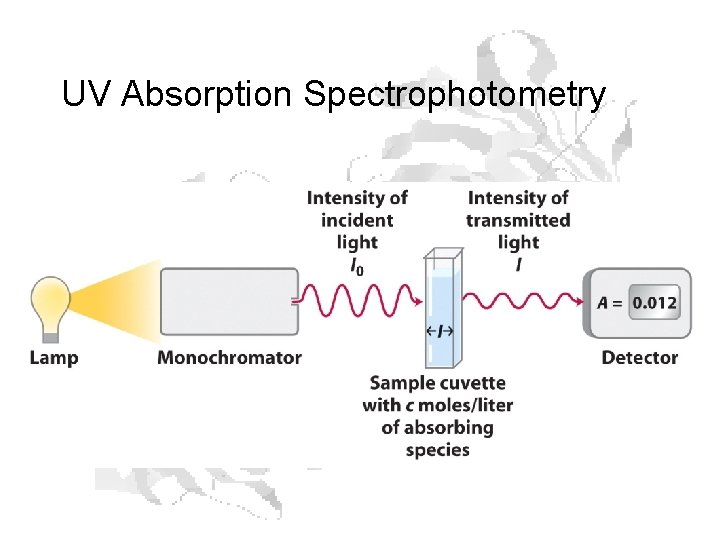
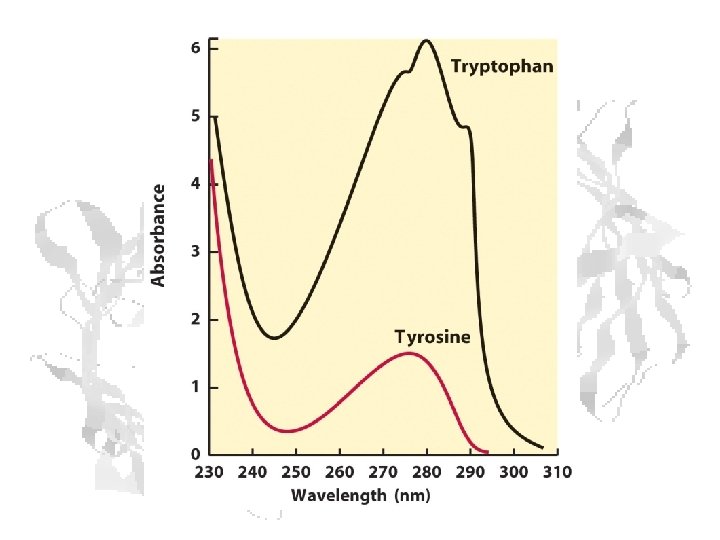
First Question How do I measure the amount of protein I have?
UV Absorption Spectrophotometry
Second Question How can I spot my protein in the great mass of different proteins?
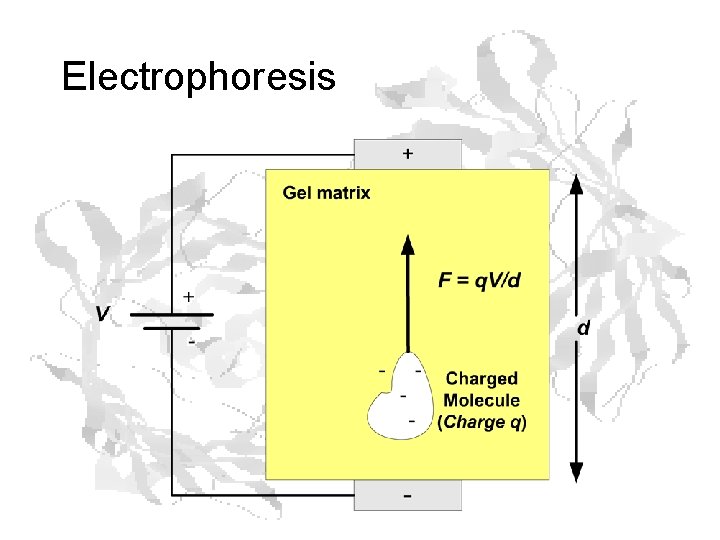
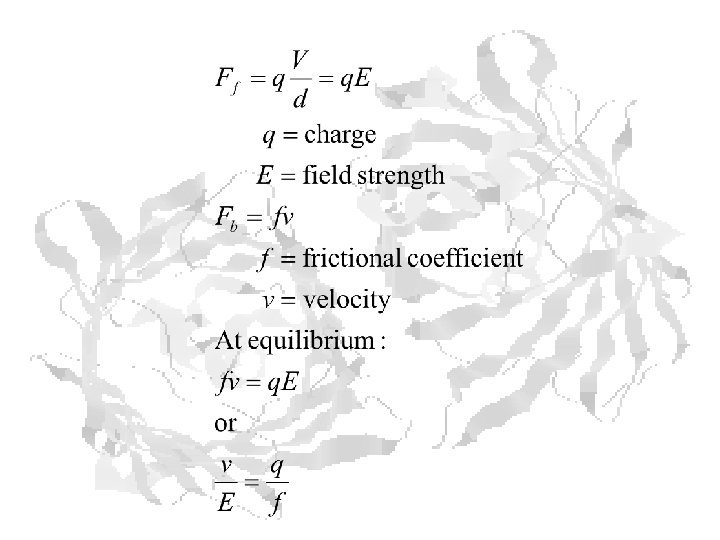
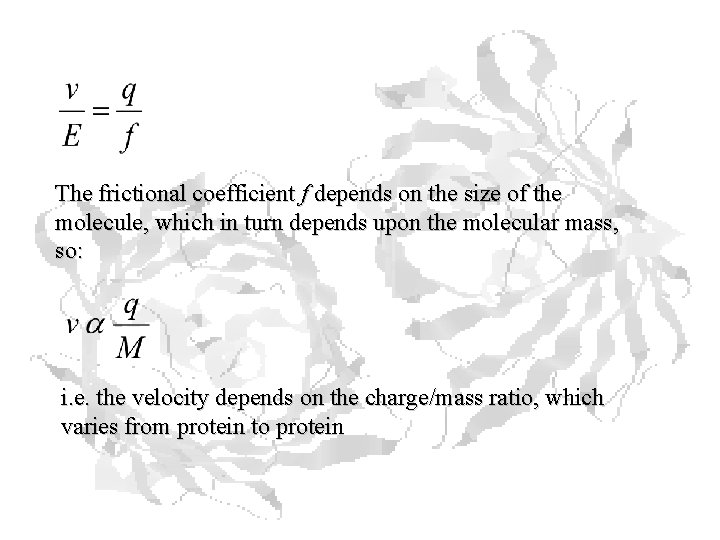
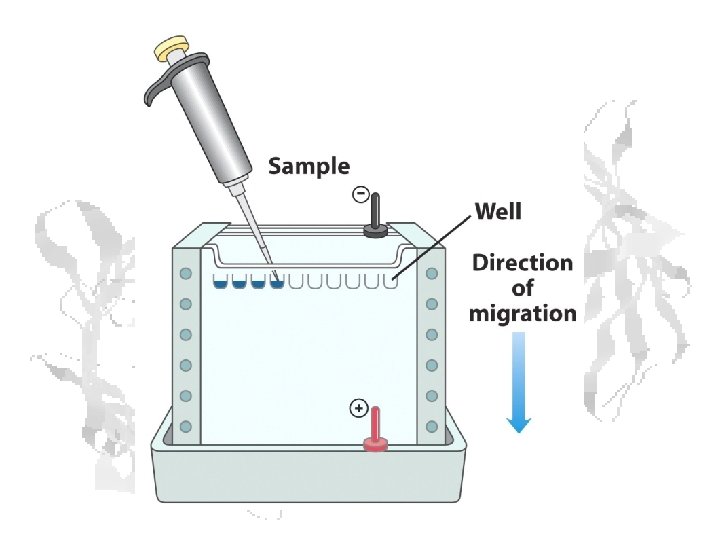
Electrophoresis
The frictional coefficient f depends on the size of the molecule, which in turn depends upon the molecular mass, so: i. e. the velocity depends on the charge/mass ratio, which varies from protein to protein
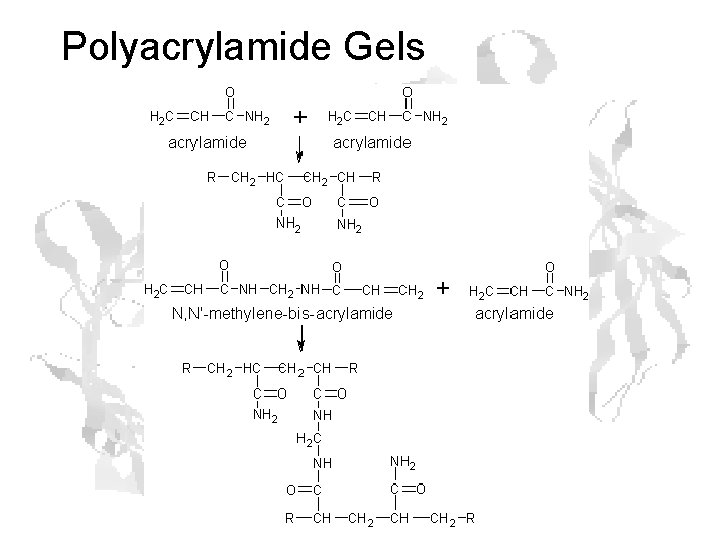
Polyacrylamide Gels
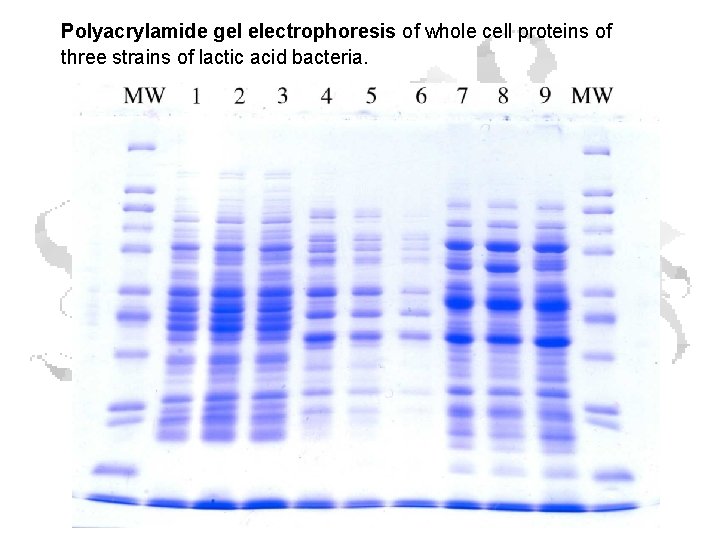
Polyacrylamide gel electrophoresis of whole cell proteins of three strains of lactic acid bacteria.
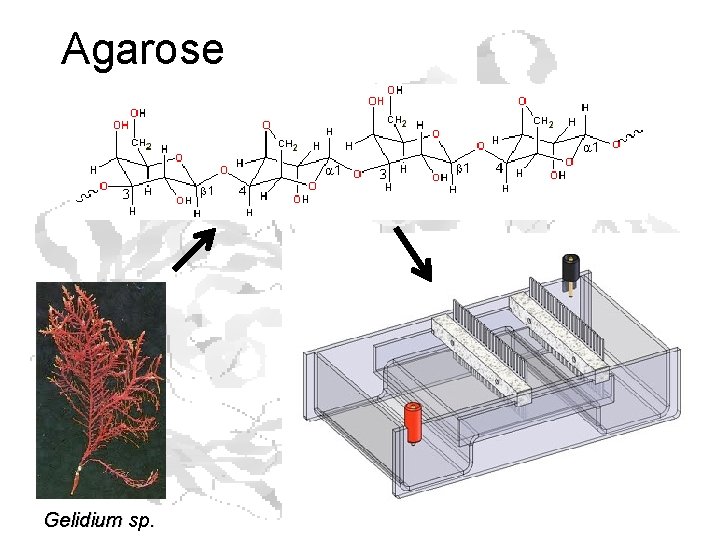
Agarose Gelidium sp.
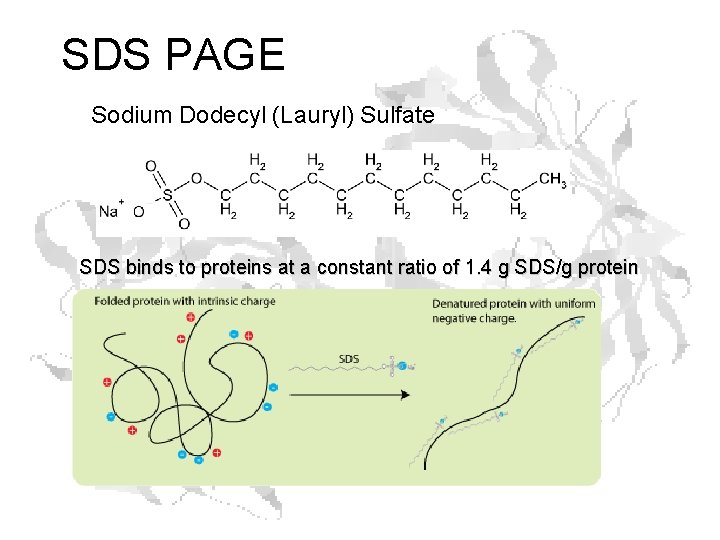
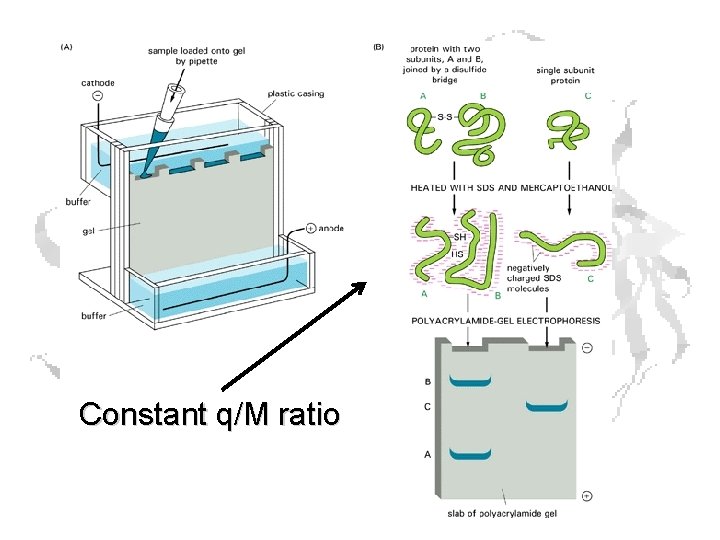
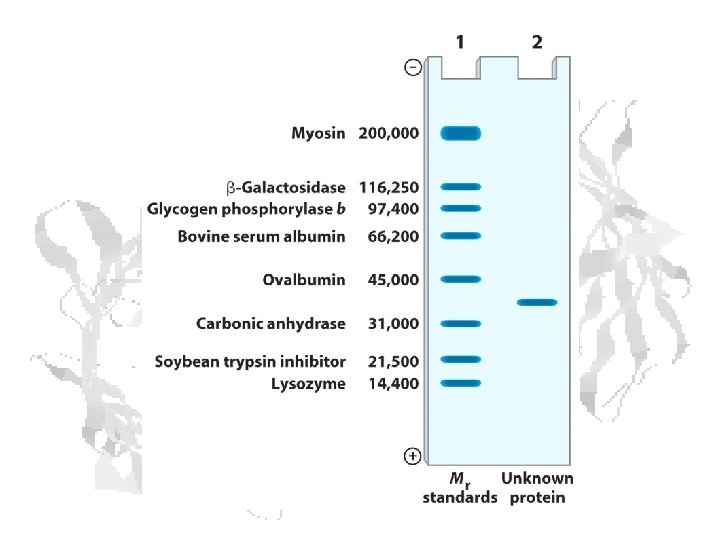
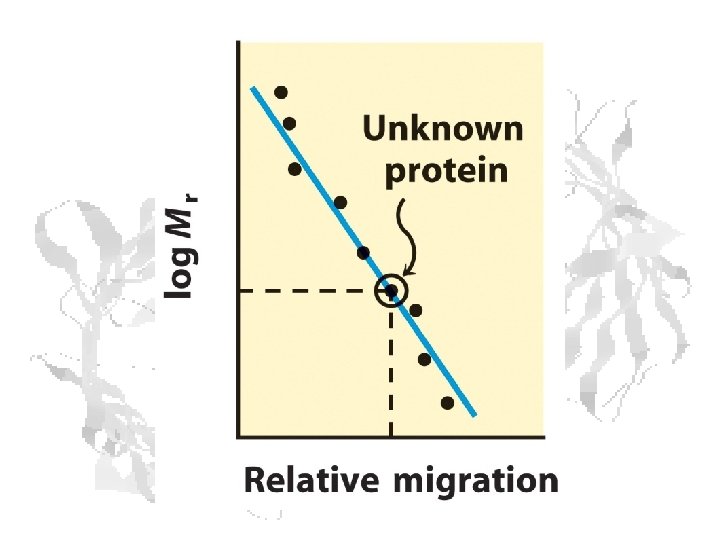
SDS PAGE Sodium Dodecyl (Lauryl) Sulfate SDS binds to proteins at a constant ratio of 1. 4 g SDS/g protein
Constant q/M ratio
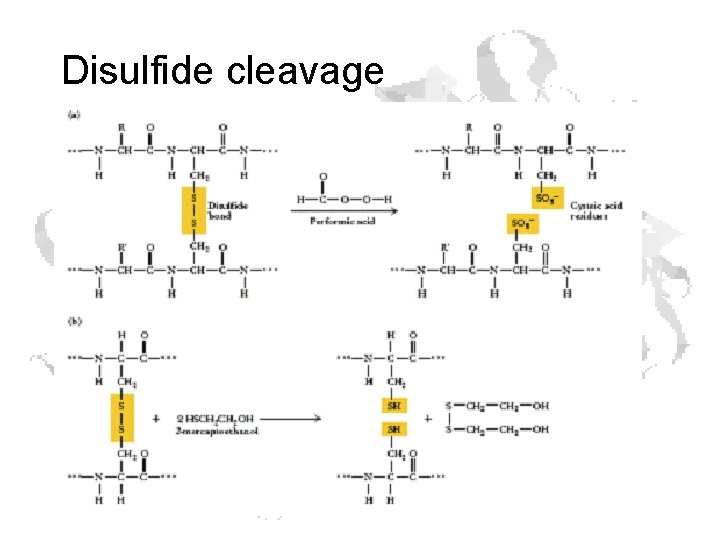
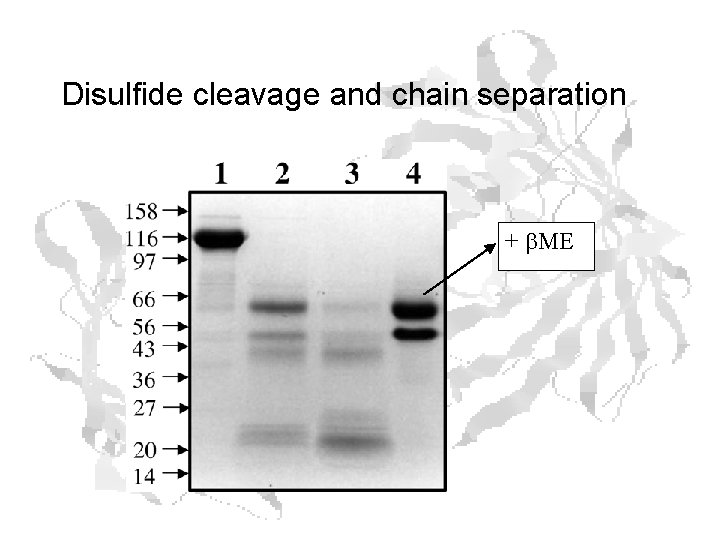
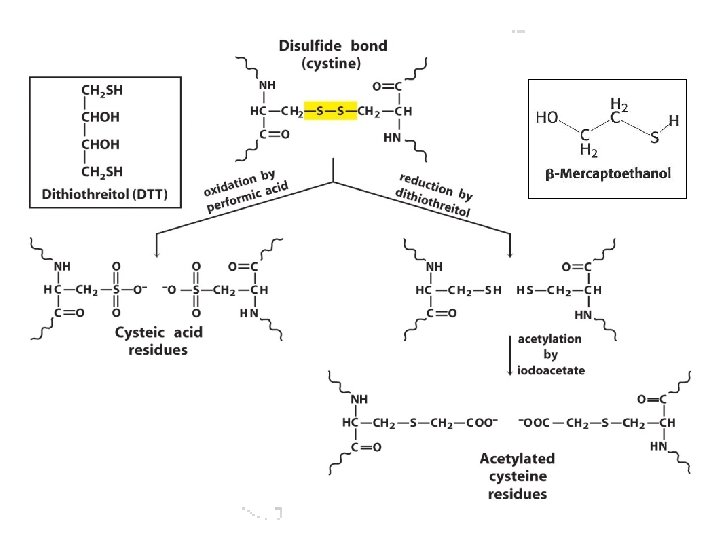
Disulfide cleavage
Disulfide cleavage and chain separation + b. ME
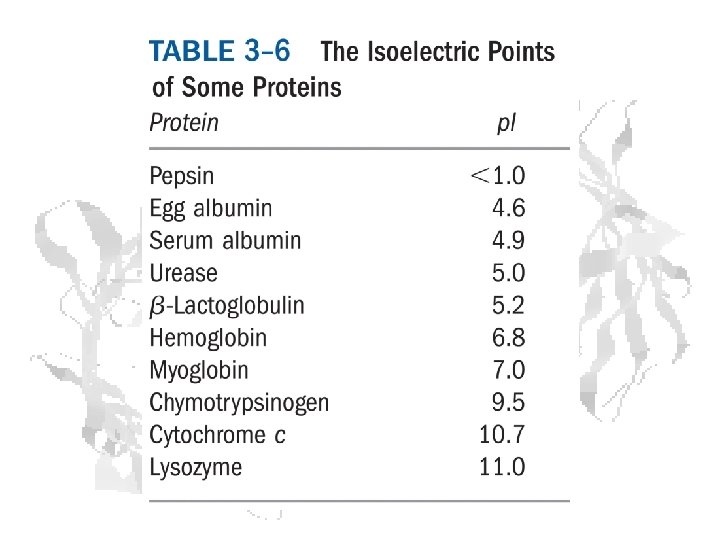
Isoelectric Point
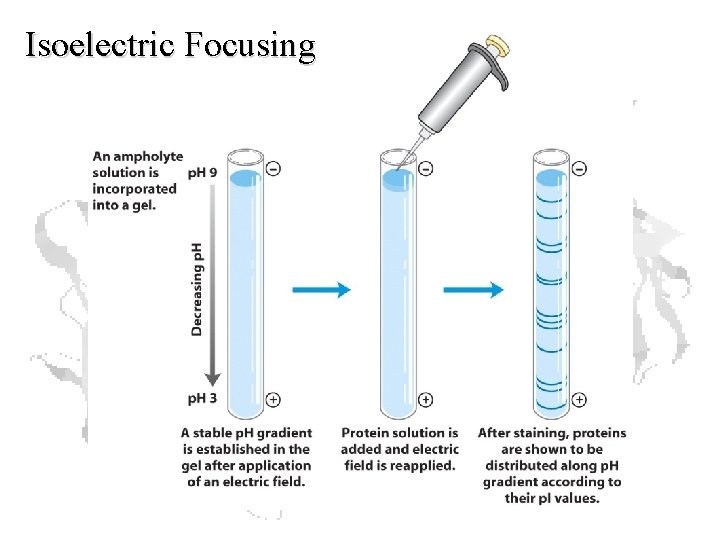
Isoelectric Focusing
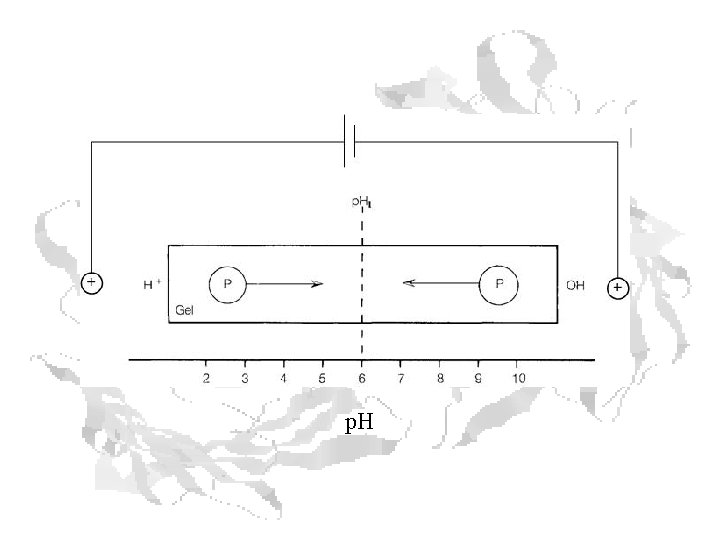
p. H
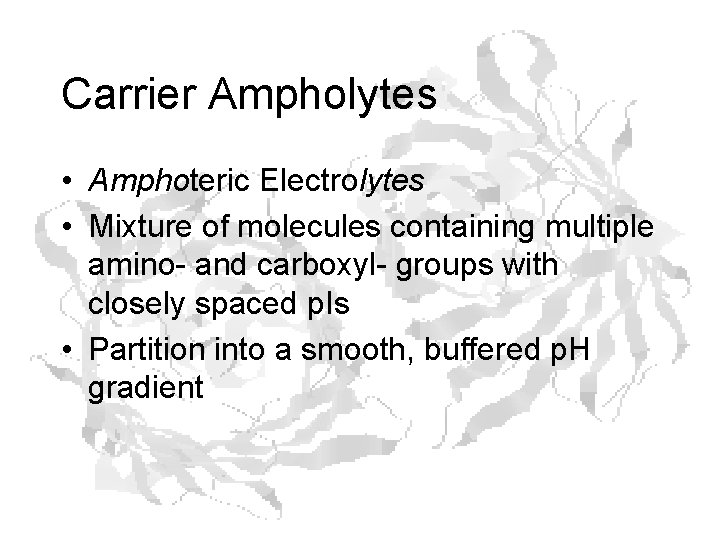
Carrier Ampholytes • Amphoteric Electrolytes • Mixture of molecules containing multiple amino- and carboxyl- groups with closely spaced p. Is • Partition into a smooth, buffered p. H gradient
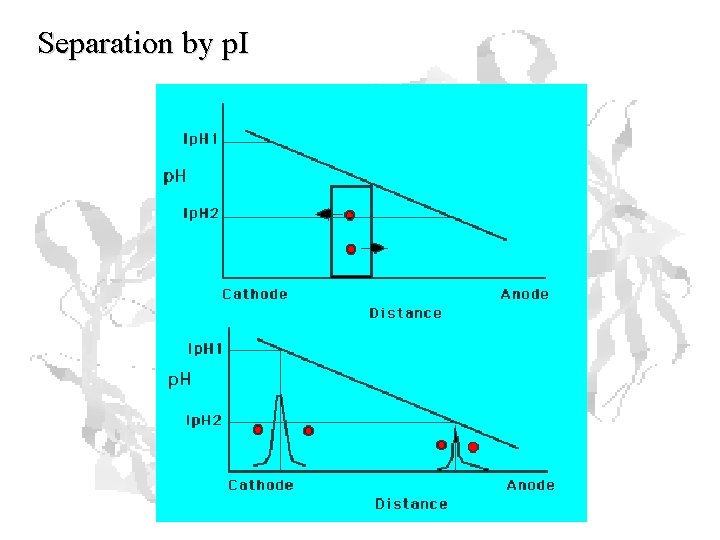
Separation by p. I
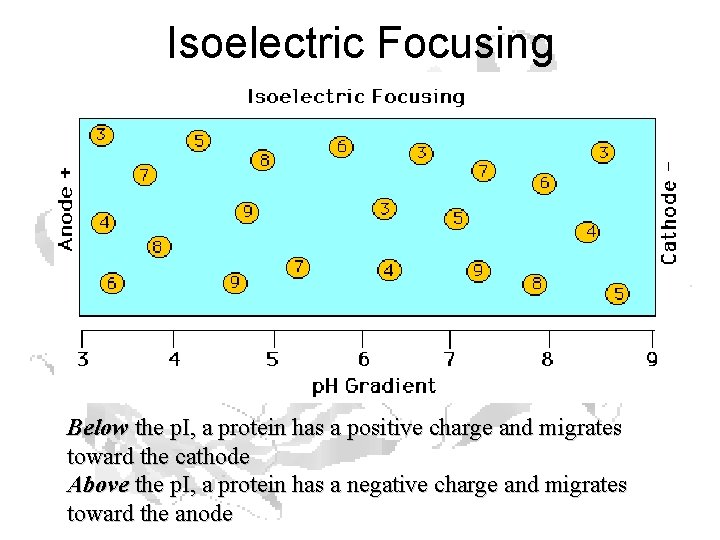
Isoelectric Focusing Below the p. I, a protein has a positive charge and migrates toward the cathode Above the p. I, a protein has a negative charge and migrates toward the anode
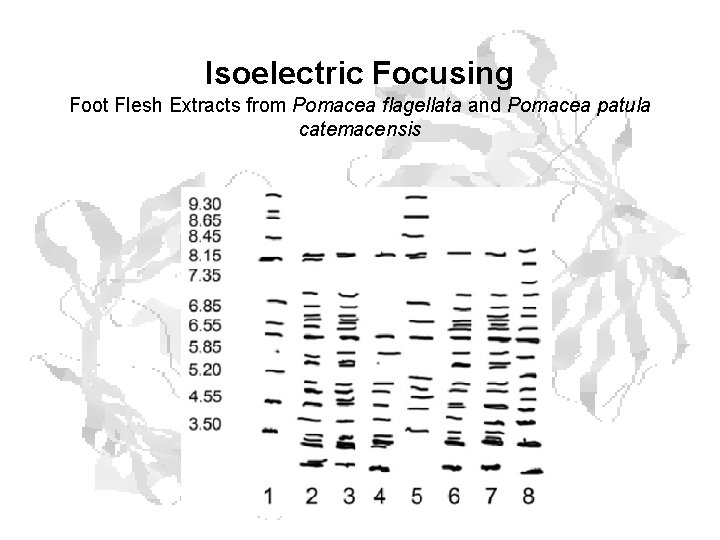
Isoelectric Focusing Foot Flesh Extracts from Pomacea flagellata and Pomacea patula catemacensis
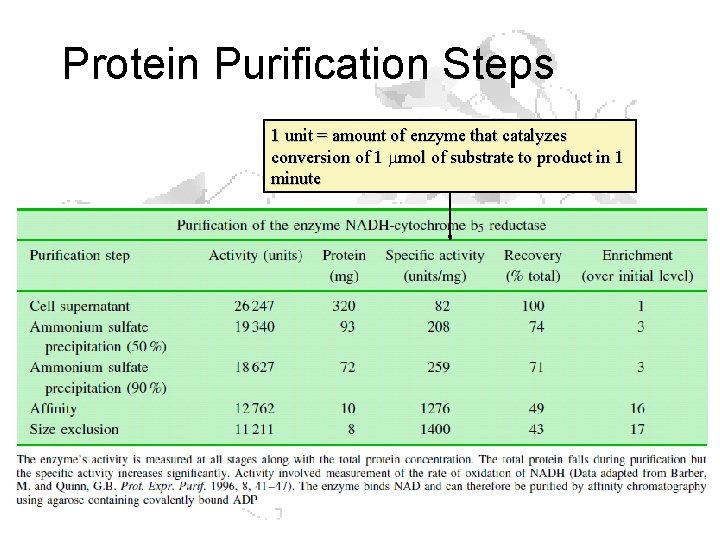
Protein Purification Steps 1 unit = amount of enzyme that catalyzes conversion of 1 mmol of substrate to product in 1 minute
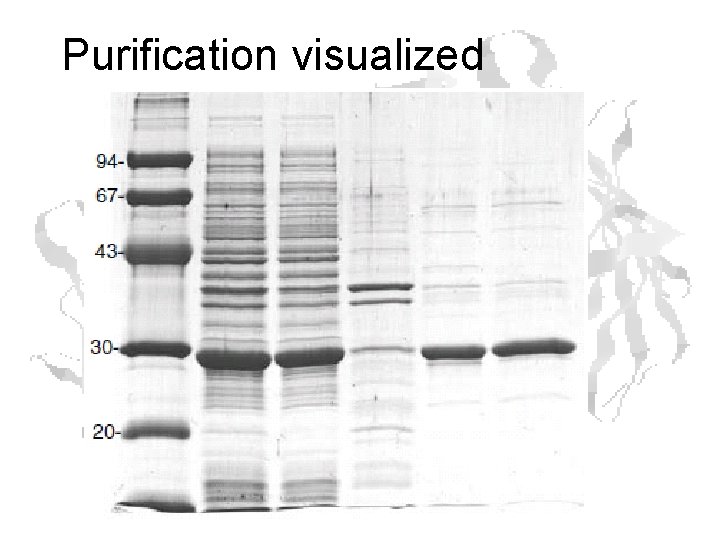
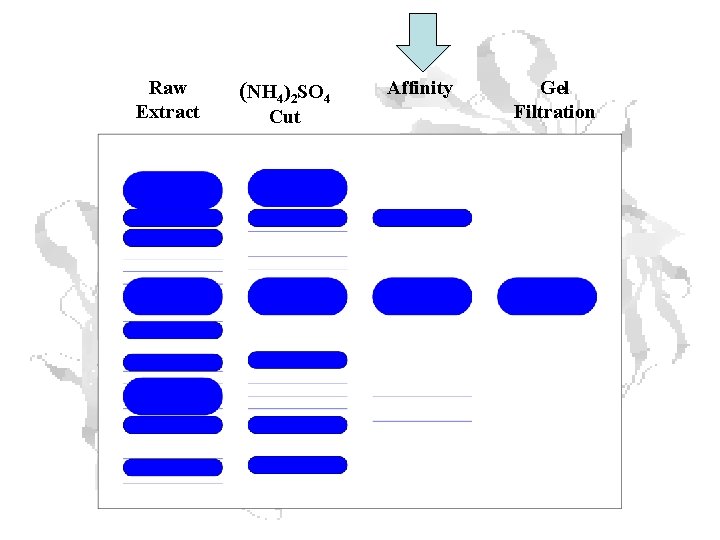
Purification visualized
Example: Purification of Ricin
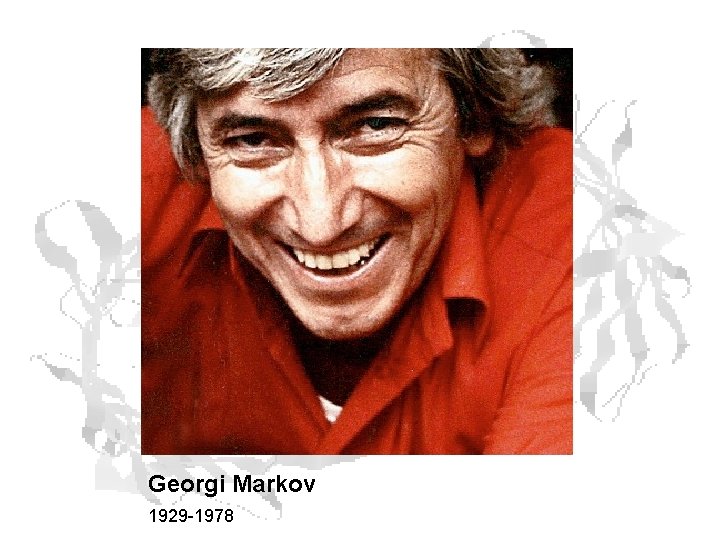
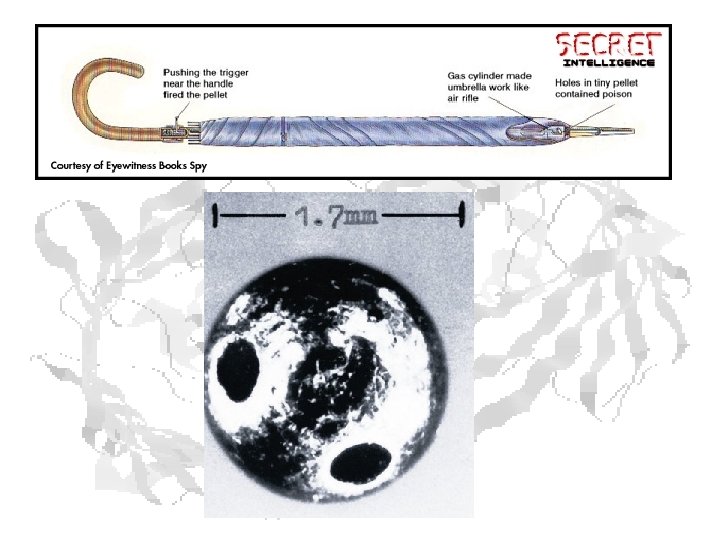
Georgi Markov 1929 -1978
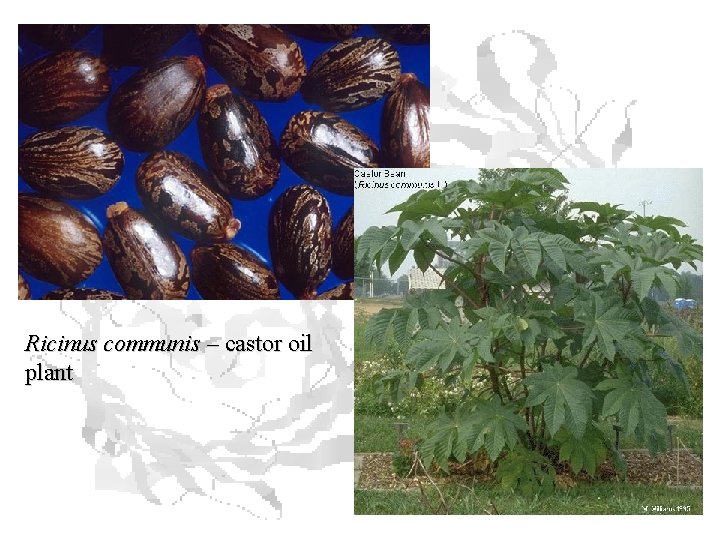
Ricinus communis – castor oil plant
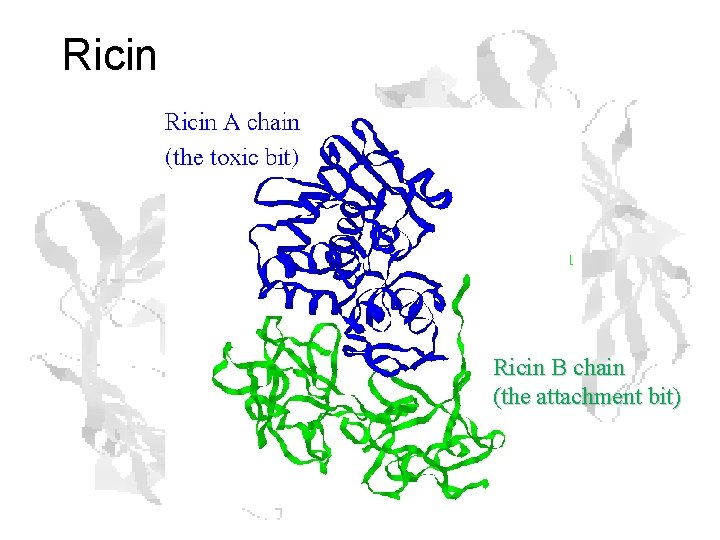
Ricin B chain (the attachment bit)
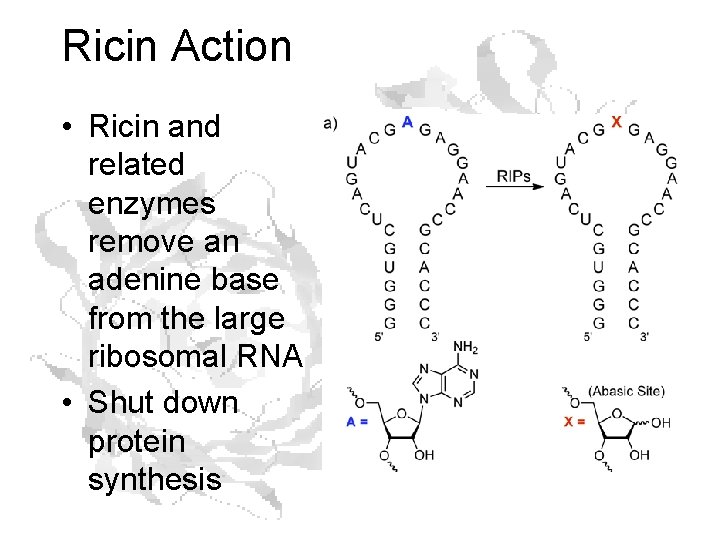
Ricin Action • Ricin and related enzymes remove an adenine base from the large ribosomal RNA • Shut down protein synthesis
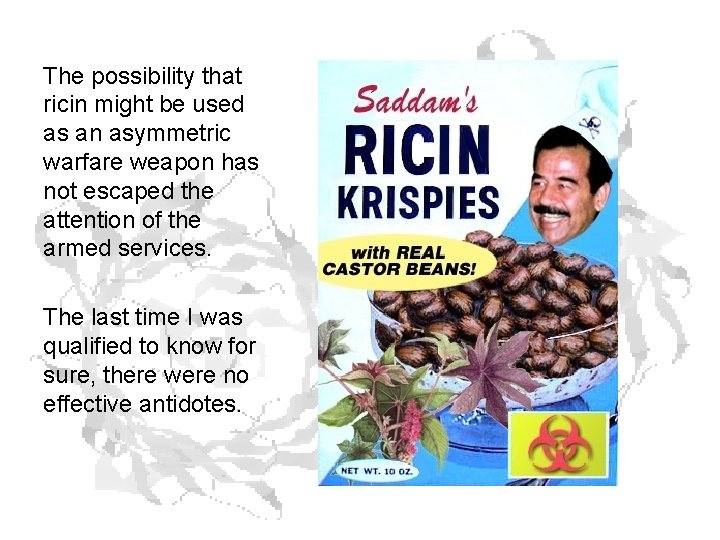
The possibility that ricin might be used as an asymmetric warfare weapon has not escaped the attention of the armed services. The last time I was qualified to know for sure, there were no effective antidotes.
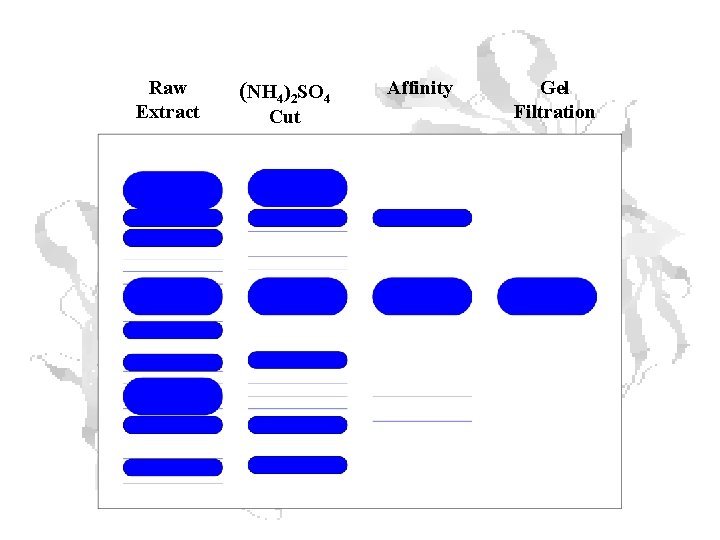
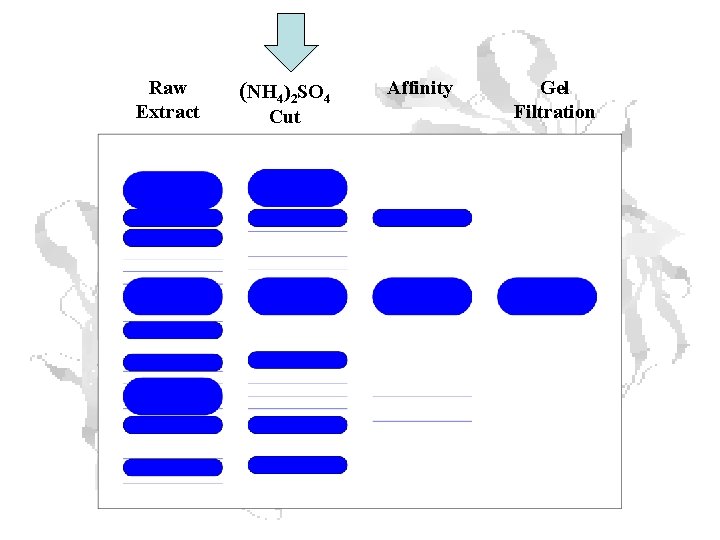
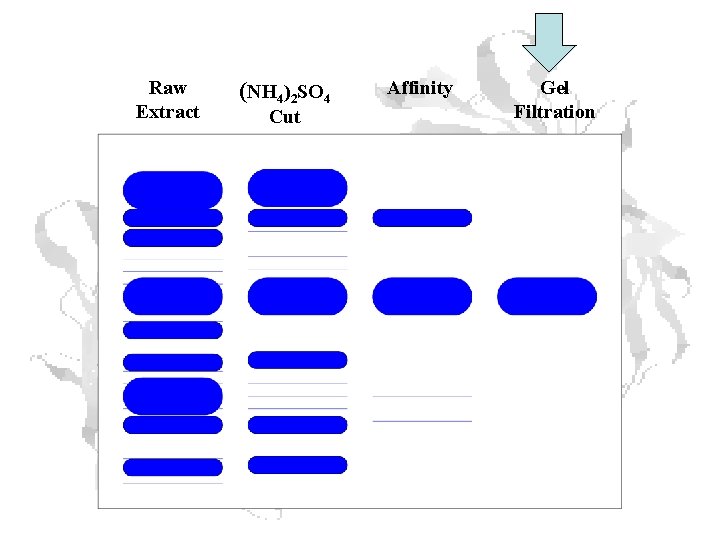
Raw Extract (NH 4)2 SO 4 Cut Affinity Gel Filtration
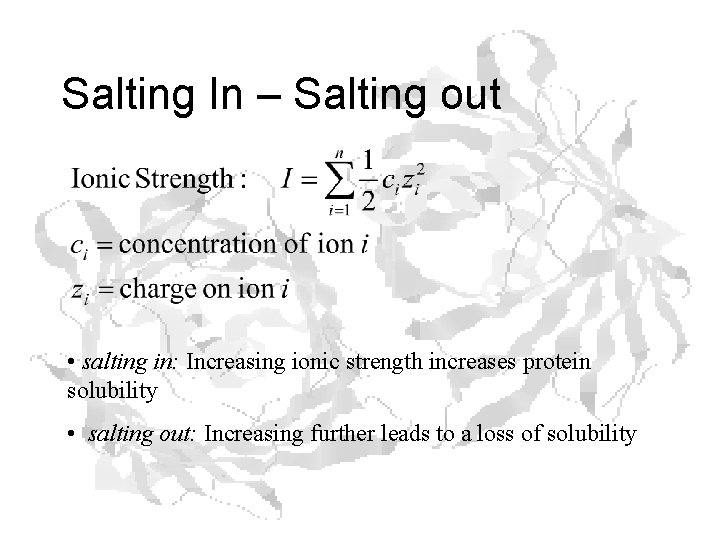
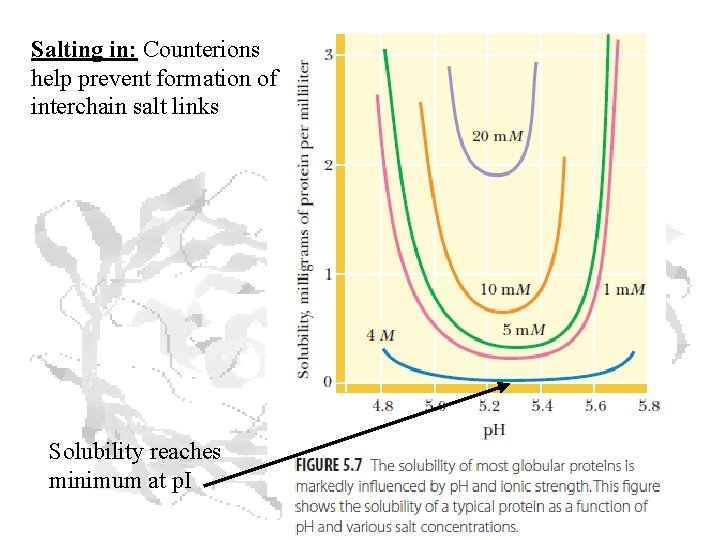
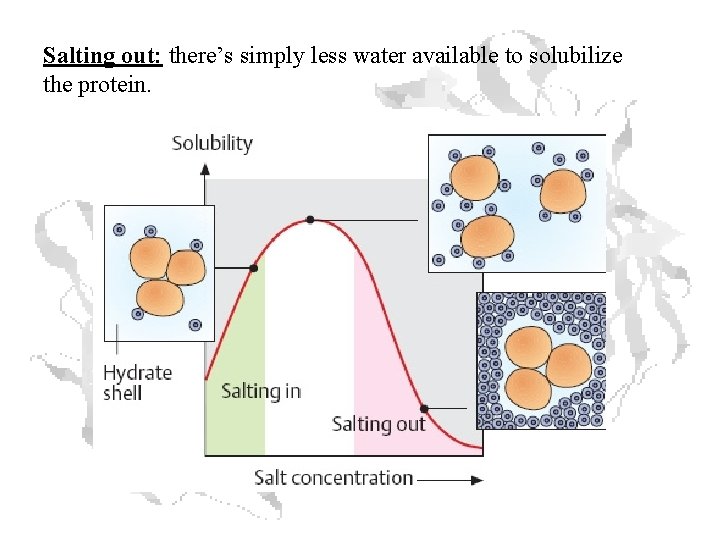
Salting In – Salting out • salting in: Increasing ionic strength increases protein solubility • salting out: Increasing further leads to a loss of solubility
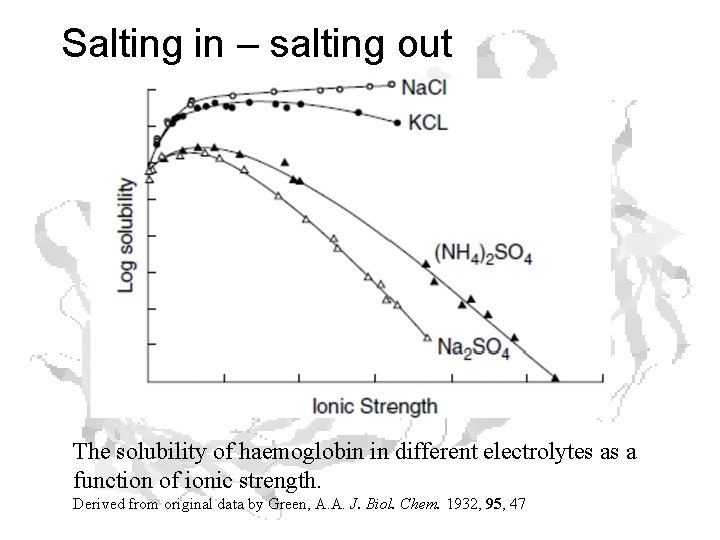
Salting in – salting out The solubility of haemoglobin in different electrolytes as a function of ionic strength. Derived from original data by Green, A. A. J. Biol. Chem. 1932, 95, 47
Salting in: Counterions help prevent formation of interchain salt links Solubility reaches minimum at p. I
Salting out: there’s simply less water available to solubilize the protein.
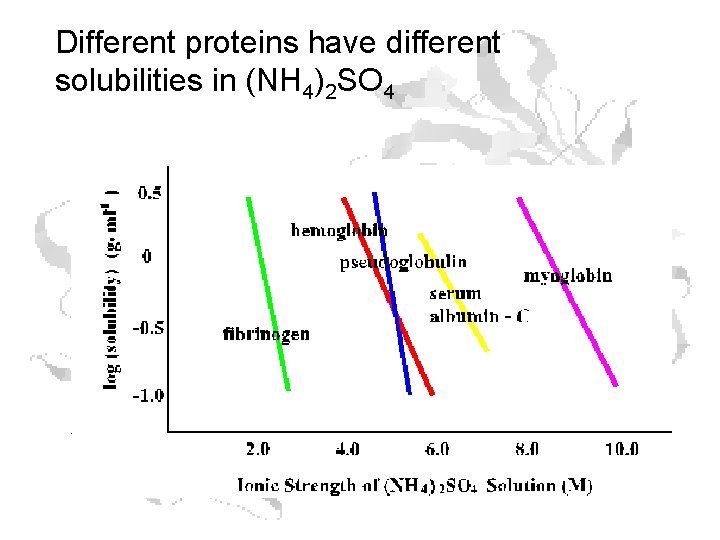
Different proteins have different solubilities in (NH 4)2 SO 4
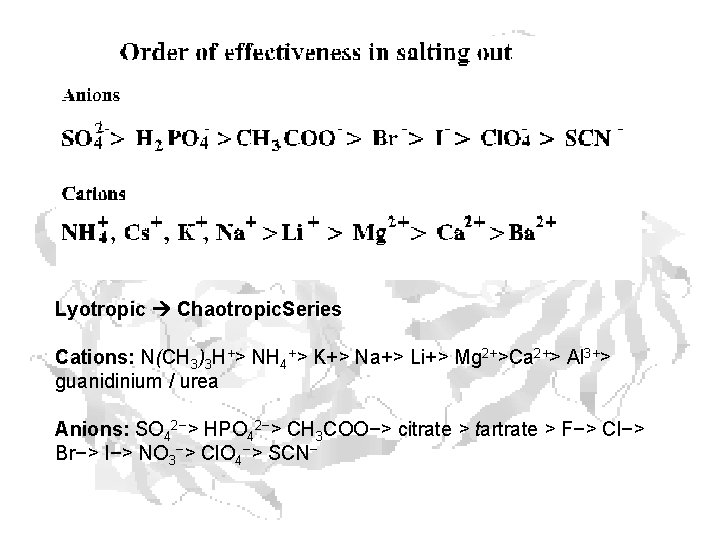
Lyotropic Chaotropic. Series Cations: N(CH 3)3 H+> NH 4+> K+> Na+> Li+> Mg 2+>Ca 2+> Al 3+> guanidinium / urea Anions: SO 42−> HPO 42−> CH 3 COO−> citrate > tartrate > F−> Cl−> Br−> I−> NO 3−> Cl. O 4−> SCN−
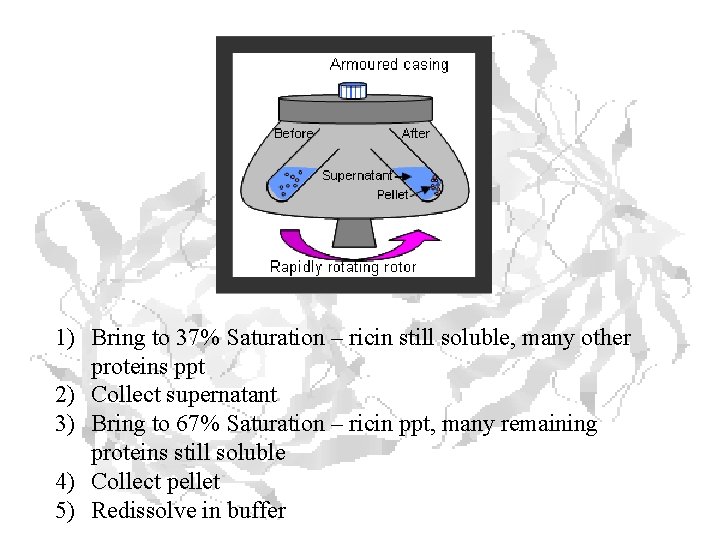
1) Bring to 37% Saturation – ricin still soluble, many other proteins ppt 2) Collect supernatant 3) Bring to 67% Saturation – ricin ppt, many remaining proteins still soluble 4) Collect pellet 5) Redissolve in buffer
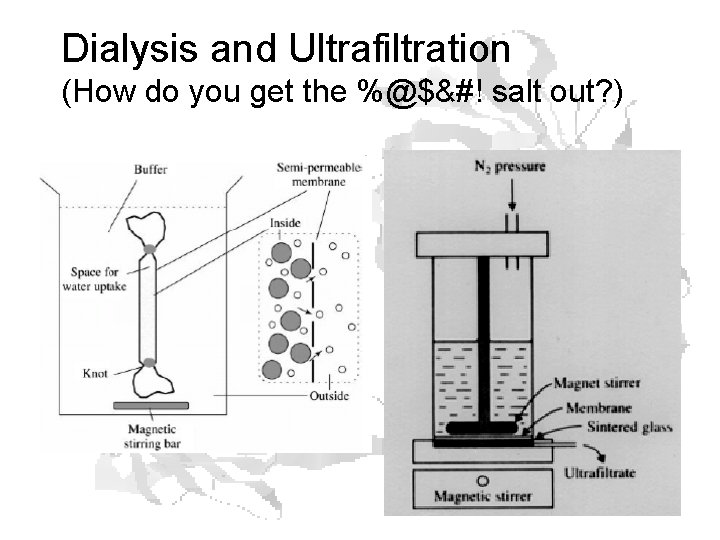
Dialysis and Ultrafiltration (How do you get the %@$&#! salt out? )
Raw Extract (NH 4)2 SO 4 Cut Affinity Gel Filtration
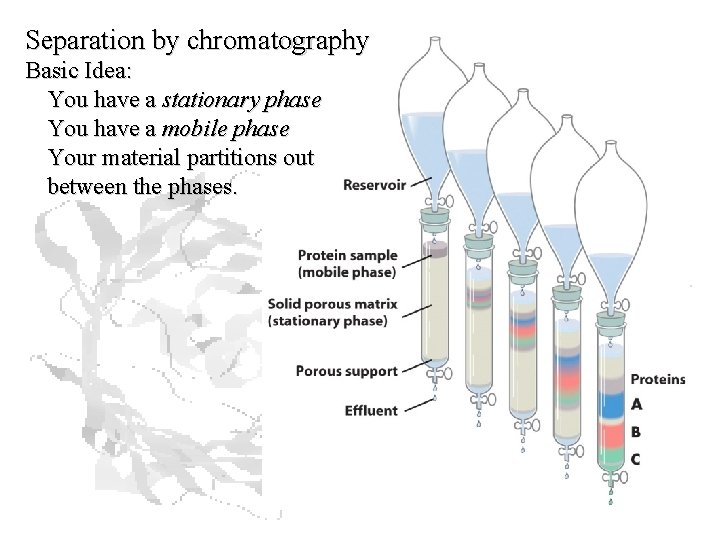
Separation by chromatography Basic Idea: You have a stationary phase You have a mobile phase Your material partitions out between the phases.
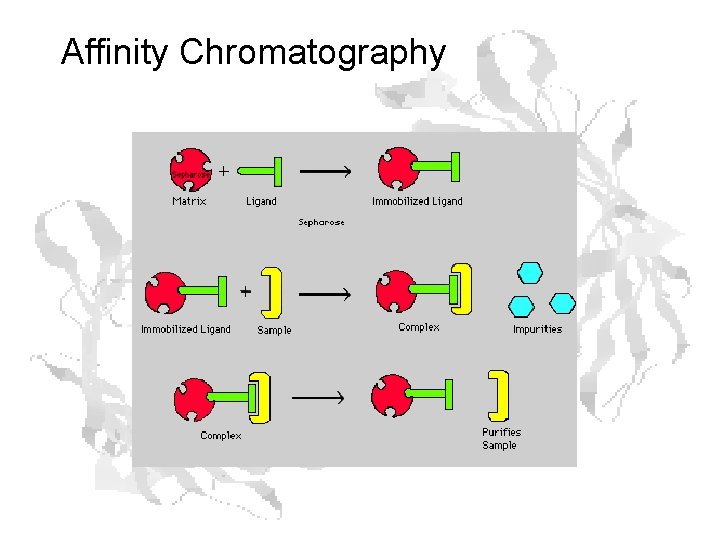
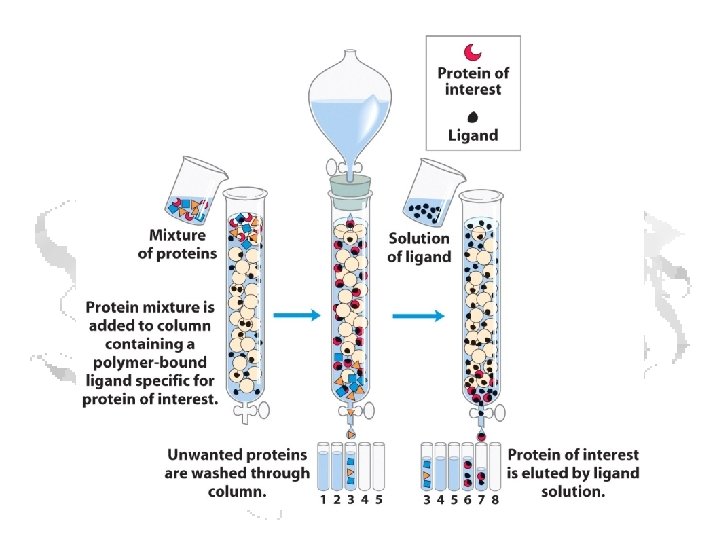
Affinity Chromatography
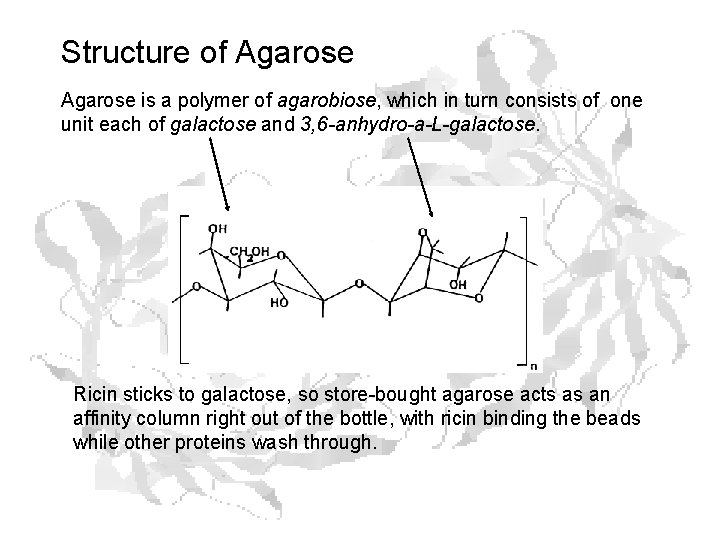
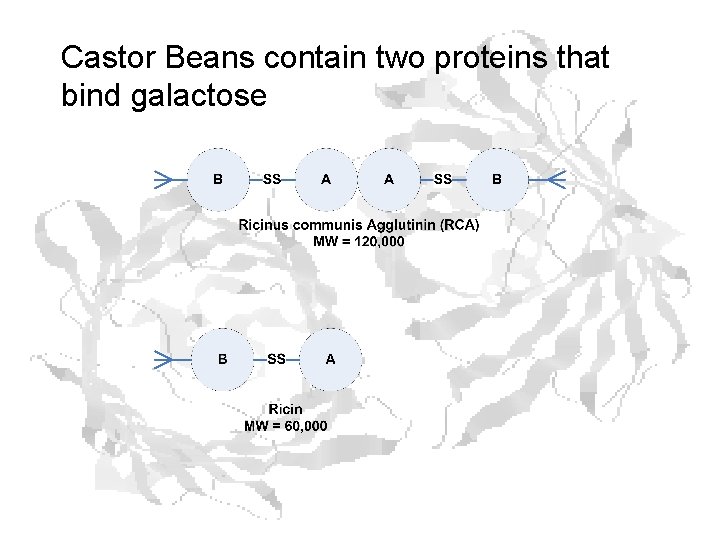
Structure of Agarose is a polymer of agarobiose, which in turn consists of one unit each of galactose and 3, 6 -anhydro-a-L-galactose. Ricin sticks to galactose, so store-bought agarose acts as an affinity column right out of the bottle, with ricin binding the beads while other proteins wash through.
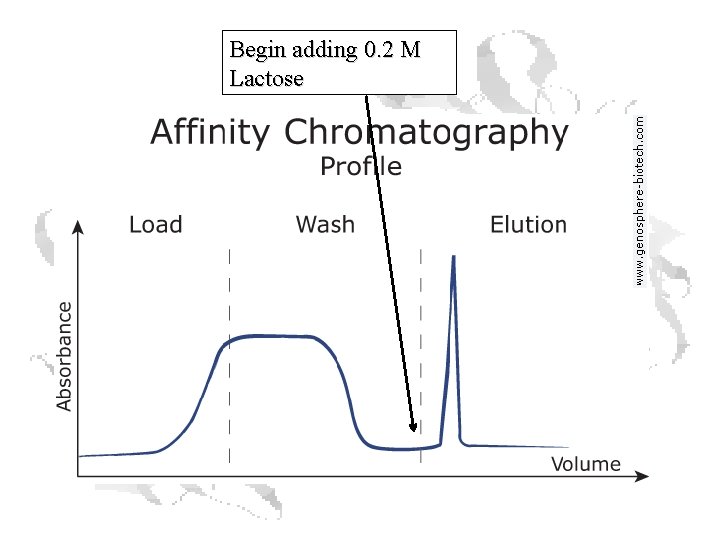
Begin adding 0. 2 M Lactose
Raw Extract (NH 4)2 SO 4 Cut Affinity Gel Filtration
Castor Beans contain two proteins that bind galactose
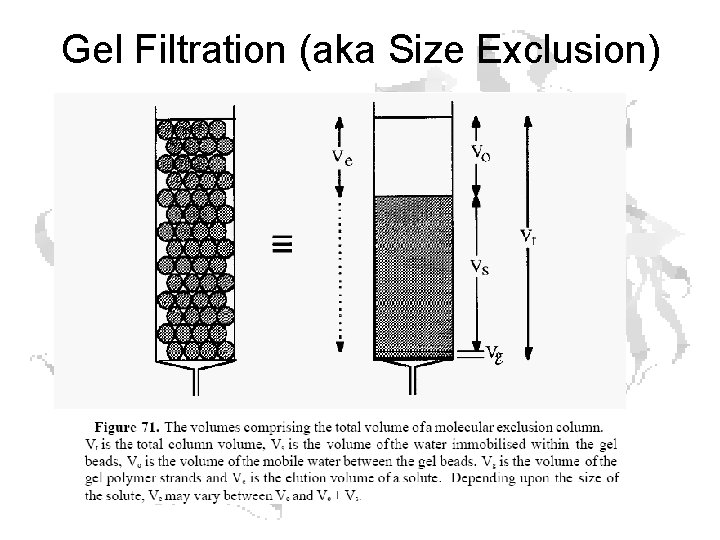
Gel Filtration
Gel Filtration
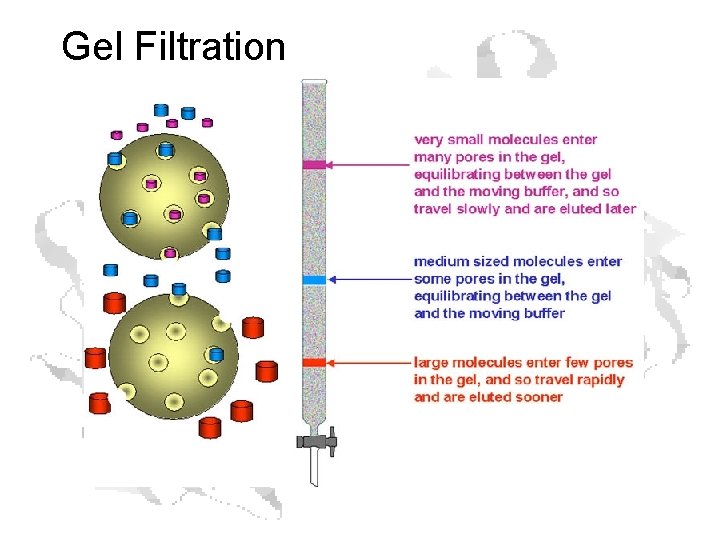
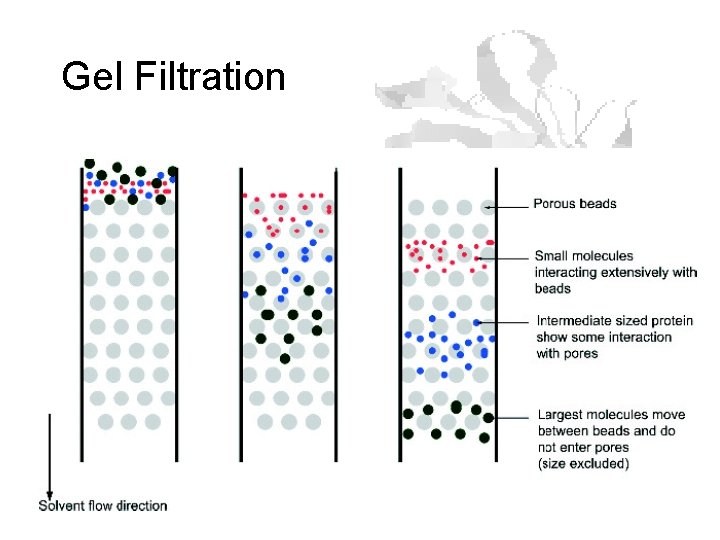
Gel Filtration (aka Size Exclusion)
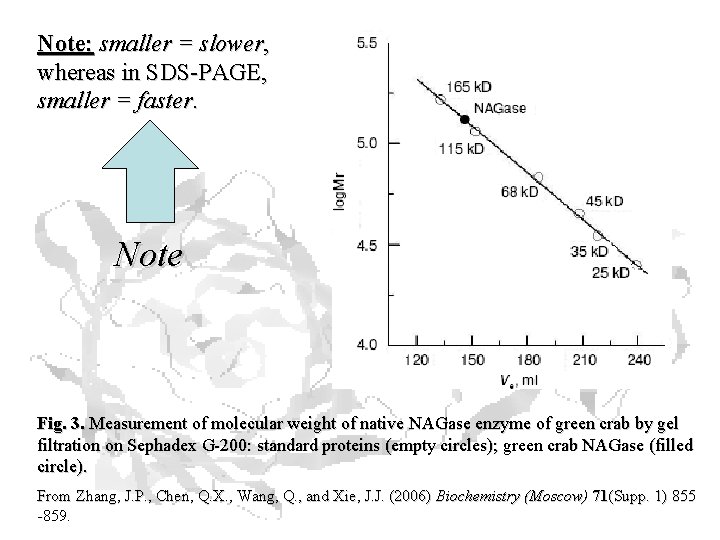
Note: smaller = slower, whereas in SDS-PAGE, smaller = faster. Note Fig. 3. Measurement of molecular weight of native NAGase enzyme of green crab by gel filtration on Sephadex G-200: standard proteins (empty circles); green crab NAGase (filled circle). From Zhang, J. P. , Chen, Q. X. , Wang, Q. , and Xie, J. J. (2006) Biochemistry (Moscow) 71(Supp. 1) 855 -859.
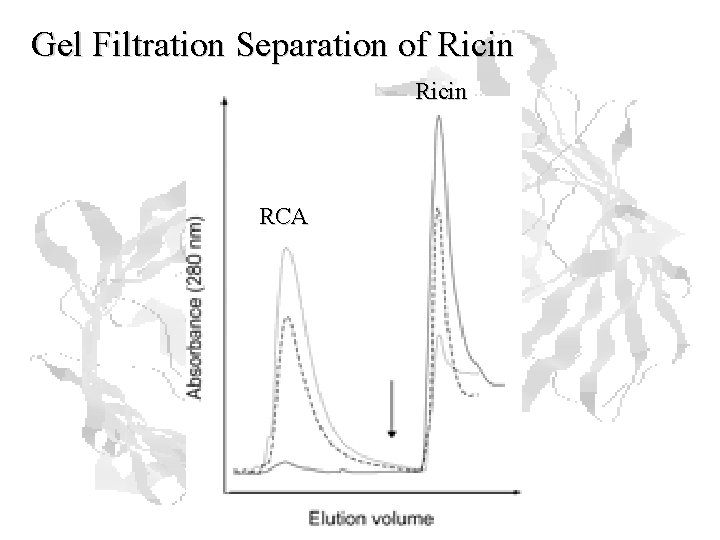
Gel Filtration Separation of Ricin RCA
Raw Extract (NH 4)2 SO 4 Cut Affinity Gel Filtration
Okay, Now Let’s Sequence the A-Chain
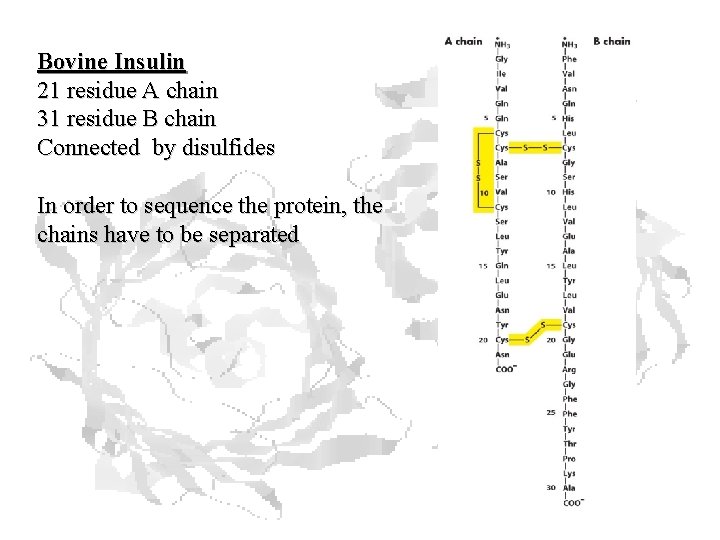
Bovine Insulin 21 residue A chain 31 residue B chain Connected by disulfides In order to sequence the protein, the chains have to be separated
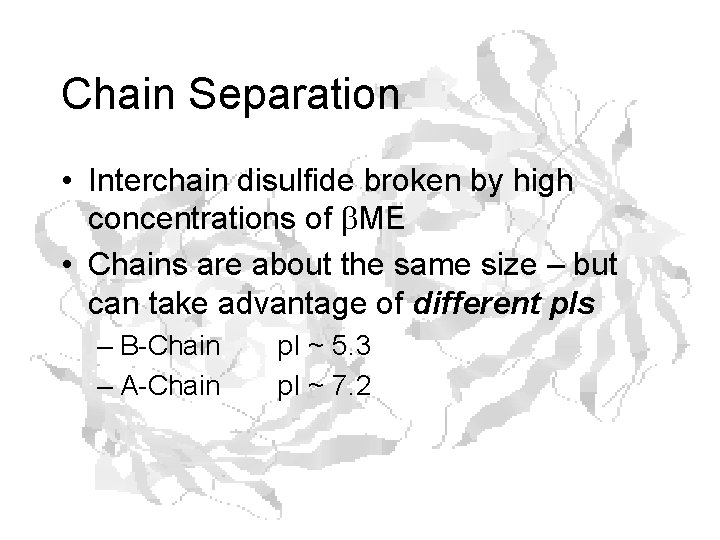
Chain Separation • Interchain disulfide broken by high concentrations of b. ME • Chains are about the same size – but can take advantage of different p. Is – B-Chain – A-Chain p. I ~ 5. 3 p. I ~ 7. 2
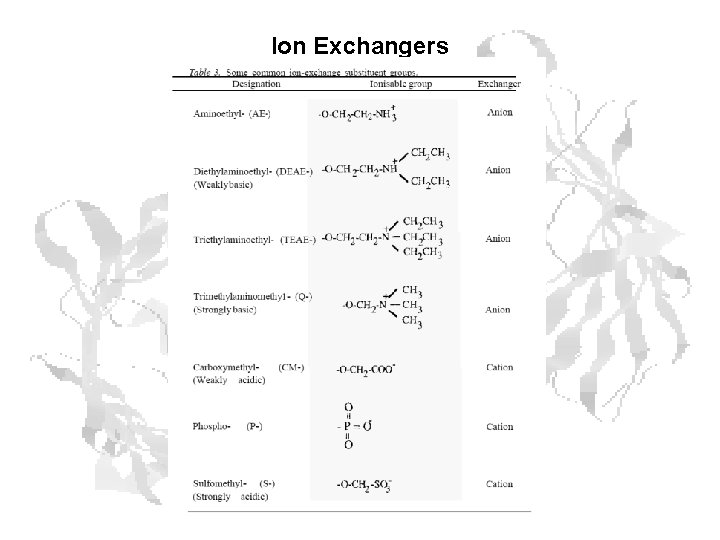
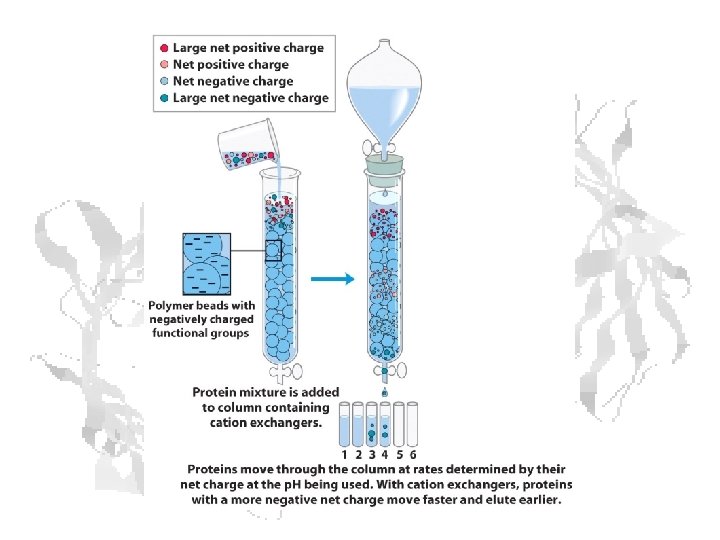
Ion Exchangers
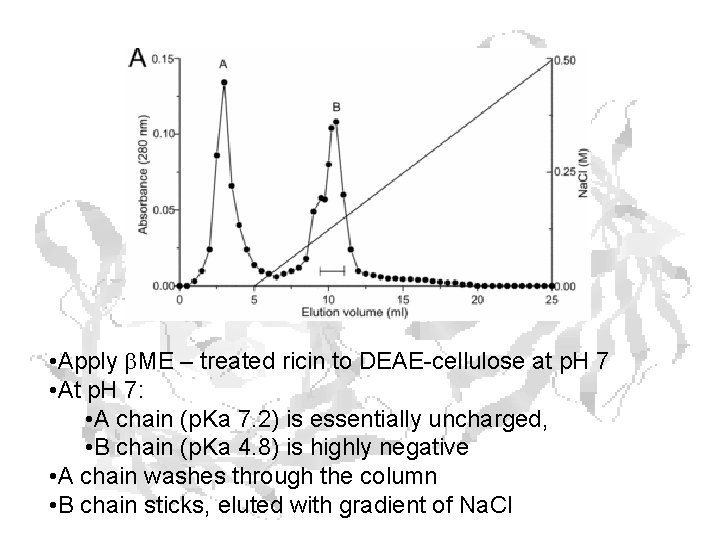
• Apply b. ME – treated ricin to DEAE-cellulose at p. H 7 • At p. H 7: • A chain (p. Ka 7. 2) is essentially uncharged, • B chain (p. Ka 4. 8) is highly negative • A chain washes through the column • B chain sticks, eluted with gradient of Na. Cl
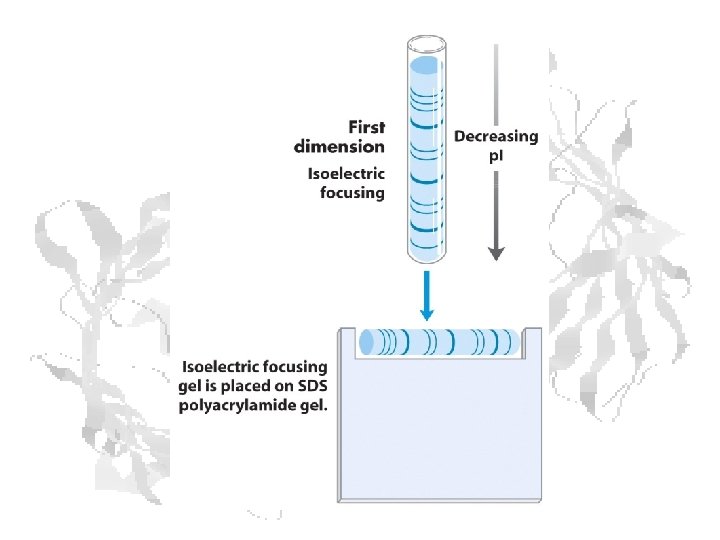
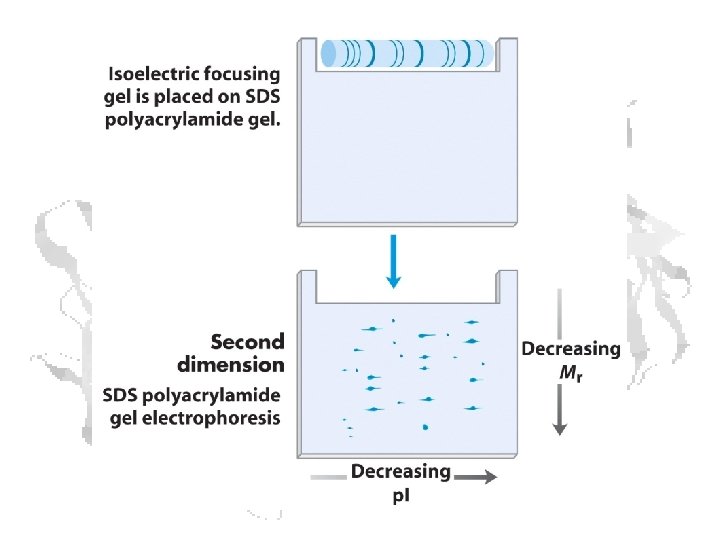
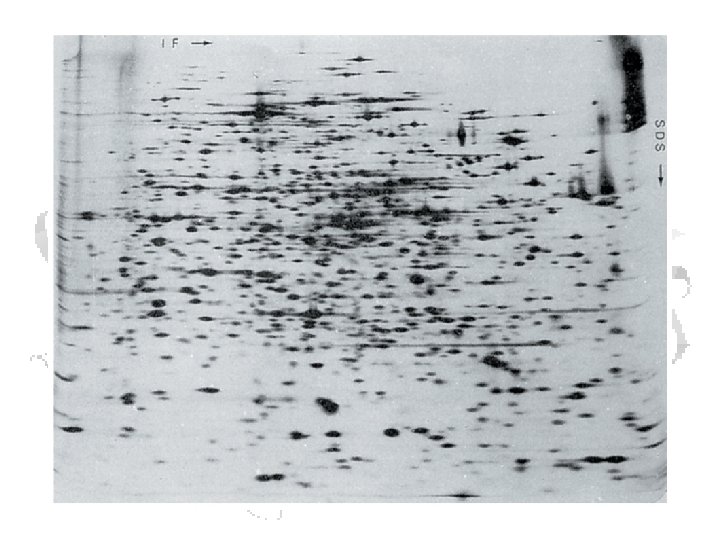
2 -D Electrophoresis (an aside) • Can use two different properties of a protein to separate electrophoretically • For analysis of cellular protein content, often use 2 -dimensional electrophoresis: • 1 st dimension is isoelectric focusing • 2 nd dimension is SDS PAGE
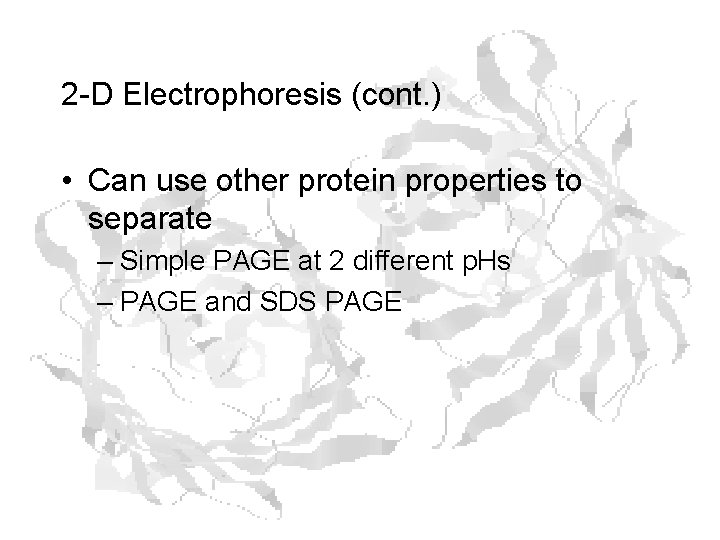
2 -D Electrophoresis (cont. ) • Can use other protein properties to separate – Simple PAGE at 2 different p. Hs – PAGE and SDS PAGE
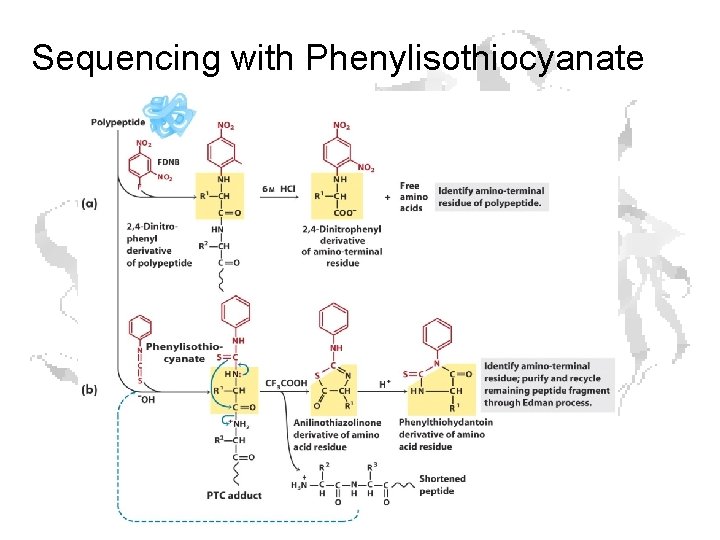
Sequencing with Phenylisothiocyanate
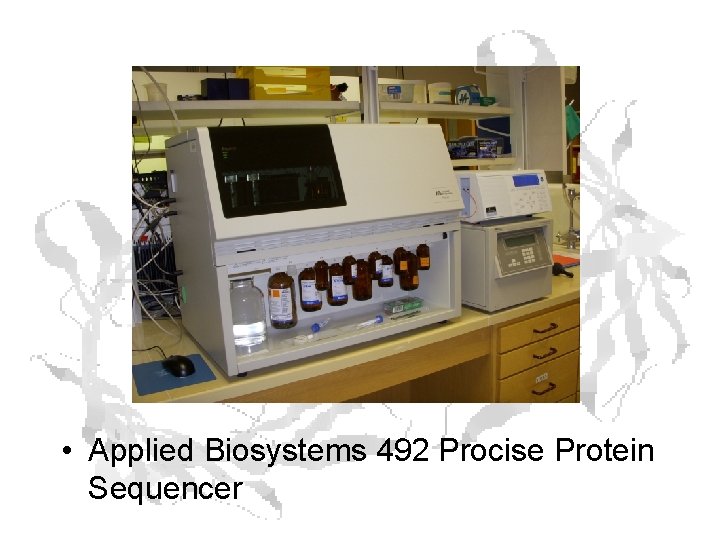
• Applied Biosystems 492 Procise Protein Sequencer
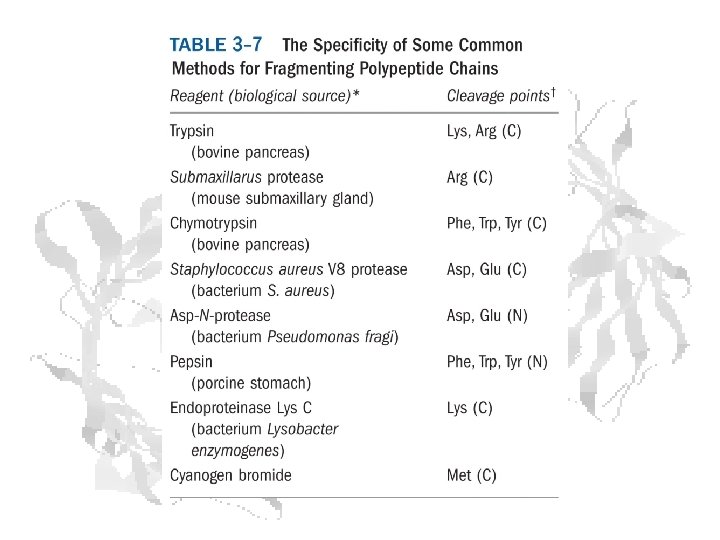
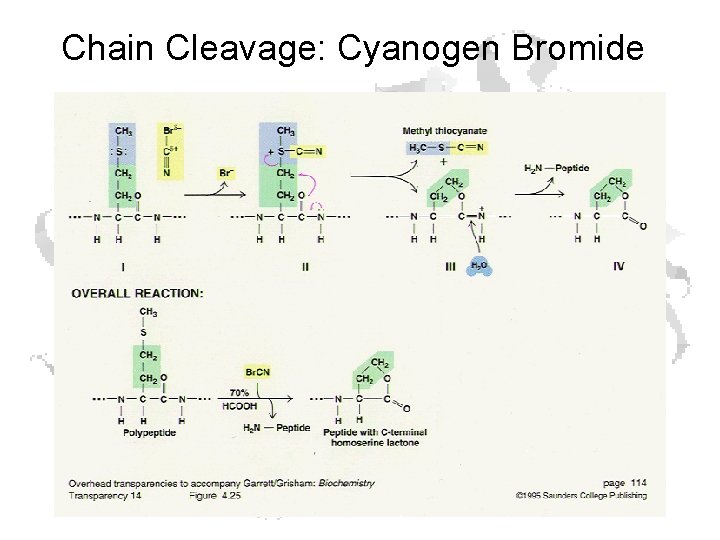
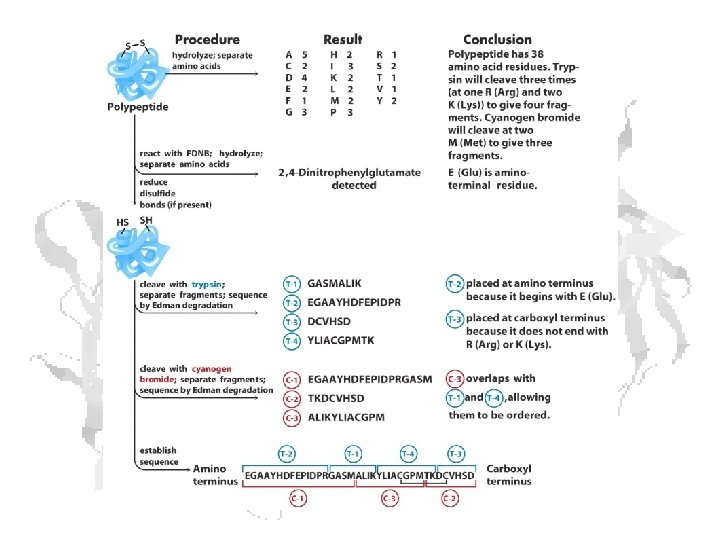
Chain Cleavage: Cyanogen Bromide
C-Terminal Sequencing • Carboxypeptidases are enzymes that chew proteins from the carboxy terminus • Can incubate a protein (preferably denatured – more later) with a carboxypeptidase • Remove aliquot at intervals (time course) • Run amino acid analysis of aliquots
C-Terminal Sequencing of Rat Plasma Selenoprotein From Himeno et al (1996) J. Biol. Chem. 271: 15769 -15775.
Tandem Mass Spectrometry can also be used to determine peptide sequences