Cell Structure and Function Period 6 Group 1


- Slides: 43
Cell Structure and Function
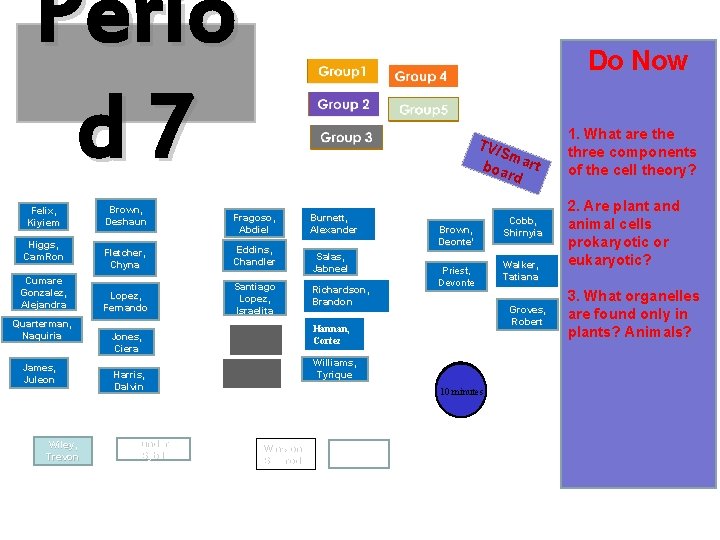
Period 6 Group 1 station 1 Group 2 station 2 Baskin, Nearri Campbell, Judeja Brown, Erica Hendricks, Justina King, Amyha Cruz, Alejandro Miranda, Cyasia Octelus, Tyreik Dennis, Tamesha Valencia, Dylan Heflin, Tommie Mc. Neal, Kahil White, Devan Taylor, Charvey Velasco, Malcolm Fowlers, Jonah Do Now Group 5 station 5 Group 3 station 3 Tovias, Stephanie Strickland, Taisia Group 4 station 4 TV /S bo mar ar d t Rochay, Cody Rodgers, Devin Abreu, Anabel Jeske, Kaeden Bates, Tyree Wright, Courden Tutson, Inez Jones, Jewel 10 minutes 1. What are three components of the cell theory? 2. Are plant and animal cells prokaryotic or eukaryotic? 3. What organelles are found only in plants? Animals? On page 20 of your journal.
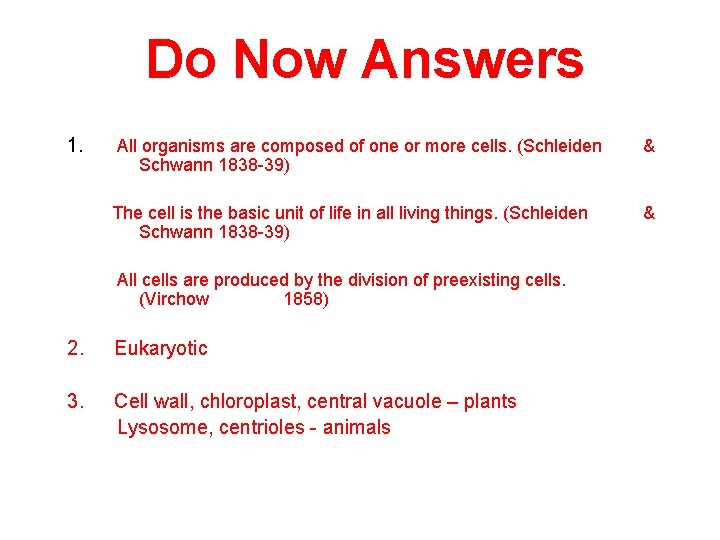
Do Now Answers 1. All organisms are composed of one or more cells. (Schleiden Schwann 1838 -39) & The cell is the basic unit of life in all living things. (Schleiden Schwann 1838 -39) & All cells are produced by the division of preexisting cells. (Virchow 1858) 2. Eukaryotic 3. Cell wall, chloroplast, central vacuole – plants Lysosome, centrioles - animals
Perio d 7 Felix, Kiyiem Higgs, Cam. Ron Cumare Gonzalez, Alejandra Quarterman, Naquiria James, Juleon Wiley, Trevon Brown, Deshaun Do Now TV/ Sm boa art rd Fragoso, Abdiel Fletcher, Chyna Eddins, Chandler Lopez, Fernando Santiago Lopez, Israelita Salas, Jabneel Richardson, Brandon Hannan, Cortez Jones, Ciera Brown, Deonte' Priest, Devonte Santiago, Bianca Williams, Tyrique Harris, Dalvin Saunders, Sybil Burnett, Alexander 10 minutes Winston, Sherrod Hunt , Garrett Cobb, Shirnyia Walker, Tatiana Groves, Robert 1. What are three components of the cell theory? 2. Are plant and animal cells prokaryotic or eukaryotic? 3. What organelles are found only in plants? Animals?
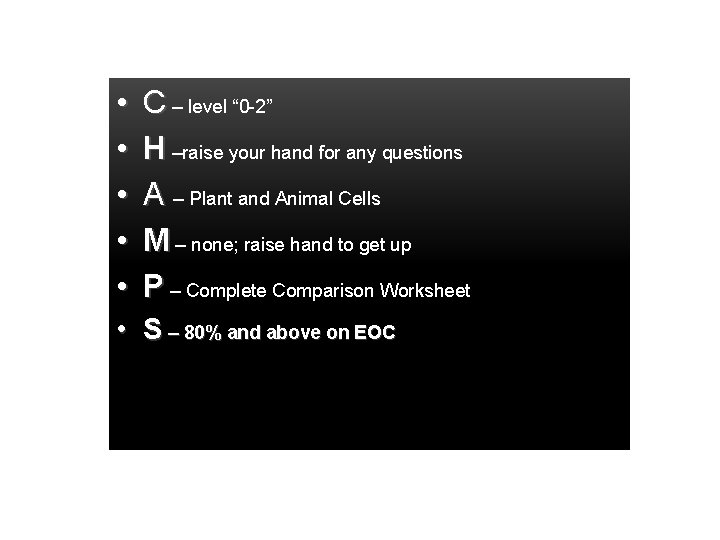
• • • C – level “ 0 -2” H –raise your hand for any questions A – Plant and Animal Cells M – none; raise hand to get up P – Complete Comparison Worksheet • S – 80% and above on EOC
Classroom Rules • Dress properly -no hats, guys-pants must be pulled up, girls- lets not expose ourselves. • No eating or drinking after 1 st period breakfast (complete by 7: 25) • Come to order when I have clapped my hands. • Respect each other and the teacher • Use proper language. No sign language • No hitting/pushing/shoving
objectives • Explain how the structure of each organelle is related to its function. • Differentiate between active and passive transport.
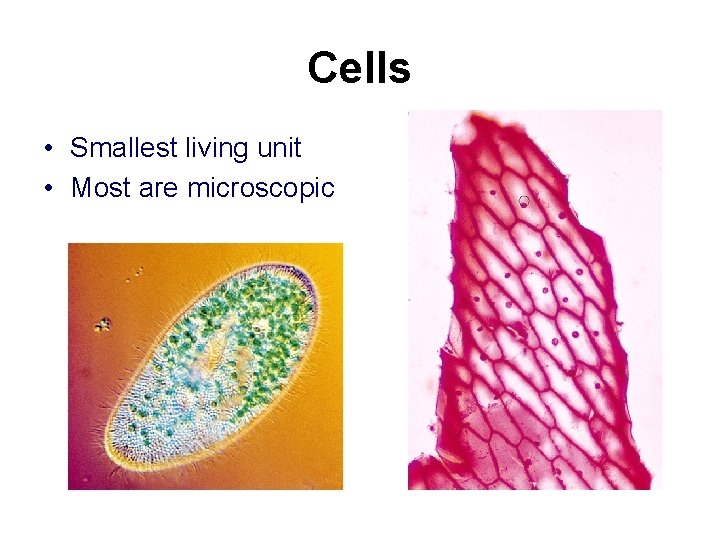
Cells • Smallest living unit • Most are microscopic
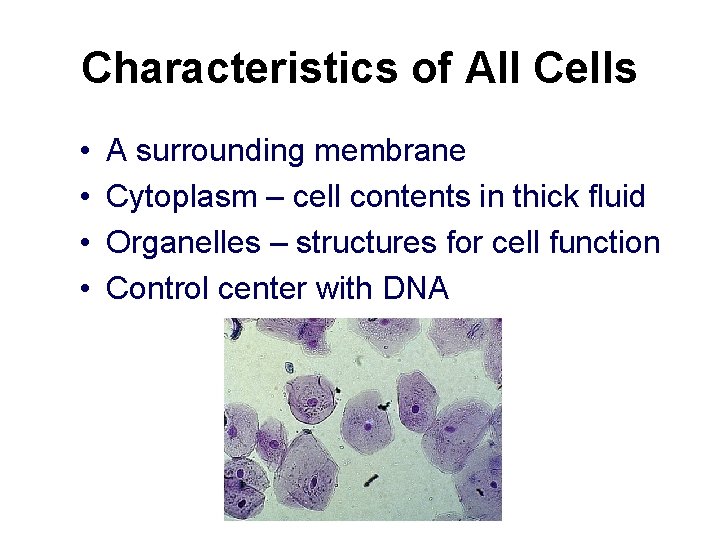
Characteristics of All Cells • • A surrounding membrane Cytoplasm – cell contents in thick fluid Organelles – structures for cell function Control center with DNA
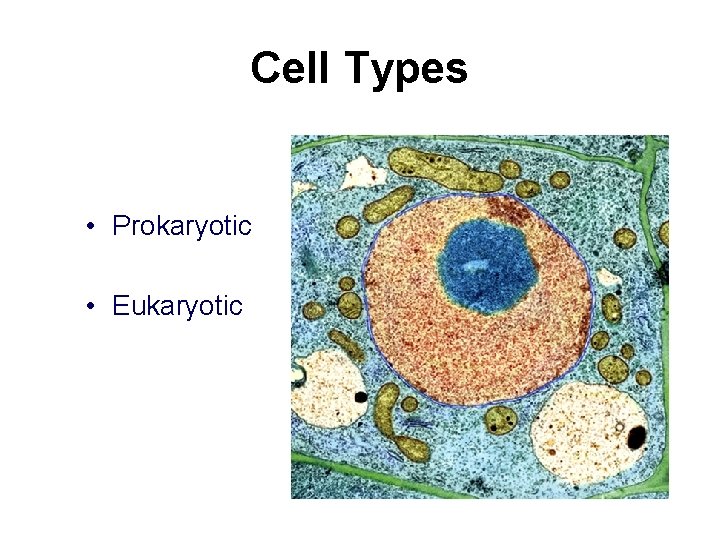
Cell Types • Prokaryotic • Eukaryotic
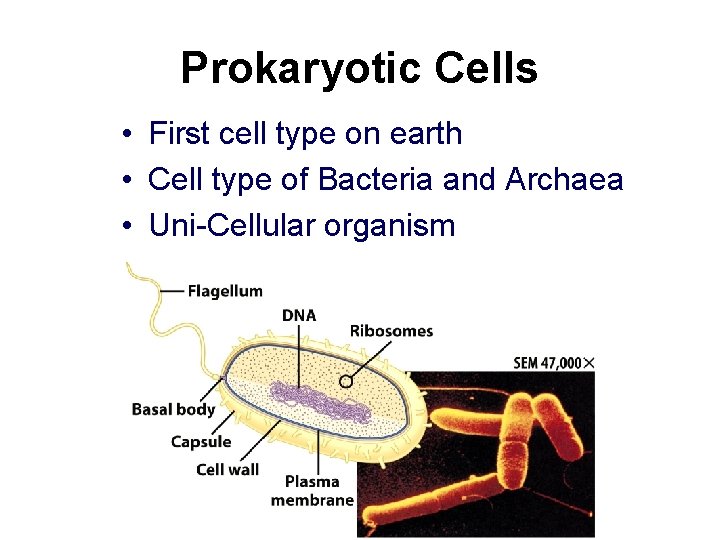
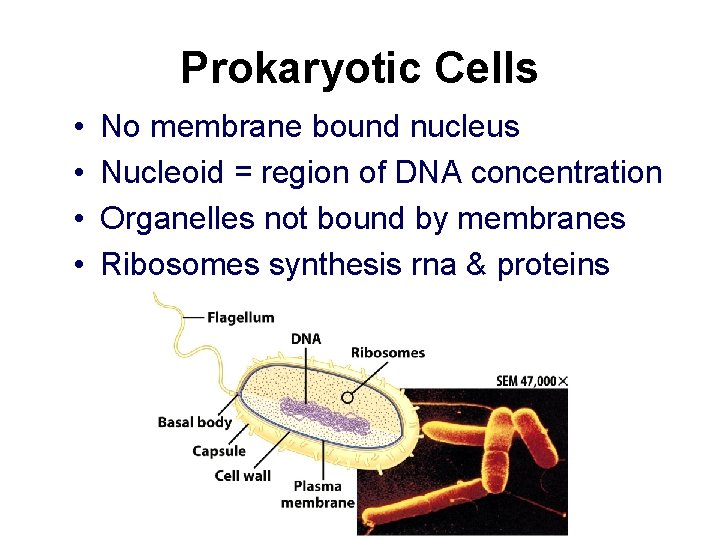
Prokaryotic Cells • First cell type on earth • Cell type of Bacteria and Archaea • Uni-Cellular organism
Prokaryotic Cells • • No membrane bound nucleus Nucleoid = region of DNA concentration Organelles not bound by membranes Ribosomes synthesis rna & proteins
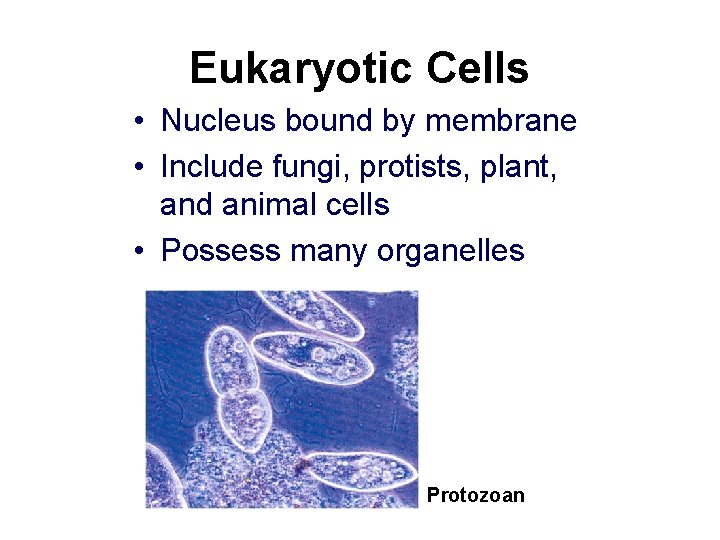
Eukaryotic Cells • Nucleus bound by membrane • Include fungi, protists, plant, and animal cells • Possess many organelles Protozoan
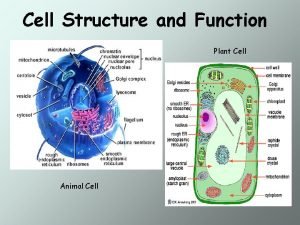
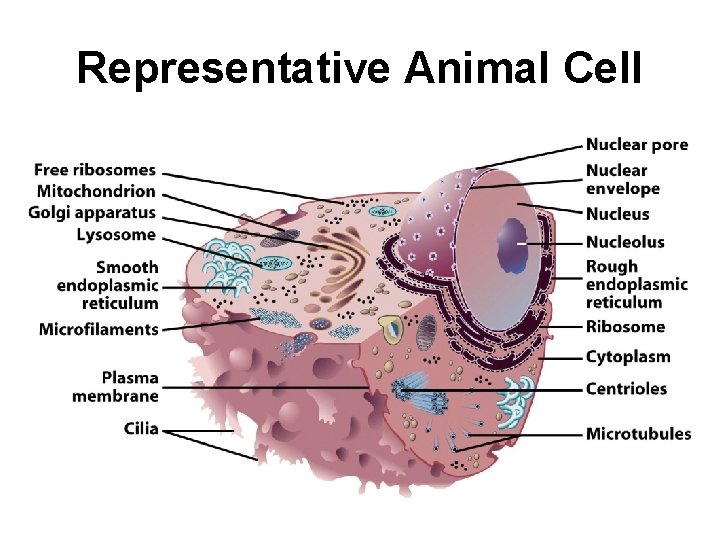
Representative Animal Cell
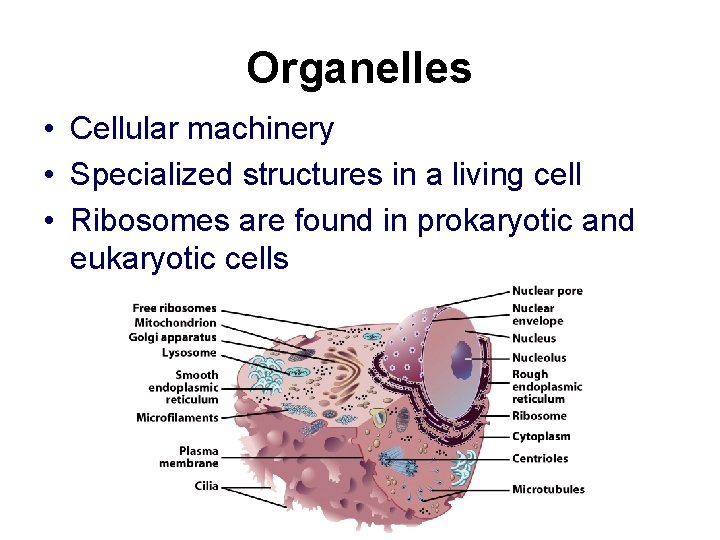
Organelles • Cellular machinery • Specialized structures in a living cell • Ribosomes are found in prokaryotic and eukaryotic cells
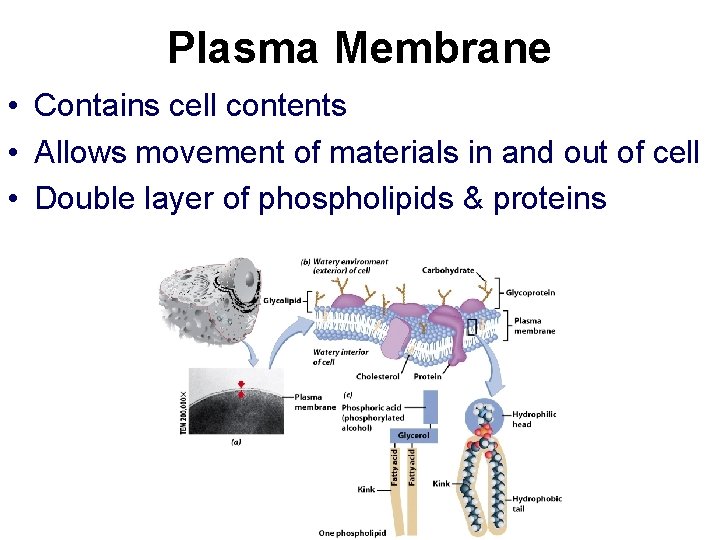
Plasma Membrane • Contains cell contents • Allows movement of materials in and out of cell • Double layer of phospholipids & proteins
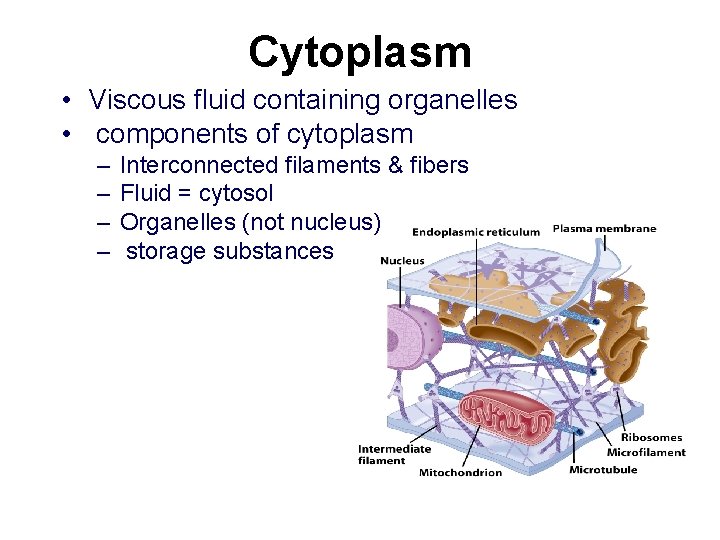
Cytoplasm • Viscous fluid containing organelles • components of cytoplasm – – Interconnected filaments & fibers Fluid = cytosol Organelles (not nucleus) storage substances
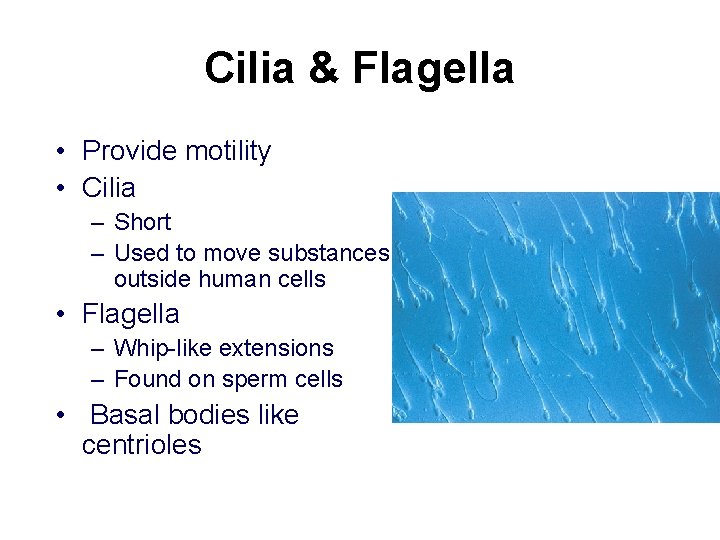
Cilia & Flagella • Provide motility • Cilia – Short – Used to move substances outside human cells • Flagella – Whip-like extensions – Found on sperm cells • Basal bodies like centrioles
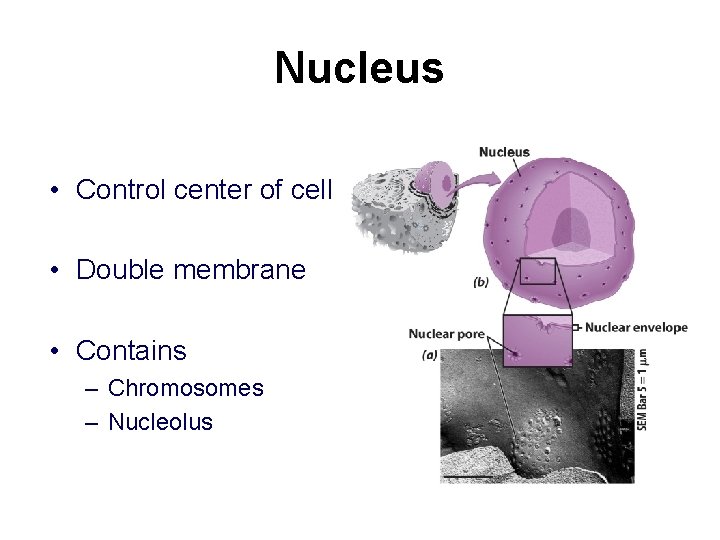
Nucleus • Control center of cell • Double membrane • Contains – Chromosomes – Nucleolus
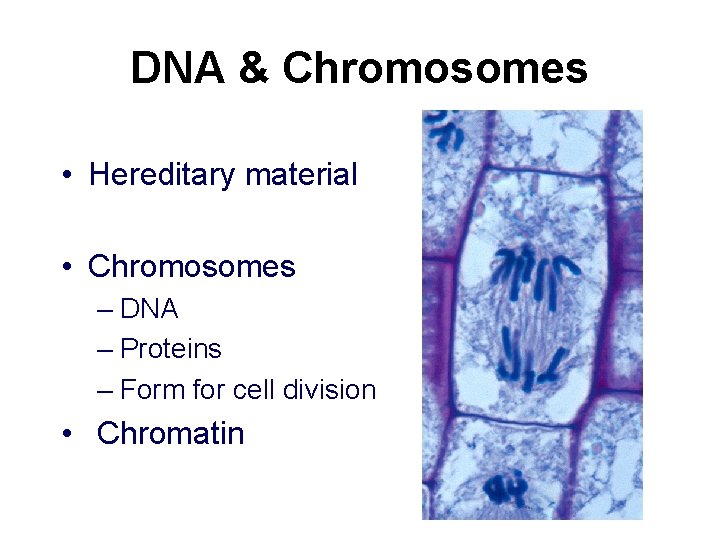
DNA & Chromosomes • Hereditary material • Chromosomes – DNA – Proteins – Form for cell division • Chromatin
Endoplasmic Reticulum • Helps move substances within cells • Network of interconnected membranes • Two types – Rough endoplasmic reticulum – Smooth endoplasmic reticulum
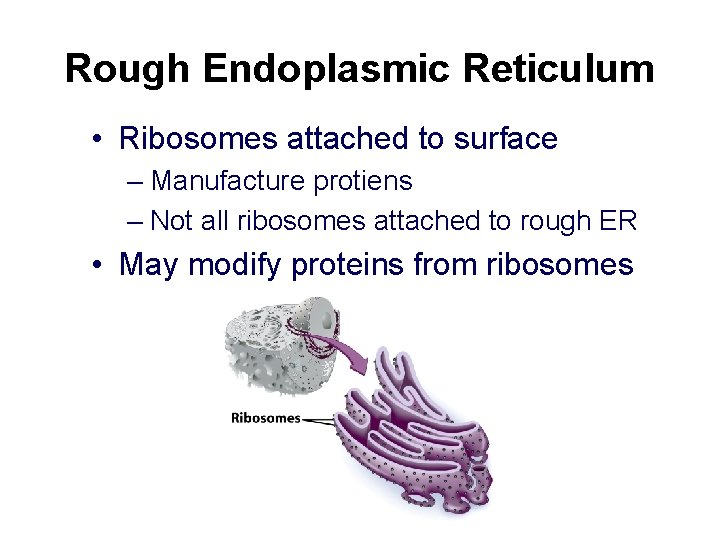
Rough Endoplasmic Reticulum • Ribosomes attached to surface – Manufacture protiens – Not all ribosomes attached to rough ER • May modify proteins from ribosomes
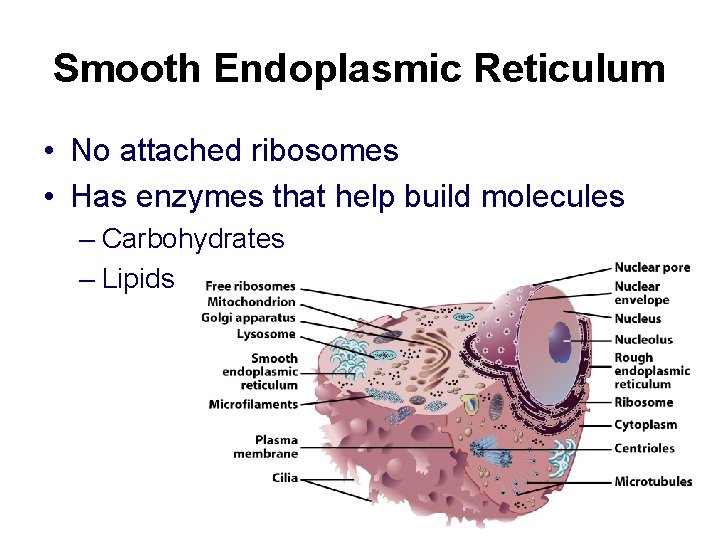
Smooth Endoplasmic Reticulum • No attached ribosomes • Has enzymes that help build molecules – Carbohydrates – Lipids
Golgi Apparatus • Involved in synthesis of plant cell wall • Packaging & shipping station of cell
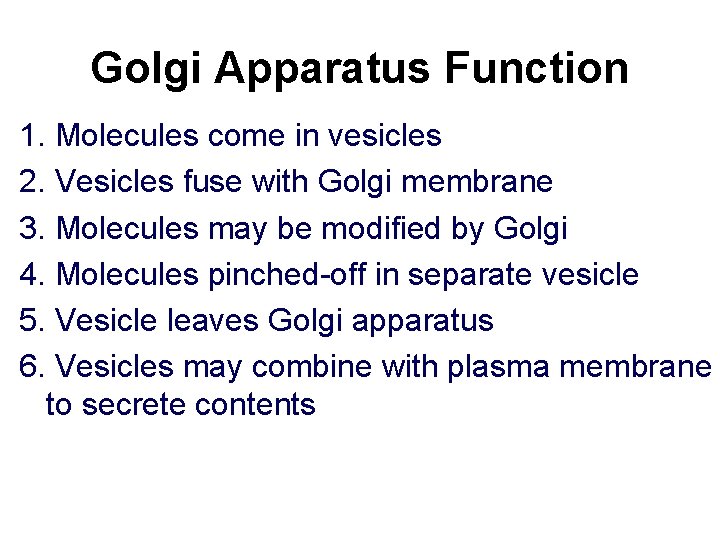
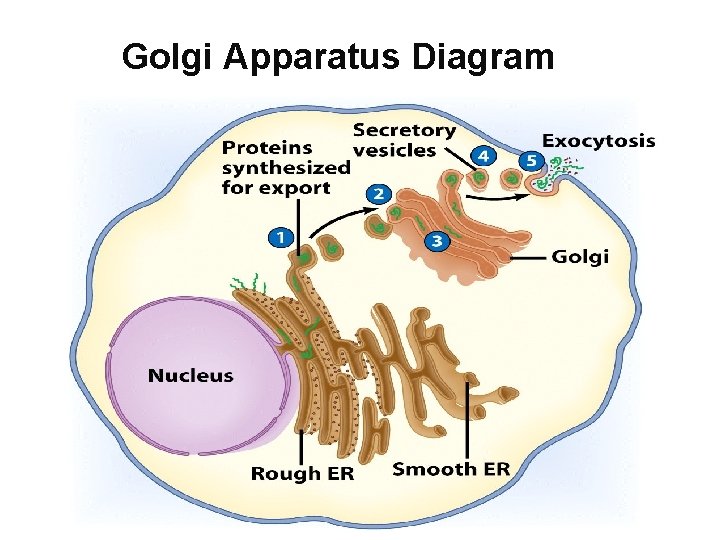
Golgi Apparatus Function 1. Molecules come in vesicles 2. Vesicles fuse with Golgi membrane 3. Molecules may be modified by Golgi 4. Molecules pinched-off in separate vesicle 5. Vesicle leaves Golgi apparatus 6. Vesicles may combine with plasma membrane to secrete contents
Golgi Apparatus Diagram
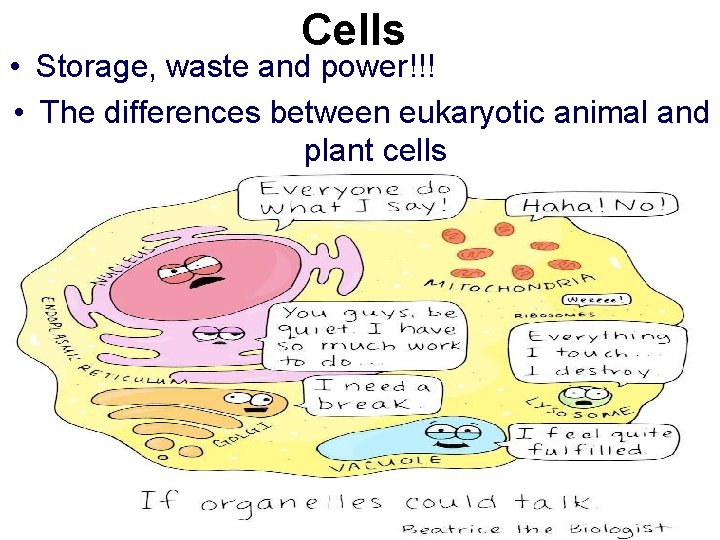
Cells • Storage, waste and power!!! • The differences between eukaryotic animal and plant cells
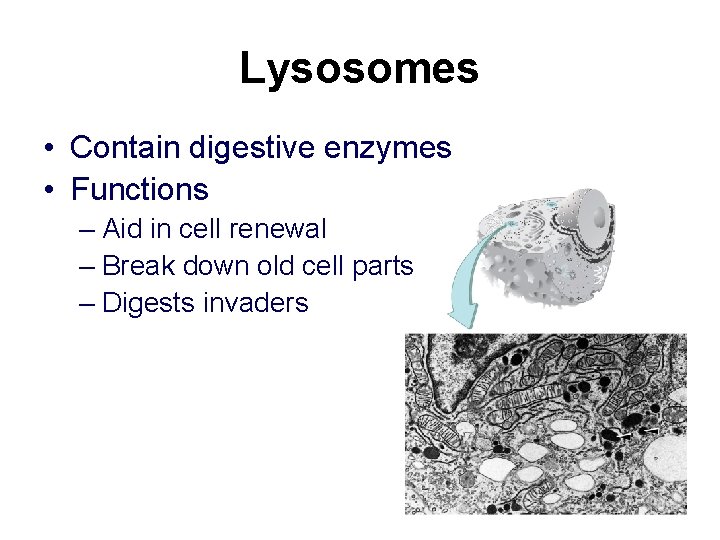
Lysosomes • Contain digestive enzymes • Functions – Aid in cell renewal – Break down old cell parts – Digests invaders
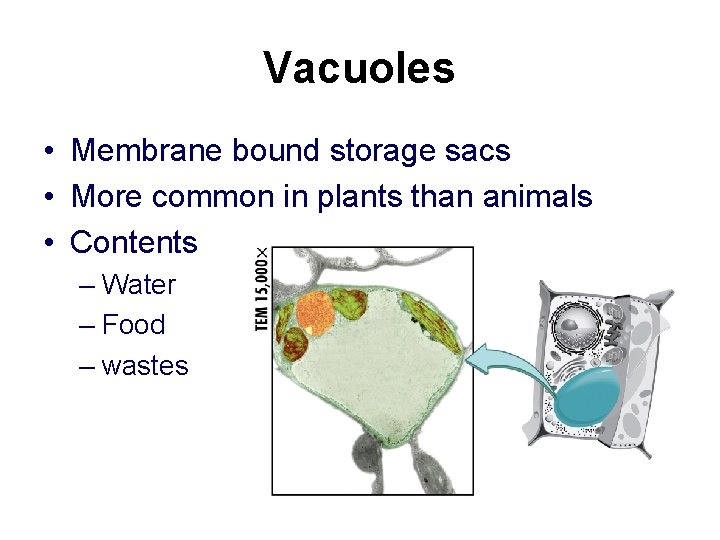
Vacuoles • Membrane bound storage sacs • More common in plants than animals • Contents – Water – Food – wastes
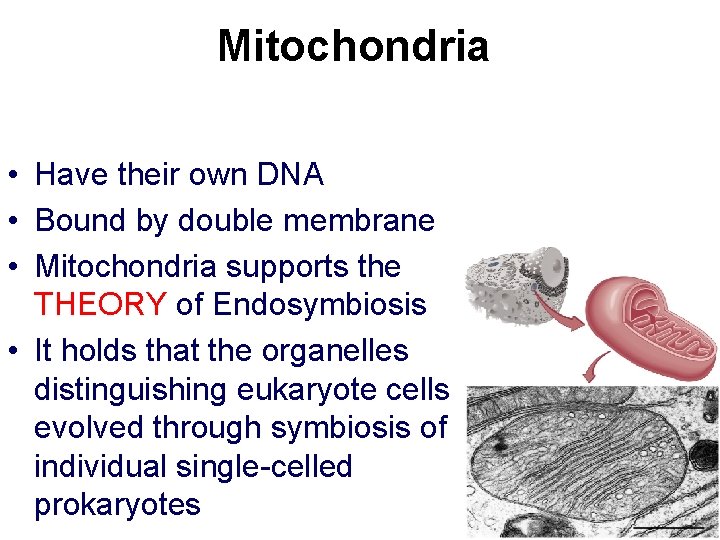
Mitochondria • Have their own DNA • Bound by double membrane • Mitochondria supports the THEORY of Endosymbiosis • It holds that the organelles distinguishing eukaryote cells evolved through symbiosis of individual single-celled prokaryotes
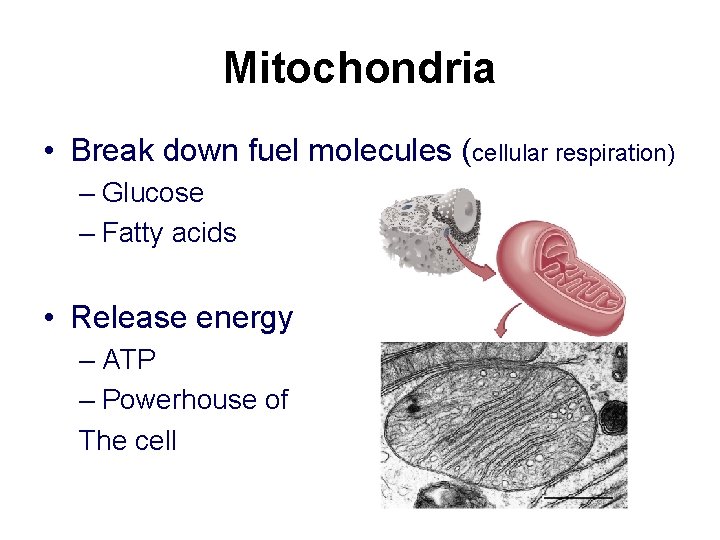
Mitochondria • Break down fuel molecules (cellular respiration) – Glucose – Fatty acids • Release energy – ATP – Powerhouse of The cell
Pop Quiz • Mitochondria releases energy to the cell. Its known as the powerhouse of the cell. Would there be more mitochondria in a red blood cell, muscle cell, or brain cell?
Plant Cells • There are three important differences in plant cells that separate them from animal cells. • These 3 differences are usually referred to as the 3 C’s • Chloroplast, Central vacuole, and Cell walls; if a cell has all three of these organelles it is a plant cell
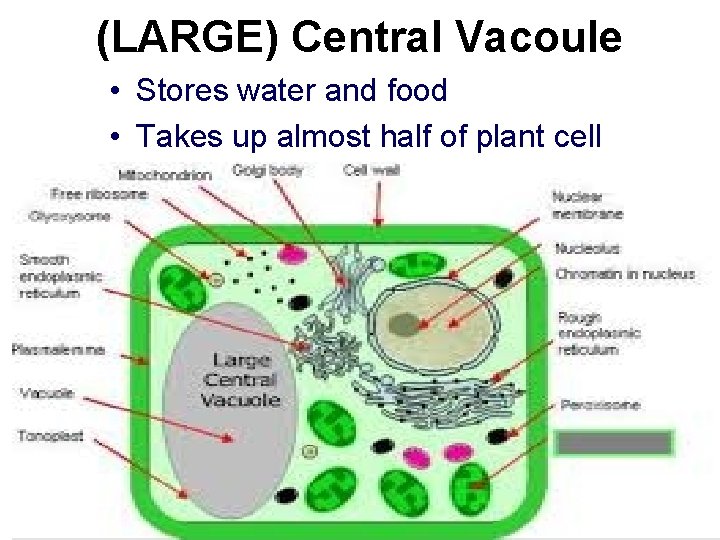
Representative Plant Cell
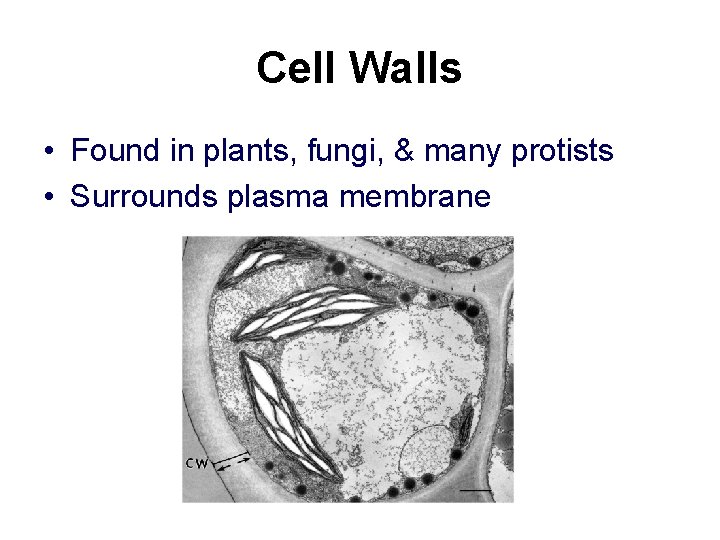
Cell Walls • Found in plants, fungi, & many protists • Surrounds plasma membrane
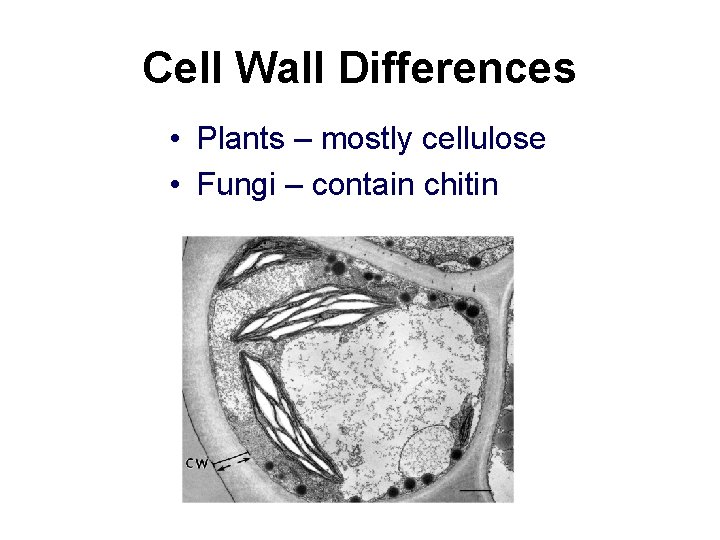
Cell Wall Differences • Plants – mostly cellulose • Fungi – contain chitin
(LARGE) Central Vacoule • Stores water and food • Takes up almost half of plant cell
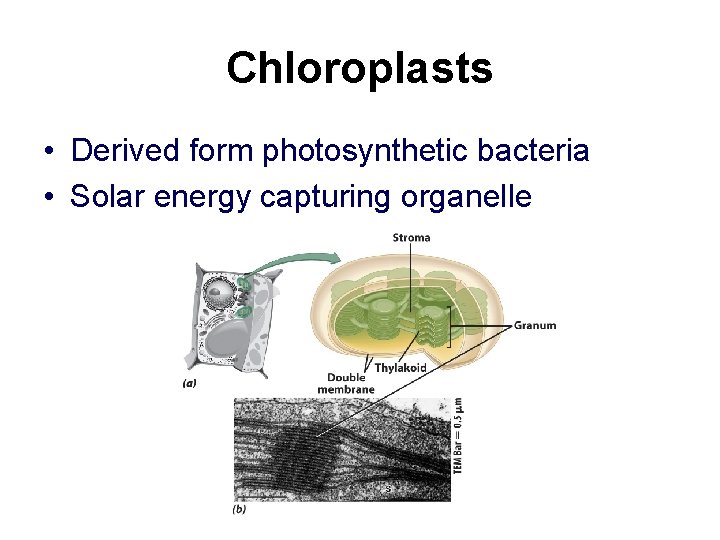
Chloroplasts • Derived form photosynthetic bacteria • Solar energy capturing organelle
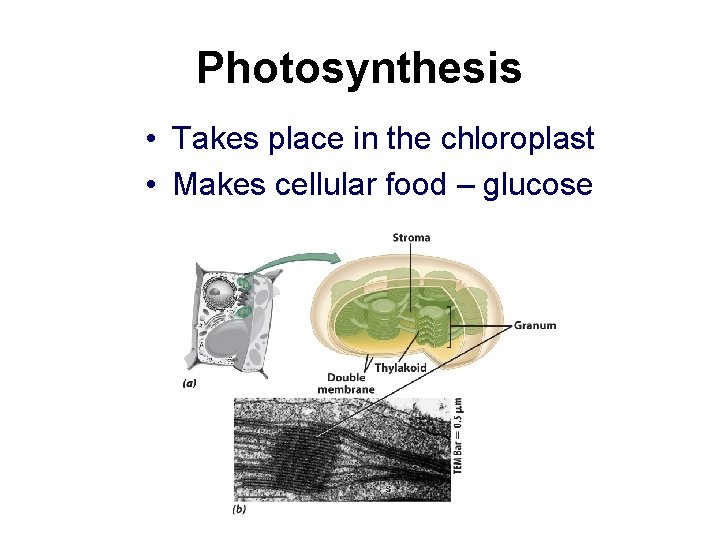
Photosynthesis • Takes place in the chloroplast • Makes cellular food – glucose
Exit Ticket • 1. There are some similarities between prokaryotic and eukaryotic cells. Which of the following structures is found in both prokaryotic and eukaryotic cells? • A. lysosome • B. mitochondrion • C. nucleus • D. ribosome
EXIT TICKET 2. Joy took the notes shown below while learning about cells. • Forms boundary between a cell and the outside environment • Controls the movement of materials into and out of the cell • Consists of double layer of phospholipids She forgot to write the name of the cell structure that her class was studying that day. What structure is described in her notes? • A. endoplasmic reticulum • B. cell membrane • C. cell wall • D. nucleus
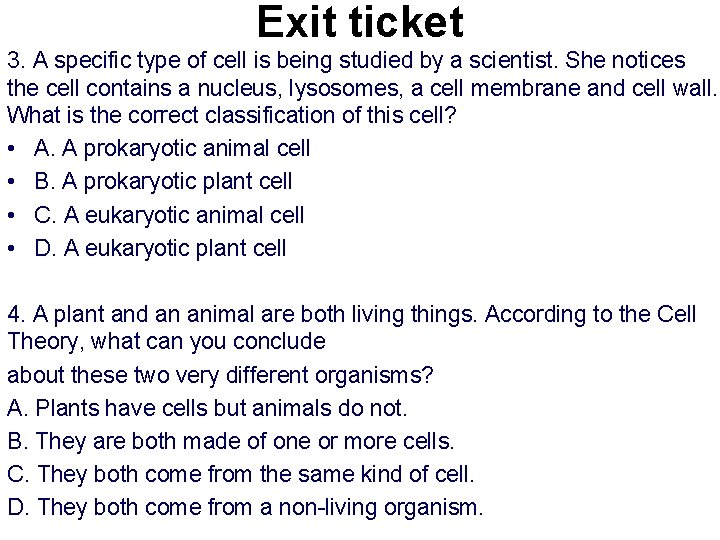
Exit ticket 3. A specific type of cell is being studied by a scientist. She notices the cell contains a nucleus, lysosomes, a cell membrane and cell wall. What is the correct classification of this cell? • A. A prokaryotic animal cell • B. A prokaryotic plant cell • C. A eukaryotic animal cell • D. A eukaryotic plant cell 4. A plant and an animal are both living things. According to the Cell Theory, what can you conclude about these two very different organisms? A. Plants have cells but animals do not. B. They are both made of one or more cells. C. They both come from the same kind of cell. D. They both come from a non-living organism.
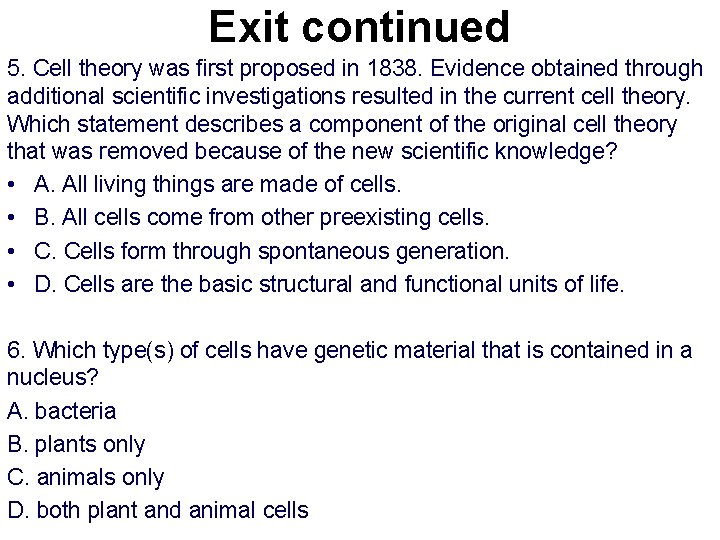
Exit continued 5. Cell theory was first proposed in 1838. Evidence obtained through additional scientific investigations resulted in the current cell theory. Which statement describes a component of the original cell theory that was removed because of the new scientific knowledge? • A. All living things are made of cells. • B. All cells come from other preexisting cells. • C. Cells form through spontaneous generation. • D. Cells are the basic structural and functional units of life. 6. Which type(s) of cells have genetic material that is contained in a nucleus? A. bacteria B. plants only C. animals only D. both plant and animal cells