10 5 Heat Equation 10 5 Heat Equation


- Slides: 43
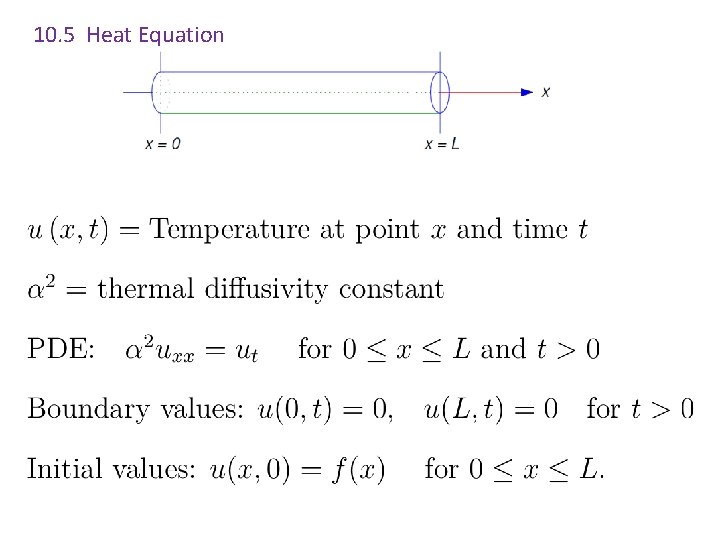
10. 5 Heat Equation
10. 5 Heat Equation
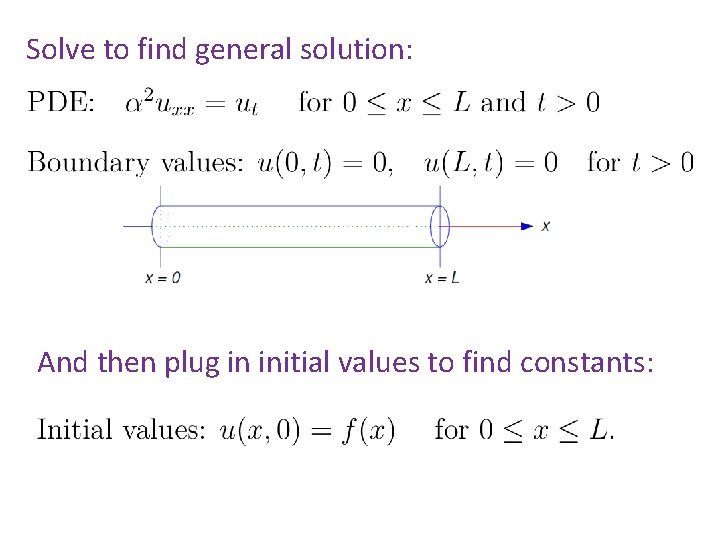
Solve to find general solution: And then plug in initial values to find constants:
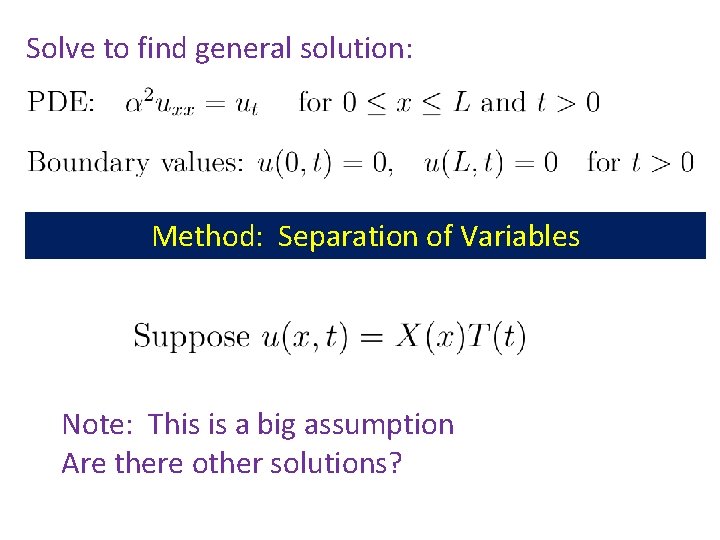
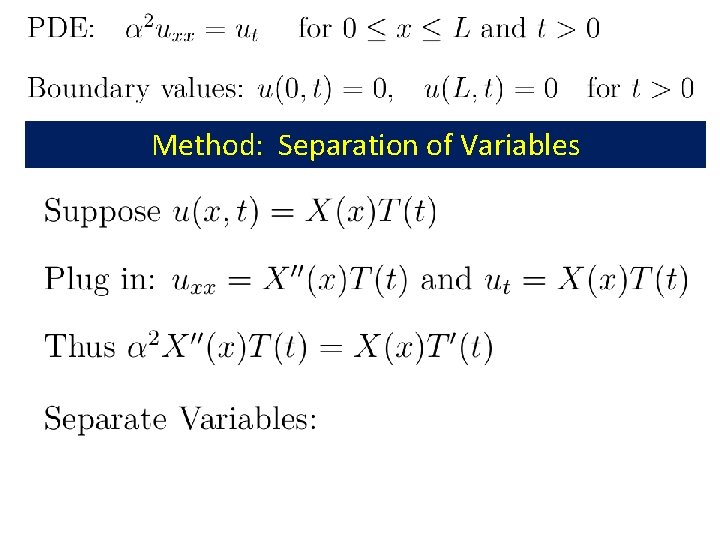
Solve to find general solution: Method: Separation of Variables Note: This is a big assumption Are there other solutions?
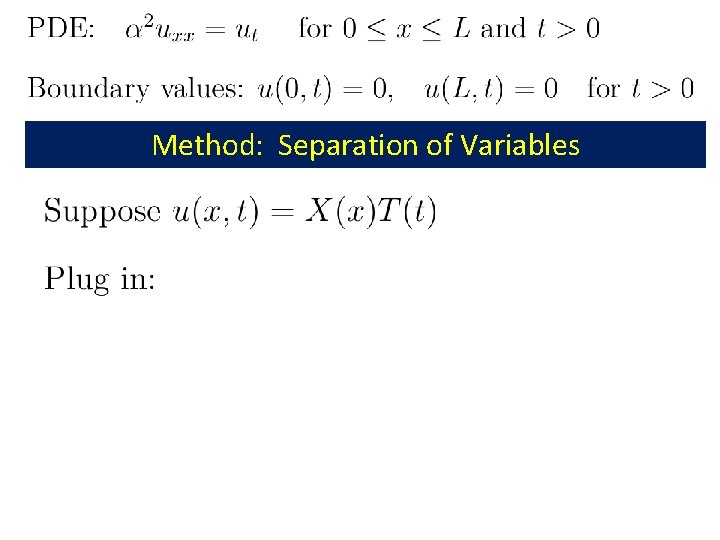
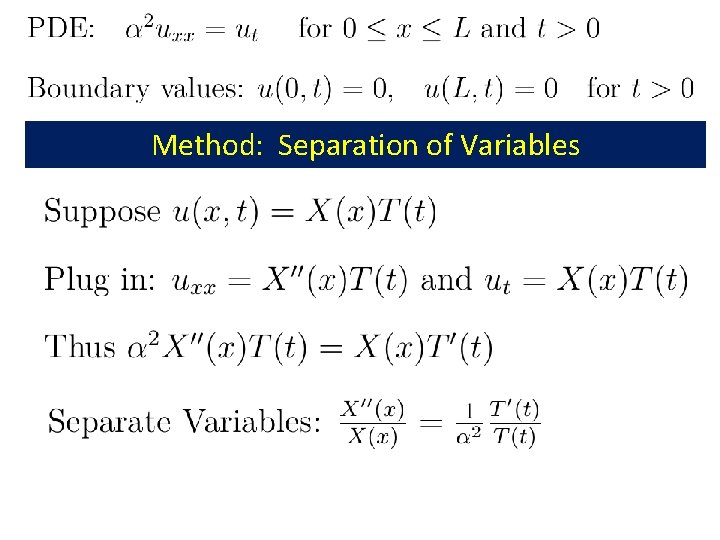
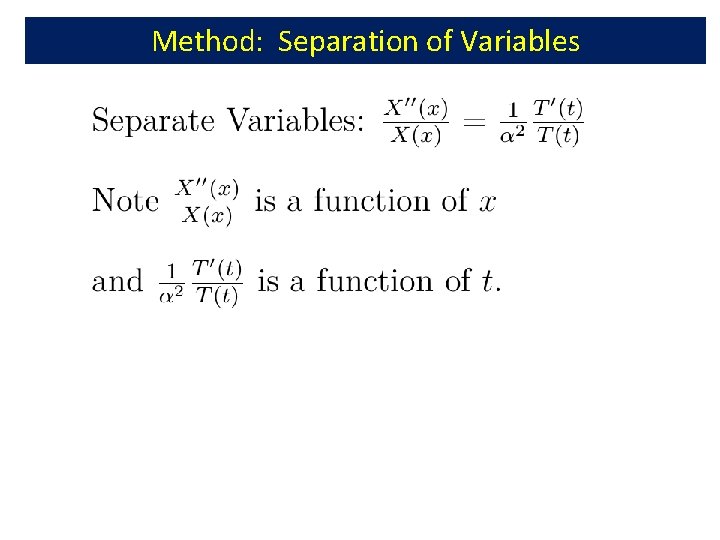
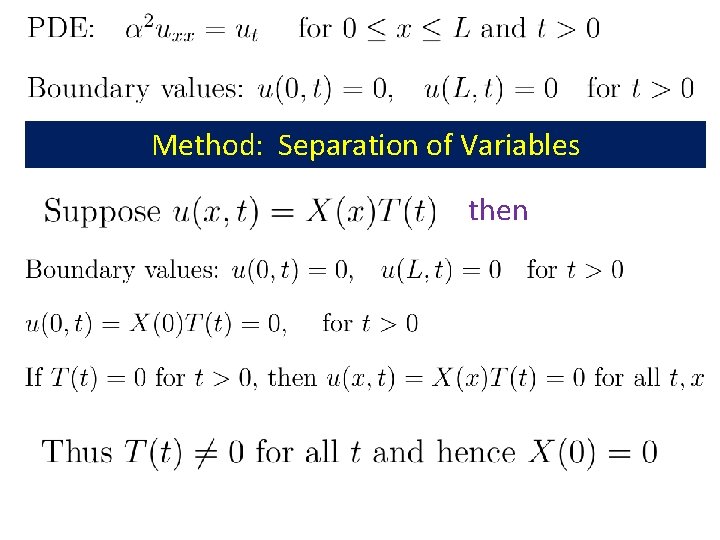
Method: Separation of Variables
Method: Separation of Variables
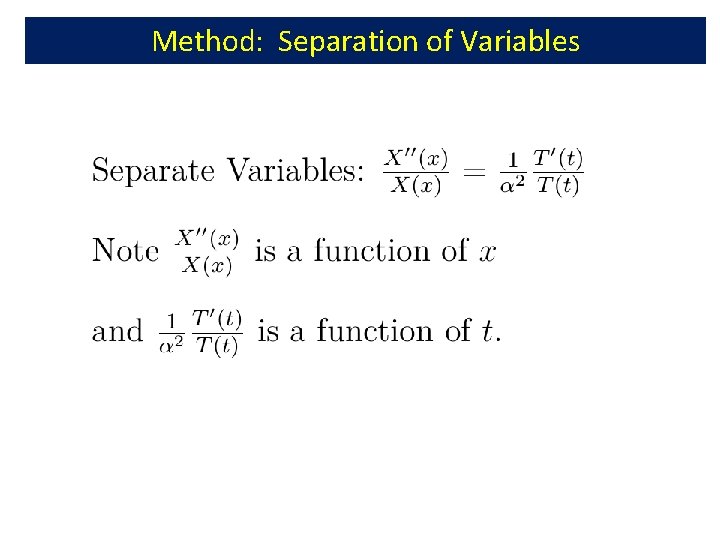
Method: Separation of Variables
Method: Separation of Variables
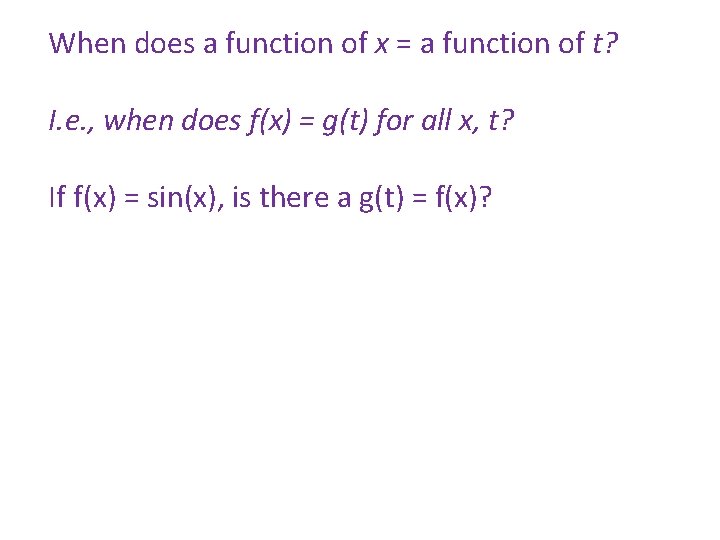
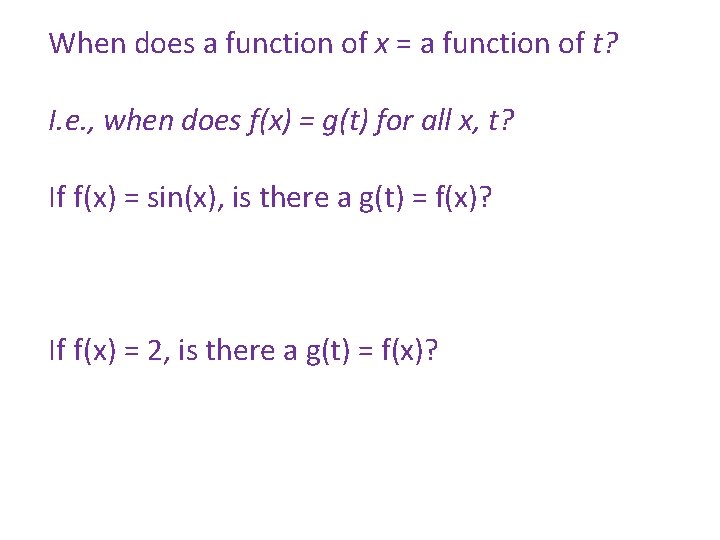
When does a function of x = a function of t? I. e. , when does f(x) = g(t) for all x, t? If f(x) = sin(x), is there a g(t) = f(x)?
When does a function of x = a function of t? I. e. , when does f(x) = g(t) for all x, t? If f(x) = sin(x), is there a g(t) = f(x)? If f(x) = 2, is there a g(t) = f(x)?
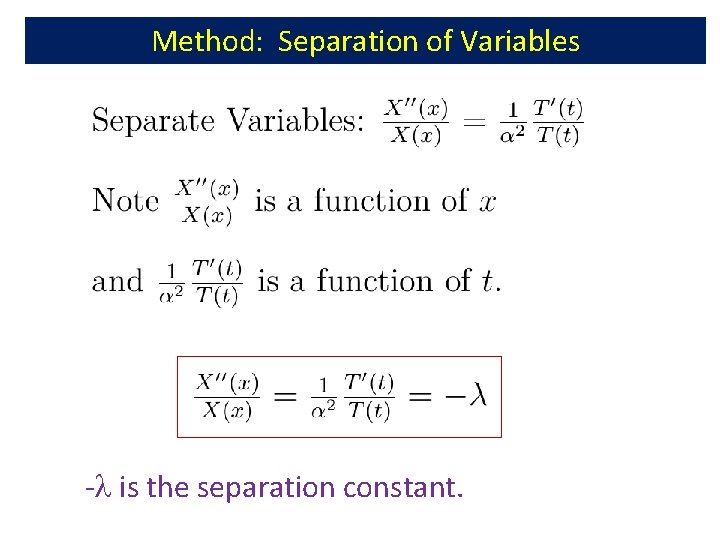
Method: Separation of Variables
Method: Separation of Variables -l is the separation constant.
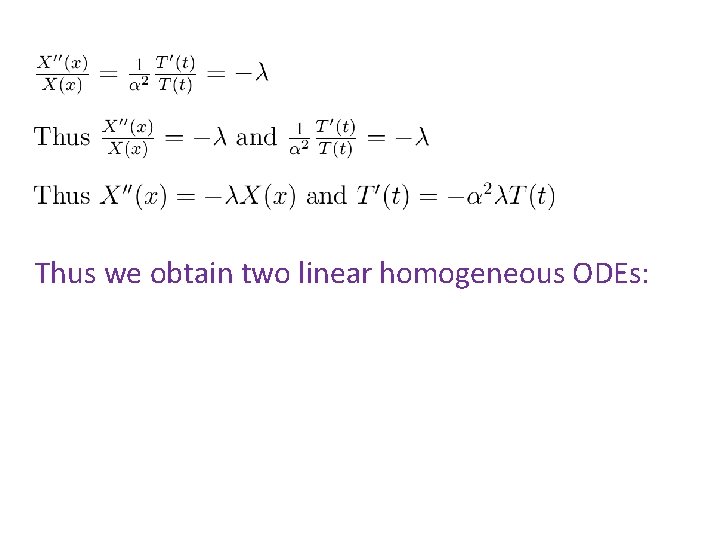
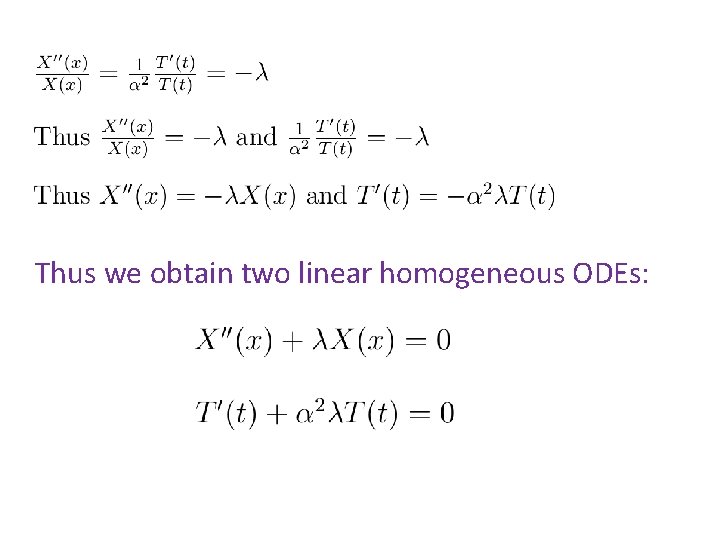
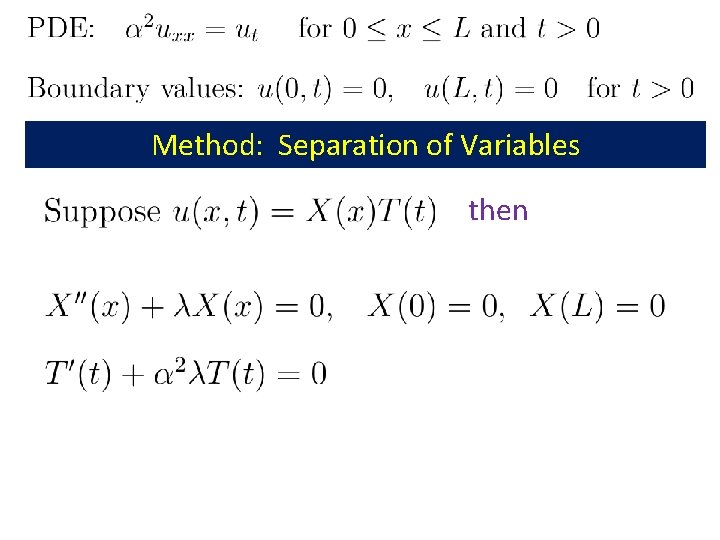
Thus we obtain two linear homogeneous ODEs:
Thus we obtain two linear homogeneous ODEs:
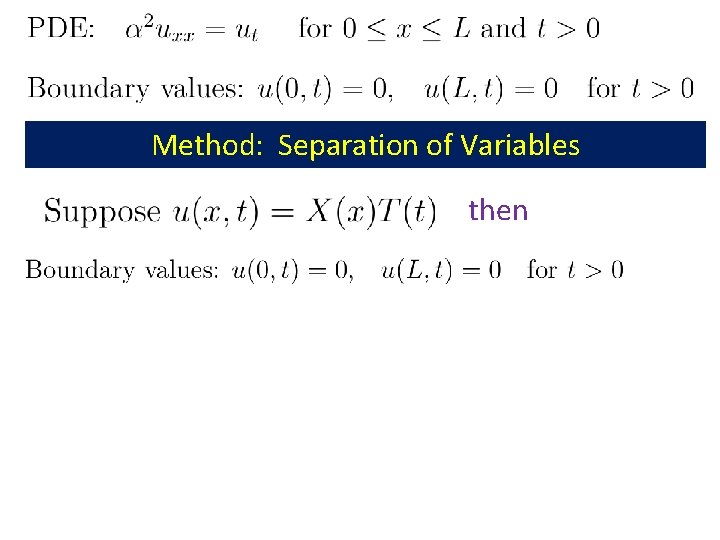
Method: Separation of Variables then
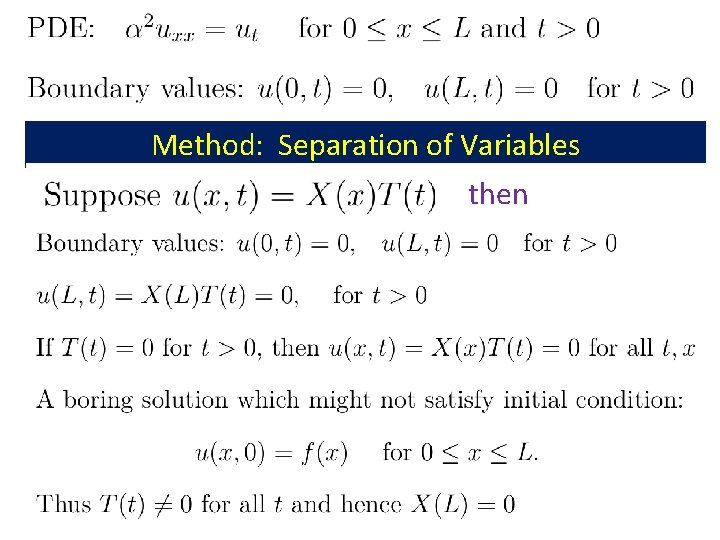
Method: Separation of Variables then
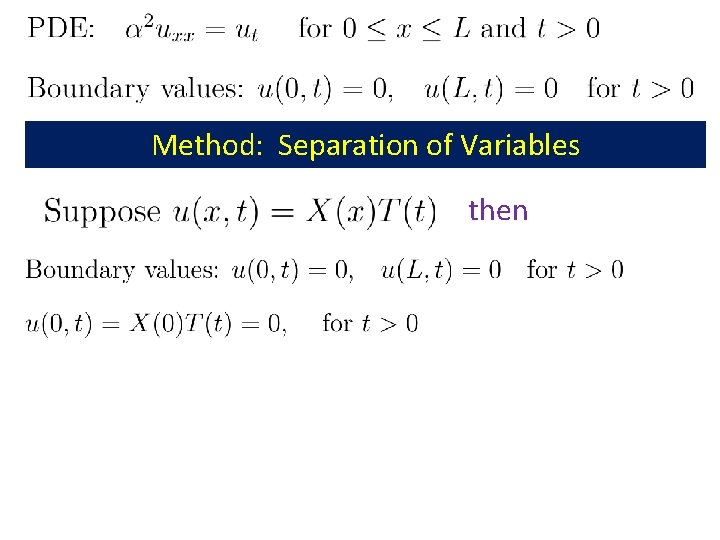
Method: Separation of Variables then
Method: Separation of Variables then
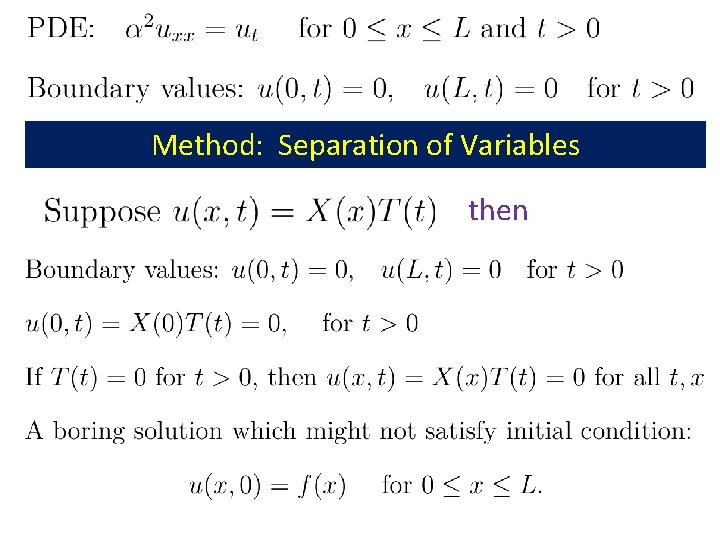
Method: Separation of Variables then
Method: Separation of Variables then
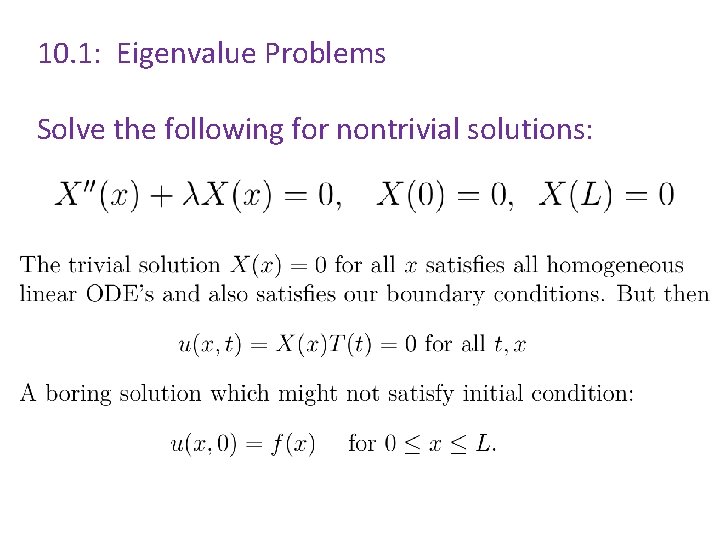
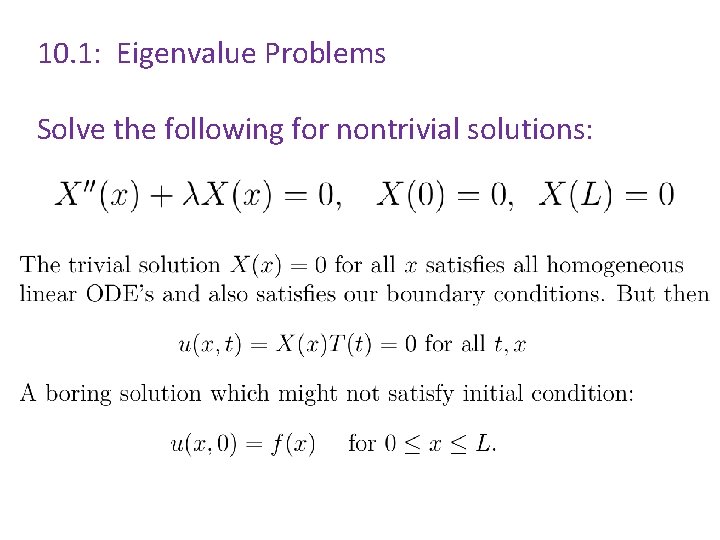
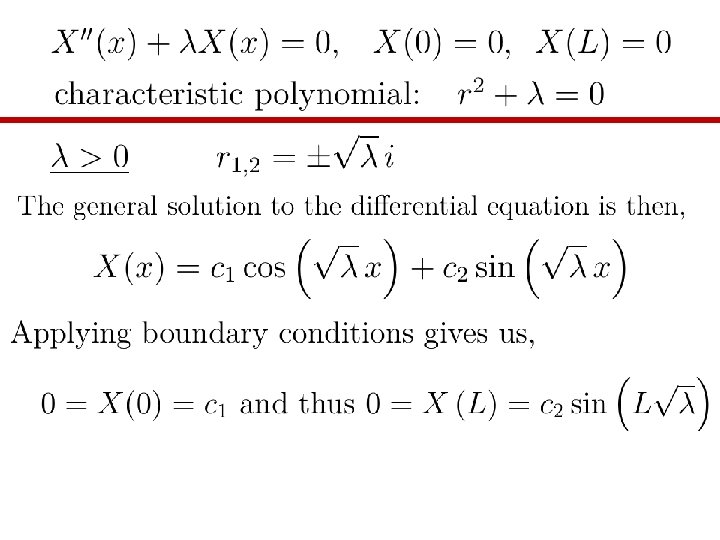
10. 1: Eigenvalue Problems Solve the following for nontrivial solutions:
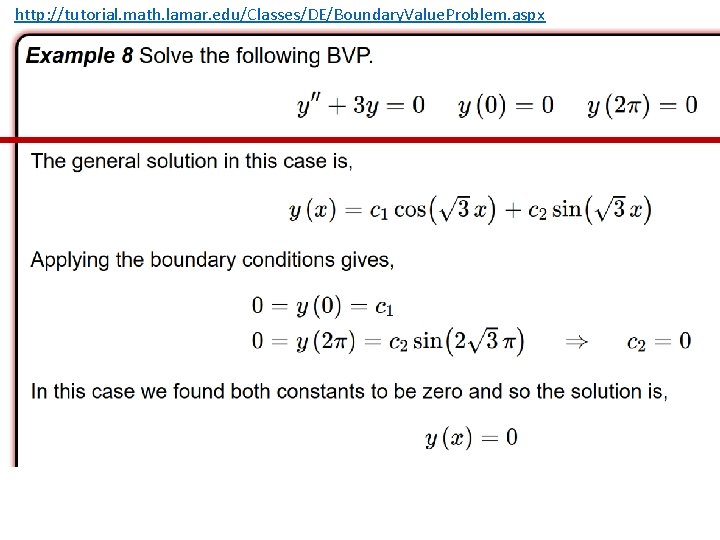
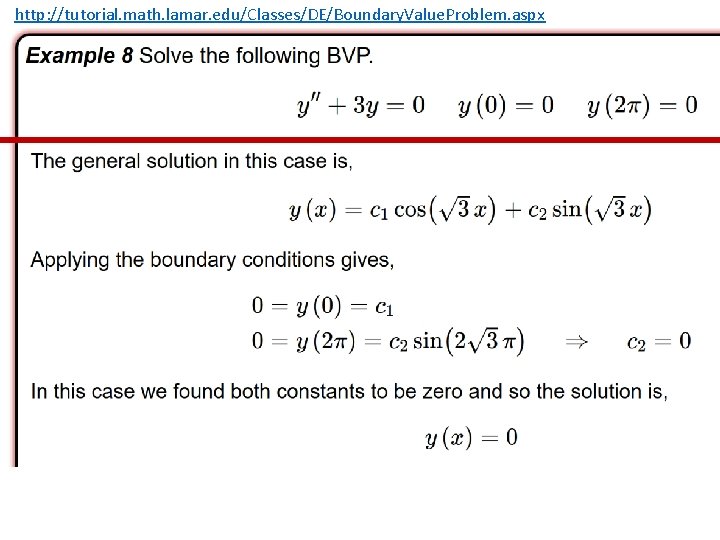
http: //tutorial. math. lamar. edu/Classes/DE/Boundary. Value. Problem. aspx
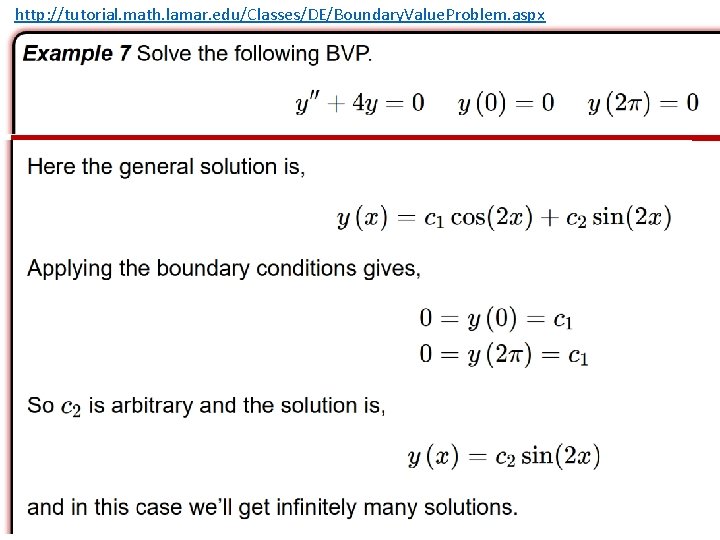
http: //tutorial. math. lamar. edu/Classes/DE/Boundary. Value. Problem. aspx
10. 1: Eigenvalue Problems Solve the following for nontrivial solutions:
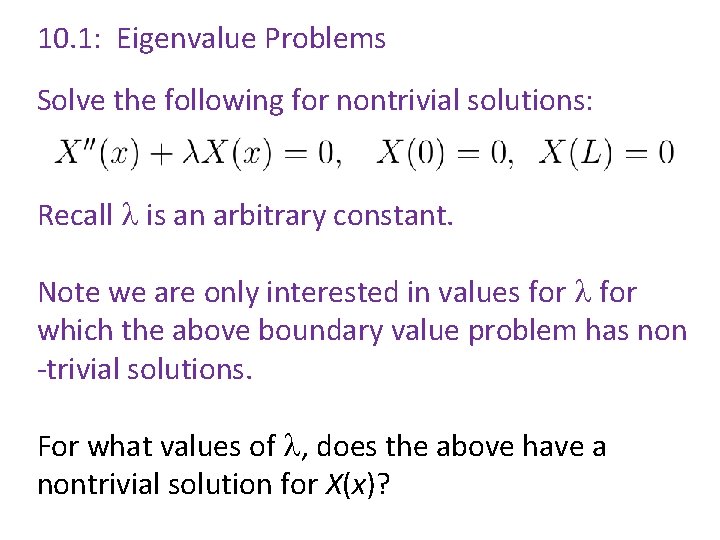
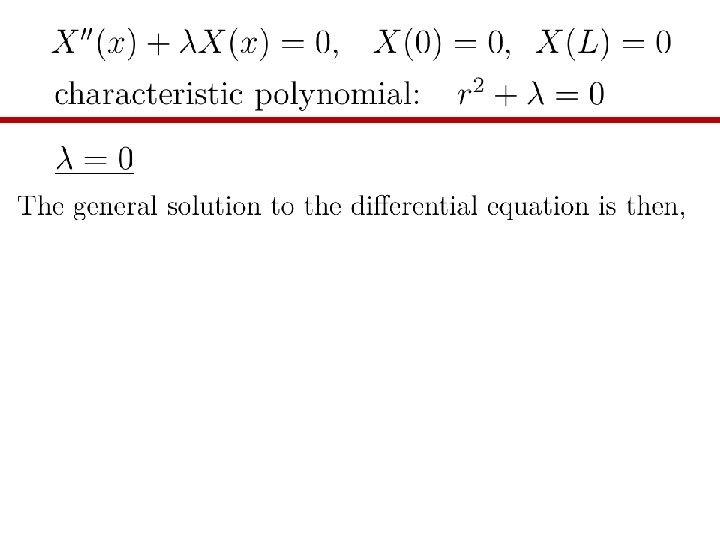
10. 1: Eigenvalue Problems Solve the following for nontrivial solutions: Recall l is an arbitrary constant. Note we are only interested in values for l for which the above boundary value problem has non -trivial solutions. For what values of l, does the above have a nontrivial solution for X(x)?
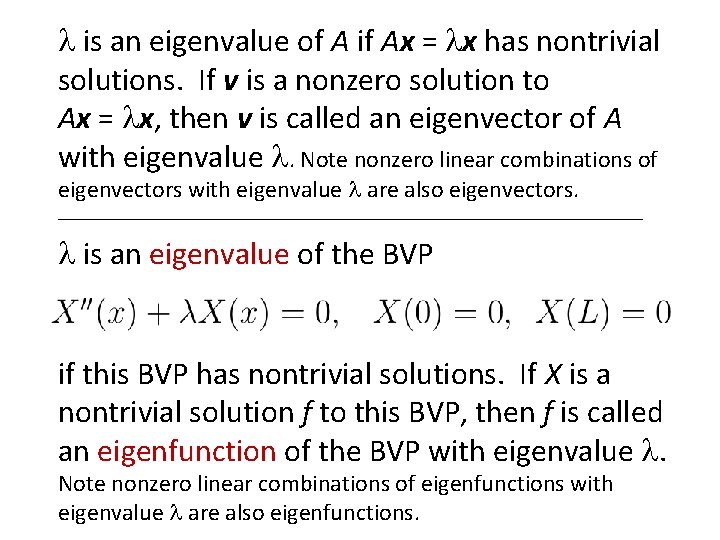
l is an eigenvalue of A if Ax = lx has nontrivial solutions. If v is a nonzero solution to Ax = lx, then v is called an eigenvector of A with eigenvalue l. Note nonzero linear combinations of eigenvectors with eigenvalue l are also eigenvectors. __________________________________________ l is an eigenvalue of the BVP if this BVP has nontrivial solutions. If X is a nontrivial solution f to this BVP, then f is called an eigenfunction of the BVP with eigenvalue l. Note nonzero linear combinations of eigenfunctions with eigenvalue l are also eigenfunctions.
http: //tutorial. math. lamar. edu/Classes/DE/Boundary. Value. Problem. aspx
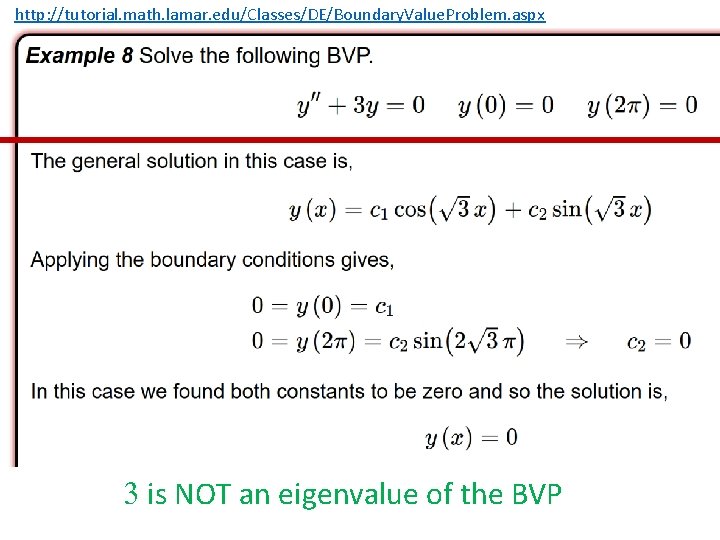
http: //tutorial. math. lamar. edu/Classes/DE/Boundary. Value. Problem. aspx 3 is NOT an eigenvalue of the BVP
http: //tutorial. math. lamar. edu/Classes/DE/Boundary. Value. Problem. aspx
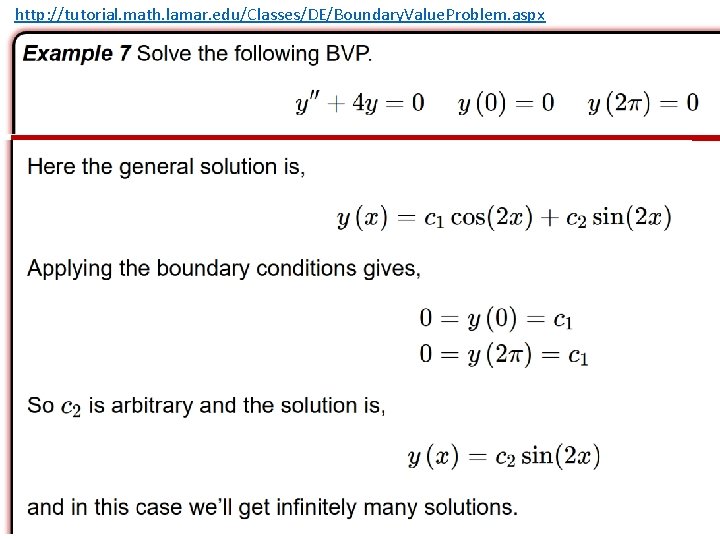
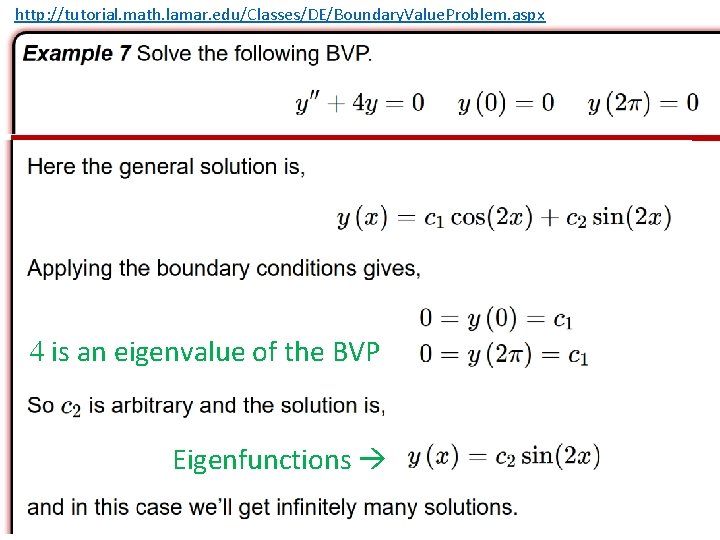
http: //tutorial. math. lamar. edu/Classes/DE/Boundary. Value. Problem. aspx 4 is an eigenvalue of the BVP Eigenfunctions
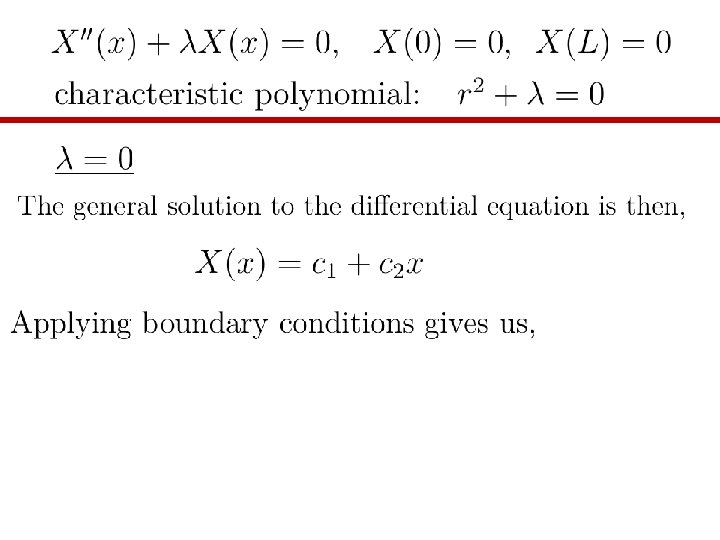
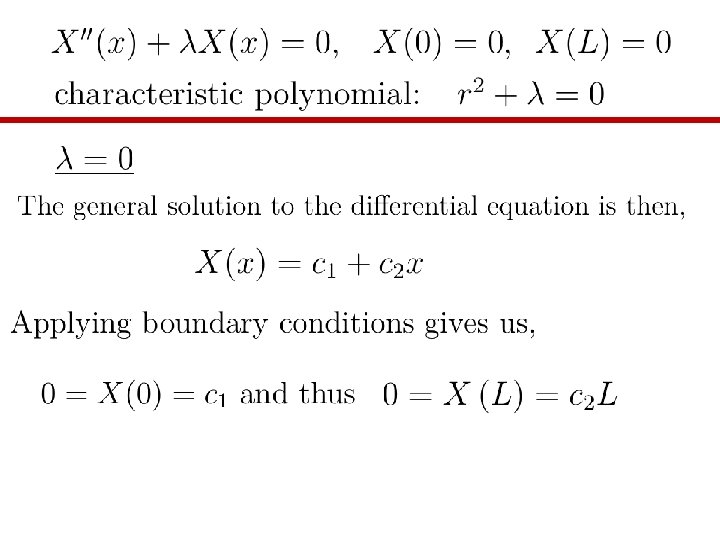
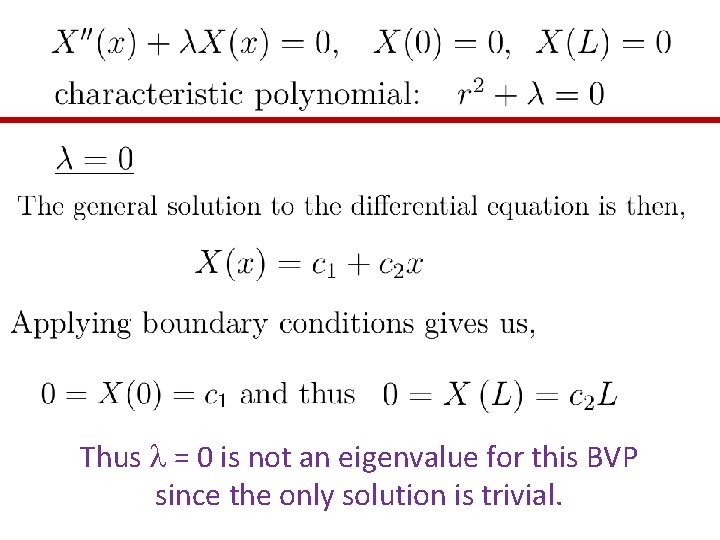
Thus l = 0 is not an eigenvalue for this BVP since the only solution is trivial.
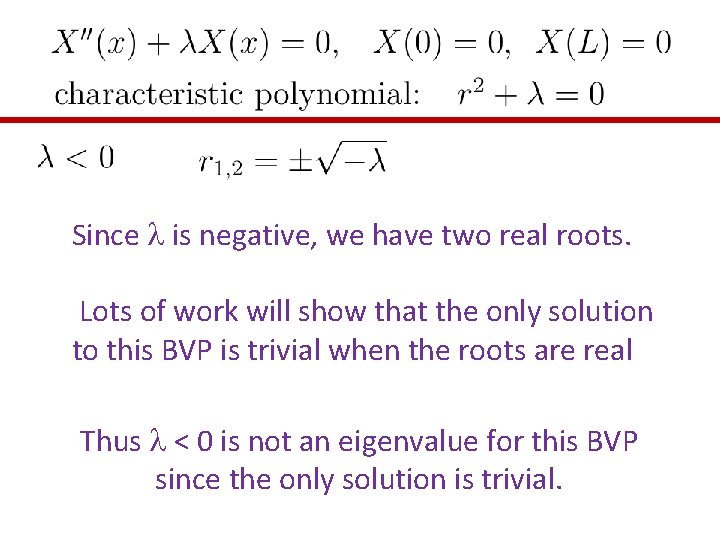
Since l is negative, we have two real roots. Lots of work will show that the only solution to this BVP is trivial when the roots are real Thus l < 0 is not an eigenvalue for this BVP since the only solution is trivial.
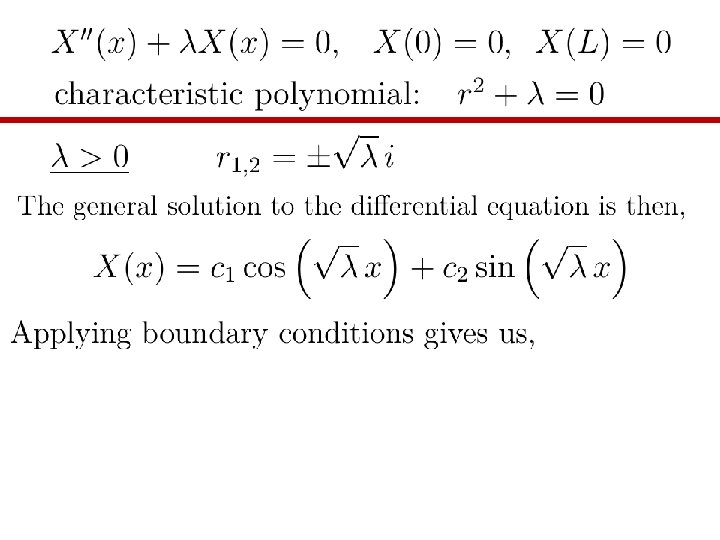
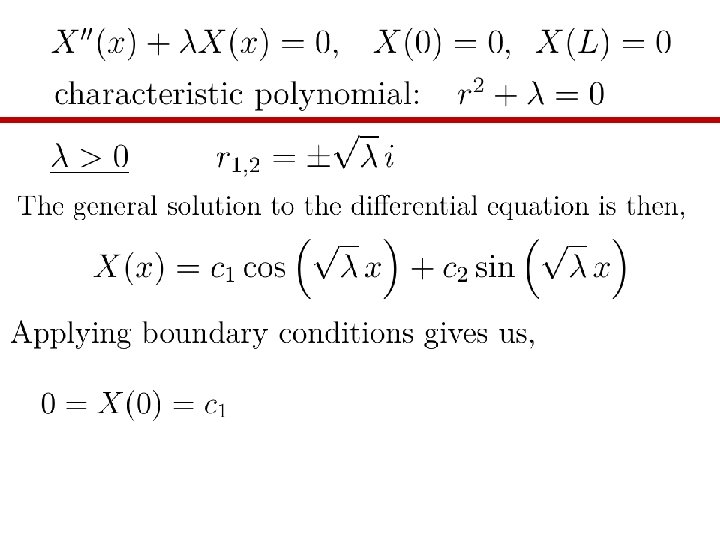
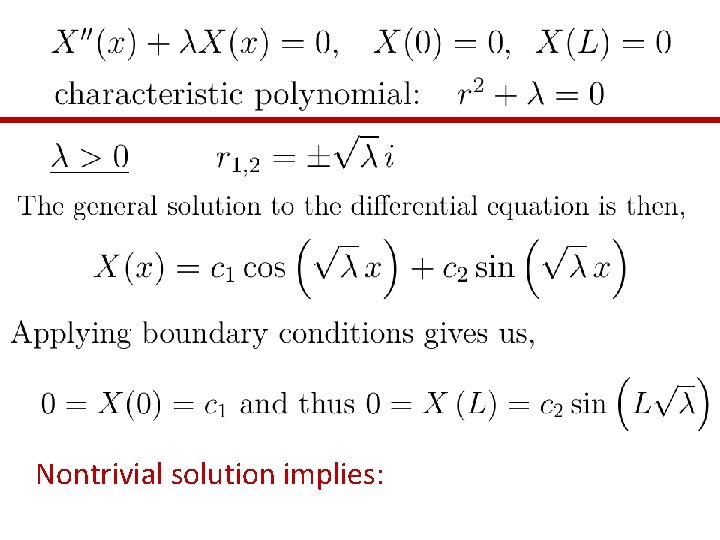
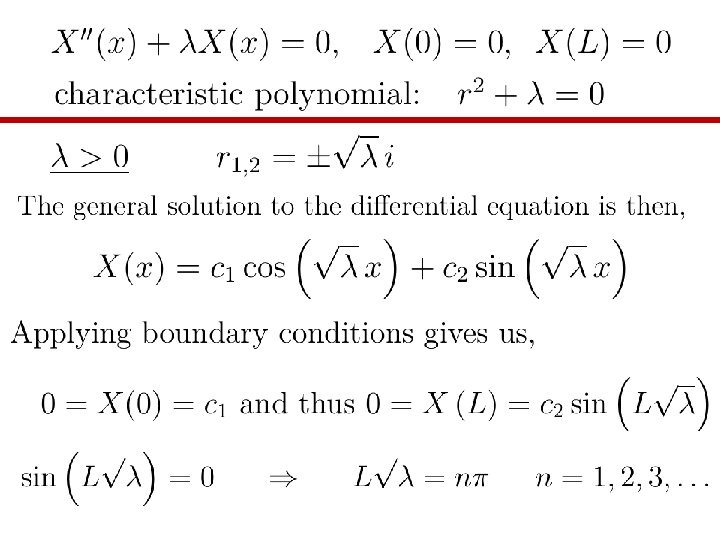
Nontrivial solution implies:
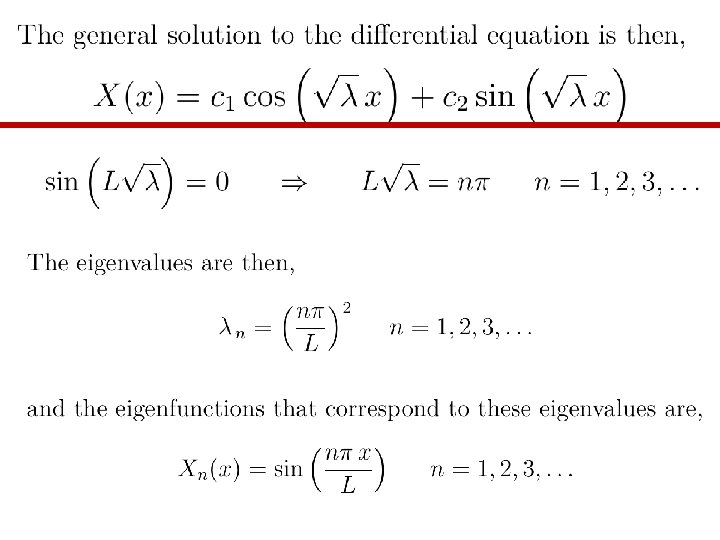
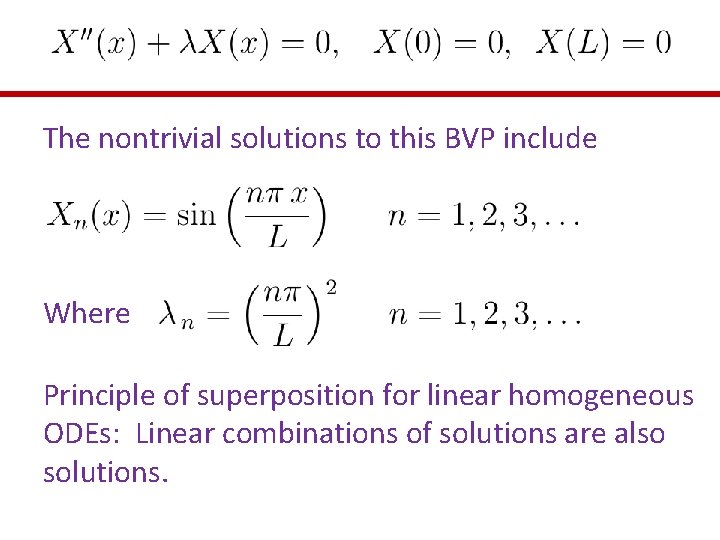
The nontrivial solutions to this BVP include Where Principle of superposition for linear homogeneous ODEs: Linear combinations of solutions are also solutions.