Why does heat transfer happen Heat is a
- Slides: 7
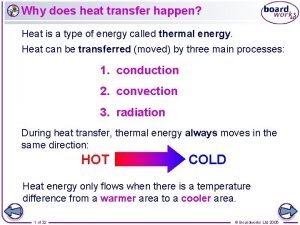
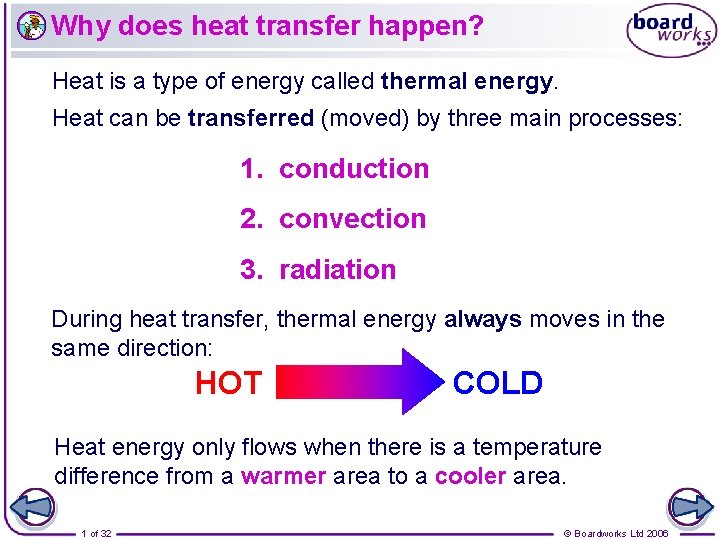
Why does heat transfer happen? Heat is a type of energy called thermal energy. Heat can be transferred (moved) by three main processes: 1. conduction 2. convection 3. radiation During heat transfer, thermal energy always moves in the same direction: HOT COLD Heat energy only flows when there is a temperature difference from a warmer area to a cooler area. 1 of 32 © Boardworks Ltd 2006
2 of 32 © Boardworks Ltd 2006
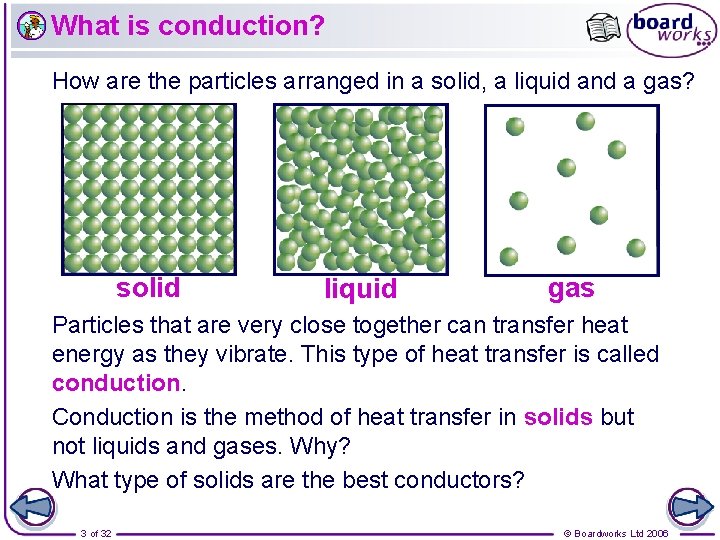
What is conduction? How are the particles arranged in a solid, a liquid and a gas? solid liquid gas Particles that are very close together can transfer heat energy as they vibrate. This type of heat transfer is called conduction. Conduction is the method of heat transfer in solids but not liquids and gases. Why? What type of solids are the best conductors? 3 of 32 © Boardworks Ltd 2006
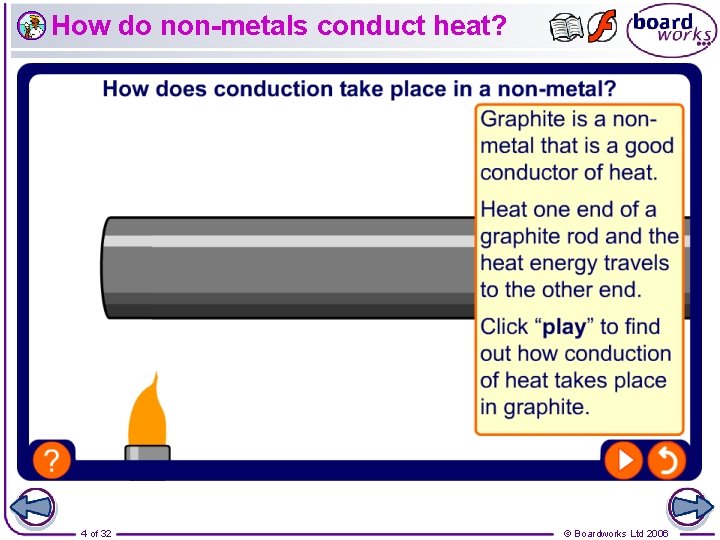
How do non-metals conduct heat? 4 of 32 © Boardworks Ltd 2006
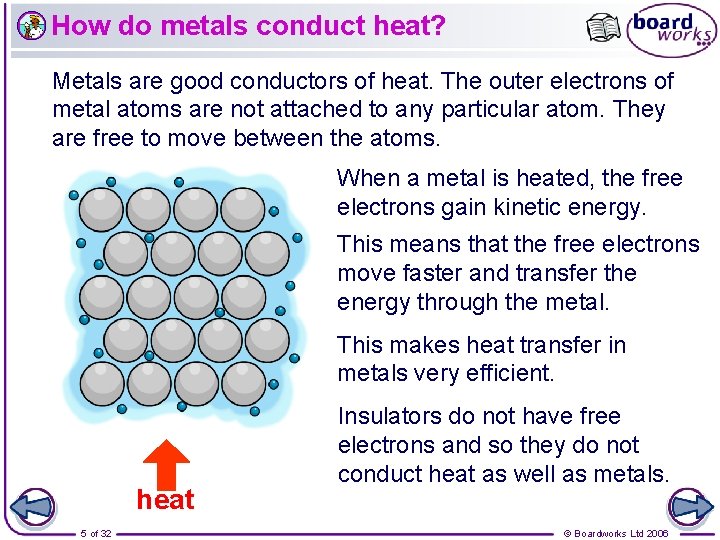
How do metals conduct heat? Metals are good conductors of heat. The outer electrons of metal atoms are not attached to any particular atom. They are free to move between the atoms. When a metal is heated, the free electrons gain kinetic energy. This means that the free electrons move faster and transfer the energy through the metal. This makes heat transfer in metals very efficient. heat 5 of 32 Insulators do not have free electrons and so they do not conduct heat as well as metals. © Boardworks Ltd 2006
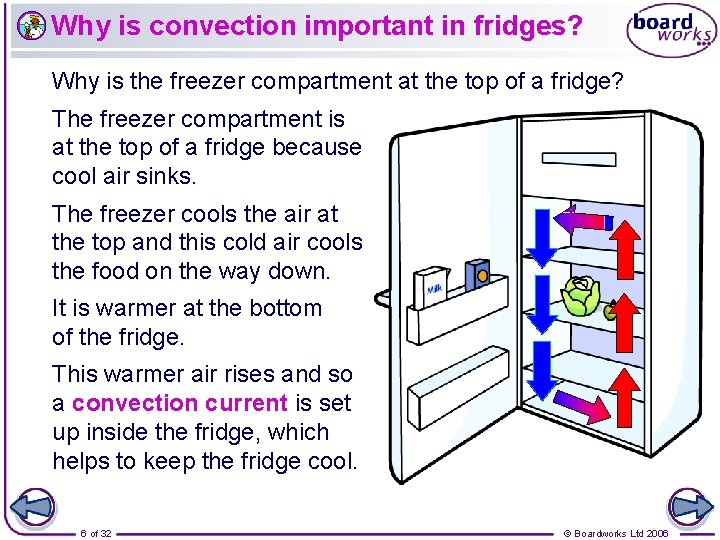
Why is convection important in fridges? Why is the freezer compartment at the top of a fridge? The freezer compartment is at the top of a fridge because cool air sinks. The freezer cools the air at the top and this cold air cools the food on the way down. It is warmer at the bottom of the fridge. This warmer air rises and so a convection current is set up inside the fridge, which helps to keep the fridge cool. 6 of 32 © Boardworks Ltd 2006
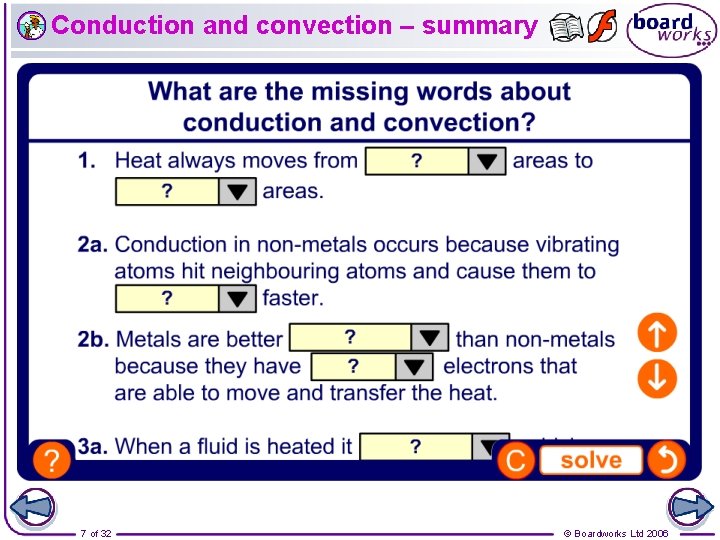
Conduction and convection – summary 7 of 32 © Boardworks Ltd 2006