You can no more win a war than


- Slides: 62
“You can no more win a war than you can win an earthquake. ” - Jeanette Rankin No piece of normal sized paper can be folded in half more than seven times.
World War II The Beginning of the End
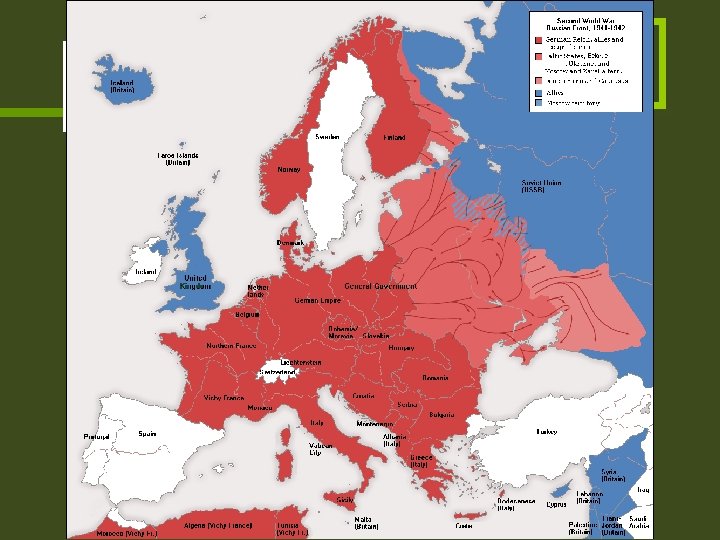
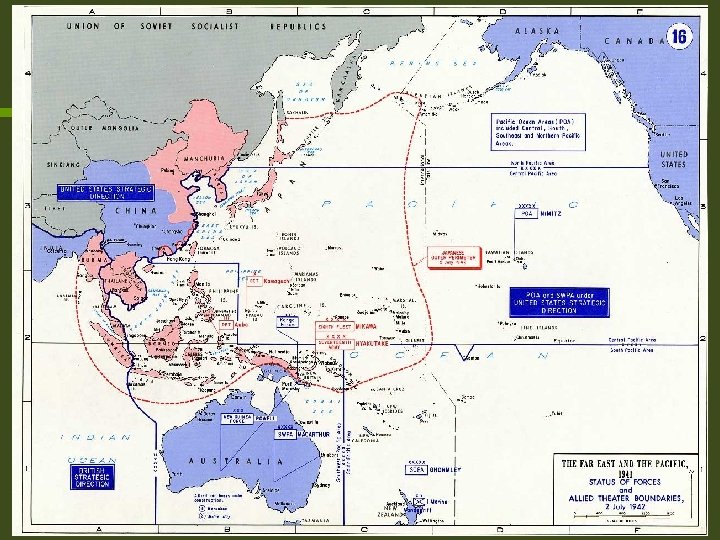
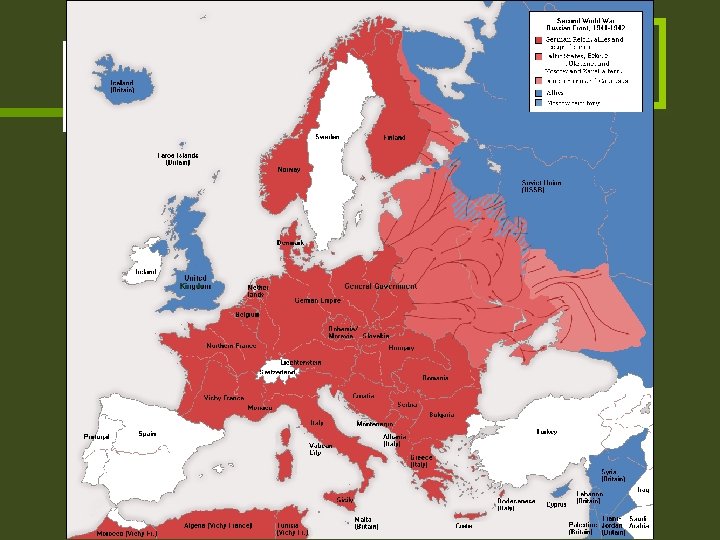
Early 1942 n n n In Early 1942, the War was not going well for the Allies: Pearl Harbor – Jap. gained control of the Pacific and were clear to invade Am. , Brit. , and Dutch colonies in that region. Germ. Field Marshal Erwin Rommel controlled a large area of North Africa. Germ. forces had the upper-hand in the S. U. However, by the end of 1942, the tide of the war began to turn in favor of the Allies.
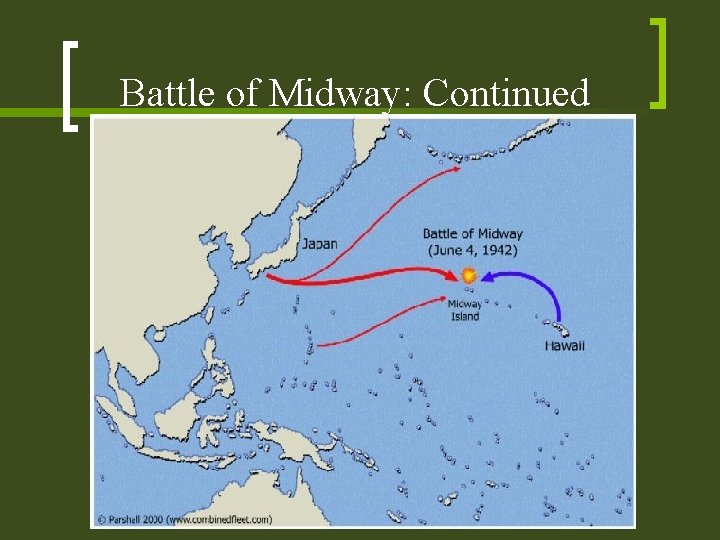
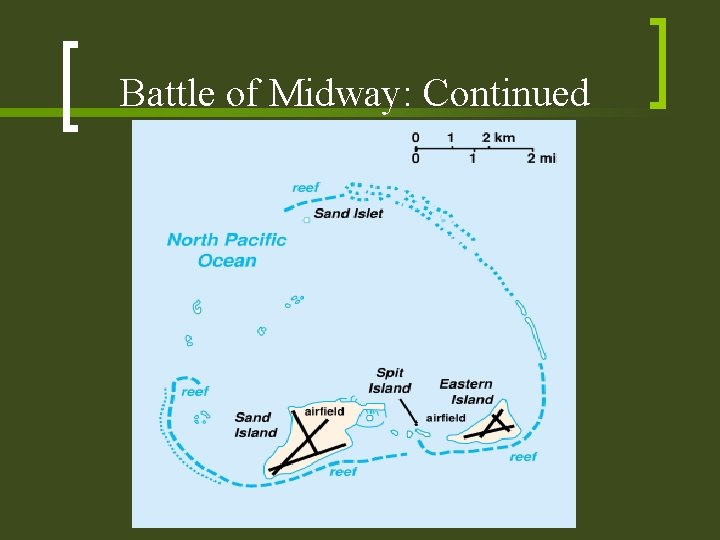
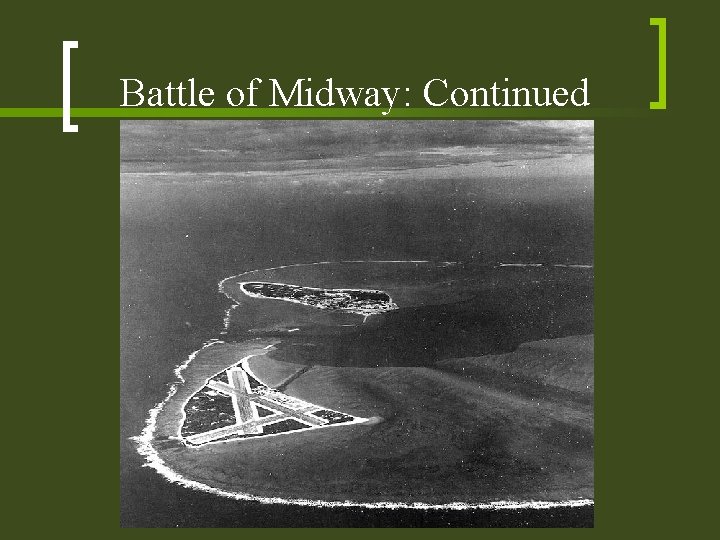
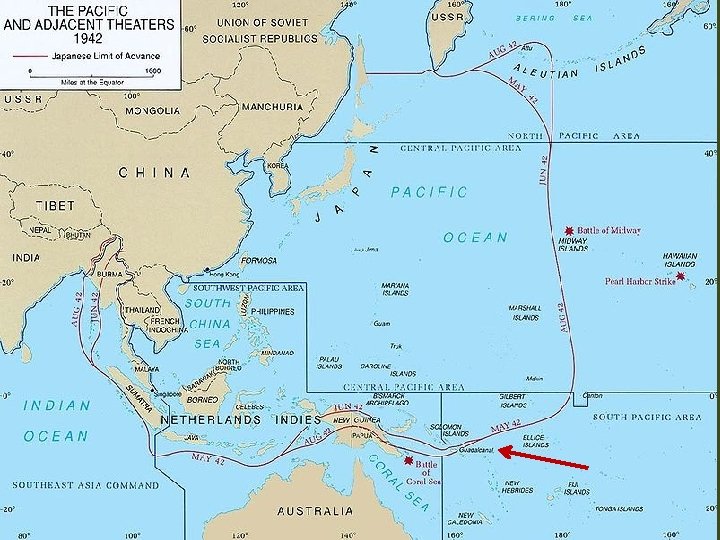
The Battle of Midway n June 4 -7, 1942: This battle was a decisive naval victory for Am. in which the Ams. defeated the Jap. navy and ended Jap. naval superiority in the Pacific. n After the Doolittle Raid on Tokyo in the wake of Pearl Harbor, the Jap. forces realized that the Jap. mainland was vulnerable to Allied attack from Am. Yamamoto reasoned that by sinking Am. 's aircraft carriers and seizing Midway, the only strategic island besides Hawaii in the East Pacific, would be the only means of nullifying this threat.
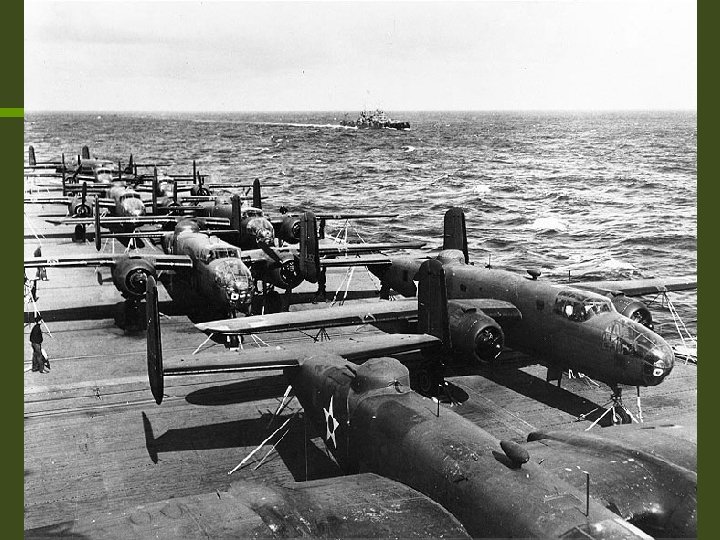
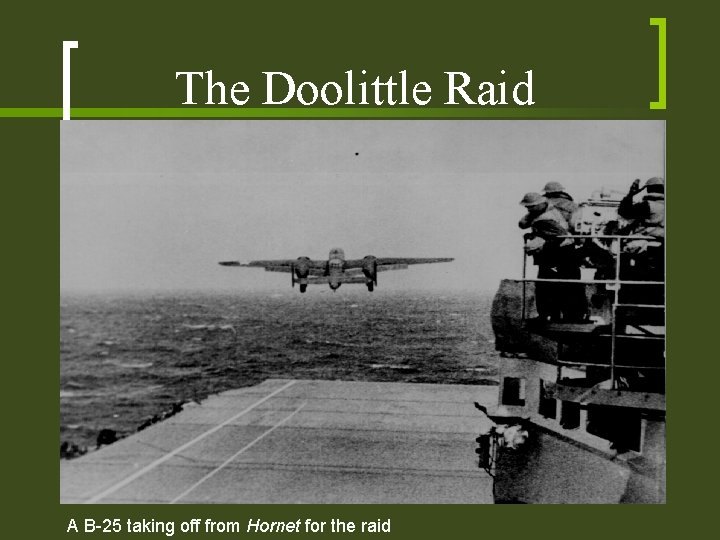
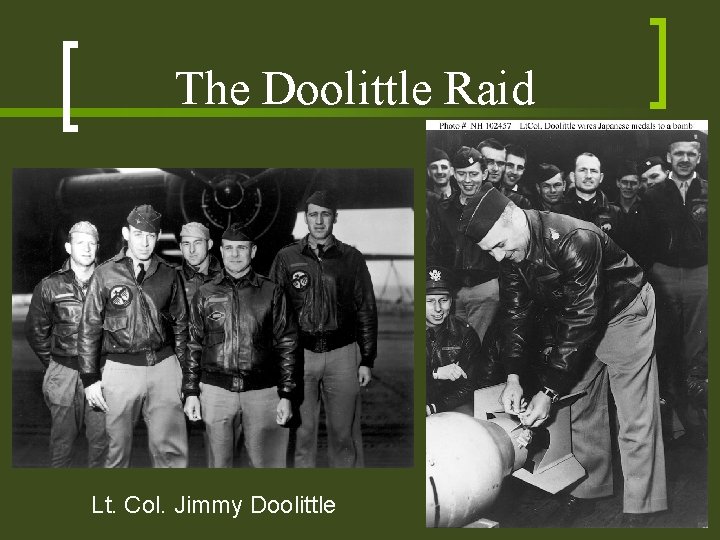
The Doolittle Raid n April 18, 1942: It was the first air raid by the U. S. to strike the Jap. home island of Honshū. n The mission was the only time in U. S. military history that U. S. Army Air Forces bombers were launched from a U. S. Navy aircraft carrier on a combat mission. n The plan of the Doolittle Raid was to launch B-25 bombers off an aircraft carrier, bomb Jap. targets, and land safely in China.
The Doolittle Raid A B-25 taking off from Hornet for the raid
The Doolittle Raid Lt. Col. Jimmy Doolittle
Battle of Midway: Continued n The Jap. chose Midway b/c they felt that after Pearl Harbor, the U. S. would strongly defend it (i. e. focusing their naval forces on this island). n Yamamoto wanted to draw the U. S. into a trap in which their navy could not recover from. Yamamoto dispersed his ships so that the size of the fleet could not be detected, however, this backfired on Yamamoto because the ships could not mutually support each other since they were so far apart.
Battle of Midway: Continued
Battle of Midway: Continued
Battle of Midway: Continued
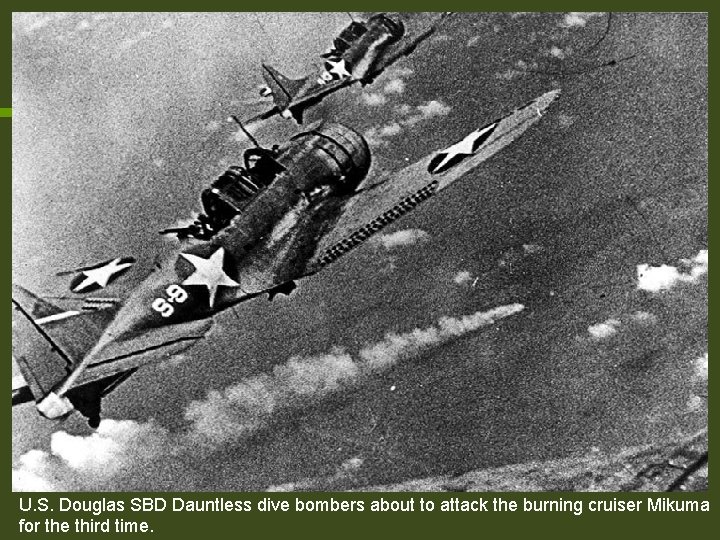
Battle of Midway: Continued n One more weakness that the Jap. forces had was that U. S. cryptologists broke the Jap. naval code; the U. S. navy knew when and where the attack would occur and what they were up against. n Despite being almost evenly matched and after a long (and mostly unorganized battle from both sides) the U. S. was victorious.
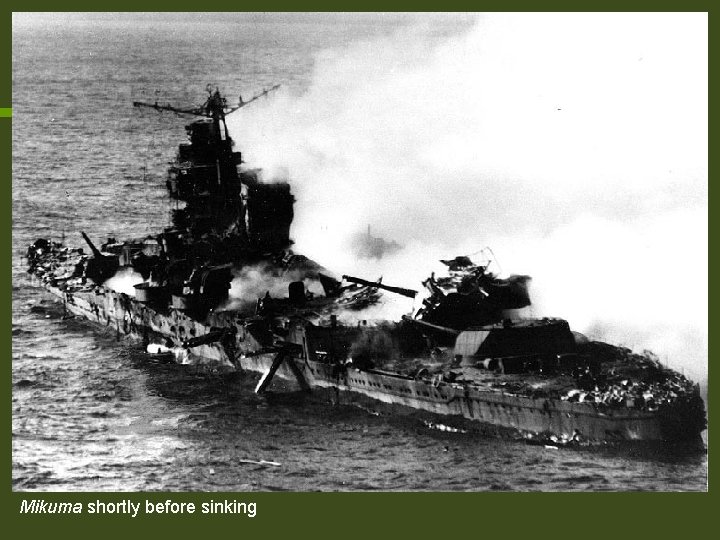
U. S. Douglas SBD Dauntless dive bombers about to attack the burning cruiser Mikuma for the third time.
Mikuma shortly before sinking
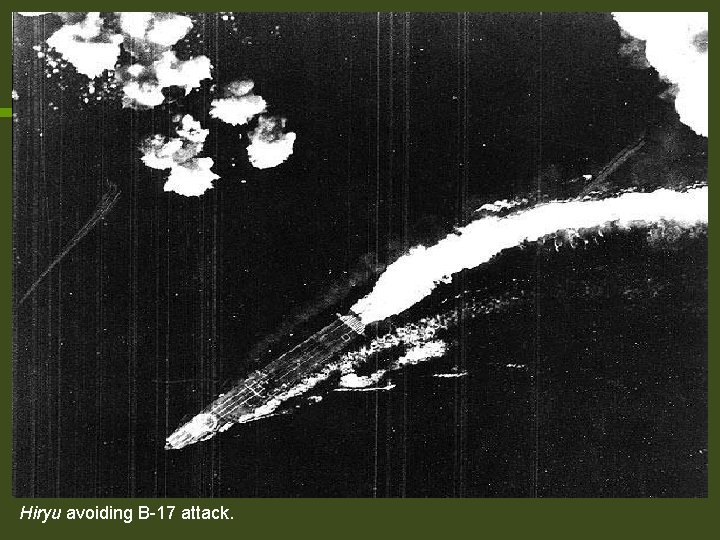
Hiryu avoiding B-17 attack.
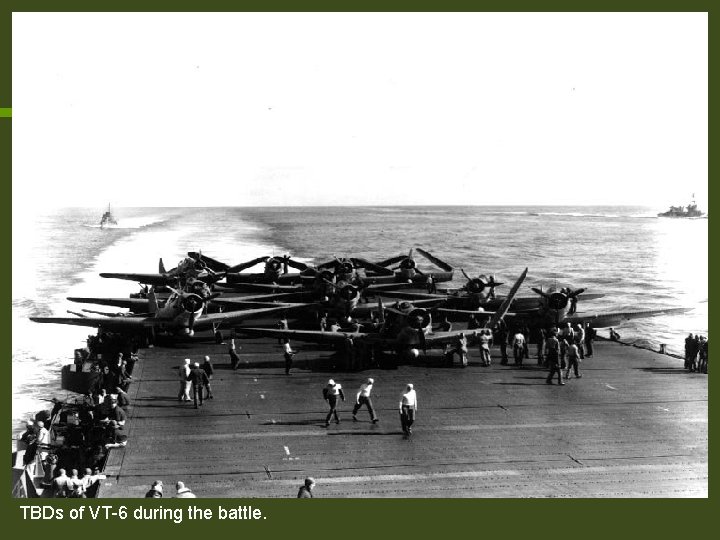
TBDs of VT-6 during the battle.
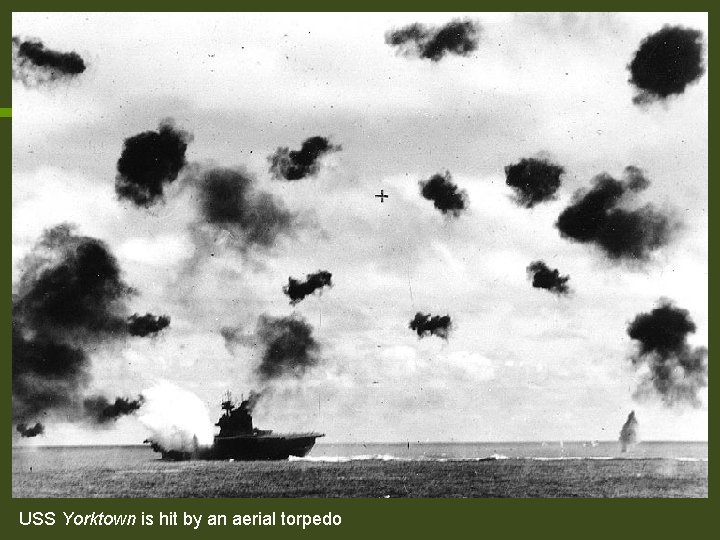
USS Yorktown is hit by an aerial torpedo
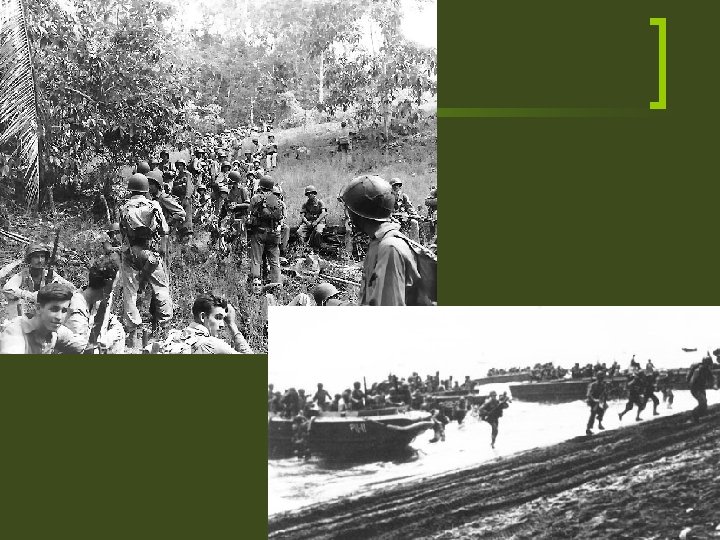
Aftermath of Midway n Japan's loss of 4 out of their 6 fleet carriers, plus a large number of their highly trained aircrews, stopped the expansion of the Japanese Empire in the Pacific. n It was considered to be the turning point of the Pacific: after Midway, the U. S. navy launched a successful attack on Guadalcanal and began to leapfrog their way north to Jap. U. S. strategy was to capture some islands and bypass others. Those bypassed would be cut off from supplies and made to “wither on the vine. ”
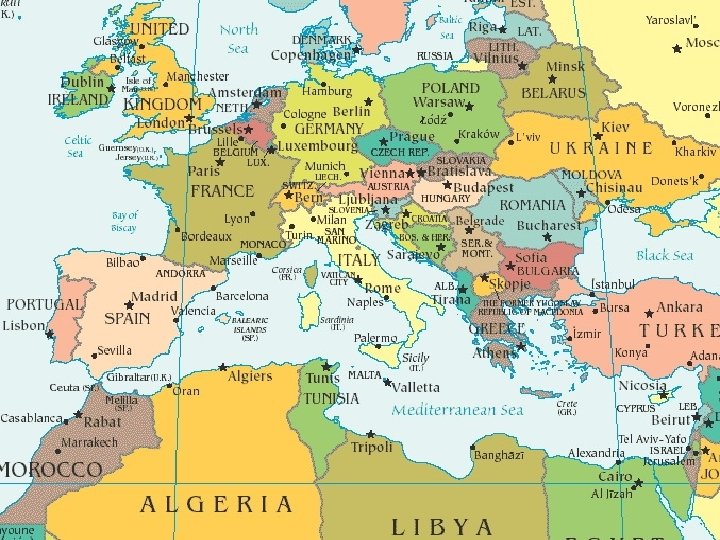
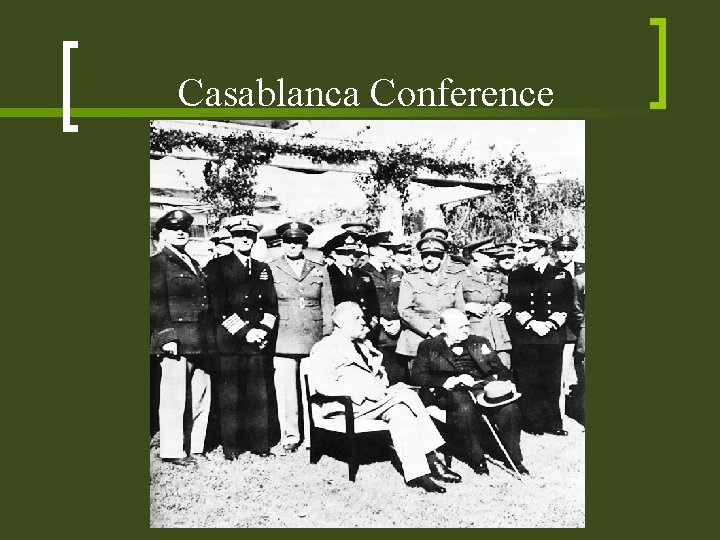
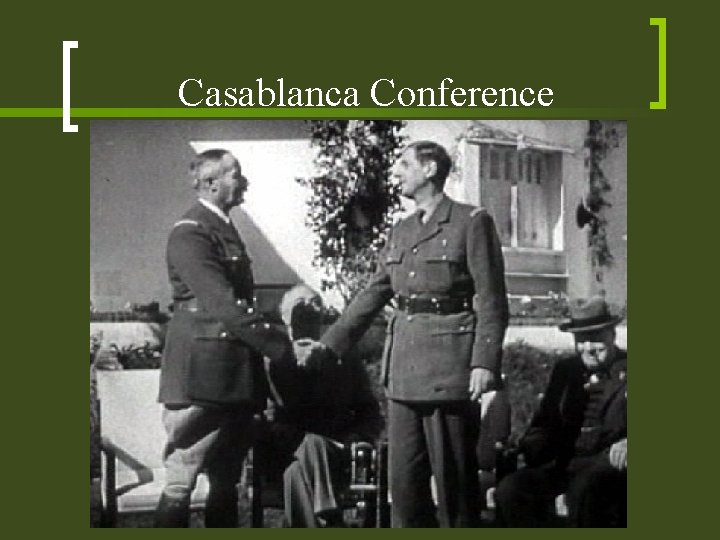
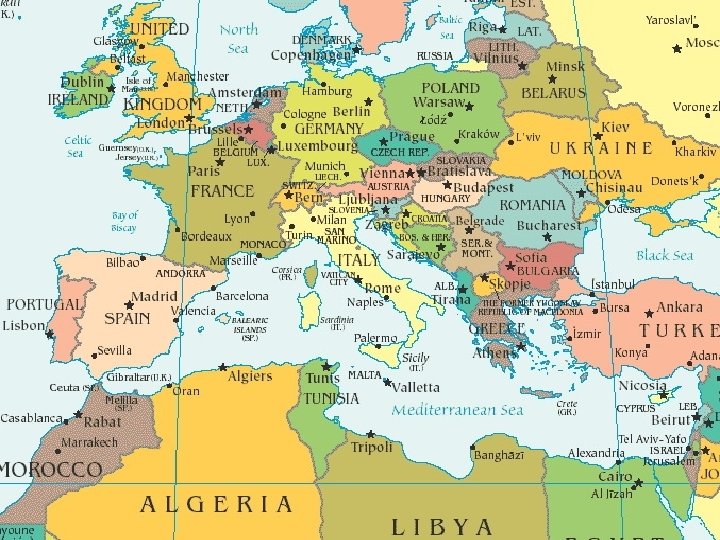
Casablanca Conference n Jan. 14 -24, 1943: Casablanca Conference – held in Casablanca, Morocco to plan the European strategy of the Allies (FDR, Churchill, de Gaulle, Giraud, but no Stalin). n The "Casablanca Declaration" made at the conference called for the Allies to seek the unconditional surrender of the Axis Powers. Also called for were Allied aid to the S. U. , the invasion of Sicily and Italy, and the recognition of joint leadership of the French by de Gaulle and Giraud.
Casablanca Conference
Casablanca Conference
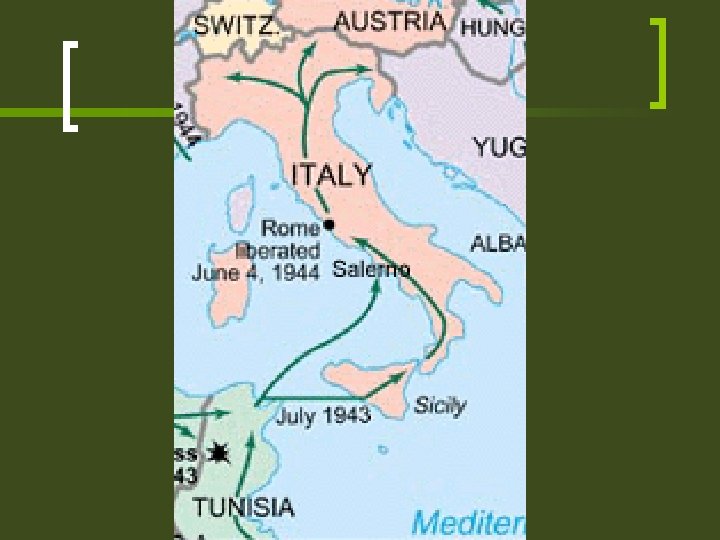
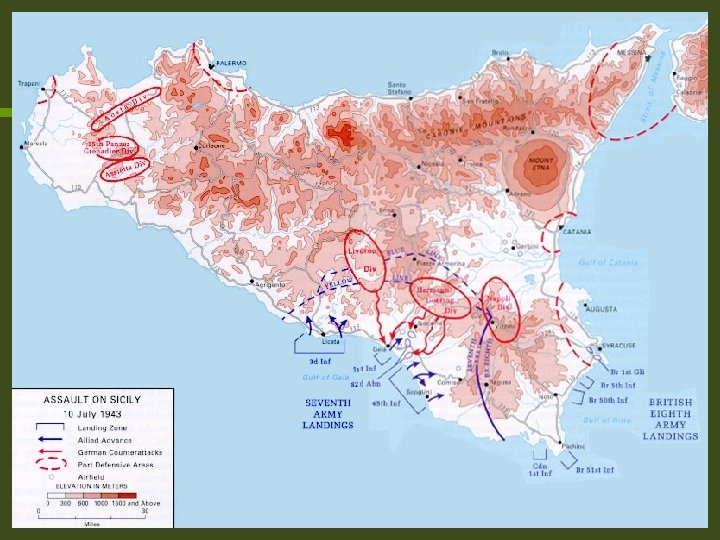
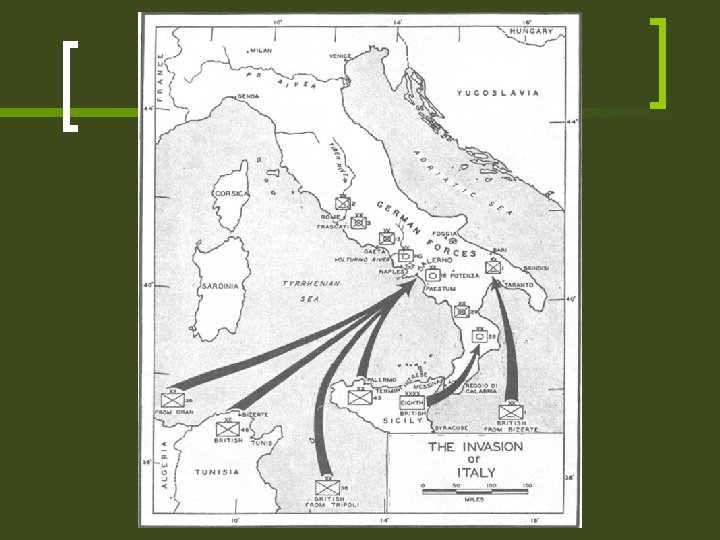
The Invasion of Italy n n July 9 – Aug. 17: 1943: Operation Husky – under the command of General Eisenhower: The Allies launched a successful combined air and sea attack. Axis air and naval forces were driven from the island, the Mediterranean Sea lanes were opened, and Mussolini had been toppled from power (July 25, King Victor Emmanuel III fired Mussolini and had him arrested). It opened the way for Allied invasion of Italy.
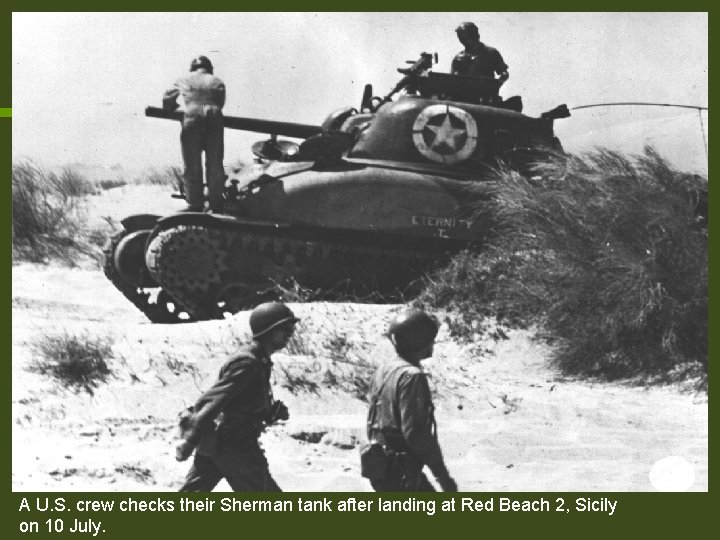
A U. S. crew checks their Sherman tank after landing at Red Beach 2, Sicily on 10 July.
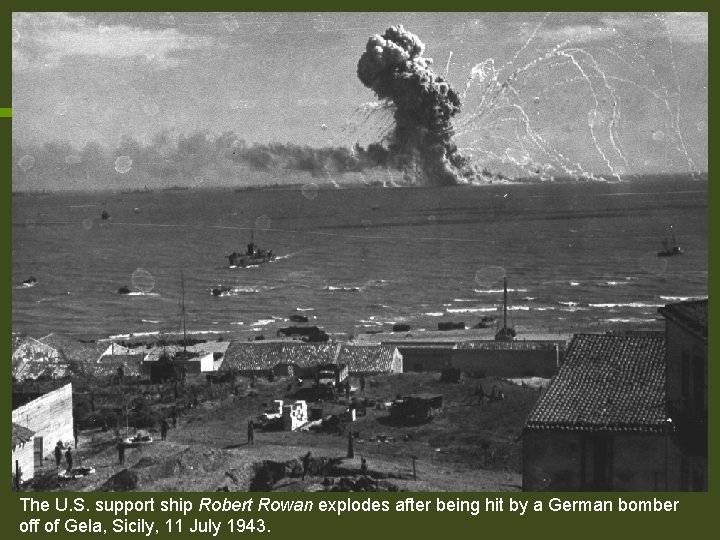
The U. S. support ship Robert Rowan explodes after being hit by a German bomber off of Gela, Sicily, 11 July 1943.
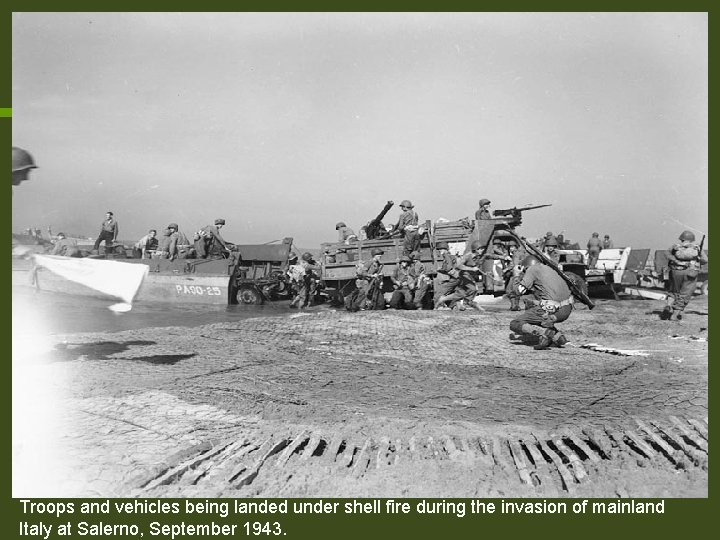
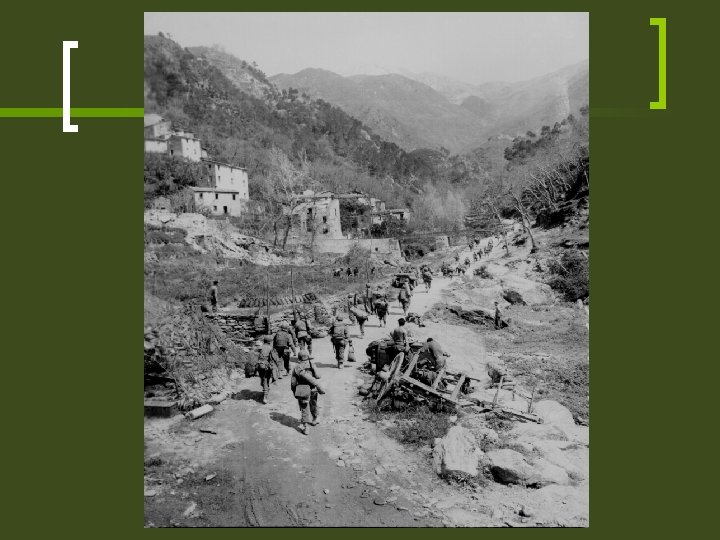
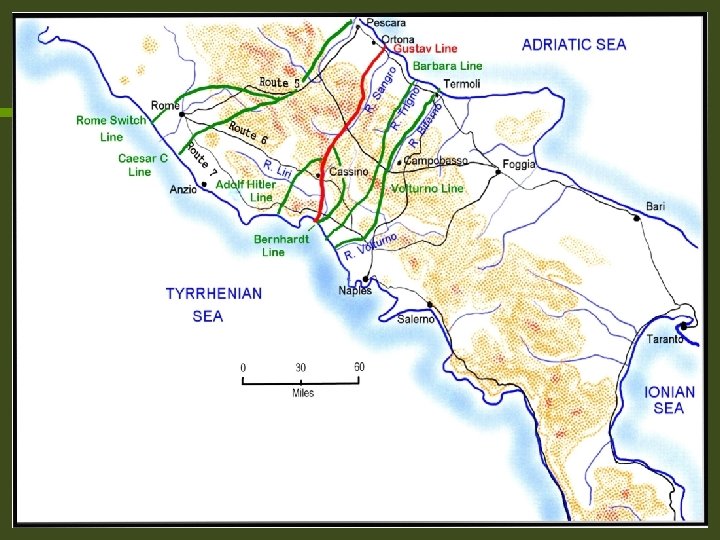
The Invasion of Italy n n n Sept. 2: The new prime minister, Marshal Pietro Badoglio, dissolves the Fascist party and signs a secret act of surrender with the Allies. Sept. 5: Germs. occupy Rome and force Badoglio and the king S. ; Mussolini is rescued and is given control of N. Italy. Sept. 3 – Sept. 16: In Operation Avalanche, the main Allied fighting forces land around Salerno (Sept. 9) Sept. 1943 – Early months of 1944: The Allies advance N. ward through heavy Germ. resistance. June 4, 1944: Allies enter, occupy, and liberate Rome.
Troops and vehicles being landed under shell fire during the invasion of mainland Italy at Salerno, September 1943.
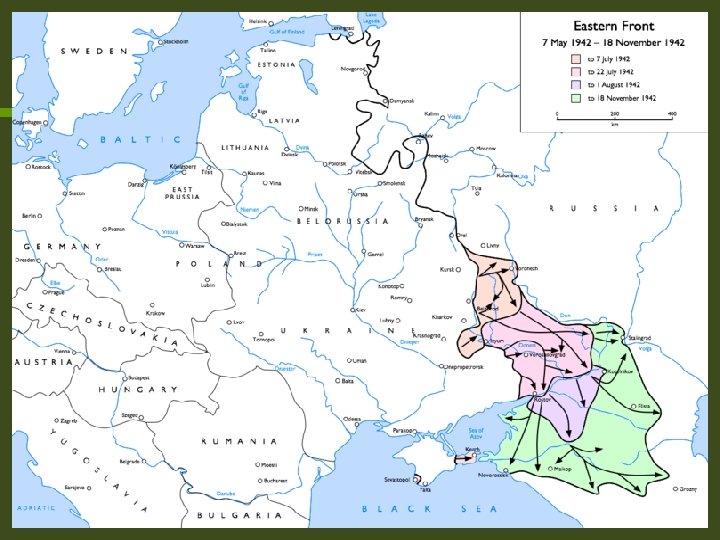
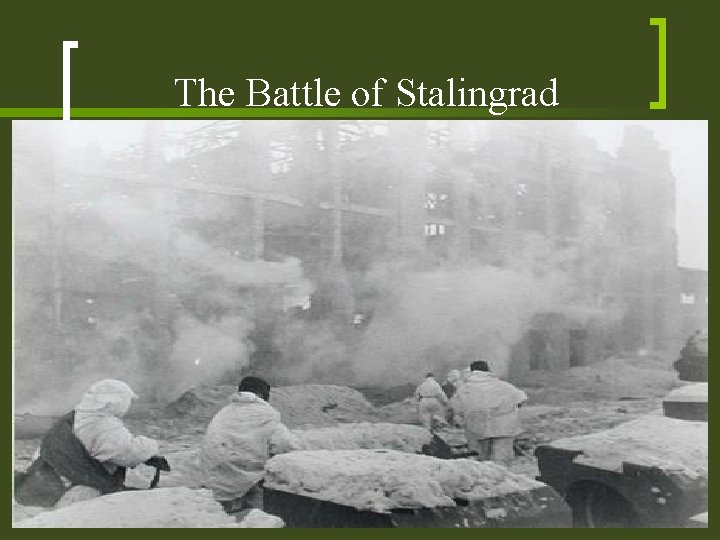
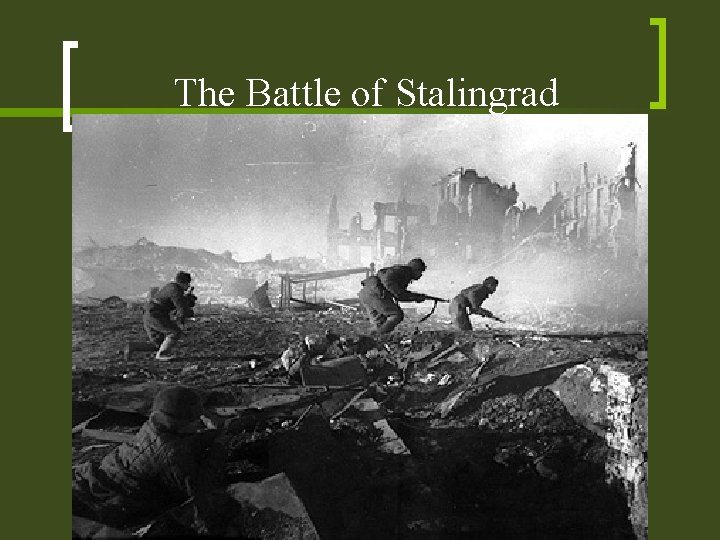
The Battle of Stalingrad n In July 1942, the military situation was desperate for the S. U. n To relieve some of the pressure on his country, Stalin asked Churchill to open up a 2 nd front on the West. Unfortunately for Stalin, the allies were not ready to open up a second front. n Aug. 22, 1942: Germ. attacked the city of Stalingrad.
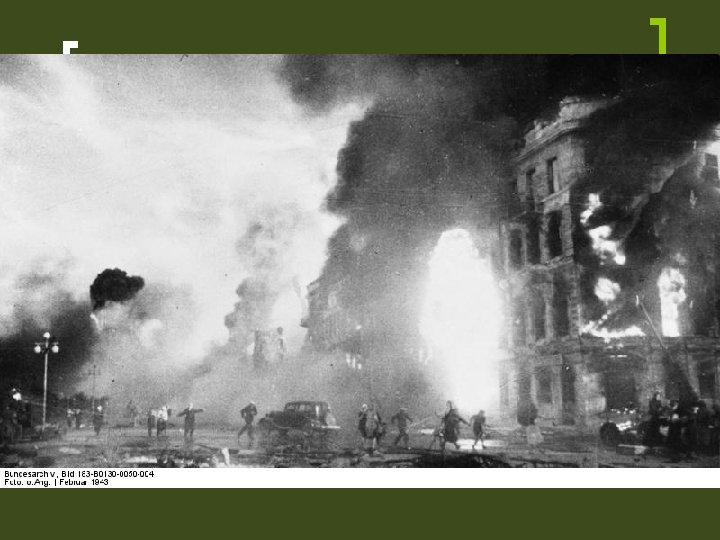
The Battle of Stalingrad n n n The city of Stalingrad was a major industrial center and named after Stalin knew that should this city fall into Germ. hands it would strike a blow to the Soviet morale. Stalin ordered his troops to protect the city at all costs. Aug. 22 -23: The Luftwaffe bombs Stalingrad destroying 80% of the city and killing thousands of civilians.
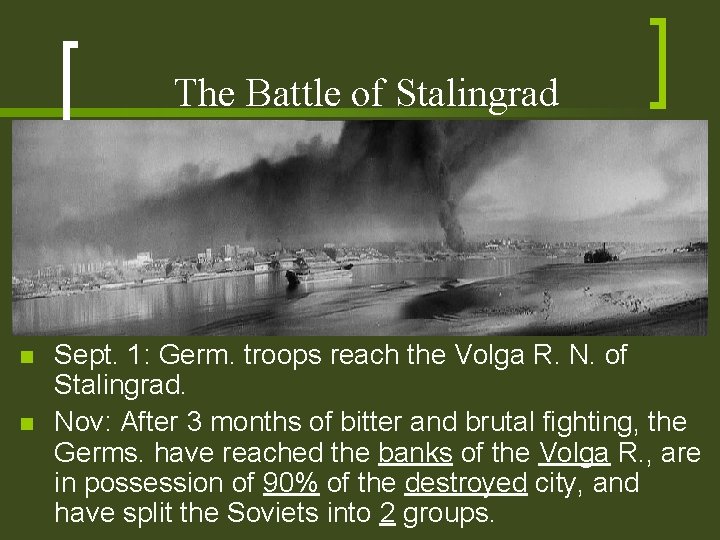
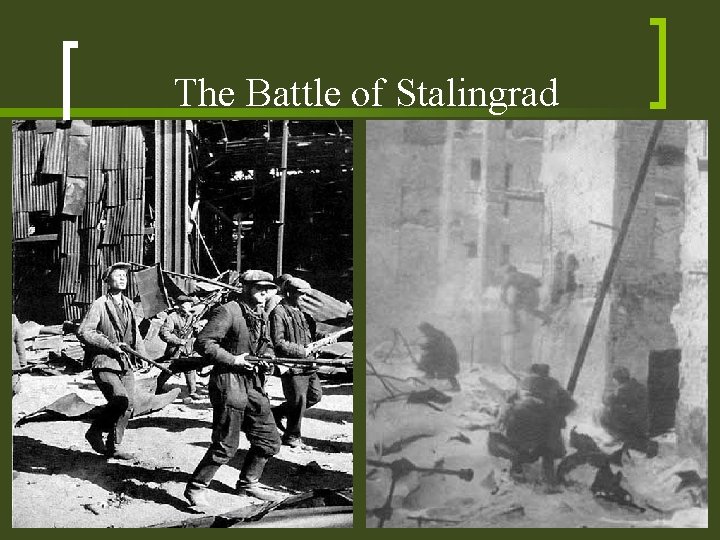
The Battle of Stalingrad n n Sept. 1: Germ. troops reach the Volga R. N. of Stalingrad. Nov: After 3 months of bitter and brutal fighting, the Germs. have reached the banks of the Volga R. , are in possession of 90% of the destroyed city, and have split the Soviets into 2 groups.
The Battle of Stalingrad
The Battle of Stalingrad
The Battle of Stalingrad
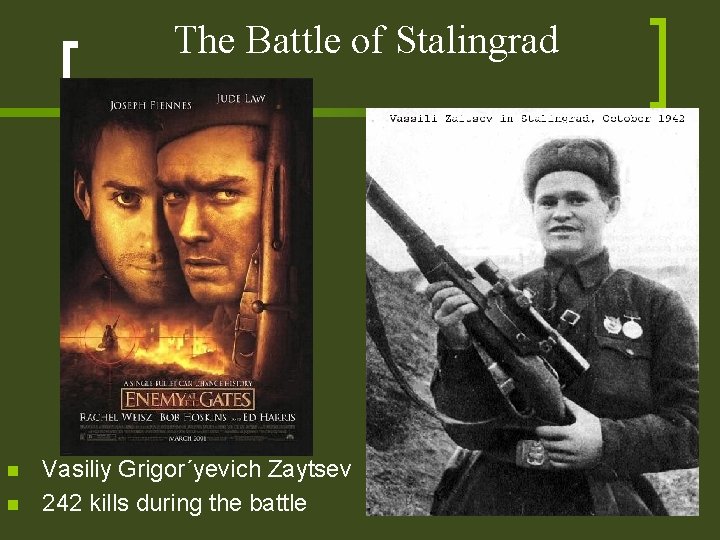
The Battle of Stalingrad n n Vasiliy Grigor´yevich Zaytsev 242 kills during the battle
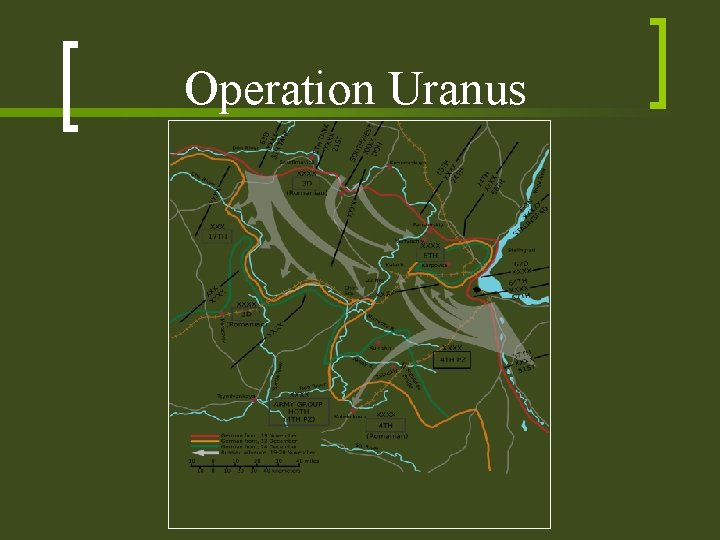
The Battle of Stalingrad: The Soviet Counter-Offensive n n n Nov. 19: The Soviets launch Operation Uranus – a double envelopment of the Germ. army striking from the N. and the S. During this operation, the Soviets destroyed the weak Romanian forces protecting the N. and S. flanks. Nov. 21: The Soviet forces meet at Kalach, effectively surrounding and trapping the Germ. Sixth Army in Stalingrad.
Operation Uranus
The Battle of Stalingrad: The Soviet Counter-Offensive n Nov. 22: 250, 000 Germ. troops are trapped in Stalingrad, 50, 000 are trapped outside. The situation for Germ. is bleak, but Hitler orders no surrender and no retreat. n Dec. 1942 – Jan. 1943: The Soviets began to make their pocket around Stalingrad and the Germ. Sixth Army smaller and smaller. n Jan. 25, 1943: The Germs. have no air supply (lost airfields to shrinking circle; Luftwaffe not effective anyway), starving, and are running out of ammunition and fuel, but they still are fighting.
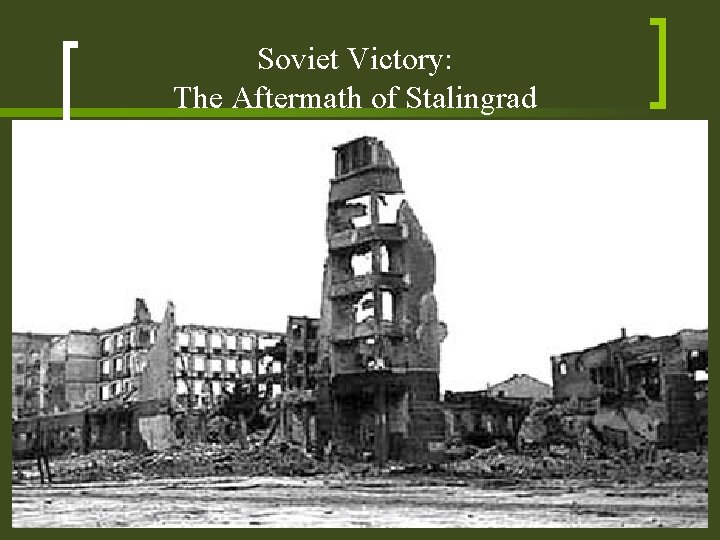
Soviet Victory: The Aftermath of Stalingrad
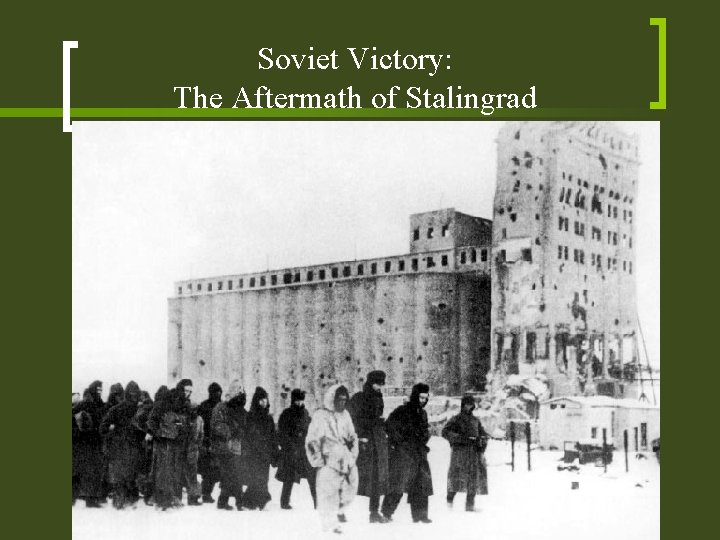
Soviet Victory: The Aftermath of Stalingrad
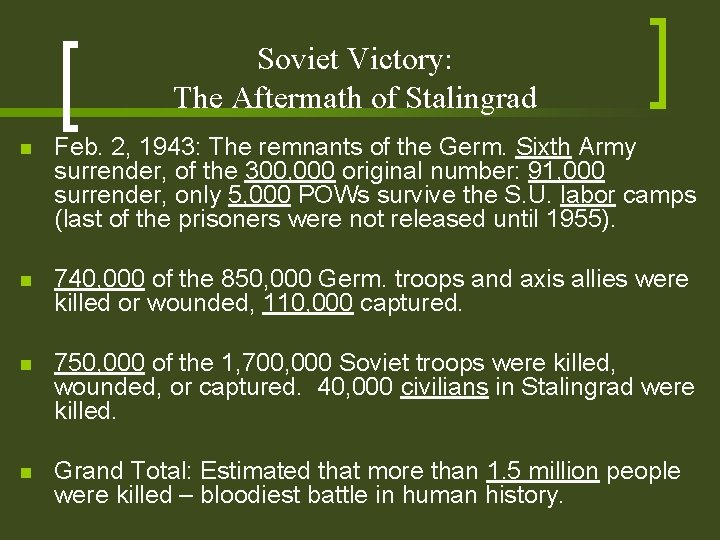
Soviet Victory: The Aftermath of Stalingrad n Feb. 2, 1943: The remnants of the Germ. Sixth Army surrender, of the 300, 000 original number: 91, 000 surrender, only 5, 000 POWs survive the S. U. labor camps (last of the prisoners were not released until 1955). n 740, 000 of the 850, 000 Germ. troops and axis allies were killed or wounded, 110, 000 captured. n 750, 000 of the 1, 700, 000 Soviet troops were killed, wounded, or captured. 40, 000 civilians in Stalingrad were killed. n Grand Total: Estimated that more than 1. 5 million people were killed – bloodiest battle in human history.
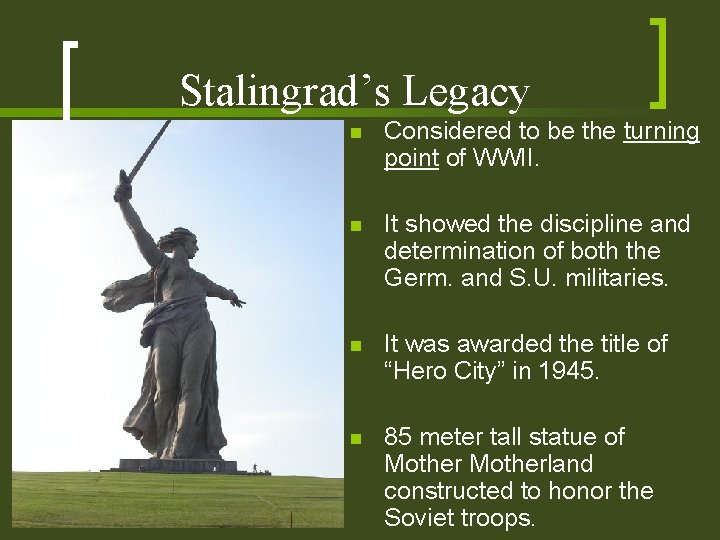
Stalingrad’s Legacy n Considered to be the turning point of WWII. n It showed the discipline and determination of both the Germ. and S. U. militaries. n It was awarded the title of “Hero City” in 1945. n 85 meter tall statue of Motherland constructed to honor the Soviet troops.