The Gender Dimension in Agricultural Research Examples of
- Slides: 30
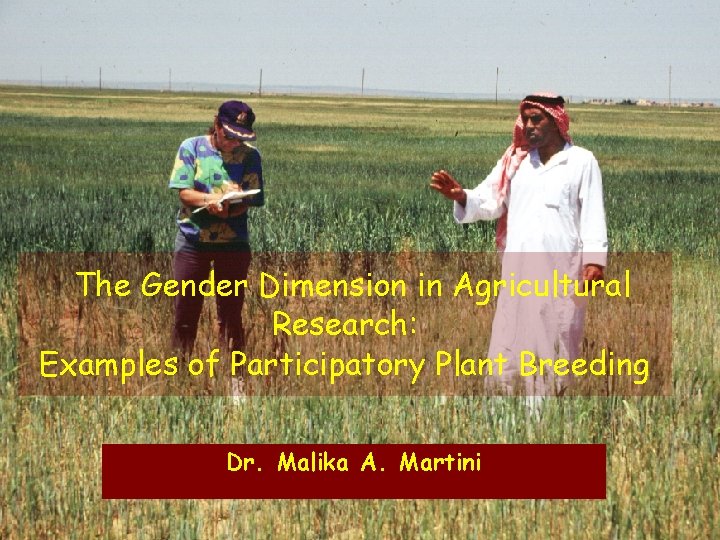
The Gender Dimension in Agricultural Research: Examples of Participatory Plant Breeding Dr. Malika A. Martini
What is participatory research? It involves the approaches that involve clients in the process of inquiry
The Problem Must Come Before The Solution Adopting a User Perspective increases the efficiency, effectiveness of agricultural research through better targeting and impact Ag. Res. broadened from a focus on biological components to understanding the user perspective
Appropriateness of a technology is often Gender Specific, based on the social context of who within the household actually uses it Agricultural research occurs in a social context and requires looking at the different roles performed by men and women. These social distinctions are what we call gender differences
What is the difference between Gender and Women/Men?
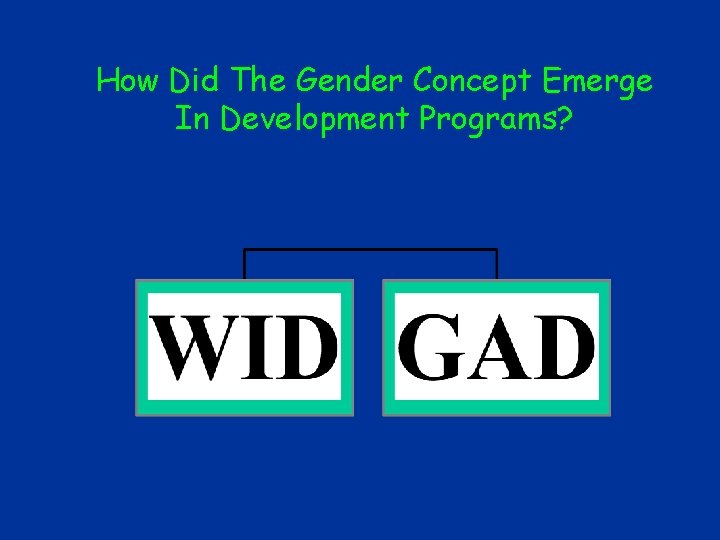
How Did The Gender Concept Emerge In Development Programs?
Gender Analysis It is a system for analyzing gender roles and intra- and inter--household dynamics within farming systems and applying that analysis to decisions about agricultural research and development activities
Why Do We Need To Do Gender Analysis? Efficiency Equity from Ag. Res. benefits Relevance – identifies most relevant participants in res. Ensures Social Sustainability of Development
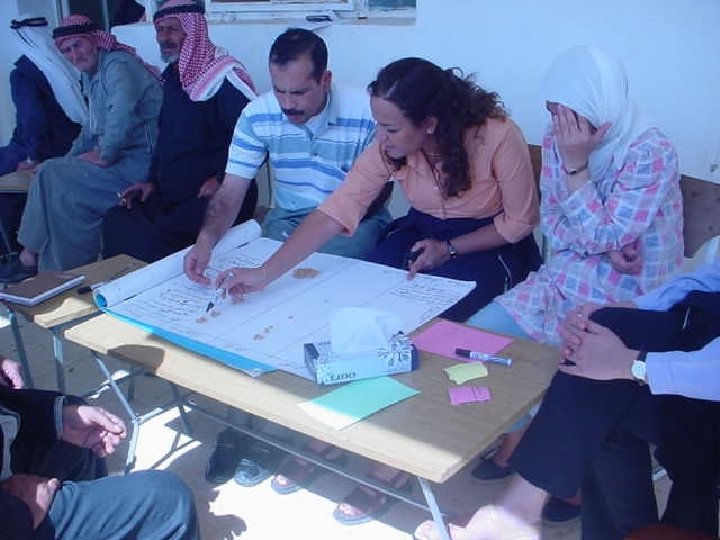
Participatory research PA are usually used with groups Usually consensus woven by the most powerful group Voices, knowledge, and choices of other members of the community are not heard This may create losses in research efficiency – needs and preferences of silent groups are not addressed at all
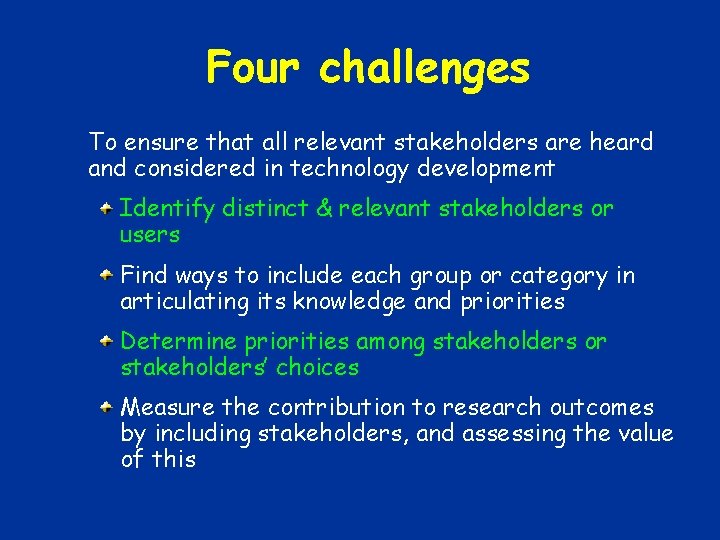
Four challenges To ensure that all relevant stakeholders are heard and considered in technology development Identify distinct & relevant stakeholders or users Find ways to include each group or category in articulating its knowledge and priorities Determine priorities among stakeholders or stakeholders’ choices Measure the contribution to research outcomes by including stakeholders, and assessing the value of this
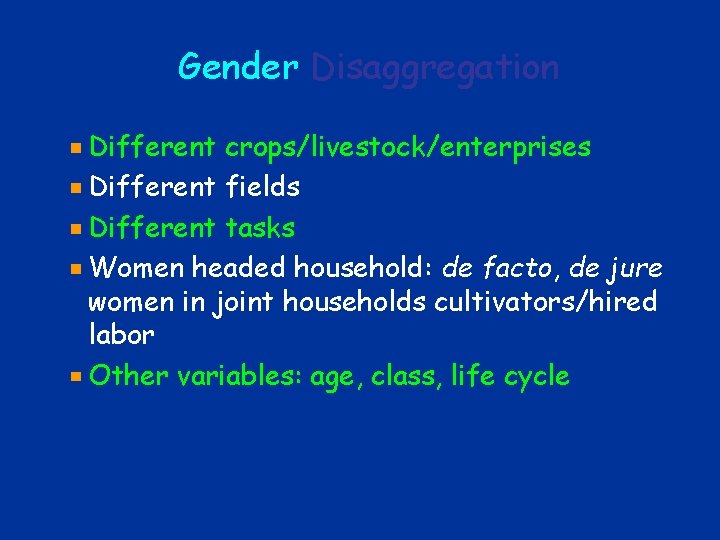
Gender Disaggregation Different crops/livestock/enterprises Different fields Different tasks Women headed household: de facto, de jure women in joint households cultivators/hired labor Other variables: age, class, life cycle
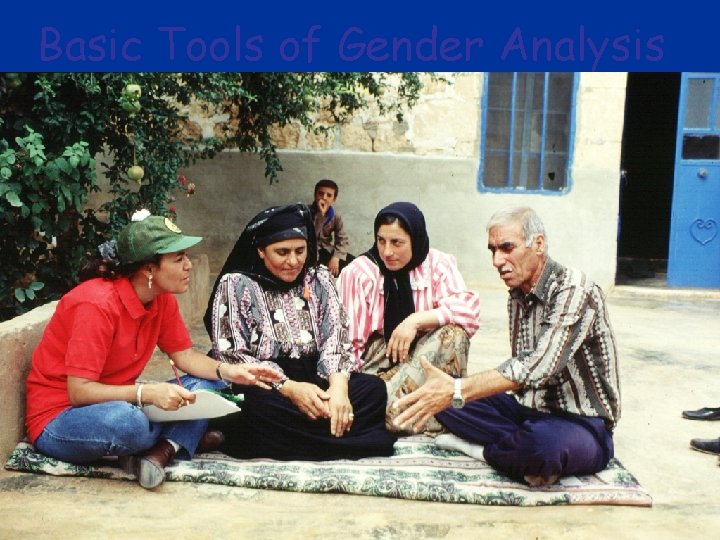
Basic Tools of Gender Analysis
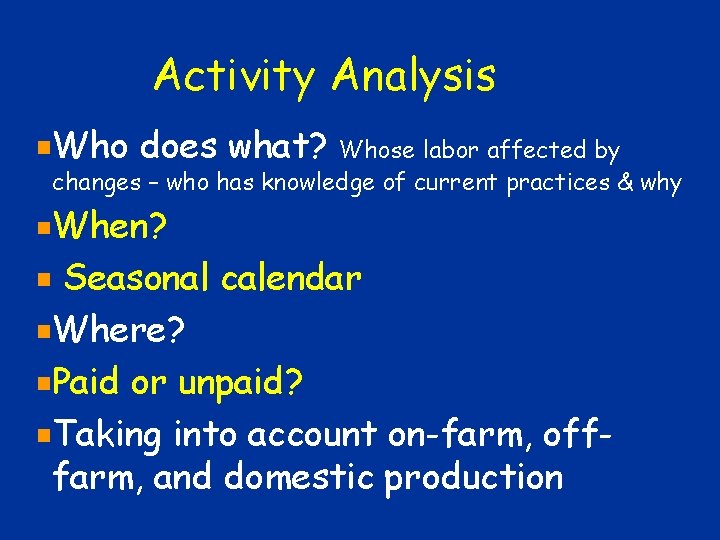
Activity Analysis Who does what? Whose labor affected by changes – who has knowledge of current practices & why When? Seasonal calendar Where? Paid or unpaid? Taking into account on-farm, offfarm, and domestic production
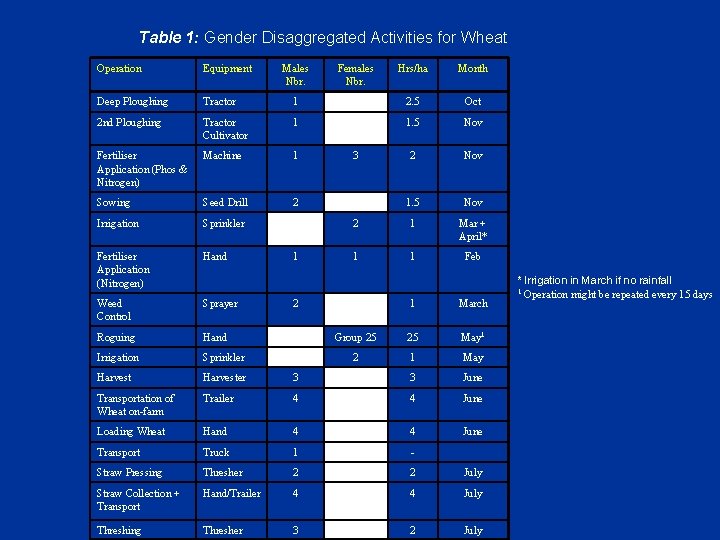
Table 1: Gender Disaggregated Activities for Wheat Operation Equipment Males Nbr. Females Nbr. Hrs/ha Month Deep Ploughing Tractor 1 - 2. 5 Oct 2 nd Ploughing Tractor Cultivator 1 - 1. 5 Nov Fertiliser Application (Phos & Nitrogen) Machine 1 3 2 Nov Sowing Seed Drill 2 - 1. 5 Nov Irrigation Sprinkler - 2 1 Mar + April* Fertiliser Application (Nitrogen) Hand 1 1 1 Feb Weed Control Sprayer 2 - 1 March Roguing Hand - Group 25 25 May 1 Irrigation Sprinkler - 2 1 May Harvester 3 - 3 June Transportation of Wheat on-farm Trailer 4 - 4 June Loading Wheat Hand 4 - 4 June Transport Truck 1 - - Straw Pressing Thresher 2 - 2 July Straw Collection + Transport Hand/Trailer 4 - 4 July Threshing Thresher 3 - 2 July * Irrigation in March if no rainfall 1 Operation might be repeated every 15 days
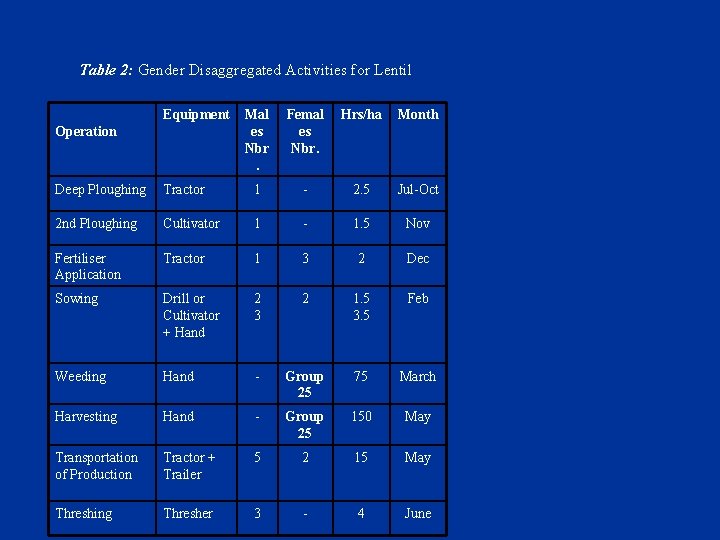
Table 2: Gender Disaggregated Activities for Lentil Equipment Operation Mal es Nbr. Femal es Nbr. Hrs/ha Month Deep Ploughing Tractor 1 - 2. 5 Jul-Oct 2 nd Ploughing Cultivator 1 - 1. 5 Nov Fertiliser Application Tractor 1 3 2 Dec Sowing Drill or Cultivator + Hand 2 3 2 1. 5 3. 5 Feb Weeding Hand - Group 25 75 March Harvesting Hand - Group 25 150 May Transportation of Production Tractor + Trailer 5 2 15 May Threshing Thresher 3 - 4 June
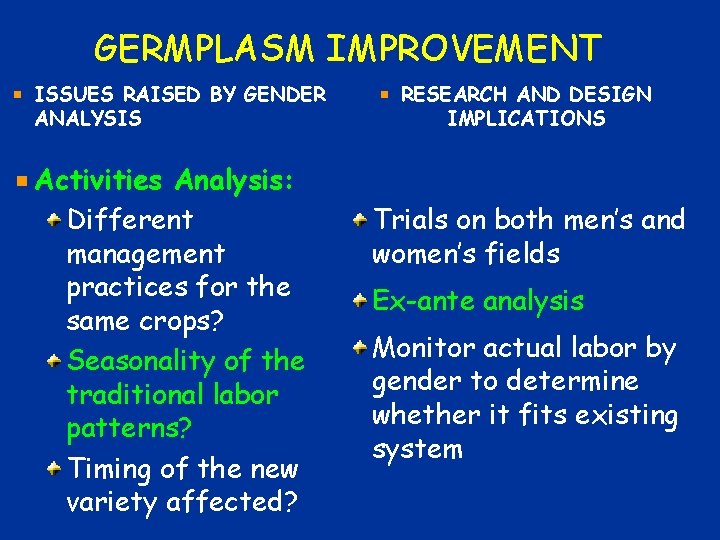
GERMPLASM IMPROVEMENT ISSUES RAISED BY GENDER ANALYSIS Activities Analysis: Different management practices for the same crops? Seasonality of the traditional labor patterns? Timing of the new variety affected? RESEARCH AND DESIGN IMPLICATIONS Trials on both men’s and women’s fields Ex-ante analysis Monitor actual labor by gender to determine whether it fits existing system
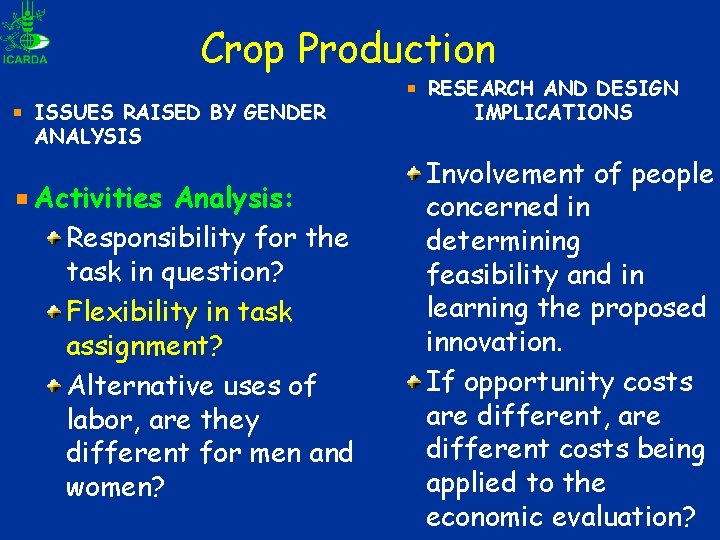
Crop Production ISSUES RAISED BY GENDER ANALYSIS Activities Analysis: Responsibility for the task in question? Flexibility in task assignment? Alternative uses of labor, are they different for men and women? RESEARCH AND DESIGN IMPLICATIONS Involvement of people concerned in determining feasibility and in learning the proposed innovation. If opportunity costs are different, are different costs being applied to the economic evaluation?
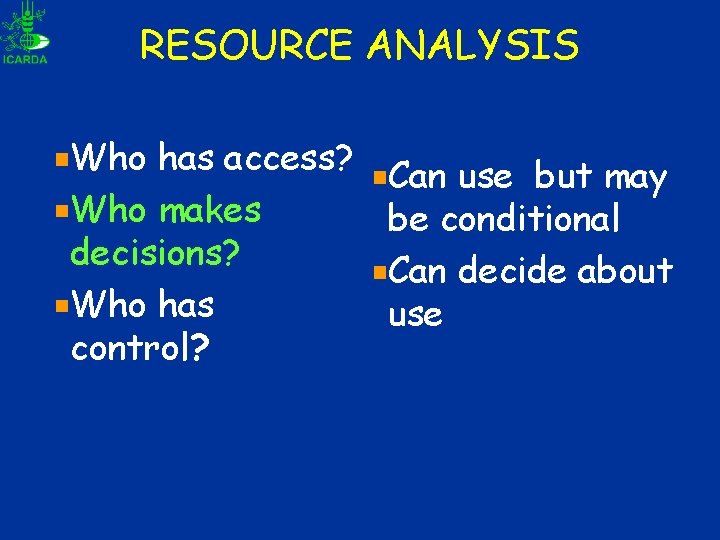
RESOURCE ANALYSIS Who has access? Who makes decisions? Who has control? Can use but may be conditional Can decide about use
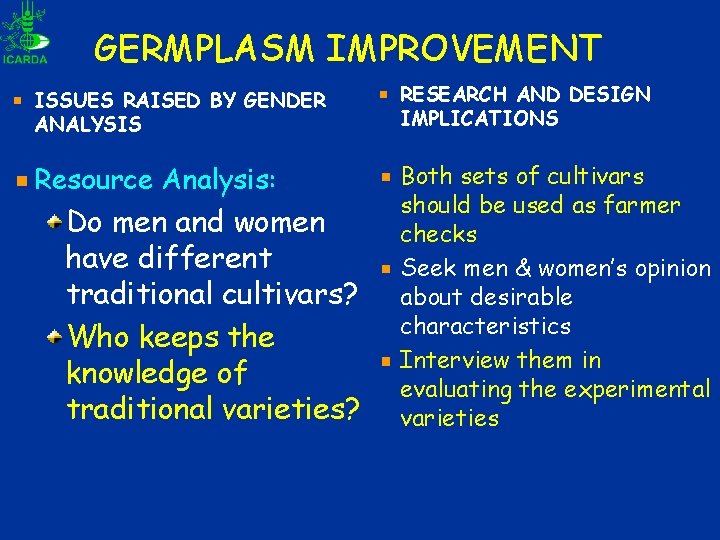
GERMPLASM IMPROVEMENT ISSUES RAISED BY GENDER ANALYSIS RESEARCH AND DESIGN IMPLICATIONS Resource Analysis: Both sets of cultivars should be used as farmer checks Seek men & women’s opinion about desirable characteristics Interview them in evaluating the experimental varieties Do men and women have different traditional cultivars? Who keeps the knowledge of traditional varieties?
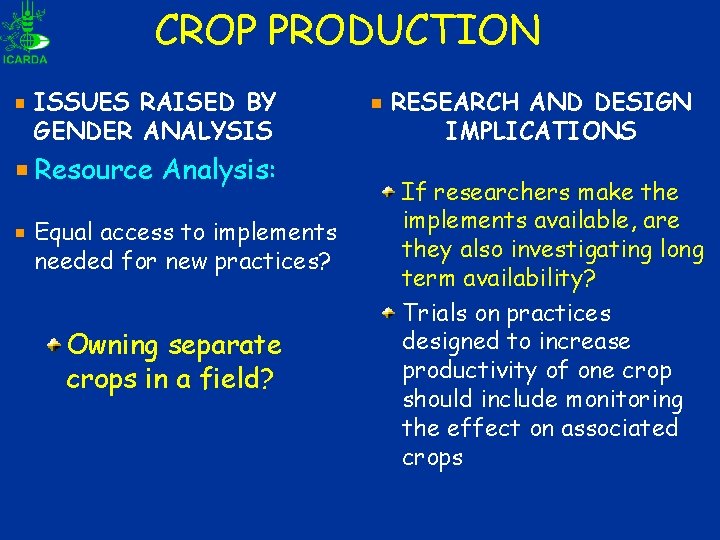
CROP PRODUCTION ISSUES RAISED BY GENDER ANALYSIS Resource Analysis: Equal access to implements needed for new practices? Owning separate crops in a field? RESEARCH AND DESIGN IMPLICATIONS If researchers make the implements available, are they also investigating long term availability? Trials on practices designed to increase productivity of one crop should include monitoring the effect on associated crops
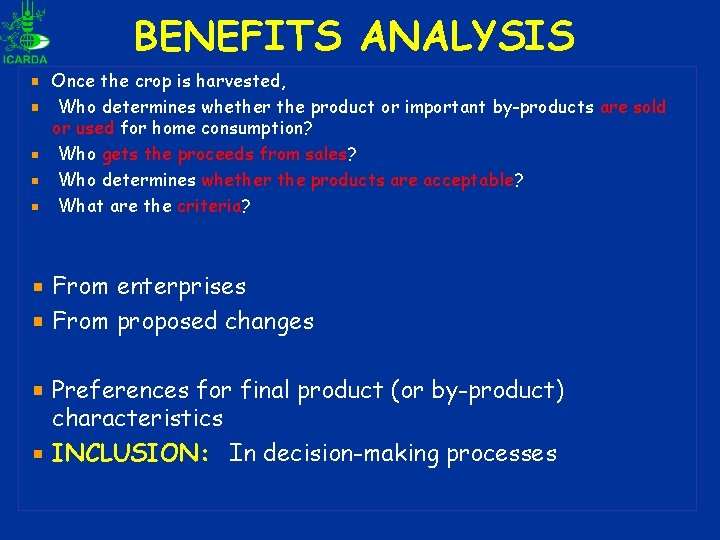
BENEFITS ANALYSIS Once the crop is harvested, Who determines whether the product or important by-products are sold or used for home consumption? Who gets the proceeds from sales? Who determines whether the products are acceptable? What are the criteria? From enterprises From proposed changes Preferences for final product (or by-product) characteristics INCLUSION: In decision-making processes
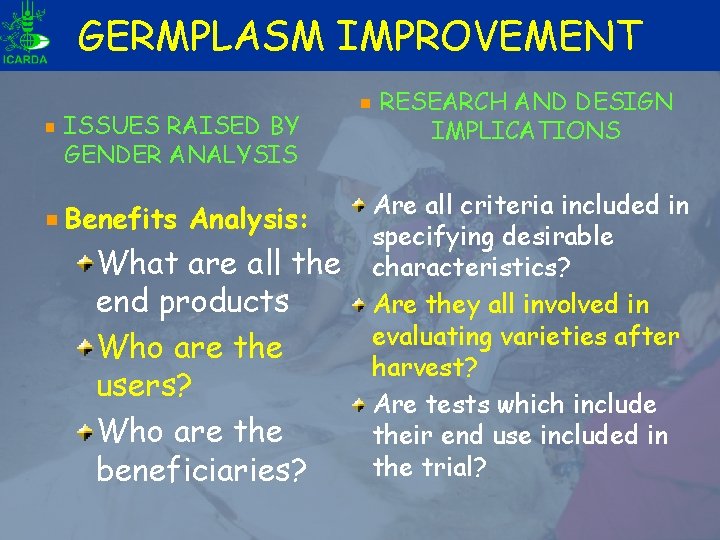
GERMPLASM IMPROVEMENT ISSUES RAISED BY GENDER ANALYSIS Benefits Analysis: What are all the end products Who are the users? Who are the beneficiaries? RESEARCH AND DESIGN IMPLICATIONS Are all criteria included in specifying desirable characteristics? Are they all involved in evaluating varieties after harvest? Are tests which include their end use included in the trial?
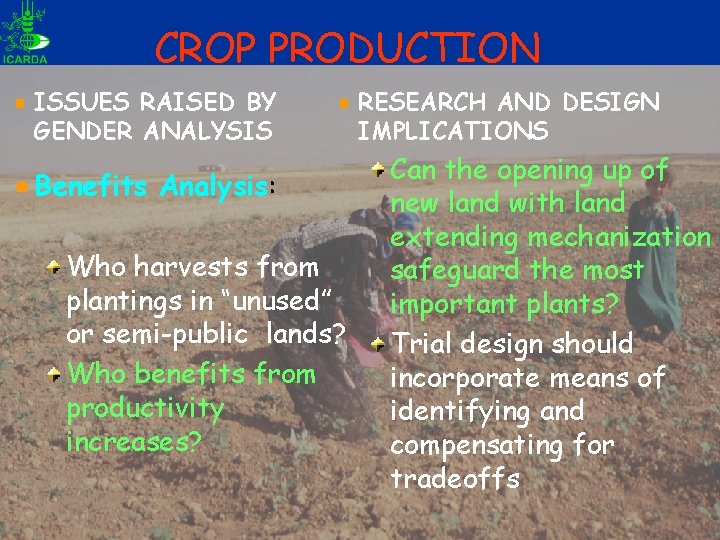
CROP PRODUCTION ISSUES RAISED BY GENDER ANALYSIS Benefits Analysis: Who harvests from plantings in “unused” or semi-public lands? Who benefits from productivity increases? RESEARCH AND DESIGN IMPLICATIONS Can the opening up of new land with land extending mechanization safeguard the most important plants? Trial design should incorporate means of identifying and compensating for tradeoffs
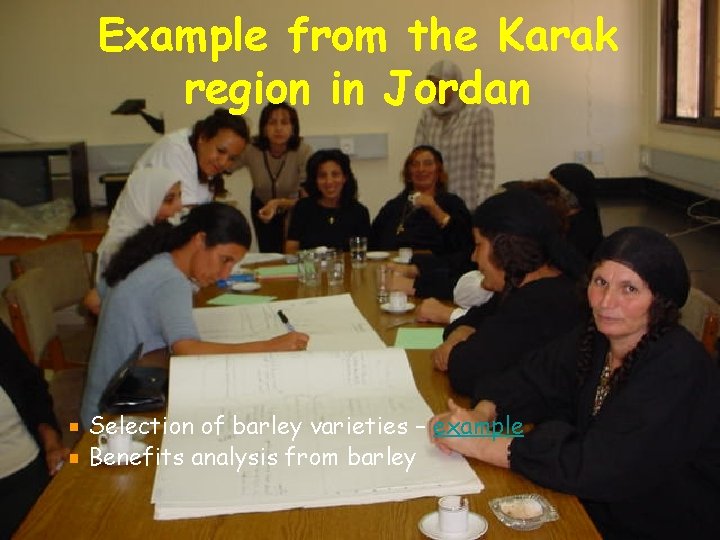
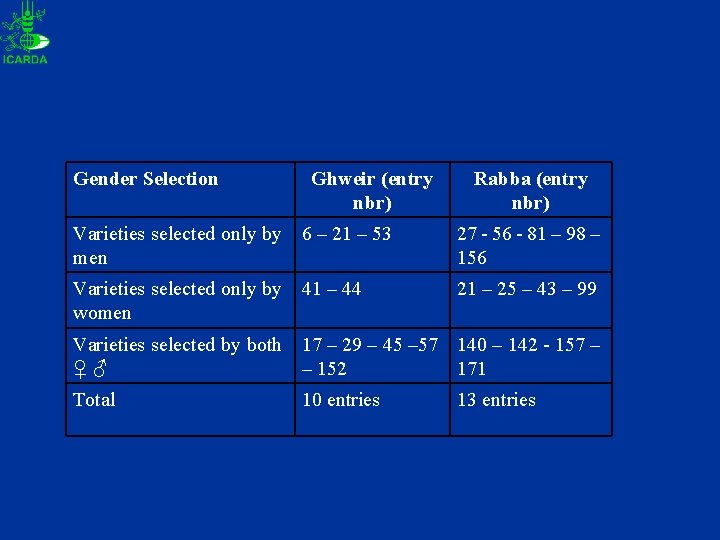
Example from the Karak region in Jordan Selection of barley varieties – example Benefits analysis from barley
Gender Selection Ghweir (entry nbr) Rabba (entry nbr) Varieties selected only by 6 – 21 – 53 men 27 - 56 - 81 – 98 – 156 Varieties selected only by 41 – 44 women 21 – 25 – 43 – 99 Varieties selected by both 17 – 29 – 45 – 57 140 – 142 - 157 – ♀♂ – 152 171 Total 10 entries 13 entries
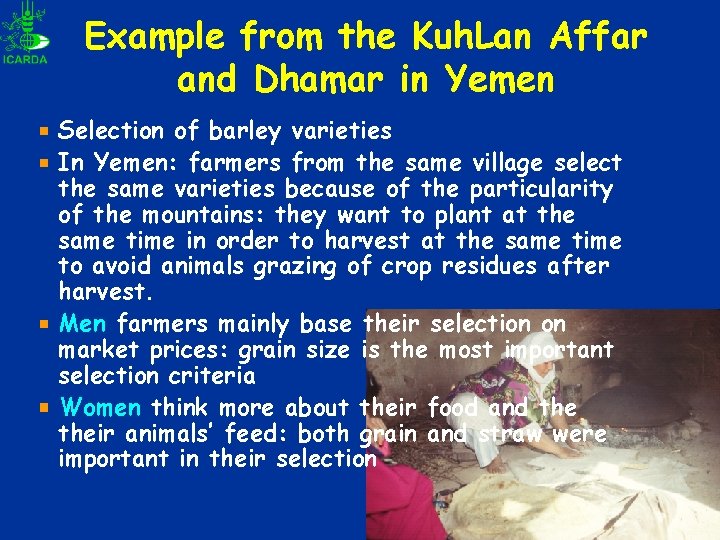
Example from the Kuh. Lan Affar and Dhamar in Yemen Selection of barley varieties In Yemen: farmers from the same village select the same varieties because of the particularity of the mountains: they want to plant at the same time in order to harvest at the same time to avoid animals grazing of crop residues after harvest. Men farmers mainly base their selection on market prices: grain size is the most important selection criteria Women think more about their food and their animals’ feed: both grain and straw were important in their selection
Reasons behind selection criteria Breeders: prioritize high productivity Farmers: In Kuhlan Affar: prioritize early planting because of children problem In Dhamar they prioritize early planting to get advantage of the early rainfall
Benefits analysis from barley Particularity of Yemen: make bread from barley and lentil grains mixed together Barley is also used for animal feeding and for other purposes Thus women’s as well as men’s opinions are very important in the selection of new varieties
Thank You