THE ART OF HIV MANAGEMENT AN ANTIRETROVIRAL THERAPY


- Slides: 46
THE ART OF HIV MANAGEMENT: AN ANTIRETROVIRAL THERAPY REVIEW Sarah Pérez, Pharm. D, Ph. C, BCACP, AAHIVP
Disclosure The speaker has no actual or potential conflicts of interest in relation to this presentation.
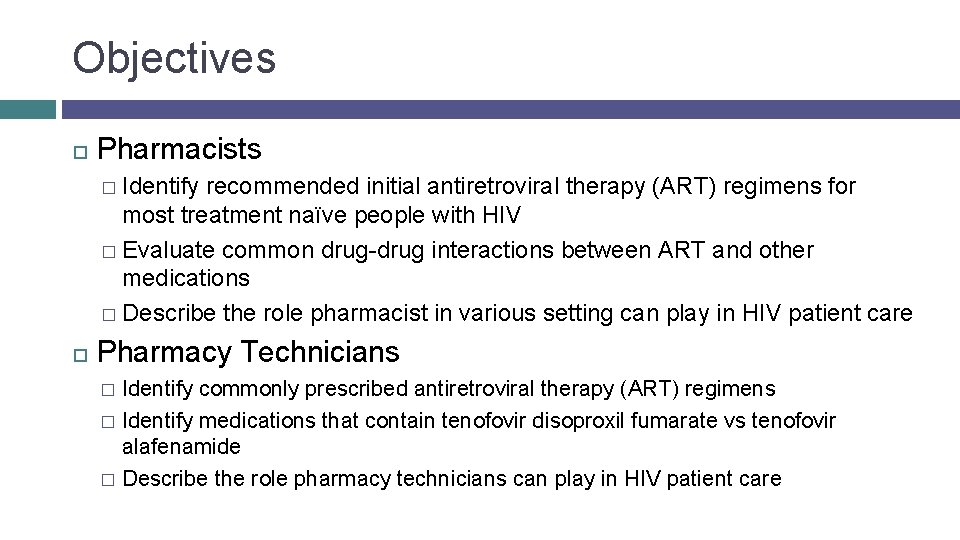
Objectives Pharmacists � Identify recommended initial antiretroviral therapy (ART) regimens for most treatment naïve people with HIV � Evaluate common drug-drug interactions between ART and other medications � Describe the role pharmacist in various setting can play in HIV patient care Pharmacy Technicians Identify commonly prescribed antiretroviral therapy (ART) regimens � Identify medications that contain tenofovir disoproxil fumarate vs tenofovir alafenamide � Describe the role pharmacy technicians can play in HIV patient care �
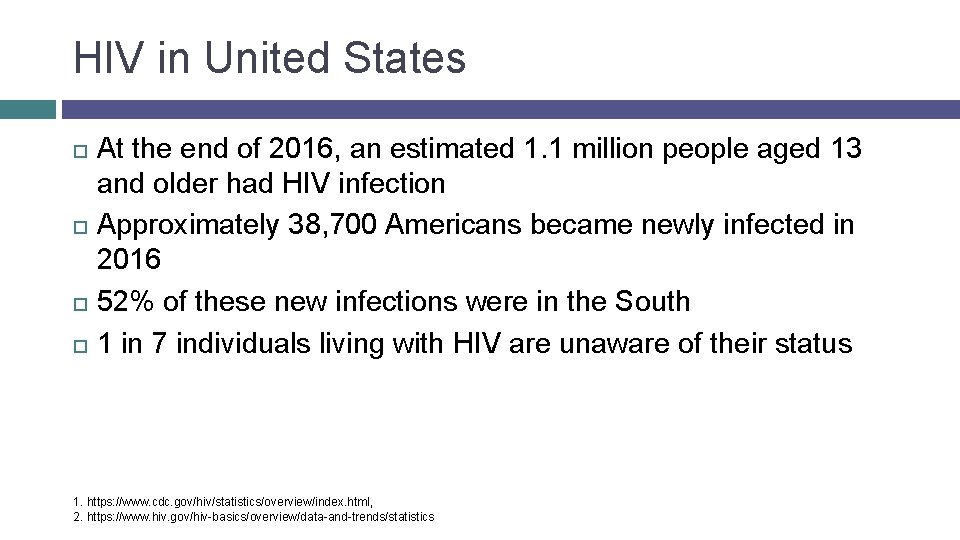
HIV in United States At the end of 2016, an estimated 1. 1 million people aged 13 and older had HIV infection Approximately 38, 700 Americans became newly infected in 2016 52% of these new infections were in the South 1 in 7 individuals living with HIV are unaware of their status 1. https: //www. cdc. gov/hiv/statistics/overview/index. html, 2. https: //www. hiv. gov/hiv-basics/overview/data-and-trends/statistics
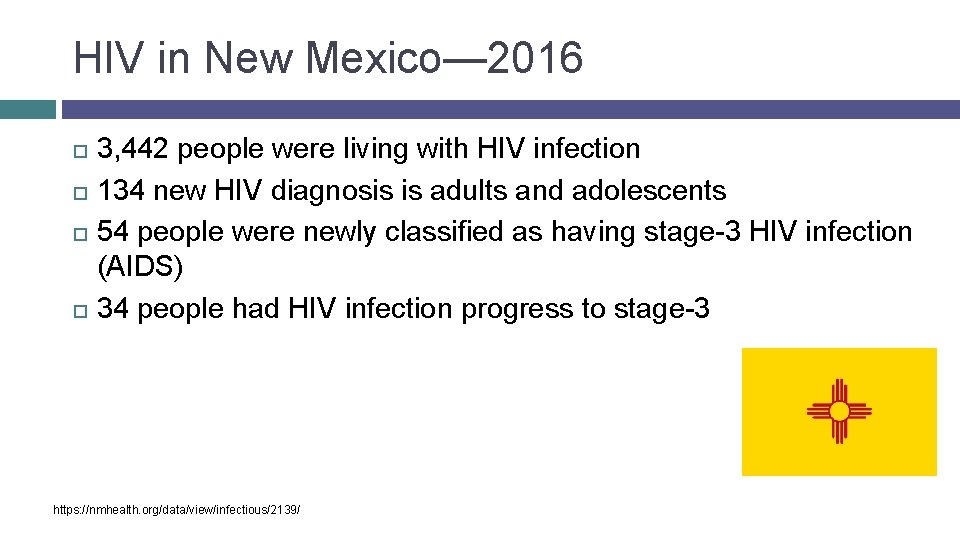
HIV in New Mexico— 2016 3, 442 people were living with HIV infection 134 new HIV diagnosis is adults and adolescents 54 people were newly classified as having stage-3 HIV infection (AIDS) 34 people had HIV infection progress to stage-3 https: //nmhealth. org/data/view/infectious/2139/
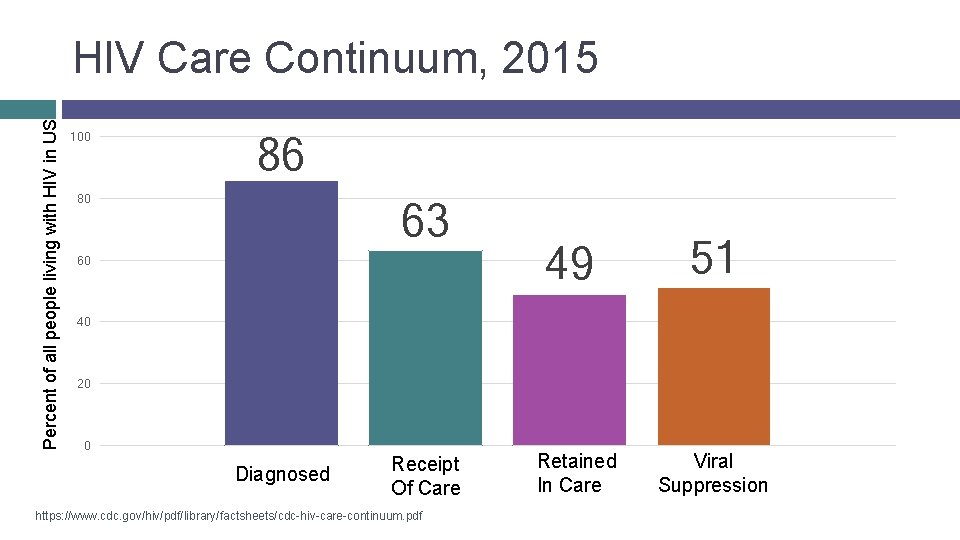
Percent of all people living with HIV in US HIV Care Continuum, 2015 100 86 80 63 60 49 51 40 20 0 Diagnosed Receipt Of Care https: //www. cdc. gov/hiv/pdf/library/factsheets/cdc-hiv-care-continuum. pdf Retained In Care Viral Suppression
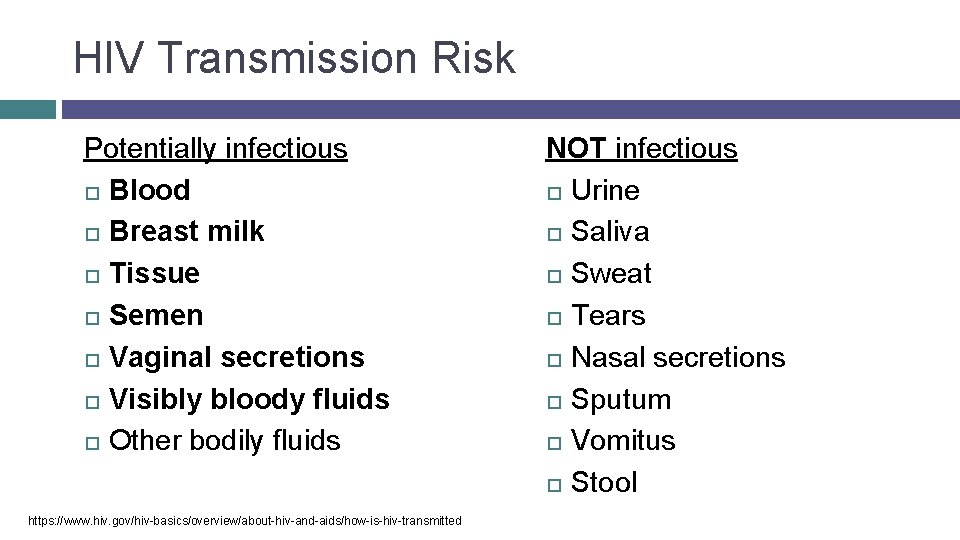
HIV Transmission Risk Potentially infectious Blood Breast milk Tissue Semen Vaginal secretions Visibly bloody fluids Other bodily fluids https: //www. hiv. gov/hiv-basics/overview/about-hiv-and-aids/how-is-hiv-transmitted NOT infectious Urine Saliva Sweat Tears Nasal secretions Sputum Vomitus Stool
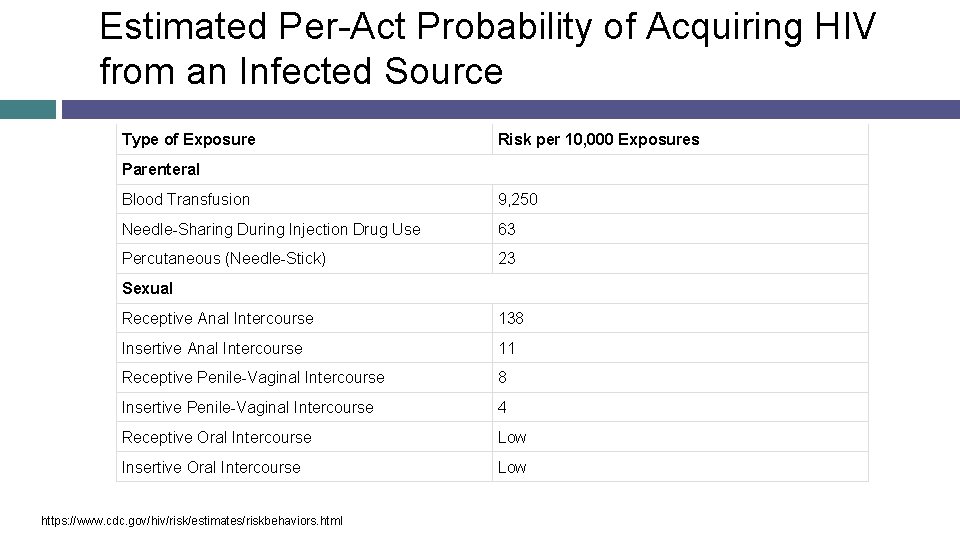
Estimated Per-Act Probability of Acquiring HIV from an Infected Source Type of Exposure Risk per 10, 000 Exposures Parenteral Blood Transfusion 9, 250 Needle-Sharing During Injection Drug Use 63 Percutaneous (Needle-Stick) 23 Sexual Receptive Anal Intercourse 138 Insertive Anal Intercourse 11 Receptive Penile-Vaginal Intercourse 8 Insertive Penile-Vaginal Intercourse 4 Receptive Oral Intercourse Low Insertive Oral Intercourse Low https: //www. cdc. gov/hiv/risk/estimates/riskbehaviors. html
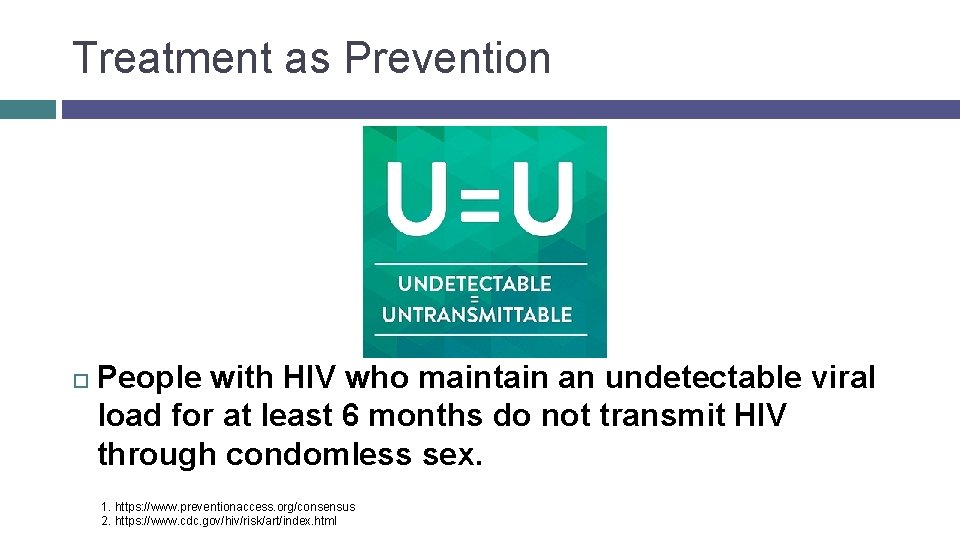
Treatment as Prevention People with HIV who maintain an undetectable viral load for at least 6 months do not transmit HIV through condomless sex. 1. https: //www. preventionaccess. org/consensus 2. https: //www. cdc. gov/hiv/risk/art/index. html
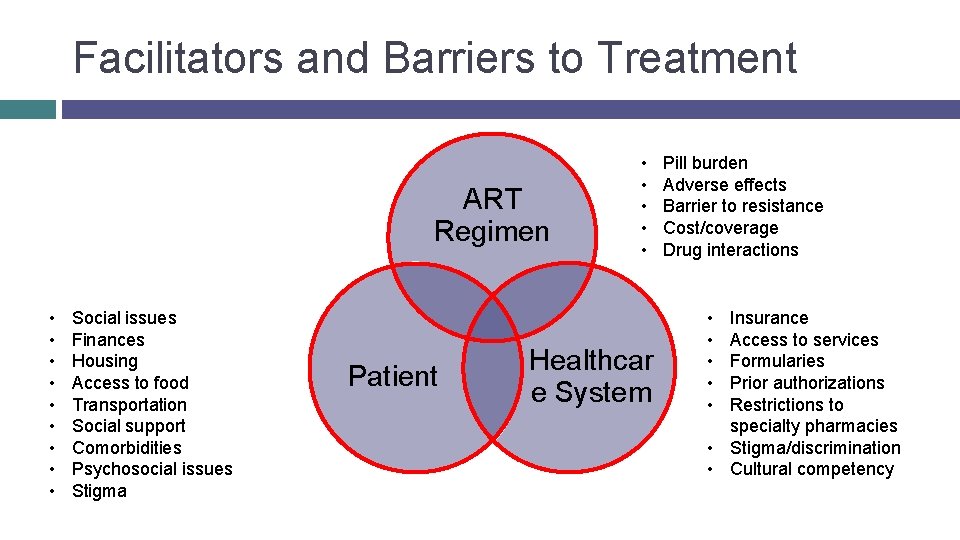
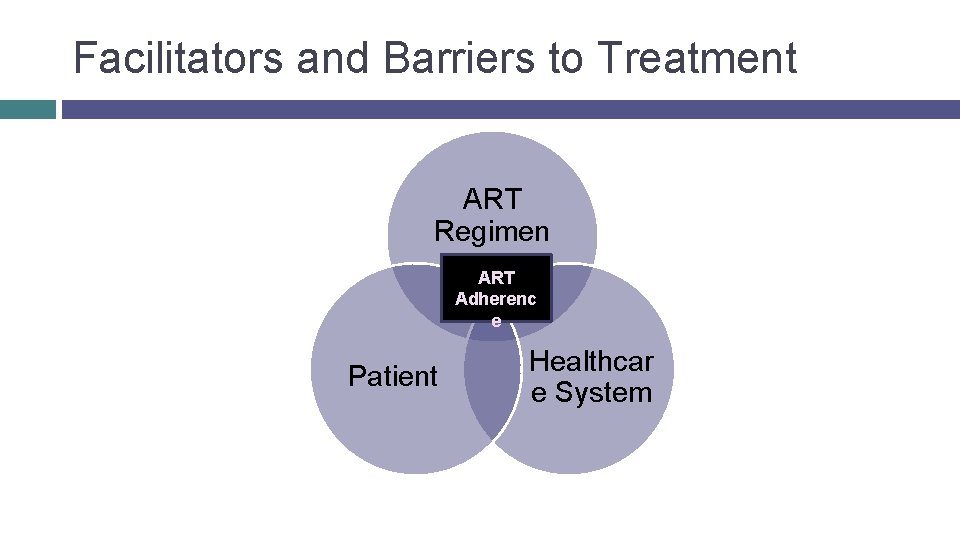
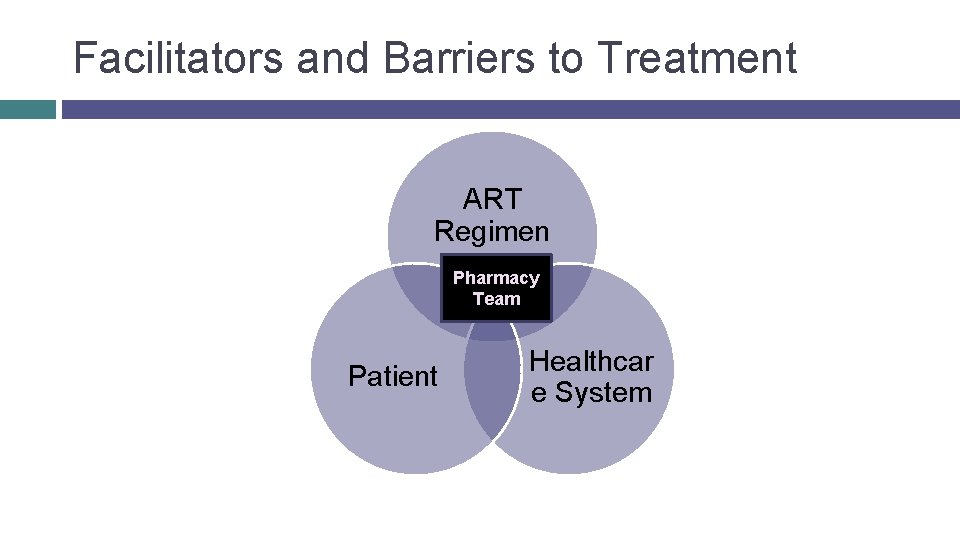
Facilitators and Barriers to Treatment ART Regimen • • • Social issues Finances Housing Access to food Transportation Social support Comorbidities Psychosocial issues Stigma Patient • • • Healthcar e System Pill burden Adverse effects Barrier to resistance Cost/coverage Drug interactions • • • Insurance Access to services Formularies Prior authorizations Restrictions to specialty pharmacies • Stigma/discrimination • Cultural competency
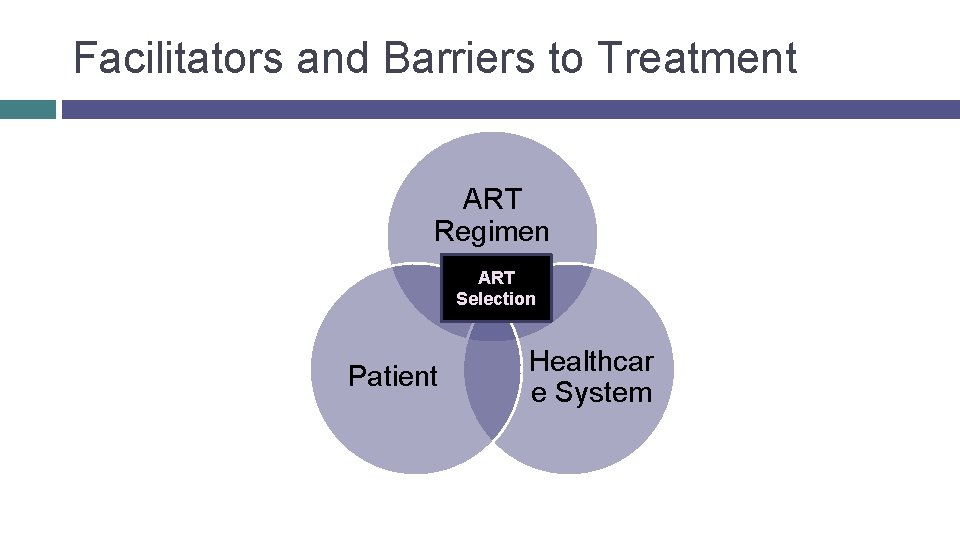
Facilitators and Barriers to Treatment ART Regimen ART Selection Patient Healthcar e System
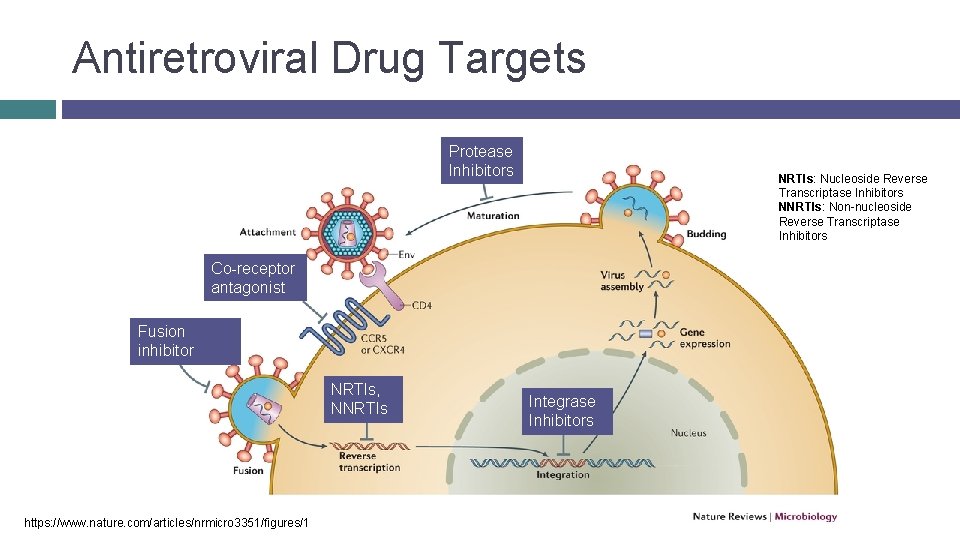
Antiretroviral Drug Targets Protease Inhibitors NRTIs: Nucleoside Reverse Transcriptase Inhibitors NNRTIs: Non-nucleoside Reverse Transcriptase Inhibitors Co-receptor antagonist Fusion inhibitor NRTIs, NNRTIs https: //www. nature. com/articles/nrmicro 3351/figures/1 Integrase Inhibitors
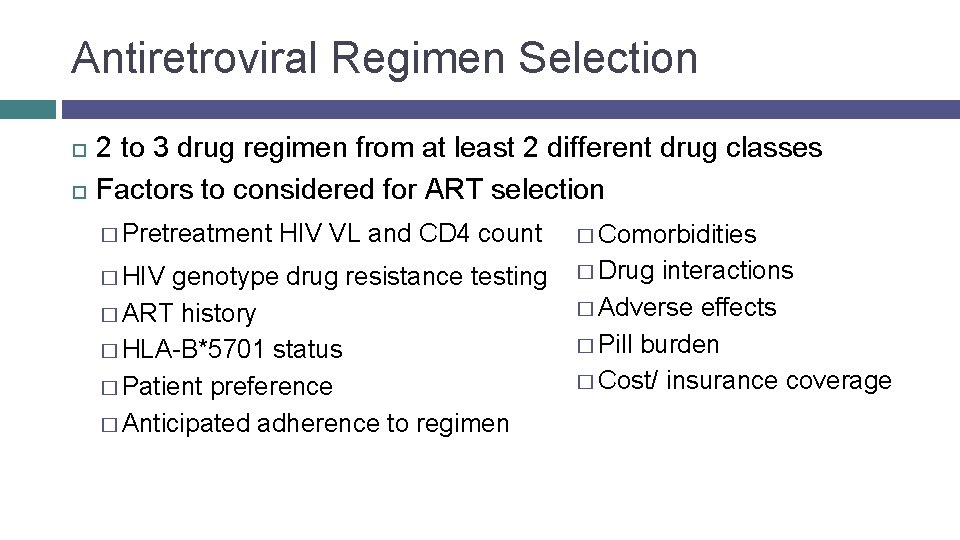
Antiretroviral Regimen Selection 2 to 3 drug regimen from at least 2 different drug classes Factors to considered for ART selection � Pretreatment HIV VL and CD 4 count � Comorbidities � HIV genotype drug resistance testing � Drug interactions � ART history � Adverse effects � HLA-B*5701 status � Pill burden � Patient preference � Cost/ insurance coverage � Anticipated adherence to regimen
Treatment Goals Maximally and durably suppress plasma HIV RNA � Undetectable HIV viral load Restore and preserve immunologic function � Improve and maintain high stable CD 4 count Reduce HIV-associated morbidity and prolong duration & quality of survival Prevent HIV transmission https: //aidsinfo. nih. gov/guidelines/html/1/adult-and-adolescent-arv/9/treatment-goals
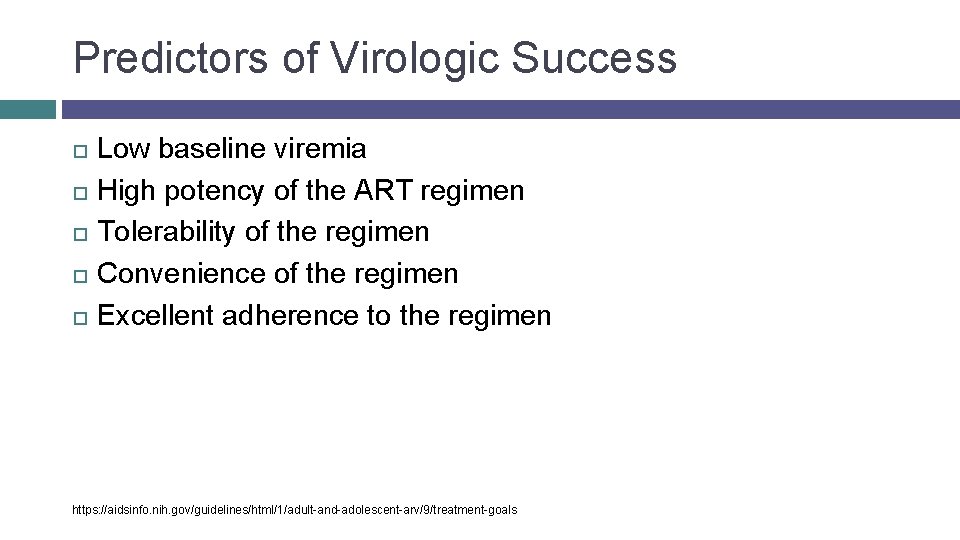
Predictors of Virologic Success Low baseline viremia High potency of the ART regimen Tolerability of the regimen Convenience of the regimen Excellent adherence to the regimen https: //aidsinfo. nih. gov/guidelines/html/1/adult-and-adolescent-arv/9/treatment-goals
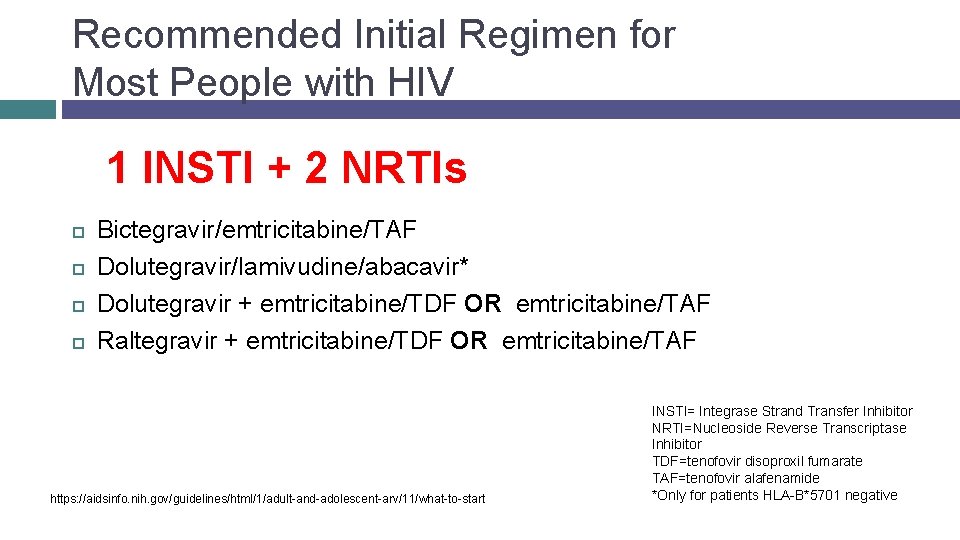
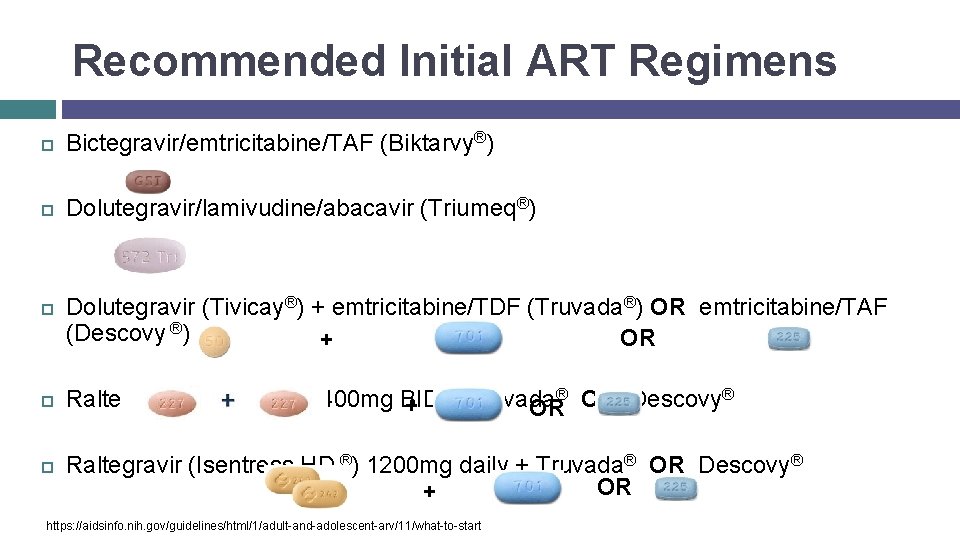
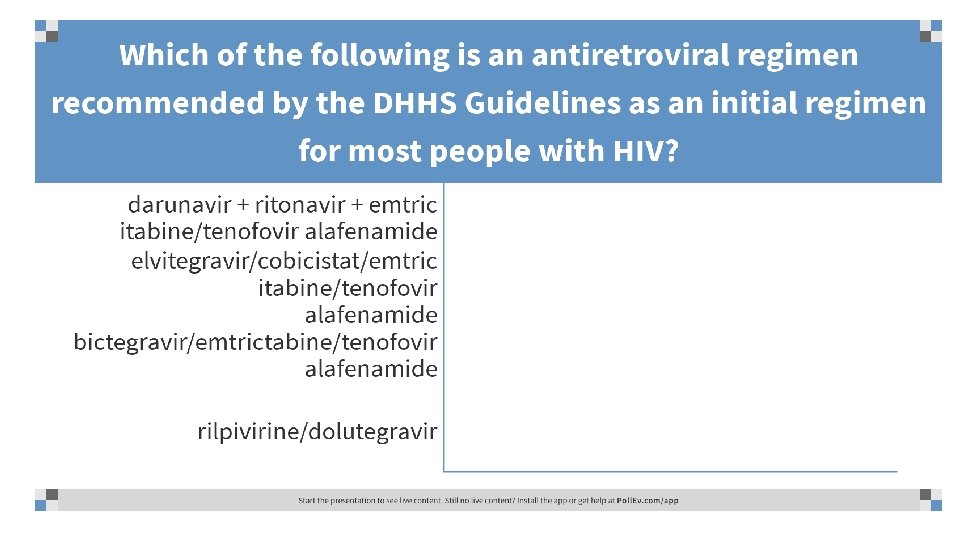
Recommended Initial Regimen for Most People with HIV 1 INSTI + 2 NRTIs Bictegravir/emtricitabine/TAF Dolutegravir/lamivudine/abacavir* Dolutegravir + emtricitabine/TDF OR emtricitabine/TAF Raltegravir + emtricitabine/TDF OR emtricitabine/TAF https: //aidsinfo. nih. gov/guidelines/html/1/adult-and-adolescent-arv/11/what-to-start INSTI= Integrase Strand Transfer Inhibitor NRTI=Nucleoside Reverse Transcriptase Inhibitor TDF=tenofovir disoproxil fumarate TAF=tenofovir alafenamide *Only for patients HLA-B*5701 negative
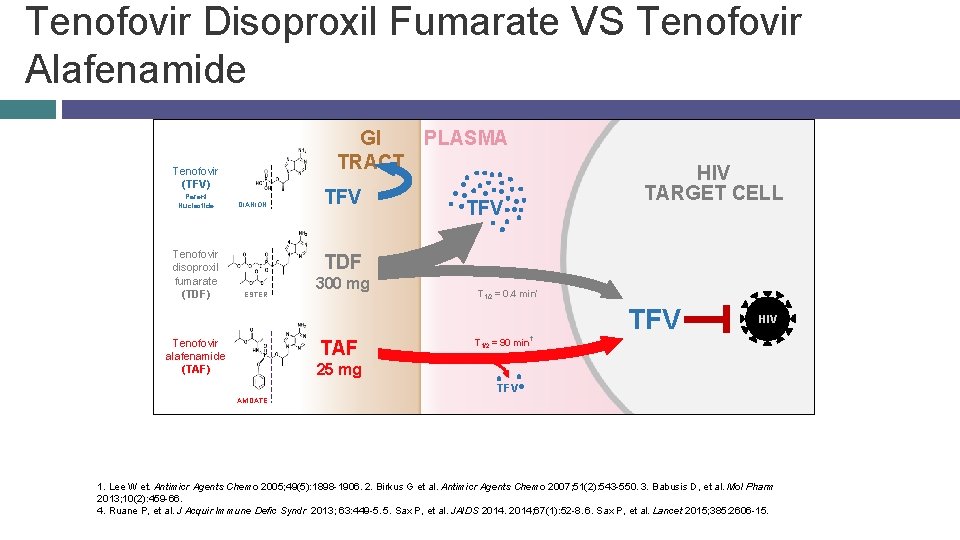
Tenofovir Disoproxil Fumarate VS Tenofovir Alafenamide GI PLASMA TRACT Tenofovir (TFV) Parent Nucleotide Tenofovir disoproxil fumarate (TDF) DIANION TFV HIV TARGET CELL TFV TDF ESTER 300 mg T 1/2 = 0. 4 min† TFV TAF Tenofovir alafenamide (TAF) HIV † T 1/2 = 90 min 25 mg TFV AMIDATE 1. Lee W et. Antimicr Agents Chemo 2005; 49(5): 1898 -1906. 2. Birkus G et al. Antimicr Agents Chemo 2007; 51(2): 543 -550. 3. Babusis D, et al. Mol Pharm 2013; 10(2): 459 -66. 4. Ruane P, et al. J Acquir Immune Defic Syndr 2013; 63: 449 -5. 5. Sax P, et al. JAIDS 2014; 67(1): 52 -8. 6. Sax P, et al. Lancet 2015; 385: 2606 -15.
Recommended Initial ART Regimens Bictegravir/emtricitabine/TAF (Biktarvy®) Dolutegravir/lamivudine/abacavir (Triumeq®) Dolutegravir (Tivicay®) + emtricitabine/TDF (Truvada®) OR emtricitabine/TAF (Descovy ®) OR + ® OR Descovy® Raltegravir (Isentress®) 400 mg BID + Truvada + OR Raltegravir (Isentress HD ®) 1200 mg daily + Truvada® OR Descovy® OR + https: //aidsinfo. nih. gov/guidelines/html/1/adult-and-adolescent-arv/11/what-to-start
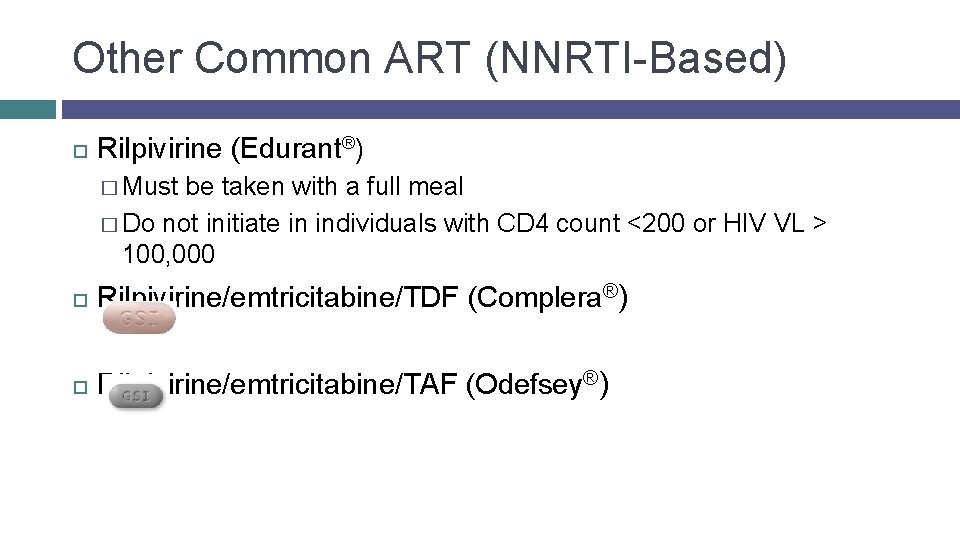
Other Common ART (NNRTI-Based) Rilpivirine (Edurant®) � Must be taken with a full meal � Do not initiate in individuals with CD 4 count <200 or HIV VL > 100, 000 Rilpivirine/emtricitabine/TDF (Complera®) Rilpivirine/emtricitabine/TAF (Odefsey®)
Pharmacokinetic Enhancers (Boosters) Must be administered with most PIs and INSTI elvitegravir Allow higher drug exposure, lower pill burden, less frequent dosing Ritonavir and cobicistat work by inhibiting CYP 3 A 4 Cobicistat coformulated with newer regimens requiring a booster Cobicistat only approved from once a day PIs If PI is BID then ritonavir is administered BID
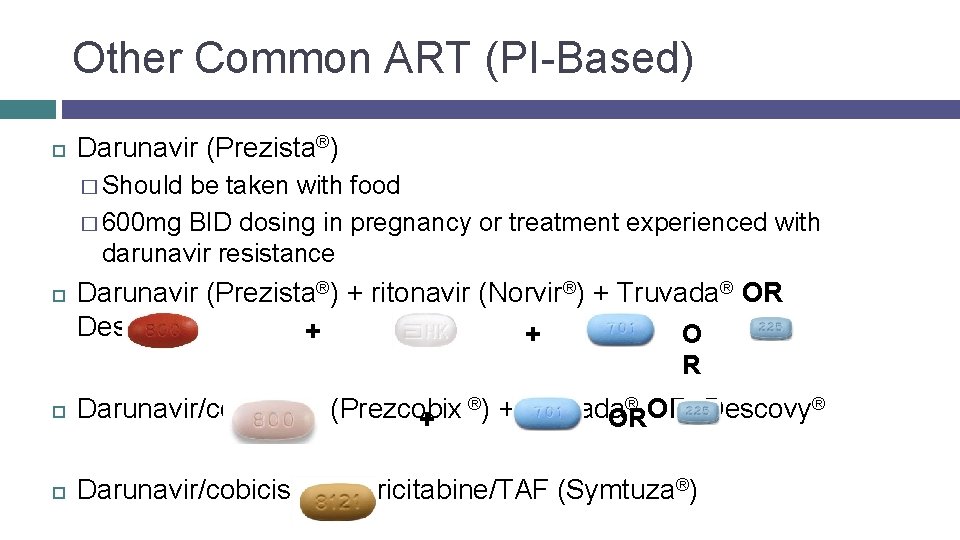
Other Common ART (PI-Based) Darunavir (Prezista®) � Should be taken with food � 600 mg BID dosing in pregnancy or treatment experienced with darunavir resistance Darunavir (Prezista®) + ritonavir (Norvir®) + Truvada® OR Descovy® + O + R ®) + Truvada® OR Descovy® Darunavir/cobicistat (Prezcobix OR + Darunavir/cobicistat/emtricitabine/TAF (Symtuza®)
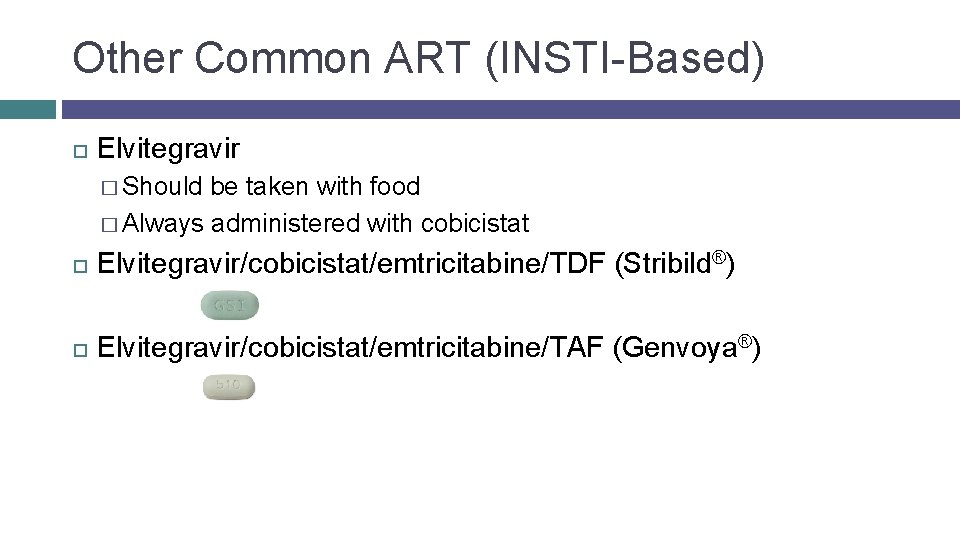
Other Common ART (INSTI-Based) Elvitegravir � Should be taken with food � Always administered with cobicistat Elvitegravir/cobicistat/emtricitabine/TDF (Stribild®) Elvitegravir/cobicistat/emtricitabine/TAF (Genvoya®)
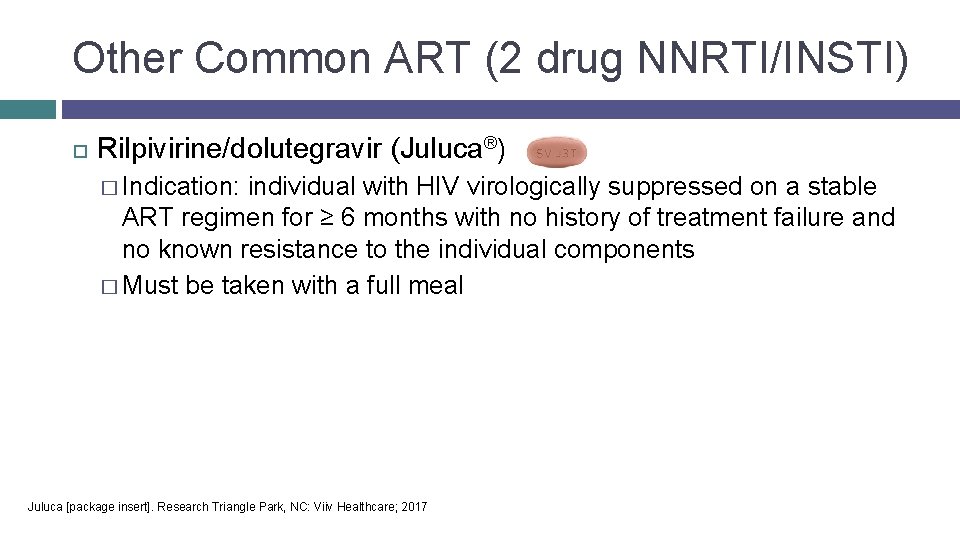
Other Common ART (2 drug NNRTI/INSTI) Rilpivirine/dolutegravir (Juluca®) � Indication: individual with HIV virologically suppressed on a stable ART regimen for ≥ 6 months with no history of treatment failure and no known resistance to the individual components � Must be taken with a full meal Juluca [package insert]. Research Triangle Park, NC: Viiv Healthcare; 2017
Management of Treatment-Experienced Patients Based on ART history and resistance patterns Generally at least 2 to 3 active drugs if possible Often 2 NRTIs + another class May be NRTI sparing May require dose adjustment of ART agents
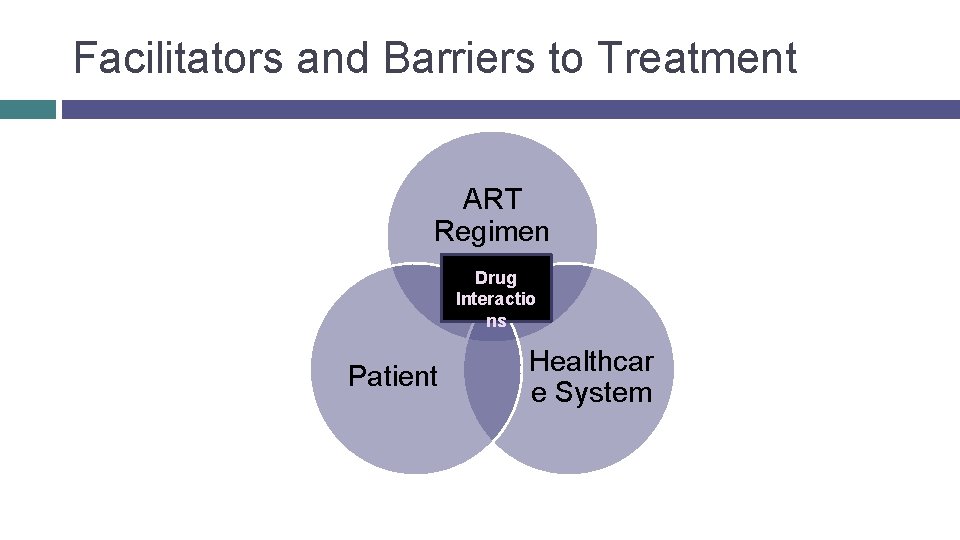
Facilitators and Barriers to Treatment ART Regimen Drug Interactio ns Patient Healthcar e System
Complexity of ART Increased number of antiretroviral agents and combination products Patients may be unable to recall complex regimens Lack of medication knowledge by prescribers Non-HIV/ID providers are not well familiar with appropriate ART High adherence rates required for virologic suppression Drug resistance can drastically limit future ART options Eginger KH, et al. Ann Pharmacother 2013; 47: 953 -60.
Medication Errors in HIV-Infected Hospitalized Patients Occur in ~30% to 40% of patients Common Errors: � Improper antiretroviral regimens � Inappropriate dosing � Missing agents � Drug interactions � Omission of opportunistic infection prophylaxis Eginger KH, et al. Ann Pharmacother 2013: 47: 953 -60 Chiampas TD, et al. Pharm Pract 2015; 13: 512
Drug-Drug Interactions Pharmacokinetic (PK) drug interactions between ART and concomitant medications can caused increased or decreased drug exposures to either drug PK interactions can occur during absorption, metabolism, or elimination of ART Effects on ART drug levels can cause increased toxicities or decreased therapeutic response ART treatment failure is a possible result of drug interactions https: //aidsinfo. nih. gov/guidelines/html/1/adult-and-adolescent-arv/367/overview
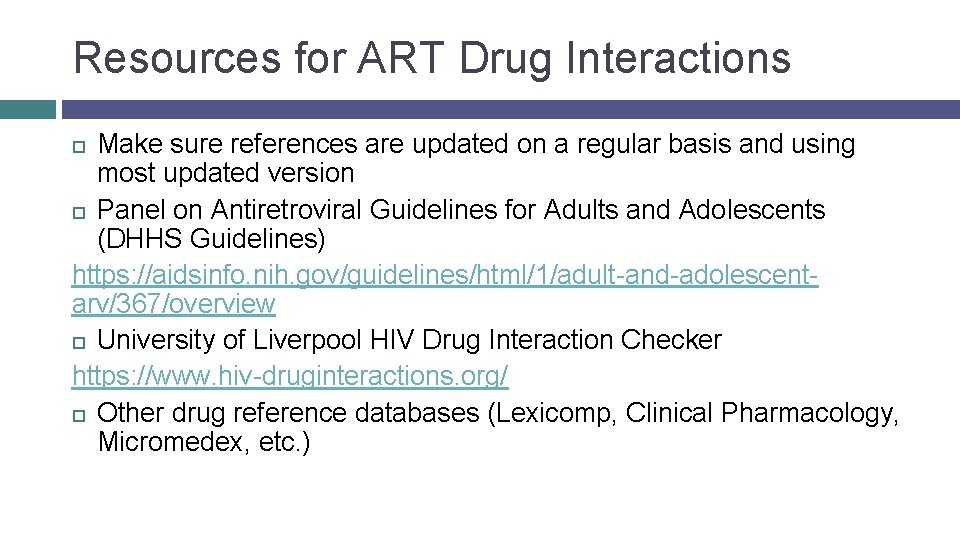
Resources for ART Drug Interactions Make sure references are updated on a regular basis and using most updated version Panel on Antiretroviral Guidelines for Adults and Adolescents (DHHS Guidelines) https: //aidsinfo. nih. gov/guidelines/html/1/adult-and-adolescentarv/367/overview University of Liverpool HIV Drug Interaction Checker https: //www. hiv-druginteractions. org/ Other drug reference databases (Lexicomp, Clinical Pharmacology, Micromedex, etc. )
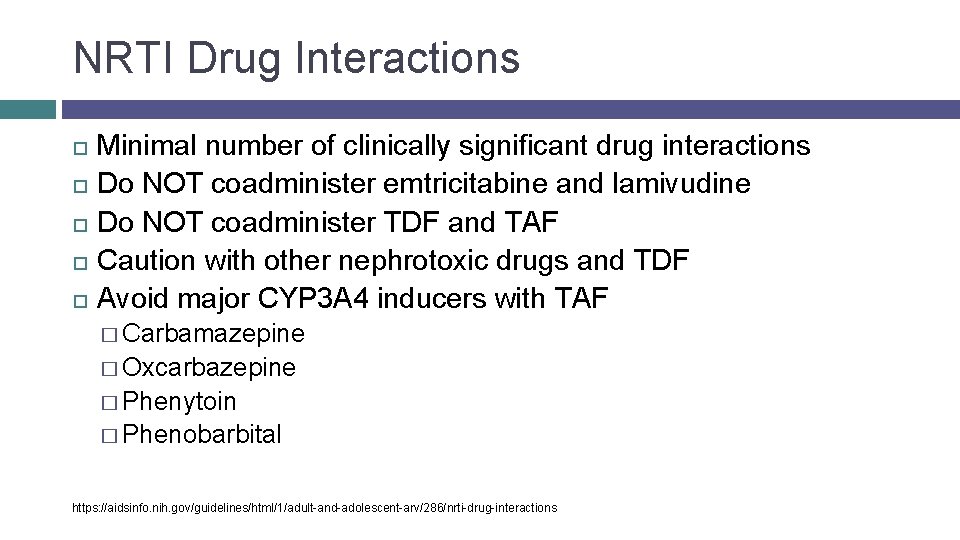
NRTI Drug Interactions Minimal number of clinically significant drug interactions Do NOT coadminister emtricitabine and lamivudine Do NOT coadminister TDF and TAF Caution with other nephrotoxic drugs and TDF Avoid major CYP 3 A 4 inducers with TAF � Carbamazepine � Oxcarbazepine � Phenytoin � Phenobarbital https: //aidsinfo. nih. gov/guidelines/html/1/adult-and-adolescent-arv/286/nrti-drug-interactions
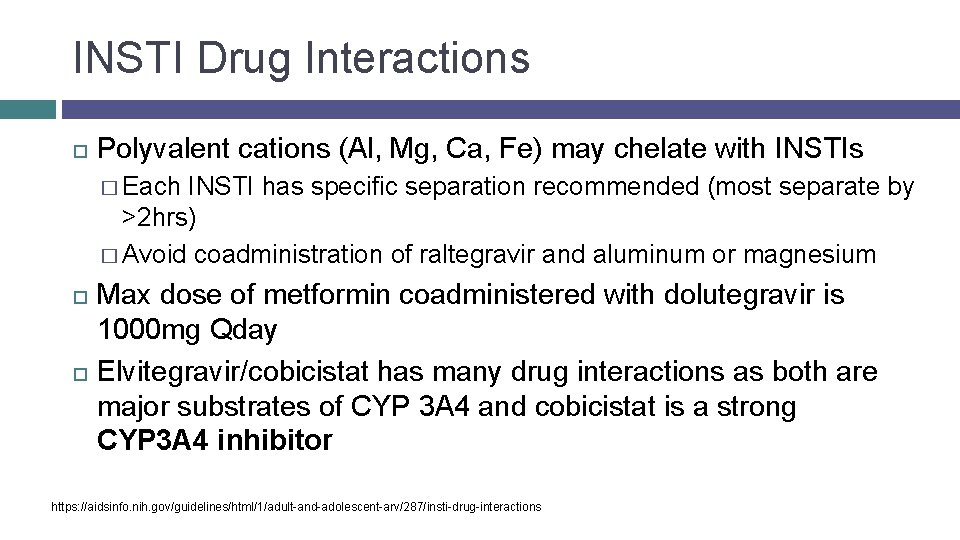
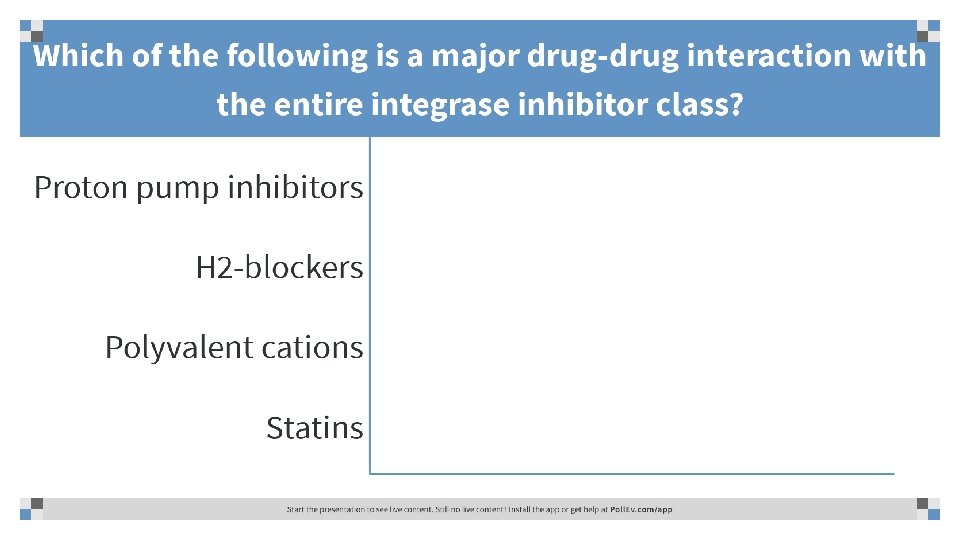
INSTI Drug Interactions Polyvalent cations (Al, Mg, Ca, Fe) may chelate with INSTIs � Each INSTI has specific separation recommended (most separate by >2 hrs) � Avoid coadministration of raltegravir and aluminum or magnesium Max dose of metformin coadministered with dolutegravir is 1000 mg Qday Elvitegravir/cobicistat has many drug interactions as both are major substrates of CYP 3 A 4 and cobicistat is a strong CYP 3 A 4 inhibitor https: //aidsinfo. nih. gov/guidelines/html/1/adult-and-adolescent-arv/287/insti-drug-interactions
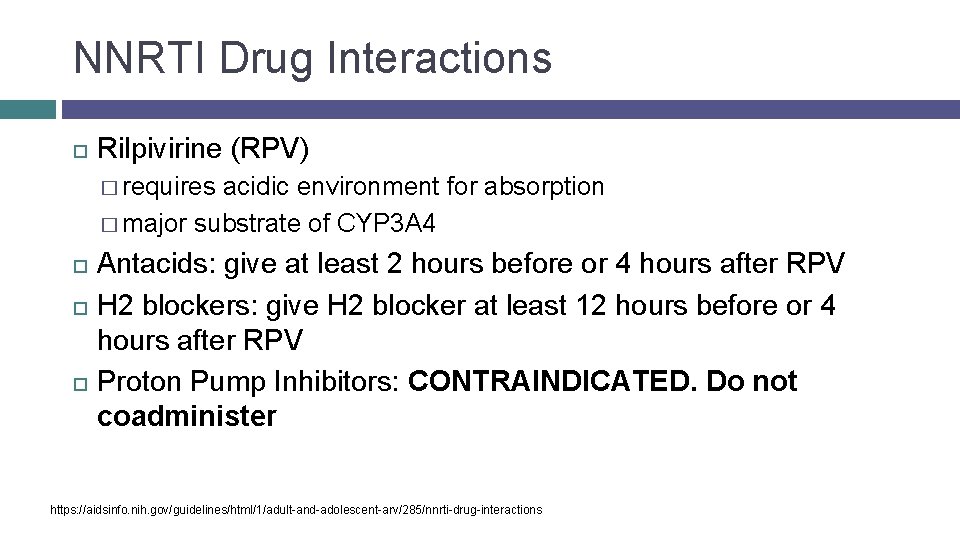
NNRTI Drug Interactions Rilpivirine (RPV) � requires acidic environment for absorption � major substrate of CYP 3 A 4 Antacids: give at least 2 hours before or 4 hours after RPV H 2 blockers: give H 2 blocker at least 12 hours before or 4 hours after RPV Proton Pump Inhibitors: CONTRAINDICATED. Do not coadminister https: //aidsinfo. nih. gov/guidelines/html/1/adult-and-adolescent-arv/285/nnrti-drug-interactions
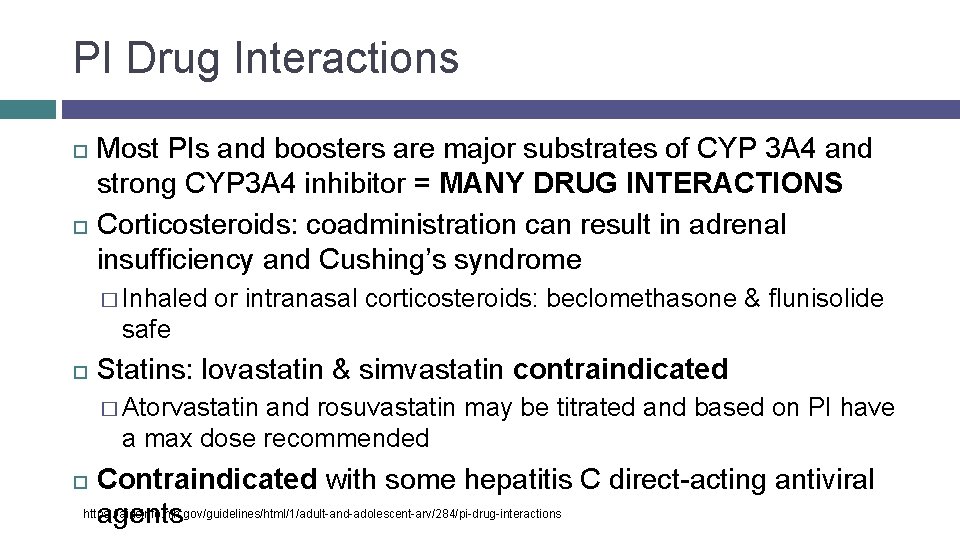
PI Drug Interactions Most PIs and boosters are major substrates of CYP 3 A 4 and strong CYP 3 A 4 inhibitor = MANY DRUG INTERACTIONS Corticosteroids: coadministration can result in adrenal insufficiency and Cushing’s syndrome � Inhaled or intranasal corticosteroids: beclomethasone & flunisolide safe Statins: lovastatin & simvastatin contraindicated � Atorvastatin and rosuvastatin may be titrated and based on PI have a max dose recommended Contraindicated with some hepatitis C direct-acting antiviral https: //aidsinfo. nih. gov/guidelines/html/1/adult-and-adolescent-arv/284/pi-drug-interactions agents
Facilitators and Barriers to Treatment ART Regimen ART Adherenc e Patient Healthcar e System
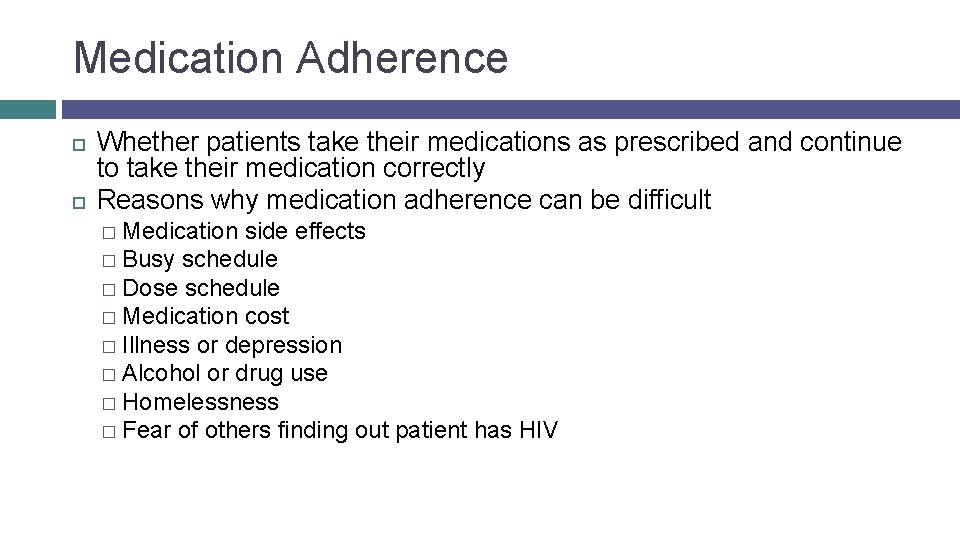
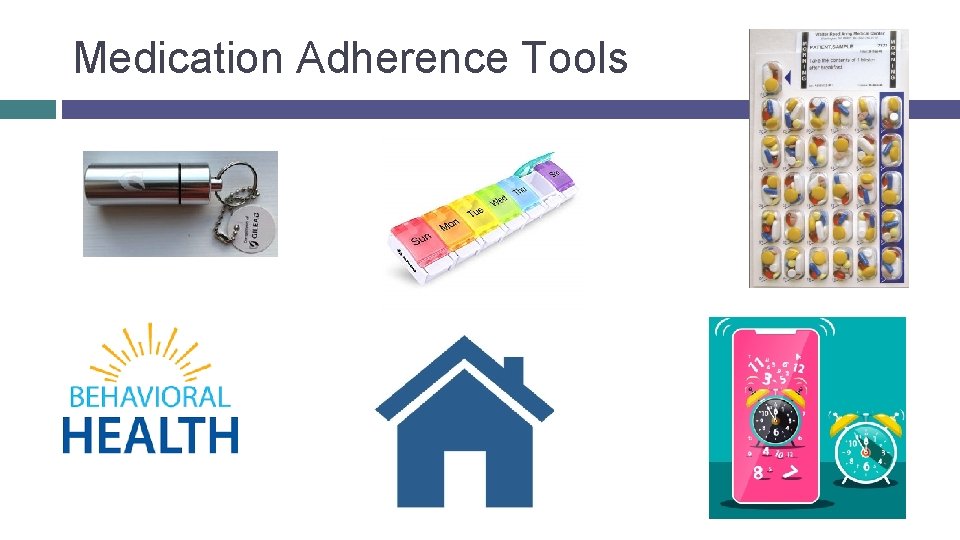
Medication Adherence Whether patients take their medications as prescribed and continue to take their medication correctly Reasons why medication adherence can be difficult � Medication side effects � Busy schedule � Dose schedule � Medication cost � Illness or depression � Alcohol or drug use � Homelessness � Fear of others finding out patient has HIV
Medication Adherence Tools
Facilitators and Barriers to Treatment ART Regimen Pharmacy Team Patient Healthcar e System
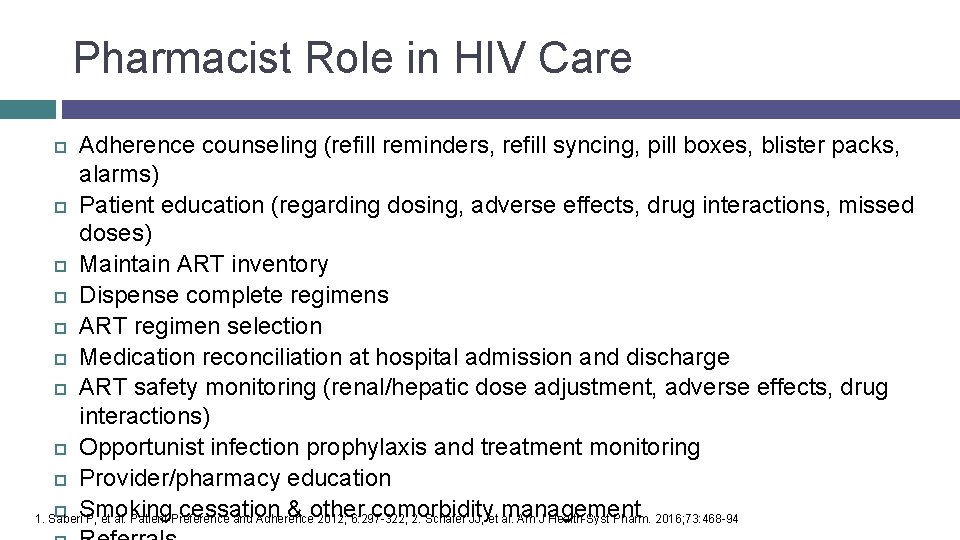
Pharmacist Role in HIV Care Adherence counseling (refill reminders, refill syncing, pill boxes, blister packs, alarms) Patient education (regarding dosing, adverse effects, drug interactions, missed doses) Maintain ART inventory Dispense complete regimens ART regimen selection Medication reconciliation at hospital admission and discharge ART safety monitoring (renal/hepatic dose adjustment, adverse effects, drug interactions) Opportunist infection prophylaxis and treatment monitoring Provider/pharmacy education Smoking cessation & other comorbidity management 1. Saberi P, et al. Patient Preference and Adherence 2012; 6: 297 -322, 2. Schafer JJ, et al. Am J Health-Syst Pharm. 2016; 73: 468 -94
Pharmacy Technician Role in HIV Care Benefits investigation Help with prior authorization Help maintain inventory Copay assistance enrollment Refill reminders Avoid HIV disclosure Gilbert EM, et al. Am J Health-Syst Pharm. 2016; 73: 757 -63
Conclusion Only about 50% of individual living with HIV in the US are retained in care and have viral suppression There are numerous safe and effective ART agents available ART is complex in terms of increased numbers of agents and combinations, drug interactions, & high adherence rates required for virologic suppression Pharmacy teams in various settings can impact and improve HIV care
THE ART OF HIV MANAGEMENT: AN ANTIRETROVIRAL THERAPY REVIEW Sarah Pérez, Pharm. D, Ph. C, BCACP, AAHIVP