Structured Lighting Guido Gerig CS 6320 3 D

- Slides: 51
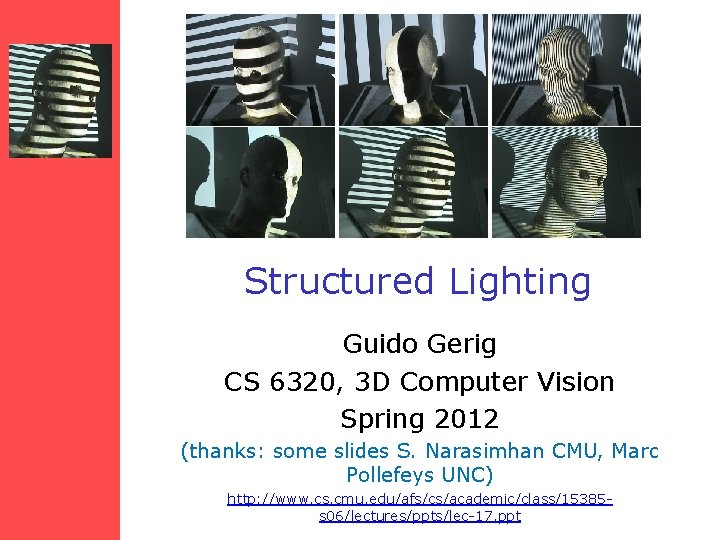
Structured Lighting Guido Gerig CS 6320, 3 D Computer Vision Spring 2012 (thanks: some slides S. Narasimhan CMU, Marc Pollefeys UNC) http: //www. cs. cmu. edu/afs/cs/academic/class/15385 s 06/lectures/ppts/lec-17. ppt
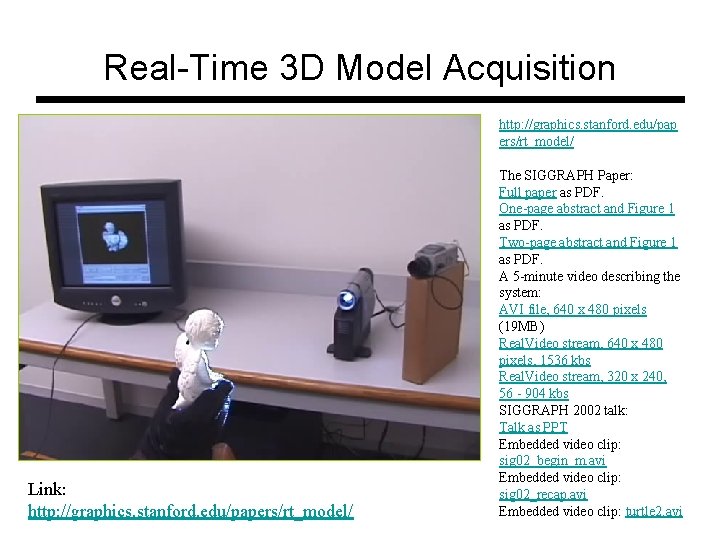
Real-Time 3 D Model Acquisition http: //graphics. stanford. edu/pap ers/rt_model/ Link: http: //graphics. stanford. edu/papers/rt_model/ The SIGGRAPH Paper: Full paper as PDF. One-page abstract and Figure 1 as PDF. Two-page abstract and Figure 1 as PDF. A 5 -minute video describing the system: AVI file, 640 x 480 pixels (19 MB) Real. Video stream, 640 x 480 pixels, 1536 kbs Real. Video stream, 320 x 240, 56 - 904 kbs SIGGRAPH 2002 talk: Talk as PPT Embedded video clip: sig 02_begin_m. avi Embedded video clip: sig 02_recap. avi Embedded video clip: turtle 2. avi
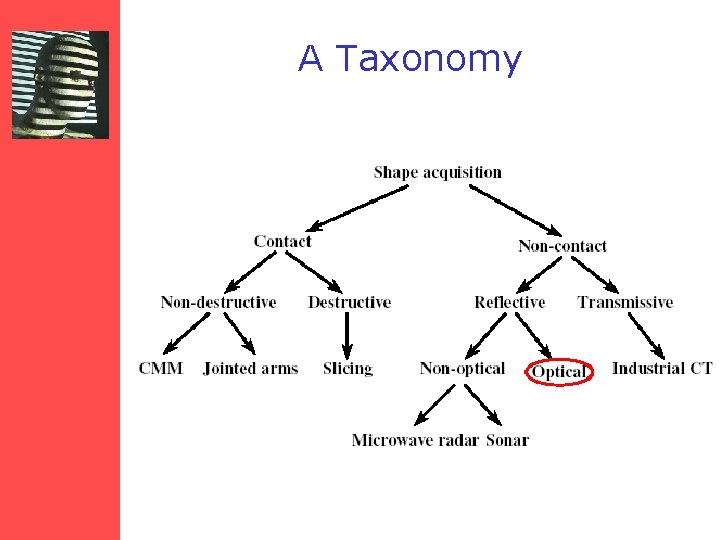
A Taxonomy
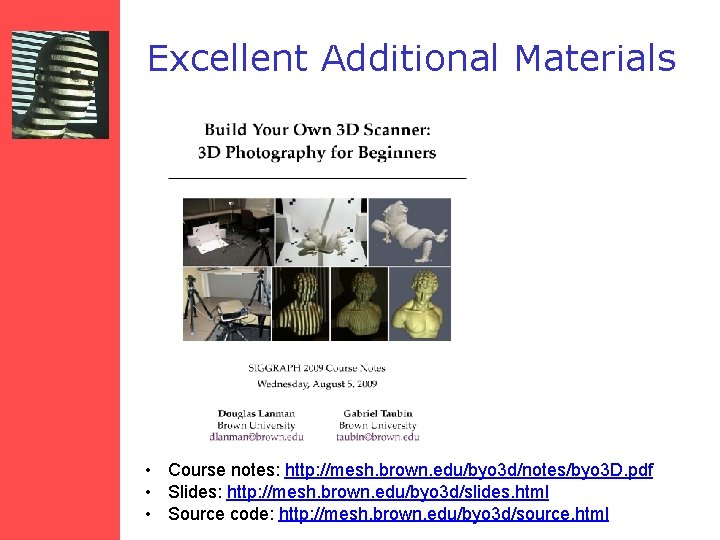
Excellent Additional Materials • Course notes: http: //mesh. brown. edu/byo 3 d/notes/byo 3 D. pdf • Slides: http: //mesh. brown. edu/byo 3 d/slides. html • Source code: http: //mesh. brown. edu/byo 3 d/source. html
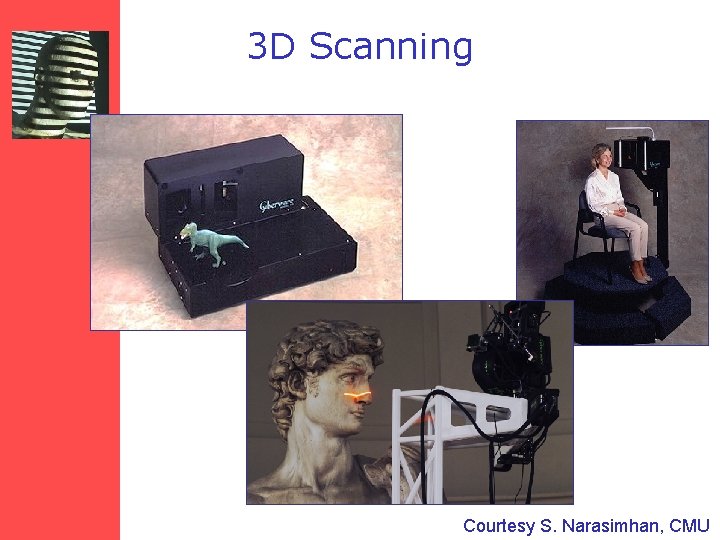
3 D Scanning Courtesy S. Narasimhan, CMU
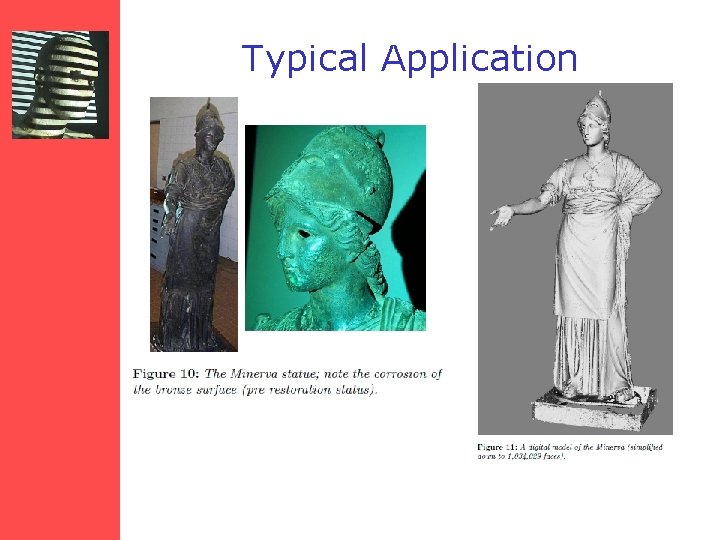
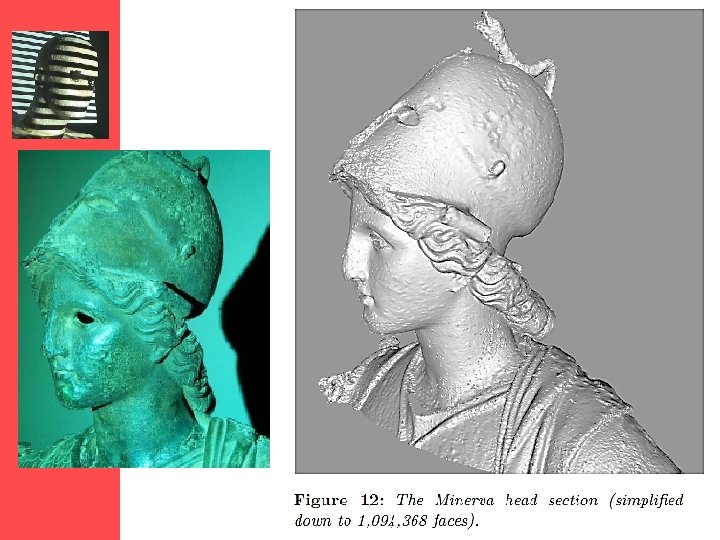
Typical Application
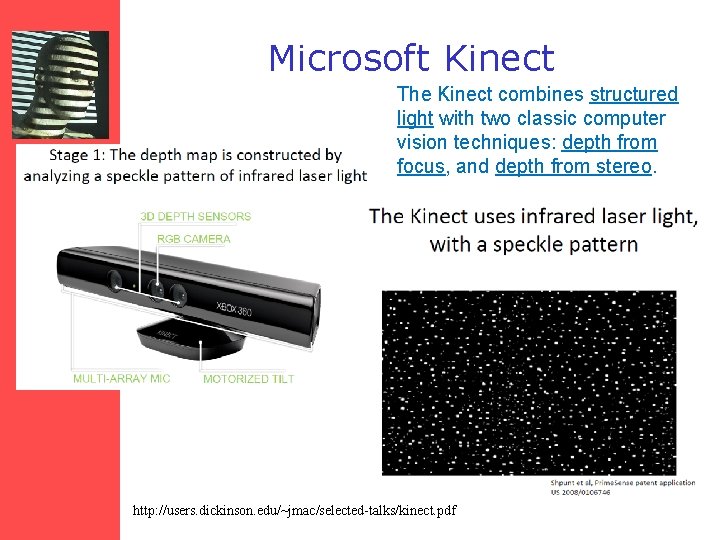
Microsoft Kinect The Kinect combines structured light with two classic computer vision techniques: depth from focus, and depth from stereo. http: //users. dickinson. edu/~jmac/selected-talks/kinect. pdf
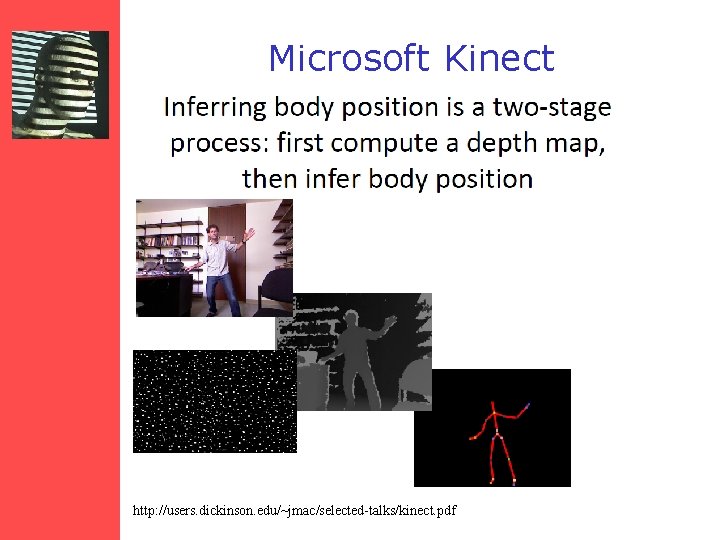
Microsoft Kinect http: //users. dickinson. edu/~jmac/selected-talks/kinect. pdf
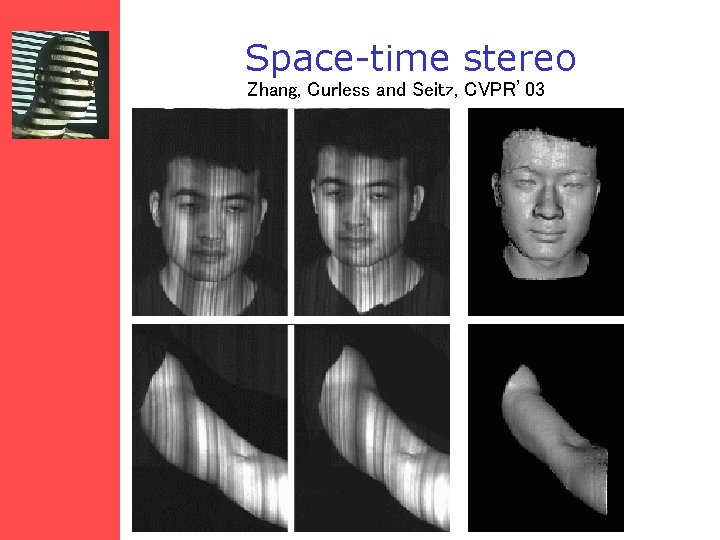
Space-time stereo Zhang, Curless and Seitz, CVPR’ 03
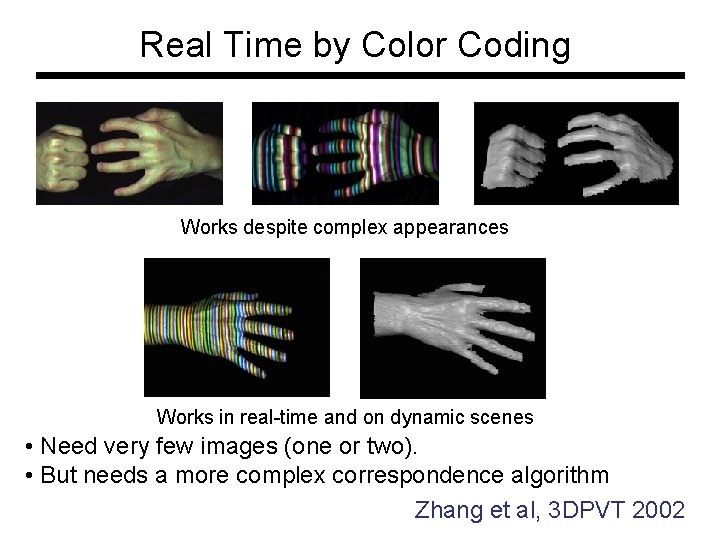
Real Time by Color Coding Works despite complex appearances Works in real-time and on dynamic scenes • Need very few images (one or two). • But needs a more complex correspondence algorithm Zhang et al, 3 DPVT 2002
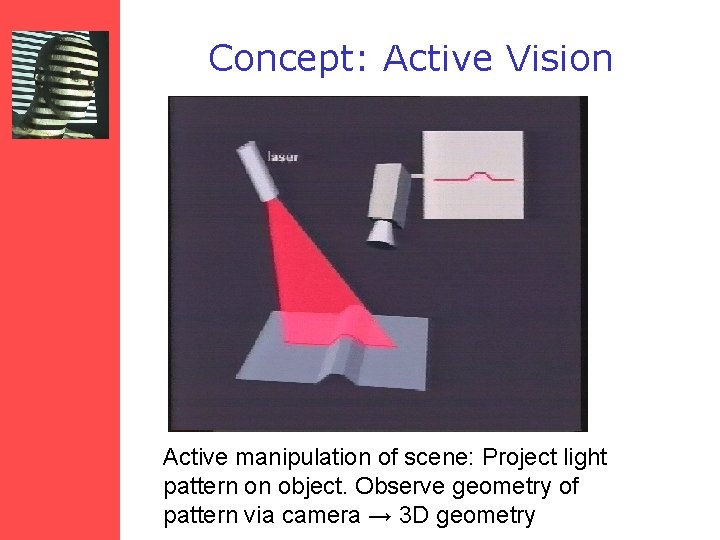
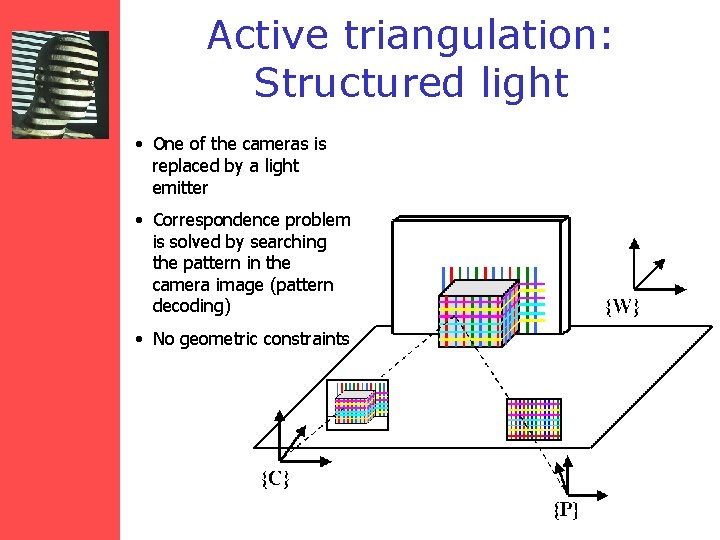
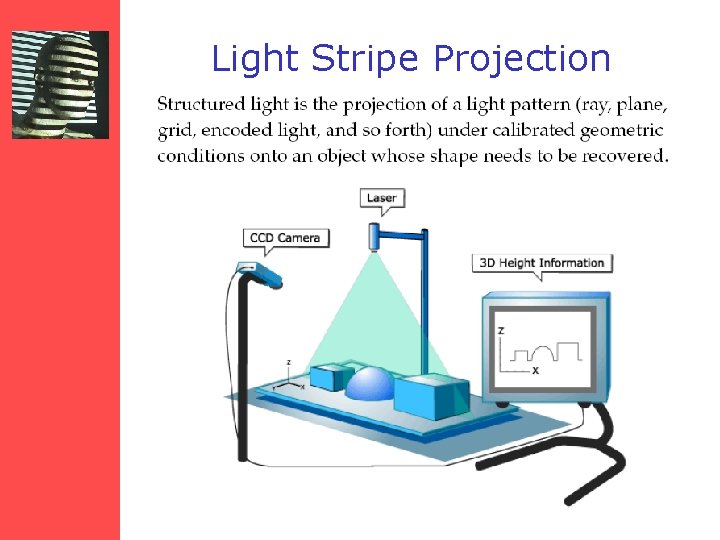
Concept: Active Vision Active manipulation of scene: Project light pattern on object. Observe geometry of pattern via camera → 3 D geometry
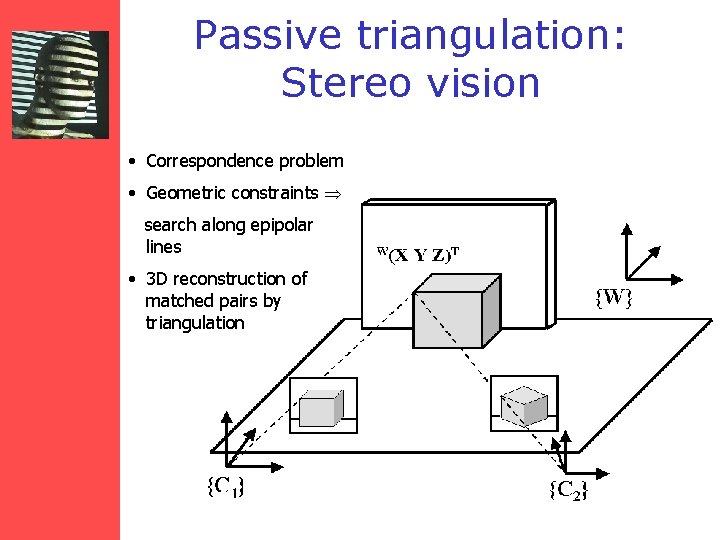
Passive triangulation: Stereo vision • Correspondence problem • Geometric constraints search along epipolar lines • 3 D reconstruction of matched pairs by triangulation
Active triangulation: Structured light • One of the cameras is replaced by a light emitter • Correspondence problem is solved by searching the pattern in the camera image (pattern decoding) • No geometric constraints
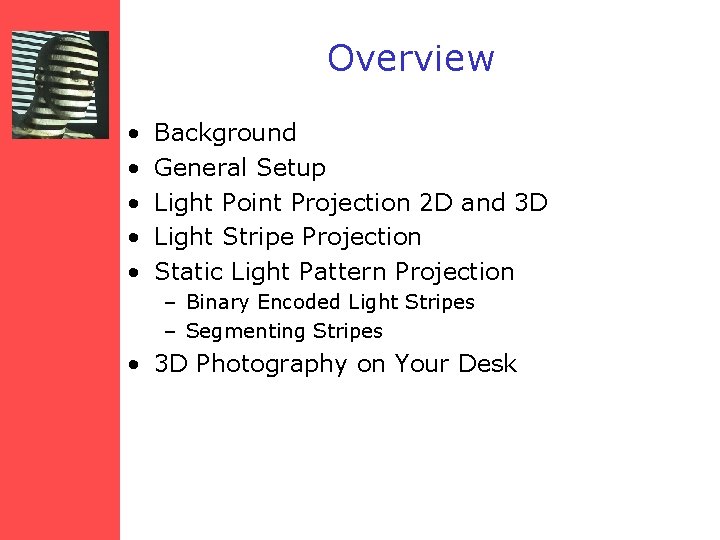
Overview • • • Background General Setup Light Point Projection 2 D and 3 D Light Stripe Projection Static Light Pattern Projection – Binary Encoded Light Stripes – Segmenting Stripes • 3 D Photography on Your Desk
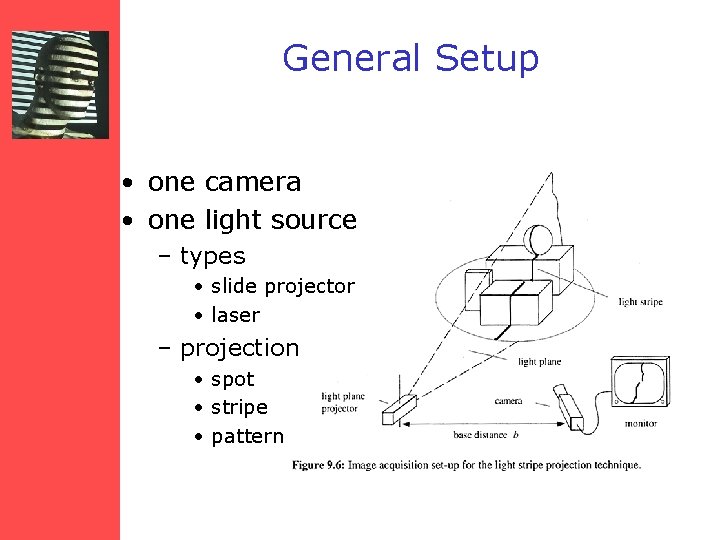
General Setup • one camera • one light source – types • slide projector • laser – projection • spot • stripe • pattern
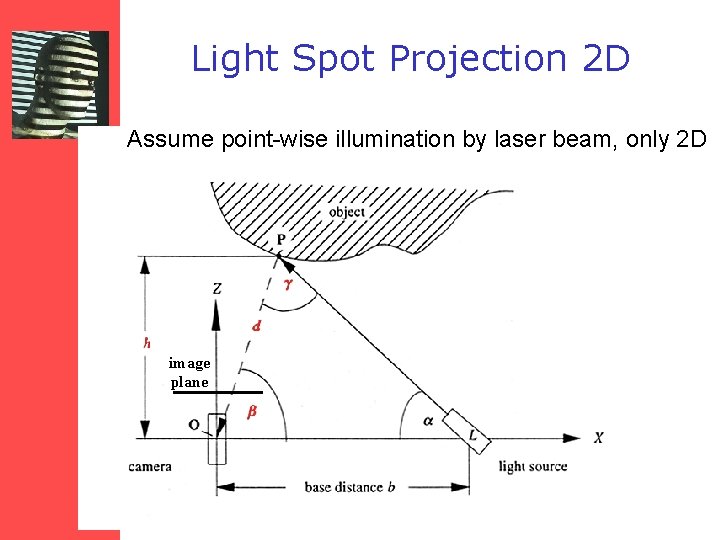
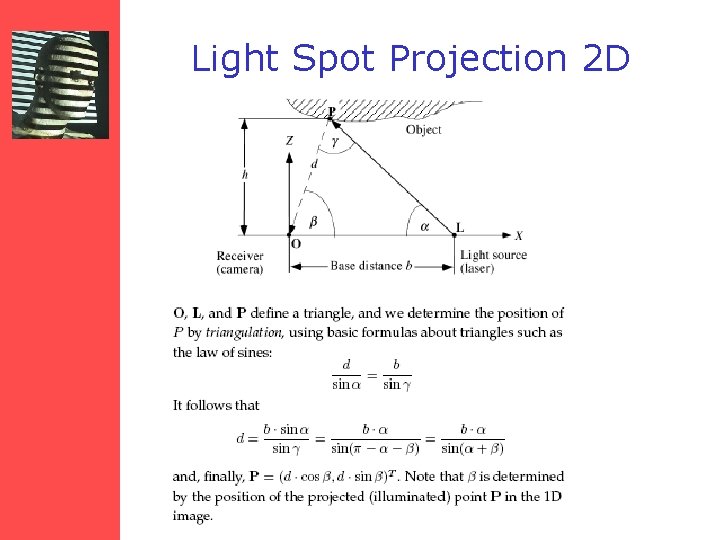
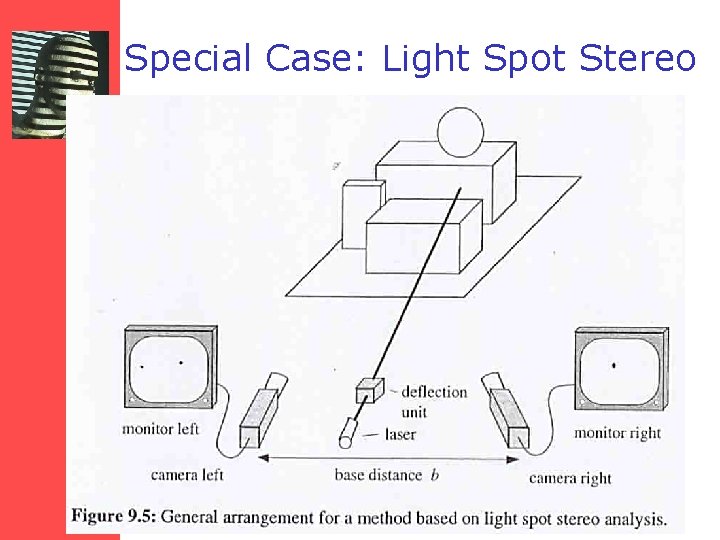
Light Spot Projection 2 D Assume point-wise illumination by laser beam, only 2 D image plane
Light Spot Projection 2 D
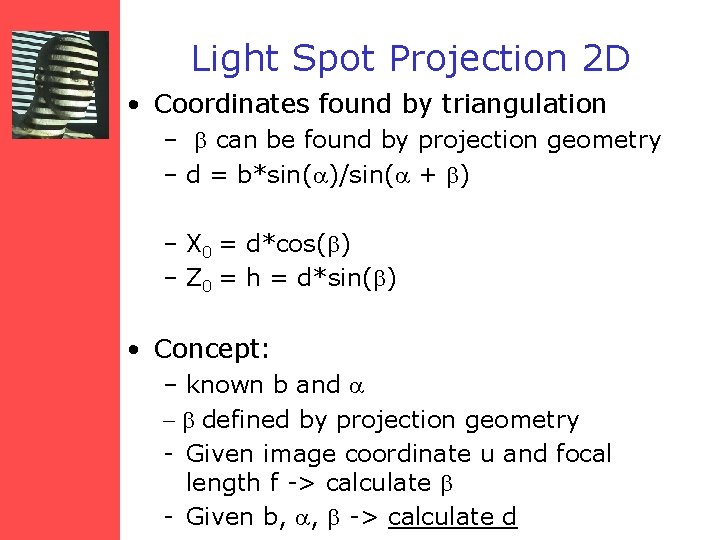
Light Spot Projection 2 D • Coordinates found by triangulation – b can be found by projection geometry – d = b*sin(a)/sin(a + b) – X 0 = d*cos(b) – Z 0 = h = d*sin(b) • Concept: – known b and a - b defined by projection geometry - Given image coordinate u and focal length f -> calculate b - Given b, a, b -> calculate d
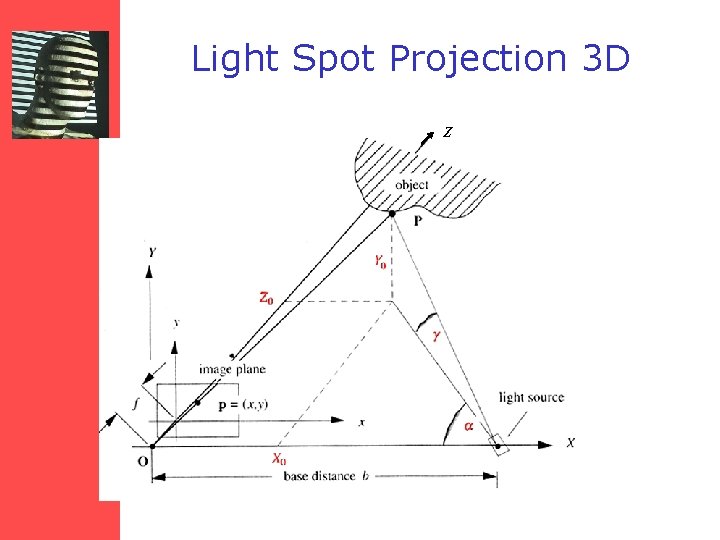
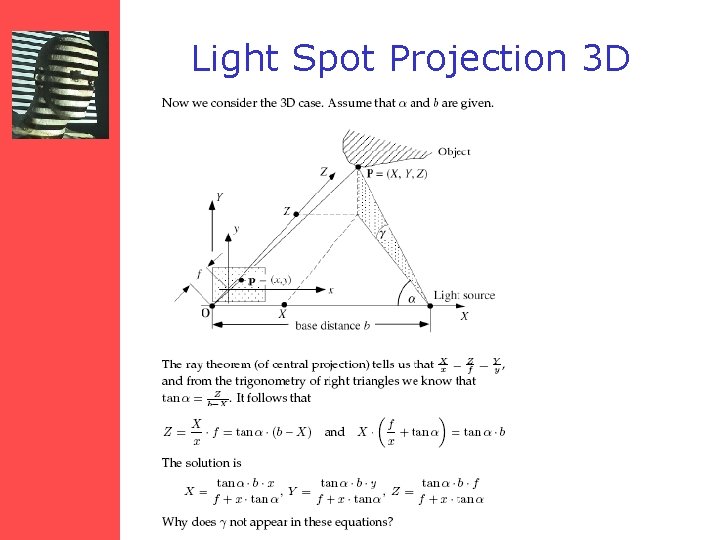
Light Spot Projection 3 D Z
Light Spot Projection 3 D
Special Case: Light Spot Stereo
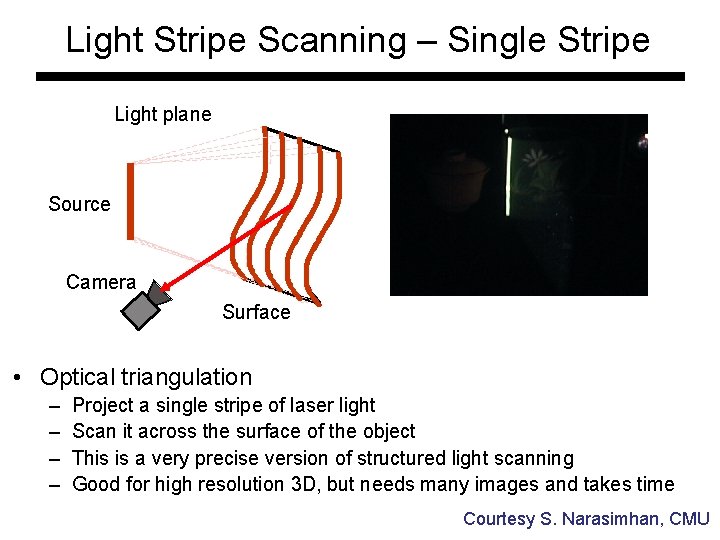
Light Stripe Scanning – Single Stripe Light plane Source Camera Surface • Optical triangulation – – Project a single stripe of laser light Scan it across the surface of the object This is a very precise version of structured light scanning Good for high resolution 3 D, but needs many images and takes time Courtesy S. Narasimhan, CMU
Light Stripe Projection
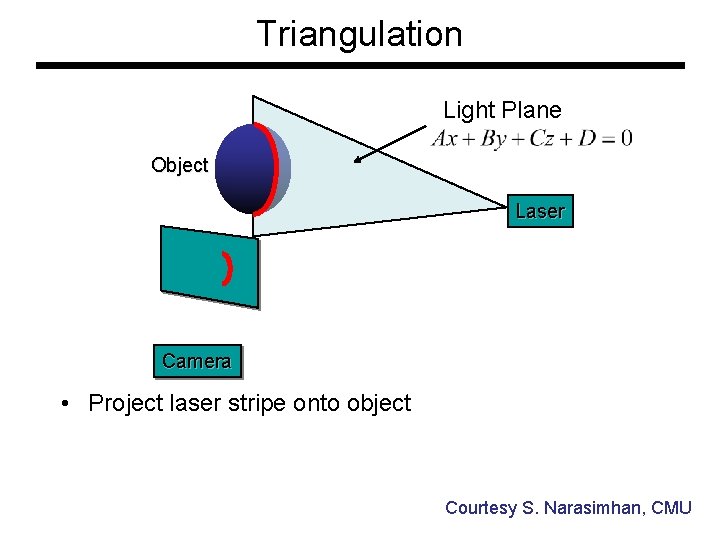
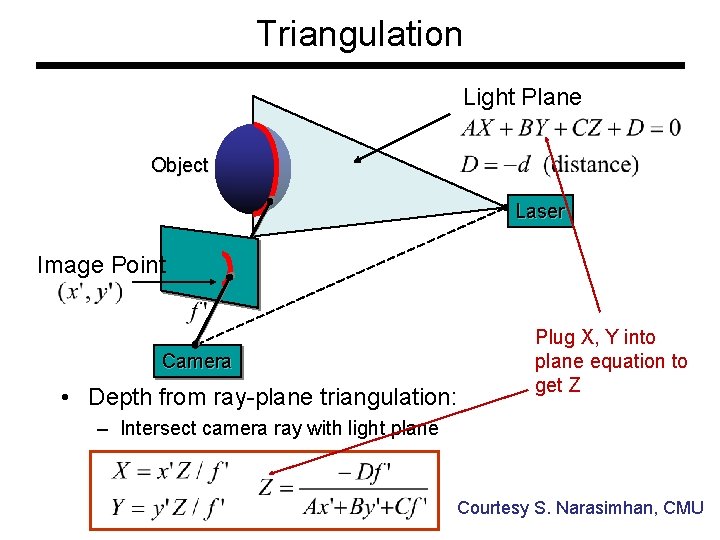
Triangulation Light Plane Object Laser Camera • Project laser stripe onto object Courtesy S. Narasimhan, CMU
Triangulation Light Plane Object Laser Image Point Camera • Depth from ray-plane triangulation: Plug X, Y into plane equation to get Z – Intersect camera ray with light plane Courtesy S. Narasimhan, CMU
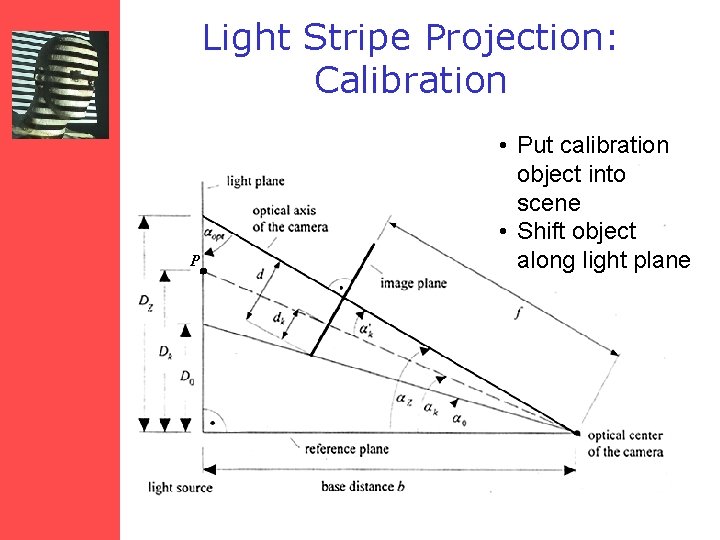
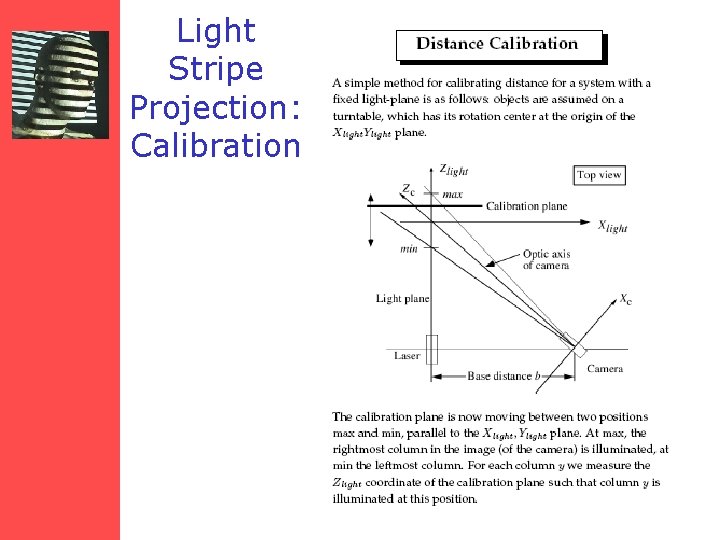
Light Stripe Projection: Calibration P • Put calibration object into scene • Shift object along light plane
Light Stripe Projection: Calibration
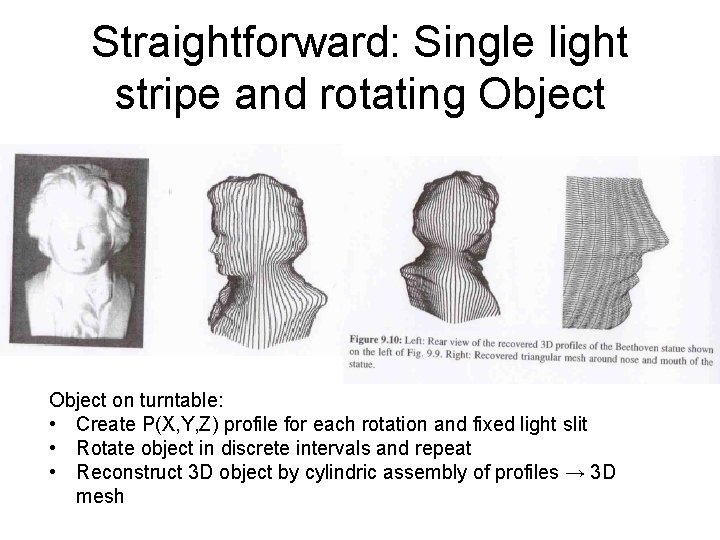
Straightforward: Single light stripe and rotating Object on turntable: • Create P(X, Y, Z) profile for each rotation and fixed light slit • Rotate object in discrete intervals and repeat • Reconstruct 3 D object by cylindric assembly of profiles → 3 D mesh
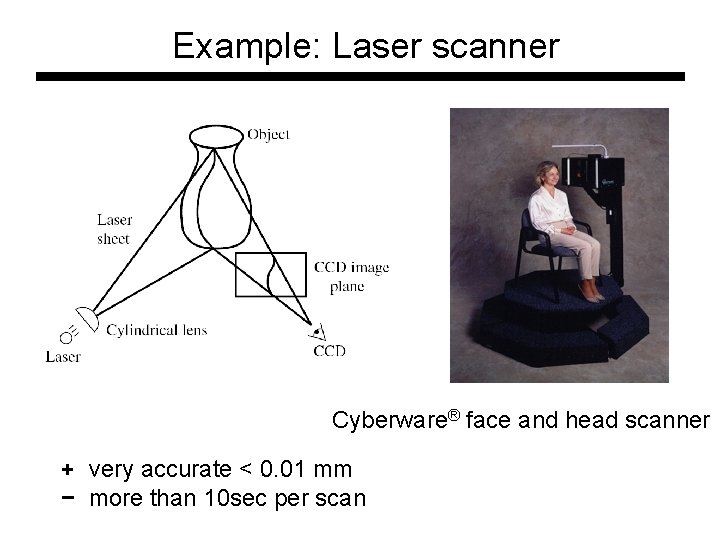
Example: Laser scanner Cyberware® face and head scanner + very accurate < 0. 01 mm − more than 10 sec per scan
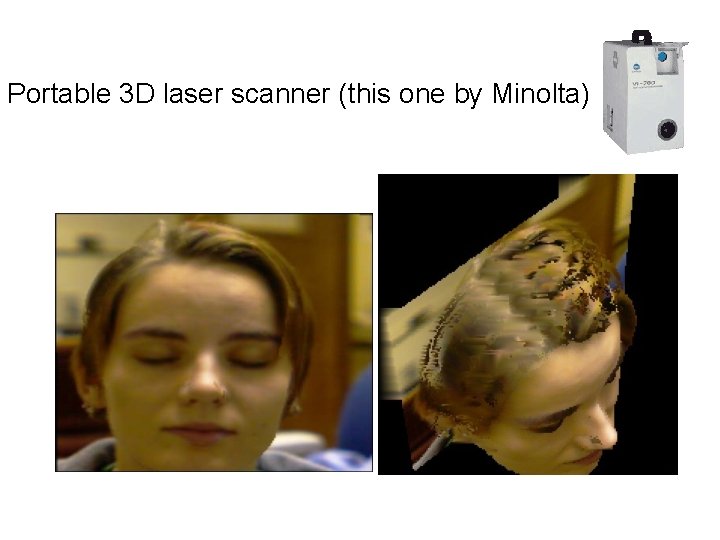
Portable 3 D laser scanner (this one by Minolta)
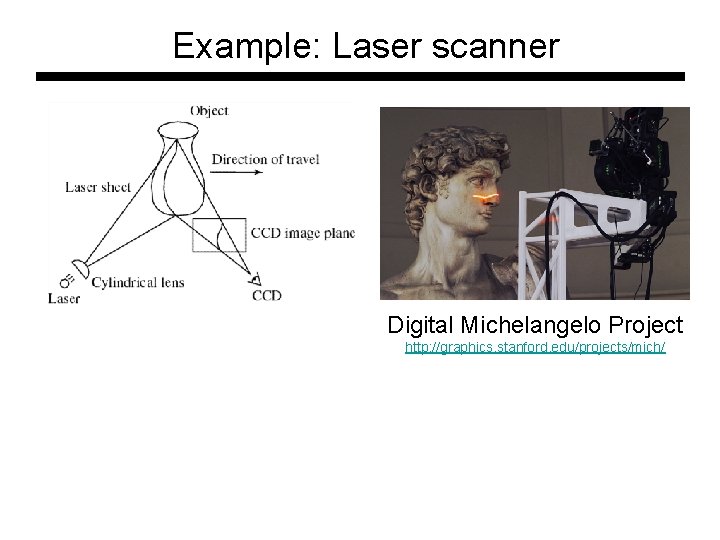
Example: Laser scanner Digital Michelangelo Project http: //graphics. stanford. edu/projects/mich/
Can we do it without expensive equipment?
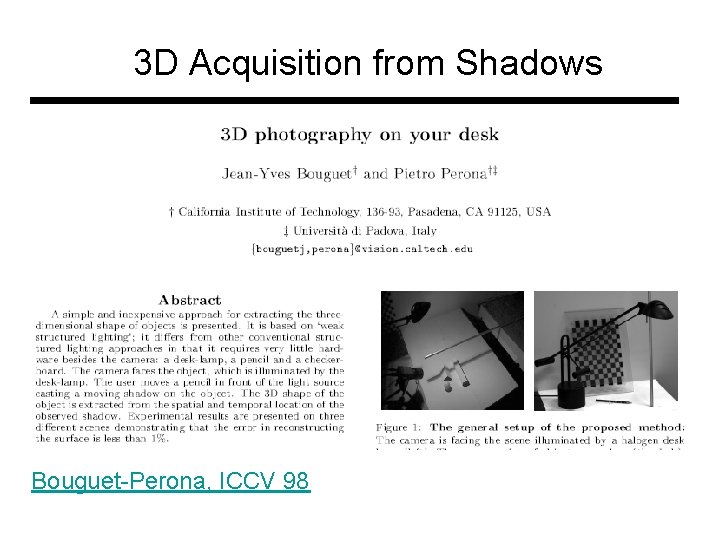
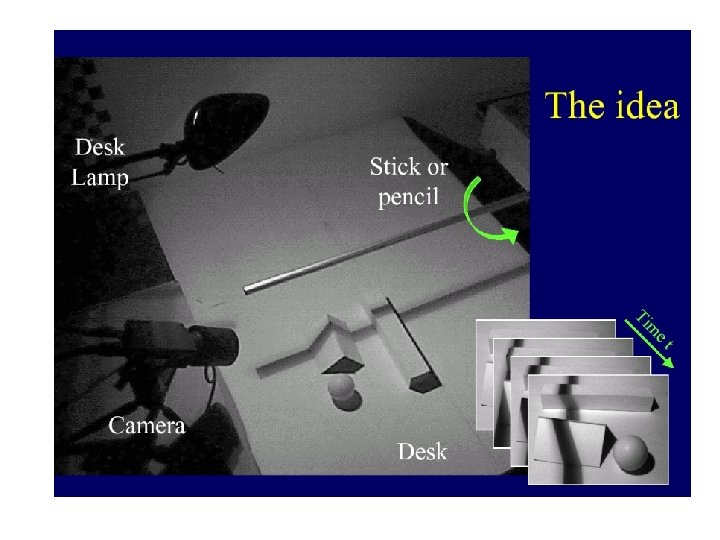
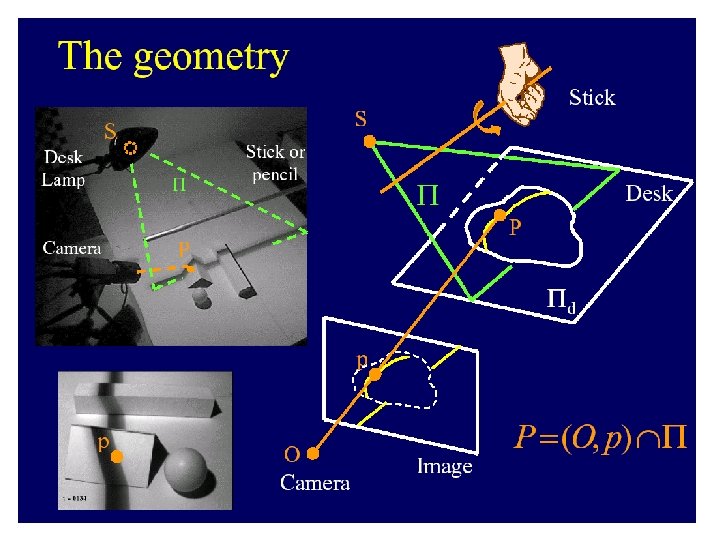
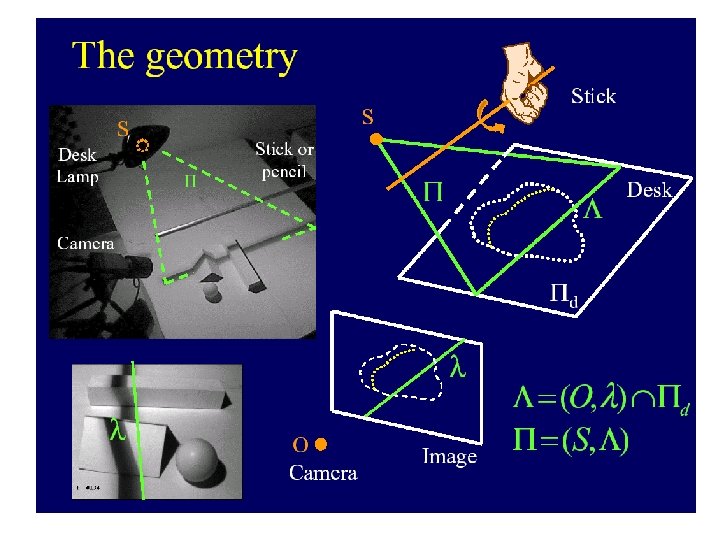
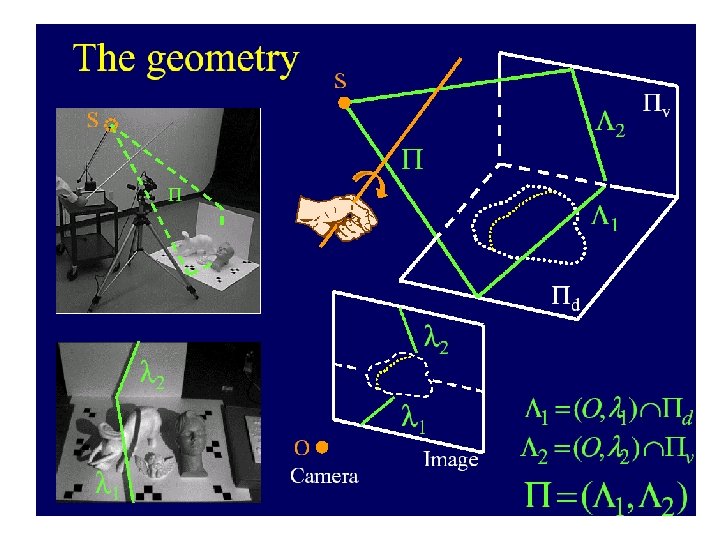
3 D Acquisition from Shadows Bouguet-Perona, ICCV 98
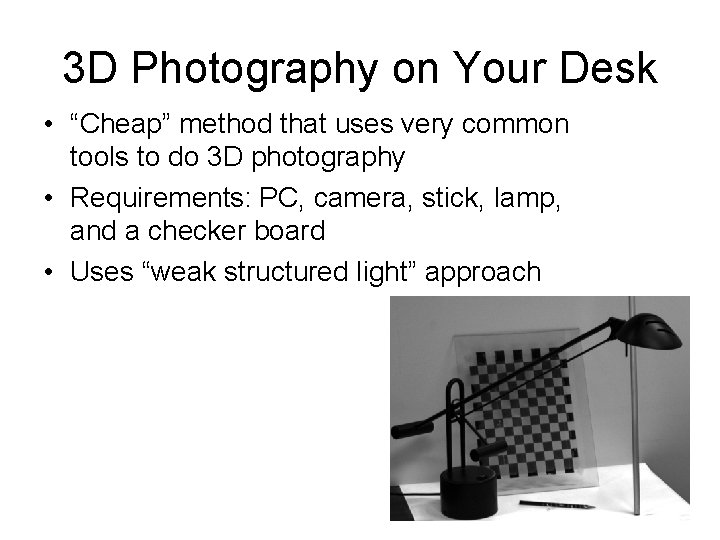
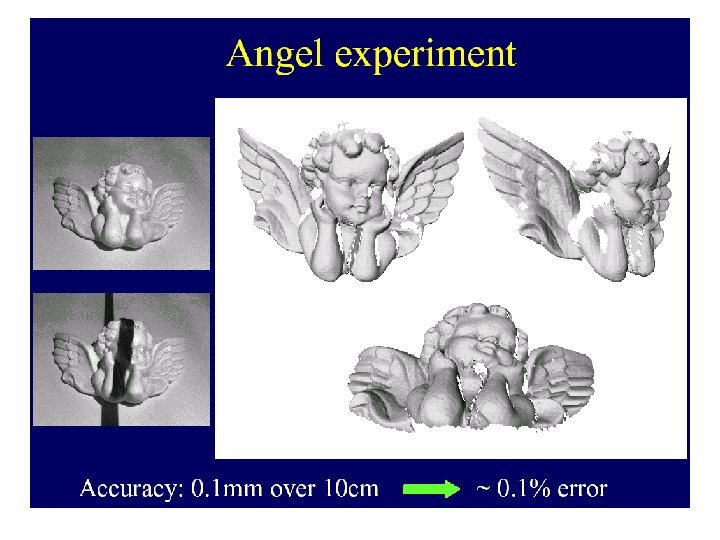
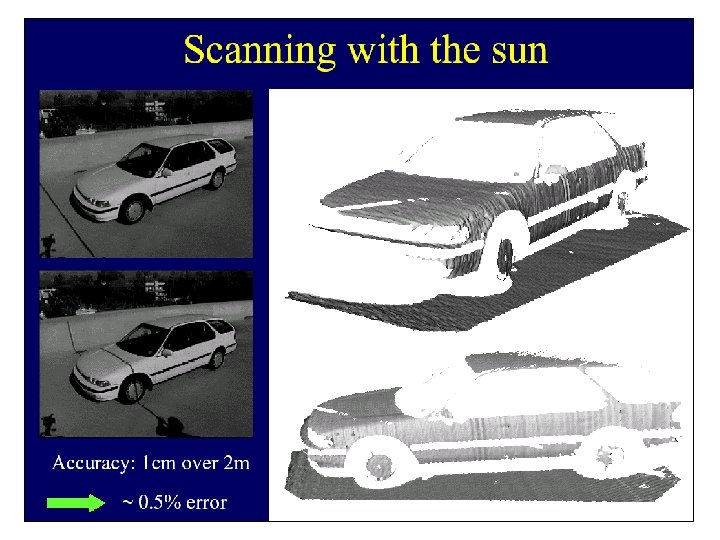
3 D Photography on Your Desk • “Cheap” method that uses very common tools to do 3 D photography • Requirements: PC, camera, stick, lamp, and a checker board • Uses “weak structured light” approach
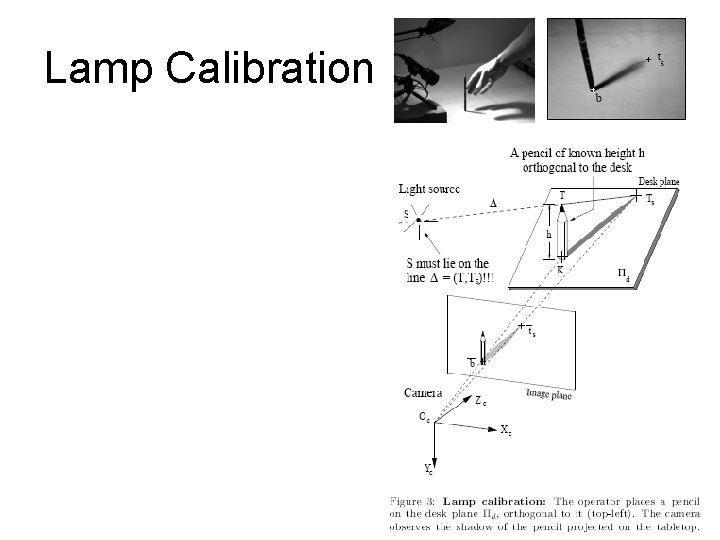
Lamp Calibration
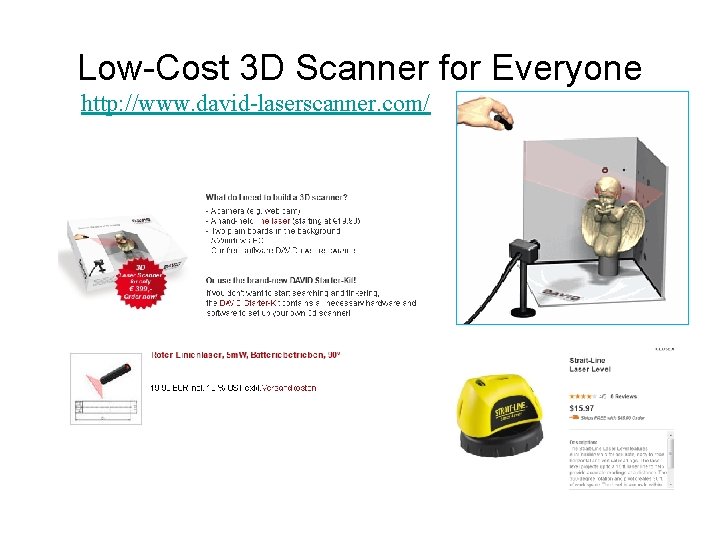
Low-Cost 3 D Scanner for Everyone http: //www. david-laserscanner. com/
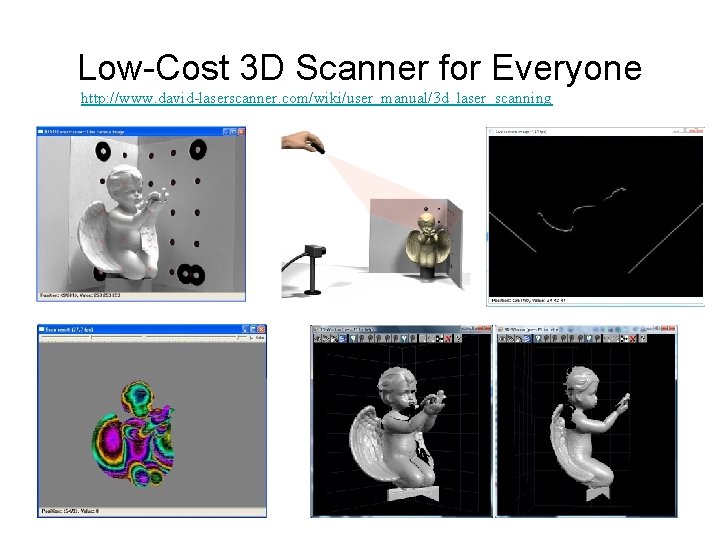
Low-Cost 3 D Scanner for Everyone http: //www. david-laserscanner. com/wiki/user_manual/3 d_laser_scanning
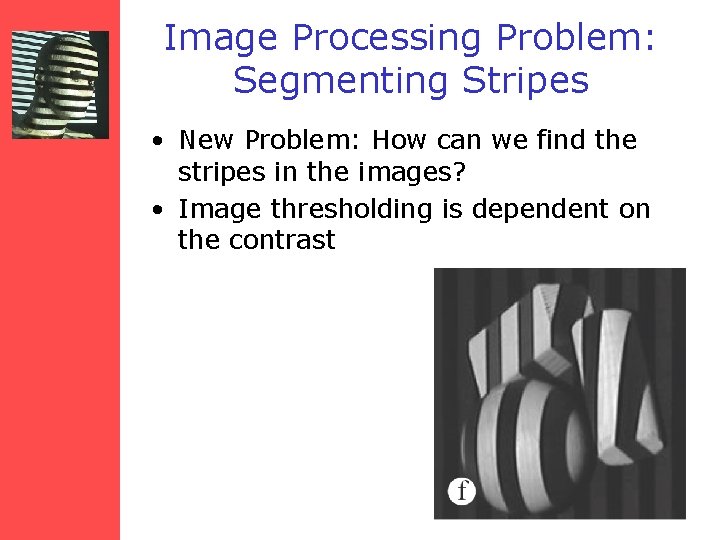
Image Processing Problem: Segmenting Stripes • New Problem: How can we find the stripes in the images? • Image thresholding is dependent on the contrast
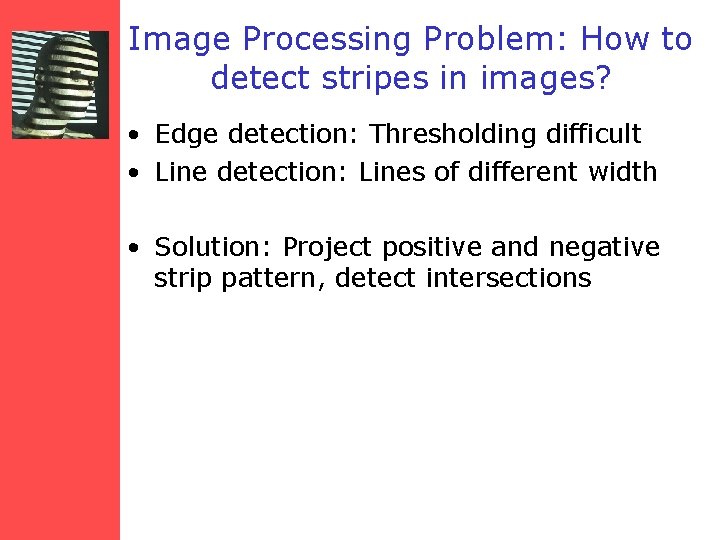
Image Processing Problem: How to detect stripes in images? • Edge detection: Thresholding difficult • Line detection: Lines of different width • Solution: Project positive and negative strip pattern, detect intersections
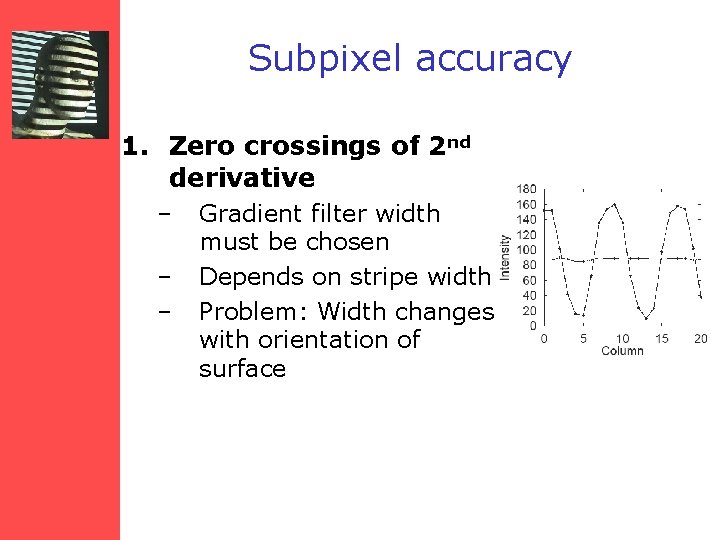
Subpixel accuracy 1. Zero crossings of 2 nd derivative – – – Gradient filter width must be chosen Depends on stripe width Problem: Width changes with orientation of surface
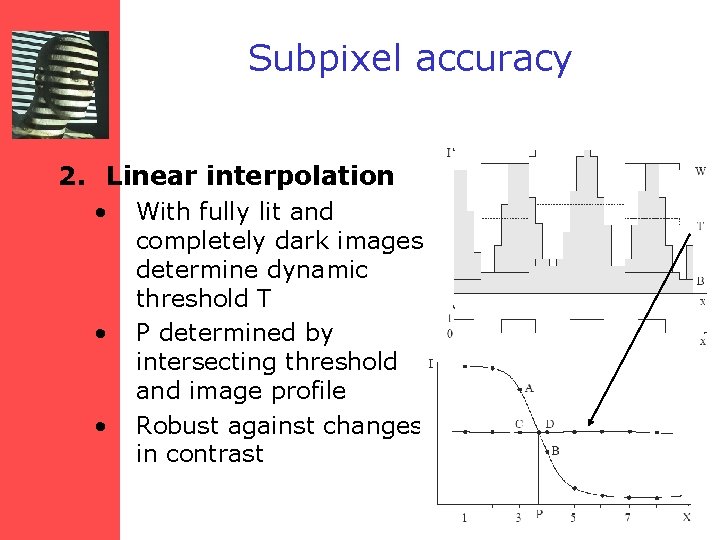
Subpixel accuracy 2. Linear interpolation • • • With fully lit and completely dark images determine dynamic threshold T P determined by intersecting threshold and image profile Robust against changes in contrast
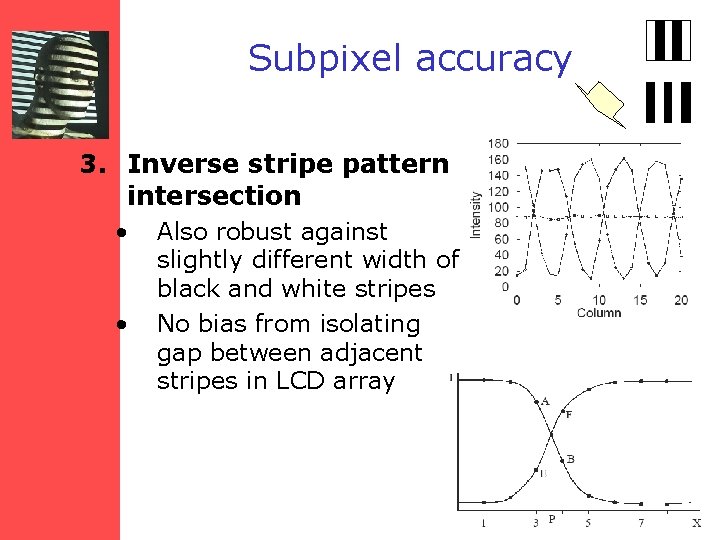
Subpixel accuracy 3. Inverse stripe pattern intersection • • Also robust against slightly different width of black and white stripes No bias from isolating gap between adjacent stripes in LCD array +
Image Processing Problem: How to detect stripes in images? • Edge detection • Line detection • Solution: Project positive and negative strip pattern, detect intersections • But: set of lines, uniqueness? , which part of the line corresponds to which light plane?
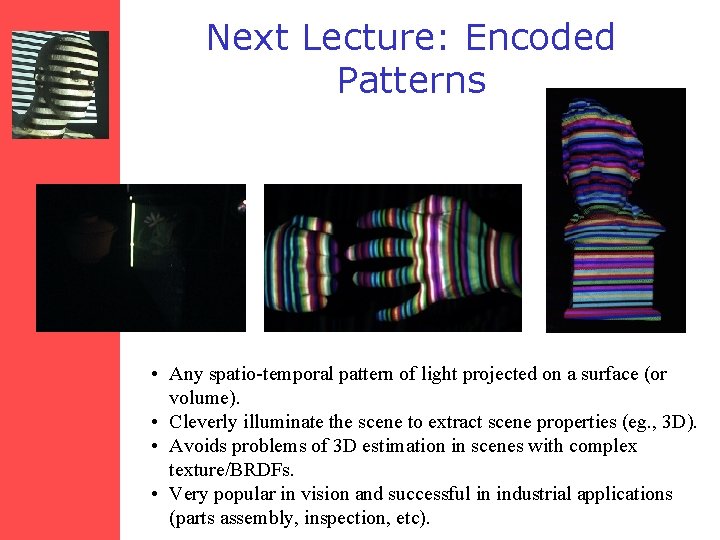
Next Lecture: Encoded Patterns • Any spatio-temporal pattern of light projected on a surface (or volume). • Cleverly illuminate the scene to extract scene properties (eg. , 3 D). • Avoids problems of 3 D estimation in scenes with complex texture/BRDFs. • Very popular in vision and successful in industrial applications (parts assembly, inspection, etc).