
Soil Nutrients and Fertilizers Essential Standard 6 00
- Slides: 66
Soil Nutrients and Fertilizers Essential Standard 6. 00 - Explain the role of nutrients and fertilizers.
Objective 6. 01 • Discuss macro and micro nutrients and the role they play in plant deficiencies.
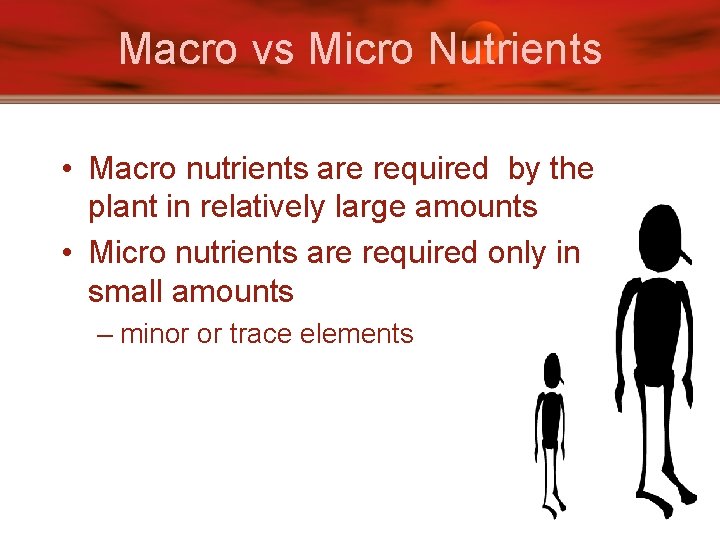
Macro vs Micro Nutrients • Macro nutrients are required by the plant in relatively large amounts • Micro nutrients are required only in small amounts – minor or trace elements
Macro nutrients • Non-mineral elements – carbon (C) – hydrogen (H) – oxygen (O) • Primary Nutrients – Nitrogen (N) – Phosphorus (P) – Potassium (K) • Secondary Nutrients – calcium (Ca) – magnesium (Mg) – sulfur (S)
Micro nutrients • • Iron (Fe) Copper (Cu) Zinc (Zn) Boron (B) Molybdenum (Mo) Manganese (Mn) Chlorine (Cl)
Functions of Nitrogen • Promotes growth of leaves and stems • Gives dark green color and improves quality of foliage • Necessary to develop cell proteins and chlorophyll
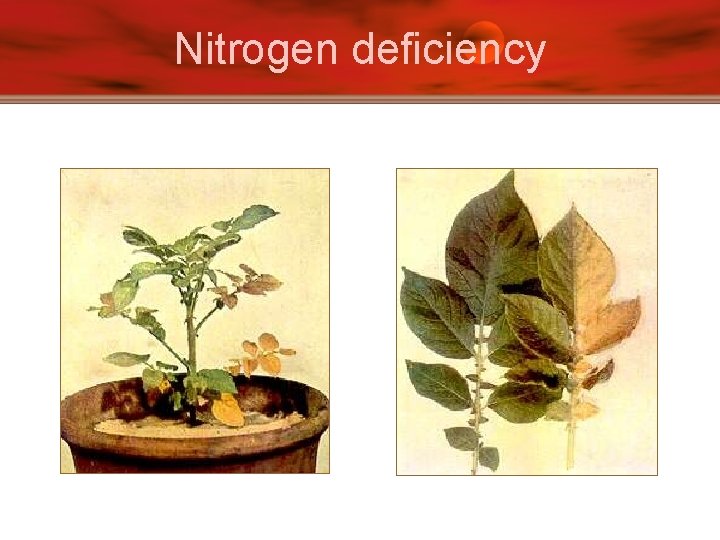
Nitrogen • Deficiency symptoms – sick, yellow-green color – short stems, small leaves, pale colored leaves and flowers – slow and dwarfed plant growth
Nitrogen deficiency
Functions of Phosphorus • Stimulates early formation and growth of roots • Provides for fast and vigorous growth and speeds maturity • Stimulates flowering and seed development • Necessary for the enzyme action of many plant processes
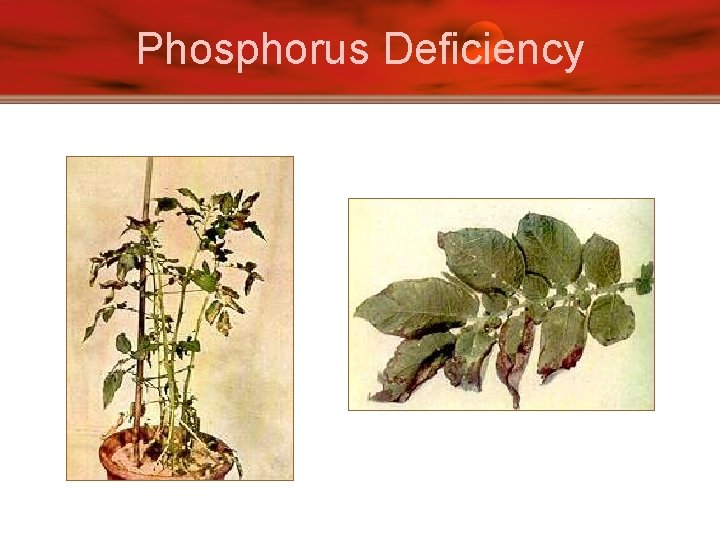
Phosphorus • Deficiency symptoms – decrease in growth – slow maturity – older leaves are purplish color
Phosphorus Deficiency
Functions of Potassium • Used to form carbohydrates and proteins • Formation and transfer of starches, sugars and oils • Increases disease resistance, vigor and hardiness
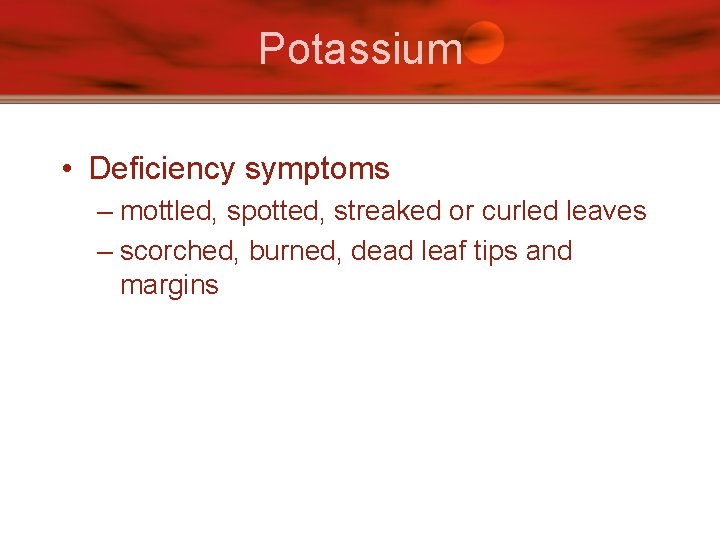
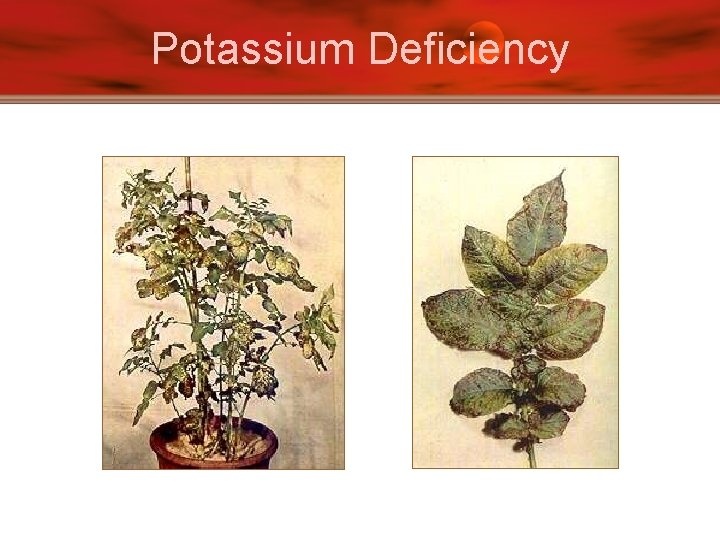
Potassium • Deficiency symptoms – mottled, spotted, streaked or curled leaves – scorched, burned, dead leaf tips and margins
Potassium Deficiency
Secondary Nutrients • Calcium (Ca) • Magnesium (Mg) • Sulfur (S)
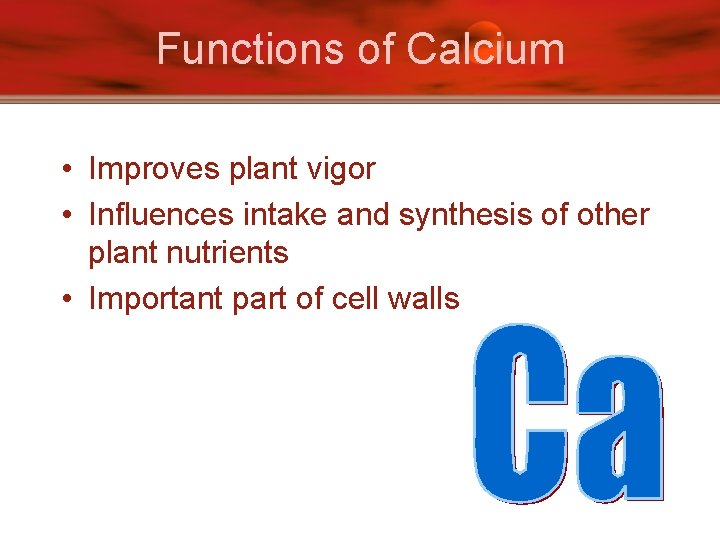
Functions of Calcium • Improves plant vigor • Influences intake and synthesis of other plant nutrients • Important part of cell walls
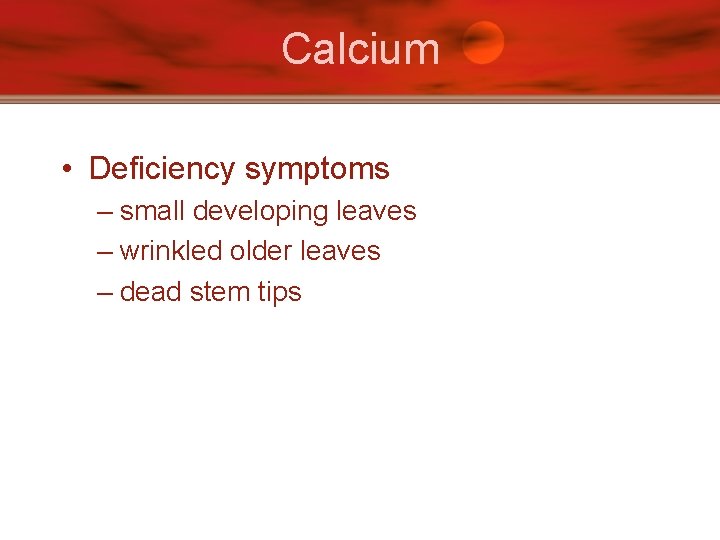
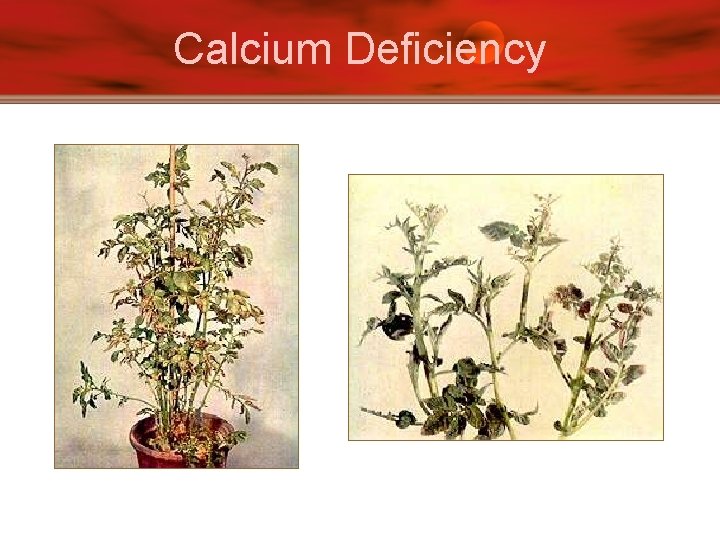
Calcium • Deficiency symptoms – small developing leaves – wrinkled older leaves – dead stem tips
Calcium Deficiency
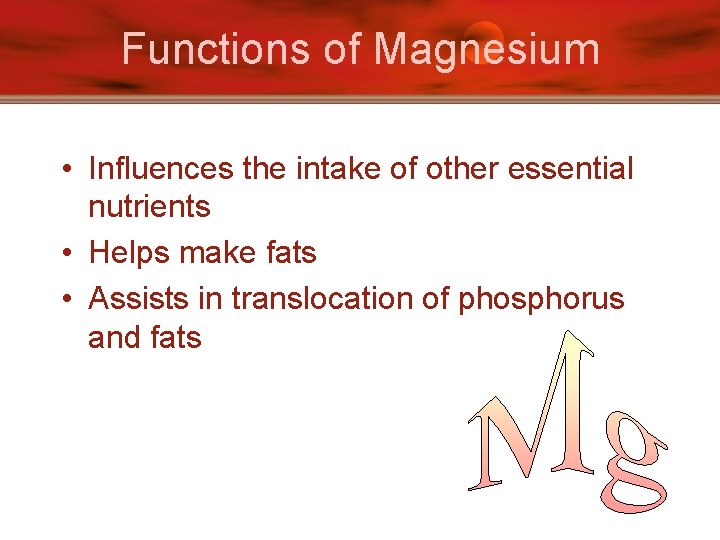
Functions of Magnesium • Influences the intake of other essential nutrients • Helps make fats • Assists in translocation of phosphorus and fats
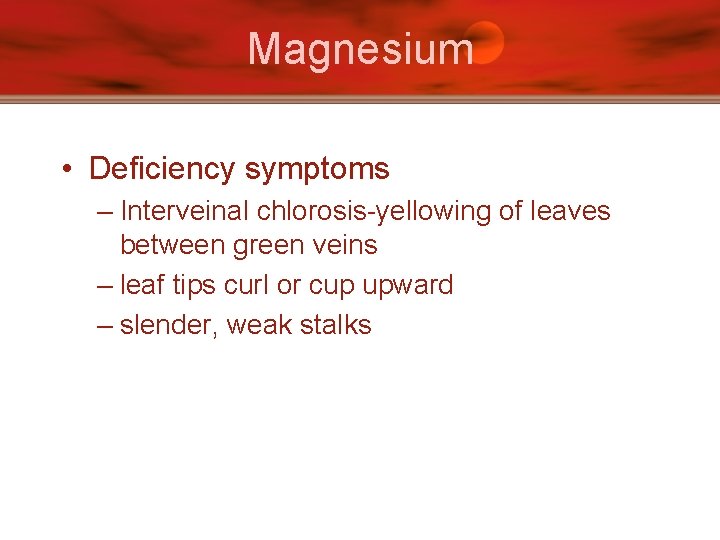
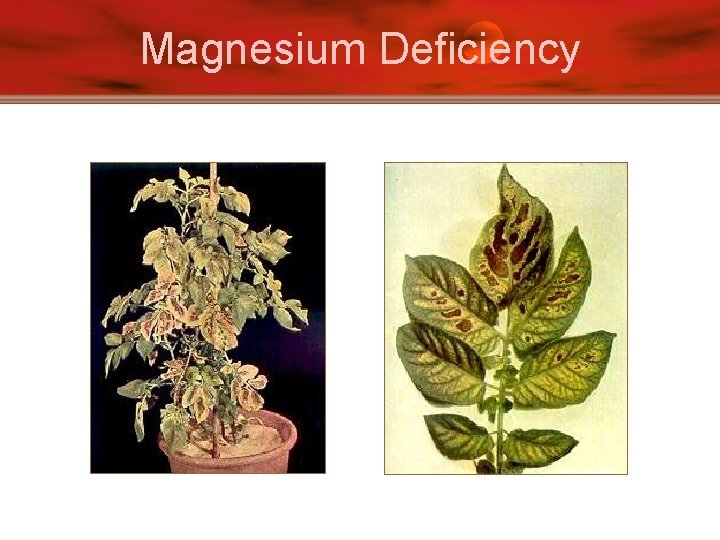
Magnesium • Deficiency symptoms – Interveinal chlorosis-yellowing of leaves between green veins – leaf tips curl or cup upward – slender, weak stalks
Magnesium Deficiency
Functions of Sulfur • Promotes root growth and vigorous vegetative growth • Essential to protein formation
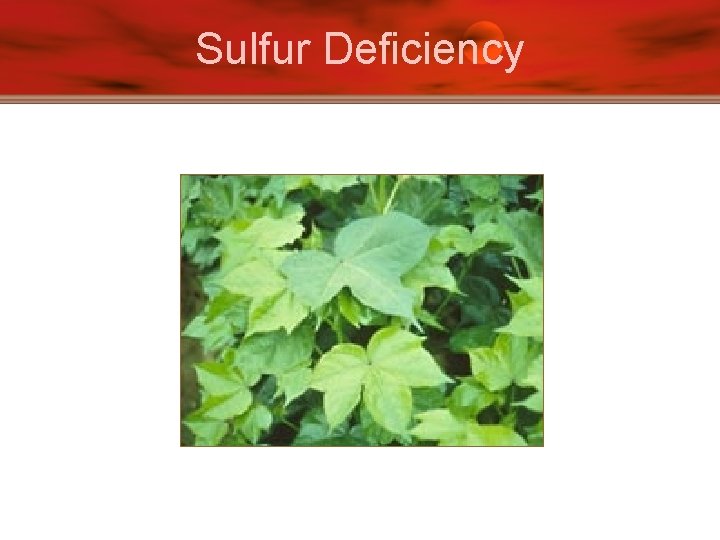
Sulfur • Deficiency symptoms – young leaves are light green with lighter color veins – yellow leaves and stunted growth
Sulfur Deficiency
Micro Nutrients • Also called “trace” elements • Needed by plants in small amounts
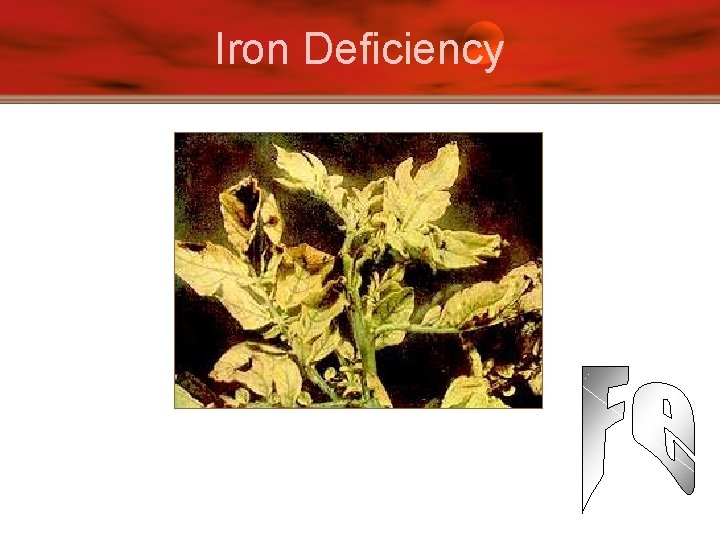
Iron (Fe) • Functions of Iron – Essential for chlorophyll production – Helps carry electrons to mix oxygen with other elements • Deficiency symptoms – mottled and interveinal chlorosis in young leaves – stunted growth and slender, short stems
Iron Deficiency
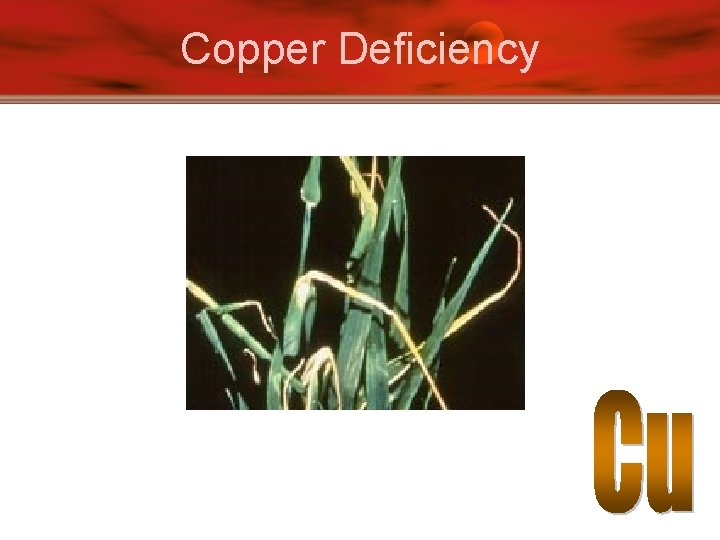
Copper (Cu) • Functions – Helps in the use of Iron – Helps respiration • Deficiency symptoms – young leaves are small and permanently wilt – multiple buds at stem tip
Copper Deficiency
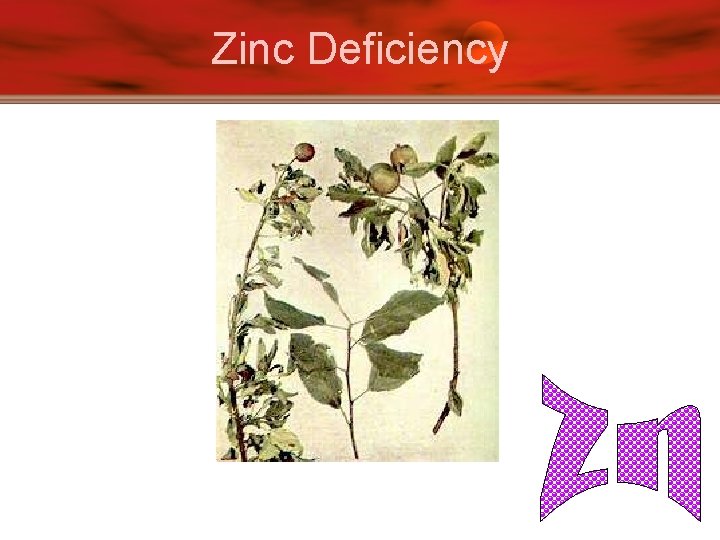
Zinc (Z) • Functions – plant metabolism – helps form growth hormones – reproduction • Deficiency symptoms – retarded growth between nodes (rosetted) – new leaves are thick and small – spotted between veins, discolored veins
Zinc Deficiency
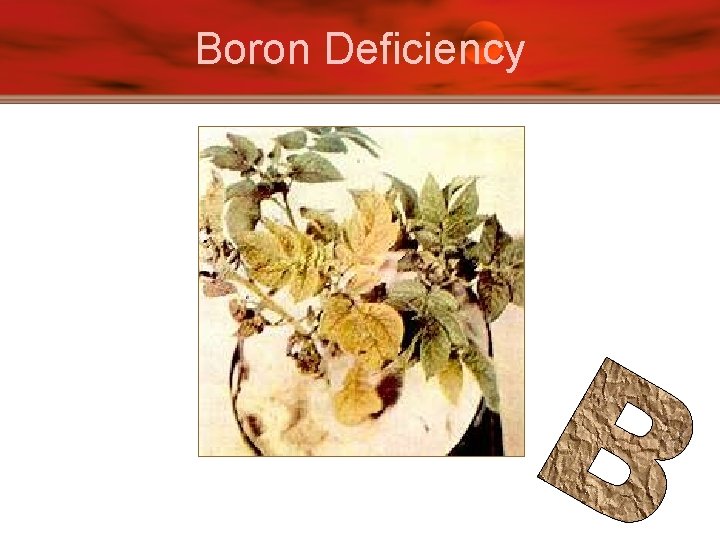
Boron (B) • Functions – affects water absorption by roots – translocation of sugars • Deficiency Symptoms – short, thick stem tips – young leaves of terminal buds are light green at base – leaves become twisted and die
Boron Deficiency
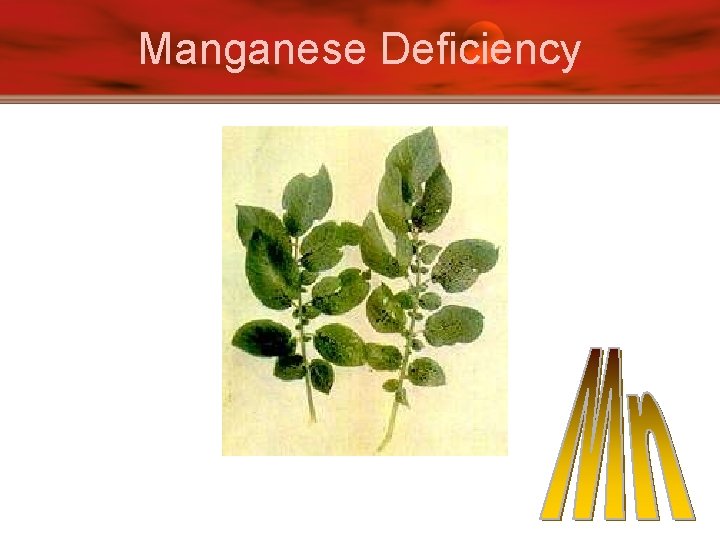
Manganese (Mn) • Functions – plant metabolism – nitrogen transformation • Deficiency symptoms – interveinal chlorosis – young leaves die
Manganese Deficiency
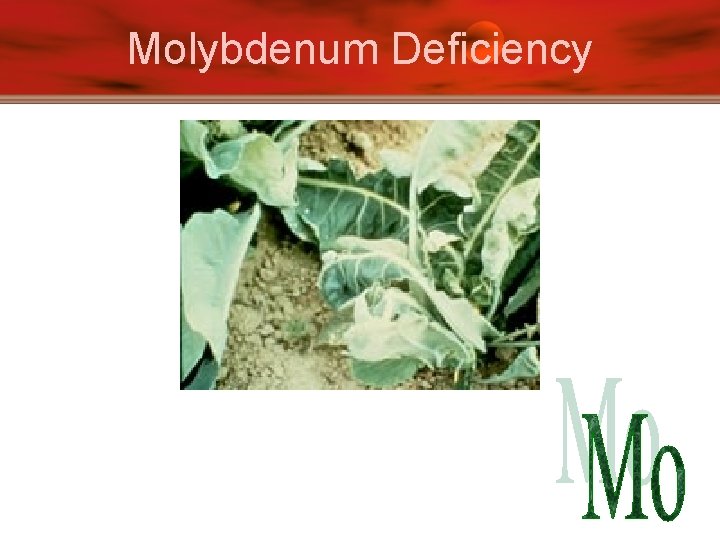
Molybdenum (Mo) • Functions – plant development – reproduction • Deficiency symptoms – stunted growth – yellow leaves, upward curling leaves, leaf margins burn
Molybdenum Deficiency
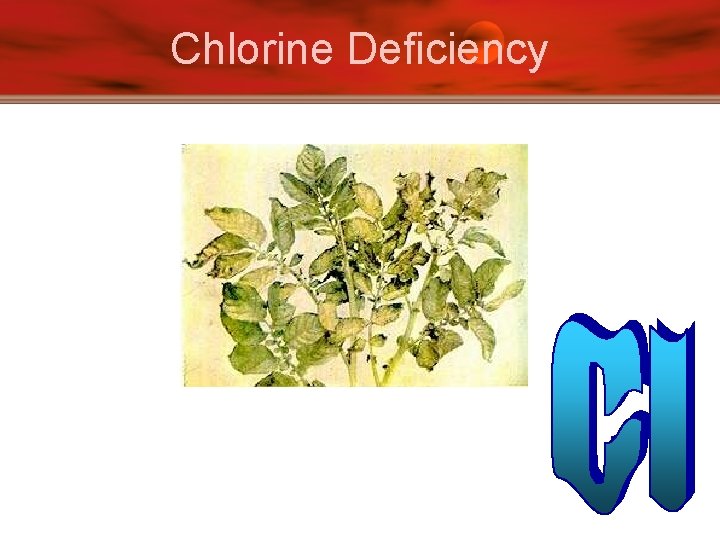
Chlorine (Cl) • Functions – essential to some plant processes – acts in enzyme systems • Deficiency symptoms – usually more problems with too much chlorine or toxicity than with deficiency
Chlorine Deficiency
Fertilizers
Objective 6. 02 • Discuss the advantages and disadvantages of various fertilizers.
Types of Fertilizers • • • Complete Incomplete Organic Inorganic Soluble Insoluble
Complete vs. Incomplete • Complete has all three primary nutrients -nitrogen phosphorous & potassium – Examples: 10 -10 -10, 15 -30 -15, 20 -5 -20 • Incomplete DOES NOT have all three primary nutrients – Examples: 20 -0 -0, 0 -20 -0, 12 -0 -44
Organic Fertilizers • Comes from plant or animal matter and contains carbon compounds • Examples: urea, sludge and animal tankage
Advantages of Organic • Slow release of nutrients • Not easily leached from the soil • Add organic components to growing media
Disadvantages of Organic • • Hard to get Not sterile Low nutrient content Expensive
Inorganic Fertilizers • Comes from sources other than animals or plants • Chemical products
Advantages of Inorganic • Can make the desired ratio of nutrients • easy to get • lower cost
Disadvantages of Inorganic • No organic material • possible chemical building up in growing media
Soluble Fertilizer • Dissolve in water and are applied as a liquid solution • Fertigation – fertilizing through irrigation water – big advantage
Insoluble Fertilizer • Includes granular and slow release applied to the growing media
Granular vs. Slow Release • Granular – relatively inexpensive – easy to find • Slow Release – more expensive because it is coated – more uniform release of nutrients over time period
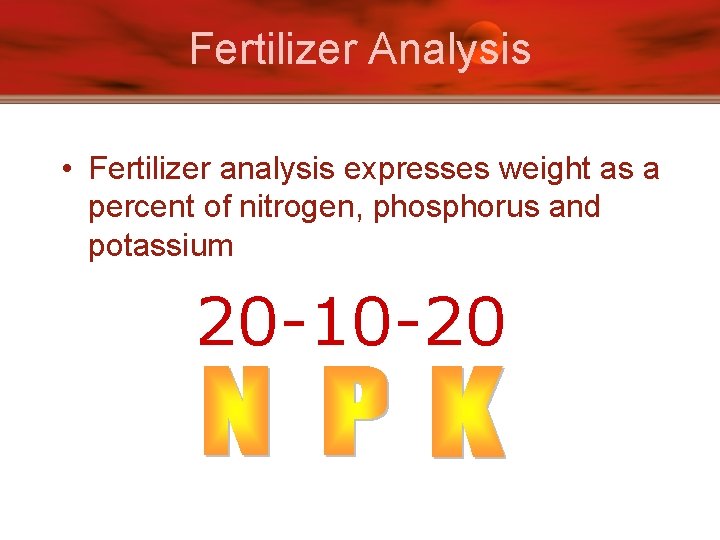
Fertilizer Analysis • Fertilizer analysis expresses weight as a percent of nitrogen, phosphorus and potassium 20 -10 -20
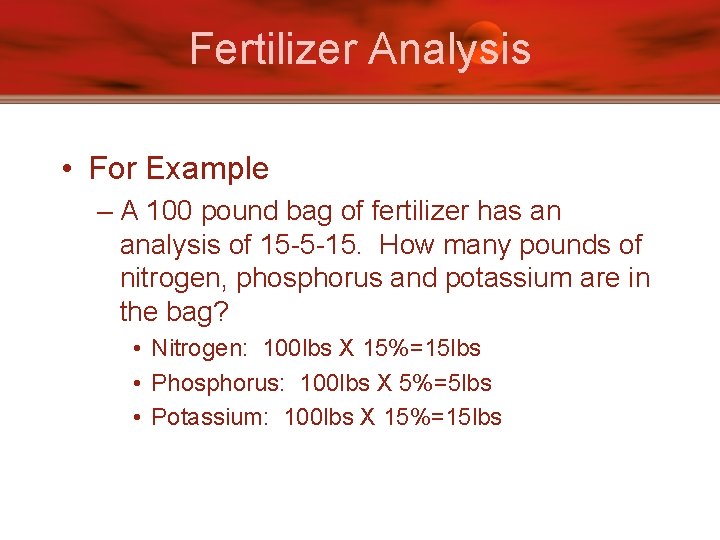
Fertilizer Analysis • For Example – A 100 pound bag of fertilizer has an analysis of 15 -5 -15. How many pounds of nitrogen, phosphorus and potassium are in the bag? • Nitrogen: 100 lbs X 15%=15 lbs • Phosphorus: 100 lbs X 5%=5 lbs • Potassium: 100 lbs X 15%=15 lbs
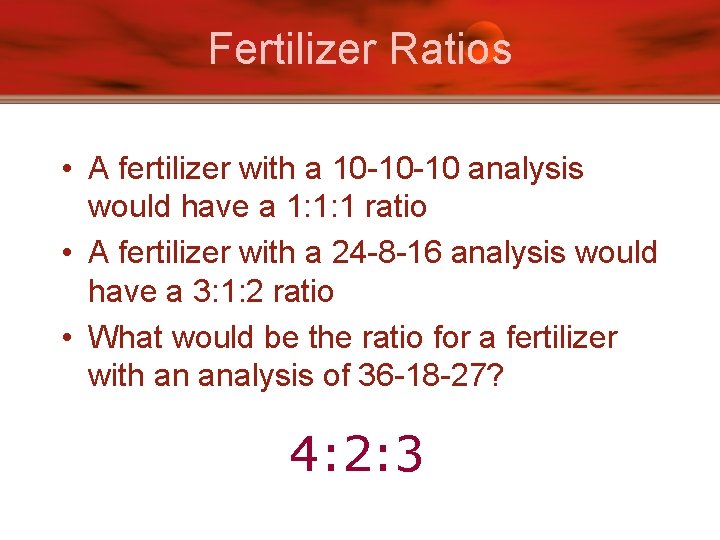
Fertilizer Ratios • A fertilizer with a 10 -10 -10 analysis would have a 1: 1: 1 ratio • A fertilizer with a 24 -8 -16 analysis would have a 3: 1: 2 ratio • What would be the ratio for a fertilizer with an analysis of 36 -18 -27? 4: 2: 3
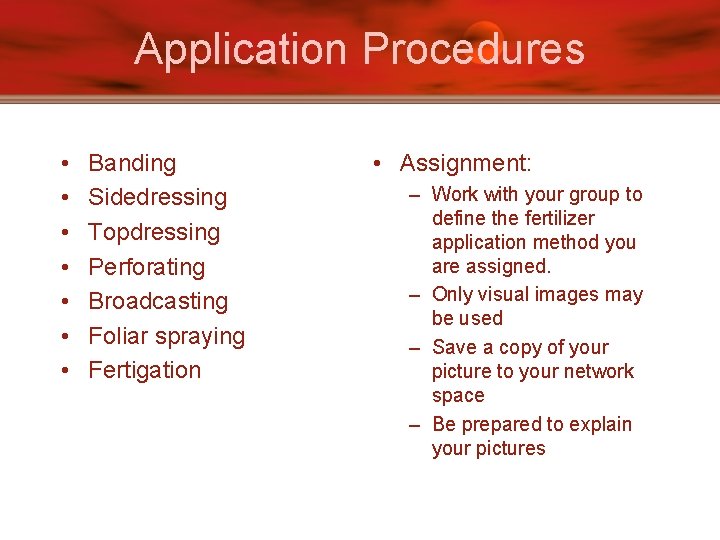
Application Procedures • • Banding Sidedressing Topdressing Perforating Broadcasting Foliar spraying Fertigation • Assignment: – Work with your group to define the fertilizer application method you are assigned. – Only visual images may be used – Save a copy of your picture to your network space – Be prepared to explain your pictures
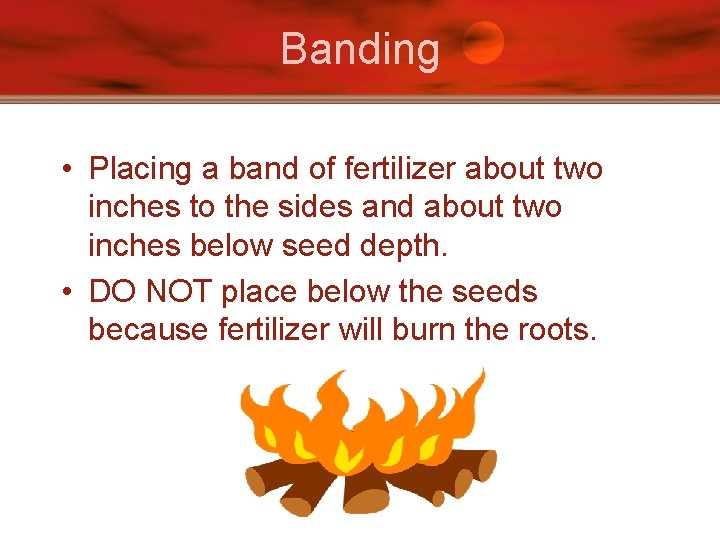
Banding • Placing a band of fertilizer about two inches to the sides and about two inches below seed depth. • DO NOT place below the seeds because fertilizer will burn the roots.
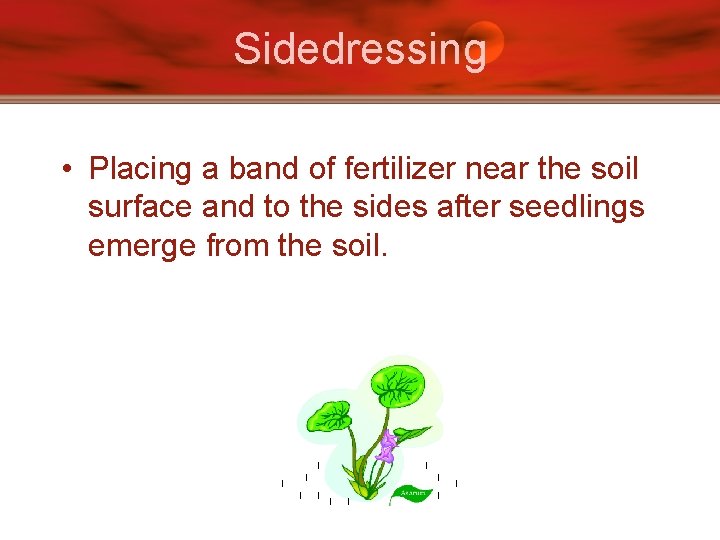
Sidedressing • Placing a band of fertilizer near the soil surface and to the sides after seedlings emerge from the soil.
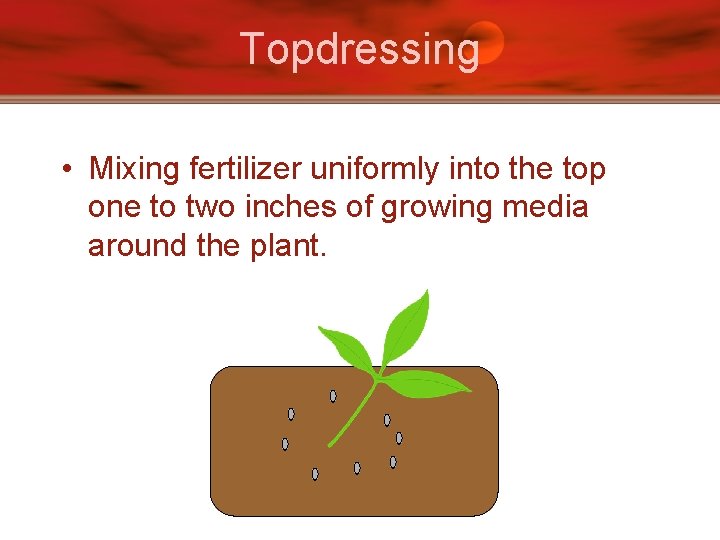
Topdressing • Mixing fertilizer uniformly into the top one to two inches of growing media around the plant.
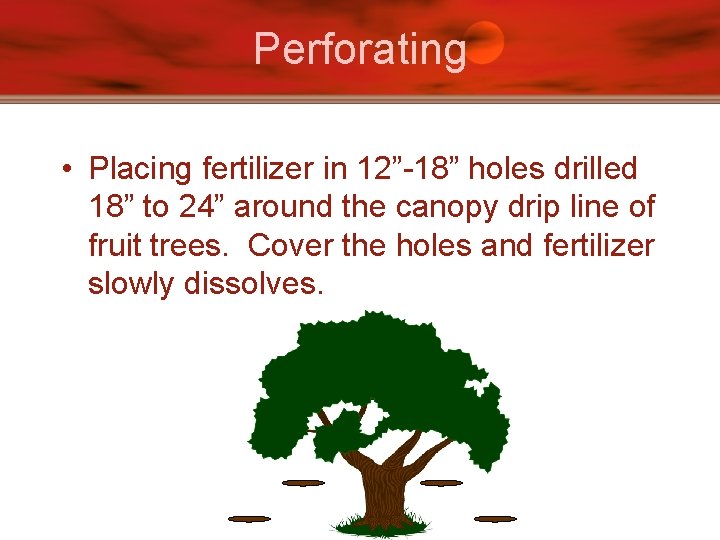
Perforating • Placing fertilizer in 12”-18” holes drilled 18” to 24” around the canopy drip line of fruit trees. Cover the holes and fertilizer slowly dissolves.
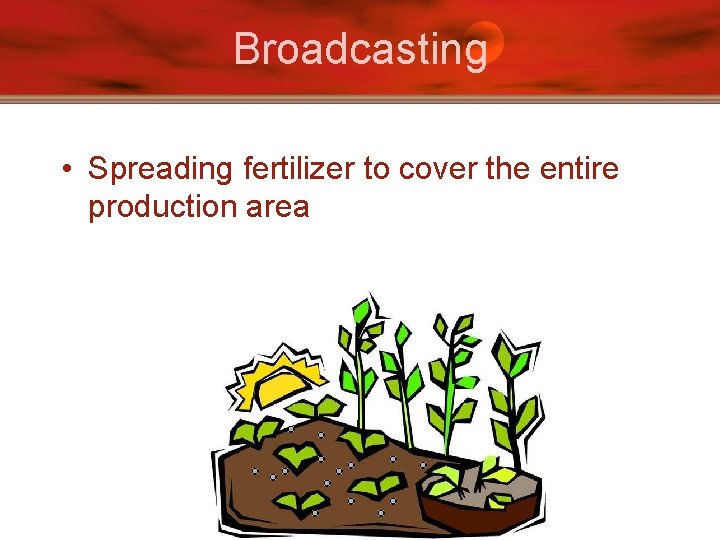
Broadcasting • Spreading fertilizer to cover the entire production area
Foliar Spraying • Spraying micronutrients in a solution directly on plant leaves. • Quickly corrects nutrient deficiencies • Fertilizer concentration should not be too high or leaf burning will occur.
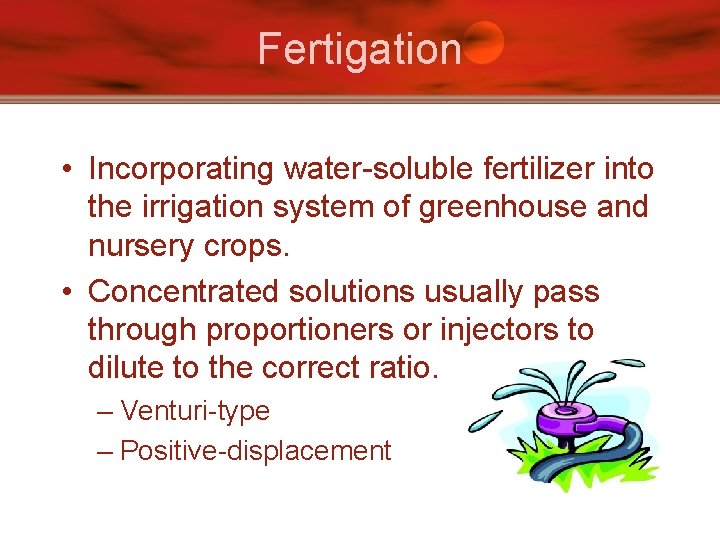
Fertigation • Incorporating water-soluble fertilizer into the irrigation system of greenhouse and nursery crops. • Concentrated solutions usually pass through proportioners or injectors to dilute to the correct ratio. – Venturi-type – Positive-displacement
Venturi-type • Simple and inexpensive • less accurate • depends on water pressure in the hose and in the smaller tube to proportion • Example: Hozon
Positive-displacement • More expensive • very accurate • physically inject and mix specific amounts of concentrated solution and water • Examples: commander proportioners, and Smith injectors
Rules for applying fertilizers • Method used should be practical, effective and cost efficient • Method used affects nutrient availability for plant use • Fertilizer must be dissolved and reach plant roots