SLF Extra Collegiate approach to selfevaluation The Waid

- Slides: 38
SLF Extra Collegiate approach to self-evaluation The Waid Academy
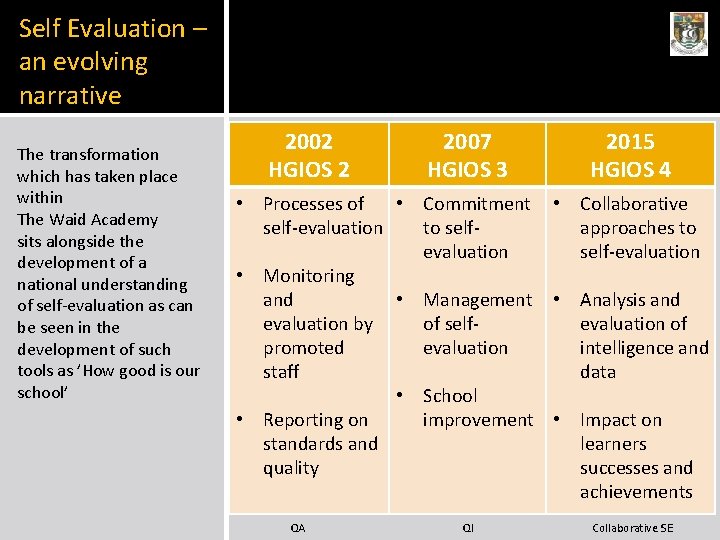
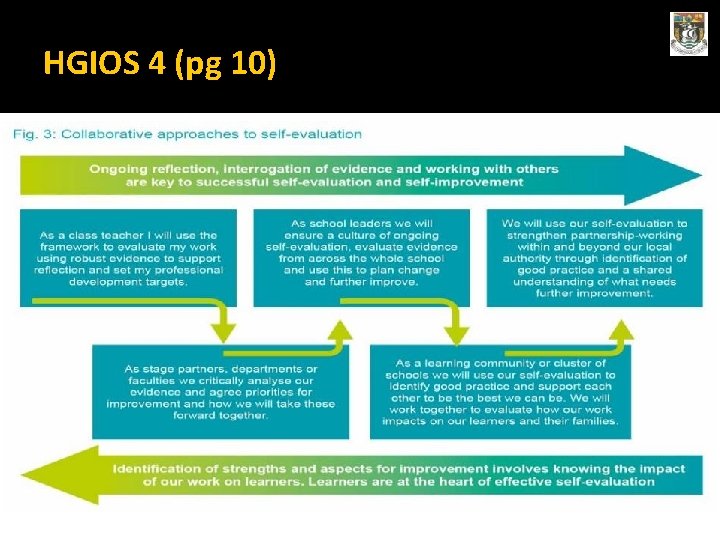
Self Evaluation – an evolving narrative The transformation which has taken place within The Waid Academy sits alongside the development of a national understanding of self-evaluation as can be seen in the development of such tools as ’How good is our school’ 2002 HGIOS 2 2007 HGIOS 3 2015 HGIOS 4 • Processes of • Commitment • Collaborative self-evaluation to selfapproaches to evaluation self-evaluation • Monitoring and • Management • Analysis and evaluation by of selfevaluation of promoted evaluation intelligence and staff data • School • Reporting on improvement • Impact on standards and learners quality successes and achievements QA QI Collaborative SE
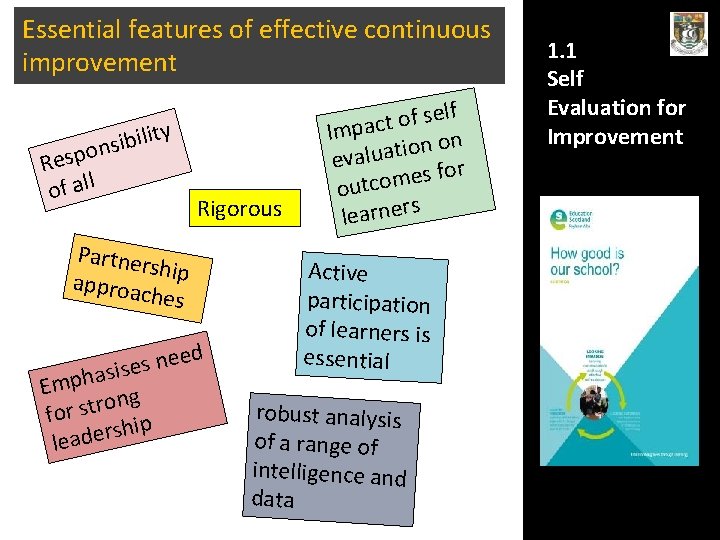
Essential features of effective continuous improvement y t i l i onsib Resp of all Rigorous Partner ship approa ches d e e n es s i s a h Emp g n o r t s for ip h s r e lead elf s f o t c Impa n o i t a evalu r o f s e m outco s learner Active participation of learners is essential robust analysis of a range of intelligence and data 1. 1 Self Evaluation for Improvement
Self Evaluation The most powerful way of thinking about a teacher’s role is for teachers to see themselves as evaluators of their effects on students (Hattie 2012)
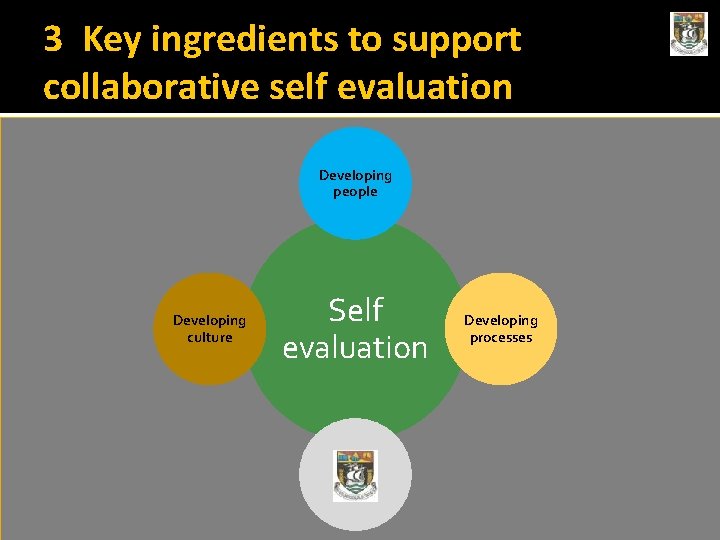
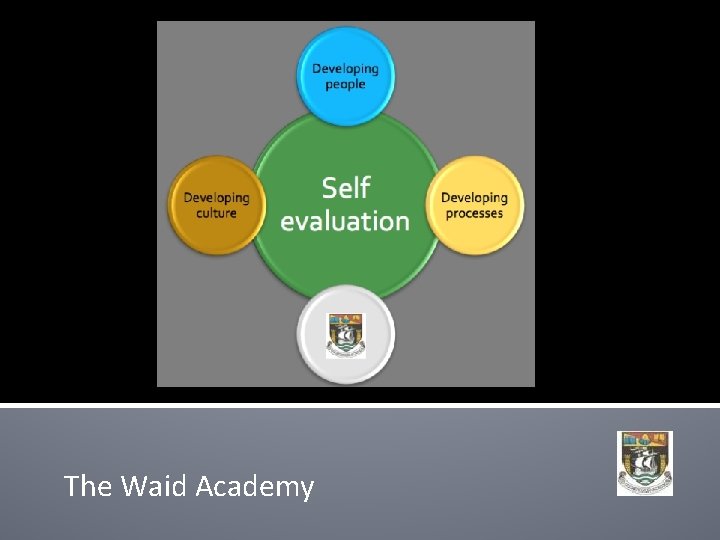
3 Key ingredients to support collaborative self evaluation Developing people Developing culture Self evaluation Developing processes
Culture Learning Community? “ …organisation where the behaviours and practices involved in continuous improvement are actively encouraged” Mumford 1995 Developing culture
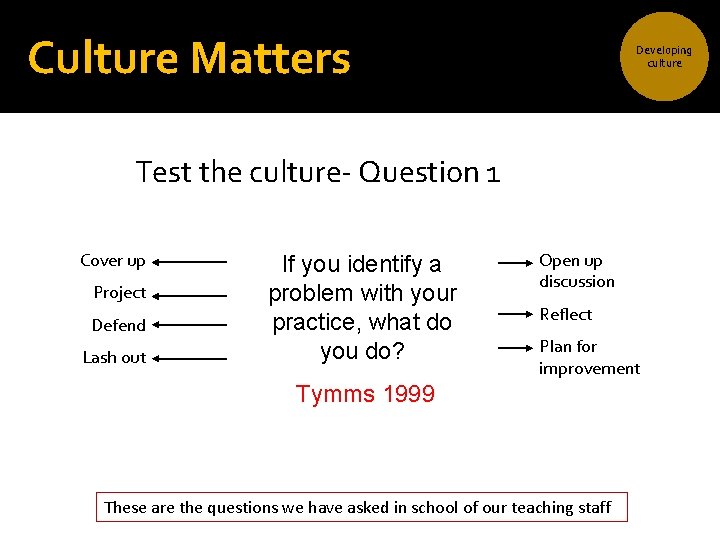
Culture Matters Developing culture Test the culture- Question 1 Cover up Project Defend Lash out If you identify a problem with your practice, what do you do? Open up discussion Reflect Plan for improvement Tymms 1999 These are the questions we have asked in school of our teaching staff
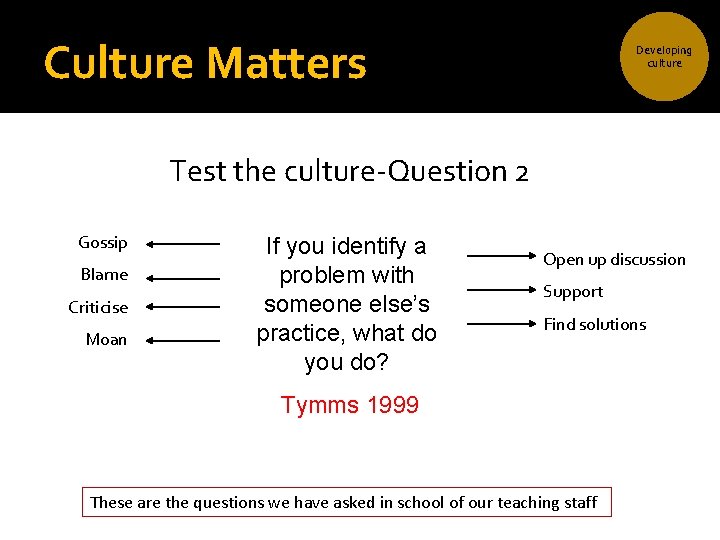
Culture Matters Developing culture Test the culture-Question 2 Gossip Blame Criticise Moan If you identify a problem with someone else’s practice, what do you do? Open up discussion Support Find solutions Tymms 1999 These are the questions we have asked in school of our teaching staff
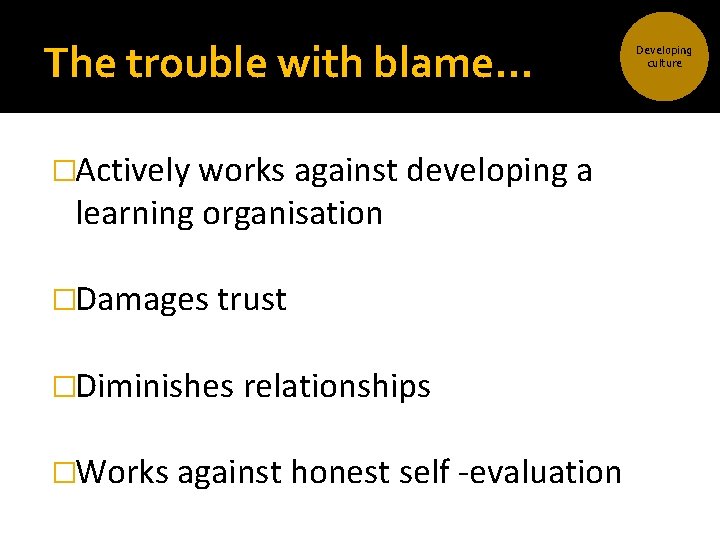
The trouble with blame… �Actively works against developing a learning organisation �Damages trust �Diminishes relationships �Works against honest self -evaluation Developing culture
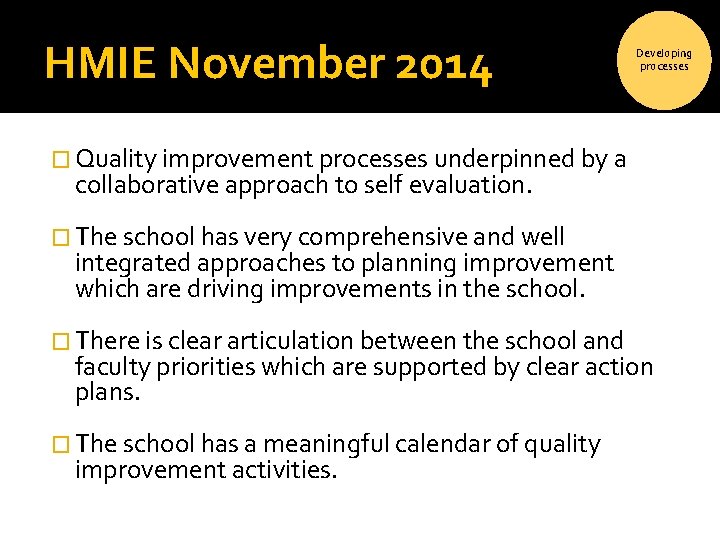
HMIE November 2014 Developing processes � Quality improvement processes underpinned by a collaborative approach to self evaluation. � The school has very comprehensive and well integrated approaches to planning improvement which are driving improvements in the school. � There is clear articulation between the school and faculty priorities which are supported by clear action plans. � The school has a meaningful calendar of quality improvement activities.
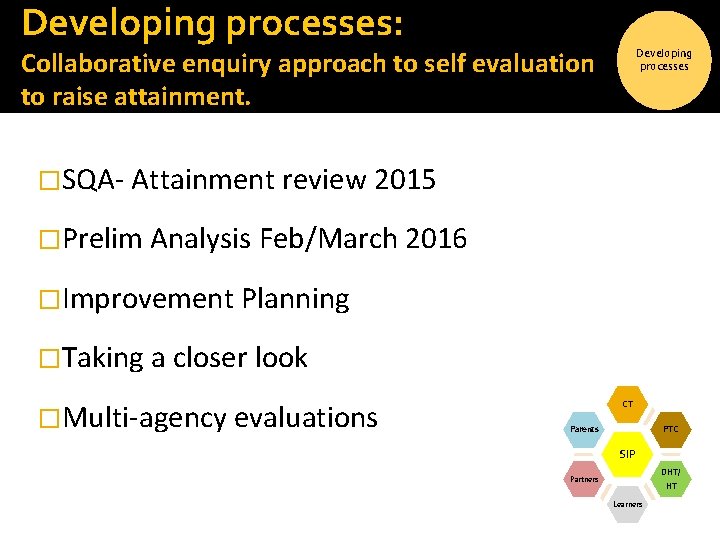
Developing processes: Collaborative enquiry approach to self evaluation to raise attainment. Developing processes �SQA- Attainment review 2015 �Prelim Analysis Feb/March 2016 �Improvement Planning �Taking a closer look �Multi-agency evaluations CT Parents PTC SIP DHT/ HT Partners Learners
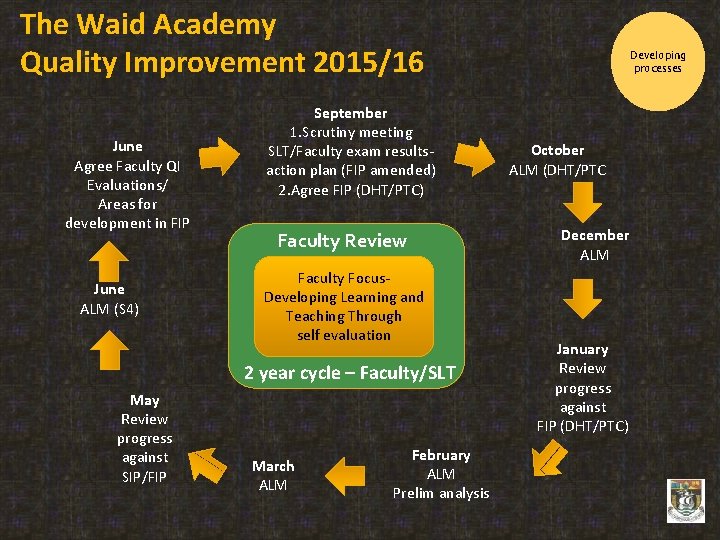
The Waid Academy Quality Improvement 2015/16 June Agree Faculty QI Evaluations/ Areas for development in FIP June ALM (S 4) September 1. Scrutiny meeting SLT/Faculty exam results- action plan (FIP amended) 2. Agree FIP (DHT/PTC) Faculty Review Faculty Focus- Developing Learning and Teaching Through self evaluation 2 year cycle – Faculty/SLT May Review progress against SIP/FIP March ALM February ALM Prelim analysis Developing processes October ALM (DHT/PTC December ALM January Review progress against FIP (DHT/PTC)
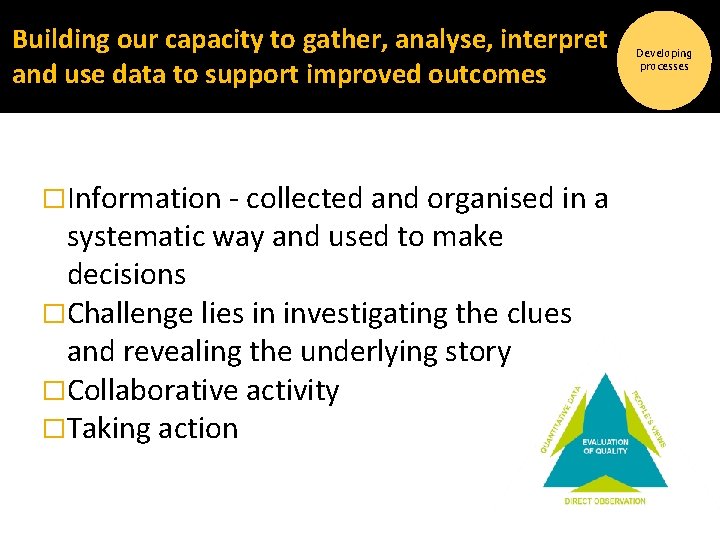
Building our capacity to gather, analyse, interpret and use data to support improved outcomes �Information - collected and organised in a systematic way and used to make decisions �Challenge lies in investigating the clues and revealing the underlying story �Collaborative activity �Taking action Developing processes
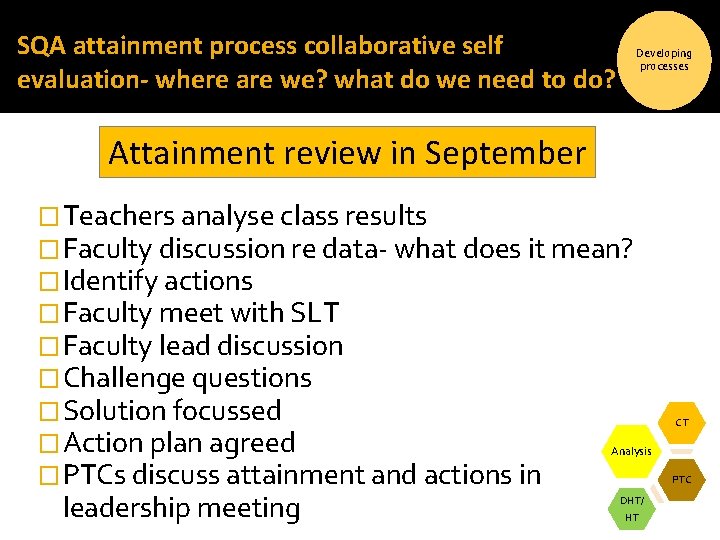
SQA attainment process collaborative self evaluation- where are we? what do we need to do? Developing processes Attainment review in September �Teachers analyse class results �Faculty discussion re data- what does it mean? �Identify actions �Faculty meet with SLT �Faculty lead discussion �Challenge questions �Solution focussed �Action plan agreed Analysis �PTCs discuss attainment and actions in leadership meeting DHT/ HT CT PTC
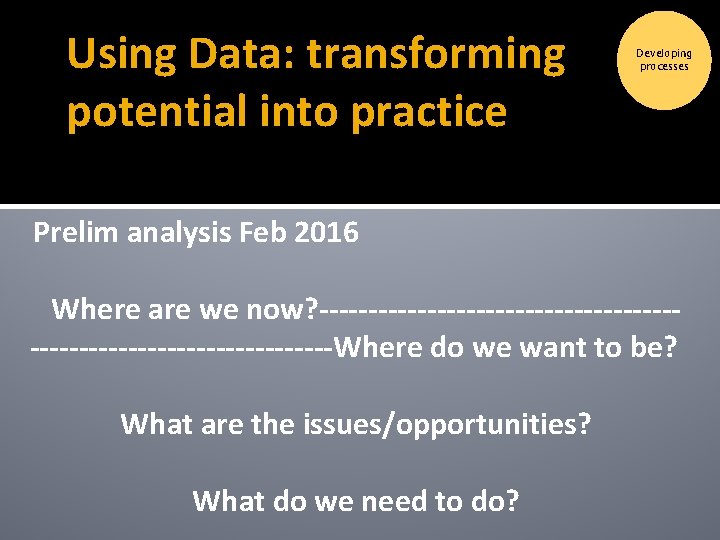
Using Data: transforming potential into practice Developing processes Prelim analysis Feb 2016 Where are we now? ----------------------------------Where do we want to be? What are the issues/opportunities? What do we need to do?
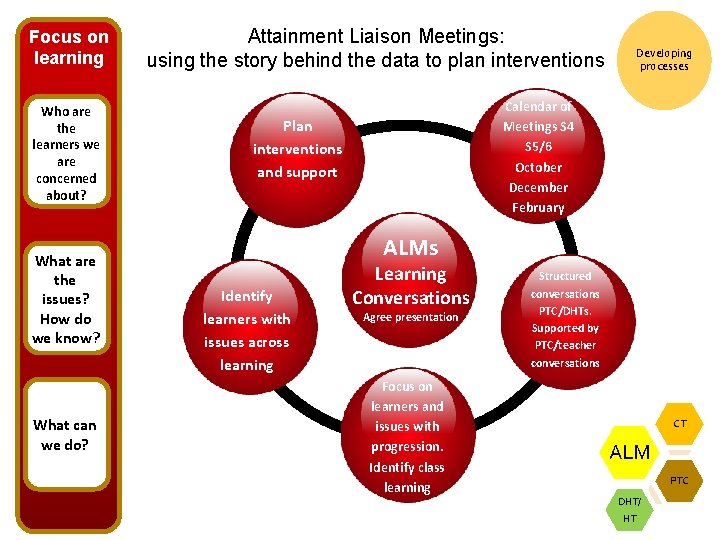
Focus on learning Who are the learners we are concerned about? What are the issues? How do we know? What can we do? Attainment Liaison Meetings: using the story behind the data to plan interventions Developing processes Calendar of Meetings S 4 S 5/6 October December February Plan interventions and support ALMs Identify learners with issues across learning Learning Conversations Agree presentation Focus on learners and issues with progression. Identify class learning Structured conversations PTC/DHTs. Supported by PTC/teacher conversations CT ALM PTC DHT/ HT
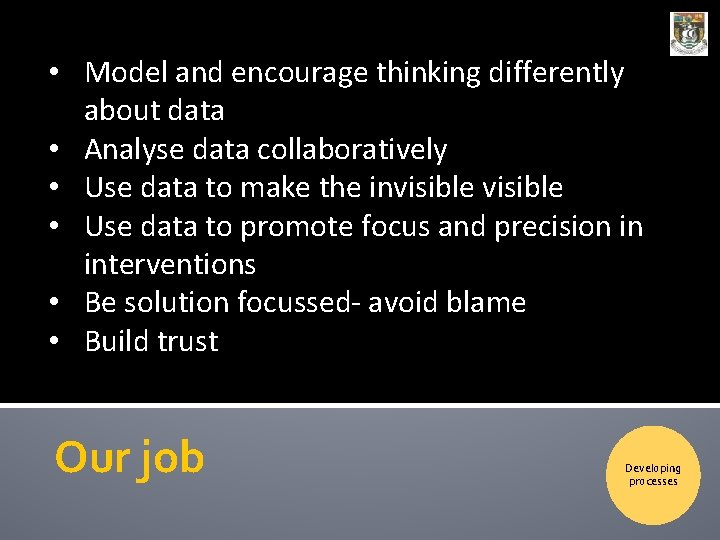
• Model and encourage thinking differently about data • Analyse data collaboratively • Use data to make the invisible • Use data to promote focus and precision in interventions • Be solution focussed- avoid blame • Build trust Our job Developing processes
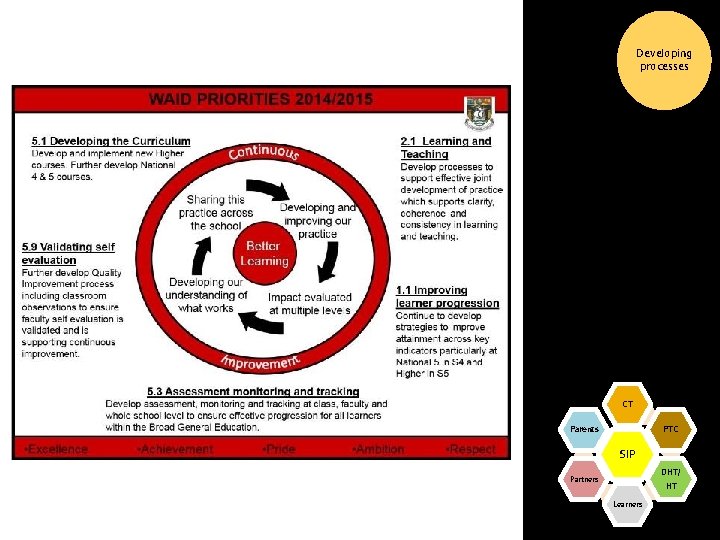
Developing processes CT Parents PTC SIP DHT/ HT Partners Learners
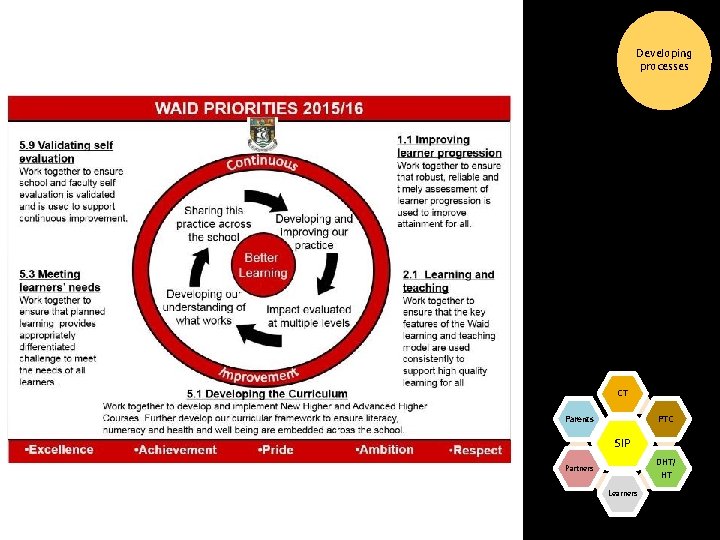
Developing processes CT Parents PTC SIP DHT/ HT Partners Learners
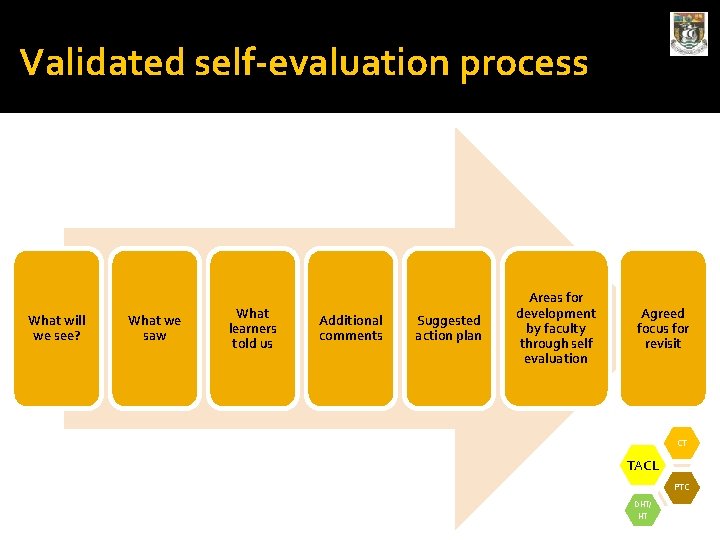
Validated self-evaluation process What will we see? What we saw What learners told us Additional comments Suggested action plan Areas for development by faculty through self evaluation Agreed focus for revisit CT TACL PTC DHT/ HT
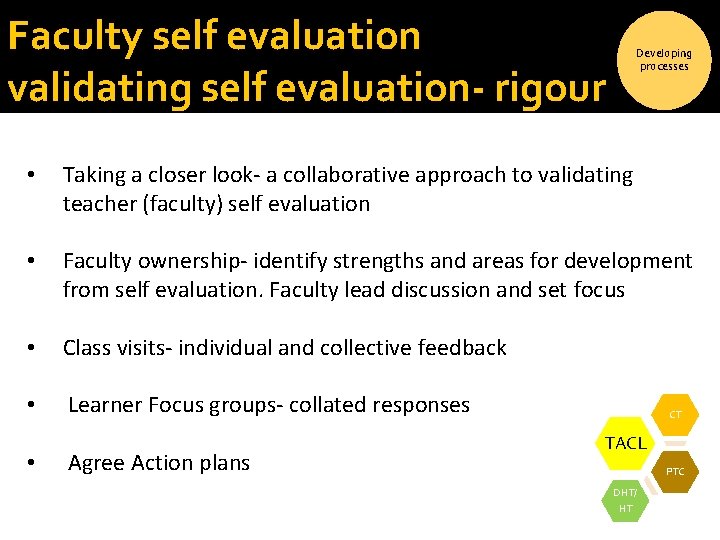
Faculty self evaluation validating self evaluation- rigour Developing processes • Taking a closer look- a collaborative approach to validating teacher (faculty) self evaluation • Faculty ownership- identify strengths and areas for development from self evaluation. Faculty lead discussion and set focus • Class visits- individual and collective feedback • Learner Focus groups- collated responses • Agree Action plans CT TACL PTC DHT/ HT
CT TACL PTC DHT/ HT
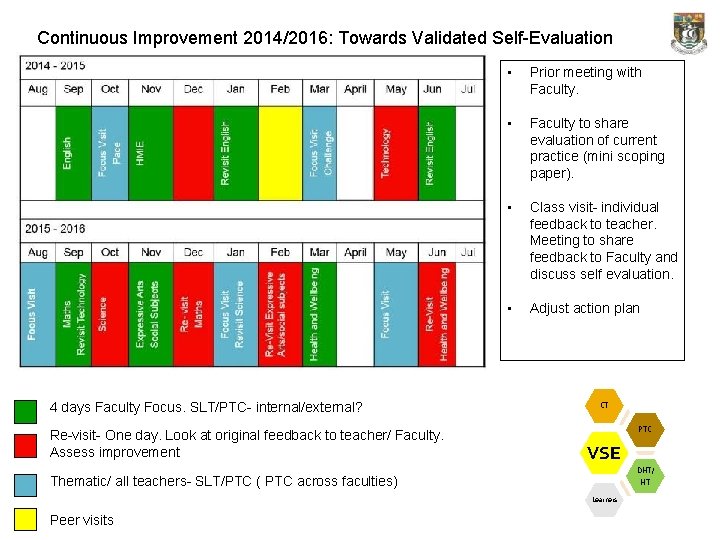
Continuous Improvement 2014/2016: Towards Validated Self-Evaluation 4 days Faculty Focus. SLT/PTC- internal/external? Re-visit- One day. Look at original feedback to teacher/ Faculty. Assess improvement • Prior meeting with Faculty. • Faculty to share evaluation of current practice (mini scoping paper). • Class visit- individual feedback to teacher. Meeting to share feedback to Faculty and discuss self evaluation. • Adjust action plan CT PTC VSE DHT/ Thematic/ all teachers- SLT/PTC ( PTC across faculties) HT Learners Peer visits
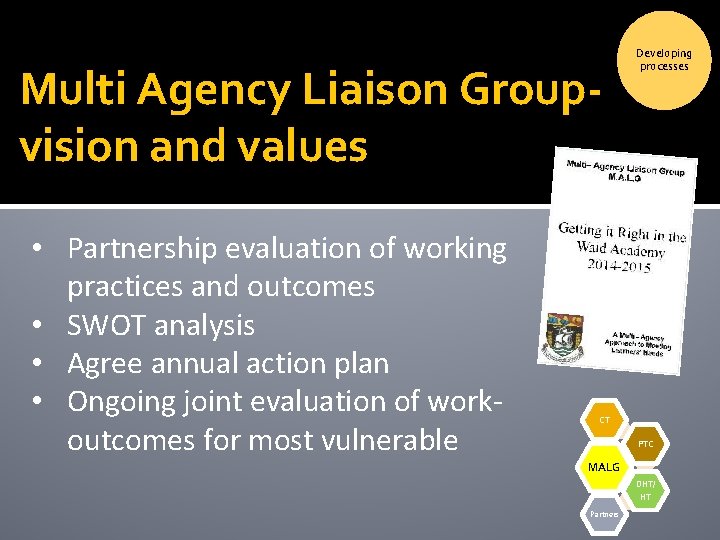
Multi Agency Liaison Groupvision and values • Partnership evaluation of working practices and outcomes • SWOT analysis • Agree annual action plan • Ongoing joint evaluation of work- outcomes for most vulnerable Developing processes CT PTC MALG DHT/ HT Partners
Reflecting in practice Reflecting on practice Reflecting about practice Schon (1983) Developing people 3 rd Ingredient -Reflective practitioners
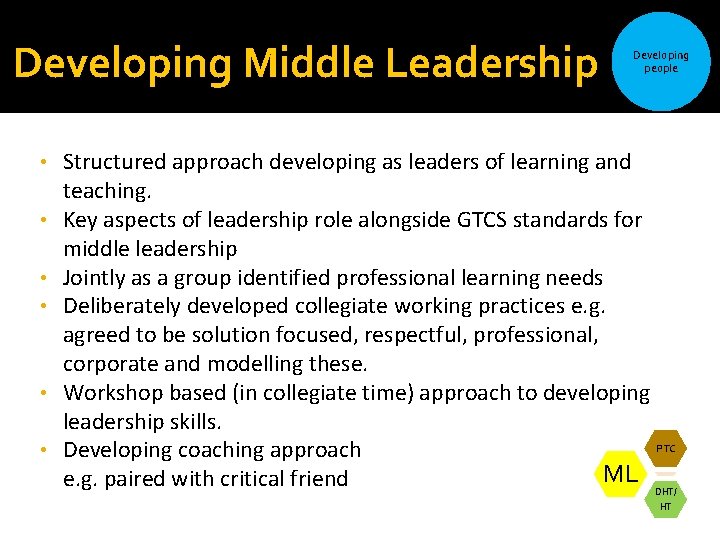
Developing Middle Leadership • • • Developing people Structured approach developing as leaders of learning and teaching. Key aspects of leadership role alongside GTCS standards for middle leadership Jointly as a group identified professional learning needs Deliberately developed collegiate working practices e. g. agreed to be solution focused, respectful, professional, corporate and modelling these. Workshop based (in collegiate time) approach to developing leadership skills. Developing coaching approach PTC ML e. g. paired with critical friend DHT/ HT
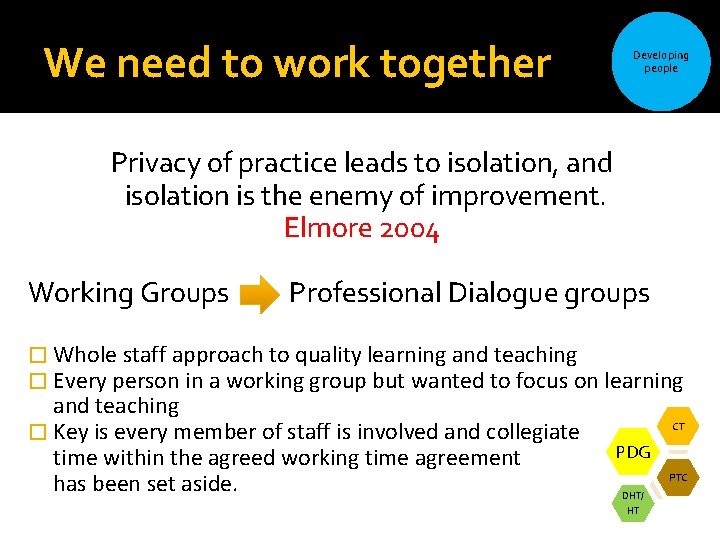
We need to work together Developing people Privacy of practice leads to isolation, and isolation is the enemy of improvement. Elmore 2004 Working Groups Professional Dialogue groups � Whole staff approach to quality learning and teaching � Every person in a working group but wanted to focus on learning and teaching CT � Key is every member of staff is involved and collegiate PDG time within the agreed working time agreement PTC has been set aside. DHT/ HT
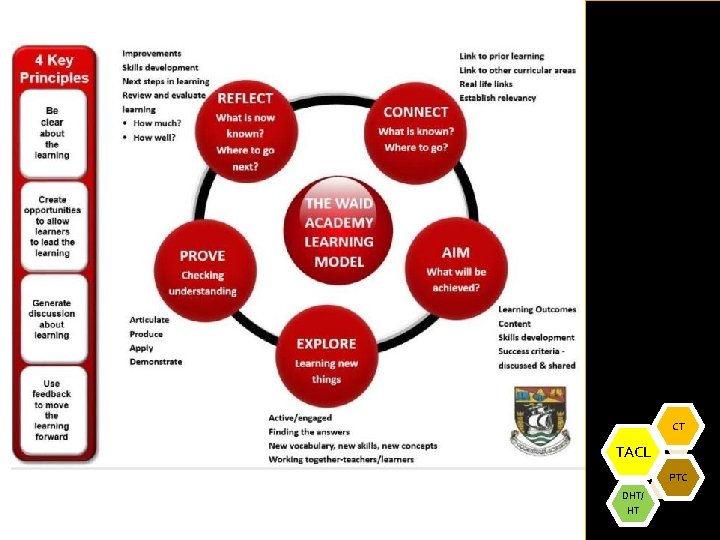
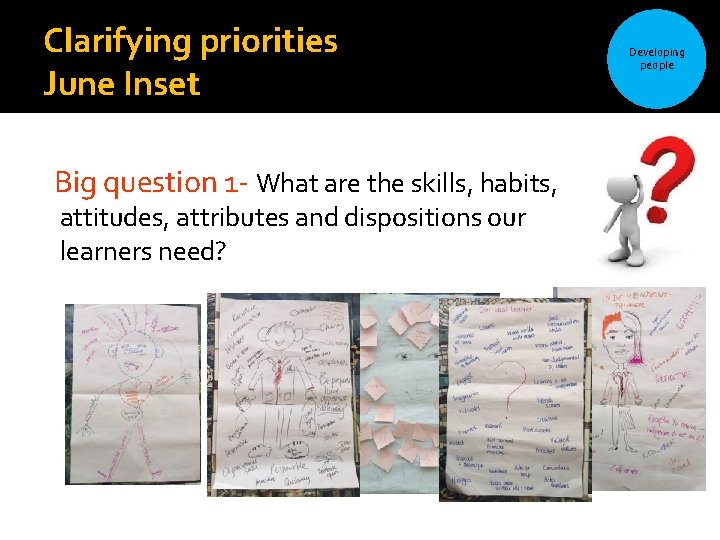
Clarifying priorities June Inset Big question 1 - What are the skills, habits, attitudes, attributes and dispositions our learners need? Developing people
Clarifying priorities June Inset Developing people Can we create a framework for successful learning based, attitudes and habits we want to develop in our learners?
Developing people
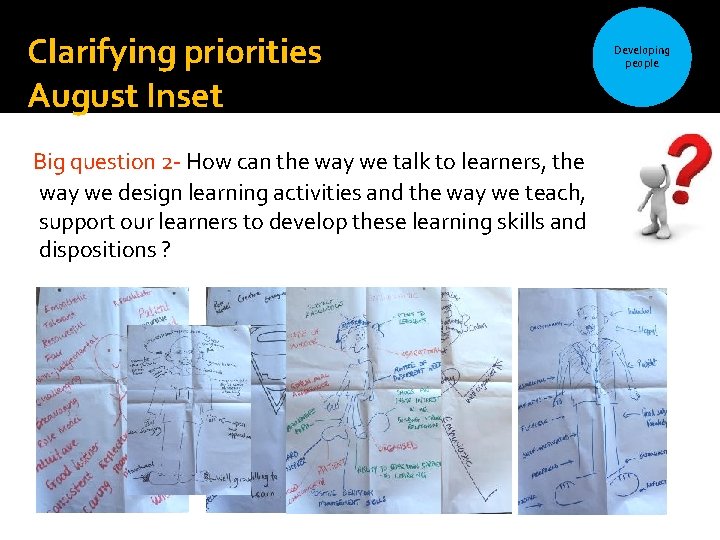
Clarifying priorities August Inset Big question 2 - How can the way we talk to learners, the way we design learning activities and the way we teach, support our learners to develop these learning skills and dispositions ? Developing people
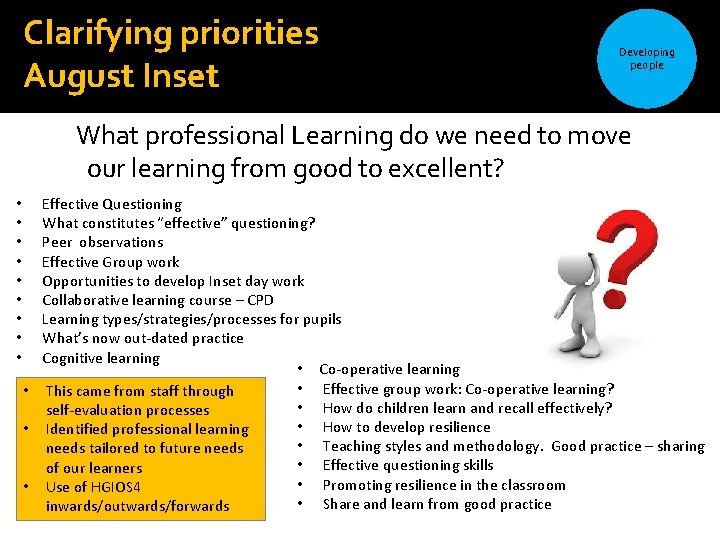
Clarifying priorities August Inset Developing people What professional Learning do we need to move our learning from good to excellent? Effective Questioning What constitutes “effective” questioning? Peer observations Effective Group work Opportunities to develop Inset day work Collaborative learning course – CPD Learning types/strategies/processes for pupils What’s now out-dated practice Cognitive learning • Co-operative learning • Effective group work: Co-operative learning? This came from staff through • How do children learn and recall effectively? self-evaluation processes • How to develop resilience • Identified professional learning • Teaching styles and methodology. Good practice – sharing needs tailored to future needs • Effective questioning skills of our learners • Promoting resilience in the classroom • Use of HGIOS 4 • Share and learn from good practice inwards/outwards/forwards • • • •
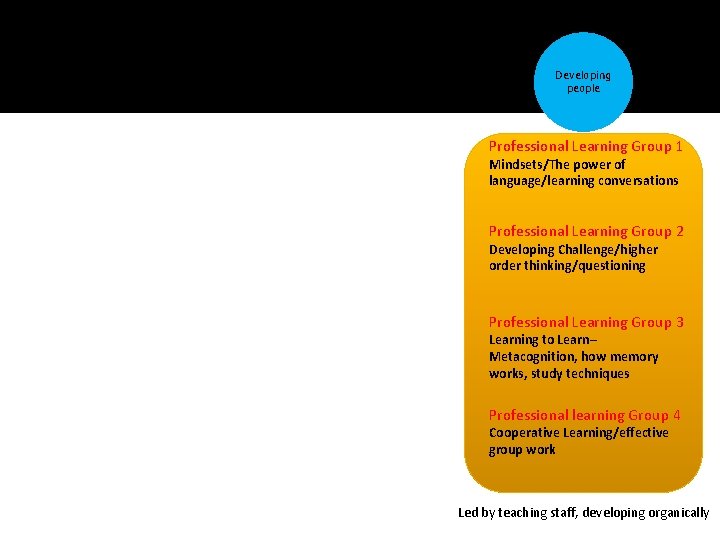
Developing people Professional Learning Group 1 Mindsets/The power of language/learning conversations Professional Learning Group 2 Developing Challenge/higher order thinking/questioning Professional Learning Group 3 Learning to Learn– Metacognition, how memory works, study techniques Professional learning Group 4 Cooperative Learning/effective group work Led by teaching staff, developing organically
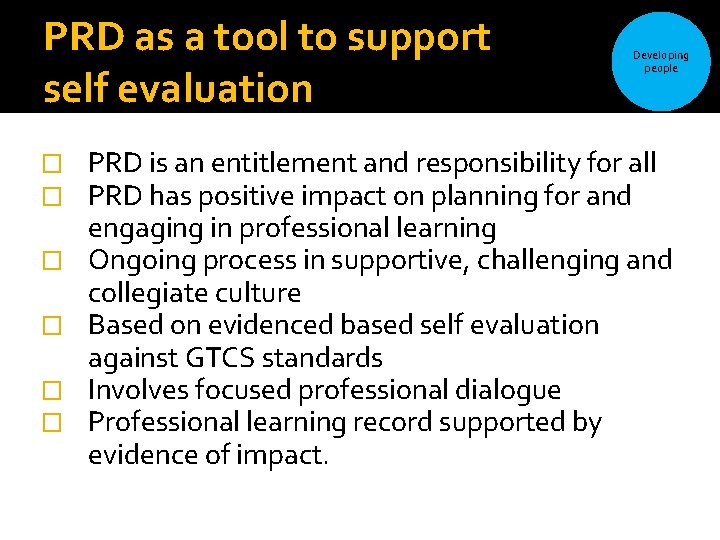
PRD as a tool to support self evaluation � � � Developing people PRD is an entitlement and responsibility for all PRD has positive impact on planning for and engaging in professional learning Ongoing process in supportive, challenging and collegiate culture Based on evidenced based self evaluation against GTCS standards Involves focused professional dialogue Professional learning record supported by evidence of impact.
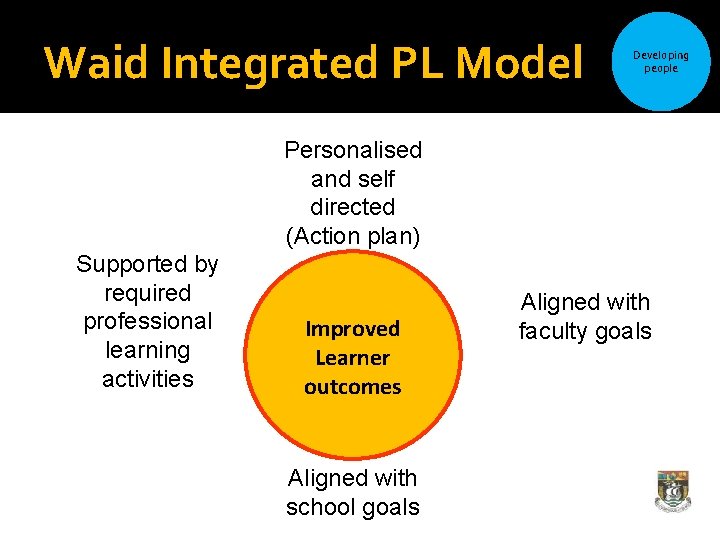
Waid Integrated PL Model Developing people Personalised and self directed (Action plan) Supported by required professional learning activities Improved Learner outcomes Aligned with school goals Aligned with faculty goals
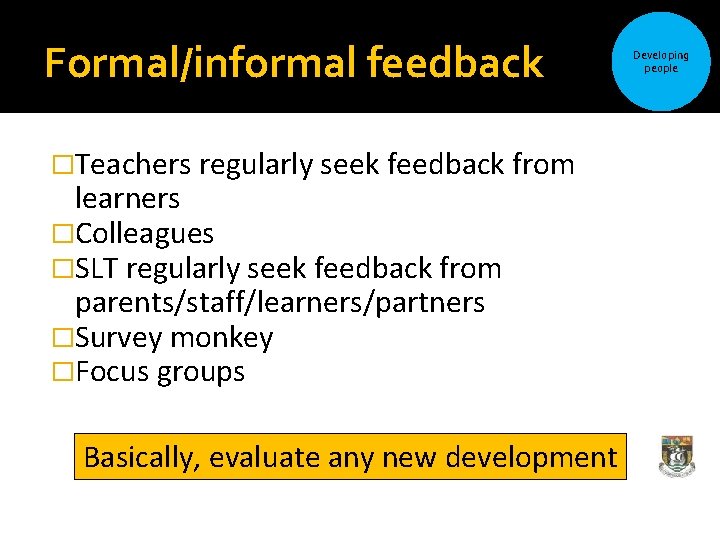
Formal/informal feedback �Teachers regularly seek feedback from learners �Colleagues �SLT regularly seek feedback from parents/staff/learners/partners �Survey monkey �Focus groups Basically, evaluate any new development Developing people
The Waid Academy
HGIOS 4 (pg 10)