SCADA in electrical power delivery Maxwell Dondo Ph

- Slides: 36
SCADA in electrical power delivery Maxwell Dondo Ph. D PEng SMIEEE 1
Outline � Evolution of grid automation � SCADA introduction � SCADA Components � Smart Grid � SCADA Security 2
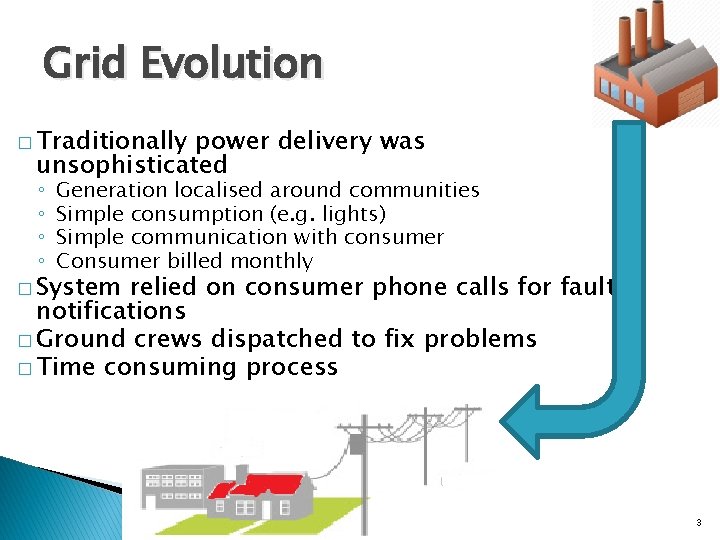
Grid Evolution � Traditionally power delivery was unsophisticated ◦ ◦ Generation localised around communities Simple consumption (e. g. lights) Simple communication with consumer Consumer billed monthly � System relied on consumer phone calls for fault notifications � Ground crews dispatched to fix problems � Time consuming process 3
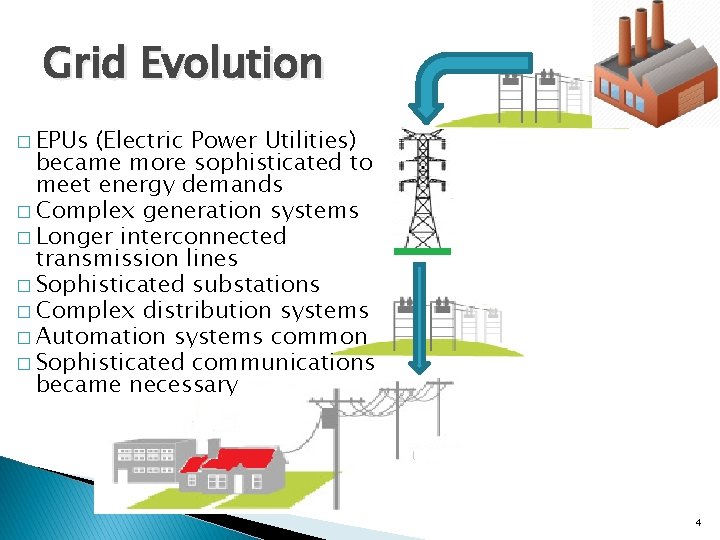
Grid Evolution � EPUs (Electric Power Utilities) became more sophisticated to meet energy demands � Complex generation systems � Longer interconnected transmission lines � Sophisticated substations � Complex distribution systems � Automation systems common � Sophisticated communications became necessary 4
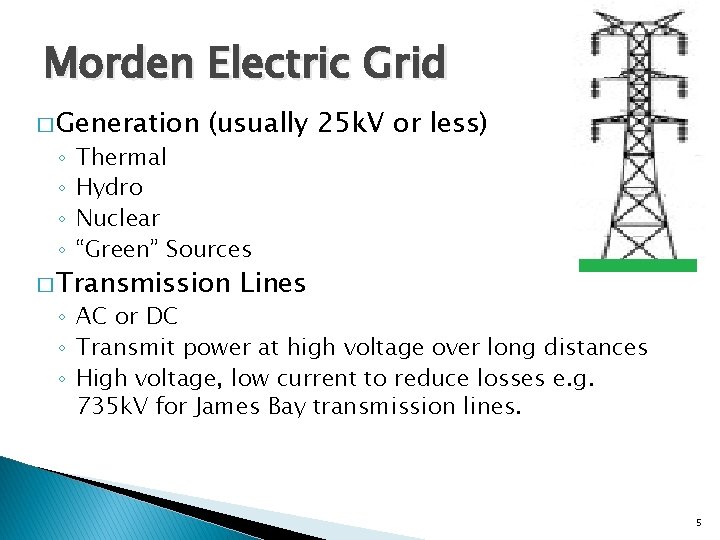
Morden Electric Grid � Generation ◦ ◦ (usually 25 k. V or less) Thermal Hydro Nuclear “Green” Sources � Transmission Lines ◦ AC or DC ◦ Transmit power at high voltage over long distances ◦ High voltage, low current to reduce losses e. g. 735 k. V for James Bay transmission lines. 5
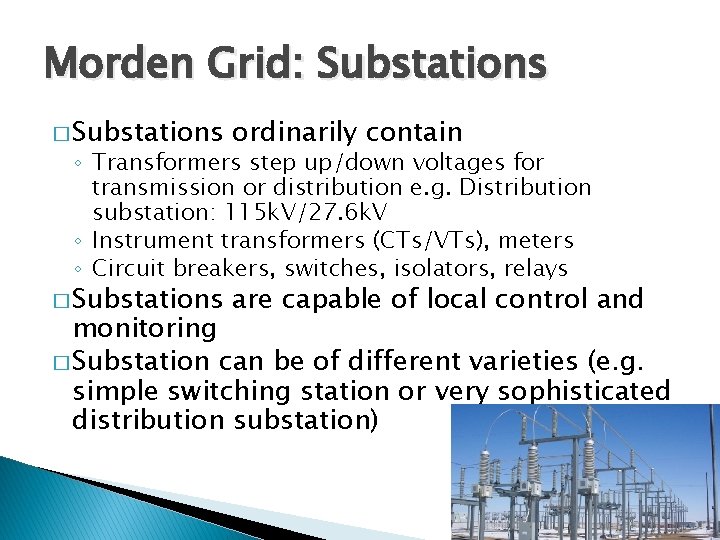
Morden Grid: Substations � Substations ordinarily contain � Substations are capable of local control and ◦ Transformers step up/down voltages for transmission or distribution e. g. Distribution substation: 115 k. V/27. 6 k. V ◦ Instrument transformers (CTs/VTs), meters ◦ Circuit breakers, switches, isolators, relays monitoring � Substation can be of different varieties (e. g. simple switching station or very sophisticated distribution substation) 6
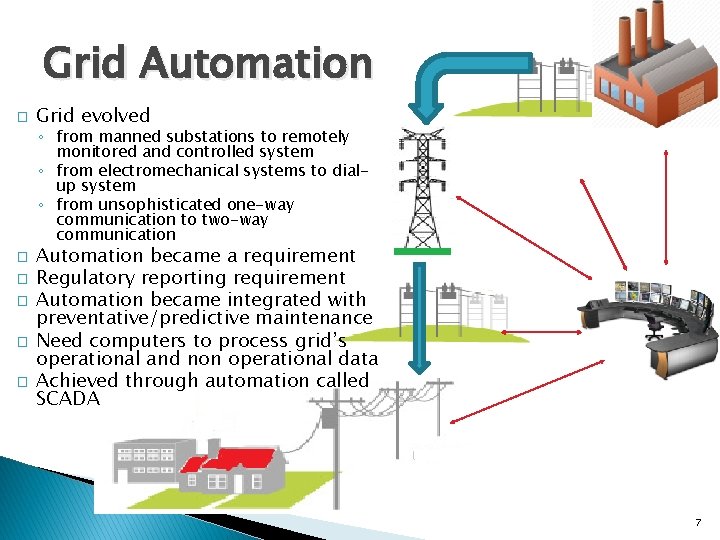
Grid Automation � Grid evolved ◦ from manned substations to remotely monitored and controlled system ◦ from electromechanical systems to dialup system ◦ from unsophisticated one-way communication to two-way communication � � � Automation became a requirement Regulatory reporting requirement Automation became integrated with preventative/predictive maintenance Need computers to process grid’s operational and non operational data Achieved through automation called SCADA 7
SCADA Definition �A complex computer based system that uses modern applications to analyse the electric power grid system to acquire data, monitor and control facilities and processes. � SCADA applications can support dispatchers, operators, engineers, managers, etc. with tools to predict, control, visualize, optimise, and automate the EPU. 8
Summary of SCADA History � Originally EPUs used electro-mechanical automation � Dial-up modems used for remote access � In 1970 s computer-based SCADA commenced � Suppliers (e. g. IBM, Siemens, GE) supplied complete proprietary systems � More advanced with client-server computers � Advanced functions became common (e. g. EMS. DMS, load forecasting, dispatch, protection engineering, regulatory reporting, etc) � Communication link evolved from noisy narrow bandwidth telephone lines to SONET, Microwave, radio, power line carrier, cellular networks 9
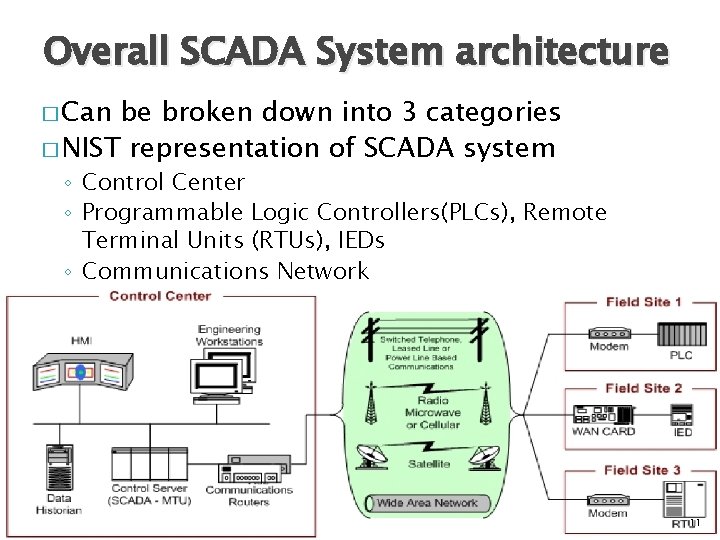
Traditional SCADA Components � SCADA Master Terminal Unit (MTU): The server that acts as SCADA system � RTU (remote terminal unit) : remote telemetry data acquisition units located at remote stations � IED (intelligent electronic devices) smart sensors/actuators with intelligence to acquire data, process it, and communicate � HMI (human-machine interface) : software to provide for visualisation and interaction with SCADA 10
Overall SCADA System architecture � Can be broken down into 3 categories � NIST representation of SCADA system ◦ Control Center ◦ Programmable Logic Controllers(PLCs), Remote Terminal Units (RTUs), IEDs ◦ Communications Network ◦ SCADA host software 11
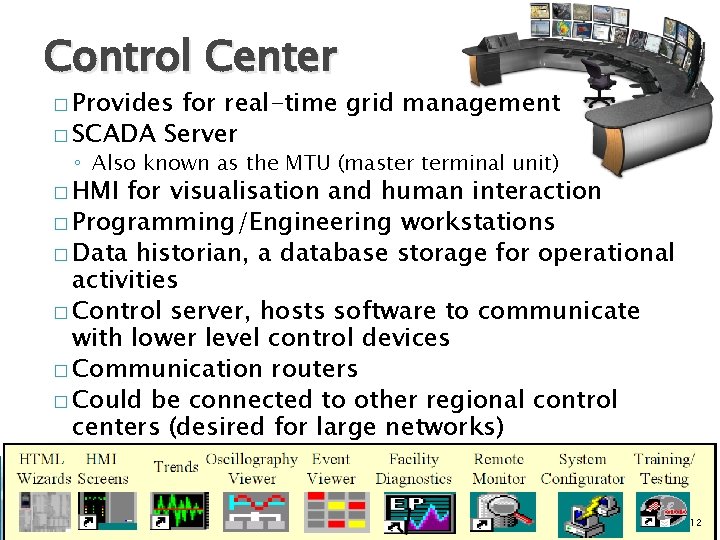
Control Center � Provides for real-time grid management � SCADA Server ◦ Also known as the MTU (master terminal unit) � HMI for visualisation and human interaction � Programming/Engineering workstations � Data historian, a database storage for operational activities � Control server, hosts software to communicate with lower level control devices � Communication routers � Could be connected to other regional control centers (desired for large networks) 12
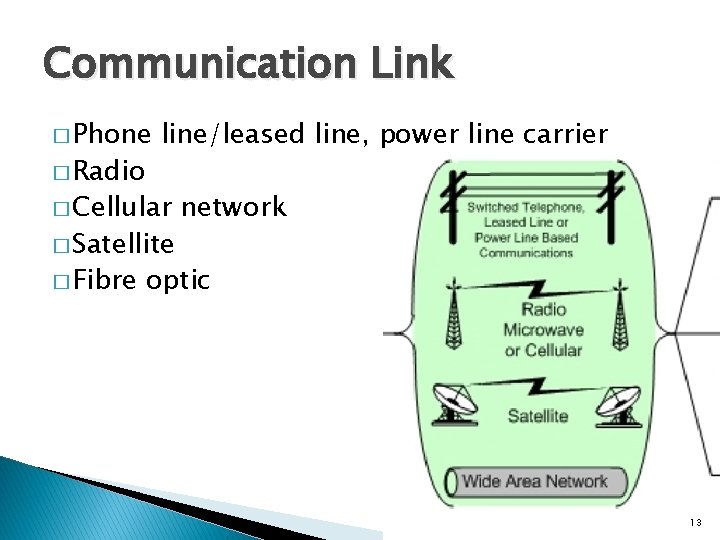
Communication Link � Phone � Radio line/leased line, power line carrier � Cellular � Satellite � Fibre network optic 13
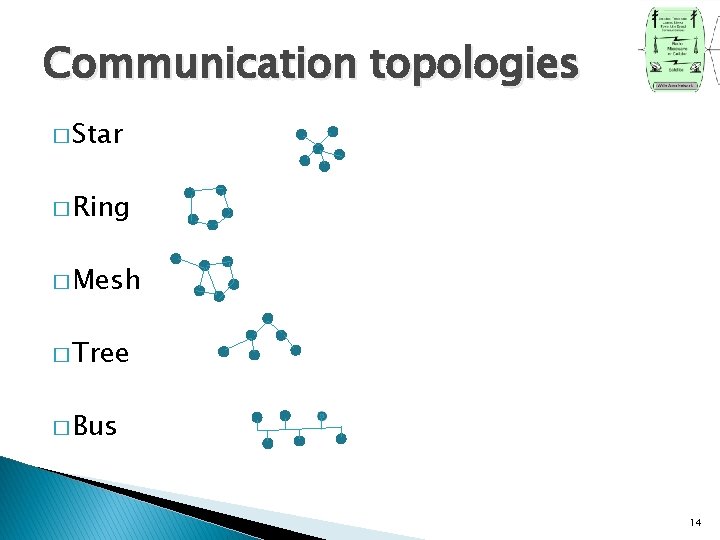
Communication topologies � Star � Ring � Mesh � Tree � Bus 14
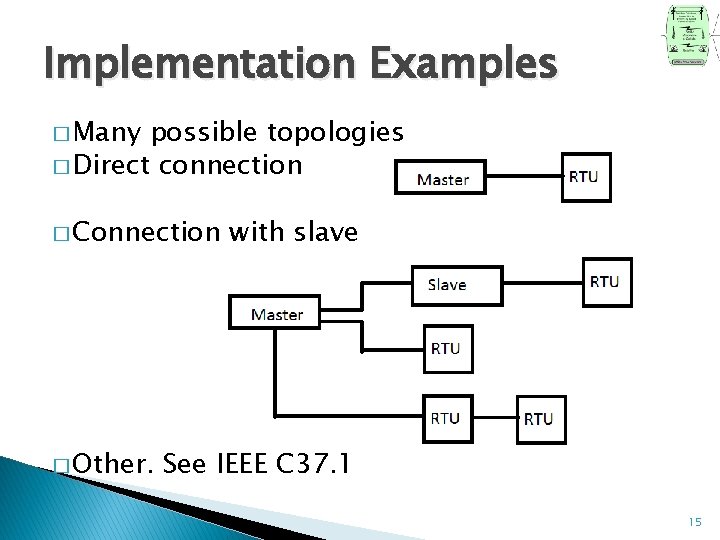
Implementation Examples � Many possible topologies � Direct connection � Connection � Other. with slave See IEEE C 37. 1 15
Protocols and standards � Allow communications between devices � MODBUS: master-slave application-layer protocol ◦ Attackers with IP access can run Modbus client simulator to effect many types of attacks. � DNP 3 : Distributed Network Protocol is a set of open communication protocols ◦ IEEE recommended for RTU to IED messages ◦ Has no in-built security: Messages can be intercepted, modified and fabricated. � IEC 60870 suite: ◦ Substation control centre communication (IEC 60870 -5101/104) ◦ Communication with protection equipment (IEC 60870 -5 -103) ◦ IEC 62351 intends to implement security (end-to-end encryption; vendors reluctant to implement due to complexity) � Other proprietary protocols 16
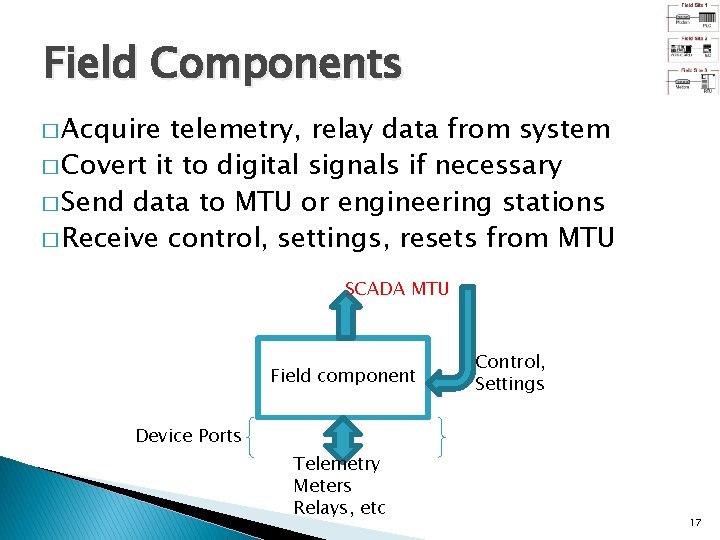
Field Components � Acquire telemetry, relay data from system � Covert it to digital signals if necessary � Send data to MTU or engineering stations � Receive control, settings, resets from MTU SCADA MTU Field component Control, Settings Device Ports Telemetry Meters Relays, etc 17
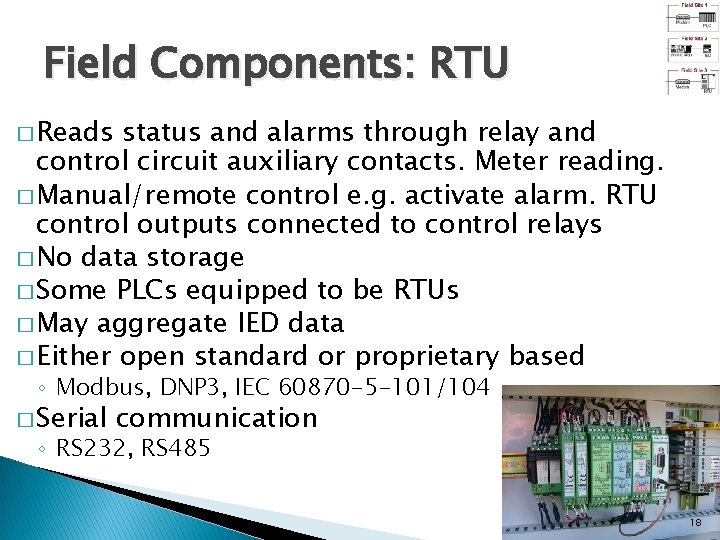
Field Components: RTU � Reads status and alarms through relay and control circuit auxiliary contacts. Meter reading. � Manual/remote control e. g. activate alarm. RTU control outputs connected to control relays � No data storage � Some PLCs equipped to be RTUs � May aggregate IED data � Either open standard or proprietary based ◦ Modbus, DNP 3, IEC 60870 -5 -101/104 � Serial communication ◦ RS 232, RS 485 18
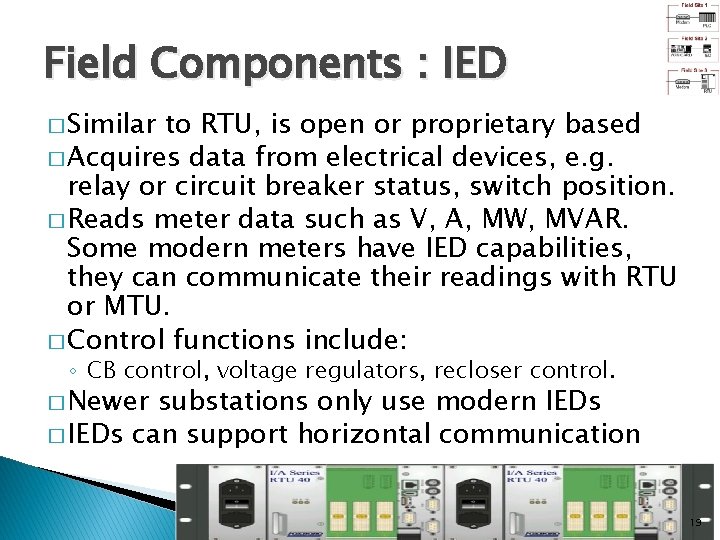
Field Components : IED � Similar to RTU, is open or proprietary based � Acquires data from electrical devices, e. g. relay or circuit breaker status, switch position. � Reads meter data such as V, A, MW, MVAR. Some modern meters have IED capabilities, they can communicate their readings with RTU or MTU. � Control functions include: ◦ CB control, voltage regulators, recloser control. � Newer substations only use modern IEDs � IEDs can support horizontal communication 19
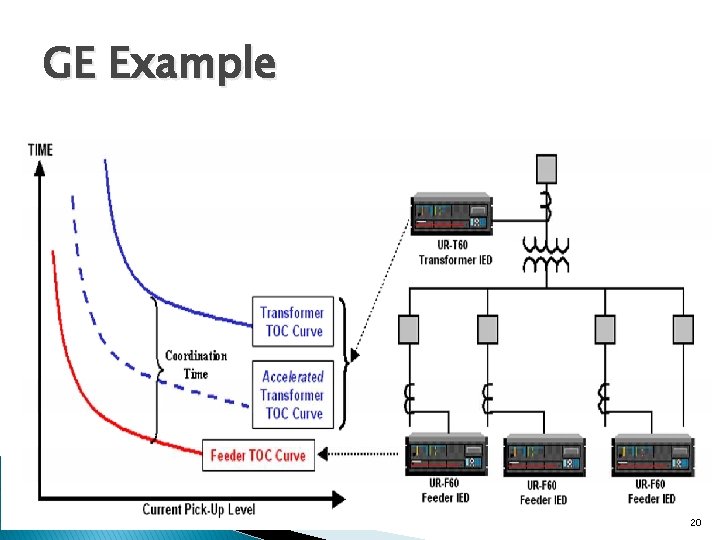
GE Example 20
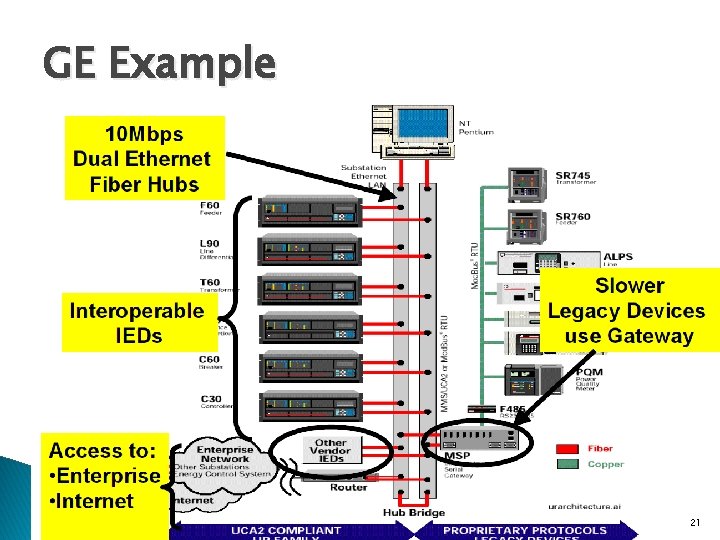
GE Example 21
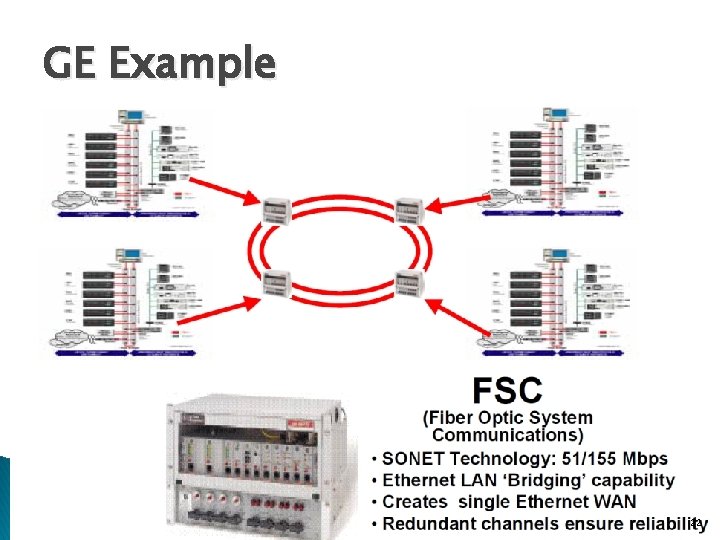
GE Example 22
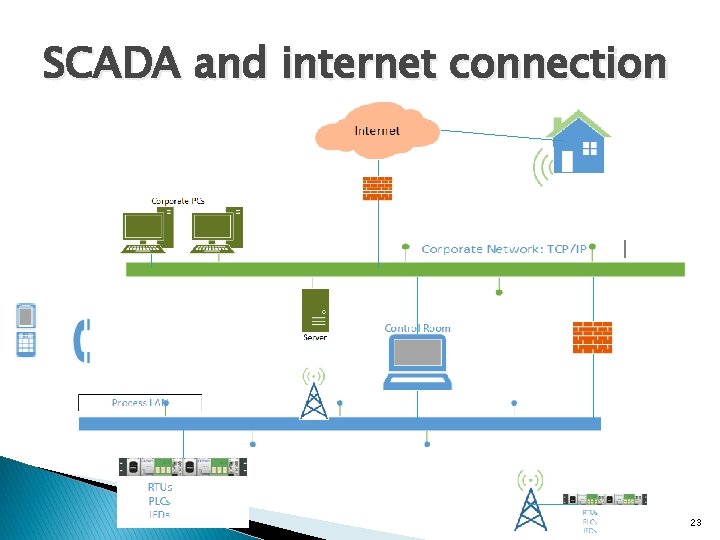
SCADA and internet connection 23
Smart Grid � Concept of a fully automated power distribution system that can monitor and control all aspects of the system � Ideally a smart grid provides voltage/power flow optimisation and self healing (after disruption) � SCADA, WAMS, AMI provide and enable the “brains” of the smart grid concept � SCADA makes real-time automated decisions to regulate voltages, optimal power flows, etc. 24
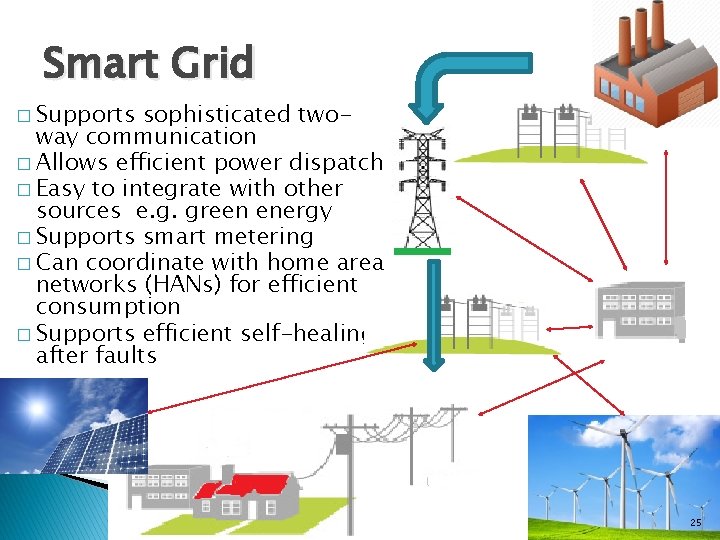
Smart Grid � Supports sophisticated twoway communication � Allows efficient power dispatch � Easy to integrate with other sources e. g. green energy � Supports smart metering � Can coordinate with home area networks (HANs) for efficient consumption � Supports efficient self-healing after faults 25
SCADA Security � Traditionally isolated networks � No security measures deemed necessary; security by obscurity � Only threats were insiders and physical sabotage � Modem war-dialing was also possible threat � With interconnected EPU, SCADA is connected over wide area networks and internet � That has exposed SCADA to attacks 26
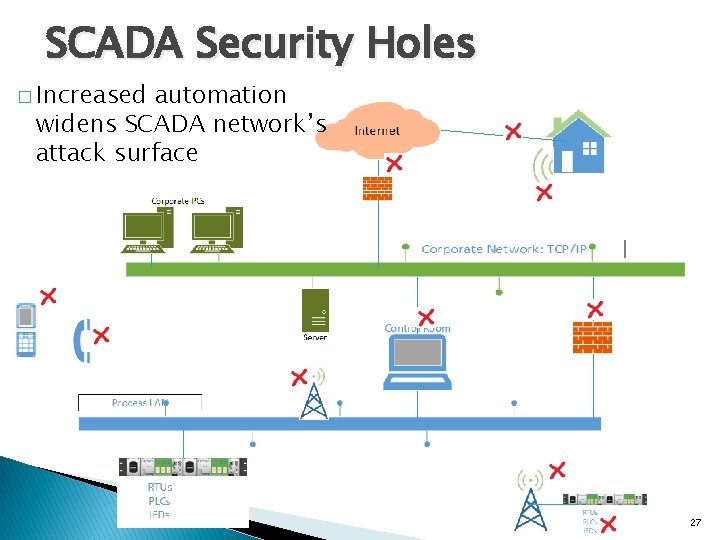
SCADA Security Holes � Increased automation widens SCADA network’s attack surface 27
Typical SCADA threats (actors) � Espionage ◦ Spies (industrial and state actors) ◦ Terrorists � Script kiddies � Insiders, e. g. disgruntled employees � Criminal elements (blackmail) � Business competitors � Hacktivists (ideological activists) 28
SCADA Vulnerabilities � Vulnerabilities are weaknesses in the cyber system that threats (actors) exploit to carry out attacks � Examples of forms vulnerabilities: ◦ Technical �Hardware �Software and protocol �Network ◦ Policy 29
Vulnerability examples � CVE-2015 -1179: Allows remote attackers to inject arbitrary web script; found in Mango Automation systems � CVE-2015 -0981: Allows remote attackers to bypass authentication and read/write to arbitrary database fields via unspecified vectors. � CVE-2015 -0096 (MS 15 -018) : Stuxnet, a worm targeting ICSs such as SCADA. � Other examples from 2014: CVE-2014 -8652 , CVE-20145429 � GE Energy's XA/21: 2003 flaw responsible for alarm system failure at First. Energy's Akron, Ohio control center 30
Attack Examples � Stuxnet: Intercepts and makes changes to data read from and written to a PLC � Night Dragon : Suspected SCADA data exfiltration from Exxon, Shell and BP � Others: Havex (Trojan targeting ICSs and SCADA), Blacken (Targets users of SCADA software Simplicity) � Many others targeting the PCs used in SCADA. 31
Securing SCADA � Define SCADA security networking policy ◦ Access control ◦ Identify all SCADA assets and their connectivity ◦ Schedule regular vulnerability assessments � User training and awareness (e. g. what to do when you pick up a USB stick in parking lot) � Technical ◦ Isolate SCADA from internet as much as possible ◦ Encryption of data ◦ Implement strict firewall rules between SCADA network and all other networks. ◦ Perform anomaly detection 32
Securing SCADA ◦ Put in place effective policies ◦ Limit access to SCADA network; implement tight security access controls ◦ Use hardened hardware ◦ Patch regularly, don’t use unpatched software or vulnerable systems ◦ Implement vendor security features (No defaults) ◦ Audit (include red teaming) SCADA IT systems for security holes 33
Summary � SCADA systems enhance power delivery by providing grid situational awareness and control � Delivers operational and non-operational data through a variety of communication methods � SCADA is an important part of the Smart Grid � SCADA system is traditionally insecure, security measures needed 34
References � IEEE Standard for SCADA and Automation Systems C 37. 1, 2007 � IEC 61850 Communication networks and systems in substations � Guide to Supervisory Control and Data Acquisition (SCADA) and Industrial Control Systems Security, NIST, 2007 � G. Clarke, and D. Reynders, Practical Modern SCADA Protocols, Elsevier 2004 35
Thank You maxwell. dondo@drdc-rddc. gc. ca 36