Presenters Peter Howard Jones MD FACP FNLA Joseph
- Slides: 50
Presenters Peter Howard Jones, MD, FACP, FNLA Joseph J. Saseen, Pharm. D, CLS, FNLA Medical Director Weight Management Center Houston Methodist Hospital Associate Professor of Medicine Center for Cardiovascular Disease Prevention Houston Methodist De. Bakey Heart and Vascular Center Baylor College of Medicine Houston, Texas Professor and Vice Chair Department of Clinical Pharmacy Professor, Department of Family Medicine University of Colorado Anschutz Medical Campus Aurora, Colorado
Disclosures Peter Howard Jones, MD, FACP, FNLA Consultant Amgen, Merck, Sanofi/Regeneron Joseph J. Saseen, Pharm. D, CLS, FNLA Has no significant relationships to disclose
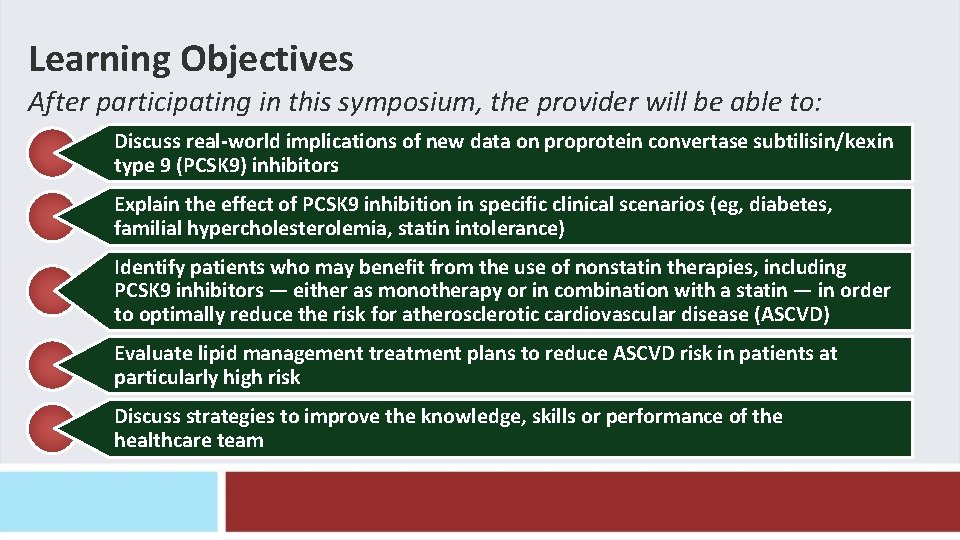
Learning Objectives After participating in this symposium, the provider will be able to: Discuss real-world implications of new data on proprotein convertase subtilisin/kexin type 9 (PCSK 9) inhibitors Explain the effect of PCSK 9 inhibition in specific clinical scenarios (eg, diabetes, familial hypercholesterolemia, statin intolerance) Identify patients who may benefit from the use of nonstatin therapies, including PCSK 9 inhibitors ― either as monotherapy or in combination with a statin ― in order to optimally reduce the risk for atherosclerotic cardiovascular disease (ASCVD) Evaluate lipid management treatment plans to reduce ASCVD risk in patients at particularly high risk Discuss strategies to improve the knowledge, skills or performance of the healthcare team
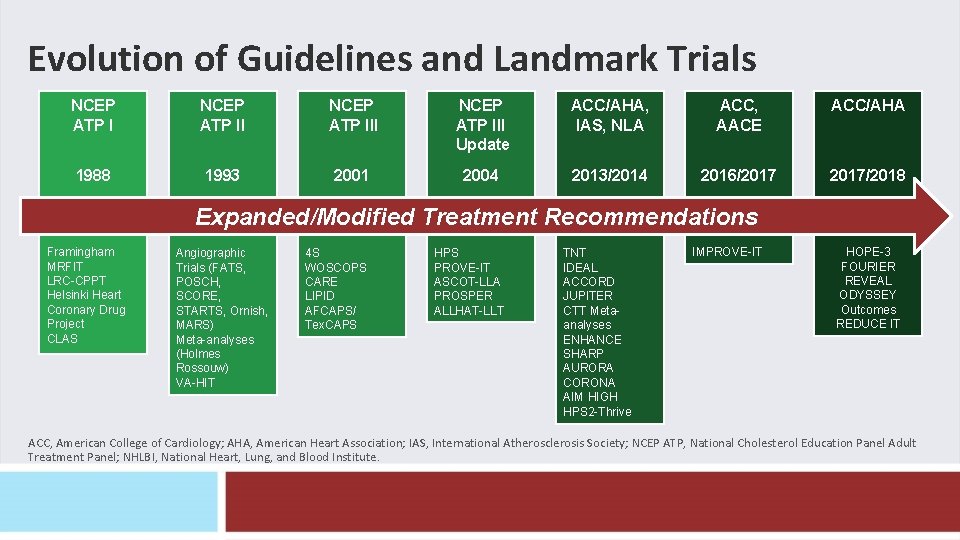
Evolution of Guidelines and Landmark Trials NCEP ATP III Update ACC/AHA, IAS, NLA ACC, AACE ACC/AHA 1988 1993 2001 2004 2013/2014 2016/2017/2018 Expanded/Modified Treatment Recommendations Framingham MRFIT LRC-CPPT Helsinki Heart Coronary Drug Project CLAS Angiographic Trials (FATS, POSCH, SCORE, STARTS, Ornish, MARS) Meta-analyses (Holmes Rossouw) VA-HIT 4 S WOSCOPS CARE LIPID AFCAPS/ Tex. CAPS HPS PROVE-IT ASCOT-LLA PROSPER ALLHAT-LLT TNT IDEAL ACCORD JUPITER CTT Metaanalyses ENHANCE SHARP AURORA CORONA AIM HIGH HPS 2 -Thrive IMPROVE-IT HOPE-3 FOURIER REVEAL ODYSSEY Outcomes REDUCE IT ACC, American College of Cardiology; AHA, American Heart Association; IAS, International Atherosclerosis Society; NCEP ATP, National Cholesterol Education Panel Adult Treatment Panel; NHLBI, National Heart, Lung, and Blood Institute.
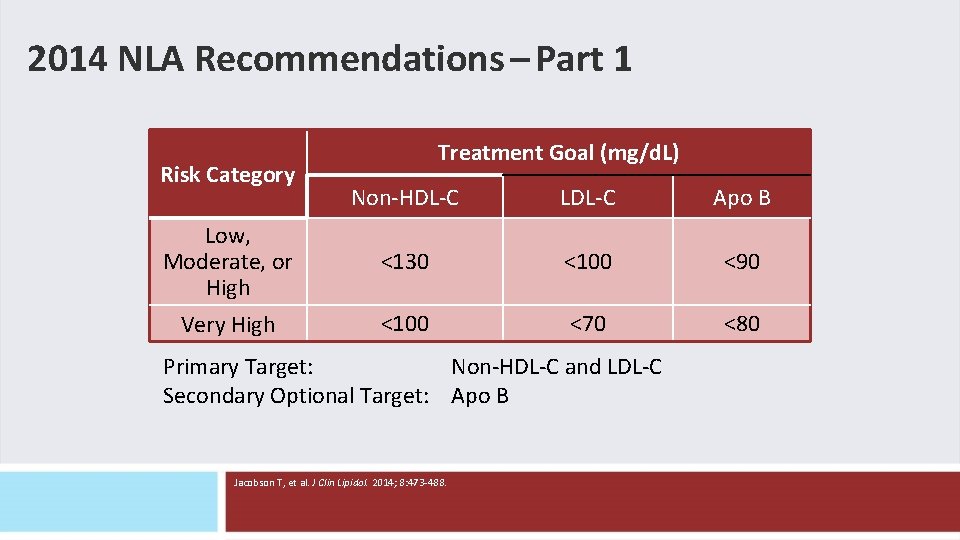
2014 NLA Recommendations – Part 1 Risk Category Treatment Goal (mg/d. L) Non-HDL-C LDL-C Apo B Low, Moderate, or High <130 <100 <90 Very High <100 <70 <80 Primary Target: Non-HDL-C and LDL-C Secondary Optional Target: Apo B Jacobson T, et al. J Clin Lipidol. 2014; 8: 473 -488.
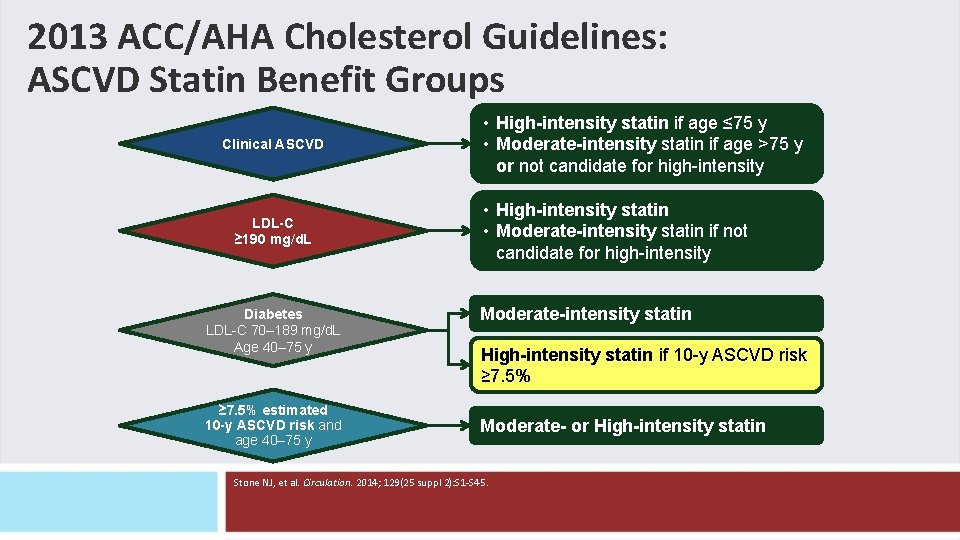
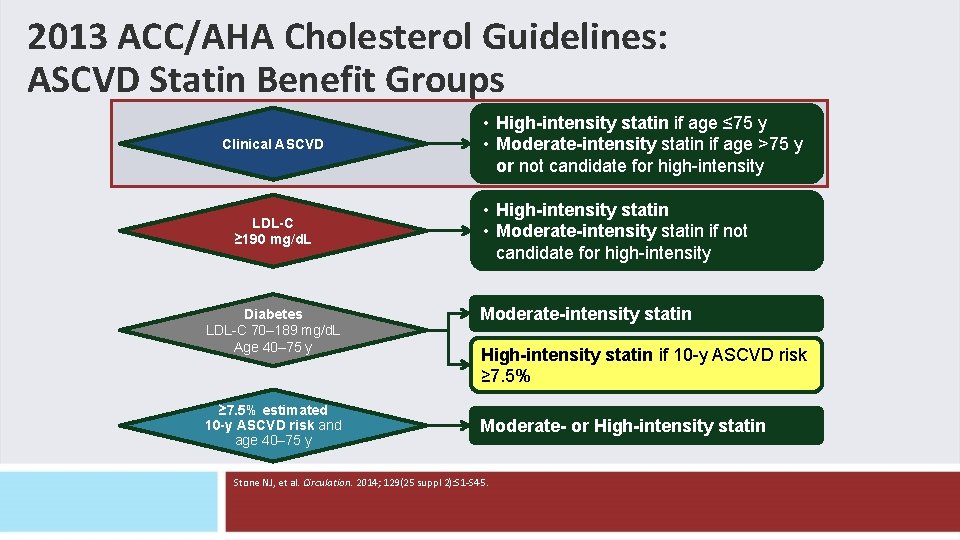
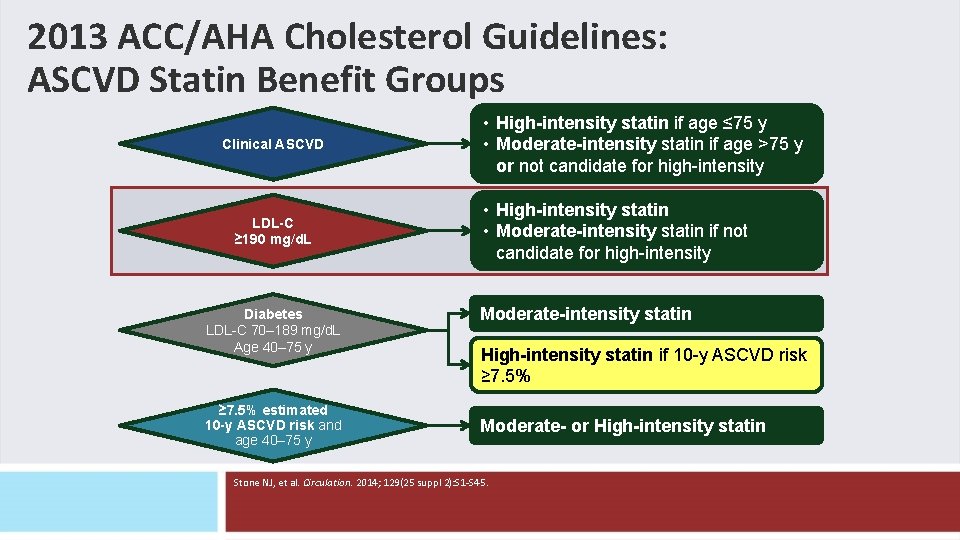
2013 ACC/AHA Cholesterol Guidelines: ASCVD Statin Benefit Groups Clinical ASCVD LDL-C ≥ 190 mg/d. L Diabetes LDL-C 70‒ 189 mg/d. L Age 40‒ 75 y ≥ 7. 5% estimated 10 -y ASCVD risk and age 40‒ 75 y • High-intensity statin if age ≤ 75 y • Moderate-intensity statin if age >75 y or not candidate for high-intensity • High-intensity statin • Moderate-intensity statin if not candidate for high-intensity Moderate-intensity statin High-intensity statin if 10 -y ASCVD risk ≥ 7. 5% Moderate- or High-intensity statin Stone NJ, et al. Circulation. 2014; 129(25 suppl 2): S 1 -S 45.
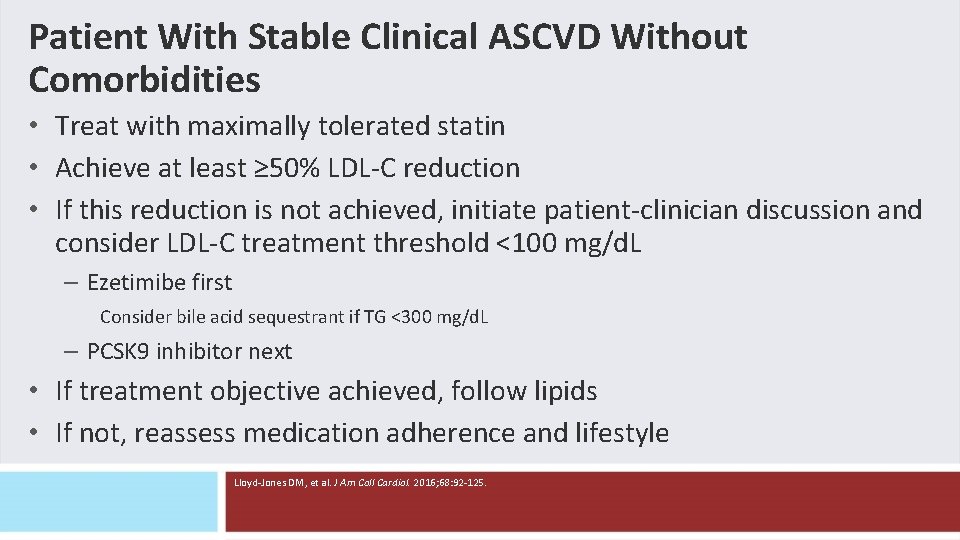
Patient With Stable Clinical ASCVD Without Comorbidities • Treat with maximally tolerated statin • Achieve at least ≥ 50% LDL-C reduction • If this reduction is not achieved, initiate patient-clinician discussion and consider LDL-C treatment threshold <100 mg/d. L – Ezetimibe first Consider bile acid sequestrant if TG <300 mg/d. L – PCSK 9 inhibitor next • If treatment objective achieved, follow lipids • If not, reassess medication adherence and lifestyle Lloyd-Jones DM, et al. J Am Coll Cardiol. 2016; 68: 92 -125.
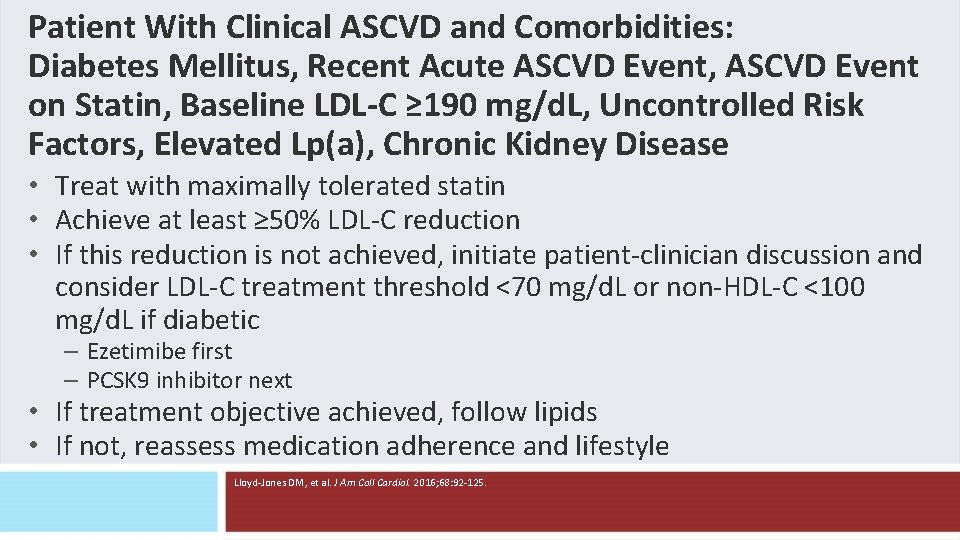
Patient With Clinical ASCVD and Comorbidities: Diabetes Mellitus, Recent Acute ASCVD Event, ASCVD Event on Statin, Baseline LDL-C ≥ 190 mg/d. L, Uncontrolled Risk Factors, Elevated Lp(a), Chronic Kidney Disease • Treat with maximally tolerated statin • Achieve at least ≥ 50% LDL-C reduction • If this reduction is not achieved, initiate patient-clinician discussion and consider LDL-C treatment threshold <70 mg/d. L or non-HDL-C <100 mg/d. L if diabetic – Ezetimibe first – PCSK 9 inhibitor next • If treatment objective achieved, follow lipids • If not, reassess medication adherence and lifestyle Lloyd-Jones DM, et al. J Am Coll Cardiol. 2016; 68: 92 -125.
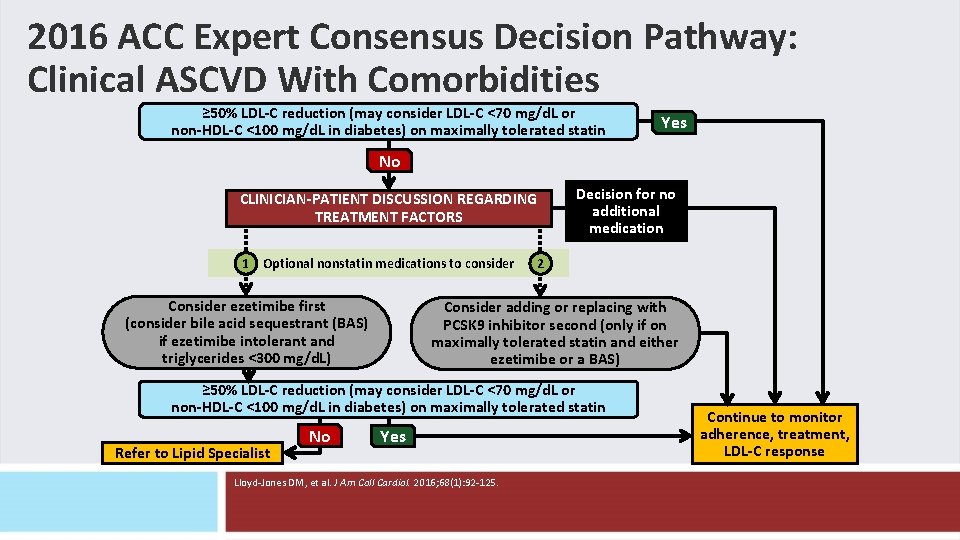
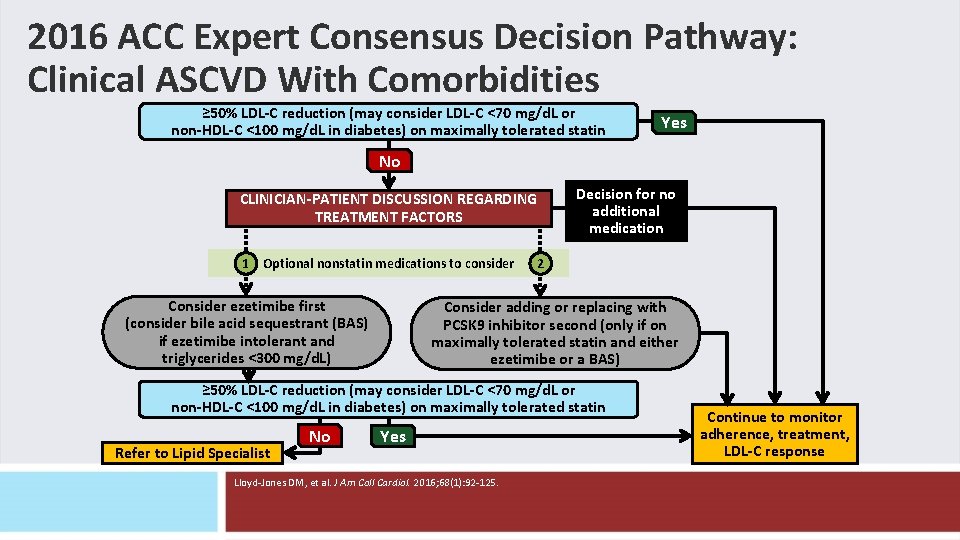
2016 ACC Expert Consensus Decision Pathway: Clinical ASCVD With Comorbidities ≥ 50% LDL-C reduction (may consider LDL-C <70 mg/d. L or non-HDL-C <100 mg/d. L in diabetes) on maximally tolerated statin Yes No CLINICIAN-PATIENT DISCUSSION REGARDING TREATMENT FACTORS 1 Optional nonstatin medications to consider Consider ezetimibe first (consider bile acid sequestrant (BAS) if ezetimibe intolerant and triglycerides <300 mg/d. L) Decision for no additional medication 2 Consider adding or replacing with PCSK 9 inhibitor second (only if on maximally tolerated statin and either ezetimibe or a BAS) ≥ 50% LDL-C reduction (may consider LDL-C <70 mg/d. L or non-HDL-C <100 mg/d. L in diabetes) on maximally tolerated statin Refer to Lipid Specialist No Yes Lloyd-Jones DM, et al. J Am Coll Cardiol. 2016; 68(1): 92 -125. Continue to monitor adherence, treatment, LDL-C response
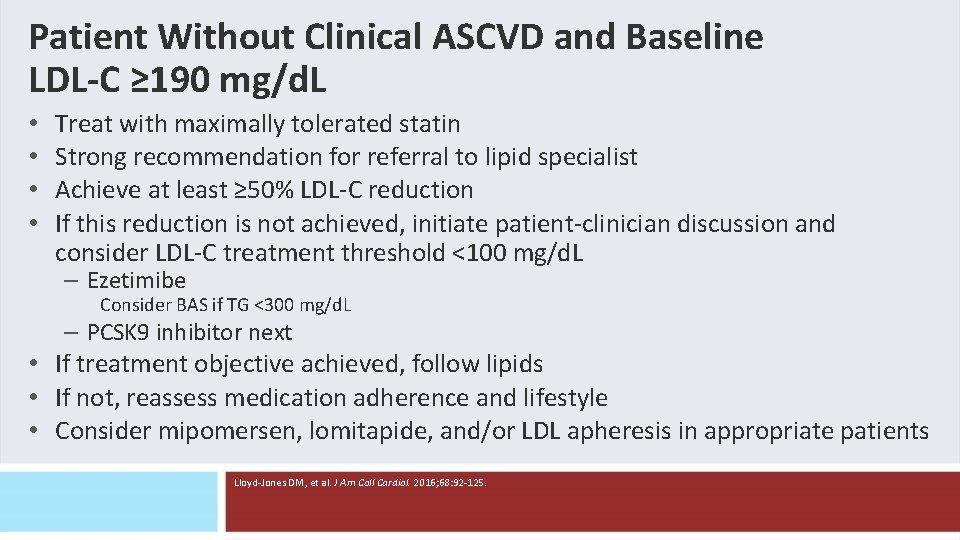
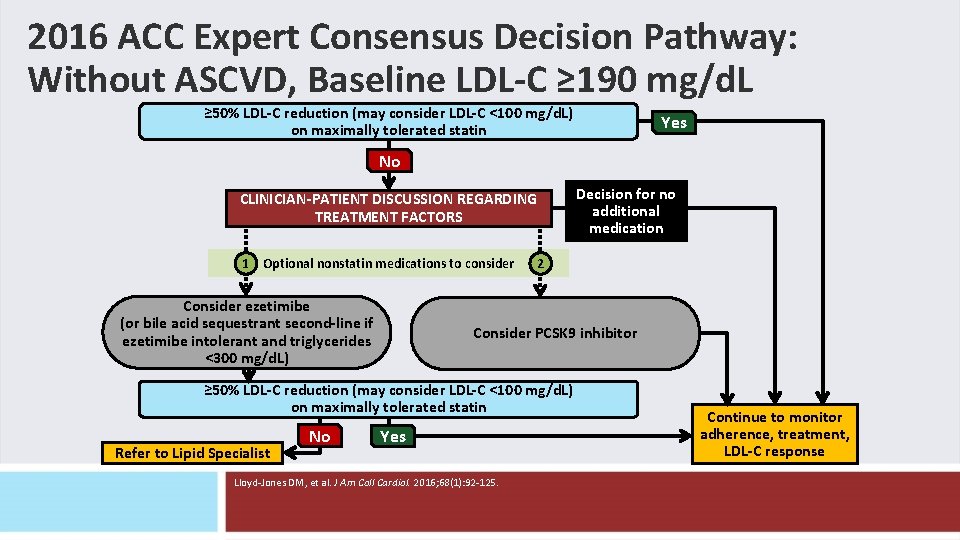
Patient Without Clinical ASCVD and Baseline LDL-C ≥ 190 mg/d. L • • Treat with maximally tolerated statin Strong recommendation for referral to lipid specialist Achieve at least ≥ 50% LDL-C reduction If this reduction is not achieved, initiate patient-clinician discussion and consider LDL-C treatment threshold <100 mg/d. L – Ezetimibe Consider BAS if TG <300 mg/d. L – PCSK 9 inhibitor next • If treatment objective achieved, follow lipids • If not, reassess medication adherence and lifestyle • Consider mipomersen, lomitapide, and/or LDL apheresis in appropriate patients Lloyd-Jones DM, et al. J Am Coll Cardiol. 2016; 68: 92 -125.
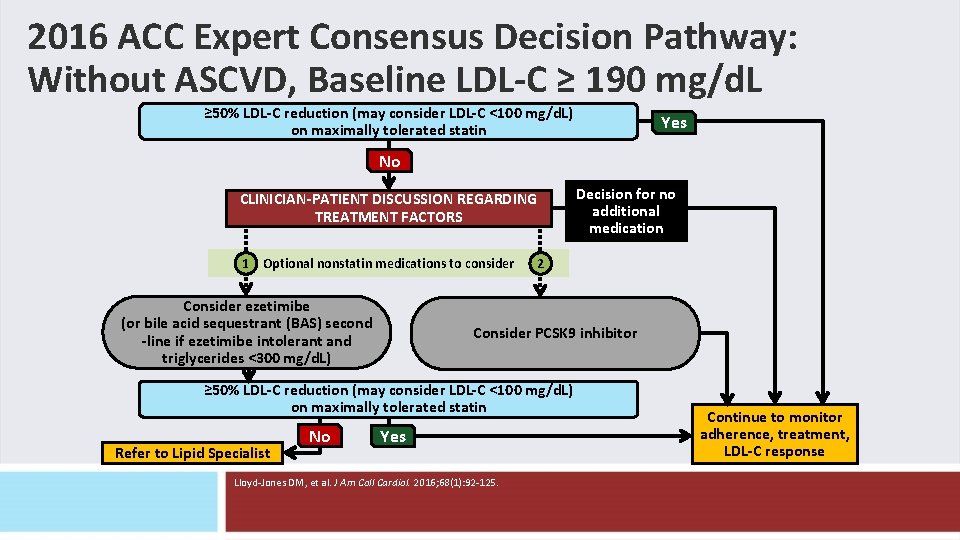
2016 ACC Expert Consensus Decision Pathway: Without ASCVD, Baseline LDL-C ≥ 190 mg/d. L ≥ 50% LDL-C reduction (may consider LDL-C <100 mg/d. L) on maximally tolerated statin Yes No CLINICIAN-PATIENT DISCUSSION REGARDING TREATMENT FACTORS 1 Optional nonstatin medications to consider Consider ezetimibe (or bile acid sequestrant second-line if ezetimibe intolerant and triglycerides <300 mg/d. L) 2 Consider PCSK 9 inhibitor ≥ 50% LDL-C reduction (may consider LDL-C <100 mg/d. L) on maximally tolerated statin Refer to Lipid Specialist No Decision for no additional medication Yes Lloyd-Jones DM, et al. J Am Coll Cardiol. 2016; 68(1): 92 -125. Continue to monitor adherence, treatment, LDL-C response
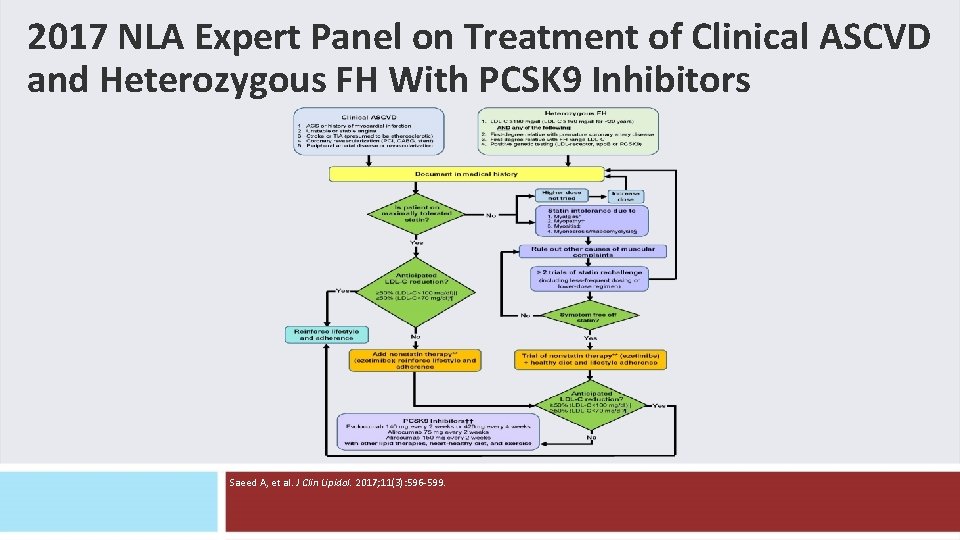
2017 NLA Expert Panel on Treatment of Clinical ASCVD and Heterozygous FH With PCSK 9 Inhibitors Saeed A, et al. J Clin Lipidol. 2017; 11(3): 596 -599.
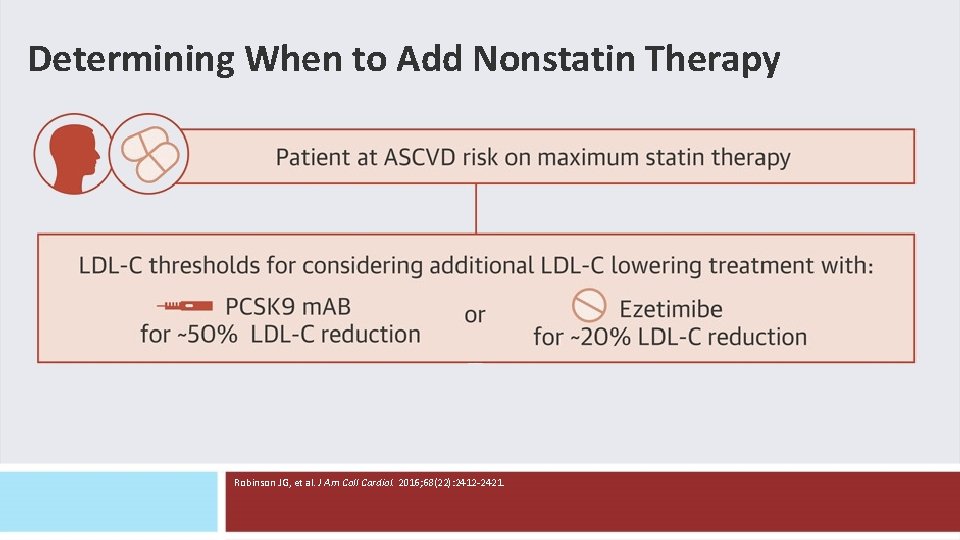
Determining When to Add Nonstatin Therapy Robinson JG, et al. J Am Coll Cardiol. 2016; 68(22): 2412 -2421.
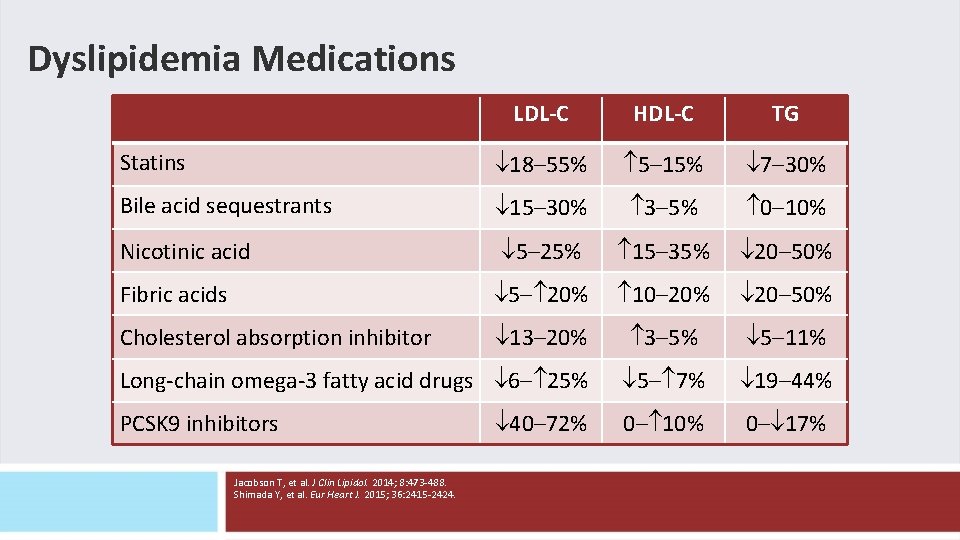
Dyslipidemia Medications LDL-C HDL-C TG Statins 18‒ 55% 5‒ 15% 7‒ 30% Bile acid sequestrants 15‒ 30% 3‒ 5% 0‒ 10% Nicotinic acid 5‒ 25% 15‒ 35% 20‒ 50% Fibric acids 5‒ 20% 10‒ 20% 20‒ 50% Cholesterol absorption inhibitor 13‒ 20% 3‒ 5% 5‒ 11% Long-chain omega-3 fatty acid drugs 6‒ 25% 5‒ 7% 19‒ 44% 40‒ 72% 0‒ 10% 0‒ 17% PCSK 9 inhibitors Jacobson T, et al. J Clin Lipidol. 2014; 8: 473 -488. Shimada Y, et al. Eur Heart J. 2015; 36: 2415 -2424.
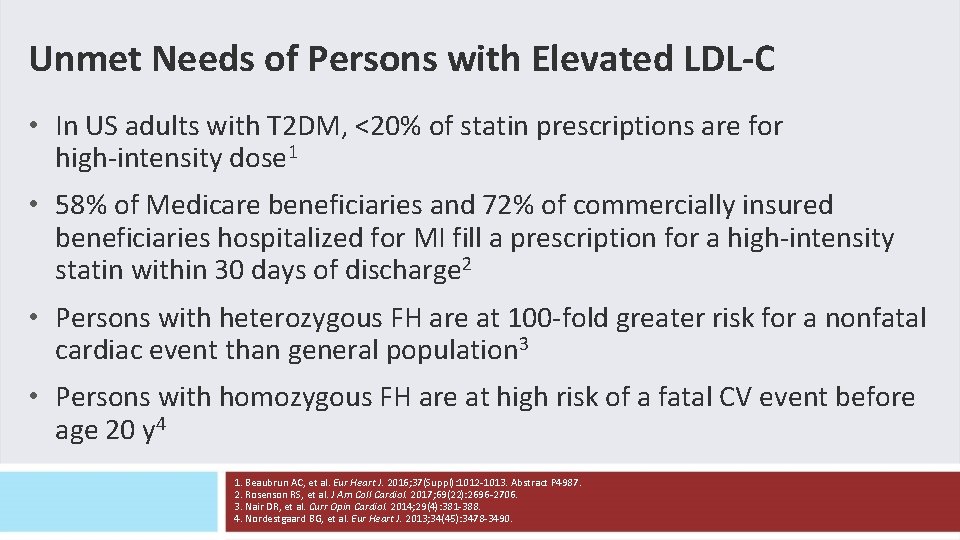
Unmet Needs of Persons with Elevated LDL-C • In US adults with T 2 DM, <20% of statin prescriptions are for high-intensity dose 1 • 58% of Medicare beneficiaries and 72% of commercially insured beneficiaries hospitalized for MI fill a prescription for a high-intensity statin within 30 days of discharge 2 • Persons with heterozygous FH are at 100 -fold greater risk for a nonfatal cardiac event than general population 3 • Persons with homozygous FH are at high risk of a fatal CV event before age 20 y 4 1. Beaubrun AC, et al. Eur Heart J. 2016; 37(Suppl): 1012 -1013. Abstract P 4987. 2. Rosenson RS, et al. J Am Coll Cardiol. 2017; 69(22): 2696 -2706. 3. Nair DR, et al. Curr Opin Cardiol. 2014; 29(4): 381 -388. 4. Nordestgaard BG, et al. Eur Heart J. 2013; 34(45): 3478 -3490.
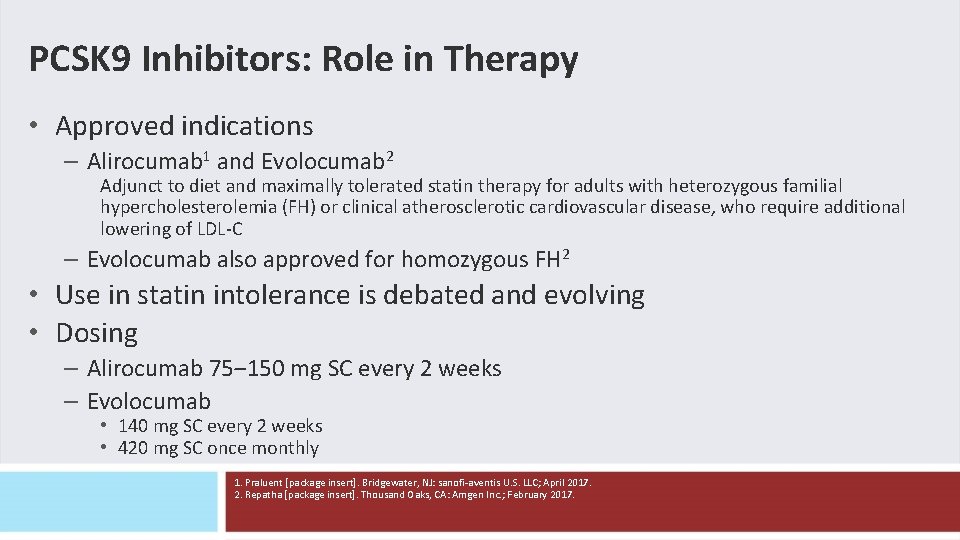
PCSK 9 Inhibitors: Role in Therapy • Approved indications – Alirocumab 1 and Evolocumab 2 Adjunct to diet and maximally tolerated statin therapy for adults with heterozygous familial hypercholesterolemia (FH) or clinical atherosclerotic cardiovascular disease, who require additional lowering of LDL-C – Evolocumab also approved for homozygous FH 2 • Use in statin intolerance is debated and evolving • Dosing – Alirocumab 75‒ 150 mg SC every 2 weeks – Evolocumab • 140 mg SC every 2 weeks • 420 mg SC once monthly 1. Praluent [package insert]. Bridgewater, NJ: sanofi-aventis U. S. LLC; April 2017. 2. Repatha [package insert]. Thousand Oaks, CA: Amgen Inc. ; February 2017.
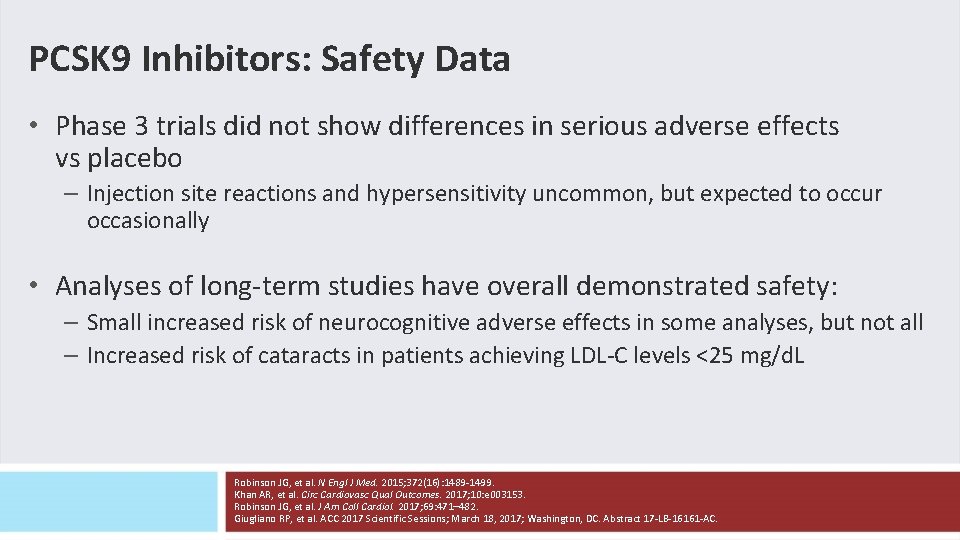
PCSK 9 Inhibitors: Safety Data • Phase 3 trials did not show differences in serious adverse effects vs placebo – Injection site reactions and hypersensitivity uncommon, but expected to occur occasionally • Analyses of long-term studies have overall demonstrated safety: – Small increased risk of neurocognitive adverse effects in some analyses, but not all – Increased risk of cataracts in patients achieving LDL-C levels <25 mg/d. L Robinson JG, et al. N Engl J Med. 2015; 372(16): 1489 -1499. Khan AR, et al. Circ Cardiovasc Qual Outcomes. 2017; 10: e 003153. Robinson JG, et al. J Am Coll Cardiol. 2017; 69: 471– 482. Giugliano RP, et al. ACC 2017 Scientific Sessions; March 18, 2017; Washington, DC. Abstract 17 -LB-16161 -AC.
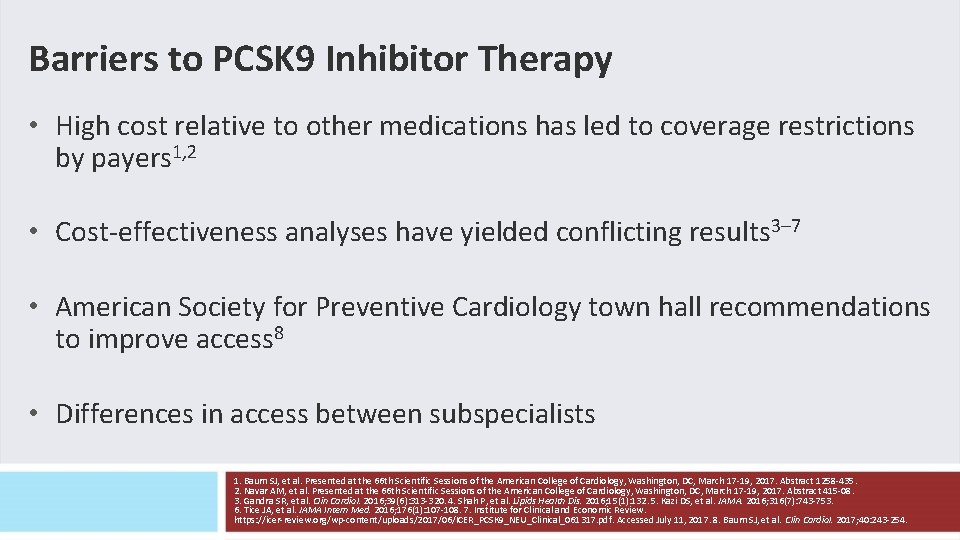
Barriers to PCSK 9 Inhibitor Therapy • High cost relative to other medications has led to coverage restrictions by payers 1, 2 • Cost-effectiveness analyses have yielded conflicting results 3‒ 7 • American Society for Preventive Cardiology town hall recommendations to improve access 8 • Differences in access between subspecialists 1. Baum SJ, et al. Presented at the 66 th Scientific Sessions of the American College of Cardiology, Washington, DC, March 17 -19, 2017. Abstract 1258 -435. 2. Navar AM, et al. Presented at the 66 th Scientific Sessions of the American College of Cardiology, Washington, DC, March 17 -19, 2017. Abstract 415 -08. 3. Gandra SR, et al. Clin Cardiol. 2016; 39(6): 313 -320. 4. Shah P, et al. Lipids Health Dis. 2016; 15(1): 132. 5. Kazi DS, et al. JAMA. 2016; 316(7): 743 -753. 6. Tice JA, et al. JAMA Intern Med. 2016; 176(1): 107 -108. 7. Institute for Clinical and Economic Review. https: //icer-review. org/wp-content/uploads/2017/06/ICER_PCSK 9_NEU_Clinical_061317. pdf. Accessed July 11, 2017. 8. Baum SJ, et al. Clin Cardiol. 2017; 40: 243 -254.
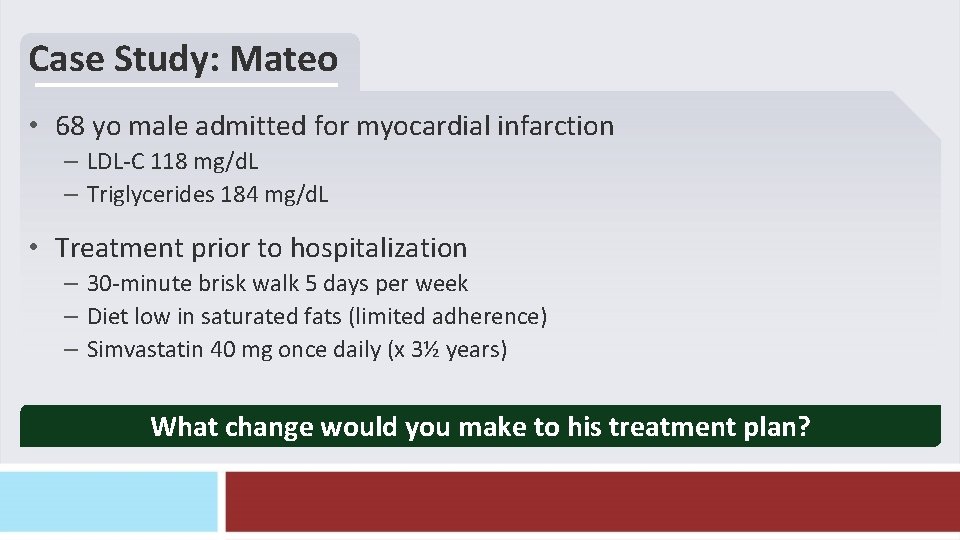
Case Study: Mateo • 68 yo male admitted for myocardial infarction – LDL-C 118 mg/d. L – Triglycerides 184 mg/d. L • Treatment prior to hospitalization – 30 -minute brisk walk 5 days per week – Diet low in saturated fats (limited adherence) – Simvastatin 40 mg once daily (x 3½ years) What change would you make to his treatment plan?
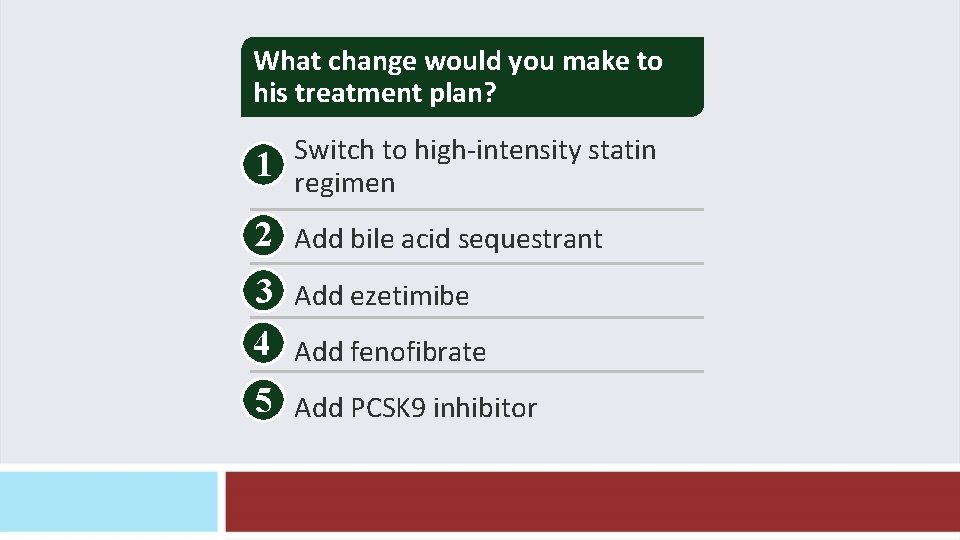
What change would you make to his treatment plan? 1 Switch to high-intensity statin regimen 2 Add bile acid sequestrant 3 Add ezetimibe 4 Add fenofibrate 5 Add PCSK 9 inhibitor
2013 ACC/AHA Cholesterol Guidelines: ASCVD Statin Benefit Groups Clinical ASCVD LDL-C ≥ 190 mg/d. L Diabetes LDL-C 70‒ 189 mg/d. L Age 40‒ 75 y ≥ 7. 5% estimated 10 -y ASCVD risk and age 40‒ 75 y • High-intensity statin if age ≤ 75 y • Moderate-intensity statin if age >75 y or not candidate for high-intensity • High-intensity statin • Moderate-intensity statin if not candidate for high-intensity Moderate-intensity statin High-intensity statin if 10 -y ASCVD risk ≥ 7. 5% Moderate- or High-intensity statin Stone NJ, et al. Circulation. 2014; 129(25 suppl 2): S 1 -S 45.
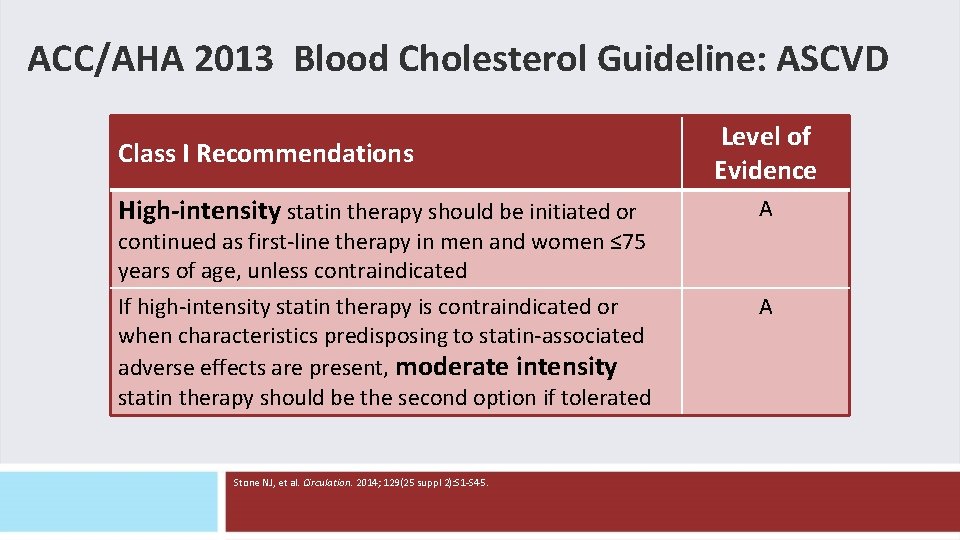
ACC/AHA 2013 Blood Cholesterol Guideline: ASCVD Class I Recommendations High-intensity statin therapy should be initiated or continued as first-line therapy in men and women ≤ 75 years of age, unless contraindicated If high-intensity statin therapy is contraindicated or when characteristics predisposing to statin-associated adverse effects are present, moderate intensity statin therapy should be the second option if tolerated Stone NJ, et al. Circulation. 2014; 129(25 suppl 2): S 1 -S 45. Level of Evidence A A
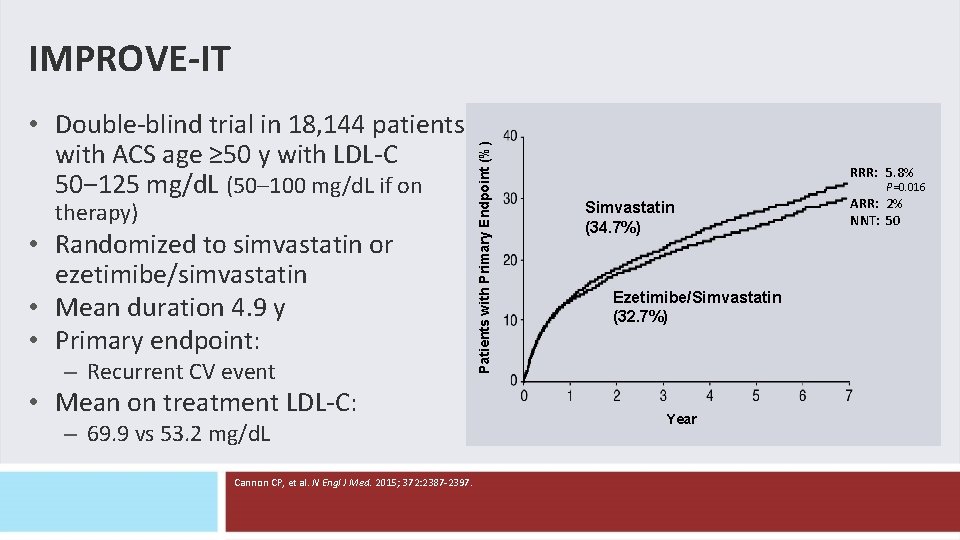
• Double-blind trial in 18, 144 patients with ACS age ≥ 50 y with LDL-C 50‒ 125 mg/d. L (50‒ 100 mg/d. L if on therapy) • Randomized to simvastatin or ezetimibe/simvastatin • Mean duration 4. 9 y • Primary endpoint: – Recurrent CV event • Mean on treatment LDL-C: – 69. 9 vs 53. 2 mg/d. L Cannon CP, et al. N Engl J Med. 2015; 372: 2387 -2397. Patients with Primary Endpoint (%) IMPROVE-IT RRR: 5. 8% P=0. 016 Simvastatin (34. 7%) Ezetimibe/Simvastatin (32. 7%) Year ARR: 2% NNT: 50
2016 ACC Expert Consensus Decision Pathway: Clinical ASCVD With Comorbidities ≥ 50% LDL-C reduction (may consider LDL-C <70 mg/d. L or non-HDL-C <100 mg/d. L in diabetes) on maximally tolerated statin Yes No CLINICIAN-PATIENT DISCUSSION REGARDING TREATMENT FACTORS 1 Optional nonstatin medications to consider Consider ezetimibe first (consider bile acid sequestrant (BAS) if ezetimibe intolerant and triglycerides <300 mg/d. L) Decision for no additional medication 2 Consider adding or replacing with PCSK 9 inhibitor second (only if on maximally tolerated statin and either ezetimibe or a BAS) ≥ 50% LDL-C reduction (may consider LDL-C <70 mg/d. L or non-HDL-C <100 mg/d. L in diabetes) on maximally tolerated statin Refer to Lipid Specialist No Yes Lloyd-Jones DM, et al. J Am Coll Cardiol. 2016; 68(1): 92 -125. Continue to monitor adherence, treatment, LDL-C response
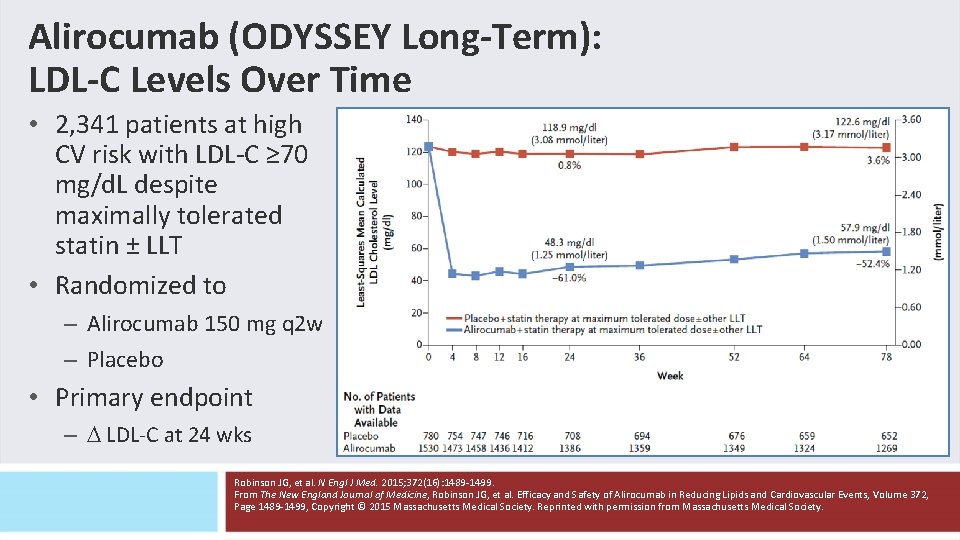
Alirocumab (ODYSSEY Long-Term): LDL-C Levels Over Time • 2, 341 patients at high CV risk with LDL-C ≥ 70 mg/d. L despite maximally tolerated statin ± LLT • Randomized to – Alirocumab 150 mg q 2 w – Placebo • Primary endpoint – LDL-C at 24 wks Robinson JG, et al. N Engl J Med. 2015; 372(16): 1489 -1499. From The New England Journal of Medicine, Robinson JG, et al. Efficacy and Safety of Alirocumab in Reducing Lipids and Cardiovascular Events, Volume 372, Page 1489 -1499, Copyright © 2015 Massachusetts Medical Society. Reprinted with permission from Massachusetts Medical Society.
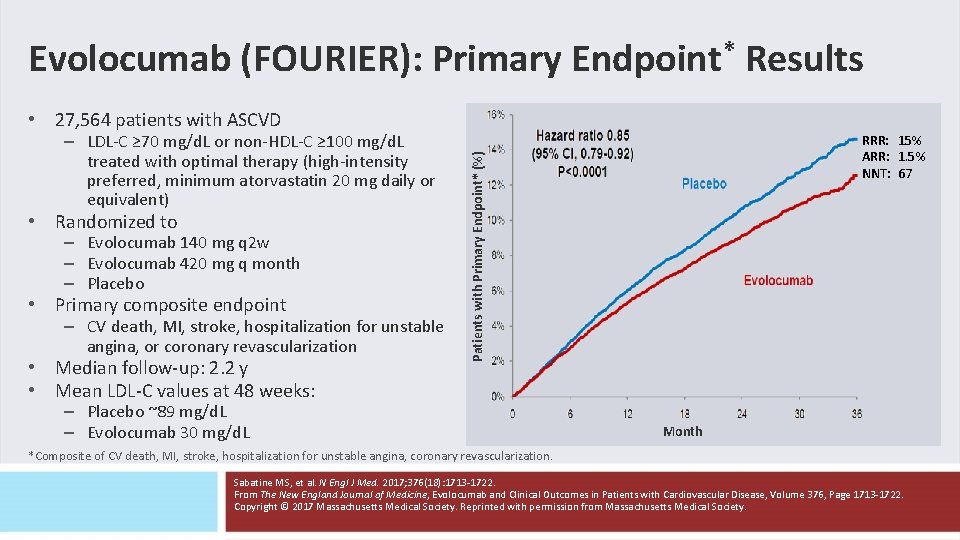
Evolocumab (FOURIER): Primary Endpoint* Results • 27, 564 patients with ASCVD • Randomized to – Evolocumab 140 mg q 2 w – Evolocumab 420 mg q month – Placebo • Primary composite endpoint – CV death, MI, stroke, hospitalization for unstable angina, or coronary revascularization • Median follow-up: 2. 2 y • Mean LDL-C values at 48 weeks: RRR: 15% ARR: 1. 5% NNT: 67 Patients with Primary Endpoint* (%) – LDL-C ≥ 70 mg/d. L or non-HDL-C ≥ 100 mg/d. L treated with optimal therapy (high-intensity preferred, minimum atorvastatin 20 mg daily or equivalent) – Placebo ~89 mg/d. L – Evolocumab 30 mg/d. L Month *Composite of CV death, MI, stroke, hospitalization for unstable angina, coronary revascularization. Sabatine MS, et al. N Engl J Med. 2017; 376(18): 1713 -1722. From The New England Journal of Medicine, Evolocumab and Clinical Outcomes in Patients with Cardiovascular Disease, Volume 376, Page 1713 -1722. Copyright © 2017 Massachusetts Medical Society. Reprinted with permission from Massachusetts Medical Society.
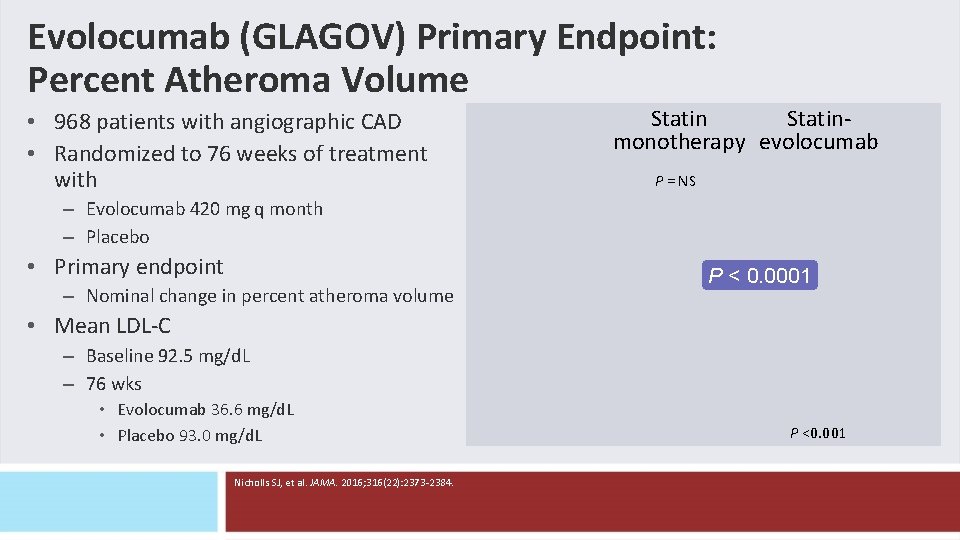
Evolocumab (GLAGOV) Primary Endpoint: Percent Atheroma Volume • 968 patients with angiographic CAD • Randomized to 76 weeks of treatment with Statinmonotherapy evolocumab P = NS – Evolocumab 420 mg q month – Placebo • Primary endpoint – Nominal change in percent atheroma volume P < 0. 0001 • Mean LDL-C – Baseline 92. 5 mg/d. L – 76 wks • Evolocumab 36. 6 mg/d. L • Placebo 93. 0 mg/d. L Nicholls SJ, et al. JAMA. 2016; 316(22): 2373 -2384. P <0. 001
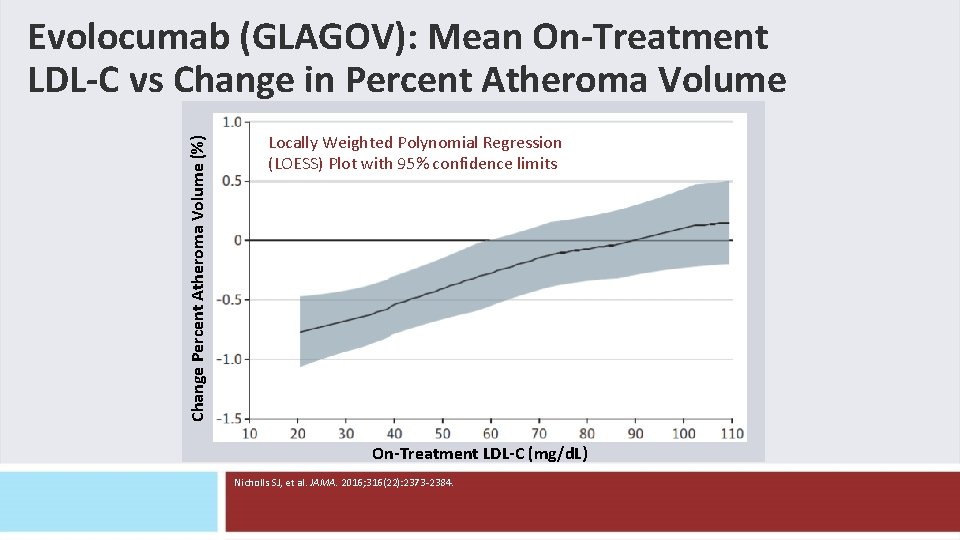
Change Percent Atheroma Volume (%) Evolocumab (GLAGOV): Mean On-Treatment LDL-C vs Change in Percent Atheroma Volume Locally Weighted Polynomial Regression (LOESS) Plot with 95% confidence limits On-Treatment LDL-C (mg/d. L) Nicholls SJ, et al. JAMA. 2016; 316(22): 2373 -2384.
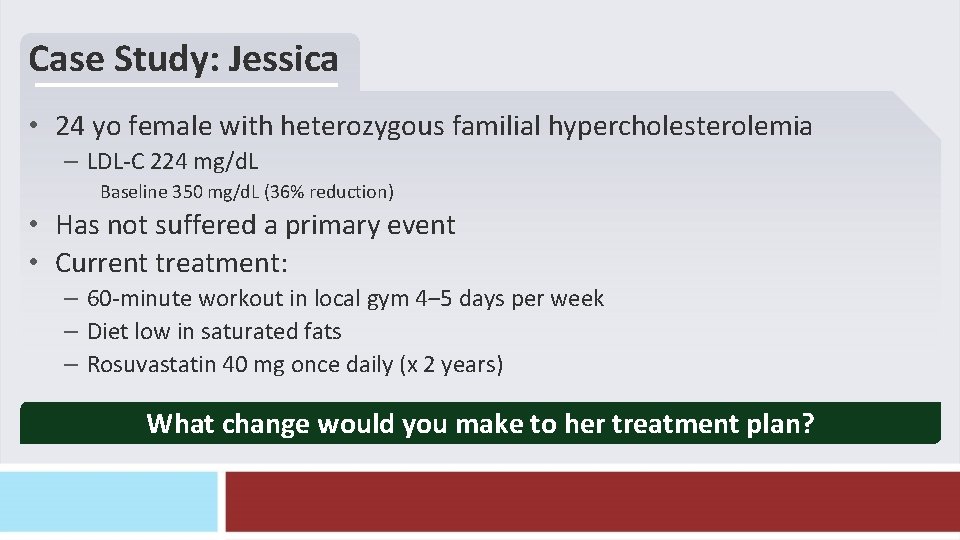
Case Study: Jessica • 24 yo female with heterozygous familial hypercholesterolemia – LDL-C 224 mg/d. L Baseline 350 mg/d. L (36% reduction) • Has not suffered a primary event • Current treatment: – 60 -minute workout in local gym 4‒ 5 days per week – Diet low in saturated fats – Rosuvastatin 40 mg once daily (x 2 years) What change would you make to her treatment plan?
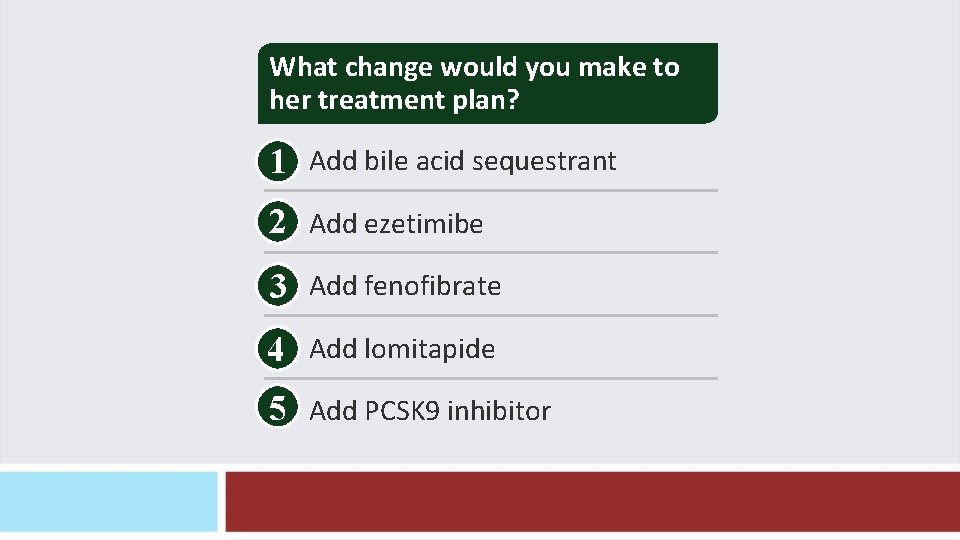
What change would you make to her treatment plan? 1 Add bile acid sequestrant 2 Add ezetimibe 3 Add fenofibrate 4 Add lomitapide 5 Add PCSK 9 inhibitor
2013 ACC/AHA Cholesterol Guidelines: ASCVD Statin Benefit Groups Clinical ASCVD LDL-C ≥ 190 mg/d. L Diabetes LDL-C 70‒ 189 mg/d. L Age 40‒ 75 y ≥ 7. 5% estimated 10 -y ASCVD risk and age 40‒ 75 y • High-intensity statin if age ≤ 75 y • Moderate-intensity statin if age >75 y or not candidate for high-intensity • High-intensity statin • Moderate-intensity statin if not candidate for high-intensity Moderate-intensity statin High-intensity statin if 10 -y ASCVD risk ≥ 7. 5% Moderate- or High-intensity statin Stone NJ, et al. Circulation. 2014; 129(25 suppl 2): S 1 -S 45.
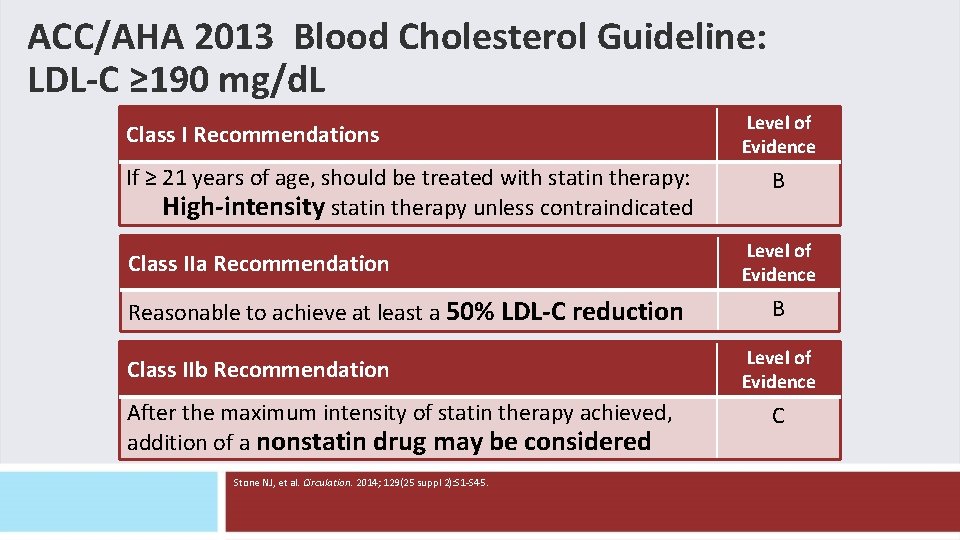
ACC/AHA 2013 Blood Cholesterol Guideline: LDL-C ≥ 190 mg/d. L Class I Recommendations If ≥ 21 years of age, should be treated with statin therapy: High-intensity statin therapy unless contraindicated Class IIa Recommendation Reasonable to achieve at least a 50% LDL-C reduction Class IIb Recommendation After the maximum intensity of statin therapy achieved, addition of a nonstatin drug may be considered Stone NJ, et al. Circulation. 2014; 129(25 suppl 2): S 1 -S 45. Level of Evidence B Level of Evidence C
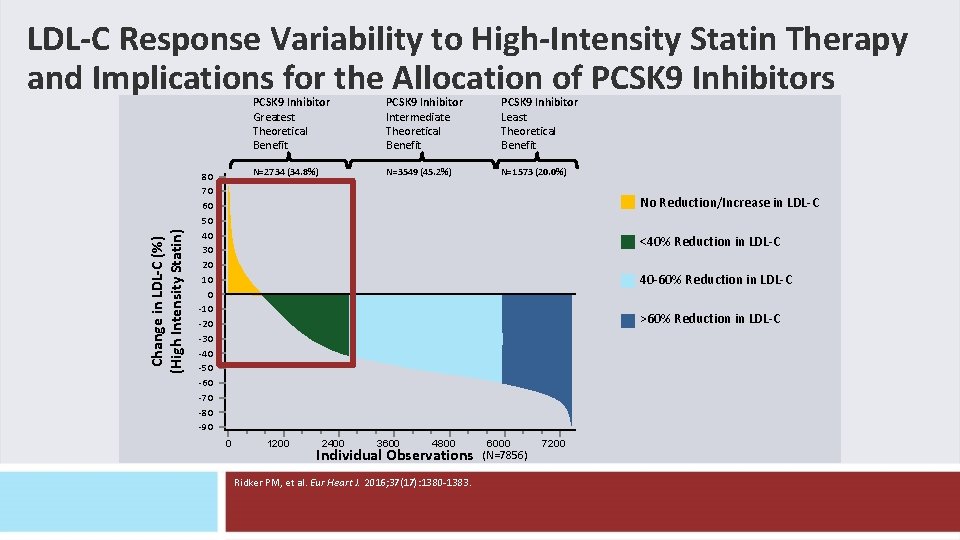
Change in LDL-C (%) (High Intensity Statin) LDL-C Response Variability to High-Intensity Statin Therapy and Implications for the Allocation of PCSK 9 Inhibitors 80 70 60 50 40 30 20 10 0 -10 -20 -30 -40 -50 -60 -70 -80 -90 PCSK 9 Inhibitor Greatest Theoretical Benefit PCSK 9 Inhibitor Intermediate Theoretical Benefit PCSK 9 Inhibitor Least Theoretical Benefit N=2734 (34. 8%) N=3549 (45. 2%) N=1573 (20. 0%) No Reduction/Increase in LDL-C <40% Reduction in LDL-C 40 -60% Reduction in LDL-C >60% Reduction in LDL-C 0 1200 2400 3600 4800 Individual Observations Ridker PM, et al. Eur Heart J. 2016; 37(17): 1380 -1383. 6000 (N=7856) 7200
2016 ACC Expert Consensus Decision Pathway: Without ASCVD, Baseline LDL-C ≥ 190 mg/d. L ≥ 50% LDL-C reduction (may consider LDL-C <100 mg/d. L) on maximally tolerated statin Yes No CLINICIAN-PATIENT DISCUSSION REGARDING TREATMENT FACTORS 1 Optional nonstatin medications to consider Consider ezetimibe (or bile acid sequestrant (BAS) second -line if ezetimibe intolerant and triglycerides <300 mg/d. L) 2 Consider PCSK 9 inhibitor ≥ 50% LDL-C reduction (may consider LDL-C <100 mg/d. L) on maximally tolerated statin Refer to Lipid Specialist No Decision for no additional medication Yes Lloyd-Jones DM, et al. J Am Coll Cardiol. 2016; 68(1): 92 -125. Continue to monitor adherence, treatment, LDL-C response
Limitations of Ezetimibe • IMPROVE-IT – Median LDL-C values lower than what is typically seen (69. 5 mg/d. L vs 53. 7 mg/d. L) – Baseline characteristics: • Mean age 63. 6 y; 76% men, 84% Caucasian, 33% smoking • Mean BMI 28 kg/m 2; 27% diabetes, 61% hypertension • Ezetimibe unproven in familial hypercholesterolemia – ENHANCE trial (baseline LDL-C ~320 mg/d. L) • No difference in primary endpoint (c. IMT) or CV events • IMPROVE-IT excluded familial hypercholesterolemia Kastelein J, et al. N Engl J Med. 2008; 358: 1431 -1443. Cannon C, et al. N Engl J Med. 2015; 372: 2387 -2397.
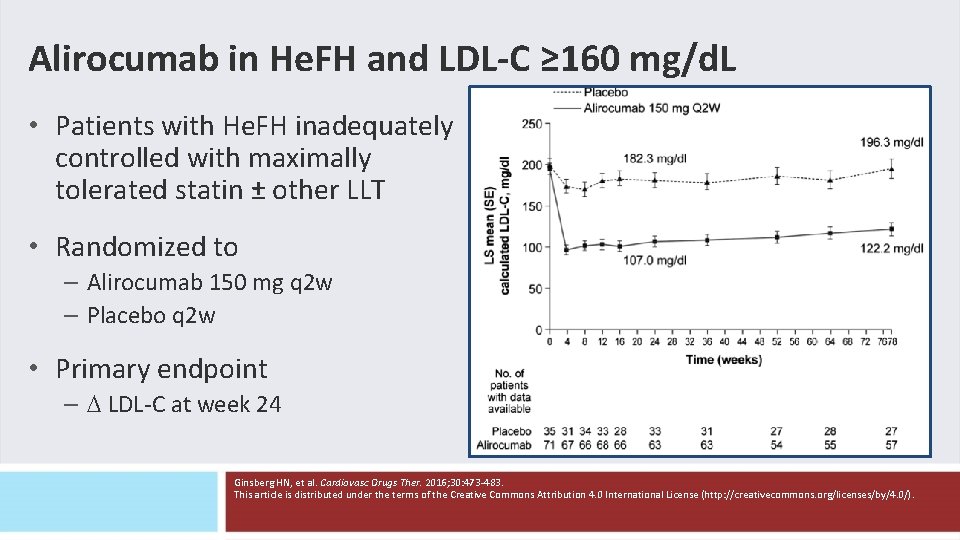
Alirocumab in He. FH and LDL-C ≥ 160 mg/d. L • Patients with He. FH inadequately controlled with maximally tolerated statin ± other LLT • Randomized to – Alirocumab 150 mg q 2 w – Placebo q 2 w • Primary endpoint – LDL-C at week 24 Ginsberg HN, et al. Cardiovasc Drugs Ther. 2016; 30: 473 -483. This article is distributed under the terms of the Creative Commons Attribution 4. 0 International License (http: //creativecommons. org/licenses/by/4. 0/).
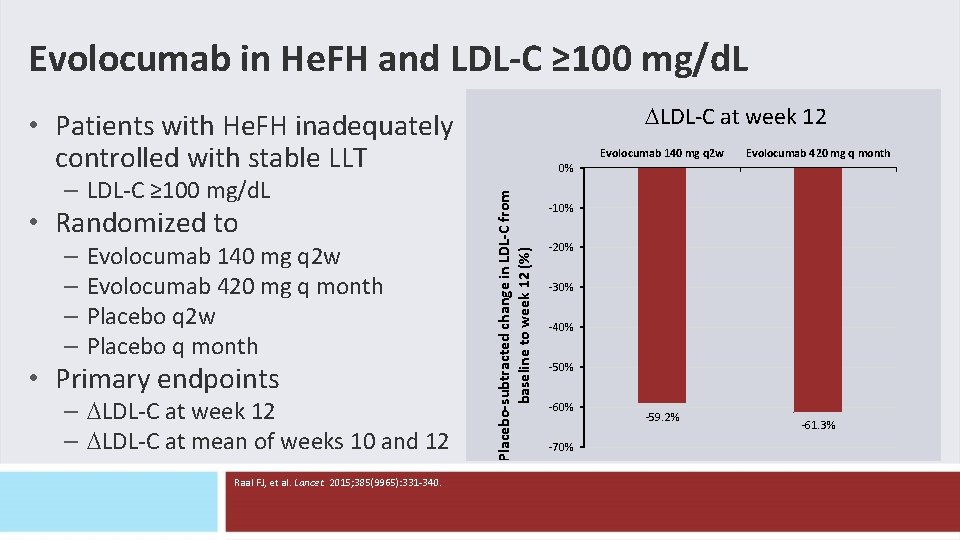
Evolocumab in He. FH and LDL-C ≥ 100 mg/d. L LDL-C at week 12 • Patients with He. FH inadequately controlled with stable LLT • Randomized to – – Evolocumab 140 mg q 2 w Evolocumab 420 mg q month Placebo q 2 w Placebo q month • Primary endpoints – LDL-C at week 12 – LDL-C at mean of weeks 10 and 12 Raal FJ, et al. Lancet. 2015; 385(9965): 331 -340. Placebo-subtracted change in LDL-C from baseline to week 12 (%) – LDL-C ≥ 100 mg/d. L Evolocumab 140 mg q 2 w Evolocumab 420 mg q month 0% -10% -20% -30% -40% -50% -60% -70% -59. 2% -61. 3%
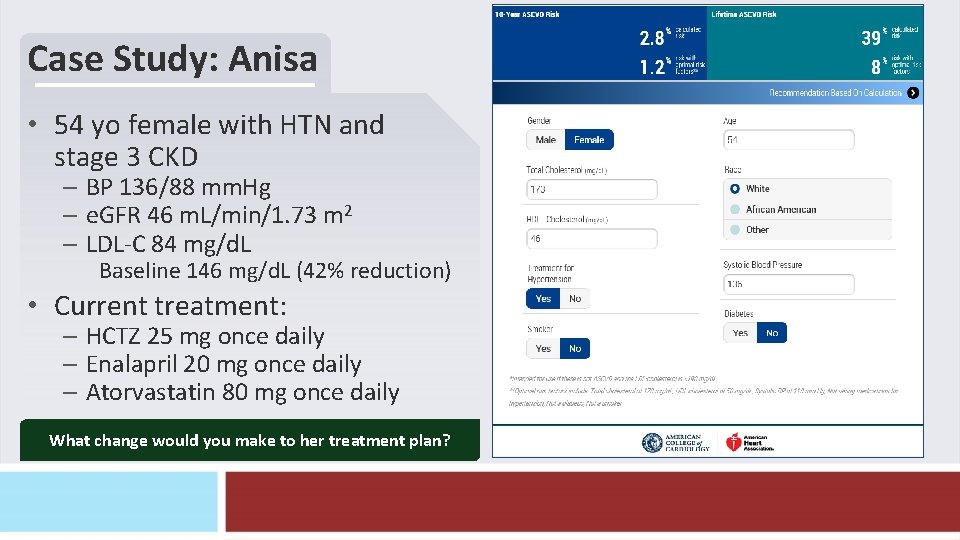
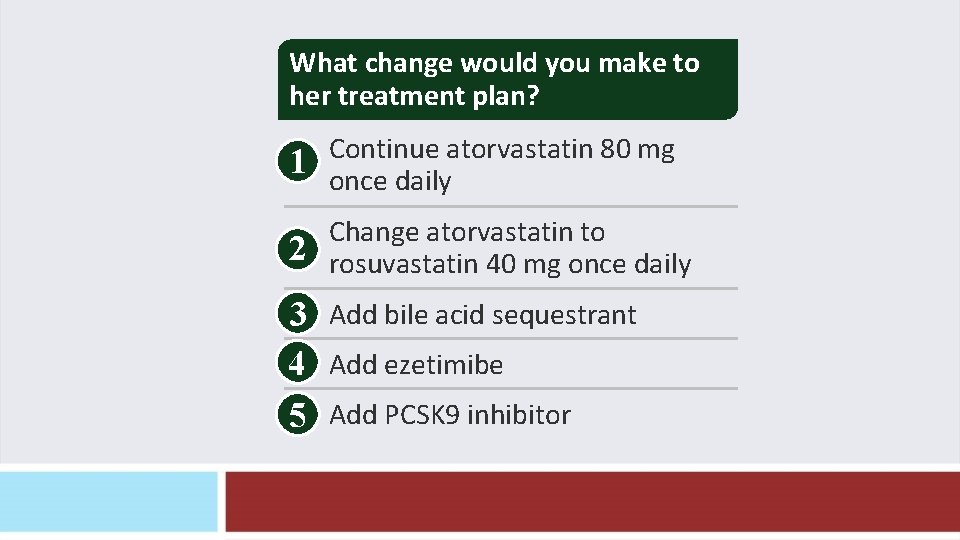
Case Study: Anisa • 54 yo female with HTN and stage 3 CKD – BP 136/88 mm. Hg – e. GFR 46 m. L/min/1. 73 m 2 – LDL-C 84 mg/d. L Baseline 146 mg/d. L (42% reduction) • Current treatment: – HCTZ 25 mg once daily – Enalapril 20 mg once daily – Atorvastatin 80 mg once daily What change would you make to her treatment plan?
What change would you make to her treatment plan? 1 Continue atorvastatin 80 mg once daily 2 Change atorvastatin to rosuvastatin 40 mg once daily 3 Add bile acid sequestrant 4 Add ezetimibe 5 Add PCSK 9 inhibitor
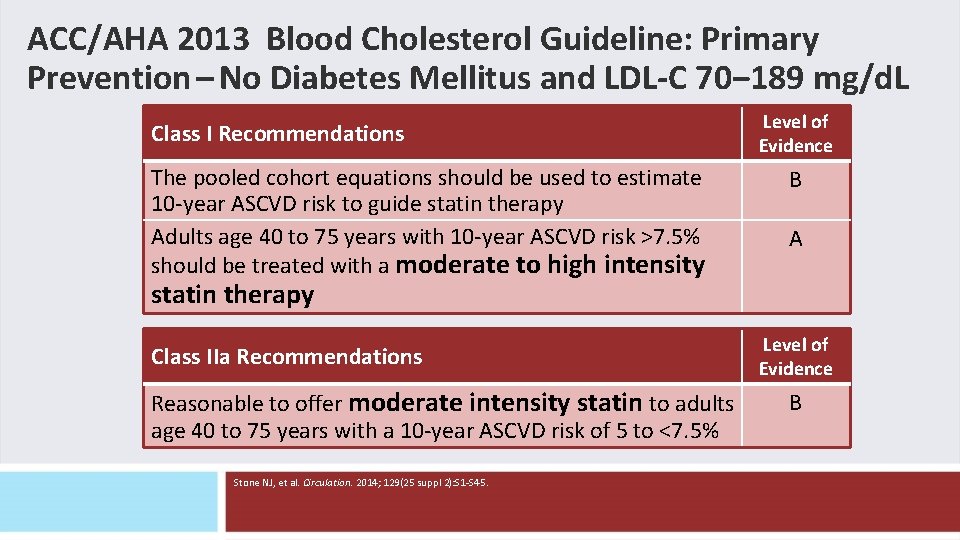
ACC/AHA 2013 Blood Cholesterol Guideline: Primary Prevention – No Diabetes Mellitus and LDL-C 70‒ 189 mg/d. L Class I Recommendations The pooled cohort equations should be used to estimate 10 -year ASCVD risk to guide statin therapy Adults age 40 to 75 years with 10 -year ASCVD risk >7. 5% should be treated with a moderate to high intensity Level of Evidence B A statin therapy Class IIa Recommendations Reasonable to offer moderate intensity statin to adults age 40 to 75 years with a 10 -year ASCVD risk of 5 to <7. 5% Stone NJ, et al. Circulation. 2014; 129(25 suppl 2): S 1 -S 45. Level of Evidence B
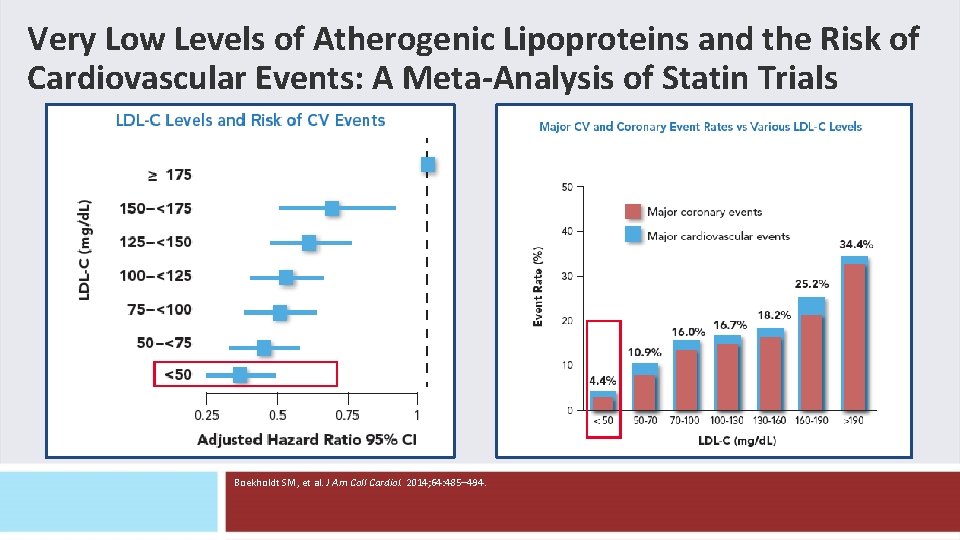
Very Low Levels of Atherogenic Lipoproteins and the Risk of Cardiovascular Events: A Meta-Analysis of Statin Trials Boekholdt SM, et al. J Am Coll Cardiol. 2014; 64: 485– 494.
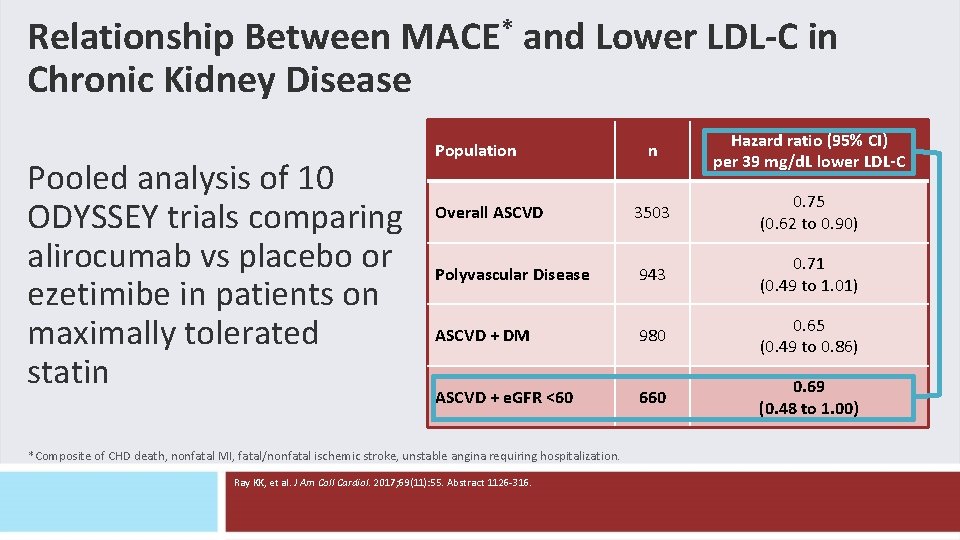
Relationship Between MACE* and Lower LDL-C in Chronic Kidney Disease Pooled analysis of 10 ODYSSEY trials comparing alirocumab vs placebo or ezetimibe in patients on maximally tolerated statin n Hazard ratio (95% CI) per 39 mg/d. L lower LDL-C Overall ASCVD 3503 0. 75 (0. 62 to 0. 90) Polyvascular Disease 943 0. 71 (0. 49 to 1. 01) ASCVD + DM 980 0. 65 (0. 49 to 0. 86) ASCVD + e. GFR <60 660 0. 69 (0. 48 to 1. 00) Population *Composite of CHD death, nonfatal MI, fatal/nonfatal ischemic stroke, unstable angina requiring hospitalization. Ray KK, et al. J Am Coll Cardiol. 2017; 69(11): 55. Abstract 1126 -316.
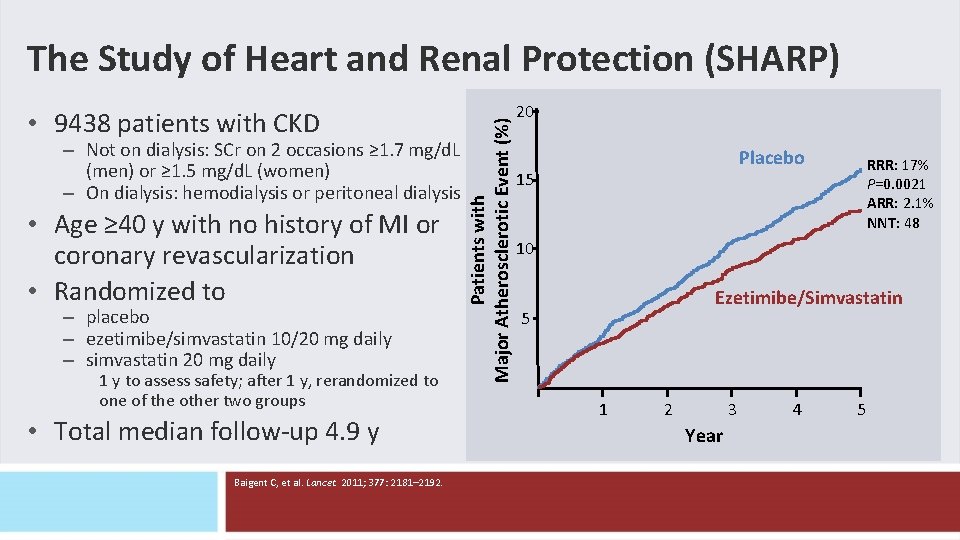
• 9438 patients with CKD – Not on dialysis: SCr on 2 occasions ≥ 1. 7 mg/d. L (men) or ≥ 1. 5 mg/d. L (women) – On dialysis: hemodialysis or peritoneal dialysis • Age ≥ 40 y with no history of MI or coronary revascularization • Randomized to – placebo – ezetimibe/simvastatin 10/20 mg daily – simvastatin 20 mg daily 1 y to assess safety; after 1 y, rerandomized to one of the other two groups • Total median follow-up 4. 9 y Baigent C, et al. Lancet. 2011; 377: 2181– 2192. Patients with Major Atherosclerotic Event (%) The Study of Heart and Renal Protection (SHARP) 20 Placebo 15 RRR: 17% P=0. 0021 ARR: 2. 1% NNT: 48 10 Ezetimibe/Simvastatin 5 1 2 3 Year 4 5
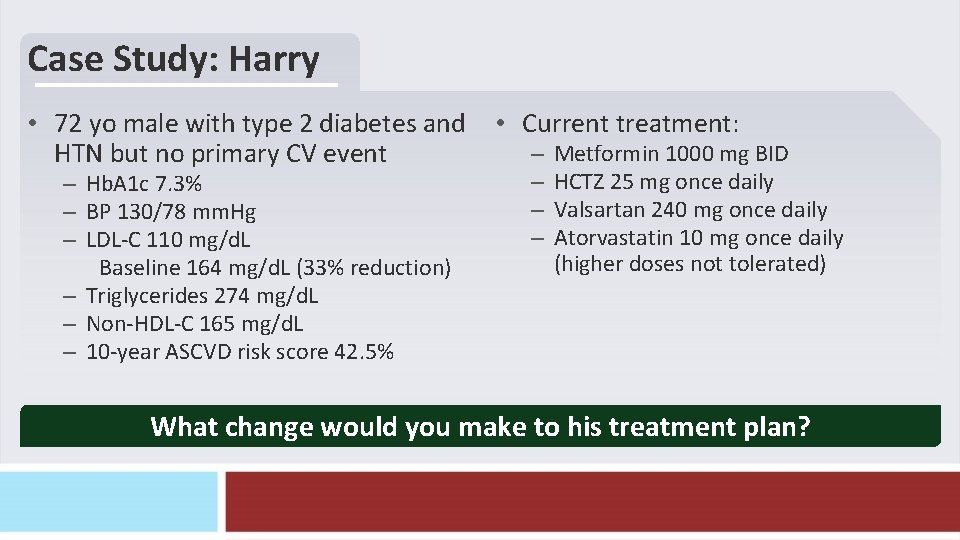
Case Study: Harry • 72 yo male with type 2 diabetes and HTN but no primary CV event – Hb. A 1 c 7. 3% – BP 130/78 mm. Hg – LDL-C 110 mg/d. L Baseline 164 mg/d. L (33% reduction) – Triglycerides 274 mg/d. L – Non-HDL-C 165 mg/d. L – 10 -year ASCVD risk score 42. 5% • Current treatment: – – Metformin 1000 mg BID HCTZ 25 mg once daily Valsartan 240 mg once daily Atorvastatin 10 mg once daily (higher doses not tolerated) What change would you make to his treatment plan?
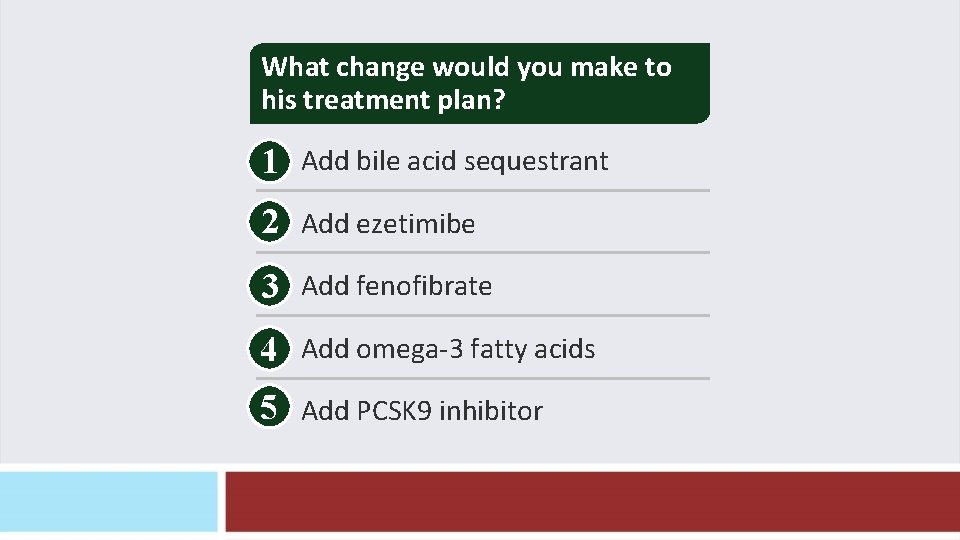
What change would you make to his treatment plan? 1 Add bile acid sequestrant 2 Add ezetimibe 3 Add fenofibrate 4 Add omega-3 fatty acids 5 Add PCSK 9 inhibitor
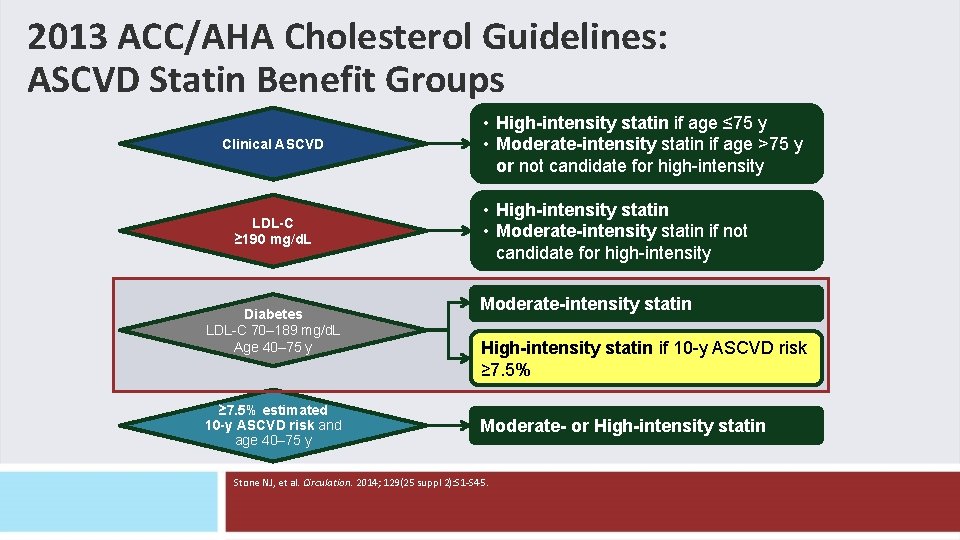
2013 ACC/AHA Cholesterol Guidelines: ASCVD Statin Benefit Groups Clinical ASCVD LDL-C ≥ 190 mg/d. L Diabetes LDL-C 70‒ 189 mg/d. L Age 40‒ 75 y ≥ 7. 5% estimated 10 -y ASCVD risk and age 40‒ 75 y • High-intensity statin if age ≤ 75 y • Moderate-intensity statin if age >75 y or not candidate for high-intensity • High-intensity statin • Moderate-intensity statin if not candidate for high-intensity Moderate-intensity statin High-intensity statin if 10 -y ASCVD risk ≥ 7. 5% Moderate- or High-intensity statin Stone NJ, et al. Circulation. 2014; 129(25 suppl 2): S 1 -S 45.
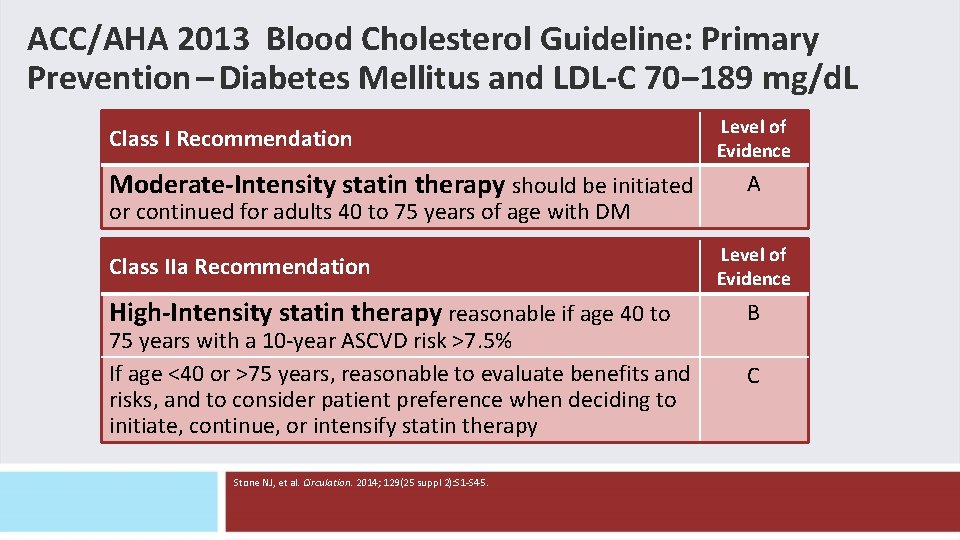
ACC/AHA 2013 Blood Cholesterol Guideline: Primary Prevention – Diabetes Mellitus and LDL-C 70‒ 189 mg/d. L Class I Recommendation Moderate-Intensity statin therapy should be initiated or continued for adults 40 to 75 years of age with DM Class IIa Recommendation High-Intensity statin therapy reasonable if age 40 to 75 years with a 10 -year ASCVD risk >7. 5% If age <40 or >75 years, reasonable to evaluate benefits and risks, and to consider patient preference when deciding to initiate, continue, or intensify statin therapy Stone NJ, et al. Circulation. 2014; 129(25 suppl 2): S 1 -S 45. Level of Evidence A Level of Evidence B C
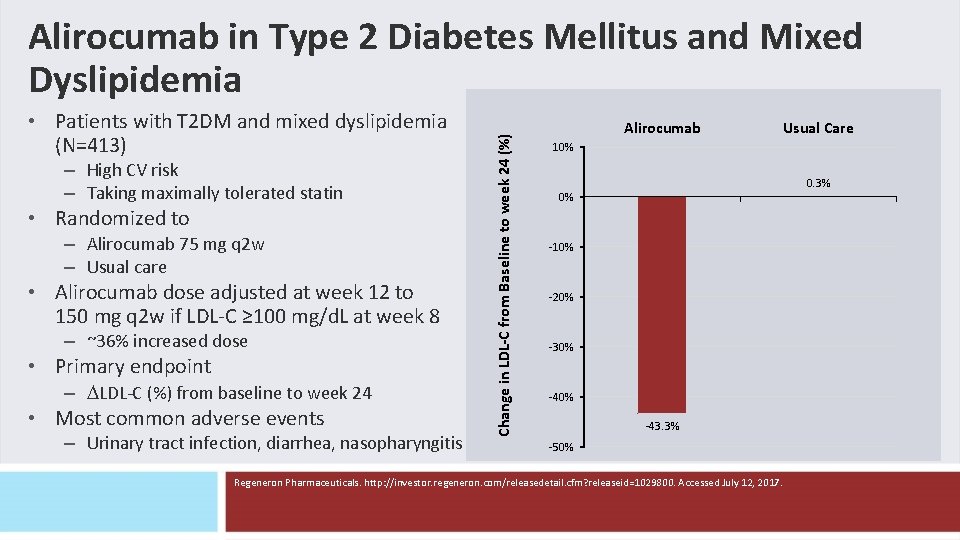
• Patients with T 2 DM and mixed dyslipidemia (N=413) – High CV risk – Taking maximally tolerated statin • Randomized to – Alirocumab 75 mg q 2 w – Usual care • Alirocumab dose adjusted at week 12 to 150 mg q 2 w if LDL-C ≥ 100 mg/d. L at week 8 – ~36% increased dose • Primary endpoint – LDL-C (%) from baseline to week 24 • Most common adverse events – Urinary tract infection, diarrhea, nasopharyngitis Change in LDL-C from Baseline to week 24 (%) Alirocumab in Type 2 Diabetes Mellitus and Mixed Dyslipidemia Alirocumab Usual Care 10% 0. 3% 0% -10% -20% -30% -43. 3% -50% Regeneron Pharmaceuticals. http: //investor. regeneron. com/releasedetail. cfm? releaseid=1029800. Accessed July 12, 2017.
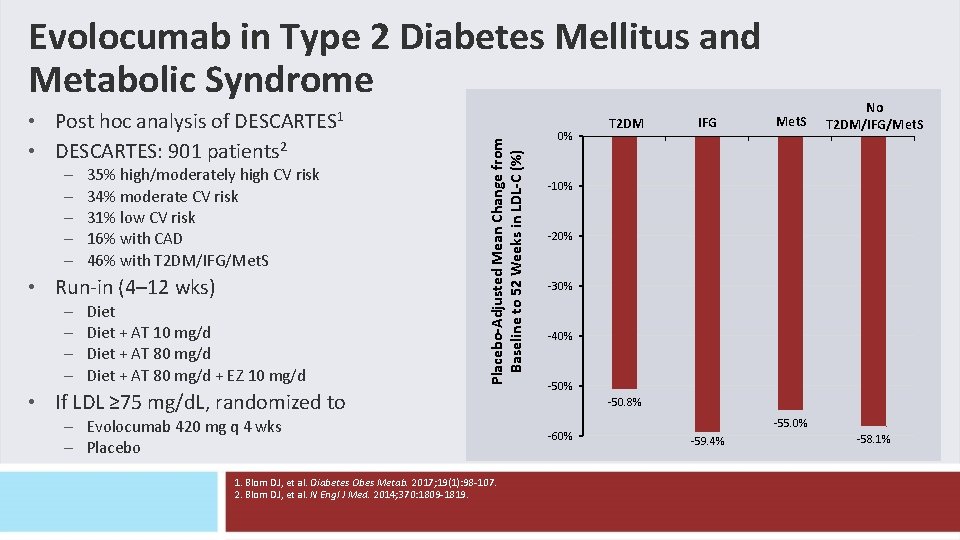
Evolocumab in Type 2 Diabetes Mellitus and Metabolic Syndrome • Post hoc analysis of • DESCARTES: 901 patients 2 – – – 35% high/moderately high CV risk 34% moderate CV risk 31% low CV risk 16% with CAD 46% with T 2 DM/IFG/Met. S • Run-in (4‒ 12 wks) – – Diet + AT 10 mg/d Diet + AT 80 mg/d + EZ 10 mg/d Placebo-Adjusted Mean Change from Baseline to 52 Weeks in LDL-C (%) DESCARTES 1 • If LDL ≥ 75 mg/d. L, randomized to – Evolocumab 420 mg q 4 wks – Placebo 1. Blom DJ, et al. Diabetes Obes Metab. 2017; 19(1): 98 -107. 2. Blom DJ, et al. N Engl J Med. 2014; 370: 1809 -1819. 0% T 2 DM IFG Met. S No T 2 DM/IFG/Met. S -10% -20% -30% -40% -50. 8% -60% -55. 0% -59. 4% -58. 1%