Perfectionism From Surviving to Thriving Greater Dane County












- Slides: 52
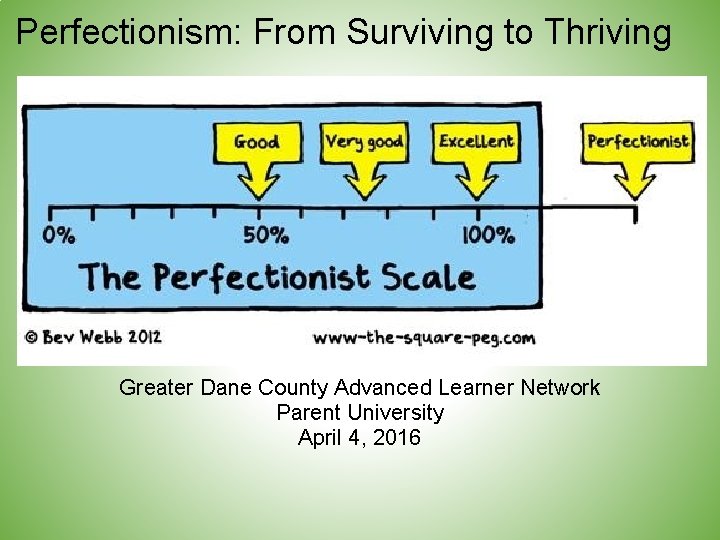
Perfectionism: From Surviving to Thriving Greater Dane County Advanced Learner Network Parent University April 4, 2016
What professions would you like to see people that are closer to perfect in their work than not?
What adult professionals would you want to be closer to perfection than not?
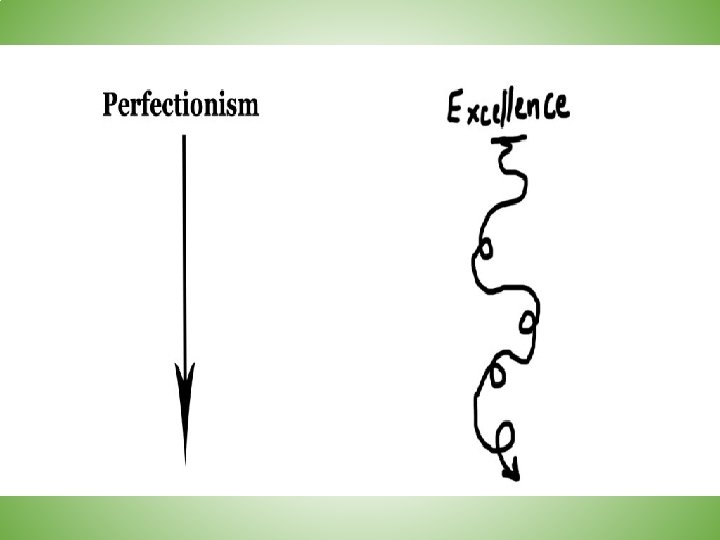
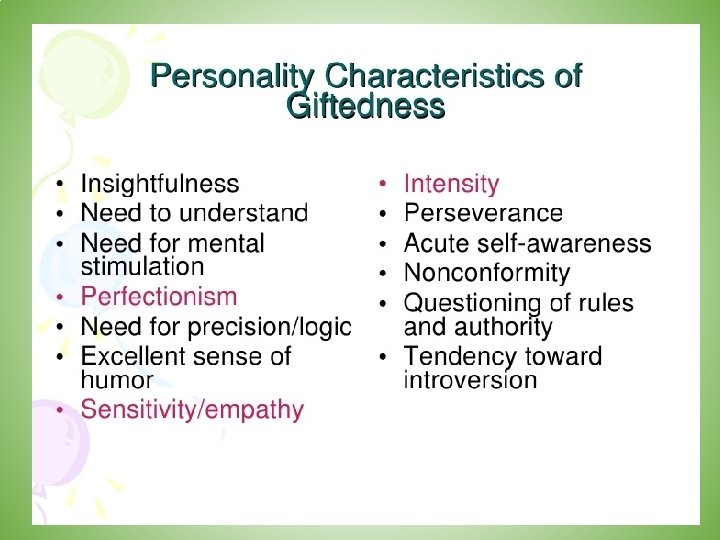
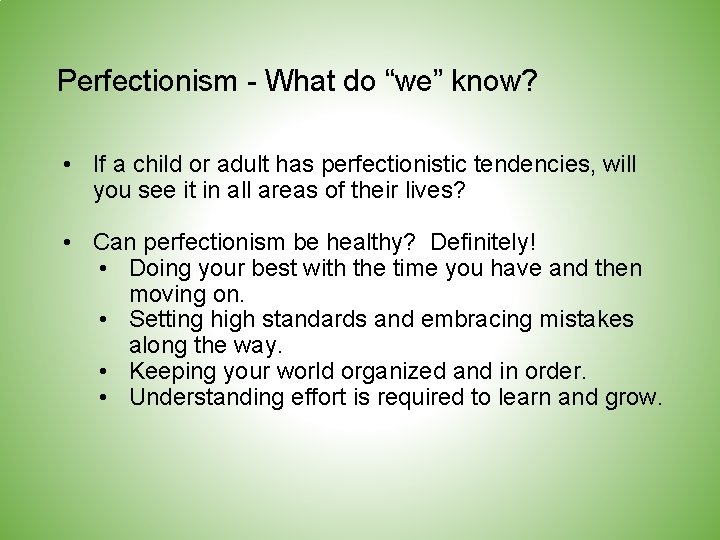
Perfectionism - What do “we” know? • If a child or adult has perfectionistic tendencies, will you see it in all areas of their lives? • Can perfectionism be healthy? Definitely! • Doing your best with the time you have and then moving on. • Setting high standards and embracing mistakes along the way. • Keeping your world organized and in order. • Understanding effort is required to learn and grow.
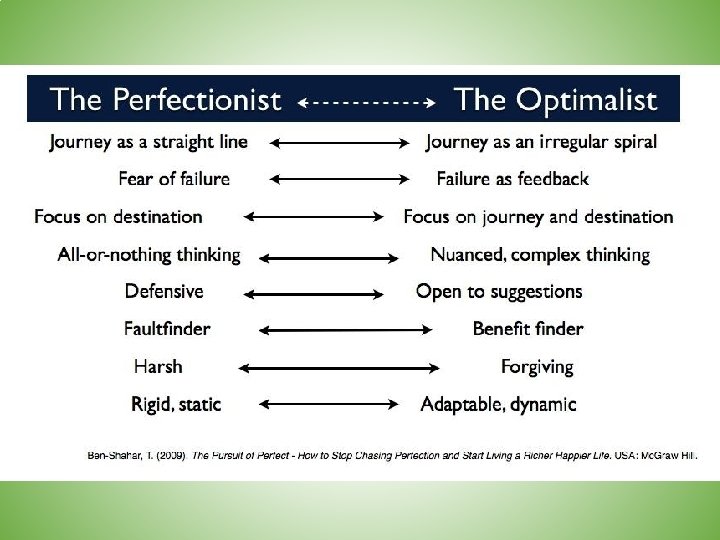
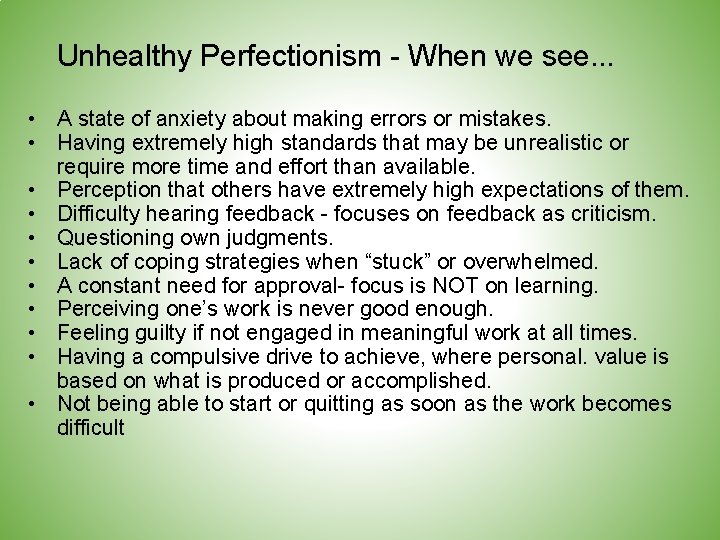
Unhealthy Perfectionism - When we see. . . • A state of anxiety about making errors or mistakes. • Having extremely high standards that may be unrealistic or require more time and effort than available. • Perception that others have extremely high expectations of them. • Difficulty hearing feedback - focuses on feedback as criticism. • Questioning own judgments. • Lack of coping strategies when “stuck” or overwhelmed. • A constant need for approval- focus is NOT on learning. • Perceiving one’s work is never good enough. • Feeling guilty if not engaged in meaningful work at all times. • Having a compulsive drive to achieve, where personal. value is based on what is produced or accomplished. • Not being able to start or quitting as soon as the work becomes difficult
When should you seek additional supports? When Perfectionism Interferes with: • school work • extra - curricular activities • A Healthy Social Life or your child exhibits symptoms of: • sleeplessness • avoidance of activities • eating disorders • continuous headaches and stomach aches
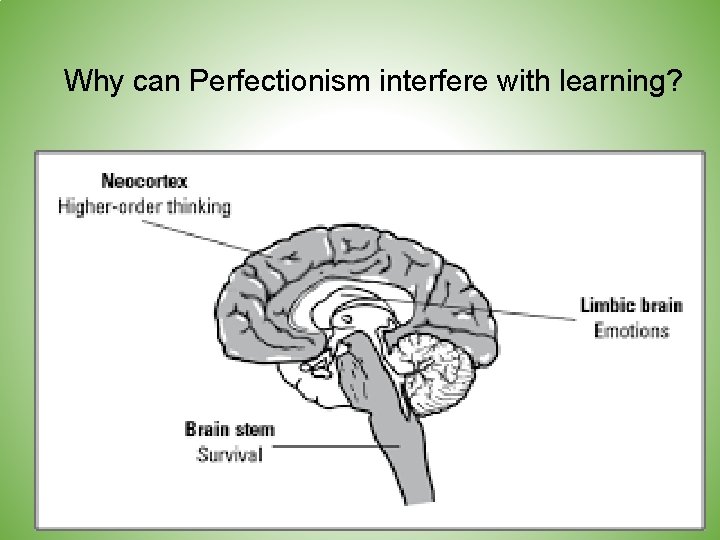
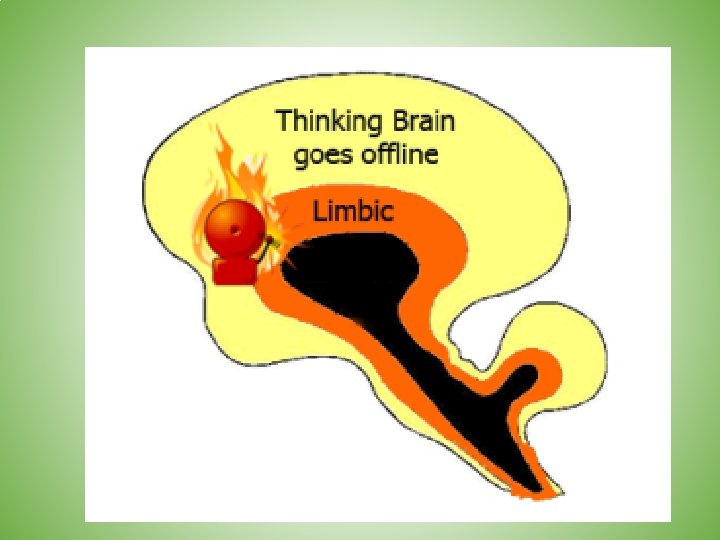
Why can Perfectionism interfere with learning?
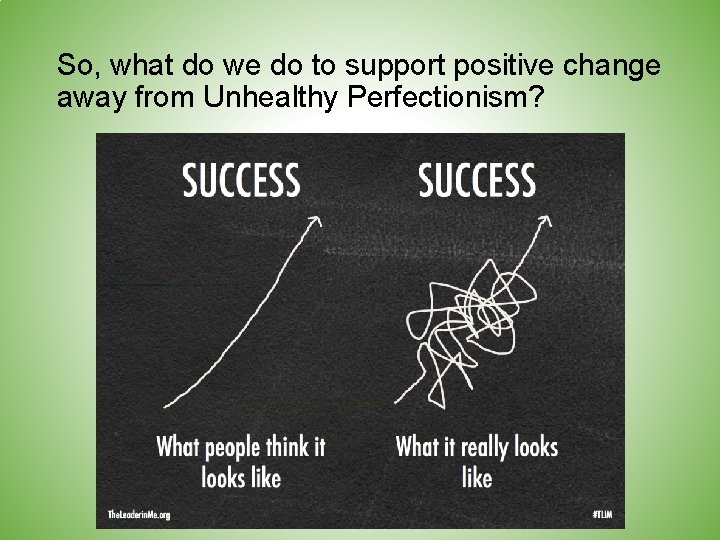
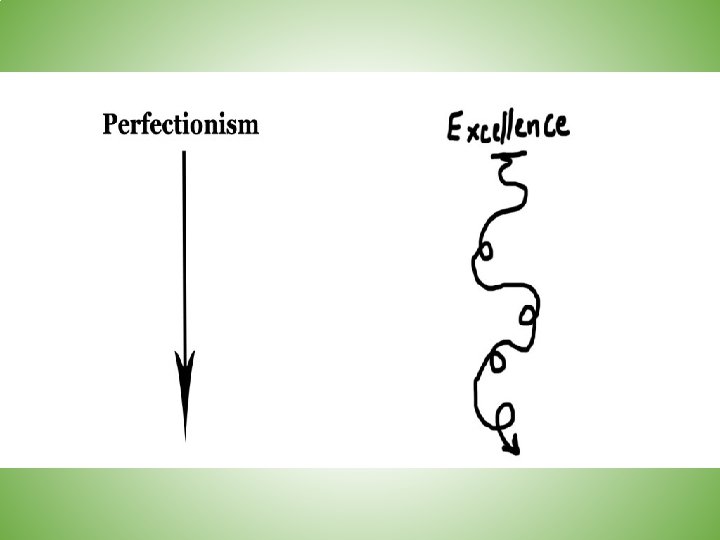
So, what do we do to support positive change away from Unhealthy Perfectionism?
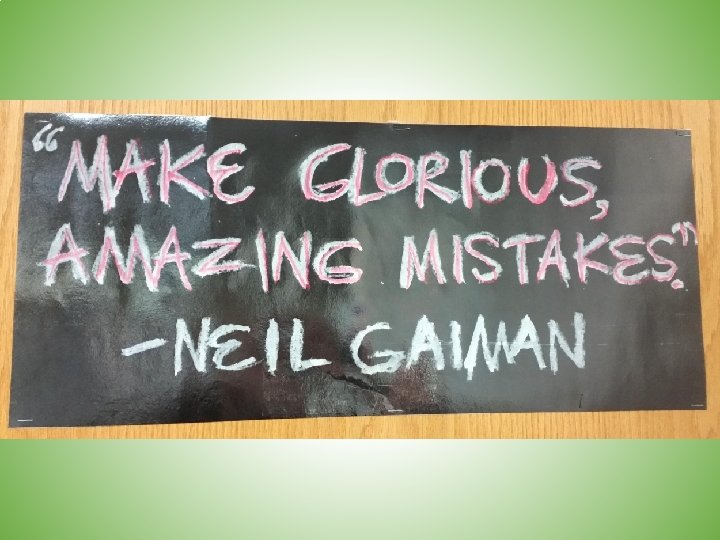
The way to achieve big dreams is to fail along the way.
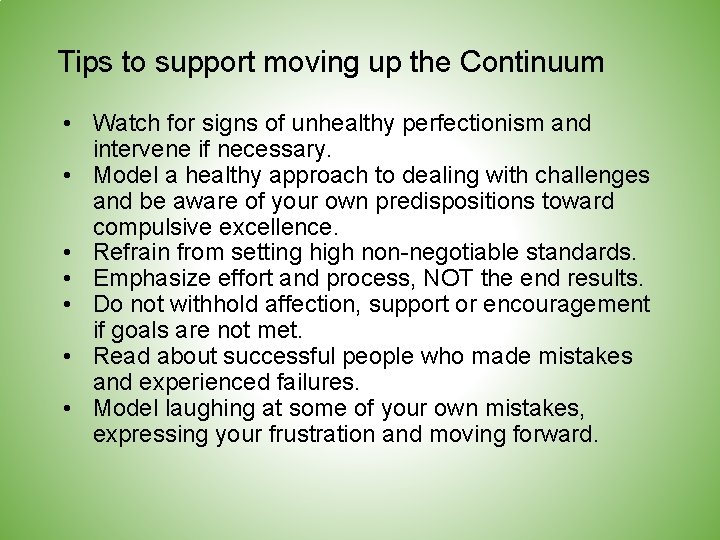
Tips to support moving up the Continuum • Watch for signs of unhealthy perfectionism and intervene if necessary. • Model a healthy approach to dealing with challenges and be aware of your own predispositions toward compulsive excellence. • Refrain from setting high non-negotiable standards. • Emphasize effort and process, NOT the end results. • Do not withhold affection, support or encouragement if goals are not met. • Read about successful people who made mistakes and experienced failures. • Model laughing at some of your own mistakes, expressing your frustration and moving forward.
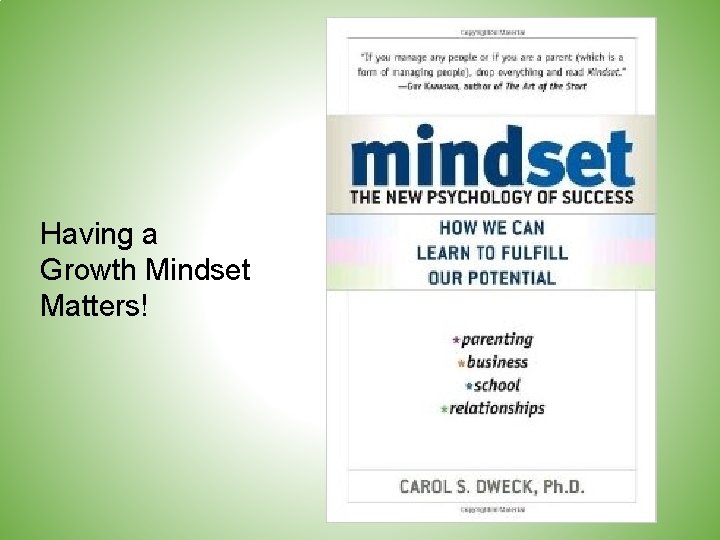
Having a Growth Mindset Matters!
Support a Change in Thinking
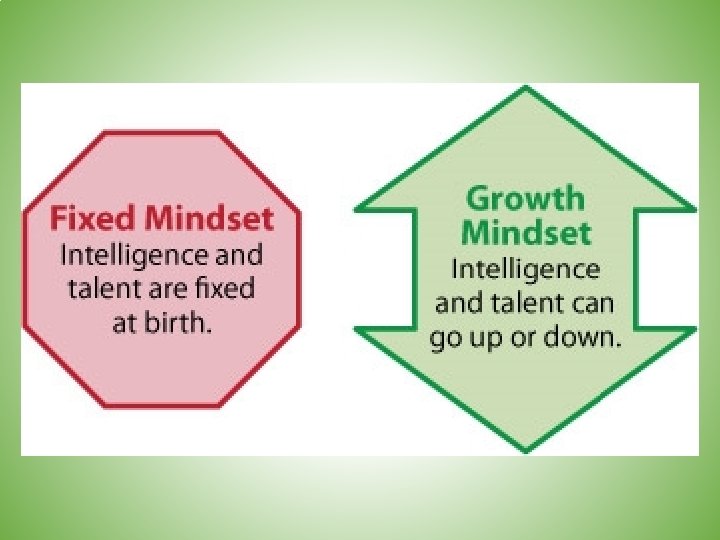
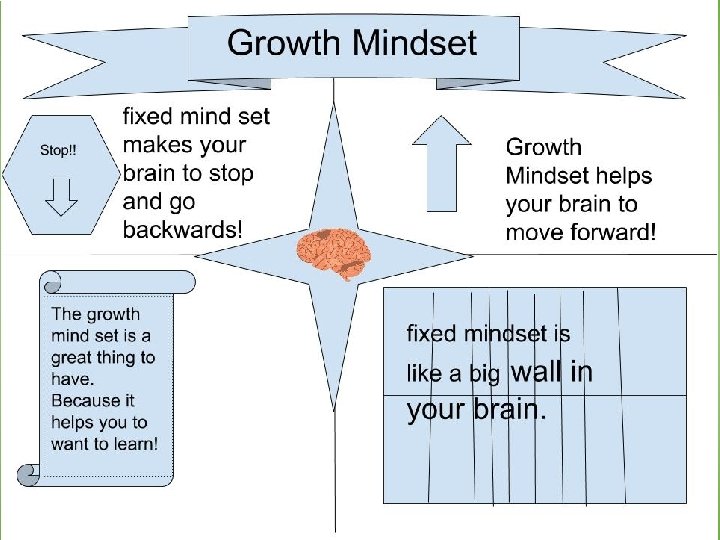
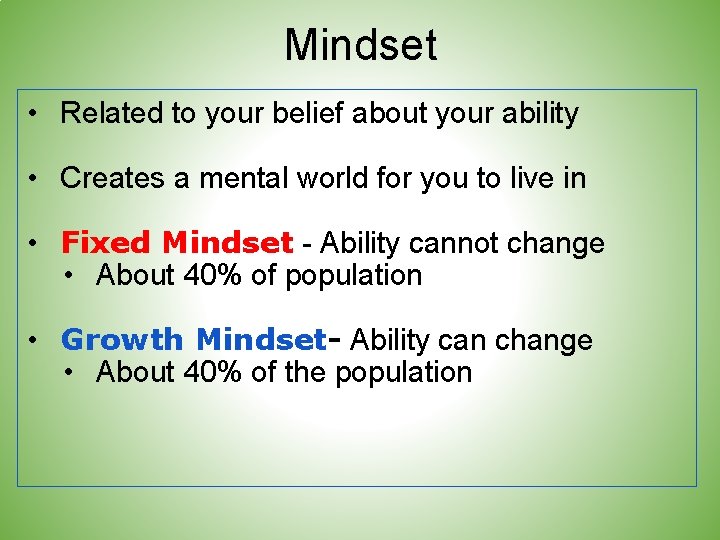
Mindset • Related to your belief about your ability • Creates a mental world for you to live in • Fixed Mindset - Ability cannot change • About 40% of population • Growth Mindset- Ability can change • About 40% of the population
How Attitudes Toward Mistakes Can Derail Our Learning - Trevor Ragan (: 55 -2: 35)
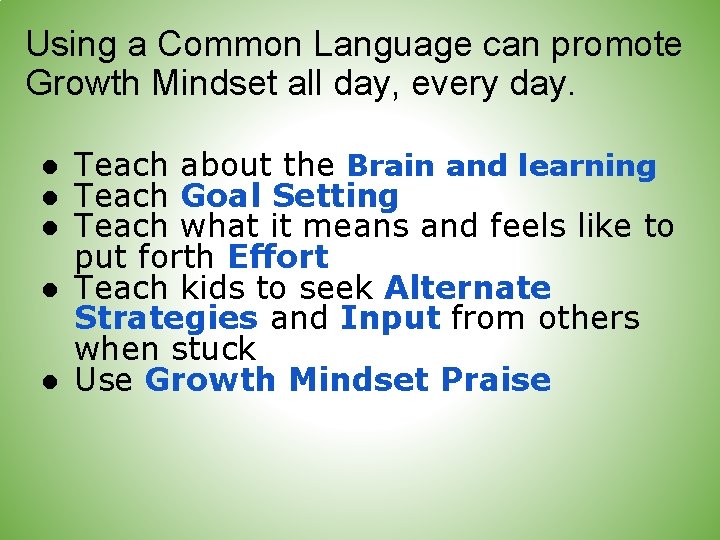
Using a Common Language can promote Growth Mindset all day, every day. ● Teach about the Brain and learning ● Teach Goal Setting ● Teach what it means and feels like to put forth Effort ● Teach kids to seek Alternate Strategies and Input from others when stuck ● Use Growth Mindset Praise
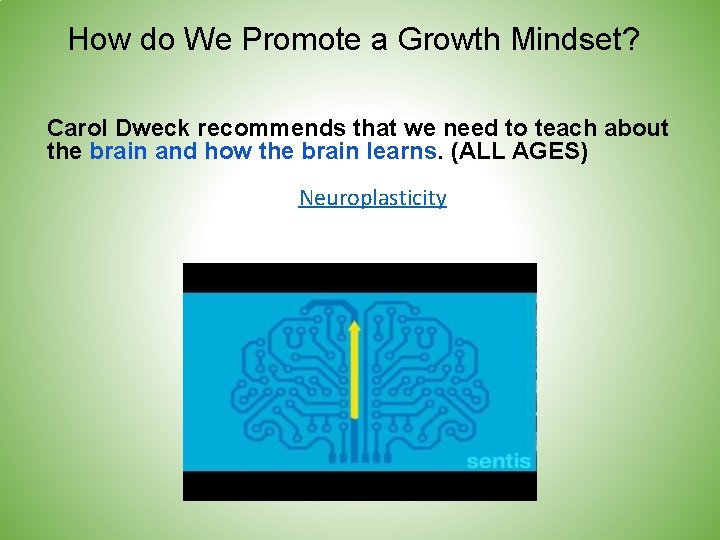
How do We Promote a Growth Mindset? Carol Dweck recommends that we need to teach about the brain and how the brain learns. (ALL AGES) Neuroplasticity
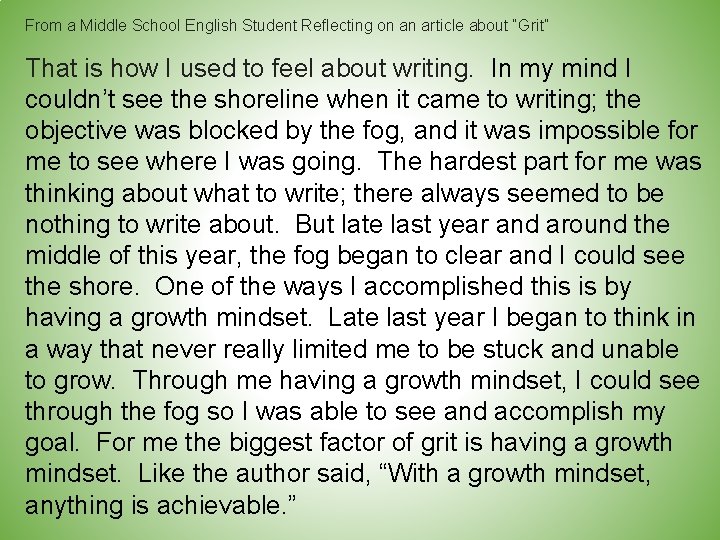
From a Middle School English Student Reflecting on an article about “Grit” That is how I used to feel about writing. In my mind I couldn’t see the shoreline when it came to writing; the objective was blocked by the fog, and it was impossible for me to see where I was going. The hardest part for me was thinking about what to write; there always seemed to be nothing to write about. But late last year and around the middle of this year, the fog began to clear and I could see the shore. One of the ways I accomplished this is by having a growth mindset. Late last year I began to think in a way that never really limited me to be stuck and unable to grow. Through me having a growth mindset, I could see through the fog so I was able to see and accomplish my goal. For me the biggest factor of grit is having a growth mindset. Like the author said, “With a growth mindset, anything is achievable. ”
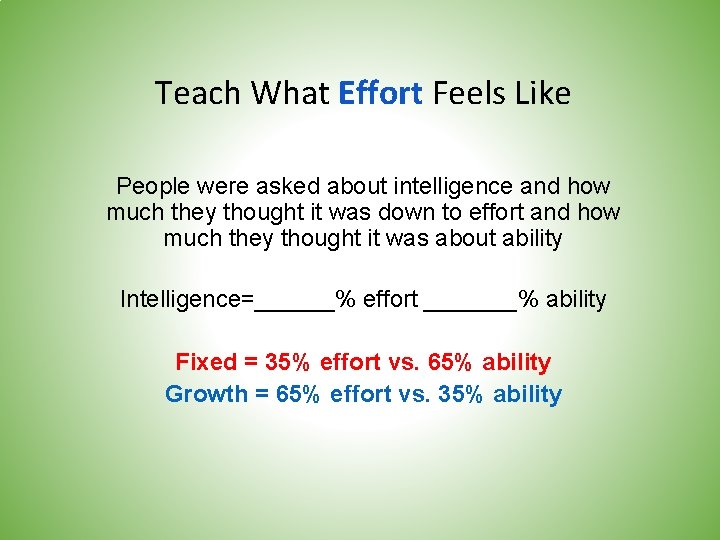
Teach What Effort Feels Like People were asked about intelligence and how much they thought it was down to effort and how much they thought it was about ability Intelligence=______% effort _______% ability Fixed = 35% effort vs. 65% ability Growth = 65% effort vs. 35% ability
Never Say Can’t - Jennifer Bricker
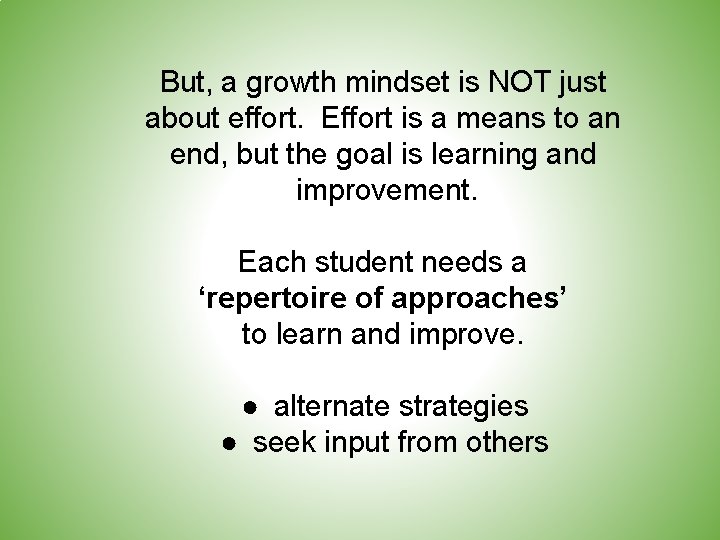
But, a growth mindset is NOT just about effort. Effort is a means to an end, but the goal is learning and improvement. Each student needs a ‘repertoire of approaches’ to learn and improve. ● alternate strategies ● seek input from others
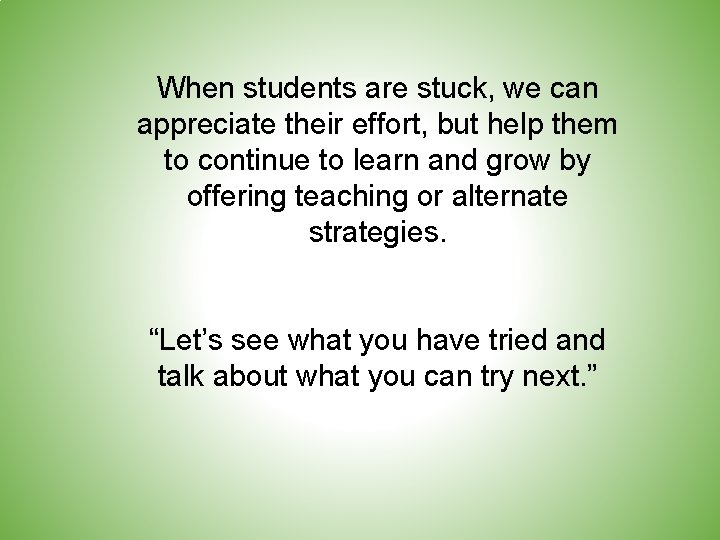
When students are stuck, we can appreciate their effort, but help them to continue to learn and grow by offering teaching or alternate strategies. “Let’s see what you have tried and talk about what you can try next. ”
Feedback - What is the Message? Are you offering judgments about permanent traits or messages about a student’s ability to grow and to change?
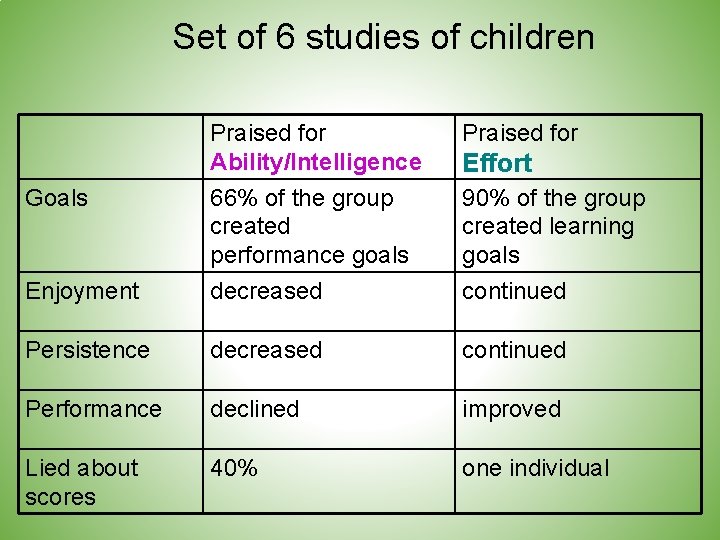
Set of 6 studies of children Praised for Enjoyment Praised for Ability/Intelligence 66% of the group created performance goals decreased Persistence decreased continued Performance declined improved Lied about scores 40% one individual Goals Effort 90% of the group created learning goals continued
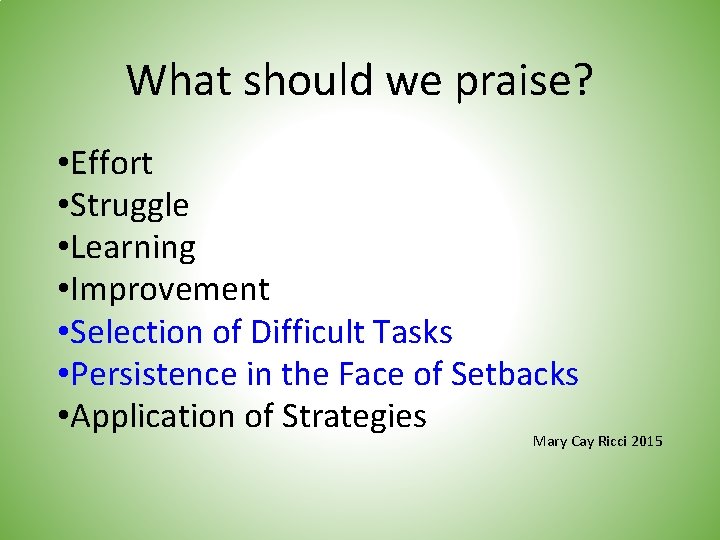
What should we praise? • Effort • Struggle • Learning • Improvement • Selection of Difficult Tasks • Persistence in the Face of Setbacks • Application of Strategies Mary Cay Ricci 2015
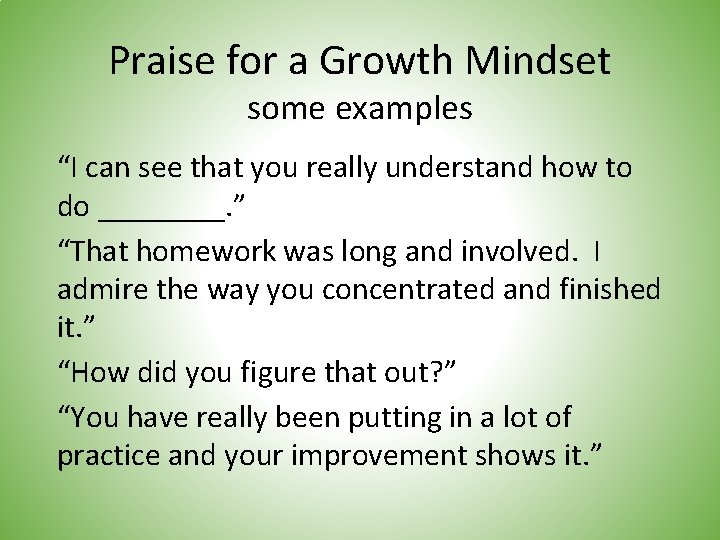
Praise for a Growth Mindset some examples “I can see that you really understand how to do ____. ” “That homework was long and involved. I admire the way you concentrated and finished it. ” “How did you figure that out? ” “You have really been putting in a lot of practice and your improvement shows it. ”
Shifting Feedback: The Power of YET • You can’t tie your shoes…YET, but you can do the first part. • You can’t solve an equation looking for an unknown side of a right triangle…YET, but remember how hard you worked to master quadratic equations? • You haven’t developed possible solutions…YET, but you DO know two things that don’t work. • You’re right, you can’t play that piece flawlessly…YET, but you have mastered other difficult pieces. Adapted from Mary Cay Ricci 2015
“How many ways did you try it before it turned out the way you wanted? ” “That looks like it took a lot of work. ” “Are you pleased with what you did? ” “What did you learn from this assignment? ” “What did you learn that surprised you? ”
Good Feedback is Important Constructive criticism is necessary if we want people to develop and learn. Praise is not a villain – praising for the effort and the process will help the student to become more motivated and ultimately more resilient.
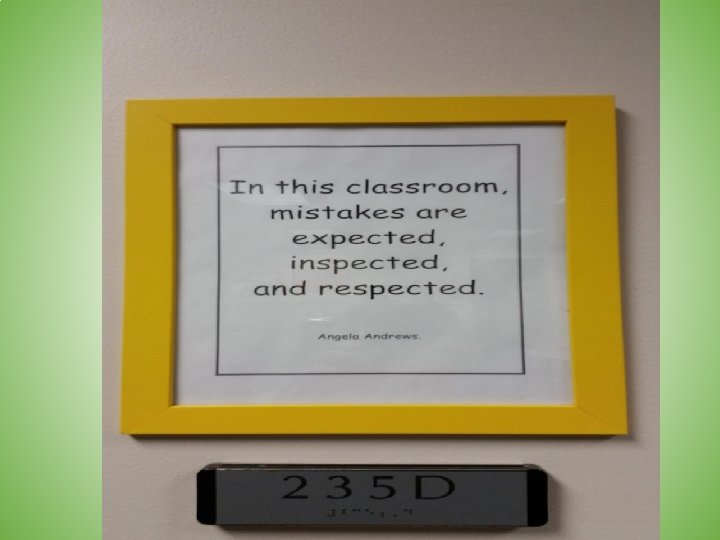
Reacting to Mistakes Are mistakes problematic? harmful? to be ridiculed? Or, are they helpful?
Reacting to Mistakes When your child makes a mistake, does your feedback help them to understand how to fix their mistake or does it label or excuse them? Does the feedback discourage or build resilience?
Model a Growth Mindset Acknowledge that we’re all a mixture of fixed and growth mindsets. This is a journey, not a proclamation.
When YOU face a challenge, how do you respond? Do you feel incompetent or defeated? Do you look for an excuse? Do you look for an easier way? Or, do you set goals, seek input, try a different strategy? Observe your own reactions to setbacks or criticism and make sure that you are modeling what you expect to see in your children.
Promoting a Growth Mindset • Teach about the brain and it’s HUGE potential for learning. • Teach how to set goals so your children can see their learning occur. • Provide opportunities to find out what effort feels like. • Provide a ‘repertoire of approaches’. • Praise for strategies, effort, and processes rather than for intelligence or ability. • React to mistakes in such a way that resiliency and learning are promoted. • Model a growth mindset (and share others’ experiences).
Let’s help prepare our children to embrace change and to thrive in new learning opportunities of the future!
Thank you for your active participation today! Amy Miller Advanced Learning Coordinator Oregon School District alm@oregonsd. net