Nutritional assessment in hospitalized patients M Safarian MD














- Slides: 65
Nutritional assessment in hospitalized patients M. Safarian, MD Ph. D.
Nutrition Care Process Steps n Nutrition Assessment n Nutrition Diagnosis n Nutrition Intervention n Nutrition Monitoring and Evaluation
Nutritional Assessment n Anthropometric n Clinical evaluation n Biochemical, n Dietary assessment laboratory assessment evaluation
ESPEN guidelines Questions to be answered: n What n Is is the condition now? the condition stable? n Will the condition get worse? the disease process accelerate nutritional deterioration?
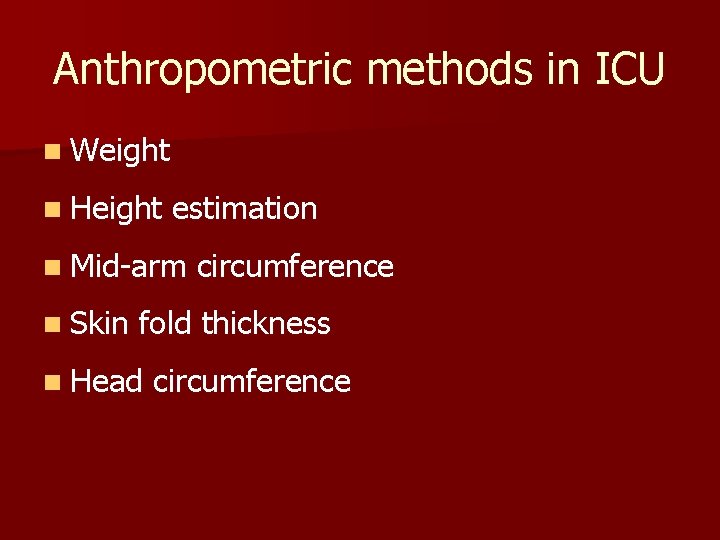
Anthropometric methods in ICU n Weight n Height estimation n Mid-arm n Skin circumference fold thickness n Head circumference
Weight
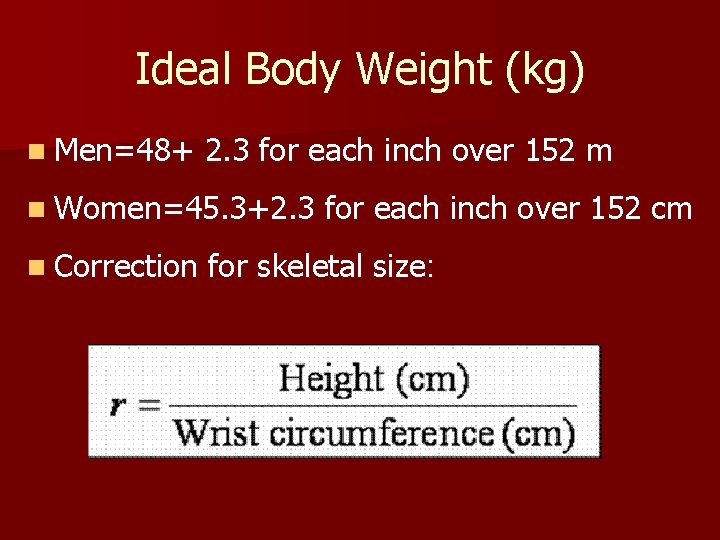
Ideal Body Weight (kg) n Men=48+ 2. 3 for each inch over 152 m n Women=45. 3+2. 3 n Correction for each inch over 152 cm for skeletal size:
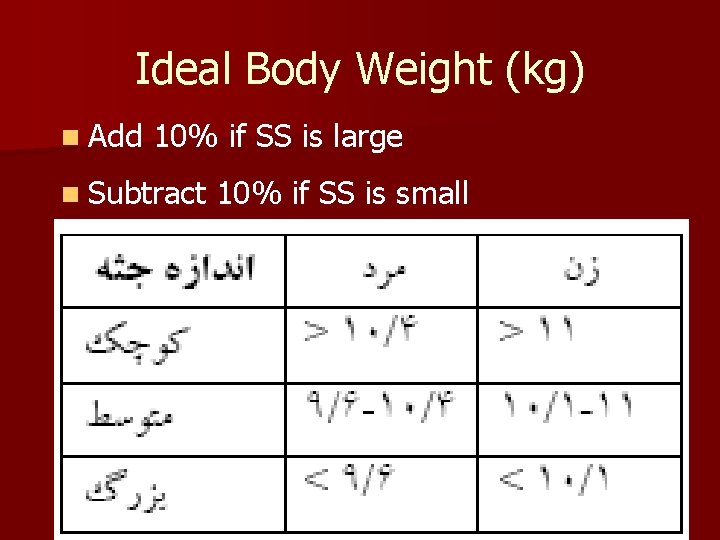
Ideal Body Weight (kg) n Add 10% if SS is large n Subtract 10% if SS is small
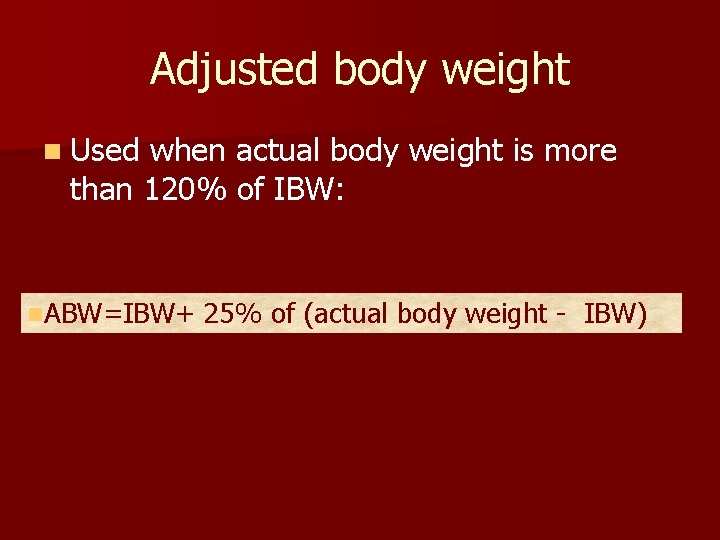
Adjusted body weight n Used when actual body weight is more than 120% of IBW: n. ABW=IBW+ 25% of (actual body weight - IBW)
Height in ICU patients
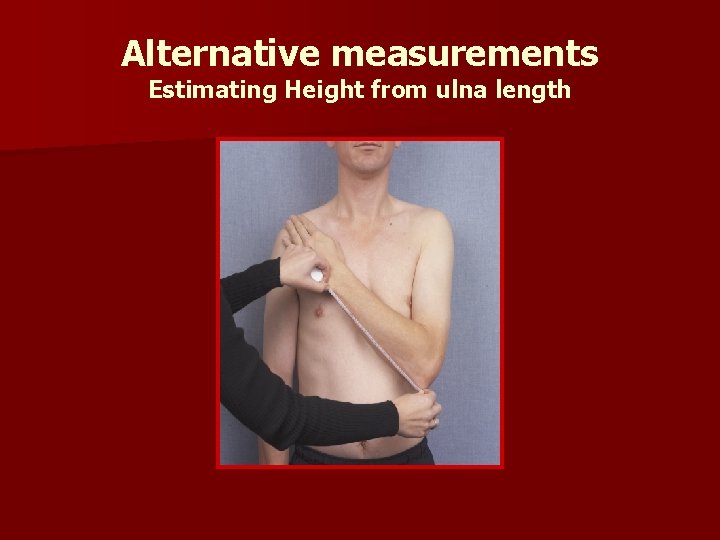
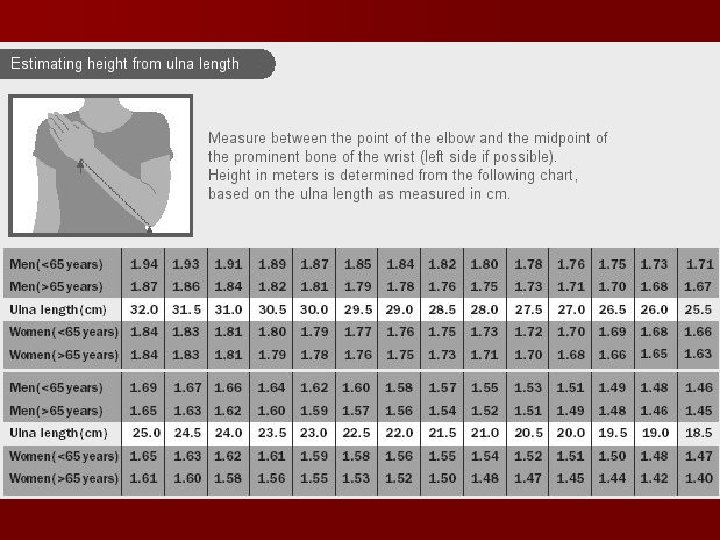
Alternative measurements Estimating Height from ulna length
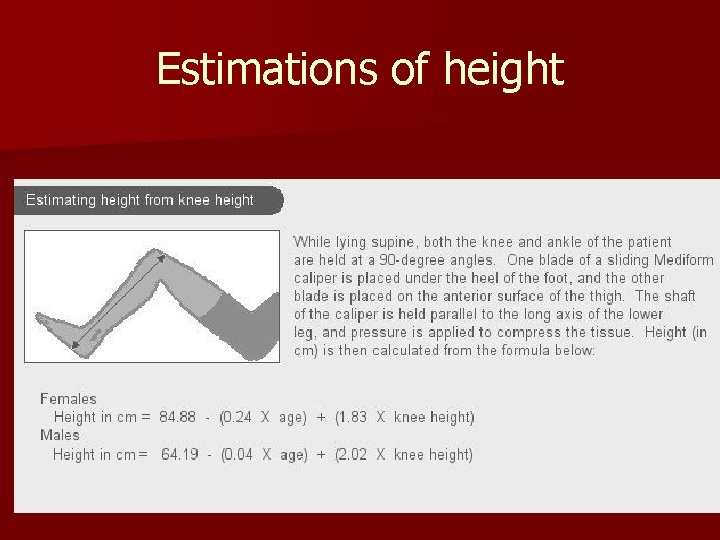
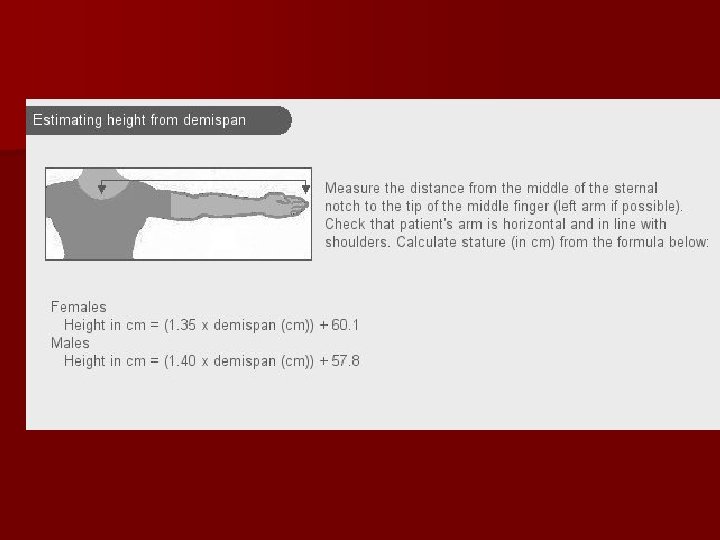
Estimations of height
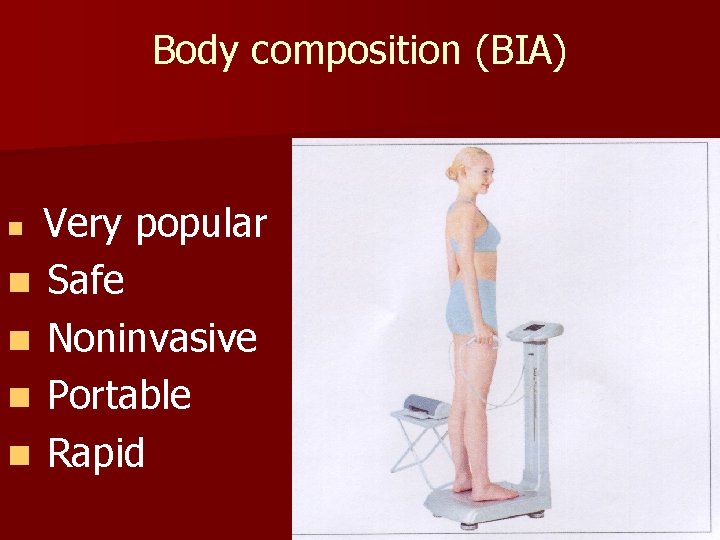
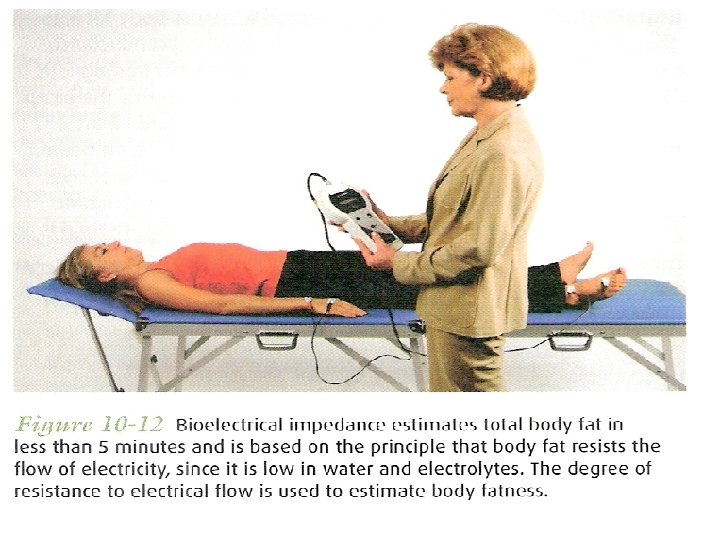
Body composition (BIA) Very popular n Safe n Noninvasive n Portable n Rapid n
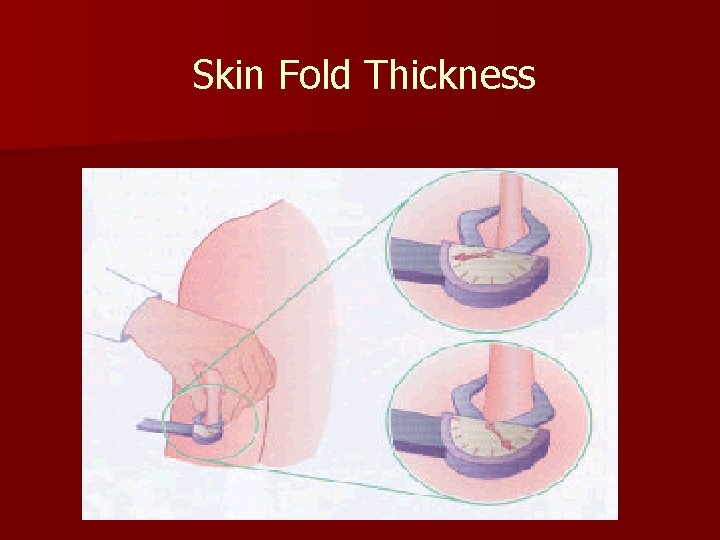
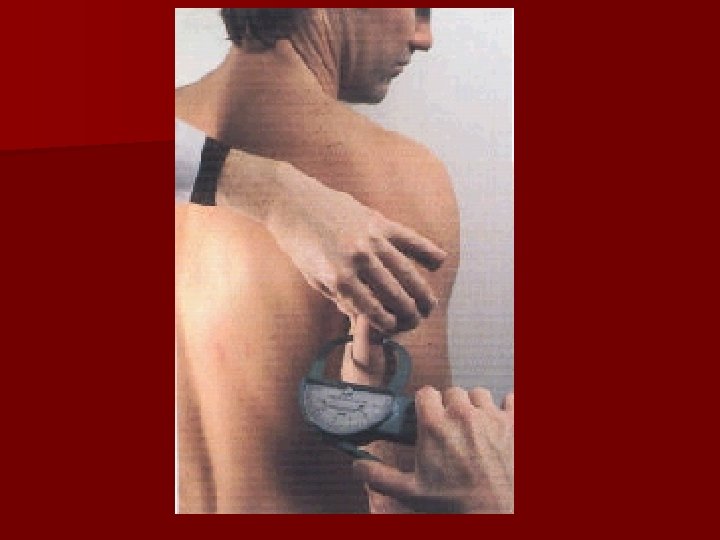
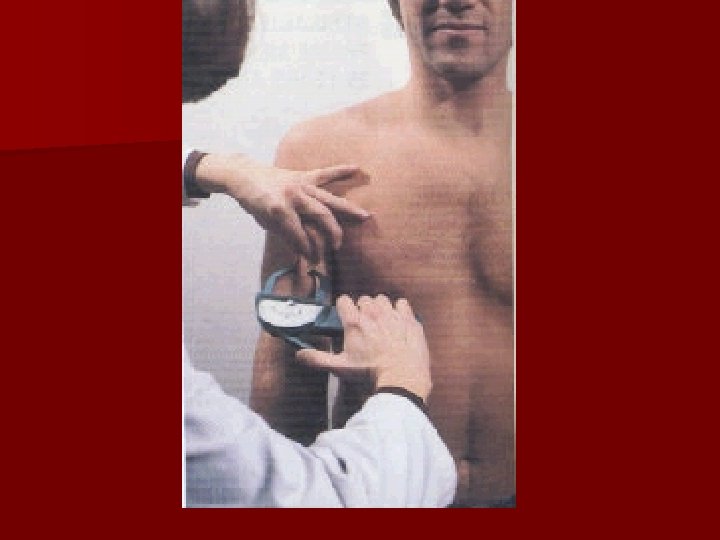
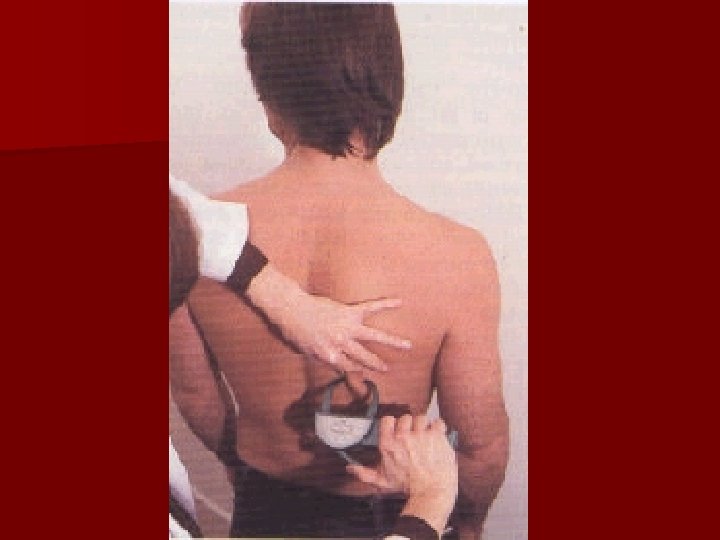
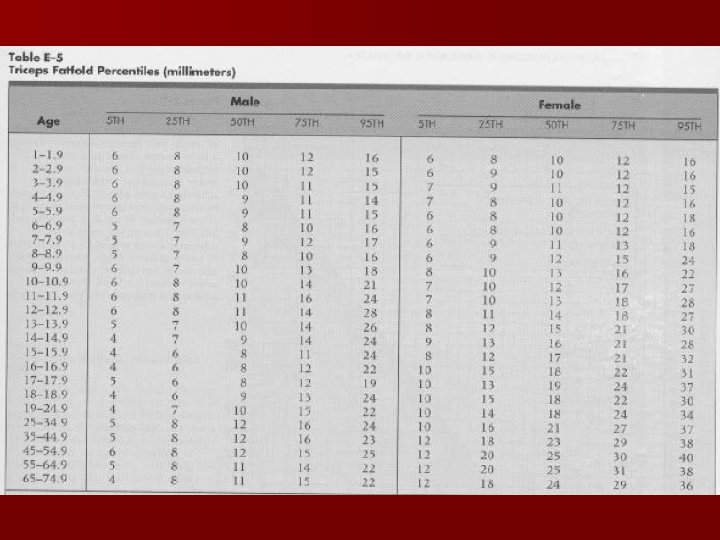
Skin Fold Thickness n Represent an estimation of body fat percent n Best sites for measurement: – Triceps – Biceps – Sub scapular – Super iliac
Skin Fold Thickness n Practical problems: – calliper measurements will be inaccurate, misleading and unreliable in many instances: – Personal errors – Practical problems – Between individual variation – population specific’ – Low sensitivity
Skin Fold Thickness
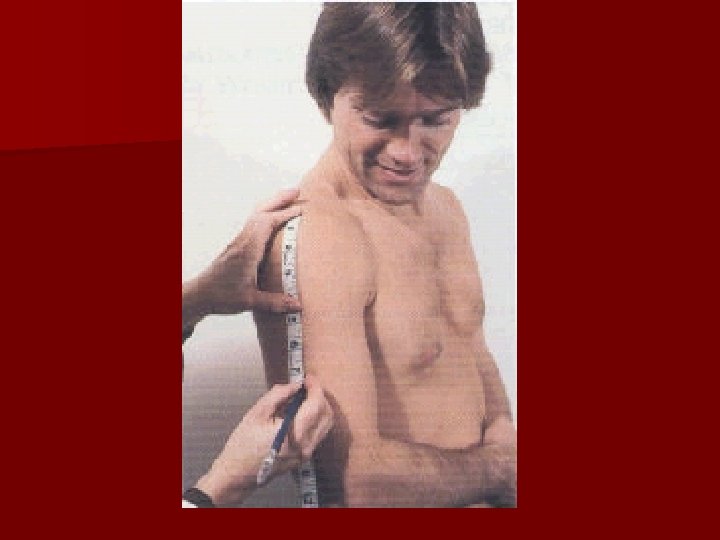
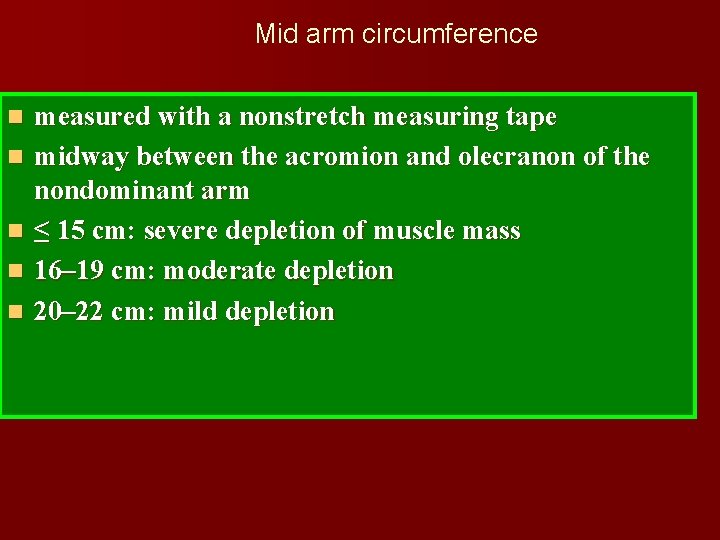
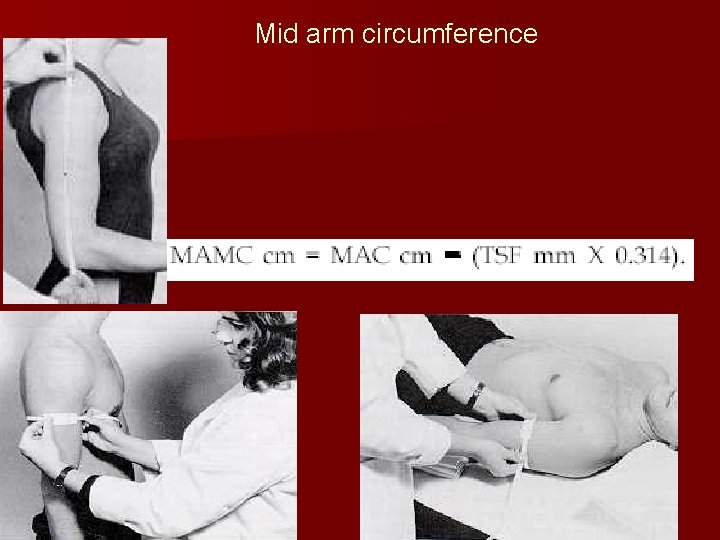
Mid arm circumference n n n measured with a nonstretch measuring tape midway between the acromion and olecranon of the nondominant arm ≤ 15 cm: severe depletion of muscle mass 16– 19 cm: moderate depletion 20– 22 cm: mild depletion
Mid arm circumference
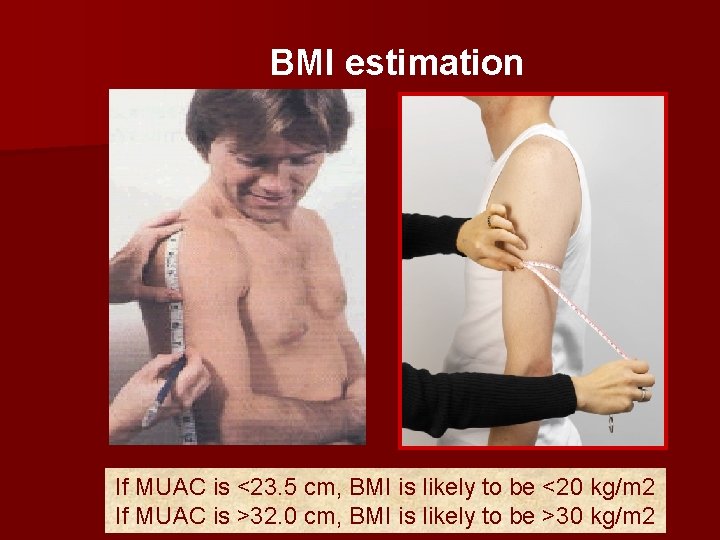
BMI estimation If MUAC is <23. 5 cm, BMI is likely to be <20 kg/m 2 If MUAC is >32. 0 cm, BMI is likely to be >30 kg/m 2
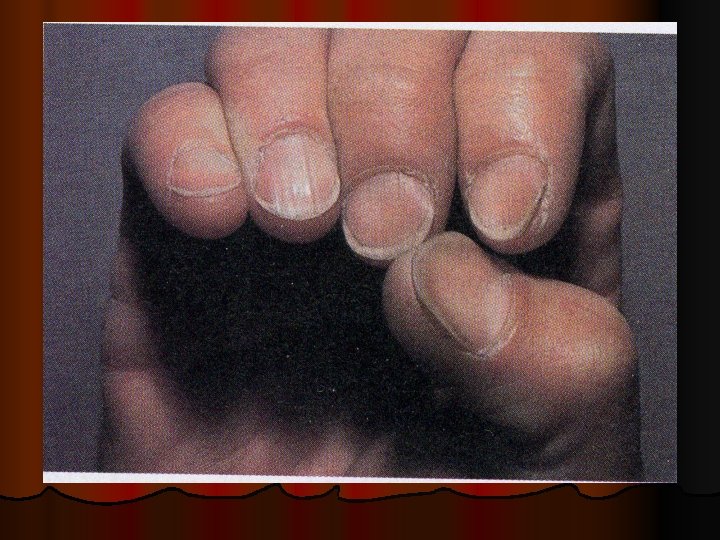
Clinical assessment
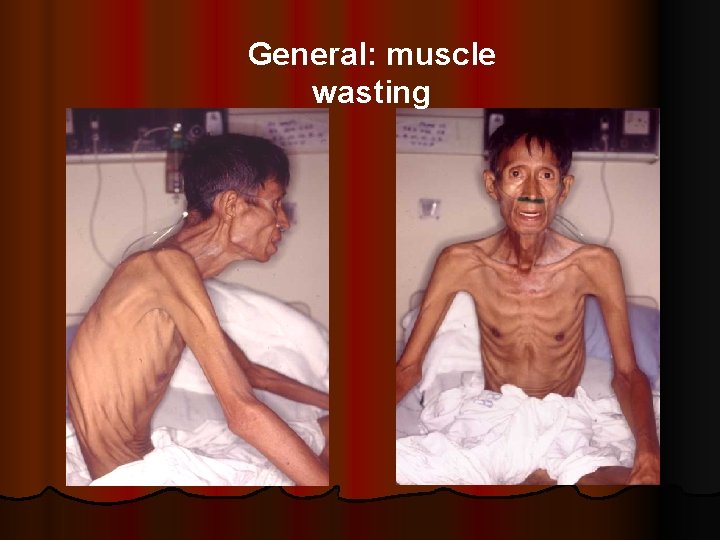
General: muscle wasting
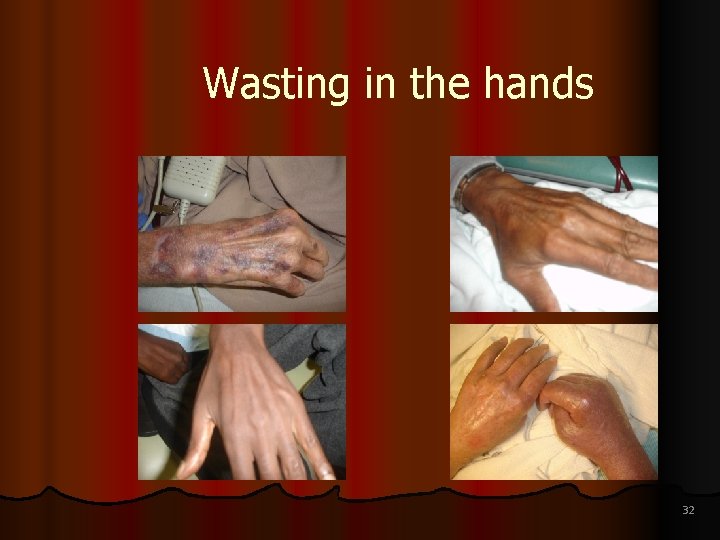
Wasting in the hands 32
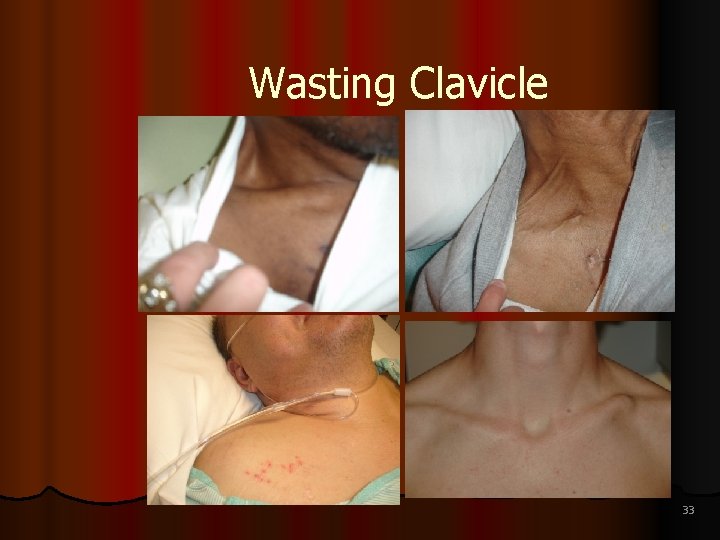
Wasting Clavicle 33
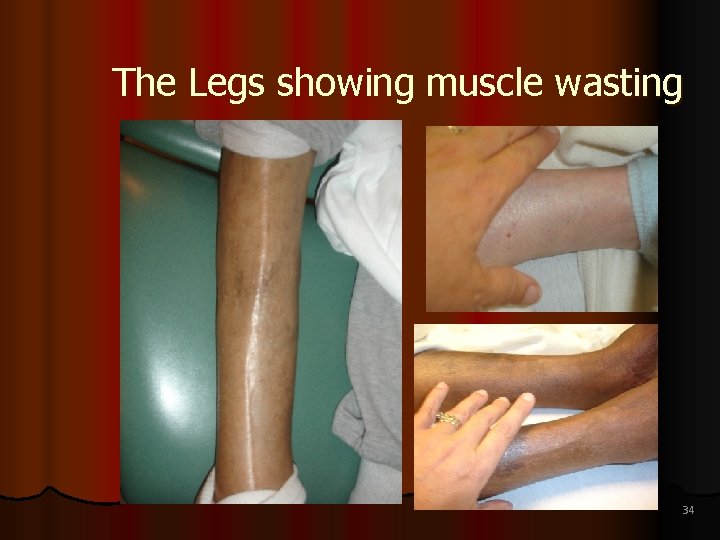
The Legs showing muscle wasting 34
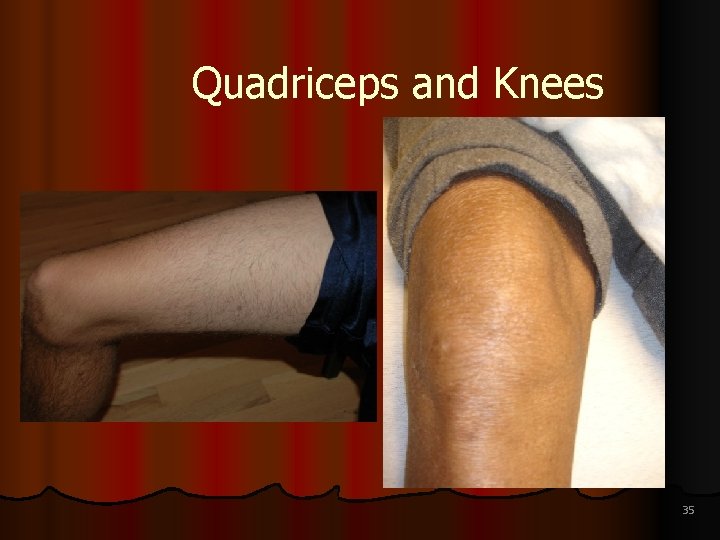
Quadriceps and Knees 35
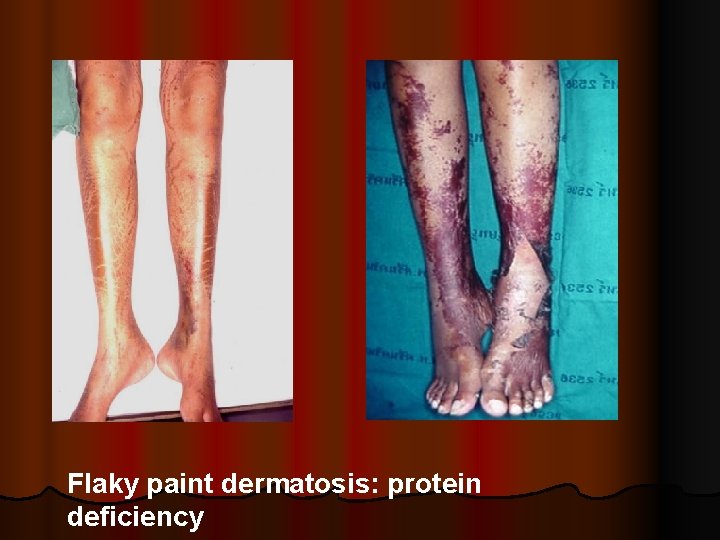
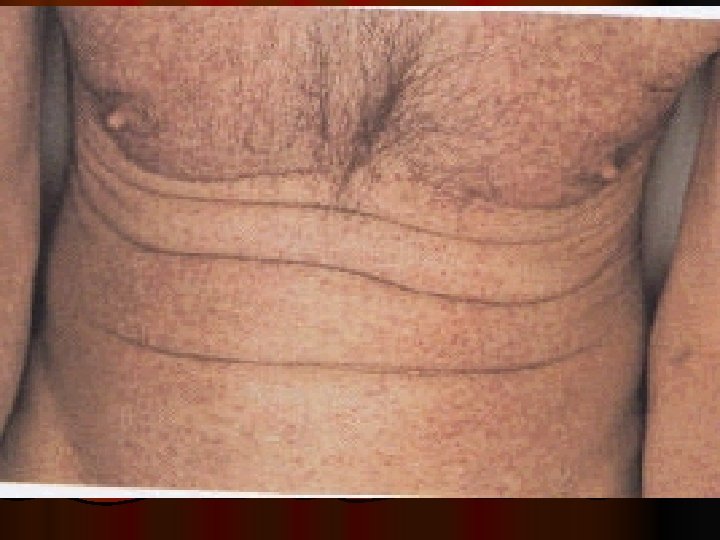
Flaky paint dermatosis: protein deficiency
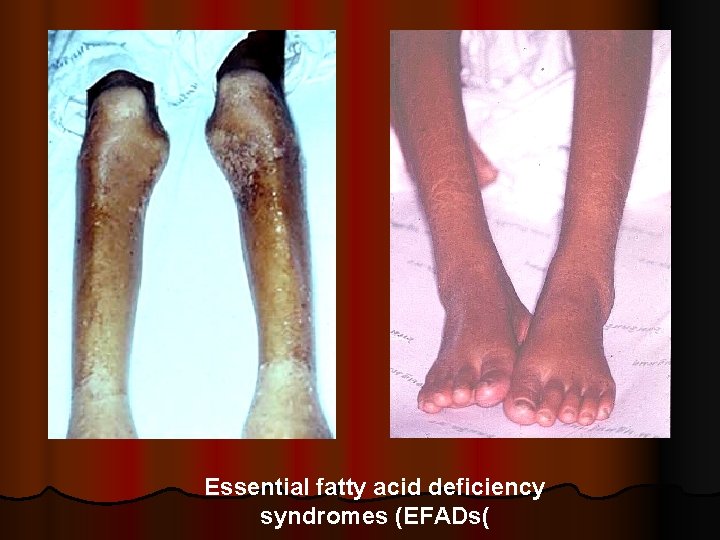
Essential fatty acid deficiency syndromes (EFADs(
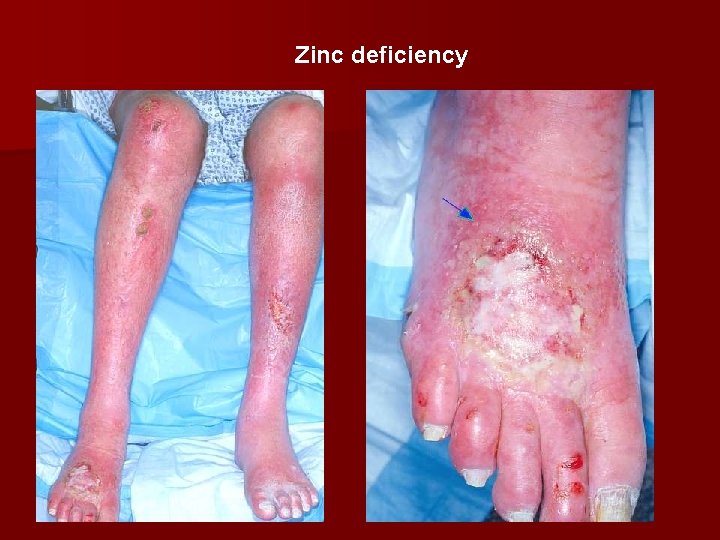
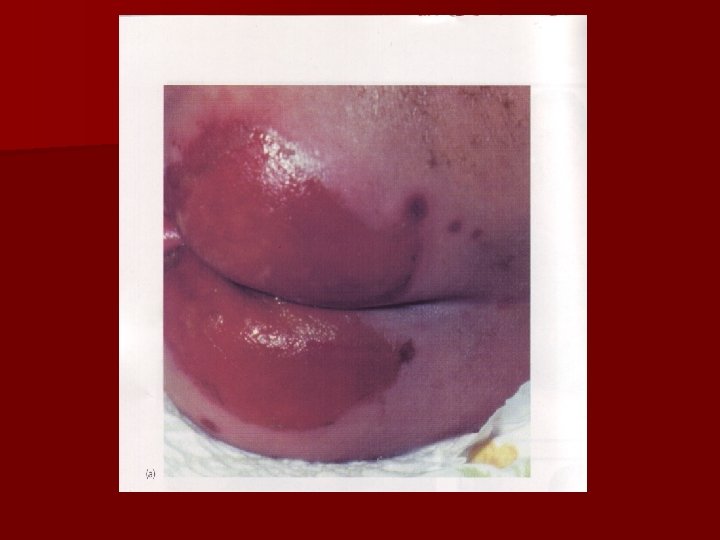
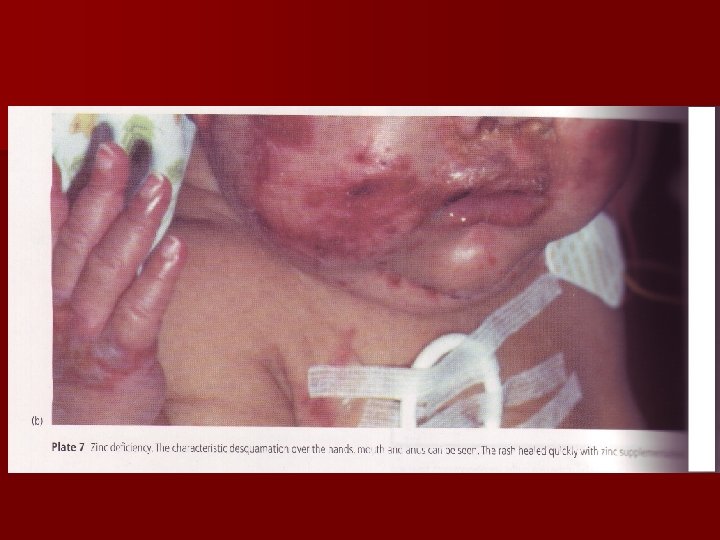
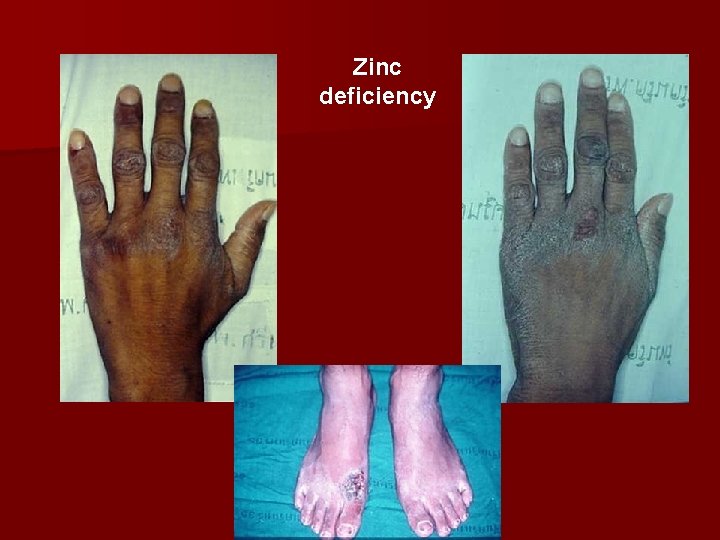
Zinc deficiency
Zinc deficiency
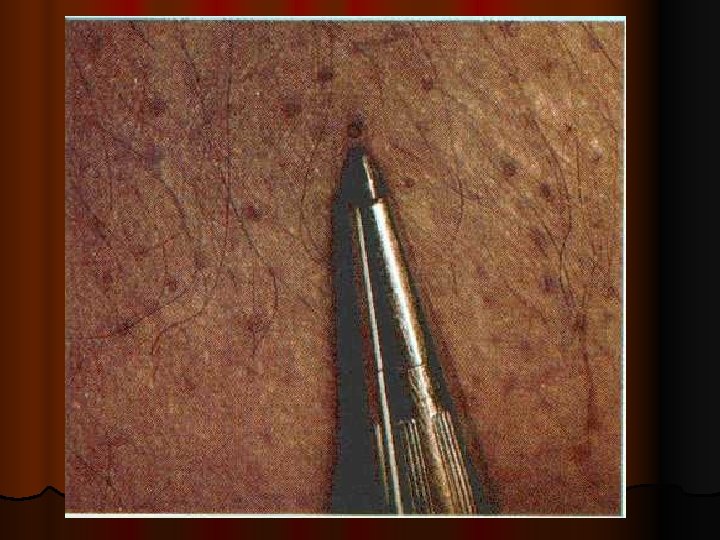
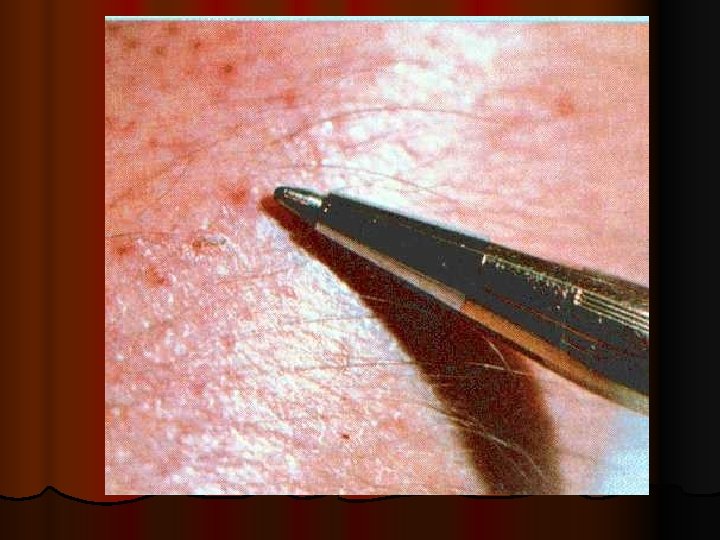
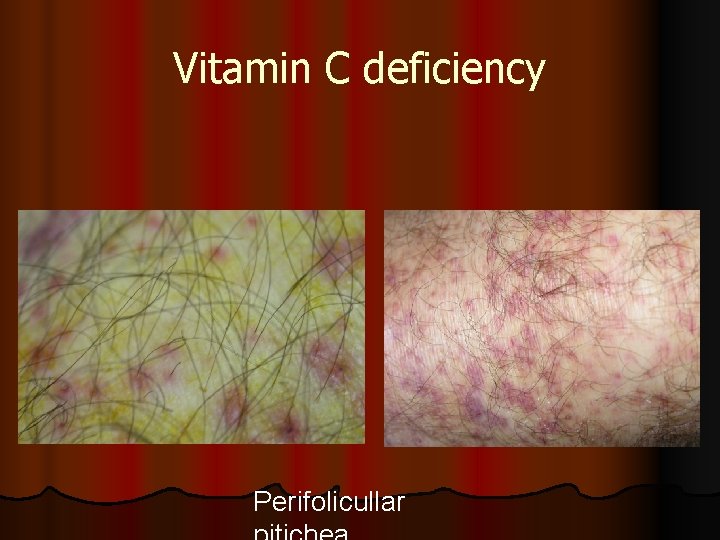
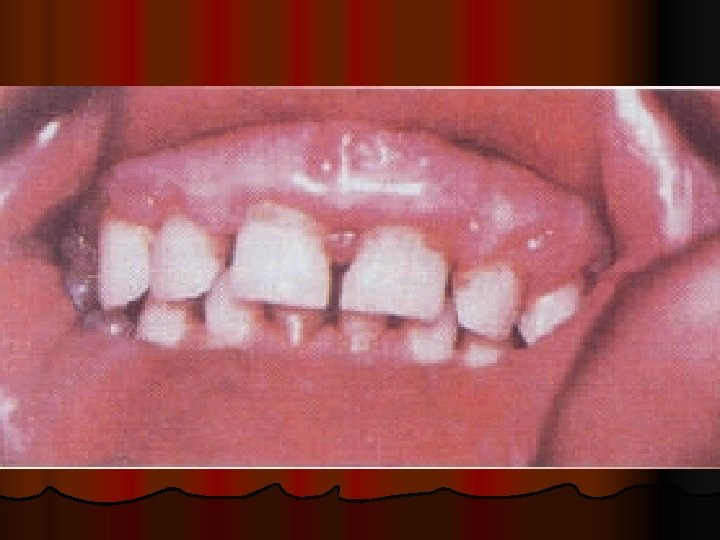
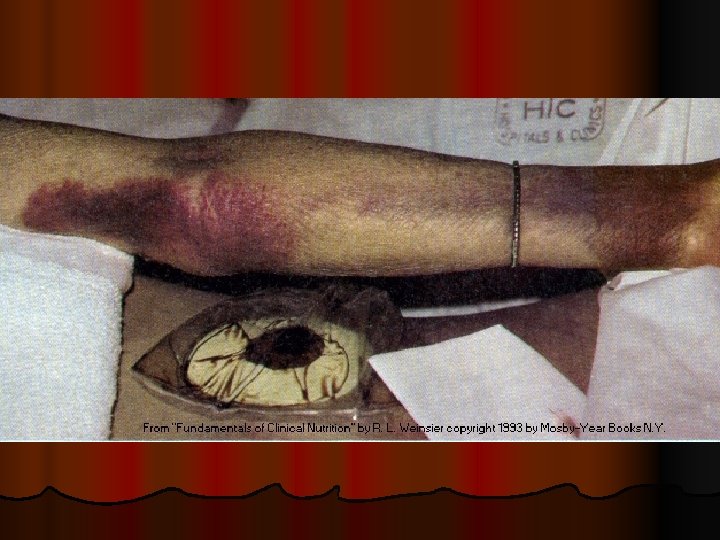
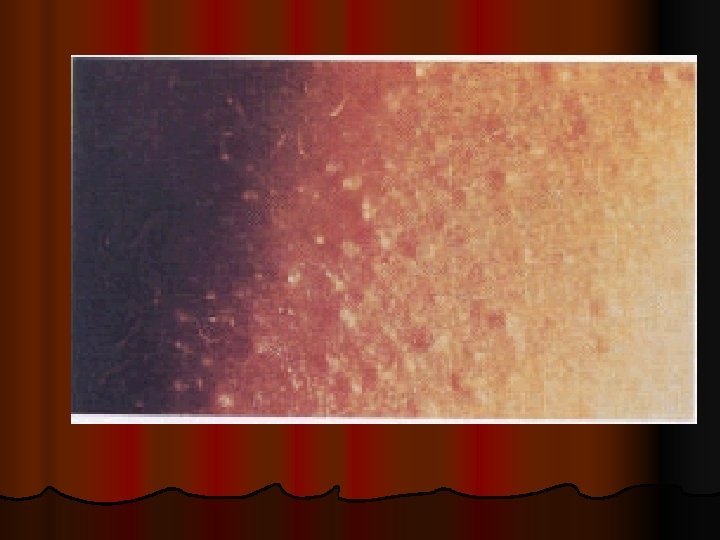
Vitamin C deficiency Perifolicullar
Biochemical, laboratory assessment
The possibilities of biochemical monitoring n On-line monitoring (cardiosurgery – p. H, minerals (K), the electrodes are localized on central cateter, possibility to check parameters on-line. n bed side monitoring (glycaemia, urine /protein, p. H, blood. . /, oximeter O 2 saturation, acidobasis, drugs /dg. strips) n Biochemical analysis
Biochemical parameters n Na, K, Cl, Ca, P, Mg, osmolality - blood, urine n Acidobasis, lactate n urea, creatinin clearence, Nitrogen balance n bilirubine, ALT, AST, LDH, amylase, lipase n cholesterol, triglycerides, glucose – blood, urine
Biochemical parameters n Total protein, albumine, prealbumine n CRP n TSH n Basic analysis are made at the first, must be done within 90 minutes
Other biochemical parameters n Trace elements /Zn, Se. . / n Vitamins n Drugs /methotrexate, antiepileptics, antibiotics. . . / n Aminogram /glutamin. . / n Interleucins, TNF… n Hormones /cortisol, glucagone, adrenaline. . /.